
Alabama to carry out first lethal injection after review of execution procedures
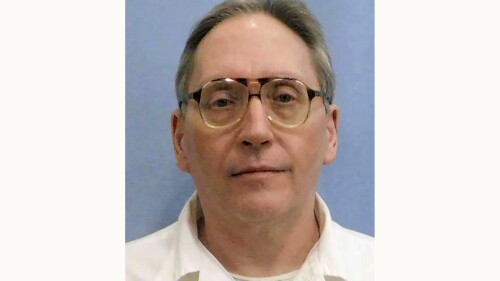
Alabama plans to execute an inmate on Thursday for the 2001 beating death of a woman as the state seeks to carry out its first lethal injection after a pause in executions following a string of problems with inserting the IVs. James Barber, 64, is scheduled to be put to death Thursday evening at a South Alabama prison. It is the first execution scheduled in the state since Alabama Gov. Kay Ivey paused executions in November to conduct an internal review. Ivey ordered the review after two lethal injections were called off because of difficulties inserting IVs into the condemned men’s veins. Attorneys for inmate Alan Miller said prison staff poked him with needles for over an hour as they unsuccessfully tried to connect an IV line to him and, at one point, left him hanging vertically on a gurney during his aborted execution in September. State officials called off the November execution of Kenneth Eugene Smith after they said they were unsuccessful in connecting the second of two required lines. Advocacy groups claimed a third execution, carried out in July after a delay because of IV problems, was botched because of multiple attempts to connect the line, a claim the state has disputed. “Given Alabama’s recent history of botched executions, it is staggering that James Barber’s lethal injection is set to take place,” Maya Foa, director of the anti-death penalty group Reprieve, said. “Three executions in a row went horribly wrong in Alabama last year, yet officials have asserted that ‘no deficiencies’ were found in their execution process.” Barber was convicted in the 2001 beating death of 75-year-old Dorothy Epps in Harvest, Ala. Prosecutors said Barber, a handyman who knew Epps’ daughter, confessed to killing Epps with a claw hammer and fleeing with her purse. Jurors voted 11-1 to recommend a death sentence, which a judge imposed. Barber’s execution was scheduled for the same day that Oklahoma executed Jemaine Cannon for stabbing a Tulsa woman to death with a butcher knife in 1995 after his escape from a prison work center. Attorneys for Barber have asked federal courts to block the lethal injection, citing the state’s past problems. The 11th U.S. Circuit Court of Appeals refused to halt the execution on Wednesday. Judges noted the state had conducted a review of procedures and wrote that “Barber’s claim that the same pattern would continue to occur” is “purely speculative.” The court noted that the Alabama Department of Corrections had changed medical personnel and lengthened the timeframe for executions. “ADOC conducted a full review of its execution processes and procedures, determined that no deficiencies existed with the protocol itself, and instituted certain changes to help ensure successful constitutional executions,” the court wrote. Barber appealed to the U.S. Supreme Court on Thursday, asking justices to stay the execution. His lawyers wrote that the “fourth lethal injection execution that will likely be botched in the same manner as the prior three.” “Alabama’s past three execution proceedings imposed needless physical and emotional suffering on inmates to such an extent that Alabama paused its lethal injection executions and undertook an internal review of its procedures,” Barber’s lawyers wrote in the Supreme Court filing. “Shockingly, however, that review resulted in no substantive changes to Alabama’s procedures or to the qualifications of those carrying out lethal injection executions.” The Alabama attorney general’s office has urged the Supreme Court to let the execution proceed. The state wrote that the previous executions were called off because of a “confluence of events—including health issues specific to the individual inmates and last-minute litigation brought by the inmates that dramatically shortened the window for ADOC officials to conduct the executions.” “Dorothy Epps, Smith’s victim, has survivors who have already waited overlong to see justice done,” the office added. The state conducted an internal review of procedures. Ivey rebuffed requests from several groups, including a group of faith leaders, to follow the example of Tennessee Gov. Bill Lee and authorize an independent review of the state’s execution procedures. One of the changes Alabama made following the internal review was to give the state more time to carry out the execution. The Alabama Supreme Court did away with its customary midnight deadline to get an execution underway in order to give the state more time to establish an IV line and battle last-minute legal appeals. The state will have until 6 a.m. Friday to start Barber’s execution. Republished with the permission of The Associated Press.
Execution of Joe Nathan James Jr. was botched, advocacy group alleges
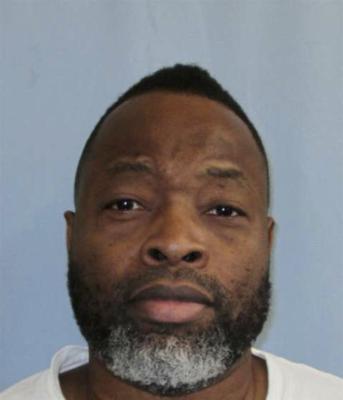
Alabama corrections officials apparently botched an inmate’s execution last month, an anti-death penalty group alleges, citing the length of time that passed before the prisoner received the lethal injection and a private autopsy indicating his arm may have been cut to find a vein. Joe Nathan James Jr. was put to death July 28 at an Alabama prison for the 1994 shooting death of his former girlfriend. The execution was carried out more than three hours after the U.S. Supreme Court denied a request for a stay. “Subjecting a prisoner to three hours of pain and suffering is the definition of cruel and unusual punishment,” Maya Foa, director of Reprieve U.S. Forensic Justice Initiative, a human rights group that opposes the death penalty, said in a statement. “States cannot continue to pretend that the abhorrent practice of lethal injection is in any way humane.” The Alabama Department of Forensic Science declined a request to release the state’s autopsy of James, citing an ongoing review that happens after every execution. Officials have not responded to requests for comment on the private autopsy, which was first reported by The Atlantic. At the time of the execution, Alabama Corrections Commissioner John Hamm told reporters that “nothing out of the ordinary” happened. Hamm said he wasn’t aware of the prisoner fighting or resisting officers. The state later acknowledged that the execution was delayed because of difficulties establishing an intravenous line but did not specify how long it took. Dr. Joel Zivot, a professor of anesthesiology at Emory University and an expert on lethal injection who witnessed the private autopsy, said it looked like there were numerous attempts to connect a line. Zivot said he saw “multiple puncture sites on both arms” and two perpendicular incisions, each about 3 to 4 centimeters (1 to 1.5 inches) in length, in the middle of the arm, which he said indicated that officials had attempted to perform a “cutdown,” a procedure in which the skin is opened to allow a visual search for a vein. He said the cutdown is an old-style medical intervention rarely performed in modern medical settings and that it would be painful without anesthesia. He also said he saw evidence of intramuscular injections not in the vicinity of a vein. The Alabama Department of Corrections prison system issued a written statement in which it noted that “protocol states that if the veins are such that intravenous access cannot be provided, the team will perform a central line procedure,” which involves placing a catheter in a large vein. “Fortunately, this was not necessary, and with adequate time, intravenous access was established,” the statement said. Alabama does not allow witnesses from news outlets to watch the preparations for a lethal injection. They get their first glimpse of the execution chamber when an inmate is already strapped to the gurney with the IV line connected. A reporter for The Associated Press who attended the execution observed that James did not respond when the warden asked if he had final words. His eyes remained closed except for briefly fluttering at one point early in the procedure. Lawyers who spoke with James by telephone said they were disturbed by his reported lack of movements and raised questions about what happened before the lethal injection. Hamm said James was not sedated. “That wasn’t the Joe that I knew. He always had something to say. He always wanted to be in control,” said James Ransom, the attorney who helped James file his appeal with the U.S. Supreme Court. “The fact that he did not give any sort of reaction … and that he didn’t open his eyes tells me something was up,” Ransom said. John Palombi, a federal defender who spoke with James twice on the day of his execution, said James, “was certainly alert” earlier in the day. The Atlantic quoted a friend of James as saying that the inmate had planned to make a final statement. Robert Dunham, executive director of the Death Penalty Information Center, a national nonprofit organization that analyzes issues concerning capital punishment, said the delay between the Supreme Court’s go-ahead and the execution, combined with the autopsy, points to a “botched execution, and it is among the worst botches in the modern history of the U.S. death penalty.” “This execution is Exhibit A as to why execution secrecy laws are intolerable,” Dunham wrote in an email to the A.P. “The public is entitled to know what went on here — and what goes on in all Alabama executions — from the instant the execution team begins the process of physically preparing the prisoner for the lethal injection until the moment the prisoner dies.” Republished with the permission of The Associated Press.
