Alabama counties target Mazda Toyota supply chain in jobs push
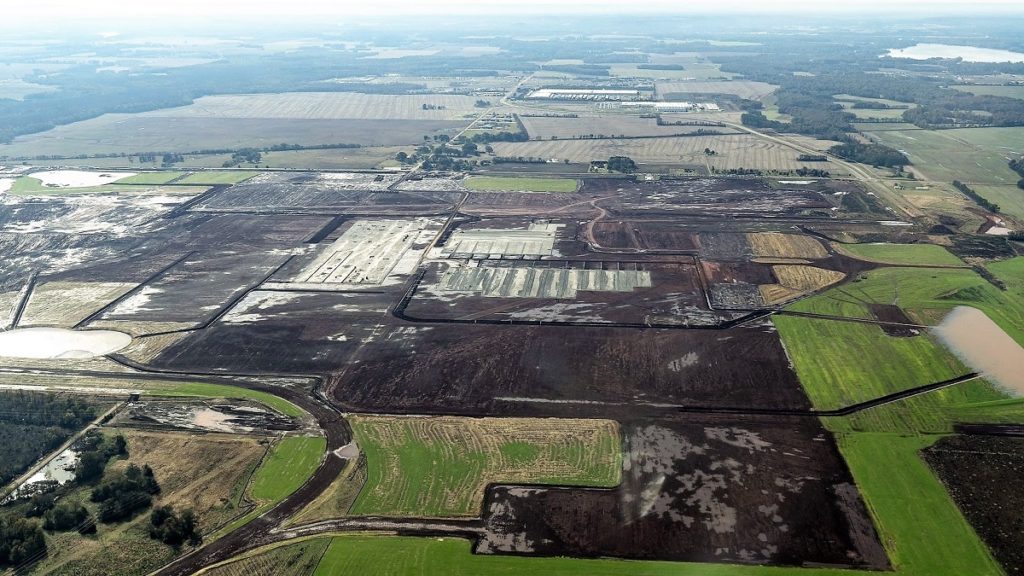
The groundbreaking for the new Mazda Toyota Manufacturing USA auto assembly plant in Huntsville took place just a couple of weeks ago, but the $1.6 billion, 4,000-worker project is already making a big impact across North Alabama. Business recruiters in the 13-county region have been working for months to lure suppliers for the facility. Their efforts include readying industrial sites and speculative buildings, along with a digital strategy that is reaching around the globe. The North Alabama Industrial Development Association (NAIDA) created a microsite that specifically targets companies interested in supplying the Japanese automakers’ operation, which is expected to launch production in 2021 with an eventual output of 300,000 vehicles annually. NAIDA President and CEO Brooks Kracke said his team went to work right away following the Mazda Toyota plant announcement in January. “We contacted the 13 counties we cover and asked them to give us their top five buildings or sites to put their best foot forward,” he said. “We put all of them on the microsite, along with additional data for each county, and we put everything in a searchable format.” The Mazda Toyota Manufacturing USA assembly plant in Huntsville will produce the next-generation Toyota Corolla, along with a brand new Mazda crossover model. (Toyota) Growing interest Since then, the microsite has drawn interest from companies and organizations from the U.S., Japan, India, China, Israel, Germany, Poland, Russia, the Czech Republic and beyond. Some companies have contacted NAIDA directly, asking for additional information, and some are scouting out the region in person, too. Meanwhile, NAIDA is contacting the companies that have looked at the microsite, including a Detroit firm that Kracke recently called on during a trip to Michigan. “This has given us a good segue to creating contacts and creating awareness that North Alabama is a good place to consider for their supplier operations,” he said. North Alabama is home to more than 100 automotive companies, in nearly every county. Anchors of the industry are the Toyota and Navistar engine plants in Huntsville; there are also numerous top suppliers for Alabama’s other automakers, which include Mercedes-Benz, Honda and Hyundai. The supplier impact of the Mazda Toyota plant could very well reach beyond North Alabama. Communities in other parts of the state are preparing to attract new firms and help existing companies land new business related to the facility. Kracke said the full supplier picture for the new Mazda Toyota plant is not yet clear. Companies are still determining their own plans and whether they will aim to supply the plant from existing facilities elsewhere or establish new operations nearby. But there’s no doubt that some will make a move to Alabama. It’s just a question of where. “The synergy is starting to happen, and I think the next five years or so will really be something,” Kracke said. Alabama Commerce Secretary Greg Canfield and Gov. Kay Ivey stand next to a Mazda at the official groundbreaking for Mazda Toyota Manufacturing USA in Huntsville last month. (contributed) ‘Catbird seat’ In Marshall County, the strategy to attract suppliers includes promoting a workforce that is well-versed in the automotive industry, said Matt Arnold, president and CEO of the Marshall County Economic Development Council. Over the past 20 years, the county’s auto sector employment has seen significant growth, amid continued expansions at two Tier 1 suppliers for the Honda auto assembly plant in Talladega County, and at a few Tier 2 and aftermarket suppliers. “Following the Mazda Toyota announcement, we immediately updated our website with specific information and a page for suppliers, and we designated three industrial sites that we feel are our optimal sites for suppliers,” he said. “We are also showcasing the fact that we have been in automotive for quite a while, and we have the training programs in place in our technical schools and career tech programs in our high schools.” As for location, Arnold said the most obvious choice for suppliers is west of Huntsville, around the Shoals, since that’s between the new Mazda Toyota plant and a Toyota plant in Blue Springs, Mississippi. But on the other hand, Marshall County is a prime location for suppliers who want to be in proximity to Mazda Toyota and Honda Alabama, he added. “If that’s the case, we’re in the catbird seat. We’re right in the middle,” he said. Developing relationships Recruiters in the Shoals also went to work quickly following the Mazda Toyota announcement, creating their own web page targeting suppliers, said Forrest Wright, president of the Shoals Economic Development Authority. An industrial robot turns the first shovel of dirt at a groundbreaking ceremony for the $1.6 billion Mazda Toyota Manufacturing USA assembly plant in Huntsville. (Hal Yeager/Governor’s Office) The Shoals has a solid automotive industry presence, an attractive location and more. “We have multiple highway corridors to the Mazda Toyota facility from this area of Alabama, which helps with just-in-time delivery,” Wright said. “The chance of delay is reduced if you have multiple ways to get there. We’re also just far enough away from the facility to not have to directly compete with that labor market.” Wright is a regular participant in the annual joint meetings of the Southeast-U.S. Japan and the Japan-Southeast associations, known as SEUS Japan. He was a part of the Alabama delegation that traveled to Tokyo in October for SEUS Japan 41. “One of the things we try to do as a community is to maintain good communication with our existing companies,” he said. “Doing business with companies from Japan has its own unique style, and one of the things you must do is develop and maintain relationships. “While we were in Japan, we visited the headquarters of Japanese companies located in our area. We’ve seen that bear fruit in the past.” This story originally appeared on the Alabama Department of Commerce’s Made in Alabama website. Republished with permission from the Alabama NewsCenter.
Kay Ivey says Alabama could lose up to 4,000 jobs due to tariffs
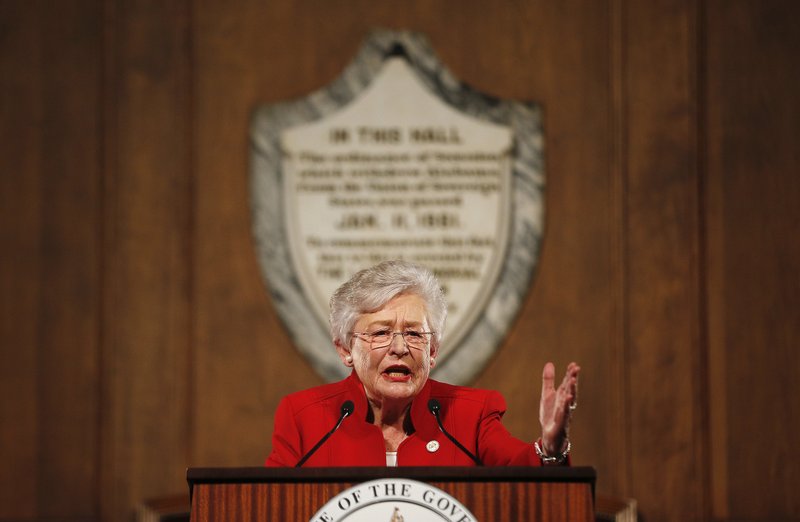
Last week, Alabama governor Kay Ivey released a statement saying the Trump Administration’s new tariffs will cause harm to the Yellowhammer State’s economy. Taking it a step further, she contacted U.S. Secretary of Commerce Wilbur Ross and several members of the Alabama congressional delegation expressing her concerns. “Import tariffs, and any retaliatory tariffs on American made goods, will harm Alabama, the companies that have invested billions of dollars in our state, and the thousands of households which are dependent upon those companies for a good-paying job,” Ivey said in a statement. “I strongly oppose any efforts that may harm those companies that employ thousands of Alabamians and contribute billions to our economy. I am committed to protecting Alabama jobs and consumers, the world over, who are proud to purchase products made in Alabama.” In her letter to Ross, Ivey touted Alabama’s record year in 2017 citing the nearly $3 billion in automotive-related investments, the announcement of a new Mazda-Toyota plant, and the more than 57,000 Alabamians who are already employed by the sates manufacturing sector. “In 2017, Alabama produced almost one million cars and light trucks and 1.7 million engines. However, Alabama’s success relies on access to foreign markets and imports of certain automotive components that become part of the vehicles produced in our state,” Ivey’s letter read. “Last year, Alabama reached a record high of $21.7 billion in exports. Our top export category was automotive, accounting for $10.9 billion of those exports. The largest importers of Alabama made goods and services were Canada, China, Germany, Mexico and Japan – all countries which may be forced to reciprocate in response to any new import tariffs.” Ivey ended her letter to Ross by saying that tariffs places on imported materials used for car manufacturing, and tariffs placed on the state’s exported vehicles would increase costs and cause a high number of Alabamians to lose their jobs. “Estimates show that a ten percent decrease in Alabama-made vehicle exports could result in the loss of approximately 4,000 jobs in Alabama,” the letter continued. “Such a loss would be devastating to thousands of families across our state. These are Alabama families who are dependent on the income from working in these facilities.” “As Governor of the Great State of Alabama, I strongly oppose any efforts that may harm those companies that employ thousands of Alabamians and contribute billions to our economy. I respectfully ask that you not recommend to President Trump the levying of trade tariffs on automobiles and automotive parts.”