
Media watchers blame hostility toward reporters on Donald Trump
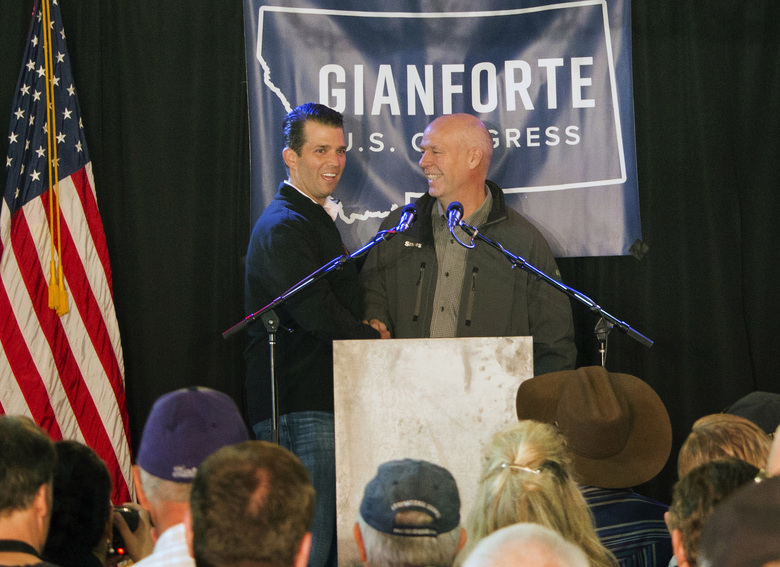
The case of a Montana congressional candidate accused of body-slamming a reporter is being blamed by some media watchers on a wave of hostility toward journalists that President Donald Trump helped generate. “It definitely started before Trump, but he definitely exacerbated it,” said Kelly McBride, a vice president at the Poynter Institute, a media think tank and training center in St. Petersburg, Florida. For months, Trump, first as a candidate, now as president, has attacked the media, calling it dishonest, branding it the “enemy of the people” and accusing it of putting out “fake news.” During the White House campaign, reporters at Trump rallies were often confined to a penned-in area, vilified by the candidate and subjected to such insults and threats from his supporters that some members of the media feared for their safety. At one rally, a man was photographed in a shirt that read, “Rope. Tree. Journalist. Some Assembly Required.” Trump campaign manager Corey Lewandowski was arrested during the campaign on battery charges for grabbing a female reporter. A Florida prosecutor later dropped the charge. On Wednesday, Greg Gianforte, the Republican candidate for a House seat in a special election Thursday, was charged in Montana with misdemeanor assault for allegedly grabbing Guardian reporter Ben Jacobs by the neck and slamming him to the ground after Jacobs asked him about the GOP health care bill. Gianforte could be fined up to $500 or get six months in jail if convicted. Gianforte, who has tried to align himself with Trump, said the reporter was being aggressive and grabbed him by the wrist. Jacobs said he never touched Gianforte. And a Fox News reporter who witnessed the incident said Jacobs was not physically aggressive. “The attack in Montana is only the crudest and most visible expression of the rising hostility toward the media,” Jonathan Turley, a constitutional law expert at George Washington University, wrote in an email. “The chilling fact is that half of the people seeing the Guardian reporter being beaten may actually – if privately – relish the image.” Among other recent incidents, all of them reported in May: The editor of Alaska’s largest newspaper said a state senator slapped one of his reporters when the reporter sought the lawmaker’s opinion on a recently published article. A Washington-based reporter from CQ Roll Call said he was pinned against the wall by security guards and forced to leave the Federal Communications Commission headquarters after he tried to question an FCC commissioner after a news conference. A West Virginia journalist was arrested after yelling questions about the opioid epidemic at U.S. Health Secretary Tom Price. McBride said that while the hostility toward the media really began decades ago with talk radio and the rise of Fox News, Trump has stoked it. “Reporters are subject to abuse all the time. Most of it’s verbal, but it’s not hard to imagine some of that verbal abuse transitioning to physical abuse, especially when you have the president calling journalists scum, bad people, evil people and ‘enemies of the people,’” McBride said. Tim Graham, director of media analysis for the conservative watchdog Media Research Center, said that while he is not condoning an attack on a reporter, it’s “goofball analysis” to lay blame for the Montana episode at Trump’s feet. “If Ann Coulter gets hit by a pie, I’m blaming everyone who has ever criticized her,” he said sarcastically. Carlos Lauria of the nonprofit Committee to Protect Journalists wouldn’t draw parallels between the U.S. political climate and what happened in Montana. But he said, “I think this incident sends an unacceptable signal that physical assault is an appropriate response by an unwanted question by a journalist.” “Everybody needs to take a step back and realize the press has a role to play. We have a right to do our jobs,” said Bernie Lunzer, a former journalist and the president of the NewsGuild, a union representing some 25,000 journalists in the U.S., Canada and Puerto Rico. “You don’t have to like it and you don’t have to talk to us. … If you want to attack journalists for doing their job, then there’s something very wrong.” Turley said something more chilling than the recent clashes between politicians and reporters might be underway. “The White House has admitted that it is actively studying new avenues to increase the liability of journalists. President Trump reportedly pressed former FBI Director Comey to arrest reporters using leaked information,” he said. “I don’t think the U.S. media has ever faced this type of concentrated threat that runs the gamut from physical to legal actions.” He added: “I’ve tended not to be alarmist, but I think there’s a real danger here.” Republished with permission of The Associated Press.
Ronda Walker: Sensationalism sells, and the truth be damned

If you were to read a headline that stated, “Dog found on roadside” you might not even take the time to read the full article. But if the headline stated, “Fifty mutilated puppies found on roadside” that would definitely grab your attention. How about, “Flashes of light seen in night sky during storm” versus “Unexplained flashes of light seen by dozens could be UFOs.” Sensationalism sells, and the truth be damned. The United States federal budget process is very complicated; I do not understand it and won’t act like I do. But in my best Schoolhouse Rock attempt I will sum it up like this: the President submits a budget request to Congress, then the House and Senate have to come to some agreement on what they want to do, then Congressional hearings take place, and eventually the document (much evolved from the original version) goes back to the President for signature. There are a kabillion (official number) programs that receive federal funds. So many programs, in fact, that our country has a $20 trillion deficit. Twenty Trillion Dollars. That is a ridiculous and unsustainable figure. President Donald Trump recently submitted his budget request to Congress, the first step in the process, and the media absolutely freaked out. When everyone got their eye on the White House budget, it was probably some smart Democrat staffer on the Senate side that said, hey, let’s distract the entire nation from looking at this budget by scaring them to death with a headline that reads, “President Trump to gut Meals on Wheels program – seniors nationwide will begin to starve to death within the week.” And that’s exactly what they did, and it worked. It worked because first, the general public does not understand the budget process and they actually believe the President can unilaterally set the federal budget. And two, it worked because the news said it was true, so it must be true. Wrong. Meals on Wheels, administered in central Alabama by the Montgomery Area Council on Aging (MACOA), is a phenomenal program with a life-changing impact on local seniors. This program ensures homebound seniors in our area receive a hot midday meal. In addition to a nutritious meal, the seniors get a friendly smile and loving concern by the volunteer delivering their meal. Meals on Wheels is a program I support both personally as well as publicly through the appropriation of county funds. MACOA is a well run and effective organization and I encourage everyone to donate to MACOA or your local Meals on Wheels provider program. Last week the media reported that the White House budget gutted funding to the Meals on Wheels program – that assertion is false. The White House does not make unilateral budget decisions, moreover Meals on Wheels isn’t even a federal program. This was all a ploy to confuse and distract us from the real issue of the day – our $20 trillion deficit. Twenty Trillion Dollars. As educated Americans we have got to learn to stop chasing these false headlines. We have got to stop blindly reacting to what we read in the media, social and otherwise. But oftentimes we get all Chicken Little about a false issue not because we mistakenly believe it. We oftentimes spread the false narrative because it will help us win an argument, or it will help our side look better. That horrible monster Donald Trump is starving seniors to death; I told you he is a bad President. Yet, that same angry person that just lashed out about Trump never said a peep when President Barack Obama went year after year, after year and never submitted a budget at all which threw agencies dependent on federal funding into a tailspin of uncertainty. Let’s take a look at what actually happened. The White House wants to cut funding to a federal program called Community Development Block Grants (CDBG). It is important to note that Presidents Bush and Obama both proposed cuts to CDBG as well, it just happened without all of this manufactured uproar about taking meals away from the elderly. CDBG funds are federal funds given to states and localities to use at their discretion – and the use and effectiveness of these monies has been questioned for years, thus the desire to scale back on the spending for this program. A few localities designate a small amount of CDBG funds to their local Meals on Wheels program, so those programs could indeed be impacted in the event CDBG gets reduced. However the vast majority of federal dollars to Meals on Wheels comes not from CDBG but from the Department of Health and Human Services through the Older Americans Act. And, the majority of money spent on this program comes from state, local, and private funding, not federal. Every day I read media reports and social media posts that are full of false information and opinion and people buy it hook line and sinker. It’s exhausting. Political spin and trickeration is nothing new. There are lies coming from both sides of the political aisle, likewise there is truth coming from both sides. As caring and involved Americans, we must do our due diligence, dig deep, and understand the facts for ourselves. Please never just rely on one source for your news, read multiple articles and authors and form an education conclusion. And, don’t forget to support your local Meals on Wheels provider! ••• Ronda M. Walker is a wife, mother of four and the Vice Chairman of the Montgomery County Commission.
Winners and losers in Donald Trump’s first budget plan

Military spending would get the biggest boost in President Donald Trump‘s proposed budget. Environmental programs, medical research, Amtrak and an array of international and cultural programs — from Africa to Appalachia — would take big hits, among the many parts of the government he’d put on a crash diet. The budget proposal out Thursday is a White House wish list; it’ll be up to Congress to decide where money goes. If Trump gets his way, there will be more losers than winners among government departments and programs. Some programs would tread water: WIC grants — money to states for health care and nutrition for low-income women, infants and children — are one example. Monday for states grants for water infrastructure projects would be held level as well. Some others would lose everything: Trump proposes to eliminate money for the Corporation for Public Broadcasting, the national endowments for the arts and the humanities and more than a dozen other independent agencies financed by the government. A sampling: WINNERS —The Pentagon. Trump proposes a 10 percent increase in the massive defense budget, adding $52 billion in military spending in one year top expand personnel, equipment and capability. Another $2 billion would go to nuclear weapons. —Veterans Affairs. Up 5.9 percent. That’s an additional $4.4 billion, driven by ever-growing health care costs. —Homeland Security. Up 6.8 percent. That’s $2.8 billion more. Most of the increase, $2.6 billion, would be to help kick-start Trump’s promised border wall. The president has repeatedly said Mexico would pay for the wall; Mexican officials are adamant that they won’t. Trump also wants an extra $1.5 billion for more immigration jails and deportations, and $314 million to hire 1,500 immigration enforcement and border patrol agents. —The National Nuclear Security Administration, which oversees the maintenance and safety of the nuclear arsenal and its research labs. The agency would grow by 11.3 percent, or $1.4 billion, so that it takes up more than half the Energy Department’s budget, which would shrink overall. —Opioid prevention and treatment: a proposed $500 million increase in the Health and Human Services Department to counter the epidemic and more money for the Justice Department to combat the problem. —School choice: $1.4 billion more to expand school choice programs, bringing spending in that area to $20 billion, even as the Education Department’s overall budget would be cut by $9 billion, or 13 percent. LOSERS: —EPA, facing a 31.4 percent cut, or $2.6 billion. The plan would cut 3,200 jobs at the agency, eliminate a new plan for tighter regulations on power plants, and “zero out” programs to clean up the Great Lakes and the Chesapeake Bay. —Health and Human Services, facing the largest cut in dollar terms: $12.6 billion, or 16.2 percent. The plan would cut $5.8 billion from the nearly $32 billion National Institutes of Health, the nation’s premier medical research agency, bringing its total to $25.9 billion. It’s not clear what research on diseases or disorders would lose the most money, although the budget plan specifically calls for elimination of a division that focuses on global health. Already, the NIH’s budget hasn’t kept pace with inflation over the last decade, making it dramatically harder for scientists around the country to win money for research projects into potential new treatments or better understanding of disease. —State Department and U.S. Agency for International Development. Down 28 percent, or $10 billion. Foreign aid would be reduced, as would money to the U.N. and to multilateral development banks including the World Bank. Some foreign military grants would be shifted to loans. —Labor Department. A more than 20 percent cut, or $2.5 billion. To be eliminated: a $434 million program that has helped more than 1 million people 55 and older find jobs, according to the department. The blueprint says the Senior Community Service Employment Program is inefficient and unproven. —Agriculture Department. A nearly 21 percent cut, or $4.7 billion, achieved in part by cutting land acquisition in the National Forest System, rural water infrastructure and statistical capabilities at the department. Trump also proposes reduced staff in county USDA offices, an idea that fell flat in Congress when President Barack Obama proposed a similar reduction. —Transportation Department. Trump proposes a cut of nearly 13 percent, or $2.4 billion. Amtrak, local transit agencies, and rural communities that depend on federal subsidies to obtain scheduled airline service would take the brunt. Trump would eliminate subsidies for Amtrak long-distance train routes, which would most likely mean the end of those routes since they are generally not profitable. Money for the Federal Transit Administration grant program for new light rail and subway construction would be eliminated except for multi-year projects the government has already committed to help fund. —Internal Revenue Service: After years of cuts, the IRS budget would be cut again — by $239 million from this year’s spending levels. The IRS budget is down about $1 billion from its height in 2010. Since then, the agency has lost more than 17,000 employees. As a result, the chances of getting audited have rarely been so low. —Commerce Department. A 16 percent or $1.5 billion cut. The plan would eliminate more than $250 million in National Oceanic and Atmospheric Administration grants, including a program that helps coastal communities adapt to climate change, deal with invasive species and maintain healthy water and fisheries. Also on the chopping block: the Economic Development Administration, which provides federal dollars to foster job creation and attract private investment; and the Minority Business Development Agency, which is dedicated to helping minority-owned business get off the ground and grow. The Trump administration says the two agencies duplicate work done elsewhere. —School programs: The plan would eliminate a $1.2 billion initiative that supports before- and after-school programs as well as summer programs. —Independent agencies supported by tax dollars. If Trump prevails, a hefty contingent of entities would lose all federal money and be shut. Among them, the public broadcasting corporation, the Appalachian Regional Commission, the Chemical Safety Board, the United States
Fueled by Donald Trump opponents, Rachel Maddow’s popularity rises
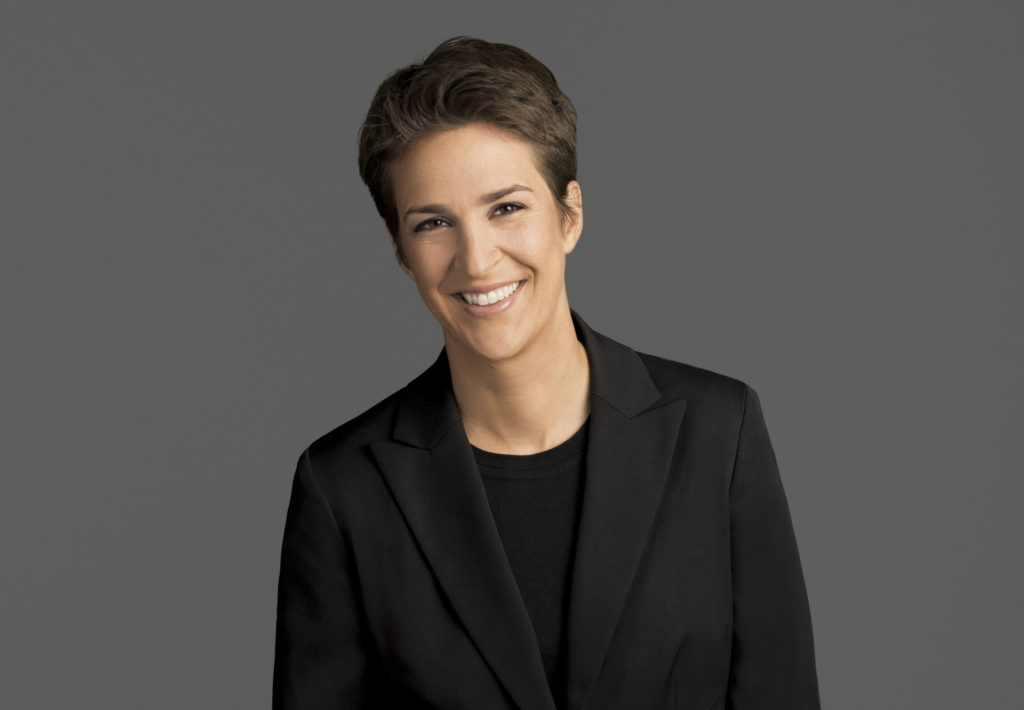
Rachel Maddow can trace the mood of her audience by looking at the ratings. Her MSNBC show’s viewership sank like a stone in the weeks following Donald Trump‘s election, as depressed liberals avoided politics, and bottomed out over the holidays. Slowly, they re-emerged, becoming active and interested again. Maddow’s audience has grown to the point where February was her show’s most-watched month since its 2008 launch. Maddow has emerged as the favorite cable news host for presidential resistors in the opening days of the Trump administration, just as Fox News Channel’s Sean Hannity is one for supporters or Keith Olbermann was the go-to television host for liberals in George W. Bush‘s second term. Trump fascination has helped cable news programs across the political spectrum defy the traditional post-presidential election slump, few as dramatically as Maddow’s. Her show’s average audience of 2.3 million in February doubled its viewership over February 2016, in the midst of the presidential primaries, the Nielsen company said. “I’m grateful for it,” Maddow said one recent afternoon. “It is nice for me that it is happening at a time when I feel we are doing some of our best work.” Those two things — ratings success and Maddow’s pride in the work — don’t always intersect. “We’re making aggressive editorial decisions in terms of how far we’re willing to get off of everyone else’s news cycle,” she said, “but it’s paying off because the news cycle more often than not is catching up with us after we do something.” Maddow has decided to cover the Trump administration like a silent movie, so the show could pay more attention to what is being done rather than what is being said. The central focus is on connect-the-dots reporting about Trump’s business interests and dealings with Russia. Her show is a news cousin to HBO host John Oliver‘s “Last Week Tonight” in its willingness to dive into complex subjects that don’t seem television-friendly, and follow the stories down different alleys. Maddow sounds long-winded when it doesn’t work. When it does, it’s like an absorbing novel stuffed with characters. “It’s not like I am a teacher who is trying to extend the attention span of the American news viewer,” said Maddow, a Rhodes scholar. “I have no goal of trying to privilege complexity. It just so happens that I tend to think in 17-minute bursts.” Maddow said she and her staff try to break news, like reporting on a Department of Homeland Security report on Trump’s immigration policy, and she was aggressive in bringing the Flint, Michigan, water crisis to a national audience. More often than not, she sees her role as explaining how things work. The program spent considerable time last week on a New Yorker magazine piece about foreign investments by Trump’s real estate company. She’s determined not to get lost in the noise, particularly since she believes Trump is skillful at distracting the media with a new story — even an unflattering one — when he doesn’t like the attention being paid to another. “I pray for the day when the most important thing about the Trump administration is that the president said something inappropriate on Twitter,” she said. “There are bigger and more valuable stories to be chasing than that.” When some news organizations were upset at being barred from an informal press briefing held by White House Press Secretary Sean Spicer two weeks ago, Maddow understood why. But the story didn’t really interest her. Since she doesn’t trust much of what the administration says, Maddow wondered what these reporters were really missing by not being there. “Her approach to reality and the president’s couldn’t be further apart,” said Jeff Cohen, an Ithaca University professor and liberal activist. During busy news periods, “certain voices cut through,” said NBC News Chairman Andrew Lack. “And her work is so consistently strong. She doesn’t disappoint, and she’s got a work ethic that is consistently off the charts. … She is a very original and unique voice.” While Maddow delivers opinion pieces instead of straight news, they are well-informed, he said. Lack doesn’t see Maddow as a voice of the resistance. Neither does she. “People want to draft me as an activist all the time, ascribe that role to me,” she said. “I’m not. The reason I know I’m not is that I stopped doing that in order to be the person who explained the news and delivered the news instead. It’s a very clear line to me.” Republished with permission of The Associated Press.
Media the enemy? Donald Trump sure is an insatiable consumer
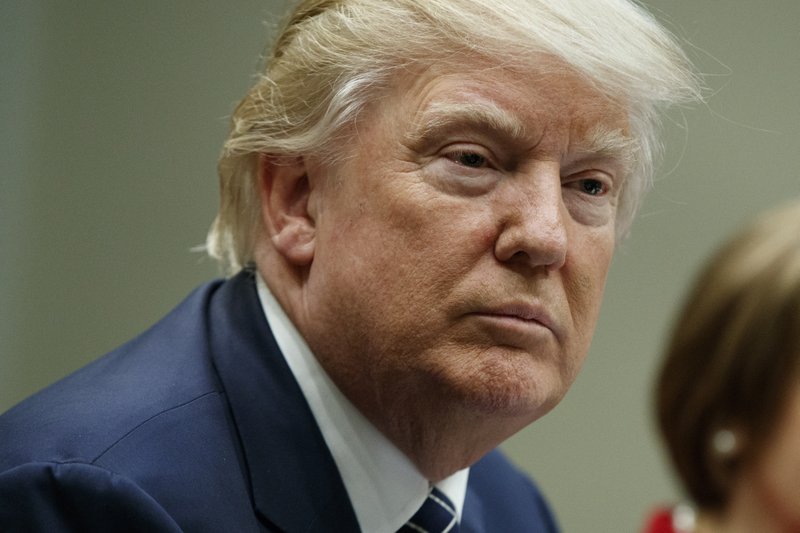
Before most people are out of bed, Donald Trump is watching cable news. With Twitter app at the ready, the man who condemns the media as “the enemy of the people” may be the most voracious consumer of news in modern presidential history. Trump usually rises before 6 a.m. and first watches TV in the residence before later moving to a small dining room in the West Wing. A short time later, he’s given a stack of newspapers — including The New York Times, The Wall Street Journal, The Financial Times, The Washington Post and, long his favorite, The New York Post — as well as pile of printed articles from other sources including conservative online outlets like Breitbart News. The TVs stay on all day. The president often checks in at lunch and again in the evening, when he retires to the residence, cellphone in hand. It is a central paradox of the Trump presidency. Despite his fervent media criticism, Trump is a faithful newspaper reader who enjoys jousting with reporters, an avid cable TV news viewer who frequently live-tweets what he’s watching, and a reader of websites that have been illuminated by his presidential spotlight, showcasing the at-times conspiratorial corners of the internet. No recent president has been so public about his interest in his media coverage, nor seemed so willing to mobilize the powers of the federal government based on a media report that he has just read, heard or watched. In fact, the power of Trump’s media diet is so potent that White House staffers have, to varying degrees of success, tried to limit his television watching and control some of what he reads. The president’s cable TV menu fluctuates. Fox News is a constant, and he also frequently watches CNN despite deriding it as “fake news.” Though he used to watch “Morning Joe,” a Trump aide said the president has grown frustrated with his coverage on the MSNBC program and has largely stopped. For Trump, watching cable is often an interactive experience. More than dozen times since his election, he has tweeted about what he saw on TV just minutes before. On Nov. 29, he posted about instituting potentially unconstitutional penalties for burning the American flag 30 minutes after Fox ran a segment on the subject. On Jan. 24, he threatened to “send in the Feds!” to Chicago a short time after watching a CNN segment on violence in the city. On Feb. 6, after CNN reported about a “Saturday Night Live” skit on the increasing power of the president’s advisers, Trump just 11 minutes later tweeted, “I call my own shots, largely based on an accumulation of data, and everyone knows it!” On Tuesday, Trump tweeted five different times about the news of the day being discussed on his preferred morning show, “Fox & Friends.” MSNBC’s Rachel Maddow, a frequent Trump critic, told The Associated Press that she finds it “unsettling” that Trump “may be getting most of his understanding of the world based on whatever he stumbles upon on cable.” While pleased that Trump is following the media, Maddow noted that “the White House is designed as an instrument to feed the president of the United States expertly curated and highly selective, well-vetted information from every corner of the world.” Others note the president is there may be some smart politics behind Trump’s media diet. He “advertised getting his news the same way his supporters do, which helps make a connection,” said Tobe Berkovitz, a communications professor at Boston University. The president’s advisers try to curb his cable consumption during the workday. But there are no limits when he returns to the residence. He also avidly watches his own staff’s TV performances, including White House Press Secretary Sean Spicer‘s daily briefing. Aides have been known to shape their public comments to please the president or try to influence him. Trump’s consumption of cable news differs considerably from previous commanders in chief, who have at least claimed to be disconnected from the cable chatter. Jay Carney, White House press secretary under Barack Obama, has claimed that Obama “doesn’t watch cable news,” though that did not keep the former president from criticizing the medium. Where Trump differs most from his presidential predecessors is his reliance on getting news online — even though he rarely uses a computer and prefers aides to print out articles for him to read. What he was seeing on Twitter and conservative websites like the Drudge Report and the conspiracy-laden Infowars helped forge his political persona — and his public misinformation campaign questioning whether Obama was born in the United States. And social media has become a way for some news sources to gain an audience with the president. Last Thursday, as questions swirled around contacts between Attorney General Jeff Sessions and the Russian ambassador, a Reddit user posted a picture of Russian President Vladimir Putin and New York Sen. Charles Schumer from a 2003 photo op. Two hours later, the blog The Gateway Pundit reprinted the photo with the headline “Where’s the Outrage?” The image careened across the internet from an Infowars editor’s post to the Drudge Report to Trump’s own Twitter account as he delivered that outrage, demanding an investigation into Schumer’s alleged ties to Putin. That wasn’t the only time last week when Trump put the White House stamp on a theory that originated on the edges of the conservative movement. Radio host Mark Levin voiced without evidence the idea that Obama had wiretapped Trump Tower. That accusation was picked up the next day by Breitbart News, the site formerly run by Trump’s current chief strategist Steve Bannon. An aide placed that piece in Trump’s daily reading pile, said a White House official, who like other aides would not be named discussing the president’s private routine. Fueled by that report on Saturday, Trump unleashed a series of jaw-dropping tweets that accused his predecessor of spying on him. “It’s not the normal Beltway echo chamber. This is a
House intel chair: Media take Donald Trump tweets too literally

The top Republican on the House intelligence committee said he has not seen any evidence to back President Donald Trump‘s claim that the Obama administration wiretapped him during the 2016 campaign and suggested the news media were taking the president’s weekend tweets too literally. “The president is a neophyte to politics — he’s been doing this a little over a year,” Rep. Devin Nunes, R-Calif., told reporters Tuesday. “I think a lot of the things he says, I think you guys sometimes take literally.” On Saturday, Trump tweeted, “Is it legal for a sitting President to be ‘wire tapping’ a race for president prior to an election? Turned down by court earlier. A NEW LOW!” He followed up with: “How low has President Obama gone to tapp my phones during the very sacred election process. This is Nixon/Watergate. Bad (or sick) guy!” Top former Obama administration officials have refuted Trump’s claims. Trump asked Nunes’ committee and the other congressional committees investigating Russia’s interference in the 2016 election to look into this matter. Nunes, who was a member of Trump’s transition team, said whether the Obama administration had secret warrants to listen to Trump or his associates during the campaign would have been part of his committee’s investigation regardless. He said the first public hearing of its investigation would be held March 20. And the initial invite list includes the directors of the FBI and National Security Agency as well as former top Obama administration intelligence officials and two cyber security experts. The committee has the power to subpoena officials to testify, but Nunes did not indicate that the committee had plans to do so and said he hoped they would come freely. The House intelligence committee is one of three congressional committees investigating Russia’s interference in the 2016 election. The Senate intelligence committee is conducting a separate investigation, and most of its hearings are expected to be closed to the public to discuss classified information. A subcommittee of the Senate Judiciary Committee held its first hearing related to its investigation on Tuesday. Republished with permission of The Associated Press.
The new civics course in schools: How to avoid fake news

Teachers from elementary school through college are telling students how to distinguish between factual and fictional news — and why they should care that there’s a difference. As Facebook works with The Associated Press, FactCheck.org and other organizations to curb the spread of fake and misleading news on its influential network, teachers say classroom instruction can play a role in deflating the kind of “Pope endorses Trump” headlines that muddied the waters during the 2016 presidential campaign. “I think only education can solve this problem,” said Pat Winters Lauro, a professor at Kean University in New Jersey who began teaching a course on news literacy this semester. Like others, Lauro has found discussions of fake news can lead to politically sensitive territory. Some critics believe fake stories targeting Democratic presidential nominee Hillary Clinton helped Donald Trump overcome a large deficit in public opinion polls, and President Trump himself has attached the label to various media outlets and unfavorable reports and polls in the first weeks of his presidency. “It hasn’t been a difficult topic to teach in terms of material because there’s so much going on out there,” Lauro said, “but it’s difficult in terms of politics because we have such a divided country and the students are divided, too, on their beliefs. I’m afraid sometimes that they think I’m being political when really I’m just talking about journalistic standards for facts and verification, and they look at it like ‘Oh, you’re anti-this or -that.’” Judging what to trust was easier when the sources were clearer — magazines, newspapers or something else, said Kean senior Mike Roche, who is taking Lauro’s class. Now “it all comes through the same medium of your cellphone or your computer, so it’s very easy to blur the lines and not have a clear distinction of what’s real and what’s fake,” he said. A California lawmaker last month introduced a bill to require the state to add lessons on how to distinguish between real and fake news to the grade 7-12 curriculum. High school government and politics teacher Lesley Battaglia added fake news to the usual election-season lessons on primaries and presidential debates, discussing credible sites and sources and running stories through fact-checking sites like Snopes. There were also lessons about anonymous sources and satire. (They got a kick out of China’s dissemination of a 2012 satirical story from The Onion naming Kim Jong Un as the sexiest man alive.) “I’m making you guys do the hard stuff that not everybody always does. They see it in a tweet and that’s enough for them,” Battaglia told her students at Williamsville South High School in suburban Buffalo. “It’s kind of crazy,” 17-year-old student Hannah Mercer said, “to think about how much it’s affecting people and swaying their opinions.” Stony Brook University’s Center for News Literacy pioneered the idea of educating future news consumers, and not just journalists, a decade ago with the rise of online news. About four in 10 Americans often get news online, a 2016 Pew Research Center report found. Stony Brook last month partnered with the University of Hong Kong to launch a free online course. “To me, it’s the new civics course,” said Tom Boll, after wrapping up his own course on real and fake news at the Newhouse School at Syracuse University. With everyone now able to post and share, gone are the days of the network news and newspaper editors serving as the primary gatekeepers of information, Boll, an adjunct professor, said. “The gates are wide open,” he said, “and it’s up to us to figure out what to believe.” That’s not easy, said Raleigh, North Carolina-area teacher Bill Ferriter, who encourages students to first use common sense to question whether a story could be true, to look at web addresses and authors for hints, and to be skeptical of articles that seem aimed at riling them up. He pointed to an authentic-looking site reporting that President Barack Obama signed an order in December banning the Pledge of Allegiance in schools. A “.co” at the end of an impostor news site web address should have been a red flag, he said. “The biggest challenge that I have whenever I try to teach kids about questionable content on the web,” said Ferriter, who teaches sixth grade, “is convincing them that there is such a thing as questionable content on the web.” Some of Battaglia’s students fear fake news will chip away at the trust of even credible news sources and give public figures license to dismiss as fake news anything unfavorable. “When people start to distrust all news sources is when people in power are just allowed to do whatever they want, said Katie Peter, “and that’s very scary.” Republished with permission of The Associated Press.
Donald Trump takes aim at Dodd-Frank financial overhaul

The Latest on President Donald Trump (all times local): 1:28 p.m. President Donald Trump has signed an executive order that will direct the Treasury secretary to review the 2010 Dodd-Frank financial overhaul. It’s Trump’s first step at scaling back regulations on financial services. Trump has called the law a “disaster” and said it failed to address some of the causes of the 2008-2009 financial crisis. The president has also signed a presidential memorandum related to retirement planning. The administration’s move will delay implementing an Obama-era rule that requires financial professionals who charge commissions to put their clients’ best interests first when giving advice on retirement investments. ___ 1 p.m. The Trump administration says it has thawed its temporary freeze on contract and grant approvals at the Environmental Protection Agency, with all $3.9 billion in planned spending moving forward. A media blackout at the agency also appears to have been partially lifted, as a trickle of press releases were issued by EPA this week. However, the agency still has not posted to its official Twitter feed since President Donald Trump’s Jan. 20 inauguration. The Associated Press and other media outlets reported last week that Trump political appointees had instructed EPA staff not to issue press releases or make posts to the agency’s official social media accounts without prior approval. Contract and grant spending at the agency was also put on hold, prompting confusion and concern among state agencies expecting funding. ___ 12:05 p.m. Foreign leaders and groups are finding new ways to make known their disagreement with President Donald Trump’s policies. An international school in Bosnia announced Friday it would extend scholarships to students affected by Trump’s travel ban on citizens from seven Muslim-majority countries. The United World College’s branch in Mostar said it was motivated by its belief in equal opportunities. In Portugal, the parliament there voted to condemn the U.S. travel ban and highlighted the role of the U.S. to promote tolerance and human rights. In Sweden, Deputy Prime Minister Isabella Lovin posted on Facebook a photo of her signing the country’s new climate law while surrounded by seven female members of her staff. Swedish media say it resembles photos of Trump in the Oval office surrounded by male advisers. ___ 10:25 a.m. President Donald Trump is applauding the January jobs report, saying it shows there’s a “great spirit in the country right now.” Trump addressed last month’s job report, which showed the U.S. economy adding 227,000 jobs and the unemployment rate at 4.8 percent. The report also says that more Americans started looking for work, although not all of them found jobs immediately. Trump is joining business leaders and CEOs in the White House and also previewing some of his economic priorities. He says he expects “to be cutting a lot out of Dodd-Frank,” the financial regulations put in place in response to the Great Recession. The president says they’ll be discussing how to bring back jobs, lower taxes and reduce regulations. ___ 8:15 a.m. President Donald Trump says that a “new radical Islamic terrorist” is behind an attack outside the Louvre Museum in Paris. Trump tweeted early Friday that America needs to “get smart,” in light of the incident. He writes, “a new radical Islamic terrorist has just attacked in Louvre Museum in Paris. Tourists were locked down. France on edge again.” A knife-wielding man shouting “Allahu akbar” — “God is Great,” in Arabic — attacked French soldiers on patrol near the museum Friday in what officials described as a suspected terror attack. The soldiers first tried to fight off the attacker and then opened fire, shooting him five times. There were no immediate details about the identity of the suspect. ___ 7:40 a.m. President Donald Trump says reports of his contentious conversation with Australia’s prime minister are “fake news.” In a tweet Friday morning, Trump thanked Prime Minister Malcolm Turnbull “for telling the truth about our very civil conversation that FAKE NEWS media lied about. Very nice!” Turnbull told journalists that Trump had agreed to honor a deal to resettle refugees from among around 1,600 asylum seekers. Most are in island camps on the Pacific nations of Nauru and Papua New Guinea. Turnbull also said the U.S.-Australia relationship is strong. Australia has refused to accept them and instead pays for them to be housed on the impoverished islands. Trump earlier took to Twitter to call the agreement with Australia a “dumb deal.” ___ 7:04 a.m. President Donald Trump says movie star Arnold Schwarzenegger “tried hard” to make “Celebrity Apprentice” a success, but has failed. In an early morning Twitter post Friday, the president kept alive a theme he brought up a day earlier during his first appearance at the National Prayer Breakfast. Trump, who once hosted the NBC reality TV show, took a pot shot there at Schwarzenegger, the current host and former California governor, over a ratings nosedive for the show. On Friday, Trump said in his tweet, “Yes, Arnold Schwarzenegger did a really bad job as Governor of California and even worse on the Apprentice … but at least he tried hard!” Schwarzenegger responded quickly to Thursday’s remarks in a video on his verified Twitter account, suggesting that he and Trump switch jobs. Republished with permission of The Associated Press.
House Science chairman: Get news from Donald Trump, not media
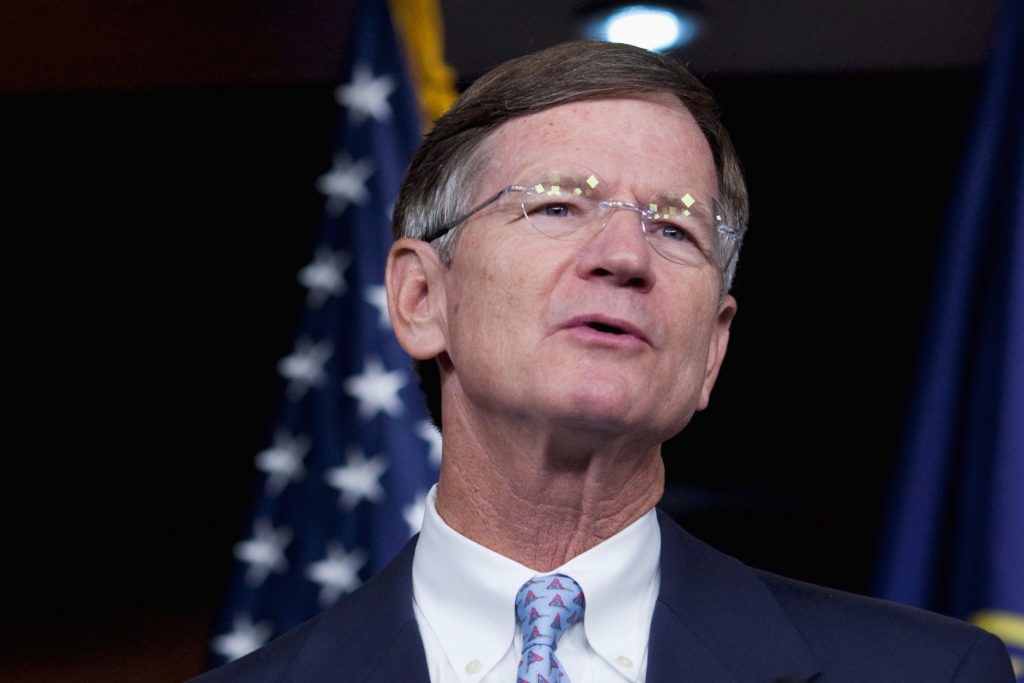
The Republican chairman of the House Science panel is encouraging Americans to get their news from President Donald Trump and not the news media. Rep. Lamar Smith of Texas said if Trump were a Democrat, the media would be saying he has tremendous energy, how he “is courageous, even fearless,” and how he is a great father, among many other positive attributes. But Smith said the “national, liberal media” won’t print or air such attributes. The congressman said Monday night during a speech on the House floor: “Better to get your news directly from the president. In fact, it might be the only way to get the unvarnished truth.” Trump has repeatedly made false claims about fraudulent balloting costing him the popular vote and has disputed the turnout for his inauguration. Kellyanne Conway, an aide to Trump, said this weekend that the White House was offering “alternative facts” to the ones reported by the media. The House Science panel that Smith chairs has jurisdiction over agencies that have a major focus on research and development, such as NASA and the Department of Energy. In his role as chairman, he has voiced skepticism about the extent of climate change and the role of human behavior, saying that the Obama administration engaged in alarmism and exaggeration to promote an extreme climate agenda. Republished with permission of The Associated Press.
Donald Trump’s ‘war with the media’ raises questions of trust
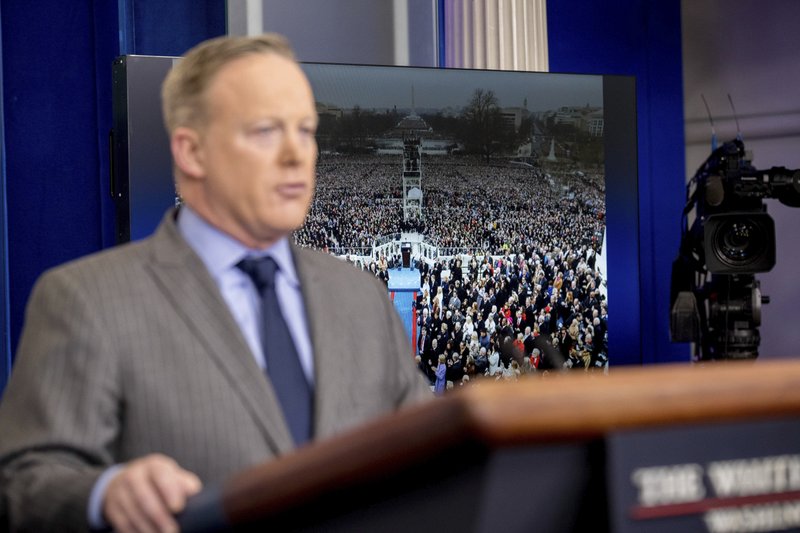
Donald Trump‘s “running war” on the media is continuing into his presidency, with statements over the weekend calling into question the extent to which information from the White House can be trusted. White House Press Secretary Sean Spicer on Monday will hold his first daily press briefing at which he could face questions about a statement Saturday night that included demonstrably false assertions about the crowd size at Friday’s inauguration and a promise by the new administration that “we’re going to hold the press accountable.” Some Trump supporters will no doubt cheer the continued antagonism toward the media that was central to the Republican’s campaign for president. Now the stakes are higher. Press secretaries have been lied to by their bosses, or misled reporters through the omission of information, but veteran journalist Dan Rather said Sunday it was the first time he could recall false material being delivered in this way. “I hope that people will stop, pull back for what we in television call a wide shot and see what is happening,” Rather said. “This is a deliberate propaganda campaign.” Longtime Republican operative Spicer, who most recently was the spokesman for the Republican National Committee and also worked for President George W. Bush, is known for fighting tenaciously for his employers. His briefing on Saturday followed a Trump appearance at the CIA where the president criticized the media for its reporting his criticisms of the intelligence community and took exception to stories saying the crowd for his inauguration was smaller than those for predecessor Barack Obama. Trump declared that journalists are “the most dishonest human beings on Earth,” saying “I have a running war with the media.” Spicer made two unprovable statements in his briefing: that photographs of the audience at Trump’s inaugural were intentionally framed to minimize the appearance of support, and that Trump drew the largest audience ever to witness an inauguration. But he also made statements that were quickly disproven: that the Washington Metro system recorded more riders on the day of Trump’s inaugural than when Obama was sworn in for his second term, that Friday marked the first time that white floor covering was used on the Washington Mall that amplified empty spaces, and it was the first time spectators were required to pass through magnetometers to enter the Mall. Spicer’s briefing, during which he did not take questions from reporters, was televised live on Fox News Channel and MSNBC. CNN did not air the session but showed highlights later. Trump’s first press conference after he was elected, on Jan. 11, also took aim at the media. Coming hours after news reports revealed intelligence officials had presented Trump with unsubstantiated and salacious allegations regarding his relationship to Russia, Trump and his team condemned news organizations that disclosed details, calling out CNN and BuzzFeed as “disgraceful” and refusing to take questions from a CNN reporter. Confronted by “Meet the Press” host Chuck Todd on Sunday with “falsehoods” stated by Spicer, Trump adviser Kellyanne Conway called them “alternative facts.” She accused Todd of laughing at her and said he symbolizes how Trump has been treated by the media. One person who has been in Spicer’s position, former White House Press Secretary Ari Fleischer, said it seemed clear to him that Spicer was acting on orders from his boss. Press secretaries have to walk a fine line between reflecting the thinking and wishes of the president while trying to help the people covering him do their jobs, said Fleischer, who, like Spicer, worked for Bush. Fleischer said he never knowingly delivered false information to the press while at the White House. “You can’t do that,” he said. “It will shorten your career.” When Spicer faces the press on Monday, he needs to elaborate on his argument, “take the hard questions and demonstrate reasonableness,” Fleischer said. The conservative web site breitbart.com led its site with an article headlined: “White House Press Secretary Sean Spicer blasts media’s ‘deliberately false reporting.’” The article said that Spicer’s “criticism of the media’s fake news reporting resulted in a media meltdown on social media.” Yet it’s a crucial time for Spicer’s reputation. A press secretary whose word can’t be trusted has no value to anyone, said Terence Hunt, a longtime White House correspondent and editor for The Associated Press who recently retired. “You can’t tell lies in the White House,” Hunt said. “Somebody will smoke you out, on issues large and small. The president’s integrity and credibility are at stake in everything you say, so be super careful.” If the White House can’t be trusted to tell the truth on a relatively trivial matter like crowd size, the public will wonder about the reliability of information on important topics like terrorism or the nuclear capabilities of North Korea, said Ben Mullin, a managing editor at the Poynter Institute who does a podcast on the relationship between Trump and the press. Former CBS anchor Rather, who famously tangled with the Nixon White House during the Watergate era, said the situation saddened him. “I don’t think the American people as a whole, whether they supported Donald Trump or not, want a situation where the press secretary to the president comes out and knowingly tells a lie,” he said. Republished with permission of the Associated Press.
Continuing battle with media, Donald Trump avoids news conference
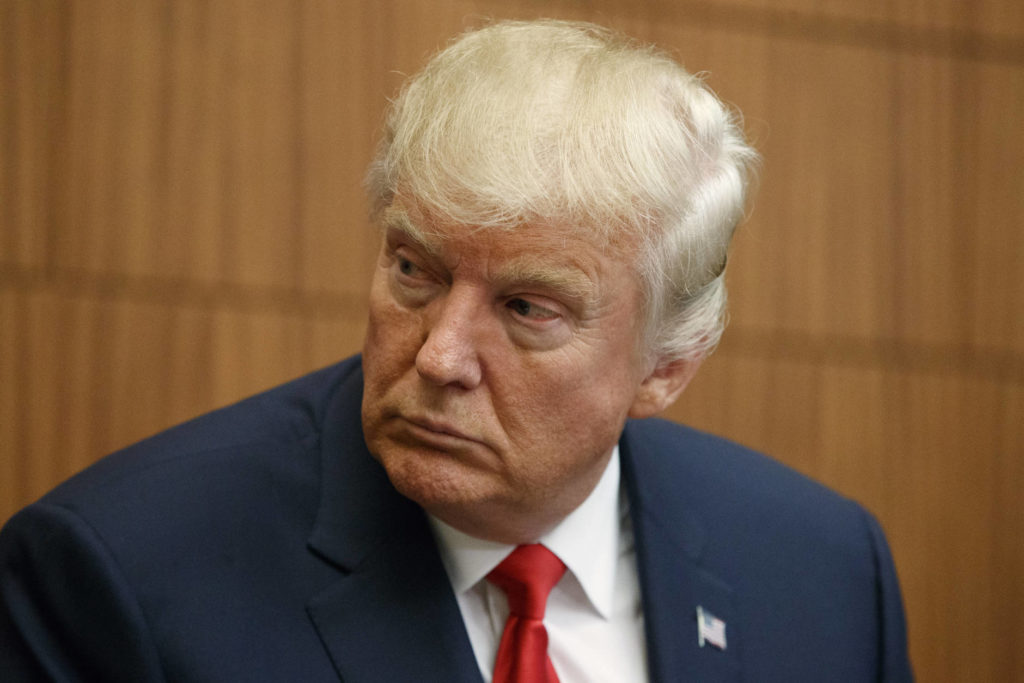
Less than a month from taking office, President-elect Donald Trump has yet to hold the traditional news conference that most incoming presidents have held within days of their victory. As of Thursday, it had been 147 days since Trump held his last formal news conference as a candidate. Trump, whose refusal to do a news conference has been criticized by journalism groups and media watchdogs, has instead tried to convey his message directly to the American public, bypassing the media with pronouncements at his boisterous rallies and, of course, distributing his thoughts 140 characters at a time on his famed Twitter account. He was slated to hold a press conference on December 15 to discuss his plan to leave his sprawling business empire as he takes office, but that event was postponed. Aides have said it will be rescheduled for January, but no date has yet been set. “America has a tradition of an aggressive, free and independent press and a large part of that is that the press inquiries about the president and his stances on the issues,” Tobe Berkovitz, a communications professor at Boston University, said. “They probably can wave goodbye to that. It’s quite obvious that Trump has no interest in following the traditions of the presidency and relationship with the press.” But while his lack of press interaction is a worry to some, many Trump supporters cheered the celebrity businessman’s battles with what they felt were biased reporters. Trump made his antagonistic relationship with the media a centerpiece of his campaign, inciting his rally crowds to boo the press, singling out individual reporters with derogatory names like “sleazebag” and using Twitter to attack coverage he didn’t like. His predecessors took a different approach. Two days after the Supreme Court decision gave him the 2000 election, George W. Bush held a press conference where reporters asked him about his Cabinet picks and tax plans. He proceeded to field more questions each of the next two days. Barack Obama, also regularly held news conferences after winning, taking questions from the White House press corps 18 different times as president-elect. Bush, who had a shorter transition due to the extended Florida recount, did so 11 times. No modern president-elect has waited as long as Trump to field questions. Since taking office, he has sat for a few television interviews and has taken a handful of shouted questions from the press pool – a small group of reporters who follow the president – a few times at Trump Tower in New York and on Thursday outside his coastal Florida estate. Trump’s team has downplayed the need for news conferences. Kellyanne Conway, a newly appointed White House counselor, said Thursday that the press would have access to the president. “This will be a traditional White House in the sense that you will have a great deal of press availability on a daily basis and you’ll have a president who continues to be engaged with the press,” she said in an interview with ABC. Trump’s last full-fledged news conference was July 27, which he held at his Miami-area golf course as counterprogramming to the ongoing Democratic National Convention. It was there that Trump called upon Russia to hack his opponent Hillary Clinton‘s emails saying, “I will tell you this, Russia: If you’re listening, I hope you’re able to find the 30,000 emails that are missing.” His staff later insisted that Trump was joking. Before that, Trump and his staff had mocked Clinton for not holding her own news conferences. In May, Trump tweeted: “I am getting great credit for my press conference today. Crooked Hillary should be admonished for not having a press conference in 179 days.” Clinton eventually had one after 276 days and then held several more before Election Day. Trump fielded a few questions from a handful of reporters in September on his plane and took a few more in a gaggle after the first presidential debate but did not hold another news conference. But since the one he hosted in July, he has tweeted more than 1,000 times. Republished with permission of the Associated Press.
Donald Trump drama rolls on: Disputes, falsehoods hit transition

The drama, disputes and falsehoods that permeated Donald Trump‘s presidential campaign are now roiling his transition to the White House, forcing aides to defend his baseless assertions of illegal voting and sending internal fights spilling into public. On Monday, a recount effort, led by Green Party candidate Jill Stein and joined by Hillary Clinton‘s campaign also marched on in three states, based partly on the Stein campaign’s unsubstantiated assertion that cyberhacking could have interfered with electronic voting machines. Wisconsin officials approved plans to begin a recount as early as Thursday. Stein also asked for a recount in Pennsylvania and was expected to do the same in Michigan, where officials certified Trump’s victory Monday. Trump has angrily denounced the recounts and now claims without evidence that he, not Clinton, would have won the popular vote if it hadn’t been for “millions of people who voted illegally.” On Twitter, he singled out Virginia, California and New Hampshire. There has been no indication of widespread election tampering or voter fraud in those states or any others, and Trump aides struggled Monday to back up their boss’ claim. Spokesman Jason Miller said illegal voting was “an issue of concern.” But the only evidence he raised was a 2014 news report and a study on voting irregularities conducted before the 2016 election. Trump met Monday with candidates for top Cabinet posts, including retired Gen. David Petraeus, a new contender for secretary of state. Trump is to meet Tuesday with Tennessee Sen. Bob Corker, who is also being considered more seriously for the diplomatic post, and Mitt Romney, who has become a symbol of the internal divisions agitating the transition team. Petraeus said he spent about an hour with Trump, and he praised the president-elect for showing a “great grasp of a variety of the challenges that are out there.” “Very good conversation and we’ll see where it goes from here,” he said. A former CIA chief, Petraeus pleaded guilty last year to a misdemeanor charge of mishandling classified information relating to documents he had provided to his biographer, with whom he was having an affair. Vice President-elect Mike Pence, who is heading the transition effort, teased “a number of very important announcements tomorrow” as he exited Trump Tower Monday night. Pence is said to be among those backing Romney for State. Romney was fiercely critical of Trump throughout the campaign but is interested in the Cabinet position, and they discussed it during a lengthy meeting earlier this month. Other top Trump allies, notably campaign manager Kellyanne Conway, have launched a highly unusual public campaign to warn the president-elect that nominating Romney would be seen as a betrayal by his supporters. Conway’s comments stirred speculation that she is seeking to either force Trump’s hand or give him cover for ultimately passing over Romney. Three people close to the transition team said Trump had been aware that Conway planned to voice her opinion, both on Twitter and in television interviews. They disputed reports that Trump was furious at her and suggested his decision to consider additional candidates instead highlighted her influence. Conway served as Trump’s third campaign manager and largely succeeded in navigating the minefield of rivalries that ensnared other officials. Trump is said to have offered her a choice of White House jobs — either press secretary or communications director. But people with knowledge of Conway’s plans say she is more interested in serving as an outside political adviser, akin to the role President Barack Obama‘s campaign manager David Plouffe played following the 2008 election. The wrangling over the State Department post appears to have slowed the announcements of other top jobs. Retired Gen. James Mattis, who impressed Trump during a pre-Thanksgiving meeting, was at the top of the list for Defense secretary, but a final decision had not been made. Trump was also considering former New York City Mayor Rudy Giuliani for Homeland Security secretary, according to those close to the transition process. Giuliani was initially the front-runner for State and is still in the mix. But questions about his overseas business dealings, as well as the mayor’s public campaigning for the job, have given Trump pause. Those close to the transition insisted on anonymity in commenting because they were not authorized to publicly discuss the private process. Even as Trump weighs major decisions that will shape his presidency, he’s been unable to avoid being distracted by the recount effort. He spent Sunday on a 12-hour Twitter offensive that included quoting Clinton’s concession speech, in which she said the public owed Trump “an open mind and the chance to lead.” His final tweets challenging the integrity of an election he won were reminiscent of his repeated, unsubstantiated assertions during the campaign that the contest might be rigged. Those previous comments sparked an outcry from both Clinton and some Republicans. Clinton lawyer Marc Elias said the campaign has seen “no actionable evidence” of voting anomalies. But the campaign still plans to be involved in Stein’s recount to ensure its interests are legally represented. Trump narrowly won Wisconsin, Pennsylvania and Michigan. All three would need to flip to Clinton to upend the Republican’s victory, and Clinton’s team says Trump has a larger edge in all three states than has ever been overcome in a presidential recount. Republished with permission of the Associated Press.
