
Well-wishers flock to Rosalynn Carter tribute to bid farewell to former U.S. and Georgia first lady
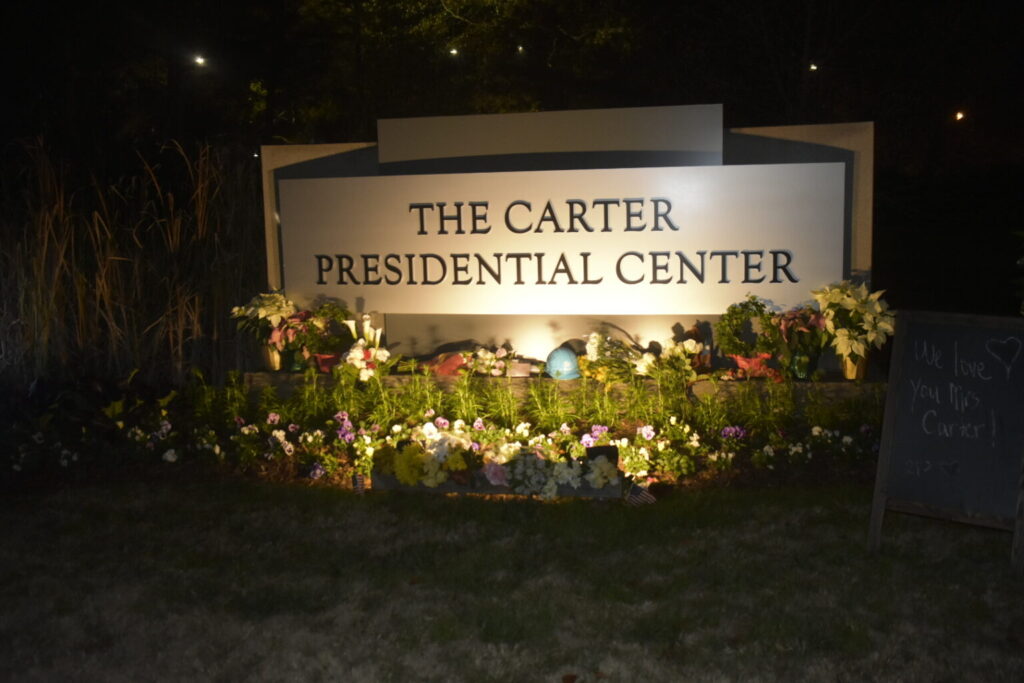
Ross Williams, Alabama ReflectorNovember 28, 2023 This story was originally published on Georgia Recorder. The museum at the Carter Center in Atlanta typically echoes with the oohs and ahhs of tourists and the banter of field tripping schoolchildren, but all was silent Monday night as hundreds of well-wishers walked through the colorful displays to honor a flower-draped casket. Rosalynn Carter, former first lady of Georgia and the United States, is set to make her final journey to her Plains, Georgia home Wednesday after fans across the state and country say farewell. Carter, 96, died at her home Nov. 19 a few days after her family announced she had entered hospice. Her husband of 77 years, former President Jimmy Carter, called her his “equal partner in everything I ever accomplished,” and she was widely admired for her decades of advocacy, especially her work on behalf of people with mental illnesses and their caregivers. Mental health advocate Aisha Bryant of Midtown Atlanta said she had the opportunity to meet Carter at Emory University in 2017 through her work with people with autism. She said the former first lady’s humility and kindness stuck with her. “I just remember her being so humble towards me and just everything that she’s done in life, I didn’t expect that she’s just so happy, so calm, the demeanor about herself,” she said. Many people in the crowd had personal stories of encounters with Rosalynn Carter. When she crossed your path, she always made you feel special, said Shellie Stuart, who came to the Carter Center Monday from Lincoln City, Oregon – about 2,700 miles away. Aisha Bryant, left, and Shellie Stuart sign a guest book for former first lady Rosalynn Carter. (Ross Williams/Georgia Recorder) Stuart met the Carters through her work with Friendship Force International, a nonprofit promoting cultural exchange around the world, and accompanied them on travels, including a 2002 diplomatic mission to Cuba. “I was always amazed at how Rosalynn Carter had time for everybody,” she said. “Everybody mattered. Nobody was made to feel less important than anybody else. She was a huge inspiration to me and my friends. We felt that it was important to come here from Oregon, just to pay our respects and be part of this.” John Lang, who made the 10-hour trip from Columbus, Ohio, looked back fondly on the seven or eight Habitat for Humanity projects he accompanied the Carters on in the U.S. and in foreign lands that include India, Haiti, and Thailand. He said he’ll never forget Rosalynn Carter’s beautiful smile, but she was far more than just a pretty face at the president’s side. “She was out there working day in and day out,” he said. “I saw her in 90-degree weather, sweating with all the rest of us. And I think that’s one of the things a lot of people don’t realize, that Mrs. Carter and President Carter actually did the work.” Lang said the former first couple were just as loving and affectionate as they are often described. “They really were always holding hands, just on little short jaunts or going to get something to eat, you know, they would be holding hands, and I thought that was a true recognition of a marriage and that commitment to the other person,” he said. Melissa Danielson of Forsyth said she also worked with Rosalynn Carter as her art registrar in the 1990s. When dignitaries sent the Carters gifts and awards, Danielson would catalog them before Rosalynn Carter would decide where to put them in the Carter Center. “It was a pleasure working for them,” she said. “They were such compassionate people, very humble. She was such a wonderful lady to work for. She’s very down to earth and caring so much about people. My heart goes out to her family right now. I mean, she was a grandmother, great-grandmother. Those are the people that I feel for deeply right now.” Carter’s family members are set to say their goodbyes in a series of private services leading up to her funeral on Wednesday. On Tuesday, invited guests will pay tribute at Glenn Memorial Church at Emory University. According to the Carter Center, every living former first lady is expected to attend – Melania Trump, Michelle Obama, Laura Bush, and former Secretary of State Hillary Clinton – as is current first lady Jill Biden, who is expected to arrive in Atlanta Tuesday with President Joe Biden. Other notable guests expected to attend include former President Bill Clinton, Vice President Kamala Harris and second gentleman Doug Emhoff, Georgia Gov. Brian Kemp and first lady Marty Kemp, Atlanta Mayor Andre Dickens, and “multiple members of Congress and Georgia elected officials,” according to the Carter Center. On Wednesday, Carter’s motorcade is scheduled to travel the 160 miles south to Plains for a private service at Maranatha Baptist Church, where the Carters worshiped, volunteered, and taught for decades. Members of the public are invited to line the motorcade route down Bond Street and along Ga. 280 in downtown Plains. Georgia Recorder is part of States Newsroom, a network of news bureaus supported by grants and a coalition of donors as a 501c(3) public charity. Georgia Recorder maintains editorial independence. Follow Georgia Recorder on Facebook and Twitter. Alabama Reflector is part of States Newsroom, a network of news bureaus supported by grants and a coalition of donors as a 501c(3) public charity. Alabama Reflector maintains editorial independence. Follow Alabama Reflector on Facebook and Twitter.
Lynda Blanchard raises over $300,000 in first six weeks of campaign
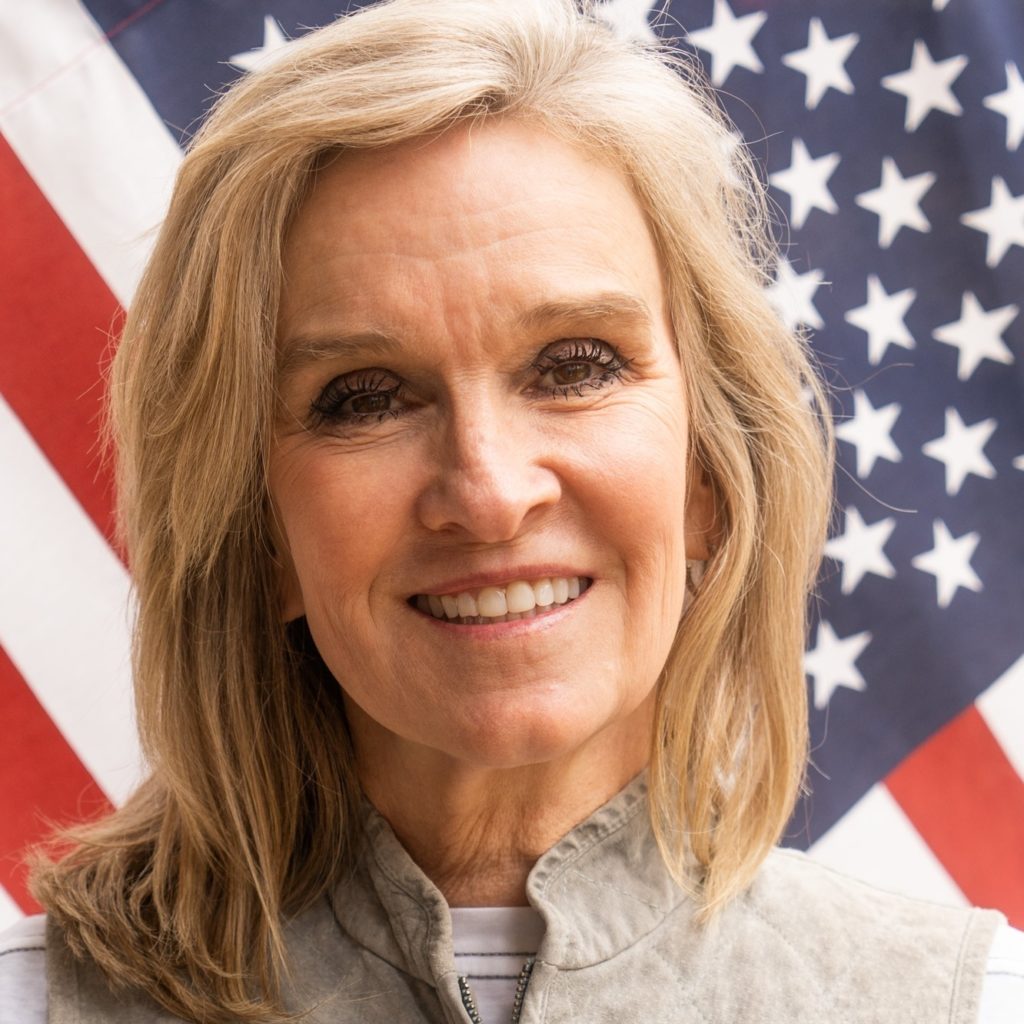
U.S. Senate candidate Lynda Blanchard announced that her initial filing with the Federal Elections Commission shows she has raised more than $300,000 in donations in the first six weeks since announcing her candidacy. Blanchard announced her candidacy in February. The FEC filing reports a balance of $5.2 million. $5 million of the funds is in personal funds that Blanchard has loaned to her campaign. Blanchard stated, “Considering the federal fundraising limits that are in place, raising more than $300,000 in such a short period is an incredible achievement, and it offers strong evidence that voters want to elect a committed Trump Republican who is brand new to the political scene. With the Republican primary more than a year away, we are running a marathon, not a sprint, but these numbers indicate a strong start coming out of the gate. “Just like President Trump famously self-funded his 2016 presidential campaign, the funding I have put into the campaign shows I cannot be bought and will commit the resources necessary to remain competitive and win,” Blanchard continued. “We must stop the radical Biden/Schumer/Pelosi agenda in its tracks, finish draining the Swamp, and complete the MAGA agenda that President Trump so boldly began.” Several former Trump administration officials hosted Blanchard for a campaign fundraiser at the Mar-a-Lago resort in Palm Beach in mid-March. President Donald Trump made a surprise appearance at the event. Blanchard is a former Trump administration official who served as ambassador to First Lady Melania Trump’s home country of Slovenia. Since announcing her candidacy, Blanchard has begun a three-week television ad buy across the state, and a similar statewide radio effort begin soon. In one of the first ads of her candidacy, Blanchard described herself as a Christian, a business-builder, mother of eight children, and a “proud member of the MAGA movement.”
Will Ainsworth, Alabama lieutenant governor will not run for Senate in 2022
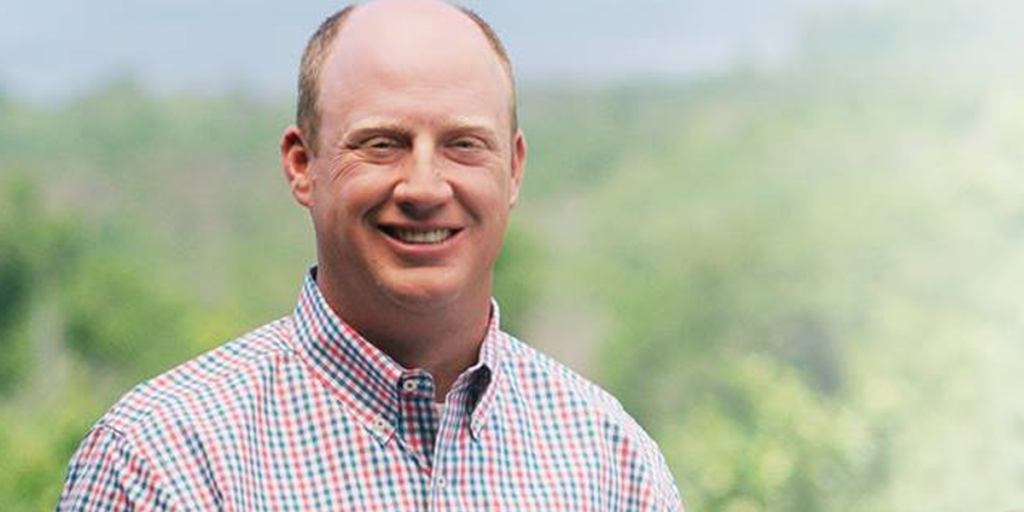
Alabama Lt. Gov. Will Ainsworth said Friday he will not run for the U.S. Senate seat being given up by longtime incumbent Richard Shelby next year. Ainsworth, a first-term Republican from Guntersville, announced on social media that he had considered a bid but decided against running because his three children need a father who’s present and involved in their lives. “I feel strongly that God’s plan currently calls for me to continue leading on the state, not federal, level of government,” he said in a tweet. Elected lieutenant governor in 2018, Ainsworth served a term in the Alabama House before that. Shelby, 86, announced earlier this month that he won’t seek a seventh term. Several other people are considering campaigns, but only former Trump administration ambassador and businesswoman Lynda Blanchard has announced a run. Rep. Mo Brooks of Huntsville has said he is considering a campaign, as is Secretary of State John Merrill. Another possible candidate is Shelby’s former chief of staff, Katie Boyd Britt, who now heads the Business Council of Alabama and likely would have the senator’s backing if she decided to run. Blanchard, 61, said she never considered running for office until former President Donald Trump appointed her to serve as ambassador to Slovenia, the home country of former first lady Melania Trump. Blanchard and her husband began a commercial real estate company that has apartment complexes throughout the South. Republished with the permission of the Associated Press.
Lawmakers who met with Rudy Giuliani scramble after COVID news
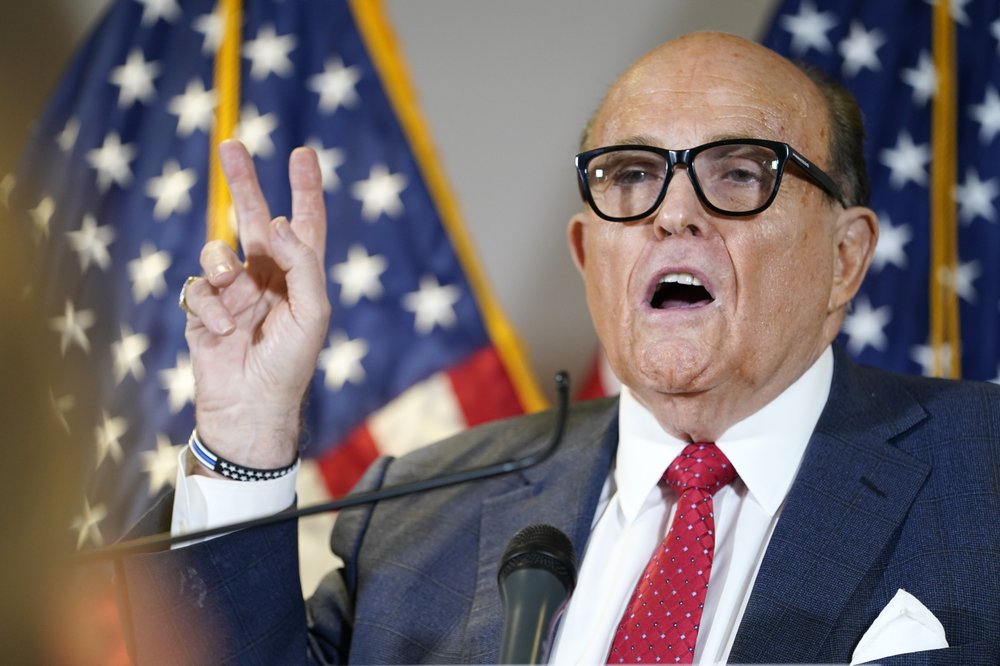
President Donald Trump said Monday his personal attorney Rudy Giuliani was “doing very well” after being hospitalized with the coronavirus as lawmakers in battleground states that Giuliani visited last week scrambled to make sure they did not contract the virus. The 76-year-old former New York mayor, hospitalized in Washington, had traveled extensively to battleground states to press Trump’s quixotic effort to get legislators to overturn his election loss to Joe Biden and subvert the November vote. On numerous occasions, Giuliani met with officials for hours at a time without wearing a mask, including hearings last week with state lawmakers in Arizona, Georgia, and Michigan. Fallout from Giuliani’s diagnosis continued Monday as the Michigan House announced it had canceled its voting session scheduled for Tuesday. Giuliani spoke for hours last week before a Republican-led committee in Lansing investigating alleged election irregularities. Michigan’s move came after the Arizona legislature announced Sunday that it would close for a week out of an abundance of caution “for recent cases and concerns relating to COVID-19.” “Multiple representatives have requested time to receive results from recent COVID-19 tests before returning to session, out of an abundance of caution,” Michigan House Speaker Lee Chatfield, a Republican who met with Giuliani before the hearing, said in a statement. “The CDC guidelines would not consider them close contacts with anyone, even if Mayor Giuliani had been positive, but they want to go above and beyond in the interest of public safety. With the recent spike in COVID cases nationwide, this makes sense.” The health department in Ingham County, where Lansing is located, said several people who attended the Michigan committee meeting with Giuliani on Wednesday must quarantine at least through Saturday. Health officer Linda Vail said she consulted with the state health department, which agrees that “it is extremely likely that Giuliani was contagious during his testimony.” In Georgia, state Sen. William Ligon Jr., chairman of the subcommittee Giuliani testified before, urged those who had come in close contact with Giuliani “to take every precaution and follow all requisite guidelines to ensure their health and safety.” Giuliani on Thursday attended a hearing at the Georgia Capitol, where he went without a mask for several hours. Several state senators, all Republicans, also did not wear masks at the hearing. The Georgia legislature is not currently in session. Trump, who announced Giuliani’s positive test in a Sunday afternoon tweet, told reporters he spoke with Giuliani on Monday. Giuliani was exhibiting symptoms when he was admitted to Georgetown University Medical Center on Sunday, according to a person familiar with the matter who was not authorized to comment publicly. “Rudy’s doing very well,” Trump said Monday. “I just spoke to him. No temperature.” At Wednesday’s 4-1/2-hour hearing in Lansing, Giuliani did not wear a mask; nor did lawyer Jenna Ellis, who was sitting next to him. He asked one of his witnesses, a Detroit election worker if she would be comfortable removing her mask, but legislators said they could hear her. Giuliani traveled last Monday to Phoenix, where he met with Republican legislators for an hourslong hearing in which he was maskless. The Arizona Republican Party tweeted a photo of Giuliani and several state GOP lawmakers standing shoulder-to-shoulder and maskless. The Trump campaign said in a statement that Giuliani tested negative twice before his visits to Arizona, Michigan, and Georgia. Unidentified Trump team members who had close contact with Giuliani are in self-isolation. “The Mayor did not experience any symptoms or test positive for COVID-19 until more than 48 hours after his return,” according to the statement. “No legislators in any state or members of the press are on the contact tracing list, under current CDC Guidelines.” Georgia state Sen. Jen Jordan, a Democrat who attended Thursday’s hearing, expressed outrage after learning of Giuliani’s diagnosis. “Little did I know that most credible death threat that I encountered last week was Trump’s own lawyer,” Jordan tweeted. “Giuliani — maskless, in packed hearing room for 7 hours. To say I am livid would be too kind.” The diagnosis comes more than a month after Trump lost reelection and more than two months after Trump himself was stricken with the virus in early October. Since then, a flurry of administration officials and others in Trump’s orbit have also been sickened, including White House chief of staff Mark Meadows and Ben Carson, the secretary of housing and urban development. The president’s wife, Melania Trump, and teenage son, Barron Trump, also contracted the virus. The extraordinary spread in Trump’s orbit underscores the cavalier approach the Republican president has taken to a virus that has now killed more than 282,000 people in the U.S. alone. Those infected also include the White House press secretary and advisers Hope Hicks and Stephen Miller, as well as Trump’s campaign manager and the chair of the Republican National Committee. Republished with the permission of the Associated Press.
Donald Trump’s election night party adds to virus scrutiny
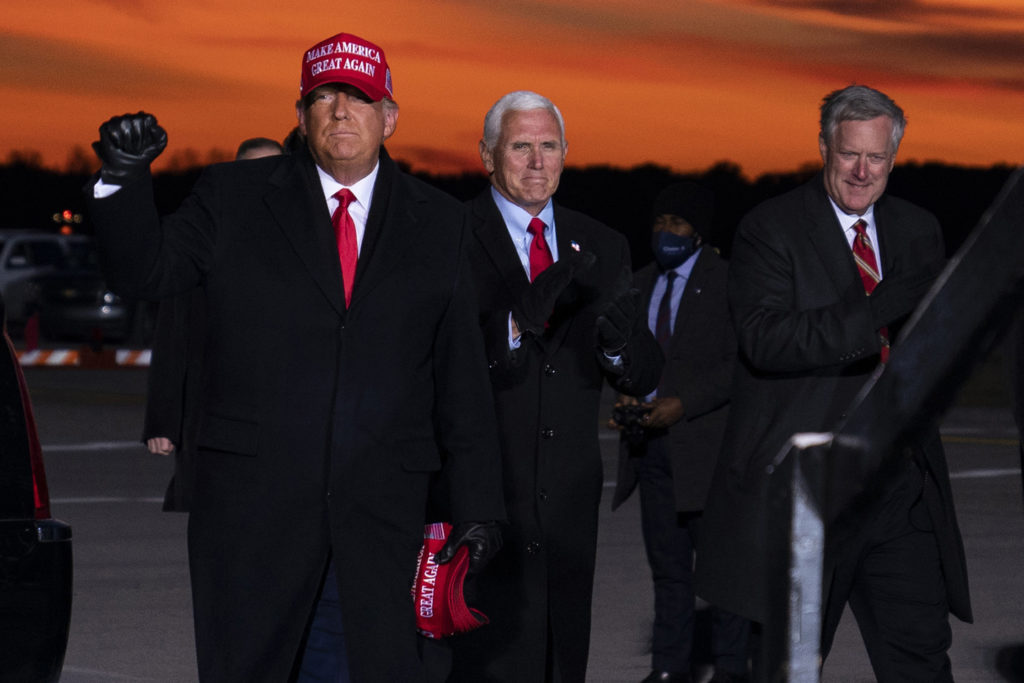
It was supposed to be a scene of celebration. Instead, Donald Trump’s campaign election night watch party in the White House East Room has become another symbol of his cavalier attitude toward a virus that is ripping across the nation and infecting more than 100,000 people a day. Polls suggest that attitude was a serious drag on the president’s reelection bid as voters chose to deny Trump a second term in favor of his Democratic rival, now President-Elect Joe Biden. And the party — with few masks and no social distancing — is now under additional scrutiny after the president’s chief of staff, Mark Meadows, became the latest top White House official to contract the virus, which has now killed more than 237,000 people in the U.S. alone. The White House has repeatedly refused to say who else has tested positive, even as the virus continues to spread. The latest White House cluster, coming just a month after Trump’s own diagnosis and hospitalization, includes a top Trump campaign official as well as a handful of undisclosed White House staff, officials said. The White House has been increasingly secretive about outbreaks. Many White House and campaign officials, as well as those who attended the election watch party, were kept in the dark about the diagnoses, unaware until they were disclosed by the press. That the virus would continue to spread in the White House — even though senior staff and those who come into close contact with the president and vice president are frequently tested — has come as no surprise to public health officials who have balked at the White House’s lax approach. “The administration was cavalier about the risks of the virus for themselves and for the country. And that’s one reason why we have so many cases,” said Dr. Joshua Sharfstein, a public health professor at Johns Hopkins University’s school of public health. Even Senate Majority Leader Mitch McConnell has said he has been avoiding the White House since August “because my impression was their approach to how to handle this was different from mine and what I insisted that we do in the Senate, which is to wear a mask and practice social distancing.” Meadows in particular has long tried to play down the severity of the virus. He rarely wore a mask in public, except during the period immediately following Trump’s infection. At one point, he refused to speak to reporters on Capitol Hill after they requested he wear a mask. He was again without one during Tuesday evening’s East Room event, where more than 100 of Trump’s most loyal supporters gathered to watch the election results come in and see him deliver what they had hoped would be a victory speech. It was a festive atmosphere, with half-empty glasses of wine and other beverages strewn across cocktail tables in front of news cameras. Meadows, who spent time with Trump’s family before-hand, was seen working the room, including giving several fist-bumps to those in attendance, before Trump took the stage early Wednesday morning. While everyone who attended the East Room event had been tested in advance for the virus, there was no social distancing and minimal mask-wearing. Earlier that day, Meadows had also accompanied the president to his campaign’s headquarters in Virginia, where Trump received rousing cheers from several dozen staff and volunteers. Meadows did not wear a mask, nor did other White House staffers. Campaign aides largely did. If Meadows tested positive Wednesday — as Bloomberg News reported — he would likely have been infectious during both events, said Saskia Popescu, an epidemiologist who teaches at George Mason University. Meadows had also traveled with Trump in the run-up to Election Day, attending dozens of rallies where he was frequently seen interacting with supporters without masks. Trump’s refusal to abide by his own government’s public health guidelines throughout the campaign was a major source of frustration for local governments as he scheduled rally after rally in defiance of local caps on crowd sizes, even in pandemic hot zones. While Trump had hoped his efforts to downplay the virus in a bid to revive a limping economy would help him with voters, many Republicans now believe that Trump might have won reelection had he handled things differently. Still, Trump’s approach reflected the priorities of his supporters. AP VoteCast, a national survey of the electorate, found that about half of Trump voters called the economy and jobs the top issue facing the nation, versus just 1 in 10 Biden voters. A majority of Biden voters, meanwhile — about 6 in 10 — said the pandemic was the most important issue facing the country. The White House did not respond to specific questions about the current outbreak, but said that contact tracing had been conducted by the White House Medical Unit, consistent with Centers for Disease Control and Prevention guidelines. “Appropriate notifications and recommendations have been made,” the White House said. The CDC defines “close contact” as spending at least 15 minutes within 6 feet of an infected person beginning two days before they test positive or exhibit symptoms. But Popescu called the party, in particular, “a ripe environment for transmission to occur,” and said anyone in attendance should have been informed and asked to take precautions. “While they might not meet CDC guidelines for exposure, I think when we’re looking at an indoor event with a lot of people for a prolonged period who are unmasked, out of an abundance of caution, everyone should be notified and encouraged to stay home,” she said. “Now is not the time to be cavalier about the risks,” Sharfstein said. Ohio pastor Darrell Scott, a close ally of the president who attended the party, said he was unaware any White House officials beyond Meadows had tested positive until informed by a reporter and had not been contacted by any tracer. While Scott, like many in Trump’s orbit, continued to insist fraud was to blame for the president’s loss — despite no credible evidence supporting
Donald Trump, Joe Biden fight for Florida, appeal for Tuesday turnout
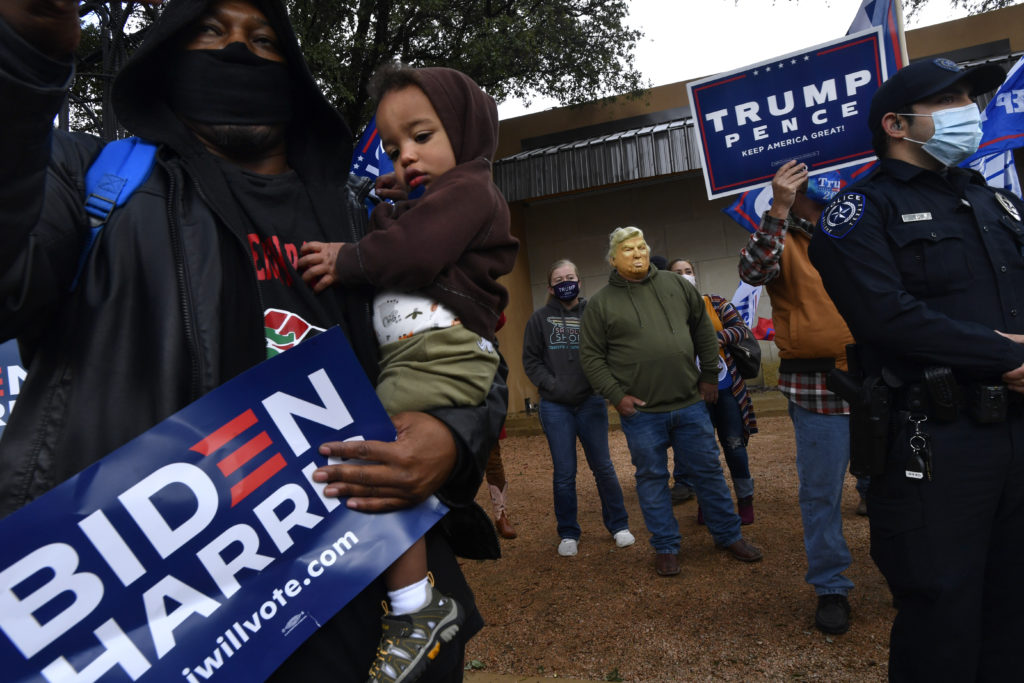
President Donald Trump and Democratic rival Joe Biden are encouraging voters to turn out in person on Election Day next Tuesday, both campaigning in Florida, a state all but essential to the Republican’s pathway to another term. More than 80 million Americans have already voted, absentee or by mail, and Trump and Biden are trying to energize the millions more who will vote on Tuesday. While the Election Day vote traditionally favors Republicans and early votes tend toward Democrats, the coronavirus pandemic, which has killed more than 227,000 people in the United States, has injected new uncertainty. Trump and Biden were appearing in Tampa hours apart on Thursday. They’re visiting the western end of the state’s Interstate 4 corridor, an area known for rapid residential growth, sprawling suburbs and its status as an ever-changing, hard-fought battleground during presidential elections. “You hold the power. If Florida goes blue, it’s over,” Biden told supporters Thursday. Trump was celebrating a new federal estimate that the economy grew at a stunning 33.1% annual rate in the July-September quarter — by far the largest quarterly gain on record — making up ground from its epic plunge in the spring, when the eruption of the coronavirus closed businesses and threw tens of millions out of work. “So glad this great GDP number came out before November 3rd,” Trump said in a tweet, predicting dire consequences if Biden is elected. But economists warned that the economy is already weakening again and facing renewed threats as confirmed viral cases are surge, hiring has slowed and federal stimulus help has largely run out. Biden, in a statement, criticized Trump over the report. “The recovery is slowing if not stalling,” he said, “and the recovery that is happening is helping those at the top but leaving tens of millions of working families and small businesses behind.” The visits come as Biden has framed his closing argument to voters on responsible management of the COVID-19 pandemic and Trump promises that the nation is on course to “vanquish the virus” even as it sets records for confirmed new infections. The president had been scheduled to hit another Southern battleground state, North Carolina, on Thursday evening but canceled his event in Fayetteville as Tropical Storm Zeta brought wind gusts reaching 50 mph to the area. Trump is holding three rallies on Saturday in Pennsylvania before launching on a whirlwind tour of battlegrounds including Florida, Michigan, Georgia and Pennsylvania in the closing 48 hours of the race. Biden, meanwhile, heads later in the week to three more states Trump won in 2016: Iowa, Wisconsin and then Michigan, where he’ll hold a joint Saturday rally with former President Barack Obama. Biden’s campaign also announced he will visit Minnesota Friday hours before Trump holds a rally in one of the few Clinton-voting states Trump is hoping to pick up this year. The pandemic’s consequences were escalating, with deaths climbing in 39 states and an average of 805 people dying daily nationwide — up from 714 two weeks ago. The sharp rise sent shockwaves through financial markets, causing the Dow Jones Industrial Average to drop 900-plus points. Trump, who frequently lauds rising markets, failed to mention the decline on Wednesday. Trump is betting on the GOP’s vast field and data operations, and efforts known as “poll flushing” — monitoring precinct lists for who has and has not yet voted — to provide a late boost of votes on Election Day. The Republican National Committee, which has more than 3,000 field staff and claims more than 2.5 million volunteers, will use that information to reach out to Trump supporters to ensure they get to the polls. Nowhere may those efforts be more important than in Florida. Without the battleground state’s 29 electoral votes, Trump’s path to victory is exceptionally difficult. Trump was introduced in Tampa by his wife, first lady Melania Trump, who praised her husband’s presidency, saying “under Donald’s leadership, we have blocked out the noise and focused on you, the American people.” Trump is banking on local news coverage of his visit to overcome a substantial advertising deficit stemming from a late cash crunch. Biden and his allies are outspending Trump and his backers by more than 3-to-1 in Florida — about $23 million to about $7 million — in the final push to Election Day, according to data from ad tracking firm Kantar/CMAG. Biden, meanwhile, is pouring tens of millions of dollars into a torrent of online advertising that will deliver his closing message of the presidential campaign, highlighting his promise to govern for all Americans while blasting Trump’s handling of the coronavirus pandemic. “I’m running as a proud Democrat, but I will govern as an American president,” Biden says in one of the digital ads, which will take over the masthead of YouTube.com on Thursday. “I will work as hard for those who don’t support me as those who do. That’s the job of a president — the duty to care for everyone.” How much exactly Biden will spend is unclear. His campaign says it is putting a “mid-eight figure” dollar amount behind over 100 different ads, which means they could be spending as little as $25 million — but potentially much more. The ads will run on social media platforms including Instagram and Facebook, streaming services such as Hulu and music applications like Pandora. The Republican National Committee, meanwhile, launched its closing message to voters Thursday, not mentioning Trump, in an apparent aim to help GOP candidates up and down the ballot with a focus on traditional Republican messages around lowering taxes and health care. In both Hillsborough County, which includes Tampa, and the adjacent Pinellas County, Democrats are crushing vote-by-mail. As of Wednesday morning, 53,000 more Democrats than Republicans had voted by mail in Hillsborough. In Pinellas, the largest of the four counties in the state to switch from Obama to Trump in 2016, that number was just shy of 30,000. Republicans in both counties have a slight edge in the state’s in-person early voting, which began last Saturday as Trump himself
Joe Biden vows to unify and save country; Donald Trump hits Midwest
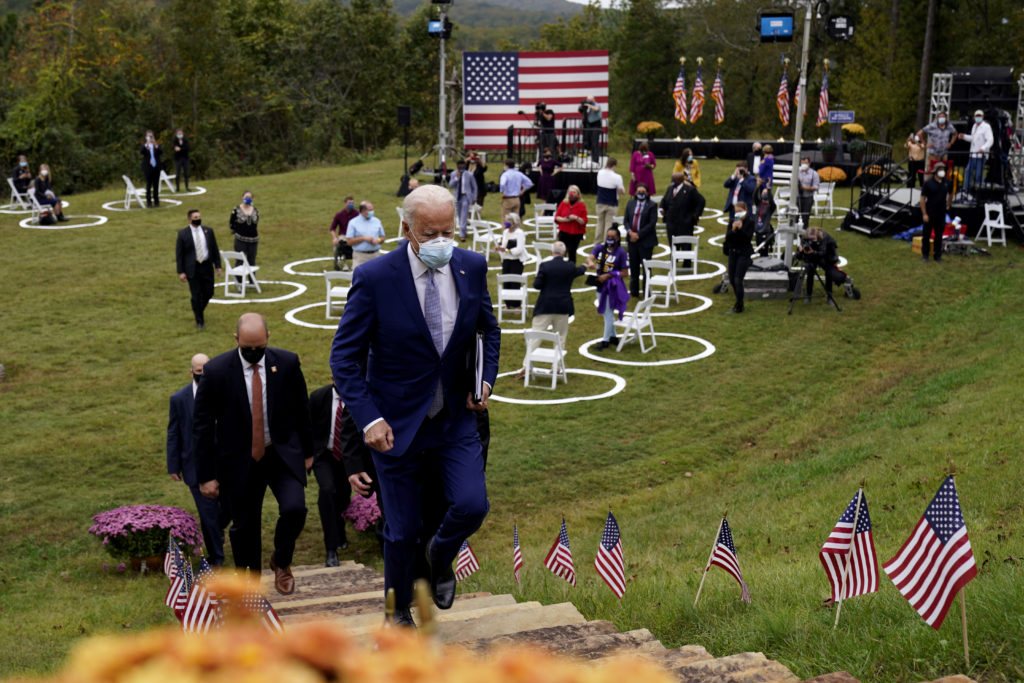
Joe Biden traveled Tuesday to the hot springs town where Franklin Delano Roosevelt coped with polio to declare the U.S. is not too politically diseased to overcome its health and economic crises, pledging to be the unifying force who can “restore our soul and save this country.” The Democratic presidential nominee offered his closing argument with Election Day just one week away while attempting to go on the political offensive in Georgia, which hasn’t backed a Democrat for the White House since 1992. He promised to be a president for all Americans regardless of party, even as he said that “anger and suspicion is growing and our wounds are getting deeper.” “Has the heart of this nation turned to stone? I don’t think so,” Biden said. “I refuse to believe it.” While Biden worked to expand the electoral map in the South, President Donald Trump focused on the Democrats’ “blue wall” states that he flipped in 2016 — Michigan, Wisconsin and Pennsylvania — and maintained a far busier travel schedule taking him to much more of the country. At a cold, rain-soaked rally in the Michigan capital of Lansing, Trump said Biden supported the North American Free Trade Agreement and China’s entry into the World Trade Organization, both of which he said hurt the auto industry and other manufacturing in the state. “This election is a matter of economic survival for Michigan,” the president said, arguing that the state’s economy was strong before the coronavirus pandemic hit. “Look what I’ve done.” Trump also cheered Senate candidate John James — who may ultimately have a better chance of winning the state than the president — while attacking Michigan Gov. Gretchen Whitmer for moving aggressively to shut down much of the state’s economy to slow the virus’ spread. He even seemed to cast doubt on federal authorities breaking up what they said was a plot to kidnap her, which Whitmer has argued Trump’s “violent rhetoric” helped spark. “It was our people that helped her out with her problem. And we’ll have to see if it’s a problem. Right?” Trump said. “People are entitled to say ‘maybe it was a problem. Maybe it wasn’t.’” Biden, even as he predicted the country could rise above politics, went after his election rival, accusing Trump anew of bungling the federal response to the pandemic that has seen new cases surging in many areas, and failing to manage the economic fallout or combat institutional racism and police brutality that have sparked widespread demonstrations. “The tragic truth of our time is that COVID has left a deep and lasting wound in this country,” Biden said, scoffing at Trump’s pronouncements that the nation is turning a corner on the virus. He charged that the president has “shrugged. He’s swaggered. And he’s surrendered.” Venturing into Georgia was a sign of confidence by the Biden team, which is trying to stretch the electoral map and open up more paths to the needed 270 Electoral College votes. The former vice president plans to travel to Iowa, which Trump took by 10 points in 2016, later in the week. And his running mate, California Sen. Kamala Harris, is hitting Arizona and deep red Texas. Besides Lansing, Trump traveled to West Salem, Wisconsin. First lady Melania Trump was on the road, too, making her first solo campaign trip of the year in Pennsylvania. And Vice President Mike Pence was in South Carolina, maintaining his campaign schedule despite several close aides testing positive for the coronavirus last weekend. There, Republican Sen. Lindsey Graham is in a potentially tight reelection race. Hillary Clinton flirted with GOP territory in 2016, only to lose traditional Democratic Midwestern strongholds. But a top Biden adviser rejected the notion that the campaign is spreading itself too thin, noting that the former vice president’s visit follows weeks of paid advertising in Georgia and visits by Harris and the candidate’s wife, Jill Biden. In the coming days, Biden will also visit Wisconsin, Michigan and Florida, where former President Barack Obama gave a speech in Orlando on Tuesday, blistering Trump with the theory that he was only worrying about the virus because it was dominating news coverage. “He’s jealous of COVID’s media coverage,” Obama said. “If he had been focused on COVID from the beginning, cases wouldn’t be reaching new record highs across the country this week.” Trump expressed his displeasure that Fox News carried his Democratic predecessor’s speech live, complaining to reporters about it and tweeting the network was “playing Obama’s no crowd, fake speech for Biden.” In Atglen, Pennsylvania, Melania Trump said she was feeling “so much better now,” just weeks after being diagnosed with the virus. She slammed Biden’s “socialist agenda,” praised her husband as “a fighter” and commented on his use of social media. “I don’t always agree the way he says things,” she said, drawing laughter from the crowd, “but it is important to him that he speaks directly to the people he serves.” The Trumps left for their campaign trips at the same time, and the president gave the first lady a quick peck on the cheek before they boarded separate planes. The president also visited Omaha, Nebraska, after a Sunday stop in Maine. That anticipates a razor-thin Electoral College margin since both areas offer one electoral vote by congressional district. “We have to win both Nebraskas,” Trump told the big crowd that gathered at the city’s Eppley Airfield, presumably referring to Omaha and the state’s more rural districts. While Biden rarely travels to more than one state per day, the Republican president has maintained a whirlwind schedule, focusing on his argument that he built a booming economy before the coronavirus pandemic upended it. Trump is planning a dizzying 11 rallies in the final 48 hours before polls close. His latest swing is also something of a victory lap after the Senate on Monday approved the nomination of Amy Coney Barrett to give conservatives a commanding 6-3 advantage on the Supreme Court. Trump has sought to use the vacancy created by the
Donald Trump aide: ‘We’re not going to control the pandemic’
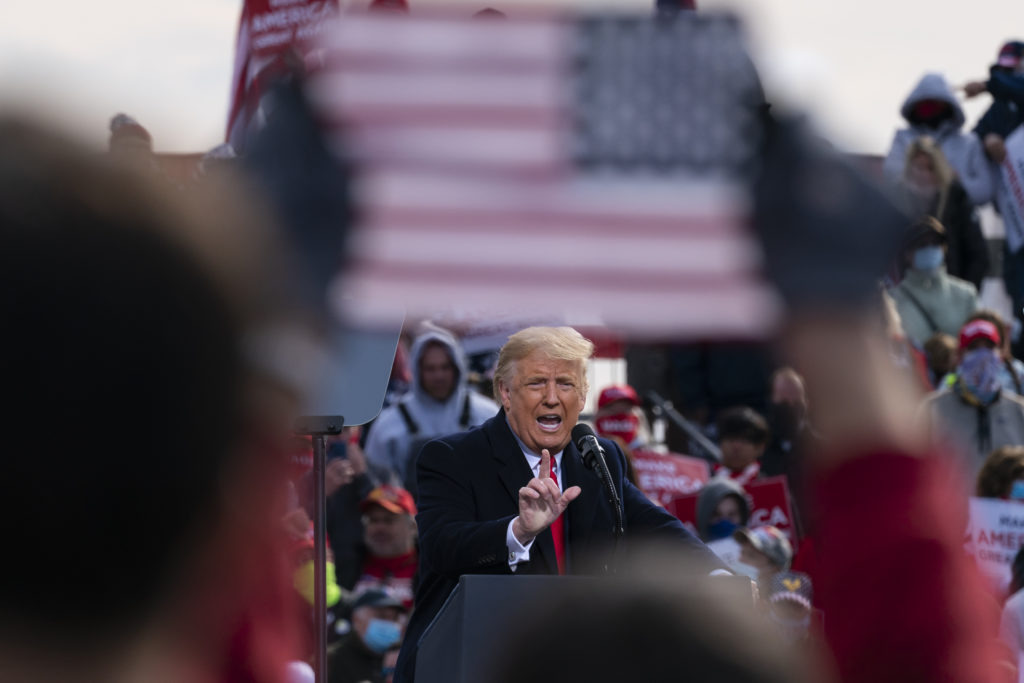
The coronavirus has reached the upper echelons of the White House again, with an outbreak among aides to Vice President Mike Pence just over a week from Election Day. A top White House official declared: “We’re not going to control the pandemic.” Officials on Sunday also scoffed at the notion of Pence dialing back in-person campaigning despite positive tests among several people in his office. Pence, who leads the White House’s coronavirus task force, was back out on the road Sunday and has an aggressive travel schedule planned for the final days of the campaign. White House chief of staff Mark Meadows, pressed to explain why the pandemic cannot be reined in, said, “Because it is a contagious virus just like the flu.” He told CNN’s ”State of the Union” that the government was focused on getting effective therapeutics and vaccines to market. Pence, who tested negative on Sunday, according to his office, held a rain-soaked early evening rally in Kinston, North Carolina, a state that Trump won in 2016 and is crucial to his reelection hopes. The vice president had a shout-out for supporters who braved what he called “this night of tempest, to stand in the rain and stand firm” for Donald Trump. He gave no nod to the coronavirus infection rippling through his staff, and dismissed Democrat Joe Biden’s description of the COVID-19 threat as an unwarranted dose of gloom and doom. The president, for his part, rallied backers in New Hampshire and visited an orchard in Levant, Maine, where he signed autographs and assured a crush of mostly unmasked supporters that a “red wave” was coming on Nov. 3. He and first lady Melania Trump wrapped up the busy weekend by hosting costumed children for a socially distanced Halloween trick-or-treating on the White House grounds. Biden attended church and participated in a virtual get-out-the-vote concert. He said in a statement that Meadows was effectively waving “the white flag of defeat” and “a candid acknowledgement of what President Trump’s strategy has clearly been from the beginning of this crisis.” In a brief exchange with reporters before the orchard visit, Trump demurred when asked if Pence should step off the campaign trail as a precaution. “You’d have to ask him,” Trump said. The White House said none of the staff traveling with Trump on Sunday had been in close contact with any individuals in the vice president’s office who had tested positive. But public health experts said that Pence’s decision to keep up in-person campaigning was flouting common sense. Lawrence Gostin, a public health expert at Georgetown University’s law school, said Pence in his decision to forgoing quarantine was violating his own task force’s recommendations. “It’s one standard for the vice president and another for all the rest of us,” Gostin said. The U.S. set a daily record Friday for new confirmed coronavirus infections and nearly matched it Saturday with 83,178, data published by Johns Hopkins University shows. Close to 8.6 million Americans have contracted the coronavirus since the pandemic began, and about 225,000 have died; both totals are the world’s highest. About half the states have seen their highest daily infection numbers so far at some point in October. Trump, campaigning in Londonderry, New Hampshire, said the rising rate of infections was nothing to be concerned about. ”You know why we have cases so much?”′ Trump asked a shoulder-to-shoulder crowd. “Because all we do is test.” Entering the final full week before the Nov. 3 election, it’s clear the Trump team remains committed to full-throttle campaigning. Trump himself has resumed a hectic schedule since recovering from his own recent coronavirus case, and planned to campaign Monday in Pennsylvania. Pence will campaign in Minnesota that day and return to North Carolina on Tuesday. Despite the rising virus numbers, the White House says the U.S. economy needs to fully reopen and it has tried to counter Biden’s criticism that Trump is not doing enough to contain the worst U.S. public health crisis in more than a century. Trump and his aides again on Sunday lashed out on Biden, falsely asserting Biden was determined to lock down the economy, while the president is centering his attention on getting therapies and vaccines to market. “We want normal life to resume,” Trump said. “We just want normal life.” Biden, in fact, has said he would only shut down the country if that is what government scientists advise. He has said that if elected he would make the case for why a national mask mandate might be necessary and would go to the governors to help increase Americans’ mask-wearing. Pence’s office says there are no plans to curtail campaigning. In addition to chief of staff Marc Short, who tested positive Saturday, a “couple” other aides also have also contracted the disease, Meadows said. Meadows said Pence will wear a mask — “because the doctors have advised him to do that” — but take it off when he gives a speech, as the vice president did on Sunday in North Carolina. Even with Pence’s latest negative test, symptoms, including fever, cough and fatigue, may appear two to 14 days after exposure to the virus, according to the Centers for Disease Control and Prevention. Some asymptomatic individuals test positive two to three days before developing symptoms. The White House says Pence was considered in “close contact” with Short under CDC guidelines. The guidelines require that essential workers exposed to someone with the coronavirus closely monitor for symptoms of COVID-19 and wear a mask whenever around other people. After consulting with the White House Medical Unit, Pence intended to maintain his schedule “in accordance with the CDC guidelines for essential personnel,” said Devin O’Malley, a Pence spokesman. Meadows sidestepped questions about whether Pence’s campaigning fit into the spirit of the CDC’s guidelines for essential work. “He’s not just campaigning, he’s working,” Meadows said. The candidates have demonstrated remarkably different attitudes about what they see as safe behavior in the homestretch of a campaign that, as
In debate countdown, Donald Trump holds rally, Joe Biden does prep

President Donald Trump pushed into arguably the most important state on the electoral map on Tuesday, opting for a rally in Pennsylvania instead of formal debate practice two days ahead of the final presidential debate that may be his last, best chance to alter the trajectory of the 2020 campaign. Democrat Joe Biden took the opposite approach, holing up for debate prep in the leadup to Thursday’s faceoff in Nashville. But Trump, trailing in polls in most battleground states, continued his travel blitz in the race’s final fortnight, and delivered what his campaign has wanted to be his closing message. “This is an election between a Trump super recovery and a Biden depression. You will have a depression the likes of which you have never seen,” the president said in Erie. “If you want depression, doom and despair, vote for Sleepy Joe. And boredom.” But the president’s pitch that he should lead the rebuilding of an economy ravaged by the pandemic has been overshadowed by a series of fights. In the last two days he has attacked the nation’s leading infectious disease expert and a venerable TV newsmagazine while suggesting that the nation was tired of talking about a virus that has killed more than 220,000 Americans. Before leaving the White House, Trump taped part of an interview with CBS’ “60 Minutes” that apparently ended acrimoniously. On Twitter, the president declared his interview with Lesley Stahl to be “FAKE and BIASED,” and he threatened to release a White House edit of it before its Sunday airtime. Also trailing in fundraising for campaign ads, Trump is increasingly relying on his signature campaign rallies to deliver a closing message to voters and maximize turnout among his GOP base. His trip Tuesday to Pennsylvania was one of what is expected to be several to the state in the next two weeks. “If we win Pennsylvania, we win the whole thing,” Trump said in Erie. Erie County, which includes the aging industrial city in the state’s northwest corner, went for President Barack Obama by 5 percentage points in 2012 but broke for Trump by 2 in 2016. That swing, fueled by Trump’s success with white, working-class, non-college-educated voters, was replicated in small cities and towns and rural areas and helped him overcome Hillary Clinton’s victories in the state’s big cities. But Trump will likely need to run up the score by more this time around as his prospects have slipped since 2016 in vote-rich suburban Philadelphia, where he underperformed by past Republican measures. This raises the stakes for his campaign’s more aggressive outreach to new rural and small-town voters across the industrial north. His aides worry that his opponent is uniquely situated to prevent that, as Biden not only hails from Scranton, but has built his political persona as a representative of the middle and working classes. Trump, who spoke for less than an hour, showed the crowd a video of various Biden comments on fracking in a bid to portray Biden as opposed to the process. The issue is critical in a state that is the second leading producer of natural gas in the country. Biden’s actual position is that he would ban new gas and oil permits, including for fracking, on federal lands only. The vast majority of oil and gas does not come from federal lands. Three weeks of wrangling over the debate format and structure appeared to have subsided Tuesday after the Commission on Presidential Debates unveiled a rules change meant to reduce the chaotic interruptions that plagued the first Trump-Biden encounter last month. This time, Trump and Biden will each have his microphone cut off while his rival delivers an opening two-minute answer to each of the six debate topics, the commission announced. The mute button won’t figure in the open discussion portion of the debate. Trump was to have been joined in Erie by first lady Melania Trump, in what was to be her first public appearance since she and the president were sickened with COVID-19. But her chief of staff, Stephanie Grisham, said Tuesday that Mrs. Trump has a lingering cough and would not accompany the president. As Trump was on the road, Biden was huddling at his lakeside home in Wilmington, Delaware, with senior adviser Ron Klain, who is in charge of debate preparation. Also on hand: a group of aides that the campaign has purposely kept small to reduce the risk of spreading the coronavirus. Biden, who taped his own interview with “60 Minutes” on Monday at a theater near his home, had no public events Tuesday or Wednesday and wasn’t scheduled to travel — except to the debate itself — on Thursday. His running mate, California Sen. Kamala Harris, was out campaigning, and he was expected to receive a late boost from former President Barack Obama, who was to host an event Wednesday in Philadelphia. Biden is now tested about every two days for the coronavirus and has never been found to be positive. He suggested before last week’s planned second debate in Miami that the proceedings shouldn’t happen if Trump was still testing positive for COVID-19 after contracting the virus earlier in the month. The candidates instead held dueling town halls on separate networks after the commission said the debate should occur virtually, citing safety concerns, and Trump rejected the idea. Biden has been tightlipped about his preparation for the Nashville debate, saying only that he has focused on watching Trump’s past statements on key issues. Biden’s advisers see the final debate as a chance to discuss foreign policy, which they see as one of their candidate’s strengths. Biden has praised the Trump administration for helping to broker deals that the Gulf states of Bahrain and the United Arab Emirates signed recognizing Israel, but otherwise has accused the president of shunning allies and making foreign relations more volatile at most points around the globe. The debate comes as Trump is again defending his handling of the coronavirus pandemic that has killed more
Donald Trump, first lady positive for virus; he has ‘mild symptoms’
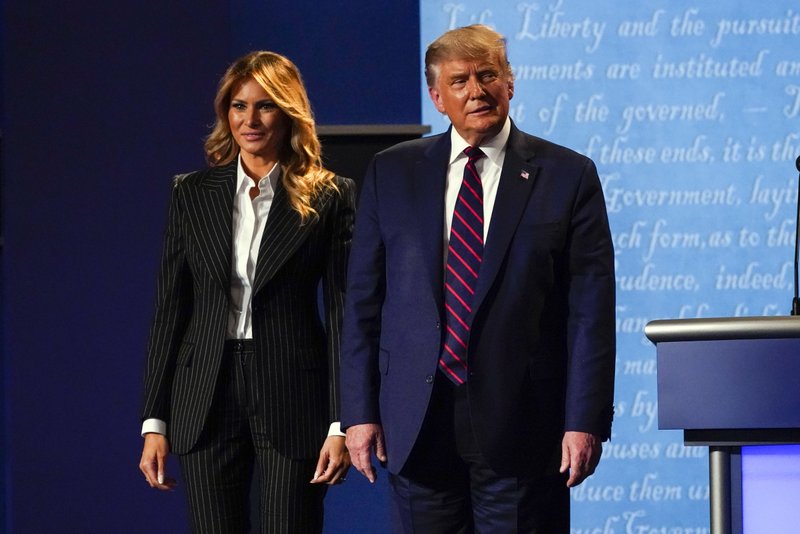
The White House physician said the president was expected to continue carrying out his duties “without disruption” while recovering.
Debate veers from ‘How you doing?’ to ‘Will you shut up?’

Within 15 minutes, the interruptions and talking over one another at Tuesday’s presidential debate had deteriorated to the point that Biden blurted out, “Will you shut up, man?”
Day 2 at GOP convention: a first lady, a pardon, Mike Pompeo
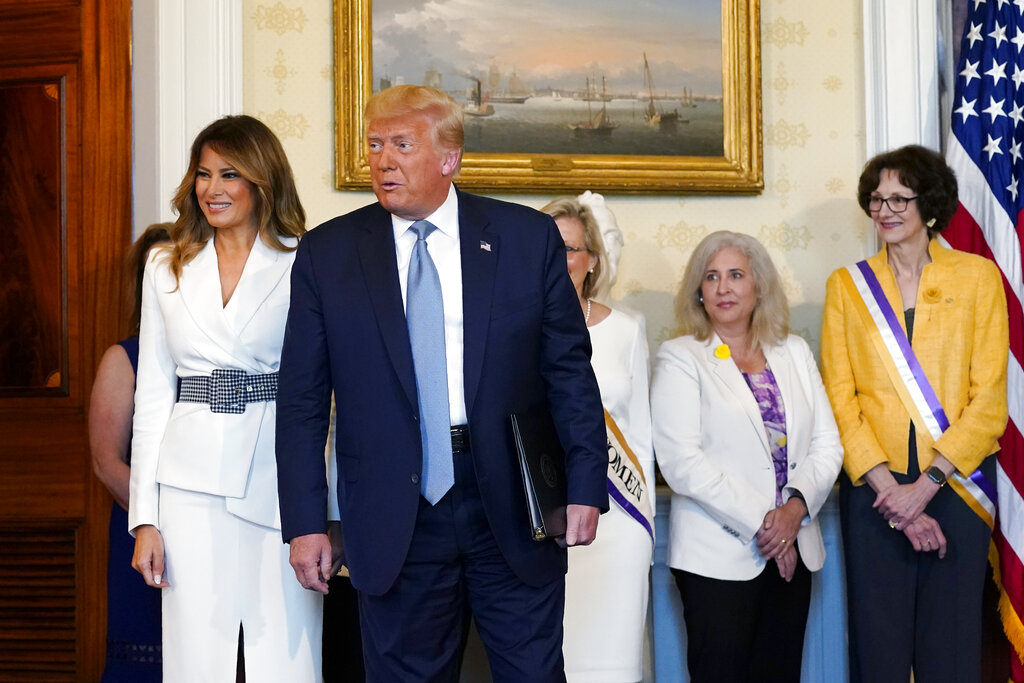
Trump pardoned a reformed felon, he used the White House Rose Garden to elevate his wife’s keynote address and he oversaw a naturalization ceremony for several immigrants in the midst of the prime-time program.
