
Focus on America claims that Alabama voting systems can connect to the internet
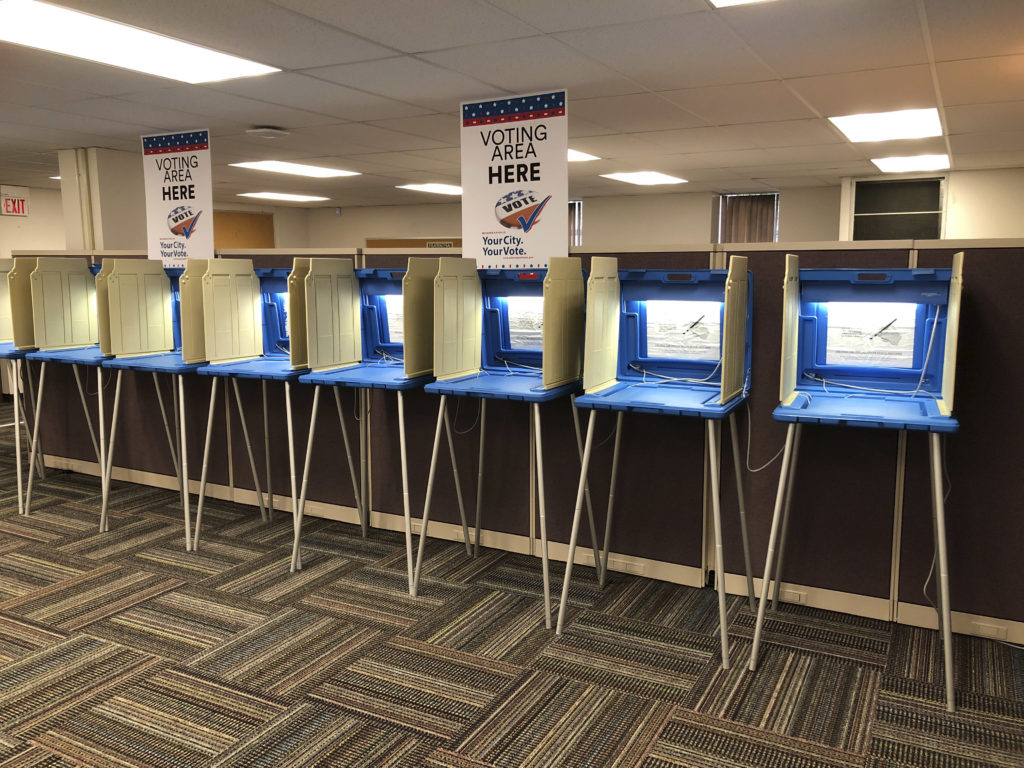
On Thursday, a conservative action group that is concerned with election integrity and supports informing voters, Focus on America announced in a press release that they have supplemented the record in their case challenging the use of voting machines in Alabama elections. Focus on America said in the release that they have forwarded new evidence to the Alabama Supreme Court and the Montgomery Trial Court. The new evidence is from a statement that defendant Secretary of State John Merrill made in a meeting of the Tennessee Valley Republicans that the plaintiffs claim contradicts prior testimony of defendants and defense witnesses in this case. The plaintiffs claim that this new evidence shows that Alabama’s election voting system is wide open to the internet in over sixty locations. Secretary Merrill disputed Focus on America’s claim in a phone interview with Alabama Today. Rebecca Rogers, with Focus on America, is a plaintiff in Hanes v. Merrill that presently plaintiffs have appealed to the Alabama Supreme Court. Rogers stated she asked Sec. Merrill specifically about the so-called “hardened” laptops provided to each probate judge. Rogers referred Merrill to an AL.com article that quotes both Merrill and co-Defendant Bill English, Lee County Probate Judge and Chair of the Alabama Electronic Voting Committee. “The hacker, if he gets into our second computer and changes it, we’ve still got the original data from the precincts on computer A,” English said. “The security is that nobody can get to computer A from the Internet.” Rogers claimed that in her question, she referenced the Secretary of State Office’s own purchase order for these so-called “hardened” laptops that proves, among other things, that the laptops are not hardened but, to the contrary, were ordered with WiFi and Bluetooth. “Everything in this case has already been adjudicated,” Merrill told Alabama Today. “That case is over.” Merrill said that the information that is in those laptops is for “election night reporting only so that the media can have numbers to report. Those are unofficial results.” “While Merrill and the probate judges may understand that this computer is used for only one purpose, hackers don’t really care and connecting to the internet at all leaves widespread vulnerabilities in our election security and voter rights,” stated Rogers. “John Merrill misrepresented the truth before the Alabama Supreme Court with our electronic voting machine lawsuit.” Merrill denied misrepresenting anything to the court. “Those people have gotten so much information they can’t understand it,” Merrill said. “They have no credibility.” “In May of this year, John Merrill said that the “hardened” stand-alone computers used in the election ‘cannot be connected to the internet.’” Melissa Isaak, the plaintiff’s attorney, said. “This was shown in court to be false as Wifi and Bluetooth connectivity was specifically requested in Merrill’s own purchase orders.” Another attorney for the plaintiffs, Phillip Jauregui, stated, “This admission is outrageous. For months, the defendants have testified that the election laptops are not open to the internet. But now, when exposed by their own purchase order, they are forced to admit that the opposite is true. The legal problem is that they only did so after the record and appeal had been sent to the Alabama Supreme Court. We hope and pray the Alabama Supreme Court will accept this new evidence and rule for the plaintiffs in our main case. Our janky, uncertified, and insecure systems must be fixed.” Alabama Today asked Merrill what the status of the case is. “Hugh is dead,” Merrill responded, referring to the recent passing of the Secretary of State’s general counsel. “Normally, I would just ask him.” The general counsel for the Alabama Secretary of State’s Office Hugh Evans III passed away on November 17. Evans was undefeated in numerous different court challenges of election law while working with Merrill. Merrill reiterated his view that the Alabama election results cannot be hacked and that this case has no merit. To connect with the author of this story, or to comment, email brandonmreporter@gmail.com.
“If voting is not secure then nothing is secure,” attorney states after vote counting machine lawsuit is dismissed
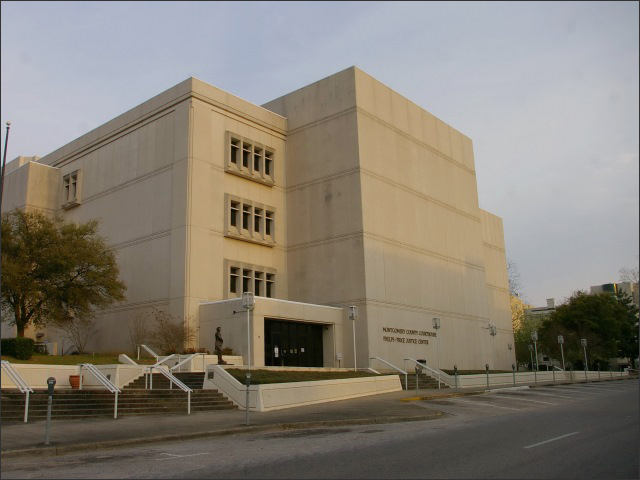
On Friday afternoon, Montgomery Circuit Judge Greg Griffin dismissed a lawsuit challenging the state of Alabama’s use of vote counting machines. He also dismissed a motion by the plaintiffs in the case for a preliminary injunction that would have led to the hand-counting of ballots in the general election on November 8. The plaintiffs released a statement afterward lamenting Judge Griffin’s decision to dismiss their lawsuit. “Steve Marshall, John Merrill, and the members of the electronic voting committee were provided a video of an electronic voting machine counting counterfeit ballots,” said plaintiffs’ attorney Melissa Isaak in a statement. “It was irrefutable that the machines were not functioning properly, and there has been no concern shown from any of these elected officials.” “In May of this year, John Merrill said that the “hardened” stand-alone computers used in the election “cannot be connected to the internet.” This was shown in court to be false as Wifi and Bluetooth connectivity was specifically requested in Merrill’s own purchase orders,” Isaak continued. “Plaintiffs presented the world’s top cyber security experts who testified that Alabama’s electronic voting systems are NOT secure, and even if not connected to the internet, they can still be hacked.” “We showed without dispute or opposition that the voting equipment to be used in the 2022 primary did not work properly but accepted fake ballots,” plaintiffs’ attorney Jay Hinton said. “Yet, the state used them anyway. We will continue to fight for all Alabama voters to make sure that their votes are ‘counted’ in a constitutional way.” “Voter security is the most important issue of our time. If voting is not secure – then nothing is secure,” said plaintiffs’ attorney Phillip Jauregui said. “We brought our nation’s best experts into court, and they proved that our voting systems are insecure, uncertified, and accept fake ballots. We believe the Alabama Supreme Court will apply the law to the shocking facts in this case and protect our voting rights.” Jauregui’s comments suggest that the plaintiffs intend to appeal Judge Griffin’s ruling. The plaintiffs in the lawsuit were Focus on America, former gubernatorial candidate Lindy Blanchard, State Rep. Tommy Hanes, and Dr. David Calderwood. Blanchard later stepped away from the lawsuit, suggesting that write-in gubernatorial candidates were using the lawsuit as a vehicle to promote their campaigns. Blanchard emphasized that she supports the whole Republican ticket. “I’m very disappointed in Judge Griffin’s ruling,” stated Rebecca Rogers of Focus on America. “He could have taken an epic stand for election integrity, but he chose to support the status quo instead.” “We presented evidence at the August 30 hearing that Alabama’s voting machines are vulnerable to hacking,” Rogers continued. “We know that at least some machines misread copied ballots as valid because that’s been shown to happen. With all the controversy surrounding elections today, we were asking the Judge to rule in favor of a method of counting that’s been used for centuries to give honest results–hand counting the ballots. Apparently, Judge Griffin accepted the State’s assurances that all was well and that there wasn’t anything to see here with our election machines.” Marshall, who is defending the state, asked that the case be dismissed. In the ruling, Griffin stated, “Plaintiffs fail to establish irreparable harm because their alleged injury is speculative. Further, the named Plaintiffs have failed to offer any testimony—whether by declaration or live at the hearing—to substantiate any allegations regarding their own circumstances. And without such evidence, Plaintiff has not met their burden to show that they themselves would suffer immediate and irreparable injury.” The Secretary of State’s office maintains that Alabama has the most secure voting system in the country. To connect with the author of this story, or to comment, email brandonmreporter@gmail.com.
Dueling defamation suits: Woman testifies against Roy Moore
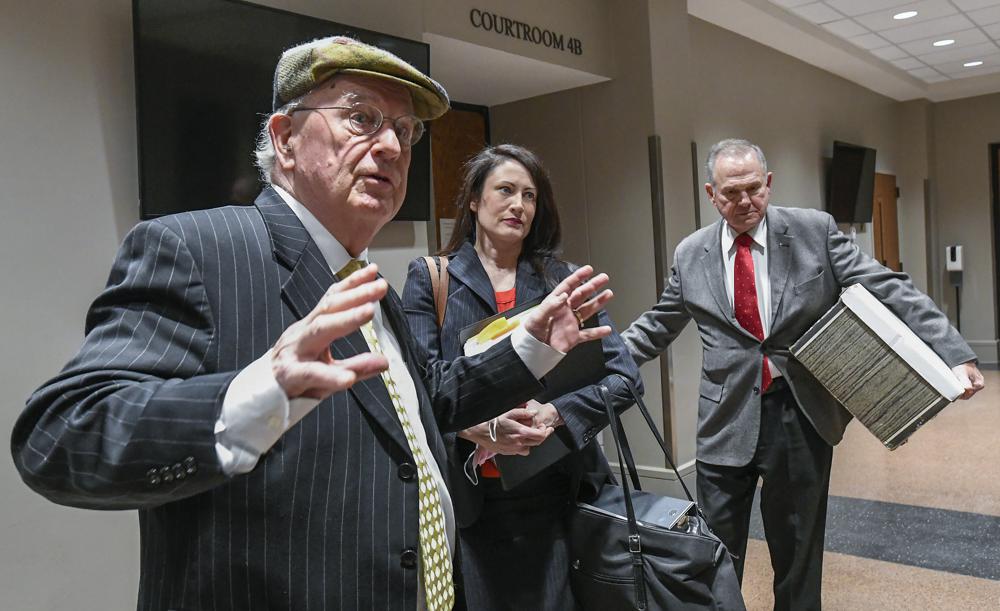
A woman who accused failed U.S. Senate candidate Roy Moore of molesting her decades ago when she was 14 testified Tuesday that Moore “knows that it happened” despite his public denials. Leigh Corfman took the witness stand in a trial dealing with dueling defamation lawsuits that she and Moore filed against each other in the wake of a sexual misconduct allegation that rocked the 2017 U.S. Senate race in Alabama. Corfman testified about meeting Moore in 1979 when she was 14 and how he touched her after bringing her to his home. At one point, Corfman stared from the witness stand at Moore, who stared back at her. “It did happen, and he knows that it happened,” Corfman said. She said his denials damaged her reputation. “He has done everything possible to damage my veracity, the truth of my words, the statements I have made about his sexual molestation of me at 14. He knows just as well as I do that he was there,” Corfman testified. The allegations overshadowed the conservative Republican during the 2017 campaign as Moore ultimately fell in a stunning red state defeat to Doug Jones, the first Alabama Democrat elected to the Senate in 25 years. Republican Tommy Tuberville defeated Jones in the next election. Corfman testified that she decided to tell her story in 2017 when approached by a reporter from The Washington Post. Attempting to link the accusation to political motivations, Moore’s attorney Melissa Isaak, questioned Corfman during cross-examination on whether she hoped Moore would lose the 2017 election. Isaak also asked Corfman if she objected to her photo being used on anti-Moore campaign materials. “Well, I didn’t want to see my predator sitting in the Senate,” Corfman responded. Corfman conceded that Moore didn’t use the word liar to describe her but said he used words to the same effect. During opening statements, lawyers gave divergent views of Corfman and Moore and what happened in 1979. Lawyers for Moore told jurors that he doesn’t know Corfman, whom they described as being motivated by politics and a desire to be in the limelight. Julian McPhillips, an attorney representing Moore, told jurors that Moore had never even seen Corfman until they were in the same room for jury selection. “Judge Moore dared to prove his innocence. He dared to deny he even knew her,” McPhillips said. He suggested Corfman’s accusations were brought to keep Moore from winning the 2017 Senate race. “The political motivation should be clear; why else would she do it?” McPhillips said. Melody Eagan, an attorney representing Corfman, told jurors earlier that you have to decide who you believe.” She said Moore victimized Corfman twice: once in 1979 when he sexually touched her in his home when she was 14 and decades later in 2017 when he “defamed her by dragging her name through the mud.” Eagan said Corfman met Moore in 1979 when she was 14 and sitting with her mother outside an Etowah County courtroom for a custody hearing, and Moore, an assistant district attorney at the time, offered to sit with her. After getting her telephone number, Moore brought her to his home on two occasions, kissing her and taking off her clothes, Eagan said. “He touched Leigh over her bra. And he touched Leigh over her panties …. She was terrified,” Eagan said. Moore’s attorneys tried to put Corfman’s character on trial, calling her vindictive, attempting to question her about drug and alcohol use as a teen and adult, and questioning a decision by her mother, Nancy Wells, to let her daughter read Harlequin romance novels as a young teen. Wells, the first witness, said she had no doubt that it was Moore who approached her and her daughter at the courthouse in 1979. She said it was years later, when Corfman was an adult, that Corfman told her about what Moore had done. One of Corfman’s attorneys asked Wells if she had any personal knowledge of misconduct by Moore, who rose to prominence in state politics after hanging a Ten Commandments plaque on a courtroom wall. Moore was twice elected and removed as chief justice of the Alabama Supreme Court. “I just have what my daughter told me,” Wells replied. It’s unclear how long the trial might last. While Corfman is seeking only a ruling that Moore defamed her, McPhillips said Moore is seeking monetary compensation. Republished with the permission of the Associated Press.
Roy Moore files defamation, political conspiracy lawsuit against accusers
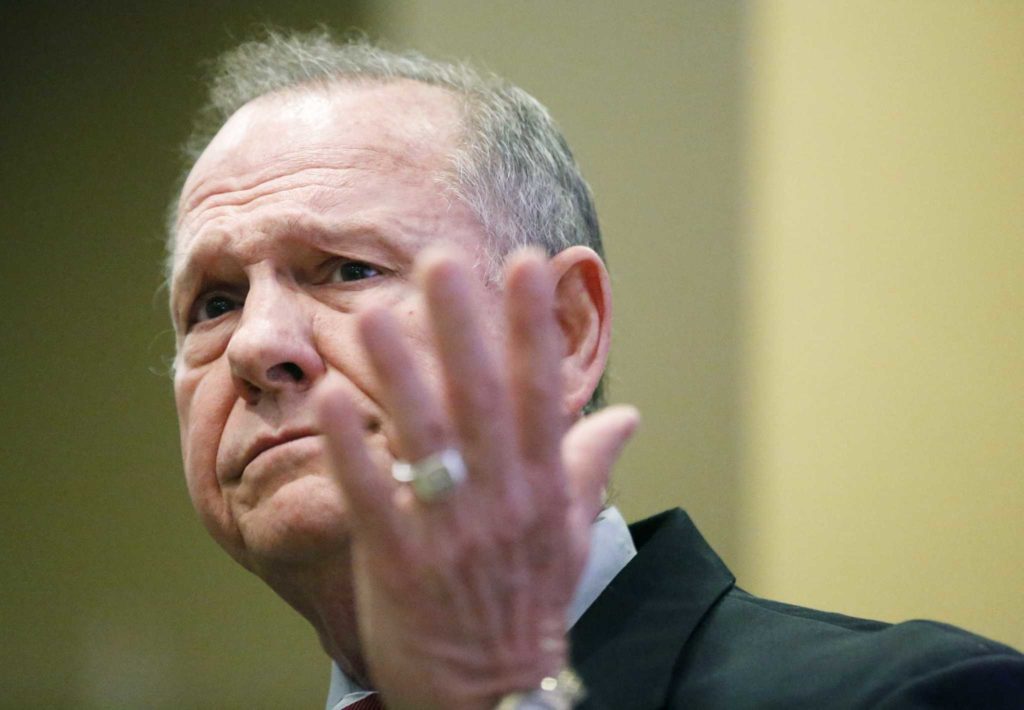
Roy Moore announced the filing of a defamation and political conspiracy lawsuit on Monday at his first press conference since losing the U.S. Senate election. Moore and his team are filing the suit against Richard Hagedorn, Marjorie Leigh Corfman, Debbie Wesson Gibson, Beverly Young Nelson, Tina Turner Johnson, and other “unknown” defendants. Moore claims the allegations from this group caused “irrevocable damage” to his reputation “that affected the outcome of the Senate election in December 2017.” “The people of Alabama deserve to know the truth, that the accusations made against Judge Moore during the U.S. Senate campaign arose from a political conspiracy to destroy his personal reputation and defeat him in the special Senate election for United States Senate,” said Melissa Isaak, Moore’s attorney. In November, The Washington Post published a bombshell report with the accounts of Corfman, Gibson, and one other woman who claimed Moore sexually pursued them when he was in his 30s and they were in their teens. Nelson appeared on television several days later, with her attorney, Gloria Allred, and accused Moore of attempting to rape her behind a restaurant where she worked in 1977 when she was 16. Johnson later came forward, accusing Moore of grabbing her buttocks in 1991 while she was leaving his law office during a meeting with her mother. Moore’s team said he’s filing the lawsuit “not only to hold accountable those who are guilty of slanderous and libelous conduct, but also to restore his good name, character, and reputation with the people of Alabama.” Read a full copy of the suit here.
