
Running on Empty: Petroleum reserve hits low point, gas prices begin to rise again
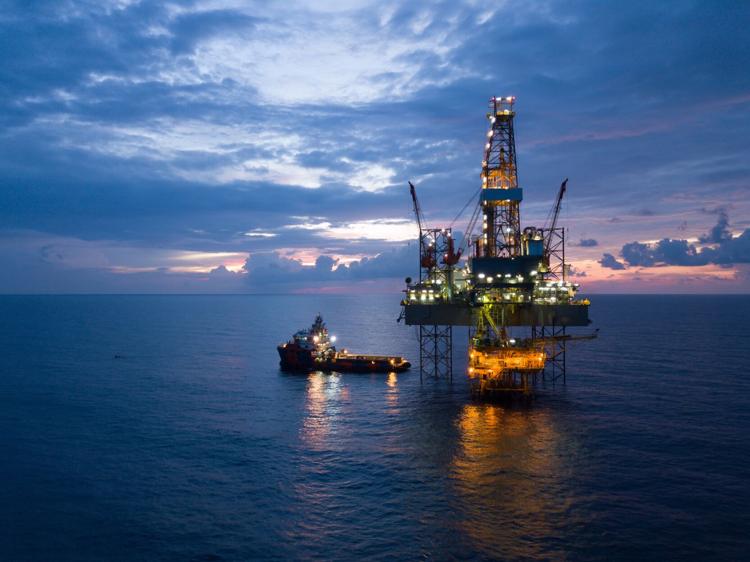
Gas prices are on the rise again just as the Strategic Petroleum Reserve hits a low point that many say is a problem. Gas prices hit record highs in the middle of June, surpassing a national average of $5 per gallon before starting a steady downward trend for several consecutive weeks. That streak ended last week, though, when gas prices began to tick back up. The current national average price for a gallon of regular gasoline is $3.77, up from $3.68 a week ago. The Biden administration also touted the lower gas prices last Tuesday, but the very next day, data showed they had begun to rise again. “Folks, gas prices are now back to levels they were at in early March,” Joe Biden wrote on Twitter. “That means nearly all of the increases since the beginning of Russia’s war in Ukraine have been wiped out.” At the same time, the Strategic Petroleum Reserve is at the lowest level in nearly four decades. Last week, the Office of the Strategic Petroleum Reserve announced the sale of another 10 million barrels of oil, bringing their total to 165 of the 180 million barrels Biden authorized for release. Biden has touted the lower prices and the relief they’ve brought to Americans as prices have dropped. Lawmakers, though, blasted Biden for using the petroleum reserves so extensively for short-term relief, saying he put the U.S. in a difficult position without addressing the root causes by encouraging more domestic oil production. “The Biden Administration can’t continue to tap the Strategic Petroleum Reserve and simultaneously say we don’t have an energy crisis or a need to increase domestic energy production,” said U.S. Rep. Garret Graves, R-La. “Their self-imposed mistakes are weakening our energy security.” Other critics pointed out an emergency could stress the already weakened reserves and put the reserves dangerously low. “Less than two years into his term, [Biden] has released more oil from the nation’s Strategic Petroleum Reserve than all previous presidents combined, causing our supply to fall to a historic low,” U.S. Rep. Michael Burgess, R-Texas, said. “This is a national security threat, and it is unacceptable.” The lower reserve level also spurred questions about whether hurricane Ian, expected to potentially hit the site of several petroleum storage sites, will affect the availability of reserves especially if another emergency arises. “I don’t have any concerns at this point that we’re going to have the ability to handle the fuel needs that we’re going to need in Florida,” FEMA Administrator Deanne Criswell said at a White House press briefing in response to those concerns. “We will continue to assess after the storm passes to see what the impacts are. We’ll make sure that we’re putting measures in place to support … any gaps that we might identify.” The higher gas prices come just ahead of the midterms and could have a major impact on lawmakers seeking reelection. Gas prices had become a political cudgel used against Democrats, especially alongside soaring inflation, but the drop of those prices in recent weeks largely disarmed Republicans. If gas prices continue to rise through election day, Republicans will have another weapon in their arsenal to use against the Biden administration and Democratic candidates. “If you’re wondering why the Biden admin won’t be talking about gas prices today, it’s because they’ve now risen for the 6th day in a row after being artificially lowered by releasing our Strategic Petroleum Reserve,” said Jennifer-Ruth Green, a Republican running for Congress in Indiana. Republished with the permission of The Center Square.
Mo Brooks signs resolution to charge Vladimir Putin with war crimes if Ukrainian president harmed
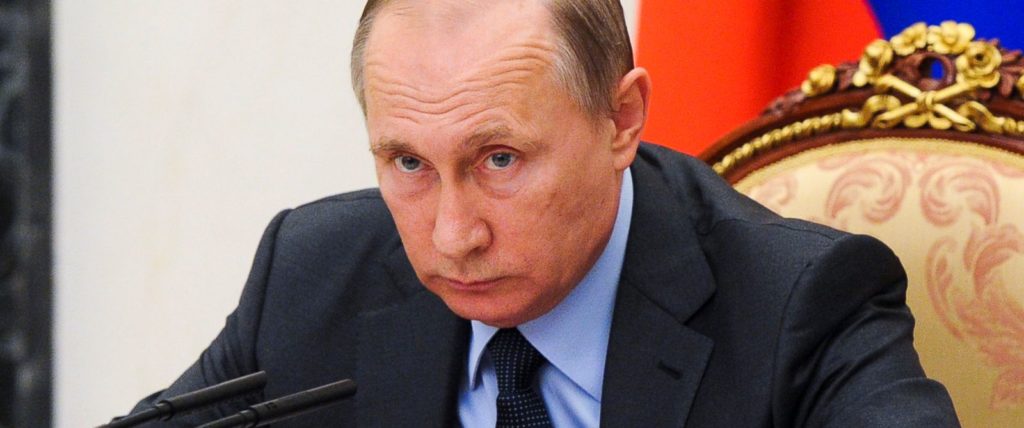
Congressman Mo Brooks co-sponsored a resolution asking for Vladimir Putin to be charged with war crimes if Ukrainian President Volodymyr Zelenskyy is harmed by Russian forces. Texas Rep. Michael Burgess wrote resolution H.Con.Res. 76. Brooks joined U.S. Reps. Robert Aderholt, Barry Moore, and Gary Palmer in cosponsoring the resolution. “Vladimir Putin is an evil dictator. He has a long track record of poisoning and imprisoning political opponents. He has viciously brought war to the peaceful Ukrainian people. He’s a tyrant akin to the worst in world history such as the murderous Adolph Hitler, Mao Zedong, Joseph Stalin, and Pol Pot, Brooks said in a press release. Brooks emphasized the need for Putin to face stiff consequences for what he has done. “The United States and freedom-loving nations worldwide must confront him as such. If his vicious, unprovoked attack on Ukraine results in one scratch on Ukrainian President Zelensky, Putin should be charged with war crimes and brought to justice.” Brooks concluded, “History teaches us that dictators are emboldened when freedom-loving countries do nothing to confront them. Putin must face stiff consequences for his diabolical actions or he’ll continue wreaking havoc. I support making life as hellish as possible for Putin and his oligarchical cronies, and I urge the Russian people to bravely stand up and do what America regularly does: replace our political leaders. Putin has terrorized long enough.” The resolution stated that Russian entities had been linked to the poisoning of several political dissidents and Russian enemies, including Ukrainian Presidential candidate Viktor Yuschenko in 2004, Russian journalist Anna Politkovskaya in 2004, former Russian Federal Security Service (FSB) officer Alexander Litvinenko in 2006, former Russian FSB officer Sergey Skripal in 2018, and Russian opposition leader Alexey Navalny in 2020.
GOP seeks to convince vaccine skeptics within its own ranks

When a group of Republican doctors in Congress released a video selling the safety of the coronavirus vaccine, their message wasn’t explicitly aimed at their conservative constituents but nonetheless had a clear political bent. Getting the shot is the best way to “end the government’s restrictions on our freedoms,” Rep. Larry Bucshon, an Indiana Republican and heart surgeon who donned a white lab coat and stethoscope when he spoke into the camera. The public service announcement was the latest effort from GOP leaders to shrink the vaccination gap between their party and Democrats. With vaccination rates lagging in red states, Republican leaders have stepped up efforts to persuade their supporters to get the shot, at times combating misinformation spread by some of their own. “Medicine and science and illness, that should not be political,” said Dr. Brad Wenstrup, a Republican congressman from Ohio and a podiatrist who has personally administered coronavirus vaccine shots both as an Army Reserve officer and as an ordinary doctor. “But it was an election year and it really was.” Wenstrup said both parties helped foment some skepticism, though increasingly vocal moves by other Republicans amount to acknowledgment that GOP vaccine hesitancy is a growing public health problem — and potentially a political one. “Things could easily spiral quickly if we don’t solve this red-state-blue-state issue,” said Kavita Patel, a physician, and health policy expert who worked in the Obama administration. Patel said life could return to normal in certain parts of the country while the pandemic continues to rage elsewhere — potentially even disrupting in-person voting in primaries ahead of next year’s midterm elections. “We could be sitting here in the winter-fall with an entirely different, scary version of the pandemic,” she said. “One driven by a combination of variants and people who didn’t want to get vaccinated.” It’s easy to spot potential trouble spots now — and the political pattern. Mississippi has the nation’s lowest vaccination rate, with less than 31% of its population receiving at least one anti-coronavirus shot. And the four states that proceed it in national rankings, Alabama, Louisiana, Idaho, and Wyoming, according to an Associated Press analysis of Centers for Disease Control and Prevention data. They all vote reliably Republican in presidential races. By contrast, the five states with the highest vaccination rates backed Democrat Joe Biden in November. New Hampshire leads the nation with 60% of its population receiving at least one dose, followed by Massachusetts, Vermont, and Connecticut. The fifth highest vaccination rate state, Maine, awarded three of its electoral votes to Joe Biden and one to former President Donald Trump. Republicans are more likely than Democrats to say they definitely or probably won’t get vaccinated, 44% versus 17%, according to a poll released in February from The Associated Press-NORC Center for Public Affairs. Hence this week’s video, where Texas Republican Rep. Michael Burgess, an obstetrician who reassured viewers that rather than rush the vaccine out in an unsafe fashion, federal officials “cut bureaucratic red tape, not corners. And they got the job done in record time.” The video also credited the Trump administration’s Operation Warp Speed with bringing the vaccine so quickly. Amid polling showing that Republican men were among the most likely vaccine holdouts, Senate Minority Leader Mitch McConnell said earlier this month, “I can say as a Republican man, as soon as it was my turn, I took the vaccine.” Even Trump, who was vaccinated privately while in office, suggested on Fox News Channel that he’d be willing to record a video urging vaccination. Doing so would be an about-face for Trump, who as president long said he’d be willing to take a vaccine but also relished politicizing the pandemic. He suggested that lockdowns recommended by his administration’s experts were governmental overreach, mocked then-candidate Biden for wearing a mask in public too frequently, and used racist terms like “China virus.” Not all Republican lawmakers feel the same sense of urgency to raise the vaccination rate, meanwhile. “The science tells us that vaccines are 95% effective. So if you have a vaccine, quite honestly, what do you care if your neighbor has one or not?” Wisconsin Republican Sen. Ron Johnson said during a recent interview with a conservative radio host. “I mean, what is it to you?” Between 70% and 85% of the population would need to be immune before the coronavirus is effectively contained, experts believe. The GOP’s top leaders may also have political incentives to appeal to those resistant to getting the shot. Joe Brettell, a GOP strategist in deep red Texas, said he expects Republican governors looking to raise their profiles will seize on vaccine-related debates, such as opposing “vaccine passports” that may eventually be required for travel, even as they implore their state’s people to get immunized. “I think that’s where smart governors are going to start asserting themselves,” he said, noting that some already have. Ideology also isn’t the only factor in vaccine hesitancy. Experts are also tracking a generational gap, with younger Americans believing that, even if they get the virus, it is unlikely to seriously sicken or kill them. Republican West Virginia Gov. Jim Justice even is offering $100 saving bonds to residents ages 16 to 35 who get or have gotten the shot — trying to reverse a trend that saw his conservative state become an early leader in vaccination rates only to have it slow since. Republican pollster Frank Luntz, who has been researching how best to convince vaccine skeptics, says he believes the effort is most effective when it avoids politics, with people hearing about the benefits of immunization from doctors, not politicians. He said many skeptics are persuaded to get the shot because it benefits their friends and family, not just themselves. “If it’s politicized, they will not reach herd immunity,” said Luntz, who said that means giving credit to both sides, praising the Trump administration for Operation Warp Speed and the Biden White House’s efficient and effective distribution of vaccines. Luntz argued that public health officials should be targeting
