
Supreme Court rejects GOP in North Carolina case that could have reshaped elections beyond the state
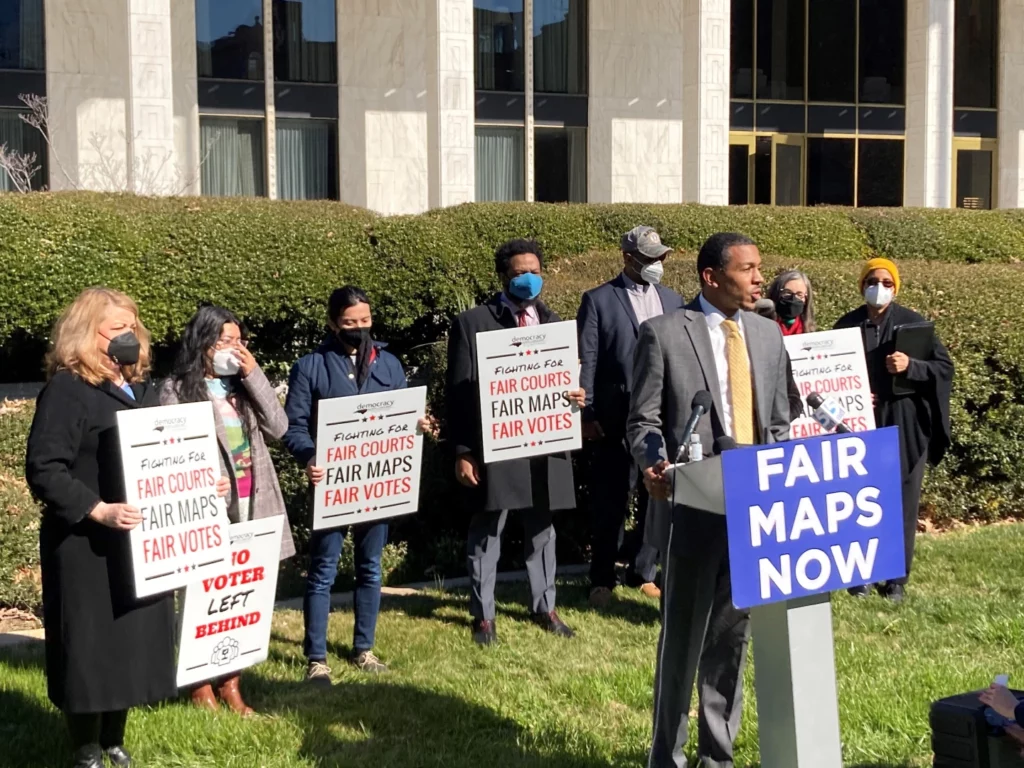
The Supreme Court ruled Tuesday that state courts can curtail the actions of their legislatures when it comes to federal redistricting and elections, rejecting arguments by North Carolina Republicans that could have dramatically altered races for Congress and president in that state and beyond. The justices, by a 6-3 vote, upheld a decision by North Carolina’s top court that struck down a congressional districting plan as excessively partisan under state law. The high court did, though, indicate there could be limits on state court efforts to police elections for Congress and president, suggesting that more election-related court cases over the issue are likely. Chief Justice John Roberts wrote for the court that “state courts retain the authority to apply state constitutional restraints when legislatures act under the power conferred upon them by the Elections Clause. But federal courts must not abandon their own duty to exercise judicial review.” The decision was the fourth major case of the term in which conservative and liberal justices joined to reject the most aggressive legal arguments put forth by conservative state elected officials and advocacy groups. Earlier decisions on voting rights, a Native American child welfare law, and a Biden administration immigration policy also unexpectedly cut across ideological lines on the court. Major rulings are expected by Friday on the future of affirmative action in higher education, the administration’s $400 billion student loan forgiveness plan, and a clash of religious and LGBTQ rights. The practical effect of Tuesday’s decision is minimal in North Carolina, where the state Supreme Court, under a new Republican majority, already has undone its redistricting ruling. Another redistricting case from Ohio is pending, if the justices want to say more about the issue before next year’s elections. Justices Samuel Alito, Clarence Thomas, and Neil Gorsuch would have dismissed the North Carolina case because of the intervening state court action. Vice President Kamala Harris said in a statement that the decision “preserves state courts’ critical role in safeguarding elections and protecting the voice and the will of the American people.” The Democratic administration defended the power of state courts in the case. Former President Barack Obama, in a rare public comment on a court decision, applauded the outcome as “a resounding rejection of the far-right theory that has been peddled by election deniers and extremists seeking to undermine our democracy.” At the same time, the leader of a Republican redistricting group said he was pleased the court made clear there are limits on state courts. The decision “should serve as a warning to state courts inclined to reach beyond the constitutional bounds of judicial review. This is a first, positive step toward reining in recent overreaches of state courts,” Adam Kincaid, president and executive director of the National Republican Redistricting Trust, said in a statement. Derek Muller, a University of Iowa law professor and elections expert, said Tuesday’s decision leaves some room to challenge state court rulings on federal election issues, “but these are likely to be rare cases.” “The vast majority of state court decisions that could affect federal elections will likely continue without any change,” Muller said. The North Carolina case attracted outsized attention because four conservative justices had suggested that the Supreme Court should curb state courts’ power in elections for president and Congress. Opponents of the idea, known as the independent legislature theory, had argued that the effects of a robust ruling for North Carolina Republicans could be reached much further than just that one state’s redistricting. Potentially at stake were more than 170 state constitutional provisions, over 650 state laws delegating authority to make election policies to state and local officials, and thousands of regulations down to the location of polling places, according to the Brennan Center for Justice at the New York University School of Law. The justices heard arguments in December in an appeal by Republican leaders in the North Carolina Legislature. Their efforts to draw congressional districts heavily in their favor were blocked by a Democratic majority on the state Supreme Court on grounds that the GOP map violated the state Constitution. A court-drawn map produced seven seats for each party in last year’s midterm elections in the highly competitive state. The question for the justices was whether the U.S. Constitution’s provision giving state legislatures the power to make the rules about the “times, places and manner” of congressional elections cuts state courts out of the process. Former federal appeals court judge Michael Luttig, a prominent conservative who has joined the legal team defending the North Carolina court decision, said in the fall that the outcome could have transformative effects on American elections. “This is the single most important case on American democracy — and for American democracy — in the nation’s history,” Luttig said. Leading Republican lawmakers in North Carolina told the Supreme Court that the Constitution’s “carefully drawn lines place the regulation of federal elections in the hands of state legislatures, Congress, and no one else.” During nearly three hours of arguments, the justices seemed skeptical of making a broad ruling in the case. Liberal and conservative justices seemed to take issue with the main thrust of a challenge asking them to essentially eliminate the power of state courts to strike down legislature-drawn, gerrymandered congressional district maps on grounds that they violate state constitutions. In North Carolina, a new round of redistricting is expected to go forward and produce a map with more Republican districts. The state’s Democratic governor, Roy Cooper, praised Tuesday’s decision, but also implicitly acknowledged that it does nothing to inhibit Republicans who control the legislature from drawing a congressional map that is more favorable to them. Cooper, who by state law can’t block redistricting plans approved by lawmakers, said that “Republican legislators in North Carolina and across the country remain a very real threat to democracy as they continue to pass laws to manipulate elections for partisan gain by interfering with the freedom to vote.” Republished with the permission of The Associated Press.
Supreme Court weighs ‘most important case’ on democracy
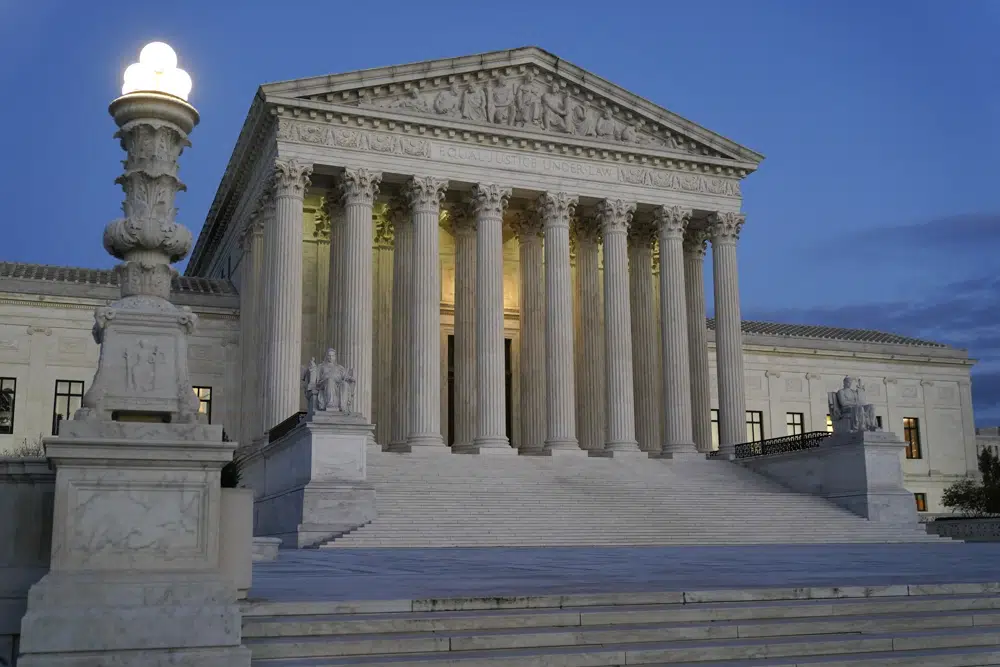
The Supreme Court is about to confront a new elections case, a Republican-led challenge asking the justices for a novel ruling that could significantly increase the power of state lawmakers over elections for Congress and the presidency. The court is set to hear arguments Wednesday in a case from North Carolina, where Republican efforts to draw congressional districts heavily in their favor were blocked by a Democratic majority on the state Supreme Court because the GOP map violated the state constitution. A court-drawn map produced seven seats for each party in last month’s midterm elections in highly competitive North Carolina. The question for the justices is whether the U.S. Constitution’s provision giving state legislatures the power to make the rules about the “times, places and manner” of congressional elections cuts state courts out of the process. “This is the single most important case on American democracy — and for American democracy — in the nation’s history,” said former federal judge Michael Luttig, a prominent conservative who has joined the legal team defending the North Carolina court decision. The Republican leaders of North Carolina’s legislature told the Supreme Court that the Constitution’s “carefully drawn lines place the regulation of federal elections in the hands of state legislatures, Congress, and no one else.” Three conservative justices already have voiced some support for the idea that the state court had improperly taken powers given by the Constitution when it comes to federal elections. A fourth has written approvingly about limiting the power of state courts in this area. But the Supreme Court has never invoked what is known as the independent state legislature theory. It was, though, mentioned in a separate opinion by three conservatives in the Bush v. Gore case that settled the 2000 presidential election. If the court were to recognize it now, opponents of the concept argue, the effects could be much broader than just redistricting. The most robust ruling for North Carolina Republicans could undermine more than 170 state constitutional provisions, over 650 state laws delegating authority to make election policies to state and local officials, and thousands of regulations down to the location of polling places, according to the Brennan Center for Justice at the New York University School of Law. Luttig, who advised former Vice President Mike Pence that he had no authority to reject electoral votes following the 2020 election, is among several prominent conservatives and Republicans who have lined up against the broad assertion that legislatures can’t be challenged in state courts when they make decisions about federal elections, including congressional redistricting. That group includes former California Gov. Arnold Schwarzenegger, law professor Steven Calabresi, a founder of the conservative Federalist Society, and Benjamin Ginsberg, a longtime lawyer for Republican candidates and the party. “Unfortunately, because of ongoing and widespread efforts to sow distrust and spread disinformation, confidence in our elections is at a low ebb,” Ginsberg wrote in a Supreme Court filing. “The version of the independent state legislature theory advanced by Petitioners, in this case, threatens to make a bad situation much worse, exacerbating the current moment of political polarization and further undermining confidence in our elections.” The arguments are taking place a day after the final contest of the 2022 midterms, the Georgia Senate runoff between Democratic Sen. Raphael Warnock and Republican Herschel Walker. In that contest, state courts ruled in favor of Democrats to allow for voting on the Saturday before the election, over the objections of Republicans. Jason Snead, of the conservative Honest Elections Project, said the case is an opportunity for the high court to rein in out-of-control state courts which are being pushed by Democratic attorneys to effectively create new rules governing voting, including the Georgia example. “We’ve seen a fairly pervasive attempt to use courts to rewrite election laws if those laws don’t suit partisan agendas,” Snead said in a call with reporters. “That’s not something we want to see when it flies in the face of the Constitution.” He is among proponents of the high court’s intervention who argue the case doesn’t represent “a threat to democracy.” The justices can instead write a narrow opinion that places limits on state courts without upsetting the choices New York and other states have made to restrict partisan redistricting, a group of New York voters wrote in a court filing. The New Yorkers implicitly recognize that if the court gives more power to state legislatures over drawing congressional lines, Republicans may not necessarily benefit. During the last redistricting cycle, states that used independent redistricting commissions rather than legislatures were largely Democratic-dominated ones. Commissions drew 95 House seats in states with Democratic legislatures and governors, as opposed to only 12 in states with GOP control. A ruling that grants legislatures ultimate power over redistricting could eradicate those commissions and let Democrats redraw a major chunk of the House map. “The bottom line is the impact of this fringe theory would be terrible,” said former Attorney General Eric Holder, chairman of the National Democratic Redistricting Committee. “It could unleash a wave of gerrymandering from both parties.” Even less dramatic changes may not necessarily tilt the GOP’s way on a national redistricting map that was essentially fought to a draw, and where state court rulings cost Democrats about as many House seats as Republicans. The Supreme Court refused to step into the North Carolina case in March, allowing the court-drawn districts to be used this year. Justices Samuel Alito, Neil Gorsuch, and Clarence Thomas dissented. Writing for the three, Alito said, “there must be some limit on the authority of state courts to countermand actions taken by state legislatures when they are prescribing rules for the conduct of federal elections. I think it is likely that the applicants would succeed in showing that the North Carolina Supreme Court exceeded those limits.” Justice Brett Kavanaugh has separately written about the need for federal courts to police the actions of state courts when it comes to federal elections. Chief Justice John Roberts’ record on this question gives both sides some hope. In 2015,
