
Christian Ulvert: A presidency remembered for tearing down walls of injustice
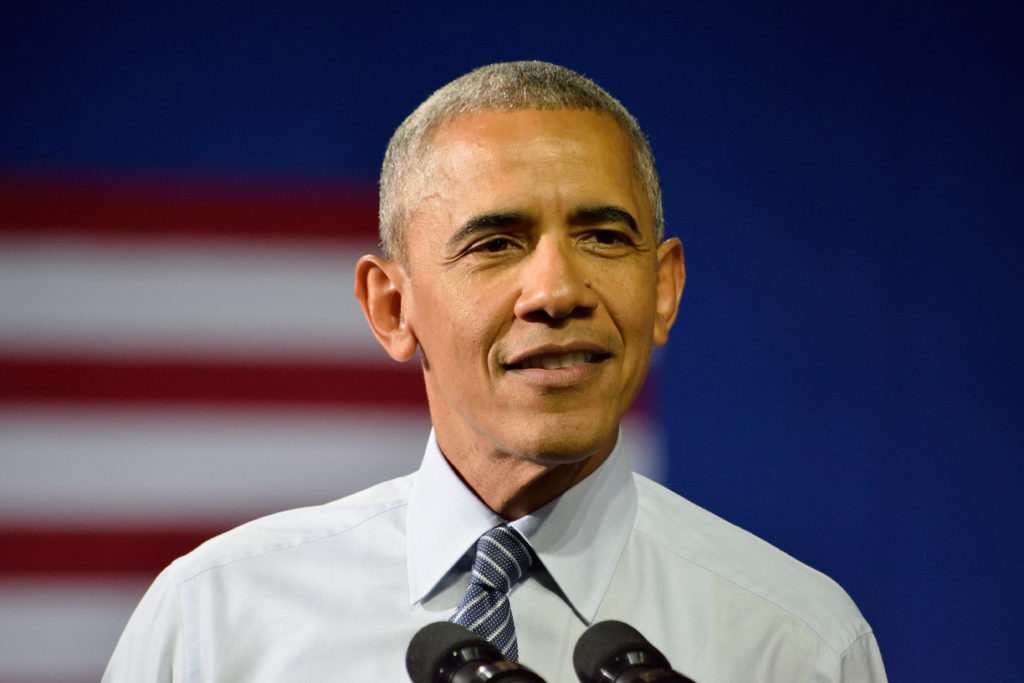
As I traveled back from Thailand to the United States earlier this month, I watched “Southside With You” and was once again in awe on the deep-rooted bond between our now former President, Barack Obama and first lady, Michelle Obama. The movie also depicts the devoted love President Obama has for his community and his sense of urgency to move strategically on solving problems. The movie was as a reminder of why so many of us feel a deep connection to this president. I never worked on his campaigns, but was moved to volunteer often. Every one has a personal story on how President Obama has marked their life in a positive way. In Miami-Dade, you hear stories of families reunited with their Cuban relatives, residents who have insurance because of the Affordable Care Act, Dreamers who feel their government is on their side and couples like Carlos and I who were able to marry because this President believed in us. You see, this President looked to his heart every day to find ways to make this country better and stronger. President Obama governed with a bold agenda that was guided by his belief that government should tear down the injustices in our country that held back so many from achieving their full potential. In many ways, my ability to live by our nation’s credo, “in the pursuit of happiness,” was fully realized when President Obama declared that marriage equality was going to be his fight and one that he was not going to back down from, regardless of who stood in his way. I am able to live a life full of love, joy and complete happiness because our government didn’t stop me from marrying the person I love. Like so many, I have watched the final days of President Obama’s presidency with hope and sadness. He encourages us to remain hopeful while our hearts weep because we know he accomplished so much and stayed true to his campaign motto of Hope and Change. We don’t know what President Donald Trump’s administration will bring to our nation, but I have to believe in President Obama’s words that our nation will be OK. For me, one thing is certain, President Obama has shifted my view on how to stay engaged. On this Jan. 20, I will reflect on President Obama’s legacy and use it as a call to action. Let us live by the hope to fight injustices, the will to change them and the freedom to marry the one you love. ___ Christian Ulvert is a Florida Democratic political and public affairs consultant based in Miami.
Michelle Obama: A first lady who charted her own course

When Michelle Obama considered the daunting prospect of becoming first lady, she avoided turning to books by her predecessors for guidance. Instead, she turned inward. “I didn’t want to be influenced by how they defined the role,” Mrs. Obama once said. She instinctively knew she had to define the job “very uniquely and specifically to me and who I was.” That meant doing it her way: shaping the role around her family, specifically her two young daughters, and not letting her new responsibilities consume her. Throughout her eight years, Mrs. Obama has been a powerful, if somewhat enigmatic, force in her husband’s White House. She chose her moments in the often unforgiving spotlight with great care and resisted pressure to become more engaged in the mudslinging of partisan politics. At times, she’s been more traditional than some expected – or wanted from this first lady. At other times, she’s been eager to update stuffy conventions associated with the office. As she navigated her way through, the woman who grew up on the South Side of Chicago discovered a talent for television and a comfort with Hollywood A-listers, haute couture and social media. And she used all of those elements to promote her causes – childhood obesity, support for military families, girls’ education – with at least some success. When she leaves the White House next month just a few days after celebrating her 53rd birthday, Mrs. Obama will do so not just as a political figure, but as a luminary with international influence. Friends say she charted that path largely on her own. “What she did was she sort of listened to herself and allowed her own inner voice and strength and direction to lead her in the way that felt most authentic to her,” Oprah Winfrey told The Associated Press. “And I think watching somebody makes you want to do that for yourself.” — Mrs. Obama grappled with the childhood obesity issue before becoming first lady; a doctor had warned her about her daughters’ weight. At the White House, she decided to share her experience with the country and started by planting the first vegetable garden there in more than 60 years. That led the following year, in 2010, to the launch of her anti-childhood-obesity initiative, “Let’s Move.” The first lady appealed to elected officials, food makers, sellers, restaurant chains and others to try to make healthy food more accessible. She lobbied lawmakers to add more fruit, vegetables and whole grains, and limit fat, sugar and sodium in the federal school lunch program. That led to the first update to the program in decades, and for Mrs. Obama the process was akin to a crash course in Washington sausage-making. Mrs. Obama’s effort was not universally welcomed. Republicans in Congress wanted to reverse the rules. Others said Mrs. Obama was acting like the “food police.” Even the kids she wanted to help added to the backlash. Some students posted photos of lunches they found unappealing on Twitter with the hashtag #ThanksMichelleObama, or simply tossed the food into the trash. Mrs. Obama had won. But she would never again try to work closely with Congress on an issue. She chose instead to use her platform to press industry to change its ways. It’s too early to know how Mrs. Obama’s efforts may affect childhood obesity rates long term, but advocates believe she helped change the national dialogue around healthy eating. And although incoming Republican President Donald Trump, a proud patron of McDonald’s and Kentucky Fried Chicken, has yet to comment on school meal regulations, advocates worry about the fate of Mrs. Obama’s effort under a White House and Congress that will be controlled by the GOP. Reflecting on her childhood obesity work, Mrs. Obama said some people initially wondered why she would bother with such a “softball issue” but “now, all those challenges and criticisms are off the table.” She told talk-show host Rachael Ray that “at least we’ve become very aware as a society that this is one of our most important health issues.” — Mrs. Obama’s push to put the country on a health kick extended to exercise – and she made herself exhibit A. To promote “Let’s Move,” the first lady often donned athletic wear and ran around with kids at sports clinics, some on the South Lawn. She twirled a hula hoop around her waist 142 times and kick-boxed in a video of the gym workout that helped tone the upper arms she showed off regularly, as in her official White House photo. She did push-ups with Ellen DeGeneres, raced in a potato sack against late-night TV’s Jimmy Fallon in the East Room and shimmied with a turnip in a brief video popular on social media – all to show that exercise can be fun. “I’m pretty much willing to make a complete fool of myself to get our kids moving,” she once said. Instead of going the fool’s route, Mrs. Obama turned herself into a fitness guru and a figure significantly more popular than her husband. — First lady was never a position Mrs. Obama imagined for herself, given her modest upbringing, her distaste for politics and having never seen her skin color on a U.S. president and first lady. Her early aversion to politics developed while watching her father navigate Chicago politics for his job with the city water department, and was reinforced by her husband’s pursuit of a political career. Both Obamas have said his political ambition had strained their marriage and family. Once in the White House, Mrs. Obama vowed to protect her then 10- and 7-year-old daughters’ right to a normal childhood. She declared being “mom in chief” to Malia and Sasha as her priority, irking women who hoped the first lady might be less constrained by stereotypes. She showed few signs of trying to push those boundaries. Mrs. Obama was an enthusiastic White House hostess. She rarely spoke about issues that were outside of her portfolio. She crafted her public
Michelle Obama tells Oprah Winfrey that 2016 election ‘was painful’
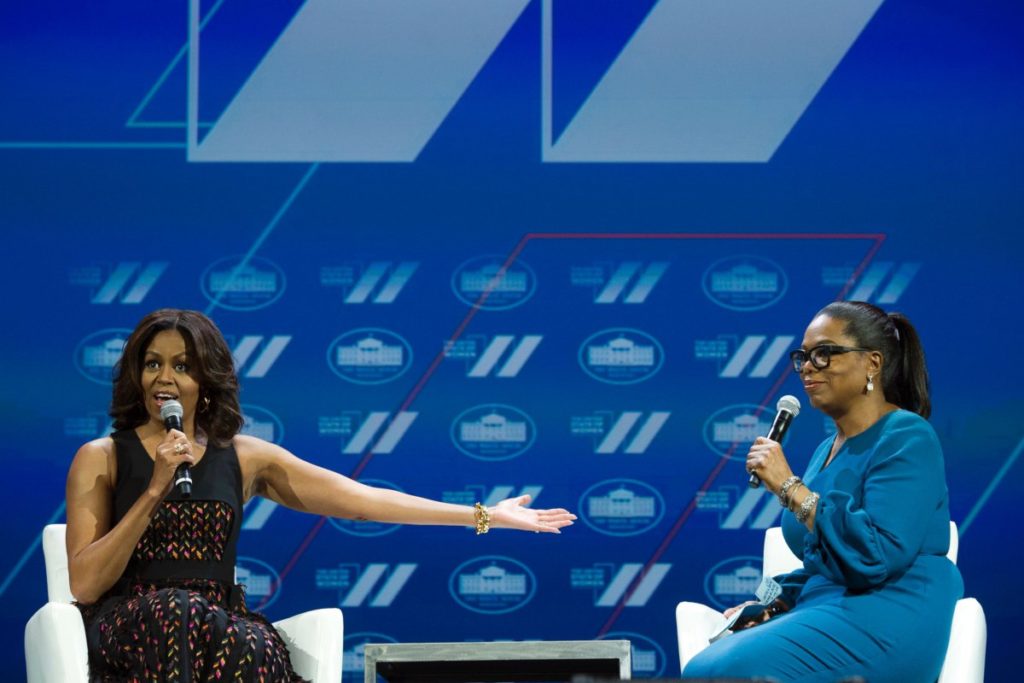
First lady Michelle Obama tells Oprah Winfrey that this past election was “painful.” Mrs. Obama sat down with Winfrey at the White House for an hourlong special that was broadcast Monday on CBS. On the topic of the recent campaign she said: “This past election was challenging for me as a citizen to watch and experience. It was painful.” Still, Mrs. Obama says she and the president are supporting President-elect Donald Trump‘s transition because “it is important for the health of this nation that we support the commander-in-chief.” She says the same thing wasn’t done for her husband, but that “this is what’s best for the country.” As for her own political future, Mrs. Obama says she won’t run for public office. Republished with permission of The Associated Press.
Donald Trump says Michelle Obama’s ‘no hope’ comment about the past
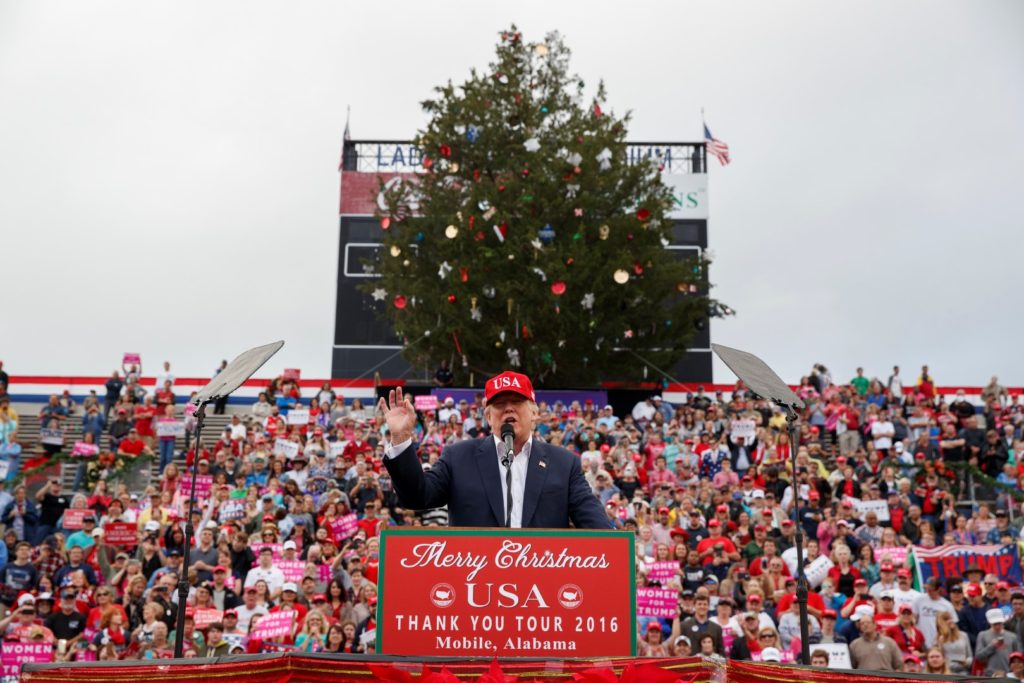
President-elect Donald Trump said first lady Michelle Obama “must have been talking about the past” when she said there’s no sense of hope after his election. Trump, speaking Saturday at the final rally of his postelection “thank you” tour, then resisted escalating the spat further, suggesting “she made that statement not meaning it the way it came out.” But as Trump praised the Obamas for treating him so nicely when he visited the White House shortly after the election, many in the Mobile, Alabama, crowd booed the first family. Michelle Obama, in an interview with Oprah Winfrey set to air Monday on CBS, said she was now certain that her husband’s victory had inspired people because “now we’re feeling what not having hope feels like.” “What do you give your kids if you can’t give them hope?” she added. Trump’s comments about Michelle and President Barack Obama was one of the few conciliatory notes he sounded during a victory tour in which he showed few signs of turning the page from his blustery campaign to focus on uniting a divided nation a month before his inauguration. At each stop, the Republican gloatingly recapped his election night triumph, reignited some old political feuds while starting some new ones, and did little to quiet the hate-filled chants of “Lock her up!” directed at Democratic rival Hillary Clinton. At the tour’s finale at the same football stadium in Mobile that hosted the biggest rally of his campaign, Trump saluted his supporters as true “patriots” and made little attempt to reach out to the more than half of the electorate that didn’t vote for him. “We are really the people who love this country,” said Trump. He reminisced about his campaign announcement and his ride down Trump Tower’s golden escalator. His disputed a newspaper’s account of the size of the crowd at one of his rallies and bashed the press as dishonest. And he joked that he had booked a small ballroom for his election night party so, if he lost, he “could get out!” He paid homage to the August 2015 rally in the same stadium that he said jump-started his campaign. Though the crowd was not as large on Saturday, it was no less fervid, repeatedly chanting “Build the wall!” when Trump renewed his vow to build an impenetrable border at the Mexican border. Trump brought his nominee for attorney general, Sen. Jeff Sessions of Alabama, up onstage to receive cheers from his hometown crowd. When Trump’s plane landed, he received a water cannon salute from a pair of fire trucks and was greeted by several Azalea Trail Maids, local women dressed in antebellum Southern Belle outfits. The raucous rallies, a hallmark of his campaign, are meant to salute supporters who lifted him to the presidency. But these appearances also have been his primary form of communication since the Nov. 8 election. Trump has eschewed the traditional news conference held by a president-elect within days of winning. He’s done few interviews, announced his Cabinet picks via news release and continues to rely on Twitter to broadcast his thoughts and make public pronouncements. That continued Saturday morning when Trump turned to social media to weigh in on China’s seizure of a U.S. Navy research drone from international waters, misspelling “unprecedented” when he wrote “China steals United States Navy research drone in international waters – rips it out of water and takes it to China in unpresidented act.” He later corrected the tweet. China said Saturday it intended to return the drone to the U.S. Within days of beating Clinton, Trump suggested to aides that he resume his campaign-style barnstorming. Though he agreed to hold off until he assembled part of his Cabinet, Trump has repeatedly spoken of his fondness for being on the road. Aides are considering more rallies after he takes office, to help press his agenda with the public – a possibility that Trump embraced from the stage Saturday. But Trump has also sounded some notes of unity on the tour. In Mobile, he acknowledged that “now the hard work begins” and ended with a plea for all Americans, including those who did not support him, to “never give up.” After the rally, Trump planned to return to Mar-a-Lago, his Palm Beach estate. Aides said the president-elect probably would spend Christmas week there and could stay until New Year’s. Earlier Saturday, he announced the nomination of South Carolina Rep. Mick Mulvaney to head the Office of Management and Budget, choosing a Tea Partyer and fiscal conservative with no experience assembling a government spending plan. Mulvaney, a founder of the hard-right House Freedom Caucus, has taken a hard line on budget matters, routinely voting against increasing the government’s borrowing cap and pressing for major cuts to benefit programs as the path to balancing the budget. Republished with permission of The Associated Press.
Michelle Obama: Movie ‘Hidden Figures’ shows importance of diversity
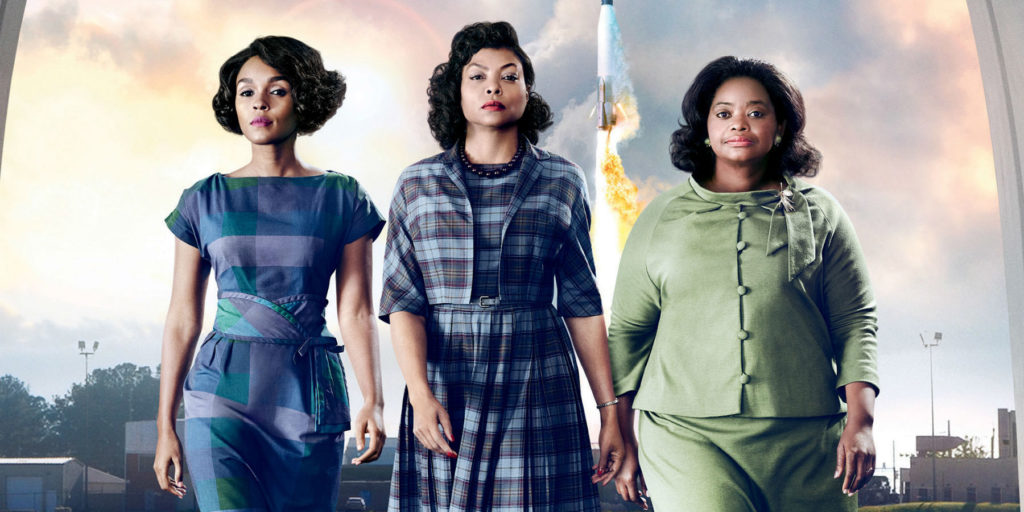
Michelle Obama says the movie “Hidden Figures” shows how diversity helps move the country forward. The first lady commented at a White House screening of the film Thursday featuring cast members Taraji P. Henson, Janelle Monae, Octavia Spencer and Kevin Costner. The movie tells the story of three black female NASA mathematicians whose work in the early 1960s enabled the first launches of Americans into space, including astronaut John Glenn‘s orbiting of the earth. The 95-year-old Glenn died last week. Mrs. Obama noted that the black mathematicians couldn’t use the same water fountains or bathrooms as their colleagues. But she says their example shows that “you don’t come up with the right answer if everyone at the table looks the same and thinks the same and has the same experience.” Republished with permission of The Associated Press.
Ahead for Michelle Obama? Figuring out what comes next
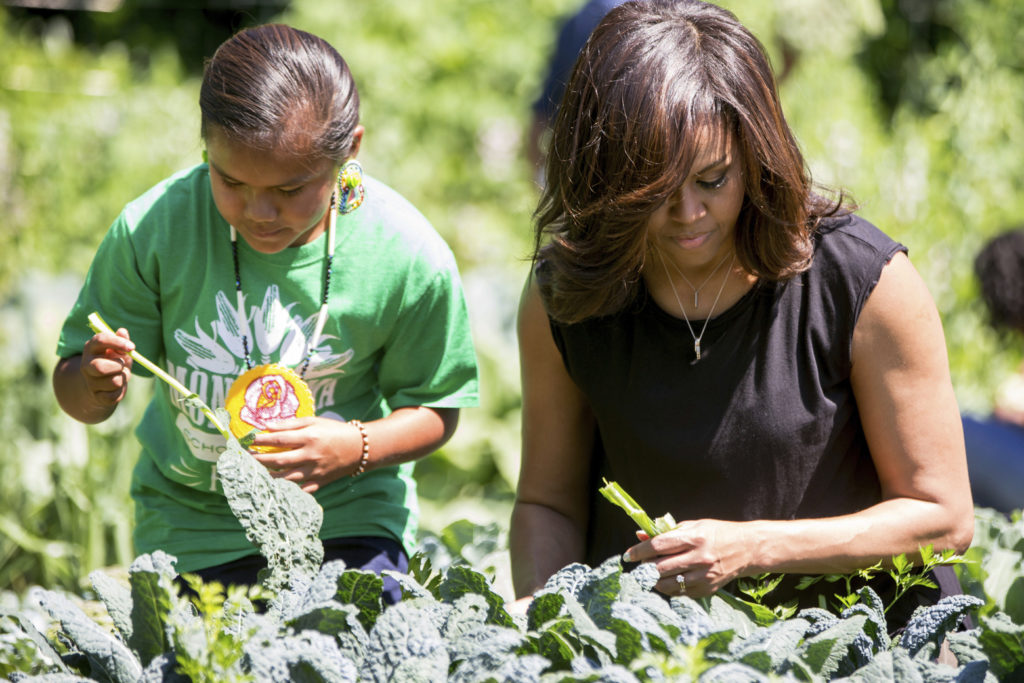
It’ll be one of the most watched mid-life career changes in recent memory. What does Michelle Obama do next? After eight years as a high-profile advocate against childhood obesity, a sought-after talk show guest, a Democratic power player and a style maven, the first lady will have her pick of options when she leaves the White House next month. Just as the first lady’s role is undefined, with each woman molding it to her personality, interests and comfort level, there is no script for what comes after the first lady finishes the job. The widowed Jacqueline Kennedy remarried and became a New York book editor. Laura Bush continues her advocacy for literacy, women in Afghanistan and preservation issues. Hillary Clinton launched her own political career with her bid for the U.S. Senate, even before her family left the White House. Here’s a look at what Mrs. Obama is likely to do, or not do, when at 53 years old she becomes a private citizen again on Jan. 20. LIKELY TO DO: R&R President Barack Obama says he’s taking her on a “really nice vacation, because she deserves it. She’s been putting up with me for quite some time.” (Twenty-four years of marriage, to be exact.) WRITE A MEMOIR Practically all first ladies do. As the first black woman in the role and as someone who has said little publicly about her private life in the White House, book publishers would offer to pay millions for the rights to Mrs. Obama’s insider account. Clinton got an $8 million advance for her 2003 memoir, “Living History.” SET UP HER FAMILY’S NEW HOME Breaking from post-presidential tradition, the Obamas plan to stay in Washington so their 15-year-old daughter, Sasha, can finish high school. Presidents usually leave Washington when they leave office, but the Obamas are renting a home in the wealthy Kalorama neighborhood, near what will be the official residence of Vice President-elect Mike Pence. The home is large enough to be a hub of social activity, but it’s far from clear whether Mrs. Obama will become Washington’s new power hostess. Ex-presidents tend to keep a low profile in the first year or so after they leave office. The Obamas also still own a home in Chicago. STICK WITH HER INITIATIVES Mrs. Obama has said she’ll stay engaged in public service and will keep working on the issues she focused on during her tenure. They included childhood obesity and education for girls around the world. “I’ve always felt very alive using my gifts and talents to help other people. I sleep better at night. I’m happier,” she told Vogue for an interview in the fashion magazine’s December issue. “So we’ll look back at the issues that I’ve been working on. The question is: How do I engage in those issues from a new platform? I can’t say right now, because we can’t spend that much time really doing the hard work of vetting offers or ideas or options because we’re still closing things out here.” COULD DO: JOIN SPEAKER’S CIRCUIT Mrs. Obama put her oratory on display with a well-received speech on opening night of the 2016 Democratic National Convention. She followed up with a series of campaign speeches criticizing Republican Donald Trump, now the president-elect, as unsuitable for the nation’s highest office. Her friend, media mogul Oprah Winfrey, said the first lady will be “one of the most in-demand speakers” as a result of her convention performance. “That speaking fee just quadrupled,” Winfrey joked during an interview with The Associated Press. Clinton earned millions of dollars giving paid speeches after she stepped down as secretary of state. Laura Bush also keeps a robust public speaking schedule. HOST A TELEVISION TALK SHOW Mrs. Obama has demonstrated a knack for talk-show banter, and an ease in front of the TV cameras. She co-hosted “The View” before the 2008 election and recently co-hosted Ellen DeGeneres‘ hourlong gabfest. Roy Ashton, head of television at the Gersh Agency in Los Angeles, says Mrs. Obama would be a “no-brainer” to have a show of her own. “She could pick up where Oprah left off, or something else,” Ashton said. “I think Michelle Obama has a ton to say.” SERVE ON CORPORATE BOARDS She has some experience with corporate America, but she’ll want to choose carefully. Mrs. Obama resigned from the board of a food supplier for Wal-Mart Stores Inc. in 2007, shortly after her husband announced his presidential bid. He had been a critic of the retail giant. Mrs. Obama had cited the increased demands of the campaign for leaving the board of Illinois-based TreeHouse Foods Inc. “It will be fun to see what she actually does,” said Kimberly Archer, head of the Washington office of Russell Reynolds Associates, an executive search and assessment firm. “Wherever she does decide to focus, I would say, ‘Lucky them.’” LIKELY WON’T DO: RUN FOR PUBLIC OFFICE Both the president and first lady repeatedly have said she will not run for president – despite pressure from Democrats wowed by her campaign speeches challenging Trump. Obama has said she doesn’t have “the patience or the inclination” to be a candidate and is “too sensible to want to be in politics.” Mrs. Obama said “No, no. Not going to do it,” when asked earlier this year about following in her husband’s footsteps. RESUME PRACTICING LAW Mrs. Obama, a Harvard law school graduate, practiced at a Chicago firm but abandoned a legal career after the deaths of her father and a close friend. She entered public service, working for the city of Chicago and running an AmeriCorps service program before she joined the University of Chicago Medical Center as a vice president for community and external affairs. It was the last paid position she held before become first lady. Republished with permission of the Associated Press.
2016 White House Christmas theme: ‘The Gift of the Holidays’
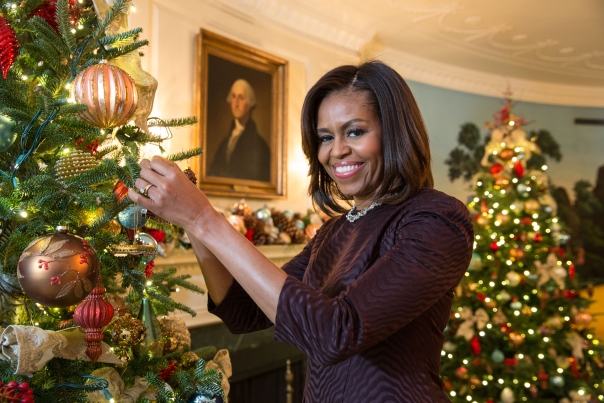
For her family’s final Christmas in the White House, Michelle Obama used the holiday decor to highlight her core initiatives as first lady: military service, education and health. The familiar crowd-pleasers are still part of the annual show: -A towering tree dominates the Blue Room, trimmed as it has been in the past to honor the U.S. military and their families, an issue Mrs. Obama has emphasized. -Larger-than-life replicas of family dogs Bo and Sunny will greet tens of thousands of holiday visitors shortly after they enter through the East Wing. -And no White House Christmas would feel complete without the annual gingerbread version. This year’s replica on display in the State Dining Room weighed in at more than 300 pounds, including 150 pounds of gingerbread covered in 100 pounds of bread dough to form the white exterior. Models of Bo and Sunny sit out front, and Mrs. Obama’s revamped vegetable garden is represented. Downstairs in the library, education is the theme. Ornaments on two trees are written with the word “girls” in 12 languages, honoring the first lady’s “Let Girls Learn” initiative to help countries educate tens of millions of adolescent girls around the world. Other trees in the library are made out of crayons or pencils. Mrs. Obama’s “Let’s Move” anti-childhood obesity is represented by a variety of fruit, to symbolize healthy eating, laid out in the Green and Red Rooms upstairs on the State Floor. Wreaths made of lemons and garlands made of limes decorate Green Room walls; clove-studded oranges, apples and pomegranates are mixed with greens to create wreaths for the Red Room. “This year’s holiday theme is ‘The Gift of the Holidays,’” the first lady said Tuesday afternoon after unveiling the decorations for military families. “We’re going to be celebrating our country’s greatest gifts, with special decorations celebrating our military families.” The theme is also meant to encourage people to reflect on “the true gifts of life,” such as service, friends and family, education and good health, her office said in a statement describing the decorations. More than 90 volunteer decorators from 33 states, the District of Columbia and Puerto Rico began arriving on Thanksgiving to begin the monumental task of decorating the White House, doing everything from hauling boxes and making bows to hanging lights and wreaths and trimming trees. The 19-foot Blue Room tree arrived on Friday, and it took four days to get it ready, said volunteer decorator Patricia Ochan, of Arlington, Virginia. The tree features mirrored ornaments and garland with the preamble to the U.S. Constitution. Besides the Blue Room tree, a second tree downstairs is decorated with gold ornaments in honor of service members who gave their lives for the country. Ochan, a military spouse originally from Uganda, said it was “most exciting” to help decorate the Blue Room tree. “I know how it feels not to have your loved one home with you for the holidays,” she said. Another highlight? Fifty-six Lego gingerbread houses, one for each state and U.S. territory, that are nestled in the branches of the trees in the State Dining Room. A team of Lego builders at the company’s Connecticut offices crafted the houses from more than 200,000 Lego pieces, the White House said. Most of the 70,000 ornaments and other decorations were reused, the White House said. Just 10 percent were new. Republished with permission of the Associated Press.
Donald Trump takes triumphant tour of Washington, has cordial meeting with Barack Obama
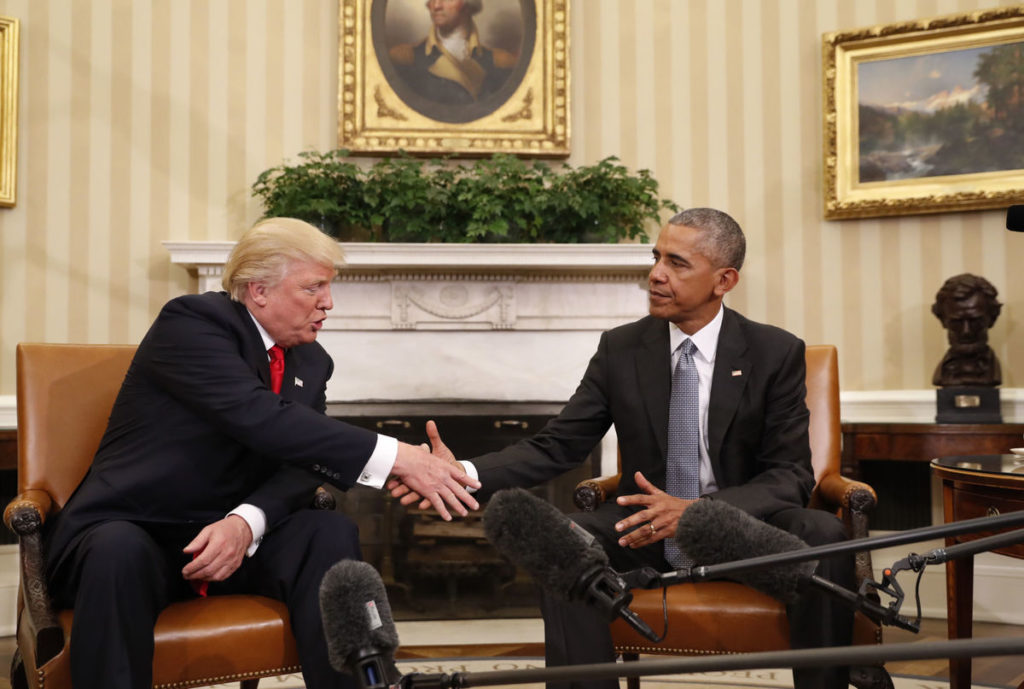
President-elect Donald Trump took a triumphant tour of the nation’s capital Thursday, holding a cordial White House meeting with President Barack Obama, sketching out priorities with Republican congressional leaders and taking in the majestic view from where he’ll be sworn into office. Trump’s meeting with Obama spanned 90 minutes, longer than originally scheduled. Obama said he was “encouraged” by Trump’s willingness to work with his team during the transition of power, and the Republican called the president a “very good man.” “I very much look forward to dealing with the president in the future, including his counsel,” Trump said from the Oval Office. He’ll begin occupying the office on Jan. 20. While Trump noted that he and Obama had never met before, their political histories will forever be linked. Trump spent years perpetrating the lie that Obama was born outside the United States. The president campaigned aggressively against Trump during the 2016 campaign, warning that his election would put the republic at risk. But at least publicly, the two men appeared to put aside their animosity. As the meeting concluded and journalists scrambled out of the Oval Office, Obama smiled at his successor and explained the unfolding scene. “We now are going to want to do everything we can to help you succeed because if you succeed the country succeeds,” Obama said. From the White House, Trump headed to Capitol Hill for meetings with House Speaker Paul Ryan of Wisconsin and Senate Majority Leader Mitch McConnell of Kentucky to discuss the GOP legislative agenda. Ryan, who holds the most powerful post in Congress, was a sometime critic of Trump and never campaigned with the nominee. Emerging from the meetings, Trump sketched out priorities for his presidency. “We’re going to move very strongly on immigration,” he said. “We will move very strongly on health care. And we’re looking at jobs. Big league jobs.” If Trump makes good on his campaign promises, he’ll wipe away much of what Obama has done during his eight years in office. The Republican president-elect, who will govern with Congress fully under GOP control, has vowed to repeal Obama’s signature health care law and dismantle the landmark nuclear accord with Iran. He’s also vowed to build a wall along the U.S.-Mexico border. First lady Michelle Obama met privately in the White House residence with Trump’s wife, Melania, while Vice President Joe Biden was seeing Vice President-elect Mike Pence later Thursday. Obama and Trump met alone, with no st Melania Trump aff present, White House press secretary Josh Earnest told reporters afterward. “The two men did not relitigate their differences in the Oval Office,” Earnest said. “We’re on to the next phase.” Trump traveled to Washington from New York on his private jet, breaking with protocol by not bringing journalists in his motorcade or on his plane to document his historic visit to the White House. Trump was harshly critical of the media during his campaign and for a time banned news organizations whose coverage he disliked from his events. As scores of journalists waited to be admitted to the Oval Office to see Obama and Trump together, they saw White House chief of staff Denis McDonough walking along the South Lawn driveway with Jared Kushner, Trump’s son-in-law. A handful of Trump aides trailed them. The show of civility at 1600 Pennsylvania Avenue contrasted with postelection scenes of protests across a politically divided country. Demonstrators from New England to the heartland and the West Coast vented against the election winner on Wednesday, chanting “Not my president,” burning a papier-mache Trump head, beating a Trump pinata and carrying signs that said “Impeach Trump.” More than 100 protesters held a sit-in outside Trump International Hotel just blocks from the White House. The mostly student protesters held signs saying “Love Trumps Hate,” a phrase Democrat Hillary Clinton often used during the campaign. Trump’s advisers, many of whom were stunned by his unexpected victory over Clinton, plunged into the work of setting up a White House and staffing government agencies. Officials at the Pentagon and State Department said they had not yet been contacted. State Department spokesman Mark Toner said the agency stood ready “to work with the incoming team once that team is designated and arrives here. But we don’t have any firm word as to when that will be.” Trump was expected to consider several loyal supporters for top jobs, including former New York Mayor Rudy Giuliani for attorney general or national security adviser and campaign finance chairman Steve Mnuchin for Treasury secretary. Former House Speaker Newt Gingrich and Tennessee Sen. Bob Corker were also expected to be under consideration for foreign policy posts. As president-elect, Trump is entitled to the same daily intelligence briefing as Obama — one that includes information on U.S. covert operations, information gleaned about world leaders and other data gathered by America’s 17 intelligence agencies. The White House said it would organize two exercises involving multiple agencies to help Trump’s team learn how to respond to major domestic incidents. Republished with permission of the Associated Press.
As campaign closes, the Obamas pass the torch to Hillary Clinton
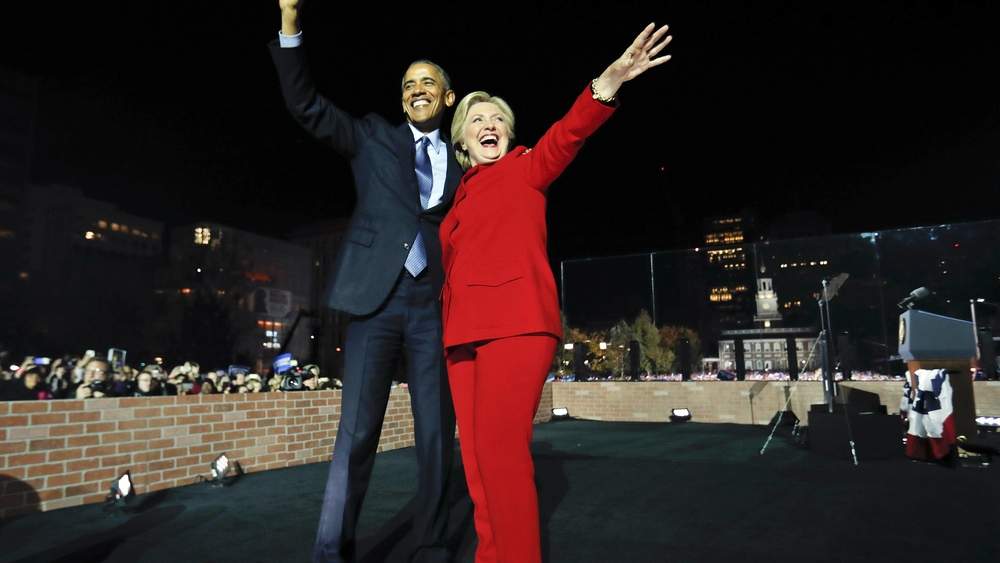
In the place where America’s democracy took root, with tens of thousands shivering in the cold, Barack and Michelle Obama passed the torch to Hillary Clinton in an emotional but anxious plea to elect her president. Though the book won’t close on his presidency until Inauguration Day, Obama’s frenzied, last-minute push for Clinton was a farewell tour of the nation. As he crisscrossed Michigan, New Hampshire and Pennsylvania Monday, he waxed nostalgic, told old stories and teared up as he thanked the nation for betting, improbably, on “a skinny guy with a funny name.” He said he’d been asked recently whether the hope that defined his campaign had somehow survived eight trying years. “The answer’s yes,” Obama said in Independence Mall, not far from the Liberty Bell. He said he was still a believer, “and that’s because of you.” “In the letters you’ve written me, in the tears you’ve shed for a lost loved one, I’ve seen again and again your goodness and your strength and your heart,” Obama said. Then the Obamas and the Clintons embraced onstage: The last Democratic president and the current one; the first black president and the woman who, on Tuesday, may break yet another historic barrier. It was left to Michelle Obama, whose visceral speeches this campaign hit a nerve with many Americans, to cast both families as part of a singular American story: One of inclusive opportunity that she hoped would contrast powerfully with the vision of Republican Donald Trump. She said she marveled at a country where “a girl like me from the South Side of Chicago, whose great-great-grandfather was a slave, can go to some of the finest universities on earth. Where the biracial son of a single mother from Hawaii and the son of a single mother from Hope, Arkansas, can both make it to the White House.” “Thank you for welcoming us into your communities, for giving us a chance whether you agreed with our politics or not,” Mrs. Obama said, in her own send-off to the nation. She said ensuring Clinton wins the election was “perhaps the last and most important thing that I can do for my country as first lady.” It wasn’t always this way. In 2008, when Obama defeated Clinton in a grinding primary, there was naked bitterness between the two Democrats that only began to soften when Obama named her secretary of state. Nearly a decade later, the Obamas need Clinton as much as she needs them, to prevent their legacy from being eviscerated by a victorious Trump. After all, the president told supporters earlier in Ann Arbor, Michigan, all his accomplishments “go out the window if we don’t win tomorrow.” Clinton, too, was meditative about the bruising battles that have led her to this moment. “I regret deeply how angry the tone of the campaign became,” Clinton said, without naming Trump. In a less-than-subtle display of political symbolism, she spoke from behind the presidential seal affixed to the podium from which Obama introduced her. The Obamas are keenly aware that whether or not Clinton wins Tuesday, their era is coming to an end, a reality punctuated by both Obamas’ insistence that neither will ever run for office again. So in a parting gift to Clinton, Obama offered her his campaign mantra – “Fired up, ready to go” – and told rally-goers in New Hampshire how it had been coined by a supporter he’d never met who showed up at an obscure event eight years ago in South Carolina. “It just goes to show you how one voice can change a room,” Obama said – and then a city, a state and a nation. “And if it can change a nation, it can change the world.” Republished with permission of the Associated Press.
Hillary Clinton and Michelle Obama: First ladies form political odd couple
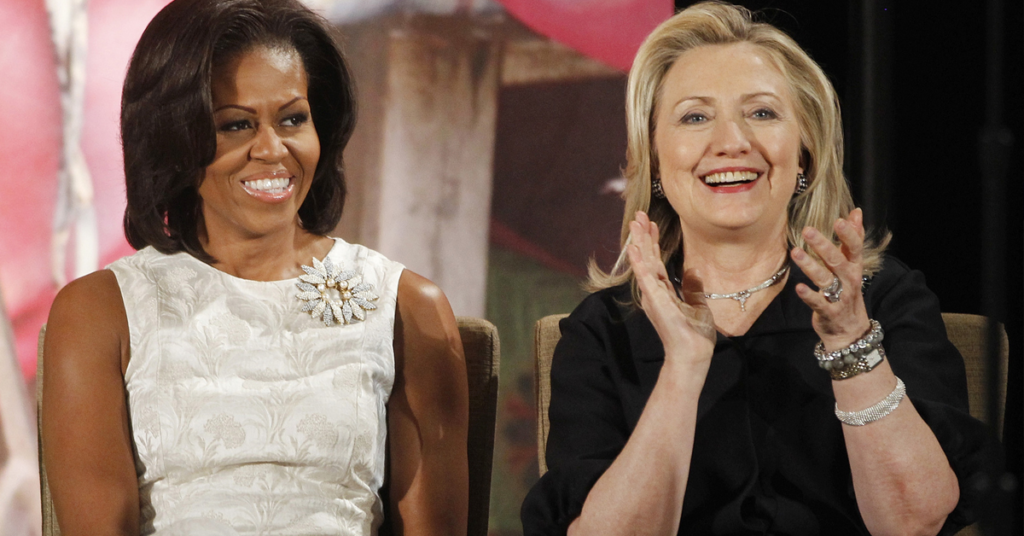
When Hillary Clinton secured her place in the history as the first woman to win a major-party nomination for president, Democratic politicians around Washington marked the historic moment with barrage of statements, formal endorsements and public cheers. One political figure, however, was notably silent: Michelle Obama. The first lady let her husband speak for her during that moment in June, choosing instead to wait weeks to lend her voice to Clinton’s cause at the Democratic National Convention in what would become one of the most memorable moments in the campaign. It was the sort of careful choice that illustrated the gulf of differences between the current and former first ladies, women who have chartered very different paths through public life and are now locked in marriage of mutual interest. When they campaign together for the first time Thursday, the event in Winston-Salem, North Carolina, will bring together one of the least traditional first ladies in modern history with one who has fully embraced tradition. Clinton dove into policy, undertook a massive project and failed under a harsh spotlight. Mrs. Obama largely steered clear and enjoyed quieter, modest success. Both Ivy League-trained lawyers with their own careers, Clinton bridled under the stereotypes associated with the office, Mrs. Obama declared herself “mom-in-chief” (and let it be known she prefers the Mrs. title before her last name). And when her time in the White House was ending, Clinton began plotting her return to Washington. Mrs. Obama hasn’t hid her readiness to leave. Asked if Mrs. Obama would ever consider running for president herself, White House officials who rarely speak for the first lady don’t hesitate. “No,” White House spokesman Josh Earnest said flatly. That’s crushing news to the Democrats who have relished Mrs. Obama’s speeches in support of Clinton as high-points of the campaign cycle. Mrs. Obama’s passionate response to Trump’s vulgar comments about women has brought an emotional resonance to Clinton’s bid that the candidate, who rarely gets personal on the stump, doesn’t often deliver. Mrs. Obama’s appearances have become a key part of Clinton’s effort to fire up women, particularly black women for whom she’s a model and a source of pride. (Clinton even quotes Mrs. Obama’s DNC speech on the stump: “When they go low, we go high.”) Mrs. Obama, meanwhile, has her own reasons for stumping for Clinton and campaigning against Republican Donald Trump. “I think Mrs. Obama really wants to make sure her husband’s legacy is maintained and Mrs. Clinton is the way to get there,” said Myra Gutin, a professor at Rider University who has written about first ladies and women in politics. The partnership has on one level made for a striking political odd couple. As first lady, Mrs. Obama has largely dodged controversial issues. She’s stayed focused on her projects involving healthy eating, exercise, support for military families and education for girls – and not publicly expressed opinions on thornier subjects. She’s mastered the art of advocacy through popular culture, while, in recent years, all-but ignoring the possibility of policymaking through legislation. She’s cultivated a brand built on style, glamour and fashion. It’s a tenure that bears little resemblance to her Democratic predecessor in the East Wing. Clinton came in promising, along with her husband, a new kind of partnership in charge at the White House. Hillary Clinton was a veteran of the feminist movement and ready to expand the office of first lady to suit her experience and passion for policy. She had an office in the West Wing, took over the health care overhaul effort and ultimately became a target of investigations and criticism alongside her husband. It was a history Mrs. Obama and her aides sought to avoid. Asked to cite role models, Obama has named Eleanor Roosevelt and Jacqueline Kennedy. The Clintons and Obamas, of course, have a fraught history, one that includes both spouses. While Barack Obama and Hillary Clinton battled in 2008, Michelle Obama raised questions about her husband’s opponent, framing the choice between the two as “about character.” Since then the women have publicly buried the hatchet. They’ve appeared at countless events together and heaped praised on each other’s work, although there’s little sign they’ve spent time one-on-one. Comparing how first ladies use the office is especially tricky, historians note. Because the office comes with no set of constitutional duties, it is also a reflection of an individual’s style, personality, politics and times. The differences between Clinton and Mrs. Obama’s tenures speak in some ways to the differences in their generations – Clinton representing the first wave of baby boomers eager to push boundaries, while Obama benefited from lessons learned, noted Carl Sferrazza Anthony, a historian at the National First Ladies Library. “Beneath the surface they both brought a sense of rigor and structure and focus,” he said. “They were very objective oriented.” Those objectives were clearly different, he said. “I think Michelle Obama may end up being perhaps one of the most influential first ladies when it comes to influence on the America public, whereas Hillary has been one of the most important in terms of achievement in terms of policy.” Republished with permission of the Associated Press.
For Hillary Clinton, struggle to change public perception persists
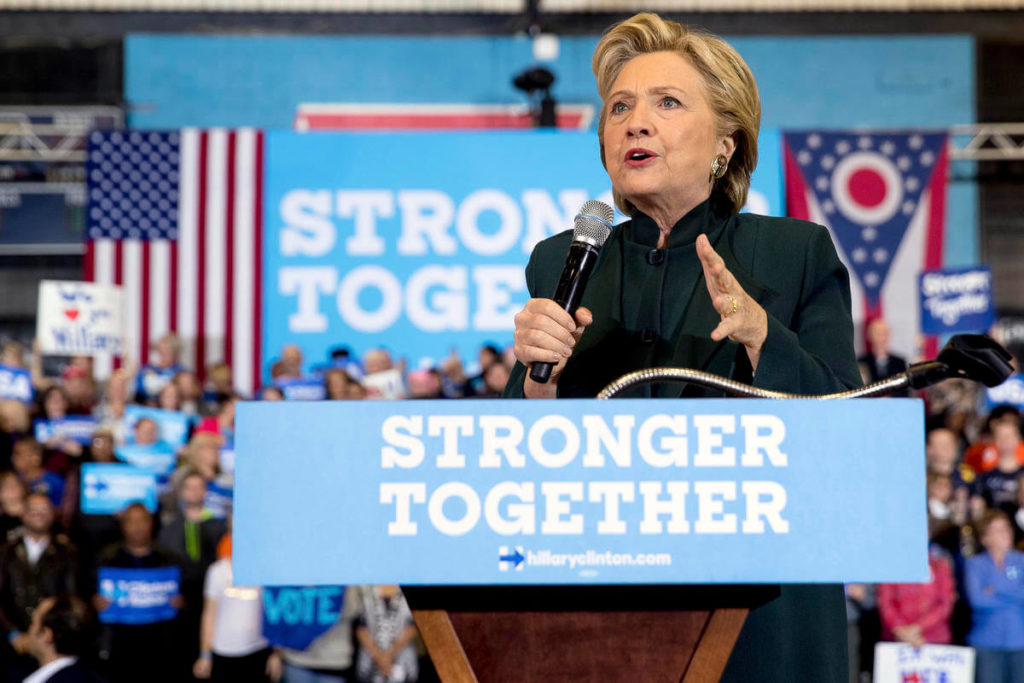
Hillary Clinton bested Donald Trump in three debates. She leads in many preference polls of the most competitive states. Barring a significant shift in the next two weeks, she is in a strong position to become the first woman elected U.S. president. But Clinton will end the campaign still struggling to change the minds of millions of voters who don’t think well of her, a glaring liability should the Democratic nominee move on to the White House. While many see her as better prepared to be commander in chief than Trump, she is consistently viewed unfavorably by more than half of the country. Most voters also consider her dishonest. Clinton’s advisers have spent months trying to erase that perception. They’ve set up small events where she had more intimate conversations with voters. They’ve tested a seemingly endless stream of messages aimed at assuring the public that the former secretary of state was in the race to do more than fulfill her own political ambitions. As Clinton starts making her closing argument to voters, her team appears to have come to terms that the mission remains unfulfilled. “Honest and trustworthy has become our most talked about metric because it’s not great,” said Jennifer Palmieri, Clinton’s communications director. “But we’ve never thought it’s the metric people make a decision on.” If Clinton wins, that theory may be proven true. Just 36 percent of voters believe Clinton is honest and trustworthy, according to a recent Washington Post/ABC News poll. That’s compared with about 60 percent who believe she has the qualifications and temperament to be commander in chief. The public’s perception of Clinton has bounced up and down throughout her time in public life. Her favorability rating fell below 50 percent at times during her years as first lady, but rose to its high water mark then and while she was as secretary of state under President Barack Obama. Democrats blame some of the current negative personal perceptions of Clinton on the hard-charging tactics she’s used to try to discredit Trump, though they believe her sustained assault on Trump’s character and temperament has been crucial. Party operatives also say Trump’s personal attacks on Clinton have made it all but impossible for more positive messages to break through. He’s called her a “liar,” a “nasty woman” and pledged to put her in jail. “When you’re under relentless assault from a reality TV star, it’s hard to come out of that with anybody feeling good about anyone,” said Bill Burton, a former Obama aide. Still, Clinton’s advisers acknowledge that some of her troubles have been of her own making, including her penchant for privacy. She’s spent nearly the entire campaign struggling to explain why she used a private email server in the basement of her home while she led the State Department. She hid a pneumonia diagnosis this fall from nearly all of her senior staff, then left the public unaware of her condition and whereabouts for 90 minutes after the illness caused her to rush out of a public event in New York. “She is a politician that does not seek to be the center of attention and is inherently more private than most politicians, certainly presidential candidates,” Palmieri said. “That doesn’t always serve you great in a campaign for president.” Clinton frequently shoots down questions about the public’s negative perceptions by saying she’s viewed more positively when she’s doing a job rather than running for one. There’s some evidence to back that up. When she ran for re-election to the Senate from New York in 2006, she won with 67 percent of the vote, a big jump from the 55 percent share from her first race in 2000. Her approval rating when she left the State Department, where her job kept her out of day-to-day politics, sat at an enviable 65 percent, according to the Pew Research Center. But if Clinton is elected president, she won’t have the luxury she had as secretary of state to stay away from the political fray — with Republicans in Washington in the opposition, and possibly Trump, too. The businessman keeps flirting with the idea he could contest the election results if he loses. There are also persistent rumors that, if he loses, he might try to harness the enthusiasm of his millions of supporters into some type of media venture. “The notion that Trump is going to go quietly into the night and wish her Godspeed is highly unlikely,” said David Axelrod, another former Obama adviser. “She’s going to have to contend with that and whatever it is he chooses to make his vehicle.” Clinton has begun acknowledging the challenge that could await her in the White House, if she wins, centering her closing argument to voters on a call for unity after a bitter campaign. “My name may be on the ballot, but the question really is who are we as a country, what are our values, what kind of a future do we want to create together,” she said Friday at a rally in Ohio. Some Democrats see the transition — the two-month-plus stretch between the Nov. 8 election and the Jan. 20 inauguration — as a crucial opportunity for her to signal, if she wins, that a Clinton White House would be different from a Clinton campaign. In a nod to bipartisanship, she could nominate a Republican for her Cabinet. Clinton could start moving on some of her more broadly popular policy proposals as a way of boosting her appeal, assuming no crisis demands immediate action. Still, Axelrod said changing the public’s view of Clinton will be a “long-term project.” “There’s no silver bullet to turn around years of wear and tear on her image,” he said. Republished with permission of the Associated Press.
Michelle Obama emerges as surrogate MVP
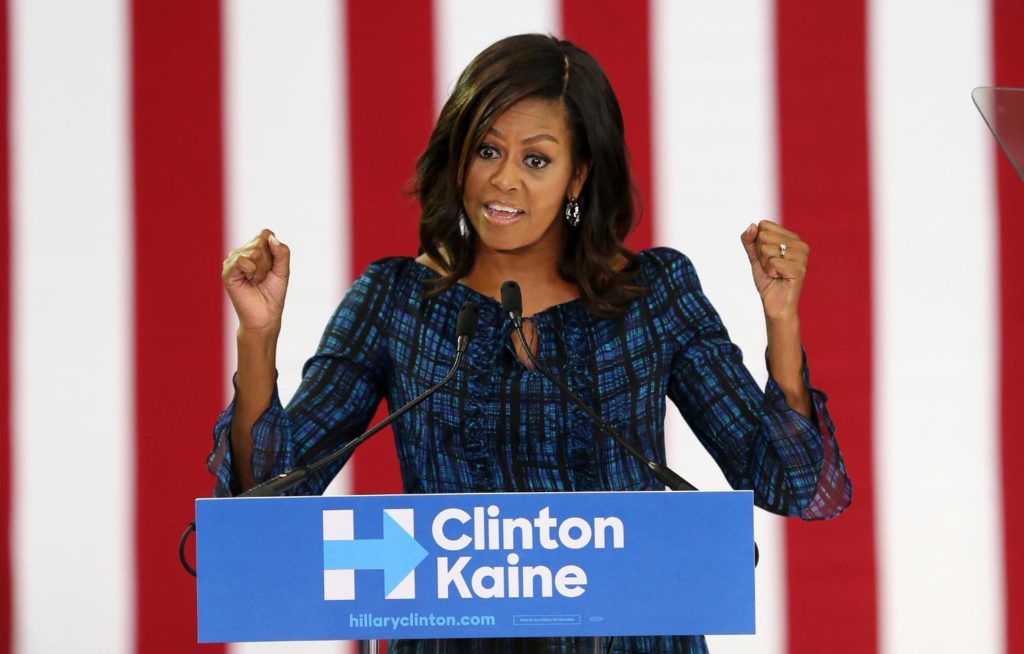
Hillary Clinton was always expected to get a late-campaign enthusiasm boost from the White House. The surprise is that it’s not coming from the president. On a star-studded team of campaign surrogates – including President Barack Obama – the most valuable player of 2016 is undoubtedly first lady Michelle Obama. During a divisive political year, the hugely popular first lady has wowed voters with her powerful rhetoric. And she can be the emotional center to a campaign whose candidate is not known for projecting warmth. Last week, in a searing indictment of Republican nominee Donald Trump that was broadcast live by cable news networks, Michelle Obama said his recorded boasts about making unwanted sexual advances toward women had “shaken me to my core in a way that I couldn’t have predicted.” With that, the first lady spoke in terms that Hillary Clinton rarely does, given accusations against her own husband that he’s long denied – but Trump has raised. “If Hillary Clinton were out there making these same arguments, we know how Donald Trump would respond, by attacking former President Clinton and bringing up old stories from the 90s,” said Democratic strategist Lis Smith. Michelle Obama also had one of the most memorable lines of the Democratic National Convention, saying her family motto is: “When they go low, we go high.” Clinton has repeated that line in public several times since. “Michelle Obama is seen as a truly authentic voice that whatever topic she speaks on, people feel that it’s really coming from her bones,” said Democratic strategist Mary Anne Marsh. To the Clinton campaign, Michelle Obama is a crucial asset who can connect with the Democratic base – particularly young people – but also reach independent and undecided voters. That was clear Monday, when the campaign signaled a push into traditionally Republican Arizona by announcing that the first lady would host an early-vote rally in Phoenix on Thursday. “There is no more powerful advocate for our campaign,” said Clinton communications director Jennifer Palmieri. “Because the first lady isn’t seen as a political figure, when she does speak out, it has a real impact.” Even among Clinton’s so-called “uber-surrogates” – the president, Vice President Joe Biden, former President Bill Clinton, Sen. Bernie Sanders and Sen. Elizabeth Warren – Michelle Obama has stood out. Once a reluctant campaigner, she has grown more comfortable after more than eight years on the national stage, promoting her childhood obesity and education initiatives, hosting her own events and showing a playful side on talk shows and in interviews. “Either she’s Meryl Streep, or she’s really genuine about this,” said Robert Watson, an American studies professor at Lynn University. “In this year of plastic candidates, Michelle just seems the most genuine one out there.” Still, political analysts said the intensity of her advocacy for Clinton is notable. “It’s unusual for a sitting first lady, or a sitting president for that matter, to campaign so enthusiastically for a presidential candidate. They usually take a lower profile approach. This is indicative of how important both Obamas think this election is,” said Katherine Jellison, chair of the history department at Ohio University who studies the first ladies. Anita McBride, a veteran of three Republican administrations, said Mrs. Obama’s schedule is more flexible at this stage of the administration because she has held the final events for some of her biggest initiatives. “It’s sort of wrapping up time where’s it’s never wrapping up time for the president,” said McBride, who was chief of staff to first lady Laura Bush. “He still has everything coming to his desk every day. Now it’s all about preserving the legacy and giving everything she can to the person she thinks can best reflect their values.” So far this fall, Michelle Obama has campaigned in Virginia, Pennsylvania, North Carolina and New Hampshire. She has done radio and television ads, including a television spot targeting early voters in Iowa, Ohio and Nevada. Arizona is up next, with more appearances expected after that. With three weeks until the Nov. 8 election, Clinton is leading in many national and battleground state polls as the race has been largely overwhelmed by Trump’s inflammatory rhetoric and past sexual comments. Clinton is still contending with the slow release of hacked emails that have raised questions about her relationship to Wall Street and inner campaign workings, and will likely be asked about it when she and Trump debate one final time on Wednesday night, but Trump has taken up much of the spotlight. Michelle Obama so far is one of the few to escape the wrath of Trump, who has spoken harshly about various voting groups, his own Republican leaders and, lately, the women who have accused him of sexual misconduct. “I can’t think of a bolder way for Donald Trump to lose even more standing than he already has by engaging the first lady of the United States,” said White House spokesman Eric Schultz. Republished with permission of the Associated Press.
