
Katie Britt backs bipartisan legislation to solidify American sanctions on Iran
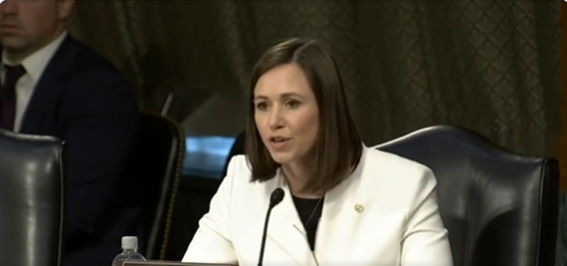
U.S. Senator Katie Britt recently joined Presidential candidate U.S. Senator Tim Scott (R-South Carolina) and Senators Maggie Hassan (D-New Hampshire), Bill Hagerty (R-Tennessee), and Jacky Rosen (D-Nevada) in cosponsoring the Solidify Iran Sanctions Act (SISA) to make permanent the Iran Sanctions Act of 1996. “This legislation sends an important bipartisan message to Iran that the United States will not tolerate continued threats to American national security,” said Sen. Britt. “Peace is achieved through strength. We must stand firm against bad actors and ensure that, first and foremost, our homeland is protected against aggression. I will always fight for America’s safety, and this act is a strong step to safeguard our nation’s future.” “As evidenced by the recent Iranian-backed drone strike in Syria that tragically killed South Carolinian Scott Dubis and the recent seizure of a U.S.-bound oil tanker, it is clear that Iran continues to engage in destabilizing activities that threaten the safety of America, Israel, and our other partners in the region,” Sen. Scott said. “Cementing these sanctions will apply pressure on Iran and help restrain this regime from developing weapons that threaten safety and security around the world.” “We must do everything that we can to prevent Iran from building a nuclear weapon and stop its support of terrorism,” said Sen. Hassan. Cementing these sanctions would advance national security by restraining Iran from engaging in malign activities that threaten the United States and its allies. SISA would also ensure that America’s sanctions regime continues to apply pressure on Iran amid its continuing dangerous nuclear escalation. In 1996, Congress passed the Iran Sanctions Act (ISA), which allowed the president to impose secondary sanctions on Iran’s energy sector. Throughout the years, ISA provisions were expanded to include other Iranian industries. ISA consists of “triggers” that place sanctions on firms or entities that violate U.S. sanctions under this law. As Iran continues its nuclear enrichment towards a weapons-grade level, it is essential that the United States solidifies its pivotal sanctions to apply pressure toward the rogue regime. The Solidify Iran Sanctions Act removes the sunset provision in the ISA and signals that the U.S. remains firmly committed to sanctioning the regime until it changes its malign behavior. A companion bill was introduced in the House of Representatives by Rep. Michelle Steel (R-California), Rep. Michael McCaul (R-Texas), the Chairman of the House Committee on Foreign Affairs, and Rep. Susie Lee (D-Nevada). There were international sanctions on Iran, but those went away in the Iran nuclear deal negotiated during the Obama administration. President Donald Trump reimposed U.S. sanctions, but the rest of the international community did not follow America’s lead. President Joe Biden has made some overtures towards negotiating a new deal with Iran, but Iran has not been receptive. U.S. Secretary of State Antony Blinken said on Wednesday that there was no nuclear deal with Iran on the table. “There is no agreement in the offing, even as we continue to be willing to explore diplomatic paths,” Blinken said at the Council on Foreign Relations in New York. “We’ll see by their actions.” Blinken called on Iran to “not take actions that further escalate the tensions” with the United States and the Middle East. Katie Britt was elected to the U.S. Senate in 2022 To connect with the author of this story or to comment, email brandonmreporter@gmail.com.
Katie Britt and colleagues introduce bill to allow consumers improve their credit ratings
U.S. Senator Katie Britt joined Sen. Tim Scott (R-South Carolina) in introducing the Credit Access and Inclusion Act to responsibly expand credit access for millions of Americans with limited or non-existent credit histories. The sponsors said that this bipartisan legislation would permit property owners and utility and telecom providers to report payment data to credit reporting agencies, allowing consumers with an established track record of paying their bills on time the additional opportunity to develop a positive credit history. “Hardworking Alabamians and Americans who have demonstrated financial responsibility deserve a pathway to establish and build their credit,” said Sen. Britt. “This bill takes into consideration the varying circumstances and experiences of individuals who hope to achieve their American Dream. Credit reporting is a crucial component in our nation’s economy to establish financial stability for the individual and the lender – this legislation simply incorporates a complete history of on-time payments, like rent and utilities, to reflect an accurate credit score.” “If you pay your bills on time, your credit score should reflect it,” stated Scott. “Americans shouldn’t be held back from purchasing a home, financing their education, or pursuing their dreams simply because their on-time payments don’t happen to count towards their credit scores. This bill will remove needless barriers and help hardworking Americans gain access to credit.” Sens. Britt and Ranking Member Scott in cosponsoring the bill are Senators Joe Manchin (D- West Virginia), Tom Cotton (R-Arkansas), Angus King (I-Maine), Mike Rounds (R-South Dakota), and Cynthia Lummis (R-Wyoming). U.S. Congressman French Hill (R-Arkansas) introduced the bill in the U.S. House of Representatives last week, along with Reps. Tom Emmer (R-Minnesota), David Schweikert (R-Arizona), Michelle Steel (R-California), Young Kim (R-California), Maria Elvira Salazar (R-Florida), and Byron Donalds (R-Florida). According to information provided by Sens. Britt and Scott, approximately 26 million Americans are “credit invisible,” meaning they lack credit records or a history of traditional payments, such as student loans, car loans, or mortgage payments. Having no credit or thin credit makes economic mobility difficult and hampers an individual’s ability to purchase a home, take out student loans, buy a car, or even get a job. The Credit Access and Inclusion Act allows credit bureaus to collect payment data for services not traditionally factored into credit reporting, such as rent, internet, phone, electricity, and utility payments. Factoring these payments into credit reporting would expand credit histories and generate credit scores for consumers who were previously “unscorable.” Many Americans who don’t have credit cards, mortgages, car payments, etc., don’t have enough open accounts to generate a credit score. Some people, however, are just starting out in life, while some people with no credit accounts may have significant actual wealth. Katie Britt is a member of the Senate Committee on Banking, Housing, and Urban Affairs. To connect with the author of this story or to comment, email brandonmreporter@gmail.com.
Barry Moore supports legislation to recover billions in stolen unemployment benefits
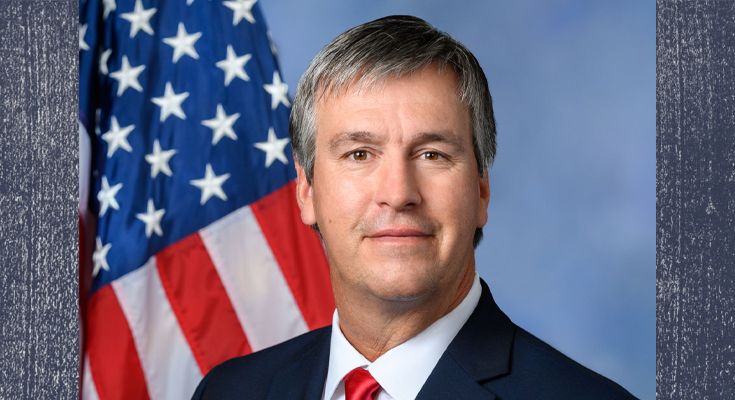
On Friday, Congressman Barry Moore voted in support of H.R. 1163, the Protecting Taxpayers and Victims of Unemployment Fraud Act. This legislation, sponsored by House Ways and Means Committee Chairman Jason Smith, would potentially recover billions in stolen unemployment benefits by providing states with incentives to investigate and recover lost funds. “Pandemic unemployment fraud might be the largest theft of tax dollars in history,” Rep. Moore said. “Almost half of the $878 billion in unemployment benefits provided by the government during the COVID-19 pandemic may have been lost to fraud. House Republicans say that they are working to recover every dollar stolen from American families. Rep. Michelle Steel issued a statement applauding the House passage of H.R. 1163. The bill seeks to recoup the estimated $400 billion in fraudulent unemployment payments by incentivizing states to pursue investigations and prosecutions to recover the stolen funds and enables them to invest in system improvements to prevent future fraud. “As we all now know, pandemic unemployment assistance funds became the source of the greatest theft of taxpayer dollars in American history,” said Rep. Steel. “Estimates put the total amount of assistance lost to fraud as high as $400 billion. California alone lost around $60 billion under the leadership of President [Joe] Biden’s Secretary of Labor nominee, Julie Su. As Californians in particular continue struggling under spiking prices and high taxes, it is absurd to force them to foot the bill for fraud committed while their elected leaders were asleep at the wheel. That is why I proudly supported the passage of the Protecting Taxpayers and Victims of Unemployment Fraud Act, which will address this unprecedented theft by incentivizing states, including California, to recover these stolen funds and providing tools to prevent future fraud. Government caused this problem, and it owes the American taxpayers a solution.” H.R.1163, the Protecting Taxpayers and Victims of Unemployment Fraud Act will protect taxpayers by: 1)Allowing states to keep 25 percent of recovered fraudulent overpayments of federal funds. 2) Allowing states to use recovered funds to improve program integrity and fraud prevention. 3) Allowing states to keep 5 percent of state UI overpayments, conditioned on meeting data matching integrity conditions and dedicating those funds to preventing future fraud. 4) Extending the statute of limitations for criminal charges or civil actions from 5 to 10 years. H.R. 1163 now goes to the U.S. Senate for their consideration. Barry Moore is in his second term representing Alabama’s Second Congressional District. He is a small businessman who previously served two terms in the Alabama House of Representatives from 2010 to 2018. To connect with the author of this story or to comment, email brandonmreporter@gmail.com.
