
Special election for House District 10 begins drawing candidates
BY: ALANDER ROCHA With a special election set for House District 10 after the resignation of former Rep. David Cole, R-Madison, candidates – new and familiar – are weighing their options. Cole resigned from his House seat on August 30 and pleaded guilty to a charge of knowingly voting at a polling place where he was not authorized to vote. The district is one of a handful of competitive seats in the Alabama Legislature. Cole got 52% of the vote in 2022 to Democratic nominee Marilyn Lands 45%. Libertarian Elijah Boyd got 3%. Lands, who announced her candidacy on Tuesday in a live video streamed on her campaign Facebook page, said in a phone interview Wednesday that she is running a second time because of the momentum her campaign built the first time around. “We worked really hard the first time around, and we knocked on lots of doors and we had a message that resonated with people, and I think we can turn our people back out again, she said. She also thinks she can make a difference. As a mental health professional, she said that the “state of our kids and the crisis we’re having in healthcare” compelled her to run again. “There’s been a lot of things that have been on my mind that we could do something about at the state level,” she said. House Minority Leader Anthony Daniels, D-Huntsville, backed her candidacy Wednesday, adding that he is confident in her ability to perform in a potentially competitive race. “The Marilyn story speaks for itself. She’s a mental health counselor. She worked for Boeing. She worked for the airport. She has been engaged in a lot of civic organizations within the community. She is of the community that she’s running in. Now, people get an opportunity to see Marilyn and understand her story,” Daniels said. Anson Knowles, who intended to run against Cole in the 2022 Republican primary, said that he’s still undecided. The Alabama Republican Party kicked Knowles off the ballot for previous work with the Libertarian Party. Knowles, who had raised questions about Cole’s residency, said in a recent interview that the last election took a toll on his family and with three kids, he said it’s a difficult decision to make. “I can’t run as a Republican. The GOP made it pretty clear they don’t want me,” Knowles said. “I considered running as a Democrat for a minute just because I thought that’d be the best way to make sure the Republicans didn’t win because I’m so mad at them for what they did to me the last time.” Knowles said that he rejoined the Libertarian Party in February and was appointed to the party executive board in March. He said that he is currently focused on recruiting Libertarian candidates for local Madison County races and has his hands full with candidate training. He said that ideologically, he doesn’t fit in with Republicans, Democrats, or Libertarians, but he is currently focused on building up the Libertarian Party’s infrastructure. “I’m an independent kind of thinker, and so I guess it didn’t sit well – like when I was in the GOP, that was part of the reason what why I had so many enemies in there, because I’d call up their establishment for their crap, and the Libertarians, I’d call out their people for their crap. It’s difficult to tell the truth to people sometimes,” Knowles said. Elijah Boyd, the Libertarian candidate for the seat in 2022, said he plans on running again, but that has to be decided by the Libertarian Party. He said he’s not ready to make any final decisions just yet. “I’ve been the representative for the party twice now, and I think I’m the best to represent, but I’ll let the party decide that,” Boyd said. Other people who have mentioned they may run for the seat are Republican D.J. Klein, a broadband business owner and former Madison City Council member who expressed interest in the seat previously. Klein wrote in an email that since redistricting, he no longer lives in the district. “And I hear that’s frowned on these days,” he wrote jokingly. Headmaster Jerry Reeder of the Whitesburg Christian Academy in Huntsville was mentioned by Knowles as a possible Republican candidate for the seat, but he said that was just a rumor. “We are, in fact, enjoying the humor of this situation and the fact there are, indeed, many rumors flying about,” Reeder said in an email. There may have been some confusion, he said in the email, because the principal for the upper-school, Robby Parker, was approached about running for the seat but declined. Parker said in an email that he was honored to be asked, but “firmly believe [he is] where The Lord wants [him].” According to a plea agreement, Cole decided to run for the House District 10 seat in the summer of 2021. The seat was held by retiring Rep. Mike Ball, R-Madison. But redistricting that year moved Cole’s home into House District 4, represented by Rep. Parker Moore, R-Hartselle, an incumbent who was seeking his second term in the House. The agreement said Cole contacted a friend, referred to as “H.S.,” and negotiated a $5-a-month lease at H.S.’s home in District 10. Cole later changed his voter registration to the address but only had mail sent there. The deadline for qualifying with major political parties will be Tuesday, Oct. 10, 2023. The deadline for independent candidates and minor parties is Tuesday, Dec. 12, 2023. Republished with the permission of the Alabama Reflector.
Young Republicans gather in Moody
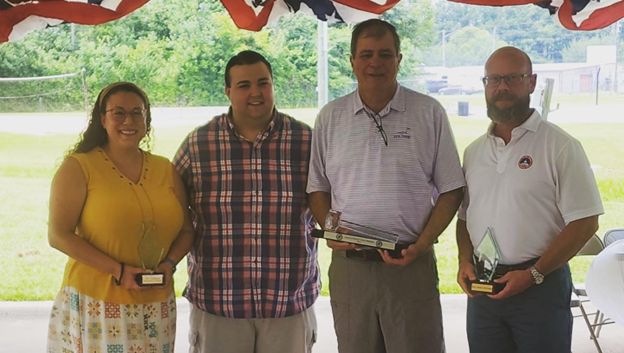
On Saturday, Young Republicans (YRs) from across the state gathered at Moody Park for an afternoon of barbecue, bluegrass music, and camaraderie as the St. Clair County Young Republicans (YRs) held their summer gathering. St. Clair County Young Republicans Chairman Logan Glass presented plaques to Federation of Alabama State Young Republican President Stephanie Petelos and State Representative Craig Lipscomb (R-Gadsden) – who represents parts of St. Clair and Etowah counties. Glass praised Petelos for her example and her leadership and credited her with restoring the Greater Birmingham Young Republicans (GBYRs) to its role as the largest Young Republican group in the state. That club has grown to the point that a new club has branched off from the GBYRs – the Shelby County Young Republicans. Glass thanked Lipscomb for his work in Montgomery on behalf of the county and for his support of the YRs. The St. Clair Young Republicans presented former St. Clair County Republican Party Chairman Circuit Judge Phil Seay with the inaugural Phil Seay Award. Seay is the President of the Alabama Judges Association. Glass thanked Seay for his years of unwavering support for the YRs. Former State Representative Mike Ball and his bluegrass band performed at the event. Ball served twenty years in the Alabama Legislature representing Madison. He is the author of an autobiographical book about his experiences: Picking, Politicking and Pontificating: How an Ex-Cop Legalized Cannabis While Fighting Corruption. Several state appellate court seats are on the ballot in 2024, so several judicial candidates were present at Saturday’s event. Former State Senator Bryan Taylor (R-Prattville) was present. Taylor is running for Chief Justice of the Alabama Supreme Court. Current Chief Justice Tom Parker is near the age 70s age limit, so he is prevented from running again. Taylor is a practicing attorney who has held many state government positions, including counsel for Governor Kay Ivey. Taylor is a retired Judge Advocate, a former military prosecutor, and an Iraq War veteran. Taylor faces a Republican primary battle with Alabama Supreme Court Justice Sara Stewart. Current Court of Criminal Appeals Judge Chris McCool is running for the position on the Alabama Supreme Court that Stewart is vacating in her run for Chief Justice. McCool is a former district attorney in West Alabama. McCool is also a farmer, a preacher, and a gospel singer. He performed a couple of songs with Ball and his band at Saturday’s event. James Govan is running for the position on the Alabama Court of Criminal Appeals that Judge McCool is vacating. Govan is a career prosecutor and a U.S. Air Force Reserve officer currently working for the Alabama Attorney General’s office. Rich Anderson is also an Assistant Alabama Attorney General and a prosecutor running for the Alabama Criminal Court of Appeals. Anderson has represented the state of Alabama before the Criminal Court of Appeals, federal district courts, the Alabama Supreme Court, the Eleventh Circuit Court of Appeals, and the U.S. Supreme Court. Emory Cox was the platinum sponsor of Saturday’s event. Cox is U.S. Senator Tommy Tuberville’s aide on finance and economics. While Cox’s duties in Washington D.C. prevented him from attending, Cox’s mother, Annette Cox, the owner of St. Clair County-based Metro Bank, was present. Glass thanked the Cox family for their friendship and history of support for the YRs and Emory for his service in Washington. Bamacarry of St. Clair County was an exhibitor and a sponsor of Saturday’s event. Glass also thanked Shaw’s Barbecue for the food as well as all of the many bronze sponsors of the event. Other notables in attendance were State Supreme Court Justice Greg Cook, State Rep. Jim Hill (R-Odenville), State Senator Lance Bell (R-Pell City), Court of Criminal Appeals Judge Bill Cole (R), Alabama Court of Civil Appeals Judge Matt Fridy, St. Clair County District Attorney Lyle Harmon, St. Clair County Commissioner Tommy Bowers, commission candidate James McGowan, former St. Clair County Republican Party Chairman Joey Stephens, St. Clair County School Board Member Bill Morris, and Colbert County Assistant DA Brent Woodall. To connect with the author of this story or to comment, email brandonmreporter@gmail.com.
Steve Flowers: Some legislative leaders retire and pass away
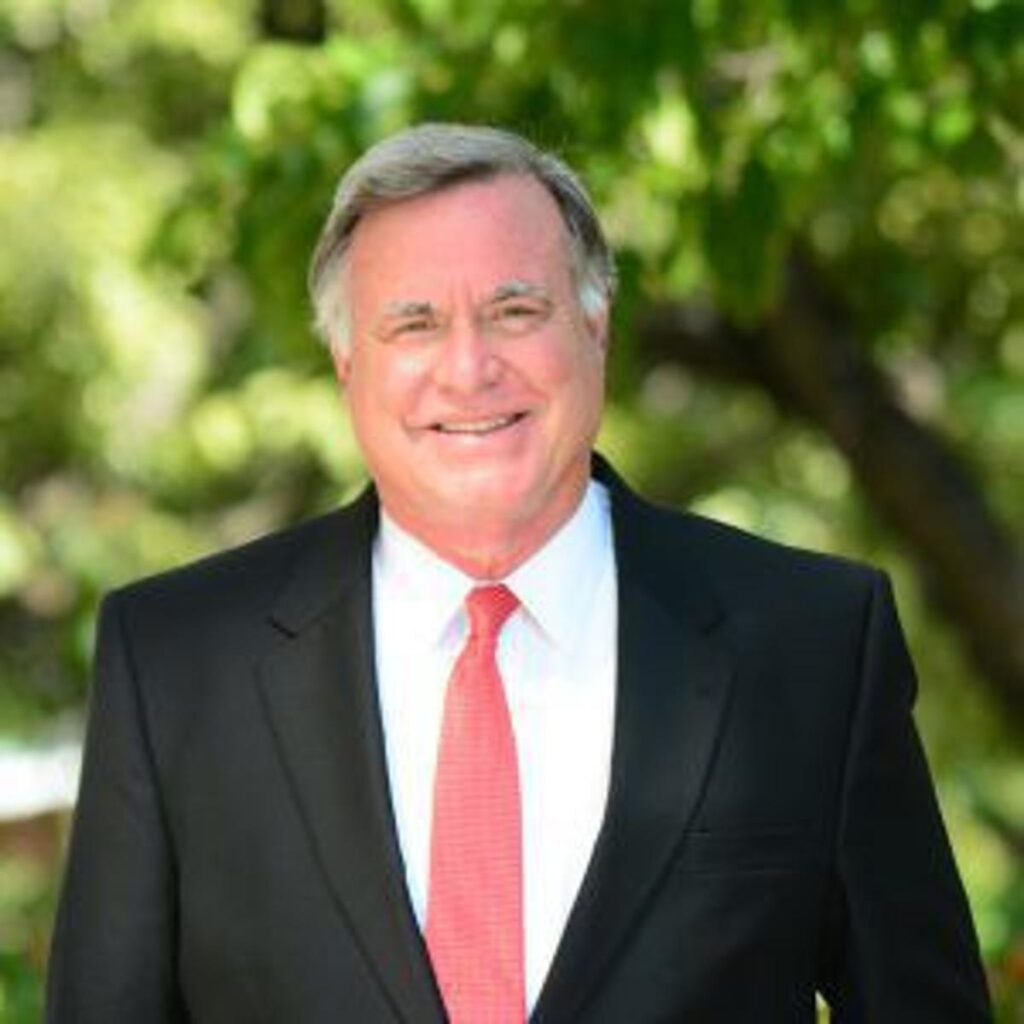
Allow me to share the stories of three of my favorite legislative colleagues. Two of these gentlemen are retiring from the Alabama House of Representatives this year, and one passed away in April. Representative Victor Gaston of Mobile and Representative Howard Sanderford of Huntsville are going home. A third legend and true gentleman, Steve McMillan of Baldwin County, passed away during the last session in April. Representative Victor Gaston is Speaker Pro Tem of the House. Victor is retiring after 40 years in the legislature. He decided that at age 79 and having spent half his entire life in the legislature, that the timing was right to end his career and not run for reelection. Gaston, who was an educator by profession and also has family timber interests, lost the love of his life, Jean, only two years ago. They were married for 46 years and were very close. You can tell he misses her immensely. His two sons, Hank and George, have been helpful to him. Victor was first elected to the House in 1982. That year, he was only one of eight Republicans in the 105-member House. His district is an affluent silk-stocking area of Mobile and one of the few areas that voted Republican in local races in that era. He serves as a deacon of the Springhill Baptist Church. Additionally, he is active in Mobile with the Penelope House, Home of Grace for Women, and the Mobile Mental Health Center. Besides serving as Pro Tem in the legislature, he has been active with the American Legislative Exchange Council and is on the State Building Commission. Victor and I came to the House as freshmen together in 1982 and became and remain good friends. I like to give my friends nicknames; I dubbed him, “To the Victor goes the spoils.” He is a formal person and seemed to enjoy the frivolity of the term. Also in our class were Spencer Bachus, Beth Marietta Lyons, and Mo Brooks, to name a few. My friend Howard Sanderford came to the Alabama House of Representatives in January 1989. We became fast friends. He succeeded my friend, Steve Hettinger, who became mayor of Huntsville. Howard has represented the 20th District which is comprised of southeast Huntsville. He was elected to this very Republican district seven times and has served a total of 33 years. He was a true blue business Republican who was perfect for that district. He represented his people well with class and distinction. Howard was an accountant by profession and had a successful career with IBM, retired early, and was able to serve in the legislature with ample time and without the need for remuneration. He is a devoted family man. Howard and his wife, Dot, are very close. She accompanied him to Montgomery most of the time during his 33 years in the legislature. They are active members of the First Baptist Church of Huntsville. At 87, Howard felt like it was time to retire from his second career. Our friend, Representative Steve McMillan of Baldwin County, passed away at 80 in April after a tough bout with cancer. Steve was a great man and a great legislator. He was a quiet yet very friendly gentleman. Steve served with distinction for 43 years in the House of Representatives. He was a very diligent and well-prepared legislator. He was extremely conservative in a dignified way. He was not flamboyant and would seldom go to the well and speak. Yet, when he did, people listened. He was well-respected and knew what he was talking about. He exuded class and epitomized the term gentleman. Steve is survived by his wife, Gayle, two sons, and six grandchildren. The House is losing a lot of experience and leadership with the loss of Steve McMillan, Victor Gaston, and Howard Sanderford. Coupled with the decision by Speaker of the House, Mac McCutcheon, to not seek reelection, this will leave a void in the Speaker and Pro Tem posts in the House. In addition, the House is losing veterans Mike Ball (R-Huntsville), Allen Farley (R-Jefferson), L.L. Brown (R-Jacksonville), and Harry Shiver (R-Baldwin). The state and many of us will miss these folks. See you next week. Steve Flowers is Alabama’s leading political columnist. His weekly column appears in over 60 Alabama newspapers. He served 16 years in the state legislature. Steve may be reached at www.steveflowers.us.
Election 2022: A comprehensive guide to the Alabama Constitutional Amendments
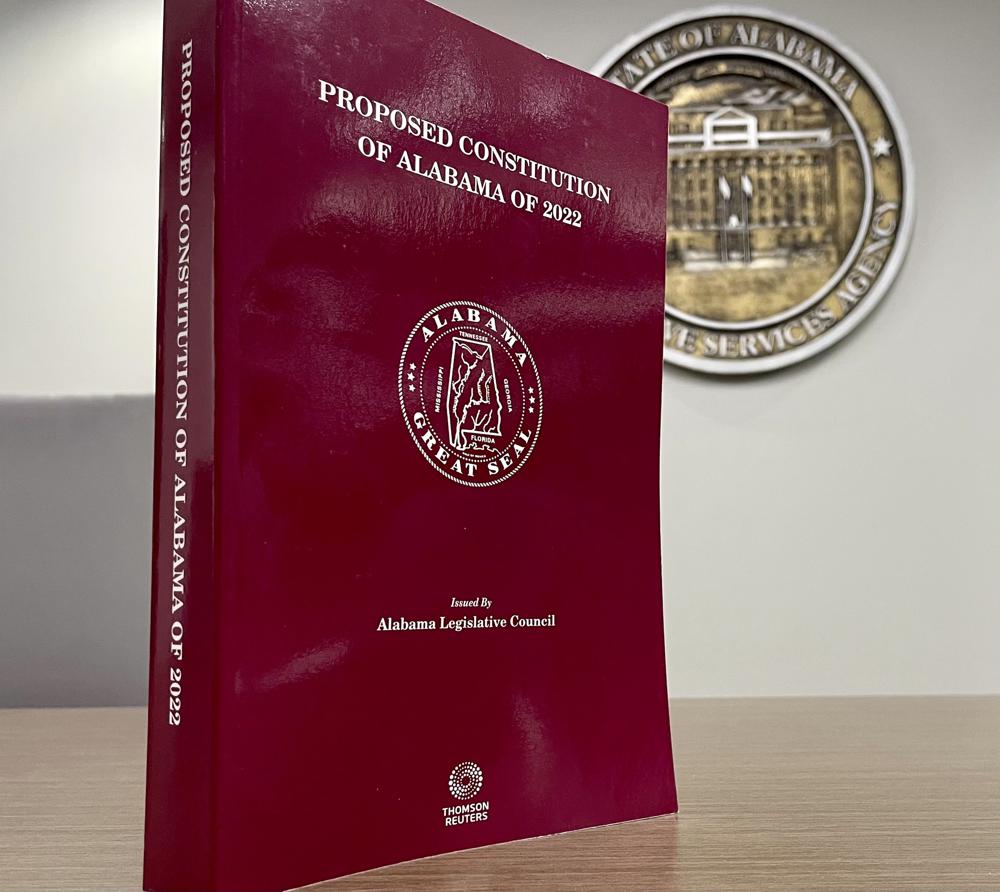
Tomorrow, unlike swing states like Georgia, Pennsylvania, and Arizona, it’s safe to say that the results of all statewide offices will be a foregone conclusion in Alabama. Alabama Daily News polling, released last week confirmed that republican candidates were favored in the state with 62.4 favorability. (Polling that was subsequently ripped off by AL.Com, who reproduced it in its entirety, without permission from behind the ADN Inside Alabama Politics paywall.) According to Secretary of State John Merrill as many as 45-50% of eligible voters are expected to turn out. In addition to statewide offices and legislative races, there will also be a vote on a new recompiled Constitution and ten new constitutional amendments. Here’s a brief look at those constitutional changes on the ballot with summaries from the Associated Press, The Alabama Policy Institute (API), and other sources. If you’re looking to verify your polling place or are looking for sample ballots you can visit AlabamaVotes.gov for you can also find the Fair Election Commission detailed summaries of at this link on the Secretary of State website. Ratification of the Constitution of Alabama of 2022 The Fair Ballot Commission describes this saying, “The Constitution of Alabama of 2022 will only do the following: (1) rearrange the constitution so that similar subjects are located together; (2) remove racist language; (3) delete repeated or repealed portions/language; (4) place all amendments which deal with economic development together; and (5) arrange local amendments by county. The reorganized constitution will make no changes other than those listed above and will not make any changes relating to taxes.” The recompiled document deletes racist language and repealed provisions. It also reorganizes the sprawling document and makes it more user-friendly. The Alabama 1901 Constitution is the longest constitution in the country. This ratification comes Amendment One: The Fair Ballot Commission describes this by saying, “This amendment will change Section 16 to add crimes for which bail can be denied, to include murder, kidnapping in the first degree, rape in the first degree, sodomy in the first degree, sexual torture, domestic violence in the first degree, human trafficking in the first degree, burglary in the first degree, arson in the first degree, robbery in the first degree, terrorism, and aggravated child abuse of a child under the age of six.” Amendment one would create Aniah’s Law, which would limit bail for individuals accused of specified violent crimes. It is named after Aniah Blanchard, who was murdered by a man out on bond for attempted murder. API stated, “While the sentiment for ratifying the law is understandable, it does raise due process concerns for those accused, but not yet convicted, of crimes.” Governor Kay Ivey and Attorney General Steve Marshall urged voters to vote yes for Aniah’s law. Marshall stated, “Aniah’s Law—which you will find on your ballot as Amendment 1—amends the state constitution to allow judges the discretion to deny bond to violent criminals like Aniah’s murderer. So, on Tuesday, be sure to vote “yes” on Amendment 1, which will keep dangerous criminals off the street and the public out of harm’s way. And thank you to Aniah’s family for leading the charge to make Alabama a safer place.” Apryl Marie Fogel, Alabama Today’s publisher and host of Straight Talk with Apryl Marie on News Talk 93.1 FM, said, “Voting yes on Amendment 1 is a no-brainer! This amendment gives judges the ability to use their discretion to deny bail to those who have no business out on our streets. It doesn’t say they must stay in jail, but it says that a judge has the discretion to keep them there. Imagine being a victim or the loved one of a victim of a violent crime, knowing that the person responsible is back out on the street immediately. That’s unacceptable. One of the few responsibilities of government is to ensure public safety. That’s what this does and why we should pass it.” John Eidsmoe and Roy Moore expressed their concerns about the proposed law. “I feel terrible about what happened to Anaiah Blanchard,” Moore said. “But that is not a reason to go and change the constitution.” The Southern Poverty Law Center opposes this amendment telling AL.Com that it could lead to people who are not yet convicted of a crime “languishing in Alabama’s jails for years at a time.” Amendment Two: Amendment two would allow the state, county, and municipal governments to spend federal stimulus funding through grants for broadband infrastructure projects. The state has already allocated money for this purpose. API stated, “The primary concern with this amendment is that Alabama needs it for local governments to be able to spend the money for its authorized purpose in the first place. The state should not control the ability of local governments to spend already allocated money for its intended purpose.” Moore and Eidsmoe said that they are strongly opposed to both Amendments 2. Amendment three would require the Governor to notify the state Attorney General and a victim’s family before postponing or commuting a death sentence. Because then Governor Fob James was hesitant to execute a woman, in 1999, he commuted the death sentence of convicted murderer Judith Ann Neeley before he left office. The family of 13-year-old Lisa Millican, who was brutally raped and murdered by Mrs. Neeley and her husband, were outraged by Gov. James’ actions. This amendment is the Legislature’s response to that decision over twenty years ago. API has no concerns with this amendment. Amendment four to the constitution would require that any law impacting a general election be passed at least six months before the election. API stated, “A potential concern with this amendment is that it could limit the Legislature’s ability to make a necessary change to election law if unexpected circumstances arise less than six months before the next election. It comes down to a question of do you have faith in the government to use this power responsibly, or would you rather them not have the power at all?” Former state representative and current Jefferson County GOP Chairman Paul DeMarco urged voters to support this amendment,
Passing Amendment six would allow cities to use special property tax revenues to fund capital improvements
Alabamians go to the polls on Tuesday to vote on two major things: to choose new leaders going forward and to approve or reject state constitutional changes recommended by the Alabama Legislature. Amendment 6 would authorize certain cities to use special property tax revenues to pay for capital improvements. The Authorize Certain Cities to Use Special Property Tax Revenue to Pay for Capital Improvements Directly Amendment was sponsored by State Rep. Mike Ball. A “yes” vote would amend the Alabama Constitution to allow certain cities that were previously authorized to pass a special property tax to pay for bonds or other forms of debt to fund capital improvements to instead use the tax revenue to pay for capital improvements directly. Essentially it would allow city governments to use the tax revenues to pay for capital improvements on a pay-as-you-go basis rather than having to do a bond issue and then using the tax to pay the bondholders. Passing Amendment six would also validate the previous actions of cities that have previously used their special property tax revenues for capital improvements. A “no” vote would prevent those certain cities that were previously authorized to pass a special property tax to pay for bonds or other forms of debt to fund capital improvements from using that tax revenue to pay for capital improvements directly. If the voters do not ratify Amendment six, then cities that have used such taxes previously may have a legal issue to resolve. The Alabama House of Representatives unanimously approved the Ball amendment on February 4, 2021. The state Senate followed up and unanimously passed the amendment on April 29, 2021. Amendment six reads: “Proposing an amendment to the Constitution of Alabama of 1901, as amended, each municipality authorized under Amendment No. 8 to the Constitution of Alabama of 1901, now appearing Section 216.01 of the Recompiled Constitution of Alabama of 1901, as amended, to levy and collect the ad valorem tax pursuant to Amendment No. 8 for the purpose of paying bonds and the interest thereon, and may also levy and collect such ad valorem tax and utilize such funds for capital improvements on a pay-as-you-go basis at a rate not exceeding the rate then lawfully permitted for the municipality to directly pay the costs of public capital improvements, as well as to pay the principal and interest on bonds, warrants, or other securities issued to finance or refinance the costs of the improvements; and to ratify, validate, and confirm the levy and collection of such tax levied and collected for any of these purposes prior to the ratification of this amendment. (Proposed by Act 2021-327).” There are no costs to Amendment 6. The oft-amended Alabama Constitution of 1901 is the longest constitution in the world, and it is the oldest state constitution in use today in the USA. Polls open on Tuesday at 7:00 am and close at 7:00 pm. You must vote at your assigned polling place, and you must bring a valid photo ID to the polls with you. If you do not have a photo ID, you may obtain one at no cost from your local board of registrar’s office or by contacting the Alabama Secretary of State’s office. To connect with the author of this story, or to comment, email brandonmreporter@gmail.com.
Webinar to be held on filing a medical marijuana application
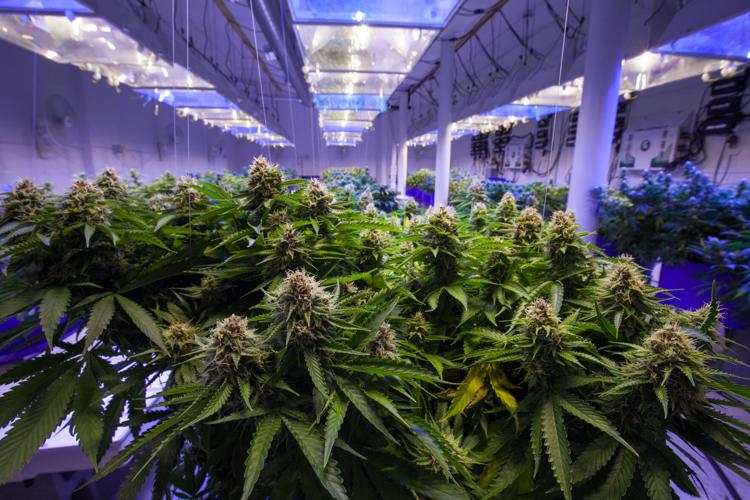
The Alabama Medical Cannabis Commission (AMCC) is now accepting applications from individuals and companies looking for a license to be a cannabis grower, processor, transporter, dispensary operator, or integrated facility. 607 prospective applicants recently downloaded applications from the AMCC website. The Alabama Cannabis Industry Association (ACIA) is hosting a webinar on filling out applications. “With the State of Alabama soon to release cannabis business applications, the time to prepare is now,” the group explained. Ashley Picillo of Point7 and Eric Schlissel of Cure8 will join the Alabama Cannabis Industry Association (ACIA) for the webinar on Wednesday. The webinar will begin at 1:00 pm central time. The discussion will be oriented around application best practices and the application’s format, including application requirements, scoring criteria, critical components such as business and financial plans, formulating a security plan, and developing an operating plan. Persons interested can submit their questions in advance to questions@cure8.tech. The AMCC rules are 171 pages long and must be adhered to in any application submitted to the AMCC. The University of South Alabama has been tasked with sorting and reviewing the applications for the Commission. Chey Garrigan is the founder and President of the ACIA. “We look forward to speaking with prospective applicants on Wednesday,” said Garrigan. “This is an entirely new experience for everyone in Alabama, and there is a lot to learn in a very short period of time for everyone in the industry. The Alabama Cannabis Industry Association worked to pass medical cannabis legislation, and we have been working with the Commission since it’s inception.” The completed applications are due in late December. The number of licenses issued is strictly limited by the original medical cannabis legislation that was passed during the 2021 Alabama Regular Legislative session. That legislation, Senate Bill 46, was sponsored by State Sen. Tim Melson and State Rep. Mike Ball. SB46 passed both Houses of the Alabama Legislature in May of 2021 despite heavy opposition from social conservatives. SB46 was signed into law by Gov. Kay Ivey. The legislation created the AMCC and tasked the Commission with writing the rules, awarding the licenses, and regulating the medical cannabis industry in Alabama. Dr. Steven Stokes chairs the Commission. The AMCC has appointed former Alabama Agriculture and Industries Commissioner John McMillan as its executive director. The licenses to grow, process, transport, or dispense medical cannabis will be issued on July 10, 2023, at noon unless there is an appeal that is ongoing and if the Commission is able to maintain the proposed timeline. Alabama will have the most restrictive medical cannabis law in the country. Alabamians who have a documented medical need will not be able to get a recommendation for cannabis from their doctor and purchase Alabama medical cannabis until late 2023 at the earliest. To connect with the author of this story, or to comment, email brandonmreporter@gmail.com.
Today last day to download application forms from Alabama Medical Cannabis Commission

The Alabama Medical Cannabis Commission (AMCC) will no longer allow prospective applicants to download paperwork for applying to grow, dispense, transport, or process medical marijuana in the state of Alabama. At 5:00 p.m. today, the AMCC website will close the portal allowing prospective applicants to download the paperwork. The portal opened, and people could download the forms following the publication of the AMCC rules on August 31. The 171 pages of rules were adopted by the Commission after a public hearing and a long public comment period over this summer. The AMCC-issued licenses to grow, process, transport, or dispense medical cannabis will be issued on July 10, 2023, at noon unless there is an appeal that is ongoing and if the Commission is able to maintain the proposed timeline. Completed applications are due in late December. The number of licenses issued is strictly limited by the original medical cannabis legislation that was passed during the 2021 Alabama Regular Legislative session. That legislation, Senate Bill 46, was sponsored by State Sen. Tim Melson and State Rep. Mike Ball. SB46 passed both Houses of the Alabama Legislature in May of 2021 despite having to overcome a nine-and-a-half-hour filibuster by social conservatives in the Alabama House of Representatives and was signed into law by Gov. Kay Ivey. The legislation created the AMCC and tasked the Commission with writing the rules, awarding the licenses, and regulating the medical cannabis industry in Alabama. The Commission was appointed by Gov. Ivey as well as leaders of the legislature. The AMCC has appointed former Alabama Agriculture and Industries Commissioner John McMillan as its executive director. Chey Garrigan is the founder and President of the Alabama Medical Cannabis Industry Association (AMCIA). “This is an exciting time for the industry and for people with a medical need treatable by cannabis,” Garrigan said. “There have been over at least 170 people download forms to look at applying for one of the licenses. There is a lot of work that an applicant has to do in order to meet all of the demands of the AMCC’s rules. The Association is busy helping applicants understand and work their way through the process.” Alabamians who have a documented medical need will be able to get a recommendation for cannabis from their doctor and purchase Alabama medical cannabis no earlier than late 2023. To connect with the author of this story, or to comment, email brandonmreporter@gmail.com.
Kay Ivey, challengers race to right in Alabama GOP primary
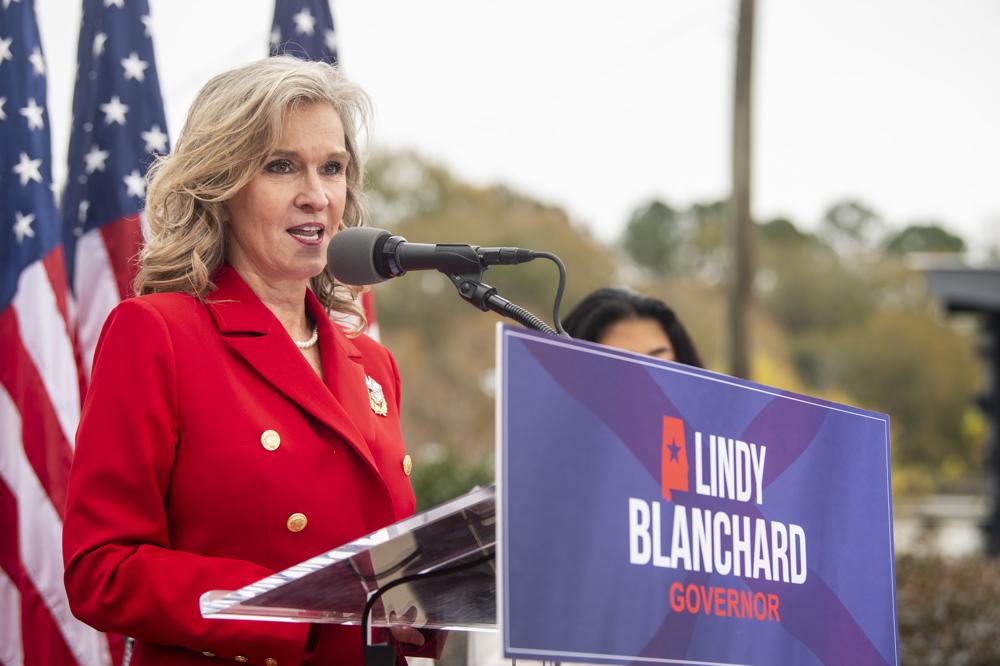
In a pair of campaign ads this GOP primary season, Alabama Gov. Kay Ivey falsely declares the election was stolen from Donald Trump and accuses the federal government of “shipping illegal immigrants” to the state. “My message to Biden: No way, Jose,” she says. But a competing ad by former Trump ambassador Lindy Blanchard calls Ivey a “tax-hiking Fauci-loving” liberal, swiping at her for actions during the COVID-19 pandemic and a gas tax increase. Alabama’s Republican primary has become a race to the right, with candidates staking out extreme positions on abortion, immigration, and LGBTQ issues. The race was supposed to be a cakewalk for Ivey — who still remains favored to win a second full term — but right flank opponents are trying to make it a referendum on conservative credentials as they seek to push the Alabama governor into a runoff. Blanchard, who left the U.S. Senate race to run for governor, said there are GOP voters who are not happy with Ivey’s leadership on a number of issues. She particularly cited Ivey’s support for the gas tax increase and mask mandate and business closures during the peak of the coronavirus pandemic. “I don’t want the government anywhere near my health care telling me what to do,” Blanchard said. “I want the people of Alabama to know that if you like Gov. [Ron] DeSantis and Kristi Noem, then you’ll like Gov. Blanchard,” she said, referencing the Florida and South Dakota governors. It is historically difficult for a primary challenger to defeat an incumbent governor. None of the primary challengers have the footprint to defeat Ivey alone. They instead are placing hopes that they can collectively garner enough primary votes and keep Ivey below 50% of the vote to spark a runoff and a new political ballgame. Ivey faces a total of eight primary challengers, including Blanchard, businessman Tim James — the son of former Gov. Fob James — and Lew Burdette, who runs King’s Home, a Christian-based nonprofit with group homes throughout the state. Former Morgan County Commissioner Stacy Lee George, Opelika pastor Dean Odle, businessman Dean Young, Donald Trent Jones, and Springville Mayor Dave Thomas are also challenging Ivey. James has also criticized past mask mandates and the gas tax increase that includes a provision for automatic increases based on the National Highway Construction Cost Index. “Governor Ivey and the political crowd found a way to raise taxes forever without having to vote on them,” James said in the ad. James, in other ads, called transgender swimmer Lia Thomas “a man in a woman’s bathing suit” and criticized a first-of-its-kind charter school in Homewood that was created to welcome LGBTQ students. An Ivey campaign spokesman said the governor is confident she will win without a runoff. Spokesman William Heartsill said the governor’s record speaks for itself. “Governor Ivey has done what other people are only talking about doing.” Among other actions, the campaign cited her record on job creation and her signing of legislation to try to ban abortion at any stage of pregnancy, forbid transgender girls from playing on girls’ sports teams at schools, and outlawing the use of puberty blockers and hormones to treat transgender minors. “Kay Ivey is the most conservative governor our state has ever had. She has always been a fighter for conservative values, and that will never change,” Heartsill said. Blanchard, who was Trump’s ambassador to Slovenia, ran an ad that questioned why Ivey didn’t appear on stage with Trump at a Cullman rally. It was there that a cantankerous crowd jeered U.S. Rep. Mo Brooks for suggesting that voters focus energy on the next election since they couldn’t change the outcome of the most recent presidential contest. Ivey greeted Trump at the airport, and her office distributed photos of the meeting. Trump has not weighed in on the Alabama race. The dynamic is playing out in other states. J.D. Vance, the author of “Hillbilly Elegy,” won the Republican primary for an Ohio Senate seat in a race where contenders competed to be the most Trump-like candidate. State Rep. Mike Ball, who is retiring after 20 years in the Alabama Legislature, said the candidates all have staunchly conservative positions and are in a race amongst themselves to be the most conservative of all. “There are some extreme positions being taken in this primary. Look at the ads on these hot button issues,” he said. David Mowery, an Alabama-based political consultant, said right now there is “a lot of sound and fury and we’ll see what it signifies on Election Day.” “Ivey still has the upper hand and at least a solid shot of winning without a runoff,” he said. Republished with the permission of The Associated Press.
Steve Flowers: Incumbency prevails in 2022 State House races
Folks, believe it or not, we are closing in on six months before next year’s election year. The primary election is set for May 24, 2022. In Alabama, all our major constitutional officers are on the ballot next year. The governor’s office is the premier race in the state, and that coveted and powerful post is set for its four-year quadrennial run. Therefore, this big political year is referred to as the gubernatorial year. Those of us who follow Alabama politics have been salivating with anticipation for a cavalcade of great races. However, the power of incumbency has devasted the big year into a yawn. All the major state offices are held by popular incumbents, who are either running unopposed or have minimal opposition. The consolation prize was that there would be the legislative races. After all, this is where the real power in the state rests. You can simply look at where the special interest and PAC money is spent to verify that fact. However, the omnipotent power of incumbency has also encroached on those races. The Alabama House of Representatives has 105 members. There are 77 Republicans and 28 Democrats. The large majority of incumbents are running for reelection – both Republicans and Democrats. The overwhelming majority of these incumbents will have no opposition. However, in the House, there will be some major changes in leadership because of retirement or moving on to new posts. Speaker of the House Mac McCutcheon is not running for reelection. This has created an interesting and spirited race within the Republican Caucus ranks for Speaker. In addition, Victor Gaston of Mobile, who is Speaker Pro Tem, is also retiring. Bill Poole of Tuscaloosa, who chaired the powerful House Ways and Means Education Budget Committee, has left the House to be the State Finance Director. House Rules Committee Chairman Mike Jones of Andalusia is running for the open Senate seat of retiring Senator Jimmy Holley. Two of the freshman House members are running for statewide office. Wes Allen of Troy is running for Secretary of State, and Andrew Sorrell of Tuscumbia is running for State Auditor. In addition, Connie Rowe of Jasper is leaving the House to become an administrative assistant to Lt. Gov. Will Ainsworth. Some of the veteran House members who are choosing to hang up their legislative cleats include Howard Sanderford of Huntsville, Mike Ball of Huntsville, K.L. Brown of Jacksonville, Kerry Rich of Marshall, Allen Farley of Jefferson, Harry Shiver of Baldwin, Mike Holmes of Elmore, and Becky Nordgren of Etowah. The most noteworthy retiree may be Representative Steve McMillan of Baldwin County, who is retiring after serving close to 43 years in the House. Steve has been a quiet yet very effective voice for the people of Baldwin County. They all will be missed. Some of the high profile and powerful members of the House, who will return for another four years with no or token opposition, are Steve Clouse of Ozark, Nathaniel Ledbetter of Dekalb County, and Danny Garrett, Jim Carns, David Wheeler, and David Faulkner of Jefferson. Danny Garrett has ascended to Chairman of the House Ways and Means Education. Other leaders returning are Chris Pringle, Reed Ingram, Randall Shedd, Tracy Estes, Chris Sells, David Standridge, Ginny Shaver, Jim Hill, Alan Baker, Joe Lovvorn, Chris Blackshear, Kyle South, Paul Lee, Jeff Sorrells, Rhett Marques, Steve Hurst, Joe Faust, and Margie Wilcox. The Democratic leadership will remain intact. There is an illustrious array of House Democratic leaders, including Anthony Daniels, Chris England, Laura Hall, Peb Warren, Barbara Boyd, A.J. McCampbell, Berry Forte, Dexter Grimsley, Thomas Jackson, Kevin Lawrence, Mary Moore, Juandalynn Givan, and veteran John Rogers. Two of the Democratic House veterans from Jefferson County, Louise Alexander and Merika Coleman, are both running for an open Jefferson County Senate Seat, leaving both their House seats up for grabs. There may be an increase in the number of females in the House of Representatives. It has already begun with the election of Cynthia Almond of Tuscaloosa, who was elected without opposition to replace Bill Poole. In addition, Patrice Penni McClammy won the Montgomery District 76 seat of her late father, Thad McClammy. She won with no opposition. See you next week. Steve Flowers is Alabama’s leading political columnist. His weekly column appears in over 60 Alabama papers. He served 16 years in the state legislature. Steve may be reached at www.steveflowers.us.
Winners and Losers of the 2021 session
Every session wraps up with winners and losers. This year, there’s no doubt that the people of Alabama were the biggest loser, but there were some stand-out wins and losses too. Overall I was incredibly disappointed in this legislative session, mainly for the opportunities lost. On the other hand, there were some notable successes that need to be acknowledged. Winners #1: Senator Tim Melson & Representative Mike Ball “Pleasantly surprised!” There’s no other way to describe the feeling when the bill sponsors of the medical marijuana bill got it passed and signed by Governor Kay Ivey. After all the hours of irrational ranting and raving and mindless huffing and puffing (no pun intended) by those acting like allowing a small number of patients to have access to a limited amount of medicinal marijuana was going to lead to the fall of civilization, I was worried. The good guys won out, though. The very real, heartwarming stories of those who would benefit overcame the idea that the Pot Man has been sitting at home longingly considering getting high but just waiting for it to be available in a non-smokable, non-vape, non-flavored medicinal way. Winner #2: The anti-gaming coalition I debated putting the Porch Creek Indians on the losing list, but truly I think the bigger point is that this was a big win against big spending and a bad bill. It’s hard to pinpoint exactly who stopped the gaming bill. It was quite a group effort. If a finger has to be pointed, I’d join Senator Del Marsh in his assessment to say Speaker Mac McCutcheon can take credit for killing the bill with a shout-out to Rules Chairman Mike Jones for the assist. Of course, the Donald Trump Jr. tweet didn’t hurt either; kudos to whoever got that done. House leadership was certainly as responsible as all the other gaming interests in the state, the religious/moral opponents (API, Eagle Forum & others), and the democrats all combined in killing the bill. While the democrats thought they’d negotiate their way into a jackpot of their own with a wishlist a mile long to come on board in the end, it was the fact the speaker left the bill off the agenda so long that ended up being the favor to those who wanted to see the current proposal dead. His actual reasons and efforts (or lack of efforts) are still a mystery, with hemming and hawing about not having the votes but not bringing anything to the floor and not taking it up while a day was wasted on vaccine passports is curious. Winner #3: Wes Allen Wes Allen has always been a strong and influential member. Using his time as a probate court judge to help his perspective as a house member has served him well, but with his ban on curbside voting passing just after he announced he was running for Secretary of State, he’s looking like he’s going to be the man to beat for that open seat. Beyond the election bill Allen also passed HB 460 the Farm and Forest Products Tag Bill. AFLA describes that bill as a legislative victory. They summarized it saying, “The bill would lift limits on the purchase of F4 farm tags for larger trucks. It also would allow log trucks to purchase L tags and be exempt from the International Registration Plan. Currently, forest product haulers over 42,000 pounds must carry a commercial license plate. Existing rules put Alabama farmers and loggers at a competitive disadvantage with their counterparts in neighboring states.” Allen covering his basics with a lot of his priorities over the year showing his conservative and business friendly bona fides. Winner #4: Female athletes In what should be considered a win for common sense, feminists, and girls/women everywhere, the legislature secured in statute the current guidelines being used by the Alabama High School Athletic Association (Bylaws: Section 6, Page 48). The irony of this is media outlet after media out, and activists decried the protection as unnecessary because it would affect very few people while in the same breath saying that a ban on puberty blockers and hormone treatments (aimed to protect those this would potentially impact) would affect hundreds if not a thousand school-age kids. Which is it? This bill isn’t about hate or bigotry; it’s about fairness. Here’s a column I wrote explaining my perspective when Representative Chris Pringle first introduced the bill. Winner #5: Teachers & Students During the legislative session this year, teachers were a big winner, with multiple bills adding to their salaries, enhancing their retirement, and supporting schools in a post-pandemic world. Among the non-traditional incentives are efforts to expand broadband services. Students were also winners when Ivey vetoed SB 94, the shameful efforts to delay the literacy promotion requirement. The so-called conservatives who voted for this bill need to be asked tough questions about their vote when reelection comes up. Winner # 6: Wine and spirit drinkers Two bills passed this year that gets the government out of the way of legislating morality or even convenience for wine and alcohol drinkers. The first bill allows Alabama residents to receive wine shipments from Wine Producers. The second allows delivery services such as Shipt to deliver alcohol. Losers #1: Jokes on us, the voters; we are the biggest losers. Legislators failed us in too many ways to list and count. Look, don’t get me wrong, my feeling is if you can’t do something right, don’t do it at all. So I’d rather have no gaming/lottery bill than a bad one, but the negotiating was done without a healthy public debate on the nuances of a significant bill and hardly a public peep into what the Democrat’s last minute pot sweeteners were. There has never been a year so ripe for discussion about school choice, which is why over two dozen states sought to expand their school choice opportunities this year. Imagine my surprise that Alabama didn’t
House drops resistance, OKs medical marijuana bill
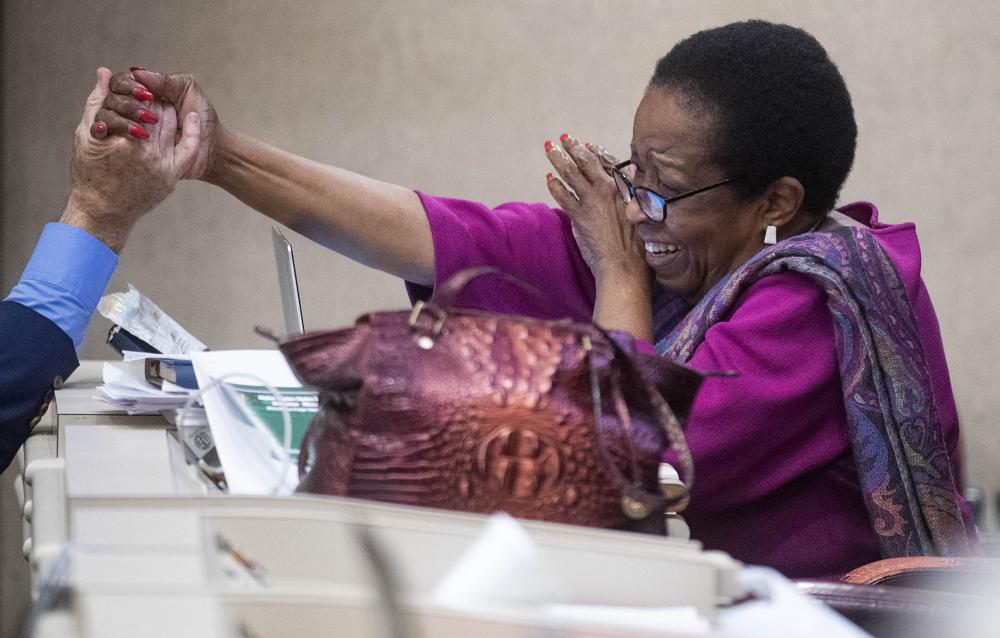
The Alabama House of Representatives overcame years of resistance in approving medical marijuana legislation on Thursday, voting after two days of long and emotional debate in which key Republican lawmakers described switching sides in favor of the proposal. Representatives voted 68-34 to pass the bill, which would allow people with a qualifying medical condition to purchase medical marijuana with the recommendation of a doctor. The bill now returns to the Alabama Senate to settle differences or be sent to a conference committee. The state Senate had already approved the bill last February by a 21-8 vote after just 15 minutes of debate. But the House of Representatives had traditionally been more skeptical of medical marijuana proposals and sent the bill through two committees before it reached the House floor. Alabama Gov. Kay Ivey’s office did not immediately respond to a request for comment on the bill. The House approval came eight years after a medical marijuana bill in 2013 won that year’s so-called “Shroud Award” for the “deadest” bill of the year in the House of Representatives. But Republican Rep. Mike Ball, who handled the bill in the House, said “hearts and minds” have slowly been changed on the issue. Ball, a former state trooper and state investigator, said he also changed his stance on medical marijuana, becoming emotional at times as he discussed the bill’s House passage. “Every year that we delay getting help to people who need it, there are more people and more people who are suffering because of it. We’ve still got another year or so before this gets set up and cranked up, but at least we have hope now,” Ball said. More than a dozen conditions, including cancer, a terminal illness, depression, epilepsy, panic disorder, and chronic pain would allow a person to qualify. The bill would allow marijuana in forms such as pills, skin patches, and creams but not in smoking or vaping products. Representatives voted to name the bill after the son of Democratic Rep. Laura Hall. She first introduced a medical marijuana bill over a decade ago after her son Wesley ‘Ato’ Hall died of AIDS. Representatives debated the bill for nearly 10 hours Tuesday until lawmakers adjourned shortly before midnight without a vote. Lawmakers did not meet Wednesday and representatives approved the bill Thursday after two hours of debate. The lengthy debate brought impassioned discussion that included lawmakers expressing fervent opposition. Others spoke, however, of changing their minds on the issue after witnessing the illnesses of family members. “This can change the quality of life for the people that we love,” said Republican Rep. Allen Farley, a former police officer. The bill had faced an earlier filibuster from opposed Republicans, who worried that it could be a gateway to recreational use or that medical marijuana could end up in the hands of teens. “What makes us think we know more than the FDA. My other thought is what if we’re wrong. What if we approve and pass this bill and it is a gateway like it has been for Colorado,” Republican Rep. Rich Wingo of Tuscaloosa said Tuesday. A medical marijuana bill in 2013 won the Shroud Award for the “deadest bill” in the House. “They laughed at me,” former Democratic state Rep. Patricia Todd, the sponsor of the 2013 bill said Thursday of the reaction she got from some Republicans at the time. “I’m glad to see it passed. It’s long overdue,” Todd said. Republished with the permission of the Associated Press.
House nears vote on medical marijuana bill

The Alabama House of Representatives headed to a vote on a medical marijuana bill late Tuesday evening after impassioned debate that included lawmakers expressing fervent opposition or how they changed their minds on the issue after the illnesses of family members. The bill would allow people with a qualifying medical condition to purchase marijuana after getting a recommendation from a doctor. More than a dozen conditions, including cancer, a terminal illness, and chronic pain would allow a person to qualify. The bill would allow marijuana in forms such as pills, skin patches, and creams but not in smoking or vaping products. The bill was sponsored by Republican Sen. Tim Melson, a doctor, and Republican Rep. Mike Ball, a former state trooper and state investigator. “This can change the quality of life for the people that we love,” said Republican Rep. Allen Farley, a former police officer, describing how his 94-year-old mother at the end of her life entered a facility that treats people with dementia. Republican Rep. Brett Easterbrook of Fruitdale said he is “as conservative as they get” but saw the positive impact medical marijuana had on his son. “I watched it … There is not one of you sitting in those chairs, if your child has a brain injury or cancer and this will help, you won’t give a damn what the Legislature says,” Easterbrook said. The bill faced a filibuster from opposed Republicans who worried that it could be a gateway to recreational use or that medical marijuana could end up in the hands of teens. “Don’t ever doubt it, if the state of Alabama gets into the marijuana business, the cannabis business, it will change the very fabric of who we are as a state,” said Republican Rep. Jim Carnes of Vestavia Hills. The bill was added to the day’s debate agenda at the last minute. Republican Rep. Rich Wingo of Tuscaloosa said lawmakers deserve more time to look at the bill. The Alabama Senate approved the bill by a 21-8 vote in February after 15 minutes of debate. However, the House of Representatives has traditionally been more skeptical of medical marijuana proposals and required the bill to go through two committees before coming to the floor. A medical marijuana bill in 2013 won the “Shroud Award” for the “deadest” bill that year in the House of Representatives. Melson has expressed optimism that the bill would win approval. Representatives on Tuesday voted 69-31 to bring the bill up for a debate, an indicator that the bill could have enough support for final passage if it reaches a vote. Democratic Rep. Ralph Howard of Greensboro criticized the Republican filibuster against the bill. He described how his father struggled with the pain of cancer that had spread to his brain. “Who am I to tell you how to treat a sick relative. A drug is a drug,” Howard said.
