
Mike Rogers and colleagues question Department of Defense leadership on China threat
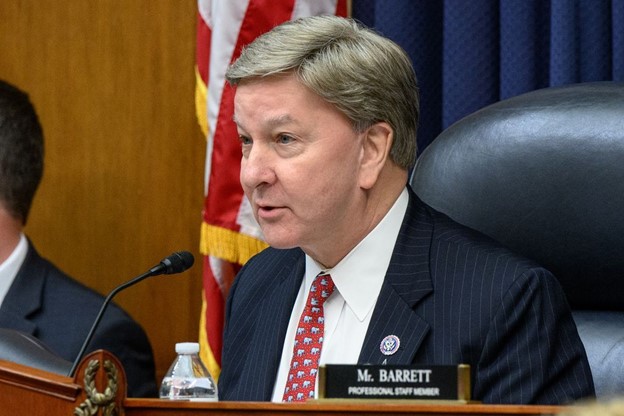
On Wednesday, March 29th, the House Armed Services Committee (HASC) questioned Secretary of Defense Lloyd Austin and Chairman of the Joint Chiefs of Staff General Mark Milley during an oversight hearing. Members pressed Sec. Austin and Gen. Milley on the threat China poses to the United States and what we’re doing to deter China’s growing influence and military capabilities. Congressman Mike Rogers chairs the powerful committee which oversees the Department of Defense. In his opening remarks, Rogers made it clear that we must invest in “the men and women of our armed services and the modernization of our conventional and strategic deterrent” to maintain readiness in the face of China’s aggression. In an exchange with Chairman Rogers, Gen. Milley said, “That’s the reality of it. Our military, capability-wise, can fight in a lot of places with different types of contingencies. But if you’re talking about a serious conflict with a major great power war, realistically putting both China and Russia together is a very, very difficult thing.” “That’s the thing the committee needs to take note of, and the Congress is that for the first 15 years. I was here; we had a strategy that allowed us to fight two wars simultaneously and successfully defend the homeland,” Rogers said. “We have already had to drop that down to just one theatre, which is scary enough, and I worry that if we do have a disruption in our funding, our authorization, it could further erode that capability.” Rep. Doug Lamborn (R-Colorado) questioned Milley on China’s threat to the U.S. “[China has] a national goal to be a global — to be the global — coequal with the United States and superior militarily by mid-century,” Gen. Milley said in response. “They’re on that path to do that, and that’s really disturbing. That’s really bothersome. We’re going to have to not only keep pace, but we have to outpace that, and that will assure the peace.” Rep. Rob Wittman (R-Virginia) delivered his analysis of the threat the U.S. is facing from the Chinese Communist Party. Rep. Wittman showed the alarming growth of China’s capabilities from 1999 to today and projections for 2025. Rep. Wittman said, “Today we face the threat of our lifetime, the CCP is indeed that…we see the expansionist efforts by the Chinese Communist Party.” Rep. Mike Gallagher (R-Wisconsin) emphasized bipartisan support to turn Taiwan into a porcupine and pressed Secretary Austin on whether he is personally engaged in the effort to deliver a deterrence by denial capability. Secretary Austin responded, “Absolutely. There is not a week that goes by that I am not talking to commanders and staff on the problems, the challenges, that we face with China, me personally, and so that is a part of our battle rhythm, for lack of a better term and again, I think that that’s what it’s gonna take to do the kind of things that you just described.” In an exchange with Gallagher, Secretary Austin stated, “We need to make sure that we maintain a combat credible force that can deter any adversary from making a bad decision on any given day.” Mike Rogers is in his eleventh term representing Alabama’s Third Congressional District. To connect with the author of this story or to comment, email brandonmreporter@gmail.com.
Mike Rogers calls for defense investments to face new threats to U.S.
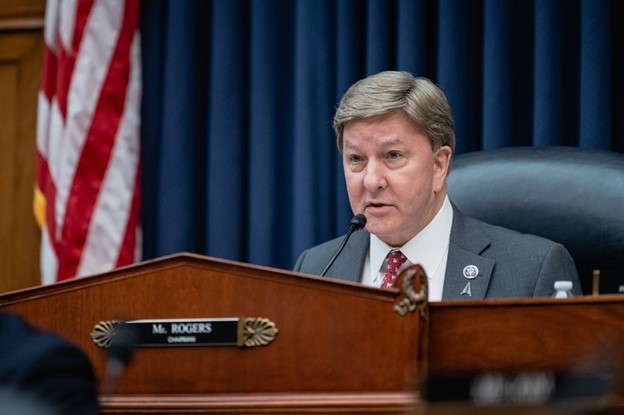
On Wednesday, the powerful House Armed Services Committee held a hearing on the fiscal year 2024 Defense Department budget request. U.S. Representative Mike Rogers Chairs the Committee. Chairman Rogers said in his opening remarks, “The threats we face today are more formidable than at any point in the last 20 years.” “The President’s disastrous withdrawal from Afghanistan has left us nearly blind in the worst terrorist hotspot on the globe,” said Rogers. “North Korea is lobbing ICBMs over Japan and threatening us with nuclear annihilation on a near-weekly basis. Iran continues to fund and equip terrorists targeting Americans. Last week, one American died, and seven were wounded when the Ayatollah’s terrorist proxies attacked our bases in Syria. We continue to sit by and watch as his regime aggressively pursues nuclear weapons. Undersecretary Kahl told us last month that the Ayatollah is 12 days away from having enough fissile material for a nuclear bomb. We absolutely cannot allow that to happen. Finally, the Ayatollahs exporting kamikaze drones and other advanced weapons to Russia. And Putin is using them to kill innocent civilians and further his brutal invasion of Ukraine.” “Putin is also threatening our NATO allies by deploying tactical nuclear weapons to Belarus, stepping away from New Start, and stepping up his harassment of American forces in Eastern Europe and Syria,” Rogers continued. “But most concerning is the strengthening alliance between Putin and Xi. Putin is literally fueling the Chinese Communist Party’s strategic nuclear breakout with Rosatom highly enriched uranium.” “In what former STRATCOM Commander Richardson described as “breathtaking,” the CCP has doubled the number of nuclear warheads in just two years,” Rogers added. “The CCP is starting to outpace us on new battlefields as well. The CCP has leapfrogged us on hypersonic technology. They are fielding what we are still developing. And their rapid advances in space were one of the primary reasons we established the Space Force.” “We all know the CCP is not building these new and advanced military capabilities for self-defense,” Rogers warned. “We watch their ongoing attempts to intimidate and coerce Taiwan and our allies and partners in the region. Just this week, they threatened the Navy with “serious consequences” after we exercised our right to sail through international waters in the South China Sea. And we’ve heard from Combatant Commanders over the past month about how the CCP has used economic coercion to gain footholds on new continents. We also heard about their efforts to expand their military presence in Africa and sign new security agreements in South America and the Middle East. Finally, we all know from the spy balloon incident that XI and the CCP are no longer hesitant to take provocative action against the American homeland. These are just a few of the growing threats confronting our nation. How we respond to them is the biggest test we face as Americans.” Rogers said that the U.S. must respond to these growing threats “with sustained investment in the men and women of our armed forces and the modernization of our conventional and strategic deterrent. These investments are going to be expensive, but neither the President nor Congress can shy away from them. We no longer have the luxury of time.” Rep. Jim Banks said in a statement, “We now have a Space Force, the end of operations in Afghanistan, a Russian war in Ukraine on the eastern flank of NATO and the ever increasing threat of the PRC military in the South China Sea and in other locations throughout the world.” Rep. Mike Gallagher said, “I’ve repeatedly expressed my concerns about the Department’s pace for growing and modernizing the ships, aircraft, and weapons required for the potential fight with China. If we accept that we need more time to build the platforms required for a kinetic conflict, it’s my genuine belief that our ability to robustly use information and cyber operations should provide us with the opportunity to “buy time to maneuver” for our kinetic forces.” Rep. Rob Wittman said, “The National Defense Strategy is clear in its focus on China as our nation’s pacing threat. During my previous tenure as Ranking Member on the Seapower and Projection Forces subcommittee, we oversaw critical capabilities of the long-range strike and long-range logistics portfolios. They are essential components for executing INDOPACOM’s military strategy and enabling operational success of the joint force competing against the tyranny of distance in response to ever-increasing Chinese aggression.” “I am worried about the Department’s current direction regarding the composition of the U.S. military’s tactical fighter force structure and required capabilities,” Wittman continued. “I am concerned that our existing force structure is optimized for a counter-insurgency fight and is not prepared to address the challenges posed by expected threats in the INDOPACOM area. As I review the plans for each service, two threads are particularly concerning. First, our fighter force structure continues decreasing. And second, we are not able to deliver replacement aircraft at affordable prices to achieve similar quantities going forward. Meanwhile, our adversaries continue out-pacing us, building and fielding their own lethal fighter capacity and capabilities.” On March 9, the Biden Administration submitted an $842 billion budget request to the Department of Defense for FY2024. Rogers is in his eleventh term representing Alabama’s Third Congressional District. To connect with the author of this story or to comment, email brandonmreporter@gmail.com.
Democrats kept the Senate this year, but 2024 may be harder
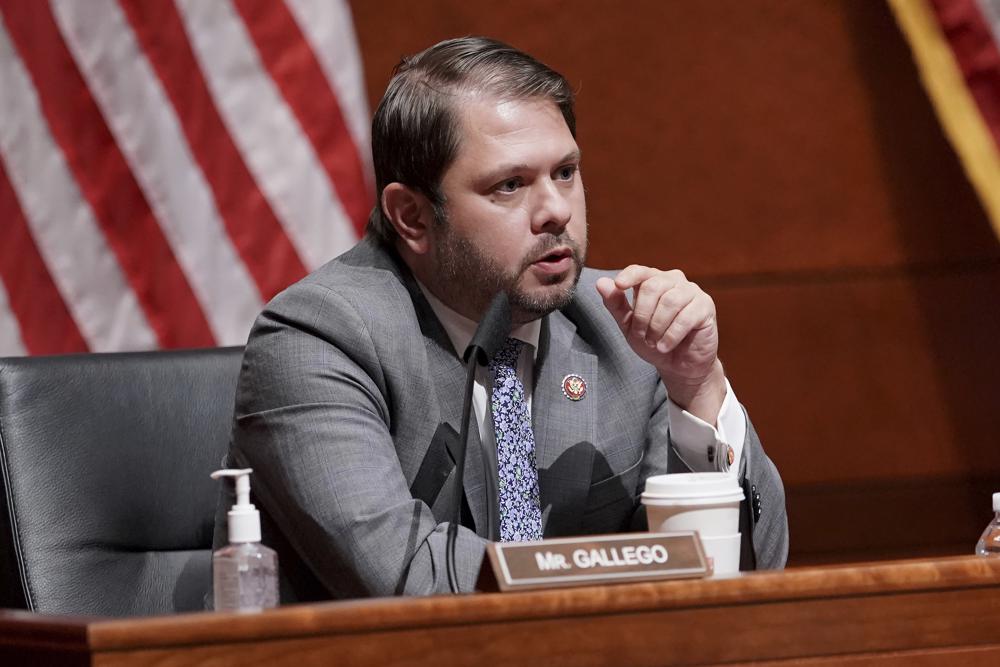
Democrats celebrating a successful effort to keep control of the U.S. Senate this year will soon confront a 2024 campaign that could prove more challenging. The party enters the next cycle defending 23 seats, including two held by independents who caucus with Democrats. That’s compared with just 10 seats that Republicans hope to keep in their column. Adding to the potential hurdles is that some 2024 contests are in states that have become increasingly hostile to Democrats, including Montana, Ohio, and West Virginia. Other Democratic-held seats are in some of the same hotly contested states that were at the center of this year’s midterms, such as Pennsylvania, Arizona, and Nevada. And while Democrats carried each of those races, they did so at great cost and with sometimes narrow margins. In Nevada, for instance, Democratic incumbent Sen. Catherine Cortez Masto won by less than 1 percentage point, or about 9,000 votes. For now, both parties insist they’re laser-focused on coming out on top in the December 6 Senate runoff in Georgia. But Democrats who are on the ballot in 2024 know that they could face fierce headwinds and are studying the results of this year’s election when the party outperformed expectations. For Nevada Sen. Jacky Rosen, a Democrat facing her first reelection campaign, that means staying focused on kitchen table issues and touting legislation like the infrastructure law and gun violence legislation signed by President Joe Biden. “We know that races are always close,” Rosen said in an interview. “We never take anything for granted.” The dynamics of the next Senate campaign could be influenced by a variety of outside factors, particularly the presidential election and the attention it generates. Biden, who turned 80 this month, has said his “intention” is to run for reelection and that he will make a final decision early next year. Former President Donald Trump has already announced a third White House bid, and multiple other Republicans are lining up to launch campaigns. The eventual nominee in each party could have a profound impact on down-ballot races, including those for Senate. But perhaps the biggest question for Senate Democrats seeking reelection will be who Republicans nominate as their opponents. The GOP lost several Senate elections this year, including those in Arizona, Pennsylvania, and Nevada, after Trump-backed candidates struggled to raise money and connect with a broader, more moderate range of voters during the general election. In Nevada, the Republican field to challenge Rosen has not begun to shape up but is expected to attract several contenders. One name receiving attention is Sam Brown, a former U.S. Army captain who was awarded a Purple Heart after being severely wounded in Afghanistan. Brown ran for Senate this year and put up a strong challenge in the Republican primary before losing to Adam Laxalt, who lost in the general election to Cortez Masto. Richard Hernandez, who was Brown’s campaign adviser, said, “He has committed to his supporters that he will never stop fighting for their issues, but he has not made any decisions as to whether that involves a future run for office.” Also in the southwest, Arizona Sen. Kyrsten Sinema, a centrist Democrat, will be up for reelection. The race, like other recent statewide contests in Arizona, is expected to be very competitive. But Sinema is likely to first face a well-funded primary challenger after angering much of the Democratic base by blocking or watering down progressive priorities like a minimum wage increase or Biden’s big social spending initiatives. She has not said whether she plans to run for reelection. Sinema’s most prominent potential primary challenger is U.S. Rep. Ruben Gallego, who has a long history of feuding with Sinema. Gallego has not announced his plans for 2024 but has made it no secret that he’s thinking about challenging Sinema. He even raised money on the prospect he might oppose Sinema. An independent expenditure group is also raising money, saying it will support grassroots organizations committed to defeating Sinema in a Democratic primary. Republicans hope a bruising Democratic primary might give them an opening to win the seat after losing Senate races in Arizona in three consecutive elections. Sinema is among a trio of moderate Senate Democrats who have sometimes used their leverage in an evenly divided chamber to block or blunt some of Biden’s plans and nominees. They will also be among the party’s most vulnerable incumbents in 2024. The other two senators, Joe Manchin of West Virginia and Jon Tester of Montana, will be running as Democrats in states that Trump handily carried in 2020. Manchin has already drawn a GOP challenger in U.S. Rep. Alex Mooney, who declared a week after winning reelection that he was setting his sights on higher office. Manchin has not yet said whether he’ll run for reelection. Republicans see Tester, a three-term senator, as vulnerable, and the opportunity to run for the seat could draw a fierce primary contest between former Interior Secretary Ryan Zinke and Rep. Matt Rosendale. Zinke, who won a House seat in this year’s midterm elections, said he will decide whether to run next year, and Rosendale declined to answer. Tester has not announced if he will seek another term but has said he anticipates 2024 will be just as tough as his last race in 2018, when he beat Rosendale in a close contest. In Pennsylvania, Democratic U.S. Sen. Bob Casey has not said whether he intends to run for a fourth term. Casey easily won reelection in 2018, but Pennsylvania has been competitive for Republicans, including in this year’s Senate race won by Democrat John Fetterman. One potential Republican challenger whose name has been floated in Pennsylvania is former hedge fund CEO David McCormick, who narrowly lost the Republican primary in this year’s race to celebrity heart surgeon Dr. Mehmet Oz. McCormick advisers declined to comment on that prospect. Conservative activist Kathy Barnette, who finished a close third in the Republican primary, didn’t respond to messages about whether she’s considering a 2024 campaign. Wisconsin, which saw Republican Sen. Ron Johnson narrowly win reelection this year, is also expected to have
Congressman Mike Rogers joins colleauges to voice concern over safety of Olympic athletes in China
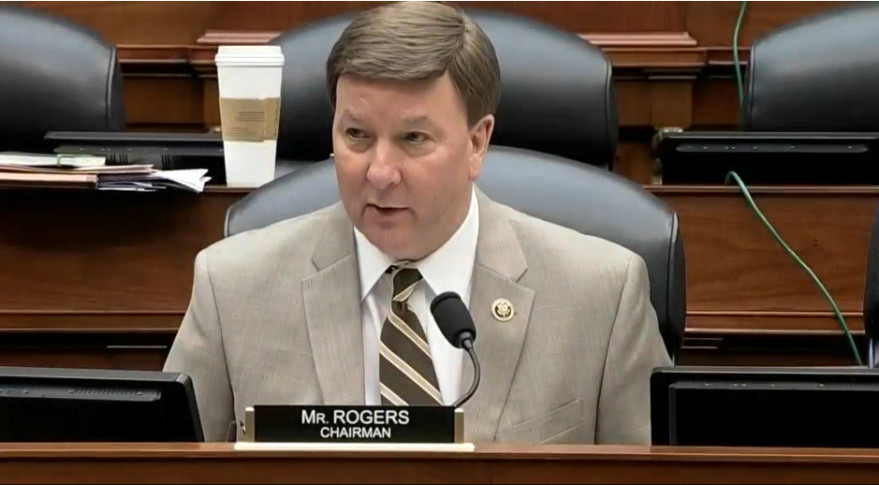
Congressman Mike Rogers joined China Task Force Chairman Michael McCaul and House Republican Leader Kevin McCarthy in sending a letter to Board Chair of the U.S. Olympic & Paralympic Committee (USOPC) Susanne Lyons. The letter expresses concern and the importance of ensuring U.S. Olympians are educated on how to stay safe during the Olympics. Additionally, they commented on the Chinese Communist Party’s (CCP) gross human rights abuses, including genocide. The letter specifically asks that Olympians are informated on how to keep themselves safe. The Beijing Organizing Committee and the CCP has made clear that they will have an unprecedented level of control over the athletes. The letter also asks that the USOPC prepare athletes with the knowledge they need about their rights while in China and also requests an explanation of what steps have been taken to ensure the safety of athletes who may exercise their freedom of speech. “The United States Olympic and Paralympic Committee (USOPC) has a responsibility to ensure our athletes are prepared for these unprecedented Olympic games,” the lawmakers wrote. “Congress legislatively empowered the USOPC with the exclusive privilege of representing the United States in the Olympic community. American values are a core part of the USOPC’s Congressional charter, including a duty to ‘promote a safe environment in sports.’ In recent weeks, Congress has acted to further increase the preparedness and safety of American athletes representing the United States in human rights-violating countries, by codifying the American Values and Security in International Athletics Act.” The Republican-led China Task Force aims to help reinforce Congressional efforts to counter current and emerging cross-jurisdictional threats from China. The letter was also signed by China Task Force Members Reps. Andy Barr (R-KY), Liz Cheney (R-WY), Mike Gallagher (R-WI), Michael Waltz (R-FL), Darin LaHood (R-IL), Guy Reschenthaler (R-PA), Chris Stewart (R-UT), Neal Dunn (R-FL), Mark Green (R-TN), Mike Garcia (R-CA), Austin Scott (R-GA), Diana Harshbarger (R-TN), and Young Kim (R-CA). Rogers stated on Twitter, “The abhorrent reality of the Olympics occurring in a genocidal state will leave a permanent stain on the legacy of Beining 2022 and the International Olympic Committee.” The full text of the letter is below: Dear Chair Lyons, The 2022 Winter Olympic Games in Beijing will be the first Olympic games to take place in a country that is conducting an ongoing genocide. Therefore, these games are an unprecedented threat to American values, inalienable human rights, and the spirit of the Olympics. It is vital that our athletes arrive fully informed about the reality of the genocide occurring in China, as well as the broad range of other human rights abuses and malign actions committed by the Chinese government and Communist Party. The United States Olympic and Paralympic Committee (USOPC) has a responsibility to ensure our athletes are prepared for these unprecedented Olympic games. Congress legislatively empowered the USOPC with the exclusive privilege of representing the United States in the Olympic community. American values are a core part of the USOPC’s Congressional charter, including a duty to “promote a safe environment in sports.”1 In recent weeks, Congress has acted to further increase the preparedness and safety of American athletes representing the United States in human rights-violating countries, by codifying the American Values and Security in International Athletics Act2. The abhorrent reality of the Olympics occurring in a genocidal state will leave a permanent stain on the legacy of Beijing 2022 and the International Olympic Committee. The USOPC has a responsibility to ensure our athletes know that Congress and the Administration have designated the Chinese Communist Party’s crimes against Uyghurs as genocide, a term the U.S. government reserves for history’s most grave human rights atrocities. Over one million Uyghurs and members of other religious and ethnic minorities have been forced into concentration camps, been subject to abusive brainwashing and political indoctrination, have had their families forcibly separated, have been put to forced labor, and have been subject to sexual violence and efforts to reduce their population’s birth rate. We also remain seriously concerned that the American delegation to Beijing may be unprepared for personal security risks, particularly for individuals who exercise their freedom of speech. The “closed loop management system” enforced by the Beijing Organizing Committee – allegedly in response to the pandemic – will give the Chinese government an unprecedented level of control over international athletes, while at the same time hindering access by the U.S. State Department. The Department has been forthright that its consular access to athletes in need remains uncertain, and that the entirety of its China Travel Advisory applies to the games, including major threats of arbitrary detention “for sending private electronic messages critical of the PRC government,” a lack of due process, and the use of propaganda campaigns to target U.S. citizens. These risks are very likely to be heightened given the Chinese government’s total control inside the “closed loop” and the pervasive surveillance the CCP demands over events prioritized in its external propaganda efforts. This week, a Beijing Organizing Committee official issued a veiled threat to those who would speak out, saying “Any behavior or speech that is against the Olympic spirit, especially against the Chinese laws and regulations, are also subject to certain punishment.” Public statements from yourself and other USOPC officials acknowledge the danger, but sadly such statements indicate that our athletes are being encouraged to self-censor: “The laws of China are distinct and different… The expectation is we abide by the rules of that country.” Rather than push American athletes to follow the CCP’s party line, the USOPC should empower Team USA with the resources to understand the human rights crisis they face when representing our country in China and take action to ensure their safety. We urge you in the strongest terms to ensure that Team USA is fully informed about the human rights situation in China, including its ongoing genocide, and request that you reply with: An explanation of USOPC’s efforts to educate American participants in Beijing 2022 about the Chinese Communist Party’s malign actions including its
Congressmen call for the reopening of the U.S. Capitol
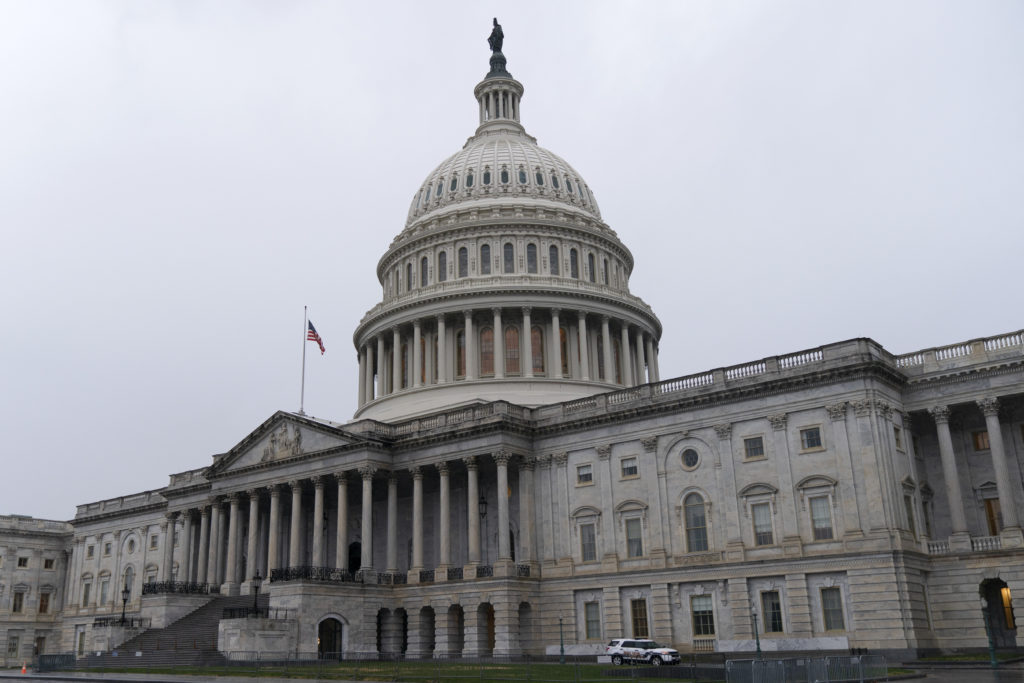
Today, Congressmen Robert Aderholt, Jerry Carl, Mo Brooks, and Barry Moore joined more than two dozen other leaders, asking Speaker Nancy Pelosi and Senate Majority Leader Chuck Schumer to reopen the United States Capitol Complex to visitors. The Capitol has been closed since the January 6 attack by a mob of pro-Trump protestors. In March 2020, the U.S. Capitol had restricted access because of COVID-19 concerns. As more and more people become vaccinated, the push to reopen has been becoming louder. However, there are still security concerns. Brooks stated, “The First Amendment to the Constitution establishes the people’s right to petition their government for redress of their grievances. Prior to Pelosi and Schumer’s draconian Capitol access restrictions, the American people could easily visit the Capitol offices of their senators and representatives. Now, to gain access to the House and Senate office buildings, citizens must be on preapproved lists kept by the House and Senate Sergeant at Arms.” He continued, “America has historically prided ourselves on transparency and easy citizens access to government institutions. It is shameful that Nancy Pelosi and Chuck Schumer persist in keeping the law-abiding American citizens out of their own Capitol, especially when states are lifting restrictions and the CDC is recommending fully-vaccinated Americans return to pre-COVID normalcy. Nancy Pelosi said ‘about 75%’ of House members are vaccinated. That exceeds herd immunity requirements.” Aderholt commented, “With the pandemic coming to an end, it is time to open the United States Capitol Complex to the citizens it belongs to. While those of us elected to Congress, and members of our staff all work in the Capitol, we should never come to believe that it is there strictly for our exclusive use. We are there because the people of this country elected us and they should be able to visit their elected leaders and take tours of their Capitol.” Other co-signers of the letter are: Congressman Ralph Norman, Congressman Andy Harris, Congressman Madison Cawthorn, Congressman W. Gregory Steube, Congressman Matt Rosendale, Congressman Brian Mast, Congressman Tracey Mann, Congressman Tom McClintock, Congressman Jody Hice, Congressman Andy Biggs, Congressman Chip Roy, Congressman Tom Tiffany, Congressman Debbie Lesko, Congressman Jeff Duncan, Congressman Warren Davis, Congressman Mike Gallagher, Congressman Bill Posey, Congressman Bob Good, Congressman Randy Weber, Congressman Dan Bishop, Congressman Paul Gosar, Congressman Ronny L. Jackson, Congressman Joe Wilson, Congressman Louie Gohmert, Congressman Brian Babin, Congressman Neal Dunn, Congressman Marjorie T. Greene, Congressman Michael Cloud. The letter can be viewed here.
