
States easing virus restrictions despite experts’ warnings

With the U.S. vaccination drive picking up speed and a third formula on the way, states eager to reopen for business are easing coronavirus restrictions despite warnings from health experts that the outbreak is far from over and that moving too quickly could prolong the misery. Massachusetts on Monday made it much easier to grab dinner and a show. In Missouri, where individual communities get to make the rules, the two biggest metropolitan areas — St. Louis and Kansas City — are relaxing some measures. Iowa’s governor recently lifted mask requirements and limits on the number of people allowed in bars and restaurants, while the town of Lawrence, home to the University of Kansas, now lets establishments stay open until midnight. Mike Lee, who owns Trezo Mare Restaurant & Lounge in Kansas City, said he hopes increased vaccine access, combined with warmer weather, will improve business. “I think that people are excited to put this past them and be able to start to get back to their ways of doing things,” Lee said. The push to reopen comes as COVID-19 vaccine shipments to the states are ramping up. Nearly 20% of the nation’s adults — or over 50 million people — have received at least one dose of vaccine, and 10% have been fully inoculated 2 1/2 months into the campaign to snuff out the virus, according to the Centers for Disease Control and Prevention. Johnson & Johnson shipped out nearly 4 million doses of its newly authorized, one-shot COVID-19 vaccine Sunday night to be delivered to states for use starting on Tuesday. The company will deliver about 16 million more doses by the end of March and a total of 100 million by the end of June. That adds to the supply being distributed by Pfizer and Moderna and should help the nation amass enough doses by midsummer to vaccinate all adults. The White House is encouraging Americans to take the first dose available to them, regardless of manufacturer. In New York City, where limited indoor dining has resumed, officials said the J&J vaccine will help the city to inoculate millions more people by summer, including through door-to-door vaccinations of homebound senior citizens. But the efforts come with strong warnings from health officials against reopening too quickly, as worrisome coronavirus variants spread. On Monday, the head of the CDC, Dr. Rochelle Walensky, urgently warned state officials and ordinary Americans not to let down their guard, saying she is “really worried about reports that more states are rolling back the exact public health measures that we have recommended.” “I remain deeply concerned about a potential shift in the trajectory of the pandemic,” she said. “We stand to completely lose the hard-earned ground that we have gained.” Cases and hospitalizations have plunged since the end of January, and deaths have also dropped sharply, but they are still running at dangerously high levels and have even risen slightly over the past several days. “We cannot be resigned to 70,000 cases a day and 2,000 daily deaths,” Walensky said. Overall, the outbreak has killed more than a half-million Americans. The vaccine already is contributing to a decrease in severe cases and deaths among older people, and is “quickly becoming a bigger contributor” nationally, Justin Lessler, an expert in infectious diseases at Johns Hopkins University, said in an email. “I suspect we will see it overtake natural infection as the biggest driver of immunity late spring earliest, more likely midsummer,” Lessler said. Dr. Amesh Adalja, an infectious disease specialist at Johns Hopkins University, said he believes states and cities have leeway to ease some restrictions because hospitals no longer are at capacity in most communities. But “I do think that masks are likely going to need to be kept in place for some time until we get more of our vulnerable populations vaccinated,” he said. “It is important for restaurants who are increasing their capacity to remember that we are still in a pandemic and to continue to follow some of those rules,” Adalja said. The Biden administration wants to see all three vaccines distributed evenly, while also acknowledging that the easy-to-handle J&J vaccine will be used in pop-up mobile sites and locations without freezer storage capacity. States are hoping that the surging vaccine supply will help tamp down new infections. In Massachusetts, Gov. Charlie Baker lifted restaurant capacity limits entirely. Theaters can open at 50% capacity, with a maximum of 500 people. And capacity limits across all businesses have been raised to 50%. Las Vegas on Monday became the latest of the nation’s largest school districts to return children to classrooms. Pre-K children to third graders will go back two days a week, with other grades to be phased in by early April. And in California, Gov. Gavin Newsom and legislative leaders reached an agreement aimed at getting most children back in classrooms by the end of March. Under the deal announced Monday, school districts could receive up to $6.6 billion if they reopen by March 31. The U.S. ranks fourth in the world, behind Israel, the United Arab Emirates, and Britain, in the number of doses administered relative to the population, according to data compiled by the University of Oxford. President Joe Biden fell well short of his goal of setting up 100 new federally operated mass-vaccination sites by the end of February, with just seven up and running. White House vaccination coordinator Jeff Zients also acknowledged that scheduling of vaccination appointments “remains too difficult in too many places.” But he said the White House is working with states to improve scheduling systems and is exploring federal support for call centers to make it easier for people to get appointments. Republished with the permission of the Associated Press.
Senators weigh COVID risk for Amy Coney Barrett Supreme Court hearing
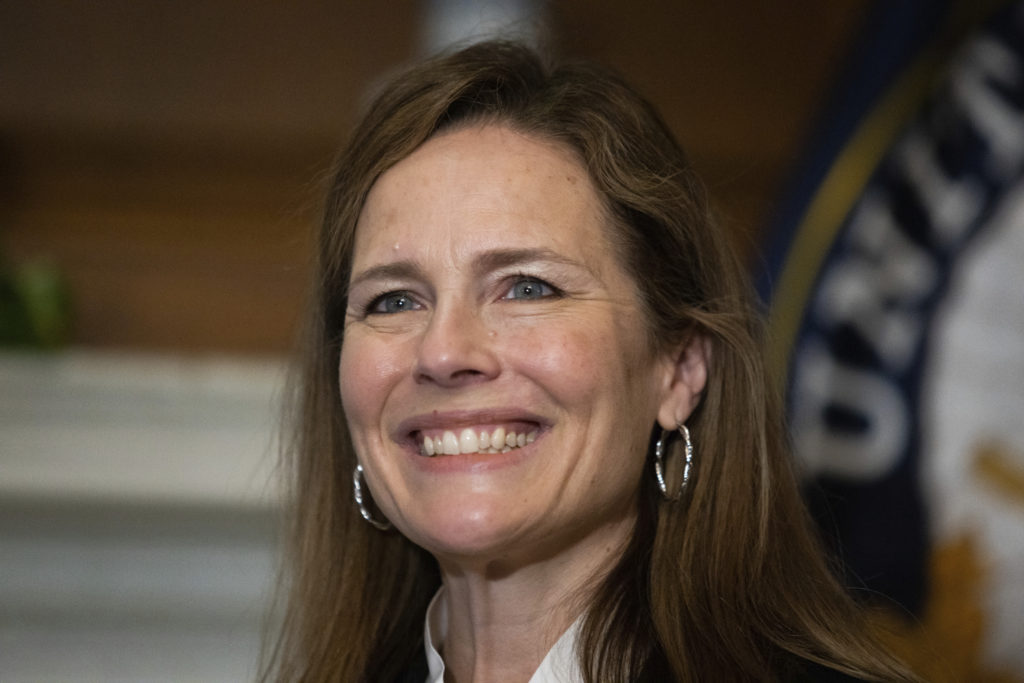
Supreme Court nominee Amy Coney Barrett vows to be a justice “fearless of criticism” as the split Senate charges ahead with confirmation hearings on President Donald Trump’s pick to cement a conservative court majority before Election Day. Barrett, a federal appeals court judge, draws on faith and family in her prepared opening remarks for the hearings, which begin Monday as the country is in the grips of the coronavirus pandemic. She says courts “should not try” to make policy, and believes she would bring “a few new perspectives” as the first mother of school-age children on the nine-member court. Trump chose the 48-year-old judge after the death of Justice Ruth Bader Ginsburg, a liberal icon. “I have been nominated to fill Justice Ginsburg’s seat, but no one will ever take her place,” Barrett says in her remarks to the Senate Judiciary Committee. The Associated Press obtained a copy of her statement on Sunday. Barrett says she has resolved to maintain the same perspective as her mentor, the late Justice Antonin Scalia, who was “devoted to his family, resolute in his beliefs, and fearless of criticism.” Republicans who control the Senate are moving at a breakneck pace to seat Barrett before the Nov. 3 election, in time to hear a high-profile challenge to the Affordable Care Act and any election-related challenges that may follow voting. Democrats are trying in vain to delay the fast-track confirmation, raising fresh concerns about the safety of meeting as two GOP senators on the panel tested positive for COVID-19. The committee released a letter from the Architect of the Capitol on Sunday that says the hearing room has been set up in consultation with the Office of Attending Physician with appropriate distance between seats and air ventilation systems that meet or exceed industry standards. Still, California Sen. Kamala Harris, the Democratic vice presidential nominee who is also a committee member, plans to participate remotely from her Senate office due to coronavirus concerns, her spokesman said Sunday. Two members who have tested positive for the virus, Sen. Mike Lee, R-Utah and Sen. Thom Tillis, R-N.C., have not said if they will attend in person. Lee’s spokesman said the senator is symptom-free but would be making a decision on whether to attend Monday morning, per his doctor’s orders. A spokesman for Tillis did not respond to multiple requests for comment. Harris and others said the hearings should not move forward without plans to test those attending for COVID. One Republican, Sen. Joni Ernst of Iowa, said “it would be smart to do that,” according to the Des Moines Register. Aside from media, few, if any, members of the public will be allowed to attend. Senate Democratic leader Chuck Schumer of New York told the AP that the committee’s chairman, Sen. Lindsey Graham, R-S.C., has “an obligation to be tested” for COVID-19 beforehand because he has been exposed to those with the disease. Graham told Fox News Channel’s “Sunday Morning Futures” that he took a test last week and is “negative.” He said, “We’re going to work safely.” The hearings are taking place less than a month after the death of Ginsburg gave Trump the chance to entrench a conservative majority on the court with his third justice. Another reason for moving quickly: It may be harder to confirm Trump’s pick before the end of the congressional session if Democrat Joe Biden were to win the White House and Democrats gain seats in the Senate. No Supreme Court has ever been confirmed so close to a presidential election. The country will get an extended look at Barrett over three days, beginning with her opening statement late Monday and hours of questioning Tuesday and Wednesday. “She’s going to wow them,” said Carrie Severino, president of Judicial Crisis Network, which backs conservative nominees. Barrett is telling senators that “courts are not designed to solve every problem or right every wrong in our public life.” “Policy decisions and value judgments of government must be made by the political branches,” she said in the prepared remarks. “The public should not expect courts to do so, and courts should not try.” A mother of seven, she also says she uses her children as a test when deciding cases, asking herself how she would view the decision if one of her children were the party she was ruling against. “Even though I would not like the result, would I understand that the decision was fairly reasoned and grounded in the law?” she says. A Catholic, she says she believes in the “power of prayer.” Her religious views and past leadership role in a faith community pose a challenge for Democrats as they try to probe her judicial approach to abortion, gay marriage and other social issues without veering into inappropriate questions of her faith. Ordinarily, Barrett would get to show off her family. But the White House event announcing her nomination, in which most of the audience did not wear masks, has been labeled a “superspreader” for the coronavirus. More than two dozen people linked to the Sept. 26 Rose Garden event, including the two GOP senators, have contracted COVID-19 since then. Barrett and her family went maskless at the event. Barrett and her husband, Jesse, tested positive for the virus earlier this year and recovered, two administration officials have said. Democrats already were enraged that Republicans are moving so quickly having refused to consider President Barack Obama nominee in February 2016, before that year’s election. The Senate did not grant Judge Merrick Garland even a hearing, much less a vote. Outside groups are pushing Democrats to make a strong case against what they call an illegitimate confirmation so close to the election, when people are already voting in some states. “The public is with them that this shouldn’t happen before the election,” said Brian Fallon, executive director of Demand Justice, which advocates against right-leaning nominees. Democrats have made clear that they will press Barrett on health care, especially with the imminent Supreme Court arguments, and abortion, among other issues where her vote
Senate approves $483B virus aid deal, sends it to House
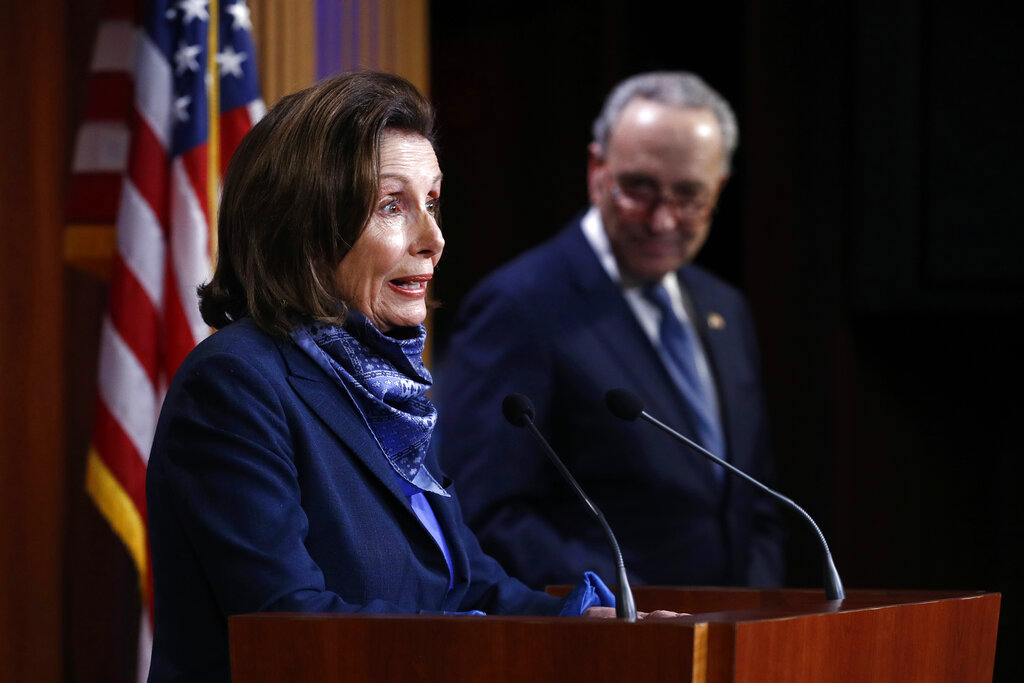
Passage was swift and unanimous, despite opposition from conservative Republicans.
Senate moves to limit Donald Trump on military force against Iran
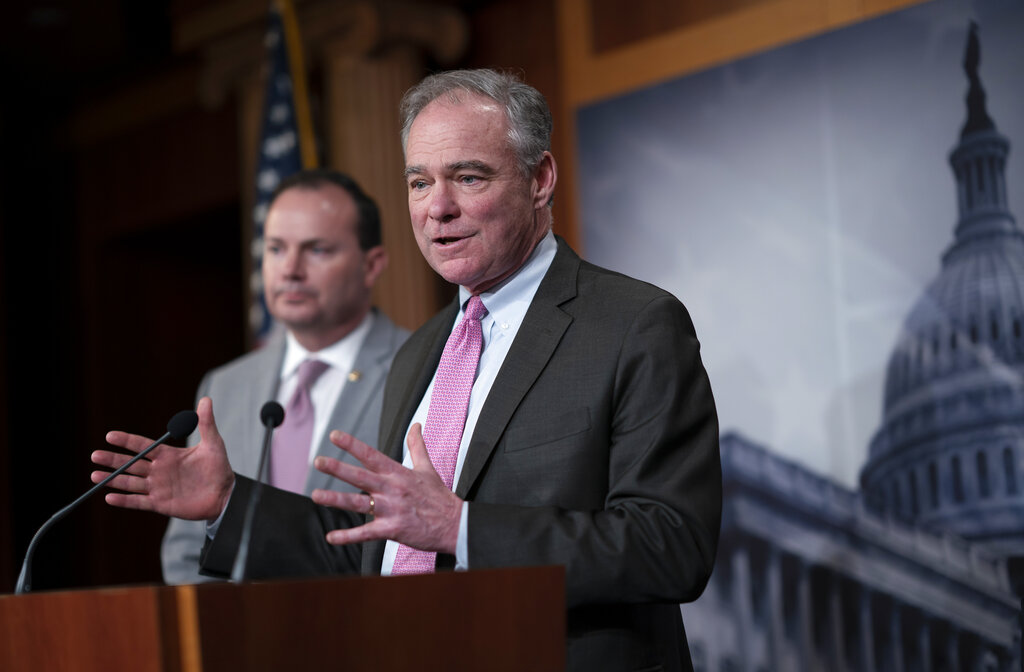
The rebuke was the Senate’s first major vote since acquitting Trump on impeachment charges last week.
Senator Tim Kaine says he has 51 votes to restrain Trump from further action on Iran
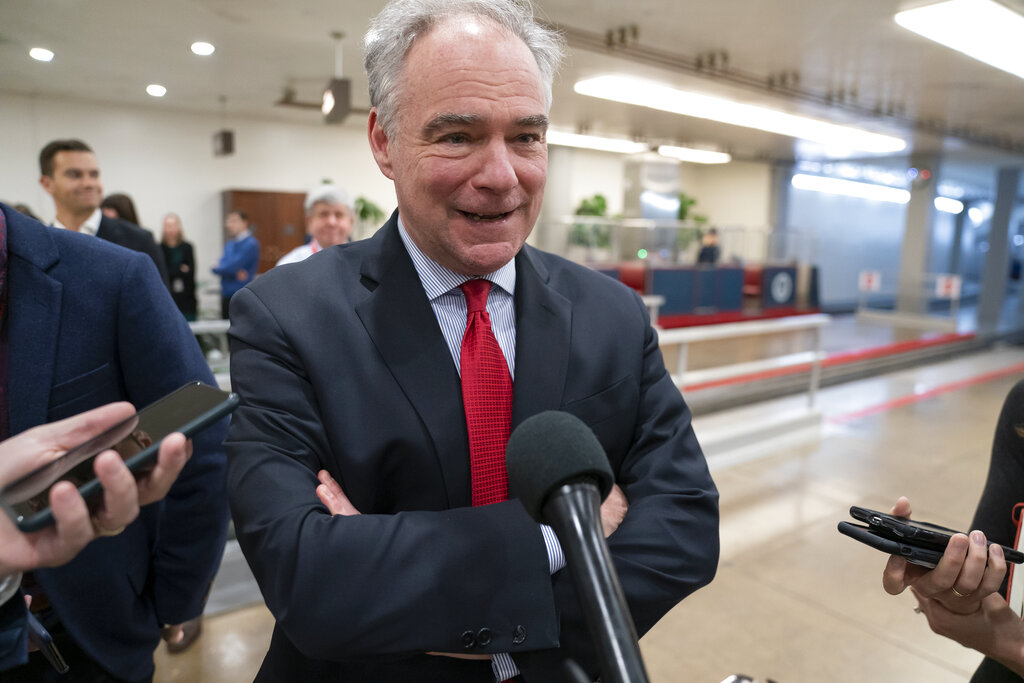
There are some Republicans in support of the measure, according to Kaine.
House Approves Measure to Restrain Trump’s Actions on Iran
This resolution is not binding and is largely symbolic.
House to Vote on Restraining Trump’s Actions Against Iran

Republicans say the proposal does not have the force of law.
Senate backs major public lands, conservation bill
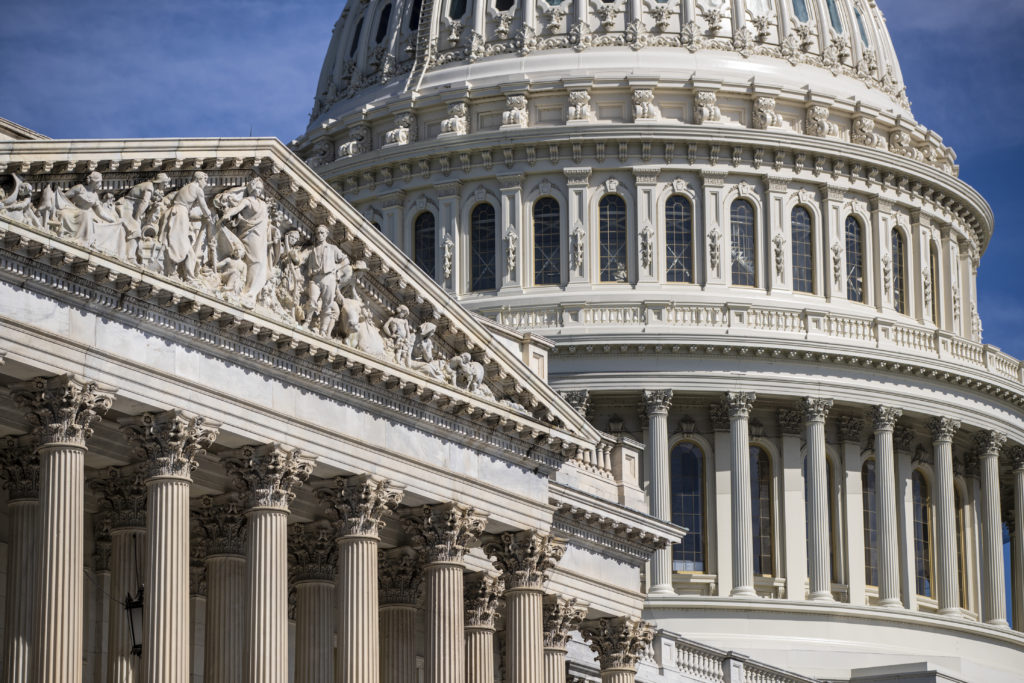
The Senate on Tuesday approved a major public lands bill that revives a popular conservation program, adds 1.3 million acres of new wilderness, expands several national parks and creates five new national monuments. The measure, the largest public lands bill considered by Congress in a decade, combines more than 100 separate bills that designate more than 350 miles of river as wild and scenic, add 2,600 miles of new federal trails and create nearly 700,000 acres of new recreation and conservation areas. The bill also withdraws 370,000 acres in Montana and Washington state from mineral development. The Senate approved the bill, 92-8, sending it to the House. Lawmakers from both parties said the bill’s most important provision was to permanently reauthorize the federal Land and Water Conservation Fund, which supports conservation and outdoor recreation projects across the country. The program expired last fall after Congress could not agree on language to extend it. “The Land and Water Conservation Fund has been a pre-eminent program for access to public lands” for more than 50 years, said Sen. Maria Cantwell, D-Washington. The program has supported more than 42,000 state and local projects throughout the U.S. since its creation in 1964. The hodgepodge bill offered something for nearly everyone, with projects stretching across the country. Even so, the bill was derailed last year after Republican Sen. Mike Lee objected, saying he wanted to exempt his home state of Utah from a law that allows the president to designate federal lands as a national monument protected from development. Lee’s objection during a heated Senate debate in December forced lawmakers to start over in the new Congress, culminating in Tuesday’s Senate vote. Sen. Cory Gardner, a Colorado Republican who clashed with Lee on the Senate floor, said the vote caps four years of work to reauthorize the Land and Water Conservation Fund and protect public lands. Sen. Lisa Murkowski, Republican-Alaska, who chairs the Senate Energy and Natural Resources Committee, said the bill enhances use of public lands and water, while promoting conservation and sporting activities such as hunting and fishing. The bill includes provisions sponsored by more than half of the senators, Murkowski said, applauding a “very, very collaborative” process. She and other senators called the Land and Water Conservation Fund one of the most popular and effective programs Congress has ever created. The program uses federal royalties from offshore oil and gas drilling to fund conservation and public recreation projects around the country. The fund is authorized to collect $900 million a year but generally receives less than half that amount from Congress. “This victory was a long time in the making, and it is the result of the steadfast efforts of many who care deeply about America’s natural treasures,” said Sen Richard Burr, Republican-N.C. “Protecting this program is the right thing to do for our children, grandchildren and countless generations so that they may come to enjoy the great American outdoors as we have.” The bill creates three new national monuments to be administered by the National Park Service and two others overseen by the Forest Service and Bureau of Land Management, respectively. The three park service monuments are the Medgar and Myrlie Evers Home National Monument in Mississippi and the Mill Springs and Camp Nelson national monuments in Kentucky. The Evers site was the home of the slain civil rights leader, while Mill Springs commemorates a Civil War battlefield. Camp Nelson was used as Union Army hospital and recruiting center during the Civil War. President Donald Trump proclaimed Camp Nelson a national monument last year, but the bill gives it permanent, congressionally approved protection. The bill also designates the former Saint Francis Dam site in California as a national memorial and monument. The dam outside Los Angeles collapsed in 1928, killing 431 people in one of the largest tragedies in California history. “While this monument will serve as a reminder of the consequences of a failure of infrastructure, it offers a lesson going forward,” said Sen. Kamala Harris, Democrat-Calif. The bill also sets aside 850 acres in central Utah as the Jurassic National Monument, designed to enhance the area’s “paleontological, scientific, educational and recreational resources.” Republished with permission from the Associated Press
Brett Kavanaugh faces final round of questioning without missteps
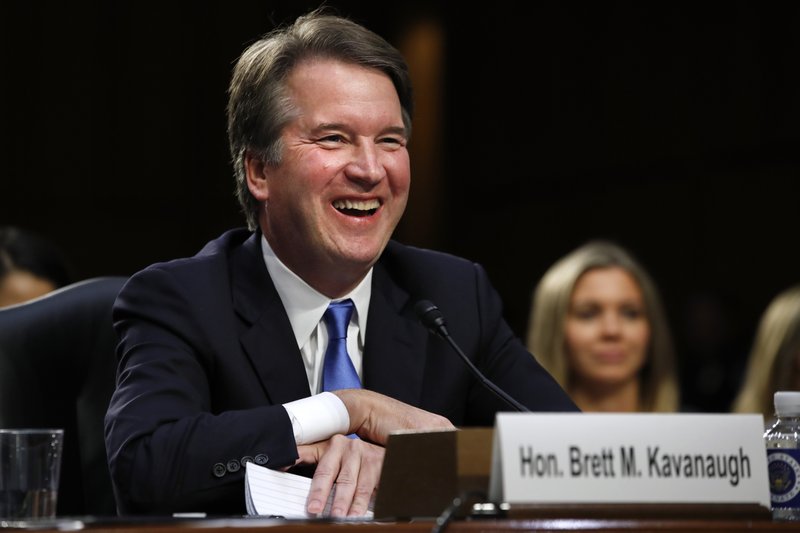
Senators will launch a final round of questioning of Brett Kavanaugh on Thursday, but after a marathon 12-hour session, President Donald Trump’s nominee to the Supreme Court appears to have avoided any major missteps that could trip his confirmation. So far, Kavanaugh does not seem to have changed minds on the Judiciary Committee, which is split along partisan lines. The judge left unanswered questions over how he would handle investigations of the executive branch and whether he would recuse himself if cases involving Trump under special counsel Robert Mueller’s probe end up at the court. His credibility may face new tests by senators who are seeking to make public some emails and documents from his Bush White House years that are being withheld by the committee as confidential. Trump says he’s pleased with his nominee’s televised performance, and Republicans are united behind him, eager to add a conservative judge to the court. The questioning of Kavanaugh has carried strong political overtones ahead of the November congressional elections. Democrats lack the votes to block confirmation, but have been pressing Kavanaugh for his views on abortion rights, gun control and other issues. Protesters have added to the challenges for Kavanaugh, repeatedly interrupting proceedings. “You’re more than halfway done,” Sen. Thom Tillis, R-N.C., told Kavanaugh as he gaveled the hearing closed late Wednesday. Pressured by Democrats with Trump on their minds during Wednesday’s grueling session, the judge insisted that he fully embraced the importance of judicial independence. But he refused to provide direct answers to Democrats who wanted him to say whether there are limits on a president’s power to issue pardons, including to himself or in exchange for a bribe. He also would not say whether he believes the president can be subpoenaed to testify. Still, he began his long day in the witness chair by declaring that “no one is above the law.” When Sen. Jeff Flake, R-Ariz., asked what constraints exist on executive power, the judge cited existing laws but also norms. “Norms are important. Historical practice is relevant to judicial decision-making,” he said. Democrats are concerned that Kavanaugh will push the court to the right and that he will side with Trump in cases stemming from Mueller’s investigation of Russian interference in the 2016 election and possible ties to the Trump campaign. The 53-year-old appellate judge answered cautiously when asked about most of those matters, refusing an invitation from Democratic Sen. Richard Blumenthal of Connecticut to pledge to step aside from any Supreme Court cases dealing with Trump and Mueller’s investigation. Under questioning by Republicans, Kavanaugh stressed the importance of judicial independence, “not being swayed by political or public pressure.” On abortion, Kavanaugh said the landmark 1973 Roe v. Wade decision that ensures access to abortion has been affirmed “many times.” He defended his dissenting opinion last year in the case of a pregnant immigrant teen in federal custody. Kavanaugh would have denied her immediate access to an abortion, even after she received permission from a Texas judge. Sen. Orrin Hatch, R-Utah, praised Kavanaugh for hiring female lawyers as clerks as a judge on the District of Columbia Court of Appeals, and then posed questions about whether Kavanaugh was aware of sexual harassment allegations against retired circuit court Judge Alex Kozinski in California. Kavanaugh, who considered the judge a friend and mentor, said he had known nothing about the allegations until they were disclosed last year. “It was a gut punch for me,” he said, and he was “shocked, disappointed, angry.” Kavanaugh also told Sen. Mazie Hirono, D-Hawaii, he was unaware of the domestic violence allegations against Rob Porter, who was Trump’s staff secretary. Journalist Bob Woodward’s new book about Trump says Kavanaugh recommended Porter for the job. Kavanaugh had served as staff secretary to George W. Bush and his work in the White House has figured in the hearing. Democratic senators have fought for access to documents from his three years as staff secretary, saying those could shed light on his views about policies from that era, including the detention and interrogation of terror suspects. Republicans have declined to seek the papers, and instead have gathered documents from his work as White House counsel to Bush. When questioned about the honesty of his 2006 testimony during his nomination for the appellate court when he said he was not involved in some Bush-era policies, Kavanaugh said he was “100 percent accurate.” Late Wednesday, Sen. Cory Booker, D-N.J., drew a rare partnership with Sen. Mike Lee, R-Utah, to release of some of the Bush-era documents. Lee complained that Booker was relying on an unreleased email to question Kavanaugh’s openness to racial profiling by police, but then agreed to work for its release. Republicans hope to confirm Kavanaugh in time for the first day of the new Supreme Court term, Oct. 1. Republished with the permission of the Associated Press.
Donald Trump weighs 2 or 3 candidates for court, to meet with Mike Pence
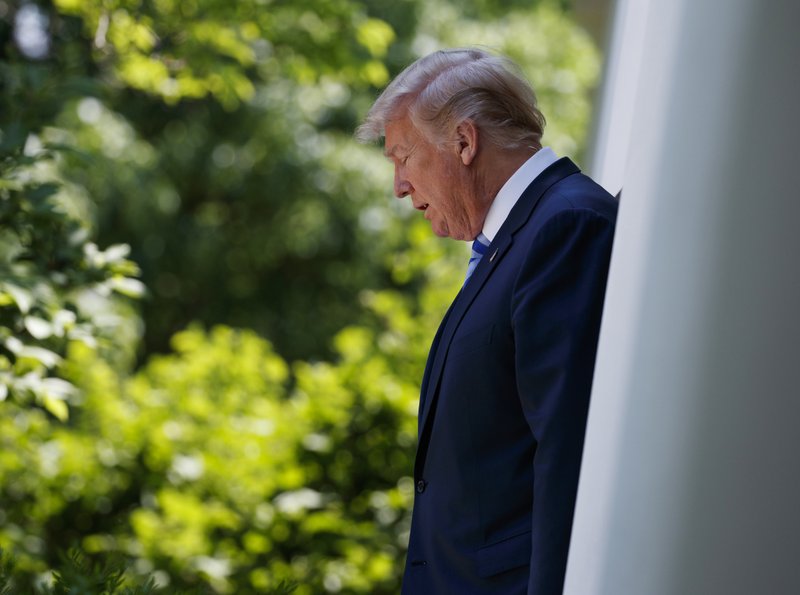
President Donald Trump is closing in on his choice to fill a Supreme Court vacancy created by Justice Anthony Kennedy’s retirement, telling reporters that he’s focused on two or three people ahead of his Monday announcement. “I think I have it down to four people. And I think of the four people I have it down to three or two,” Trump told reporters aboard Air Force One Thursday, as he traveled to a campaign rally in Montana. Trump was at his private golf club in New Jersey Friday and planned to spend the weekend there, consulting with advisers as he picks his court nominee amid intense jockeying from various factions seeking to influence the choice. The president planned to have dinner Friday night with Vice President Mike Pence, who has also been meeting with candidates as part of the vetting process. The president’s top contenders include federal appeals court judges Amy Coney Barrett, Brett Kavanaugh and Raymond Kethledge, with federal appeals court judge Thomas Hardiman still considered in the mix. As part of the roll-out process, the White House has been preparing information packages on all four, said two people familiar with the process who were not authorized to speak publicly. Starting from a list of 25 names vetted by conservative groups, Trump has also given serious consideration to federal appeals court judges Amul Thapar and Joan Larsen, and it’s possible the White House will prepare materials for more people. The president enjoyed the suspenseful process leading up to his announcement last year that he would nominate Justice Neil Gorsuch and is hoping to keep the guessing game going until he announces his pick Monday night. Trump’s social media director Dan Scavino tweeted Friday that the announcement would be at 9 p.m. from the East Room in the White House. Pence met in person with Kethledge and Barrett while he was vacationing in Indiana earlier this week and met with Kavanaugh at the Naval Observatory on July 4, said a person familiar with the process who was not authorized to speak publicly. Pence has also spoken to Republican senators, including Senate Majority Leader Mitch McConnell, Sen. Ted Cruz and Sen. Rand Paul about the process. As the president builds suspense for his second court pick in two years — a nominee who could tip the balance toward conservatives and revisit landmark rulings on abortion access, gay marriage and other issues — momentum is also growing among GOP supporters and detractors of the top contenders. Conservatives and some libertarian-leaning Republicans, including Paul of Kentucky, have raised concerns about Kavanaugh, warning he could disappoint Republicans if his past decisions are a guide. Paul and another Republican, Cruz of Texas, are supporting fellow Sen. Mike Lee, R-Utah, who is not said to be under serious consideration by the White House but is the only lawmaker Trump has considered for the position. To counter that, Kavanaugh’s allies have begun pushing back, reaching out to influential Republicans to ward off potential criticisms, according to one conservative who was the recipient of such outreach and spoke on condition of anonymity Thursday to discuss the situation. The senior administration official, though, said the administration is feeling less heat than earlier in this week over the choices, particularly Kavanaugh, and believes the jockeying in general has calmed somewhat. With the Senate narrowly divided, 51-49, in favor of Republicans, Trump’s announcement will launch a contentious confirmation process as Republicans seek to shift the court to the right and Democrats strive to block the effort. Any GOP defections could begin to doom a nominee. Senate Minority Leader Chuck Schumer, D-N.Y., told the president this week that nominating someone hostile to abortion access, or the 2010 health care law, would tarnish his legacy. Schumer told Trump that such a choice would be “cataclysmic” and create more division than the country has seen in years, according to a person familiar with the conversation who said Trump called Schumer on Tuesday. McConnell said Thursday at an event in Louisville he believes “the president will make a very high-quality appointment.” He acknowledged that his fellow Kentuckian, Judge Amul Thapar, is a finalist, but noted, “The competition at this level is pretty intense.” Trump conducted interviews Monday and Tuesday. Lee, R-Utah, is not viewed as a top prospect, but has consistent support among conservative and libertarian activists, including some Republicans who worry about a nominee not upholding their principles and who say the Utah senator could bring more certainty. Paul has told colleagues he may not vote for Kavanaugh if the judge is nominated, citing Kavanaugh’s role during President George W. Bush’s administration on cases involving executive privilege and the disclosure of documents to Congress, said a person familiar with Paul’s conversations who spoke on condition of anonymity. Some conservatives have pointed to Kethledge as a potential justice in the mold of Gorsuch. Both Kethledge and Gorsuch once served Kennedy as law clerks, as did Kavanaugh. Kethledge, a Michigan Law graduate, would add academic diversity to a court steeped in the Ivy League. Since Trump said his short list includes at least two women, speculation has focused on Barrett, a former law clerk to Justice Antonin Scalia and a longtime Notre Dame Law School professor who serves on the 7th U.S. Circuit Court of Appeals. Conservative groups rallied around Barrett after her confirmation hearing last year featured questioning from Democrats over how her Roman Catholic faith would affect her decisions. Trump’s choice to replace Kennedy — a swing vote on the nine-member court — has the potential to remake the court for a generation as part of precedent-shattering decisions. Recognizing the stakes, many Democrats have lined up in opposition to any Trump pick. Republished with the permission of the Associated Press.
GOP lawmakers floated for Trump’s Supreme Court opening

As President Donald Trump considers his next Supreme Court pick, some Republicans in Congress want him to consider pulling from their ranks on Capitol Hill. GOP Sen. Ted Cruz of Texas suggests his conservative ally, Sen. Mike Lee of Utah, would be “the single best choice” Trump could make to fill the vacancy. Republican Sen. Tim Scott is making a pitch for his best friend in Congress, Rep. Trey Gowdy, a fellow South Carolinian. “I hope that the president will be open to that,” Scott said on CNN. Nominating a lawmaker and seeing him or her confirmed would be unusual. A veteran of either the House or the Senate hasn’t joined the court for nearly 70 years. Only a couple dozen members of Congress also served on the court in its history. But for now, only one lawmaker — Lee — is on the list of 25 names Trump is working from to fill the seat of retiring Justice Anthony Kennedy. Cruz says unlike other Republican nominees who have proven to be liberal “train wrecks,” he’s confident Lee, among his favorite colleagues in the Senate, “would be faithful to the Constitution and the Bill of Rights.” Lee is also staunchly opposed to abortion. But even though Lee is championed by conservatives as a strict constitutionalist, he could face obstacles to winning the president’s favor. Chief among them is that he never backed Trump for president during the 2016 campaign. There have been no indications from the White House that Lee is among the handful of top names receiving serious consideration. The same goes for his brother, the Utah Supreme Court justice Thomas Lee, who was also on Trump’s initial list of possible court nominees. Trump on Monday interviewed four prospective nominees for the court and said he expected to speak with a few more. The White House did not provide their names. The president said the candidates he met with are “outstanding people and they are really incredible people in so many different ways, academically and in every other way.” Sen. Lee’s office would not say if he was among the candidates who met with the president. Nevertheless, Lee, who started watching court proceedings on TV as a 10-year old and went on to clerk for Justice Samuel A. Alito, has made clear he wouldn’t dismiss an overture to join the court. “If somebody asked me if I would consider that, I would not say no,” he said. Trump plans to announce his nominee on July 9. The quick timetable could help Senate Republicans confirm a justice before the court’s term begins in October. While Lee has been floated as a nominee for some time, the same cannot be said for Gowdy, who is chairman of the House Oversight Committee. Scott, in making the case for Gowdy, said the former prosecutor is so fair that he has angered both Democrats and Republicans. “A guy who will call balls and strikes and not choose a side, even when he’s an elected member at this time in our nation’s history, that’s hard to find,” Scott said. Scott and Gowdy are close friends who have dinner together several nights a week. They also wrote a book about their friendship, “Unified,” that was released earlier this year. Gowdy led the congressional investigation into Hillary Clinton’s handling of the Benghazi attack in Libya and more recently distanced himself from Trump’s characterization of the Russia probe into election interference as “spygate.” Fellow lawmakers are rooting for their Capitol Hill colleagues. Sen. Marco Rubio, R-Fla., told reporters last week he was personally hoping Trump chooses Lee. “He’d be great,” Rubio said. Republished with the permission of the Associated Press.
Immigration fight, tension on tariffs await Congress’ return
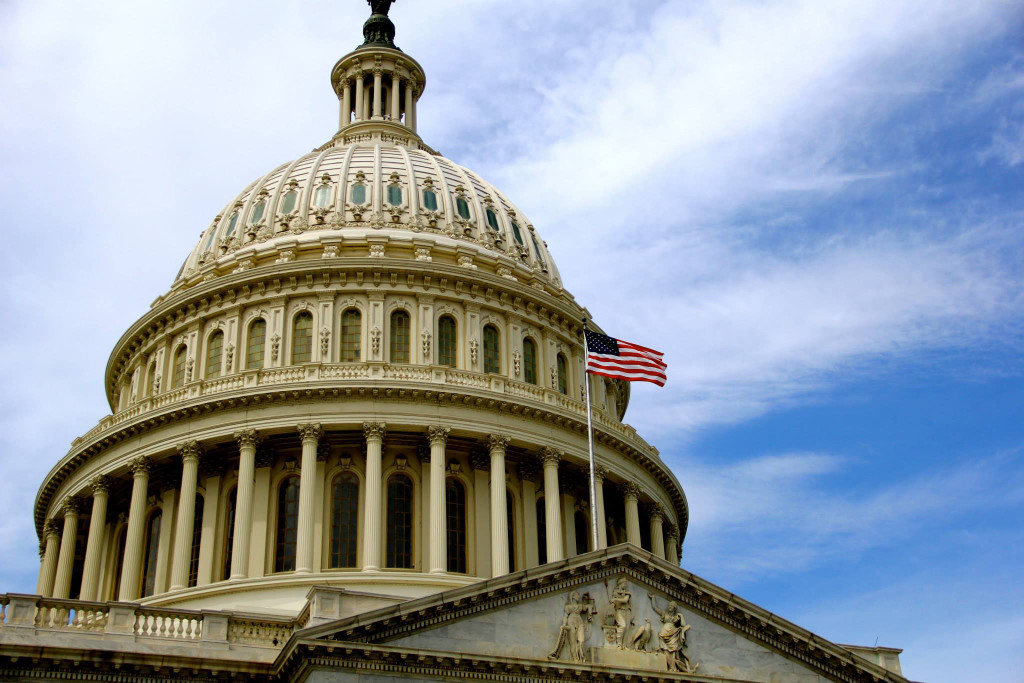
This was supposed to be the quiet time on Capitol Hill, but Congress returns to work Monday facing a showdown in the House over immigration while Senate Republicans are trying to stop an all-out trade war after President Donald Trump’s decision to impose import tariffs on close U.S. allies. Tensions are running particularly high as Senate Majority Leader Mitch McConnell is threatening to cancel the traditional August recess as he fights Democratic opposition to GOP priorities in a show of busy-work before the midterm election. It’s shaping up to be far from the typical summer slowdown when legislating usually makes way for campaigning. “Another summer, another heavy work load,” tweeted Sen. Chuck Grassley, R-Iowa, as he pushed to confirm nominations. “NOW is the time to vote on Fridays (even wknds!).” The Senate often is not in session on Fridays. Congress faces a few should-do items in the weeks ahead. Topping the agenda is passage of the annual defense bill, which includes pay raises for the troops. It has already cleared the House. The Senate could begin consideration of its defense bill this week. But the Senate version carries a warning to Trump with a trade provision to block any White House plan to lift penalties on the China-based telecommunications company ZTE, which faces trade law violations over selling sensitive technologies to U.S. adversaries. Trump’s moves on trade are expected to consume conversations among Senate Republicans this week. They’re worried about a wider trade war spiking prices for home-state businesses and consumers if Trump imposes steel and aluminum tariffs, as planned, on imports from Canada, Mexico and the European Union. Republicans will be making the case to the administration that the tariffs could dampen the economic gains from the GOP tax cuts and sour the mood among voters as lawmakers are campaigning to protect the Republican majority in Congress. Some Republicans are also hoping Trump simply changes his mind and doesn’t follow through with it. But aides said others may be signing on to a bill from Sen. Mike Lee, R-Utah, that would subject all trade actions by the executive branch, including tariffs, to congressional approval. Rep. Will Hurd, R-Texas, said he would support a similar move in the House. “Congress has shared our responsibility when it comes to trade with the executive branch over the last couple of decades, and I think that’s something that we need to re-evaluate,” he told CBS’ “Face the Nation.” Meanwhile, House Republicans face a self-imposed deadline Thursday for resolving an immigration standoff between GOP centrists who are forcing a vote on legislation to protect young immigrants who were brought to the country illegally as children and conservatives who want stricter immigration enforcement with money for Trump’s border wall. The centrists want to provide a way for the young immigrants to become permanent residents, which can lead to citizenship. Conservatives are opposed to creating a new pathway to staying in the U.S. permanently, equating it with granting amnesty to lawbreakers. Speaker Paul Ryan, R-Wis., and Majority Leader Kevin McCarthy, R-Calif., are trying to craft a Republican-led bill as a compromise between the factions, but it’s difficult. House leaders plan a two-hour private meeting of GOP lawmakers Thursday morning to hash out whether talks among the party’s factions have produced an immigration compromise that can win broad support. Underscoring the sensitivity of the session, staff is to be excluded. They’re trying to prevent the moderates from joining with Democrats to pass the “Dreamer” protections, which polls suggest are popular, but which would be a setback for GOP leaders and expose the majority to complaints from the conservative base. Without a deal, the moderates say they’ll push ahead with enough signatures on a so-called discharge petition to force the vote over the leadership’s objections. Hurd said moderates have the votes already, but are “engaged in conversations to figure out … is there another path. I don’t believe that there is.” Rep. Carlos Curbelo, R-Fla., said in an interview last week that he saw a 50-50 chance of those talks succeeding. He warned that if they didn’t bear fruit, he and his supporters “fully expect” to continue pushing their petition. Curbelo said the young immigrants must “be guaranteed a future in our country, meaning they cannot be exposed to deportation.” He said, “They must have permanent status immediately and they must have the option of a bridge into the legal immigration system,” meaning a pathway to citizenship. The moderates’ effort has won the backing of GOP Sen. John McCain, fighting brain cancer back home in Arizona, who tweeted on Saturday: “Congress can’t ignore this critical issue — and the many lives it impacts — any longer.” Starting Monday in the Senate, McConnell has teed up votes on three nominees to serve as federal district court judges, including the first Hispanic lawyer whom Trump nominated for the bench, Fernando Rodriguez Jr. of Texas. The selections are expected to receive bipartisan support, though more contentious votes are expected in coming weeks. Republicans have made it a top priority to get Trump’s nominees on the bench, to the alarm of Democrats, who say Republicans are working to stack the federal judiciary with young ideologues who will shape it for decades to come. Republished with the permission of the Associated Press.
