
Donald Trump seeks White House again amid GOP losses, legal probes
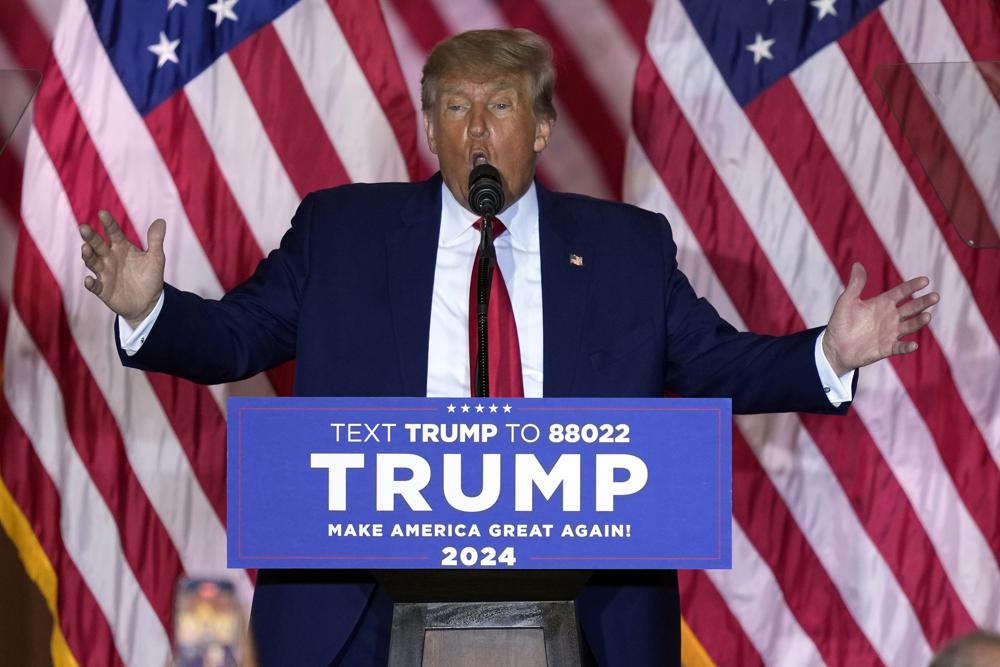
Former President Donald Trump on Tuesday launched his third campaign for the White House just one week after a disappointing midterm showing for Republicans, forcing the party to again decide whether to embrace a candidate whose refusal to accept defeat in 2020 sparked an insurrection and pushed American democracy to the brink. “In order to make America great and glorious again, I am tonight announcing my candidacy for president of the United States,” Trump said before an audience of several hundred supporters in a chandeliered ballroom at his Mar-a-Lago club, where he stood flanked by American flags and banners bearing his “Make America Great Again” slogan. “America’s comeback starts right now,” he said, formally beginning the 2024 Republican primary. Another campaign is a remarkable turn for any former president, much less one who made history as the first to be impeached twice and whose term ended with his supporters violently storming the Capitol in a deadly bid to halt the peaceful transition of power on January 6, 2021. Trump also enters the race in a moment of deep political vulnerability. He hoped to launch his campaign in the wake of resounding GOP midterm victories, fueled by candidates he elevated during this year’s primaries. Instead, many of those candidates lost, allowing Democrats to keep the Senate and leaving the GOP with a path to only a bare majority in the House. Trump has been blamed for the losses by many in his party, including a growing number who say the results make clear it’s time for the GOP to move past him and look to the future, with Florida Gov. Ron DeSantis emerging from last week’s elections as an early favorite. In addition to trying to blunt his potential rivals’ rise, Trump’s decision to launch his candidacy before the 2022 election had been fully decided also comes as he faces a series of escalating criminal investigations, including several that could lead to indictments. They include the probe into hundreds of documents with classified markings that were seized by the FBI from Mar-a-Lago and ongoing state and federal inquiries into his efforts to overturn the results of the 2020 presidential election. As Trump has spent the last months teasing his return, aides have been sketching out the contours of a campaign that is being modeled on his 2016 operation, when Trump and a small clutch of aides defied the odds and defeated far better-funded and more experienced rivals by tapping into deep political fault lines and using shocking statements to drive relentless media attention. Trump returned to that dark rhetoric in his speech Tuesday, painting the country under President Joe Biden in apocalyptic terms, describing “blood-soaked streets” in “cesspool cities” and an “invasion” at the border and earning cheers as he vowed to execute those convicted of selling drugs. “We are a nation in decline,” he said. “We are here tonight to declare that it does not have to be this way.” Trump notably avoided much talk of the 2020 election, eschewing the extreme conspiracy theories that often dominate his rallies. Still, the speech included numerous exaggerations and deflections as he cast himself as “a victim” of wayward prosecutors and the “festering, rot and corruption of Washington.” While Trump spoke before a crowd of several hundred, notably missing were many longtime supporters, including previous campaign managers, aides, and his daughter Ivanka, who released a statement saying that she does not plan to be involved in his campaign. “While I will always love and support my father, going forward, I will do so outside the political arena,” she said in a statement. Even after the GOP’s midterm losses, Trump remains the most powerful force in his party thanks to the loyalty of his base. For years he has consistently topped his fellow Republican contenders by wide margins in hypothetical head-to-head matchups. And even out of office, he consistently attracts thousands to his rallies and remains his party’s most prolific fundraiser, raising hundreds of millions of dollars. But Trump is also a deeply polarizing figure. Fifty-four percent of voters in last week’s midterm elections viewed him very or somewhat unfavorably, according to AP VoteCast, a survey of more than 94,000 voters nationwide. And an October AP-NORC poll found even Republicans have their reservations about him remaining the party’s standard-bearer, with 43% saying they don’t want to see him run for president in 2024. Trump’s candidacy poses profound questions about America’s democratic future. The final days of his presidency were consumed by a desperate effort to stay in power, undermining the centuries-old tradition of a peaceful transfer. And in the two years since he lost, Trump’s persistent — and baseless — lies about widespread election fraud have eroded confidence in the nation’s political process. By late January 2021, about two-thirds of Republicans said they did not believe Biden was legitimately elected in 2020, an AP-NORC poll found. VoteCast showed roughly as many Republican voters in the midterm elections continued to hold that belief. Federal and state election officials and Trump’s own attorney general have said there is no credible evidence the 2020 election was tainted. The former president’s allegations of fraud were also roundly rejected by numerous courts, including by judges Trump appointed. While some Republicans with presidential ambitions have long ruled out running against Trump, others, including Vice President Mike Pence, have been taking increasingly public steps toward campaigns of their own, raising the prospect of a crowded GOP primary. That could ultimately play to Trump’s advantage, as it did in 2016, when he prevailed over more than a dozen other candidates who splintered the anti-Trump vote. Trump’s decision also paves the way for a potential rematch with Biden, who has said he intends to run for reelection despite concerns from some in his party over his age and low approval ratings. The two men were already the oldest presidential nominees ever when they ran in 2020. Trump, who is 76, would be 82 at the end of a second term in 2029. Biden, who is about to turn 80, would
House to vote on election law overhaul in response to January 6
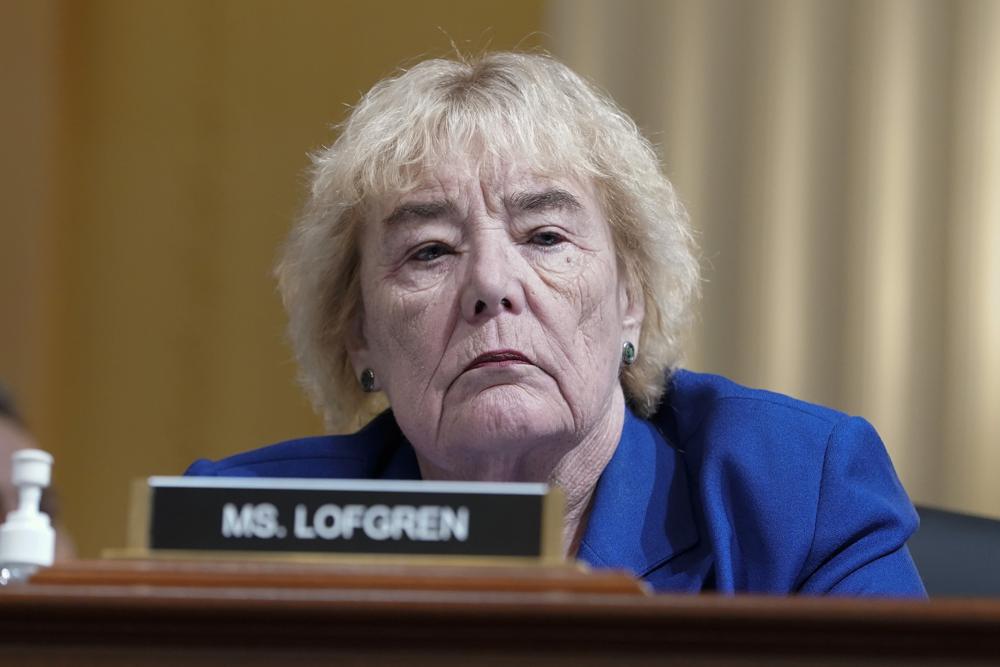
The House pushed ahead Wednesday with legislation that would revamp the rules for certifying the results of a presidential election as lawmakers accelerate their response to the January 6, 2021, insurrection and Donald Trump’s failed attempt to remain in power. The legislation would overhaul an arcane 1800s-era statute known as the Electoral Count Act that governs, along with the U.S. Constitution, how states and Congress certify electors and declare presidential election winners. The House planned a vote on the bill after afternoon debate. While that process has long been routine and ceremonial, Trump and a group of his aides and lawyers tried to exploit loopholes in the law in an attempt to overturn his defeat in the 2020 election. The bill would set new parameters around the January 6 joint session of Congress that happens every four years after a presidential election. The day turned violent last year after hundreds of Trump’s supporters interrupted the proceedings, broke into the building, and threatened the lives of then-Vice President Mike Pence and members of Congress. The rioters echoed Trump’s false claims of widespread fraud and wanted Pence to block Democrat Joe Biden’s victory as he presided over the joint session. The legislation intends to ensure that future Jan. 6 sessions are “as the constitution envisioned, a ministerial day,” said Wyoming Rep. Liz Cheney, a Republican who co-sponsored the legislation with House Administration Committee Chairwoman Zoe Lofgren, D-Calif. Both Cheney and Lofgren are also members of the House committee investigating the January 6 attack. Maryland Rep. Jamie Raskin, another member of the January 6 panel, said during the start of the House debate that the bill would modernize the elections law “to make sure that the will of the people is vindicated at every level.” The bill, which is similar to legislation moving through the Senate, would clarify in the law that the vice president’s role presiding over the count is only ceremonial and also sets out that each state can only send one certified set of electors. Trump’s allies had unsuccessfully tried to put together alternate slates of illegitimate pro-Trump electors in swing states where Biden won. The legislation would increase the threshold for individual lawmakers’ objections to any state’s electoral votes, requiring a third of the House and a third of the Senate to object to trigger votes on the results in both chambers. Currently, only one lawmaker in the House and one lawmaker in the Senate have to object. The House bill would set out very narrow grounds for those objections, an attempt to thwart baseless or politically motivated challenges. The legislation also would require courts to get involved if state or local officials want to delay a presidential vote or refuse to certify the results. The House vote comes as the Senate is moving on a similar track with enough Republican support to virtually ensure passage before the end of the year. After months of talks, House Democrats introduced the legislation on Monday and are holding a quick vote two days later in order to send the bill across the Capitol and start to resolve differences. A bipartisan group of senators introduced legislation this summer, and a Senate committee is expected to vote on it next week. While the House bill is more expansive than the Senate version, the two bills cover similar ground, and members in both chambers are optimistic that they can work out the differences. While few House Republicans are expected to vote for the legislation — most are still allied with Trump — supporters are encouraged by the bipartisan effort in the Senate. “Both sides have an incentive to want a set of clear rules, and this is an antiquated law that no one understands,” said Benjamin Ginsburg, a longtime GOP lawyer who consulted with lawmakers as they wrote the bill. “All parties benefit from clarity.” House GOP leaders disagree and are encouraging their members to vote against the legislation. They say the involvement of courts could drag out elections and that the bill would take rights away from states. The bill is an “attempt to federalize our elections,” Rep. Guy Reschenthaler, R-Pa., said on the House floor. He argued that voters are more focused on the economy and other issues than on elections law. “In my area of Pennsylvania, nobody is talking about this,” Reschenthaler said. Illinois Rep. Rodney Davis, Lofgren’s GOP counterpart on the House Administration Committee, said Tuesday that Democrats are “desperately trying to talk about their favorite topic, and that is former president Donald Trump.” Democrats said the bill was not only a response to Trump but also a way to prevent objections and mischief from all candidates in the future. “If you think that this legislation is an attack on President Trump, you simply haven’t read the legislation because there’s nothing in there attacking President Trump,” Raskin said. “This is about reforming the Electoral Count Act, so it works for the American people.” Republished with the permission of The Associated Press.
GOP’s election-year standing with independents at risk

Sarah Motiff has voted for Sen. Ron Johnson every time his name appeared on the ballot, starting in 2010 when the Wisconsin Republican was first elected as part of the tea party wave. Fond of his tough views on spending, she began the year planning to support his reelection again. She became skeptical this summer as the House committee investigating the January 6, 2021, Capitol insurrection reported his office discussed giving then-Vice President Mike Pence certificates with fake presidential electors for Donald Trump from Wisconsin and Michigan, part of a broader push to overturn Joe Biden’s victory. Johnson has downplayed the effort, and the certificates were never given to Pence, but Motiff, a political independent, wasn’t convinced. “I’m not going to lie when I say I’ve had some concerns about some of the reports that have come out,” the 52-year-old nonpartisan city councilwoman from Columbus, Wisconsin, said. “It just put a bad taste in my mouth.” Nudged further by the June U.S. Supreme Court decision invalidating a woman’s constitutional right to an abortion, Motiff is opposing Johnson and supports his Democratic challenger, Lt. Gov. Mandela Barnes, in one of the most fiercely-contested Senate races this year. “Which was really a hard decision for me because I do think he’s done good things in the past,” Motiff said of Johnson. “But this is pretty damaging.” Motiff’s evolution represents the challenge for Republicans emerging from a tumultuous summer, defined by the court decision, high-profile hearings on former President Donald Trump’s actions during the insurrection, and intensifying legal scrutiny of his handling of classified information and efforts to overturn the election. Now, a midterm campaign that the GOP hoped would be a referendum on President Joe Biden and the economy is at risk of becoming a comparison of the two parties, putting Republicans in an unexpectedly defensive position. In politically-divided Wisconsin, where recent elections have been decided by a few thousand votes, the outcome could hinge on self-described independent voters like Motiff. “Having former President Trump so prominently in the news in so many ways makes it easier for Democrats to frame the midterm as a choice between two competing futures as opposed to a referendum on the Democrat governance,” said Republican pollster Whit Ayres. “That’s hurting Republicans. It’s distracting from the referendum message and allowing more of a focus on a choice of two different parties.” That tension is playing out in Columbia County, Wisconsin, a constellation of tidy small towns surrounded by rolling dairy farm country, all within commuting distance of Madison. Statewide, top-of-the-ticket candidates have won by barely a percentage point in the past three elections. Trump won Columbia County by a little more than 500 votes out of 33,000 cast in 2020. In interviews with more than a dozen independent voters here over two days last week, many were rethinking their support of the GOP this fall. Steve Gray, a self-described Republican-leaning independent “but never a Trump fan,” opposed the June court decision because he backs abortion rights. But the 61-year-old school maintenance manager also resented what he saw as an unwelcome political power play by out-of-power Republicans. “Trump stacked the Supreme Court. We all knew he wanted to overturn Roe,” said Gray, of small-town Rio, where Trump won by two votes in 2020. “That decision was a partisan hand grenade Trump threw into this election.” The court decision “upended the physics of midterm elections,” said Jesse Stinebring, a pollster advising several Democratic campaigns. It gave voters the rare opportunity to judge a policy advance backed by the minority party, distracting them from a pure up-or-down vote on majority Democrats, he said. “The backlash from a political perspective isn’t directed at the traditional party in power, but is actually reframed in terms of this Republican control of the Supreme Court,” Stinebring said. The decision made Dilaine Noel’s vote automatic. The 29-year-old data analytics director for a Madison-area business said she had never affiliated with either party. Despite her grievances about Democrats’ warring moderate and liberal wings, her support for abortion rights gave her no choice than to vote for the party’s candidates this fall. “By default, I have to move in that direction,” said Noel, from small-town Poynette in the Wisconsin River valley. “I’m being forced to.” Mary Percifield is a lifelong independent voter who says the abortion decision motivated her to vote Democratic because she worries the court might overturn other rights. “A right has been taken away from us,” the 68-year-old customer service representative from Pardeeville, said. “I question if a woman’s right to vote will be taken away. A woman’s right for birth control.” Independent voters who lean neither Democrat nor Republican nationally preferred Biden over Trump, 52% to 37% in 2020, and preferred Democrats over Republicans in U.S. House races by a similar margin in the 2018 midterms, according to AP VoteCast. Independents who lean neither Democrat nor Republican made up 5% of the 2020 electorate and 12% in 2018. Independents had moved toward Republicans by early this year, seeking answers on the economy, said Republican pollster David Winston, a senior adviser to House Republican Leader Kevin McCarthy. But they have drifted back toward Democrats as efforts by GOP leaders to focus on the economy have clashed with Republican attacks on the Justice Department and Trump’s continuing complaints about the 2020 election. “Everything is suddenly back in the context of Trump,” Winston said in light of Trump’s prominent endorsement of Senate candidates and protests of the federal investigation into classified documents recovered from his Florida home. “It’s not that Democrats are gaining. It’s that Republicans over the summer were off talking about a variety of things. And independents are thinking, ‘If you’re not talking specifically about the problems that I’m concerned about, why am I listening?’” Republicans remain optimistic about their chances in November, particularly about netting the handful of seats they need to regain the U.S. House majority. Inflation remains high and, despite a recent uptick, approval of Biden is still low for a party hoping to maintain its hold on power. The
Mike Pence tells GOP to stop lashing out at FBI over Donald Trump search
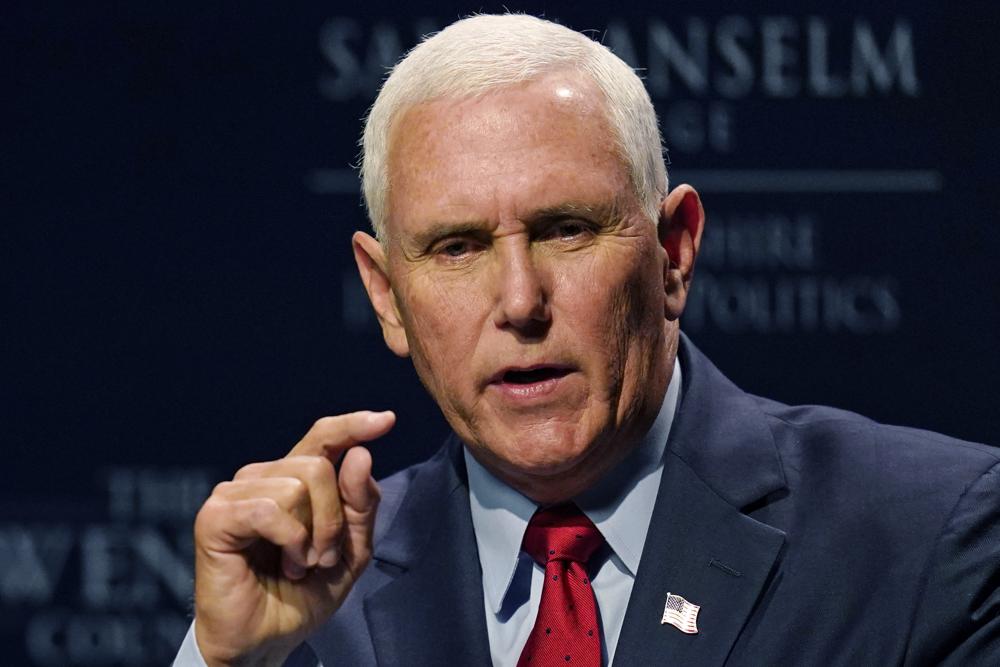
Former Vice President Mike Pence on Wednesday implored fellow Republicans to stop lashing out at the FBI over the search of Donald Trump’s Florida home and denounced calls by some of the former president’s allies to defund the FBI, saying that was “just as wrong” as a push by Democratic activists to shift money from police. Pence also said he would give “due consideration” if asked to testify before the House committee investigating the riot at the U.S. Capitol on January 6, 2021. His pleas for restraint come as law enforcement officials warn of an escalating number of violent threats targeting federal agents and government facilities since agents last week searched Mar-a-Lago as part of the Justice Department’s investigation into the discovery of classified White House records recovered from Trump’s estate earlier this year. Speaking in New Hampshire, Pence said he has been troubled by what he called the politicization of the FBI. He also said the Justice Department and Attorney General Merrick Garland should be more forthcoming about what led authorities to conduct the search. But Pence, who is trying to stake out his own political path as he and Trump both consider 2024 presidential campaigns, also had a message for the GOP. “I also want to remind my fellow Republicans, we can hold the attorney general accountable for the decision he made without attacking the rank-and-file law enforcement personnel at the FBI,” he said at the Politics & Eggs event, a breakfast gathering at St. Anselm College for business leaders that has become a customary stop for White House hopefuls in the early-voting state. “The Republican Party is the party of law and order,” Pence continued. “Our party stands with the men and women who stand on the thin blue line at the federal and state and local level, and these attacks on the FBI must stop. Calls to defund the FBI are just as wrong as calls to defund the police.” Trump and some other Republican lawmakers have tried to capitalize on the search by portraying it as an act of political persecution and an attack on the rule of law. For the onetime political allies, their paths diverged on January 6, 2021, when a mob of angry Trump supporters stormed the Capitol in an effort to stop Congress’ formal certification of Joe Biden’s presidential victory. Trump denounced his vice president, who was presiding over the Senate, for refusing to object or delay the certification — something Pence had no power to do. A fake gallows was constructed on the National Mall, and people who broke into the Capitol chanted, “Hang Mike Pence! Hang Mike Pence!” Before Wednesday, Pence had refused to say whether he would engage with the House committee investigating the insurrection if the panel requested his testimony. “If there was an invitation to participate, I would consider it,” Pence said, adding he would first reflect “on the unique role” he was serving as vice president. “It would be unprecedented in history for a vice president to be summoned to testify on Capitol Hill, but as I said, I don’t want to prejudge,” he said. “If ever any formal invitation was rendered to us, we’d give it due consideration.” A committee spokesperson declined to comment on Pence’s remarks. The committee and Pence’s team have had an open line of communication since Pence’s former chief of staff, Marc Short, agreed to testify in private in December 2021 after receiving a subpoena. Short was at the Capitol on January 6 and accompanied Pence as the then-vice president fled the Senate chamber and hid from rioters who were calling for his hanging. In Short’s recorded testimony, aired at the committee’s public hearings this summer, he described attending White House meetings before the insurrection, during which Trump allies discussed ways to overturn the results of the 2020 election. At one point, Trump had banned Short from the White House grounds because Short objected to the pressure on Pence to reject the legitimate election results. Committee members so far have not decided to seek Pence’s testimony, saying that Short and former Pence lawyer Greg Jacobs have provided investigators with plenty of evidence. Republished with the permission of The Associated Press.
FBI’s search of Donald Trump’s Florida estate: Why now?
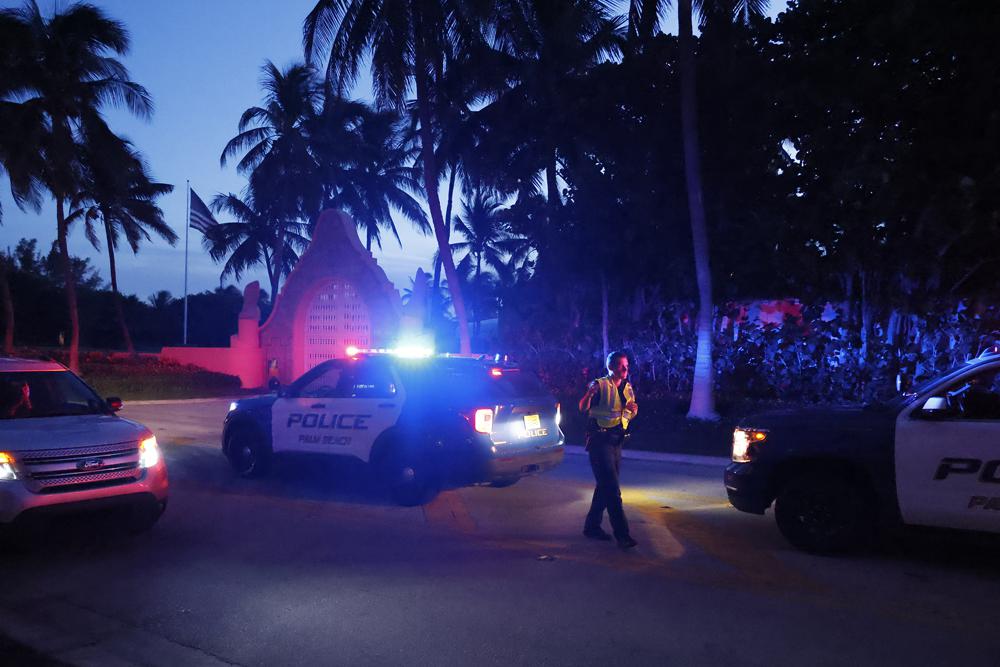
The FBI’s unprecedented search of former President Donald Trump’s Florida residence ricocheted around government, politics, and a polarized country Tuesday, along with questions as to why the Justice Department — notably cautious under Attorney General Merrick Garland — decided to take such a drastic step. Answers weren’t quickly forthcoming. Agents on Monday searched Trump’s Mar-a-Lago estate, which is also a private club, as part of a federal investigation into whether the former president took classified records from the White House to his Florida residence, people familiar with the matter said. It marked a dramatic escalation of law enforcement scrutiny of Trump, who faces an array of inquiries tied to his conduct in the waning days of his administration. From echoes of Watergate to the more immediate House probe of the January 6 Capitol insurrection, Washington, a city used to sleepy Augusts, reeled from one speculative or accusatory headline to the next. Was the Justice Department politicized? What prompted it to seek authorization to search the estate for classified documents now, months after it was revealed that Trump had taken boxes of materials with him when he left the White House after losing the 2020 election? Garland has not tipped his hand despite an outcry from some Democrats impatient over whether the department was even pursuing evidence that has surfaced in the January 6 probe and other investigations— and from Republicans who were swift to echo Trump’s claims that he was the victim of political prosecution. All Garland has said publicly is that “no one is above the law.” A federal judge had to sign off on the warrant after establishing that FBI agents had shown probable cause before they could descend on Trump’s shuttered-for-the-season home — he was in New York, a thousand or so miles away, at the time of the search. Monday’s search intensified the months-long probe into how classified documents ended up in boxes of White House records located at Mar-a-Lago earlier this year. A separate grand jury is investigating efforts to overturn the results of the 2020 presidential election, and it all adds to potential legal peril for Trump as he lays the groundwork for a potential repeat run for the White House. Trump and his allies quickly sought to cast the search as a weaponization of the criminal justice system and a Democratic-driven effort to keep him from winning another term in 2024 — though the Biden White House said it had no prior knowledge and current FBI Director Christopher Wray was appointed by Trump five years ago. Trump, disclosing the search in a lengthy statement late Monday, asserted that agents had opened a safe at his home, and he described their work as an “unannounced raid” that he likened to “prosecutorial misconduct.” Justice Department spokesperson Dena Iverson declined to comment on the search, including whether Garland had personally authorized it. White House press secretary Karine Jean-Pierre said the West Wing first learned of the search from public media reports, and the White House had not been briefed in the run-up or aftermath. Jean-Pierre refused to say whether Biden wanted the attorney general to explain publicly the rationale for the search amid the concerns about politicization of the probe. “The Justice Department conducts investigations independently, and we leave any law enforcement matters to them,” she said. “We are not involved.” About two dozen Trump supporters stood in protest at midmorning Tuesday in the Florida summer heat and sporadic light rain on a bridge near the former president’s residence. One held a sign reading “Democrats are Fascists,” while others carried flags saying “2020 Was Rigged,” “Trump 2024,” and Biden’s name with an obscenity. Some cars honked in support as they passed. Trump’s Vice President Mike Pence, a potential 2024 rival, tweeted Tuesday, “Yesterday’s action undermines public confidence in our system of justice, and Attorney General Garland must give a full accounting to the American people as to why this action was taken, and he must do so immediately.” Trump was planning to meet Tuesday at his Bedminster, New Jersey, a club with members of the Republican Study Committee, a group headed by Rep. Jim Banks of Indiana that says it is committed to putting forth his priorities in Congress. The FBI reached out to the Secret Service shortly before serving a warrant, a third person familiar with the matter told The Associated Press. Secret Service agents contacted the Justice Department and were able to validate the warrant before facilitating access to the estate, the person said. The Justice Department has been investigating the potential mishandling of classified information since the National Archives and Records Administration said it had received from Mar-a-Lago 15 boxes of White House records, including documents containing classified information, earlier this year. The National Archives said Trump should have turned over that material upon leaving office, and it asked the Justice Department to investigate. There are multiple federal laws governing the handling of classified records and sensitive government documents, including statutes that make it a crime to remove such material and retain it at an unauthorized location. Though a search warrant does not necessarily mean criminal charges are near or even expected, federal officials looking to obtain one must first demonstrate to a judge that they have probable cause that a crime occurred. Two people familiar with the matter, speaking on condition of anonymity to discuss an ongoing investigation, said the search Monday was related to the records probe. Agents were also looking to see if Trump had additional presidential records or any classified documents at the estate. Trump has previously maintained that presidential records were turned over “in an ordinary and routine process.” His son Eric Trump said on Fox News on Monday night that he had spent the day with his father and that the search happened because “the National Archives wanted to corroborate whether or not Donald Trump had any documents in his possession.” Trump himself, in a social media post on Monday night, called the search a “weaponization of the Justice System,
January 6 takeaways: Donald Trump ‘could not be moved’ amid violence

The House January 6 committee is closing out its set of summer hearings with its most detailed focus yet on the investigation’s main target: former President Donald Trump. The panel is examining Trump’s actions on Jan. 6, 2021, as hundreds of his supporters broke into the U.S. Capitol, guiding viewers minute-by-minute through the deadly afternoon to show how long it took for the former president to call off the rioters. The panel is focusing on 187 minutes that day, between the end of Trump’s speech calling for supporters to march to the Capitol at 1:10 p.m. and a video he released at 4:17 p.m. telling the rioters they were “very special” but they had to go home. Trump was “the only person in the world who could call off the mob,” but he refused to do so for several hours, said the committee’s chairman, Mississippi Rep. Bennie Thompson, who was participating in the hearing remotely due to a COVID-19 diagnosis. “He could not be moved.” THE WHITE HOUSE DINING ROOM The panel emphasized where Trump was as the violence unfolded — in a White House dining room, sitting at the head of the table, watching the violent breach of the Capitol on Fox News. He retreated to the dining room at 1:25 p.m., according to Rep. Elaine Luria, D-Va., one of two members who led the hearing. That was after some rioters had already breached barriers around the Capitol — and after Trump had been told about the violence within 15 minutes of returning to the White House. Fox News was showing live shots of the rioters pushing past police, Luria said, showing excerpts of the coverage. In video testimony played at the hearing, former White House aides talked about their frantic efforts to get the president to tell his supporters to turn around. Pat Cipollone, Trump’s top White House lawyer, told the panel that multiple aides — including Trump’s daughter, Ivanka Trump — advised the president to say something. “People need to be told” to leave, Cipollone recalled telling people, urging Trump to make a public announcement. Trump “could not be moved,” Thompson said, “to rise from his dining room table and walk the few steps down the White House hallway into the press briefing room where cameras were anxiously and desperately waiting to carry his message to the armed and violent mob savagely beating and killing law enforcement officers.” NO CALLS FOR HELP As he sat in the White House, Trump made no efforts to call for increased law enforcement assistance at the Capitol, the committee said. Witnesses confirmed that Trump did not call the defense secretary, the homeland security secretary, or the attorney general. The committee played audio of Gen. Mark Milley, chairman of the Joint Chiefs of Staff, reacting with surprise to the former president’s reaction to the attack. “You’re the commander-in-chief. You’ve got an assault going on on the Capitol of the United States of America. And there’s Nothing? No call? Nothing Zero?” Milley said. As Trump declined to call for help, Vice President Mike Pence was hiding in the Capitol, just feet away from rioters who were about to breach the Senate chamber. The committee played audio from an unidentified White House security official who said Pence’s Secret Service agents “started to fear for their own lives” at the Capitol and called family members in case they didn’t survive. Shortly afterward, at 2:24 p.m., Trump tweeted that Pence didn’t have the “courage” to block or delay the election results as Congress was certifying Joe Biden’s presidential victory. FORMER WHITE HOUSE AIDES Matt Pottinger, who was Trump’s deputy national security adviser at the time, and Sarah Matthews, then the deputy press secretary, testified at the hearing. Both resigned from their White House jobs immediately after the insurrection. Both Pottinger and Matthews told the committee of their disgust at Trump’s tweet about Pence. Pottinger said he was “disturbed and worried to see that the president was attacking Vice President Pence for doing his constitutional duty,” which he said was “the opposite of what we needed at that moment.” “That was the moment I decided I was going to resign,” Pottinger said. Matthews said the tweet was “essentially him giving the green light to those people,” and said Trump’s supporters “truly latch on to every word and every tweet.” ‘WE HAVE CONSIDERABLY MORE TO DO’ At the beginning of the hearing, Thompson and Wyoming Rep. Liz Cheney, the committee’s Republican vice chair, announced that the panel would “reconvene” in September to continue laying out their findings. “Doors have opened, new subpoenas have been issued, and the dam has begun to break,” Cheney said of the committee’s probe. “We have considerably more to do. We have far more evidence to share with the American people and more to gather.” Republished with the permission of The Associated Press.
Senators propose changes to electors law after Capitol riot

A bipartisan group of senators agreed Wednesday on proposed changes to the Electoral Count Act, the post-Civil War-era law for certifying presidential elections that came under intense scrutiny after the January 6 attack on the Capitol and Donald Trump’s effort to overturn the 2020 election. Long in the making, the package introduced by the group led by Sens. Susan Collins of Maine and Joe Manchin of West Virginia is made up of two separate proposals. One would clarify the way states submit electors and the vice president tallies the votes in Congress. The other would bolster security for state and local election officials who have faced violence and harassment. “From the beginning, our bipartisan group has shared a vision of drafting legislation to fix the flaws of the archaic and ambiguous Electoral Count Act of 1887,” Collins, Manchin, and the other 14 senators said in a joint statement. “We have developed legislation that establishes clear guidelines for our system of certifying and counting electoral votes,” the group wrote. “We urge our colleagues in both parties to support these simple, commonsense reforms.” Both Senate Majority Leader Chuck Schumer and Senate Republican leader Mitch McConnell have signaled support for the bipartisan group, but the final legislative package will undergo careful scrutiny. Votes are not likely before fall. But with broad support from the group of 16 senators, seven Democrats and nine Republicans, who have worked behind closed doors for months with the help of outside experts, serious consideration is assured. In a statement, Matthew Weil, executive director of the Democracy Program at the Bipartisan Policy Center, called the framework a “critical step” in shoring up ambiguities in the Electoral Count Act. After Trump lost the 2020 election, the defeated president orchestrated an unprecedented attempt to challenge the electors sent from battleground states to the joint session of Congress on January 6, when the vice president presides over certification. Under the proposed changes, the law would be updated to ensure the governor from each state is initially responsible for submitting electors, as a way to safeguard against states sending alternative or fake elector slates. Additionally, the law would spell out that the vice president presides over the joint session in a “solely ministerial” capacity, according to a summary page. It says the vice president “does not have any power to solely determine, accept, reject, or otherwise adjudicate disputes over electors.” That provision is a direct reaction to Trump’s relentless efforts to pressure then Vice President Mike Pence to reject the electors being sent from certain battleground states as a way to halt the certification or tip it away from Joe Biden’s victory. The bill also specifies the procedures around presidential transitions, including when the election outcome is disputed, to ensure the peaceful transfer of power from one administration to the next. That’s another pushback to the way Trump blocked Biden’s team from accessing some information for his transition to the White House. The second proposal, revolving around election security, would double the federal penalties to up to two years in prison for individuals who “threaten or intimidate election officials, poll watchers, voters or candidates,” according to the summary. It also would seek to improve the way the U.S. Postal Service handles election mail and “provide guidance to states to improve their mail-in ballot processes.” Mail-in ballots and the role of the Postal Service came under great scrutiny during the 2020 election. An Associated Press review of potential cases of voter fraud in six battleground states found no evidence of widespread fraud that could change the outcome of the election. A separate AP review of drop boxes used for mailed ballots also found no significant problems. The need for election worker protections was front and center at a separate hearing Wednesday of the House Committee on Homeland Security. Election officials and experts testified that a rise in threats of physical violence is contributing to staffing shortages across the country and a loss of experience at local boards of elections. “The impact is widespread,” said Neal Kelley, a former registrar of voters in Orange County, California, who now chairs the Committee for Safe and Secure Elections. “And, while the effects on individuals are devastating, the potential blow to democracy should not be dismissed.” Elizabeth Howard, senior counsel at the Brennan Center for Justice, told the committee that Congress needs to direct more money and support toward protecting election workers’ personal safety, including by funding local and federal training programs and providing grants to enhance security at election directors’ personal residences. Democratic New Mexico Secretary of State Maggie Toulouse Oliver, who recently reported a series of threats, told the panel the situation has become worse after former President Donald Trump’s attacks against the 2020 election result. “Unfortunately, we are still on a daily basis, in my state and across the country, living with the reverberating effects of the ‘Big Lie’ from 2020,” she said. “And, as we all know, when it comes to leadership, what you say from the very highest echelons of government power in this country do have those reverberating effects.” Some Republican members of the committee condemned violence against election workers — and also drew a parallel to recent threats and intimidation directed toward some Supreme Court justices after their decision to overturn constitutional protections for abortion. GOP Rep. Clay Higgins of Louisiana rejected the notion that Trump and other election skeptics were solely responsible for the “atmosphere of mistrust” that grew up around the 2020 election. Republished with the permission of The Associated Press.
Adeline Von Drehle: SCOTUS decision may limit more than just the EPA

The Supreme Court wrapped up its history-making term last week with a shot across the bow at government regulatory agencies. One of its two final rulings, West Virginia v. EPA, saw the court rule 6-3 along ideological lines that the Clean Air Act does not give the Environmental Protection Agency broad authority to regulate greenhouse gas emissions from power plants. Ruling for the state of West Virginia, the conservative justices struck down EPA standards designed to fight climate change by reshaping electricity grids. Such standards qualify as “major questions,” wrote Chief Justice John Roberts in his majority opinion, requiring explicit authorization by Congress. Much of the interest in the case comes from those who fear the United States will no longer be able to meet its climate change commitments. In her dissent, Justice Elena Kagan wrote that the court was stripping the EPA of the power Congress gave it to respond to “the most pressing environmental challenge of our time.” President Joe Biden, in a statement issued at the White House Thursday, described the ruling as “another devastating decision that aims to take our country backwards.” The opinion completed a term in which an already conservative court lurched further to the right, striking down Roe v. Wade, expanding gun rights, embracing religious expression – and now cracking down on the so-called “administrative state.” Careful vetting of three justices appointed by former president Donald J. Trump by the conservative Federalist Society produced results long dreamed of by self-styled “originalist” theorists. Laurence Tribe, University Professor Emeritus of Constitutional Law at Harvard, told RealClearPolitics that the current court “is going rogue and seems almost drunk with the power acquired with its stacking by Trump and his three new Justices.” West Virginia’s victory may be only an opening salvo in a conservative war against the active federal government called into existence during the Great Depression. If every significant new challenge requires new Congressional authorization to act – as the Roberts opinion suggests – critics fear the executive branch could become just as gridlocked as the legislative branch. Roberts pointed in this direction by describing the dispute at hand as a “major questions case.” The major questions doctrine requires that agencies have explicit statutory authorization from Congress to make “decisions of vast economic and political significance.” The court “typically greet[s] assertions of extravagant statutory power over the national economy with skepticism,” Roberts wrote. To overcome that skepticism, “the Government must – under the major questions doctrine – point to clear congressional authorization to regulate in that manner.” The major questions doctrine plays an important role in administrative law because it allows Congress to find, in theory, a workable space between an unconstitutional delegation of power – a violation of Article I Section I of the Constitution, which states that “All legislative powers herein granted shall be vested in a Congress of the United States” – and a complete ban on delegation that would leave an already inactive Congress swamped with day-to-day responsibility for government agencies. One traditional view holds that Congress sets up a target, but agencies decide how to hit the target. In the West Virginia case, the EPA’s target was the reduction of carbon emissions. The EPA aimed to hit that target by requiring a gradual transition to green energy. New York University Law Professor Roderick M. Hills explained to RCP that the Roberts ruling suggests that Congressional legislation “doesn’t only contain the target,” it also regulates the means that the agency can use. So, if the agency chooses a novel or controversial method of achieving the congressionally specified goal, it might be going outside the statute. The issue with a doctrine that says an agency cannot do anything outside its statutory authorization, Hills said, “is that when a new problem arises, agencies are helpless. And the whole point of creating an agency is to respond to unforeseen circumstances.” The modern administrative state was born during the New Deal Era, when President Franklin D. Roosevelt sought a way to respond to the economic crisis quickly, bypassing bureaucratic red tape – or even congressional intent. There is always a trade-off, Hills said, between “lots and lots of democratic deliberation, and fast action. It’s like Elvis Presley said, a little less conversation, a little more action.” If the court requires agencies to go to Congress each time they seek new ways to address issues of major economic and political significance, Hills asserts, “We’re never going to do anything to respond to new problems because Congress is mired in gridlock.” He has a point, given that Congress currently has a 4% success rate of turning bills into laws. Some would argue that the slow pace of the congressional process is not only desirable, but constitutionally obligatory. Others think it’s unrealistic and, in some ways, undemocratic. Since the 1819 landmark decision McCulloch v. Maryland, the court has held that “the modern administrative state is constitutional,” Tribe told RCP. That case affirmed that Congress can turn over responsibility for detail-oriented action to freestanding government agencies. But it is unclear what is a detail and what is a significant, or “major,” issue. “The Constitution doesn’t say anything about major questions,” Hills told RCP. “If you think the most valuable thing is to have every issue passed upon by elected representatives, [the court] is right. If you think the most valuable thing, or at least an equally valuable thing, is to actually have policy that’s responsive to problems, then [the court] is wrong.” That said, for those who disagree with the EPA ruling, there’s a straightforward remedy that isn’t necessarily available when it comes to the court’s recent gun control decisions or the religious freedom cases. That’s because EPA’s regulatory overreach on climate change – at least according to the Supreme Court – did not run afoul of the pesky First Amendment or Second Amendment. In that sense, West Virginia v. EPA has something in common with the Dobbs decision: namely, the obvious possibility of a legislative fix. In
Capitol riot panel blames Donald Trump for 1/6 ‘attempted coup’
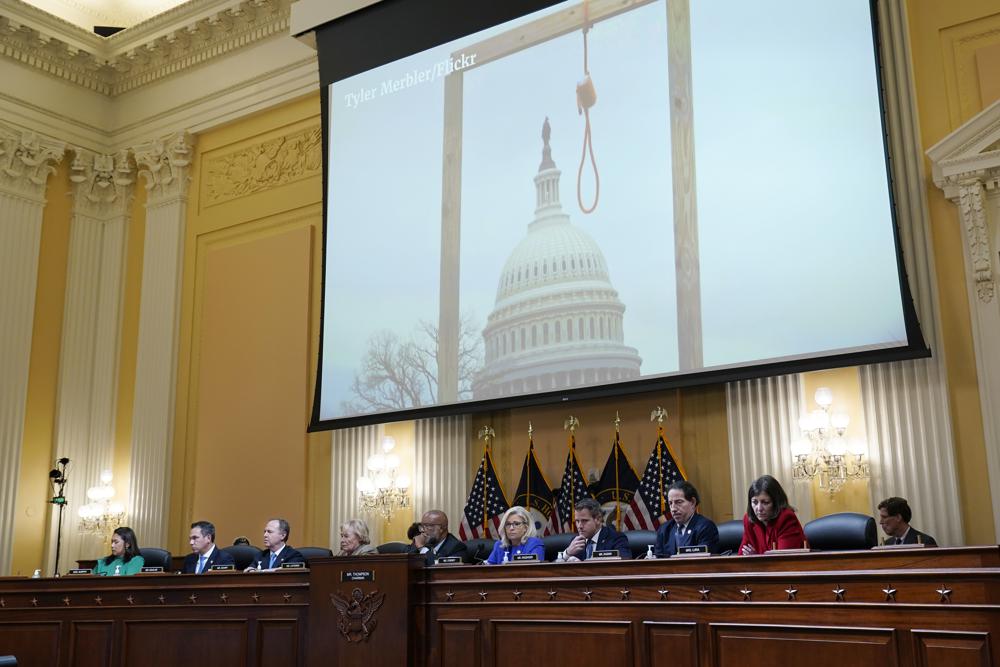
The House panel investigating the Jan. 6 insurrection at the U.S. Capitol laid the blame firmly on Donald Trump Thursday night, saying the assault was hardly spontaneous but an “attempted coup” and a direct result of the defeated president’s effort to overturn the 2020 election. With a never-before-seen 12-minute video of extremist groups leading the deadly siege and startling testimony from Trump’s most inner circle, the 1/6 committee provided gripping detail in contending that Trump’s repeated lies about election fraud and his public effort to stop Joe Biden’s victory led to the attack and imperiled American democracy. “Democracy remains in danger,” said Rep. Bennie Thompson, D-Miss., chairman of the panel, during the hearing, timed for prime time to reach as many Americans as possible. “Jan. 6 was the culmination of an attempted coup, a brazen attempt, as one rioter put it shortly after Jan. 6, to overthrow the government,” Thompson said. “The violence was no accident.” The hearings may not change Americans’ views on the Capitol attack, but the panel’s investigation is intended to stand as its public record. Ahead of this fall’s midterm elections, and with Trump considering another White House run, the committee’s final report aims to account for the most violent attack on the Capitol since 1814 and to ensure such an attack never happens again. Testimony showed Thursday how Trump desperately clung to his own false claims of election fraud, beckoning supporters to the Capitol on Jan. 6 when Congress would certify the results, despite those around him insisting Biden had won the election. In a previously unseen video clip, the panel played a quip from former Attorney General Bill Barr, who testified that he told Trump the claims of a rigged election were “bull——.” In another, the former president’s daughter, Ivanka Trump, testified to the committee that she respected Barr’s view that there was no election fraud. “I accepted what he said.” Others showed leaders of the extremist Oath Keepers and Proud Boys preparing to storm the Capitol to stand up for Trump. One rioter after another told the committee they came to the Capitol because Trump asked them to. “President Trump summoned a violent mob,” said Rep. Liz Cheney, R-Wyo., the panel’s vice chair who took the lead for much of the hearing. “When a president fails to take the steps necessary to preserve our union — or worse, causes a constitutional crisis — we’re in a moment of maximum danger for our republic.” There was an audible gasp in the hearing room when Cheney read an account that said when Trump was told the Capitol mob was chanting for Vice President Mike Pence to be hanged for refusing to block the election results. Trump responded that maybe they were right, that he “deserves it.” At another point, it was disclosed that Rep. Scott Perry, R-Pa., a leader of efforts to object to the election results, had sought a pardon from Trump, which would protect him from prosecution. When asked about the White House lawyers threatening to resign over what was happening in the administration, Trump’s son-in-law Jared Kushner scoffed they were “whining.” Police officers who had fought off the mob consoled one another as they sat in the committee room, reliving the violence they faced on Jan. 6. Officer Harry Dunn teared up as bodycam footage showed rioters bludgeoning his colleagues with flagpoles and baseball bats. In wrenching testimony, U.S. Capitol Police officer Caroline Edwards told the panel that she slipped in other people’s blood as rioters pushed past her into the Capitol. She suffered brain injuries in the melee. “It was carnage. It was chaos,” she said. The riot left more than 100 police officers injured, many beaten and bloodied, as the crowd of pro-Trump rioters, some armed with pipes, bats, and bear spray, charged into the Capitol. At least nine people who were there died during and after the rioting, including a woman who was shot and killed by police. Biden, in Los Angeles for the Summit of the Americas, said many viewers were “going to be seeing for the first time a lot of the detail that occurred.” Trump, unapologetic, dismissed the investigation anew — and even declared on social media that Jan. 6 “represented the greatest movement in the history of our country.” Republicans on the House Judiciary Committee tweeted: “All. Old. News.” Emotions are still raw at the Capitol, and security was tight. Law enforcement officials are reporting a spike in violent threats against members of Congress. Against this backdrop, the committee was speaking to a divided America. Most TV networks carried the hearing live, but Fox News Channel did not. The committee chairman, civil rights leader Thompson, opened the hearing with the sweep of American history. saying he heard in those denying the stark reality of Jan. 6 his own experience growing up in a time and place “where people justified the action of slavery, the Ku Klux Klan and lynching.” Republican Rep. Cheney, the daughter of former Vice President Dick Cheney, outlined what the committee has learned about the events leading up to that brisk January day when Trump sent his supporters to Congress to “fight like hell” for his presidency. Among those testifying was documentary maker Nick Quested, who filmed the Proud Boys storming the Capitol — along with a pivotal meeting between the group’s then-chairman Henry “Enrique” Tarrio and another extremist group, the Oath Keepers, the night before in a nearby parking garage. Quested said the Proud Boys later went to get tacos. Court documents show that members of the Proud Boys and Oath Keepers were discussing as early as November a need to fight to keep Trump in office. Leaders of both groups and some members have since been indicted on rare sedition charges over the military-style attack. In the weeks ahead, the panel is expected to detail Trump’s public campaign to “Stop the Steal” and the private pressure he put on the Justice Department to reverse his election loss — despite dozens of failed court cases attesting there was no fraud on a scale that could have tipped the results in his favor. The panel faced obstacles from its start. Republicans blocked
Mounting losses show limits of Donald Trump’s power

Donald Trump opened May by lifting a trailing Senate candidate in Ohio to the Republican nomination, seemingly cementing the former president’s kingmaker status before another possible White House run. He’s ending the month, however, stinging from a string of defeats that suggests a diminishing stature. Trump faced a series of setbacks in Tuesday’s primary elections as voters rejected his efforts to unseat two top targets for retribution: Georgia’s Republican governor and secretary of state, both of whom had rebuffed Trump’s extraordinary pressure to overturn the results of the 2020 presidential election. But the magnitude of defeat in the governor’s race — more than 50 percentage points — was especially stunning and raised questions about whether Republican voters are beginning to move on from Trump. Nearly six years after the one-time reality television star launched what seemed to be an improbable campaign for the White House, the “Make America Great Again” movement Trump helmed isn’t going anywhere. But voters are increasingly vocal in saying that the party’s future is about more than Trump. “I like Trump a lot, but Trump is in the past,” said David Butler of Woodstock, Georgia, who voted for Gov. Brian Kemp on Tuesday and said Trump’s endorsements had “no” impact “whatsoever” on his thinking. It was the same for Will Parbhoo, a 22-year-old dental assistant who also voted for Kemp. “I’m not really a Trumper,” he said after voting. “I didn’t like him to begin with. With all the election stuff, I was like, ‘Dude, move on.’” One thing Parbhoo liked about the current governor? “Kemp is focused on Georgia,” he said. Trump sought to play down the losses by his favored candidates, saying on his social media platform Wednesday that he had a “very big and successful evening of political Endorsements” and insisting some races “were not possible to win.” Still, the pattern of high-profile defeats is hard to ignore. After JD Vance vaulted from third to first place following Trump’s late-stage endorsement in the Ohio Senate primary, the dynamics took a turn. Trump’s pick in Nebraska’s primary for governor, Charles Herbster, lost his race after allegations surfaced that he had groped women. In Idaho a week later, the governor beat a Trump-backed challenger. In North Carolina, voters rebuffed Trump’s plea to give a scandal-plagued congressman a second chance. And in Pennsylvania, a marquee Senate primary featuring Trump-endorsed celebrity heart surgeon Mehmet Oz remains too close to call. But his biggest upset was in Georgia, a crucial swing state, where former Sen. David Perdue, whom Trump had lobbied to run and helped clear the field for, lost to Kemp. The governor was among Trump’s top targets after he refused to overturn the results of the 2020 White House election in his state. Georgia Secretary of State Brad Raffensperger, who defied Trump’s call to “find” the votes to change the outcome two years ago — a call that is now under investigation — also won his party’s nomination. Attorney General Chris Carr and Insurance Commissioner John King — all opposed by Trump — were also successful in their primaires. In Alabama, Rep. Mo Brooks, whose Senate endorsement Trump rescinded as he struggled to gain traction, made it to a runoff, having gained support after Trump dropped him. Trump has endorsed in nearly 200 races, from governor to county commissioner, often inserting himself into contests that aren’t particularly competitive and helping bolster his compilation of wins. Some of his work, even in races with multiple candidates, has paid off. His early support helped football great Herschel Walker and Rep. Ted Budd sail to their respective Senate primary nominations in Georgia and North Carolina. Sarah Huckabee Sanders, Trump’s former press secretary, easily won the GOP nomination for governor in Arkansas. And even in Georgia, all of the candidates Trump endorsed in open races won or will head to runoffs. Some allies say Trump’s endorsement tally is a poor measure of his influence, even if Trump constantly promotes that record. They argue that voters may support the former president and be eager for him to run again but may not be persuaded by his selections, especially in races with governors such as Kemp, who have long histories with voters. And even without Trump on the ballot, the party has been transformed in Trump’s image, with candidates adopting his “America First” platform, mimicking his tactics, and parroting his lies about a stolen election. But with Trump out of office and relegated to posting on his own social media platform, other voices are beginning to fill the void. Fox News host Tucker Carlson, the most-watched personality on cable television, has become a driving ideological force in the party. Republicans such as the conspiracy-embracing Rep. Marjorie Taylor Greene, who won her party’s nomination for reelection Tuesday, have taken up his mantle in Washington. Meanwhile, potential presidential rivals to Trump are waiting in the wings for 2024. Former Vice President Mike Pence, who has been distancing himself from Trump, rallied with Kemp in suburban Atlanta on Monday evening and told the crowd that “elections are about the future” — an implicit knock on his former boss. Trump has also spawned a new generation of candidates who have channeled his “MAGA” brand but who have done so independent of his support and see themselves as its next iteration. “MAGA doesn’t belong to him,” Kathy Barnette, the Pennsylvania Senate candidate whose late-stage surge stunned party insiders, said in an interview. “Trump coined the word. He does not own it.” While the left, she said, may see the “MAGA movement” as a “cult of Trump voters,” she said it goes far beyond one man. She argued that Trump had succeeded in 2016 because he aligned himself with voters’ concerns and said out loud what people were already thinking, particularly on immigration. She said she tried in her race to do the same. “I do believe Trump has an important voice still,” she added, but “he needs to get better advisers, and in addition to that, he needs to do better himself in remembering why we aligned with him. And it wasn’t because we were aligning with his
January 6 committee requests interview with Ivanka Trump
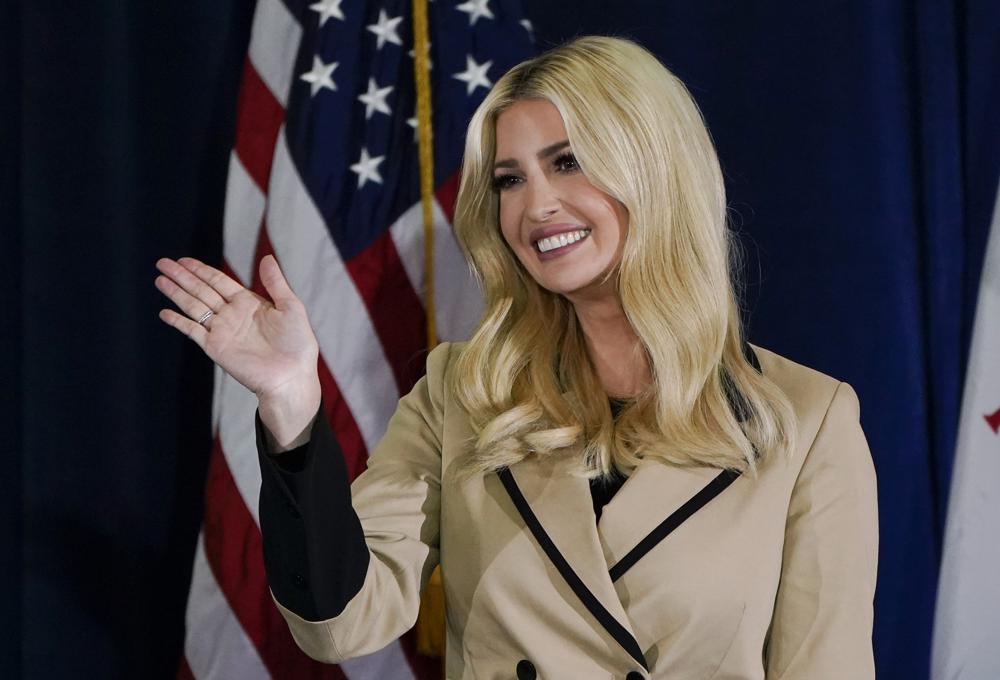
The House committee investigating the U.S. Capitol insurrection is asking Ivanka Trump, daughter of former President Donald Trump, to voluntarily cooperate as lawmakers make their first public attempt to arrange an interview with a Trump family member. The committee sent a letter Thursday requesting a meeting in February with Ivanka Trump, a White House adviser to her father. In the letter, the committee chairman, Rep. Bennie Thompson, D-Miss., said Ivanka Trump was in direct contact with her father during key moments on January 6, 2021, when Trump supporters stormed the Capitol in an effort to halt the congressional certification of Joe Biden’s presidential win. The riot followed a rally near the White House where Donald Trump had urged his supporters to “fight like hell” as Congress convened to certify the 2020 election results. The committee says it wants to discuss what Ivanka Trump knew about her father’s efforts, including a telephone call they say she witnessed, to pressure then-Vice President Mike Pence to reject those results, as well as concerns she may have heard from Pence’s staff, members of Congress and the White House counsel’s office about those efforts. “Ivanka Trump just learned that the January 6 Committee issued a public letter asking her to appear,” her spokesperson said. “As the Committee already knows, Ivanka did not speak at the January 6 rally.” The committee cited testimony that Ivanka Trump implored her father to quell the violence by his supporters, and investigators want to ask about her actions while the insurrection was underway. “Testimony obtained by the Committee indicates that members of the White House staff requested your assistance on multiple occasions to intervene in an attempt to persuade President Trump to address the ongoing lawlessness and violence on Capitol Hill,” Thompson wrote. The letter is the committee’s first attempt to seek information from inside the Trump family. Earlier this week, it issued subpoenas to lawyer Rudy Giuliani and other members of Trump’s legal team who filed meritless court challenges to the election that fueled the lie that the race had been stolen from Trump. The committee is narrowing in on three requests to Ivanka Trump, starting with a conversation alleged to have taken place between Donald Trump and Pence on the morning of the attack. The committee said Keith Kellogg, who was Pence’s national security adviser, was also in the room and testified to investigators that Trump questioned whether Pence had the courage to delay the congressional counting of the electoral votes. The Constitution makes clear that a vice president’s role is largely ceremonial in the certification process, and Pence had issued a statement before the congressional session that laid out his conclusion that a vice president could not claim “unilateral authority” to reject states’ electoral votes. “You were present in the Oval Office and observed at least one side of that telephone conversation,” the letter to Ivanka Trump said, adding that the committee “wishes to discuss the part of the conversation you observed” between the then-president and Pence. The letter also mentioned a message, in the days before the scheduled vote certification on January 6, 2021, between an unidentified member of the House Freedom Caucus to then-White House chief of staff Mark Meadows with an explicit warning: “If POTUS allows this to occur … we’re driving a stake in the heart of the federal republic.” POTUS is an abbreviation for President of the United States. The other requests in the letter to Ivanka Trump concern conversations after Donald Trump’s tweeted, “Mike Pence didn’t have the courage to do what should have been done to protect our Country and our Constitution.” The committee said White House staff and even members of Congress requested Ivanka Trump’s help in trying to convince her father that he should address the violence and tell rioters to go home. “We are particularly interested in this question: Why didn’t White House staff simply ask the President to walk to the briefing room and appear on live television — to ask the crowd to leave the capital?” Besides the subpoenas issued this week, the committee had a victory Wednesday when the Supreme Court rejected a bid by Trump to block the release of White House records sought by lawmakers. The National Archives began to turn over the hundreds of pages of records to the nine-member committee almost immediately. They include presidential diaries, visitor logs, speech drafts, and handwritten notes dealing with January 6 from the Meadows’ files. The committee’s investigation has touched nearly every corner of Trump’s orbit in the nearly seven months since it was created, from strategist Steve Bannon to media companies such as Twitter, Meta, and Reddit. The committee says it has interviewed nearly 400 people and issued dozens of subpoenas as it prepares a report set for release before the November elections. Still, the committee has run into roadblocks from some of Trump’s allies, including Bannon and Meadows, who have refused to fully cooperate. Their resistance has led the committee to file charges of contempt of Congress. The seven Democrats and two Republicans on the committee have also faced defiance from fellow lawmakers. House Minority Leader Kevin McCarthy, R-Calif., and GOP Reps. Scott Perry of Pennsylvania and Jim Jordan of Ohio have denied the committee’s requests for voluntary cooperation. While the committee has considered subpoenaing fellow lawmakers, that would be an extraordinary move and could run up against legal and political challenges. The committee says the extraordinary trove of material it has collected — 35,000 pages of records so far, including texts, emails, and phone records from people close to Trump — is fleshing out critical details of the worst attack on the Capitol in two centuries. The next phase of the investigation will include a series of public hearings in the coming months. Republished with the permission of the Associated Press.
January 6 panel seeks interview with Donald Trump ally Rep. Jim Jordan

The House panel investigating the January 6 U.S. Capitol insurrection on Wednesday requested an interview with Republican Rep. Jim Jordan of Ohio, one of former President Donald Trump’s closest allies in Congress, as the committee closes in on members of its own chamber. In a letter to Jordan, Mississippi Rep. Bennie Thompson, Democratic chairman of the panel, said the panel wants the lawmaker to provide information for its investigation surrounding his communications with Trump on January 6 and Trump’s efforts to challenge the result of the 2020 election. “We understand that you had at least one and possibly multiple communications with President Trump on January 6th,” the letter reads. “We would like to discuss each such communication with you in detail.” The request is the second by the nine-member panel this week and launches a new phase for the lawmakers on the committee, who have so far resisted going after one of their own as they investigate the insurrection by supporters and his efforts to overturn the election. Jordan is a staunch supporter of the former president’s false claims about voter fraud. The lawmaker brought those claims up during an October hearing on a motion to hold former White House chief strategist Stephen K. Bannon in contempt for refusing to comply with a congressional subpoena. In that hearing, Jordan admitted once again that he spoke with Trump on the day of the attack. “Of course, I talked to the president,” Jordan told members of the Rules Committee, in response to questioning from the panel’s chairman, Rep. Jim McGovern, D-Mass. “I talked to him that day. I’ve been clear about that. I don’t recall the number of times, but it’s not about me. I know you want to make it about that.” A request for comment from Jordan’s office was not immediately returned. The panel is also seeking information regarding Jordan’s meeting with Trump and members of his administration in November and December 2020, and in early January 2021, “about strategies for overturning the results of the 2020 election.” The letter goes on to say the committee is also interested in any discussions Jordan may have had during that time regarding the possibility of presidential pardons for people involved in any aspect of the Capitol attack or the planning for the two rallies that took place that day. Thompson writes that Jordan has already publicly signaled a willingness to cooperate with the panel’s efforts to get answers about January 6, citing the lawmaker’s quote from that October hearing: “I’ve said all along, I have nothing to hide. I’ve been straightforward all along.” On Monday, the committee sent a similar request to Republican Rep. Scott Perry of Pennsylvania, who the panel believes had “an important role” in efforts to install then-Justice Department official Jeffrey Clark as acting attorney general in late 2020. Perry rejected the committee’s request Tuesday, calling the committee and its investigation “illegitimate.” In response, Tim Mulvey, a committee spokesperson, said that while the panel prefers to gather evidence from members “cooperatively,” it will pursue such information “using other tools” if necessary. The panel has already interviewed about 300 people as it seeks to create a comprehensive record of the Jan. 6 attack and the events leading up to it. Trump at the time was pushing false claims of widespread voter fraud and lobbying Vice President Mike Pence and Republican members of Congress to try to overturn the count at the January 6 congressional certification. Election officials across the country, along with the courts, had repeatedly dismissed Trump’s claims. Republished with the permission of the Associated Press.
