
Jerry Carl and Barry Moore support failed impeachment of Homeland Security Secretary Alejandro Mayorkas
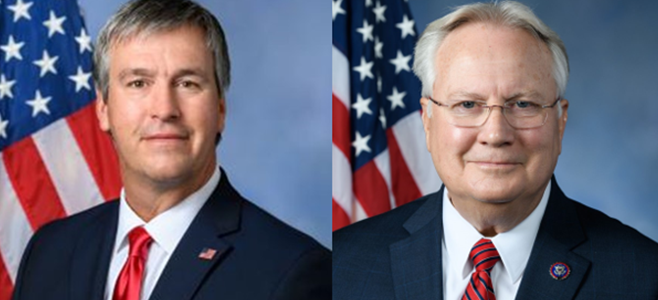
On Tuesday night, the U.S. House of Representatives voted to thwart a motion by Congresswoman Marjorie Taylor Greene (R-Georgia) to impeach embattled Homeland Security Secretary Alejandro Mayorkas. Eight Republicans joined House Democrats to stop the impeachment effort and instead refer the motion to the Homeland Security Committee for their consideration. The eight Republicans were Representatives Ken Buck (R-Colorado), Darrell Issa (R-California), Tom McClintock (R-California), Patrick McHenry (R-North Carolina), John Duarte (R-California), Virginia Foxx (R-North Carolina), Cliff Bentz (R-Oregan), and Mike Turner (R-Ohio). All six of Alabama’s Republican Congressmen voted with Rep. Greene to proceed with impeaching Mayokas. Congressman Jerry Carl (R-AL01) wrote on X, “Tonight, the House voted on a motion to refer this impeachment resolution to the Homeland Security Committee. This motion passed, so we didn’t vote to impeach him. I voted against this motion because the House needs to take immediate action to impeach Secretary Mayorkas.” Rep. Barry Moore (AL-02) also voted against killing the resolution to begin impeachment proceedings against Homeland Security Secretary Mayorkas. Rep. Moore is also a co-sponsor of this resolution. Moore was one of the first Members of Congress to call for the impeachment of Mayorkas back in May. “Under Mayorkas’ watch, there have been 8 million illegal border encounters, 52,900 pounds of fentanyl seized at the border, more than 280 people on terrorist watchlists caught while attempting to cross the border, and 1.8 million known “got aways” who have evaded U.S. authorities,” said Moore. “In the private sector, if you don’t do your job, you get fired. Mayorkas’ failure to do his job is putting Americans in grave danger every day, and it’s past time for him to be impeached.” Carl is also a co-sponsor of Rep. Greene’s resolution. “Our southern border is wide open, and we have an unprecedented illegal immigration crisis at our southern border because Secretary Mayorkas has failed to do his job. That’s why I proudly co-sponsored @RepMTG’s resolution to impeach him.” Carl said on X. Americans for Legal Immigration PAC (ALIPAC.us) announced afterward that it is dropping the national organization’s long-standing endorsement and support for Rep. Tom McClintock after McClintock joined seven other Republicans in voting with Democrats to protect Mayorkas from impeachment. “Our decade-long support for Rep. McClintock ends today, and we call on American patriots, conservatives, Republicans, and invasion opponents to mount GOP Primary challengers to any of these eight sellouts still on the ballot in 2024,” said William Gheen of ALIPAC. “These Republicans supporting Democrat efforts to flood and overwhelm U.S. elections with illegal alien Democrat voters should be run out of office! Shame on them for depriving all Americans of a true choice against illegal globalist policies.” Rep. Marjorie Taylor Greene said that she will continue her efforts to hold the Biden Administration accountable for its thwarting of the nation’s immigration laws and the crisis on the southern border. “I will not stop fighting to hold the Biden administration accountable for their open border policies that are killing Americans every day,” Congresswoman Greene said on X. “It’s time for Republicans to grow a spine and join me in impeaching Mayorkas and others who are destroying our country.” An impeachment by the House had it occurred would likely have been rejected by the Democratic-controlled U.S. Senate if the Senate even took the matter up. To connect with the author of this story or to comment, email brandonmreporter@gmail.com.
Rep. Mike Rogers and colleagues warn that Russians are helping China obtain plutonium
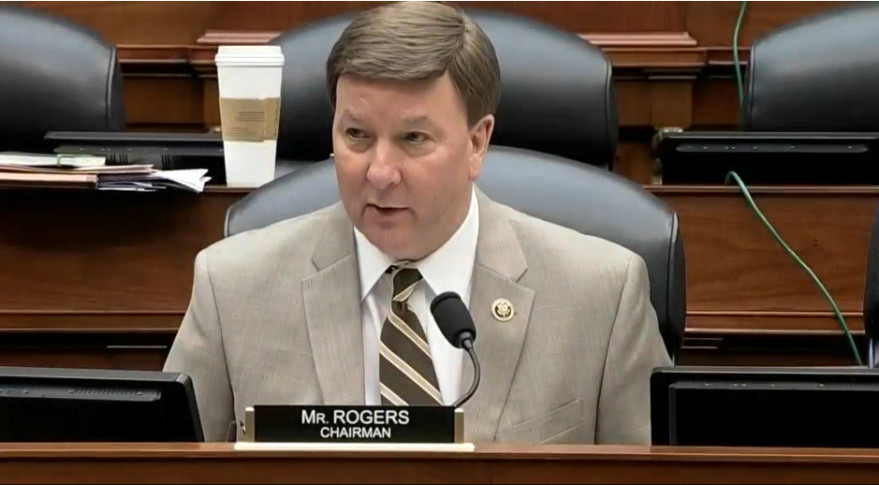
On Thursday, House Armed Services Committee Chairman Mike Rogers, House Foreign Affairs Committee Chairman Michael McCaul, and House Permanent Select Committee on Intelligence Chairman Mike Turner urged National Security Advisor Jake Sullivan, Secretary of State Antony Blinken, Secretary of Defense Lloyd Austin, Secretary of the Treasury Janet Yellen, Secretary of Energy Jennifer Granholm, Secretary of Commerce Gina Raimondo, and Director of National Intelligence Avril Haines, to utilize the full application of sanctions, export controls, and diplomacy, to hinder the nuclear cooperation between Russia’s Rosatom and China. In the letter, Rogers and the other Chairmen wrote, “Russia’s state-owned nuclear energy corporation, Rosatom, is helping the People’s Republic of China (PRC) acquire enough weapons-grade plutonium to fuel its strategic nuclear breakout. Beyond fueling the PRC’s strategic nuclear breakout, then-U.S. Strategic Command commander Admiral Charles Richard called “breathtaking,” Rosatom helps fuel Putin’s war efforts in Ukraine. We call on the Administration to view this cooperation for what it is, a direct threat to U.S. security and more evidence that Russia and China are working in tandem against the United States. The Administration should use all tools at its disposal to stop Rosatom and the PRC’s dangerous cooperation.” “Despite these malign activities, Rosatom’s position in the global market is only getting stronger,” Rogers et al. wrote. “The longer we wait to act, the more difficult it will be to address Rosatom’s nefarious and malign dealings. Putin uses these funds to fund his war machine and keep his favorite weapons programs on schedule. In short, every dollar and euro that Rosatom brings in directly finances the death and destruction we see in Ukraine, China’s nuclear weapon expansion, and is a direct threat to the American way of life.” The chairmen say in the letter is based on “Our classified correspondence from earlier this year.” “Russia’s role in China’s nuclear energy program is well documented,” the Chairmen wrote. “Rosatom opened an office in Beijing in 2016 and partnered extensively with the PRC’s China National Nuclear Corporation (CNNC) on major projects worth billions. On May 19, 2021, Xi Jinping and Vladimir Putin tuned in via video link to witness the commencement ceremony of two of the countries’ major nuclear energy cooperation projects, the Tianwan Nuclear Power Plant and Xudabao Nuclear Power Plant.” “Rosatom now appears to be supplying equipment and highly enriched uranium (HEU) for the PRC’ CFR-600 sodium-cooled fast breeder nuclear reactors, which will produce plutonium, fissile material critical to the PRC’s nuclear breakout,” the Chairmen wrote. “Russian deliveries of HEU to the PRC are slated to begin this year. The Department of Defense’s 2022 report to Congress on the Military and Security Developments Involving the People’s Republic of China noted the key role that increased weapons-grade plutonium production is key to the PRC nuclear program, stating: “The PRC is also supporting this expansion by increasing its capacity to produce and separate plutonium by constructing fast breeder reactors and reprocessing facilities.” The DoD report also cites the CFR-600 reactors and notes that each will be capable of producing “enough plutonium for dozens of nuclear warheads annually.” This buildup puts the PRC in violation of Article VI of the NPT, requiring states to make good-faith efforts to cease an arms race and to engage in good-faith arms control negotiations. Make no mistake, the PRC and Russia’s actions constitute an acceleration of their ongoing arms race.” According to the U.S. Intelligence National Threat Assessment, “China is building hundreds of new ICBM silos.” “Moscow continues to develop long-range nuclear-capable missile and underwater delivery systems meant to penetrate or bypass U.S. missile defenses,” said the report. “Russia is expanding and modernizing its large, diverse, and modern set of nonstrategic systems, which are capable of delivering nuclear or conventional warheads because Moscow believes such systems offer options to deter adversaries, control the escalation of potential hostilities, and counter U.S. and allied conventional forces.” In response to China and Russia’s modernization of their strategic forces, including the development of hypersonics, the U.S. is rushing to deploy hypersonics. The U.S. Air Force is expected to deploy Air-launched Rapid Response Weapon, a boost-glide vehicle, as soon as this fall. Russia has begun deploying its conventionally armed Kinzhal hypersonic missiles in Ukraine. Kyiv says that it is unable to defend itself against the strikes. Rogers is in his eleventh term representing Alabama’s Third Congressional District. To connect with the author of this story or to comment, email brandonmreporter@gmail.com.
Mike Rogers comments on the anniversary of the Russian invasion of Ukraine

Friday marked the one-year anniversary of the start of the war between Russia and Ukraine. Congressman Mike Rogers, Chairman of the House Armed Services Committee, Michael McCaul, Chairman of the House Foreign Affairs Committee, and Mike Turner, the Chairman of the House Permanent Select Committee on Intelligence, released a joint statement to mark the one-year anniversary of the war. “[Vladimir] Putin’s unprovoked, full-scale invasion of Ukraine has lasted a year too long,” Rogers, McCaul, and Turner wrote. “The people of Ukraine have shown unmatched strength and courage, and with the aid of western weaponry, they have decimated Russia’s war machine. In supporting Ukraine’s fight, House Republicans have also continued to conduct robust oversight of U.S. assistance – protecting the American taxpayer while ensuring these weapons continue to make an impact on the battlefield.” “The gruesome Russian war crimes and atrocities must end,” the three Congressmen wrote. “President [Joe] Biden needs to stop dragging his feet on providing the lethal aid necessary to end this war. Continued half-measures by the Biden administration will only drive up the cost of this war in lives and dollars.” Most international and military observers had expected the vaunted Russian army to roll over undermanned Ukraine. Instead of folding to the onslaught, the Ukrainians stopped an assault on their capitol at Kiev, sunk the Russian Navy’s flagship on the Black Sea, and thwarted a Russian advance on Kherson and Mariupol intended to cut the Ukrainians. The Ukrainians followed that with a late summer and fall offensive that pushed the Russians back to the heavily contested Donbas region and recaptured the cities of Kharkiv and Bakhmut. Now Russia appears poised to launch a major spring offensive. The U.S. and its western allies have committed tanks, combat vehicles, rocket launchers, Lancer antitank missiles, artillery, and money to help Ukraine defend its territorial integrity. The war has seen massive battles with tanks versus tanks and artillery versus artillery. This is the most intense combat that has taken place in Europe since World War II. The Pentagon estimates that over 200,000 people have died on both sides. Thousands of Ukrainian civilians have been killed, and 8 million persons have been displaced. The Biden administration has announced another round of aid for Ukraine. “Today, in Kyiv, I am meeting with President [Volodymyr] Zelenskyy and his team for an extended discussion on our support for Ukraine.” President Biden said in a statement. “I will announce another delivery of critical equipment, including artillery ammunition, anti-armor systems, and air surveillance radars to help protect the Ukrainian people from aerial bombardments. And I will share that later this week, we will announce additional sanctions against elites and companies that are trying to evade or backfill Russia’s war machine. Over the last year, the United States has built a coalition of nations from the Atlantic to the Pacific to help defend Ukraine with unprecedented military, economic, and humanitarian support – and that support will endure.” Russia and Ukraine have a long-shared history that dates back to the Kievan Rus in the tenth century. Rogers is in his eleventh term representing Alabama’s Third Congressional District. He previously served in the Alabama House of Representatives and on the Calhoun County Commission. He and his family live in Saks. To connect with the author of this story or to comment, email brandonmreporter@gmail.com.
Personnel Update: Mike Lewis joins Kay Ivey team
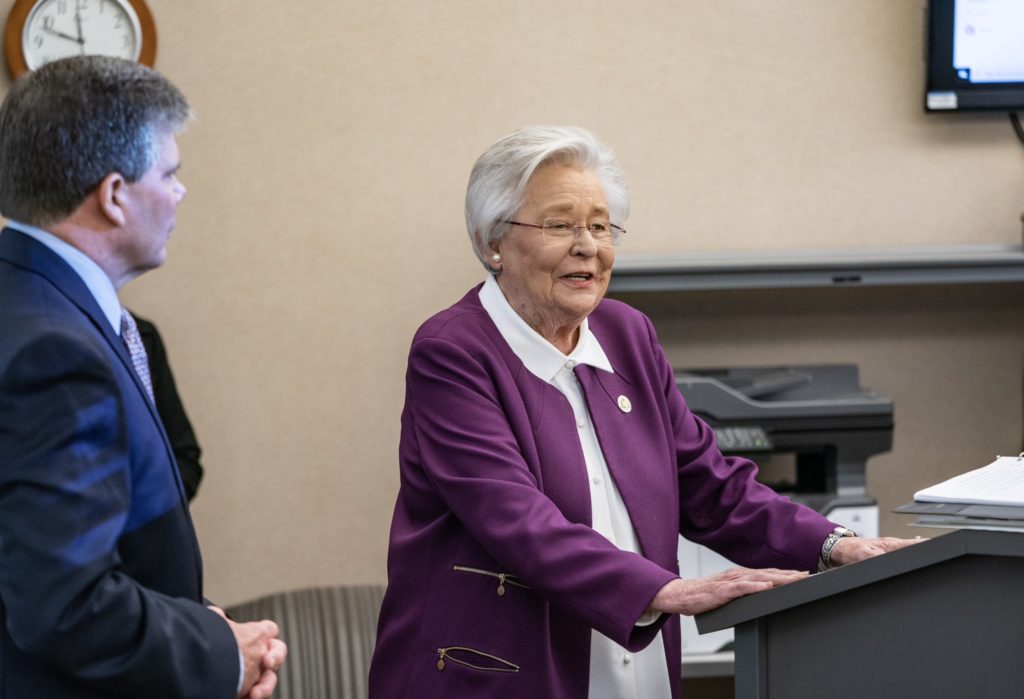
On Friday, Gina Maiola, Governor Kay Ivey’s Communication Director, announced that Mike Lewis would be joining the Governor’s communications team as deputy communications director. “I am excited to share Governor Ivey has appointed Mike Lewis to serve as deputy communications director,” Maioloa said.” We are thrilled to have him add to the strong team we have in the Governor’s Press Office. Many of you already know Mike from his time serving as communications director for the attorney general or his years on the Hill.” Lewis joins Maiola, Charles Murry, Alyssa Turner, and Hal Yeager on Governor Ivey’s Communications team. Lewis previously served as Communications Director for the Alabama Attorney General’s office. Lewis is a graduate of Troy University with a major in journalism. He has held the position of press secretary for former Congressmen Bill Dickinson and Terry Everett. He also served as communications director for Congressman Jo Bonner (R-Mobile) and as a speechwriter and senior policy adviser for Ohio Congressman Mike Turner. He is a native of Alexander City. To connect with the author of this story or to comment, email brandonmreporter@gmail.com.
‘Unidentified object’ downed over Lake Huron, 3rd this week
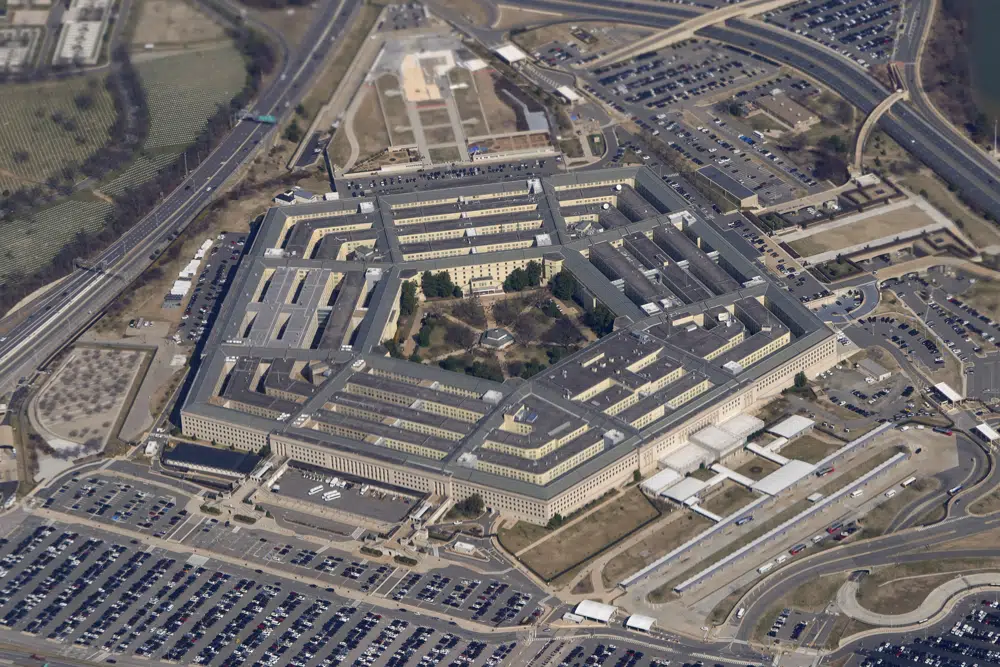
A U.S. fighter jet shot down an “unidentified object” over Lake Huron on Sunday on orders from President Joe Biden, believed to be the same one tracked over Montana and monitored by the government beginning the night before, the Pentagon said. It was the fourth object shot out of the sky by U.S. fighter jets in eight days, along with ones over Alaska and Canada and a suspected Chinese spy balloon. Pentagon officials have said they don’t know when the last shootdown of an unknown or unauthorized object over U.S. territory occurred before this spate of incidents. U.S. authorities have made clear that they constantly monitor for unknown radar blips, and it is not unusual to shut down airspace as a precaution to evaluate them. But the unusually assertive response was raising questions about whether such use of force was warranted, particularly as administration officials said the objects were not of great national security concern and the downings were just out of caution. The extraordinary air defense activity began in late January when a white orb the officials said was from China appeared over the U.S. and hovered above the nation for days before fighter jets downed it off the coast of Myrtle Beach, South Carolina. That event played out over livestream. Since then, many Americans have been captivated by the drama playing out in the skies as fighter jets scramble to shoot down objects. The latest brought down was first detected on Saturday evening over Montana, but it was initially thought to be an anomaly. Radar picked it up again Sunday, hovering over the Upper Peninsula of Michigan, and it was going over Lake Huron, according to U.S. officials, who had knowledge of the downings and spoke to The Associated Press on condition of anonymity to discuss the sensitive operations. U.S. and Canadian authorities had restricted some airspace over the lake earlier Sunday as planes were scrambled to intercept and try to identify the object. It was octagonal, with strings hanging off, but had no discernable payload. It was flying low at about 20,000 feet, according to one of the officials. Meanwhile, U.S. officials were still trying to precisely identify two other objects shot down by F-22 fighter jets and were working to determine whether China was responsible as concerns escalated about what Washington said was Beijing’s large-scale aerial surveillance program. An object shot down Saturday over Canada’s Yukon was described by U.S. officials as a balloon significantly smaller than the balloon — the size of three school buses — hit by a missile on February 4. A flying object brought down over the remote northern coast of Alaska on Friday was more cylindrical and described as a type of airship. Both were believed to have a payload, either attached or suspended from them, according to the officials who spoke to The Associated Press on condition of anonymity to discuss the ongoing investigation. Officials were not able to say who launched the objects and were seeking to figure out their origin. The three objects were much smaller in size, different in appearance, and flew at lower altitudes than the suspected spy balloon that fell into the Atlantic Ocean after the U.S. missile strike. The officials said the other three objects were not consistent with the fleet of Chinese aerial surveillance balloons that targeted more than 40 countries, stretching back at least into the Trump administration. Senate Majority Leader Chuck Schumer told ABC’s “This Week” that U.S. officials were working quickly to recover debris. Using shorthand to describe the objects as balloons, he said U.S military and intelligence officials were “focused like a laser” on gathering and accumulating the information, then compiling a comprehensive analysis. “The bottom line is until a few months ago, we didn’t know about these balloons,” Schumer, D-N.Y., said of the spy program that the administration has linked to the People’s Liberation Army, China’s military. “It is wild that we didn’t know.” Eight days ago, F-22 jets downed the large white balloon that had wafted over the U.S. for days at an altitude of about 60,000 feet. U.S. officials immediately blamed China, saying the balloon was equipped to detect and collect intelligence signals and could maneuver itself. White House officials said improved surveillance capabilities helped detect it. China’s Foreign Ministry said the unmanned balloon was a civilian meteorological airship that had blown off course. Beijing said the U.S. had “overreacted” by shooting it down. Then, on Friday, North American Aerospace Defense Command, the combined U.S.-Canada organization that provides a shared defense of airspace over the two nations, detected and shot down an object near sparsely populated Deadhorse, Alaska. Later that evening, NORAD detected a second object flying at a high altitude over Alaska, U.S. officials said. It crossed into Canadian airspace on Saturday and was over the Yukon, a remote territory when it was ordered shot down by Prime Minister Justin Trudeau. In both of those incidents, the objects were flying at roughly 40,000 feet. The object on Sunday was flying at 20,000 feet. The cases have increased diplomatic tensions between the United States and China, raised questions about the extent of Beijing’s American surveillance, and prompted days of criticism from Republican lawmakers about the administration’s response. Rep. Mike Turner, chairman of the House Intelligence Committee, said the administration was looking “somewhat trigger-happy.” “Although that is certainly preferable to the permissive environment they showed when the Chinese spy balloon was coming over some of most sensitive sites,” Turner, R-Ohio, told CNN’s “State of the Union.” After the shootdown last weekend, Chinese officials said they reserved the right to “take further actions” and criticized the U.S. for “an obvious overreaction and a serious violation of international practice.” Rep. Jim Himes of Connecticut, the top Democrat on the House Intelligence Committee, urged the administration to be as forthcoming as possible, saying the lack of solid information was fueling online speculation. Himes said it was clear from briefings in recent years “that there is a lot of garbage up there” in the sky. “The truth
Mike Rogers concerned Russia may have violated START treaty
Congressman Mike Rogers released a letter raising concerns that Russia may be in violation of the new START Treaty. Rogers is the Chairman of the powerful House Armed Services Committee. The letter was made jointly with Rep. Michael McCaul, Chairman of the House Foreign Affairs Committee, and Rep. Mike Turner, the Chairman of the House Permanent Select Committee on Intelligence. The three chairmen addressed the letter to Secretary of State Antony Blinken, Secretary of Defense Lloyd Austin, and Director of National Intelligence Avril Haines. They expressed their concerns that Russia has failed to uphold key tenets of the New START Treaty. “Russia’s unilateral cancellation of the BCC and refusal to restart New START inspections, another key tenet of the treaty, coupled with other statements by its government officials, at a minimum, raise serious compliance concerns regarding the Federation’s adherence to the New START Treaty,” Rogers and the other Republican Chairmen wrote. “This would occur during a uniquely dangerous time when both Russia and China are expanding and modernizing their arsenals, Iran, a state sponsor of terror, continues to expand its nuclear program, and North Korea rattles its nuclear saber.” “We are writing to you today to express our concerns regarding the Russian Federation’s compliance with the New Strategic Arms Reduction Treaty (New START) and the danger its potential non-compliance poses to the future of arms control,” the members wrote. “President Biden gifted Vladimir Putin a clean, five-year extension to New START at the beginning of his administration despite concerns about the treaty, including the weakness of its verification regime and its failure to address Russia’s overwhelming advantage in nonstrategic nuclear weapons. Subsequently ignoring noncompliance, specifically in the context of Russia’s history of violating arms control commitments, would further undermine its own credibility in arms control.” The Congressmen requested that the administration provide a special out-of-cycle determination on compliance by the Russian Federation to the terms of New START that addresses the following: “• Whether Russia’s unilateral cancelation of the BCC, refusal to restart treaty-mandated inspections, or any other issue has resulted in Russian non-compliance or material breach of the Treaty. • Whether Russia has at any point since 2020 exceeded any New START caps and if those violations create a strategic imbalance endangering U.S. national security. • Whether Russia has, over the course of the treaty, used technical compliance as a pretense to violate the spirit of the treaty. • An assessment of the efficacy New START verification regime, to include the BCC and onsite inspections, given Russia’s recent statements and actions.” The START Treaty (Strategic Arms Reduction Treaty) limits the number of weapons of mass destruction that the United States and the Russian Federation can deploy. The new START Treaty limits the United States to just 659 deployed intercontinental ballistic missiles, deployed submarine-launched ballistic missiles, and deployed heavy bombers (the B52, B1, B2, and the new B21). Russia is limited to just 540. Since each launch system is able to launch multiple warheads on their deployed ICBMs, SLBMs, and heavy bombers, START also limits the number of nuclear warheads the superpowers can have. START limits the U.S. to just 1420 warheads, while Russia can have 1549. The treaty also strictly limits the number of missile launchers, ballistic missile submarines, and heavy bombers the two nations can have – both deployed and non-deployed. The U.S. is limited to only 800, while Russia is limited to only 759 total. If the two nations break out of the new START Treaty, that could potentially lead to a renewed arms race. There is already an arms race between the U.S., Russia, and China over who can be the first to develop and deploy hypersonic missiles. Hypersonics travel much faster than ICBMs or SLBMs, much fast than any nation’s known existing anti-missile or surface-to-air missile defense systems can operate at, and do not need to have a nuclear warhead to do devastating damage to a military, industrial, or population center target. On Thursday, the United States reversed its policy and agreed to supply Ukraine with new M1 Abrams tanks for its war with Russia. Ukraine has thanked the U.S. for the main battle tanks and is now asking for F16 fighter bombers. Mike Rogers was made Chairman of the House Armed Services Committee earlier this month. He is in his eleventh term representing the people of Alabama’s Third Congressional District. To connect with the author of this story, or to comment, email brandonmreporter@gmail.com.
Merrick Garland appoints special counsel to investigate Joe Biden docs
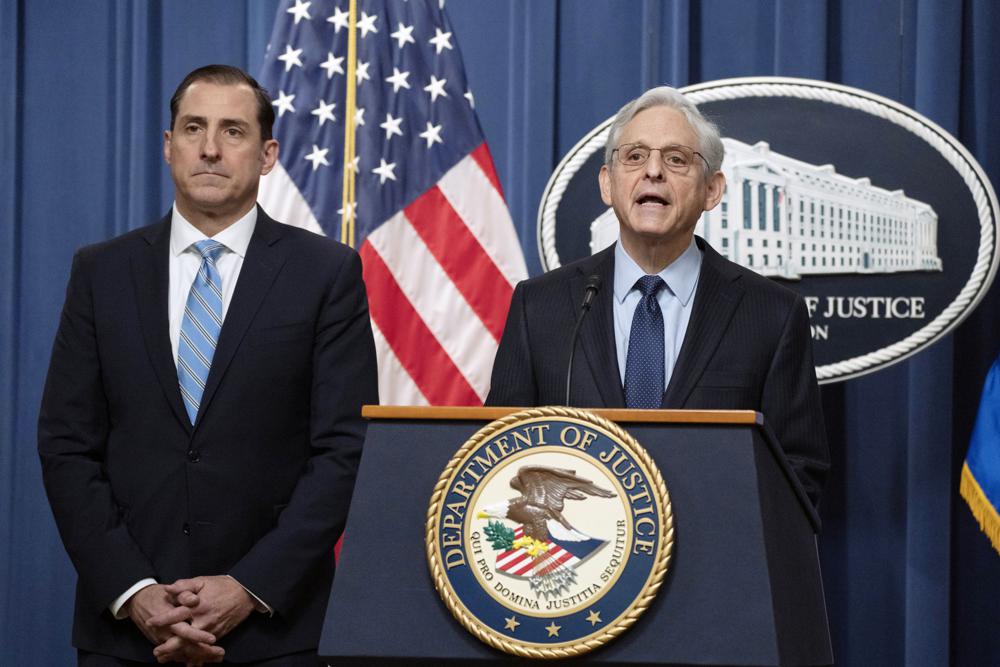
Attorney General Merrick Garland on Thursday appointed a special counsel to investigate the presence of classified documents found at President Joe Biden’s home in Wilmington, Delaware, and at an unsecured office in Washington dating from his time as vice president. Robert Hur, a one-time U.S. attorney appointed by former President Donald Trump, will lead the investigation and plans to begin his work soon. His appointment marks the second time in a few months that Garland has appointed a special counsel, an extraordinary fact that reflects the Justice Department’s efforts to independently conduct high-profile probes in an exceedingly heated political environment. Two of those investigations, including one involving Trump, relate to the handling of classified information, though there are notable differences between those cases. Garland’s decision caps a tumultuous week at the White House, where Biden and his team opened the year hoping to celebrate stronger economic news ahead of launching an expected reelection campaign. But the administration faced new challenges Monday when it acknowledged that sensitive documents were found at the office of Biden’s former institute in Washington. The situation intensified by Thursday morning when Biden’s attorney acknowledged that an additional classified document was found at a room in his Wilmington home — later revealed by Biden to be his personal library — along with other documents found in his garage. The attorney general revealed that Biden’s lawyers informed the Justice Department of the latest discovery at the president’s home on Thursday morning after FBI agents first retrieved documents from the garage in December. Biden told reporters at the White House that he was “cooperating fully and completely” with the Justice Department’s investigation into how classified information and government records were stored. “We have cooperated closely with the Justice Department throughout its review, and we will continue that cooperation with the special counsel,” said Richard Sauber, himself a special counsel to the president. “We are confident that a thorough review will show that these documents were inadvertently misplaced, and the president and his lawyers acted promptly upon discovery of this mistake.” Garland said the “extraordinary circumstances” of the matter required Hur’s appointment, adding that the special counsel is authorized to investigate whether any person or entity violated the law. Federal law requires strict handling procedures for classified information, and official records from Biden’s time as vice president are considered government property under the Presidential Records Act. “This appointment underscores for the public the department’s commitment to both independence and accountability in particularly sensitive matters, and to making decisions indisputably guided only by the facts and the law,” Garland said. Hur, in a statement, said: “I will conduct the assigned investigation with fair, impartial, and dispassionate judgment. I intend to follow the facts swiftly and thoroughly, without fear or favor, and will honor the trust placed in me to perform this service.” While Garland said the Justice Department received timely notifications from Biden’s personal attorneys after each set of classified documents identified, the White House provided delayed and incomplete notification to the American public about the discoveries. Biden’s personal attorneys found the first set of classified and official documents on November 2 in a locked closet as they cleared out his office at the Penn Biden Center in Washington, where he worked after he left the vice presidency in 2017 until he launched his presidential campaign in 2019. The attorneys notified the National Archives, which retrieved the documents the next day and referred the matter to the Justice Department. Sauber said Biden’s attorneys then underwent a search of other locations where documents could have been transferred after Biden left the vice presidency, including his homes in Wilmington and Rehoboth Beach, Delaware. Garland said that on December 20, the Justice Department was informed that classified documents and official records were located in Biden’s Wilmington garage, near his Corvette, and that Federal Bureau of Investigation agents took custody of them shortly thereafter. A search on Wednesday evening turned up the final classified document in Biden’s personal library at his home, and the Justice Department was notified Thursday, Garland revealed. The White House only confirmed the discovery of the Penn Biden Center documents in response to news inquiries Monday and remained silent on the subsequent search of Biden’s homes and the discovery of the garage tranche until Thursday morning, shortly before Garland announced Hur’s appointment. Biden, when he first addressed the matter Tuesday while in Mexico City, also didn’t let on about the subsequent document discoveries. Press secretary Karine Jean-Pierre insisted that despite the public omissions, Biden’s administration was handling the matter correctly. “There was transparency in doing what you’re supposed to do,” she said, declining to answer repeated questions about when Biden was briefed on the discovery of the documents and whether he would submit to an interview with investigators. Pressed on whether Biden could guarantee that additional mishandled classified documents would not turn up, Jean-Pierre said, “You should assume that it’s been completed, yes.” The appointment of yet another special counsel to investigate the handling of classified documents is a remarkable turn of events, legally and politically, for a Justice Department that has spent months looking into the retention by Donald Trump of more than 300 documents with classification markings found at the former president’s Florida estate. Though the situations are factually and legally different, the discovery of classified documents at two separate locations tied to Biden — as well as the appointment of a new special counsel — would almost certainly complicate any prosecution that the department might bring against Trump. New House Speaker Kevin McCarthy, a California Republican, said of the latest news, “I think Congress has to investigate this.” “Here’s an individual that sat on ‘60 Minutes’ that was so concerned about President Trump’s documents … and now we find that this is a vice president keeping it for years out in the open in different locations.” Contradicting several fellow Republicans, he said, “We don’t think there needs to be a special prosecutor.” The top Republican on the House Intelligence Committee has requested that intelligence
Nancy Pelosi invites Donald Trump to testify as new witnesses prepare

House Speaker Nancy Pelosi invited President Donald Trump to testify in front of investigators in the House impeachment inquiry ahead of a week that will see several key witnesses appear publicly. Pushing back against accusations from the Republican president that the process has been stacked against him, Pelosi said Trump is welcome to appear or answer questions in writing, if he chooses. “If he has information that is exculpatory, that means ex, taking away, culpable, blame, then we look forward to seeing it,” she said in an interview that aired Sunday on CBS’ “Face the Nation.” Trump “could come right before the committee and talk, speak all the truth that he wants if he wants,” she said. Senate Democratic leader Chuck Schumer echoed that suggestion. “If Donald Trump doesn’t agree with what he’s hearing, doesn’t like what he’s hearing, he shouldn’t tweet. He should come to the committee and testify under oath. And he should allow all those around him to come to the committee and testify under oath,” Schumer told reporters. He said the White House’s insistence on blocking witnesses from cooperating begs the question: “What is he hiding?” The comments come as the House Intelligence Committee prepares for a second week of public hearings as part of its inquiry, including with the man who is arguably the most important witness. Gordon Sondland, Trump’s ambassador to the European Union, is among the only people interviewed to date who had direct conversations with the president about the situation because the White House has blocked others from cooperating with what it dismisses as a sham investigation. And testimony suggests he was intimately involved in discussions that are at the heart of the investigation into whether Trump held up U.S. military aid to Ukraine to try to pressure the country’s president to announce an investigation into Democrats, including former Vice President Joe Biden, a leading 2020 candidate, and Biden’s son Hunter. Multiple witnesses overheard a phone call in which Trump and Sondland reportedly discussed efforts to push for the investigations. In private testimony to impeachment investigators made public Saturday, Tim Morrison, a former National Security Council aide and longtime Republican defense hawk, said Sondland told him he was discussing Ukraine matters directly with Trump. Morrison said Sondland and Trump had spoken approximately five times between July 15 and Sept. 11 — the weeks that $391 million in U.S. assistance was withheld from Ukraine before it was released. And he recounted that Sondland told a top Ukrainian official in a meeting that the vital U.S. military assistance might be freed up if the country’s top prosecutor “would go to the mike and announce that he was opening the Burisma investigation.” Burisma is the gas company that hired Hunter Biden. Morrison’s testimony contradicted much of what Sondland told congressional investigators during his own closed-door deposition, which the ambassador later amended. Trump has said he has no recollection of the overheard call and has suggested he barely knew Sondland, a wealthy donor to his 2016 campaign. But Democrats are hoping he sheds new light on the discussions. “I’m not going to try to prejudge his testimony,” Rep. Jim Himes, Democrat-Conneticut, said on “Fox News Sunday.” But he suggested, “it was not lost on Ambassador Sondland what happened to the president’s close associate Roger Stone for lying to Congress, to Michael Cohen for lying to Congress. My guess is that Ambassador Sondland is going to do his level best to tell the truth, because otherwise he may have a very unpleasant legal future in front of him.” The committee also will be interviewing a long list of others. On Tuesday, it’ll hear from Morrison along with Jennifer Williams, an aide to Vice President Mike Pence, Alexander Vindman, the director for European affairs at the National Security Council, and Kurt Volker, the former U.S. special envoy to Ukraine. On Wednesday the committee will hear from Sondland in addition to Laura Cooper, a deputy assistant secretary of defense, and David Hale, a State Department official. And on Thursday, Fiona Hill, a former top NSC staffer for Europe and Russia, will appear. Trump, meanwhile, continued to tweet and retweet a steady stream of commentary from supporters as he bashed “The Crazed, Do Nothing Democrats” for “turning Impeachment into a routine partisan weapon.” “That is very bad for our Country, and not what the Founders had in mind!!!!” he wrote. He also tweeted a doctored video exchange between Rep. Adam Schiff, the Democratic chairman of the Intelligence Committee, and Republican Rep. Jim Jordan, in which Schiff said he did not know the identity of the whistleblower whose complaint triggered the inquiry. The clip has been altered to show Schiff wearing a referee’s uniform and loudly blowing a whistle. In her CBS interview, Pelosi vowed to protect the whistleblower, whom Trump has said should be forced to come forward despite longstanding whistleblower protections. “I will make sure he does not intimidate the whistleblower,” Pelosi said. Trump has been under fire for his treatment of one of the witnesses, the former ambassador to Ukraine, Marie Yovanovitch, whom Trump criticized by tweet as she was testifying last week. That attack prompted accusations of witness intimidation from Democrats and even some criticism from Republicans, who have been largely united in their defense of Trump “I think, along with most people, I find the president’s tweet generally unfortunate,” said Ohio Republican Rep. Mike Turner on CNN’s “State of the Union.” Still, he insisted that tweets were “certainly not impeachable and it’s certainly not criminal. And it’s certainly not witness intimidation,” even if Yovanovitch said she felt intimidated by the attacks. Rep. Chris Stewart, Republican-Utah, said Trump “communicates in ways that sometimes I wouldn’t,” but dismissed the significance of the attacks. “If your basis for impeachment is going to include a tweet, that shows how weak the evidence for that impeachment is,” he said on ABC’s “This Week.” And the backlash didn’t stop Trump from lashing out at yet another witness, this time Pence aide Williams. He directed her in a Sunday tweet
