
Donald Trump promises huge boost in military spending
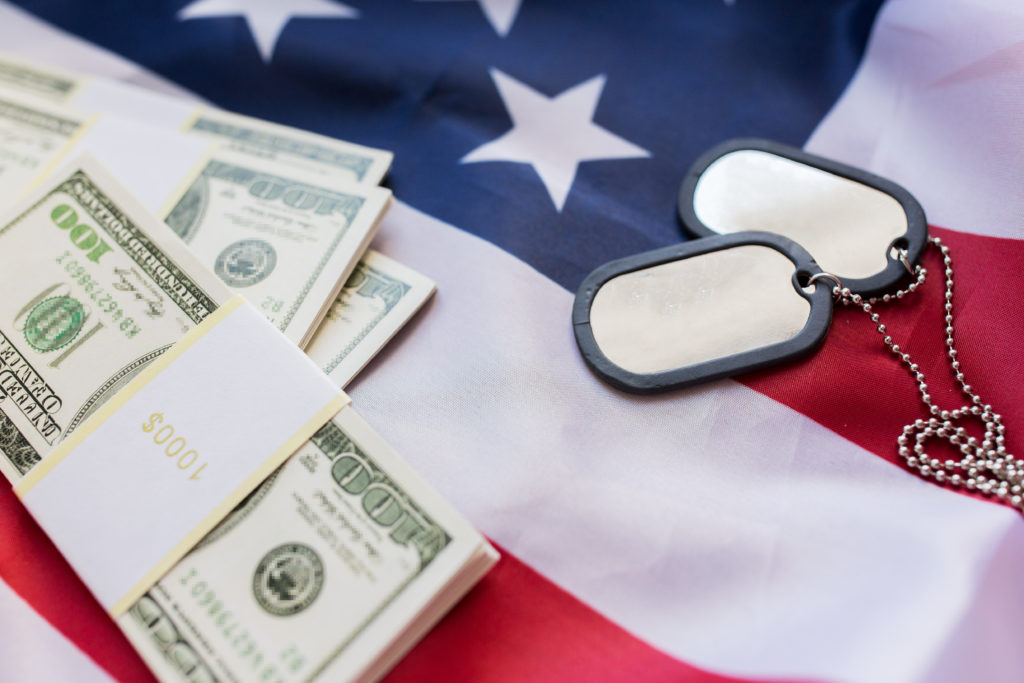
Republican Donald Trump vowed Wednesday to boost defense spending and deploy more active troops, fighter planes, Navy ships and submarines as he works to convince skeptics in both parties that he’s ready to lead the world’s most powerful military. The New York businessman, who has struggled at times to demonstrate a command of foreign policy, also seemed to acknowledge he does not currently have a plan to address cyber security or the Islamic State group. If elected, Trump said he would give military leaders 30 days to formulate a plan to defeat the group, commonly known as ISIS. He also said he would ask the joint chiefs of staff to conduct a review of the nation’s cyber defenses to determine all vulnerabilities. Trump’s address came hours before his national security acumen is tested at a “commander in chief” forum on NBC. “We want to deter, avoid and prevent conflict through our unquestioned military strength,” Trump declared of his Democratic opponent in his Wednesday speech, delivered inside the exclusive Union League of Philadelphia, which first allowed women in 1986. The appearances mark an intense, two-day focus on national security by Trump, who has offered tough rhetoric – but few details – on America’s challenges abroad. Trump’s rival, Democrat Hillary Clinton, has tried to paint the billionaire businessman as erratic, making the case that his disposition would be a major liability on the world stage. “They know they can count on me to be the kind of commander in chief who will protect our country and our troops, and they know they cannot count on Donald Trump,” Clinton said Tuesday. “They view him as a danger and a risk.” Trump’s team has worked aggressively in recent days to turn deflect such criticism back at Clinton. “She’s trigger-happy and very unstable,” Trump said of his Democratic opponent, calling her use of a private email server while secretary of state “reckless.” While Clinton and Trump will be featured at the Wednesday night forum, they will appear at separate times and will not face each other on stage. The forum could serve as a warm-up to their highly anticipated first presidential debate, scheduled for Sept. 26 in New York. Trump’s Union League address also included his plans to eliminate deep spending cuts, known as the “sequester,” enacted when Congress failed to reach a budget compromise in 2011. Republicans and Democrats voted for the automatic, across-the board cuts that affected both military and domestic programs. Military leaders have said that they can live with an active duty Army of 490,000 – bolstered by nearly 500,000 soldiers in the National Guard and Reserves – as long as Congress provides enough funding to support that troop level. Gen. Mark Milley, the Army chief of staff, said last month that he is comfortable with a 1 million-soldier Army, and would welcome a larger force, only if Congress provides the money to maintain troop readiness. Increasing the size without increase other support, he said, will decrease readiness and hollow out the force. As for how he would pay for it, Trump insisted on Wednesday that he would fully offset the costs of his new spending through savings and new revenue. He said he would make the government “leaner,” in part by using attrition to shrink the workforce, and said he’d bring in new money by asking countries like Germany, Japan and Saudi Arabia to pay more for the security the U.S. provides them. Even before promising a huge boost in military spending, Trump’s plans to cut taxes, expand infrastructure spending and leave untouched entitlement programs such as Social Security already threatened to add trillions of dollars to the federal deficit. Trying to emphasize his military support, Trump’s campaign released a letter on Tuesday from 88 retired generals and admirals citing an urgent need for a “course correction” in America’s national security policy. It was aimed at rebutting Clinton’s arguments that she would be best positioned to lead the military and reassuring Republicans who have openly worried that his provocative statements might undermine U.S. alliances. Trump’s proposal to lift the sequester limits on military spending won praise from Republicans on Capitol Hill even as some acknowledged the reality that Democratic opposition might render it difficult to achieve. “Obviously it’s not something that would get through this Congress, so that’s something we’d have to look at the election next year. But I agree with him in terms of lifting the sequester on defense, he’s absolutely correct about that,” said GOP. Rep Tom Cole of Oklahoma, a high-level member of the Appropriations Committee. But questions remain, even in his party. Bob Corker, the Republican chairman of the Senate Foreign Relations Committee, repeatedly refused to say directly whether he had confidence in Trump as commander in chief when questioned on MSNBC’s “Morning Joe” on Wednesday. “I do believe that Donald Trump is growing in his understanding of these issues and I think that he’s beginning to get more and more people around him that have a depth of understanding as to the complexities and I’m watching this evolve,” he said. Republished with permission of the Associated Press.
Pew Research: Republicans, Democrats have starkly different foreign affairs priorities

A new comprehensive study on American views on foreign affairs finds to no surprise that Republicans are from Mars and Democrats from Venus, but also finds Republican presidential candidate Donald Trump‘s supporters more isolationist than anyone. The survey, released Thursday by the Pew Research Center, finds that Democrats consider the nation’s biggest global fears to be climate change, ISIS, cyberattacks and disease pandemics, and few lose much sleep over threats to the United States from Syrian refugees, China or Russia. Republicans, on the other hand, worry about just about every global menace except climate change, and their biggest concerns are ISIS, cyberattacks, Syrian refugees, and global economic instability. The same survey breaks out foreign affairs issues by candidate supporter, and finds Trump’s supporters far less likely than other candidates’ to want to see the United States intervene militarily or economically in other countries. Trump supporters are most likely to want to see the United States spend more on the war on terror and more on the U.S. military, while also saying America is already too involved overseas. Trump supporters mainly want to see America provide foreign aide. Overall, the survey found a relatively broad isolationist viewpoint. “The public views America’s role in the world with considerable apprehension and concern. In fact, most Americans say it would be better if the U.S. just dealt with its own problems and let other countries deal with their own problems as best they can,” Pew reports in its survey, “Public Uncertain, Divided Over America’s Place in the World,” posted Thursday. Among the lengthy report’s findings: Overall, 45 percent of Americans think military spending should stay about as it is, while 35 percent believe that it should be increased and 24 percent think it should be decreased. There is a dramatic split by party, however; 61 percent of Republicans think military spending needs to be increased, compared with 31 percent of independents and 20 percent of Democrats. Overall, 57 percent of Americans think the U.S. should deal with its own problems for now, and 37 percent believe that it should help other countries with their problems. Similarly, 41 percent of Americans think the country is doing too much to support other countries, 28 percent think the current programs are just about right, and 27 percent think they’re not enough. 65 percent of Trump supporters believe U.S. foreign aid is a bad thing, while 55 percent of Democrat Hillary Clinton supporters think it’s a good thing. Supporters of Democrat Bernie Sanders and now ex-candidates Republicans U.S. Sen. Ted Cruz and Ohio Gov. John Kasich are all pretty evenly split on the question. Overall, 54 percent of Americans think the United States is the world’s leading economic power; followed by 34 percent who believe it is China; 6 percent, Japan; and 2 percent the European Union. Overall, 72 percent of Americans think the United States is the world’s leading military power; followed by 12 percent who believe it is China, 10 percent, Russia; and 2 percent the European Union. 91 percent of Republicans think that ISIS and similar groups are a major threat to U.S. security, while 76 percent of both Democrats and independents think that. 77 percent of Democrats believe climate change is a major threat to U.S. security, compared with 52 percent of independents and 26 percent of Republicans. 77 percent of Trump supporters sympathize with Israel and 10 percent with Palestinians. For Clinton supporters the split is 47 to 27 percent; For Sanders supporters it’s 33 to 39 percent. Trump and Clinton supporters generally agree on the balance between homeland protection measures and civil liberties, while Sanders supporters disagree: 66 percent of Trump’s supporters think the country’s anti-terrorism policies have not gone far enough, and 20 percent think too far, threatening civil liberties. For Clinton’s supporters the split is 51 to 35 percent, while for Sanders’ its 33 to 51 percent. 54 percent of Trump’s supporters think the U.S. does too much to try to solve the world’s problems. For Clinton’s supporters, it’s 34 percent and for Sanders’, 42 percent. Overall, 41 percent of Americans think so. Overall, 49 percent of Americans think that U.S. involvement in the global economy is a bad thing, and 44 percent a good thing. The opposition was more pronounced among Republicans, older people and people with limited educations. People ages 18 to 29, college graduates and liberals were the only groups that mostly thought involvement in the global economy is a good thing. Landslide majorities of Trump’s supporters oppose the U.S. importing more goods, increasing investment in developing countries and increasing foreign aid. Strong majorities, sometimes over 60 percent, of both Clinton’s and Sanders supporters support those policies. 85 percent of Trump’s supporters think the Syrian/Iraqi refugee crisis is a significant threat to America, while only 40 percent of Clinton’s supporters think so, and only 34 percent of Sanders’. Strong majorities of every party and candidate constituency support the current U.S. military campaign against ISIS, ranging from 56 percent of Sanders’ supporters to 66 percent of Trump’s supporters. But almost no group majority believes that the anti-ISIS campaign is actually going well, except for Clinton’s supporters (57 percent.) The biggest difference by party is on the question of whether overwhelming use of military force against global terrorism is a good thing or bad thing. Republicans think it is the best way to defeat terrorism, by 70 percent to 24 percent. Democrats think it would only inspire more worldwide hatred of the U.S., leading to more terrorism, by 65 percent to 31 percent. Independents were pretty split, leaning slightly toward worrying about fostering worldwide hatred (49 percent to 45 percent.) Most of the analysis in the Pew report is based on telephone interviews conducted April 12-19 among a national sample of 2,008 adults, 18 years of age or older, living in all 50 U.S. states and the District of Columbia (505 respondents were interviewed on a landline telephone, and 1,503 were interviewed on a cellphone, including 914 who had no landline telephone). Some
Allies of Jeb Bush, John Kasich spar over military spending
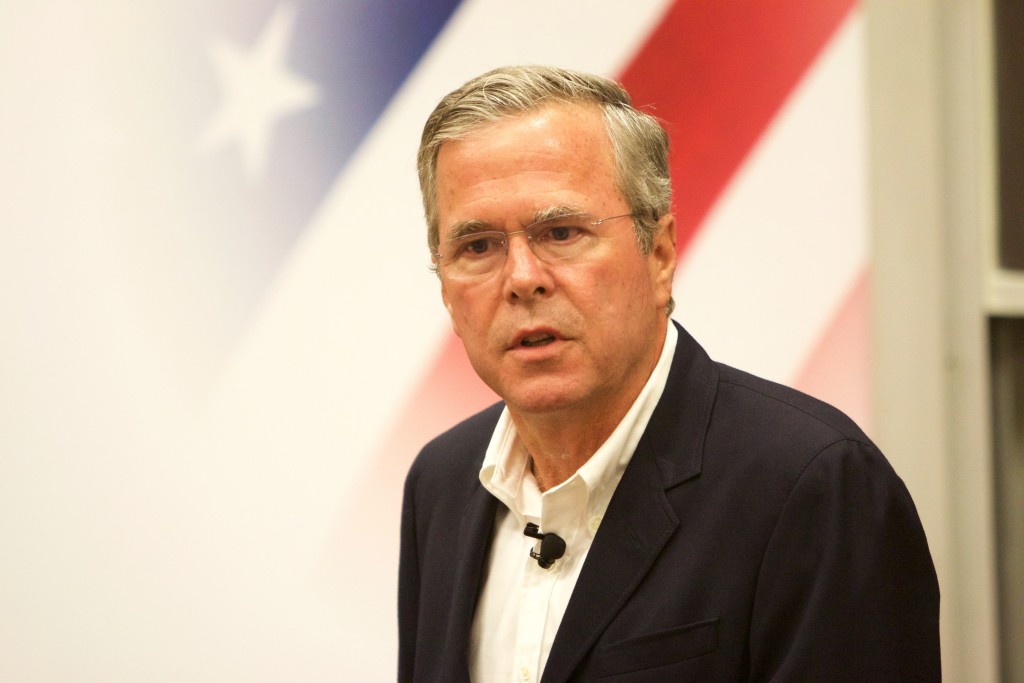
John Kasich proudly cites his efforts while in Congress to cut what he believed was wasteful defense spending. But allies for Jeb Bush, a Republican presidential rival, see a potential vulnerability for Kasich in military-minded South Carolina and are trying to slow the Ohio governor’s momentum after a strong showing in New Hampshire. An outside group backing Bush has begun airing a television ad ahead of the Feb. 20 primary, using Kasich’s own words. It’s an effort to undermine Kasich in a state that’s home to Fort Jackson and Parris Island, massive training installations for the Army and Marine Corps, as well as a number of air bases and a naval training school for nuclear submarine officers. Kasich and former House Speaker Newt Gingrich, winner of the state’s primary in 2012, are denouncing the broadside, but it’s clear that the rivalry between Kasich, the Ohio governor, and Bush, a former Florida governor, is intensifying. Bush’s team sees defense spending as a key area to draw distinctions. Right to Rise, the outside group backing Bush, launched the ad on Friday. It begins with a narrator saying “threats to America are growing,” over photographs of foreign leaders and the Islamic State group. It plays a clip of Kasich from his time in Congress saying he wants to turn the Pentagon into a “triangle,” adding “I spent a whole career trying to rein in defense spending.” Right to Rise also aired ads in New Hampshire hitting Kasich for backing a budget that led to the closure of an Air Force base in the state. Kasich finished second in the New Hampshire primary; Bush finished fourth. Kasich doesn’t shy away from his record, often bragging during campaign stops about his work to cut wasteful military spending during his 18 years on the House Armed Services and Budget Committees. “I was what they call a member of the ‘cheap hawk caucus,’” he said Thursday at a Pancake House in Pawleys Island. “In other words, we’re going to be as strong as we need to be, but we’re not going to waste money.” Kasich says his budget plan would increase military spending by $100 billion, focusing the money on the front lines while cutting bureaucratic jobs at the Pentagon. Gingrich, who served with Kasich in Congress but is not making an endorsement in the GOP primary, told The Associated Press that he was speaking out because he feels he has an “obligation to bear witness to the facts” and believes the ad distorts Kasich’s record. Bush hasn’t attacked Kasich directly on military spending while campaigning in South Carolina. At a stop in Fountain Inn on Saturday morning, Bush only mentioned Kasich to criticize Medicaid expansion in Ohio. Right to Rise, meanwhile, is standing by the ad. “John Kasich’s long history of cutting critical national defense projects is well-documented, from both his record and his own mouth,” spokesman Paul Lindsay said. Republished with permission of the Associated Press.
Marco Rubio promoting strong military as part of foreign policy
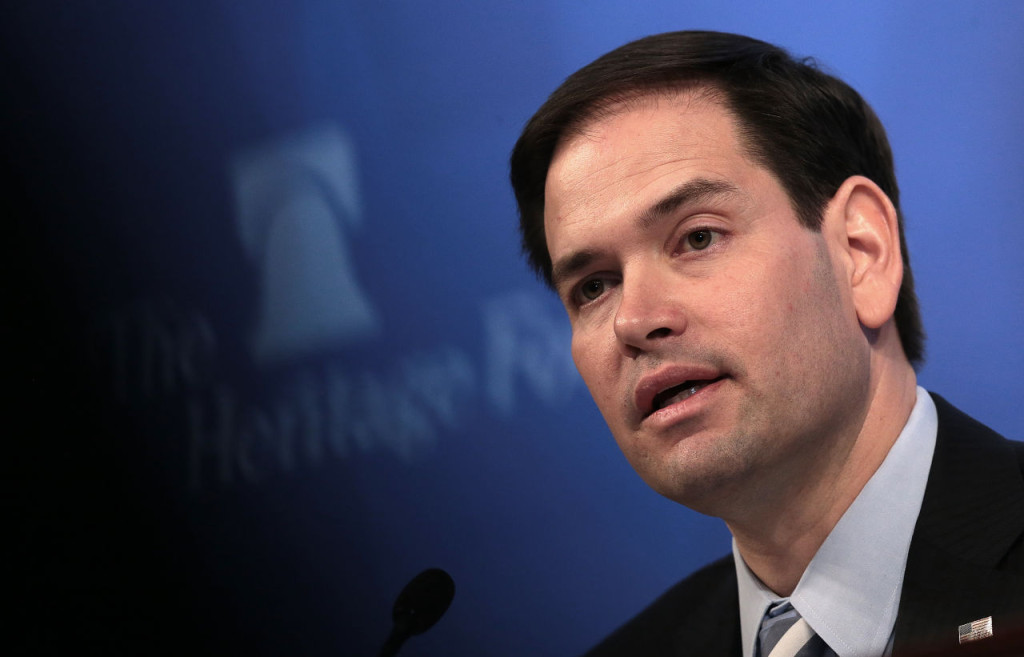
Republican presidential candidate Marco Rubio is outlining a foreign policy doctrine centered on aggressive use of U.S. power, boosting military spending, and protecting the rights of minorities around the world. The Florida senator, who has staked out hawkish views on world affairs, is also directly warning Russia, China and Iran against “attempts to block global commerce,” according to excerpts of a speech scheduled Wednesday afternoon at the Council on Foreign Relations in New York. In a wide-open Republican primary field, Rubio has been touting his foreign policy experience and using it as a way to set himself apart from his competitors. The first-term senator serves on the Foreign Relations Committee and the Intelligence Committee, and he has become a sharp critic of President Barack Obama‘s handling of international issues. In his first major policy speech as a presidential candidate, Rubio details a three-pronged foreign policy doctrine that he says would guide his potential presidency. Rubio, 43, argues that the government must “adequately fund our military,” even in times of peace and stability. Earlier this year, he introduced a budget amendment to increase defense spending, but the measure failed. It’s unclear whether Rubio will call for specific spending levels Wednesday. Rubio also calls for using “American power to oppose any violations of international waters, airspace, cyberspace or outer space.” He singles out attempts to cause economic disruption either through direct invasions or by blocking transit through the South China Sea or the Strait of Hormuz, where Iran recently seized a Marshall Islands-flagged ship. “Gone will be the days of debating where a ship is flagged or whether it is our place to criticize territorial expansionism,” he says in the excerpts. Seeking to look beyond sheer military power, Rubio says he would support the spread of economic and political freedom, resist efforts by large powers to control smaller neighbors, and advance the rights of women and religious minorities around the world. “The American people hear their cries, see their suffering, and most of all, desire their freedom,” he says. The senator has been particularly critical of Obama’s thaw with Cuba, the communist island nation his parents left in the 1950s. He’s argued that the president’s overtures to Havana are a premature reward for a nation with a repressive government and dismal human rights record. Republished with permission of The Associated Press.
