
Luther Strange dominates fundraising in Senate race
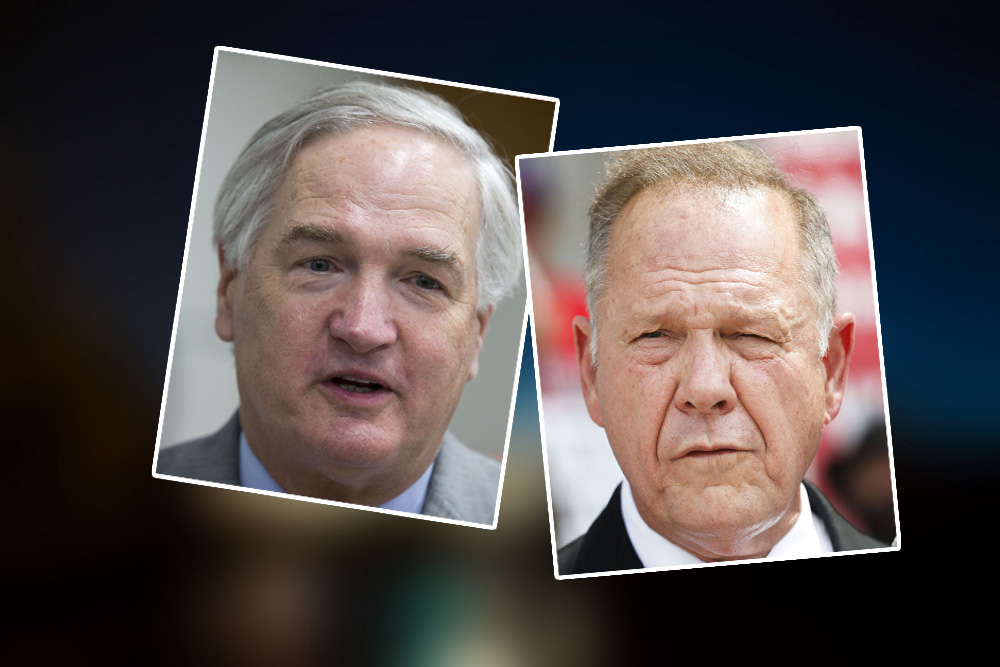
U.S. Sen. Luther Strange is outpacing his competition in fundraising heading into the final stretch before the special Republican Primary election for his senate seat. Strange, who was appointed to the seat by former Gov. Robert Bentley in February, raised $1.85 million in the second quarter for a total of $2.7 million raised so far in the special election cycle. The former Alabama Attorney General has also been on the receiving end of substantial support from a super PAC associated with Senate Majority Leader Mitch McConnell of Kentucky. The second-quarter haul puts him far CD 5 Republican Rep. Mo Brooks, who reported $298,000 in fundraising over the past three months and had $1.3 million on hand July 1. The third major candidate running for the seat is former Alabama Supreme Court Justice Roy Moore, who pulled in $305,000 over the three-month span. The vast majority of that money came in from small-dollar donors who gave $100 or less. Despite the money lead, Strange will likely have to win three elections to keep his seat. A recent poll indicates a tight race among the top three candidates, with Moore leading the crowded Republican Primary field with 31 percent support among GOP voters. Strange followed with 23 percent and Brooks had 21 percent support. Gov. Kay Ivey scheduled the primary election for Aug. 15, and if no candidate passes 50 percent in the election, a runoff between the top-two vote-getters is slated for Sept. 28. Strange seems to be focusing on Brooks, and has put some of his campaign money to use on mailers blasting the congressman for not supporting Donald Trump in the 2016 presidential primary, and for his criticism of Trump after he secured the GOP nomination. The winner of the November general election will serve at least until January 2021, which is the rest of the term U.S. Attorney General Jeff Sessions won in the 2014 election cycle.
Analysis: Donald Trump unlikely to avoid blame for health care loss
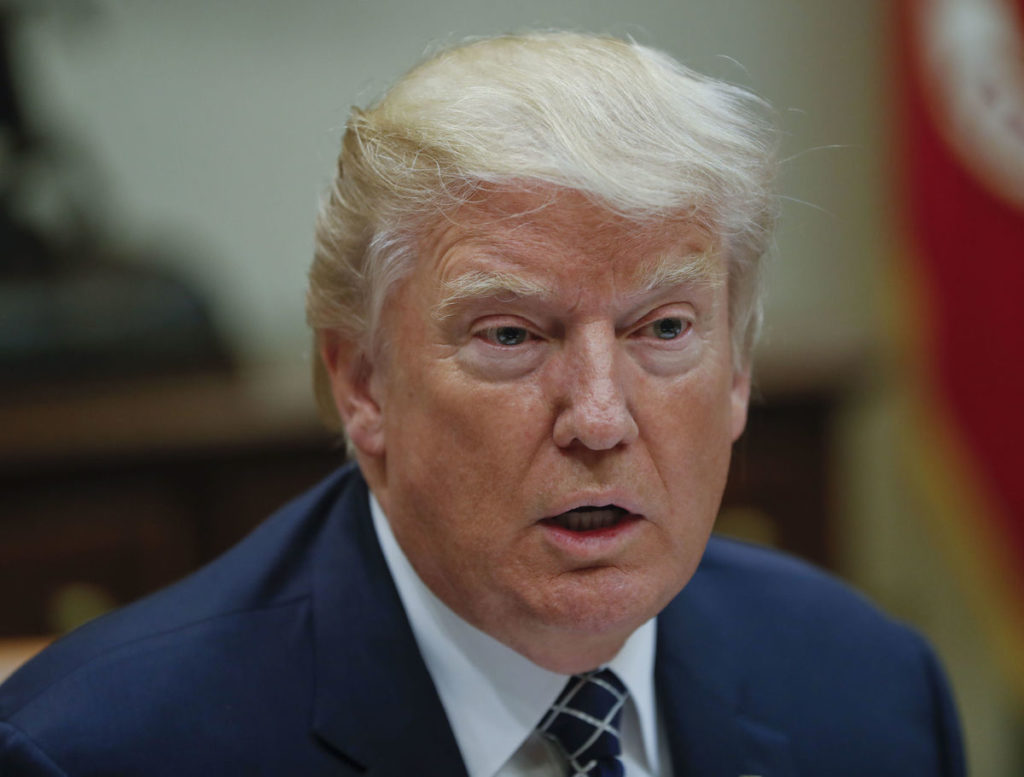
It was a far cry from “The buck stops here.” President Donald Trump, dealt a stinging defeat with the failure of the Republican health care bill in the Senate, flipped the script from Harry Truman’s famous declaration of presidential responsibility and declared Tuesday, “I am not going to own it.” He had tweeted earlier, “We were let down by all of the Democrats and a few Republicans.” This is the same president who thundered night after night on the campaign trail that it would be “so easy” to repeal and replace the Obama health care law on Day One of his administration. Try and tweet as he might, Trump can’t now avoid a share of the blame for the stall-out of that repeal effort. It’s a president’s burden to shoulder the nation’s problems whether they are inherited or created in real time. Barack Obama took office with the American economy facing its worst crisis since the Great Depression. John F. Kennedy accepted responsibility for the failure of the invasion of Cuba at the Bay of Pigs, ordered on his own watch. “That’s the nature of being elected president: You own the policies, the economy and the government,” said presidential historian Julian Zelizer, a professor at Princeton University. “You own the positives and negatives of the job whether you think it’s your fault or not. You live in the White House: You can’t disassociate yourself from what happens if you don’t like it.” Trump took office armed with Republican control of both houses of Congress and an ambitious agenda that would begin with the repeal and replacement of Obamacare. Six months later, the collapse of the GOP plan was a sharp rebuke for the president, who was unable to cajole or threaten Republicans to stay in line and who exerted little of his diminished political capital to see through a promise that had been at the core of his party since Obamacare became law seven years ago. The president’s disjointed support for the health care plan did little to persuade Republicans to support it, and the fact that his approval ratings had dropped below 40 percent didn’t help either. Trump never held a news conference or delivered a major speech to sell the bill to the public. He never leveraged his popularity among rank-and-file Republican voters by barnstorming the districts of wavering GOP senators. And he never spearheaded a coherent communications strategy — beyond random tweets — to push for the plan. “The best way to motivate members is talk to their constituents and at no point did he try to talk to Americans about health care reform in any sort of serious way,” said Alex Conant, a Republican strategist who worked on Florida Sen. Marco Rubio’s 2016 presidential campaign. “His attention seems to drift with whatever is on cable news on any given moment as opposed to what is on the Senate floor any given week.” Sounding almost like a bystander during his brief Oval Office remarks Tuesday, Trump six times expressed “disappointment” that the Republican effort had failed. And he insisted the fault rested with Democrats and suggested Obamacare should be left to fail on its own. “I’m not going to own it,” Trump insisted. “I can tell you that Republicans are not going to own it.” Democrats blasted Trump’s blame game, with Senate Minority Leader Chuck Schumer saying his refusal to accept responsibility demonstrated “such a lack of leadership.” “That is such a small and petty response,” Schumer said. “Because the president, he’s in charge. And to hurt millions of people because he’s angry he didn’t get his way is not being a leader.” Despite Trump’s efforts to shift blame across the aisle, the White House made little effort to court Democrats. Instead of initially pursuing an infrastructure plan — which would have likely received support from unions and blue-collar workers, making it hard for Democrats to oppose — Trump opted to tackle the far more polarizing issue of health care first. He outsourced most of the work to House Speaker Paul Ryan and Senate Majority Leader Mitch McConnell. It became a strictly Republican effort which, due to the party’s slight advantages in the House and Senate, had little margin for error. And it was conservatives from Trump’s own wing of the Republican party who thwarted him. The conservative House Freedom Caucus defied him and ignored his Twitter threats. The two senators who withdrew their support Monday night, effectively killing the bill, didn’t even give the White House a heads-up before announcing their decisions. And even though Trump allies have threatened to aid primary challengers to a pair of on-the-fence senators — Jeff Flake of Arizona and Dean Heller of Nevada — the Republicans did not cave, potentially setting a worrisome precedent for the White House as it tries to move ahead with the rest of its stalled agenda. Former House Speaker Newt Gingrich, a Trump adviser, believes that both Congress and the White House share blame after seemingly forgetting that “opposition parties pass press releases that get vetoed, while governing parties pass bills in which every paragraph gets scrutinized.” “I hope the president learns that do something really, really big, you need to be disciplined and focused and sort out your communications program,” said Gingrich. “So far, they are clearly not capable of doing that.” Republished with permission of The Associated Press.
GOP leader says he’ll rework health bill, but offers Plan B
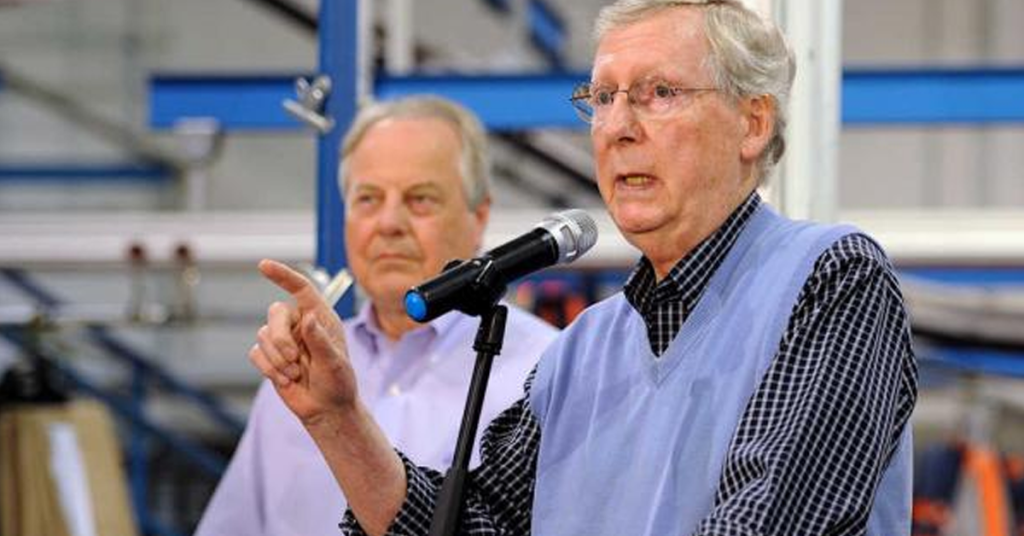
Senate Majority Leader Mitch McConnell says he plans to produce a fresh bill in about a week scuttling and replacing much of President Barack Obama‘s health care law. But he’s also acknowledging a Plan B if that effort continues to flounder. “If my side is unable to agree on an adequate replacement, then some kind of action with regard to the private health insurance market must occur,” McConnell, R-Ky., said Thursday. It was one of his most explicit concessions that a top priority for President Donald Trump and the entire GOP, erasing much of Obama’s landmark 2010 statute, might fall short. He provided no details during remarks he made at a Rotary Club lunch in a deep-red, conservative rural area of southern Kentucky. Previously, other Republicans have said that if their broad drive to dismantle much of Obama’s law struggled, a smaller bill with quick help for insurers and consumers might be needed. They’ve said it could include provisions continuing federal payments to insurers that help them contain costs for some low earners and inducements to keep healthy people buying policies – a step that helps curb premiums. McConnell’s comments suggested that to show progress on health care, Republicans controlling the White House and Congress might have to negotiate with Democrats. While the current, wide-ranging GOP health care bill has procedural protections against a Democratic Senate filibuster, a subsequent, narrower measure wouldn’t and would take 60 votes to pass. McConnell has said he wants the current bill to pass. The measure still in play would fail if just three of the 52 Republicans vote no, since all Democrats oppose it. McConnell was forced to cancel a vote on the measure last week after far more Republicans than that objected, and he’s been spending the Independence Day recess studying possible changes that might win over GOP dissidents. “We have an obligation to the American people to try and improve what we currently have. What we do know is the status quo is not sustainable,” he said. In a written statement, Senate Minority Leader Chuck Schumer, D-N.Y., called it encouraging that McConnell had “opened the door to bipartisan solutions.” He said the focus should be on continuing the federal payments to insurers, which Trump has threatened to halt. Schumer has repeatedly said Democrats won’t negotiate until Republicans abandon their repeal effort. McConnell’s comments came during a recess that has produced no visible evidence that he’s winnowed the number of unhappy Republican senators. If anything, the list seemed to have grown this week, as Sen. John Hoeven, R-N.D., said he opposed the bill, but he was vague about changes he’d want. That brought to at least a dozen the number of GOP senators who’ve publicly opposed or criticized the legislation, though many are expected to be won over by revisions McConnell is concocting. Republicans have said Obama’s law is failing, citing markets around the country where insurers have pulled out or sharply boosted premiums. Some areas are down to a single insurer. Democrats acknowledge Obama’s law needs changes that would help curb the growth of health care costs. But they say the GOP is exaggerating the problem and note that several insurers have attributed their decisions to stop selling policies in unprofitable areas, in part, to Trump administration indications that it may halt payments to insurers. A federal court has ruled the payments weren’t authorized by Congress but has allowed them to temporarily continue. In its report last week on the Senate bill, the nonpartisan Congressional Budget Office said that under Obama’s law, it expected health care markets “to be stable in most areas.” It said the same about the Senate legislation. But it also said under the GOP bill, 22 million added Americans would be uninsured because it would eliminate Obama’s tax penalty on people who don’t buy coverage and it would cut Medicaid, the health insurance program for the poor, disabled and many nursing home patients. Earlier Thursday, Sen. Ted Cruz, R-Texas, called the bill’s prospects “precarious.” On San Antonio’s KTSA Radio, Cruz said the GOP’s Senate majority “is so narrow, I don’t know if we can get it done or not.” Further qualms were voiced by Sen. Jerry Moran, R-Kan. “There are people who tell me they are better off” under Obama’s law, “and I believe them,” Moran said at a town hall meeting Thursday in Palco, Kansas. Moran, who’d previously said he doesn’t support the bill, said health care is “almost impossible to solve” with the slim GOP majority in the Senate. McConnell said he expected to have a new version of the legislation ready in “a week or so.” Another Republican, Sen. Pat Toomey of Pennsylvania, suggested it may take longer. “We’re still several weeks away from a vote, I think,” Toomey said Wednesday before a live studio audience at WHTM-TV in Harrisburg, Pennsylvania. Republished with permission of The Associated Press.
After delay, RNC finally gives OK to funding for Alabama special election
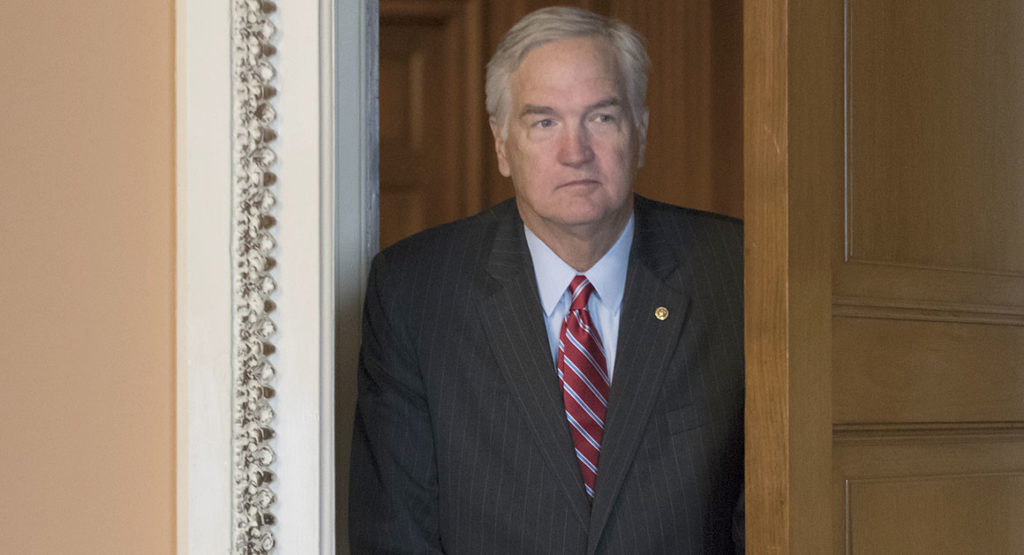
The Republican National Committee has approved funding for the Alabama special election, likely to support incumbent U.S. Sen. Luther Strange. As reported by POLITICO’s Alex Isenstadt, the long-delayed has recently become “a point of contention between Senate Republicans and the White House,” over Attorney General Jeff Sessions’ old seat. Much of the problem seems to rest with the convoluted campaign finance rules which Isenstadt describes as “weeks of closed-door talks, inflamed tensions between Senate GOP leaders and the administration and touched on a central issue: how the insurgent-minded Trump White House will approach party primaries.” The approval allows the National Republican Senatorial Committee to spend more than $350,000 on the race to benefit Strange, facing a crowded 10-person field for the Aug. 15 Republican primary, which includes U.S. Rep. Mo Brooks and former Alabama Supreme Court Chief Justice Roy Moore. A primary runoff, if necessary, will be Sept. 26; the general election is Dec. 12. Among those backing Strange are Senate Majority Leader Mitch McConnell, through two McConnell-aligned groups — the NRSC and Senate Leadership Fund. For the past few weeks, McConnell has lobbied to get RNC to approve the cash infusion, but foot dragging so frustrated the majority leader that he appealed directly to former RNC chair and current White House chief of staff Reince Priebus. Strange also talked personally with President Donald Trump. Isenstadt writes that some close to McConnell thought the holdup could be due to bureaucratic disorganization — or the administration was intentionally staying out of the primary, giving a glimpse into how the White House might handle future political battles.
Mobile protesters call out Luther Strange, Richard Shelby on health care
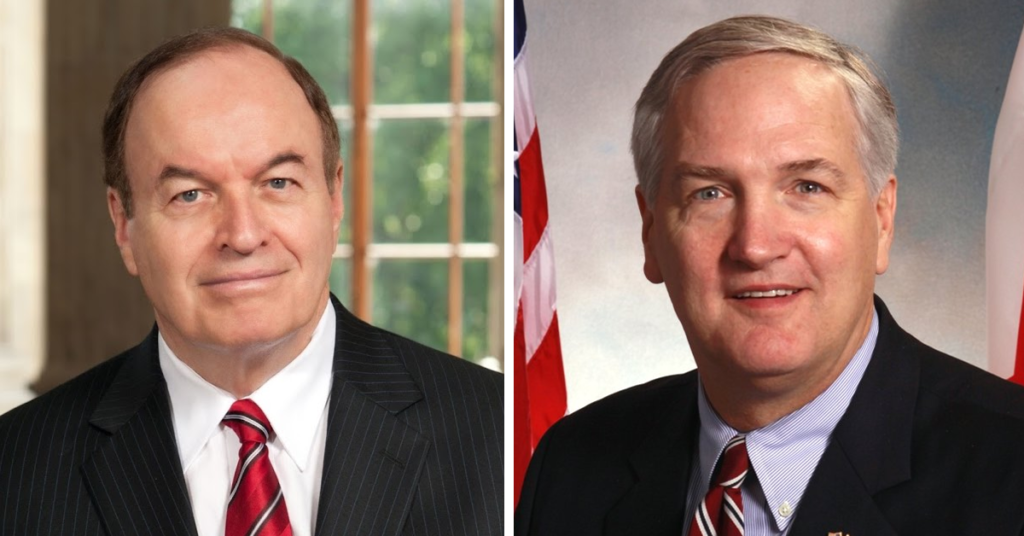
Obamacare supporters gathered in front of Mobile’s federal courthouse Monday, with about 100 people protesting Republican efforts to repeal and replace the Affordable Care Act. As AL.com reports, Monday afternoon’s rally – organized by Mobile attorney Henry Brewster – was part of a statewide effort to get Alabama Sens. Richard Shelby and Luther Strange to “agree to meet face to face with their constituents regarding the health care bill working its way through Congress.” Last week, the Senate revealed its version of the health care bill and their attempt to rollback Obamacare. Senate Majority Leader Mitch McConnell of Kentucky was hoping to have a vote by as soon as Wednesday but faces strong resistance by several key conservatives, including Rand Paul of Kentucky, Ted Cruz of Texas, Utah’s Mike Lee and Ron Johnson of Wisconsin. Those four senators announced they would oppose the Senate bill without changes, effectively slowing down any chance of passage as is. Similar protests were held both in Alabama and across the country Monday, including one outside the Birmingham’s Robert S. Vance Federal Building and Courthouse. Both Strange and Shelby have indicated they are leaning toward “yes” if the bill comes to a vote on the Senate floor. Strange is already committing to support this bill, while Shelby told FOX Business he was “encouraged by key provisions in the Senate bill, which would repeal Obamacare’s disastrous individual and employer mandates, repeal taxes on chronic care, health savings accounts, and medical devices, and put Medicaid on a budget that works for individual states.” Brewster told reporters that the bill was essentially a $400 billion tax cut “for the 1 percent,” and called for anyone within earshot to express their disapproval to the senators, via phone and social media. “It is critically important that we make as much noise as possible to them,” Brewster said. Among the elected officials speaking at the rally: District 1 Mobile County Commissioner Merceria Ludgood, Democratic State Rep. Barbara Drummond of Montgomery and Lorenzo Martin, who serves on the Prichard City Council. Ludgood said it was a “sad reason to have to come together,” adding she was “outraged” by the effort to repeal Obamacare, “because the calculation is not about human lives, it’s about dollars.” At the same time, the nonpartisan Congressional Budget Office released its report on the bill, saying that as many as 22 million people would lose health coverage in the next decade under the Senate’s plan. While 15 million would lose Medicaid coverage, the plan would lower the nation’s deficit by billions over 10 years, with substantial tax cuts for corporations and the wealthy. While 15 million would lose Medicaid coverage, the Senate plan, as it stands, would lower the nation’s deficit by billions over 10 years, providing substantial tax cuts for corporations and the wealthy.
First Senate Leadership Fund ad touts Luther Strange as strong Alabama conservative

Luther Strange is the beneficiary of Senate Leadership Fund’s first TV ad, which began running Tuesday in Alabama’s U.S. Senate special election. The 30-second ad portrays the incumbent GOP senator, who previously served as Alabama Attorney General, as a conservative with a strong record on religious liberty, gun rights and fighting illegal immigration. “When Barack Obama launched an assault on our religious freedoms, Big Luther Strange said, ‘no way,”‘ the ad’s narrator says. “He stood up to Obama’s illegal amnesty plan too. And fought for our Second Amendment rights, earning Big Luther an A+ rating and an endorsement from the NRA.’” Senate Leadership Fund is connected to Senate Majority Leader Mitch McConnell; the group purchased a $2.4 million in ad time on Alabama television and radio stations in Birmingham and Mobile from June 13 to June 27. Ads are set to run through the day of the Aug. 15 special election primary. Strange’s most arduous challenges in the GOP primary — U.S. Rep. Mo Brooks and former Alabama Supreme Court Chief Justice Roy Moore — have also pushed their hard-line conservative social positions. But as POLITICO noted last month: “It doesn’t hurt that Strange is polished, predictable and low-key, in addition to having existing relationships with many Republicans from the South.” If there is no clear winner Aug. 15, a runoff will be Sept. 26. The special election is Dec. 12.
Mitch McConnell groups buy $2.4M in ads supporting Luther Strange starting next week
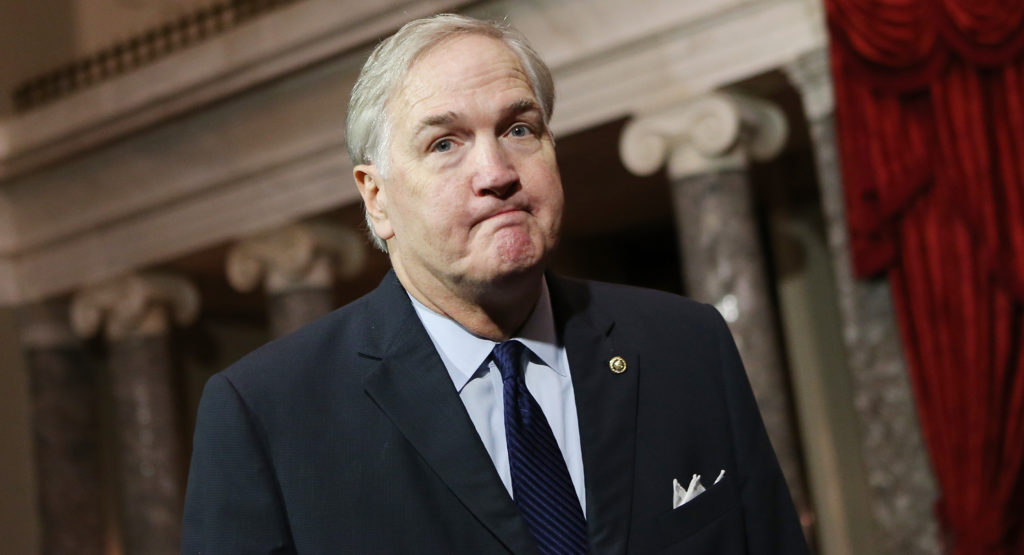
Two groups, including the Senate Leadership Fund, canceled a planned $2.65 million ad buy to support U.S. Sen. Luther Strange, replacing it with a joint purchase of more than $2 million in air time, with radio ads starting next week. The Leadership Fund, controlled by Senate Majority Leader Mitch McConnell, has “television and radio ads will start running next week in Birmingham and Mobile,” reports AL.com. The earlier Leadership Fund buy was just a placeholder, with the new airtime reservation moves up the start date of the ads, and increases the campaign by about $500,000 in radio ads. Listeners in the Birmingham and Mobile radio markets will hear the ads from June 13 to June 27, with another wave ending Aug. 15, the date of the special election primary. At the same time, “One Nation,” another group tied to McConnell, plans to spend $385,000 on issue ads supporting Strange scheduled for June 28 through July 12 in the Birmingham, Huntsville and Mobile markets.
Steve Flowers: Lay of the land in U.S. Senate sprint
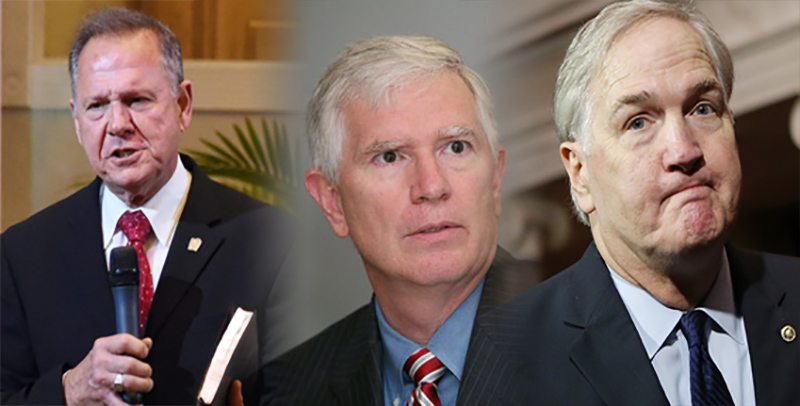
As the race for our open U.S. Senate seat begins, let’s look at the lay of the land. First-of-all it will be a sprint. The race is upon us with the primaries August 15 and the run-off six weeks later September 26. The Republican primary victor will be coronated December 12. We, in the Heart of Dixie, are a one-party state when it comes to major statewide offices. Winning the GOP primary is tantamount to election. Therefore, our new senator will probably be elected September 26. With 10 Republicans in the race, it will be highly unlikely that anybody could win without a run-off, so the initial goal is to make the run-off. There are amazingly 19 total candidates who qualified. You can write the 8 Democrats off as irrelevant because a Democrat cannot win in Alabama. With 11 Republicans running, it appears to be a crowded race. However, 6 of the 11 are “run for the fun of it” qualifiers. Therefore, even though the field has a lot of horses, there are only 5 of the 19 who could be considered thoroughbreds and probably only 3 who have a viable chance to win. Former Chief Justice Roy Moore and former State Attorney General and Robert Bentley appointee to the Senate, Luther Strange, are more than likely headed to a Republican run-off. Huntsville and Tennessee Valley Congressman Mo Brooks has the best chance to challenge for a run-off spot. Initial polling has Roy Moore at 30 percent, Luther Strange at 14 percent and Mo Brooks at 7 percent. Roy Moore’s removal from his post as Chief Justice of the Supreme Court by some vague Judicial Inquiry Commission for being against gay marriage has made him a hero and martyr among Alabama’s conservative and religious voters. There is a pent-up desire to right a wrong among the Alabama people. It is obviously showing up in the polling, but it could be illuminated and result in a higher than anticipated 30 percent. Polls are a picture of the total pool of voters. However, the final poll and the one that really matters is who actually shows up to vote August 15. Roy Moore’s folks will be there, they are ardent and mad. They will not be at the lake or the beach. In fact, if there is an extremely low turnout, Moore could conceivably win without a run-off. It is unlikely that occurs. However, he more than likely finishes first and has a spot in the run-off. Luther Strange will be fighting to hold on to the other spot in the Sept. 26 final dance. He will more than likely prevail in his quest to get into the run-off and keep the seat. Luther will have $10 million of Washington establishment super PAC ammunition at his disposal. It is hard to overcome that kind of money. It is the mother’s milk of politics. Luther is banking on the fact that most U.S. Senate seats are bought by special interest money. Folks, $10 million washes a lot of taint away from the Bentley to Luther deal. It looks inevitable that Roy Moore and Luther Strange will be in a run-off and the prevailing opinion is that Moore cannot get over 50 percent. However, polling indicates that neither Moore nor Strange can get over 50 percent. They both have a large base of detractors. This race was ripe to be won by an outside rich man who could spend $10 million of their own money. “Yella Fella” Jimmy Rane walked away from a U.S. Senate seat that was his for the taking. Congressman Mo Brooks has the best chance to knock Strange out of the run-off. He starts off with a base of support in the Tennessee Valley and $1.2 million in his federal war chest. If he were to raise $3 million, he would probably beat Luther and ultimately would probably beat Moore. Brooks is to the right of Attila the Hun and belongs to a right-wing congressional group known as the Freedom Caucus. There are some very rich right-wing zealots around the country who give to Freedom Caucus candidates. They may load ole’ Mo up and teach the Elitist Establishment Mitch McConnell crowd a lesson. If state Sen. Trip Pittman, from Baldwin County, could raise $5 million he could sell. He is the only serious candidate from the vote-rich Baldwin/Mobile area. Dr. Randy Brinson has the perfect background, narrative and family values story. However, like Pittman, he needs $5 million to tell his story. We will see. See you next week. ___ Steve Flowers is Alabama’s leading political columnist. His weekly column appears in over 60 Alabama newspapers. He served 16 years in the state Legislature. Steve may be reached at www.steveflowers.us.
Worst treatment ever, Donald Trump grumbles; Dems demand deep probe

Surrounded by multiplying questions, President Donald Trump complained Wednesday that “no politician in history” has been treated worse. Democrats demanded an independent commission to dig into his firing of FBI Director James Comey, but Republican House Speaker Paul Ryan cautioned against “rushing to judgment.” Ryan said Congress needs to get the facts, but “it is obvious there are some people out there who want to harm the president.” Elijah Cummings, top Democrat on a key House oversight panel, countered that Ryan and the Republicans had shown “zero, zero, zero appetite for any investigation of President Trump.” The White House has denied reports that Trump pressed Comey to drop an investigation into Trump’s first national security adviser, Michael Flynn. In addition Trump is facing pointed questions about his discussions with Russian diplomats during which he is reported to have disclosed classified information. Also Tuesday, in an extraordinary turn of events, Russian President Vladimir Putin offered to turn over to Congress records of Trump’s discussions with the diplomats. The White House has played down the importance and secrecy of the information Trump gave to the Russians, which had been supplied by Israel under an intelligence-sharing agreement. Trump himself said he had “an absolute right” as president to share “facts pertaining to terrorism” and airline safety with Russia. Yet U.S. allies and some members of Congress have expressed alarm. Republicans and Democrats alike were eager to hear from Comey, who has increasingly emerged as a central figure in the unfolding drama. The Senate intelligence committee on Wednesday asked Comey to appear before the panel in both open and closed sessions. The committee also asked acting FBI Director Andrew McCabe to give the committee any notes that Comey might have made regarding discussions he had with White House or Justice Department officials about Russia’s efforts to influence the 2016 presidential election. Putin told a news conference that he would be willing to turn over notes of Trump’s meeting with the Russian diplomats if the White House agreed. He dismissed outrage over Trump’s disclosures as U.S. politicians whipping up “anti-Russian sentiment.” Asked what he thinks of the Trump presidency, Putin said it’s up to the American people to judge and his performance can be rated “only when he’s allowed to work at full capacity,” implying that someone is hampering Trump’s efforts. Trump himself hasn’t directly addressed the latest allegations that he pressured Comey to drop the Flynn investigation. But the swirling questions about his conduct were clearly on his mind when he told graduates at the U.S. Coast Guard Academy in Connecticut that “no politician in history, and I say this with great surety, has been treated worse or more unfairly.” Striking a defiant stance, he added: “You can’t let the critics and the naysayers get in the way of your dreams. … I guess that’s why we won. Adversity makes you stronger. Don’t give in, don’t back down. … And the more righteous your fight, the more opposition that you will face.” As for Comey, whom Trump fired last week, the FBI director wrote in a memo after a February meeting at the White House that the new president had asked him to shut down the FBI’s investigation of Flynn and his Russian contacts, said a person who had read the memo. The Flynn investigation was part of a broader probe into Russian interference in last year’s presidential election. Comey’s memo, an apparent effort to create a paper trail of his contacts with the White House, would be the clearest evidence to date that the president has tried to influence the investigation. Rep. Jason Chaffetz, Republican chairman of the House oversight committee, sent a letter to the FBI on Tuesday requesting that it turn over all documents and recordings that detail communications between Comey and Trump. He said he would give the FBI a week and then “if we need a subpoena, we’ll do it.” John McCain, chairman of the Senate Armed Services Committee, said late Tuesday that the developments had reached “Watergate size and scale.” Mitch McConnell, the Republican leader of the Senate, said simply, “It would be helpful to have less drama emanating from the White House.” The person who described the Comey memo to the AP was not authorized to discuss it by name and spoke on condition of anonymity. The existence of the memo was first reported Tuesday by The New York Times. The White House vigorously denied it all. “While the president has repeatedly expressed his view that General Flynn is a decent man who served and protected our country, the president has never asked Mr. Comey or anyone else to end any investigation, including any investigation involving General Flynn,” a White House statement said. Trump fired Flynn on Feb. 13, on grounds that he had misled Vice President Mike Pence and other officials about his contacts with Russians. The intensifying drama comes as Trump is set to embark Friday on his first foreign trip, which had been optimistically viewed by some aides as an opportunity to reset an administration floundering under an inexperienced president. Said Sen. Lindsey Graham of South Carolina: “He’s probably glad to leave town, and a lot of us are glad he’s leaving for a few days.” Republished with permission of the Associated Press.
GOP super PAC plans $2.6 million in TV ads for Luther Strange
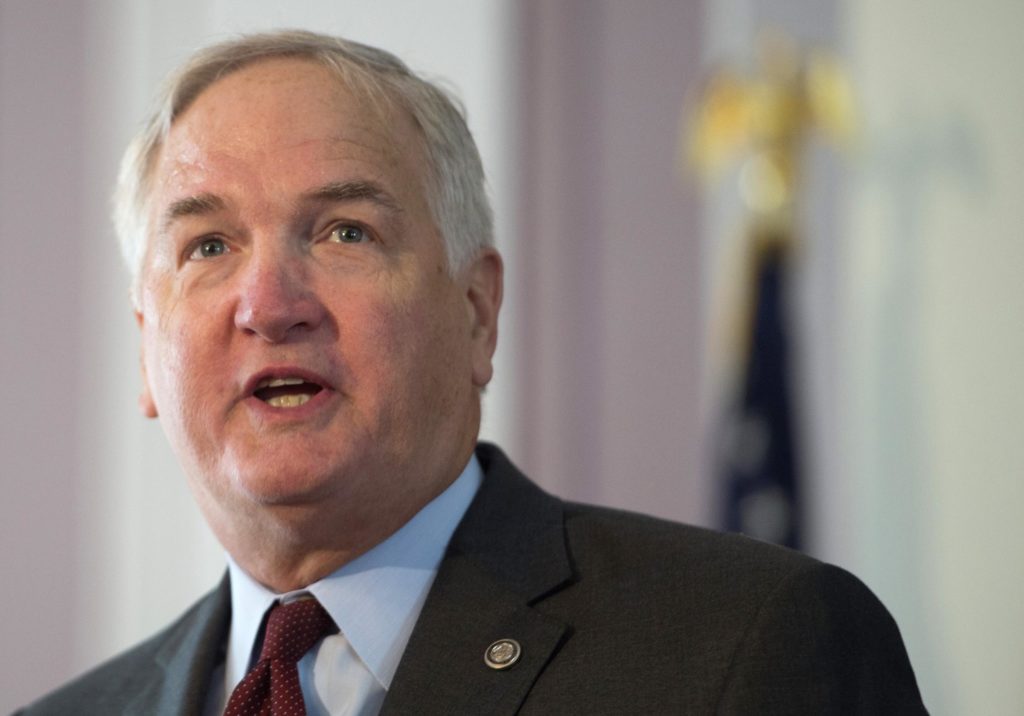
The Senate Leadership Fund on Monday reserved a $2.6 million television ad buy on behalf of U.S. Sen. Luther Strange of Alabama, bidding to ward off challengers for the seat previously held by Attorney General Jeff Sessions. The super political action committee, which has ties to Senate Majority Leader Mitch McConnell, made the show of fiscal force ahead of an August GOP primary on which Strange will face several challengers, including former Alabama Chief Justice Roy Moore. Senate Leadership Fund spokesman Chris Pack told The Associated Press the buy is just the start of what the group plans on spending to support the Republican senator. The ads will start July 11 and run through the Aug. 15 primary. “A lot of people in glass houses are throwing stones in Alabama, and they will quickly realize that this won’t be going unanswered. This $2.65 million buy is just an initial down payment on Senate Leadership Fund’s commitment to supporting Senator Strange,” Pack said. Ever since a series of messy Republican primaries led to losses of winnable Senate races in 2010 and 2012, Republicans led by McConnell of Kentucky have worked aggressively to defeat fringe primary candidates in Senate races. Their goal has been to ensure that GOP Senate primaries produce mainstream Republican candidates who can go on to win the general election. The Senate Leadership Fund is run by a former McConnell chief of staff. The Alabama race is expected to be contentious. But the muscle flexing by the super PAC also sends a message that the challengers to Strange should prepare for a high-spending campaign. Strange was appointed to the Senate in February by then-Gov. Robert Bentley, who resigned last month amid fallout from an alleged affair with a top staffer. Bentley had planned for a 2018 Senate election, but new Gov. Kay Ivey, moved it up to this year, setting up what’s expected to be a four-month demolition derby among Alabama’s dominant Republicans. Bentley resigned to stop an impeachment push, pleading guilty to misdemeanor campaign finance violations to end a state investigation. Challengers are expected to try to batter Strange on his connection to Bentley, since Strange was state attorney general at the time of his Senate appointment. Three other Republicans have so far announced runs for the seat including Moore, who was suspended from his judicial duties after he urged defiance of the landmark U.S. Supreme Court decision legalizing same-sex marriage. Party qualifying for the race runs until May 17. While Alabama has not elected a Democrat to the U.S. Senate in more than 20 years, a number of Democrats, including at least two state legislators, are considering running. Republished with permission of The Associated Press.
Health care fight shifts to Senate, where GOP wants a reboot
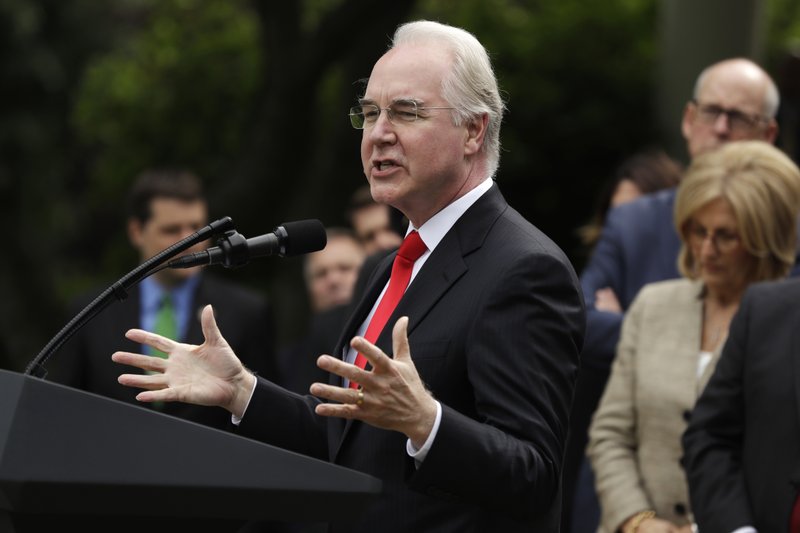
It took blood, sweat and tears for Republican leaders to finally push their health care bill through the House last week. Don’t expect the process to be less arduous in the Senate, though more of the angst in that more decorous chamber will likely be behind closed doors. No one expects a new bill to be written quickly, but Senate Majority Leader Mitch McConnell, R-Ky., has started a process for producing one. Republican senators have made clear their measure will differ markedly from the House legislation, which has drawn withering criticism from Democrats who see it as a pathway to winning a House majority in the 2018 elections. “This process will not be quick or simple or easy, but it must be done,” McConnell said Monday. MCCONNELL’S WORKING GROUP McConnell dislikes surprises and drama. Both characterized the House’s chaotic four months of work on its bill, which saw revolts by conservatives and moderates derail initial versions and humiliate President Donald Trump and Speaker Paul Ryan, R-Wis. McConnell has included himself in a group of 12 GOP senators essentially tasked with privately producing a bill that can pass the Senate. Republicans control the chamber 52-48. Democrats are virtually certain to unanimously oppose the Republican effort to repeal much of President Barack Obama’s health care overhaul. So Republicans are using a special process preventing a Democratic filibuster that would require 60 votes to end. McConnell will need 50 GOP votes to pass a bill, a tie Vice President Mike Pence could break. That means McConnell can lose just two Republicans, so his group has a strategically shaped membership. THE GROUP’S ROSTER Sens. Lamar Alexander, R-Tenn., Mike Enzi, R-Idaho, and Orrin Hatch, R-Utah, chair pivotal committees. Sens. Rob Portman, R-Ohio, and Cory Gardner, R-Colo., are from states that used Obama’s law to add hundreds of thousands of beneficiaries to Medicaid, an expansion they want to protect but the House bill would end. Gardner chairs the Senate GOP’s campaign committee. Sens. Ted Cruz, R-Texas, and Mike Lee, R-Utah, are conservative firebrands who represent states that didn’t expand Medicaid but want additional funds for that program. Sens. John Cornyn, R-Texas, John Thune, R-S.D., and John Barrasso, R-Wyo., are in the Senate GOP leadership, and Tom Cotton, R-Ark., is an ambitious up-and-comer who frequently criticizes the House measure. Democrats and liberal activists have lambasted McConnell for appointing a group with no female members. POSSIBLE CHANGES Portman is among Republicans whose states dislike the House’s Medicaid cuts because they’d face a wave of constituents losing coverage under the health care program for the poor. The House would end the extra federal money states get for new beneficiaries under Obama’s Medicaid expansion by 2020, and some GOP senators want a delay. Much Medicaid money is used to combat the illegal use of addictive opioid drugs. That’s another reason for GOP senators from hard-hit Midwestern and Northeastern states to oppose such cuts. Obama’s law helps millions buy private insurance with federal subsidies geared to income and policy premiums. The House instead links its aid to age, with older people getting larger tax credits. Thune and others want to shift the subsidies more generous to lower earners. Cruz said House conservatives won “a positive improvement” with provisions letting states get federal waivers so insurers can charge some people with pre-existing conditions higher premiums, and letting states decide which medical services insurers must cover. He said “considerably more work” was needed to lower premiums. In addition, the filibuster-free process Republicans are using requires that legislative provisions be related to raising or decreasing the federal deficit, and not primarily driven by policy changes. Conservative health care analyst James Capretta says the odds for survival “are low” for House language allowing state waivers for higher premiums on people with pre-existing conditions. Also in jeopardy: a provision forbidding consumers to use federal subsidies to buy insurance covering abortion. The Senate parliamentarian will decide whether provisions must be stricken from the bill. The Senate could override that with 60 votes. POLITICAL ERUPTION The pro-Democratic group Save Our Care is running ads in 24 districts whose GOP House members backed the bill asking, “How could you do this to us?” Obama urged lawmakers to use “courage” to protect health care for poorer Americans, a rare public comment on public policy since leaving office. Underscoring political sensitivities, critics attacked Rep. Raul Labrador, R-Idaho, for saying at a town hall meeting that “nobody dies” from lack of health care. He later said that “wasn’t very elegant.” Republicans are advertising too. The American Action Network, with links to House GOP leaders, is advertising nationally and in Ryan’s district promoting the bill. Sen. Bill Cassidy, R-La., was set to appear on ABC’s “Jimmy Kimmel Live” after saying any GOP bill must pass “the Jimmy Kimmel test.” The talk show host last week delivered a tearful monologue describing life-saving heart surgery his newborn son had received and saying lawmakers must help people afford health care. LOOKING AHEAD The nonpartisan Congressional Budget Office is expected to release its analysis of the House bill this month. It projected an earlier version would toss 24 million people off health coverage, a damaging blow that made it harder for House Republicans to pass their bill. No one is certain when the Senate might approve its bill, though some following the process think that could come by July 4. Republished with permission of The Associated Press.
Darryl Paulson: The filibuster, the nuclear option and the future of American politics
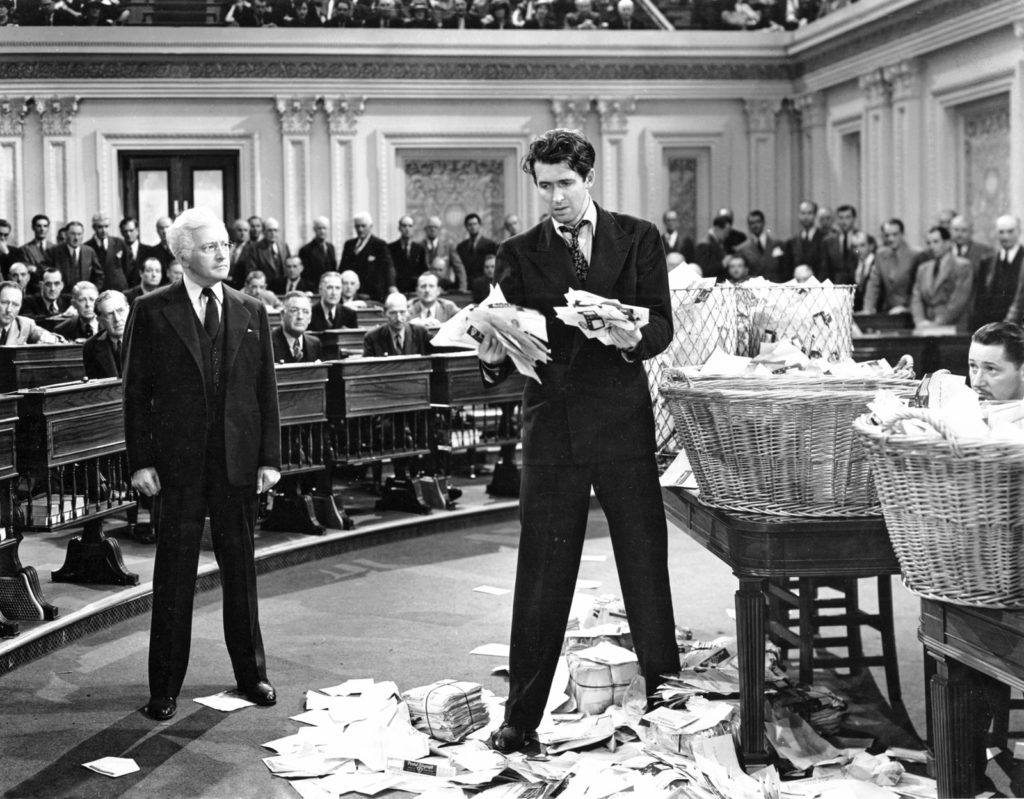
What little Americans know about the filibuster is due to James Stewart‘s portrayal of Senator Jefferson Smith in the classic movie, Mr. Smith Goes to Washington. In the movie, Senator Smith filibusters a fraudulent land deal until finally collapsing on the Senate floor. This past week, it was the filibuster that collapsed on the Senate floor as the “nuclear option” was invoked by Senate Republicans. History of the filibuster. The early Congress did not recognize the ability to filibuster. Senators could invoke a “previous question motion,” which meant that a simple majority could vote to end debate. Vice President Aaron Burr, as President of the Senate, streamlined the Senate rules in 1805 by persuading fellow Senators to abandon cutting off debate. That move allowed for the possibility of unlimited debate. The first filibuster did not occur until 1837, and the filibuster was seldom used in the 19th century. It was not until 1917 that the Senate adopted Rule 22 or the Cloture Rule, to create a mechanism to halt a filibuster. Rule 22 required a vote of two-thirds of the Senate (then 64 of the 96 senators) to halt a filibuster. Rule 22 came about in response to a request by President Woodrow Wilson to arm merchant marine vessels to protect them from U-boat attacks. A group of 11 progressive senators, led by Republican Robert La Follette of Wisconsin, blocked the bill. Wilson was outraged and condemned “A little group of willful men, representing no opinion but their own … have rendered the great government of the United States helpless and contemptible.” Filibuster rule changes. From 1917 to 1970, only 58 cloture petitions were filed (about one per year), and cloture was invoked only eight times. From 1971 to 2006, the number of cloture petitions jumped to 26 per year and cloture was imposed one-quarter of the time. From 2007 to 2014, cloture petitions were filed 80 times a year and half of the cloture votes were approved. As the use of the filibuster increased, the Senate looked at various ways to modify its use. In 1975, the Senate voted to make it easier to invoke cloture by requiring only a three-fifths vote instead of two-thirds. That would be a short-term solution with limited impact. In 2005, Republicans controlled the Senate and were concerned that Democrats would not approve nominees of George W. Bush. Republicans argued that the use of the filibuster on judicial nominations violated the constitutional authority of the president to name judges with the “advice and consent” of a simple majority of the Senate. Sen. Trent Lott of Mississippi used the word “nuclear” during the debate, and the concept of the “nuclear option” developed. Also in 2005, a “Gang of 14” senators, half Democrat and half Republican, reached a compromise to defuse the “nuclear option.” The Democrats promised not to filibuster Bush’s nominees except under “extraordinary circumstances,” and Republicans promised not to invoke the nuclear option unless they believed the Democrats used the filibuster in non-extraordinary circumstances. On Nov. 21, 2013, the Democrats triggered the nuclear option and eliminated the filibuster for all nominees except for the Supreme Court. They accused Republicans of filibustering an extraordinary number of President Obama‘s nominees. Republicans took back control of the Senate in the 2014 election and kept the Democratic rules in place. On April 6, 2017, Majority Leader Mitch McConnell extended the nuclear option to Supreme Court nominees after it was apparent that Democrats had the votes to filibuster the nomination of Neil Gorsuch to the court. The vote to change the rules to a simple majority passed 52-48 on a straight party-line vote, and the Senate then confirmed Gorsuch with 55 votes, as three Democrats joined the Republicans. Implications of the nuclear option. Now that the filibuster is dead in the nomination process, will it also fall by the wayside with respect to legislation? The answer is likely yes. The larger question is whether the filibuster is a good or bad part of the legislative process? Many argue that the Constitution is premised on majority rights and the filibuster allows a minority to dictate public policy. In other words, it is undemocratic. Supporters of the filibuster contend that it serves a useful purpose. Its use forces legislators to compromise in order to secure passage of major legislation. On controversial issues such as civil rights, a supermajority vote ensures that the legislation has widespread support and its passage was critical. When cloture was invoked on the 1964 Civil Rights Act after a 60-day filibuster, the first time cloture had been successful on a civil rights bill, it was a clear sign that national consensus had been achieved and a strong Civil Rights bill was needed. Critics of the filibuster argue there is no need to mourn its death. The filibuster has been a tool to frustrate the will of the majority and to impede passage of important legislation. Supporters counter that the death of the filibuster will lead to greater polarization, although that is hard to imagine. They argue that a simple majority vote will allow a president to appoint more extreme nominees and will allow the Senate to pass more extreme legislation. In addition, major legislation like Obamacare will be subject to “repeal and replacement” every time political control of the Senate shifts from one party to another. ___ Darryl Paulson is Emeritus Professor of Government at the University of South Florida in St. Petersburg.
