
New Congress poised to greet Donald Trump with Russia probes

Congress’ Republican leaders are preparing to greet incoming President Donald Trump with investigations into whether Russia intruded into last month’s elections to help him win the White House. Senate Majority Leader Mitch McConnell declined to say Monday whether he agreed with the CIA assertion that Russian hacking and public release of Democrats’ emails during the presidential campaign were designed to aid Trump. But in a noteworthy departure from Trump’s rejection of that conclusion, the Kentucky Republican said the Senate Intelligence Committee would probe the issue. “It’s an important subject, and we intend to review it on a bipartisan basis,” McConnell said. House Speaker Paul Ryan, R-Wis., endorsed an ongoing investigation by the House Intelligence Committee into cyberthreats from other countries and extremist groups and condemned “any state-sponsored cyberattacks on our democratic process.” He said that examination would continue, with his support. “Any intervention by Russia is especially problematic because under President (Vladimir) Putin, Russia has been an aggressor that consistently undermines American interests,” Ryan said in a written statement after McConnell met with reporters. The remarks by McConnell and Ryan drew a contrast with Trump’s oft-repeated praise of Putin and the president-elect’s scoffing at the CIA’s findings. Trump on Sunday called the CIA’s contention “ridiculous” and blamed the disclosures of the agency’s assessment on Democrats who he said were embarrassed over losing last month’s election. McConnell said he has “the highest confidence” in U.S. intelligence agencies. He recounted Russia’s annexation of Crimea from Ukraine in 2014, said Baltic nation leaders are nervous about Moscow and pointedly praised NATO, the alliance that Trump criticized repeatedly during his campaign. “I think we ought to approach all of these issues on the assumption that the Russians do not wish us well,” McConnell said. Besides embracing an investigation by the Senate’s intelligence panel, led by Richard Burr, R-N.C., McConnell also expressed support for a related probe by the Armed Services Committee, chaired by Sen. John McCain, R-Ariz. McCain has been calling for such an examination and has long been wary of Russia. The chairman of the House Intelligence Committee, Rep. Devin Nunes, R-Calif., released a letter Monday to National Intelligence Director James Clapper complaining that recent reports of the CIA’s conclusion clashed with Clapper’s prior statement to the panel that he lacked “good insight” about the connection between Russian hacking of Democratic campaign documents and their release by Wikileaks. Nunes requested a briefing on the subject for this week. The GOP leaders expressed their views after a weekend in which Trump also said he would not need daily intelligence briefings, a staple of presidents’ days for decades and a flouting of a convention common for presidential transitions. The campaign chairman for defeated Democratic presidential candidate Hillary Clinton urged the Obama administration Monday to reveal what it knows about any Russian efforts to help Trump win. John Podesta, whose emails were stolen and posted online, said the administration “owes it to the American people” to release details of the intrusions, which included the hacking of Democratic Party files. Podesta said the Clinton campaign also supports a call by 10 of the 538 members of the Electoral College for Clapper to provide information that intelligence agencies have gathered on the subject. Republished with permission of the Associated Press.
Top GOP leader: Senate to probe reports of Russia hacking
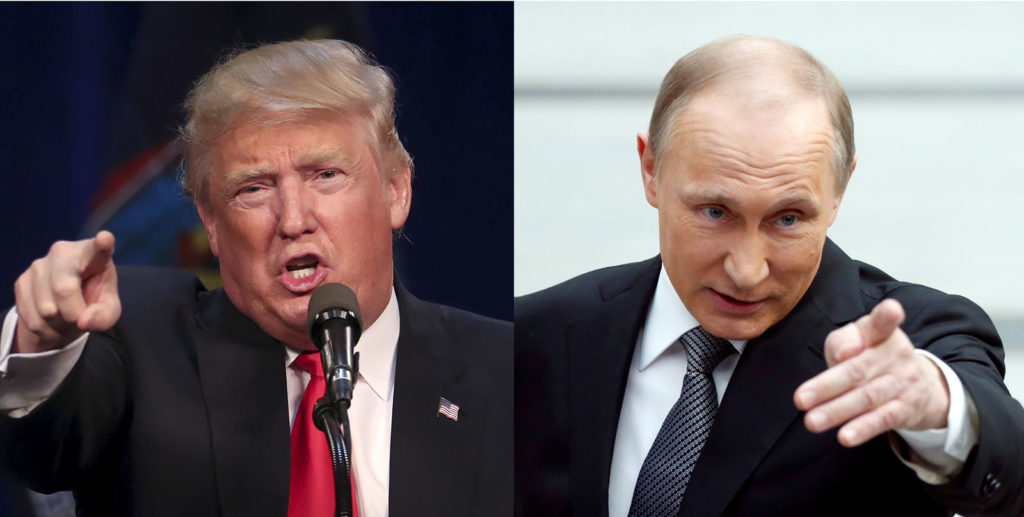
The top Senate Republican said Monday that Congress will investigate a CIA assessment that Russia interfered in the November election on behalf of Donald Trump, an intelligence conclusion that the incoming commander in chief has called “ridiculous.” Majority Leader Mitch McConnell told reporters that an inquiry would be conducted by the Senate intelligence panel. Two key Senate Republicans – John McCain of Arizona and Lindsey Graham of South Carolina, a leading Trump critic – have joined with two Democrats in seeking a bipartisan investigation into the Kremlin’s activities during the election. “Obviously any foreign breach of our cybersecurity measures is disturbing, and I strongly condemn any such efforts,” McConnell said. Unlike Trump, who has expressed admiration for Russian leader Vladimir Putin, McConnell said flatly, “The Russians are not our friends.” The CIA recently concluded with “high confidence” that Russia sought to influence the U.S. election on behalf of Trump, raising red flags among lawmakers concerned about the sanctity of the U.S. voting system and potentially straining relations at the start of Trump’s administration. Trump said Sunday the recent CIA assertion that Russian hacking had sought to help his candidacy was “ridiculous,” and he praised ExxonMobil CEO Rex Tillerson, who has emerged as the leading contender to lead the State Department. Russia expects to figure prominently at the start of a week in which Trump is expected to name more members of his Cabinet, which also has vacancies in the departments of Energy, Agriculture and Veterans Affairs. Trump’s transition team announced Monday that his choice to head the Department of Homeland Security is, as expected, Gen. John Kelly. Kelly is a former commander of U.S. Southern Command with “unique insight into some of the challenges the United States faces at its southern border,” the announcement said. “It’s a matter of concern to me that he has such a close personal relationship with Vladimir Putin,” McCain said of Tillerson. “And obviously they’ve done enormous deals together.” In an interview with CBS’ “Face the Nation,” McCain said, “That would color his approach to Vladimir Putin and the Russian threat.” Russia expects to figure prominently at the start of a week in which Trump is expected to name more members of his Cabinet, which also has vacancies in the departments of Energy, Agriculture and Veterans Affairs. During his campaign, Trump weathered turbulent relations with fellow Republicans but has since forged a more united front with GOP lawmakers since his November victory over Hillary Clinton. In a wide-ranging interview with “Fox News Sunday,” Trump dismissed those concerns as little more than partisan griping. “I think the Democrats are putting it out because they suffered one of the greatest defeats in the history of politics in this country. And frankly, I think they’re putting it out. And it’s ridiculous,” Trump said. The incoming president said he did not necessarily oppose calls from President Barack Obama for an inquiry into the 2016 campaign hacking but said it should not be solely focused on a single culprit. “If you’re gonna to do that, I think you should not just say ‘Russia.’ You should say other countries also, and maybe other individuals,” he said. The White House has said the probe would focus on any breaches by other countries along with hacking committed in previous elections. Trump’s decision-making on whom to select for secretary of state has stretched out over several weeks. He has been considering former Massachusetts Gov. Mitt Romney, a one-time vocal Trump critic, Sen. Bob Corker of Tennessee, who leads the Foreign Relations Committee, and Tillerson, the oil industry executive who met twice with Trump during the past week. In the television interview, Trump pointed to Tillerson’s deep relations with Moscow as a selling point. As ExxonMobil’s head, he maintained close ties with Russia and was awarded by Putin with the Order of Friendship in 2013, an honor for a foreign citizen. “A great advantage is he knows many of the players, and he knows them well. He does massive deals in Russia. He does massive deals for the company,” Trump said, while also citing Corker and Romney. “These are all very different types of people,” he said. “But when you ask me about Rex, I mean, he’s a world-class player. There’s no question about it.” By Sunday afternoon, Tillerson had still not been formally offered the job, according to a person with knowledge of the process who spoke on condition of anonymity. Democrats have warned that plucking Tillerson for State would put the leader of the world’s largest oil company in a pivotal role on issues like climate change and the future of the Keystone XL pipeline. They also question whether he would apply diplomatic pressure on Russia’s conflict with Ukraine. Sen. Bob Casey, D-Pa., said the developments “raise serious questions about whether the incoming administration will adequately stand up to Russia’s aggression.” The prospect of Tillerson also received a cool reception from some Republican members of the Senate Foreign Relations Committee, which would consider his nomination. Sen. Marco Rubio of Florida, who unsuccessfully challenged Trump for the GOP nomination, wrote on Twitter, “Being a ‘friend of Vladimir’ is not an attribute I am hoping for from a (hashtag)SecretaryOfState.” Republished with permission of the Associated Press.
Donald Trump’s lobbyist ban complicates administration hiring

President-elect Donald Trump‘s campaign promise to “drain the swamp” of Washington might make it difficult for him to fill all the jobs in his administration. Trump’s ethics plan would ban all executive-branch officials from lobbying for five years after leaving their government jobs — one of several policies aimed at curbing the influence of lobbyists. His campaign released his plan about three weeks before Election Day, and “drain the swamp” quickly became a favorite rallying cry and social media hashtag. Lobbyists, many of whom are massed along the K Street corridor downtown just blocks from the White House, see the plan as misguided and argue that it could backfire on him. The incoming Republican president is racing to hire some 4,000 executive-branch employees, and his ethics plan could cause some job-seekers to look elsewhere because it limits how they can earn a living when they decide to leave the administration. “This will have a chilling effect on his hiring, no doubt,” said Paul Miller, who leads the National Institute for Lobbying and Ethics. “Most people who agree to government service want to go back into the private sector. We don’t want career politicians, and that’s what he could end up with.” But to those who have long advocated for breaking the “Potomac fever” that befalls those who come to Washington and never leave, Trump’s ban is worth the risk of losing some potential administration employees. “Too many people go into government service as a way to punch their ticket and come out and make millions of dollars. That’s both a concern and a reality,” said Meredith McGehee, an executive at the government reform group Issue One. Trump’s plan makes bold assertions, some more doable than others. He can enforce his executive-branch lobbying ban with the stroke of his pen, but measures involving Congress are trickier. Trump says he will ask Congress to institute a five-year lobbying ban for departing members and staff. That would take the approval of legislators who might be squeamish about tamping down their own future employment options. Senate Majority Leader Mitch McConnell didn’t directly answer when asked about Trump’s proposed lobbying ban for those leaving the Hill. He said he wants legislators to “address the real concerns of the American people” rather than fixate on every utterance during the presidential contest. Trump also wants to “expand the definition of lobbyist so we close all the loopholes that former government officials use by labeling themselves consultants and advisers when we all know they are lobbyists.” That’s reasonable, McGehee said, but difficult. Increasingly, those employed by the influence industry call themselves “consultants” or “strategists.” In fact, the number of registered lobbyists in Washington has dropped to fewer than 10,000 from 15,000 a decade ago, likely due to this rebranding effort. Miller and other lobbying advocates also agree registration should be more expansive. Yet 2011 legislation to do just that hasn’t moved forward. That could be a heavy lift for Trump. If it’s too onerous, he could pare back his goals and include a more expansive lobbying definition that would only apply to the administration. It’s also unclear how many of the 4,000 or so people Trump is about to hire would be subject to his ban. His proposal says “all executive-branch officials,” but in practice he may be referring only to Cabinet members and high-level White House officials. Trump’s transition team did not respond to questions about his ethics plan. Washington insiders are getting mixed signals from Trump. His original transition team was packed with lobbyists and interest advocates, and that group is charged with helping to find, vet and hire for the Trump administration. In recent days, Trump put Vice President-elect Mike Pence in charge of transition, and he is changing some of the people who are involved. Pence is “making good on President-elect Trump’s promise that we’re not going to have any lobbyists involved with the transition efforts,” Trump spokesman Jason Miller said Wednesday. “And this is, when we talk about draining the swamp, this is one of the first steps. And so, the bottom line is, we’re going to get the transition team where we need it to be.” In a “60 Minutes” interview that aired Sunday, Trump said he’d had no choice but to initially rely on lobbyists in Washington because “the whole place is one big lobbyist.” He vowed to “phase that out.” His White House predecessors have made similar promises. On the campaign trail in 2007, Barack Obama frequently condemned the “revolving door” of Washington in terms strikingly similar to Trump. Obama made bold promises before his first election, yet government influencers remained entrenched. Still, he won re-election after a second campaign that included almost no talk about the revolving door. “Drain the swamp. Stop the revolving door. These are great things to say to get elected,” said Howard Marlowe, president of Warwick Group Consultants, and a longtime advocate for fellow lobbyists. “After you get elected, you find a way to quietly push it aside.” Republished with permission of the Associated Press.
Donald Trump takes triumphant tour of Washington, has cordial meeting with Barack Obama
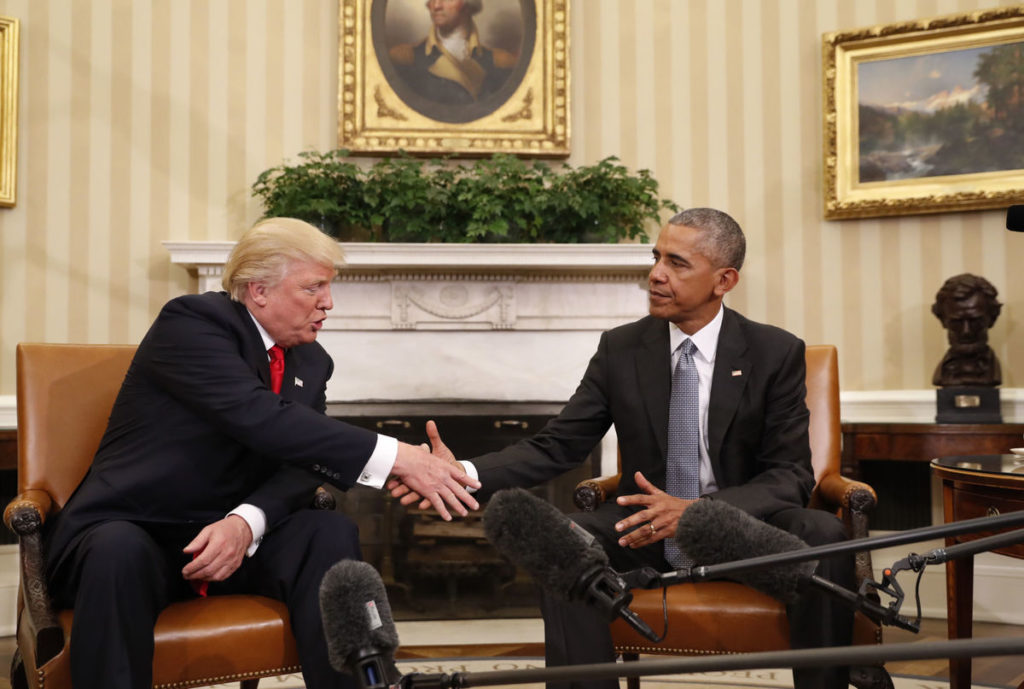
President-elect Donald Trump took a triumphant tour of the nation’s capital Thursday, holding a cordial White House meeting with President Barack Obama, sketching out priorities with Republican congressional leaders and taking in the majestic view from where he’ll be sworn into office. Trump’s meeting with Obama spanned 90 minutes, longer than originally scheduled. Obama said he was “encouraged” by Trump’s willingness to work with his team during the transition of power, and the Republican called the president a “very good man.” “I very much look forward to dealing with the president in the future, including his counsel,” Trump said from the Oval Office. He’ll begin occupying the office on Jan. 20. While Trump noted that he and Obama had never met before, their political histories will forever be linked. Trump spent years perpetrating the lie that Obama was born outside the United States. The president campaigned aggressively against Trump during the 2016 campaign, warning that his election would put the republic at risk. But at least publicly, the two men appeared to put aside their animosity. As the meeting concluded and journalists scrambled out of the Oval Office, Obama smiled at his successor and explained the unfolding scene. “We now are going to want to do everything we can to help you succeed because if you succeed the country succeeds,” Obama said. From the White House, Trump headed to Capitol Hill for meetings with House Speaker Paul Ryan of Wisconsin and Senate Majority Leader Mitch McConnell of Kentucky to discuss the GOP legislative agenda. Ryan, who holds the most powerful post in Congress, was a sometime critic of Trump and never campaigned with the nominee. Emerging from the meetings, Trump sketched out priorities for his presidency. “We’re going to move very strongly on immigration,” he said. “We will move very strongly on health care. And we’re looking at jobs. Big league jobs.” If Trump makes good on his campaign promises, he’ll wipe away much of what Obama has done during his eight years in office. The Republican president-elect, who will govern with Congress fully under GOP control, has vowed to repeal Obama’s signature health care law and dismantle the landmark nuclear accord with Iran. He’s also vowed to build a wall along the U.S.-Mexico border. First lady Michelle Obama met privately in the White House residence with Trump’s wife, Melania, while Vice President Joe Biden was seeing Vice President-elect Mike Pence later Thursday. Obama and Trump met alone, with no st Melania Trump aff present, White House press secretary Josh Earnest told reporters afterward. “The two men did not relitigate their differences in the Oval Office,” Earnest said. “We’re on to the next phase.” Trump traveled to Washington from New York on his private jet, breaking with protocol by not bringing journalists in his motorcade or on his plane to document his historic visit to the White House. Trump was harshly critical of the media during his campaign and for a time banned news organizations whose coverage he disliked from his events. As scores of journalists waited to be admitted to the Oval Office to see Obama and Trump together, they saw White House chief of staff Denis McDonough walking along the South Lawn driveway with Jared Kushner, Trump’s son-in-law. A handful of Trump aides trailed them. The show of civility at 1600 Pennsylvania Avenue contrasted with postelection scenes of protests across a politically divided country. Demonstrators from New England to the heartland and the West Coast vented against the election winner on Wednesday, chanting “Not my president,” burning a papier-mache Trump head, beating a Trump pinata and carrying signs that said “Impeach Trump.” More than 100 protesters held a sit-in outside Trump International Hotel just blocks from the White House. The mostly student protesters held signs saying “Love Trumps Hate,” a phrase Democrat Hillary Clinton often used during the campaign. Trump’s advisers, many of whom were stunned by his unexpected victory over Clinton, plunged into the work of setting up a White House and staffing government agencies. Officials at the Pentagon and State Department said they had not yet been contacted. State Department spokesman Mark Toner said the agency stood ready “to work with the incoming team once that team is designated and arrives here. But we don’t have any firm word as to when that will be.” Trump was expected to consider several loyal supporters for top jobs, including former New York Mayor Rudy Giuliani for attorney general or national security adviser and campaign finance chairman Steve Mnuchin for Treasury secretary. Former House Speaker Newt Gingrich and Tennessee Sen. Bob Corker were also expected to be under consideration for foreign policy posts. As president-elect, Trump is entitled to the same daily intelligence briefing as Obama — one that includes information on U.S. covert operations, information gleaned about world leaders and other data gathered by America’s 17 intelligence agencies. The White House said it would organize two exercises involving multiple agencies to help Trump’s team learn how to respond to major domestic incidents. Republished with permission of the Associated Press.
Martin Dyckman: Supreme Court vacancy makes GOP Senate just as bad as Donald Trump
It’s in our genes here in America that the losers of an election congratulate the winners and we all move on. That’s more than good manners. It’s the survival instinct of any democracy. Donald Trump‘s contempt for that disgusts Republicans as well as Democrats and independents. But look closer. There are 54 members of his party who are already denying the outcome of an election — the last one. And, like Trump, they’re threatening to defy the results of the next one. I’m talking about Senate Majority Leader Mitch McConnell and the 53 sheep in his fold, Although President Obama was re-elected for a four-year term, the Party of No declared it over three years, one month and 25 days after his inauguration. That’s when Obama nominated Judge Merrick Garland to fill the Supreme Court vacancy, and the Republicans refused even to give him a hearing. The Republicans, frustrated and embarrassed by the failure of McConnell’s pledge to make Obama a one-term president, now hold that Supreme Court vacancies during a president’s last year are for the next president to fill. That is unfounded anywhere in the Constitution or Senate rules, and it’s in direct conflict with the most recent precedent. Justice Anthony Kennedy was confirmed in February 1988, the last year of Ronald Reagan‘s term, by a unanimous vote. Now, the Republican senators are making a threat scarcely less irresponsible than Trump’s. They’re saying they won’t confirm any Hillary Clinton nominee to the Supreme Court. This is how John McCain put it in an unguarded moment during a talk show interview on behalf of Sen. Pat Toomey, R-Pa., who’s in well-deserved danger of losing his seat. “I promise,” McCain said, “that we will be united against any Supreme Court nominee that Hillary Clinton, if she were president, would put up. I promise you. This is where we need the majority, and Pat Toomey is probably as articulate and effective on the floor of the Senate as anyone I have encountered. “This is the strongest argument I can make to return Pat Toomey, so we can make sure there are not three places on the United States Supreme Court that will change this country for decades.” To put it the other way, it’s the strongest argument for subtracting Marco Rubio in Florida, Richard Burr in North Carolina, Toomey in Pennsylvania and every other Republican incumbent — including, sad to say, McCain himself — from any future Senate majority. I have always respected McCain for his service and suffering as a prisoner of war, as a senator who often sought bipartisan compromise on campaign reform and other issues, and — until his inexplicable choice of a running mate — as a candidate for president. But this is too much. He’s saying that even if a majority of the American people elects Hillary Clinton, the Senate owes those voters no respect. That’s power politics at its worst. It didn’t take McCain, and others, very long to see that they needed to pull the foot from his mouth. He’s now promising to consider any nominee she sends up fairly. But not necessarily to vote for him or her, no matter the qualifications. What they’re really saying is that if she doesn’t send them more Antonin Scalias, they’ll let the court stay short-handed. “There is talk,” writes Joe Klein in TIME, “of blocking all Supreme Court nominees until the court withers down to a seven-person bench with a conservative majority.” The Republicans have controlled the Supreme Court since Ronald Reagan, and the country is worse off in many ways for it. This election is indeed a referendum on the court. Since the Republicans are preparing to ignore it, they deserve to forfeit the Senate as well as the presidency. The Democrats will pick up Senate seats, perhaps enough for a majority, but not enough for the 60 to break a filibuster. So there’s talk of using the so-called nuclear option, a loophole in Senate rules, to eliminate filibusters against Supreme Court nominees. This has already been done with respect to lower-ranking judicial vacancies, although senators can still single-handedly block nominees from their states. To do that for the Supreme Court will require a Democratic majority or at least 50 seats with Tim Kaine casting the vice president’s tiebreaker. Since both parties have used — and abused — the filibuster, neither is comfortable about trashing it. But a less drastic remedy is possible. At the outset of the next term, when a simple majority can change Senate rules, the Democrats could — and should — provide that the Senate would be deemed to have consented to a nomination once 60 or 90 days have passed without an up-or-down vote. “Power tends to corrupt, and absolute power corrupts absolutely,” wrote the former British Parliamentarian Lord Acton in 1887. American conservatives are particularly fond of that familiar phrase, but those in the U.S. Senate don’t seem to think that it applies to them. It’s time for the voters to remind them that it does. ___ Martin Dyckman is a retired associate editor of the newspaper formerly known as the Tampa Bay Times. He lives in suburban Asheville, North Carolina.
Senate GOP leader’s right moves may not be enough with Donald Trump
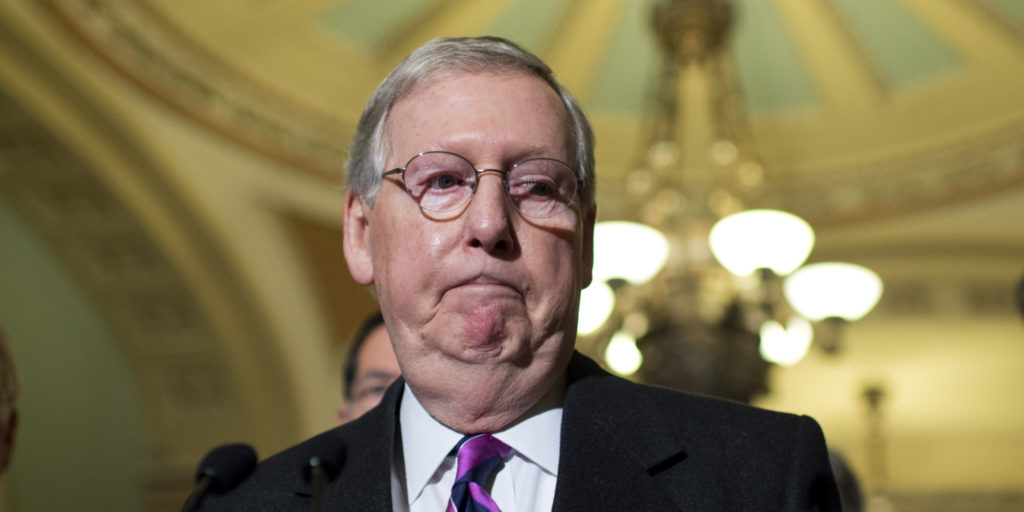
Republicans nervously eyeing the White House race are learning a lesson with Donald Trump that Senate Majority Leader Mitch McConnell painfully learned in 2010 and 2012. Faulty outsider candidates blew several perfectly winnable Senate elections those years. Since then, the crafty Kentuckian has tried to make all the right moves. McConnell, the top fundraiser and field general for the Senate Republicans, helped orchestrate the 2014 midterm romp that delivered the Senate back to his party. McConnell and national Republicans aggressively swung behind incumbents and favored candidates while crushing the chances of tea partyers and far-right hopefuls unlikely to prevail in the general election. McConnell-backed candidates swept this year’s primary cycle. He helped convince Sen. Marco Rubio to run for re-election after the Floridian’s failed presidential bid, boosting the GOP chances of holding the seat. Just two weeks ago, the GOP was cautiously optimistic that the party would retain control of the Senate despite defending 24 of the 34 seats up for grabs this year. It all may prove futile. Trump was already sinking in opinion polls after his poor performance in his first debate with Democrat Hillary Clinton last month. His crude, predatory comments about women in a 2005 videotape that leaked on Friday threatened to scuttle his campaign altogether and take the GOP’s Senate majority with it. McConnell is a disciplined politician, and when it comes to Trump, the senator has kept as quiet as possible after a brief statement in May signaling his support for the presidential nominee. On Monday, as House Speaker Paul Ryan, R-Wis., stoked controversy by vowing never to campaign for Trump, McConnell simply kept his own counsel. “If some of you are here thinking I’m going to elaborate on the presidential election, let me disabuse you of that notion,” McConnell said in an address to the Danville, Kentucky, Chamber of Commerce. “If you are interested in the presidential election you might as well go ahead and leave because I don’t have any observations to make about it.” For Republicans, Trump is reminiscent of Senate candidates like Richard Mourdock of Indiana and Todd Akin of Missouri, who defeated establishment favorites in GOP primaries in 2012 only to make politically stupid remarks about rape and lose by wide margins in states swept by GOP presidential nominee Mitt Romney. In 2010, bad tea party candidates lost in Nevada, Delaware and Colorado, enabling Democrats to hold those seats in spite of that year’s Republican wave. “The biggest lesson that the Senate side had learned that perhaps the rest of the party has lagged on is that in order to win general elections you need to win primary elections with candidates who have a broad mainstream appeal,” said GOP consultant Josh Holmes, a McConnell confidante and former campaign manager. “What manifested itself in Senate elections in ’10 and ’12, that was subsequently corrected in ’14 and ’16 and has for the first time hit the national stage.” McConnell, however, has more sway over his domain on Capitol Hill than Republican National Committee Chairman Reince Priebus, whose laissez-faire approach to the presidential field helped produce Trump. For instance, McConnell himself led the charge against conservative groups like the Senate Conservatives Fund, and he beat back a tea-party challenger in his own re-election campaign two years ago. This year, tea party challenges to Sen. Richard Shelby, R-Ala., John McCain, R-Ariz., and Lisa Murkowski, R-Ala., all fizzled. McConnell also swung behind the decisive primary win of Rep. Todd Young, a more viable general election candidate, over Rep. Marlin Stutzman for an open GOP-held seat in Indiana. “Having aggressively beaten some of the professional conservative groups last cycle was really important in terms of drying up their money and ability to cause mischief,” said GOP consultant Brian Walsh of Rokk Solutions. “They just didn’t have the resources to seriously make trouble for incumbents this cycle.” McConnell, allies say, is aggressive in urging incumbents to not get caught napping – either when facing a tea party primary challenger or an unexpectedly tough fall campaign. Not a single GOP seat fell to Democrats two years ago. Senate races, however, have increasingly moved in synch with national trends, and Democratic Senate candidates have done particularly well in presidential years. So regardless of how strong a campaign McConnell allies like Sen. Pat Toomey of Pennsylvania are running, if Trump loses a state by 10 points instead of, say, five points, there’s very little they can do to save themselves. That’s why Trump’s sinking poll numbers have Republicans so alarmed. Advisers say McConnell almost certainly won’t withdraw his endorsement of Trump. To do so could put endangered candidates, especially in states where the billionaire nominee has an avid following – like North Carolina, Missouri, and Indiana – in a difficult spot. Republished with permission of the Associated Press.
Martin Dyckman: Supreme Court nominees no reason to elect Donald Trump
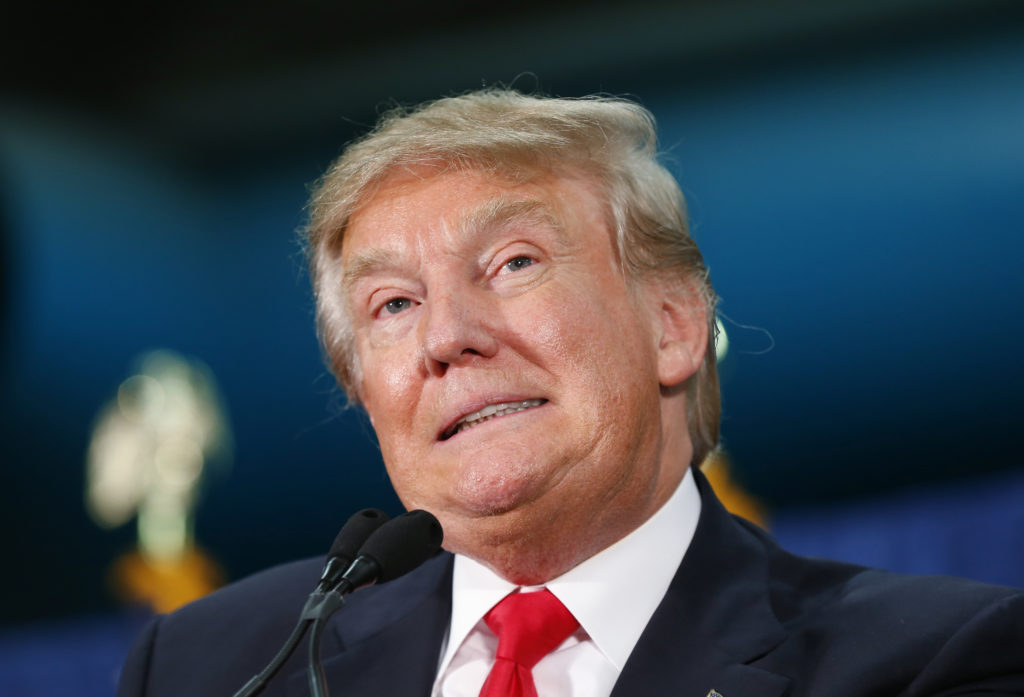
Some Republicans to whom Donald Trump is the skunk at their garden party would have you elect him president nevertheless. Mark Sanford is one. When last heard of, he was the governor of South Carolina, canoodling with a mistress in Argentina while his office pretended that he was hiking the Appalachian Trail. Now he’s a congressman, and he had an op-ed in The New York Times last week (Aug. 14) strongly criticizing Trump for refusing to release his tax returns. Trump’s obstinacy “will have consequences,” Sanford said. It “would hurt transparency in our democratic process, and particularly in how voters evaluate the men and women vying to be our leaders. “Whether he wins or loses, that is something our country cannot afford.” Hear, hear. But Sanford also hedged his bets. “I am a conservative Republican who, though I have no stomach for his personal style and his penchant for regularly demeaning others, intends to support my party’s nominee because of the importance of filling the existing vacancy on the Supreme Court, and others that might open in the next four years,” he wrote. There you have it. To Sanford, keeping Hillary Clinton from appointing new justices is worth letting everything else go to hell. The government, the country, maybe the world and certainly the court. Trump might even nominate his conspicuous Florida cheerleader Pam Bondi. Sanford isn’t the only Republican who has sold out for fear of a liberalized Supreme Court. That’s probably a factor with Paul Ryan, Mitch McConnell and John McCain too. Independents and die-hard Hillary-hating Democrats need to pay attention. If they don’t vote for her, they could have themselves to blame for making the Supreme Court a right-wing rat hole for another generation. Republicans want a court that would uphold their state-by-state voter suppression schemes, shut its eyes to maliciously partisan gerrymandering, and make it impossible rather than merely difficult to sue people like Trump for consumer fraud, environmental pollution and other white collar crimes. The Citizens United atrocity would continue to leave Congress in the grip of the Koch brothers and their allied oligarchs. Clinton vows to appoint justices who would repeal that monumentally bad Supreme Court decision. Trump doesn’t make that promise. He does, however, assure the religious right that his justices would repeal Roe v. Wade. Exacting such commitments from future judges is another of those developments the Founders didn’t anticipate. They had the idealistic, if naive, view that integrity and competence would govern who got appointed. But we have to take the world as it is, and there’s no shortage of capable lawyers who have declared that Citizens United was wrongly decided. Four of the justices at the time said so too. The court has a history of renouncing prior decisions as wrongly decided or simply no longer applicable. It trashed two precedents in Citizens United. Although Justice Anthony Kennedy’s majority opinion more or less rationalized that full disclosure would restrain corporate election spending, that hasn’t happened. Dark money by the billions is sinking the ship of state. And in South Dakota, the Kochtopus is fiercely fighting a ballot initiative that would require public disclosure of donors to advocacy campaigns, create a state ethics commission and provide public financing of political campaigns. Fortunately, there are Republicans who disagree that the court is reason enough to sacrifice everything else. John Yoo and Jeremy Rabkin, law professors in California, are two of them. Writing in the Los Angeles Times Aug. 14, they described the dangerous world we live in and warned that a Trump presidency “invites a cascade of global crises.” Moreover, they argued, conservatives should not take Trump’s word that he would appoint suitable justices or that the Senate would confirm them. “Even if Trump were to win in November, it is in the legislative and executive branches that conservatives will have to win their most important battles,” they wrote. “Does Trump look like the man to lead them?” Yoo’s opposition is really noteworthy. He was the deputy attorney general in the George W. Bush administration who wrote the notorious memos condoning extreme methods of interrogating terrorism suspects, including waterboarding. That’s a form of torture that Trump is salivating to resume. If even Yoo can’t stomach Trump, what does that tell us? ___ Martin Dyckman is a retired associate editor of the newspaper now known as the Tampa Bay Times. He lives in suburban Asheville, North Carolina.
Martin Dyckman: Donald Trump’s America on trial in modern day ‘Judgment at Nuremberg’
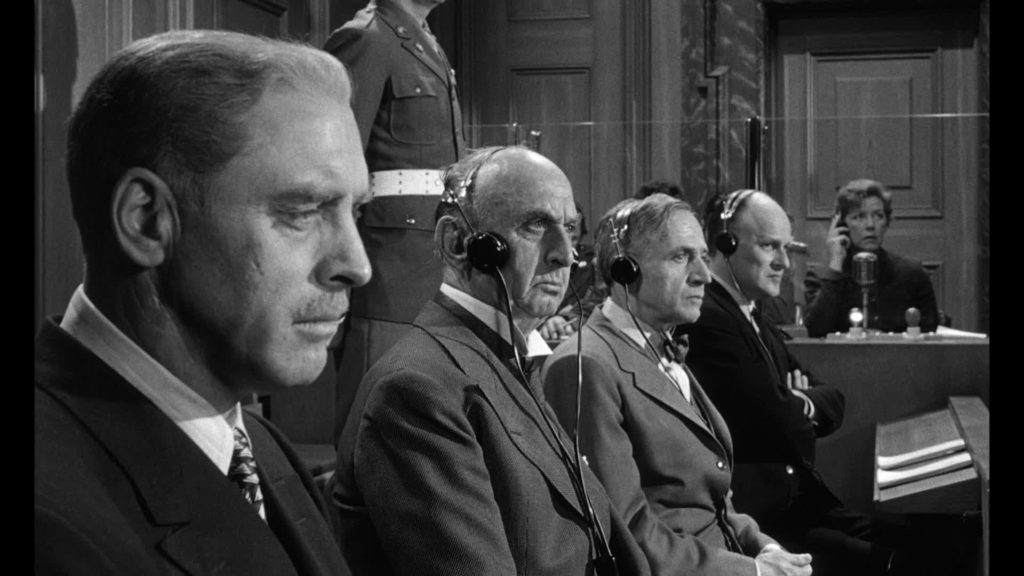
Above all, there was fear: fear of today, fear of tomorrow … fear of our neighbors, and fear of ourselves … Only when you understand that, can you understand what Hitler meant to us: “Lift your heads. Be proud to be German. There are devils among us: Communists, liberals, Jews, Gypsies. Once these devils will be destroyed, your misery will be destroyed.” Those words are from the 1961 film Judgment at Nuremberg. They address an eternal question: Why do good people do terrible things? The speaker, Ernest Janning, played by Burt Lancaster, is a former German judge on trial before an Allied tribunal for crimes he committed in service to the Third Reich. He had been a decent man, widely respected for his legal acumen and his integrity. Now, over the objection of his defense attorney, he insists on testifying for the prosecution. He is explaining why he conducted a show trial of an elderly Jewish man falsely accused of sexual relations with a Gentile woman, and why he determined to convict him and sentence him to death even before hearing any testimony … It was because the future of Germany was at stake. And if a few minorities had to suffer, so be it. The screenplay was closely modeled on actual events, including a Nazi show trial, and on the excuses that “good” Germans gave for their participation. Turner Classic Movies showed the film the other night (Aug. 11). Whether the scheduling had to do with the current election campaign I don’t know. But the timing couldn’t have been better. Comparisons with Adolf Hitler and Nazi Germany should be made rarely lest they trivialize those monstrosities. But there is much — too much — about Donald Trump and his campaign that resembles them. Only the targets of Trump’s demagoguery are different. The methods are the same. He cannot tell a truth if there’s a lie to be told. He peddles fear and capitalizes on hate. He whips his crowds into froths of rage against Hillary Clinton and against reporters whose lives, too, he puts in danger by targeting them at his rallies. The Secret Service had to see to the safety of one of them. All across our country — in schools, on streets, at public meetings, and even from pulpits — Trump’s venom is being echoed in denunciations and harassment of Americans because of their religious faith. In New York City Saturday, an imam and his assistant were murdered execution-style on a city street. The motive remains unknown, but it would surprise no one if it turns out to be a hate crime. The message of Judgment at Nuremberg is not that such things happen. It is, rather, in the question that Ernest Janning asks during his confession: “What of those of us who knew better? We who knew the words were lies, and worse than lies. Why did we sit silent? Why did we take part? Because we loved our country … “And then, one day, we looked around … and found that we were in an even more terrible danger.” We should take that scene as a parable for what’s happening in the United States of America right now. We are in terrible danger — though it appears to be diminishing — of debasing our country and endangering the world with the most unprepared, unsuited and unworthy person who has ever sought the presidency. “I think he’s mentally unstable., I think he’s dangerously unqualified,” says former Sen. Gordon Humphrey of New Hampshire, the latest prominent Republican to put country above party. That’s what John McCain should be doing too. But McCain still pretends that Trump is fit for the presidency. If Trump’s death threat against Clinton didn’t shock McCain’s conscience, what could? Surely McCain knows better. Surely, so do Paul Ryan, Mitch McConnell, and other Republicans who have mortgaged their reputations to the delusion that Trump would be better than Clinton. Or is it just because they crave to share in the power of a Trump presidency? Do they miscalculate, as so many Germans once did, that they could control the monster they are making? If the polls are correct, Trump will lose. But the dangerous hatreds he deliberately inflames will continue to fester. We will all be the losers for that. And those who know better but who continue to support him, with endorsements or money or even with just their silence, will have lost more than an election. They will have forfeited the respect of people who once admired them. ___ Martin Dyckman is a retired columnist and editorial writer for the newspaper now known as the Tampa Bay Times. He lives in suburban Asheville, North Carolina.
Martin Dyckman: Donald Trump, Valdamir Putin and NATO – willful ignorance, or dangerous isolationism?
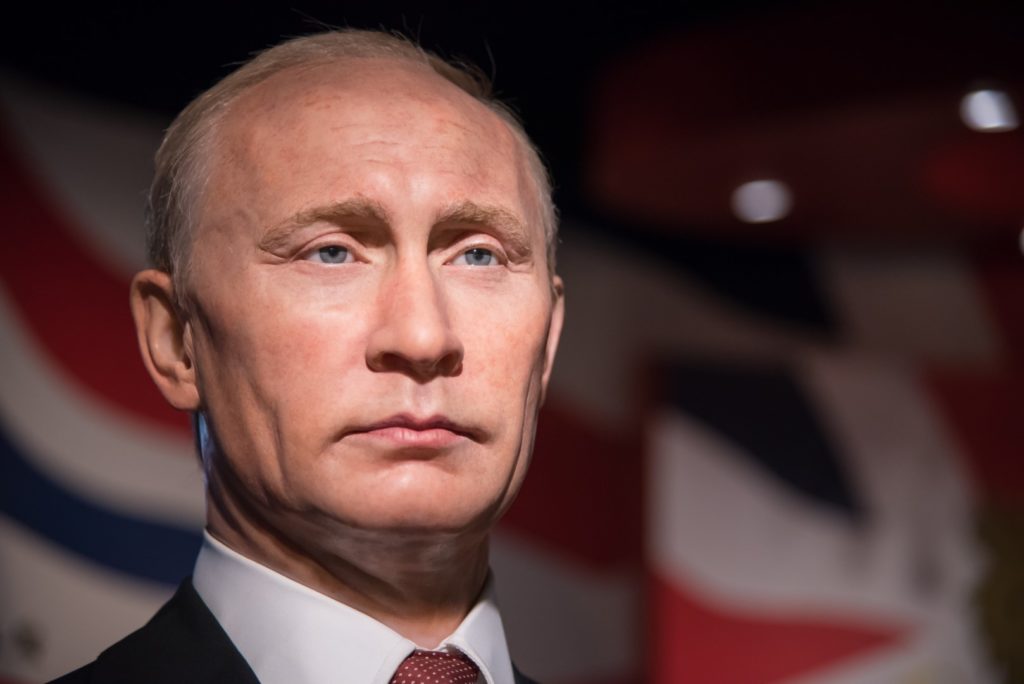
“Vlad, Vlad, is that you?” “Da!” “Donald here. We need to deal. I make great deals. I’ll send you a copy of my book, The Art of the Stea … uh, I mean, Deal.” “I’m sure you do, Donald. What do you want?” “Vlad, I need you to help me beat Hillary Clinton.” “I might be able to do that Donald, but what’s in it for us?” “When I’m president, you can have those little loser countries next door… What do you call them?” “Latvia, Estonia, Lithuania.” “OK. They mean nothing to me. Like I said, they’re losers. But what can you do for me?” “Remember your man Nixon and Watergate? What did they call it? A third-rate burglary? Well, we did better than that. Our guys are first-rate. We have all the secrets from your Democratic National Committee. They won’t look good when they leak, if you know what I mean.” “Good to do business with you, Vlad. Let’s plan on getting together sometime. I have great golf resorts.” “I don’t golf. I swim.” “That too, Vlad. We stock our pools with hot women. And you can bring any friend you like.” “Even Bashar Assad?” “Yeah, Vlad. I might need some tips from him on how to stay in power.” Now, of course, this conversation may not have happened. But it could have. As Donald Trump would say, how do we know that it didn’t? What we do know is that Russian fingerprints are all over the leaked emails that convulsed the Democratic Party on the eve of its convention, forcing the resignation of Chairperson Debbie Wasserman Schultz. And it is a fact that this closely followed Trump’s threat — or was it a promise? — to destroy NATO by abrogating our treaty commitments to defend any and all of its members against any — read Russian — attack. It wasn’t the first time he has questioned NATO’s value, so his Republican apologists shouldn’t be surprised that he has now made his disdain so explicit. NATO is one of the two reasons, the European Union being the other, why there has been no major European war since 1945. That’s without precedent in that continent’s history. Peaceful durations were often measured in months rather than years. It was under NATO’s aegis that the United States and its allies succeeded in ending Serbia’s aggression against Bosnia. It is only NATO that presents any effective obstacle to the transparent neocolonial ambitions of Russia’s new Stalin, Vladimir Putin. There has been nothing as rash as Trump’s undermining of NATO since the British Prime Minister Neville Chamberlin gave Hitler everything he wanted at the Munich conference and declared that he had purchased “peace in our time.” That turned out to be a very short time. Hitler invaded Poland, precipitating World War II and the loss of 60-million lives, merely 11 months later. It’s not hard to imagine the terror that Trump’s words have struck into the Baltic lands that had struggled for centuries to escape Russian rule, losing their liberty in 1940 and regaining it only a half-century later, with the dissolution of the Soviet empire. My wife and I paid a brief, enjoyable visit to Tallinn, the capital of Estonia, during a Baltic cruise in May. It seemed to be a very pleasant country, inhabited by hospitable people. But as our tour guide made plain to us, everyone senses that the Russian hegemony is not yet dead. There are only 1.2-million Estonians, which would be to the Russian bear as a field mouse is to a grizzly. Ethnic Russians comprise 24.8 percent of the population and nearly 30 percent speak Russian as their first language. Estonians with relatives in Russia have the option of holding Russian passports, as our guide said his wife does. It was the presence of sizable ethnic German minorities in Czechoslovakia and Poland that Hitler claimed as pretexts for his aggression. It’s the same rationalization that Putin applies to his poorly disguised war-making in Ukraine. Trump’s couched his irresponsibility in the form of a threat to base our national honor—the fulfillment of a treaty commitment—on his opinion on whether member countries are paying enough for their own defense. Estonia’s president replied promptly, saying that his country has been spending what NATO requires and also sent troops to the war in Afghanistan. “Estonia’s commitment to our NATO obligations is beyond doubt, and so should be the commitments by others,” his spokesman said. “Two world wars have shown that peace in Europe is also important for the security of the United States,” said NATO’s secretary-general, Jens Stoltenberg. Mitch McConnell, who is plainly uncomfortable with his new role as a Trump stooge, was quick to repudiate him on this issue. “NATO is the most important military alliance in world history. I want to reassure our NATO allies that if any of them get attacked, we’ll be there to defend them,” said the Senate majority leader. But that’s an assurance he would be powerless to keep if a president chose to ignore it. It’s the president, not the Congress, who has the power and duty to act in such an event. In speaking as he did to The New York Times last week, Trump either forgot or chose to ignore two telephone interviews with the newspaper’s reports barely four months earlier. Asked whether he would defend Estonia in particular against Russian aggression, here is what he said: “Yeah, I would. It’s a treaty, it’s there. I mean, we defend everybody. (Laughs.) We defend everybody. No matter who it is, we defend everybody. We’re defending the world. But we owe, soon, it’s soon to be $21 trillion. You know, it’s 19 now but it’s soon to be 21 trillion. But we defend everybody. When in doubt, come to the United States. We’ll defend you.” Is this episode yet another example of Trump’s colossal and willful ignorance? Does it mean that at heart he’s a throwback to the American isolationism of the 1930s that
Liar. Lucifer. Lock her up. GOP denounces Hillary Clinton
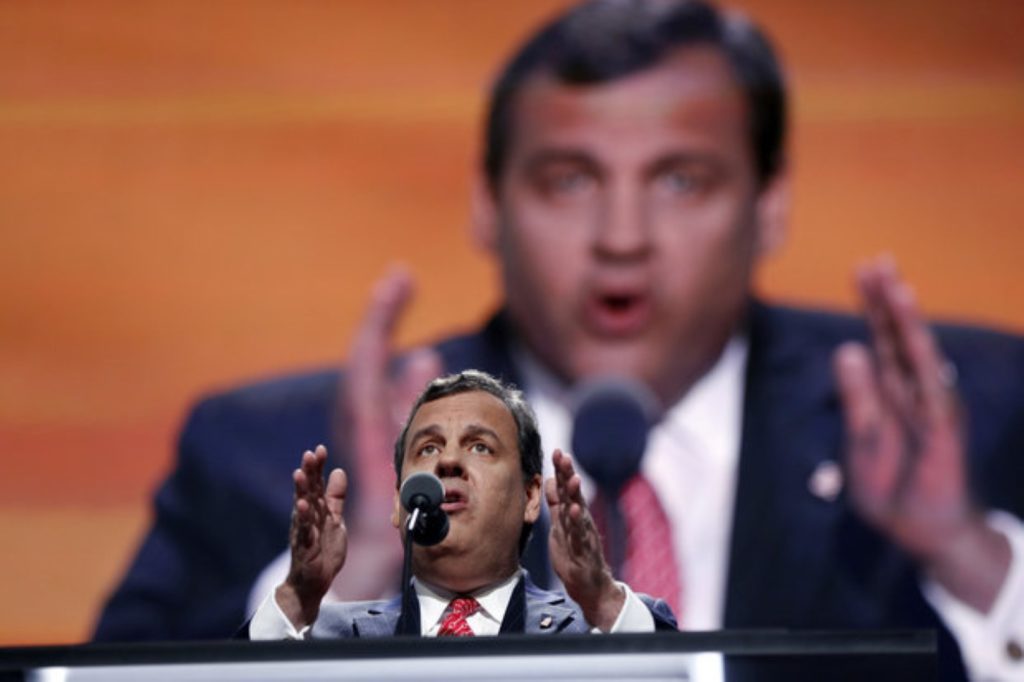
Liar. Lucifer. Lock her up. Republicans may have mixed feelings about nominating Donald Trump for president, but one thing they can all rally around is a deep dislike for Democrat Hillary Clinton. Convention speakers have “prosecuted” Clinton at a mock trial, accused her of being a serial liar and even linked her to the Devil himself. Throughout the campaign, Trump has reveled in referring to his opponent as “Crooked Hillary.” The attacks are an echo of the 1990s when conservatives denounced President Bill Clinton as the chief executive dealt with scandal and impeachment. The most blistering assault at the GOP convention came Tuesday night when New Jersey Gov. Chris Christie took on the role of prosecutor and put Clinton on trial “for her performance and her character.” The audience responded with chants of “Lock her up! Lock her up!” But others have piled on. Senate Majority Leader Mitch McConnell told the crowd scandal follows Clinton and former President Bill Clinton “like flies.” “She lied about her emails. She lied about her server. She lied about Benghazi. She even lied about sniper fire. Why, even she lied about why her parents named her Hillary,” McConnell said. And Wednesday, Trump campaign manager Paul Manafort said the airport meeting between former President Bill Clinton and Attorney General Loretta Lynch last month probably helped Clinton’s wife escape criminal charges over her use of a private email server. He told ABC that Lynch “probably” gave Bill Clinton special information that helped his wife. Manafort even tried to blame Clinton for the controversy over Melania Trump lifting passages of her convention remarks from a speech that Michelle Obama delivered in 2008. “For people to try and disparage that speech and say that it was something that it wasn’t is once again politics,” he told Fox News. “It’s Hillary Clinton once again feeling threatened by a woman and trying to destroy the woman and demean her as a way of positioning her own fate.” Perhaps the wildest attack on Tuesday came from former GOP presidential candidate Ben Carson, who told the crowd that one of Clinton’s “role models” — community activist Saul Alinsky — “acknowledges Lucifer” in a 1971 book. “So are we willing to elect someone as president who has as their role model somebody who acknowledges Lucifer?” Carson said. “Think about that.” Clinton wrote a college thesis about Alinsky and has said she agreed with some of his opinions on social change, but disagreed with his view that the system could only be changed from the outside. Some Republicans are wary of going too far. Arizona Sen. Jeff Flake, one of the more prominent Trump skeptics, Tweeted late Tuesday: “@HillaryClinton now belongs in prison? C’mon. We can make the case that she shouldn’t be elected without jumping the shark.” But attacking Clinton may be the most effective tactic with polls showing high unfavorable ratings for both candidates. An Associated Press-GfK poll this month found that three-quarters of voters say their pick for president is motivated by a desire to cast their ballot against Clinton or Trump. Republished with permission of the Associated Press.
Former rivals, military leaders, actors to take stage at RNC

Former presidential candidates Ted Cruz, Chris Christie, Scott Walker and Marco Rubio — the latter by video link — are among those set to speak at the Republican National Convention in Cleveland. Military leaders, members of Congress, actors, faith leaders and family members of presumptive presidential nominee Donald Trump are also set to speak in what the Republican National Committee calls “an unconventional lineup” that will challenge the status quo and press for Trump’s agenda. Speaker highlights at the four-day convention, which begins Monday at the Quicken Loans Arena. MONDAY Theme: Make America Safe Again Headliners: Trump’s wife, Melania; Lt. Gen. (ret.) Michael Flynn, U.S. Army; Sen. Joni Ernst, R-Iowa; and Rep. Ryan Zinke, R-Mont. Others: Willie Robertson, star of “Duck Dynasty”; former Texas Gov. Rick Perry; Marcus Luttrell, retired U.S. Navy SEAL; Scott Baio, actor; Pat Smith, mother of Sean Smith, killed in the 2012 attacks in Benghazi, Libya; Mark “Oz” Geist, member of a security team that fought in Benghazi; John Tiegen, member of Benghazi security team and co-author of the book “13 Hours,” an account of the attacks; Kent Terry and Kelly Terry-Willis, siblings of Brian Terry, a Border Patrol agent whose shooting death revealed the botched “Fast and Furious” gun-smuggling operation; Antonio Sabato Jr., actor; Mary Ann Mendoza, Sabine Durden and Jamiel Shaw, immigration reform advocates; Rep. Michael McCaul, R-Texas; David Clarke, sheriff of Milwaukee County, Wis.; Rep. Sean Duffy, R-Wis.; Rachel Campos-Duffy, LIBRE Initiative for Hispanic economic empowerment; Darryl Glenn, Senate candidate in Colorado; Sen. Tom Cotton, R-Ark.; Karen Vaughn, mother of a U.S. Navy SEAL killed in Afghanistan; Sen. Jeff Sessions, R-Ala.; former New York Mayor Rudy Giuliani; and Jason Beardsley of Concerned Veterans for America. ___ TUESDAY Theme: Make America Work Again Headliners: Tiffany Trump, candidate’s daughter; Kerry Woolard, general manager, Trump Winery in Virginia; Donald Trump Jr.; Sen. Shelley Moore Capito, R-W.Va.; former GOP presidential candidate Ben Carson; and actress Kimberlin Brown. Others: Sharon Day, co-chairwoman of Republican National Committee; Dana White, president, Ultimate Fighting Championship; Arkansas Gov. Asa Hutchinson; Arkansas Attorney General Leslie Rutledge; former U.S. Attorney General Michael Mukasey; Andy Wist, founder of Standard Waterproofing Co.; Sen. Ron Johnson, R-Wis.; Chris Cox, executive director, NRA Institute for Legislative Action; golfer Natalie Gulbis; Senate Majority Leader Mitch McConnell, R-Ky.; House Speaker Paul Ryan, R-Wis.; House Majority Leader Kevin McCarthy, R-Calif.; New Jersey Gov. Chris Christie. ___ WEDNESDAY Theme: Make America First Again Headliners: Former presidential candidates Ted Cruz and Marco Rubio; Eric Trump, son of the candidate; former House Speaker Newt Gingrich; and Indiana Gov. Mike Pence, Trump’s pick to be vice president. Others: radio host Laura Ingraham; Phil Ruffin, businessman with interests in real estate, lodging, manufacturing and energy; Florida Attorney General Pam Bondi; retired astronaut Eileen Collins; Michelle Van Etten, small business owner; Kentucky state Sen. Ralph Alvarado Jr.; Darrell Scott, senior pastor and co-founder of New Spirit Revival Center Ministries, Cleveland; Harold Hamm, oil executive; Wisconsin Gov. Scott Walker; Lynne Patton, vice president, Eric Trump Foundation; Sen. Marco Rubio, R-Fla. (by video); Sen. Ted Cruz, R-Texas; Callista Gingrich, wife of Newt Gingrich. ___ THURSDAY Theme: Make America One Again Headliners: Peter Thiel, co-founder PayPal; Tom Barrack, CEO of Colony Capital; Ivanka Trump, daughter of the candidate; and Donald Trump, GOP nominee for president. Others: Brock Mealer, motivational speaker; Rep. Marsha Blackburn, R-Tenn.; Oklahoma Gov. Mary Fallin; Dr. Lisa Shin, owner of Los Alamos Family Eyecare in New Mexico; RNC Chairman Reince Priebus; Jerry Falwell Jr., president of Liberty University and evangelical leader. Republished with permission of the Associated Press.
Dan Coats says Donald Trump hasn’t made up his mind on VP
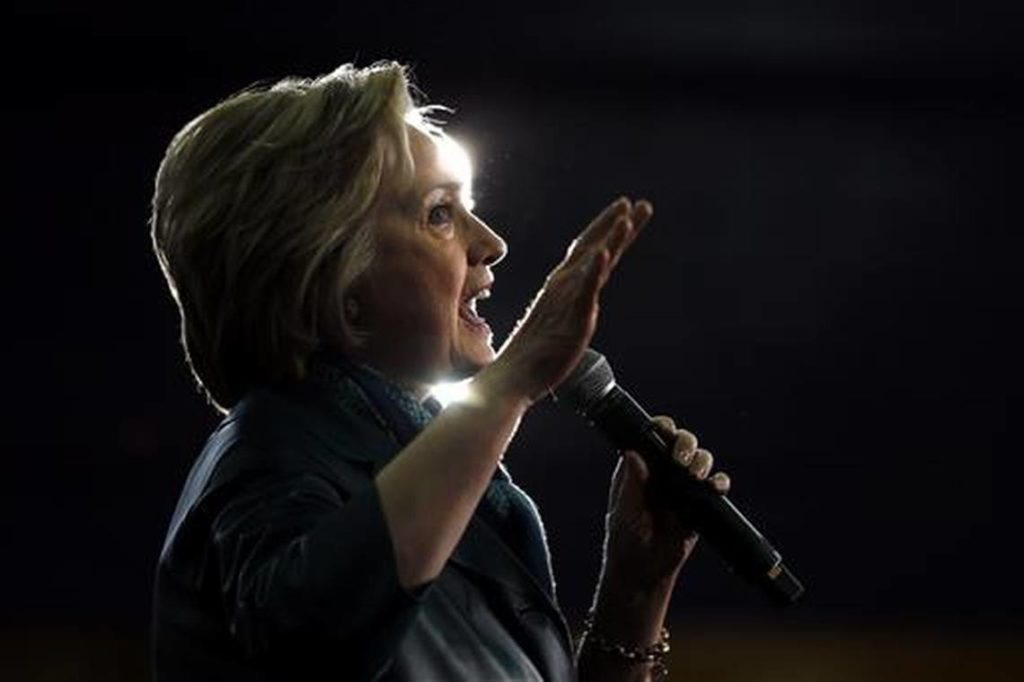
The Latest on the 2016 presidential campaign ahead of the Republican and Democratic national conventions (all times EDT): 1:30 p.m. Indiana Sen. Dan Coats says Donald Trump hasn’t made up his mind about who to select as his running mate. Coats told The Associated Press Wednesday that he spoke with Gov. Mike Pence late Tuesday — one of the names on Trump’s shortlist of potential running mates — and Pence told him there’s still no decision. “I think he’s the front-runner,” Coats said, adding, “I think he ought to be the front-runner.” Coats said Pence is “pretty calm about the whole thing.” He added that Trump is cognizant that he needs to make a decision by Friday given gubernatorial succession rules in Indiana. But he concluded that “reading Donald Trump’s mind is not the easiest thing to do.” ___ 1:20 p.m. Hillary Clinton says the Republican Party of Abraham Lincoln has been transformed into “the party of Trump.” Rattling off a series of attacks against her GOP rival, Clinton says Trump is “dangerous,” ”divisive,” ”fear-mongering” and is “pitting American against American.” Even stalwart Republicans, she says, should be alarmed by Trump’s policies and racist rhetoric. Clinton is casting Trump as ignorant of the Constitution, dismissive of U.S. law and lacking the character to be trusted with American security. “Imagine if he had not just Twitter and cable news to go after his critics and opponents, but also the IRS – or for that matter, our entire military,” she says. “Do any of us think he’d be restrained?” ___ 1:07 p.m. Hillary Clinton is calling on the country — including herself — to “do a better job of listening” rather than fueling political and other divisions after a series of high-profile shootings. Clinton says the country must address both gun violence, criminal justice reform and find ways to better support police departments. “I know that just saying these things together may upset some people,” she says. “But all these things can be true at once.” Clinton is speaking in the Illinois Old State House chamber in Springfield, the site of Abraham Lincoln’s his famous address about the perils of slavery. She is trying to use the symbolic site to contrast her call for civility with what she sees as rival Donald Trump’s polarizing campaign. Clinton said she has work to do, as well. She says that as someone “in the middle of a hotly fought political campaign, I cannot claim that my words and actions haven’t sometimes fueled the partisanship that often stands in the way of our progress.” Clinton adds, “I recognize that I have to do better too.” ___ 12:29 p.m. Donald Trump is meeting with finalists for the job of his vice presidential running mate. Trump met Tuesday with New Jersey Gov. Chris Christie and his family. Early Wednesday, Trump and his children met with Indiana Gov. Mike Pence and his family. Former House Speaker Newt Gingrich also was said to be a finalist. All three have auditioned for the job by opening for Trump at campaign rallies over the past week. Trump was expected to make an announcement on Friday. ___ 10:20 a.m. Republican Donald Trump huddled with Indiana Gov. Mike Pence at the governor’s mansion in Indiana on Wednesday morning amid swirling speculation about Trump’s vice presidential deliberations. Pence and Trump walked out of the residence together just before 10:30 a.m. The pair was joined inside by Pence’s wife, Karen, as well as Trump’s daughter, Ivanka, and his son-in-law Jared Kushner. Trump is said to have narrowed his short list down to a trio of top contenders, including Pence. Pence joined Trump at a fundraiser and a rally on Tuesday where he received a warm reception from the crowd. ___ 10:15 a.m. The lead super PAC backing Democratic presidential candidate Hillary Clinton has begun targeting Spanish-speaking voters in Colorado, Nevada and Florida as part of a $35 million online effort it announced earlier this year. An online ad from Priorities USA features video clips of Trump calling Hispanics “drug dealers” and “criminals” and leading his supporters in the chant: “Build that wall! Build that wall! Build that wall!” In Spanish, an on-screen message declares that “hatred is growing in our country.” The ad campaign also includes a website: unidoscontratrump.org, which means “united against Trump.” The same message will appear in banner ads on social media. The three targeted states all have significant Latino populations. Trump insists he can do better among Hispanics than the less-than-30 percent Republican Mitt Romney drew in 2012 after calling for “self-deportation” for immigrants in the country illegally. ___ 7:35 a.m. Bernie Sanders says he agrees with the harsh remarks that Justice Ruth Bader Ginsburg has made about Republican presidential candidate Donald Trump. The Vermont senator declined to say whether it is appropriate for a sitting Supreme Court justice to openly criticize a White House contender. But he tells ABC’s “Good Morning America” that he agrees Trump is a “total opportunist” and said “the record clear is quite clear that he lies just a whole lot of the time.” Ginsburg in a series of interviews with The Associated Press, The New York Times and CNN has called Trump unqualified to be president and joked that she would move to New Zealand if he won. Trump said in a tweet that Ginsburg should resign. Sanders’s comments came a day after he formally endorsed Hillary Clinton as the Democratic nominee for president. Asked if he is open to being her running mate, Sanders said, “I doubt that will happen.” He said his focus is on helping Clinton win. He says, “We cannot have a man with Trump’s temperament with the nuclear code and running this country.” 5:25 a.m. Hillary Clinton is turning to the symbolism of Abraham Lincoln’s “House Divided” speech to argue that the nation needs to repair its divisions after high-profile shootings in Texas, Louisiana and Minnesota. Clinton’s campaign says the Democratic presidential candidate will talk about the importance of uniting
