
Raphael Warnock, Hershel Walker pivot to overtime in Georgia Senate contest
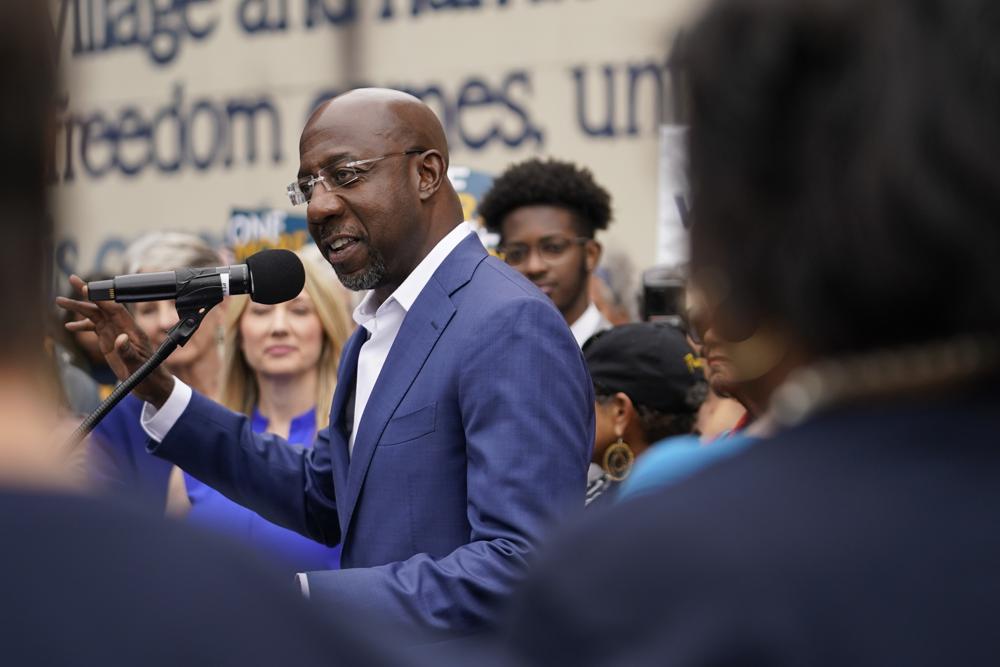
Democratic Sen. Raphael Warnock and Republican challenger Herschel Walker pivoted to a decisive extra round of their Senate race Thursday, while party leaders and donors around the country geared up for a four-week campaign blitz that could determine control of the chamber for the next two years. With votes still being counted in Senate contests in Arizona and Nevada, the single December 6 runoff in Georgia could either decide majority control — as did the state’s twin runoffs in 2021 — or further pad one party’s advantage. But neither Republicans nor Democrats were waiting for the Western states’ results to begin scrambling for big money. The Democrats’ Senate campaign arm announced early plans for a $7 million investment in field operations, a sum certain to be dwarfed by what both parties’ various committees will eventually spend on the airwaves. Top Republicans in Washington began huddling with donors, urging their continued support after the party nationwide fell short of expectations in Tuesday’s midterm elections. Former President Donald Trump, who has endorsed Walker, sent out fundraising pitches based on the runoff. The White House offered assurances that President Joe Biden would do whatever was best to help Warnock — even if that means keeping his distance. Warnock sidestepped the national implications Thursday, going directly at Walker and characterizing the former football star as unqualified and unfit for the office. “This race is about competence, and it’s about character,” Warnock said in his first public appearance since his election night party. He went on to detail Walker’s exaggerations of his business and professional achievements and allegations of violence against women, including Walker’s first wife. And he called Walker, who is making his first bid for public office, “manifestly uninformed” on public policy. “The choice between me and Herschel Walker is clear,” Warnock said. “Some things in life are complicated. This ain’t one of them. This is not a math test.” Walker was scheduled to host his first runoff campaign rally later Thursday in the northern reaches of metro Atlanta, key territory for Republicans in Georgia. Warnock’s searing indictment of Walker stands in contrast to the more muted arguments the senator offered for much of the fall, when he focused on his own record in Washington, especially deals with Republicans on infrastructure and provisions in Democratic bills to cap insulin and other drug costs for Medicare recipients. Both approaches, his advisers say, are aimed at independents and moderate Republicans who are critical in a state that, until recently, was dominated by the GOP at all levels of government. Tuesday’s election results appeared to validate Warnock’s strategy and show Walker’s vulnerability after sustained scrutiny of his past, including allegations from two former girlfriends that he encouraged and paid for their abortions despite calling for a national ban on the procedure as a political candidate. Walker led Warnock by about 35,000 votes out of more than 3.9 million cast but failed to clear the 50% threshold needed to avoid a runoff. More critically for Walker, he ran well behind nearly every other GOP nominee for statewide office, including Gov. Brian Kemp, who got about 200,000 more votes on his way to winning a second term. Walker’s vote shares trailed Trump’s 2020 marks across the state, in rural areas, suburban counties, and metro centers — and Trump still lost the state to Biden by a razor-thin margin. Republicans have acknowledged Walker’s flaws throughout the campaign but have argued Warnock remains vulnerable because of broad voter dissatisfaction with generally high inflation and the direction of the country under Democratic control of the White House and Capitol Hill. Dan Eberhart, a GOP donor, called Walker “damaged goods,” saying the contest has to be about who’s running Washington, not just a Georgia senator. “You are voting for Chuck Schumer or Mitch McConnell” to lead the Senate, Eberhart said. Walker, who dismisses the focus on his past as “foolishness,” has fully embraced a nationalized attack on his opponent. “Raphael Warnock represents Joe Biden, not the people of Georgia,” he says at every campaign stop. Stephen Lawson, who is leading the 34N22 political action committee in support of Walker’s bid, said the same. “That’s still the message: Elect a check on Joe Biden,” said Lawson, whose PAC features Walker’s jersey number as a running back for the University of Georgia and later pro football. Lawson said his PAC will focus on three pools of voters: the GOP base that stuck with Walker, the 200,000 Kemp voters who didn’t, and the 350,000 voters who backed Trump two years ago but didn’t return to the polls for the January 2021 runoffs that Democrats won. The anti-Biden message, he said, can reach all three groups. Warnock, for his part, tacitly acknowledges that his party affiliation may be his biggest liability, even as Democrats exceeded expectations Tuesday by winning enough to potentially hold their Senate majority and limit Republicans to a slim House majority, at best. From the start of his campaign, Warnock has distanced himself from Biden, at least in his campaign speeches and television advertising. The senator alludes to his 2021 runoff victory alongside fellow Georgia Democratic Sen. Jon Ossoff and links it to Democratic accomplishments, from the COVID-19 pandemic relief package to the confirmation of Supreme Court Justice Ketanji Brown Jackson as the first Black woman on the nation’s highest judicial body. Biden’s approval ratings nationally hover in the low 40s and are even lower in Georgia. White House communications director Kate Bedingfield said it was up to Warnock to decide what is best for his campaign. “The president will do whatever is helpful to Sen. Warnock, whether that’s campaigning with him, whether that’s raising money,” she said Thursday on CNN. “Whatever Sen. Warnock would like, the president will do.” But regardless of either candidate’s difficulty navigating his liabilities, one thing is certain: A full-scale national fight is underway. “There’s going to be plenty of money,” said Eberhart. “It’s the only game in town, so everyone will still be there.” Republished with the permission of The Associated Press.
Tommy Tuberville votes against bill to keep the government funded; Richard Shelby votes in favor
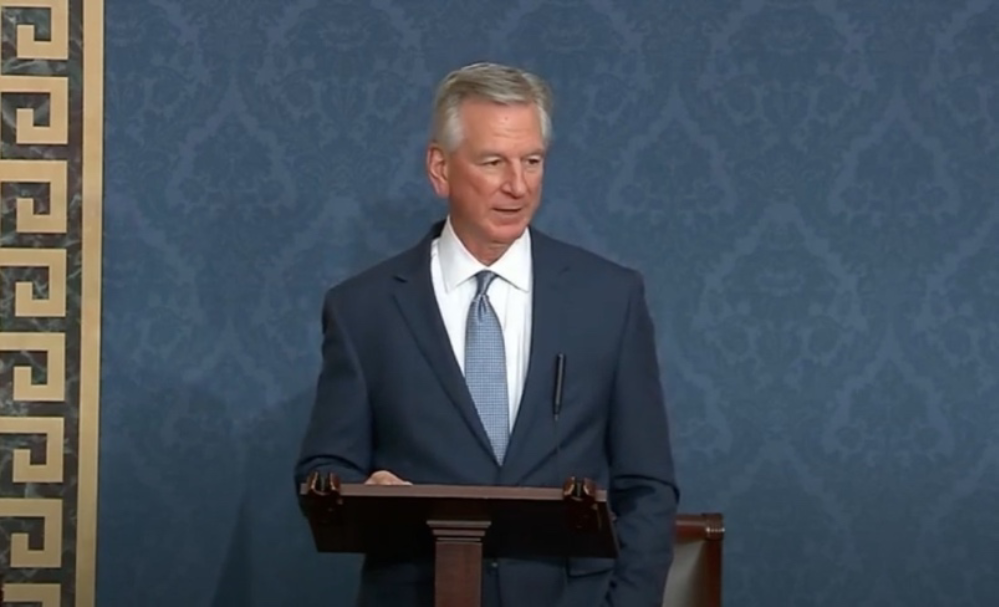
The U.S. Senate passed a continuing resolution on Thursday that keeps the government funded through December 16—avoiding an election-year partial government shutdown. Senator Tommy Tuberville voted against the C.R. due to the spending increases that were added to the deficit. “A continuing resolution is meant to maintain government funding at its current level until Congress passes appropriation bills,” Tuberville said in an email to Alabama Today. “But, in what has become standard practice this Congress, Democrats were set on using this legislation to spend as much unrelated money as possible, as quickly as possible. This is a reckless approach to governing. Hastily spending billions of new dollars by attaching them to a continuing resolution is an irresponsible use of taxpayer funds.” Tuberville and 24 other Republicans opposed the C.R., but 22 Republicans voted with all of the Democrats in favor of the bipartisan legislation, so it passed the Senate 72 to 25. Sen. Richard Shelby voted in favor of the bill. Shelby is the Vice Chairman of the Senate Appropriations Committee. “The Senate has passed a Continuing Resolution ensuring the government will remain open and functioning,” Shelby said in a statement. Now, with very little time remaining, we must complete the full-year appropriations bills. My colleagues must quickly accept a bipartisan framework that rejects poison pills, maintains important legacy riders, and demonstrates a serious commitment to our national defense. We need to finish the job.” Sen. Patrick Leahy chairs the Appropriations Committee – which is tasked with passing C.R.s and actual budgets. “Before I begin, I want to acknowledge that this morning, countless Floridians woke up to a world turned upside down in the wake of Hurricane Ian,” Leahy said in a statement. “And hundreds of thousands in Puerto Rico remain without power more than ten days after the storm that ravaged the island. Vermonters will stand by your side as you rebuild your communities and your lives, and so will this chamber.” “The continuing resolution we are about to consider contains $18.8 billion for the FEMA Disaster Relief Fund, which would bring available resources in the fund to approximately $35 billion to respond to these and other disasters,” Leahy continued. “We likely will not know the extent of the damage for several days, but we are the United States of America, and I am ready to work with my colleagues to respond with what is needed.” “That said, I am glad that we have reached agreement to fund the federal government through December 16, and I want to thank my friend Vice Chairman Shelby and Leaders (Chuck) Schumer and (Mitch) McConnell for their work and cooperation in reaching this point,” Leahy added. “I am glad that we were able to secure $1 billion to bolster LIHEAP ahead of the winter heating season. In my home state of Vermont, which will receive an infusion of $5.7 million from this funding, this program goes a long way in helping families pay their bills when faced with rising fuel costs and plummeting temperatures.” “The bill also includes $12.35 billion dollars in emergency assistance for Ukraine; $2.5 billion to support recovery efforts following the Hermit’s Peak/Calf Canyon Fire in New Mexico; and $2 billion in Community Development Block Grants to help communities recovering from major disasters in 2021 and 2022,” Leahy stated. “I am disappointed that due to Republican opposition, there is no additional funding to combat COVID-19 or Monkeypox, but I will keep fighting for these important resources. Finally, I want to be clear. This is only a temporary measure,” Leahy continued. “As the Chairman of the Appropriations Committee, I am committed to completing the work of the Committee before the end of this Congress. Running on autopilot after December with rising inflation would be irresponsible. It would leave priorities – of both Republicans and Democrats – underfunded and under-resourced. The federal government funds programs that the American people rely on, and we should do the job they sent us here to do. I want to thank Vice Chairman Shelby’s staff. I also want to thank my staff for their hard work and countless hours. Charles Kieffer, Chanda Betourney, there are too many to name now, so I ask unanimous consent that their names be entered into the Record. This continuing resolution is a strong bill. It is a bipartisan bill, and I urge my colleagues to support it.” The bill will now advance to the House of Representatives, where it is expected to pass. Following House passage, the bill will be sent to President Joe Biden’s desk for his signature, which is anticipated. The U.S. national debt is $30.9 trillion. To connect with the author of this story, or to comment, email brandonmreporter@gmail.com.
Senate passes stopgap bill to avert shutdown, aid Ukraine
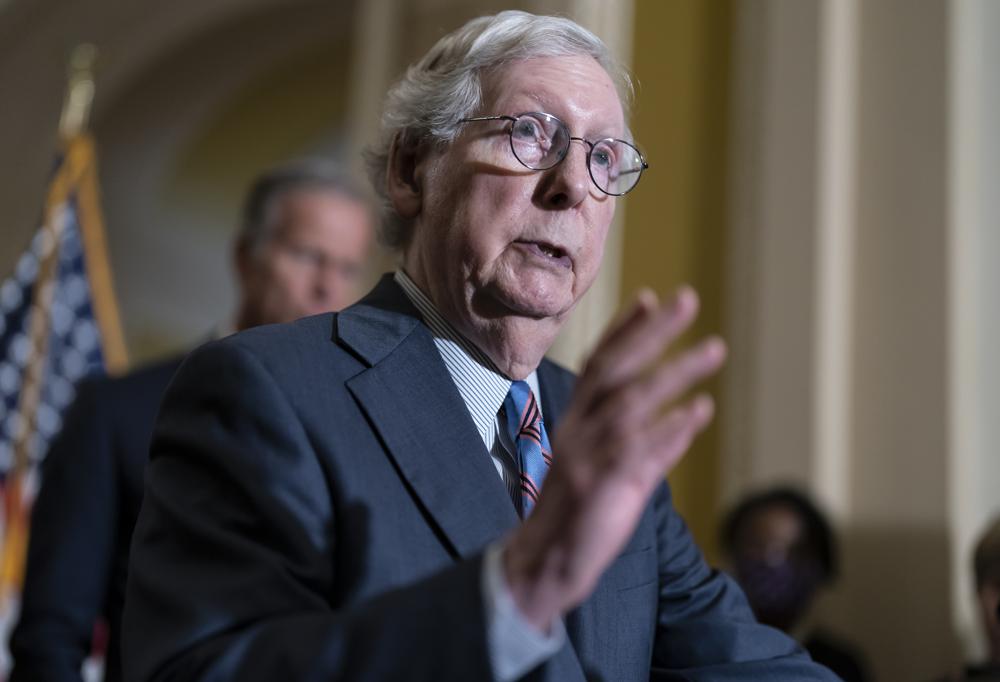
The Senate passed a short-term spending bill on Thursday that would avert a partial government shutdown when the current fiscal year ends at midnight Friday and provide another infusion of military and economic aid to Ukraine as it seeks to repel Russia’s brutal invasion. The bill finances the federal government through December 16 and buys lawmakers more time to agree on legislation setting spending levels for the 2023 fiscal year. It passed by a vote of 72-25 and now goes to the House for consideration. All of the no votes came from Republicans. As has become routine, lawmakers waited until the final hours before the shutdown deadline to act. But passage of a bill to fund the government was hardly in doubt, particularly after Democrat Sen. Joe Manchin agreed to drop provisions designed to streamline the permitting process for energy projects and greenlight the approval of a pipeline in his home state of West Virginia. Those provisions had drawn opposition from both sides of the political aisle. Still, the bill merely puts off for a few months the maneuvering that will be required after the midterm election to pass a massive government funding package, as negotiators will have to bridge their differences over spending on hot-button issues such as abortion, border security, and climate change. The bill approved Thursday, with some exceptions, keeps spending at federal agencies at current levels through mid-December. The most notable of those exceptions is the more than $12 billion that will be provided to aid Ukraine, on top of more than $50 billion provided in two previous bills. The money will go to provide training, equipment, and logistics support for the Ukraine military, help Ukraine’s government provide basic services to its citizens, and replenish U.S. weapons systems and munitions. “Seven months since the conflict began, it’s crystal clear that American assistance has gone a long way to helping the Ukrainian people resist (Russian President Vladimir) Putin’s evil, vicious aggression,” said Senate Majority Leader Chuck Schumer, D-N.Y. “But the fight is far from over.” Republican leader Mitch McConnell also voiced support for the Ukraine aid, while admonishing the Biden administration to get it out the door more quickly. “Assisting Ukraine is not some feel-good, symbolic gesture,” McConnell said. “It’s literally an investment in our own national security and that of our allies.” Disaster assistance was attached to the stopgap bill, including $2.5 billion to help New Mexico communities recover from the Hermit’s Peak/Calf Canyon Fire, the largest wildfire in the state’s history; $2 billion for a block grant program that aids the economic recovery of communities impacted by recent disasters and $20 million for water and wastewater infrastructure improvements previously authorized for Jackson, Mississippi. An additional $18.8 billion was included for the Federal Emergency Management Agency to respond to current and future disasters, such as Hurricane Ian, which hit Florida on Wednesday. The bill would provide an additional $1 billion for a program that helps low-income households heat their homes. And it would transfer $3 billion from a Pentagon aid program to the State Department for continued Afghan resettlement operations. Lawmakers also included a reauthorization of the Food and Drug Administration’s user fee agreements for five years, which ensures the agency can continue critical product safety reviews and won’t need to issue pink slips for thousands of employees working on drug and medical device applications. One thing missing from the bill is the billions of dollars in additional funding that President Joe Biden sought to aid the response to COVID-19 and monkeypox. Republicans criticized the health spending as unnecessary. The White House said the money would have been used to accelerate the research and development of vaccines and therapeutics, prepare for future COVID variants and support the global response. The bill’s passage is the last must-do item on lawmakers’ list before returning to their home states and districts to campaign before the mid-term elections that will determine which party controls the House and Senate over the next two years. Lawmakers were anxious to get out of Washington and focus on campaigning without the specter of a shutdown. “The last thing the American people need right now is a pointless government shutdown,” Schumer said. Republished with the permission of The Associated Press.
Lindsey Graham unveils nationwide abortion ban after 15 weeks
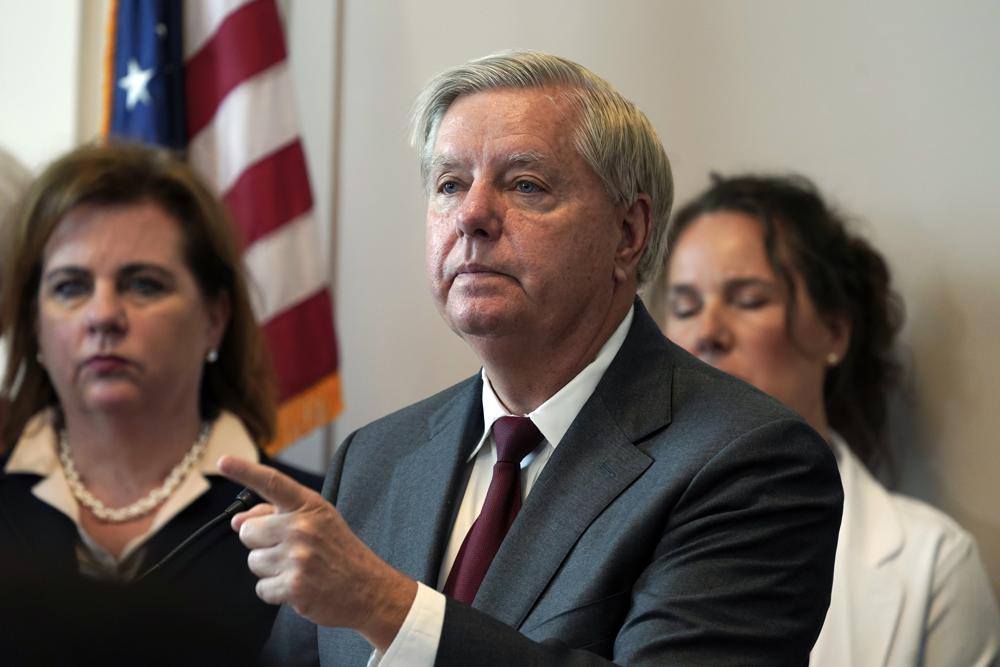
Upending the political debate, Republican Sen. Lindsey Graham introduced a nationwide abortion ban Tuesday, sending shockwaves through both parties and igniting fresh debate on a fraught issue weeks before the midterm elections that will determine control of Congress. Graham’s own Republican Party leaders did not immediately embrace his abortion ban bill, which would prohibit the procedure after 15 weeks of pregnancy with rare exceptions, and has almost no chance of becoming law in the Democratic-held Congress. Democrats torched it as an alarming signal of where “MAGA” Republicans are headed if they win control of the House and Senate in November. “America’s got to make some decisions,” Graham said at a news conference at the Capitol. The South Carolina Republican said that rather than shying away from the Supreme Court’s ruling this summer overturning Roe v. Wade’s nearly 50-year right to abortion access, Republicans are preparing to fight to make a nationwide abortion ban federal law. “Oh, no, no, no, no, no, no, we’re going nowhere,” the senator said while flanked by female advocates from the anti-abortion movement. “We welcome the debate. We welcome the vote in the United States Senate as to what America should look like in 2022.” Reaction was swift, fierce, and unwavering from Democrats who viewed Graham’s legislation as an extreme example of the far-right’s hold on the GOP and as a political gift of self-inflicted pain for Republican candidates now having to answer questions about an abortion ban heading toward the midterm elections. “A nationwide abortion ban — that’s the contrast between the two parties, plain and simple,” Senate Majority Leader Chuck Schumer said. Sen. Patty Murray, a Democrat from Washington who is in her own fight for reelection, said Republicans “want to force” women to stay pregnant and deliver babies. “To anyone who thought they were safe, here is the painful reality,” she said. “Republicans are coming for your rights.” The sudden turn of events comes in a razor-tight election season as Republicans hoping to win control of Congress are struggling to recapture momentum, particularly after the Supreme Court’s landmark decision sparked deep concerns among some voters, with signs of female voters peeling away from the GOP. In a midterm election where the party out of the White House traditionally holds an advantage, even more so this year with President Joe Biden’s lackluster approval ratings, the Democrats have regained their own momentum pushing back the GOP candidates in House and Senate races. Tuesday’s announcement set up an immediate split screen with Biden and Democrats poised to celebrate their accomplishments in a ceremony at the White House after passage of the Inflation Reduction Act and Republicans forced to answer for Graham’s proposed abortion ban. “This bill is wildly out of step with what Americans believe,” White House press secretary Karine Jean-Pierre said in a statement. “While President Biden and Vice President [Kamala] Harris are focused on the historic passage of the Inflation Reduction Act to reduce the cost of prescription drugs, health care, and energy – and to take unprecedented action to address climate change — Republicans in Congress are focused on taking rights away from millions of women,” Jean-Pierre said. Graham’s legislation has almost zero chance of becoming law, but it elevates the abortion issue at a time when other Republicans would prefer to focus on inflation, border security, and Biden’s leadership. The Republican bill would ban abortions nationwide after 15 weeks of pregnancy, except in cases of rape, incest, or risk to the physical health of the mother. Graham said it would put the U.S. on par with many countries in Europe and around the world. In particular, Graham’s bill would leave in place state laws that are more restrictive. That provision is notable because many Republicans have argued that the Supreme Court’s ruling leaves the abortion issue for the states to decide. But the legislation from the Republicans makes it clear states are only allowed to decide the issue if their abortion bans are more stringent. Senate Republican leader Mitch McConnell, who is one seat away from majority control, declined to embrace Graham’s legislation. “I think every Republican senator running this year in these contested races has an answer as to how they feel about the issue,” McConnell said. He said most GOP senators prefer having the issue dealt with by the states rather than at the federal level. “So I leave it up to our candidates who are quite capable of handling this issue to determine for them what their response is.” The Democratic senators most at risk this fall and other Democratic candidates running for Congress appeared eager to fight against Graham’s proposed nationwide abortion ban. Sen. Catherine Cortez Masto, a Nevada Democrat, tweeted that Graham “and every other anti-choice extremist can take a hike.” Her Republican opponent, Adam Laxalt, has during his campaign insisted that abortion is protected in the state constitution, which it may no longer be under this bill. In Colorado, another Democrat up for reelection, Sen. Michael Bennet, tweeted: “A nationwide abortion ban is outrageous. ” Bennet pledged “to defend a woman’s right to make her own health care decisions, no matter what ZIP code she lives in. We cannot afford to let the Republicans take back the Senate.” His opponent in Colorado, Republican Joe O’Dea, who supports putting abortion access that had been guaranteed under Roe v. Wade into law, agreed, in part: “A Republican ban is as reckless and tone deaf as is Joe Biden and Chuck Schumer’s hostility to considering any compromise on late-term abortion, parental notification or conscience protections for religious hospitals.” The races for control of Congress are tight in the split 50-50 Senate, where one seat determines majority control, and in the House, where Speaker Nancy Pelosi can afford to lose only a few seats. Pelosi called Graham’s bill the “clearest signal of extreme MAGA Republicans’ intent to criminalize women’s health freedom in all 50 states and arrest doctors for providing basic care. Make no mistake: if Republicans get the chance, they will work to pass laws even more
Republicans notably silent, split as Donald Trump probe deepens

At first, Republicans were highly critical of the FBI search of Donald Trump’s Mar-a-Lago resort, but as new details emerge about the more than 100 classified documents the former president haphazardly stashed at his private club, Republicans have grown notably silent. The deepening investigation into Trump’s handling of sensitive government information has disclosed damaging and unsettling new details. With every court filing, there is new information about the cache of documents the former president took with him from the White House and the potential national security concerns. While the unprecedented search has galvanized many Republicans to Trump’s defense, others in the party are unwilling to speak up, often wary of crossing him. Senate Republican leader Mitch McConnell declined to respond Wednesday when asked about the latest developments in the Justice Department’s probe. “I don’t have any observations about that,” McConnell told reporters in Kentucky. The silence speaks volumes for a party whose president won the White House after rousing voters in rally chants of “Lock Her Up!” Trump pilloried Democratic opponent Hillary Clinton for using a personal email account and server during her time as Secretary of State. She quickly complied with investigators and was not charged. The investigation also is posing a new test of Republican loyalty to Trump from lawmakers who are relying on him for their political livelihoods, particularly ahead of the midterm elections. Battle lines among Republicans infighting over Trump quickly emerged Wednesday after the latest court filing, in which Justice Department said that the FBI’s August 8 search had produced more than 100 documents with “classified markings” at Mar-a-Lago — twice as many as Trump’s team had turned over earlier this summer. In Tuesday’s late filing, the Justice Department laid out in stark detail how it had developed evidence “that government records were likely concealed and removed” from a storage room at Trump’s Mar-a-Lago. The filing described the lengthy process of trying to retrieve government documents taken when Trump left the White House in early 2021. The Justice Department explained how Trump’s legal team had said documents were only being kept in the storage room, but the search also found documents in the former president’s office. It said some of the newly found documents were so sensitive that even Justice Department attorneys and FBI counterintelligence personnel required additional clearances before they could review the material. The Justice Department said, “efforts were likely taken to obstruct the government’s investigation.” It produced a photograph of some of the classified documents found as evidence. The filing said flatly that the government believes “obstructive conduct” has occurred. Republican Rep. Liz Cheney — one of the former president’s fiercest critics, who recently lost her own primary for reelection — tweeted the photo: “Yet more indefensible conduct by Donald Trump revealed this morning.” But Republican Sen. Ted Cruz, once a rival to Trump for the White House, has saved his criticizing for federal law enforcement as he defended the former president. “The FBI’s raid was a horrific ‘abuse of power,’” Cruz tweeted just before the Tuesday filing. He said, “there needs to be ‘a complete housecleaning’ at FBI.” He was among several Republican lawmakers and congressional candidates who were fundraising this week off their complaints about the Justice Department. Cruz’s office did not respond to a request for fresh comments Wednesday. The Texas senator is not alone in turning his criticism away from Trump and onto the federal authorities conducting the investigation and search. The Republican Party that once stood for law and order has been cleaved by Trump’s actions, some in the starkest, most alarming tones. In the immediate aftermath of the search, Republicans largely rallied around Trump and demanded more information from the Justice Department. House and Senate Republicans, and some Democrats, sought hearings and briefings. But as new information emerges, including the court’s release last week of the federal affidavit supporting the search and Tuesday’s Justice Department filing, it may make it more difficult for Trump’s allies to defend the former president and his team’s actions. Some Republican supporters of Trump focused on the photograph of classified documents included as evidence in the Justice Department filing. Though the documents were shielded, the critics suggested if the information was so secret, it should not have been publicly released. “You people are so bad at this,” tweeted Trump ally Rep. Marjorie Taylor Greene, R-Ga., directing her criticism as much at Democrats and those sharing the image. The risks of the heated rhetoric against the nation’s law enforcement have been clear. A police shooting of a man who tried to breach the FBI’s Cincinnati field office showed the danger. FBI Director Christopher Wray criticized those attacking the agency and urged agents to be cautious in public. Ahead of the midterm elections, Trump’s ability to dominate the political stage is welcomed by House Republicans, who are relying on his presence to bolster voter enthusiasm and turnout as they try to win back majority control. Some have encouraged him to swiftly announce his own campaign to run again for the White House. Senate Republicans, however, are growing concerned that Trump is stealing the focus away from what they would prefer to be an election referendum on President Joe Biden’s performance in the White House. As Biden steps up his own efforts to help his party retain control of Congress, he is focusing on Trump-styled candidates in the Republican ranks, with a more aggressive tone and an emphasis on the risks to democracy that have become a motivating issue for Democrats. Democratic Rep. Adam Schiff of California, a former federal prosecutor, said the latest court filing was “devastating” for Trump. “What is most striking are the facts outlining how the former president and his team knowingly put our national security at risk,” Schiff wrote on Twitter. The congressman, who led Trump’s first impeachment, urged the Justice Department to continue its probe and “follow the facts.” Republished with the permission of The Associated Press.
Student loan forgiveness could help more than 40 million
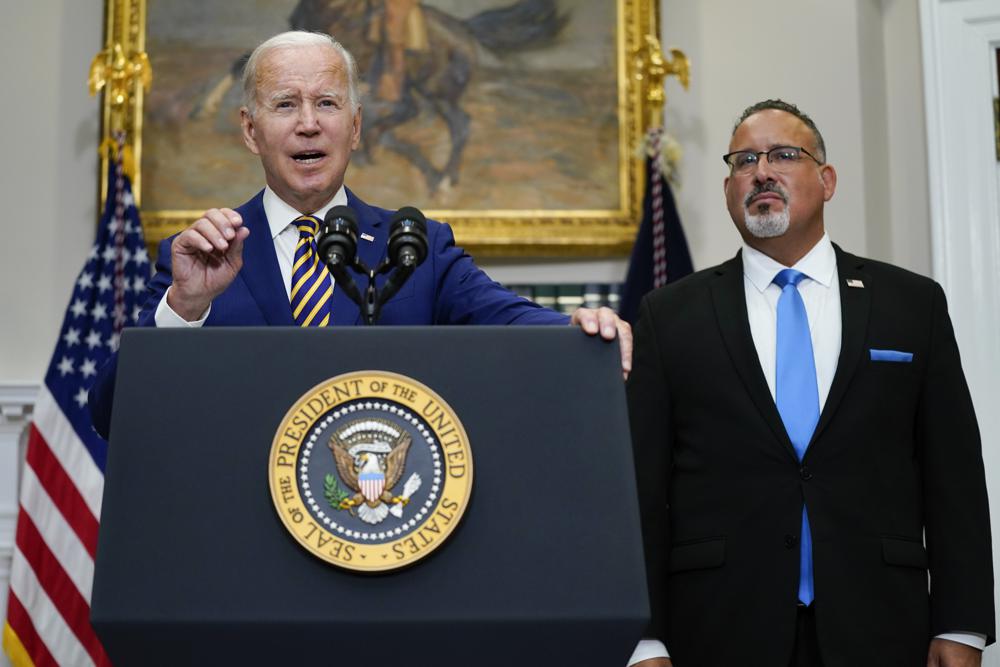
More than 40 million Americans could see their student loan debt reduced — and in many cases eliminated — under the long-awaited forgiveness plan President Joe Biden announced Wednesday, a historic but politically divisive move in the run-up to the midterm elections. Fulfilling a campaign promise, Biden is erasing $10,000 in federal student loan debt for those with incomes below $125,000 a year, or households that earn less than $250,000. He’s canceling an additional $10,000 for those who received federal Pell Grants to attend college. It’s seen as an unprecedented attempt to stem the tide of America’s rapidly rising student debt, but it doesn’t address the broader issue — the high cost of college. Republicans quickly denounced the plan as an insult to Americans who have repaid their debt and to those who didn’t attend college. Critics across the political spectrum also questioned whether Biden has authority for the move, and legal challenges are virtually certain. Biden also extended a pause on federal student loan payments for what he called the “final time.” The pause is now set to run through the end of the year, with repayments to restart in January. “Both of these targeted actions are for families who need it the most: working and middle-class people hit especially hard during the pandemic,” Biden said at the White House Wednesday afternoon. The cancellation applies to federal student loans used to attend undergraduate and graduate school, along with Parent Plus loans. Current college students qualify if their loans were issued before July 1. For dependent students, their parents’ household income must be below $250,000. Most people will need to apply for the relief. The Education Department has income data for a small share of borrowers, but the vast majority will need to prove their incomes through an application process. Officials said applications will be available before the end of the year. Biden’s plan makes 43 million borrowers eligible for some debt forgiveness, with 20 million who could get their debt erased entirely, according to the administration. About 60% of borrowers are recipients of federal Pell Grants, which are reserved for undergraduates with the most significant financial need, meaning more than half can get $20,000 in relief. Sabrina Cartan, a 29-year-old media strategist in New York City, is expecting her federal debt to get wiped out entirely. When she checked the balance Wednesday, it was $9,940. Cartan used the loans to attend Tufts University, and with Biden’s plan, she will be able to help her parents repay the additional thousands they borrowed for her education. As a first-generation college student, she called it a “leveling moment.” “I know there are people who feel that this isn’t enough, and that is true for a lot of people,” said Cartan, who already has repaid about $10,000 of her loans. “I can say for me personally, and for a lot of people, that is a lot of money.” For Braxton Simpson, Biden’s plan is a great first step, but it’s not enough. The 23-year-old MBA student at North Carolina Central University has more than $40,000 in student loans. As an undergraduate student, she took jobs to minimize her debt, but at $10,000 a semester, the costs piled up. As a Black woman, she felt higher education was a requirement to obtain a more stable financial future, even if that meant taking on large amounts of debt, she said. “In order for us to get out of a lot of the situations that have been systemically a part of our lives, we have to go to school,” Simpson said. “And so we end up in debt.” The plan doesn’t apply to future college students, but Biden is proposing a separate rule that would reduce monthly payments on federal student debt. The proposal would create a new payment plan requiring borrowers to pay no more than 5% of their earnings, down from 10% in similar existing plans. It would forgive any remaining balance after ten years, down from 20 years now. It would also raise the floor for repayments, meaning no one earning less than 225% of the federal poverty level would need to make monthly payments. As a regulation, it would not require congressional approval. But it can take more than a year to finalize. Biden’s plan comes after more than a year of deliberation, with the president facing strong lobbying from liberals who wanted sweeping debt forgiveness, and from moderates and conservatives who questioned its basic fairness. Once a popular campaign promise during the presidential primary, the issue created an almost unwinnable situation. Some fellow Democrats criticized the plan Wednesday, saying it’s too costly and does little to solve the debt crisis. “In my view, the administration should have further targeted the relief, and proposed a way to pay for this plan,” said Sen. Michael Bennet, D-Colo. “While immediate relief to families is important, one-time debt cancellation does not solve the underlying problem.” Still, many Democrats rallied around it, including support from those who wanted Biden to go beyond $10,000. “I will keep pushing for more because I think it’s the right thing to do,” said Sen. Elizabeth Warren, D-Mass., who had urged Biden to forgive up to $50,000 a person. “But we need to take a deep breath here and recognize what it means for the president of the United States to touch so many hard-working middle-class families so directly.” Proponents see cancellation as a matter of racial justice. Black students are more likely to take out federal student loans at higher amounts than their white peers. The NAACP, which pressed Biden to cancel at least $50,000 per person, said the plan is “one step closer” to lifting the burden of student debt. Derrick Johnson, the group’s president, urged Biden to cancel the debt quickly and without bureaucratic hurdles for borrowers. Biden’s decision to impose an income cap goes against objections from some who say adding the detailed application process to verify incomes could deter some borrowers who need help the most. The Biden administration defended the cap
Senate Democrats pass budget package, a victory for Joe Biden
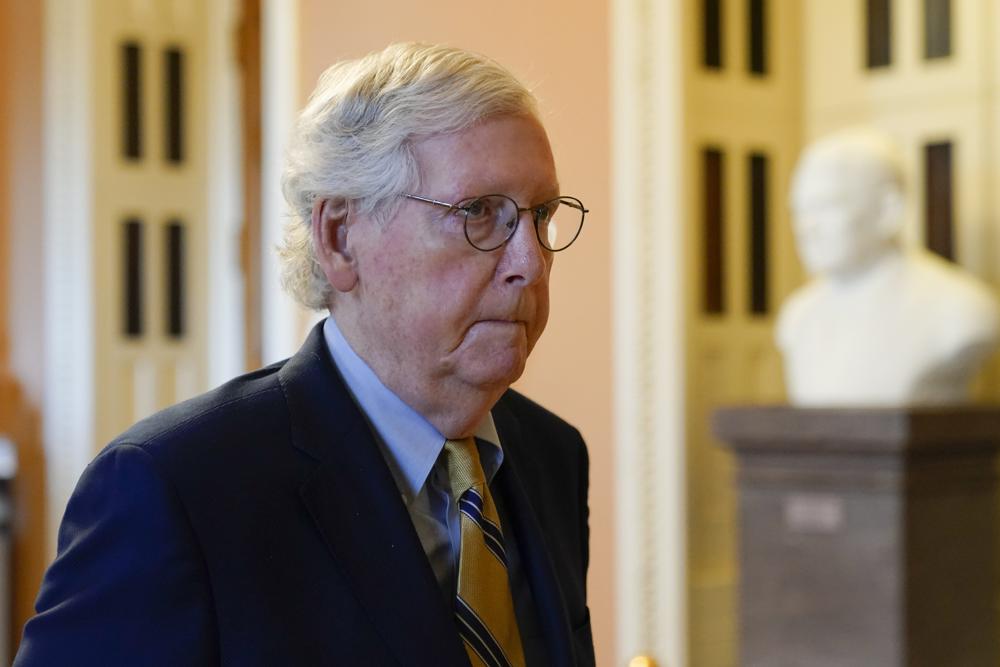
Democrats pushed their election-year economic package to Senate passage Sunday, a hard-fought compromise less ambitious than President Joe Biden’s original domestic vision but one that still meets deep-rooted party goals of slowing global warming, moderating pharmaceutical costs, and taxing immense corporations. The estimated $740 billion package heads next to the House, where lawmakers are poised to deliver on Biden’s priorities, a stunning turnaround of what had seemed a lost and doomed effort that suddenly roared back to political life. Cheers broke out as Senate Democrats held united, 51-50, with Vice President Kamala Harris casting the tie-breaking vote after an all-night session. “Today, Senate Democrats sided with American families over special interests,” President Joe Biden said in a statement from Rehoboth Beach, Delaware. “I ran for President promising to make government work for working families again, and that is what this bill does — period.” Biden, who had his share of long nights during his three decades as a senator, called into the Senate cloakroom during the vote on speakerphone to personally thank the staff for their hard work. The president urged the House to pass the bill as soon as possible. Speaker Nancy Pelosi said her chamber would “move swiftly to send this bill to the president’s desk.” House votes are expected Friday. “It’s been a long, tough, and winding road, but at last, at last we have arrived,” said Senate Majority Leader Chuck Schumer, D-N.Y., ahead of final votes. “The Senate is making history. I am confident the Inflation Reduction Act will endure as one of the defining legislative feats of the 21st century,” he said. Senators engaged in a round-the-clock marathon of voting that began Saturday and stretched late into Sunday afternoon. Democrats swatted down some three dozen Republican amendments designed to torpedo the legislation. Confronting unanimous GOP opposition, Democratic unity in the 50-50 chamber held, keeping the party on track for a morale-boosting victory three months from elections when congressional control is at stake. The bill ran into trouble midday over objections to the new 15% corporate minimum tax that private equity firms and other industries disliked, forcing last-minute changes. Despite the momentary setback, the “Inflation Reduction Act” gives Democrats a campaign-season showcase for action on coveted goals. It includes the largest-ever federal effort on climate change — close to $400 billion — caps out-of-pocket drug costs for seniors on Medicare to $2,000 a year and extends expiring subsidies that help 13 million people afford health insurance. By raising corporate taxes and reaping savings from the long-sought goal of allowing the government to negotiate drug prices for Medicare, the whole package is paid for, with some $300 billion extra revenue for deficit reduction. Barely more than one-tenth the size of Biden’s initial 10-year, $3.5 trillion Build Back Better initiative, the new package abandons earlier proposals for universal preschool, paid family leave, and expanded child care aid. That plan collapsed after conservative Sen. Joe Manchin, D-W.Va., opposed it, saying it was too costly and would fuel inflation. Nonpartisan analysts have said the 755-page “Inflation Reduction Act” would have a minor effect on surging consumer prices. Republicans said the new measure would undermine an economy that policymakers are struggling to keep from plummeting into recession. They said the bill’s business taxes would hurt job creation and force prices skyward, making it harder for people to cope with the nation’s worst inflation since the 1980s. “Democrats have already robbed American families once through inflation, and now their solution is to rob American families a second time,” Senate Minority Leader Mitch McConnell, R-Ky., argued. In an ordeal imposed on most budget bills like this one, the Senate had to endure an overnight “vote-a-rama” of rapid-fire amendments. Each tested Democrats’ ability to hold together the compromise bill negotiated by Schumer, progressives, Manchin, and the inscrutable centrist Sen. Kyrsten Sinema, D-Ariz. Progressive Sen. Bernie Sanders, I-Vt., criticized the bill’s shortcomings and offered amendments to further expand the legislation’s health benefits, but those efforts were defeated. Republicans forced their own votes designed to make Democrats look soft on U.S.-Mexico border security and gasoline and energy costs, and like bullies for wanting to strengthen IRS tax law enforcement. Before debate began, the bill’s prescription drug price curbs were diluted by the Senate’s nonpartisan parliamentarian, who said a provision should fall that would impose costly penalties on drug makers whose price increases for private insurers exceed inflation. It was the bill’s chief protection for the 180 million people with private health coverage they get through work or purchase themselves. Under special procedures that will let Democrats pass their bill by simple majority without the usual 60-vote margin, its provisions must be focused more on dollar-and-cents budget numbers than policy changes. But the thrust of Democrats’ pharmaceutical price language remained. That included letting Medicare negotiate what it pays for drugs for its 64 million elderly recipients, penalizing manufacturers for exceeding inflation for pharmaceuticals sold to Medicare, and limiting beneficiaries’ out-of-pocket drug costs to $2,000 annually. The bill also caps Medicare patients’ costs for insulin, the expensive diabetes medication, at $35 monthly. Democrats wanted to extend the $35 cap to private insurers, but it ran afoul of Senate rules. Most Republicans voted to strip it from the package, though in a sign of the political potency of health costs, seven GOP senators joined Democrats trying to preserve it. The measure’s final costs were being recalculated to reflect late changes, but overall it would raise more than $700 billion over a decade. The money would come from a 15% minimum tax on a handful of corporations with yearly profits above $1 billion, a 1% tax on companies that repurchase their own stock, bolstered IRS tax collections, and government savings from lower drug costs. Sinema forced Democrats to drop a plan to prevent wealthy hedge fund managers from paying less than individual income tax rates for their earnings. She also joined with other Western senators to win $4 billion to combat the region’s drought. Several Democratic senators joined the GOP-led effort to exclude some firms from the new corporate minimum tax. The package keeps to Biden’s pledge not to
GOP targets for Dem bill: Inflation, taxes, Joe Manchin, Kyrsten Sinema
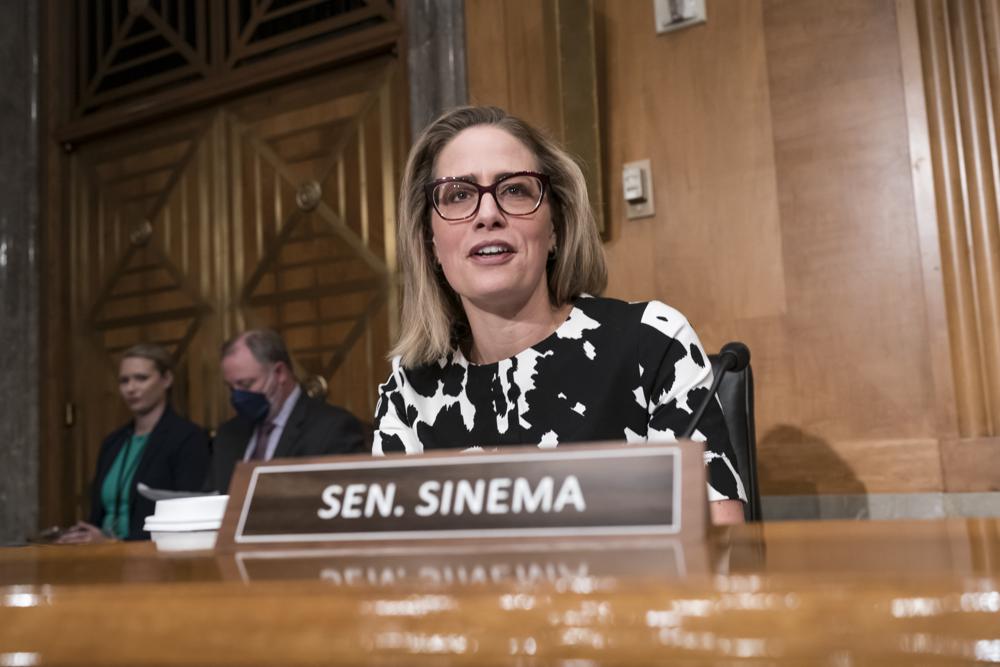
Republicans see inflation, taxes, and immigration as Democratic weak spots worth attacking, and two opposition senators as prime targets in the upcoming battle over an economic package the Democrats want to push through the Senate. The measure embodies some of the top environment, energy, health care, and tax policy aspirations that President Joe Biden and party leaders want to enact as voters start tuning in to this fall’s congressional elections. The GOP would like to derail or weaken the measure, or at least force Democrats to take votes that would be painful to defend in reelection campaigns. Republicans are already aiming fire at Sen. Joe Manchin, D-W.Va., who crafted the measure with Senate Majority Leader Chuck Schumer, D-N.Y., and unexpectedly pumped life into an effort most Democrats considered moribund. Manchin is a conservative Democrat from a deep red state who has scuttled his party’s priorities before, and Republicans have savaged him in recent days, an unsubtle signal that they’ll be coming for him should he seek reelection in 2024. “He made a terrible deal,” Senate Minority Leader Mitch McConnell, R-Ky., told reporters this week. “How he can defend this from a West Virginia point of view, or think of it as a centrist type of agreement, is astonishing. This is an agreement only Bernie Sanders would love.” Even Sen. Shelley Moore Capito, R-W.Va., who has a strong relationship with Manchin and seldom clashes with him publicly, lambasted the legislation for imposing a minimum tax on huge, profitable corporations that she said would hinder investments. “Like many West Virginians, I’m concerned that this tax increase will delay closing the digital divide” in rural communities, she said. Republicans are taking a softer approach with Sen. Kyrsten Sinema, D-Ariz., who has been coy about the legislation and has shown concerns about tax increases. She’s her party’s biggest question mark on this bill in the 50-50 chamber, where all Republicans seem certain to vote “no,” and she’s held several discussions with GOP senators during votes this week. Sinema has opposed past proposals to raise taxes on wealthy equity firm executives, which this time would raise around $14 billion of this legislation’s $739 billion in revenue. She met with Arizona manufacturers who oppose boosting the corporate minimum tax and thanked her afterward in a tweet for her “thoughtful approach & willingness to listen to AZ job creators.” “I don’t know what she thinks,” Idaho Sen. Mike Crapo, top Republican on the Senate Finance Committee, told reporters. “‘We are making our case’ is the best we can say.” The 10-year measure includes hundreds of billions in spending and tax breaks to encourage alternative energy production and to bolster fossil fuels with steps like tax breaks for technology that reduces carbon emissions. There’s also money to help people buy private health coverage and provisions giving Medicare the power to negotiate prices on some drugs with pharmaceutical makers. The bill “will lower costs, fight inflation, and secure historic wins in the fight against climate change,” Schumer said. The GOP seems certain to try stripping or toning down the corporate minimum tax and language raising taxes on wealthy equity firm executives as well and has hopes of winning over Sinema as the decisive vote for that. After she opposed Democrats’ proposed tax rate increases last year on corporations and high earners, they switched to a corporate minimum tax that she supported, but it is uncertain if she will do so now. Republicans could fashion amendments aimed at particular Democratic senators — such as one exempting coal producers from certain taxes in a play for Manchin. To buttress its argument, the GOP released an analysis by the nonpartisan Joint Committee on Taxation that Republicans said showed tax boosts for people earning below $400,000. That would violate Biden’s pledge to not boost levies on that income group. “Ordinary Americans would bear a substantial part of the burden of this tax increase,” said No. 2 Senate GOP leader John Thune of South Dakota. Democrats dismissed that attack, noting that the study omitted the effect of the bill’s health care and energy tax breaks for individuals. It also counted lower salaries, stock prices, and dividends it believes will occur as part of the effect the bill would have on people. Overall, the Congressional Budget Office said Wednesday the measure could trim federal deficits by around $305 billion. But $204 billion of that would come from improving IRS tax collections, which will be real if it occurs, but the nonpartisan agency does not count in its formal scoring of the bill’s impact. In a bow to dominant voter concerns about gasoline prices and overall consumer costs, Democrats call the bill the Inflation Reduction Act. Yet its impact on the nation’s worst bout with inflation in four decades seems likely to be limited. The University of Pennsylvania’s Penn Wharton Budget Model estimated the measure would “very slightly increase inflation until 2024 and decrease inflation thereafter,” though the changes would be “statistically indistinguishable from zero.” McConnell said that study showed the Democrats’ bill would “actually increase inflation in the short term and do nothing for inflation in the long term.” Democrats have cited a Moody’s Analytics report saying the bill would “nudge the economy and inflation in the right direction.” And they distributed a letter by five former Treasury secretaries, including Henry Paulson Jr., who served under GOP President George W. Bush, saying the measure would strengthen the economy, “lower costs for families, and fight inflation.” That battlefield suggests Republican amendments are likely on the subject of prices. One could imagine a proposal preventing the bill from taking effect unless inflation, or gasoline prices, fall to certain levels. Democratic leaders are trying this week to unify rank-and-file senators against such plans. The GOP could also try to renew immigration restrictions imposed by President Donald Trump that cited the pandemic as a reason to exclude migrants, an issue that sharply divides Democrats. And they might seek to delete tax credits aimed at encouraging alternative energy and that favor companies that pay union-scale wages. Republished with
Senate passes bill to boost computer chip production in U.S.

A bill designed to encourage more semiconductor companies to build chip plants in the United States passed the Senate on Wednesday as lawmakers raced to finish work on a key priority of the Biden administration. The $280 billion measure, which awaits a House vote, includes federal grants and tax breaks for companies that construct their chip facilities in the U.S. The legislation also directs Congress to significantly increase spending on high-tech research programs that lawmakers say will help the country stay economically competitive in the decades ahead. Senate passage came by a 64-33 vote. The House vote is expected later this week as lawmakers try to wrap up business before returning to their home states and districts in August. House Speaker Nancy Pelosi, D-Calif., has said she is confident there is enough GOP support to overcome potential defections from Democrats who view the subsidy effort to boost semiconductor companies as a misplaced priority. Seventeen Republicans voted for the measure. Sen. Bernie Sanders, I-Vt., broke ranks with Democrats in voting against the bill. Proponents of the legislation say other countries are spending billions of dollars to lure chipmakers. Backers say the U.S. must do the same or risk losing a secure supply of the semiconductors that power automobiles, computers, appliances, and some of the military’s most advanced weapons systems. Senate Majority Leader Chuck Schumer, D-N.Y., said the bill represented one of the nation’s largest investments in science and manufacturing in decades and that with the Senate’s approval, “we say that America’s best years are yet to come.” Opponents have been critical of the bill’s price tag. It is projected to increase federal deficits by about $79 billion over ten years. President Joe Biden said the bill would create jobs and lower costs on a wide range of products from cars to dishwashers. “For decades, some ‘experts’ said we needed to give up on manufacturing in America. I never believed that. Manufacturing jobs are back,” Biden said. “Thanks to this bill, we are going to have even more of them. The House should promptly pass it and send this bill to my desk.” The bill has been in the works for years, starting with efforts by Schumer and Sen. Todd Young, R-Ind., to increase the government’s investment in high-tech research and development. While the bill has taken several twists and turns, one constant theme that lawmakers repeatedly emphasized during Wednesday’s debate was the need to keep up with China’s massive investments in cutting-edge technology. China’s government is planning on “winning the (artificial intelligence) race, winning future wars and winning the future,” Young said. “And the truth is, if we’re being honest with ourselves, Beijing is well on its way to accomplishing these goals.” Sen. Roger Wicker, R-Miss., said: “Regrettably, we are not in the driver’s seat on a range of important technologies. China is.” Congress, he said, now has “a chance to move us back in the right direction and put America back into a place to win the game.” The bill provides more than $52 billion in grants and other incentives for the semiconductor industry, as well as a 25% tax credit for those companies that invest in chip plants in the U.S. It calls for increased spending on various research programs that would total about $200 billion over ten years, though Congress will have to follow through by approving that money in future spending bills. Despite years of work, the bill’s future did not look so promising about a month ago. That’s when Senate Republican leader Mitch McConnell tweeted that there would be no chips legislation as long as Democrats pursued a party-line package of energy and economic initiatives. GOP support is critical in the Senate to get the 60 votes needed to overcome a filibuster. But when Sen. Joe Manchin of West Virginia quashed the idea of imposing higher taxes on the rich and corporations, key Republicans said that was an opening to go forward on semiconductors. Meanwhile, the Biden administration pushed to get a bill passed before the August recess, even if meant considerably narrowing the focus to just the $52 billion in semiconductor incentives. Commerce Secretary Gina Raimondo told lawmakers behind the scenes and publicly that semiconductor companies were making plans on how to meet the increased demand for chips. She said the growth in the industry would move forward with or without the United States and if lawmakers didn’t act quite soon, those companies would simply choose to build in other countries offering significant financial incentives. Schumer said that after McConnell’s statement, he called the CEOs of chipmakers and companies such as General Motors and Ford and reached out to “unlikely allies” like the U.S. Chamber of Commerce and the Business Roundtable. He urged them to reach out to Republican senators about the importance of the bill. “And they changed things,” Schumer told The Associated Press. “They really, for the first time, industry really helped a good government program.” The House could take up the bill as soon as Thursday. While most Republicans are expected to oppose it, some of the ranking Republicans on committees dealing with national security — Reps. Michael McCaul of Texas, Michael Turner of Ohio, and John Katko of New York — support the measure. So do many of the Republicans on a bipartisan group called the Problem Solvers Caucus, which is made up of moderates from both parties. Republished with the permission of The Associated Press.
Joe Biden tests positive for COVID-19, has ‘very mild symptoms’
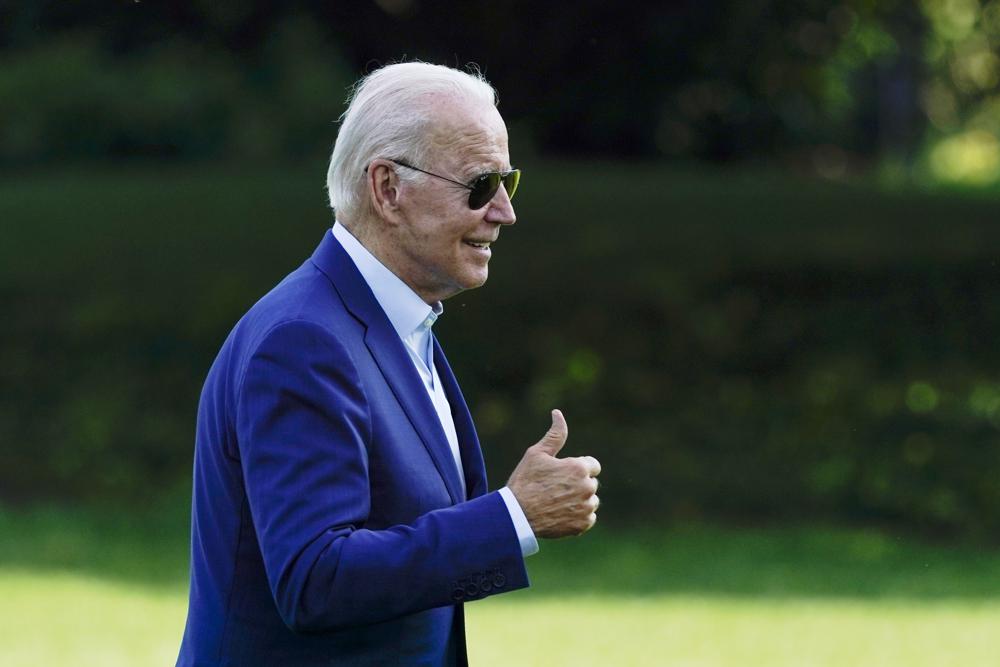
President Joe Biden tested positive for COVID-19 on Thursday and is experiencing “very mild symptoms,” the White House said, as new variants of the highly contagious virus are challenging the nation’s efforts to resume normalcy after two and a half years of pandemic disruptions. White House Press Secretary Karine Jean-Pierre said Biden has begun taking Paxlovid, an antiviral drug designed to reduce the severity of the disease. She said Biden has “very mild symptoms” and “will isolate at the White House while continuing to carry out all of his duties fully.” She said Biden has been in contact with members of the White House staff by phone and will participate in his planned meetings at the White House “via phone and Zoom from the residence.” The White House released a letter from Biden’s physician, Dr. Kevin O’Connor, that said the president has a runny nose and “fatigue, with an occasional dry cough, which started yesterday evening.” Biden, 79, is fully vaccinated, after getting two doses of the Pfizer coronavirus vaccine shortly before taking office, a first booster shot in September and an additional dose March 30. O’Connor wrote in his letter about the president’s treatment plan: “I anticipate that he will respond favorably” to Paxlovid “as most maximally protected patients do.” Jean-Pierre said Biden had last tested negative on Tuesday, and he will stay isolated until he tests negative again. Biden had planned to visit Pennsylvania on Thursday to talk about his crime prevention plans and attend a Democratic fundraiser, and then spend a long weekend in Delaware. His appearances and travel are canceled. First lady Jill Biden spoke to reporters as she arrived at a school in Detroit on Thursday, telling them she had just gotten off the phone with her husband. “He’s doing fine,” she said. “He’s feeling good.” The first lady, who was wearing a mask, said she tested negative earlier in the day. She will keep her full schedule in Michigan and Georgia on Thursday, though she will be following guidance from the Centers for Disease Control and Prevention on masking and distancing, said Michael LaRosa, her spokesperson. The president spent much of last week in Israel and Saudi Arabia. White House officials told reporters that Biden planned to minimize contact during the trip, yet as soon as he exited Air Force One on Wednesday, July 13, the president was fist-bumping, handshaking, and even seen in the occasional hug. Biden had a minimal public schedule after returning from Saudi Arabia late on Saturday night, attending church the next day, and appearing at a White House visit by Ukraine’s first lady Olena Zelenska on Tuesday. The president traveled to Massachusetts on Wednesday to promote efforts to combat climate change. Up to this point, Biden’s ability to avoid the virus seemed to defy the odds, even with the testing procedures in place for those expected to be in close contact with him. Prior waves of the virus swept through Washington’s political class, infecting Vice President Kamala Harris, Cabinet members, White House staffers, and lawmakers. Biden has increasingly stepped up his travel schedule and resumed holding large indoor events where not everyone is tested. A White House official said Harris tested negative for COVID-19. She was last with the president on Tuesday and spoke with him on the phone Thursday morning. Harris plans to remain masked on the guidance of the White House medical team. House Speaker Nancy Pelosi said she hoped that Biden’s positive test for the virus would cause more Americans to get vaccinated and boosted because “none of us is immune from it, including the president of the United States, and we really have to be careful.” Senate Republican Leader Mitch McConnell on Twitter wished the president “a speedy recovery.” Top White House officials in recent months have been matter-of-fact about the likelihood of the president getting COVID, a measure of how engrained the virus has become in society — and of its diminished threat for those who are up to date on their vaccinations and with access to treatments. When administered within five days of symptoms appearing, Paxlovid, produced by drugmaker Pfizer, has been proven to bring about a 90% reduction in hospitalizations and deaths among patients most likely to get severe disease. In an April 30 speech to more than 2,600 attendees at the White House Correspondents’ Association dinner, Biden acknowledged the risks of attending large events, but said it was worthwhile to attend. “I know there are questions about whether we should gather here tonight because of COVID,” he said. “Well, we’re here to show the country that we’re getting through this pandemic.” Biden is far from the first world leader — and not the first U.S. president — to get the coronavirus, which has infected British Prime Minister Boris Johnson, French President Emmanuel Macron, and more than a dozen other leaders and high-ranking officials globally. When Biden’s predecessor, President Donald Trump, contracted the disease in October 2020, it was a far different time. Vaccines were not available, and treatment options were limited and less advanced. After being diagnosed with COVID-19 at the White House, Trump was given an experimental antibody treatment and steroids after his blood oxygen levels fell dangerously low. He was hospitalized at Walter Reed National Military Medical Center for three days. After more than two years and over a million deaths in the U.S., the virus is still killing an average of 353 people a day in the U.S., according to the Centers for Disease Control and Prevention. The unvaccinated are at far greater risk, more than two times more likely to test positive and nine times more likely to die from the virus than those who have received at least a primary dose of the vaccines, according to the public health agency. The highly transmissible omicron variant is the dominant strain in the U.S., but scientists say it poses a lower risk for severe illness to those who are up to date on their vaccinations. Omicron’s BA.5 sub-strain, believed to be even more contagious, now
Senators propose changes to electors law after Capitol riot

A bipartisan group of senators agreed Wednesday on proposed changes to the Electoral Count Act, the post-Civil War-era law for certifying presidential elections that came under intense scrutiny after the January 6 attack on the Capitol and Donald Trump’s effort to overturn the 2020 election. Long in the making, the package introduced by the group led by Sens. Susan Collins of Maine and Joe Manchin of West Virginia is made up of two separate proposals. One would clarify the way states submit electors and the vice president tallies the votes in Congress. The other would bolster security for state and local election officials who have faced violence and harassment. “From the beginning, our bipartisan group has shared a vision of drafting legislation to fix the flaws of the archaic and ambiguous Electoral Count Act of 1887,” Collins, Manchin, and the other 14 senators said in a joint statement. “We have developed legislation that establishes clear guidelines for our system of certifying and counting electoral votes,” the group wrote. “We urge our colleagues in both parties to support these simple, commonsense reforms.” Both Senate Majority Leader Chuck Schumer and Senate Republican leader Mitch McConnell have signaled support for the bipartisan group, but the final legislative package will undergo careful scrutiny. Votes are not likely before fall. But with broad support from the group of 16 senators, seven Democrats and nine Republicans, who have worked behind closed doors for months with the help of outside experts, serious consideration is assured. In a statement, Matthew Weil, executive director of the Democracy Program at the Bipartisan Policy Center, called the framework a “critical step” in shoring up ambiguities in the Electoral Count Act. After Trump lost the 2020 election, the defeated president orchestrated an unprecedented attempt to challenge the electors sent from battleground states to the joint session of Congress on January 6, when the vice president presides over certification. Under the proposed changes, the law would be updated to ensure the governor from each state is initially responsible for submitting electors, as a way to safeguard against states sending alternative or fake elector slates. Additionally, the law would spell out that the vice president presides over the joint session in a “solely ministerial” capacity, according to a summary page. It says the vice president “does not have any power to solely determine, accept, reject, or otherwise adjudicate disputes over electors.” That provision is a direct reaction to Trump’s relentless efforts to pressure then Vice President Mike Pence to reject the electors being sent from certain battleground states as a way to halt the certification or tip it away from Joe Biden’s victory. The bill also specifies the procedures around presidential transitions, including when the election outcome is disputed, to ensure the peaceful transfer of power from one administration to the next. That’s another pushback to the way Trump blocked Biden’s team from accessing some information for his transition to the White House. The second proposal, revolving around election security, would double the federal penalties to up to two years in prison for individuals who “threaten or intimidate election officials, poll watchers, voters or candidates,” according to the summary. It also would seek to improve the way the U.S. Postal Service handles election mail and “provide guidance to states to improve their mail-in ballot processes.” Mail-in ballots and the role of the Postal Service came under great scrutiny during the 2020 election. An Associated Press review of potential cases of voter fraud in six battleground states found no evidence of widespread fraud that could change the outcome of the election. A separate AP review of drop boxes used for mailed ballots also found no significant problems. The need for election worker protections was front and center at a separate hearing Wednesday of the House Committee on Homeland Security. Election officials and experts testified that a rise in threats of physical violence is contributing to staffing shortages across the country and a loss of experience at local boards of elections. “The impact is widespread,” said Neal Kelley, a former registrar of voters in Orange County, California, who now chairs the Committee for Safe and Secure Elections. “And, while the effects on individuals are devastating, the potential blow to democracy should not be dismissed.” Elizabeth Howard, senior counsel at the Brennan Center for Justice, told the committee that Congress needs to direct more money and support toward protecting election workers’ personal safety, including by funding local and federal training programs and providing grants to enhance security at election directors’ personal residences. Democratic New Mexico Secretary of State Maggie Toulouse Oliver, who recently reported a series of threats, told the panel the situation has become worse after former President Donald Trump’s attacks against the 2020 election result. “Unfortunately, we are still on a daily basis, in my state and across the country, living with the reverberating effects of the ‘Big Lie’ from 2020,” she said. “And, as we all know, when it comes to leadership, what you say from the very highest echelons of government power in this country do have those reverberating effects.” Some Republican members of the committee condemned violence against election workers — and also drew a parallel to recent threats and intimidation directed toward some Supreme Court justices after their decision to overturn constitutional protections for abortion. GOP Rep. Clay Higgins of Louisiana rejected the notion that Trump and other election skeptics were solely responsible for the “atmosphere of mistrust” that grew up around the 2020 election. Republished with the permission of The Associated Press.
House passes same-sex marriage bill in retort to high court

The U.S. House overwhelmingly approved legislation Tuesday to protect same-sex and interracial marriages amid concerns that the Supreme Court ruling overturning Roe v. Wade abortion access could jeopardize other rights criticized by many conservatives. In a robust but lopsided debate, Democrats argued intensely and often personally in favor of enshrining marriage equality in federal law, while Republicans steered clear of openly rejecting gay marriage. Instead, leading Republicans portrayed the bill as unnecessary amid other issues facing the nation. Tuesday’s election-year roll call, 267-157, was partly political strategy, forcing all House members, Republicans, and Democrats, to go on the record. It also reflected the legislative branch pushing back against an aggressive court that has raised questions about revisiting other apparently settled U.S. laws. Wary of political fallout, GOP leaders did not press their members to hold the party line against the bill, aides said. In all, 47 Republicans joined all Democrats in voting for passage. “For me, this is personal,” said Rep. Mondaire Jones, D-N.Y., who said he was among the openly gay members of the House. “Imagine telling the next generation of Americans, my generation, we no longer have the right to marry who we love,” he said. “Congress can’t allow that to happen.” While the Respect for Marriage Act easily passed the House with a Democratic majority, it is likely to stall in the evenly split Senate, where most Republicans would probably join a filibuster to block it. It’s one of several bills, including those enshrining abortion access, that Democrats are proposing to confront the court’s conservative majority. Another bill guaranteeing access to contraceptive services is set for a vote later this week. House GOP leaders split over the issue, with Minority Leader Kevin McCarthy and Whip Rep. Steve Scalise voting against the marriage rights bill, but the No. 3 Republican Rep. Elise Stefanik of New York voting in favor. In a notable silence, Senate Republican leader Mitch McConnell declined to express his view on the bill, leaving an open question over how strongly his party would fight it if it should come up for a vote in the upper chamber. Key Republicans in the House have shifted in recent years on the same-sex marriage issue, including Rep. Liz Cheney of Wyoming, who joined those voting in favor on Tuesday. Said another Republican, Rep. Nancy Mace of South Carolina, in a statement about her yes vote: “If gay couples want to be as happily or miserably married as straight couples, more power to them.” Polling shows a majority of Americans favor preserving rights to marry, regardless of sex, gender, race, or ethnicity, a long-building shift in modern mores toward inclusion. A Gallup poll in June showed broad and increasing support for same-sex marriage, with 70% of U.S. adults saying they think such unions should be recognized by law as valid. The poll showed majority support among both Democrats (83%) and Republicans (55%). Approval of interracial marriage in the U.S. hit a six-decade high at 94% in September, according to Gallup. Ahead of Tuesday’s voting, a number of lawmakers joined protesters demonstrating against the abortion ruling outside the Supreme Court, which sits across from the Capitol and remains fenced off for security during tumultuous political times. Capitol Police said among those arrested were 16 members of Congress. “The extremist right-wing majority on the Supreme Court has put our country down a perilous path,” said Rep. Mary Gay Scanlon, D-Pa., in a floor speech setting Tuesday’s debate in motion. “It’s time for our colleagues across the aisle to stand up and be counted. Will they vote to protect these fundamental freedoms? Or will they vote to let states take those freedoms away?” But Republicans insisted the court was only focused on abortion access in June when it struck down the nearly 50-year-old Roe v. Wade ruling, and they argued that same-sex marriage and other rights were not threatened. In fact, almost none of the Republicans who rose to speak during the debate directly broached the subject of same-sex or interracial marriage. “We are here for a political charade; we are here for political messaging,” said Rep. Jim Jordan of Ohio, the top Republican on the Judiciary Committee. That same tack could be expected in the Senate. Sen. Josh Hawley, R-Mo., said, “The predicate of this is just wrong. I don’t think the Supreme Court is going to overturn any of that stuff.” As several Democrats spoke of inequalities they said they or their loved ones had faced in same-sex marriages, the Republicans talked about rising gas prices, inflation, and crime, including recent threats to justices in connection with the abortion ruling. For Republicans in Congress, the Trump-era confirmation of conservative justices to the Supreme Court has fulfilled a long-term GOP goal of revisiting many social, environmental, and regulatory issues the party has been unable to tackle on its own by passing bills that could be signed into law. The Respect for Marriage Act would repeal a law from the Clinton era that defines marriage as a heterogeneous relationship between a man and a woman. It would also provide legal protections for interracial marriages by prohibiting any state from denying out-of-state marriage licenses and benefits on the basis of sex, race, ethnicity, or national origin. The 1996 law, the Defense of Marriage Act, had basically been sidelined by Obama-era court rulings, including Obergefell v. Hodges, which established the rights of same-sex couples to marry nationwide, a landmark case for gay rights. But last month, writing for the majority in overturning Roe v. Wade, Justice Samuel Alito argued for a more narrow interpretation of the rights guaranteed to Americans, noting that the right to an abortion was not spelled out in the Constitution. In a concurring opinion, Justice Clarence Thomas went further, saying other rulings similar to Roe, including those around same-sex marriage and the right for couples to use contraception, should be reconsidered. While Alito insisted in the majority opinion that “this decision concerns the constitutional right to abortion and no other right,” others have taken notice. “The MAGA
