
Chris Christie tells Jimmy Fallon he might ‘go nuclear’ in next debate
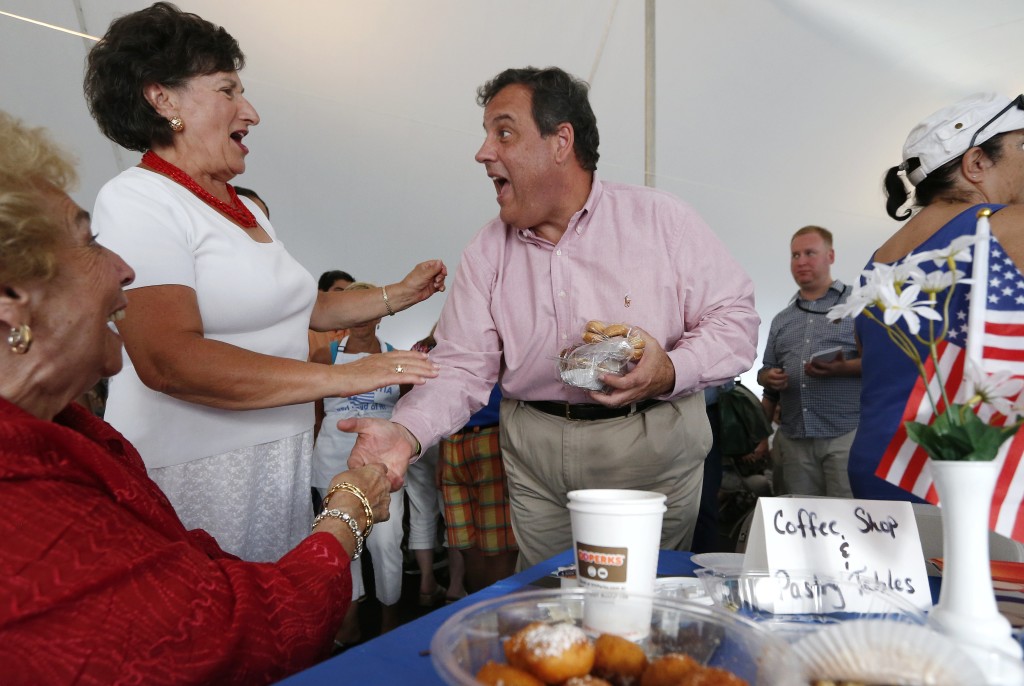
Chris Christie says he’s thinking of taking a more aggressive approach during the next Republican presidential primary debate. During an appearance on “The Tonight Show Starring Jimmy Fallon” Monday night, the New Jersey governor and presidential candidate told Fallon that he’s considering going “nuclear” if he’s relegated to the sidelines during the next GOP face-off, which will be moderated by CNN later this month. “Stay tuned on Sept. 16th,” Christie told Fallon, “We may be changing tactics. You know, if I get to like 15 questions in a row -— count ’em at home — if I get to 15 in a row (where he’s not called on), you’re going to go ‘Uh oh, he’s going to go nuclear now.’” Christie’s return to late-night TV comes as he’s been struggling to gain momentum in the crowded Republican field in the summer polls. During the interview, Fallon, who often jokes about Christie during his monologue, pressed the famously brash governor, suggesting that he’s been overshadowed by billionaire businessman and Republican front-runner Donald Trump. “Now Trump is running and boy is he just going out and he’s yelling and saying stuff. I thought that was going to be your thing,” Fallon said, adding that he’d expected Christie to be more aggressive during the first debate, jumping in shouting at people when questions weren’t directed at him. Christie had several notable clashes with his opponents during the Fox News debate and his performance was generally well-reviewed, but Trump nonetheless dominated coverage of the event. Fallon seemed pleased by Christie’s comments about switching things up at the next debate. “That’s what I’m talking about!” he said. “That’s what we want to see!” Christie also talked during the interview about a sleepover he had with rival Marco Rubio at 2012 GOP nominee Mitt Romney‘s home ahead of a Fourth of July parade in Wolfeboro, New Hampshire. After dinner the night before the parade, he said, Romney invited the two competitors, along with their families and a handful of his grandkids on a boat ride that included an unexpected stop for ice cream. They quickly realized that neither Christie nor Rubio had brought any cash and Romney only had $20 in his wallet. And then they heard a voice from behind. “‘Don’t worry, would-be presidents. I have it handled,’” said the voice. “And it was Ann Romney. She had the money.” There were also plenty of antics, with Christie repeatedly making fun of Fallon over several recent injuries and dramatically pretending to walk off set when Fallon made a fat joke at Christie’s expense. Republished with permission of the Associated Press.
Pro-Bush super PAC spending $10M-plus on first TV campaign
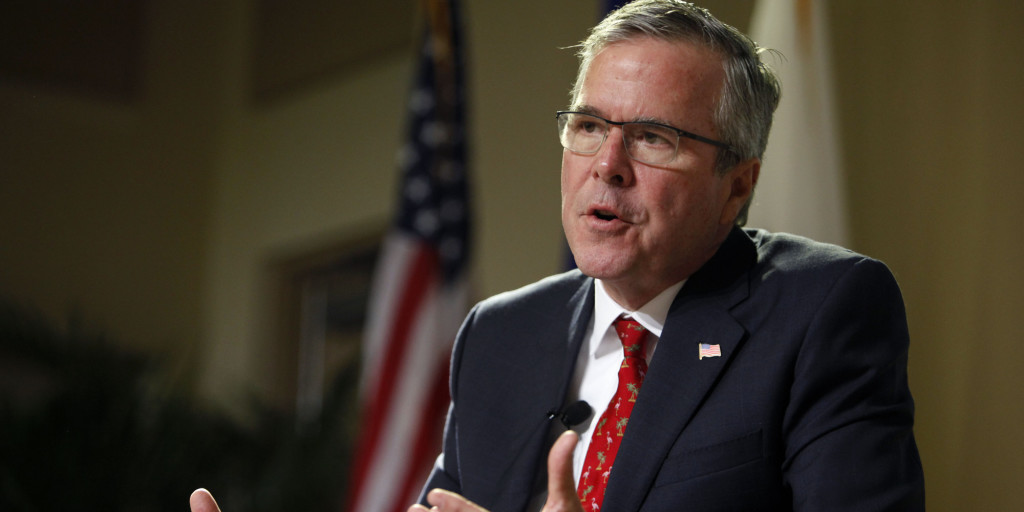
The heavily funded super PAC backing Republican Jeb Bush will spend at least $10 million on television time in the earliest voting presidential primary states, the first salvo in a massive TV ad campaign to support the former Florida governor’s bid for the Republican nomination. Officials with Right to Rise USA say they will buy time in Iowa, New Hampshire and South Carolina TV markets and on cable television in the three states. Ads are scheduled to begin in Iowa and New Hampshire on Sept. 15, in South Carolina a week later and then run continuously through the end of the year. The plan, shared by the group with The Associated Press prior to Monday’s buy, is the first evidence of Right to Rise USA’s major strategic spending of the roughly $100 million it had on hand last month. It’s also the first major move by the group, which was developed by longtime Bush adviser and California ad maker Mike Murphy, to run alongside Bush’s own campaign organization, which is bound by federal fundraising limits. “We believe Jeb Bush has the strongest record of conservative accomplishments in the race, and we plan to tell that story,” Paul Lindsay, communication director for Right to Rise USA, told the AP. The first ads will be positive spots promoting Bush in a field that includes 16 other major GOP candidates. They will resemble videos on the group’s website, promoting Bush and his accomplishments as Florida governor from 1999 to 2007. One piece was taken from clips of Bush from the Aug. 6 Republican debate in Cleveland, Lindsay said. That does not mean the group’s ads won’t turn to criticizing Republican rivals once the first contests draw near. The group has already aired one online ad that points to Bush’s release of decades of tax returns and publication of thousands of emails sent during his time as governor, to draw comparisons with Democratic front-runner Hillary Rodham Clinton, who recently turned over her private email server to the FBI under pressure. To date, the group, based in southern California, has spent roughly $200,000 on online advertising. The new expenditure, which Lindsay described as an “eight-figure” buy, is significant because it’s the first big expense for the group that Bush helped raise more than $103 million to finance, and which is expected to perform other campaign functions in support of the former governor. Under Federal Election Commission rules, Bush, having declared his candidacy on June 15, is now forbidden as a candidate from directly soliciting money for the group or advising how to spend it. However, before declaring his candidacy, Bush was involved in fundraising for Right to Rise USA, while Murphy planned a long-term strategy where the super PAC would complement the campaign, which is bound by fundraising restrictions that don’t apply to super PACs. The idea of a parallel outside group that can raise unlimited sums from individuals, corporations and groups is not new. Mitt Romney, the 2012 GOP nominee, attempted it later in his campaign. And other GOP candidates for the 2016 GOP nomination have formed super PACs and have begun buying advertising time in early states. However, none has combined the planning strategy with the sums of money Bush’s super PAC has been able to raise, making it a pioneering effort in the super PAC era of presidential campaigning. In June, the group announced it had met its ambitious goal of raising more than $100 million, taking full advantage of the nation’s campaign finance laws to collect $103 million over the first six months of 2015. In June, the group had a balance of $98 million. No candidate for president has benefited from so much money so early in a campaign. Aides to the super PAC noted that similar groups supporting other candidates have purchased advertising time in early states. Some have also aired spots aimed at bumping up a candidate’s national poll numbers to help them gain entry into debates that require top-10 standing. Right to Rise USA aides said their strategy is long-term, aimed at building sustained name identification and support heading into the Iowa caucuses, which begin the 2016 voting on Feb. 1, followed by the New Hampshire and South Carolina primaries. Republished with permission of The Associated Press.
Marco Rubio slowly builds Mormon strategy to win Nevada caucus

Seemingly every day, Marco Rubio announces another Nevada-area endorsement. As Jon Ralston notes in the Reno Gazette-Journal, many are familiar to locals: state Sen. Patty Farley, Assemblyman Erv Nelson, and ex-state Sen. Warren Hardy. Others, however, are not as well known, which leads Ralston to ask: who they are and why they are so important? Rubio, languishing near the bottom of many national polls, is systematically building an organization ahead of the Nevada caucus, replicating the successful strategy Mitt Romney used in 2012. The Florida senator is establishing a network of well-connected Mormon activists, which could bring the turnout needed for a Nevada win. In Thursday’s GOP debate, Donald Trump could bring his showy antics to once again change the GOP presidential race, but Nevada remains a free-for-all. And recruiting Church of the Latter Day Saints leaders proves Rubio is taking Nevada seriously, challenging Jeb Bush for frontrunner status, regardless of polling. Bush’s operation in Nevada, using the same staff members who helped Romney win there, is also tapping the Mormon network, with the hope that the state’s governor – a fellow Catholic – will come out in support. Rubio telegraphed his strategy by naming Lt. Gov. Mark Hutchison, himself a Mormon, as state chairman. Hutchison, once a high-profile LDS leader, joined Daniel Stewart, an aide and well-regarded LDS attorney, in Hutchison & Co. to assemble a roster of Rubio supporters. According to Ralston, the list includes John Gibson, leader of the conservative Keystone group, and Kevin Stolworthy, who holds a high-ranking position as a stake president (stakes are similar to a Catholic diocese) in the LDS church. Wayne Tew is another LDS stake president. Nelson and Hardy are also LDS. It’s also important to note that Rubio spent time as a child in the LDS in Las Vegas before converting to Catholicism. Few talk openly about candidate ties to Mormonism because the church insists on staying out of politics, Ralston writes. That said, Bush is competing with Rubio for the LDS vote — 25 percent of the 2012 caucus turnout, even as the Mormon population of Nevada is only estimated to be as low as 5 percent. Yet their turnout is excessively higher among the faithful. “Mark (Hutchison) is a great get for Rubio, but Bush will have some significant LDS names as well and probably more of them,” one insider familiar with the Mormon vote told Ralston. “Both Bush and Rubio will do well as they are both seen as socially conservative, family-first type of guys.” Campaigns are courting LDS support and their importance in the caucus, despite relatively small numbers. While only 7 percent of registered Republicans voted in the 2012 Nevada caucus; with any higher turnout, Mormon influence will be considerable. Rubio courting that voting bloc is critical when the Nevada caucus is held in February. But, as Ralston says, six months is a long time.
2016 Republicans use Donald Trump, TV to make debate cut

Rick Perry is attacking Donald Trump‘s credibility and branding the billionaire businessman “a cancer on conservatism.” Rick Santorum, a conservative stalwart, popped up on a TV program popular with liberals. Lindsey Graham set his cellphone on fire. With the first debate of the Republican presidential campaign approaching, the White House hopefuls are trying everything they can to improve their polling position. A candidate needs to place in the top 10 in an average of national polls to meet the criteria Fox News Channel has set to take the stage Aug. 6 in Cleveland. Those kept out risk being overlooked by voters and financial backers heading into the critical fall stretch before the nominating contests start early in 2016. “If you’re not on the stage you’re irrelevant, you don’t matter,” said Republican pollster Frank Luntz. “Unless you have some serious ad dollars, it’s not a glass ceiling. It’s a concrete ceiling.” At of this past week, former Hewlett Packard CEO Carly Fiorina, Louisiana Gov. Bobby Jindal, former New York Gov. George Pataki, ex-Pennsylvania Sen. Santorum and South Carolina Sen. Graham were outside the top 10. Others close to the edge including Ohio Gov. John Kasich, New Jersey Gov. Chris Christie and ex-Texas Gov. Perry. That would relegate them to a second-tier debate, only an hourlong airing before the prime-time event. “In your heart of hearts, you want to see me debate Hillary Clinton,” Fiorina, the only woman in the Republican contest, said with a grin, drawing applause from more than 100 people at an Ames country club Thursday. “I would of course love to be on the debate stage, but we’re going to keep going with or without it,” she told reporters afterward. “The boys are going to fight, and I’m going to keep doing what I’m doing.” One guaranteed participant is Trump, despite incendiary comments about Mexican immigrants and Arizona Sen. John McCain‘s war record. Trump’s remarks have drawn a backlash in a party trying to expand its Latino voting bloc and where national security is an influential constituency. Boring in on Trump is one approach some rivals hope will help them to break through as the debate nears. Perry unloaded on Wednesday when he called Trump’s campaign a “barking carnival act” and “toxic mix of demagoguery, mean-spiritedness and nonsense.” Perry pollster Greg Strimple said the goal of the speech was part of a long-standing effort to raise his profile, not to get him in the debate. “We had long-planned a speech defending conservatism,” Strimple said. “When Donald Trump made his negative comments, it provided us the perfect comparison.” Perry’s supporters are buying national cable ads that could boost his numbers ahead of the debate. On Friday, backers of Christie announced a new ad to air on Fox News. Graham, even further behind in polling, called Trump a “jackass” after the real estate executive said McCain was “not a war hero.” McCain served as a Navy pilot during the Vietnam War, who was captured after his plane was shot down and held for more than five years as a prisoner of war. Graham then starred in a video produced by a conservative website demonstrating how to destroy a cellphone after Trump publicly disclosed Graham’s number during a campaign appearance in South Carolina. Curt Anderson, a strategist advising Jindal’s campaign, wrote in Thursday’s Wall Street Journal that the Republican Party was sabotaging itself by controlling the debates too much, after concluding that marginal candidates dragged 2012 nominee Mitt Romney too far to the right. “They have come out to limit the number of debates we can have, they dictated who can have it, where you have it and who will moderate it,” Anderson said in an interview, adding that his complaints were unconnected to Jindal’s campaign. “The only thing left is to dictate what can be said in it.” As with Perry, an outside group supporting the Louisiana governor is buying ads on national cable just in time for the debate. Santorum spokesman Matt Benyon said Santorum’s TV appearances, including on MSNBC’s “The Rachel Maddow Show,” were timed to take advantage of the candidate’s time in New York this past week, not to boost his poll numbers. “Would it be great to be in the debate? Absolutely,” Benyon said. “But to change your campaign strategy to focus on one date in August is a pretty shortsighted idea.” Republican consultant Reed Galen said candidates may have a better chance to introduce themselves to voters in the less-crowded second-tier debate than competing with Trump and the other contenders in the main debate. Still, he understood the drive for prime time. “You get more licks in AAA-ball,” Galen said. “But the majors are the big show.” Republished with permission of the Associated Press.
Presidential primary brief: 491 days until Election Day
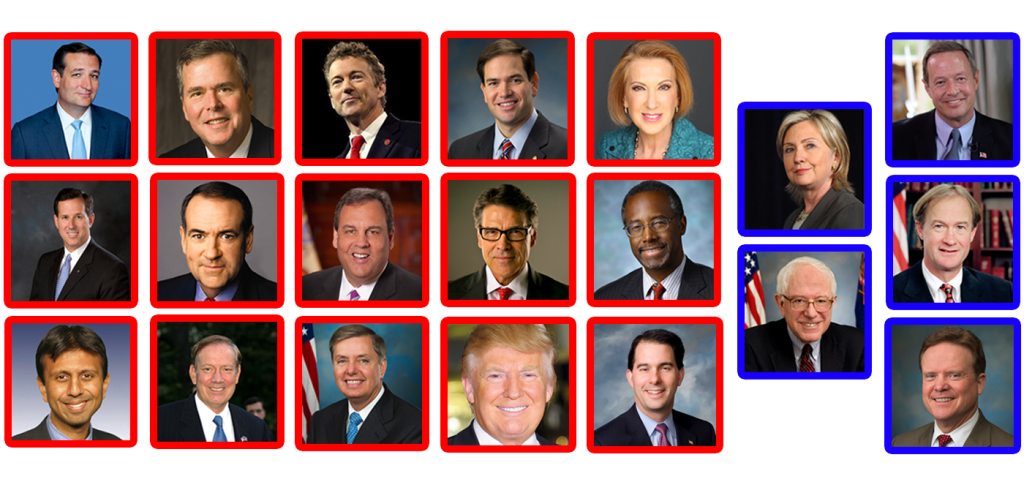
Welcome to the Monday presidential primary brief provided by Alabama Today. Every week you can find your latest headlines on the presidential primary races as we count down the days until Election Day. 237 days until AL Presidential Primary 491 days until Election Day Convention Dates: Republican July 18-21, 2016; Democratic July 25-28, 2016 Weekly Headlines: Chris Christie launches 2016 presidential bid Jim Webb announces 2016 presidential run Scott Walker formally enters 2016 presidential election Press Clips: What Jim Webb would need to do to win (NY Times 7/3/15) Mr. Webb’s voters may look a lot like him: ideologically idiosyncratic white men moved more by economic fairness and a noninterventionist foreign policy than cultural liberalism. His opposition to the Iraq war, among other foreign engagements, could offer Mr. Webb an attentive audience among some Democrats in dovish Iowa. And there may be a small band of populists and veterans in South Carolina who will Eind his background and message appealing. New Hampshire Democrats puzzled by Lincoln Chaffee (ABC News 7/3/15) Presidential candidate Lincoln Chafee stands before a few dozen people at a meeting of New Hampshire’s Belknap County Democrats. The Republican-‐turned-‐independent-‐turned-‐ Democrat gets nods of approval when he tells them he was the only Republican senator to vote against authorizing the war in Iraq. Then smiles turn to laughter when he pitches another idea: The U.S. should switch to the metric system. Scott Walker calls for respect on same-sex marriage ruling (CNN 6/28/15) Scott Walker said same-sex marriage proponents should respect the religious opinions of those who disapprove of same-sex couples having the right to legally wed. Speaking in Denver at the Western Conservatives Summit on Saturday, the Wisconsin governor spelled out his criteria for judges and weighed in on the religious liberty debate. “To me, it is not freedom from religion, it is freedom of religion, which ultimately means we have the right to practice our religious beliefs and not have others interfere,” he said in an onstage interview with conservative radio host Hugh Hewitt. Report: Joe Biden’s son told him to run in 2016 (Politico 6/29/15) Vice President Joe Biden’s sons reportedly urged him to run for the White House in 2016, according to The Wall Street Journal. Biden’s son Beau, who died last month of brain cancer at the age of 46, wanted his father to get into the race, according to the report. “It’s no secret that Beau wanted him to run,” Dick Harpootlian, a former chairman of South Carolina’s Democratic Party and a longtime Biden supporter, told the Journal. “If he does what Beau wanted him to do, he’ll run.” As left wins culture battles, GOP gains opportunity to pivot for 2016 (NY Times 6/27/15) A cascade of events suggests that 2015 could be remembered as a Liberal Spring: the moment when deeply divisive and consuming questions of race, sexuality and broadened access to health care were settled in quick succession, and social tolerance was cemented as a cornerstone of American public life. Yet what appears, in headlines and celebrations across the country, to represent an unalloyed victory for Democrats, in which lawmakers and judges alike seemed to give in to the leftward shift of public opinion, may contain an opening for the Republican Party to move beyond losing battles and seemingly lost causes. Rick Perry: Republicans must reach out to black voters (CBS News 7/2/15) Former Texas Governor Rick Perry said Thursday that Republicans have lost their “moral legitimacy as the party of Lincoln” after having given up on trying to win the support of African-‐Americans. Perry, who declared his presidential bid at the beginning of June, told an audience at the National Press Club that it’s time for Republicans to “reclaim our heritage as the only party in our country founded on the principle of freedom for African-‐ Americans.” He said Republicans have been “content to lose the black vote,” because they could win elections without African-‐American support. Poll: Bush, Trump rising nationally for GOP, but both trail Clinton (CNN 7/1/15) With nearly all of the expected 2016 presidential candidates formally in the race, a new CNN/ORC national poll Einds two recent entrants to the GOP Eield on the rise, while Hillary Clinton maintains her position atop the Democratic Eield, though holding a slightly slimmer lead. Former Florida Gov. Jeb Bush and businessman Donald Trump top the list of GOP presidential contenders following their back-‐to-‐back campaign launches in mid-‐June, and are the only two Republican candidates holding double-‐digit support among Republicans and Republican-‐leaning independents. Lindsey Graham tells Iowan: I don’t want you to vote for me (CBS News 7/3/15) Conservative Sen. Lindsey Graham has made it clear he’s extremely concerned about the threat of Islamic terrorism, but he isn’t willing to outlaw a whole religion over it. When a voter in Iowa suggested barring Islam in the U.S. in response to ISIS, Graham quickly shut him down, the Des Moines Register reports. “You know what, I’m not your candidate,” Graham said, cutting him off. “I don’t want you to vote for me. I couldn’t disagree with you more.” Romney to host Christie, Rubio in New Hampshire (Politico 7/3/15) Mitt Romney is opening up his sprawling New Hampshire vacation home to 2016 rivals Marco Rubio and Chris Christie this weekend. Christie and his wife Pat are planning to have dinner with the former GOP presidential candidate on Friday night at his home near Lake Winnipesaukee and spend the night, according to a report in The Washington Post. On Saturday they plan to walk in the town’s Fourth of July parade, which is a tradition for the Romney family.
Mitt Romney hosts holiday sleepover with Chris Christie, Marco Rubio
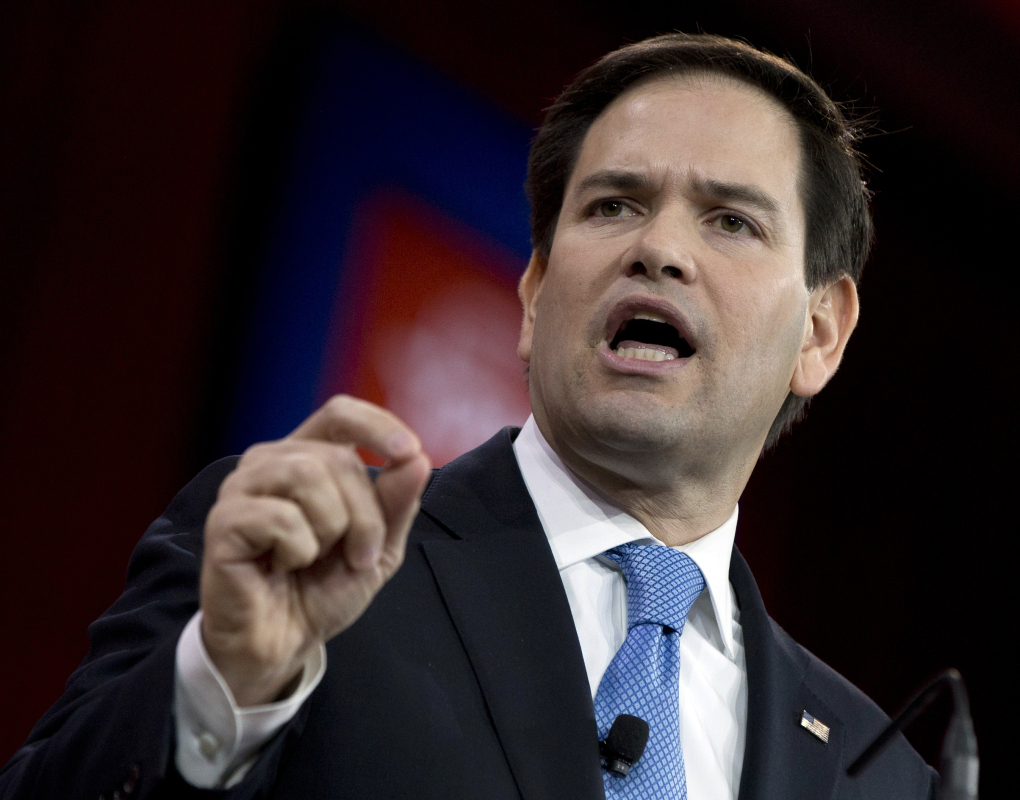
2012 GOP nominee Mitt Romney will be hosting two rival Republican presidential contenders at a holiday sleepover Friday evening. New Jersey Gov. Chris Christie and Florida Sen. Marco Rubio will both be staying over at Romney’s property in Wolfeboro, New Hampshire, an aide to Romney confirmed. The aide, who spoke on the condition of anonymity because of what the aide called the private nature of the event, said the former governor and his wife opened their home to the Christie and Rubio families after hearing they would be in town for the holiday weekend. Both candidates are scheduled to march in Wolfeboro’s Fourth of July parade. Christie, who formally jumped into the race this week, told reporters in New Hampshire Friday that he was grateful for the invitation. “I suspect there might be a little politics discussed tonight with Mitt and Ann, but me and Mary Pat, and Andrew and Sarah are really happy that Mitt and Ann invited us to stay with them tonight,” he said, according to video posted by NJ.com. A Rubio spokesman declined to comment. Romney had considered another run for president in 2016, but announced in January that he’d decided against it. His endorsement is now coveted. The Washington Post reported Friday night that Romney would meet next week with former Florida Gov. Jeb Bush, another GOP contender, at the Bush family compound in Kennebunkport, Maine. Christie was a top surrogate for Romney’s 2012 campaign and was considered a potential vice presidential contender. But he continues to receive heat in some Republican circles for leaving the trail and embracing President Barack Obama after New Jersey was hit by Superstorm Sandy just before the election. Christie’s campaign also announced some of its top staffers Friday. The campaign will be managed by Ken McKay, who formerly worked for the Republican National Committee and Republican Governors Association. Republished with permission of the Associated Press.
Jeb Bush shuffles campaign staff again
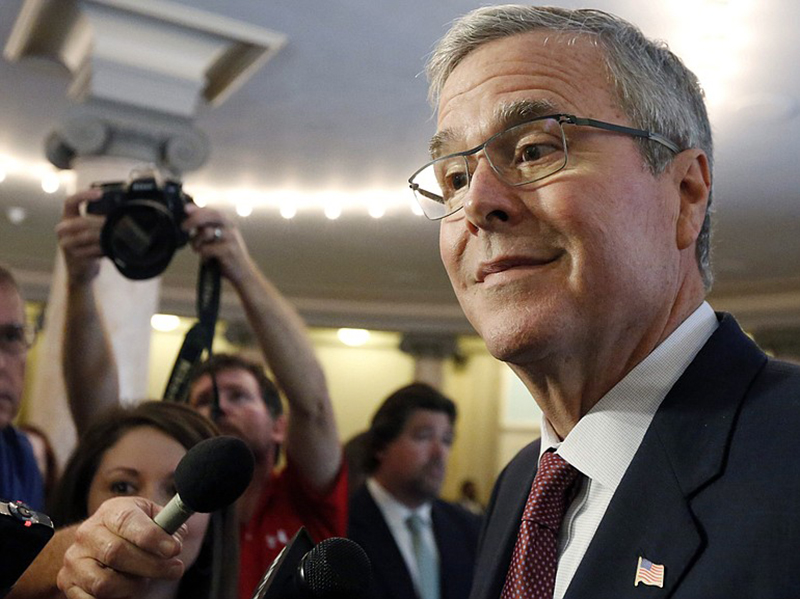
For the second time in less than two weeks, Jeb Bush is shuffling the top tier of his 2016 campaign staff, The Wall Street Journal reports. The job of political director, expected to go to Kentucky-based consultant Scott Jennings, will instead be filled by David James, senior adviser to Mitt Romney’s 2008 and 2012 presidential campaigns. He has also worked at the Republican National Committee and helped lead the Pennsylvania Republican Party. “After a successful announcement where Jeb really laid out how he is uniquely prepared to fix the problems in Washington, we are happy to be building out a political operation with David, Scott and the rest of the team that will spread that message in the primary and caucus states,” said Tim Miller, a spokesman for Bush.
Democrats worry Jeb Bush’s Latino connections could hurt Hillary Clinton
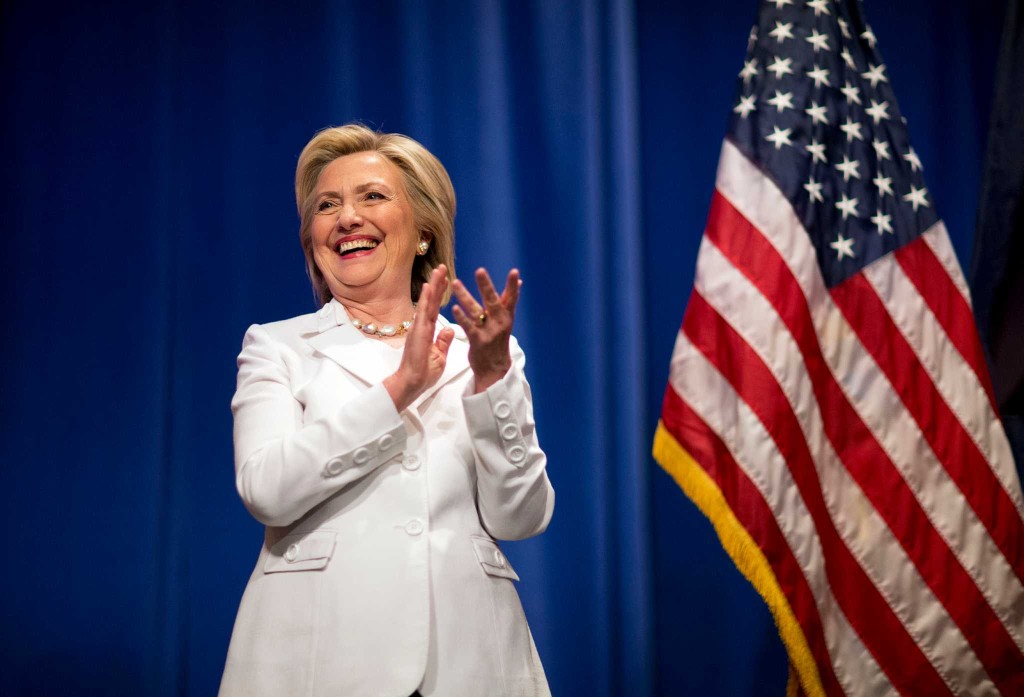
Hillary Rodham Clinton‘s campaign probably didn’t need a reminder of how crucial Latino voters could be to her presidential campaign. She got one anyway from Jeb Bush. The former Republican governor of Florida spoke fluent Spanish during his 2016 campaign kickoff this week, at which he introduced his wife, a native of Mexico, to an adoring crowd that cheered as he effortlessly deflected an attempt by immigration protests to interrupt his speech. “Ayúdennos a emprender una campaña que les da la bienvenida,” Bush said, which can be translated as, “Help us run a campaign that welcomes you.” Clinton will address the National Association of Latino Elected and Appointed Officials on Thursday in Las Vegas at a time when Bush’s bilingual pitch is prompting quiet pangs of concern among some Democratic strategists. They worry that a campaign that successfully presents Bush as the product of his Hispanic-infused South Florida home could cut into their party’s sizable demographic advantage with Latino voters, particularly in hard-fought states such as Florida, Colorado and Nevada. Bush comes across as “genuine and comfortable in his own skin,” said David Axelrod, a former strategist to President Barack Obama. “If he hangs tough and survives (the primary), Democrats should be sober. He would be a formidable opponent.” Bush may be the white scion of a political dynasty with deep roots in New England, but he has adopted Hispanic culture as his own. He made his career in the bilingual mecca of Miami, Spanish is his primary language at home, and he brags about buying cilantro to make Latin cuisine for his wife. On the campaign trail, Bush switches seamlessly between English and Spanish when answering questions, his skills in the language honed during the two years he spent in Venezuela as a young man. He also travels with Raul Henriques, a fresh-faced “body man” recently hired because Bush wanted a Spanish speaker. Republicans think Bush could help their party close a yawning political gap among Latino voters. GOP nominee Mitt Romney won just 27 percent of the Latino vote in 2012, the smallest margin in a decade. President George W. Bush, who had far weaker ties to the Hispanic community than his younger brother Jeb, earned as much as 40 percent of their vote during his 2004 re-election race. Maintaining a broad Democratic advantage among one of the country’s fastest-growing minority groups will be essential to Clinton’s path to the White House. Almost 28.2 million Hispanics will be eligible to vote in the 2016 presidential race, an increase of about 17 percent over 2012, according to an analysis of census data by the Center for American Progress, a liberal think tank. Clinton advisers have long singled Bush out from the rest of the crowded Republican field as a possible threat, arguing that his personal connection to the Latino community could help his campaign make inroads in several battleground states. “If Republicans were to win Florida and Ohio and Colorado, it’s hard to total up 270 for Democrats,” longtime Clinton confident Harold Ickes told reporters in November. For months, Clinton and her team have worked hard to develop and deepen relationships with Hispanic leaders. In May, she tapped Lorella Praeli, a leading immigrant-rights activist brought to the U.S. illegally as a young person, to lead outreach to Latino voters. Less than a month after announcing her plans to enter the race, Clinton called for a path to citizenship for undocumented immigrants. Her position left little political wiggle room for Republicans open to an immigration overhaul, Bush included, who favor granting legal status for some of the 11 million workers in the country illegally but not full citizenship. “We should offer hard-working, law-abiding immigrant families a path to citizenship,” Clinton said during her kickoff speech last weekend. “Not second-class status.” Campaigning in Iowa on Wednesday, Bush said he would support citizenship for some immigrants brought to the country illegally as children and a pathway to legal status for their parents, a step Obama took by executive order three years ago. But Bush’s efforts to woo Latinos may be complicated by the Republican primaries, where a vocal conservative minority holds outsized influence. In an indication of the potential toxicity of the issue to his primary bid, Bush had no plans to mention immigration during his Tuesday kickoff speech. But he couldn’t resist responding to the chants of protesters heckling him from the crowd with a pledge to tackle immigration legislation. “I believe what I believe, and I believe in comprehensive immigration reform,” he said in Iowa the following day. “People don’t agree with me in my own party, not everybody, but, trust me, there are a lot of people that have a differing view.” Republished with permission of The Associated Press.
Jeb Bush starting behind others and nearly from scratch in Iowa
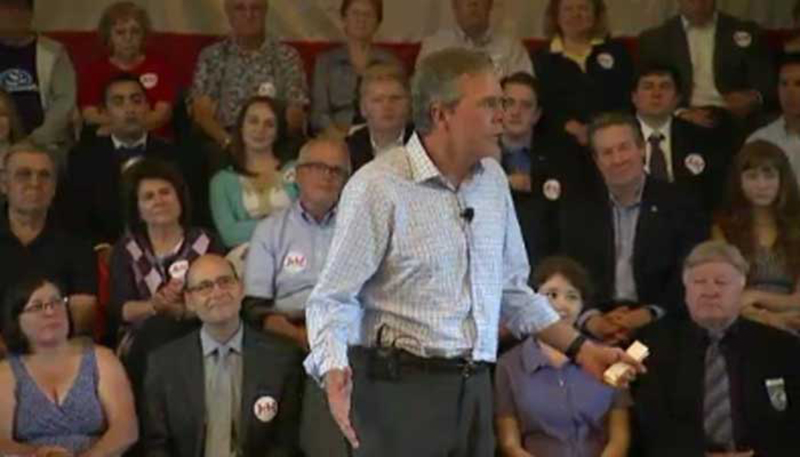
Republican presidential candidate Jeb Bush boasts blue chip donors, some of the best advisers in the campaign business and, of course, a famous political name. But when it comes to first-to-vote Iowa, he’s practically starting from scratch. The former Florida governor makes his first visit to the leadoff caucus state as a declared candidate Wednesday, where he has just three employees and has made only two visits this year. That’s far less time and resources than most of his rivals for the GOP nomination have invested in Iowa. “He has some making up to do,” said former state Rep. Renee Schulte, a Bush supporter. Asked this week if Bush was spending enough time in Iowa, Republican Gov. Terry Branstad — a cheerleader for Iowa’s outsized political influence — was telling in his answer. He spoke about someone else. “I would certainly compliment Governor Perry,” Branstad said, referring to the former Texas governor, Rick Perry. “I think he’s been here the most. And I think he’s building a good organization.” Perry has visited Iowa more than a dozen times in the past year. Bush’s aides say he can make the best use of the seven months until the caucuses by focusing more on populous areas such as swing-voting Cedar Rapids than on the sparser and more evangelical northwest. “Governor Bush is looking forward to campaigning all over Iowa in the lead-up to the caucuses. He’s all-in on the Iowa caucuses, and will campaign the right way,” said senior Bush adviser David Kochel, who is leading the early-state strategy. “He’ll go anywhere and work for every vote. He wants to earn Iowa’s support, in the caucuses as well as the general election.” It’s a break with the traditional type of caucus campaign, such as the one waged by former Pennsylvania Sen. Rick Santorum in 2012, when he visited each of Iowa’s 99 counties as part of an intense — and ultimately successful — strategy to win the state. It’s the approach Perry, who entered the 2012 campaign later and stumbled during debates, is now undertaking as part of an effort to win the state outright. With the backing of a deep-pocketed super PAC able to support him deep into the primary calendar, Bush appears less reliant on having to win Iowa. The recent cancellation of the Iowa straw poll may benefit Bush, who had planned to skip it. The straw poll forced some poor performers out of earlier campaigns; without it there may be no event to winnow the large GOP pack before the caucuses. That, in turn, could mean that a finish in the top tier — rather than an outright win — has more meaning than in the past. To be sure, Bush is hardly ignoring the state. Kochel, a Des Moines Republican now working out of Bush’s headquarters in Miami, is a veteran Iowa organizer and former adviser to Massachusetts Gov. Mitt Romney‘s presidential campaigns. Bush’s Iowa campaign director is Annie Kelly, who successfully ran one of the nation’s most competitive 2012 congressional campaigns in Iowa. What’s more, the Bush campaign is putting out a list of 20 elected officials and GOP activists who are endorsing him. And he has plans to talk to more GOP activists when he arrives Wednesday to headline a backyard get-together in Washington, Iowa, and later a town hall-style meeting, in Pella, both east of Des Moines. Former Iowa House Speaker Brent Siegrist, a Republican from GOP-heavy western Iowa, said he was expecting a call from Bush on Wednesday. His message to Bush? To do well will require Bush to keep showing up. “I think he could still do fairly well here, so he’s going to have to be here,” said Siegrist, who has not chosen a candidate. He said it won’t do for Bush to come to Iowa “and finish ninth.” Republished with permission of the Associated Press.
Jeb Bush still with much to prove in leaderless GOP 2016 race
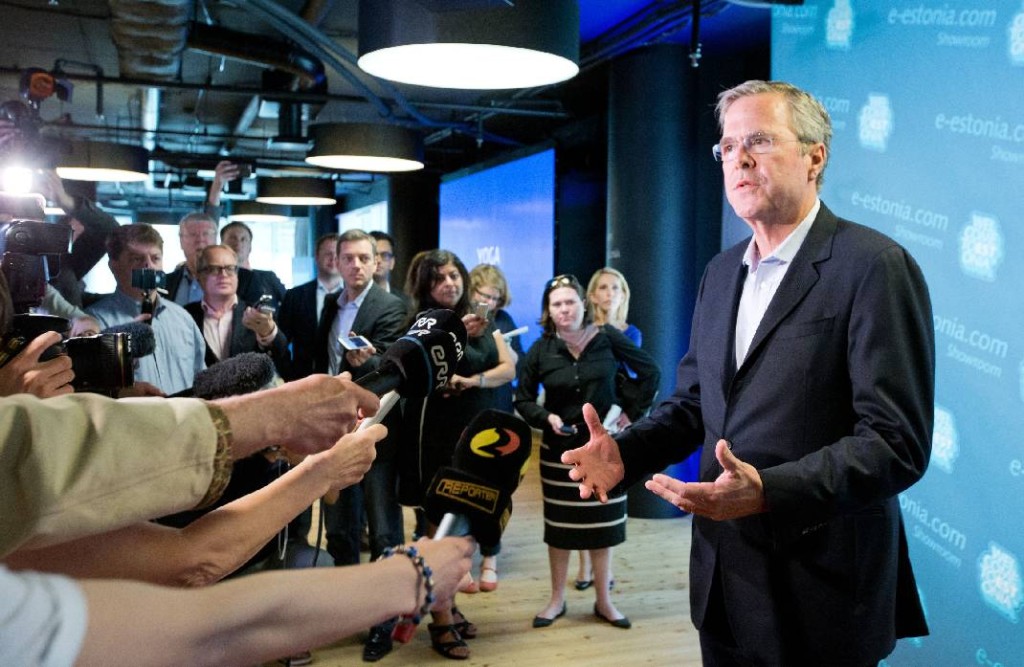
When Jeb Bush finally says on Monday that he’s running for president, he’ll begin the campaign with much to prove. Back in December, the former Florida governor said he was exploring a 2016 run, an announcement that by itself had the power to kick off the campaign. In the six months since, Bush probably has shattered a fundraising record as well as pioneering a new approach to White House campaigning. He has just completed a well-reviewed trip through Europe. Supporters had hoped that this son of one president and brother of another would by now hold a commanding position in an unwieldy Republican field. Yet he has not broken away from the pack. “I know that I’m going to have to go earn this,” Bush said this past week. “It’s a lot of work and I’m excited about the prospects of this. It’s a long haul. You start wherever you start, and you end a long way away from where we are today, so I just urge everybody to be a little more patient about this.” Bush, 62, planned to make his candidacy official during a Monday afternoon speech and rally at Miami Dade College, the nation’s largest university. He has failed to scare any potential rival from the race, except perhaps 2012 nominee Mitt Romney. He is unpopular among some of his party’s most passionate voters and little known beyond his home state despite the Bush name. “I thought Jeb would take up all the oxygen,” said Ohio Gov. John Kasich. “He hasn’t.” Emboldened by Bush’s slow rise, Kasich acknowledged this weekend that he is stepping up preparations for a possible campaign. Bush is one of 11 major Republicans in the hunt for the nomination. Kasich and a few others are still deciding whether to join a field that could end up just shy of 20. But few among them entered the race with such a high expectations of success as did Bush. Those expectations have seemed a burden at times. Take, for example, the question of whether Bush will report raising $100 million for his campaign in the first six months of the year. Lost amid the “will he or won’t he” is that Bush probably will have taken in far more than anyone else. Romney said Saturday it would not surprise him to learn that Bush had scooped up twice that of all the other GOP candidates combined. “By all appearances, he’s raised a lot of money,” Romney said, praising Bush’s “experienced and capable team.” ”At this stage, that’s a very important thing to do.” Even if he does not reach the $100 million mark, Bush will have amassed more in six months than Romney and his allies at a super political action committee raised for the entire year before the 2012 election. By contrast, a senior adviser to Wisconsin Gov. Scott Walker, considered along with Bush among the few top-tier 2016 contenders, expects he will raise roughly $25 million through the end of June. The adviser spoke on the condition of anonymity to share internal fundraising details. Romney’s former fundraising chief, Spencer Zwick, said despite Bush likely commanding lead in the fundraising race, it’s not clear how much of an advantage he will hold over the field. “You don’t need $100 million to run a primary,” Zwick said. He suggested that multiple candidates would have the resources “to go the distance,” adding that “it doesn’t feel like anybody owns the dominant position.” Bush took lots of questions this past week about a supposed shake-up at campaign headquarters, even though only one member of his senior team — who remains on Bush’s staff — was affected. The attention exasperated Bush: “It’s June, for crying out loud,” he told reporters while in Berlin. “We’ve got a long way to go.” Still, Bush’s first six months back in politics since leaving the governor’s office in 2007 have been underwhelming at times. His low-key speaking style often leaves something to be desired, particularly when compared with some opponents. He sometimes gets snippy during long campaign days. While detailed policy questions are often his strength, he struggled for several days last month to answer a predictable question about the war in Iraq that his brother, former President George W. Bush, waged. “He would be an excellent president no doubt, but how far he can go in the process remains to be seen,” said John Rakolta Jr., the CEO of a Michigan construction company and a leading Romney donor. In his speech Monday, Bush planned to make the case that those involved in creating Washington’s problems cannot fix them. The point is designed to jab the Republican senators — including political protégé in Florida, Marco Rubio — in the race. Meanwhile, an allied super PAC fueled by Bush’s fundraising haul is developing an advertising strategy that will promote Bush’s record in Florida and attack his rivals. Illinois-based businessman Todd Ricketts, a Walker supporter, said it’s far too early to draw any conclusions about Bush or the rest of the field. “Once there’s a debate, we’ll have a clearer picture of who appears to be ready,” he said. Republished with permission of the Associated Press.
Jeb Bush lauded at Tennessee GOP event, but will state vote follow?
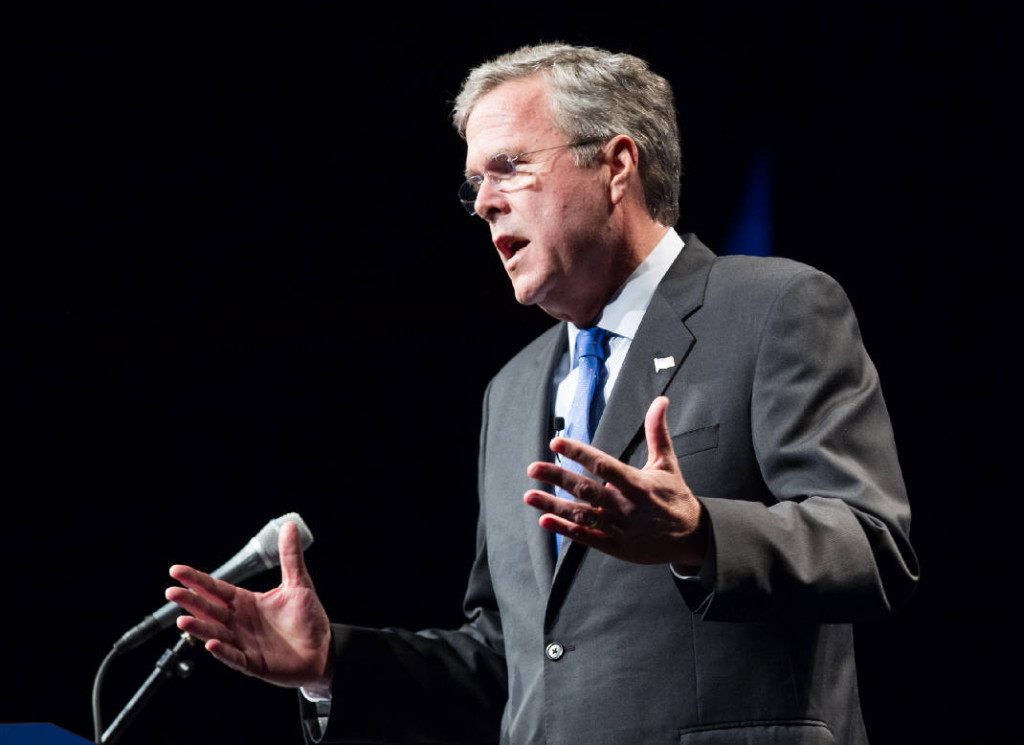
The speakers at the weekend Tennessee Republican Party fundraiser took turns heaping praise on former Florida Gov. Jeb Bush, keynote speaker at the annual Statesmen’s Dinner. While Gov. Bill Haslam and Sens. Lamar Alexander and Bob Corker stopped short of an official endorsement of the likely presidential candidate, their comments did more than hint that they would welcome his entry into the race. “If we want to win the presidency we’re going to have to appeal to a broad number of Americans that we haven’t been appealing to over the last several years,” Alexander said. “He’s shown a capacity to do that.” Corker said he sees in Bush a like-minded approach to staking out positions that he considers right even if they aren’t politically popular. “Governor, I’ve been watching you,” Corker said. “I’ve seen a lot of people changing positions over the course of this election — you have not. And for that I respect you greatly.” But even if Bush ends up gaining the support of the heavy hitters in the state GOP, it’s uncertain whether primary voters in Tennessee will follow suit. Despite endorsements from Haslam and Alexander in 2012, former Massachusetts Gov. Mitt Romney lost in Tennessee to former Pennsylvania Sen. Rick Santorum. And another social conservative, former Arkansas Gov. Mike Huckabee, won the primary over eventual nominee John McCain in 2008. Both Santorum and Huckabee have announced they are running again in 2016. “It is very predictable that Haslam, Corker, and Alexander would ally with Bush and continue pushing big government, one size fits all solutions like Common Core and Obamacare expansion,” said Ben Cunningham, the president of the Nashville Tea Party. “The conservative activist base of the Tennessee Republican party has drifted away from the Haslam dynasty and their allies in much the same way that tea party conservatives nationally have drifted away from the Bush dynasty,” he said. Haslam at the fundraiser called Bush one of the best governors of the past two decades, citing his accomplishments in budgeting, job creation and education. “I’ve obviously been impressed with this record, but I’m even more impressed with who he is as a person and who is he is as a husband and father and as a member of his community,” Haslam said. Alexander in his re-election last year leaned heavily on Huckabee and Sen. Rand Paul of Kentucky, another Republican presidential aspirant to prevail in a closer-than-expected GOP primary against a Tea Party-styled opponent. But Alexander was coy about whether he now owes either a favor, or whether he will ultimately support Bush. “I don’t know yet,” he told reporters before the event. “I have great admiration for Mike Huckabee and I have great admiration for Jeb Bush. And I like Rand Paul a lot, too.” State Rep. Bill Dunn, a Republican of Knoxville, was a prominent supporter of Santorum in the 2012 race, but said he has not yet made up his mind among the 2016 batch of candidates. He said state Republicans don’t necessarily have to be at odds with each other over who they want to support for the nomination. “I don’t think social conservatives reject the fiscal conservative,” he said. “We just put a different priority on it.” Republished with permission of The Associated Press.
Rick Santorum launches 2nd GOP presidential bid
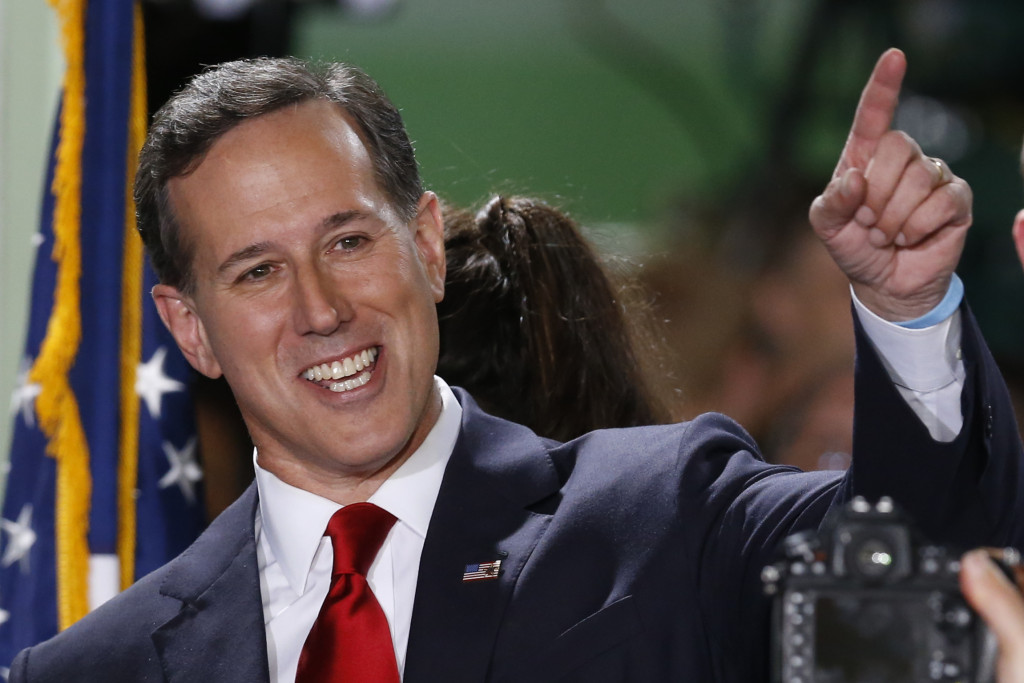
Rick Santorum, an aggressive advocate for conservative family values, launched a second bid for president on Wednesday, a spokesman said. The former Pennsylvania senator exceeded the political world’s expectations by scoring a second-place finish in the race for the Republican presidential nomination four years ago. Yet as he competes again, he may struggle even to qualify for the debate stage in 2016. The 57-year-old Republican delivered his announcement at a factory near his western Pennsylvania hometown. Santorum was surrounded by factory workers at the event, a carefully scripted setting designed to showcase his focus on the working class. A major player in 2012, he opens this political season almost as a heavy underdog in a race expected to feature more than a dozen high-profile Republicans — most of them newcomers to presidential politics. Santorum says his experience could pay dividends the second time around. Most of the GOP’s recent presidential nominees, Mitt Romney and President Ronald Reagan among them, needed more than one campaign to win the nomination. “This is a long process,” Santorum told reporters recently. “One of the things that I feel very comfortable with — I’ve been through this process before.” He said it’s a “completely wide open race.” The prospective Republican field already includes four sitting senators, four governors, four former governors, two business leaders and a retired neurosurgeon. Santorum won 11 states in the last presidential primary contest, yet his early longshot status may keep him out of presidential debates altogether. Only those who place in the top 10 of national polls will be allowed to participate in the first Republican presidential debate in August, according to guidelines released by network host Fox News. Santorum and fellow 2012 candidate, former Texas Gov. Rick Perry, are among those on the bubble. Much of Santorum’s past success was tied to his performance in Iowa, where he scored a narrow victory over Romney in the nation’s first presidential nominating contest. Facing little competition for the state’s influential evangelical vote, Santorum impressed voters by touring Iowa’s 99 counties in a pickup truck. Iowa will continue to be a focus in 2016, according to spokesman Matt Beynon, who said Santorum’s rollout tour would begin in Iowa on Thursday and Friday and move to South Carolina on Saturday and Sunday. His road to relevancy this time won’t be easy, however. “It’s going to be much more competitive,” said Foster Friess, a prominent Santorum donor. Santorum faces considerable competition for his party’s social conservatives. The list of candidates already courting religious voters includes former Arkansas Gov. Mike Huckabee, a Baptist pastor who won the Iowa caucuses in 2008, Perry, Louisiana Gov. Bobby Jindal and Texas Sen. Ted Cruz. And like Santorum, former Florida Gov. Jeb Bush is a Catholic. Questions remain about Santorum’s ability to raise money as well. Expressing confidence, Beynon said Santorum would benefit from a donor network that has only grown in the years since his first run. “He would anticipate having more money,” Beynon said. “That was certainly a factor in his decision.” And Friess, who previously gave more than $2 million to a pro-Santorum super PAC in 2012, said he would continue to support Santorum’s White House ambitions, although he plans to avoid donating large amounts directly to the campaign or a supportive super PAC, both of which would disclose their donors. “Any giving I’m doing is going to be lower-profile and less noticed,” Friess told The Associated Press. On the ground in early-voting states like Iowa and South Carolina, Santorum starts off as well-known among voters and activists. But a new crop of Republican competitors like Wisconsin Gov. Scott Walker has been aggressively touring the states in recent weeks as well. And some voters prefer a fresh face in an election season expected to feature Hillary Rodham Clinton on the Democratic side. “The electorate is so unpredictable, I wouldn’t make a betting guess for him or against him,” Iowa National Republican committeeman Steve Scheffler said of Santorum. “But he’s got a lot of work to do — like the others.” Republished with permission of The Associated Press.
