
Transgender medication law in Alabama blocked by judge
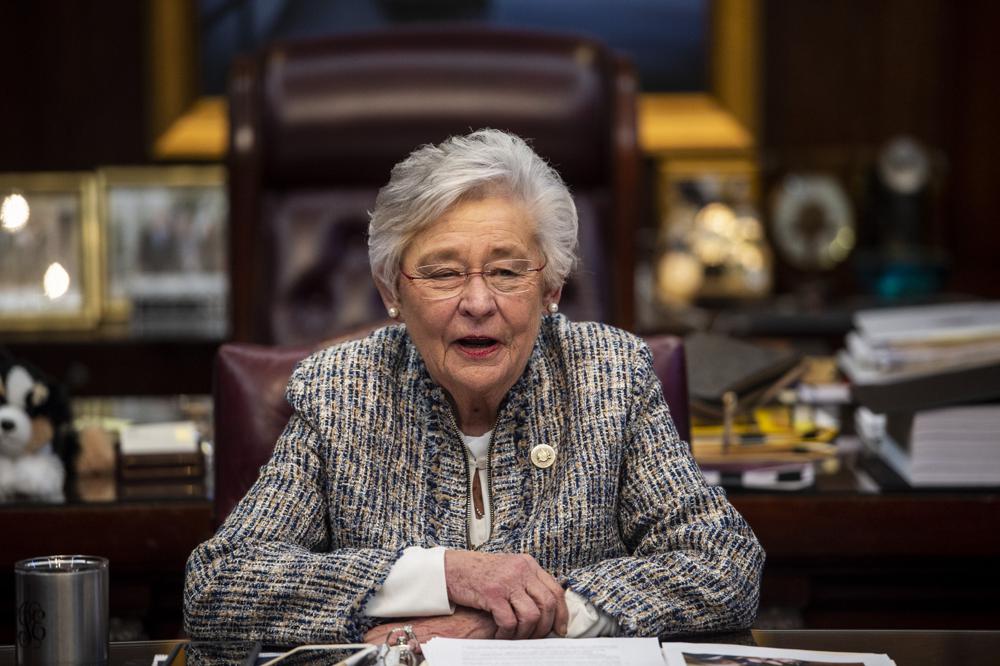
A federal judge on Friday blocked part of an Alabama law that made it a felony to prescribe gender-affirming puberty blockers and hormones to transgender minors. U.S. District Judge Liles Burke issued a preliminary injunction to stop the state from enforcing the medication ban, which took effect May 8, while a lawsuit goes forward. The ruling was a victory for families and advocacy groups who challenged the first-of-its-kind law as an illegal intrusion into family and medical decisions. Alabama Gov. Kay Ivey referred to the ruling as a “temporary legal roadblock.” Alabama’s state attorney general indicated he will appeal. “This ruling means that parents of transgender children in Alabama will continue to be able to make the healthcare decisions that are best for their families. It is an extraordinary relief. Parents should not be punished for wanting to do what’s best for their kids,” said Jennifer Levi, director of the transgender rights project for GLBTQ Legal Advocates & Defenders. The Vulnerable Child Compassion and Protection Act made it a felony, punishable by up to 10 years in prison, to prescribe or administer gender-affirming medication to transgender minors to help affirm their new gender identity. The judge left in place another part of the law that banned gender-affirming surgeries for transgender minors, which doctors had testified are not done on minors in Alabama. He also left in place a provision that requires counselors and other school officials to tell parents if a minor discloses that they think they are transgender. “We will continue fighting to protect Alabama’s children from these radical, unproven, life-altering drugs, despite this temporary legal roadblock,” Ivey said in a statement issued Saturday morning. “It is especially important while they are at such a vulnerable stage in life. We will continue to uphold our duty to ensure that children are free to grow up into the adults God intended them to be, even with today’s societal pressures and modern culture.” A spokesman said Alabama Attorney General Steve Marshall is disappointed in the court’s decision “and is already working on filing an appeal in defense of the law.” Four families with transgender children ranging in ages 12 to 17 had filed a lawsuit challenging the Alabama law as discriminatory, an unconstitutional violation of equal protection and free speech rights, and an intrusion into family medical decisions. The U.S. Department of Justice joined the lawsuit seeking to overturn the law. Burke — nominated to the court by former President Donald Trump in 2017 — ruled that Alabama had produced no credible evidence to show that transitioning medications are “experimental.” He added that “the uncontradicted record evidence is that at least twenty-two major medical associations in the United States endorse transitioning medications as well-established, evidence-based treatments for gender dysphoria in minors.” He noted testimony from a mother who said she feared her child would commit suicide if she lost access to the medications. “Enjoining the Act upholds and reaffirms the ‘enduring American tradition’ that parents — not the states or federal courts — play the primary role in nurturing and caring for their children,” Burke wrote in the opinion. Jeff Walker of Auburn, Alabama, told The Associated Press on Saturday that the ruling “took a lot of weight off our shoulders.” The Walker family is not one of the plaintiffs in the case but said they had been scrambling to figure out how to continue care for their 15-year-old daughter, Harleigh, and if they needed to move to another state. Harleigh Walker said the decision was a “huge stress relief.” The legislation was part of a wave of bills in Republican-controlled states regarding transgender minors but was the first to levy criminal penalties against the doctors who provide the medications. In Arkansas, a judge blocked a similar law before it took effect. Dr. Morissa Ladinsky, a pediatrician who founded a Birmingham medical team that treats children with gender dysphoria, said the decision was a “huge relief for transgender children and their families.” “The court’s decision recognizes that this is well-established care that has been endorsed by 22 major medical associations. This decision will ensure transgender children in Alabama and beyond can continue to receive this evidence-based well-known life-saving care,” she said. More than 20 medical and mental health organizations urged Burke to block the law. Fifteen states filed a brief in the case in support of Alabama’s law. The state attorney general’s office argued that the use of the medications is unsettled science, and thus the state has a role in regulation to protect children. During a court hearing before Burke, state attorneys argued European countries take a more conservative approach to the medications. Alabama lawmakers, who approved the bill this spring, said decisions on the medications should wait until adulthood. Republished with the permission of the Associated Press.
Transgender treatment, doctors threatened by new Alabama law
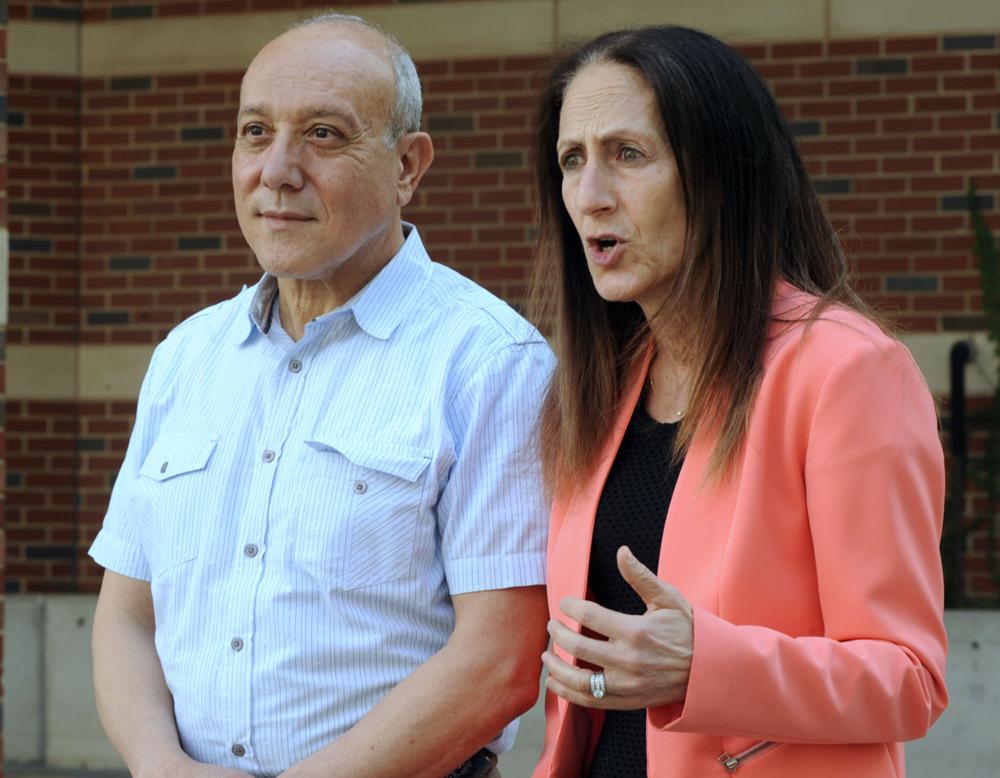
Dr. Hussein Abdul-Latif spent the last week typing out prescription refills for his young transgender patients, trying to make sure they had access to their medications for a few months before Alabama made it illegal for him to prescribe them. He also answered questions from anxious patients and their parents: What will happen to me if I suddenly have to stop taking testosterone? Should we go out of state for care? A new state law that took effect Sunday makes it a felony, punishable by up to 10 years in prison, for doctors to prescribe puberty blockers and hormones to trans people under age 19. A judge has not yet ruled on a request to block the state from enforcing the law. The measure is part of a wave of legislation in Republican-controlled states focused on LGBTQ youth. Bills have been introduced to limit discussion of gender and sexual identity issues in younger grades or to prohibit kids from using school restrooms or playing on sports teams that don’t align with their sex at birth. Abdul-Latif, a pediatric endocrinologist and co-founder of a clinic in Birmingham to treat children with gender dysphoria, said he is very discouraged by the Alabama law. He said it was already hard enough for families in this very conservative state to come to terms themselves with their children’s situations. They had already faced the social stigma and “the difficult decision of leaving their church family or being viewed less worthy,” he said. But gradually, he said, trans kids became more visible, and there was a greater openness in the state for them to come out. “They always existed, but they often did not have the feeling of empowerment to come out or come out to their physicians,” he said. “And now that they are, we’re hitting them back with legal action.” Abdul-Latif notes that the American Academy of Pediatrics and the Pediatric Endocrine Society both endorse the treatments that clinics here and in other states are providing for transgender youth. In contrast, “The state is not only saying I am criminal for prescribing those medications, but it’s saying that my organization of thousands of physicians, pediatricians, and pediatric endocrinologists are maybe partners in that criminal enterprise,” he said. Four Alabama families with transgender children have filed a lawsuit challenging the new state law as unconstitutional. The U.S. Department of Justice has joined the suit. A federal judge heard evidence this week on a request to block the state from enforcing the statute while the legal challenge goes forward. More than 20 medical and mental health organizations, including the American Academy of Pediatrics, have also urged the judge to block the law. A decision is expected sometime this week. Alabama maintains the law is about protecting children. “The science and common sense are on Alabama’s side. We will win this fight to protect our children,” Alabama Attorney General Steve Marshall said last week. Now that the law is in effect, families are wondering if they will have to move out of state, and doctors are worried about what will become of their patients. Abdul-Latif, who is originally from Jordan, and pediatrician Dr. Morissa Ladinsky both moved to Alabama years ago to work as instructors and physicians at the University of Alabama at Birmingham. In 2015, after seeing more families with kids identifying as trans and seeking help for gender-related issues, they decided to found a clinic to treat children with gender dysphoria. They now treat more than 150 young people who are transgender or gender diverse. Ladinsky, who testified last week as a witness in the lawsuit, told The Associated Press that she felt like she was “walking in a nightmare” when the Alabama Legislature approved the ban. She says the measure is an unprecedented legislative overreach into the decisions of parents and the practice of medicine. “This is the first time ever that I can remember, at least for pediatricians, that we are literally forced to choose between the Hippocratic Oath we took to ‘do no harm’ and never abandon our patients versus the facing of a potential felony conviction,” she said. Ladinsky quickly agreed to co-found the gender clinic in Birmingham when Abdul-Latif approached her about it. She had moved to the city from a hospital in Cincinnati, Ohio, that had a pediatric gender health team and was familiar with the treatments. But that wasn’t all. She also had taken a route to work each morning that brought her by the spot where Ohio transgender teen Leelah Alcorn had stepped in front of an oncoming tractor-trailer in 2014. Leelah left a suicide note that read, “My death needs to mean something. … Fix society. Please.” Some of the children Abdul-Latif and Ladinsky have treated in the Birmingham clinic came to them after suicide attempts, the doctors said. One patient tried to kill themselves five times, he said. A 2021 survey by the Trevor Project, a nonprofit organization focused on suicide prevention efforts among LGBTQ youth, found that 52% of transgender and nonbinary youth seriously considered suicide in the past year, and 1 in 5 reported attempting suicide. “In our minds, there is no doubt they saved my daughter’s life,” said David Fuller, whose daughter was among the first patients treated in Birmingham. Jessica Fuller, now 22, was 16 when she first came to the clinic after telling her father that she was trans. “The dysphoria was awful, and I was thinking about suicide more often than I wish to talk about,” Fuller wrote in an email. She called the new Alabama law “a waste of time and money.” “It’s terrifying not just for the kids but the doctors and nurses just trying to help kids not kill themselves,” she wrote. “Are you gonna arrest him for something so harmless?” Abdul-Latif said he understands that some people may be skeptical over the medical treatments for transgender kids. “But to make it into a law and make it into a felony — that is way beyond skepticism,” he said, adding that the law “basically closes …
Alabama outlaws gender-affirming medicines for trans kids
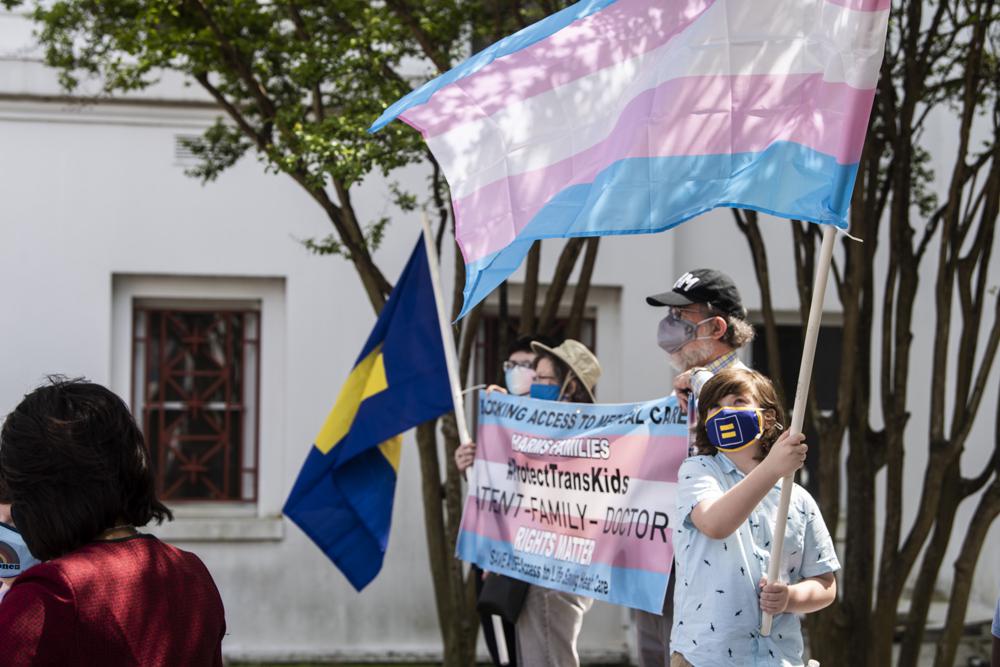
It’s now a crime in Alabama to administer or prescribe gender-affirming puberty blockers and hormones to transgender people under age 19, as a new law took effect Sunday without intervention from the courts. Alabama is the first state to enact such a ban on these treatments for transgender youth. A similar measure in Arkansas to halt the treatments was blocked by a federal judge before it took effect. A federal judge has not yet ruled on a preliminary injunction request to block Alabama from enforcing the law while a court challenge goes forward. “Families are scared. How can you not feel like the floor was pulled out from under you?” Dr. Morissa Ladinsky, a pediatrician who founded a Birmingham medical team that treats children with gender dysphoria, said Sunday. Ladinsky said she remains hopeful that a federal judge will grant an injunction request. The Vulnerable Child Compassion and Protection Act makes it a felony, punishable by up to 10 years in prison, to prescribe or administer gender-affirming medication to young people under 19 to help affirm their new gender identity. It also requires school counselors, teachers, and other school officials to tell parents if a minor discloses that they think they are transgender. U.S. District Judge Liles Burke had cautioned attorneys on Friday that he might not have a decision on a request for a preliminary injunction by the Alabama law’s May 8 effective date. Burke said he and his staff would do “nothing else” but work on the issue. Four families with transgender children and others filed a lawsuit that the U.S. Department of Justice joined challenging the law as discriminatory, an unconstitutional violation of equal protection and free speech rights, and an intrusion into family medical decisions. The plaintiffs asked Burke to issue an order blocking enforcement of the statute while the lawsuit goes forward. Twenty-three medical and mental health organizations, including the American Academy of Pediatrics, have also urged the judge to enjoin the law. Attorneys for Alabama argued the ban should be allowed to go forward. Republished with the permission of the Associated Press.
Alabama’s new transgender care felony faces federal test
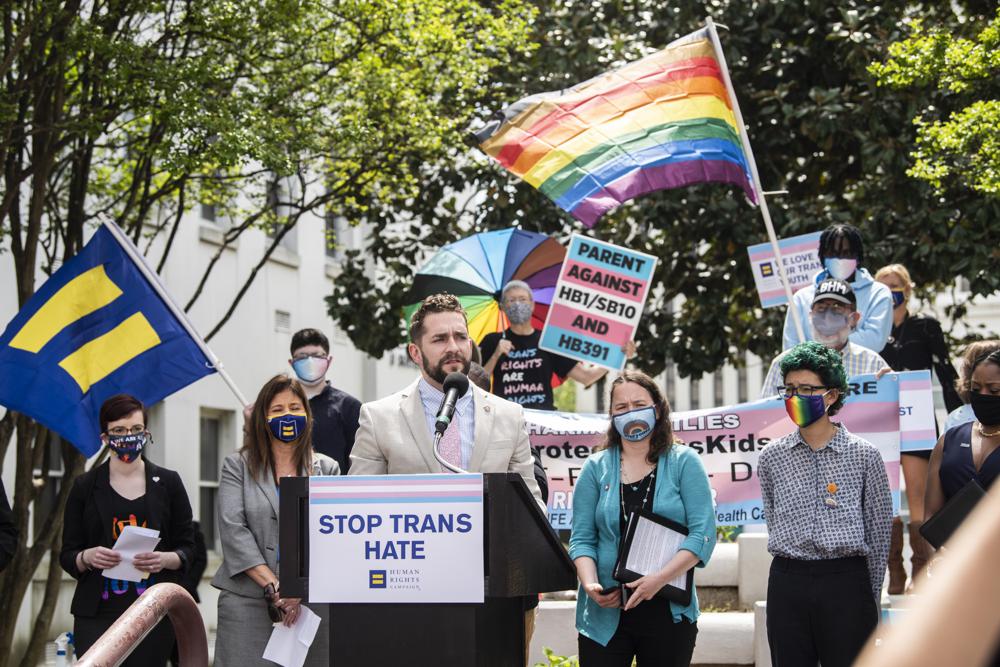
A doctor testified Thursday that there will be devastating consequences for transgender adolescents if Alabama outlaws the use of gender-affirming medications for them, and that their medical providers would face jail time for providing standard care. The testimony came in a federal court hearing as families with transgender children seek to block enforcement of the Alabama law banning the treatments. The Alabama Vulnerable Child Compassion and Protection Act, which is set take effect on Sunday, makes it a felony punishable by up to 10 years in prison for medical providers to give puberty blockers and hormones to people under age 19 to help affirm their gender identity. Lawmakers, who approved the bill this spring, said it is needed to protect children and that decisions on the medications should wait until adulthood. The legislation is part of a wave of bills in Republican-controlled states regarding transgender minors, but it is the first law to put criminal penalties on the doctors who provide the treatments to them. Dr. Morissa Ladinsky, a pediatrician who founded a Birmingham medical team that treats children with gender dysphoria, testified that the medications are part of well-established standards of care. She said her clinic is one of about 55 such clinics across the country. “This will force us into a place of risking a felony conviction for providing evidence-based care,” Ladinsky said of the impact on doctors. Ladinsky, who is not a plaintiff in the case, was testifying as a witness for families and other doctors challenging the law. Hormones, she said, are only given to older teens after a lengthy evaluation and input from multiple medical professionals. She described seeing teens transform from being sullen, and sometimes suicidal, to confident individuals ready to “join the world in ways they haven’t done before.” She testified that taking the medications away could cause an increase in mental health problems and suicidal thoughts in these youngsters. “That will take these youth to very dark places,” she said. An attorney for the state of Alabama asked Ladinsky if teens were able to comprehend the risks of the treatments. She replied that there is a lengthy conversation with teens and their parents about possible risks. The Alabama attorney general’s office, in defending the law, has argued that the treatments are motivated by ideology and that the science is unsettled. “If the court enjoins this act, Alabama children face irreversible damage from unproven, sterilizing, and permanently scarring medical interventions pushed by ideological interest groups,” lawyers for the state wrote. Twenty-three medical and mental health organizations, including the American Academy of Pediatrics, have asked to file a brief in the case urging the judge to enjoin the law. “Gender-affirming medical care is the well-recognized, accepted standard of care for adolescents at risk of or suffering from gender dysphoria,” an attorney wrote in the motion. Linda Hawkins, a counselor who co-founded the Gender and Sexuality Development Program at The Children’s Hospital of Philadelphia, testified that the treatments have shown clear benefits for children with gender dysphoria. “It would be like removing somebody’s cancer treatment and expecting them to be OK,” Hawkins testified, according to news outlets, on the impact of taking the medications away. A federal judge is hearing evidence on a request to block enforcement of the law while it’s challenged in court. The hearing will continue Friday. The judge has not indicated if he will rule before the law’s effective date. A parent of a transgender child and another doctor, both plaintiffs in the case, were set to testify Thursday afternoon, and the judge closed the courtroom for privacy reasons.
Transgender treatment ban challenged by lawsuit in Alabama
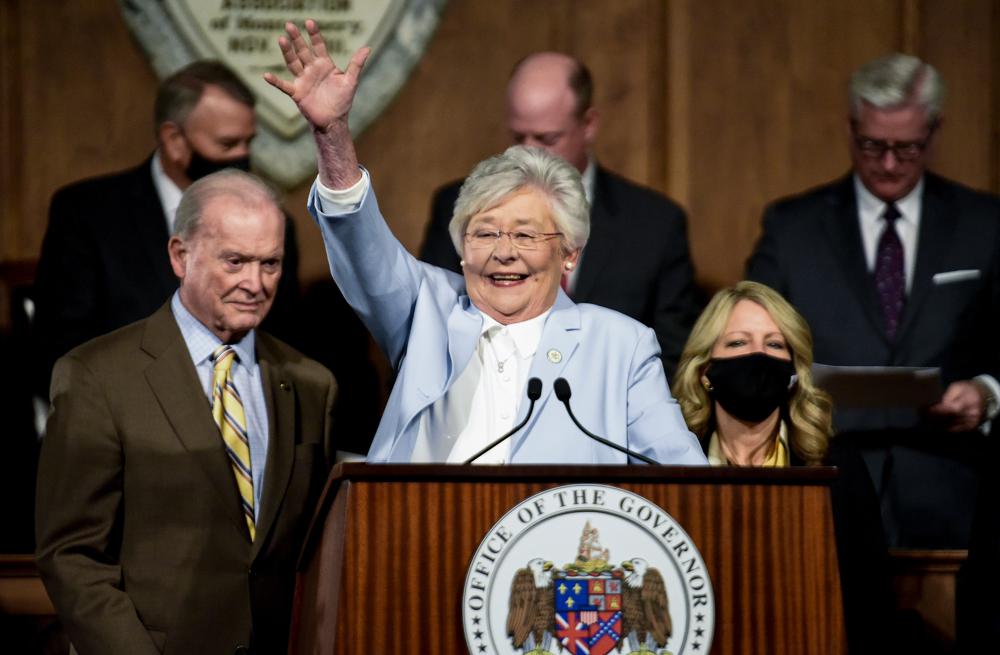
Two families with transgender teens and two physicians sued the state of Alabama on Monday to overturn a law that makes it a crime for doctors to treat trans youth under 19 with puberty blockers or hormones to help affirm their gender identity. The lawsuit was filed in federal court three days after Republican Gov. Kay Ivey signed the measure into law. Ivey is running for reelection this year and faces challengers in next month’s GOP primary. “By signing SB 184, Governor Ivey has told kind, loving, and loyal Alabama families that they cannot stay here without denying their children the basic medical care they need,” Dr. Morissa Ladinsky, one of the plaintiffs, said in a statement. “She has undermined the health and well-being of Alabama children and put doctors like me in the horrifying position of choosing between ignoring the medical needs of our patients or risking being sent to prison.” The parents of a 13-year-old transgender girl in Jefferson County and a 17-year-old transgender boy in Shelby County are participating in the lawsuit. The plaintiffs are known as Roe and Doe in the court filing to protect the children’s identities. The Southern Poverty Law Center, the Human Rights Campaign, which is a national advocacy group for the LGBTQ community, and other groups are representing the plaintiffs. The Law Center announced the suit in a news release. The Alabama law, which will go into effect May 8 unless blocked by the court, will make it a felony for a doctor to prescribe puberty blockers or hormones to aid in the gender transition of anyone under age 19. Violations will be punishable by up to 10 years in prison. It also prohibits gender transition surgeries, although doctors told lawmakers those are generally not done on minors. Ivey signed the legislation on Friday, a day after it was approved by the Alabama Legislature. At a campaign stop Monday, the governor invoked religion when asked about her decision to sign the legislation. “If the good Lord made you a boy at birth, then you are a boy. If the good Lord made you a girl at birth, then you are a girl,” she said. “We should especially focus our efforts on helping these young people become healthy adults just like God wanted them to be rather than self-induced medical intervenors.” Asked if the law would survive a court challenge, she replied, “We’ll wait and see.” The lawsuit identifies the plaintiff as “Mary Roe,” a 13-year-old transgender girl who is accepted as a girl in both her church and her school. Mary began taking puberty blockers last year. “For Mary to be forced to go through male puberty would be devastating; it would predictably result in her experiencing isolation, depression, anxiety, and distress,” the lawsuit states. “Mary’s parents are also concerned that without access to the puberty-blocking medication she needs, Mary would resort to self-harm as a means of coping with her psychological distress or even attempt suicide.” Similar measures have been pushed in other states, but the Alabama legislation is the first to lay out criminal penalties for doctors. In Texas, Republican Gov. Greg Abbott has ordered the state’s child welfare agency to investigate as abuse reports of gender-confirming care for kids. And a law in Arkansas bans gender-affirming medications. That law has been blocked by a court, however. Ivey also signed a separate measure that requires students to use bathrooms that align with their original birth certificate and prohibits instruction of gender and sexual identity in kindergarten through fifth grades. Republished with the permission of the Associated Press.
