
Darryl Paulson: The Era of Bad Feelings

The Era of Good Feelings is the term used to describe the aftermath of the War of 1812 where the American nation sought to establish national unity during a period of one-party dominance. The Federalist Party, representing the urban and aristocratic citizens, disappeared after the disastrous Hartford Convention in 1814, leaving only the Jeffersonian Republicans as the sole political party. The Jeffersonian Republicans so dominated the political landscape that President James Monroe ran unopposed in 1820 and would have won a unanimous vote in the electoral college except for the vote of a few rouge electors. With the death of the Federalist Party, Monroe went on a national goodwill tour in 1817. While in Boston, the former Federalist stronghold, the term Era of Good Feeling was first used in a local paper. I am coining a new term to describe the current state of affairs of American politics: the Era of Bad Feelings. We have two political parties and each one hates the other. While political parties, by nature, are competitive, they have had a history of working together until the 1980s. After about a half-century of Democratic Party dominance in Congress from the 1930s to the 1980s, the Republican Party decided to stop working with the Democrats and, instead, oppose them on virtually every issue. Compromise was replaced by conflict. The end of compromise led to the collapse of ideological diversity in both political parties. Entering the 1980s, both the Republican and Democratic Parties had a mix of moderates, liberals and conservatives. Today, the Republicans have a few moderates among the mostly conservative ranks, and the Democrats have a few moderates among its liberal base. The political center is gone and the political extremes dominate both parties. Political hatred of the other party has grown so strong, that it affects what we read, what we watch, where we live and even who we marry. A Pew Research study of 10,000 Americans found that partisans prefer living in communities of like-minded individuals. Fifty percent of conservatives and 35 percent of liberals think it is “important to live in a place where people share my political views.” Liberals watch MSNBC and read American Prospect, the Progressive and the Daily Kos. Conservatives have Fox News and Rush Limbaugh to listen to, and they read the Drudge Report, Weekly Standard, National Review and Breitbart. As Americans increasingly live in communities of like-minded individuals and limit their viewing and reading only to sources that support their political views, it has led to a hardening of the political arteries. They constantly have their own political views reinforced instead of challenged. Political hatred is becoming so ingrained in Americans that parents increasingly object to their children marrying outside their faith. I’m not talking about religious faith, but their political faith. A half-century ago, only 5 percent of Americans objected if their child married a member of the opposite party. Today, that number has increased to 40 percent. As part of the growing intolerance of those who hold opposing political views, we increasingly engage in stereotyping to justify our hatred. Instead of dealing with individuals, it is easier to ascribe negative traits to everyone who belongs to the “wrong party.” Republicans stereotype Democrats as socialists intent on destroying the free enterprise system and encouraging individuals to go on welfare rather than work. Remember Mitt Romney‘s statement to Republican donors that he could not win the vote of 47 percent of the American voters because they were dependent on government handouts? Democrats attack Republicans as homophobic Neanderthals who hate women and minorities, and they have no compassion for the less fortunate in society. Stereotyping is the lazy person’s way to stop dealing with people as individuals and instead lump everyone together as a bad person. It is so much easier to dismiss the ideas of an entire group, than it is to sit down and talk about an issue and how to resolve it. The most recent manifestation of the Era of Bad Feelings is the 2016 presidential election. Many Republicans hated Hillary Clinton. They would argue that they disliked her because of her policies, but most could not envision any circumstance under which they could support her. Democrats hated Donald Trump because they viewed him as a racist and a womanizer, and they also believed he was unprepared to be president. To many Democrats, the billionaire Trump could never understand the burdens of poor Americans. Sixty-three million Americans voted for Trump and, yet, somehow Democrats are convinced all of them were crazy. Clinton received 3 million more votes than Trump, but Republicans saw this as a sign of Democratic insanity. If we spent a fraction of the time trying to understand and empathize with members of the other party, we may actually find that most of them are decent, honest people who have the same concerns that we have. We might even discover that they may have a better idea than we have. We cannot expect more of politicians than we expect of ourselves. It is time to end the irrational hatred that is counter to our real values and is impeding our ability to solve the problems that desperately need to be solved. ___ Darryl Paulson is Emeritus Professor of Government at USF St. Petersburg specializing in Florida politics, political parties and elections.
Donald Trump’s abortion flub shows risks of ‘winging it’ on policy
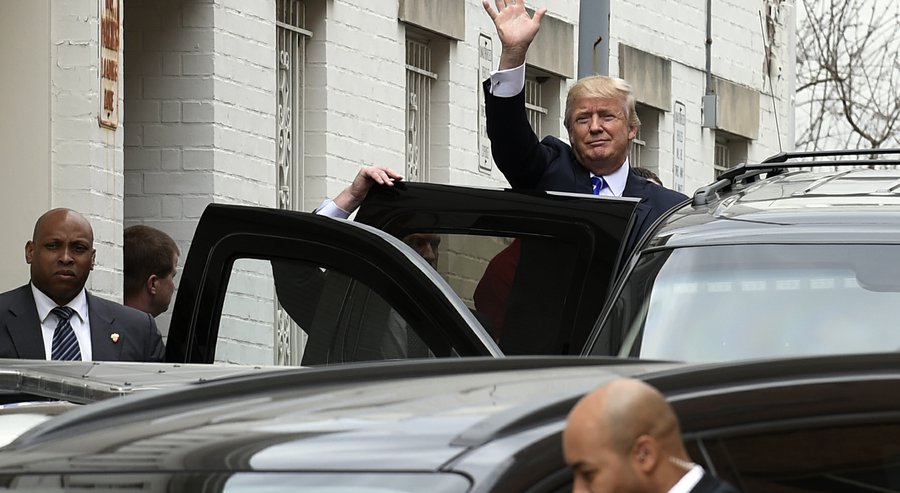
It was a question sure to come up at some point in the Republican primary campaign. “What should the law be on abortion?” asked MSNBC’s Chris Matthews to Donald Trump at a town hall event in Wisconsin. “Should the woman be punished for having an abortion?” Matthews pressed. “This is not something you can dodge.” Trump’s bungled response — an awkward, extended attempt to evade the question, followed by an answer that, yes, “there has to be some form of punishment” — prompted a backlash that managed to unite abortion rights activists and opponents. And it also brought an unprecedented reversal from the notoriously unapologetic candidate less than a week before Wisconsin’s important primary. The episode demonstrated the extent to which Trump has glossed over the rigorous policy preparation that is fundamental to most presidential campaigns, underscoring the risks of the billionaire businessman’s winging-it approach as he inches closer to the Republican nomination. “Well, bear in mind I don’t believe that he was warned that that question was coming” and didn’t have a chance to really think about it, said Ben Carson, a former Trump rival who has since endorsed him, in an interview with CNN. He should have, said political professionals. “When you’re just winging it, that’s what happens,” said Kevin Madden, a veteran of 2012 nominee Mitt Romney‘s campaign. “Running for president, it’s not a take-home exam.” And this wasn’t the first time Trump’s approach has gotten him in trouble. He raised eyebrows during a debate when he appeared unfamiliar with the concept of the nuclear triad, an oversight his opponents happily pointed out. At a town hall on CNN earlier this week, Trump appeared to falter when asked to name what he believed were the top three priorities of the federal government. Among his answers: health care and education. Trump has vowed to repeal President Barack Obama‘s landmark health care law and gut the budget of the Department of Education. The lack of preparation extends beyond policy. This week, Trump called into a series of radio stations in Wisconsin, apparently unaware the interviews were likely to be combative. At the end of a remarkable interview in which he compared Trump’s behavior to that of “a 12-year-old bully on the playground,” WTMJ-AM’s Charlie Sykes asked Trump if he was aware he’d called into someone unabashedly opposed to his candidacy. “That I didn’t know,” Trump said. During a recent rally in Vienna, Ohio, Trump delivered his usual indictment of the North American Free Trade Agreement and blasted American companies that have shipped jobs overseas. But he seemed unaware that Chevrolet, which builds the Chevy Cruze sedan in nearby Lordstown, had recently announced that it was planning to build its 2017 hatchback model in Mexico. It was the kind of local knowledge that requires research and legwork, and could have helped Trump connect with his audience and others in the state. For most presidential candidates, especially those new to it all, getting up to speed on the intricacies of domestic and foreign policy is a process that begins early. While Trump’s campaign did not respond Thursday to questions about the kind of briefings he receives, it’s clear he has done things differently. Who does he consult on foreign policy? “I’m speaking with myself, number one, because I have a very good brain and I’ve said a lot of things,” Trump said on MSNBC this month. He’s also said he gets information about international affairs from “the shows” and newspapers. He announced members of his foreign policy team only this month and met with them Thursday as part of a series of appointments in Washington. Out on the trail, Trump largely skipped town hall events in the early-voting states that were the hallmarks of several rival campaigns. Chris Christie and John Kasich, for example, held dozens of the events, fielding hundreds of questions on every topic imaginable. Trump might well note that most of his GOP rivals are gone, and he’s still the front-runner. But what about his abortion comments? “None of the other candidates would have made that mistake,” said Marjorie Dannenfelser, president of the Susan B. Anthony List, which supports anti-abortion legislation and candidates. Michael Steel, an adviser to former Trump rival Jeb Bush, said that candidates and presidents have to be able to respond to issues as they arise, which requires a “tremendous amount” of work behind the scenes. It’s one reason major candidates from both parties typically have government experience. “I think we’ve seen in a variety of venues including the debates that he doesn’t seem to have the knowledge and background on important policy issues that you would expect from a presidential candidate,” Steel said. Bush spent the months after he announced his candidacy last summer developing a comprehensive domestic and foreign policy platform. Campaign employees assisted by more than 100 outside advisers briefed him in frequent sessions, said Justin Muzinich, the campaign’s policy director. “He took policy extraordinarily seriously,” Muzinich said. Dannenfelser, the abortion opponent, said there is still time for Trump. “The question is, will he be able to get to the point of confidently communicating his position to contrast with Hillary Clinton in a way that helps?” she said. “I think it’s possible.” Republished with permission of the Associated Press.
Donald Trump says abortion ban should yield “punishment” for women
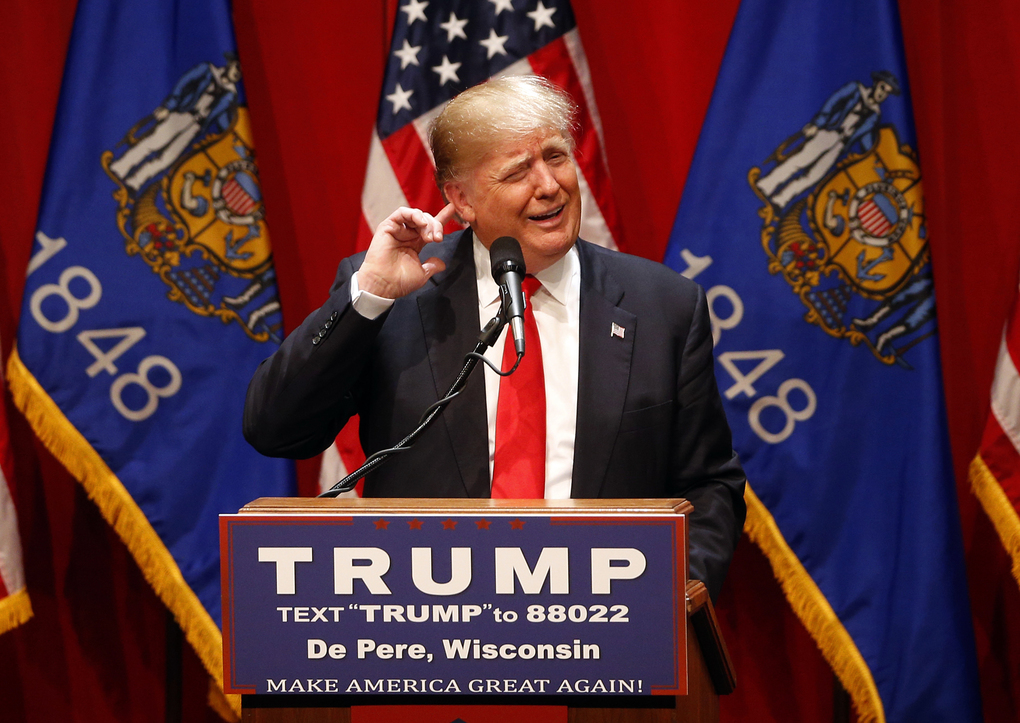
Republican presidential front-runner Donald Trump said Wednesday that women who get abortions should receive “some form of punishment” if abortion is banned, once again sparking controversy with days to go before Wisconsin’s primary. In a heated exchange with MSNBC host Chris Matthews at the taping of a town hall in Green Bay, Wisconsin that will air on Wednesday night, Trump was asked whether he believes that abortion should be outlawed in the country. After an extended back-and-forth, the billionaire businessman said “you have to ban” them and that, “there has to be some form of punishment” for women who violate that restriction. Pressed by Matthews on the nature of that punishment, Trump responded, “I haven’t determined what the punishment should be.” Trump also suggested that women could continue to receive abortions, but at “illegal places.” “You know you’ll go back to a position like where they had where people perhaps will go to illegal places,” he said. Asked to clarify his position, Trump’s campaign issued a statement after the taping saying that he believes the issue should rest with the states. “This issue is unclear and should be put back into the states for determination,” Trump said. “Like Ronald Reagan, I am pro- life with exceptions, which I have outlined numerous times.” Trump has often said that he’s opposed to abortions except in the case of three exceptions: rape, incest and when the life of the mother is at risk. Trump has been criticized by some conservatives for his flip-flop on the issue of abortion. Trump used to describe himself as in favor of abortion rights, but says his stance has evolved over the years. Republished with permission of the Associated Press.
New Jeb Bush ad uses Rick Santorum’s stumble to take a shot at Marco Rubio

Jeb Bush is jumping on Rick Santorum’s inability to name an accomplishment of Marco Rubio, using the footage of in a new television advertisement. As first reported by CNN, the 60-second spot will start running in New Hampshire on Saturday. The advertisement features clips from an interview with Santorum on MSNBC’s Morning Joe on Thursday. During the interview, Santorum struggles to name something Rubio had done during his first term in the Senate. After showing about 30 seconds of Santorum fumbling through the interview, Sean Hannity is heard interviewing Bush and rattling off a list of his accomplishments during his time in the governor’s mansion. “I was a reform-minded conservative. I did cut taxes every year. I balanced budgets every year. When I left, there were $9 billion in reserves, we reduced the state government workforce by 13,000,” the former Florida governor is shown saying in the advertisement. “My record, I think, shows the path of what could happen in Washington, D.C.” NEW AD: My conservative record of accomplishments vs. @MarcoRubio’s record of doing nothing in the Senate.https://t.co/vKbtrVGlmF — Jeb Bush (@JebBush) February 5, 2016 The advertisement is the second as many days using the Morning Joe footage. On Thursday, Chris Christie released a 30-second spot based on the interview. Recent polls show Rubio gaining ground in the Granite State. A NBC News/Wall Street Journal/Marist poll has Rubio in second place in New Hampshire with 17 percent. The survey found Bush was at 9 percent and Christie was at 4 percent.
Donald Trump not backing down from Fox debate boycott
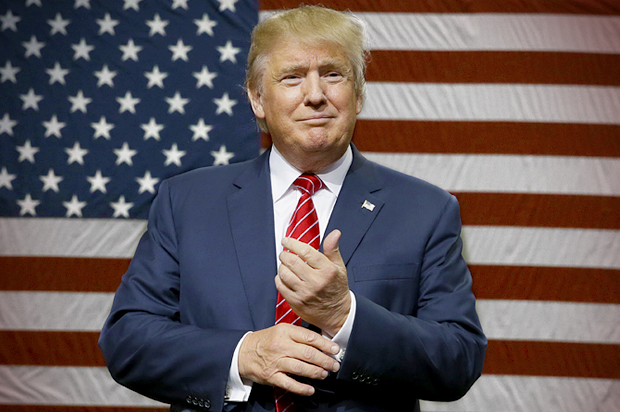
Republican presidential candidate Donald Trump wasn’t backing down Wednesday from his threat to boycott this week’s GOP debate, where candidates have the opportunity to make their closing arguments before voting begins in Monday’s Iowa caucuses. Trump campaign manager Corey Lewandowski said in a pair of television interviews Wednesday that Trump, a billionaire businessman, “knows when to walk away from a bad deal.” “They think they can toy with Mr. Trump,” Lewandowski said of Fox News on MSNBC’s “Morning Joe.” “Mr. Trump doesn’t play games.” The decision comes after a showdown between the network and GOP candidate over who should moderate Thursday night’s debate. Trump has been in a feud with Fox News host and scheduled debate moderator Megyn Kelly since the first Republican primary debate, when Kelly took Trump to task over derogatory statements he’d made in the past aimed at women. While Trump has threatened to skip debates in the past and not gone through with the threat, a sarcastic statement from Fox appeared to push him over the edge. That statement said the leaders of Iran and Russia “both intend to treat Donald Trump unfairly when they meet with him if he becomes president” and that “Trump has his own secret plan to replace the Cabinet with his Twitter followers to see if he should even go to those meetings.” Trump, who has called Kelly a “lightweight” and biased, told reporters at an Iowa press conference Wednesday night that he would be holding a fundraising event in Iowa at the same time as the debate to benefit veterans and wounded soldiers instead. While Fox questioned how “Iowans are going to feel about him walking away from them at the last minute,” Lewandowski said the decision shows Trump is a leader who “understands when a bad deal is in front of him and is ready to walk away from a bad deal, something that this country should be able to do.” “At the end of the day,” he added on MSNBC, “Mr. Trump is going to have the last laugh.” Republished with permission of the Associated Press.
Showtime starting weekly series on campaign
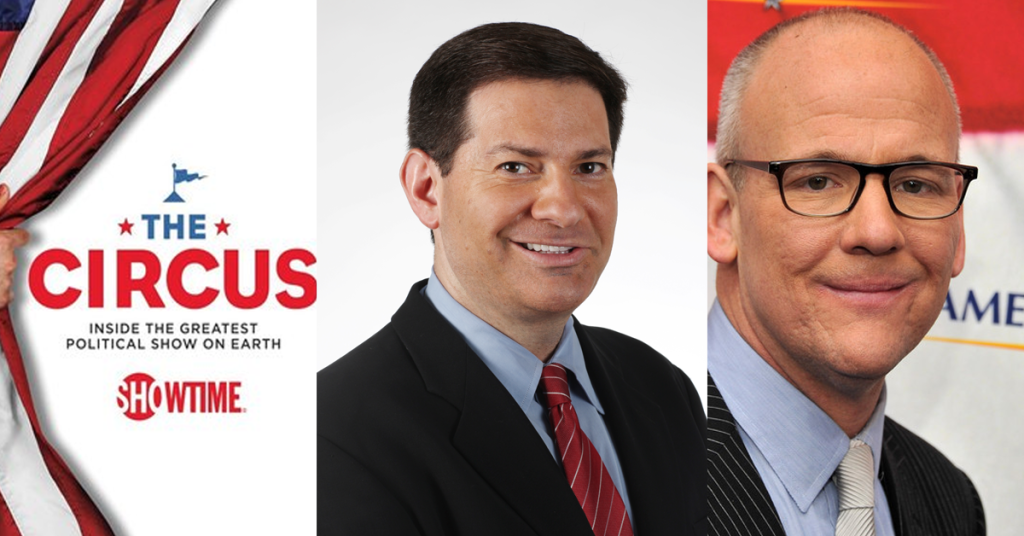
Showtime is jumping into politics, announcing Tuesday that it will air a weekly documentary series giving viewers a behind-the-scenes look at the 2016 presidential campaign. “The Circus: Inside the Greatest Political Show on Earth” will premiere the week before the Iowa caucus, which is scheduled for Feb. 1. Showtime has not yet determined its weekly airtime. Showtime is making it together with Bloomberg Politics, and it will be hosted by that company’s Mark Halperin and John Heilemann, along with campaign strategist Mark McKinnon. Halperin and Heilemann are the authors of the political books “Game Change” and “Double Down.” Even before election year, the 2016 campaign has been a big television hit, with record viewerships for debates. “There’s more interest in this campaign than any in my lifetime,” said David Nevins, Showtime president. “The opportunity to do a weekly verite show is very interesting.” Post-campaign documentaries like “The War Room” are his model for a program that reaches behind the headlines. The candor in those projects, however, is enhanced by being aired after all the voting has taken place. The question for Showtime is whether it will get enough access for such compelling material ahead of time. If the cameras are left on long enough, people’s true natures will emerge, Nevins said. It will make for a busy campaign year for Halperin and Heilemann, who have a daily program on Bloomberg TV that is also aired on MSNBC. Republished with permission of the Associated Press.
Josh Earnest gives props to Obama administration for Paris attacks response
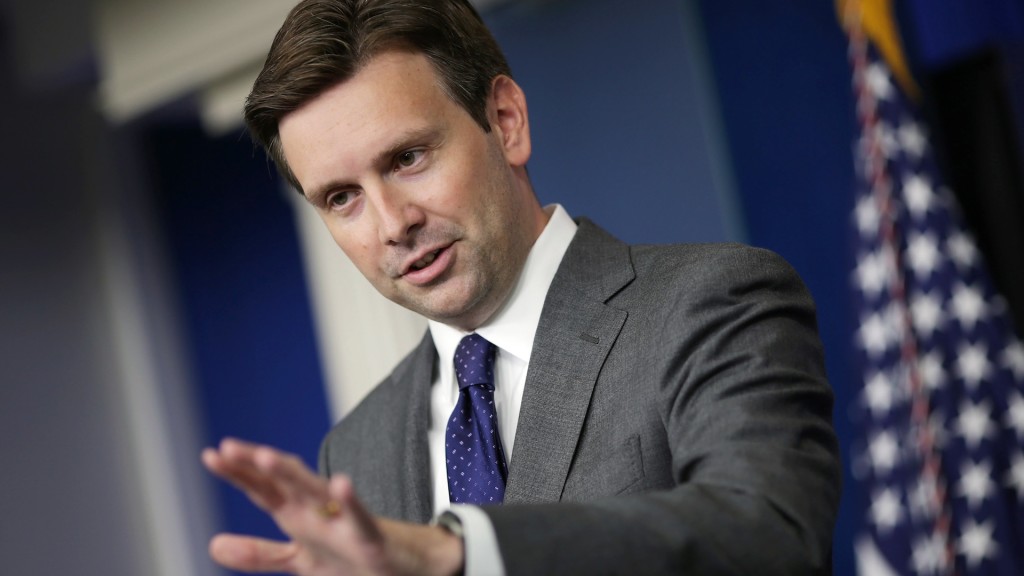
White House Press Secretary Josh Earnest credited President Obama‘s “early investment in our military and our intelligence” that put the French “in a position to carry out this kind of response” to last week’s Paris attacks. Earnest spoke Wednesday on MSNBC’s “Morning Joe” program. “The United States and France has been for some time working to deepen our military and intelligence cooperation when it comes to Syria,” Earnest said. “And we have done that and we followed through on that. “And it is because of that cooperation and because of the kind of logistical support that only the United States can provide, that France is actually even in a position to ramp up the strikes that they took,” he added. “So we’re seeing the fruits of (President Obama’s) early investment based on the France carrying out these actions.” For example, also Wednesday, police raided a suburban Paris apartment where they believed the suspected mastermind of last week’s attacks was holed up. The Islamic State group has claimed responsibility. Wednesday’s operation ended with two deaths and seven arrests but no clear information on the fugitive’s fate. The dead included a woman who blew herself up with an explosive vest and a man hit by projectiles and grenades at the end of a seven-hour siege in the Paris suburb of Saint-Denis. “I think what is also true, what you’ve also seen, is the United States use all of our law enforcement and intelligence resources to assist the French as they carry out their investigation and even conduct some of the law enforcement activities that they’ve been engaged in,” Earnest said. “So we are committed to being sure that we are standing shoulder to shoulder with our oldest ally as they confront this threat on their own soil,” he said. “There should be no denying the fact that the only reason that the French are in a position to carry out this kind of response is because of the early investment in our military and our intelligence that the President ordered more than a year ago.” But former FBI special agent Clint van Zandt told U.S. News & World Report on Tuesday that France’s heavy response doesn’t necessarily mean Islamic State won’t try to attack within the United States. ” … I think it’s a logical escalation for them to do,” van Zandt told the magazine. “If one wants to expand their base of recruits, one of the ways you do it is showing success.” The video can be watched here: https://on.msnbc.com/1PzKOFr The Associated Press contributed to this report.
Rivals unmoved by Ben Carson’s complaints on scrutiny of his bio
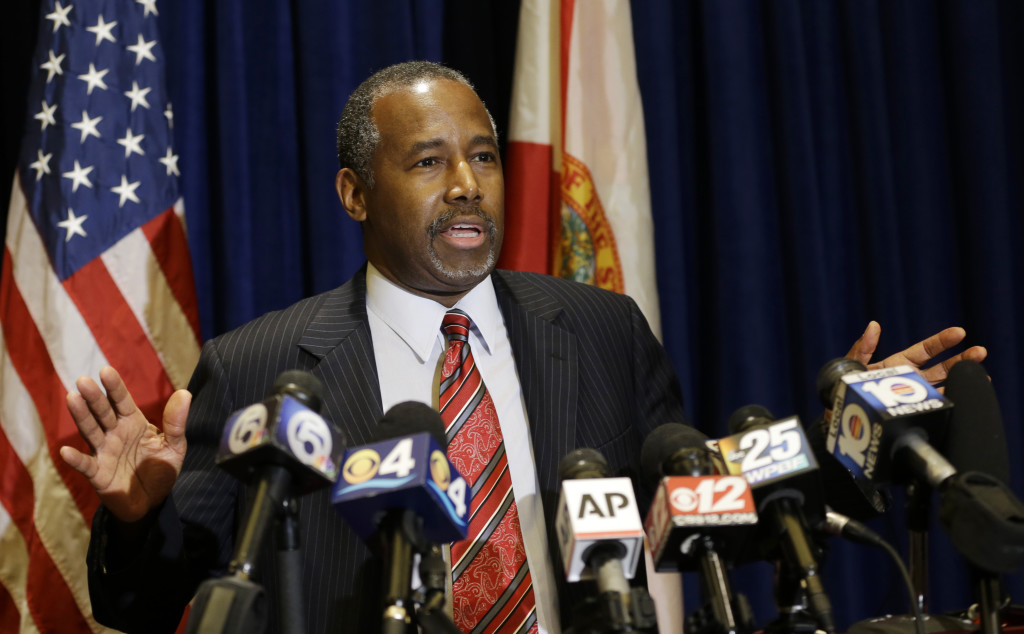
Ben Carson says it’s time to move on from questions about the accuracy of his life story. But Tuesday’s Republican debate makes that unlikely, and some of his GOP rivals say such scrutiny is part of running for president. The retired neurosurgeon said Sunday that questions about discrepancies in his autobiography are distractions from “much more important” matters facing the country and that he’d discuss any “real” scandal uncovered about his past. He strongly disputed any dishonesty or wrongdoing. “Every single day, every other day or every week, you know, they’re going to come out with, ‘Well, you said this when you were 13,’ ” Carson said on CBS’ “Face the Nation” Sunday. “The whole point is to distract the populace, to distract me,” he added. Carson got no sympathy Monday from a pair of Republicans who are trailing him in the presidential polls and said they had endured years of personal scrutiny as governors. “We’re responsible for the personal stories we tell about our lives and we need to be asked about them,” New Jersey Gov. [Chris] Christie said about Carson on MSNBC’s “Morning Joe.” Mike Huckabee, a former Arkansas governor, said when he heard Carson’s complaints about the media, “I’m thinking pal, you ain’t seen nothing yet.” “You know that if you run for office you’re going to be put through the sausage grinder,” Huckabee told MSNBC. Moving on, at least in the short term, is unlikely for Carson. The accuracy of his autobiography has dominated his campaign in the past few days, and more questions are likely during Tuesday’s debate. The intensified questioning reflects Carson’s transformation from political outsider to the top of the polls in the unsettled nomination fight, second only to billionaire developer Donald Trump. And in early-voting Iowa, some polls show Carson leading. Trump tried Sunday to keep the allegations alive. On several news shows, he mentioned examples from Carson’s autobiography, “Gifted Hands,” about Carson’s bad temper when he was young. Carson claimed that he tried to hit his mother with a hammer and unsuccessfully tried to stab someone. Several times, Trump quoted Carson as describing his younger self as having a “pathological” temper — and then demurred on his own opinion of Carson’s character and veracity. “I just don’t know. I mean, I’m not involved. I don’t really know,” Trump said on CNN’s “State of the Union.” Carson insists no other candidate has received the level of scrutiny that he has. Asked on NBC’s “Meet the Press” whether he is being scrutinized more than President Barack Obama and former President Bill Clinton, Carson replied: “Not like this. Not even close.” Republican Party chairman Reince Priebus criticized the intense questioning Monday, saying that while he considers candidate vetting by the media appropriate, “I do believe this is a totally, crazy obsession over incredible detail from 30 or 40 years ago.” “The fact is, you know, we wish the media would be just as obsessed with Hillary Clinton’s lies over the years,” Priebus said in an interview on NBC’s “Today” show. Scrutiny of one’s past is par for any major candidate for president. Obama’s citizenship was questioned, including by Trump, and the president later released a birth certificate showing he was born in Hawaii. Clinton’s marital dalliances were probed during the 1992 campaign. The Miami Herald staked out then-Sen. Gary Hart‘s townhouse in 1987 and caught him in an extramarital affair. Hillary Rodham Clinton, the front-runner for the Democratic presidential nomination, last month testified about the private email server she kept at her house and used for government business while she was secretary of state. Carson is a newcomer to presidential politics, so much about his life, career and published works are being raked over for the first time, and his longtime status as an American success story is being examined. Carson strongly disputed that there was any dishonesty intended. Gone Sunday was the anger he showed during a news conference on Friday, when the usually even-tempered Carson demanded that reporters explain why, in his opinion, Obama had not been subjected to the same level of scrutiny. “My job is to call you out when you’re unfair, and I’m going to continue to do that,” he said. “Gifted Hands” is central to much of the scrutiny. It tells the story of Carson’s rise from a childhood in inner-city Detroit to director of pediatric neurosurgery at Johns Hopkins Hospital in Baltimore. In it, he tells of trying to stab a close friend when he was a teenager. CNN reported it could not find friends or confidants to corroborate that story. Politico published a piece examining Carson’s claim of receiving a scholarship offer to attend the U.S. Military Academy at West Point. The Wall Street Journal said it could not confirm Carson’s anecdotes from his high school and college years. The academy does not offer scholarships, instead extending all expenses paid to students it admits. Carson never applied for admission. Last month, police in Baltimore said they didn’t have enough information to verify Carson’s account of being held at gunpoint at a fast-food restaurant there more than 30 years ago. In a GOP debate last month, Carson said it was “absolutely absurd” to say he had a formal relationship with the medical supplement company Mannatech. He is featured in the firm’s videos, including one from last year in which he credits its supplements with helping people restore a healthy diet. Republished with permission of the Associated Press.
Hillary Clinton targeted in ad from group tied to Koch brothers

Democratic presidential front-runner Hillary Rodham Clinton on Friday makes her first appearance in a negative advertisement funded by the wealthy Republican donors tied to billionaires Charles and David Koch. A 30-second ad aimed at Internet users in South Carolina and Florida shows headlines about the number of veterans who have died while awaiting health care. Then it shows a recent MSNBC interview with Clinton, who said of problems at the Department of Veterans Affairs, “It’s not been widespread as it has been made out to be.” “Not widespread?” text in the ad says. “Our veterans deserve better.” The digital ad, backed by at least $100,000 from Concerned Veterans for America, a nonprofit group that does not identify its donors, is timed to run as Clinton participates in a Democratic candidate forum in South Carolina. Clinton is “completely out of touch” with VA issues, which are “inarguably widespread,” Dan Caldwell, a spokesman for Concerned Veterans for America, told The Associated Press on Thursday. After Republicans criticized her remarks in the MSNBC interview, Clinton’s campaign said she was “outraged” by VA delays in providing care. Concerned Veterans for America is one of a half-dozen political and policy groups funded by the Kochs and hundreds of like-minded donors. That network is poised to spend a generous portion of at least $750 million over this year and next on issues relevant to the presidential race. The ad marks the first major paid media effort by a Koch group to ding Clinton’s 2016 candidacy. As she gains steam in a three-candidate Democratic primary, while the Republican nominating process is far from settled, GOP groups are beginning their Clinton attack efforts. The veterans ad follows a television commercial a week ago by a political group called Future 45. That ad focused on Clinton’s work as secretary of state, particularly in Libya, concluding with a narrator saying: “Responsible for a disaster. More threats. More war.” Although the group spent only about $65,000 airing the spot a few times, according to Kantar Media’s CMAG ad tracker, there are signs that more Clinton attacks are on the way. On Monday at a New York fundraiser for Republican opposition group America Rising, headlined by 2012 GOP nominee Mitt Romney, donors were encouraged to support Future 45, an attendee told the AP. The attendee was not authorized to share details from the private event and requested anonymity. Republican hedge-fund billionaires Paul Singer of New York and Kenneth Griffin of Chicago are among those who have already written six-figure checks to Future 45, a fundraising report filed in July shows. The group’s name references the 45th president, who will be elected next November. Republished with permission of the Associated Press.
Donald Trump says he’ll stay in to win, even if running from behind
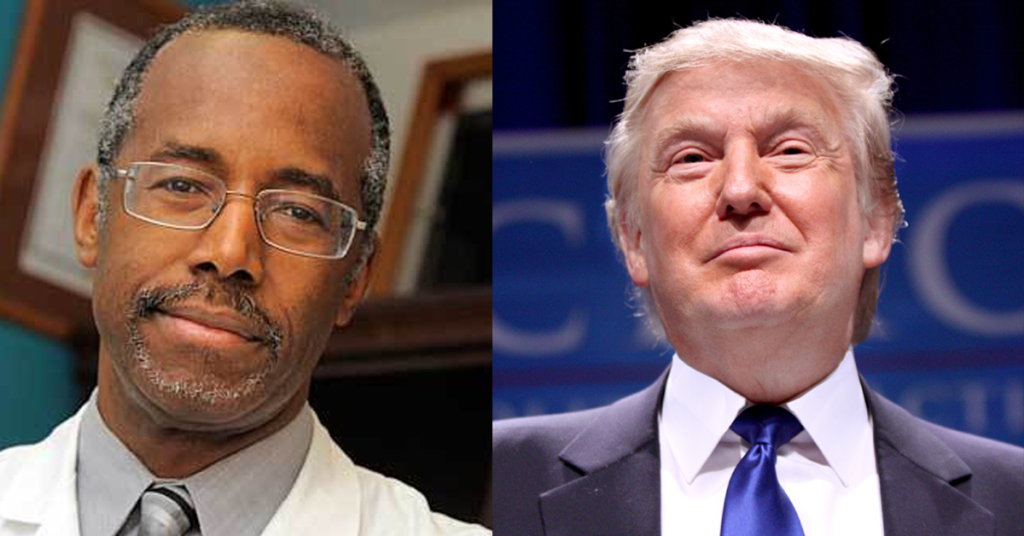
Responding to Ben Carson‘s surge in Iowa, Donald Trump said Tuesday he’ll stick with the presidential race, even if he loses the luxury of running from atop the polls. “I’m in it to the end,” Trump said in a phone interview with MSNBC. Asked if he could stomach running from behind, the billionaire businessman who likes to boast “I’m a winner” sounded unusually introspective. He conceded he might lose his bid for the Republican nomination. “It’s certainly a possibility that I won’t make it,” he said. “I’ll still be proud of my effort because I think I’ve done very well. I’m not a politician; I’ve run so far a great race.” With Carson, who like Trump has never held public office, threatening his lead nationally, Trump said it may be the retired surgeon’s turn to face the heat. “A lot of things will come out now and we’ll see how he holds up to the scrutiny,” Trump said. But Trump said he still holds a big advantage over Carson and his more politically experienced rivals such as Jeb Bush: “I’ve got more money than anybody.” “At the right time,” he said, “I’m willing to spend whatever is necessary.” Republished with permission of the Associated Press.
Lindsey Graham on MSNBC: ‘How am I losing to these people?’
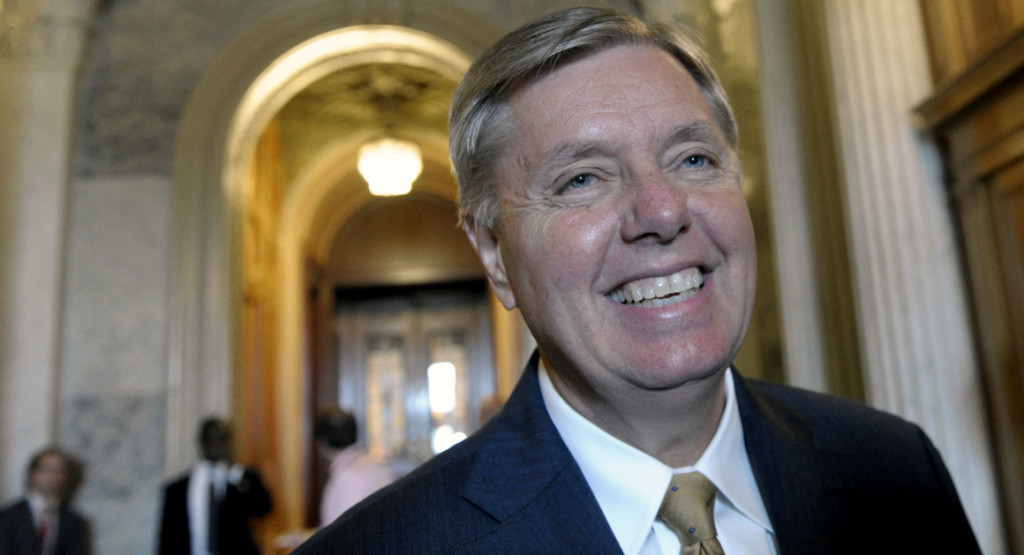
Republican presidential candidate Lindsey Graham boggled at his competition Monday, wondering how he was trailing at 11th place in the polls. “How am I losing to these people?” he said, during an appearance on MSNBC’s “Morning Joe” program, during which he also called former Florida Gov. Jeb Bush “whiny.” “Just look at Donald Trump‘s foreign policy. What is it?” Graham said. “What is he going to do about (Islamic State)? What is it? What is it? What is his game plan to destroy ISIL? Does anybody know? “…(T)o substitute Trump for Obama, what’s the difference?” he added. “When it comes to Syria, what’s the difference between any of our own candidates and Barack Obama?” Graham, a U.S. senator from South Carolina since 2003, stands at 0.8 percent, according to Huffington Post’s average of polls for the 2016 national Republican primary. Panelist John Heilemann of Bloomberg Politics referred to Trump and pediatric neurosurgeon Ben Carson, who also has never held elective office, and asked what it said about the GOP “that those two guys are the consistent top tier at this point, in this late point, in the Republican nominating contest?” “This outsider phenomenon is so bad that we have to get somebody new and different, not tainted by the process,” Graham said. “But here is what I think. I think experience will begin to matter the closer we get to the election. “Does it matter if you have any experience to be commander in chief?” he said. “Like, Ben Carson said he would have declared energy independence as the reactions of 9/11. That’s kind of different. You know, ‘I hereby declare,’ you know, bullhorn out here at the World Trade Center, ‘I hereby declare energy independence’ is not what I would be looking for. “Dr. Carson is a fine man, but his foreign policy is hard for me to follow,” Graham said. Graham later was asked about Bush’s “tone (and) presence on the campaign trail.” “It did come across as a bit whiny,” Graham said. “At the end of the day, I think Jeb is a very viable candidate; he is reengineering his campaign.” Last week, Bush decided to significantly cut his campaign spending, including staff pay decreases. He is currently at fourth in the polls among GOP contenders, trailing behind Trump, Carson and U.S. Sen. Marco Rubio of Florida. “For all of us if we don’t step up our game on the establishment side, whatever you want to call it, and start challenging these guys more effectively, I think we’re letting the cause down because Donald Trump will get killed in a general election … Hillary Clinton will mop up the floor with this guy.” The video can be watched here.
Donald Trump on Oregon shootings: “You’re always going to have problems”
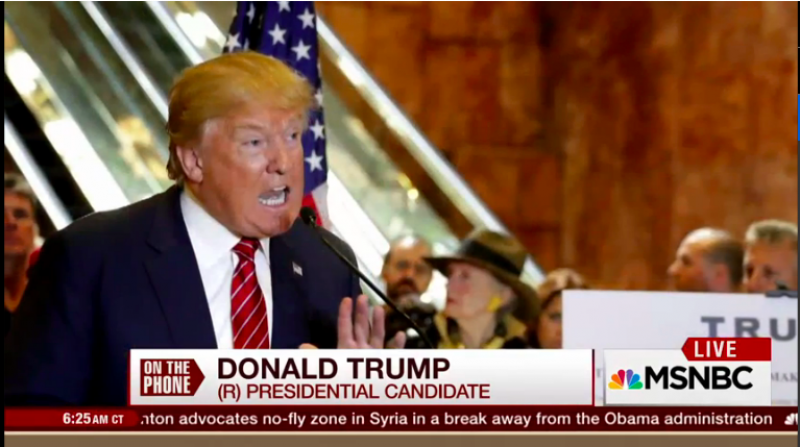
Republican presidential candidate Donald Trump on Friday said the most recent campus shooting in Oregon could have happened anywhere, adding that there are already “very strong laws on the books” to address gun violence. Trump joined MSNBC’s “Morning Joe” program by phone – his 13th time on the show, either in person or on the phone, since declaring himself a candidate for 2016. He spoke the day after a 26-year-old man walked into a morning class at Umpqua Community College in rural Oregon and opened fire, hitting some students with multiple gunshots. At least nine people were killed and seven others were wounded. Co-host Willie Geist asked Trump what he would have done if the shooting happened under his presidency, noting that Oregon has universal background checks. “Well first of all, you have very strong laws on the books, but you’re always going to have problems,” Trump said. “I mean, we have millions and millions of people. We have millions of sick people all over the world. It can happen all over the world. “And it does happen all over the world, by the way, but this is sort of unique to this country, the school shootings, and you’re going to have difficulty no matter what,” he added. “I mean … probably we’ll find out with him, like we did with numerous of the others, that gee whiz, they were loners and they were probably sick. “You know, oftentimes this happens and the neighborhood says, you know, we sort of saw that about him and it really looked like he could be a problem. But it’s awfully hard to put somebody in an institution for the rest of their lives based on the fact he looks like he could be a problem. So it’s a terrible situation, it’s huge mental illness. You’re going to have these things happen and it’s a horrible thing to behold.” Geist asked, “So Donald, is it fair to say then that your opinion is some people are going to slip through the cracks and there’s not much you can do about it?” Trump responded, “… People are going to slip through the cracks and even if you did great mental health programs, people are going to slip through the cracks … What are you going to do? Institutionalize everybody? So you’re going to have difficulties … with many different things, not just this. That’s the way the world works. And by the way, that’s the way the world always has worked, Willie.” Trump also addressed remarks about him by Democratic presidential contender Hillary Clinton, discussed whether Congressman Kevin McCarthy should be the next speaker of the U.S. House of Representatives, and sized up fellow GOP candidate Ben Carson. A link to the video is here: https://on.msnbc.com/1M5ZCVu Material was used from The Associated Press in this post.
