
Donald Trump travel ban partly reinstated; fall court arguments set
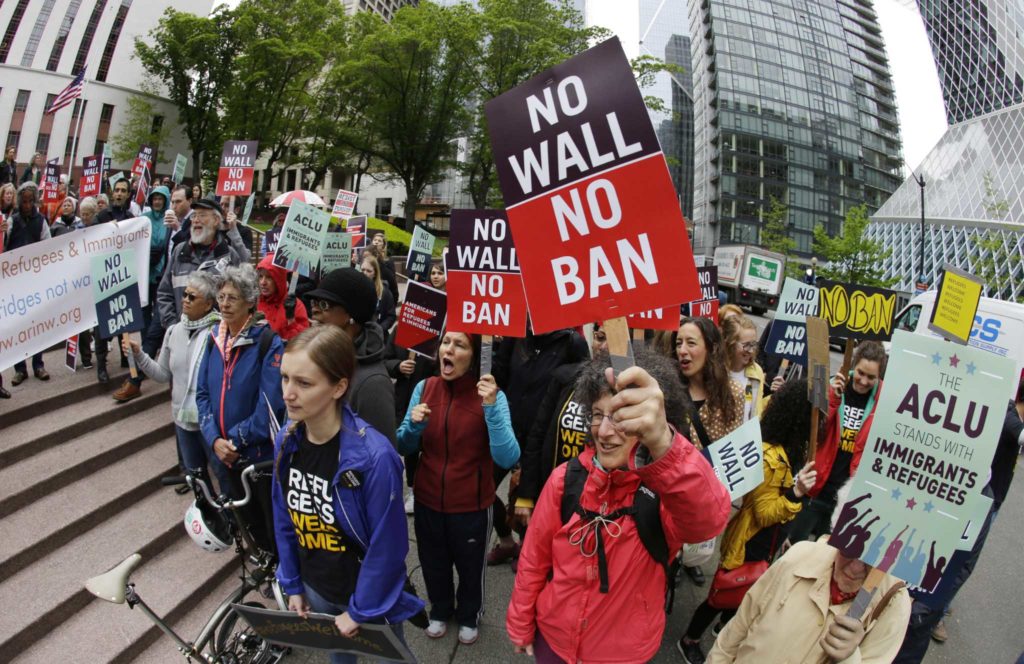
The Supreme Court is letting a limited version of President Donald Trump’s ban on travel from six mostly Muslim countries take effect, a victory for Trump in the biggest legal controversy of his young presidency. The justices will hear full arguments in October in the case that has stirred heated emotions across the nation. In the meantime, the court said Monday that Trump’s ban on visitors from Iran, Libya, Somalia, Sudan, Syria and Yemen can be enforced if those visitors lack a “credible claim of a bona fide relationship with a person or entity in the United States.” Trump said last week that the ban would take effect 72 hours after being cleared by courts. The administration has said the 90-day ban was needed on national security grounds to allow an internal review of screening procedures for visa applicants from the six countries. Opponents say the ban is unlawful, based on visitors’ Muslim religion. The administration review should be complete before Oct. 2, the first day the justices could hear arguments in their new term. A 120-ban on refugees also is being allowed to take effect on a limited basis. Three of the court’s conservative justices said they would have let the complete bans take effect. Justice Clarence Thomas, joined by Samuel Alito and Neil Gorsuch, said the government has shown it is likely to succeed on the merits of the case, and that it will suffer irreparable harm with any interference. Thomas said the government’s interest in preserving national security outweighs any hardship to people denied entry into the country. Some immigration lawyers said the limited nature of the ban and the silence of the court’s liberals on the issue Monday suggested that the court had not handed Trump much of a victory. The White House did not immediately comment. The court’s opinion explained the kinds of relationships people from the six countries must demonstrate to obtain a U.S. visa. “For individuals, a close familial relationship is required,” the court said. For people who want to come to the United States to work or study, “the relationship must be formal, documented and formed in the ordinary course, not for the purpose of evading” the travel ban. The opinion faulted the two federal appeals courts that had blocked the travel policy for going too far to limit Trump’s authority over immigration. The president announced the travel ban a week after he took office in January and revised it in March after setbacks in court. The 4th U.S. Circuit Court of Appeals in Richmond, Virginia, said the ban was “rooted in religious animus” toward Muslims and pointed to Trump’s campaign promise to impose a ban on Muslims entering the country as well as tweets and remarks he has made since becoming president. The San Francisco-based 9th U.S. Circuit Court of Appeals said the travel policy does not comply with federal immigration law, including a prohibition on nationality-based discrimination. That court also put a hold on separate aspects of the policy that would keep all refugees out of the United States for 120 days and cut by more than half, from 110,000 to 50,000, the cap on refugees in the current government spending year that ends September 30. Trump’s first executive order on travel applied to travelers from Iraq and well as the six countries, and took effect immediately, causing chaos and panic at airports over the last weekend in January as the Homeland Security Department scrambled to figure out whom the order covered and how it was to be implemented. A federal judge blocked it eight days later, an order that was upheld by a 9th circuit panel. Rather than pursue an appeal, the administration said it would revise the policy. In March, Trump issued the narrower order. Republished with permission of The Associated Press.
2 federal judges find new Donald Trump travel ban discriminatory
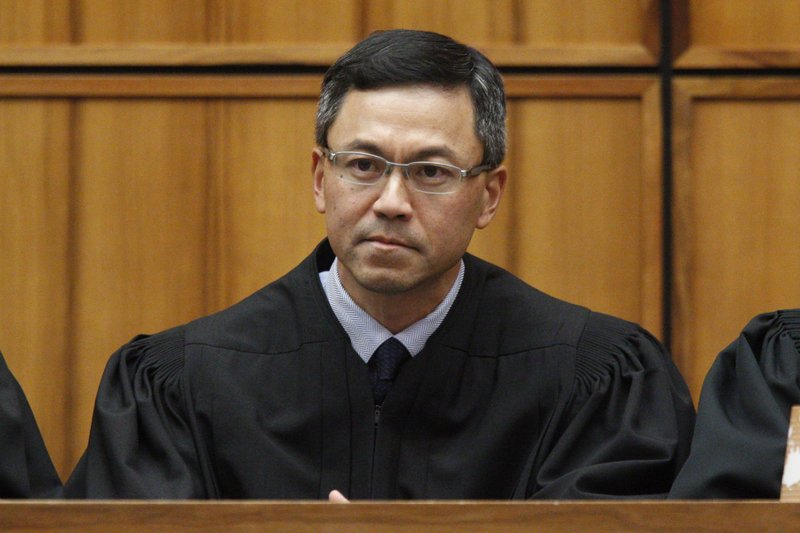
Rejecting arguments from the government that President Donald Trump‘s revised travel ban was substantially different from the first one, judges in Hawaii and Maryland blocked the executive order from taking effect as scheduled on Thursday, using the president’s own words as evidence that the order discriminates against Muslims. The rulings in Hawaii late Wednesday and in Maryland early Thursday were victories for civil liberties groups and advocates for immigrants and refugees, who argued that a temporary ban on travel from six predominantly Muslim countries violated the First Amendment. The Trump administration argued that the ban was intended to protect the United States from terrorism. In Greenbelt, Maryland, U.S. District Judge Theodore Chuang — who was appointed by then-president Barack Obama — called Trump’s own statements about barring Muslims from entering the United States “highly relevant.” The second executive order removed a preference for religious minorities from the affected countries, among other changes that the Justice Department argued would address the legal concerns surrounding the first ban, which was also blocked in court. “Despite these changes, the history of public statements continues to provide a convincing case that the purpose of the Second Executive Order remains the realization of the long-envisioned Muslim ban,” Chuang said. The initial ban sparked chaos at U.S. airports and widespread criticism around the world when it was signed in January. It was later blocked by a judge in Washington state, a ruling that was upheld by the 9th U.S. Circuit Court of Appeals. In Honolulu, U.S. District Judge Derrick Watson criticized what he called the “illogic” of the government’s arguments and cited “significant and unrebutted evidence of religious animus” behind the travel ban. He also noted that while courts should not examine the “veiled psyche” and “secret motives” of government decision-makers, “the remarkable facts at issue here require no such impermissible inquiry.” Watson also wrote, referring to a statement Trump issued as a candidate, “For instance, there is nothing ‘veiled’ about this press release: ‘Donald J. Trump is calling for a total and complete shutdown of Muslims entering the United States.’” The White House and the Justice Department had no immediate comment on Thursday. The case was argued in court by acting U.S. Solicitor General Jeffrey Wall, who said the ban “doesn’t say anything about religion. It doesn’t draw any religious distinctions.” Speaking Wednesday evening at a rally in Nashville, Tennessee, Trump called the ruling in Hawaii an example of “unprecedented judicial overreach” and said his administration would appeal it to the U.S. Supreme Court. He also called his new travel ban a watered-down version of the first one, which he said he wished he could implement. “We’re going to win. We’re going to keep our citizens safe,” the president said. “The danger is clear. The law is clear. The need for my executive order is clear.” While the Hawaii order only halts the ban temporarily, Chuang’s ruling in Maryland took the form of a preliminary injunction, which will remain in effect indefinitely as the case is litigated. Chuang was also the first judge to stop the ban outside the 9th Circuit, which has a liberal reputation. “Unless and until the president realizes that this is a battle in which he’s going to keep losing and decides to do the right thing and abandon this course, for as long as he’s on it we’ll keep litigating it and I think we’re going to keep winning,” said Omar Jadwat, who argued the case for the American Civil Liberties Union in Maryland. Chuang did not block the entire executive order, saying the plaintiffs didn’t sufficiently develop their argument that a temporary ban on refugees discriminates on the basis or religion. Plaintiffs in the Maryland case also had sought to stop a portion of the order that would reduce the number of refugees allowed to enter the country this fiscal year from 110,000 to 50,000. Still, the judge’s order is hugely meaningful for many plaintiffs, including a man in Texas whose same-sex fiancé is seeking a visa to enter the United States from Iran, said Justin Cox, an attorney with the National Immigration Law Center who also argued the Maryland case. “This Muslim ban was threatening to either separate or continue to separate families who’ve already been separated for months and years,” Cox said. “It has real-world consequences and we were obviously very glad to see that Judge Chuang recognized those and rejected the government’s frankly callous argument that our clients have already been waiting and another few months couldn’t possibly be irreparable.” If the administration appeals Watson’s decision at the 9th Circuit level, the matter would be heard by different judges from the three who ruled on the case last month. That’s because the panel of judges assigned to such cases rotates every month, said court spokesman David Madden. The 9th Circuit on Wednesday declined to reconsider the 3-0 decision not to reinstate the original ban. In a dissent, five judges said they considered that decision incorrect and wanted it vacated. The hearings in Maryland and Hawaii were two of three held Wednesday in federal courts around the country. U.S. District Judge James Robart in Seattle, who blocked the initial travel ban last month, did not immediately rule on a request from an immigrant-rights group to block the revised version. In all, more than half a dozen states are trying to stop the ban. Republished with permission of The Associated Press.
Q&A: Untangling legal issues surrounding Donald Trump’s travel ban
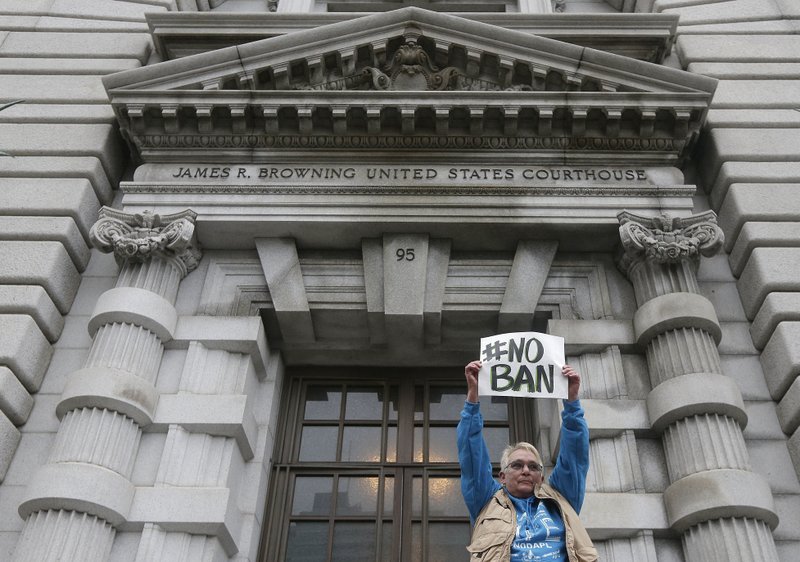
A federal appeals court is considering whether to reinstate President Donald Trump‘s travel ban, but another aspect of his executive order is still in effect — a review of visa procedures to ensure they are strict enough. That review can happen whatever the 9th U.S. Circuit Court of Appeals decides. Knowing that could give the panel of three judges more reason to leave the ban on refugees and people from seven Muslim-majority countries with ties to terrorism on hold while the legal challenge by Washington state and Minnesota plays out. “Is there any reason to think there’s a real risk … if existing procedures weren’t allowed to stay in place while the administration, the new administration, conducts its review?” Judge Richard Clifton asked during a hearing Tuesday. The court said a ruling would come within days but that it would not be Wednesday. ___ WHAT WAS THE UPSHOT OF THE HEARING? Trying to divine how a court might rule from the questioning can be a fool’s errand, but some legal scholars who were willing to try said Washington state appeared to make enough of a case to keep the ban on ice, at least for now. The judges repeatedly asked Justice Department attorney August Flentje whether the government had any evidence that the travel ban was necessary or that keeping it on hold would harm national security. They expressed skepticism over his argument that the states don’t have standing to sue and over his assertion that the courts have little to no role in reviewing the president’s determinations concerning national security. Stephen Vladeck, professor at the University of Texas School of Law, wrote in an email that he was struck by “the government’s seeming inability to provide concrete evidence of why immigration from those countries threatens national security.” Washington state Solicitor General Noah Purcell also faced tough questioning from Clifton, who said he wasn’t necessarily buying the states’ argument that the ban was motivated by religious discrimination. The judge mentioned that the vast majority of Muslims live in countries that aren’t targeted by the ban. ___ MUSLIM DISCRIMINATION OR NOT? After being repeatedly asked, Flentje acknowledged that individuals could have standing to sue if the president tried to enforce a ban on Muslims entering the U.S. But, he said, that’s not all what’s happening here. Basing the order on travel from certain countries that have been linked to terrorism — whatever their religion — is a legitimate exercise of the president’s authority over national security, he argued. Purcell said it’s remarkable to have this much evidence of discriminatory intent this early in the case — including Trump’s campaign statements about a Muslim ban and adviser Rudy Giuliani‘s comments that he was asked to help devise a legal version of the Muslim ban. “There are statements that we’ve quoted in our complaint that are rather shocking evidence of intent to discriminate against Muslims,” Purcell said. Even if Trump’s executive order itself doesn’t single out Muslims, the order is unconstitutionally discriminatory if it was adopted with such intent, Purcell said. ___ WHAT ARE THE COURT’S OPTIONS? Purcell argued that the simplest course is to send the case back to U.S. District Judge James Robart for procedural reasons. The Seattle judge temporarily blocked the executive order last week while the states’ lawsuit works its way through the courts. The Washington state solicitor general said the appeals court could take up the merits of the case after Robart issues a further ruling. The Justice Department said the court could narrow the scope of Robart’s order, which it called too broad. Flentje suggested it could be limited to allow the president to ban travelers who don’t already have relationships with the United States, while allowing legal permanent residents, for example, to return to the U.S. from the seven countries. Purcell said that wouldn’t work. The government hasn’t shown that it could engineer a way to apply the ban so selectively, he said. Judge William Canby noted that Washington’s universities might want to invite foreign scholars to visit and that they might have no connection to the U.S. ___ WILL THE CASE END UP AT THE SUPREME COURT? There’s a good chance, but how and when is unclear. The Supreme Court has a vacancy, and there’s no chance Trump’s nominee, Neil Gorsuch, will be confirmed in time to take part any consideration of the ban. Under the most optimistic timetable, Gorsuch would not be confirmed before early April. Senate Democrats are likely to question Gorsuch about his views on presidential power, both in light of the Trump order and Gorsuch’s writings expressing skepticism about some aspects of executive authority. The travel ban was set to expire in 90 days, meaning it could run its course before the court takes up the issue. Furthermore, the administration could change the executive order, including changing its scope or duration. Republished with permission of the Associated Press.
Donald Trump supporters shrug off the fuss over Muslim travel ban
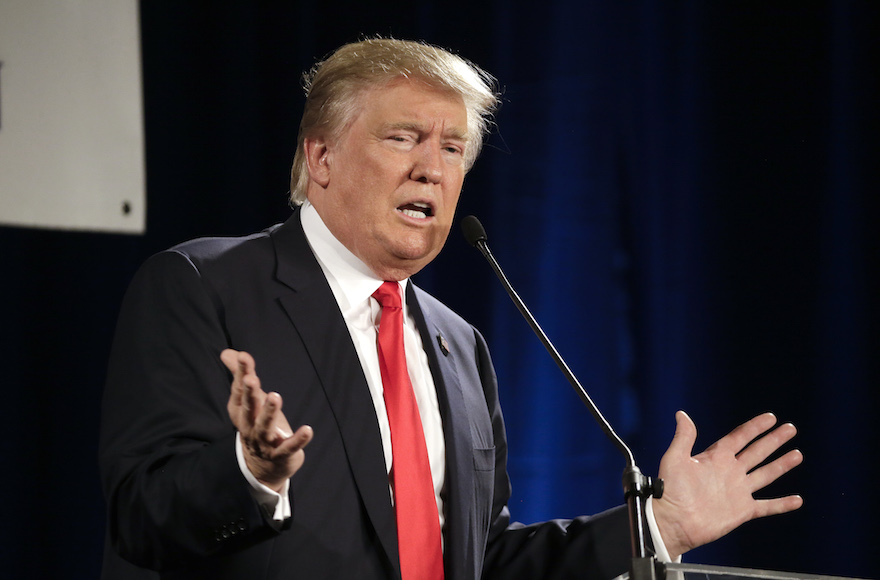
The fuss over Donald Trump seems largely lost on many of those who support him. Where his critics see bigotry, they see common sense. At Rosie’s Hotdogs in upstate South Carolina, Tracy Hooker isn’t interested in debating the merits of Trump’s proposal to temporarily block Muslims from coming into the United States. She knows some think it’s xenophobic. That others argue it’s impractical, legally dubious, or both. And that every other Republican running for president has, in some way or another, rejected the idea that it is even worth talking about. That’s why she says Trump is ‘‘my guy.’’ He’s the only one who gets it. ‘‘Think about it,’’ Hooker, 47, said of the Muslim tourists, immigrants, and refugees Trump wants to bar from coming to the United States. ‘‘You don’t know if they like us. You don’t know if they hate us,.’’ She added: ‘‘You don’t know why they’re here.’’ An NBC News/Wall Street Journal poll last week found that a solid majority of Americans, 57 percent, opposed Trump’s proposal. A CBS News poll also found nearly 6 in 10 Americans oppose the ban, with two-thirds saying it goes against the country’s founding principles. But Republicans are far more receptive: 54 percent voiced support for the ban in the CBS poll. While Trump trailed Senator Ted Cruz of Texas in a new Republican presidential preference poll in Iowa, conducted by the Des Moines Register and Bloomberg News, he continues to lead the field nationwide. A CNN survey taken Dec. 4 showed Trump with 36 percent support among registered Republicans overall. To the dozens of Trump supporters interviewed in the past week by the Associated Press in the first-to-vote states of Iowa, New Hampshire, and South Carolina, the near universal condemnation of the billionaire’s plan on Muslim travel is simply baffling. After the Paris and San Bernardino, Calif., terrorist attacks, these voters say, only Trump is taking on what they believe is a clear and present danger to the United States. ‘‘When you’re in war, you have to take steps that are not American to protect yourself and defend the country,’’ said Margaret Shontz, of Cedar Falls, Iowa, as she arrived at a Trump campaign stop in Des Moines on Friday. Trump’s call to bar Muslims from coming to America is ‘‘awesome.’’ ‘‘Very needed,’’ she said. ‘‘Very necessary.’’ By their own description, Trump supporters are frustrated and angry about the direction of the nation. They fret over the economy, feel betrayed by the nation’s immigration policy, and worry America has lost its way on the world stage. In interviews with the AP, they argued Trump’s plan for Muslims who want to come to the United States is a bold proposal that regular politicians are too timid to make. They feel the criticism that comes from those same politicians is rooted in the weakness Trump promises to sweep away. Republished with permission of the Associated Press.
