
Republicans condemn ‘scheme’ to undo election for Donald Trump

The unprecedented Republican effort to overturn the presidential election has been condemned by an outpouring of current and former GOP officials warning the effort to sow doubt in Joe Biden’s win and keep President Donald Trump in office is undermining Americans’ faith in democracy. Trump has enlisted support from a dozen Republican senators and up to 100 House Republicans to challenge the Electoral College vote when Congress convenes in a joint session to confirm President-elect Joe Biden’s 306-232 win. With Biden set to be inaugurated Jan. 20, Trump is intensifying efforts to prevent the traditional transfer of power, ripping the party apart. Despite Trump’s claims of voter fraud, state officials have insisted the elections ran smoothly and there was no evidence of fraud or other problems that would change the outcome. The states have certified their results as fair and valid. Of the more than 50 lawsuits the president and his allies have filed challenging election results, nearly all have been dismissed or dropped. He’s also lost twice at the U.S. Supreme Court. On a call disclosed Sunday, Trump can be heard pressuring Georgia officials to “find” him more votes. But some senior lawmakers, including prominent Republicans, are pushing back. “The 2020 election is over,” said a statement Sunday from a bipartisan group of 10 senators, including Republicans Susan Collins of Maine, Lisa Murkowski of Alaska, Bill Cassidy of Louisiana, and Mitt Romney of Utah. The senators wrote that further attempts to cast doubt on the election are “contrary to the clearly expressed will of the American people and only serve to undermine Americans’ confidence in the already determined election results.” Republican Gov. Larry Hogan of Maryland said, “The scheme by members of Congress to reject the certification of the presidential election makes a mockery of our system and who we are as Americans.” Former House Speaker Paul Ryan, a Republican, said in a statement that “Biden’s victory is entirely legitimate” and that efforts to sow doubt about the election “strike at the foundation of our republic.” Rep. Liz Cheney of Wyoming, the third-ranking House Republican, warned in a memo to colleagues that objections to the Electoral College results “set an exceptionally dangerous precedent.” One of the more outspoken conservatives in Congress, Arkansas Republican Sen. Tom Cotton, said he will not oppose the counting of certified electoral votes on Jan. 6. “I’m grateful for what the president accomplished over the past four years, which is why I campaigned vigorously for his reelection. But objecting to certified electoral votes won’t give him a second term—it will only embolden those Democrats who want to erode further our system of constitutional government.” Cotton said he favors further investigation of any election problems, separate from the counting of the certified Electoral College results. Other prominent former officials also criticized the ongoing attack on election results. In a brief op-ed in The Washington Post, the 10 living former defense secretaries — half who served Republican presidents — said “the time for questioning the results has passed; the time for the formal counting of the electoral college votes, as prescribed in the Constitution and statute, has arrived.” The unusual challenge to the presidential election, on a scale unseen since the aftermath of the Civil War, clouded the opening of the new Congress and is set to consume its first days. The House and Senate will meet Wednesday in a joint session to accept the Electoral College vote, a typically routine process that’s now expected to be a prolonged fight. Trump is refusing to concede, and pressure is mounting on Vice President Mike Pence to ensure victory while presiding in what is typically a ceremonial role over the congressional session. Trump is whipping up crowds for a rally in Washington. The president tweeted Sunday against the election tallies and Republicans not on his side. Biden’s transition spokesman, Mike Gwin, dismissed the senators’ effort as a “stunt” that won’t change the fact that Biden will be sworn in Jan. 20. House Speaker Nancy Pelosi said in a letter to colleagues that while there is “no doubt” of Biden’s victory, their job now “is to convince more of the American people to trust in our democratic system.” The effort in the Senate was being led by Sens. Josh Hawley, R-Mo., and Ted Cruz, R-Texas. Hawley defended his actions in a lengthy email to colleagues, explaining that his Missouri constituents have been “loud and clear” with their belief that Biden’s defeat of Trump was unfair. “It is my responsibility as a senator to raise their concerns,” Hawley wrote late Saturday. Hawley plans to object to the state tally from Pennsylvania. But that state’s Republican senator, Pat Toomey, criticized the attack on Pennsylvania’s election system and said the results that named Biden the winner are valid. Cruz’s coalition of 11 Republican senators vows to reject the Electoral College tallies unless Congress launches a commission to immediately conduct an audit of the election results. They are zeroing in on the states where Trump has raised unfounded claims of voter fraud. Congress is unlikely to agree to their demand. The group, which presented no new evidence of election problems, includes Sens. Ron Johnson of Wisconsin, James Lankford of Oklahoma, Steve Daines of Montana, John Kennedy of Louisiana, Marsha Blackburn of Tennessee, and Mike Braun of Indiana. New senators in the group are Cynthia Lummis of Wyoming, Roger Marshall of Kansas, Bill Hagerty of Tennessee, and Tommy Tuberville of Alabama. The convening of the joint session to count the Electoral College votes has faced objections before. In 2017, several House Democrats challenged Trump’s win but Biden, who presided at the time as the vice president, swiftly dismissed them to assert Trump’s victory. Rarely have the protests approached this level of intensity. The moment is a defining one for the Republican Party in a post-Trump era. Both Hawley and Cruz are potential 2024 presidential contenders, cementing their alignment with Trump’s base of supporters. Others are trying to forge a different path for the GOP. Pence will be carefully watched as he presides over what is expected
Missouri senator Josh Hawley to contest Joe Biden’s Electoral College win

Sen. Josh Hawley, R-Mo., said Wednesday he will raise objections next week when Congress meets to affirm President-elect Joe Biden’s victory in the election, forcing House and Senate votes that are likely to delay — but in no way alter — the final certification of Biden’s win. President Donald Trump has, without evidence, claimed there was widespread fraud in the election. He has pushed Republican senators to pursue his unfounded charges even though the Electoral College this month cemented Biden’s 306-232 victory and multiple legal efforts to challenge the results have failed. A group of Republicans in the Democratic-majority House have already said they will object on Trump’s behalf during the Jan. 6 count of electoral votes, and they had needed just a single senator to go along with them to force votes in both chambers. Without giving specifics or evidence, Hawley said he would object because “some states, including notably Pennsylvania” did not follow their own election laws. Lawsuits challenging Biden’s victory in Pennsylvania have been unsuccessful. “At the very least, Congress should investigate allegations of voter fraud and adopt measures to secure the integrity of our elections,” Hawley said in a statement. He also criticized the way Facebook and Twitter handled content related to the election, characterizing it as an effort to help Biden. Biden transition spokeswoman Jen Psaki dismissed Hawley’s move as “antics” that will have no bearing on Biden being sworn in on Jan. 20. “The American people spoke resoundingly in this election and 81 million people have voted for Joe Biden and Kamala Harris,” Psaki said in a call with reporters. She added: “Congress will certify the results of the election as they do every four years.” White House Chief of Staff Mark Meadows praised Hawley on Twitter for “unapologetically standing up for election integrity.” When Congress convenes to certify the Electoral College results, any lawmaker can object to a state’s votes on any grounds. But the objection is not taken up unless it is in writing and signed by both a member of the House and a member of the Senate. When there is such a request, then the joint session suspends and the House and Senate go into separate sessions to consider it. For the objection to be sustained, both chambers must agree to it by a simple majority vote. If they disagree, the original electoral votes are counted. The last time such an objection was considered was 2005, when Rep. Stephanie Tubbs Jones of Ohio and Sen. Barbara Boxer of California, both Democrats, objected to Ohio’s electoral votes by claiming there were voting irregularities. Both chambers debated the objection and rejected it. It was only the second time such a vote had occurred. As president of the Senate, Vice President Mike Pence will preside over the Jan. 6 session and declare the winner. Asked about Hawley’s announcement, House Speaker Nancy Pelosi, D-Calif., said, “I have no doubt that on next Wednesday, a week from today, that Joe Biden will be confirmed by the acceptance of the vote of the electoral college as the 46th president of the United States.” Hawley is a first-term senator and potential contender in the 2024 presidential primary, and his decision to join the House objectors is a rebuff to Senate Majority Leader Mitch McConnell, who had asked his caucus not to participate in a futile quest to overturn the results. Aware that the Democratic-led House would not support such a challenge and that it would put most of his fellow GOP senators in a bind, McConnell told them on a private call Dec. 15 that it would be a “terrible vote” to have to take. That’s according to two people who were not authorized to publicly discuss the private call and spoke on condition of anonymity. While some Republicans have echoed Trump’s unsubstantiated claims, or at least refused to counter them, McConnell and an increasing number of GOP senators have acknowledged that Biden won and will be inaugurated Jan. 20. The Senate’s No. 2 Republican, South Dakota Sen. John Thune, said earlier this month that if the Senate were forced to vote on a challenge “it would go down like a shot dog.” Thune said it didn’t make sense to put senators through a vote when “you know what the ultimate outcome is gonna be.” A range of nonpartisan election officials and Republicans have confirmed there was no fraud in the November contest that would change the results of the election. That includes former Attorney General William Barr, who said he saw no reason to appoint a special counsel to look into the president’s claims about the 2020 election. He then resigned from his post last week. Trump and his allies have filed roughly 50 lawsuits challenging election results, and nearly all have been dismissed or dropped. He’s also lost twice at the Supreme Court. The group of House Republicans have said they plan to challenge the election results from Michigan, Wisconsin, Pennsylvania, Georgia, and Nevada. All are states that Biden carried. Alabama Rep. Mo Brooks, one of the Republicans who is leading the efforts, has raised questions about the way state elections were conducted. Some of the states made changes to ballots and procedures during the pandemic. While the new procedures may have led to confusion in some places, state and federal officials have said there was no credible evidence of widespread fraud. In addition to having to go on the record with a vote, Republicans are worried about negative effects on the two Senate runoff elections in Georgia on Tuesday. GOP Sens. David Perdue and Kelly Loeffler face Democratic challengers Jon Ossoff and Raphael Warnock in a state that flipped in November for Biden. Republished with the permission of the Associated Press.
House approves Donald Trump’s $2K checks, sending to GOP-led Senate
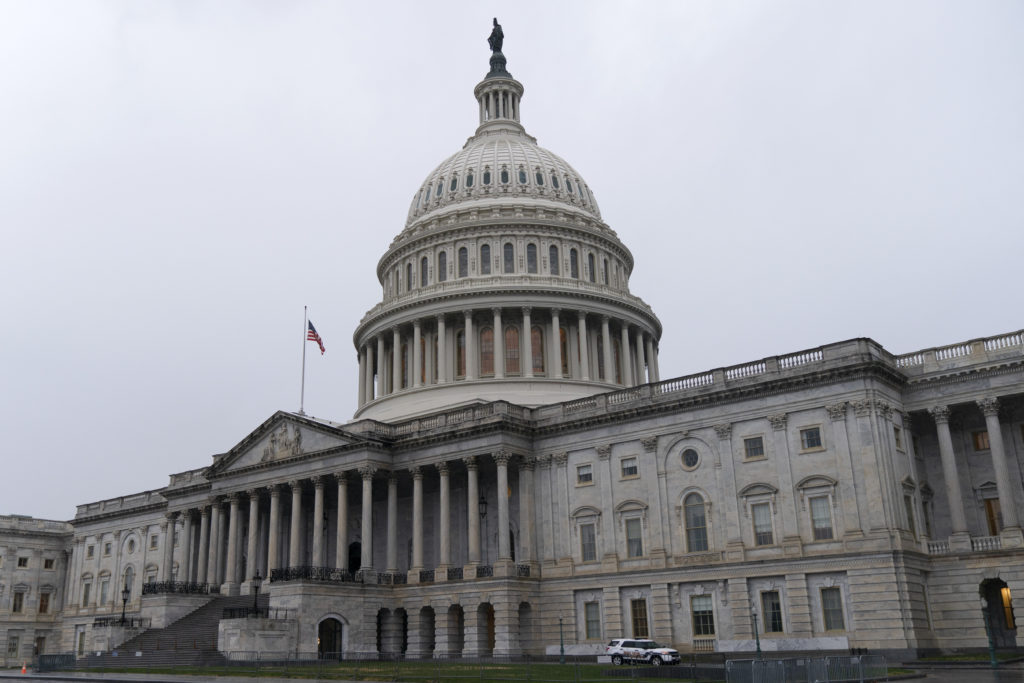
The House voted overwhelmingly Monday to increase COVID-19 relief checks to $2,000, meeting President Donald Trump’s demand for bigger payments and sending the bill to the GOP-controlled Senate, where the outcome is uncertain. Democrats led passage, 275-134, their majority favoring additional assistance, but dozens of Republicans joined in approval. Congress had settled on smaller $600 payments in a compromise over the big year-end relief bill Trump reluctantly signed into law. Democrats favored higher payments, but Trump’s push put his GOP allies in a difficult spot. The vote deeply divided Republicans who mostly resist more spending. But many House Republicans joined in support, preferring to link with Democrats rather than buck the outgoing president. Senators were set to return to session Tuesday, forced to consider the measure. House Speaker Nancy Pelosi declared, “Republicans have a choice: Vote for this legislation or vote to deny the American people” the assistance she said they need during the pandemic. The showdown could end up as more symbol than substance. Senate Majority Leader Mitch McConnell, R-Ky., has declined to say publicly how the Senate will handle the bill when Democrats there try to push it forward for a vote on Tuesday. The legislative action during the rare holiday week session may do little to change the $2 trillion-plus COVID-19 relief and federal spending package that Trump signed into law Sunday, one of the biggest bills of its kind providing relief for millions of Americans. Rep. Kevin Brady of Texas, the chairman of the Ways and Means Committee, acknowledged the division and said Congress had already approved ample funds during the COVID-19 crisis. “Nothing in this bill helps anybody get back to work,” he said. The package the president signed into law includes two parts — $900 billion in COVID-19 aid and $1.4 trillion to fund government agencies. It will deliver long-sought cash to businesses and individuals and avert a federal government shutdown that otherwise would have started Tuesday, in the midst of the public health crisis. Aside from the direct $600 checks to most Americans, the COVID-19 portion of the bill revives a weekly pandemic jobless benefit boost — this time $300, through March 14 — as well as a popular Paycheck Protection Program of grants to businesses to keep workers on payrolls. It extends eviction protections, adding a new rental assistance fund. The COVID-19 package draws and expands on an earlier effort from Washington. It offers billions of dollars for vaccine purchases and distribution, for virus contact tracing, public health departments, schools, universities, farmers, food pantry programs, and other institutions and groups facing hardship in the pandemic. Americans earning up to $75,000 will qualify for the direct $600 payments, which are phased out at higher income levels, and there’s an additional $600 payment per dependent child. Meantime the government funding portion of the bill keeps federal agencies nationwide running without dramatic changes until Sept. 30. Together with votes Monday and Tuesday to override Trump’s veto of a sweeping defense bill, the attempt to send much higher pandemic-era checks to people is perhaps the last standoff of the president’s final days in office as he imposes fresh demands and disputes the results of the presidential election. The new Congress is set to be sworn in Sunday. Trump’s sudden decision to sign the bill in Florida, where he is spending the holidays, came as he faced escalating criticism from lawmakers on all sides over his eleventh-hour demands. The bipartisan bill negotiated by Treasury Secretary Steven Mnuchin had already passed the House and Senate by wide margins. Lawmakers had thought they had Trump’s blessing after months of negotiations with his administration. The president’s defiant refusal to act, publicized with a heated video he tweeted just before the Christmas holiday, sparked chaos, a lapse in unemployment benefits for millions, and the threat of a government shutdown in the pandemic. It was another crisis of his own making, resolved when he ultimately signed the bill into law. In his statement about the signing, Trump repeated his frustrations with the COVID-19 relief bill for providing only $600 checks to most Americans and complained about what he considered unnecessary spending, particularly on foreign aid — much of it proposed by his own budget. While the president insisted he would send Congress “a redlined version” with spending items he wants removed, those are merely suggestions to Congress. Democrats said they would resist such cuts. For now, the administration can only begin work sending out the $600 payments. A day after the signing, Trump was back at the golf course in Florida, the state where he is expected to move after President-elect Joe Biden is sworn in on Jan. 20. Republican Rep. Mo Brooks of Alabama, a conservative who supported Trump’s extraordinary and futile challenge of the election results, counted himself Monday among the opponents of a more generous relief package and Trump’s call for higher payments. “It’s money we don’t have, we have to borrow to get and we can’t afford to pay back,” he said on “Fox and Friends.” But Republican Rep. Elise Stefanik of New York said she was open to the idea of $2,000 checks. “Many Americans are in dire need of relief,” she said on the show. Altogether, Republicans and Democrats alike swiftly welcomed Trump’s decision to sign the bill into law. “The compromise bill is not perfect, but it will do an enormous amount of good for struggling Kentuckians and Americans across the country who need help now,” said Senate Majority Leader Mitch McConnell, R-Ky. “I thank the President for signing this relief into law.” Senate Democratic leader Chuck Schumer, D-N.Y., said he would offer Trump’s proposal for $2,000 checks for a vote in Senate — putting Republicans on the spot. “The House will pass a bill to give Americans $2,000 checks,” Schumer tweeted. “Then I will move to pass it in the Senate.” He said no Democrats will object. “Will Senate Republicans?” Democrats are promising more aid to come once Biden takes office, but Republicans are signaling a wait-and-see approach.
House passes $900 billion COVID relief, catchall measure
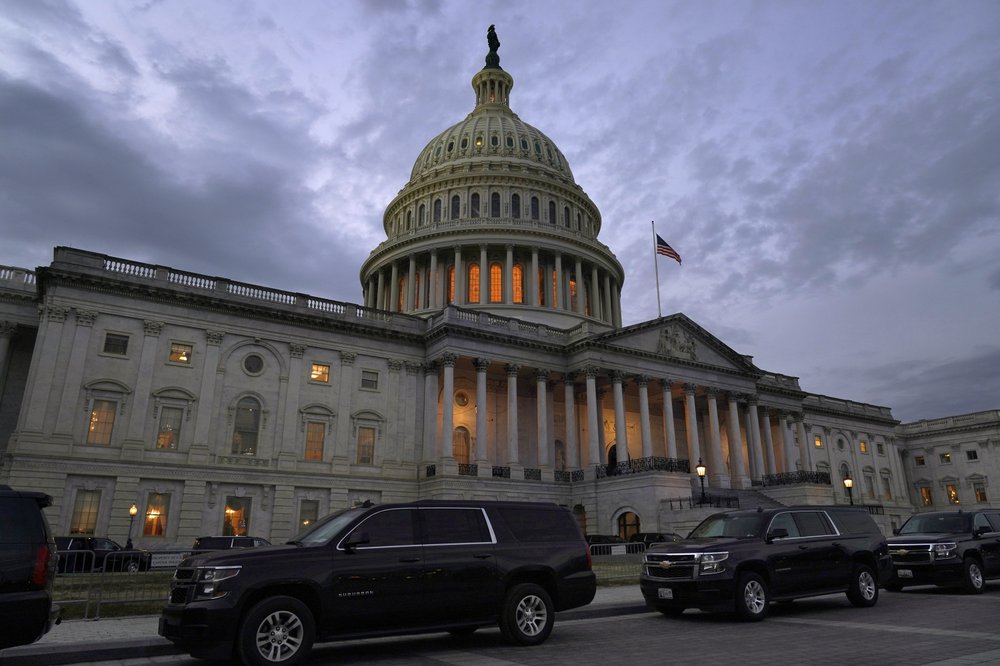
The House easily passed a $900 billion pandemic relief package Monday night that would finally deliver long-sought cash to businesses and individuals and resources to vaccinate a nation confronting a frightening surge in COVID-19 cases and deaths. Lawmakers tacked on a $1.4 trillion catchall spending bill and thousands of pages of other end-of-session business in a massive bundle of bipartisan legislation as Capitol Hill prepared to close the books on the year. The lopsided 359-53 vote was a bipartisan coda to months of partisanship and politicking as lawmakers wrangled over the relief question, a logjam that broke after President-elect Joe Biden urged his party to accept a compromise with top Republicans that is smaller than many Democrats would have liked. The relief package, unveiled Monday afternoon, sped through the House in a matter of hours. A Senate vote that would send the bill to President Donald Trump appeared likely to follow soon. The bill combines coronavirus-fighting funds with financial relief for individuals and businesses. It would establish a temporary $300 per week supplemental jobless benefit and a $600 direct stimulus payment to most Americans, along with a new round of subsidies for hard-hit businesses, restaurants, and theaters and money for schools, health care providers, and renters facing eviction. The 5,593-page legislation — by far the longest bill ever — came together Sunday after months of battling, posturing and postelection negotiating that reined in a number of Democratic demands as the end of the congressional session approached. President-elect Joe Biden was eager for a deal to deliver long-awaited help to suffering people and a boost to the economy, even though it was less than half the size that Democrats wanted in the fall. “This deal is not everything I want — not by a long shot,” said Rules Committee Chairman Jim McGovern, D-Mass., a longstanding voice in the party’s old-school liberal wing. “The choice before us is simple. It’s about whether we help families or not. It’s about whether we help small businesses and restaurants or not. It’s about whether we boost (food stamp) benefits and strengthen anti-hunger programs or not. And whether we help those dealing with a job loss or not. To me, this is not a tough call.” The Senate, meanwhile, was also on track to pass a one-week stopgap spending bill to avert a partial government shutdown at midnight and give Trump time to sign the sweeping legislation. Treasury Secretary Steven Mnuchin, a key negotiator, said on CNBC Monday morning that the direct payments would begin arriving in bank accounts next week. Democrats promised more aid to come once Biden takes office, but Republicans were signaling a wait-and-see approach. The measure would fund the government through September, wrapping a year’s worth of action on annual spending bills into a single package that never saw Senate committee or floor debate. The legislation followed a tortured path. Democrats played hardball up until Election Day, amid accusations that they wanted to deny Trump a victory that might help him prevail. Democrats denied that, but their demands indeed became more realistic after Trump’s loss and as Biden made it clear that half a loaf was better than none. The final bill bore ample resemblance to a $1 trillion package put together by Senate Republican leaders in July, a proposal that at the time was scoffed at by House Speaker Nancy Pelosi, D-Calif., as way too little. Majority Leader Mitch McConnell, R-Ky., took a victory lap after blocking far more ambitious legislation from reaching the Senate floor. He said the pragmatic approach of Biden was key. “A few days ago, with a new president-elect of their own party, everything changed. Democrats suddenly came around to our position that we should find consensus, make law where we agree, and get urgent help out the door,” McConnell said. On direct payments, the bill provides $600 to individuals making up to $75,000 per year and $1,200 to couples making up to $150,000, with payments phased out for higher incomes. An additional $600 payment will be made per dependent child, similar to the last round of relief payments in the spring. The $300 per week bonus jobless benefit was half the supplemental federal unemployment benefit provided under the $1.8 billion CARES Act in March. That more generous benefit and would be limited to 11 weeks instead of 16 weeks. The direct $600 stimulus payment was also half the March payment. The CARES Act was credited with keeping the economy from falling off a cliff during widespread lockdowns in the spring, but Republicans controlling the Senate cited debt concerns in pushing against Democratic demands. “Anyone who thinks this bill is enough hasn’t heard the desperation in the voices of their constituents, has not looked into the eyes of the small-business owner on the brink of ruin,” said Senate Democratic leader Chuck Schumer, a lifelong New Yorker who pushed hard for money helping his city’s transit systems, renters, theaters and restaurants. Progress came after a bipartisan group of pragmatists and moderates devised a $908 billion plan that built a middle-ground position that the top four leaders of Congress — the GOP and Democratic leaders of both the House and Senate — used as the basis for their talks. The lawmakers urged leaders on both sides to back off of hardline positions. “At times we felt like we were in the wilderness because people on all sides of the aisle didn’t want to give, in order to give the other side a win,” said freshman Rep. Elssa Slotkin, D-Mich. “And it was gross to watch, frankly.” Republicans were most intent on reviving the Paycheck Protection Program with $284 billion, which would cover a second round of PPP grants to especially hard-hit businesses. Democrats won set-asides for low-income and minority communities. The sweeping bill also contains $25 billion in rental assistance, $15 billion for theaters and other live venues, $82 billion for local schools, colleges, and universities, and $10 billion for child care. The governmentwide appropriations bill was likely
In historic pick, Joe Biden taps Deb Haaland as interior secretary
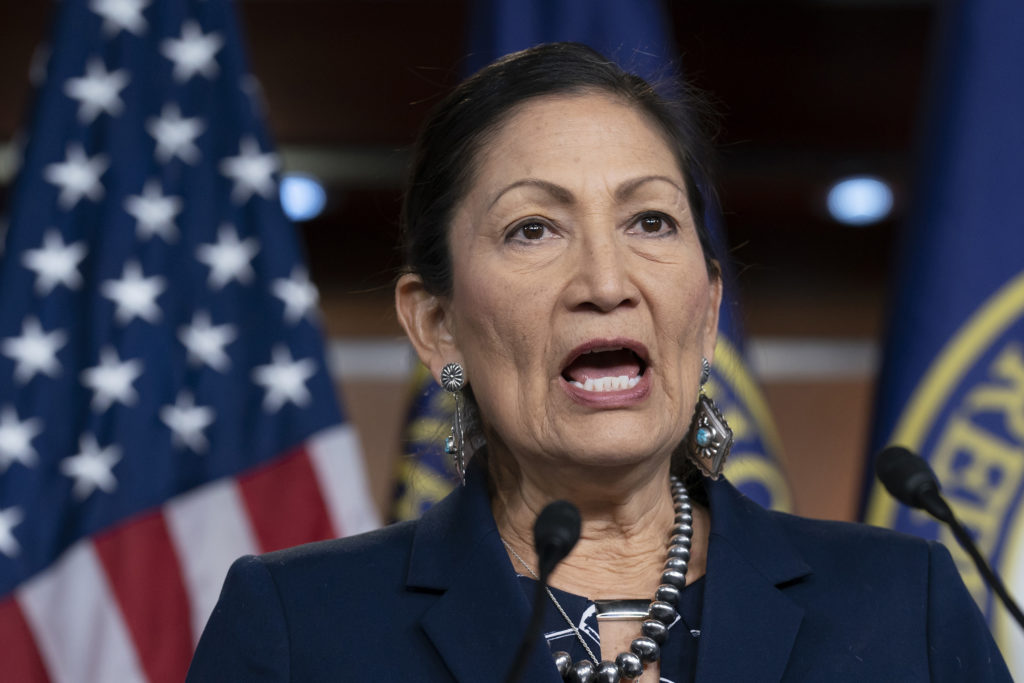
President-elect Joe Biden selected New Mexico Rep. Deb Haaland as his nominee for interior secretary on Thursday, a historic pick that would make her the first Native American to lead the powerful federal agency that has wielded influence over the nation’s tribes for generations. Tribal leaders and activists around the country, along with many Democratic figures, cheered Haaland’s selection after urging Biden for weeks to choose her to lead the Department of Interior. They stood behind her candidacy even when concerns that Democrats might risk their majority in the House if Haaland yielded her seat in Congress appeared to threaten her nomination. With Haaland’s nomination, Indigenous people will for the first time in their lifetimes see a Native American at the table where the highest decisions are made — and so will everyone else, said OJ Semans, a Rosebud Sioux vote activist who was in Georgia on Thursday helping get out the Native vote for two Senate runoffs. “It’s made people aware that Indians still exist,” he said. Haaland, 60, is a member of the Pueblo of Laguna and, as she likes to say, a 35th-generation resident of New Mexico. The role of interior secretary would put her in charge of an agency that has tremendous sway not only over the nearly 600 federally recognized tribes, but also over much of the nation’s vast public lands, waterways, wildlife, national parks, and mineral wealth. Haaland tweeted after the news was made public that “growing up in my mother’s Pueblo household made me fierce. “I’ll be fierce for all of us, our planet, and all of our protected land,” she pledged. Biden plans to introduce Haaland — and other picks for his Cabinet — at an event Saturday in Wilmington, Delaware. Her selection breaks a 245-year record of non-Native officials, mostly male, serving as the top federal official over American Indian affairs. The federal government often worked to dispossess Native Americans of their land and, until recently, to assimilate them into white culture. “You’ve got to understand — you’re taking Interior full circle,” said Arizona Rep. Raul Grijalva, chair of the House Natural Resources Committee and a champion of Haaland for the job. “For years, its legacy was the disenfranchisement of the Native people of this country, of displacement, of cultural genocide.” With Haaland’s nomination, “that in itself is a huge message,” Grijalva said. Navajo Nation President Jonathan Nez called it “truly a historic and unprecedented day for all Indigenous people.” “I am SO ELATED,” the head of progressive Democrats’ Sunrise Movement, Varshini Prakash, tweeted. “This will be the first time an Indigenous person – and a badass climate champion woman at that – will hold any presidential cabinet position. Congratulations to @JoeBiden for making history.″ Get-out-the-vote activists believe their efforts, and the Native vote, helped flip Arizona in particular for Biden and secure the presidency. “There’s a feeling something is changing,” said Ashley Nicole McCray, a member of the Absentee Kiowa tribe of Oklahoma and of an indigenous environmental coalition. “Finally, we’ve come to this point where Indigenous sentiment is no longer being silenced.” But Biden’s pick could further deplete, at least temporarily, the narrow majority Democrats maintain in the House. Biden has already selected several lawmakers from the chamber, including Louisiana Rep. Cedric Richmond and Ohio Rep. Marcia Fudge, to serve in his administration. Some on Biden’s transition team had expressed concerns about dipping further into the already thinned Democratic House majority for another senior administration posting. But Biden decided that the barrier-breaking aspect of her nomination and her experience as vice chair of the House Committee on Natural Resources made her the right pick for the moment. The president-elect has been methodically filling the posts in his Cabinet, adding North Carolina environmental official Michael Regan as his nominee to lead the Environmental Protection Agency. Biden introduced former South Bend, Indiana, mayor Pete Buttigieg earlier this week as his transportation secretary and announced Thursday that former Michigan Gov. Jennifer Granholm was his nominee for energy secretary. In a statement Thursday night, Biden said he had assembled a “brilliant, tested, trailblazing team” that “will be ready on day one to confront the existential threat of climate change.” “They share my belief that we have no time to waste to confront the climate crisis, protect our air and drinking water, and deliver justice to communities that have long shouldered the burdens of environmental harms,” the president-elect said. House Speaker Nancy Pelosi made it clear Wednesday that Biden had her blessing to choose Haaland, saying she would make an “excellent choice” as interior secretary. South Carolina Rep. James Clyburn, the No. 3 Democrat in the House and a close Biden ally, also supported Haaland for the job. Haaland is one of the first two Native American women in the House. She told The Associated Press before her nomination that see the difference her position in Congress made for ordinary Native Americans who came to her with business before the federal government. “They felt comfortable just launching into the issues they wanted,” Haaland told the AP in an interview before her appointment. They would say, for example, “Oh, we don’t have to explain tribal sovereignty to you,” meaning tribes’ constitutionally guaranteed status as independent nations. Haaland previously worked as head of New Mexico’s Democratic Party, as tribal administrator, and as an administrator for an organization providing services for adults with developmental disabilities. Born to a Marine veteran father and a Navy veteran mother, Haaland describes herself as a single mother who sometimes had to rely on food stamps. She says she is still paying off student loans after college and law school for herself and college for her daughter. New Mexico Sen. Tom Udall, who is retiring after 22 years in Congress and was initially considered the front-runner for interior secretary, congratulated Haaland on her selection, calling it “momentous and well-earned.’’ Previously, the highest-ranking administration official known to have Native American heritage was Charles Curtis, who served as Herbert Hoover’s vice president and whose mother was one-quarter Kaw tribe.
Mitch McConnell warns GOP off Electoral College brawl in Congress
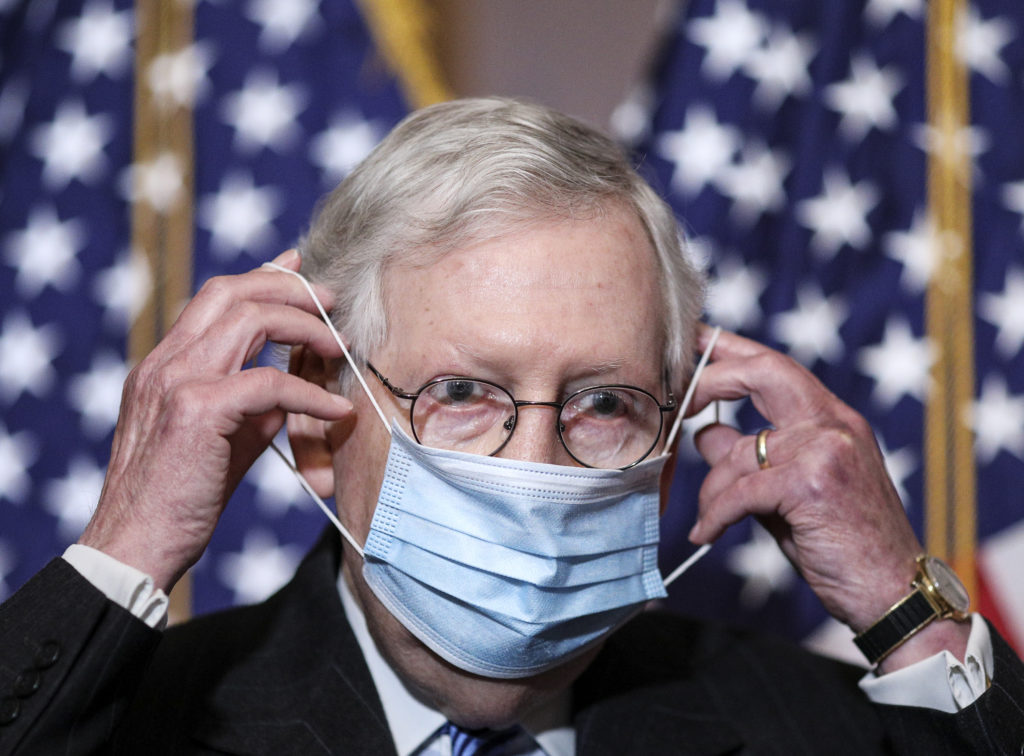
Fending off a messy fight that could damage Republicans ahead of Georgia Senate runoffs, Majority Leader Mitch McConnell warned fellow GOP senators on Tuesday not to join President Donald Trump’s extended assault on the Electoral College results. In public remarks and private warnings, McConnell worked to push ahead to the Biden era and unite a fractured Republican Party ahead of the runoff elections that will determine Senate control. First, the Republican leader heaped praise on Trump’s “endless” accomplishments as he congratulated President-elect Joe Biden during a morning Senate speech. Then he pivoted, privately warning Republican senators away from disputing the Electoral College tally when Congress convenes in a joint session Jan. 6 to confirm the results. That fight would yield a “terrible vote” for Republicans, McConnell told the senators, according to two people granted anonymity to discuss the call, which was first reported by Politico. They would have to choose whether to back Trump or publicly buck him. Republicans are worried about bad effects on the Jan. 5 Georgia runoff election, where two incumbent Republican senators, David Perdue and Kelly Loeffler, face Democratic challengers Jon Ossoff and Raphael Warnock in a state that flipped in November for Biden. McConnell has been a strong supporter of most Trump efforts. But the turn of events six weeks after Election Day showed the Kentucky senator, backed by his leadership team, seeking to normalize relations with the coming Biden presidency while avoiding the spectacle of pitched floor fight that would divide the party as Trump reluctantly leaves office. “I want to congratulate President-elect Joe Biden,” McConnell said as he opened the Senate. “Many of us had hoped the presidential election would yield a different result,” he said. “But our system of government has the processes to determine who will be sworn in on Jan. 20. The Electoral College has spoken.” Biden told reporters that he called to thank McConnell for the remarks and the two had a “good conversation.” As he departed to campaign in Georgia, he said he told McConnell there are “things we can work together on.” The Senate leader’s sprint into action after weeks of silence followed other leading Republicans who spoke up after the Electoral College voted late Monday. They finally said aloud what many Republicans had been signaling privately — that Biden is the winner of the presidential election, and they are essentially abandoning Trump’s election attacks. From there, the floodgates opened. Several GOP senators confirmed they had spoken with Biden, including Trump ally Lindsey Graham of South Carolina and Mitt Romney of Utah, the GOP’s 2012 presidential nominee. Some have had meetings with Biden’s nominees for administration posts. In his phone call, Romney expressed admiration for Biden’s willingness to endure the rigors of a presidential campaign and serve in the nation’s highest office, the senator’s office said. The two also discussed the challenging political environment ahead. Senate Democratic leader Chuck Schumer said now that McConnell has spoken, “enough is enough.” Trump should “end his term with a modicum of grace and dignity,” Schumer said. For his part, Trump continued to push his baseless claims of “voter fraud” in a new tweet on Tuesday. Some GOP lawmakers have vowed to carry the fight to Jan. 6 when Congress votes to accept or reject the Electoral College results. Others have said Trump’s legal battles should continue toward resolution by Inauguration Day, Jan. 20. House Republican leader Kevin McCarthy declined to comment Tuesday when asked if he was ready to acknowledge Biden as the president-elect. One House Republican, Rep. Mo Brooks of Alabama, is planning to challenge the Electoral College results when Congress convenes for the joint session. At that time, any challenge in Congress would need to be raised by at least one member of the House and Senate. It’s unclear if any GOP senator will join in making the case. McConnell and his lieutenants, including Sens. John Thune of South Dakota and Roy Blunt of Missouri, warned the senators off any Electoral College challenge, calling it dead-end since any action would need sign-off by Democrats who have the House majority under Speaker Nancy Pelosi, according to one of the people familiar with Tuesday’s call. The GOP leaders further warned senators that forcing their colleagues into a vote on Electoral College challenges would prove difficult, especially for those facing their own reelections in 2022. No Republican senator spoke up in contradiction. Republican Sen. Ron Johnson of Wisconsin, who as chairman of the Homeland Security Committee is convening a hearing Wednesday on election fraud, has “no plans” to join with House Republicans and challenge the results, according to spokesman Austin Altenburg. McConnell surprised Washington on Tuesday when he opened the Senate addressing the election. The GOP leader called Biden someone “who has devoted himself to public service for many years.” He also congratulated Kamala Harris, saying “all Americans can take pride that our nation has a female vice president-elect for the very first time.” McConnell prefaced his remarks with sweeping praise of Trump’s four years in office, saying the president delivered on a promise to “shake up Washington.” He cited the president’s nomination and Senate confirmation of three Supreme Court justices, among other accomplishments. With states having affirmed the election results, the Republicans faced a pivotal choice — to acknowledge Biden the president-elect or keep standing silently by as Trump wages a potentially damaging campaign to overturn the election. “At some point, you have to face the music,” Thune, the No. 2 GOP leader, said late Monday. “Once the Electoral College settles the issue today, it’s time for everybody to move on.” Historians and election officials have warned that Trump’s unfounded claims of voter fraud threaten to erode Americans’ faith in the election system. Trump is trying to throw out the ballots of thousands of Americans, particularly those who voted by mail, in dozens of lawsuits that have mostly failed. His legal team is claiming irregularities, even though Attorney General William Barr, who abruptly resigned Monday, has said there is no evidence of widespread fraud that would alter the
Steve Flowers: Covid killed the Don

Around Labor Day, when this year’s presidential campaign was beginning to heat up, I wrote a column about the classic 1960 presidential contest between John Kennedy and Richard Nixon. This pivotal presidential race marked the beginning of television as the premier political medium. The first televised presidential debate that year was the turning point of that campaign. Kennedy won the Whitehouse with his performance, or as some would say, Nixon lost by his appearance on TV that fateful night in October of 1960. A lot has changed in the past 60 years; America was a more Ozzie and Harriet, Andy Griffith Mayberry America. There was not a lot of difference, philosophically or ideologically, between a Republican Kansas farmer and a Blue-Collar, Democratic factory worker in Pennsylvania. They both believed in American values of decency and hard work. Even though the Pennsylvanian was a Union man who tended to vote Democratic and was probably a Catholic, and the Kansas farmer voted Republican and was a protestant. They both were Christian conservatives. The country was more homogenous and amicable. This America lent itself to a close presidential contest where 40 states were in play in the Electoral College, and only 10 predetermined. Today it is just the opposite. 10 states are in play, and 40 predetermined. The country is more divided than at any time since the Civil War. You are cemented into either a conservative Republican tribe or a liberal Democratic tribe, and there is no peace pipe to be smoked. There are very few independent voters in the middle. It is these truly undecided swing voters that decide the presidential race. Also, it is even a further defined swing voter who resides in a swing state – primarily the states of Florida, Ohio, Arizona, Pennsylvania, Michigan, Wisconsin, and now Georgia. Both parties got their bases out to the maximum. Democrats hated Donald Trump. Republicans loath Nancy Pelosi and Bernie Sanders. They stoked every fire possible, and the two tribes almost broke about even. Donald J. Trump lost the middle of America swing voter in the key battleground states, and he lost them overwhelmingly. Why? You ask: It is simple, the COVID pandemic. It would have been impossible for any humble, genuinely caring, kind, and compassionate president to overcome a pandemic that has killed over 250,000 people and annihilated the economy. A legendary, revered leader like Franklin Delano Roosevelt or Ronald Reagan would have had a hard time surviving this Communist Chinese invasion of our nation. This Chinese generated epidemic destroyed our economy. It is always about the economy. Trump’s administration was the overseer of the most robust economy in years. He could have possibly won reelection with this rosy economy. However, the March invasion of the Chinese coronavirus derailed the Trump Train. There is an old political adage that says, “If you claim credit for the rain, you got to take blame for the drought. Any presidential election campaign where there is an incumbent president up for reelection is a referendum on that President. Therefore, this presidential race was all about Trump. He would have had to have been an FDR or Reagan to have survived the events of this year. Folks, Trump is no FDR or Reagan. To win a presidency, people have to like you. Very few people genuinely like Donald Trump. All exit polling revealed that even the most ardent Republicans disliked Trump, the man. They were only voting for him because he was a proven true-blue, hardcore conservative. Even evangelical conservatives voted for him knowing his personal and business life was not exemplary of a practicing Christian, but he was the vessel for conservative Supreme Court Justices. However, key swing voters, primarily suburban women, just did not like a brash, irreverent, egocentric, irrational narcissist as their president. They had seen the sideshow on television and Twitter for over three years, and they had had enough. There is another tried and true maxim, “More people vote against someone than for someone.” This played out to the nines on election day. Very few people voted for Joe Biden. They voted against Donald Trump. Steve Flowers is Alabama’s leading political columnist. His weekly column appears in over 60 Alabama newspapers. He served 16 years in the state legislature. Steve may be reached at www.steveflowers.us.
Joe Biden chooses an all-female senior White House press team
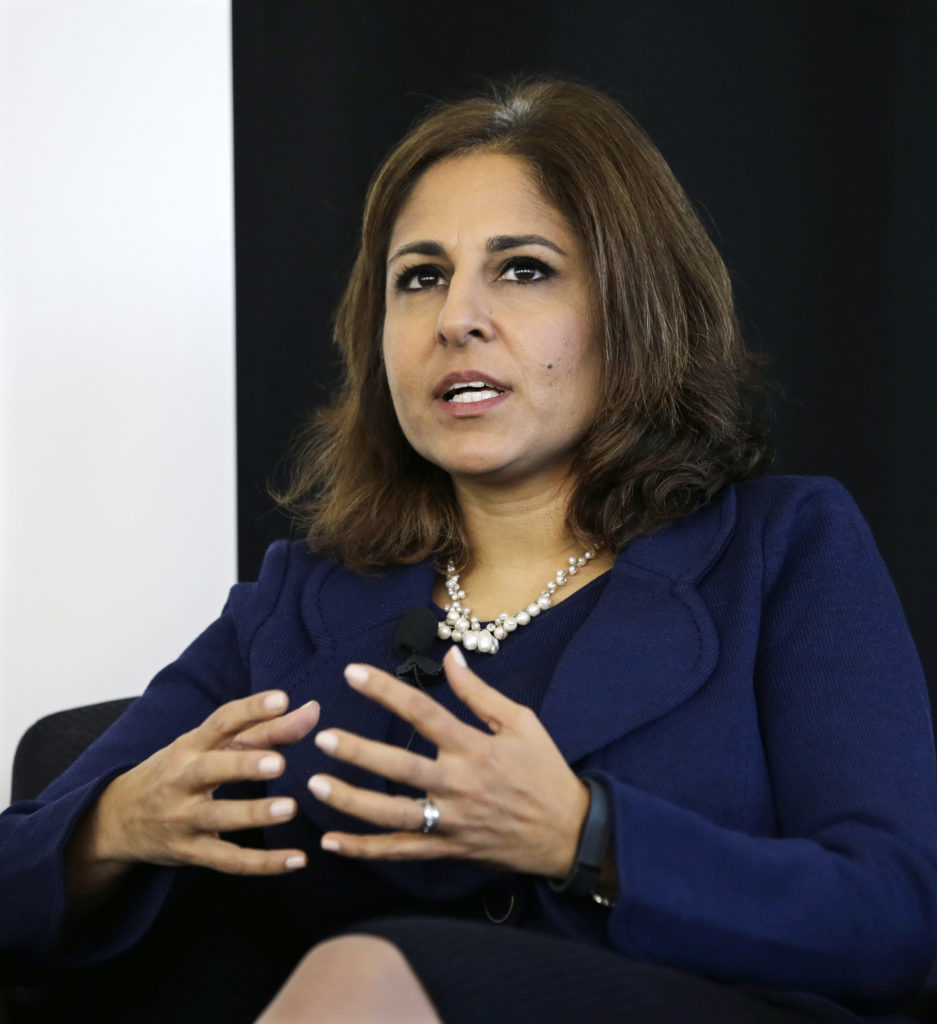
President-elect Joe Biden will have an all-female senior communications team at his White House, reflecting his stated desire to build out a diverse White House team as well as what’s expected to be a return to a more traditional press operation. Biden campaign communications director Kate Bedingfield will serve as Biden’s White House communications director. Jen Psaki, a longtime Democratic spokeswoman, will be his press secretary. In a different area of the White House operation, Biden plans to name Neera Tanden, the president and CEO of the liberal think tank Center for American Progress, as director of the Office of Management and Budget, according to a person familiar with the transition process granted anonymity to speak freely about internal deliberations. Four of the seven top communications roles at the White House will be filled by women of color, and it’s the first time the entire senior White House communications team will be entirely female. President Donald Trump upended the ways in which his administration communicated with the press. In contrast with administrations past, Trump’s communications team held few press briefings, and those that did occur were often combative affairs riddled with inaccuracies and falsehoods. Trump himself sometimes served as his own press secretary, taking questions from the media, and he often bypassed the White House press corps entirely by dialing into his favorite Fox News shows. In a statement announcing the White House communications team, Biden said: “Communicating directly and truthfully to the American people is one of the most important duties of a President, and this team will be entrusted with the tremendous responsibility of connecting the American people to the White House.” He added: “These qualified, experienced communicators bring diverse perspectives to their work and a shared commitment to building this country back better.” Bedingfield, Psaki and Tanden are all veterans of the Obama administration. Bedingfield served as communications director for Biden while he was vice president; Psaki was a White House communications director and a spokesperson at the State Department; and Tanden served as a senior adviser to Health and Human Services Secretary Kathleen Sebelius and helped craft the Affordable Care Act. Others joining the White House communications staff are: — Karine Jean Pierre, who was Vice President-elect Kamala Harris’ chief of staff, will serve as a principal deputy press secretary for the president-elect. She’s another Obama administration alum, having served as a regional political director for the White House office of political affairs. — Pili Tobar, who was communications director for coalitions on Biden’s campaign, will be his deputy White House communications director. She most recently was deputy director for America’s Voice, an immigration reform advocacy group, and was a press staffer for Senate Minority Leader Chuck Schumer, D-N.Y. Three Biden campaign senior advisers are being appointed to top communications roles: — Ashley Etienne, a former communications director for House Speaker Nancy Pelosi, will serve as Harris’ communications director. — Symone Sanders, another senior adviser on the Biden campaign, will be Harris’ senior adviser and chief spokesperson. — Elizabeth Alexander, who served as the former vice president’s press secretary and his communications director while he was a U.S. senator from Delaware, will serve as Jill Biden’s communications director. After his campaign went virtual due to the coronavirus pandemic, Biden faced some of his own criticism for not being accessible to reporters. But near the end of the campaign, he answered questions from the press more frequently, and his transition team has held weekly briefings since he was elected president. The choice of a number of Obama administration veterans — many with deep relationships with the Washington press corps — also suggests a return to a more congenial relationship with the press. As head of the OMB, Tanden would be responsible for preparing Biden’s budget submission and would command several hundred budget analysts, economists and policy advisers with deep knowledge of the inner workings of the government. Her choice may mollify progressives, who have been putting pressure on Biden to show his commitment to progressive priorities with his early staff appointments. She was chosen over more moderate voices with roots in the party’s anti-deficit wing such as Bruce Reed, who was staff director of President Barack Obama’s 2010 deficit commission, which proposed a set of politically painful recommendations that were never acted upon. Republished with the permission of the Associated Press.
Bradley Byrne: Much to do
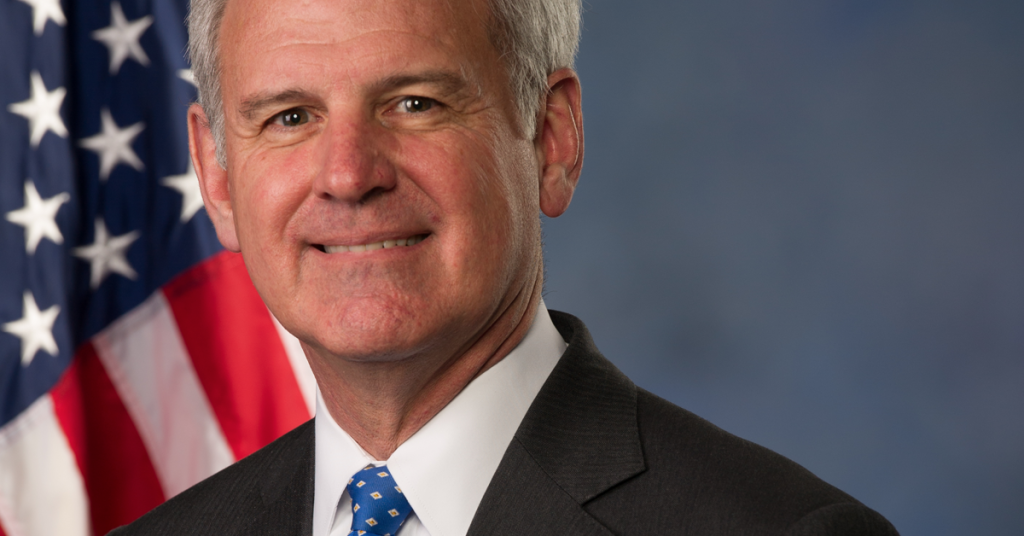
Congress returns to Washington this week after a six-week hiatus for the election. Since the end of July, we have only met for a few weeks, and the work we need to complete has piled up. This Congress ends at noon on Sunday, January 3, when the new Congress will be sworn in and start all over again as any bills pending from the old Congress die. Let’s look at what needs to be done between now and then. Every year since the Kennedy Administration, Congress passes a National Defense Authorization Act, or NDAA, which authorizes the operations of the U.S. military and our national defense, an obligation of Congress under Article One of the Constitution. This year’s bill passed out of the House Armed Services Committee on which I sit by a unanimous vote and out of the full House by a huge bipartisan vote. A Conference Committee will iron out our differences with the Senate bill, and I hope we will vote on the Committee’s report in the next few weeks. The NDAA is one of the few examples of this Congress when we have come together to meet our Constitutional duties. I also anticipate that we will vote on the Water Resources Development Act, another bill we regularly pass and which authorizes much of what the Corps of Engineers does for navigation, flood protection, and the like. But the big two are the funding of the government and a new COVID bill. Back in September, Congress passed a bill continuing government spending for the fiscal year that began on October 1 but using the numbers from the previous year. I wasn’t present for the vote on the bill as I was in the district working on our response to Hurricane Sally. Had I been there, I would have voted against it because these continuing resolutions are punts as we fail to meet our Constitutional requirement to fund the government. That bill only runs through December 11, however, and there will be substantial pressure to pass something funding the government beyond that date. This has been a source of failure in the past. You may remember it happened at the end of 2017. Will we produce an actual appropriations bill, or will we pass another continuing resolution taking us into 2021 and the new Congress? Or, will we have a shutdown? The appropriations process, like virtually every other legislative endeavor this Congress, is badly broken because Speaker Nancy Pelosi refuses to let it work. There is little effort to work across the aisle or the Capitol, despite good people on both sides and both houses being involved, as the Speaker insists on calling the shots and bypassing the capable leadership on the Appropriations Committee. I am pessimistic that we can get a true appropriations bill this Congress and anticipate another continuing resolution will be proposed on or shortly before December 11. The question is whether that will pass and whether President Donald Trump would sign it if it does. It’s likely to go down to the wire that week. And the outlook for another COVID response bill this Congress looks even worse. You would think that with the elections out of the way and having suffered significant election losses among her membership, the Speaker would settle into serious negotiations. Not so. In fact, after pushing a $2 trillion bill this summer and fall, even as the Senate told her that figure was far too high, she has now come back post-election with a bill for spending over $3 trillion. She is effectively expecting Senator Mitch McConnell and the Republican Senate, which seems to be retaining their majority, to bid against themselves. I don’t know what about Senator McConnell’s leadership of the Senate these last six years would give anyone the thought he would cave into that. Indeed, the Speaker’s COVID proposal is really just her way of postponing the discussion until after Inauguration Day when she expects to have a President Joe Biden to help her instead of President Trump. Once again, her goal is less about helping the American people and more about her own power. Here we are at the beginning of the worst part of the year for viral diseases, and she is punting the passage of a much-needed bill for at least two more months. I hope I’m wrong about the Speaker’s posture on these bills, but her performance as Speaker so far has been depressingly consistent. When the choice is between the needs of the country and her own power, she always chooses the latter. We have much to do this Congress and not much time to do it. I wish we’d break the mold of this Congress, learn from the election results, and actually do the jobs we are required to do under the Constitution. It just doesn’t look like the Speaker wants us to fulfill our responsibilities under the Constitution. Congressman Bradley Byrne currently represents Alabama’s 1st congressional district.
What mandate? Joe Biden’s agenda faces a divided Congress
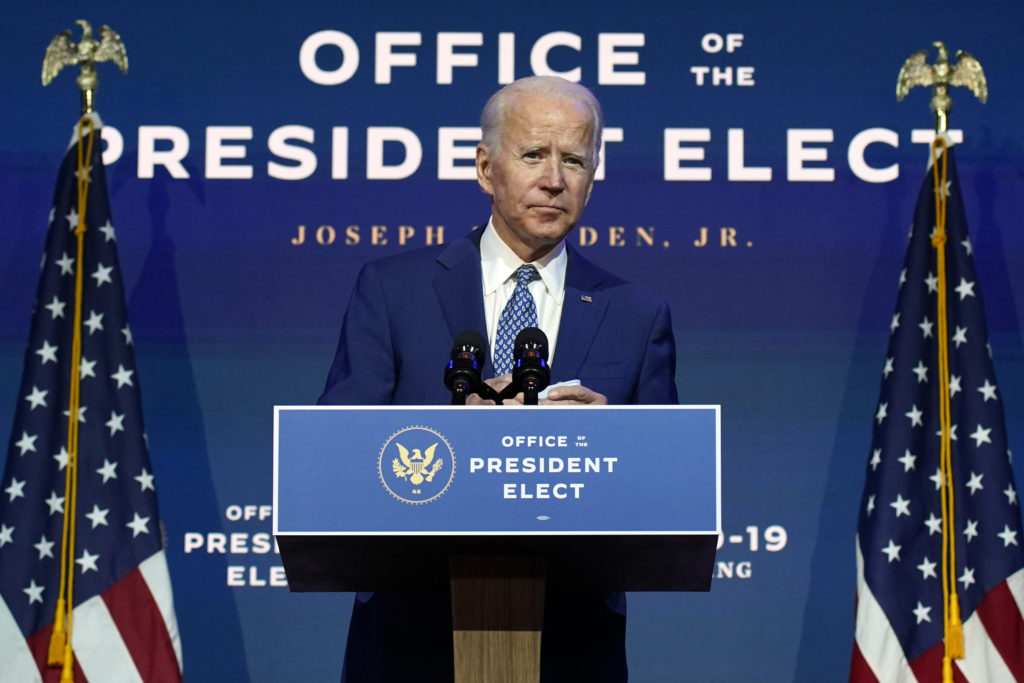
President-elect Joe Biden wants to “restore the soul of America.” First, he’ll need to fix a broken and divided Congress. Biden is rushing headlong into a legislative branch ground down by partisanship, name-calling and, now, a refusal by some to acknowledge his win over President Donald Trump. Democratic allies, struggling to regroup after their own election losses, harbor deep divisions between progressive and moderate voices. Republicans, rather than graciously congratulating the incoming president, are, intentionally or not, delegitimizing Biden’s presidency while catering to Trump’s refusal to accept the election results. At a time when the country needs a functioning government perhaps more than ever to confront the crises of COVID-19, a teetering economy and racial injustice, Washington is being challenged by the president-elect to do better than it has. It’s going to be a hard opening. “The country used to want gridlock because they saw gridlock as a way to protect them. Now the country’s actually hungry for action and progress,” said Jesse Ferguson, a Democratic strategist. “That’s a mandate to flip the switch.” The idea of a Biden mandate, though, is relative, certainly embraced by Democrats who want to push ahead with his agenda. Emboldened Republicans, though, who didn’t lose a single House seat, but in fact expanded their ranks and brushed back many Senate Democratic challengers, see their own mandate to serve as a block on a Biden agenda. California Rep. Kevin McCarthy, the House’s Republican leader, said the election “was a mandate against socialism,” stepping up the relentless GOP attacks, even though Biden is a centrist Democrat. Biden comes to the presidency like few in recent history, with a rare mix of experience but also a potentially divided Congress. Not since President George H.W. Bush has the White House had an executive with such a deep Washington resume. Rarely in modern times has a Democrat started an administration without a full Democratic Congress. While the House is in Democratic hands, the Senate remains undecided, a 50-48 lead for Republicans heading into a Jan. 5 runoff for two seats in Georgia that will determine party control. Asked this past week how he will be able to work with Republicans if they aren’t acknowledging his victory, Biden said, “They will.” What Biden is presenting is a new normal in Washington that he said voters demanded from the election. “If we can decide not to cooperate, then we can decide to cooperate,” he said at his election victory speech. Much has been made of Biden’s relationship with Capitol Hill, where he served as a senator for 36 years, particularly his deal-making as Barack Obama’s vice president with Senate Republican leader Mitch McConnell of Kentucky. Yet McConnell has not revived that approach as he enables Trump to delve into a legal battle rooted in unfounded allegations of voter fraud, even as state officials say the elections ran smoothly and there is no widespread evidence of fraudulent voting. McConnell won his own reelection in Kentucky. Whether McConnell emerges in the new Congress as majority or minority leader with a narrowly divided Senate, the longest serving Republican leader in history will have great leverage over legislation that arrives on Biden’s desk. Biden could seek a repeat of Newt Gingrich’s era when the Republican House speaker served up legislative victories for President Bill Clinton, infuriating Democrats with conservative budget and welfare bills but helping Clinton win a second term. Or Biden could find McConnell rerunning his politically charged GOP blockade of Obama’s agenda. Hopes of overcoming McConnell by ending the Senate filibuster, which would allow bills to advance on a simple majority rather than a 60-vote threshold, are slipping out of reach without Democratic control. “Gingrich insisted the American people wanted it,” said Rick Tyler, a former Gingrich top aide who left the Republican Party in the Trump era. He said McConnell will move on Biden’s agenda when Biden has the nation behind him. “That’s how you do it. Let’s see if Biden can do it,” he said. But it’s not just McConnell. House Speaker Nancy Pelosi, D-Calif., Senate Democratic leader Chuck Schumer of New York and even McCarthy will have oversize roles because of the changed makeup of the new Congress. Biden faces a restive liberal flank, powered by a new generation of high-profile progressives including Rep. Alexandria Ocasio-Cortez, D-N.Y., They helped deliver his victory and may not be so eager to compromise over health care, climate change, income inequality and racial justice issues that have growing popular support. At the same time, while Pelosi and Schumer have long histories with Biden, McCarthy is close to Trump, who is expected to hold a heavy influence on Republicans even after he leaves office. With a slimmer majority in the House, McCarthy’s ability to wrangle votes suddenly matters. “They can, but will they?” said Jim Kessler, a former Schumer aide and executive vice president at the center-left Third Way think tank. “This is a real veteran group of people. They know how to get things done. They know how to stop things from getting done.” An early test for Biden will be the Cabinet nominations, which can be approved by a slim 51 votes in the Senate. Republicans can also block nominees with time-consuming procedural hurdles that could quickly stall the new administration if top positions go unfilled. Democrats did as much to Trump, in some ways as payback after McConnell blocked Obama’s Supreme Court nominee Merrick Garland. “I think there’s a likelihood that Mitch McConnell will Merrick Garland every single Cabinet nominee and will force Joe Biden to negotiate on every single one,” said Sen. Chris Murphy, D-Conn. “Trump is still going to be running the Republican Party. And so, in reality, Joe Biden may have to negotiate every Cabinet pick with Donald Trump.” Republished with the permission of the Associated Press.
Record Democratic turnout not enough for Jones in Alabama

Alabama U.S. Sen. Doug Jones received more than 200,000 more votes this year than he did when he won the seat three years ago. But despite record Democratic turnout, it wasn’t nearly enough in the deeply red state as Republican former college football coach Tommy Tuberville racked up huge margins to handily defeat Jones and Democrats’ hopes of maintaining inroads in the Deep South state this year. Jones, who was considered the Senate’s most endangered Democrat, topped former President Barack Obama’s 2008 record for most votes for a Democratic candidate in Alabama, state Democratic Party Executive Director Wade Perry said. Yet huge GOP numbers pushed the incumbent down to just 40% of the overall vote. Tuberville made fealty to President Donald Trump the central pillar of his campaign and told voters at a campaign stop that, “God sent us and elected Donald Trump.” Boosted by GOP enthusiasm, straight-ticket voting, and fame from his coaching days at Auburn University, Tuberville won about 60% of ballots, running about two percentage points behind Trump in the state. “Alabama, welcome back to the Republican U.S. Senate,” Tuberville shouted after taking the stage to loud cheers at his election night party in downtown Montgomery. “I am going to fight like heck against Chuck Schumer, Nancy Pelosi,” he said. “I will be guided by our shared values, conservative values and I will always vote with the majority of people in the state of Alabama.” Tuberville’s victory followed a campaign where Tuberville shunned most media outlets in favor of conservative talk radio and he declined to debate Jones. Jones, a former U.S. attorney best known for prosecuting Ku Klux Klansmen responsible for Birmingham’s infamous 1963 church bombing, became the first Alabama Democrat elected to the U.S. Senate in a quarter-century when he won in 2017. His victory was aided by scandal after Republican Roy Moore, already a controversial figure in the state, faced allegations of sexual misconduct from decades earlier. Some Republicans in the state sat out that race or supported Jones. Republicans were eager to portray Jones’ 2017 win as an anomaly, and hammered at Jones over a handful of votes, including the Democrat’s decision to convict Trump during the impeachment trial. “He will be the perfect example in political science classes around this nation of how to lose a U.S. Senate seat with $15 million dollars because you ignored the will of the majority of the people. It will be a short class,” Alabama Republican Party Chairwoman Terry Lathan said of Jones. Jones, despite outspending Tuberville 4-1, lost by a wide margin. “There’s nothing else we could have done. It was a record Democratic turnout, exceeded only by a record Republican turnout,” Alabama Democratic Party Executive Director Wade Perry said Wednesday. “We’ve got two years to do a better job. We’ve got some work to do,” Perry said. “I’m proud of Alabama Democrats and very proud of our staff. We worked very hard and had a record turnout. It just wasn’t enough.” David Mowery, an Alabama-based political consultant, said “Republican DNA is hard-baked into the state” making it a difficult path for any Democrat, even a well-funded one. He said Alabama does not have the growing suburban populations that have helped turn some southern states into battlegrounds. “We’re a Republican state and the only thing that can change that is a big-league scandal and a known bad actor like Roy Moore,” Mowery said. Although he was denied a full term in the Senate, Jones said there was work to continue. “At the end of the day, my time in the Senate is going to be over, but our time is just beginning, our time to make our state so much better than what it has been, to make sure we continue the march of progress,” Jones said as he stood with his family on stage. Jones said he did not regret the votes, such as impeachment and opposing Trump’s Supreme Court nominee — which fueled conservative outrage against him — because he said those were votes he took on principle. Ahead of Tuesday, Jones had acknowledged he faced an uphill battle to keep the seat in a campaign that seemed as much about laying groundwork for the future. He helped install new leadership at the Alabama Democratic Party. The senator also lamented a political environment that has moved to partisan rancor and away from bipartisanship. “The Senate doesn’t have that kind of deliberative spirit anymore,” he said. “There’s a lot more friendliness and bipartisanship that goes on behind the scenes that folks don’t see, but it needs to be on the floor of the Senate, it needs to be in front of the cameras, it needs to be where people can see these great debates on policy, and on issues, and how you can find that common ground.” Republished with the permission of the Associated Press.
Bruised and haunted, US holds tight as 2020 campaigns close

Just over her mask, Patra Okelo’s eyes brimmed with tears when she recalled the instant that a truth about America dawned and her innocence burned away. One moment on Aug. 11, 2017, she thought the tiki torches blazing in the distance at the University of Virginia were “the most beautiful thing I’d ever seen, lighting up the darkness.” Later, on television, she could see the fire more clearly. Hundreds of white supremacists carried those torches, sparking 24 hours of fury and death that transformed Charlottesville into an enduring battle cry of the 2020 presidential election. “My heart broke that night,” Okelo, now 29, said on Saturday, as President Donald Trump and Democrat Joe Biden blitzed across the country to make the closing arguments of their bitter contest to lead the divided nation. Presidential elections are traditionally moments when Americans get a high-definition look in the mirror. But by the final, frenetic sprint of the 2020 race, the world had long peered into the country’s darkest corners and seen a battered and haunted image staring back. The presidency and control of the Senate are in the balance, but for many, there was something even more urgent. Survival was the immediate goal, both as human beings and as a country whose very name seems aspirational at a time of such division and angst. The list of threats is long and personal: Coronavirus has killed more than 230,000 people in the U.S., and infections are surging in almost every state. The economy and with it families are suffering from uncertainty. The legacy of slavery ripped through society yet again this year after the police killing of George Floyd in Minneapolis sparked nationwide protests and crackdowns by law enforcement. Okelo can draw a line from the August night in 2017 when she first saw the torches to the last hours of the 2020 election. She voted for Biden. On Aug. 12, 2017, in the hours after the torchlight parade, James Alex Fields Jr. plowed his car into a group of protesters on 4th Street and killed activist Heather Heyer. That intersection is now decorated with purple flowers and messages in chalk. Okelo says she has avoided the area ever since. Trump blamed “both sides” for that conflagration. Earlier this year, he boarded up the White House and used federal forces to protect it from the protests over Floyd’s death. And when asked, he has most often refused to condemn white supremacy. Okelo, who is Black, heard when Biden launched his campaign for president with the words, “Charlottesville, Va.” “My younger brother is in danger,” Okelo said she has come to realize. “So I waited in line today, and I voted as I did.” But the connection between 2017 and now also is marked by contrasts. A year ago, Americans were riveted by the House impeachment proceedings against Trump for his appeals for political help from Ukraine. The Senate acquitted him at the beginning of 2020, followed by Trump’s victory lap and House Speaker Nancy Pelosi’s show-topping rip of his State of the Union speech. A campaign that started with more than two dozen Democrats competing for the right to challenge Trump ended with Biden the party’s nominee, and one of his rivals, California Sen. Kamala Harris, as his running mate, the first Black or Indian woman to seek the vice presidency. It seems like a distant, more innocent time. When Harris announced her own presidential bid nearly two years ago, she did it before nearly 20,000 people attending an outdoor event in her home city of Oakland, California. Campaigning in the West in the race’s final week, Harris spoke in Las Vegas to a socially distanced crowd of people sitting on blankets spaced 6 feet apart. White circles around chairs denote appropriate social distancing. As for the sound of the 2020 race, car horns have replaced the roar of Democratic crowds. “Honk if you’re fired up! Honk if you’re ready to go!” former President Barack Obama has said in the final swing. On the Republican side, Trump remained energized by large, mostly unmasked crowds in defiance of the advice from his administration’s top public health officials. The president was making a final blur of 10 rallies across battleground states, arguing falsely that the coronavirus was on the wane and falling back on familiar anthems about Hillary Clinton, his vanquished 2016 rival, and building a border wall between the U.S. and Mexico. “Tuesday is our big deal as a country!” Trump said on Sunday, as he braved flurries and a stiff wind chill in Michigan. The president is aiming to run up support in the whiter, more rural parts of the state with warnings that a Biden win could be disastrous for the economy. Down in the polls and at a cash disadvantage, Trump expressed confidence and said of Biden at one point, “I don’t think he knows he’s losing.” In contrast, Biden’s campaign rallies through Michigan, Georgia and Pennsylvania were strictly distanced and often drive-in affairs where mask-wearing is required. At an Atlanta-area event on Sunday, a Biden staffer stepped to the podium and enforced the rules just before Harris spoke. “Y’all need to go back to your cars,” the aide said. “We are not a Trump rally.” Also defining this campaign at its ragged end is a hovering uncertainty and anxiety. Trump has refused to commit to a peaceful transfer of power if he loses to Biden, and his exhortation to supporters to “stand back and stand by” the polls to make sure the vote is legit sounded to some like a call to intimidate voters and elections officials. Images and reports, such as a get-out-the-vote rally in North Carolina on Saturday that ended with law enforcement pepper spraying the crowd, kept the country on edge. State police said participants were blocking the roadway and had no authorization to be there. In Texas, Trump supporters in cars and trucks swarmed around a Biden campaign bus at high speed on a highway. The
