
Robert Aderholt plans to vote for Kevin McCarthy for Speaker
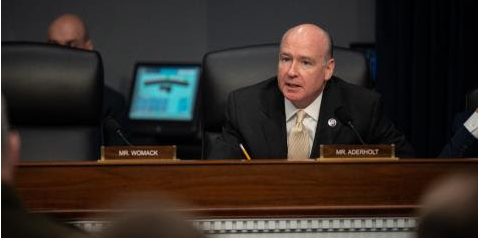
In the November midterms, the voters gave Republicans a small majority in the U.S. House of Representatives. The new GOP House majority should select the next Speaker of the House after four years of Nancy Pelosi. The squabbling Republicans, however apparently can’t agree on who will get to be the new Speaker. On Monday, Congressman Robert Aderholt announced that he plans to vote for Rep. Kevin McCarthy to be the next Speaker of the U.S. House of Representatives. “I’m planning to cast my vote for Kevin McCarthy to be the next Speaker of the U.S. House of Representatives,” Aderholt said in a statement emailed to Alabama Today. “He’s earned it. No one has worked harder to take back the House than Kevin McCarthy.” “The American people elected a Republican majority in the House because they were tired of the direction of our nation and the leadership of Speaker Pelosi,” Aderholt continued. “The American people are expecting us to work to stop inflation, deal with the crisis at our southern border and hold the Biden Administration accountable. The sooner we elect a Republican Speaker, the sooner we can start.” As of press time, it was still in doubt if McCarthy could gather enough support to be elected Speaker. McCarthy did predict that Tuesday would be “a good day” when asked by reporters what he thought would happen in the Speaker’s vote. Ultra-conservatives previously opposed McCarthy in his previous bid for Speaker replacing former Speaker John Boehner. The House Caucus instead chose former Vice Presidential candidate Rep. Paul Ryan. Ryan did not run again in 2018 after disagreements with then-President Donald Trump. Club for Growth is reportedly urging members to oppose McCarthy’s bid for Speaker. Aderholt is the senior member of the Alabama congressional delegation. He has represented Alabama’s Fourth Congressional District since his election in 1996. Aderholt was the ranking member of the House Appropriations Committee during the last Congress. There are 222 Republicans in the 118th Congress to 212 Democrats. The vote for the next Speaker of the House is on Tuesday. To connect with the author of this story, or to comment, email brandonmreporter@gmail.com.
Joe Biden gives federal employees major raise, still doesn’t keep up with inflation
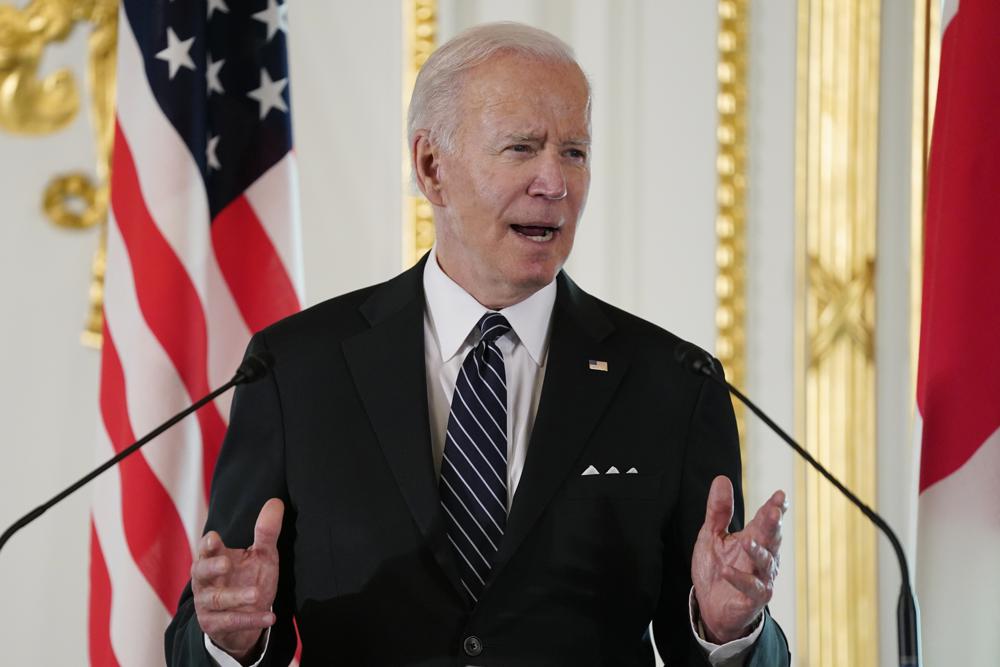
President Joe Biden signed an executive order giving federal employees a significant pay bump heading into the new year, but that increase still does not keep up with inflation. The executive order gives “General Schedule” employees a 4.6% pay increase, 4.1% as a raise, and 0.5% as a cost-of-living adjustment. General Schedule employees include a wide range of civilian federal workers. “The other schedules contained herein are effective on the first day of the first applicable pay period beginning on or after January 1, 2023,” the order said. The raise is higher than the 2.7% increase from the same time last year. Biden indicated the raise was coming in August. He sent a letter to House Speaker Nancy Pelosi, D-Calif., and Kamala Harris in her role as vice president of the Senate about the change. “Title 5, United States Code, authorizes me to implement alternative plans for pay adjustments for civilian Federal employees covered by the General Schedule and certain other pay systems if, because of “national emergency or serious economic conditions affecting the general welfare,’ I view the increases that would otherwise take effect as inappropriate,” the letter said. “Accordingly, I have determined that it is appropriate to exercise my authority to set alternative pay adjustments for 2023.” That increase, though, fails to keep up with the rising prices since Biden took office. The 4.6% increase is far less than the rise in consumer prices, and nearly a third of the increase in some items like groceries in the last year. The U.S. Bureau of Labor Statistics released its latest Consumer Price Index report earlier this month, which showed prices rose 7.1% in the previous 12 months. Another federal inflation marker released this month, the Personal Consumption Expenditure Index, showed a 5.5% increase in the previous twelve months, nearly one point higher than the pay raise. CPI data shows grocery prices rose 12% in the last year. “Four of the six major grocery store food group indexes increased over the month,” BLS said. “The index for fruits and vegetables increased 1.4% in November, after falling 0.9% in October. The index for cereals and bakery products rose 1.1% over the month while the index for dairy and related products increased by 1.0% in November. The index for nonalcoholic beverages rose 0.7% in November, after rising 0.5% last month.” Republished with the permission of The Center Square.
Congress moves to ban TikTok from U.S. government devices

TikTok would be banned from most U.S. government devices under a spending bill Congress unveiled early Tuesday, the latest push by American lawmakers against the Chinese-owned social media app. The $1.7 trillion package includes requirements for the Biden administration to prohibit most uses of TikTok or any other app created by its owner, ByteDance Ltd. The requirements would apply to the executive branch — with exemptions for national security, law enforcement, and research purposes — and don’t appear to cover Congress, where a handful of lawmakers maintain TikTok accounts. TikTok is consumed by two-thirds of American teens and has become the second-most popular domain in the world. But there’s long been bipartisan concern in Washington that Beijing would use legal and regulatory power to seize American user data or try to push pro-China narratives or misinformation. Brooke Oberwetter, a spokesperson for TikTok, called the ban “a political gesture that will do nothing to advance national security interests.” TikTok is developing security and data privacy plans as part of an ongoing national security review by President Joe Biden’s administration. “These plans have been developed under the oversight of our country’s top national security agencies — plans that we are well underway in implementing — to further secure our platform in the United States, and we will continue to brief lawmakers on them,” Oberwetter said in a statement. Speaking Friday, CIA Director William Burns said Beijing can “insist upon extracting the private data of a lot of TikTok users in this country and also to shape the content of what goes on to TikTok as well to suit the interests of the Chinese leadership.” “I think those are real challenges and a source of real concern,” Burns told PBS. He declined to take a position on congressional efforts to limit TikTok. House Speaker Nancy Pelosi, D-Calif., was pushing to include the TikTok provision in the big year-end bill, her office said. Sen. Josh Hawley, a Missouri Republican who authored a version of the TikTok bill that passed the Senate last week, called the government device ban “the first major strike against Big Tech enacted into law.” Speaking to reporters Tuesday, Hawley said users should have the right to use TikTok without having their data subject to Beijing’s control. He called for the Biden administration to force ByteDance to divest its U.S. operations. Courts blocked former President Donald Trump’s efforts to ban TikTok from U.S. smartphone app stores. “We shouldn’t have to ban it,” Hawley said. “Put up a firewall between Beijing and TikTok.” Rep. Raja Krishnamoorthi, D-Ill., has co-sponsored legislation to prohibit TikTok from operating in the U.S. altogether. He called the government device ban an appropriate initial step and said there was a “groundswell of support” for wider action. “We’re not just talking about Republicans and Democrats and independents,” said Krishnamoorthi, a member of the House Intelligence Committee. “We’re talking about parents who are concerned broadly about social media and TikTok in particular.” Republished with the permission of The Associated Press.
January 6 panel urges Donald Trump prosecution with criminal referral

The House January 6 committee urged the Justice Department on Monday to bring criminal charges against Donald Trump for the violent 2021 Capitol insurrection, calling for accountability for the former president and “a time of reflection and reckoning.” After one of the most exhaustive and aggressive congressional probes in memory, the panel’s seven Democrats and two Republicans are recommending criminal charges against Trump and associates who helped him launch a wide-ranging pressure campaign to try to overturn his 2020 election loss. The panel also released a lengthy summary of its final report, with findings that Trump engaged in a “multi-part conspiracy” to thwart the will of voters. At a final meeting Monday, the committee alleged violations of four criminal statutes by Trump, in both the run-up to the riot and during the insurrection itself, as it recommended the former president for prosecution to the Justice Department. Among the charges they recommend for prosecution is aiding an insurrection — an effort to hold him directly accountable for his supporters who stormed the Capitol that day. The committee also voted to refer conservative lawyer John Eastman, who devised dubious legal maneuvers aimed at keeping Trump in power, for prosecution on two of the same statutes as Trump: conspiracy to defraud the United States and obstructing an official proceeding. While a criminal referral is mostly symbolic, with the Justice Department ultimately deciding whether to prosecute Trump or others, it is a decisive end to a probe that had an almost singular focus from the start. Chairman Bennie Thompson, D-Miss., said Trump “broke the faith” that people have when they cast ballots in a democracy and that the criminal referrals could provide a “roadmap to justice” by using the committee’s work. “I believe nearly two years later, this is still a time of reflection and reckoning,” Thompson said. “If we are to survive as a nation of laws and democracy, this can never happen again.” Wyoming Rep. Liz Cheney, the panel’s Republican vice chairwoman, said in her opening remarks that every president in American history has defended the orderly transfer of power, “except one.” The committee also voted 9-0 to approve its final report, which will include findings, interview transcripts, and legislative recommendations. The full report is expected to be released on Wednesday. The report’s 154-page summary, made public as the hearing ended, found that Trump engaged in a “multi-part conspiracy” to overturn the election. While the majority of the report’s main findings are not new, it altogether represents one of the most damning portraits of an American president in recent history, laying out in great detail Trump’s broad effort to overturn his own defeat and what the lawmakers say is his direct responsibility for the insurrection of his supporters. The panel, which will dissolve on January 3 with the new Republican-led House, has conducted more than 1,000 interviews, held ten well-watched public hearings, and collected more than a million documents since it launched in July 2021. As it has gathered the massive trove of evidence, the members have become emboldened in declaring that Trump, a Republican, is to blame for the violent attack on the Capitol by his supporters almost two years ago. After beating their way past police, injuring many of them, the January 6 rioters stormed the Capitol and interrupted the certification of Joe Biden’s presidential election win, echoing Trump’s lies about widespread election fraud and sending lawmakers and others running for their lives. The attack came after weeks of Trump’s efforts to overturn his defeat — a campaign that was extensively detailed by the committee in its multiple public hearings and laid out again by lawmakers on the panel at Monday’s meeting. Many of Trump’s former aides testified about his unprecedented pressure on states, federal officials, and Mike Pence to object to Biden’s win. The committee has also described in great detail how Trump riled up the crowd at a rally that morning and then did little to stop his supporters for several hours as he watched the violence unfold on television. The panel aired some new evidence at the meeting, including a recent interview with longtime Trump aide Hope Hicks. Describing a conversation she had with Trump around that time, she said he told her that no one would care about his legacy if he lost the election. Hicks told the committee that Trump told her, “The only thing that matters is winning.” Trump’s campaign did not immediately respond to a request for comment, but the former president slammed members of the committee Sunday as “thugs and scoundrels” as he has continued to falsely dispute his 2020 loss. While a so-called criminal referral has no real legal standing, it is a forceful statement by the committee and adds to political pressure already on Attorney General Merrick Garland and special counsel Jack Smith, who is conducting an investigation into January 6 and Trump’s actions. On the recommendation to charge Trump with aiding an insurrection, the committee said in the report’s summary that the former president “was directly responsible for summoning what became a violent mob” and refused repeated entreaties from his aides to condemn the rioters or to encourage them to leave. For obstructing an official proceeding, the committee cites Trump’s relentless badgering of Vice President Mike Pence and others to prevent the certification of the election results on January 6. And his repeated lies about the election and efforts to undo the results open him up to a charge of conspiracy to defraud the United States, the panel said. The final charge recommended by the panel is conspiracy to make a false statement, citing the scheme by Trump and his allies to put forward slates of fake electors in battleground states won by President Joe Biden. Among the other charges contemplated but not approved by the committee was seditious conspiracy, the same allegation Justice Department prosecutors have used to target a subset of rioters belonging to far-right groups like the Oath Keepers and Proud Boys. Thompson said after the hearing that the seditious conspiracy charge is “something that the committee didn’t come to agreement on.” The panel was formed in the summer
Kevin McCarthy’s race for speaker risks upending House on Day One
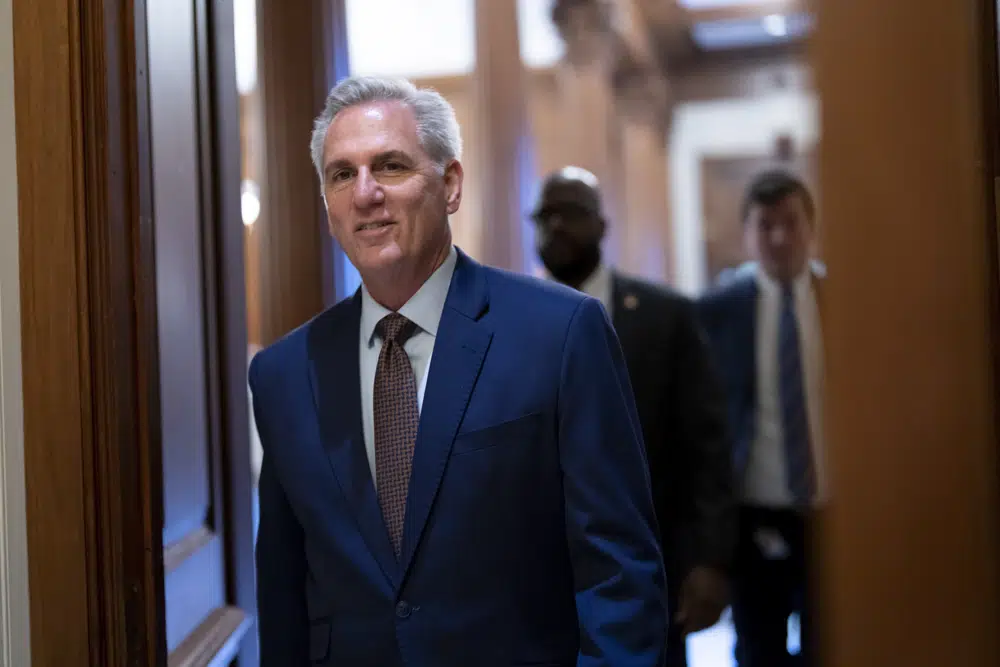
In his quest to rise to House speaker, Kevin McCarthy is charging straight into history — potentially becoming the first nominee in 100 years unable to win the job on a first-round floor vote. The increasingly real prospect of a messy fight over the speaker’s gavel on Day One of the new Congress on Jan. 3 is worrying House Republicans, who are bracing for the spectacle. They have been meeting endlessly in private at the Capitol, trying to resolve the standoff. Taking hold of a perilously slim 222-seat Republican majority in the 435-member House and facing a handful of defectors, McCarthy is working furiously to reach the 218-vote threshold typically needed to become speaker. “The fear is that if we stumble out of the gate,” said Rep. Jim Banks, R-Ind., a McCarthy ally, then the voters who sent the Republicans to Washington “will revolt over that and they will feel let down.” Not since the disputed election of 1923 has a candidate for House speaker faced the public scrutiny of convening a new session of Congress only to have it descend into political chaos, with one vote after another, until a new speaker is chosen. At that time, it eventually took a grueling nine ballots to secure the gavel. McCarthy, a Republican from Bakersfield, California, who was first elected in 2006 and who remains allied with Donald Trump, has signaled he is willing to go as long as it takes in a floor vote to secure the speaker’s job he has wanted for years. The former president has endorsed McCarthy and is said to be making calls on McCarthy’s behalf. McCarthy has given no indication he would step aside, as he did in 2015 when it was clear he did not have the support. But McCarthy also is acknowledging the holdouts won’t budge. “It’s all in jeopardy,” McCarthy said Friday in an interview with conservative Hugh Hewitt. The dilemma reflects not just McCarthy’s uncertain stature among his peers but also the shifting political norms in Congress as party leaders who once wielded immense power — the names of Cannon, Rayburn, and now Pelosi adorn House meeting rooms and office buildings — are seeing it slip away in the 21st century. Rank-and-file lawmakers have become political stars on their own terms, able to shape their brands on social media and raise their own money for campaigns. House members are less reliant than they once were on the party leaders to dole out favors in exchange for support. The test for McCarthy, if he is able to shore up the votes on Jan. 3 or in the days that follow, will be whether he emerges a weakened speaker, forced to pay an enormous price for the gavel, or whether the potentially brutal power struggle emboldens his new leadership. “Does he want to go down as the first speaker candidate in 100 years to go to the floor and have to essentially, you know, give up?” said Jeffrey A. Jenkins, a professor at the University of Southern California and co-author of “Fighting for the Speakership.” “But if he pulls this rabbit out of the hat, you know, maybe he actually has more of the right stuff.” Republicans met in private this past week for another lengthy session as McCarthy’s detractors, largely a handful of conservative stalwarts from the Freedom Caucus, demand changes to House rules that would diminish the power of the speaker’s office. The Freedom Caucus members and others want assurances they will be able to help draft legislation from the ground up and have opportunities to amend bills during the floor debates. They want enforcement of the 72-hour rule that requires bills to be presented for review before voting. Outgoing Speaker Nancy Pelosi, D-Calif., and the past two Republican speakers, John Boehner and Paul Ryan, faced similar challenges, but they were able to rely on the currency of their position to hand out favors, negotiate deals, and otherwise win over opponents to keep them in line — for a time. Boehner and Ryan ended up retiring early. But the central demand by McCarthy’s opponents’ could go too far: They want to reinstate a House rule that allows any single lawmaker to file a motion to “vacate the chair,” essentially allowing a floor vote to boot the speaker from office. The early leaders of the Freedom Caucus, under BC, the former North Carolina congressman turned Trump’s chief of staff, wielded the little-used procedure as a threat over Boehner and later, over Ryan. It wasn’t until Pelosi seized the gavel the second time, in 2019, that House Democrats voted to do away with the rule and require a majority vote of the caucus to mount a floor vote challenge to the speaker. Rep. Chip Roy, R-Texas, said the 200-year-old rule was good enough for Thomas Jefferson, so it’s one he would like to see in place. “We’re still a long way from fixing this institution the way it needs to be fixed,” Roy told reporters Thursday at the Capitol. What’s unclear for McCarthy is even if he gives in to the various demands being made by the conservatives, whether that will be enough for them to drop their opposition to his leadership. Several House Republicans said they do not believe McCarthy will ever be able to overcome the detractors. “I don’t believe he’s going to get to 218 votes,” said Rep. Bob Good, R-Va., among the holdouts. “And so I look forward to when that recognition sets in and, for the good of the country, for the good of the Congress, he steps aside, and we can consider other candidates.” The opposition to McCarthy has promoted a counteroffensive from other groups of House Republicans who are becoming more vocal in their support of the GOP leader — and more concerned about the fallout if the start of the new Congress descends into an internal party fight. Rep. David Joyce, R-Ohio, who leads the Republican Governance Group, was wearing an “O.K.” button on his lapel — meaning, “Only Kevin,” he explained. Some have
Terri Sewell selected to serve as Chief Deputy Whip in Democratic Leadership
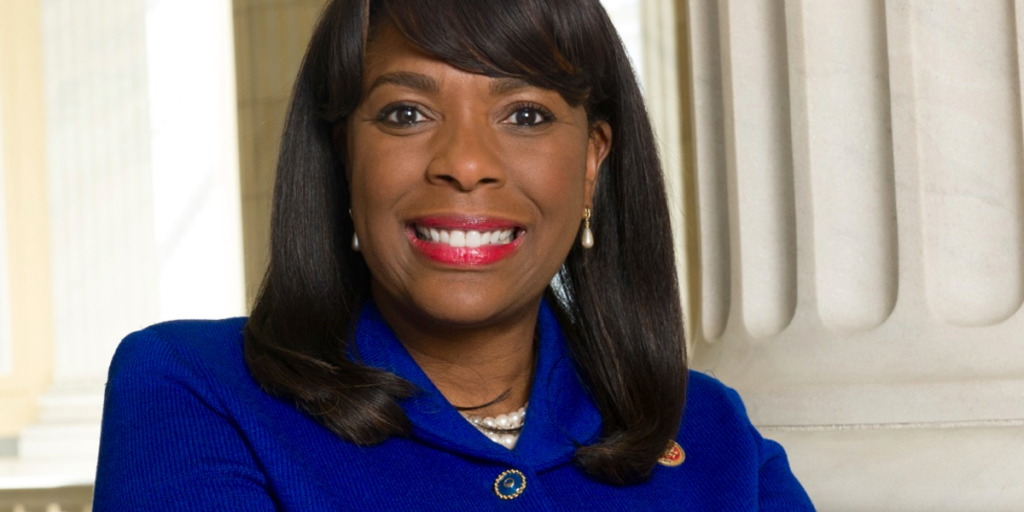
Assistant Speaker and Incoming Democratic Whip Katherine Clark announced that U.S. Representative Terri Sewell to serve as a Chief Deputy Whip in the 118th Congress. Sewell has served as a Chief Deputy Whip since she was appointed in the 113th Congress in 2013. “It is with great pride that I accept the honor of serving as a Chief Deputy Whip under the leadership of Democratic Whip Katherine Clark for the 118th Congress,” said Rep. Sewell. “I look forward to working alongside House Democrats’ strong and dynamic new leadership team to protect our progress, further strengthen our economy, and advance the needs of America’s working families. I am confident that working together, we can continue to deliver lower prices, safer communities, and more opportunities for communities in Alabama and across our nation.” “Congresswoman Sewell is a proven leader, and as a member of the Whip team, she will help House Democrats secure opportunity and justice for every American,” said Clark. “Our Chief Deputy Whips represent the incredible diversity of experience and perspectives that embody the House Democratic Caucus. Unified in our mission, we will harness the strength of House Democrats to advance the needs of working families and defeat the Republican extremist agenda.” As a Chief Deputy Whip, Rep. Sewell will serve on the Democratic Whip’s internal leadership team and work to foster unity as House Democrats advance their legislative agenda. Sewell also sits on the Democratic Steering and Policy Committee, which sets the policy direction of the Democratic Caucus. The Democrats lost control of the House of Representatives in recent midterms, so Nancy Pelosi will not be the Speaker of the House. While Pelosi is remaining in Congress, she will also not be the Democratic Leader. Sewell’s friend and ally, Hakeem Jeffries, will be the new Democratic Leader. While there will be a Republican Speaker of the House, Republican infighting means we still do not know who that (presumably) GOP Speaker will be. The Democrats added to their narrow majority in the U.S. Senate. Sewell was recently re-elected to her seventh term representing Alabama’s Seventh Congressional District. She is the only Democrat in Alabama’s congressional delegation and the only Black woman to represent the state of Alabama in Congress in its history. To connect with the author of this story, or to comment, email brandonmreporter@gmail.com.
Bill protecting same-sex, interracial unions clears Congress

The House gave final approval Thursday to legislation protecting same-sex marriages, a monumental step in a decadeslong battle for nationwide recognition that reflects a stark turnaround in societal attitudes. President Joe Biden has said he will promptly sign the measure, which requires all states to recognize same-sex marriages. It is a relief for hundreds of thousands of couples who have married since the Supreme Court’s 2015 decision that legalized those marriages and have worried about what would happen if the ruling were overturned. In a statement after the vote, Biden called the legislation a “critical step to ensure that Americans have the right to marry the person they love.” He said the legislation provides “hope and dignity to millions of young people across this country who can grow up knowing that their government will recognize and respect the families they build.” The bipartisan legislation, which passed 258-169 with 39 Republican votes, would also protect interracial unions by requiring states to recognize legal marriages regardless of “sex, race, ethnicity, or national origin.” After months of negotiations, the Senate passed the bill last week with 12 Republican votes. Democrats moved the bill quickly through the House and Senate after the Supreme Court’s decision in June that overturned the federal right to an abortion — including a concurring opinion from Justice Clarence Thomas that suggested the 2015 Obergefell v. Hodges decision legalizing same-sex marriage could also be reconsidered. While many Republicans predicted that was unlikely to happen, and said the bill was unnecessary, Democrats and GOP supporters of the bill said it shouldn’t be left to chance. “We need it,” said House Speaker Nancy Pelosi, who presided over the vote as one of her last acts in leadership before stepping aside in January. “It is magic.” The bill is “a glorious triumph of love and freedom,” Pelosi said, tearing up as she celebrated its passage. In debate before the vote, several gay members of Congress talked about what a federal law would mean for them and their families. Rep. Mark Pocan, D-Wis., said he and his husband should be able to visit each other in the hospital just like any other married couple and receive spousal benefits “regardless of if your spouse’s name is Samuel or Samantha.” Rep. Chris Pappas, D-N.H., said he was set to marry “the love of my life” next year, and it is “unthinkable” that his marriage might not be recognized in some states if Obergefell were to be overturned. “The idea of marriage equality used to be a far-fetched idea,” said Rep. David Cicilline, D-R.I. “Now it’s the law of the land and supported by the vast majority of Americans.” The legislation lost some Republican support since July, when 47 Republicans voted for it — a robust and unexpected show of support that kick-started serious negotiations in the Senate. But most of those lawmakers held firm, with a cross-section of the party, from conservatives to moderates, voting for the bill. House Republican Leader Kevin McCarthy voted against it. “To me, this is really just standing with the Constitution,” said Republican Rep. Ann Wagner of Missouri, who voted for the bill both times. She pushed back on GOP arguments that it would affect the religious rights of those who don’t believe in same-sex marriage. “No one’s religious liberties are affected in any way, shape, or form,” Wagner said. Republican Rep. Chris Stewart of Utah said he was “proud to once again vote in favor of protecting our LGBTQ and religious friends and neighbors.” He praised Senate changes to the bill, ensuring that it would not affect current rights of religious institutions and groups. “Civil rights are not a finite resource, we do not have to take from one group to give to another,” Stewart said. The legislation would not require states to allow same-sex couples to marry, as Obergefell now does. But it would require states to recognize all marriages that were legal where they were performed and protect current same-sex unions if the Supreme Court decision were overturned. While it’s not everything advocates may have wanted, passage of the legislation represents a watershed moment. Just a decade ago, many Republicans openly campaigned on blocking same-sex marriages; today, more than two-thirds of the public support them. Still, most Republicans opposed the legislation, and some conservative advocacy groups lobbied aggressively against it in recent weeks, arguing that it doesn’t do enough to protect those who want to refuse services for same-sex couples. “God’s perfect design is indeed marriage between one man and one woman for life,” said Rep. Bob Good, R-Va, before the vote. “And it doesn’t matter what you think or what I think; that’s what the Bible says.” Rep. Vicky Hartzler, R-Mo., choked up as she begged colleagues to vote against the bill, which she said undermines “natural marriage” between a man and a woman. “I’ll tell you my priorities,” Hartzler said. “Protect religious liberty, protect people of faith and protect Americans who believe in the true meaning of marriage.” Democrats in the Senate, led by Wisconsin’s Tammy Baldwin and Arizona’s Kyrsten Sinema, worked with supportive Republican senators to address those GOP concerns by negotiating changes to clarify that the legislation does not impair the rights of private individuals or businesses. The amended bill would also make clear that a marriage is between two people, an effort to ward off some far-right criticism that the legislation could endorse polygamy. In the end, several religious groups, including the Church of Jesus Christ of Latter-day Saints, came out in support of the bill. The Mormon church said it would support rights for same-sex couples as long as they didn’t infringe upon religious groups’ right to believe as they choose. Republican Sen. Susan Collins of Maine, who led negotiations with Baldwin and Sinema in the Senate, attended a ceremony after the House vote with Pelosi and Senate Majority Leader Chuck Schumer. “When I think about this bill, I think about how much it matters to people in each of our lives, our family members, our coworkers, our
Congress votes to avert rail strike amid dire warnings

Legislation to avert what could have been an economically ruinous freight rail strike won final approval in Congress on Thursday as lawmakers responded quickly to President Joe Biden’s call for federal intervention in a long-running labor dispute. The Senate passed a bill to bind rail companies and workers to a proposed settlement that was reached between the rail companies and union leaders in September. That settlement had been rejected by four of the 12 unions involved, creating the possibility of a strike beginning December 9. The Senate vote was 80-15. It came one day after the House voted to impose the agreement. The measure now goes to Biden’s desk for his signature. “Communities will maintain access to clean drinking water. Farmers and ranchers will continue to be able to bring food to market and feed their livestock. And hundreds of thousands of Americans in a number of industries will keep their jobs,” Biden said after the vote. “I will sign the bill into law as soon as Congress sends it to my desk.” The Senate voted shortly after Labor Secretary Marty Walsh and Transportation Secretary Pete Buttigieg emphasized to Democratic senators at a Capitol meeting that rail companies would begin shutting down operations well before a potential strike would begin. The administration wanted the bill on Biden’s desk by the weekend. Shortly before Thursday’s votes, Biden defended the contract that four of the unions had rejected, noting the wage increases it contains. “I negotiated a contract no one else could negotiate,” Biden said at a news briefing with French President Emmanuel Macron. “What was negotiated was so much better than anything they ever had.” Critics say the contract that did not receive backing from enough union members lacked sufficient levels of paid sick leave for rail workers. Biden said he wants paid leave for “everybody” so that it wouldn’t have to be negotiated in employment contracts, but Republican lawmakers have blocked measures to require time off work for medical and family reasons. The president said Congress should impose the contract now to avoid a strike that he said could cause 750,000 job losses and a recession. Railways say halting rail service would cause a devastating $2 billion-per-day hit to the economy. A freight rail strike also would have a big potential impact on passenger rail, with Amtrak and many commuter railroads relying on tracks owned by the freight railroads. The rail companies and unions have been engaged in high-stakes negotiations. The Biden administration helped broker deals between the railroads and union leaders in September, but four of the unions rejected the deals. Eight others approved five-year deals and are getting back pay for their workers for the 24% raises that are retroactive to 2020. With a strike looming, Biden called on Congress to impose the tentative agreement reached in September. Congress has the authority to do so and has enacted legislation in the past to delay or prohibit railway and airline strikes. But most lawmakers would prefer the parties work out their differences on their own. The Senate took a series of three votes. The first was on a measure by Sen. Dan Sullivan, R-Alaska, that would have sent both parties back to the negotiating table. But union groups opposed an extension, as did the Biden administration. The proposal was roundly rejected, with 25 senators in support and 70 opposed. “An extension would simply allow the railroads to maintain their status quo operations while prolonging the workforce’s suffering,” leaders of the Transportation Trades Department of the AFL-CIO said. The second vote the Senate took would have followed the path the House narrowly adopted the day before, which was to add seven days of paid sick leave to the tentative agreement. But that measure fell eight votes short of the 60-vote threshold needed for passage. The final vote was the measure binding the two parties to the September agreement. It passed with broad bipartisan support, as it had in the House. While lawmakers voiced consternation about having to weigh in, the economic stakes outweighed those concerns. “A strike of that magnitude would have a painful impact on our economy, and that is an unacceptable scenario as inflation continues to squeeze West Virginians and Americans heading into the holiday season,” said Sen. Joe Manchin, D-W.Va. Democrats have traditionally aligned themselves with the politically powerful labor unions that criticized Biden’s move to intervene and block a strike. House Speaker Nancy Pelosi told Democratic colleagues it was “with great reluctance” that Congress needed to bypass the standard ratification process for union contracts. She did, however, hold an additional vote that would have added the seven days of paid sick leave that union workers wanted. That gave Democratic lawmakers in both chambers the ability to show their support for paid sick leave for rail workers while also avoiding a crippling strike. The call for paid sick leave was a major sticking point in the talks, along with other quality-of-life concerns. The railroads say the unions have agreed in negotiations over the decades to forgo paid sick time in favor of higher wages and strong short-term disability benefits. The unions maintain that railroads can easily afford to add paid sick time when they are recording record profits. Several of the big railroads involved in these contract talks reported more than $1 billion profit in the third quarter. The Association of American Railroads trade group praised the Senate vote to impose the compromise deal that includes the biggest raises in more than four decades. Still, CEO Ian Jefferies acknowledged that many workers remain unhappy with working conditions. “Without a doubt, there is more to be done to further address our employees’ work-life balance concerns, but it is clear this agreement maintains rail’s place among the best jobs in our nation,” Jefferies said. Union groups were unhappy with the final result. “The Senate just failed to pass seven days of paid sick leave for rail workers. We are grateful to the 52 Senators who voted YES and stood with rail workers,” tweeted the Transportation Trades
Rep. Terri Sewell nominates Hakeem Jeffries to be new House Democratic Leader
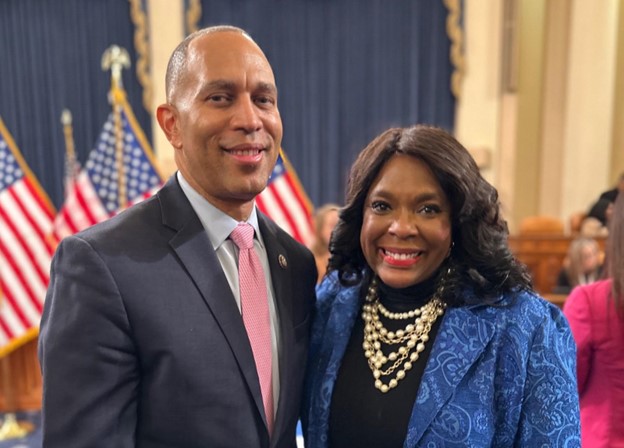
On Wednesday, Congresswoman Terri Sewell nominated Rep. Hakeem Jeffries (D-NY08) to serve as the next Democratic Leader in the House of Representatives. During a Democratic Caucus meeting this morning, Sewell and several of her colleagues placed the name of in nomination and spoke in support of his candidacy to succeed Speaker Nancy Pelosi as the new Democratic Leader. “I have gotten to know Hakeem Jeffries since he came to Congress in 2013, and I am confident that he is the right person to lead our caucus during this season of change,” Sewell stated in a press release. “Hakeem Jeffries is a skillful strategist, a master communicator, a pragmatic progressive, a visionary legislator, a criminal justice reformer, a dogmatic defender of our Democracy, a bodacious bridge builder, and a fierce fighter for our families, children, veterans, dreamers, workers, and our seniors. I was proud to nominate him to be our next Democratic Leader and look forward to seeing him make history as the first African American to ever lead either party in the House!” Jeffries has represented New York’s 8th Congressional District since 2013 and currently serves as Chairman of the House Democratic Caucus. He is poised to become the first African American to lead either party in the House of Representatives in American history. Rep. Jeffries stated on Facebook, “Humbled to be elected incoming House Democratic Leader. Look forward to partnering with Katherine, Pete and the entire House Democratic Caucus. Ready to get to work #ForThePeople.” Because Democrats narrowly lost control of the House of Representatives in the November 8 midterm elections, the next Speaker of the House is likely to be a Republican. Following the election results, Speaker Pelosi announced that she would be stepping down as the Democratic leader rather than accepting the role of minority leader. The number two Democratic Leader in the House Steny Hoyer is also stepping down from his leadership role, creating a power vacuum that Jeffries filled with his election today. Sewell is the only Democrat in the Alabama Congressional Delegation and the only Black woman to represent Alabama in Congress in the state’s history. She was just reelected to her seventh term representing Alabama’s Seventh Congressional District. To connect with the author of this story, or to comment, email: brandonmreporter@gmail.com.
Gary Palmer urges college students to read history
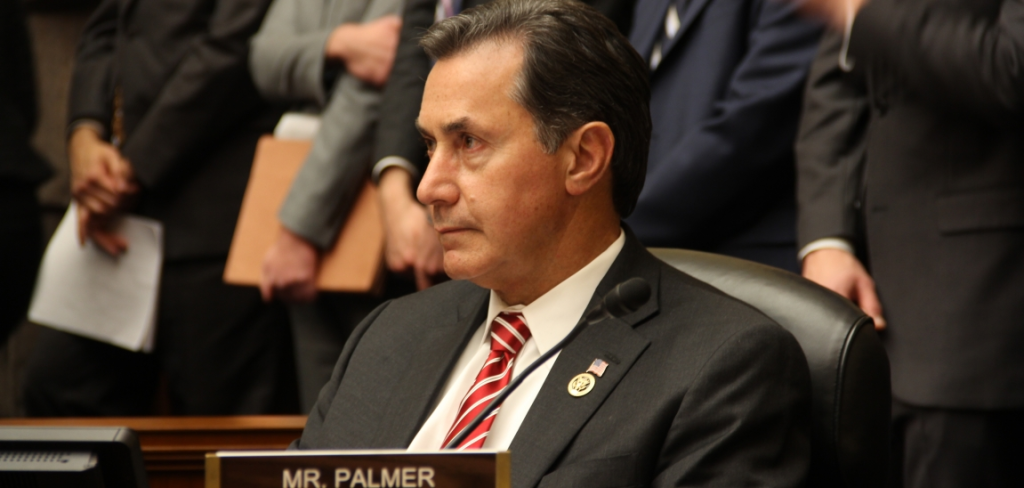
On Monday evening Congressman Gary Palmer spoke to the University of Alabama College Republicans. In the meeting, Palmer advised the students to read books, particularly history. “I don’t think that history is required anymore,” Palmer said. “History is about telling stories.” Republicans won a small majority in the House of Representatives and failed to take control of the U.S. Senate in recent congressional midterm elections on November 8. “We did not do as well as would like,” Palmer said of the GOP House Caucus. Palmer said that his Republican colleagues did not win as many races as they should have because they did not do a good job at telling stories. “History is about telling stories,” Palmer continued. “The pages of history will reflect the decisions that you make. You are creating a life story. The decisions that you make will set the back story for the story that you are writing. Most of the time, when you think about history, you are thinking about battles and big events, but history is more than that.” “Smart people learn from their mistakes, but brilliant people learn from other people’s mistakes,” Palmer said. “When you are reading history, you are reading the story of people who made decisions.” Palmer said that inflation and the high cost of living are impacting Americans’ lives. “Inflation is basically driven by three things: monetary policy, energy policy, and regulatory cost,” Palmer explained. “Congress can address all three of these.” “We didn’t connect to people’s story,” Palmer continued. “We just said Joe Biden is a bad President, and Nancy Pelosi is a bad Speaker, and that is a bad message for Republicans.” “There is one indisputable fact that we have to accept,” Palmer said. “That we are going to occupy the same piece of dirt.” While the University of Alabama and many other schools no longer require that students take history (American or otherwise) for graduates to get a degree, Palmer said, “The number of students taking history as an elective has gone up.” While interest in history may be growing, Palmer questioned some of its accuracies. “Are you getting history that is honest?” Palmer said. “This punitive view of history that is directed at Europeans that Europeans came over here to dominate indigenous peoples. I am not going to argue that that was right. I am part Native American – Cherokee. When Andrew Jackson signed a treaty that the Cherokee would vacate the Eastern United States, part of that treaty is that they would have an at-large member of Congress. Not a voting member, but like we have with Puerto Rico, where they can’t vote, but they can in Committee. That has never been fulfilled.” “We have made some really bad mistakes,” Palmer said. “I keep pushing for you to read history. An enormous sacrifice was paid for your right to vote. You never had a country like this country until we came into being (with the ratification of the Constitution) in 1789. We were the only democracy of its type in the world. Now there is over a hundred.” Palmer said that he is not sure what Speaker of the House Nancy Pelosi will bring to the floor in the lame-duck remaining weeks in the current Congress. Palmer was asked if he thought they would vote on extending daylight savings time, which passed the Senate months ago. “Probably not,” Palmer answered. “I know we have got to fund the government the week after next. It is appropriately scheduled for 8 days before Christmas.” Beginning in January, the new Congress will have the first Republican House majority in four years. “I am going to be addressing a lot more bills than I have had in the past that will be difficult for the Democrats to oppose, particularly on our fiscal issues,” Palmer said. The College Republicans of Alabama will meet on Tuesday to hold officer elections. Palmer represents Alabama’s Sixth Congressional District. To connect with the author of this story, or to comment, email brandonmreporter@gmail.com.
Alabama Democrats praise Nancy Pelosi’s leadership
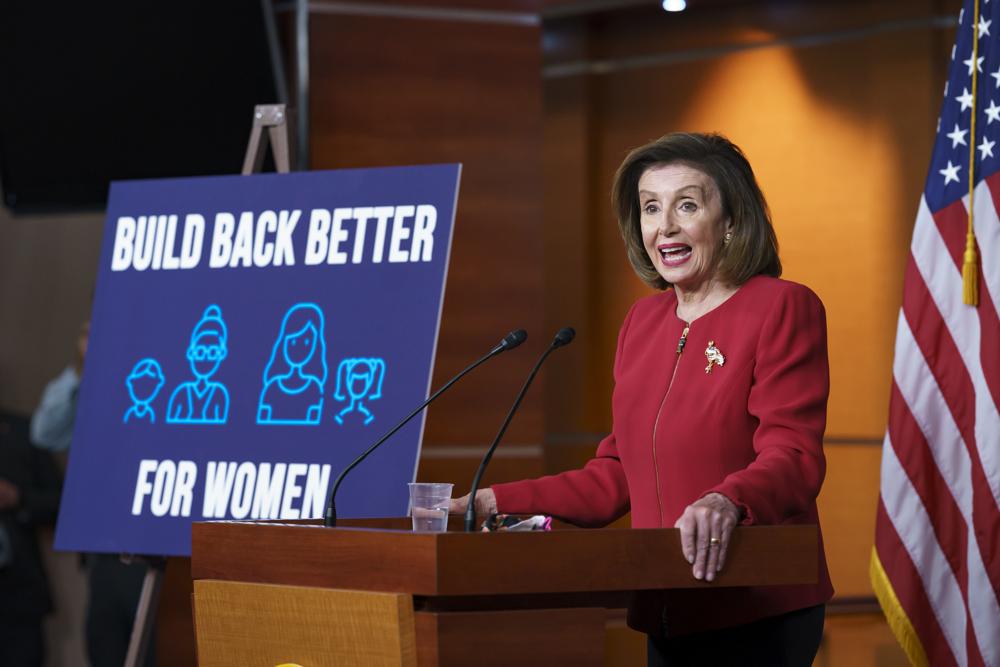
Speaker of the House Nancy Pelosi announced on Thursday that she will step down next year from her position leading the Democrats in the U.S. House of Representatives. Pelosi made the announcement the day after election results showing that Republicans will control the lower House of Congress once the new Congress convenes on January 3. Pelosi is stepping down from her top leadership role but will remain in Congress next year. “I will not seek reelection to Democratic leadership in the next Congress,” she said. “For me, the hour has come for a new generation to lead the Democratic caucus that I so deeply respect.” Alabama Democrats praised Pelosi’s leadership. Alabama Democratic Party Chairman Randy Kelley said that the move by Pelosi surprised him. “It really hit me hard,” Kelley told Alabama Today in a phone interview. “She has done a fantastic job. Whomever succeeds her will have big shoes to fill.” Congresswoman Terri Sewell praised Pelosi in a press release. “Speaker Nancy Pelosi is a true public servant whose tenure as Speaker of the House will be remembered as one of the most effective examples of leadership in modern history. For two decades, she has led the Democratic Caucus with dignity and grace, breaking down barriers for women and girls and putting the needs of the American people above all,” stated Sewell. “I have been honored to partner with Speaker Pelosi to advance the needs of Alabama’s 7th Congressional District, including our work to pass H.R. 4, the John R. Lewis Voting Rights Advancement Act,” Sewell continued. “While she will no longer lead our caucus, I have no doubt that Speaker Pelosi will remain a powerful force for good in our party and our nation. I look forward to continuing to serve alongside her.” Pelosi became Speaker of the House for the first time following the 2006 election. 2008 saw the election of Barack Obama to the presidency – giving Democrats control of both branches of Congress and the Presidency for the first time since 1994. Pelosi helped pass the Obama agenda, including the Affordable Care Act of 2010 – Obamacare. The Tea Party movement that arose to oppose Obamacare gave Republicans control of the House of Representatives in a massive “red wave” election in 2010. Despite the setback, Pelosi remained as the leader of the diminished House Democrats. In 2016 New York City billionaire Donald Trump won the Whitehouse, giving Republicans control of the government again. In 2018 Americans voted blue in large numbers giving Democrats control of the House again. Pelosi made history during the next two and a half years by impeaching Trump, not once but twice. In 2020 voters gave Democrats control of the Senate and elected Joe Biden over Trump. Pelosi helped Biden pass the CARES Act, the infrastructure bill, and the Inflation Reduction act. Despite this, or perhaps because of this legislative success, voters gave the GOP narrow control of the House of Representatives on November 8. Election results by November 16 showed that Republicans would indeed lead the House going forward and that a Republican – likely Rep. Kevin McCarthy – would be the next Speaker of the House. “She has done an exemplary job,” Kelley said. “She helped pass the infrastructure bill and the CARES Act.” The number two Democrat in the House – Rep. Steny Hoyer, is also stepping down from his leadership position, meaning there could be a wide-open contest on who will lead the Democrats moving forward. “I really have not gotten any idea who should fill that role,” Kelley said when asked who he felt should be the Democratic leader going forward. “I won’t get into trouble by naming somebody.” With Republicans now in control of the House, there is speculation that it might become more difficult for Biden to advance his agenda. “I think there is some (Republicans) who have done everything they could to stop his agenda,” Kelly said. “He has been very effective at passing his agenda, though.” Kelly said that the next two years will become essentially one long presidential campaign. “This is basically two years of campaigning for the President’s race in 2024,” Kelly said. “The Republicans will do everything they can to sabotage his presidency. The good news is that the Democrats held onto control of the Senate, and there certainly was no “red wave” as many of the prognosticators had predicted.” Pelosi’s husband, Paul Pelosi, is still recovering from a beating by an assailant with a hammer. Stepping down from leadership will allow her to spend more time with him as his recovery continues. To connect with the author of this story, or to comment, email brandonmreporter@gmail.com.
Nancy Pelosi to step aside from Dem leadership, remain in Congress

House Speaker Nancy Pelosi said Thursday that she will not seek a leadership position in the new Congress, making way for a new generation to steer the party after Democrats lost control of the House to Republicans in the midterm elections. Pelosi announced in a spirited speech on the House floor that she will step aside after leading Democrats for nearly 20 years and in the aftermath of the brutal attack on her husband, Paul, last month in their San Francisco home. The California Democrat, who rose to become the nation’s only woman to wield the speaker’s gavel, said she would remain in Congress as the representative from San Francisco, a position she has held for 35 years when the new Congress convenes in January. “I will not seek reelection to Democratic leadership in the next Congress,” she said. “For me, the hour has come for a new generation to lead the Democratic caucus that I so deeply respect.” Now, she said, “we must move boldly into the future.” Pelosi received a standing ovation after her remarks, and lawmakers and guests, one by one, went up to offer her hugs, many taking selfies of a moment in history. President Joe Biden spoke with Pelosi in the morning and congratulated her on her historic tenure as speaker of the House. “History will note she is the most consequential Speaker of the House of Representatives in our history,” Biden said in a statement, noting her ability to win unity from her caucus and her “absolute dignity.” It’s an unusual choice for a party leader to stay on after withdrawing from congressional leadership, but Pelosi has long defied convention in pursuing power in Washington. In an interview with reporters after her announcement, Pelosi said she won’t endorse anyone in the race to succeed her, and she won’t sit on any committees as a rank-and-file lawmaker. She said the attack on her husband “made me think again about staying.” But in the end, after the election, she decided to step down. “I quite frankly, personally, have been ready to leave for a while,” she said. “Because there are things I want to do. I like to dance, I like to sing. There’s a life out there, right?” During her remarks on the House floor, Pelosi recapped her career, from seeing the Capitol the first time as a young girl with her father — a former congressman and mayor — to serving as speaker alongside U.S. presidents and doing “the people’s work.” “Every day, I am in awe of the majestic miracle that is American democracy,” she said. Democrats cheered Pelosi as she arrived in the chamber at noon. On short notice, lawmakers filled the House, at least on the Democratic side, and Senate Majority Leader Chuck Schumer joined. He later joined a throng of lawmakers and hugged and kissed Pelosi on the cheek. The Speaker’s Gallery filled with Pelosi staff and guests. Some Republicans, including some newly elected members, also attended, though House Republican Leader Kevin McCarthy, who’s seeking the speakership in the new Congress, did not, telling reporters afterward that he was “busy, unfortunately.” Earlier, Pelosi noted in a statement after The Associated Press called control of the chamber that, in the next Congress, House Democrats will have “strong leverage over a scant Republican majority.” Pelosi was twice elected to the speakership and has led Democrats through consequential moments, including the passage of the Affordable Care Act with President Barack Obama and the impeachments of President Donald Trump. Her decision Thursday paves the way for House Democratic leadership elections next month when Democrats reorganize as the minority party for the new Congress. Pelosi’s leadership team, with Majority Leader Steny Hoyer of Maryland and Democratic Whip James Clyburn of South Carolina, has long moved as a triumvirate. All now in their 80s, the three House Democratic leaders have faced restless colleagues eager for them to step aside and allow a new generation to take charge. Hoyer said after Pelosi’s remarks that “it is the time for a new generation of leaders” and that he will also step down from leadership but stay in Congress. Clyburn, the highest-ranking Black American in Congress, has said he expects to stay in Congress next year and hopes to remain at the leadership table. Democratic Reps. Hakeem Jeffries of New York, Katherine Clark of Massachusetts, and Pete Aguilar of California have similarly moved as a trio, all working toward becoming the next generation of leaders. Jeffries could make history if he enters the race to become the nation’s first Black speaker of the House. After Pelosi spoke, Clyburn released a statement saying he looks forward “to doing whatever I can to assist our new generation of Democratic Leaders, which I hope to be Hakeem Jeffries, Katherine Clark, and Pete Aguilar.” One idea circulating on Capitol Hill was that Pelosi and the others could emerge as emeritus leaders as they pass the baton to new Democrats. First elected in 1987, Pelosi has been a pivotal figure in American politics, long ridiculed by Republicans as a San Francisco liberal while steadily rising as a skilled legislator and fundraising powerhouse. Her own Democratic colleagues have intermittently appreciated but also feared her powerful brand of leadership. Pelosi first became speaker in 2007, saying she had cracked the “marble ceiling” after Democrats swept to power in the 2006 midterm elections in a backlash to then-President George W. Bush and the wars in Iraq and Afghanistan. When she was poised in 2018 to return as speaker in the Trump era, she vowed: “to show the power of the gavel.” Pelosi has repeatedly withstood leadership challenges over the years and had suggested in 2018 she would serve four more years as leader. But she had not discussed those plans more recently. Typically unsentimental, Pelosi let show a rare moment of emotion on the eve of the midterm elections as she held back tears discussing the grave assault on her husband of nearly 60 years. Paul Pelosi suffered a fractured skull after an intruder broke into their home
