
Donald Trump’s government shutdown solution hangs in limbo

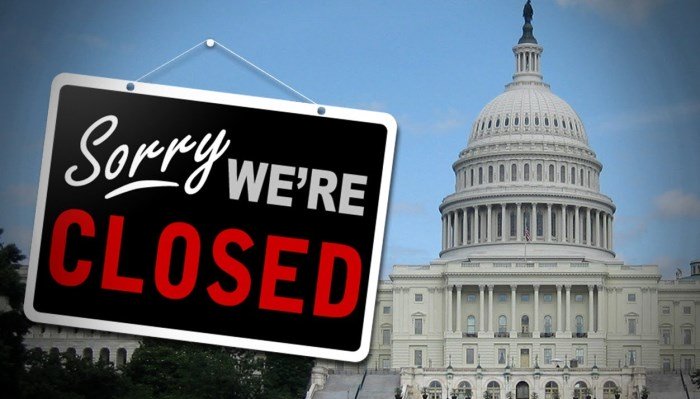
President Donald Trump’s proposal to break through the budget deadlock appeared to be gaining little traction Monday, as another missed paycheck loomed for hundreds of thousands of workers and the partial federal shutdown stretched into its fifth week. Despite the fanfare of the president’s announcement, voting in Congress was not expected to unfold until later in the week. Even then it seemed doubtful that legislation based on Trump’s plan had any chance of swiftly passing the Senate. Republicans hold a 53-47 majority but would need Democrats to reach the usual 60-vote threshold for bills to advance. Not a single Democrat publicly expressed support for the deal in the 48 hours since Trump announced it. Senate Democratic leader Chuck Schumer’s office reiterated Monday that they are unwilling to negotiate any border security funding until Trump re-opens the government. “Nothing has changed with the latest Republican offer,” said Schumer spokesman Justin Goodman. “President Trump and Senate Republicans are still saying: ‘Support my plan or the government stays shut.’ That isn’t a compromise or a negotiation — it’s simply more hostage taking.” While the House and Senate are scheduled to be back in session Tuesday, no votes have been scheduled so far on Trump’s plan. And senators, who will be given 24-hour notice ahead of voting, have yet to be recalled to Washington. McConnell spokesman David Popp said Monday that the GOP leader “will move” to voting on consideration of the president’s proposal “this week.” Trump, who on Sunday lashed out at House Speaker Nancy Pelosi, accusing her of acting “irrationally,” continued to single her out on Twitter. “If Nancy Pelosi thinks that Walls are “immoral,” why isn’t she requesting that we take down all of the existing Walls between the U.S. and Mexico,” he wrote Monday. “Let millions of unchecked “strangers” just flow into the U.S.” House Democrats this week are pushing ahead with voting on their own legislation to re-open the government and add $1 billion for border security —including 75 more immigration judges and infrastructure improvements — but no funding for the wall. Trump later tweeted: “Democrats are kidding themselves (they don’t really believe it!) if they say you can stop Crime, Drugs, Human Trafficking and Caravans without a Wall or Steel Barrier. Stop playing games and give America the Security it deserves. A Humanitarian Crisis!” Meanwhile, the impact of the shutdown — the longest ever — continued to ripple across the nation as it stretched into its 31st day. The Transportation Security Administration said the percentage of its airport screeners missing work hit 10 percent on Sunday — up from 3.1 percent on the comparable Sunday a year ago. The screeners, who have been working without pay, have been citing financial hardship as the reason they can’t report to work. Even so, the agency said that it screened 1.78 million passengers Sunday with only 6.9 percent having to wait 15 minutes or longer to get through security. The shutdown had also threatened to disrupt plans for an annual Martin Luther King Jr. Day service at Atlanta’s Ebenezer Baptist Church, where the civil rights leader was co-pastor with his father from 1960 until his assassination in 1968. The site is run by the National Park Service and had been closed. But a grant from Delta Air Lines is keeping the church and associated sites, including the home where King was born, open through Feb. 3. Trump on Saturday offered to extend temporary protections for young immigrants brought to the country illegally as children and those fleeing disaster zones for three years in exchange for $5.7 billion for his border wall. Democrats said the proposal for a three-year extension didn’t go nearly far enough, and that Trump was using as leverage programs that he had targeted. Meanwhile, some on the right, including conservative commentator Ann Coulter, accused Trump of offering “amnesty.” “No, Amnesty is not a part of my offer,” Trump tweeted Sunday, in response. He noted that he’d offered temporary protections for the immigrants in question, but added: “Amnesty will be used only on a much bigger deal, whether on immigration or something else.” That statement led some to suggest that Trump might be open to including a potential pathway to citizenship for the young “Dreamer” immigrants in a future proposal to end the standoff. Asked in an interview on “Fox News Sunday” whether Trump’s Saturday proposal represented a “final offer,” Vice President Mike Pence said the White House was willing to negotiate. “Well, of course,” Pence said. “The legislative process is a negotiation.” ___ Republished with permission from the Associated Press.
Donald Trump, Nancy Pelosi feud heats up again
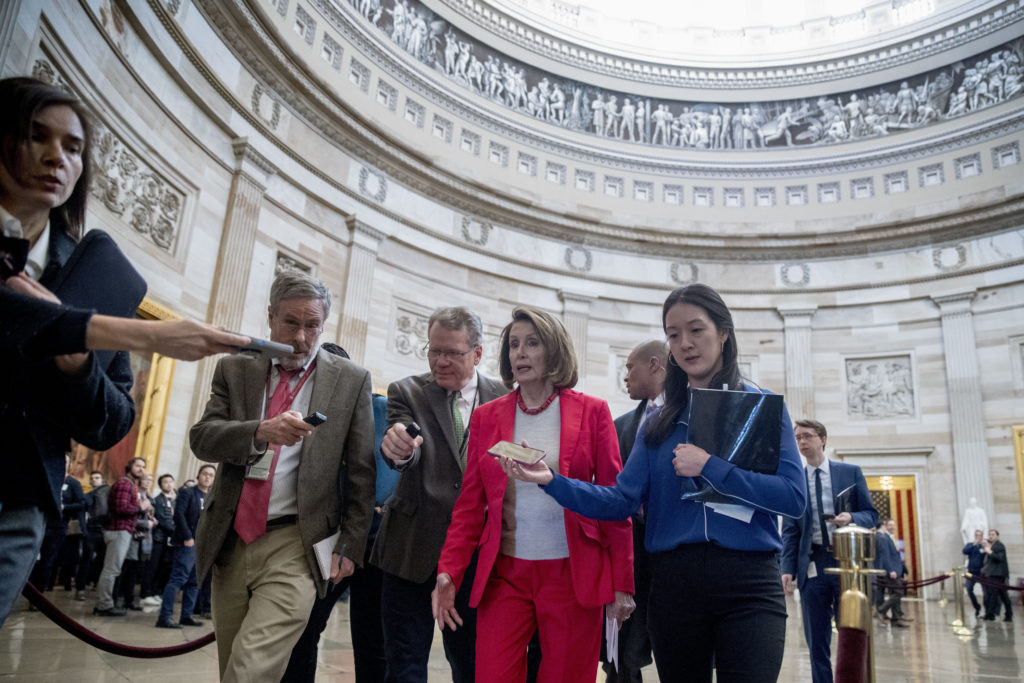
She imperiled his State of the Union address. He denied her a plane to visit troops abroad. The shutdown battle between President Donald Trump and House Speaker Nancy Pelosi is playing out as a surreal game of constitutional brinkmanship, with both flexing political powers from opposite ends of Pennsylvania Avenue as the negotiations to end the monthlong partial government shutdown remain stalled. In dramatic fashion, Trump issued a letter to Pelosi on Thursday, just before she and other lawmakers were set to depart on the previously undisclosed trip to Afghanistan and Brussels. Trump belittled the trip as a “public relations event” — even though he had just made a similar warzone stop — and said it would be best if Pelosi remained in Washington to negotiate to reopen the government. “Obviously, if you would like to make your journey by flying commercial, that would certainly be your prerogative,” wrote Trump, who had been smarting since Pelosi, the day before, called on him to postpone his Jan. 29 State of the Union address due to the shutdown. Denying military aircraft to a senior lawmaker — let alone the speaker, who is second in line to the White House, traveling to a combat region — is very rare. Lawmakers were caught off guard. A bus to ferry the legislators to their departure idled outside the Capitol on Thursday afternoon. The political tit-for-tat between Trump and Pelosi laid bare how the government-wide crisis has devolved into an intensely pointed clash between two leaders determined to prevail. It took place as hundreds of thousands of federal workers go without pay and Washington’s routine protocols — a president’s speech to Congress, a lawmaker’s official trip — became collateral damage. Pelosi spokesman Drew Hammill said the speaker planned to travel to Afghanistan and Brussels to thank service members and obtain briefings on national security and intelligence “from those on the front lines.” He noted Trump had traveled to Iraq during the shutdown, which began Dec. 22, and said a Republican-led congressional trip also had taken place. Trump’s move was the latest example of his extraordinary willingness to tether U.S. government resources to his political needs. He has publicly urged the Justice Department to investigate political opponents and threatened to cut disaster aid to Puerto Rico amid a spat with the island territory’s leaders. Some Republicans expressed frustration. Sen. Lindsey Graham tweeted, “One sophomoric response does not deserve another.” He called Pelosi’s State of the Union move “very irresponsible and blatantly political” but said Trump’s reaction was “also inappropriate.” While there were few signs of progress Thursday, Vice President Mike Pence and senior adviser Jared Kushner dashed to the Capitol late in the day for a meeting with Republican Senate Majority Leader Mitch McConnell. And the State Department instructed all U.S. diplomats in Washington and elsewhere to return to work next week with pay, saying it had found money for their salaries at least temporarily. For security reasons, Pelosi would normally make such a trip on a military aircraft supplied by the Pentagon. According to a defense official, Pelosi did request Defense Department support for overseas travel and it was initially approved. The official wasn’t authorized to speak by name about the matter, so spoke on condition of anonymity. The official said the president does have the authority to cancel the use of military aircraft. Rep. Adam Schiff of California slammed Trump for revealing the closely held travel plans. “I think the president’s decision to disclose a trip the speaker’s making to a war zone was completely and utterly irresponsible in every way,” Schiff said. Trump’s trip to Iraq after Christmas was not disclosed in advance for security reasons. White House spokeswoman Sarah Huckabee Sanders said Trump wanted Pelosi to stay in Washington before Tuesday, a deadline to prepare the next round of paychecks for federal workers. “We want to keep her in Washington,” Sanders said. “The president wants her here to negotiate.” The White House also canceled plans for a presidential delegation to travel to an economic forum in Switzerland next week, citing the shutdown. And they said future congressional trips would be postponed until the shutdown is resolved, though it was not immediately clear if any such travel — which often is not disclosed in advance — was coming up. Trump was taken by surprise by Pelosi’s move to postpone his address and told one adviser it was the sort of disruptive move he would make himself, according to a Republican who is in frequent contact with the White House and was not authorized to speak publicly about private conversations. While he maintained a public silence, Trump grew weary of how Pelosi’s move was being received on cable TV and reiterated fears that he was being outmaneuvered in the public eye. Trump was delighted at the idea of canceling Pelosi’s trip, believing the focus on the resources needed would highlight her hypocrisy for cancelling his speech, according to the Republican. Trump has still not said how he will handle Pelosi’s attempt to have him postpone his State of the Union address until the government is reopened so workers can be paid for providing security for the grand Washington tradition. Pelosi told reporters earlier Thursday: “Let’s get a date when government is open. Let’s pay the employees. Maybe he thinks it’s OK not to pay people who do work. I don’t.” Trump declined to address the stalemate over the speech during a visit Thursday to the Pentagon, simply promising that the nation will have “powerful, strong border security.” Pelosi reiterated she is willing to negotiate money for border security once the government is reopened, but she said Democrats remain opposed to Trump’s long-promised wall. “I’m not for a wall,” Pelosi said twice, mouthing the statement a third time for effect. The shutdown, the longest ever, entered its 28th day on Friday. The previous longest was 21 days in 1995-96, under President Bill Clinton. In a notice to staff, the State Department said it can pay
GOP dismisses suggestion that State of Union be postponed
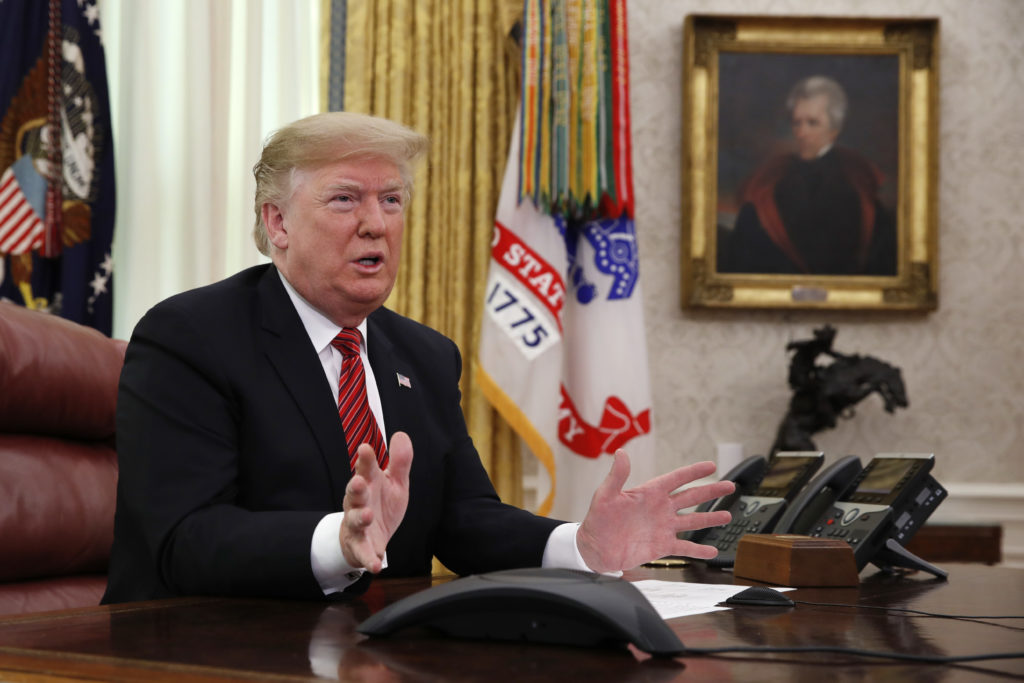
A grand Washington ritual became a potential casualty of the partial government shutdown as House Speaker Nancy Pelosi asked President Donald Trump to postpone his Jan. 29 State of the Union speech. She cited concerns about whether the hobbled government can provide adequate security, but Republicans cast her move as a ploy to deny Trump the stage. In a letter to Trump, Pelosi said that with both the Secret Service and the Homeland Security Department entangled in the shutdown, the president should speak to Congress another time or he should deliver the address in writing. Homeland Security Secretary Kirstjen Nielsen denied anyone’s safety is compromised, saying Wednesday that both agencies “are fully prepared to support and secure the State of the Union.” Trump did not immediately respond to the request, and the White House, thrown off guard by the move, didn’t immediately offer any official response. But GOP allies accused Pelosi of playing politics, with Republican Rep. Steve Scalise tweeting that Democrats are “only interested in obstructing @realDonaldTrump, not governing.” Pelosi, who issued the customary invitation to Trump weeks ago, hit the president in a vulnerable place, as he delights in taking his message to the public and has been preparing for the address for weeks. The uncertainty surrounding the speech also underscored the unraveling of ceremonial norms and niceties in Trump’s Washington, with the shutdown in its fourth week, the White House and Democrats in a stalemate and the impasse draining the finances of hundreds of thousands of federal employees. Pelosi left unclear what would happen if Trump insisted on coming despite the welcome mat being pulled away. It takes a joint resolution of the House and Congress to extend the official invitation and set the stage. “We’ll have to have a security evaluation, but that would mean diverting resources,” she told reporters when asked how she would respond if Trump still intended to come. “I don’t know how that could happen.” Trump stayed quiet on the request throughout the day. During an Oval Office visit, Sen. Rand Paul said they discussed the shutdown but the president did not offer any reaction to Pelosi’s suggestion to put off the speech. Paul suggested on Twitter on Thursday that Trump deliver the address in the Senate, where Republicans hold a majority, which would be an unusual move. “If Mrs. Pelosi refuses to allow the president to deliver the State of the Union in the House, I propose we move it to the Senate and make it happen!” Paul said. Pressure on Trump intensified on Wednesday, the 26th day of the shutdown, as lawmakers from both parties scrambled for solutions. At the White House, Trump met a bipartisan group of lawmakers, as well as a group of Republican senators, but progress appeared elusive. The shutdown, already the longest ever, entered its 27th day Thursday. The previous longest was 21 days in 1995-96, when Bill Clinton was president. While Trump’s own advisers said the shutdown was proving a greater drag on the economy than expected, Trump showed no signs of backing off a fight that he views as vital for his core supporters. On Wednesday, Trump signed legislation into law affirming that the roughly 800,000 federal workers who have been going without pay will ultimately be compensated for their lost wages. That was the practice in the past. As he weighs a response to Pelosi, Trump could not go forward with a State of the Union address in Congress without her blessing. Donald Ritchie, former historian of the Senate, said that anytime a president comes to speak, it must be at the request of Congress. Trump could opt to deliver a speech somewhere else, like the Oval Office, but it would not have the same ritualistic heft. Democratic leaders did not ask the Secret Service if the agency would be able to secure the State of the Union event before sending the letter, according to a senior Homeland Security official, who was not authorized to speak publicly. Pelosi’s office said Congress is already familiar with the percentage of Secret Service and Homeland Security employees who have been furloughed and working without pay. The Secret Service starts preparing for events like these months in advance. Lawmakers struggled to find a way out of the shutdown Wednesday. Trump is demanding $5.7 billion to build a wall along the Mexican border that he says is needed on humanitarian and security grounds. But Pelosi is refusing money for the wall she views as ineffective and immoral, and Democrats say they will discuss border security once the government has reopened. Some expressed little optimism. Sen. Lindsey Graham, a South Carolina Republican who has been working on bipartisan strategies, declared glumly: “I am running out of ideas.” Trump met a bipartisan group of lawmakers Wednesday that included seven Democrats. Two people who attended the White House meeting agreed it was “productive,” but could not say to what extent Trump was listening or moved by the conversation. The people, who spoke on condition of anonymity to discuss the event candidly, said it seemed at some points as if people were talking past each other. Lawmakers talked about the shutdown’s effect on their constituents and advocated for “border security.” Trump and others on-and-off used the term “wall.” It was not clear if progress had been made, by those accounts. Meanwhile a group of Republican senators headed to the White House later Wednesday. Many Republicans were unwilling to sign on to a letter led by Graham and Sen. Chris Coons, D-Del., to reopen the government for three weeks while talks continue. They had been warned off such a strategy by Vice President Mike Pence and White House senior adviser Jared Kushner, who told them Trump opposed such a short-term fix, but the senators pressed on anyway, trying to get 20 Democrats and 20 Republicans to join. While Sen. Susan Collins, R-Maine, said she has signed, others said GOP support was lacking. “They’re a little short on the R side,” said Sen.
Donald Trump: ‘I can’t tell you when’ government will reopen
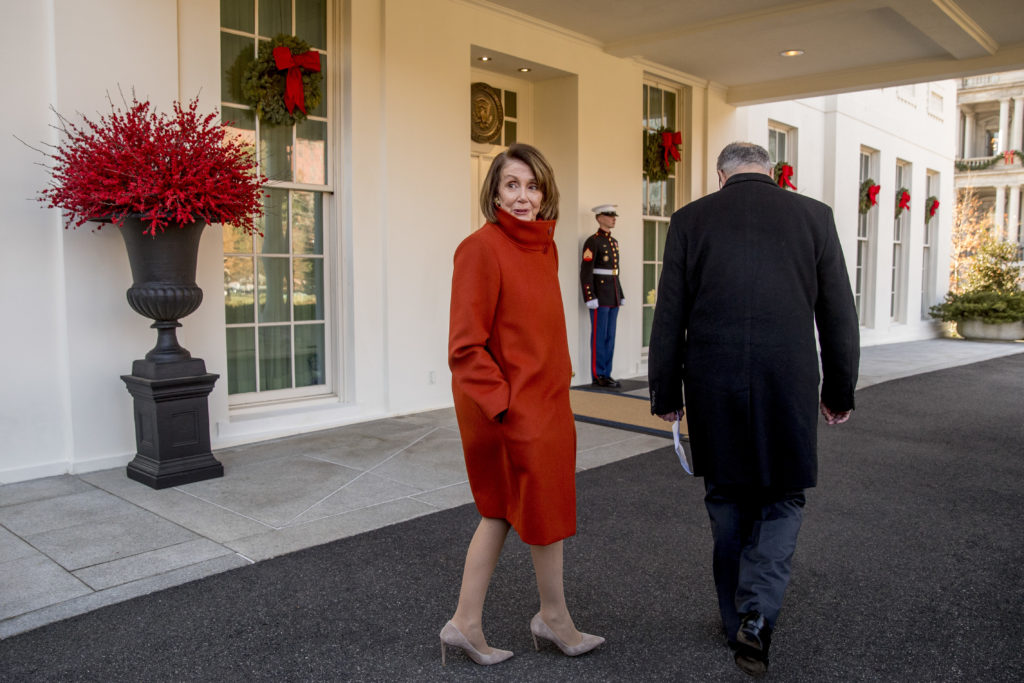
President Donald Trump said Tuesday that parts of the federal government will stay closed until Democrats agree to put up more walls along the U.S.-Mexico border to deter criminal elements. He said he’s open to calling the wall something else as long as he ends up with an actual wall. In a Christmas Day appearance in the Oval Office, Trump issued a lengthy defense of his desire for a wall, saying it’s the only way to stop drugs and human traffickers from entering the country. In a nod to the political stakes he’s facing, Trump said he wants the wall by “election time” in 2020. The promise of a border wall was a central component of Trump’s presidential campaign. “I can’t tell you when the government’s going to be open. I can tell you it’s not going to be open until we have a wall or fence, whatever they’d like to call it,” Trump said, referring to Democrats who staunchly oppose walling off the border. “I’ll call it whatever they want, but it’s all the same thing,” he told reporters after participating in a holiday video conference with representatives from all five branches of the military stationed in Alaska, Bahrain, Guam and Qatar. Trump argued that drug flows and human trafficking can only be stopped by a wall. “We can’t do it without a barrier. We can’t do it without a wall,” he said. “The only way you’re going to do it is to have a physical barrier, meaning a wall. And if you don’t have that then we’re just not opening” the government. Democrats oppose spending money on a wall, preferring instead to pump the dollars into fencing, technology and other means of controlling access to the border. Trump argued that Democrats oppose a wall only because he is for one. The stalemate over how much to spend and how to spend it caused the partial government shutdown that began Saturday following a lapse in funding for departments and agencies that make up about 25 percent of the government. Some 800,000 government workers are affected. Many are on the job but must wait until after the shutdown to be paid again. Trump claimed that many of these workers “have said to me and communicated, ‘stay out until you get the funding for the wall.’ These federal workers want the wall. The only one that doesn’t want the wall are the Democrats.” Trump didn’t say how he’s hearing from federal workers, excluding those he appointed to their jobs or who work with him in the White House. But many rank-and-file workers have gone to social media with stories of the financial hardship they expect to face because of the shutdown, now in its fourth day. Sen. Chuck Schumer of New York and Rep. Nancy Pelosi of California, the Democratic leaders of Congress, said Trump “wanted the shutdown, but he seems not to know how to get himself out it.” Trump had said he’d be “proud” to shut down the government in a fight over the wall. He also had said Mexico would pay for the wall. Mexico has refused. Trump followed up on a Monday tweet in which he said he “just gave out a 115 mile long contract for another large section of the Wall in Texas.” Neither the White House nor the Department of Homeland Security responded to follow-up questions, despite repeated requests. The reference to 115 miles was unclear. Trump may have been referring to 33 miles of construction in the Rio Grande Valley that is set to begin in February, part of a total of 84 miles that Congress funded in March, according to the Department of Homeland Security. Asked who received the contract, Trump replied: “Different people, different people.” He did say he envisions a wall so tall, “like a three-story building,” that only an Olympic champion would be able to scale it. He also compared Democrats’ treatment of him over the wall to their defense of James Comey after Trump fired him as FBI director. “It’s a disgrace what’s happening in our country but, other than that, I wish everybody a very merry Christmas,” he said. Republished with permission from the Associated Press.
Nancy Pelosi flashes survival skills – and she’ll need them in ’19
Rep. Nancy Pelosi is formidable but not immortal. The California Democrat seems to have sewn up her return as House speaker next month, but she also has accepted a maximum four-year expiration date on her tenure. She previously had resisted any term limit, saying it would weaken her. Pelosi had overwhelming support among Democrats for the top job. But to ensure the majority — probably 218 votes — she will need when the full House elects the speaker Jan. 3, she had to quell a rebellion by a stubborn faction of Democrats demanding a new generation of leaders. It took five weeks but she prevailed, wielding skills she will need to manage the roughly 235 Democrats, among the 435 representatives, who will comprise the House majority in the new Congress. A look at what that fight suggests about the coming year: ___ SKILLED, RESPECTED AND SOME SAY FEARED … Pelosi can find adversaries amenable to negotiation and cut deals with them, outnumber and isolate opponents and count votes. She can use a network of allies inside and outside Congress to exert pressure. She has experience and relationships built during three decades in Congress — the last 16 years leading Democrats as House minority leader or speaker, the job she held from 2007 into January 2011. Her ability to apparently nail down the votes she will need is evidence of the broad and deep support she has from Democrats. That should give her a strong starting point when she needs to make strategic decisions for her party or round up votes for legislation. Rep. Linda Sanchez, D-Calif., among the rebels who opposed Pelosi’s election as speaker until the term-limit deal, said no rival for the speaker’s job emerged because no one wanted to directly challenge her. “She’s tough, she’s good, she’s a woman, she’s done it before,” Sanchez said. “People are afraid of her,” said Rep. Kurt Schrader, D-Ore., who remains against Pelosi. “And it’s tough to take pressure, I guess.” ___ … BUT SHE DID MAKE A CONCESSION Pelosi, 78, didn’t seem to clinch her victory until agreeing in writing to serve no more than two two-year terms as speaker. She says that means she won’t be a weakened lame duck, since she can potentially be re-elected to the job in 2020. Her backers note she’d be approaching her 83rd birthday as that second term expires and say she wasn’t going to serve forever anyway. Still, the agreement marked a retreat from initial statements that she would not specify an end date to her service because she did not want to lose clout. To any Democrat watching, it showed that as with any congressional leader, rank-and-file lawmakers in sufficient numbers can extract concessions. ___ WHICH DEMOCRATS COULD CAUSE HER PROBLEMS? While Pelosi’s most outspoken Democratic opponents span the ideological spectrum, many are moderates in a party that tilts decisively in a liberal direction. Yet once it comes to writing and passing bills, Pelosi’s thorniest problems may well come from the party’s left wing, not its centrists. The most hard-left Democrats could try pushing Pelosi to move faster and further than she would like on universal health care and trying to impeach President Donald Trump. The notion of government-paid health care for all scares off many moderates wary of its huge costs. Fearful of moving prematurely and making Democrats look partisan and overzealous, Pelosi has said that impeachment needs to be handled with caution. To show that Democrats can govern, there may be times when Pelosi will want her colleagues to produce bills that can get Trump’s signature, perhaps on infrastructure. That would require passing legislation acceptable to Republicans. In those instances, it could be hardcore liberals, not Democratic moderates, who are likely to cause most of Pelosi’s heartburn. ___ THIRST FOR CHANGE REMAINS While Pelosi seems assured of being speaker through 2020 and perhaps two additional years beyond that, the desire for fresh leaders will remain an important dynamic among Democrats. There are plenty of younger, ambitious Democrats jockeying to move up as Pelosi prepares to move off the scene. Reps. Steny Hoyer of Maryland and James Clyburn of South Carolina, the second- and third-ranking leaders, are also in their late 70s and some Democrats want them to get out of the way too, though neither has displayed any enthusiasm about that. Democrats have elected five fresh faces to lower-level leadership jobs: Reps. Ben Ray Lujan of New Mexico, Hakeem Jeffries of New York, Cheri Bustos of Illinois, David Cicilline of Rhode Island and Katherine Clark of Massachusetts. Jeffries and Lujan are in their 40s; the others are in their 50s. “I think the change has started. I think it’s going to accelerate,” said Rep. Ed Perlmutter, D-Colo., who wanted new leaders and helped negotiate the term limits Pelosi accepted. “And I think we maintained somebody, in my estimation, who’s going to be really good at the helm during some tumultuous times.” Republished with permission from the Associated Press.
Nancy Pelosi’s triumph: A reminder why she’s set to be speaker
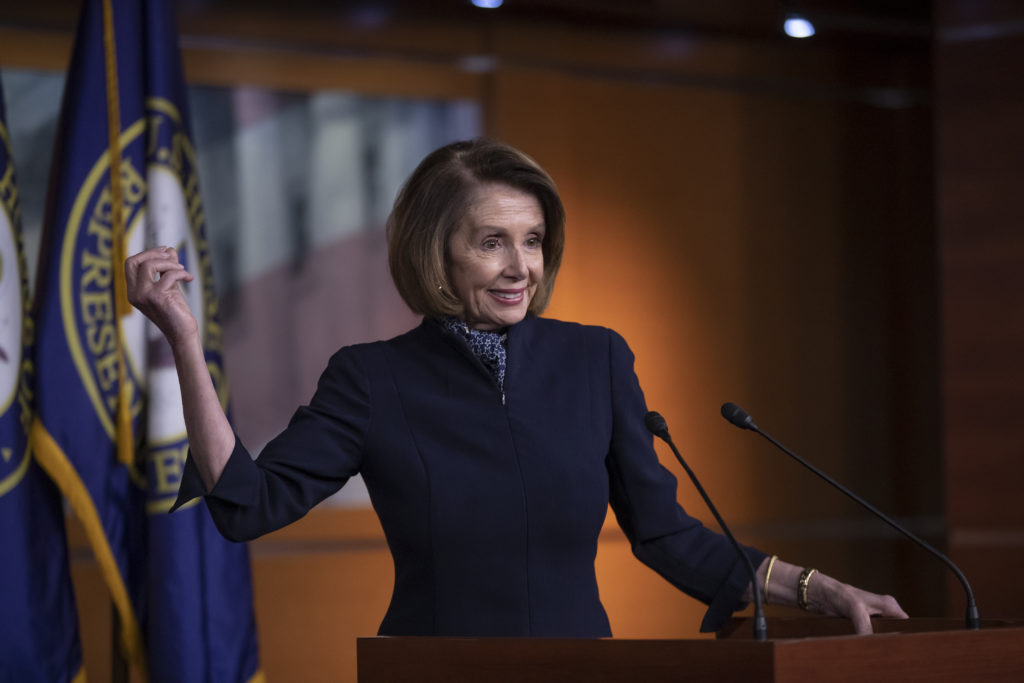
It has been quite a week for Nancy Pelosi. The televised meeting with President Donald Trump. The deal with restless Democrats to secure their votes to become House speaker. The fashion statement of her burnt-orange winter coat, swooshing out the doors of the White House, going viral in social media memes. It all showed the staying power of the Democratic leader, who is relentless in her drive to reclaim the gavel and wield it with a strength that is nothing like Washington has seen — at least since the last time she did it. “We’ve seen some strong speakers like Pelosi and some weaker speakers,” said Matthew Green, a professor of political science at Catholic University who has written a book about House speakers. “What we’ve seen this week is another demonstration of how effective Pelosi is, in both her negotiation skills and in her ability to stand up publicly to a president of the opposite party,” he said. “The most dangerous place to be in Washington is between Pelosi and an undecided vote. It’s like a beeline; she goes right for that person. That’s her thing.” Pelosi has said this time as speaker would be different. On the campaign trail this fall, she told The Associated Press she would “enjoy it” more because last time it was all “work.” She said she wants to “show the power of the gavel.” But even before winning back the speakership, she is employing its strength. Pelosi used it during Tuesday’s Oval Office meeting with Trump, refusing his $5 billion border wall money; on Republicans during their last days in the majority; and on her fellow Democrats to give her their support. The public display this week points to the return of one of the more powerful leaders in the history of the House, even if she’s now term-limited herself to serving as speaker no more than four years. It’s the start of a long final act of the 78-year-old mother of five and grandmother of nine, and she’s more comfortable than ever taking her seat at the table. “Leader Pelosi really demonstrated this week why she is about to become the speaker of the House,” said Rep. David Cicilline, D-R.I., part of the newer generation of House leaders. “She had a great week.” Not everyone on the Democratic side is pleased with the turn of events, and Republicans made clear they are more than eager to accommodate Pelosi’s rise, employing the kinds of attacks they have for years used against her. They’ll be targeting newly elected Democrats who vote for Pelosi for speaker when the new Congress convenes Jan. 3, especially those who had vowed on the campaign trail to oppose her. Republican National Committee chairwoman Ronna McDaniel tweeted that “So many Dem House candidates have proven themselves to be hypocrites.” She tweeted, “Voters won’t forget it.” And some House Democrats, including members who have been waiting for Pelosi to step aside so they could rise in leadership, are grumbling over the deal she cut to impose term limits for top leaders. Democrats will vote on that proposal in the new year, and it could very well fail. Pelosi has promised to abide by the deal regardless of the vote. “I’m not for term limits,” the No. 2 Democrat, Rep. Steny Hoyer, D-Md., told reporters. “Is anybody confused about — I am not for term limits.” But Thursday, the speaker-in-waiting capped off the week-that-was by recapping what had just happened — in case anyone missed the social media memes of Pelosi in that coat, exiting the White House. Pelosi recalled the moment Tuesday in the Oval Office when Trump, arguing with her and Senate Democratic leader Chuck Schumer, finally relented and said he’d be “proud” to shut down the government before Christmas — the “Trump shutdown,” as she called it — over the border wall. “Perhaps he doesn’t understand people need their paychecks,” she said Thursday. She all but eye-rolled at his insistence that Mexico would pay for it. “I mean really? Really?” And although Pelosi hasn’t spoken to Trump since that day, she confided that he is in her prayers. “I did tell the president that I pray for him. He said, ‘That’s news, go tell the press.” And so she did. In her deal with a group of rebellious House Democrats, Pelosi agreed to limit herself to four years, securing their votes to become speaker. Pelosi said, “They were saying six months.” Pressed on whether she was making herself a lame-duck leader, she told reporters later: “What, four years? No, I don’t think that’s a lame duck.” It’s an assertiveness coming from the House side of the Capitol that has not been as evident under outgoing Speaker Paul Ryan, who insisted he never really wanted the job, or former Speaker John Boehner, who was sent to early retirement by conservatives in his ranks. She’ll be the first House speaker in 50-plus years to reclaim the gavel after an absence, not since legendary speaker Sam Rayburn returned in 1955. One of the most preferred House office buildings next to the Capitol complex carries his name. As the first female speaker when she first held the office, it goes without saying — no woman has done what Pelosi is about to do. Pelosi has long been a polarizing figure, but in a lopsided way, more demonized by Republicans than beloved by Democrats. But that seems to be changing after an election that is bringing nearly 40 new Democrats for the House majority, many of them female candidates voted into office on a wave of energy from female voters. The election came against the backdrop of a #MeToo reckoning of women and men in power. Pelosi is emerging as a leader not only of Democrats on Capitol Hill but also of Democrats and Democratic women nationally —perhaps not quite at the iconic status of Supreme Court Justice Ruth Bader Ginsburg, who has seen movies made about her life and tchotchkes forged in
Nancy Pelosi, foes clinch deal all but paving her way to speaker
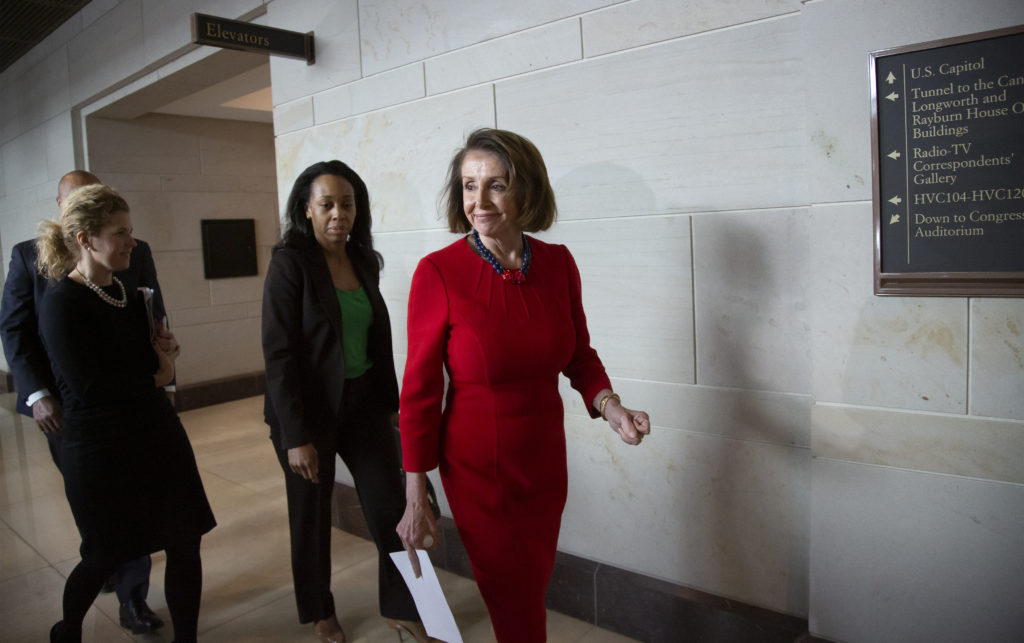
Rep. Nancy Pelosi all but ensured Wednesday that she will become House speaker next month, quelling a revolt by disgruntled younger Democrats by agreeing to limit her tenure to no more than four additional years in the chamber’s top post. Within moments of announcing she would restrict her time in the job, seven of her critics distributed a statement promising to back the California Democrat. Democrats widely agreed that the pledge meant Pelosi had clinched a comeback to the post she held from 2007 until January 2011, the last time her party ran the House and the first time the speaker was a woman. Wednesday’s accord gives Pelosi a clear path to becoming the most powerful Democrat in government and a leading role in confronting President Donald Trump during the upcoming 2020 presidential and congressional campaigns. It moves a 78-year-old white woman to the cusp of steering next year’s diverse crop of House Democrats, with its large number of female, minority and younger members. The agreement also ends what’s been a distracting, harsh leadership fight among Democrats that has been waged since Election Day, when they gained at least 39 seats and grabbed House control for the next Congress. It was their biggest gain of House seats since the 1974 post-Watergate election. Democrats have been hoping to train public attention on their 2019 agenda focusing on health care, jobs and wages, and building infrastructure projects. They also envision investigations of Trump, his 2016 presidential campaign and his administration. To line up support, Pelosi initially resorted to full-court lobbying by congressional allies, outside Democratic luminaries, and liberal and labor organizations. She cut deals with individual lawmakers for committee assignments and roles leading legislative efforts. But in the end, she had to make concessions about her tenure to make sure she’ll win a majority — likely 218 votes — when the new House convenes Jan. 3. Democrats are likely to have 235 seats, meaning she could spare only 17 defections and still prevail if, as expected, Republicans all oppose her. Pelosi had described herself as a transitional leader over the last several weeks. But she’d resisted defining how long she would serve as speaker, saying it would lessen her negotiating leverage to declare herself a lame duck. On Wednesday, she gave in to her opponents’ demands that she limit her service. Under the deal, House Democrats will vote by Feb. 15 to change party rules to limit their top three leaders to no more than four two-year terms, including time they’ve already spent in those jobs. “I am comfortable with the proposal and it is my intention to abide by it whether it passes or not,” Pelosi said in her statement. Pelosi’s opponents have argued it was time for younger leaders to command the party. They also said her demonization as an out-of-touch radical in tens of millions of dollars’ worth of Republican television ads was costing Democrats seats. While some Democrats are still certain to vote against Pelosi — especially incoming freshmen who promised to do so during their campaigns — most Democrats have remained solidly behind her. She’s been a strong fundraiser and unrelenting liberal who doesn’t shy from political combat, and her backers complained that her opponents were mostly white men who were largely more moderate than most House Democrats. Pressure to back Pelosi seemed to grow after she calmly went toe-to-toe with Trump at a nationally televised verbal brawl in the Oval Office on Tuesday over his demands for congressional approval of $5 billion for his proposed border wall with Mexico. “We are proud that our agreement will make lasting institutional change that will strengthen our caucus and will help develop the next generation of Democratic leaders,” the rebellious lawmakers said in a written statement. To be nominated to a fourth term under the agreement, Pelosi would need to garner a two-thirds majority of House Democrats. Several aides said they believed restlessness by younger members to move up in leadership would make that difficult for her to achieve. The limits would also apply to Pelosi’s top lieutenants, No. 2 leader Steny Hoyer of Maryland and No. 3 leader James Clyburn of South Carolina. Both are also in their late 70s. Rep. Ed Perlmutter, D-Colo., was among 16 Democrats who had signed a letter demanding new leadership but who ultimately helped negotiate the deal with Pelosi. Joining Perlmutter in saying they would now back her were Democratic Reps. Seth Moulton of Massachusetts; Tim Ryan of Ohio; Bill Foster of Illinois; Linda Sanchez and Rep.-elect Gil Cisernos, both of California; and Filemon Vela of Texas. Republished with permission from the Associated Press.
GOP support for Nancy Pelosi as speaker? Don’t hold your breath
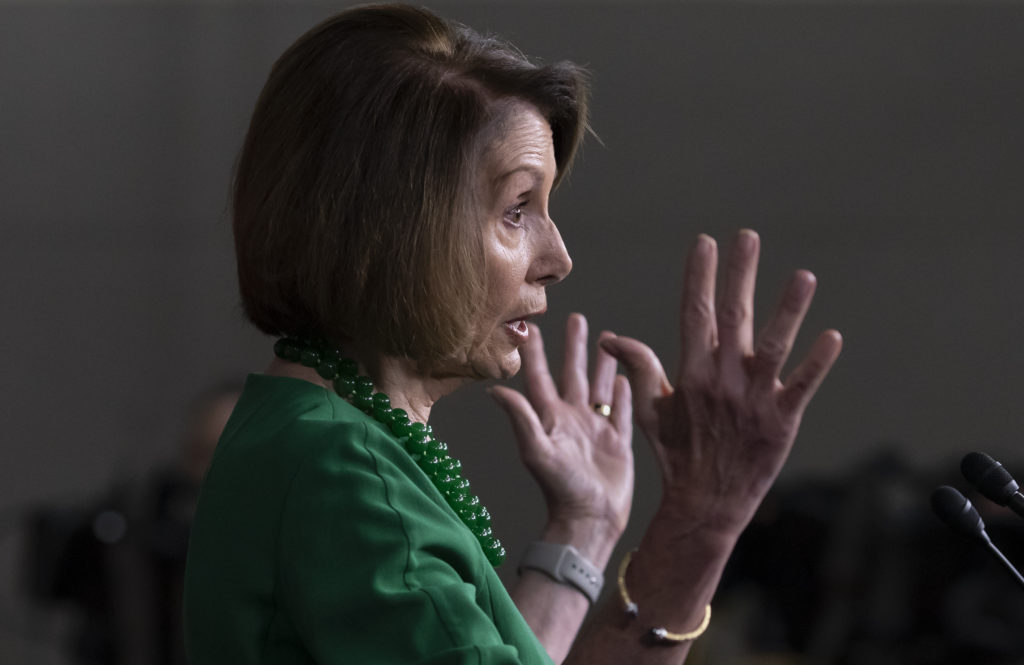
Wondering if Republicans will push Nancy Pelosi over the top in her drive to become House speaker next year? Despite supportive words from President Donald Trump, it’s implausible. Twice since Democrats won House control in last month’s elections, Trump has said the California Democrat deserves to regain the post she held from 2007 to early 2011 as the first female speaker. He’s offered to help her win GOP votes, if needed, when the new House elects its speaker Jan. 3. One Republican lawmaker says he’d consider helping her. Still, it’s a far-fetched scenario that she’s publicly rejected. It’s rare for lawmakers to vote for the other party’s speaker nominees, though there’s an uncanny connection between the last time it happened and one of Pelosi’s leading foes. Even a seemingly harmless vote of “present” by a Republican would help Pelosi because she’d need fewer votes to win a majority, leaving anyone who did that vulnerable to a future GOP primary election challenge. ___ WHY WOULD REPUBLICANS EVEN CONSIDER HELPING PELOSI? It’s largely about 2020. The GOP has spent tens of millions on campaign ads over the years, political consultants say, portraying Pelosi as a dangerous radical from San Francisco, her liberal hometown, and linking Democratic candidates to her. While the GOP lost the House last month anyway despite featuring Pelosi in ads, many Republicans would love to use her again in the 2020 presidential and congressional campaigns. ___ THEN WHY NOT ASSIST HER? For a Republican, helping Pelosi — even by voting “present” or missing next month’s roll call — would be tantamount to begging a GOP primary challenger to oust them in 2020. Pelosi is that loathed by conservative voters. “It would be an absolute career killer,” said Jon McHenry, a GOP consultant. The vote for speaker is the first House vote in each new Congress, when lawmakers demonstrate their party loyalty. For most, helping the other side is unthinkable. “It would be like Democrats voting for Newt Gingrich,” said Rep. Fred Upton, R-Mich. Gingrich, a Republican from Georgia, became speaker in 1995 after using combative, obstructionist tactics to lead Republicans to their first House majority in 40 years. He was despised by Democrats. ___ A RARITY The last time a lawmaker voted for the other major party’s speaker nominee was 2001. Rep. James Traficant, D-Ohio, an eccentric dissident who’d long clashed with party leaders, backed Ohio Republican Dennis Hastert for speaker. Traficant was expelled from the House in 2002 following his conviction on corruption charges. Imprisoned, he ran for re-election that year as an independent but lost to a former aide, Tim Ryan. Ryan is now an Ohio Democratic congressman and organizer of the effort to dump Pelosi, saying it’s time for fresh leadership. “There’s no correlation there,” Ryan said of his opposition to Pelosi and his past connection to Traficant, who died in 2014. Ryan said while opposed to Pelosi, he would not vote for a Republican. A crossover vote occurred at least one other time, according to the House historian’s office. Rep. Thomas Schall, R-Minn., voted for Rep. Champ Clark, D-Mo., to be speaker in 1917, saying he wanted to show U.S. unity on the eve of World War I. ___ PELOSI’S PROBLEM … … is arithmetic, not popularity among Democrats. An overwhelming majority want her to win the gavel, while a disgruntled handful wants to get rid of her. When the chamber votes, she’ll need a majority of all House members — 218, assuming everyone shows up and Republicans unanimously oppose her. Lawmakers who abstain, vote “present” or are absent don’t count. Democrats will have a 234-198 majority next year, with three races still uncalled by The Associated Press. As of now, Pelosi could lose up to 16 Democrats and still become speaker if Republicans vote “no” and everyone votes for a candidate. Sixteen Democrats signed a letter saying it’s time to change their leadership, and several others promised during their campaigns to oppose her. In a secret ballot for the party’s speaker nominee, 203 Democrats voted for her, though three were delegates from territories and can’t vote next month for speaker. Her party’s leader since 2003, Pelosi, 78, has won over some opponents and has nearly a month to make the additional deals she’ll need to get the votes. ___ WILL SHE WIN? Pelosi has said she’ll be elected with Democrats alone. She rejected the idea of winning with Republican support, saying, “Oh, please, no, never, never, never.” Ryan and Pelosi’s other opponents say they doubt she’d seek Republican backing, citing her long career as a stalwart Democrat. Yet some foes suggest it’s not out of the realm of possibility. “Who knows?” Ryan said. “At this point she doesn’t have enough Democratic votes.” Asked if Pelosi might seek a deal for GOP votes if she had no other alternative, spokesman Drew Hammill said, “Your premise is faulty. Nancy Pelosi will have the votes.” Prevailing with GOP backing would put Pelosi at risk of alienating liberal voters and heighten their anger against Democrats who opposed her, fueling 2020 primary challenges. It could also entice Republicans to try a seldom-used procedural vote to remove her from the speakership. ___ A WILLING REPUBLICAN? Rep. Tom Reed, R-N.Y., said he’d consider helping Pelosi if they could negotiate changes in House rules to help the minority party get amendments and bills considered. The chamber’s majority has long had control over the agenda. Reed is a leader of the Problem Solvers Caucus, a bipartisan group of lawmakers. While Pelosi promised changes to get support from the Democrats in that group, Reed said he hasn’t heard from her. Voting for her would be “toxic” among Republicans, Reed said, adding, “Speaking of this has caused a tremendous amount of heartburn on my side.” Republished with permission from the Associated Press.
Washington’s new power standoff – Donald Trump, Nancy Pelosi

They haven’t spoken in days, not since President Donald Trump called to congratulate Nancy Pelosi on Democrats’ election night win. But they don’t really need to. Trump and Pelosi go way back, from the time she first showed up at Trump Tower fundraising for the Democrats long before he would become president or she the House speaker. Two big-name heirs to big-city honchos — Trump and Pelosi each had fathers who were political power players in their home towns — they’ve rubbed elbows on the Manhattan social scene for years. And despite daily barbs in Washington, he’s always “Mr. President” to her, and she’s one prominent politician he has not labeled with a derisive nickname. Not quite friends, nor enemies, theirs is perhaps the most important relationship in Washington. If anything is to come of the new era of divided government, with a Republican president and Democratic control of the House, it will happen in the deal-making space between two of the country’s most polarizing politicians. The day after their election night phone call, Trump and Pelosi did speak again, indirectly, across Pennsylvania Avenue. “I really respected what Nancy said last night about bipartisanship and getting together and uniting,” Trump said in a press conference at the White House. “That’s what we should be doing.” Pressed after his unusual public lobbying for Pelosi to become House speaker, Trump insisted he was sincere. “A lot of people thought I was being sarcastic or I was kidding. I wasn’t. I think she deserves it,” he said. “I also believe that Nancy Pelosi and I could work together and get a lot of things done.” Pelosi sent word back a few minutes later from her own press conference at the Capitol, which she delayed for nearly an hour as the president conducted his. “Last night, I had a conversation with President Trump about how we could work together,” Pelosi said, noting that “building infrastructure” was one of the items they discussed. “He talked about it during his campaign and really didn’t come through with it in his first two years in office,” she nudged. “I hope that we can do that because we want to create jobs from sea to shining sea.” Despite all the campaign trail trash talk, both Trump and Pelosi have incentive to make some deals. The president could use a domestic policy win heading into his own re-election in 2020, alongside his regular railing against illegal immigration, the “witch hunt” of the Russia investigation or other issues that emerge from his tweets. Democrats, too, need to show Americans they can do more than resist the Trump White House. It’s no surprise that two of the top Democratic priorities in the new Congress, infrastructure investment and lowering health care costs, dovetail with promises Trump made to voters, but has not yet fulfilled. “I do think there’s opportunities to pass legislation,” said former White House legislative director Marc Short. Trump has long viewed Pelosi as both a foil and a possible partner, and she sees in him the one who can sign legislation into law. The president has told confidants that he respects Pelosi’s deal-making prowess and her ability to hang on to power in the face of a series of challenges from the left wing of the party, according to four White House officials and Republicans close to the White House. The officials were not authorized to publicly discuss private conversations and requested anonymity. He told one ally this month that he respected Pelosi “as a fighter” and that he viewed her as someone with whom he could negotiate. “The president respects her,” said Short. Short described the interaction between Pelosi and Trump during a 2017 meeting with other congressional leaders at the White House to prevent a government shutdown. “They were throwing pros and cons back at each other,” he said. “The question I can’t answer is to what extent will Democrats give Pelosi political bandwidth” to strike deals, Short said. He pointed to potential areas of agreement like infrastructure, drug prices and prison reform. But part of Trump’s push for Pelosi to return to power was more nakedly political. Pelosi has long been a popular Republican target, spurring countless fundraising efforts and attack ads. And Trump has told advisers that, if needed, he would make her the face of the opposition in Democratic party until the 2020 presidential field sorts itself out. Pelosi’s name draws some of the biggest jeers at his rallies and he believes that “she could be Hillary” in terms of a Clinton-like figure to rally Republicans against, according to one of the advisers familiar with the president’s private conversations. At the same time, Trump has not publicly branded Pelosi with a mocking nickname. She’s no “Cryin’” Chuck Schumer, as he calls the top Senate Democrat, or “Little” Adam Schiff at the Intelligence Committee or “Low IQ” Rep. Maxine Waters of California, who will chair the Financial Services Committee. On whether Trump likes Pelosi as ally or adversary, Short said, “I don’t think those are mutually exclusive.” Pelosi, perhaps more than her Republican counterparts — outgoing Speaker Paul Ryan or Senate Majority Leader Mitch McConnell — became an early observer, and adapter, to the Trump style of governing. When Trump and Democrats were trying to broker an immigration deal in September 2017, she suggested he could tweet his assurances to the young Dreamers. And he did. Around the same time when Trump and congressional leaders convened at the White House to avoid a federal government shutdown, Republicans and Trump’s own Cabinet team pressed for their preferred solution. But Pelosi kept asking a simple question: How many Republican votes could they bring to the table? When it was clear they could not bring enough for passage, Trump intervened and agreed with Democrats “Chuck and Nancy,” as he came to call them. Votes, Pelosi explained later, were the “currency of the realm.” Trump, as a businessman, she said, got it. Pelosi is poised to become House
Nancy Pelosi’s path back to speaker’s gavel is firmly in sight
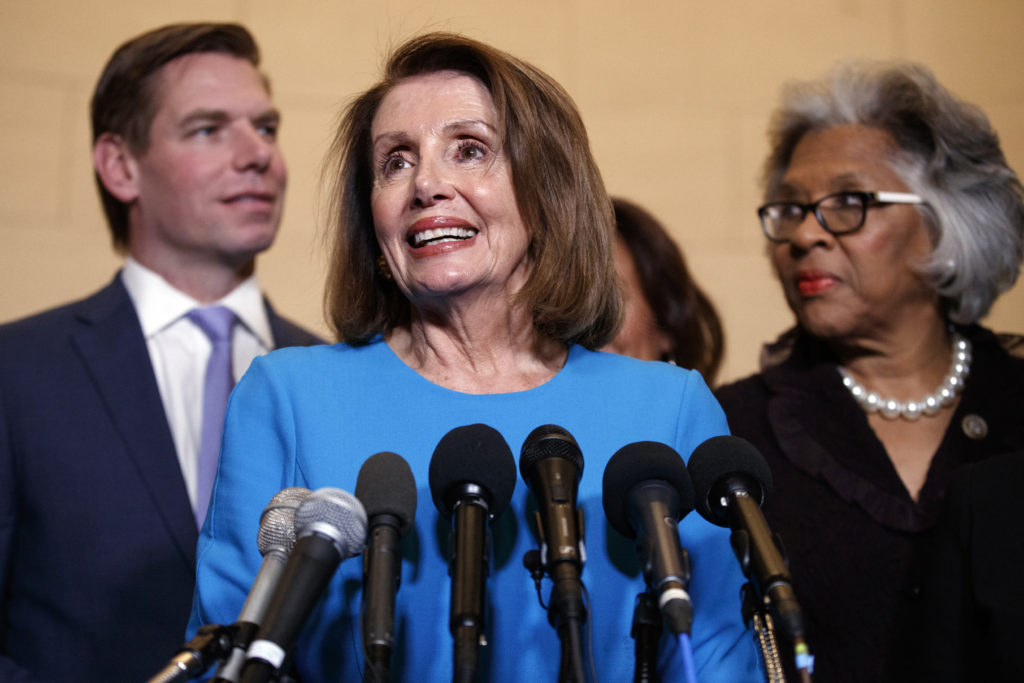
Nancy Pelosi isn’t speaker of the House just yet, but her path back to the gavel is now firmly in sight. Pelosi was overwhelmingly nominated to become House speaker in an internal Democratic caucus vote Wednesday. The final tally, 203-32, puts her within range of the 218 threshold needed in January to be elected speaker when the new Congress convenes. She’s not quite there. Her actual support is at 200, adjusting for delegates who can’t vote in the full House and one supporter who missed the caucus session. But without a challenger and with several weeks to dole out — or withhold — favors, Pelosi is not too far from returning to the speaker’s office. “Are there dissenters? Yes,” the California Democrat told reporters as the ballots were being counted. “But I expect to have a powerful vote going forward.” Pelosi entered the caucus election in an unusual position — running unopposed for the nomination despite the clamor by some Democrats for new leadership. They worry about their re-elections when Pelosi appears as a punchline at President Donald Trump‘s rallies and in countless Republican-fueled TV ads against them. But Pelosi has been deftly picking off opponents — including nine who announced their support Wednesday as voting was underway — a trend she’ll need to accelerate in the weeks ahead. A deal was reached with the Problem Solvers Caucus, a bipartisan group whose nine Democratic members were withholding their support as they pushed for rules changes to allow a more open legislative process. Another group, led by Rep. Seth Moulton of Massachusetts, Rep. Tim Ryan of Ohio and Rep. Kathleen Rice of New York, left the leader’s office empty-handed. They asked Pelosi to publicly release her plans to transition out of leadership before the end of the next term in 2020. She declined, they said. “There has to be some succession plan,” Rice said. As House Democrats met in private in the Capitol, they faced a simple “yes” or “no” choice on Pelosi for speaker. Those trying to oust Pelosi say they always knew the internal caucus election would fall in her favor. She only needed a simple majority of Democrats, who have a 233-seat majority with several races still undecided, to win the nomination. But in January she’ll need closer to 218 votes, half the full 435-seat House, if all Republicans vote against her, as is likely — though she could win with fewer votes if some lawmakers are absent or vote present. Opponents insist there will be more than enough votes to stop Pelosi at that time. Organizers say only with a floor fight in view will new leaders emerge. They say plenty of Democrats could step up to the job. “The battle is the floor,” said Rep. Linda Sanchez of California, among those who signed a letter calling for new leadership. But the strength of Pelosi’s candidacy was shown in the long line of those nominating her, starting with Rep. Joe Kennedy of Massachusetts, the grandson of Robert F. Kennedy, and no fewer than eight colleagues seconding the choice, including Rep. John Lewis of Georgia, the civil rights leader, and three newly elected lawmakers. Rep. Adam Schiff of California, who is set to chair the Intelligence Committee when Democrats take control next year, choked up with emotion, according an aide in the room granted anonymity to discuss the private meeting. “I ask you to support her for this,” Schiff told his colleagues. “Everything we care about is now at risk. Families desperate to obtain health care for their families. Children desperate to be reunited with their families, auto workers being laid off. The gap between rich and poor exploding. The press characterized as the enemy of the people. The independence of our justice system being undermined.” Pelosi’s ability to stand unopposed Wednesday showed the staying power of her brand of machine politics. She was the first female speaker, from 2007 to 2011, until Republicans took control, and hopes to return to a role few men have reclaimed — most recently, legendary Speaker Sam Rayburn a half-century ago. She lost fewer votes than she did during a leadership challenge two years ago, and fewer than retiring Republican Speaker Paul Ryan faced in his internal caucus election for the job. “The reality is there is no alternative,” said Rep. Brian Higgins, D-N.Y., who had signed on opposing her but reversed course. In fact, Democrats voted to return their entire top leadership team, including Rep. Steny Hoyer of Maryland in the No. 2 spot as majority leader and Rep. Jim Clyburn of South Carolina in the No. 3 spot as whip. They were running unopposed. Down-ballot was where the House Democrats pushed a new generation of leader to the forefront. They elected Rep. Hakeem Jeffries of New York as caucus chairman, elevating the charismatic 48-year-old from the Congressional Black Caucus. The No. 4 slot as assistant leader went to Ben Ray Lujan, 46, who helped lead Democrats back to the majority as campaign chairman. Between now and January, those who oppose Pelosi will face internal pressure to reconsider their options. Colleagues will be asking if they really want a stalemate on the House floor as the first act of the new Democratic majority. And Pelosi will work the levers of power by doling out the many committee seat assignments, subcommittee chairmanships and other perks as incentives. “She’s making a lot of headway,” said Rep. Joyce Beatty of Ohio, an ally. “Has she negotiated and given them some of the things that they want? Yes. But she’s only giving things to people who can deliver.” Republished with permission from the Associated Press.
Looking ahead, Democrats jockey to be Nancy Pelosi’s heir apparent
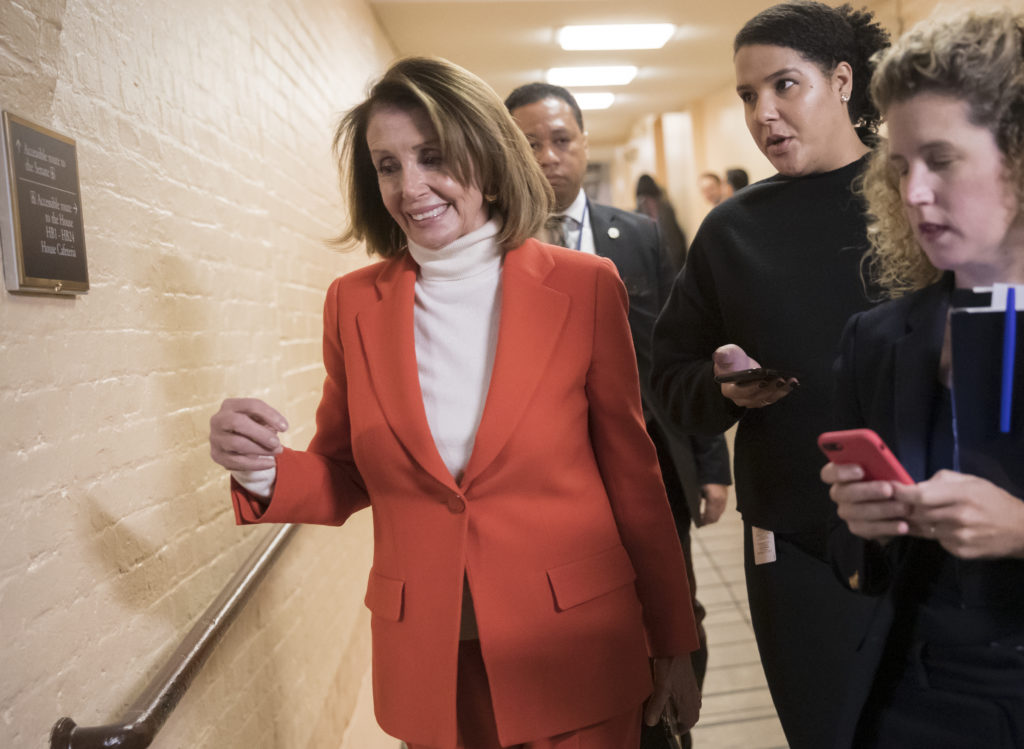
As Nancy Pelosi moves closer to securing the votes to become House speaker, the stage is being set down-ballot for the next generation of leaders jockeying to be the Democrats’ heirs apparent. Pelosi’s return to the speaker’s office is not a lock. One more newly-elected Democrat, Gil Cisneros of California, announced Monday he was adding his name to those vowing to vote for new leadership. Yet even as Pelosi faces persistent opposition, her opponents have suffered a string of setbacks. Pelosi turned one would-be challenger into a supporter by doling out a subcommittee gavel and flipped other opponents to the yes column with commitments to address their legislative priorities. With Cisneros, the group now has 16 names on a letter seeking new leadership, almost as many as when it started after the midterm election. Rep. Seth Moulton, D-Mass., an organizer of the effort against Pelosi, said Monday he never intended to target just her, but wants a clean sweep of the top three Democratic leaders. In a statement, Moulton said he is seeking “a serious conversation about promoting leaders who reflect the future.” He and Pelosi have not yet talked. “This is so much bigger than her,” Moulton said. “It’s about the entire, stagnant, three-person leadership team.” Separately, nine Democrats in the Problem Solvers Caucus say they’ll only support a speaker who agrees with rules changes to open the process for moving legislation. Rep. Josh Gottheimer, D-N.J., said Monday he had a “constructive” conversation with Pelosi over the holiday break and he hopes she gets “on board.” Some of those who signed the letter from Moulton’s effort may be willing to reach a deal that would guarantee a fresh round of leadership elections a year from now, earlier than the typical two-year term, according to an aide close to the group. That seems unlikely. The No. 2 and No. 3 Democrats — Rep. Steny Hoyer of Maryland, who would be majority leader in the new House, and Rep. Jim Clyburn of South Carolina, who would be whip — have all but locked up the votes and are running unopposed. And Pelosi has indicated that while she doesn’t plan to keep her hold on power forever — she calls her bid a transition to the new generation — she’s also shown no interest in making herself a lame-duck leader. As House Democrats meet behind closed doors Wednesday to start voting, it seems increasingly likely that Pelosi’s team will emerge intact. And that’s causing much maneuvering, as up-and-comers position themselves to be next in line once Pelosi’s generation eventually steps down. Notably, virtually none of them is clamoring against Pelosi. At the forefront is Rep. Ben Ray Lujan, the low-key New Mexico Democrat who helped usher in the majority as chairman of House Democrats’ campaign committee. He is running unopposed for the No. 4 job as assistant Democratic leader. Others are staking their claims on lower rungs: Rep. Hakeem Jeffries of New York is running for caucus chair against veteran Rep. Barbara Lee of California; they are both prominent members of the Black Caucus. Rhode Island Rep. David Cicilline wants to helm policy and communications. Rep. Cheri Bustos, from an Illinois district that supported President Donald Trump, is aiming for campaign chief against several others. Even farther down the ladder are another half dozen Democrats competing for vice chair of the caucus or positions on the expanded policy and communications committee. They’re largely concentrating on their own races, which will be determined Wednesday. The speaker’s contest won’t be settled until the full House votes in January. Republished with permission from the Associated Press.
Impeach the president? House Democrats saying not so fast
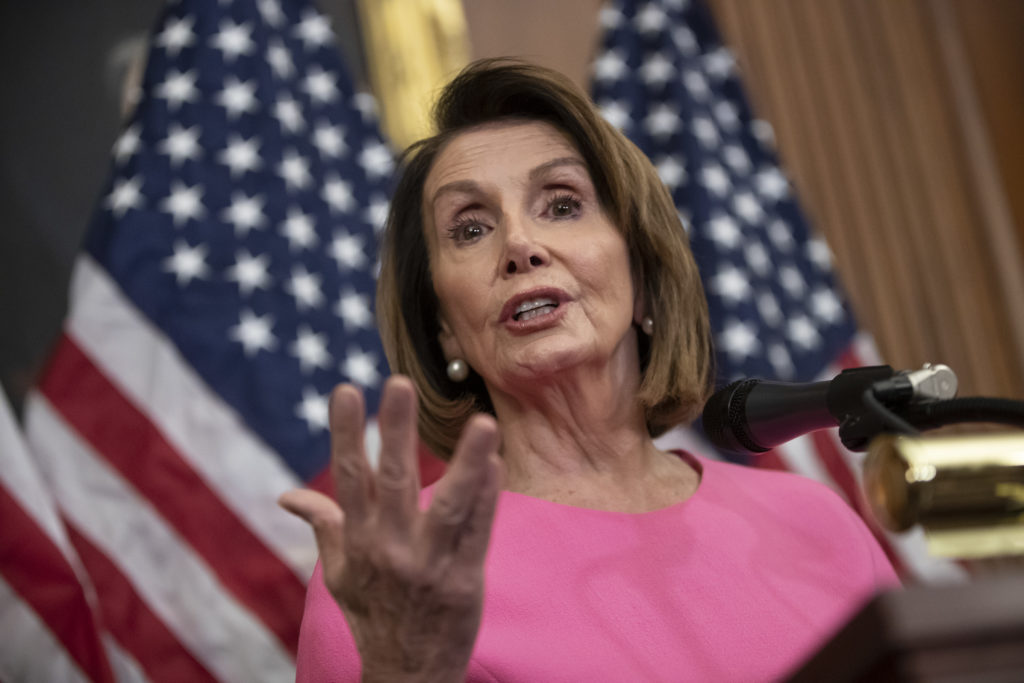
Whatever happened to trying to impeach President Donald Trump? As House Democrats begin laying out the vision for their new majority, that item is noticeably missing from the to-do list and firmly on the margins. The agenda for now includes spending on public works projects, lowering health care costs and increasing oversight of the administration. It’s the balance that Democratic leader Nancy Pelosi is trying to strike in the new Congress between those on her party’s left flank who are eager to confront the president, and her instinct to prioritize the kitchen-table promises that Democrats made to voters who elected them to office. “We shouldn’t impeach the president for political reasons and we shouldn’t not impeach the president for political reasons,” Pelosi recently told The Associated Press. The California lawmaker, who hopes to lead Democrats as House speaker come January, calls impeachment a “divisive activity” that needs to be approached with bipartisanship. “If the case is there, then that should be self-evident to Democrats and Republicans,” she said. Those pressing for impeachment acknowledge they don’t expect action on Day One of the new majority, but they do want to see Democrats start laying the groundwork for proceedings. “We’re for impeachment. We’re not for get-sworn-in-on-Jan.-1-and-start-taking-votes,” said Kevin Mack, the lead strategist for billionaire Tom Steyer‘s Need to Impeach campaign. “Our argument is the Constitution outlines a process to remove a lawless president.” In a new ad, Steyer says Democrats “just need the will” to act. He says he’s calling on Americans to join the 6 million who have already signed on to his group to “give Congress the courage to act.” “The American people are tired of being told to wait,” Mack said. “Our argument to Congress is you are a co-equal branch of government. It’s time to do what is morally correct.” Twice over the past two years since Trump was elected, Democrats have tried to force votes on impeachment proceedings, winning a high-water mark of more than 60 supporters, far from the 218 needed. Republicans are counting on, and possibly even hoping for, impeachment fervor to overtake Democrats, leading them astray from campaign promises or dealmaking with Trump. “We know the Democrats have a plan: They want to disrupt, they want to try to impeach,” said Republican Rep. Kevin McCarthy of California after winning the GOP’s internal election to serve as minority leader in the new Congress. Pelosi has made it clear the new majority will not engage in what she calls a “scattershot” approach to investigating the administration. Instead, the incoming Democratic leaders of House committees will conduct oversight of the president’s business and White House dealings. Democrats are also trying to ensure special counsel Robert Mueller completes his investigation of Russian interference in the 2016 election. They may try to add legislation to protect that probe to the must-pass spending bill in December to help fund the government. They want Mueller’s findings made public. “You have to be very reluctant to do an impeachment,” Rep. Jerry Nadler, D-N.Y., the incoming chairman of the House Judiciary Committee, said recently on ABC. Nadler, who served on the committee during President Bill Clinton’s impeachment, cited “the trauma of an impeachment process.” Democratic leaders also know that moving quickly on impeachment would not sit well with their newly elected members, who helped the party win a House majority in the recent midterms. Many come from swing districts where impeachment could prove unpopular. “I didn’t work 18 months listening to people in my district to get involved in a political back and forth for the next 18 months,” said Rep.-elect Elissa Slotkin of Michigan. “People want to talk about health care. It’s not a coincidence that most of us who won in tough districts, we won because we talked about issues, not because we talked about internal Washington stuff.” For now, outside liberal groups are largely standing by Pelosi’s approach, putting their emphasis on pushing Democrats to chart a bold agenda on the domestic pocketbook concerns that won over voters. Pelosi has some experience with impeachment, serving as a newer lawmaker when Republicans led impeachment proceedings against Clinton. When she became House speaker in 2007 she resisted pressure from her liberal flank to launch impeachment proceedings against President George W. Bush over the Iraq War. Pelosi believes that if Democrats had tried to impeach Bush when she was speaker, voters may never have elected Barack Obama as president in 2008. Politically, Democrats may be right. In 1974, Americans only came to agree that President Richard Nixon should be removed from office on the eve of his resignation, according to Pew research. Voters responded to Clinton’s impeachment by electing more Democrats to the House. “If we had gone down that path, I doubt we would have won the White House,” she said. “People have to see we’re working there for them.” Republished with permission from the Associated Press.
