
Congress passes $1.3 trillion budget, averting another shutdown
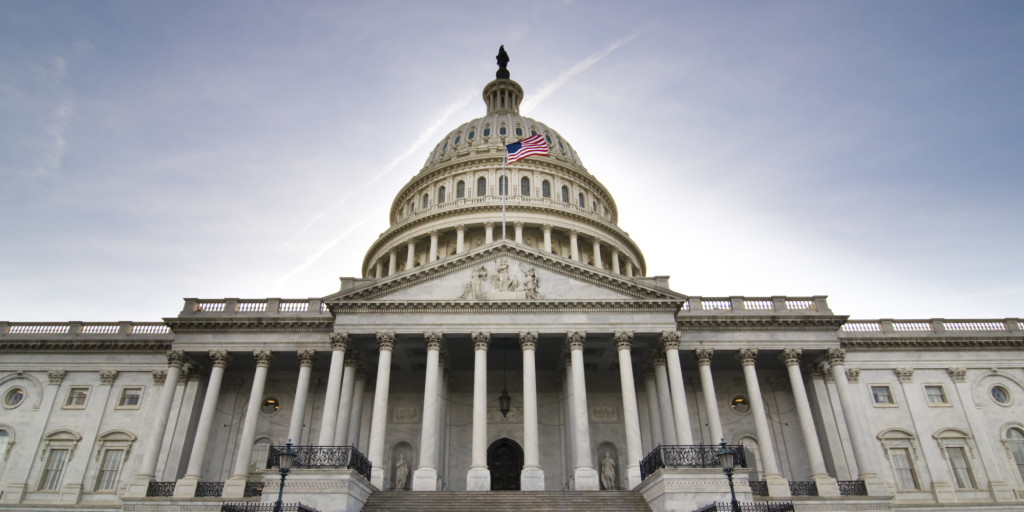
Congress gave final approval Friday to a giant $1.3 trillion spending bill that ends the budget battles for now, but only after late obstacles skirted close to another shutdown as conservatives objected to big outlays on Democratic priorities at a time when Republicans control the House, Senate and White House. Senate passage shortly after midnight averted a third federal shutdown this year, an outcome both parties wanted to avoid. But in crafting a sweeping deal that busts budget caps, they’ve stirred conservative opposition and set the contours for the next funding fight ahead of the midterm elections. The House easily approved the measure Thursday, 256-167, a bipartisan tally that underscored the popularity of the compromise, which funds the government through September. It beefs up military and domestic programs, delivering federal funds to every corner of the country. But action stalled in the Senate, as conservatives ran the clock in protest. Then, an unusual glitch arose when Sen. James Risch, R-Idaho, wanted to remove a provision to rename a forest in his home state after the late Cecil Andrus, a four-term Democratic governor. At one point, Sen. Bob Corker, R-Tenn., stepped forward to declare the entire late-night scene “ridiculous. It’s juvenile.” Once the opponents relented, the Senate began voting, clearing the package by a 65-32 vote a full day before Friday’s midnight deadline to fund the government. “Shame, shame. A pox on both Houses – and parties,” tweeted Sen. Rand Paul, R-Ky., who spent the afternoon tweeting details found in the 2,200-page bill that was released the night before. “No one has read it. Congress is broken.” Paul said later he knew he could only delay, but not stop, the outcome and had made his point. The omnibus spending bill was supposed to be an antidote to the stopgap measures Congress has been forced to pass — five in this fiscal year alone — to keep government temporarily running amid partisan fiscal disputes. Leaders delivered on President Donald Trump’s top priorities of boosting Pentagon coffers and starting work his promised border wall, while compromising with Democrats on funds for road building, child care development, fighting the opioid crisis and more. But the result has been unimaginable to many Republicans after campaigning on spending restraints and balanced budgets. Along with the recent GOP tax cuts law, the bill that stood a foot tall at some lawmakers’ desks ushers in the return of $1 trillion deficits. Trump only reluctantly backed the bill he would have to sign, according to Republican lawmakers and aides, who acknowledged the deal involved necessary trade-offs for the Democratic votes that were needed for passage despite their majority lock on Congress. “Obviously he doesn’t like this process — it’s dangerous to put it up to the 11th hour like this,” said Sen. David Perdue, R-Ga., who opposes the bill and speaks regularly to Trump. “The president, and our leadership, and the leadership in the House got together and said, Look, we don’t like what the Democrats are doing, we got to fund the government.” White House legislative director Marc Short framed it as a compromise. “I can’t sit here and tell you and your viewers that we love everything in the bill,” he said on Fox. “But we think that we got many of our priorities funded.” Trying to smooth over differences, Republican leaders focused on military increases that were once core to the party’s brand as guardians of national security. “Vote yes for our military. Vote yes for the safety and the security of this country,” said House Speaker Paul Ryan, R-Wis., ahead of voting. But even that remained a hard sell. In all, 90 House Republicans, including many from the conservative House Freedom Caucus, voted against the bill, as did two dozen Republicans in the Senate. It was a sign of the entrenched GOP divisions that have made leadership’s job controlling the majority difficult. They will likely repeat on the next budget battle in fall. Democrats faced their own divisions, particularly after failing to resolve the stalemate over shielding young Dreamer immigrants from deportation as Trump’s decision to end the Deferred Action for Childhood Arrivals program has left it for the courts to decide. Instead, Trump won $1.6 billion to begin building and replacing segments of the wall along the border with Mexico. The Congressional Hispanic Caucus opposed the bill. Also missing from the package was a renewal of federal insurance subsidies to curb premium costs on the Affordable Care Act exchanges. Trump ended some of those payments as part of his effort to scuttle President Barack Obama’s health care law, but Republicans have joined Democrats in trying to revive them. Bipartisan efforts to restore the subsidies, and provide additional help for insurance carriers, foundered over disagreements on how tight abortion restrictions should be on using the money for private insurance plans. Senate Republicans made a last-ditch effort to tuck the insurance provisions into the bill, but Democrats refused to yield on abortion restrictions. Still, Democrats were beyond pleased with the outcome. Minority Leader Nancy Pelosi, D-Calif., chronicled the party’s many gains, and noted they could have just have easily withheld votes Republicans needed to avert another shutdown. “We chose to use our leverage to help this bill pass,” Pelosi said. Senate Minority Leader Chuck Schumer, D-N.Y., said as the minority party in Congress, “We feel good.” He added, “We produced a darn good bill.” Republished with the permission of the Associated Press.
Leaders finalize U.S. budget bill voting could begin Thursday
Congressional leaders have finalized a sweeping $1.3 trillion budget bill that substantially boosts military and domestic spending but leaves behind young immigrant “Dreamers,” deprives President Donald Trump some of his border wall money and takes only incremental steps to address gun violence. As negotiators stumbled toward an end-of-the-week deadline to fund the government or face a federal shutdown, House Speaker Paul Ryan dashed to the White House amid concerns Trump’s support was wavering. Although some conservative Republicans balked at the size of the spending increases and the rush to pass the bill, the White House said the president backed the legislation. Trump himself sounded less than enthused, tweeting late Wednesday: “Had to waste money on Dem giveaways in order to take care of military pay increase and new equipment.” Talks had stretched into Wednesday evening before the 2,232-page text was finally released. “No bill of this size is perfect,” Ryan said. “But this legislation addresses important priorities and makes us stronger at home and abroad.” Leaders hoped to start voting as soon as Thursday. A stopgap measure may be needed to ensure federal offices aren’t hit with a partial shutdown at midnight Friday when funding for the government expires. Negotiators have been working for days — and nights — on details of the bill, which is widely viewed as the last major piece of legislation likely to move through Congress in this election year. Lawmakers in both parties sought to attach their top priorities. Two of the biggest remaining issues had been border wall funds and a legislative response to gun violence after the clamor for action following recent school shootings, including the one in Parkland, Florida. On guns, leaders agreed to tuck in bipartisan provisions to bolster school safety funds and improve compliance with the criminal background check system for firearm purchases. The bill states that the U.S. Centers for Disease Control and Prevention can do research on gun violence, though not advocacy, an idea Democrats pushed. But there was no resolution for Dreamers, the young immigrants who have been living in the United States illegally since childhood but whose deportation protections are being challenged in court after Trump tried to end the Deferred Action for Childhood Arrivals program, or DACA. Democrats temporarily shut down the government earlier this year as they fought for that protection. But the issue only rose to a discussion item when Trump made a late-hour push for a deal in exchange for $25 billion in border wall funds. Instead, Trump is now poised to win $1.6 billion for barriers along the border, but none of it for the new prototypes he recently visited in California. Less than half the nearly 95 miles of border construction, including levees along the Rio Grande in Texas, would be for new barriers, with the rest for repair of existing segments. In one win for immigrant advocates, negotiators rejected Trump’s plans to hire hundreds of new Border Patrol and immigration enforcement agents. “We are disappointed that we did not reach agreement on Dreamer protections that were worthy of these patriotic young people,” said House Minority Leader Nancy Pelosi. The emerging plan removes a much-debated earmark protecting money for a rail tunnel under the Hudson River. The item was a top priority of Trump’s most powerful Democratic rival, Senate Minority Leader Chuck Schumer of New York, but Trump vowed to veto the bill over the earmark. Under the legislation, the project would remain eligible for funding, however, and a Schumer aide said it was likely to win well more than half of the $900 million sought for the project this year. The core purpose of the bill is to increase spending for military and domestic programs that have been sharply squeezed under a 2011 agreement that was supposed to cap spending. It gives Trump a huge budget increase for the military, while Democrats scored wins on infrastructure and other domestic programs that they failed to get under President Barack Obama. That largesse has drawn opposition from some fiscal conservatives and could make passage a potentially tricky process. Last month, Kentucky Sen. Rand Paul triggered a brief government shutdown over his objections to the deficit spending. On Wednesday, he tweeted his opposition to the emerging legislation, known as an “omnibus.” “It’s a good thing we have Republican control of Congress or the Democrats might bust the budget caps, fund planned parenthood and Obamacare, and sneak gun control without due process into an Omni … wait, what?” Paul tweeted. Most essential was support from Trump, who has been known to threaten to veto legislation even when his team is involved in the negotiations. Word of Trump’s discontent sent Ryan to the White House, where he was invited to a face-to-face with the president, with Senate Majority Leader Mitch McConnell on the phone. White House aides said the president’s support was never in doubt, but one senior White House official said the president was concerned that details of the package weren’t being presented as well as they could be, both to members of Congress and the public. The group discussed how they could better sell the package, said the official, who was granted anonymity to discuss the private conversation. “The president and the leaders discussed their support for the bill,” said White House press secretary Sarah Huckabee Sanders, adding that it would fund Trump priorities such as wall construction, add money to combat the opioid crisis and provide new infrastructure spending. Both parties touted $4.6 billion in total funding to fight the nation’s opioid addiction epidemic, a $3 billion increase. More than $2 billion would go to strengthen school safety through grants for training, security measures and treatment for the mentally ill. Medical research at the National Institutes of Health, a longstanding bipartisan priority, would receive a record $3 billion increase to $37 billion. Funding was also included for election security ahead of the 2018 midterms. Child care and development block grants would receive a huge $2.4 billion increase to $5.2 billion.
PA race tighter-than-tight; Dem claims win, GOP hangs in
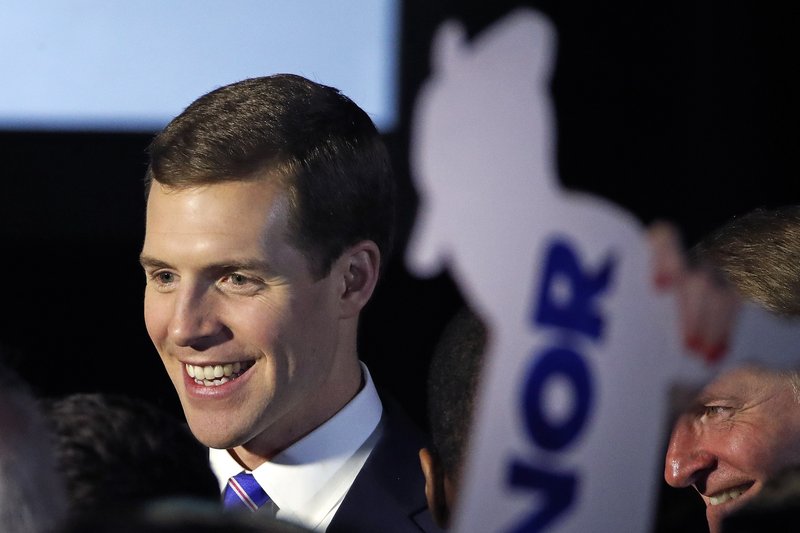
A razor’s edge separated Democrat Conor Lamb and Republican Rick Saccone early Wednesday in their closely watched special election in Pennsylvania, where a surprisingly strong bid by first-time candidate Lamb severely tested Donald Trump’s sway in a GOP stronghold. Lamb claimed victory before exuberant supporters early Wednesday as the number of votes still to be counted dwindled in a contest that has drawn national attention as a bellwether for the midterm elections in November when the Republican Party’s House and Senate majorities are at risk. The Marine veteran told his crowd that voters had directed him to “do your job” in Washington. “Mission accepted,” he declared. Earlier, Saccone told his own supporters, “It’s not over yet, we’re going to fight all the way, all the way to the end, we’ll never give up.” Lamb told CNN Wednesday he hadn’t yet heard from Saccone, but added, “I congratulate him on fighting hard the whole way.” Regardless of the outcome — and a recount was possible — Lamb’s showing in a district Trump won by 20 points in the presidential race was sure to stoke anxiety among Republicans nationwide and renewed enthusiasm among Democrats. Wednesday morning, Lamb’s lead stood at 641 votes — out of more than 224,000 votes cast, according to unofficial results. Election officials said there are about 200 absentee votes and an unknown number of provisional ballots still to be counted. The four counties in the western Pennsylvania district have seven days to count provisional ballots. In a race this close, either candidate’s supporters can ask for a recount. However there are stiff requirements, including requiring three voters in the same precinct who can attest that error or fraud was committed. The ultimate winner will face re-election in just eight months, and the congressional district as currently shaped will likely vanish next year thanks to a court-ordered redrawing of the state’s district maps. Yet President Trump and his chief allies invested tremendous time and resources in keeping the seat in Republican hands, mindful the contest could be used to measure Trump’s lasting appeal among white, working-class voters and Democrats’ anti-Trump fervor. The White House scrambled to rally voters behind Saccone, who cast himself as the president’s “wingman,” but he struggled at times to connect with the blue-collar coalition that fueled Trump’s victory little more than a year ago. Trump campaigned for Saccone last weekend, urging voters not to “be conned by this guy Lamb.” Asked about Trump’s approach, Lamb told CNN: “There was a lot of foolishness in this election and a lot of really cartoonish campaigning, and I think by the time of the president’s visit…there was just a little bit of burnout on that type of campaigning.” Lamb, a 33-year old former federal prosecutor, asserted his independence from national Democratic Party leaders and studiously downplayed his opposition to the Republican president in the district where Trump’s support has slipped. But he also offered a full embrace of organized labor, hammered Republican tax cuts and promised to defend Social Security, Medicare and pensions. As he declared victory, he traced his politics to his grandfather — who was Pennsylvania state Senate leader — and President Franklin Roosevelt. “People have a right to know that their government walks on their side of the street,” Lamb said. “What that means is I’ll work on the problems that our people face … and I’ll work with anyone to do that.” He praised unions and their members — many of whom had supported Trump. The AFL-CIO estimates there are 87,000 union household votes in the district. “Organized labor built western Pennsylvania,” Lamb said. “Let me tell you something, they have reasserted their right to have a major part in our future.” The vice president, the president’s eldest son, the president’s daughter and the president’s chief counselor also campaigned for Saccone. Outside groups aligned with Republicans poured more than $10 million of dollars into the contest. For Democrats, a win would reverberate nationwide, while even a narrow loss would be viewed as a sign of increased Democratic potential as the midterm season begins. Lamb’s excited supporters included his middle school football and basketball coach, Joe DelSardo, who recalled him as “a leader from the beginning.” The former coach described the district as having “a lot of suit-and-tie people and people who dig in the dirt.” Lamb, he said, “can talk to all of them, and that’s why he can win.” Registered Republican Brett Gelb said he voted for Saccone, largely because the Republican candidate promised to support the president. “Saccone backs a lot of President Trump’s plans for the country,” said Gelb, a 48-year-old fire technician who lives in Mt. Lebanon. He added, “I do think Trump is doing a good job. I think he needs backup.” Democrats must flip 24 GOP-held seats this fall to seize control of the House, and months ago few had counted on the district to be in play. The seat has been in Republican hands for the past 15 years. It was open now only because longtime Republican congressman Tim Murphy, who espoused strong anti-abortion views, resigned last fall amid revelations of an extramarital affair in which he urged his mistress to get an abortion. Saccone tried to persuade the GOP-leaning electorate that their choice was about “making America great again,” as the president repeatedly says. Saccone, a 60-year-old Air Force veteran turned state lawmaker and college instructor, enjoyed enthusiastic backing from the social conservatives who’ve anchored his state career. He’s been perhaps at his most animated when emphasizing his opposition to abortion rights. Yet Saccone struggled to raise money, and that consistent fundraising deficit left him with limited resources to air the message he delivered one-on-one: His four decades of experience in the private sector, international business and now the Legislature should make voters’ choice a no-brainer. National Republican groups filled airwaves and social media with depictions of Lamb as little more than a lemming for Nancy Pelosi — the Democratic House leader that Republicans love
Fate hazy for GOP bill helping dying patients try new drugs
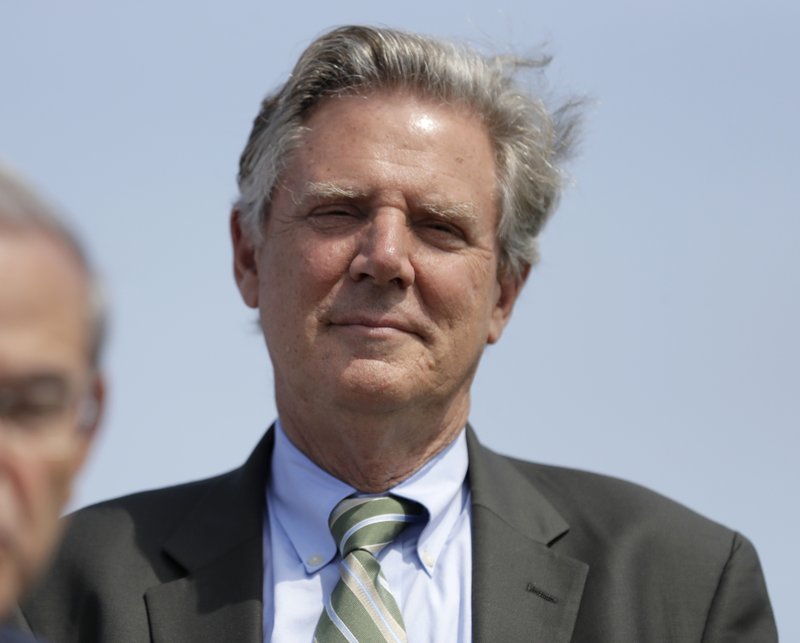
A leading House Democrat announced his opposition Monday to a Republican bill making it easier for some terminally ill patients to try experimental drugs, clouding the measure’s fate. Republicans are hoping for House approval Tuesday, seven months after a similar package cleared the Senate. The “Right to Try” bill gained added momentum after President Donald Trump called for its passage in January’s State of the Union address. Under the bill, if a doctor and drug maker agree to let a patient with life-threatening ailments try an experimental treatment, the federal Food and Drug Administration would no longer need to consent. The FDA would have to be notified of the decision and of any problems that occur. New Jersey Rep. Frank Pallone, top Democrat on the House Energy and Commerce Committee, said the measure is risky, unneeded and “provides false hope to patients.” He also noted that the bill doesn’t require drug makers to provide these treatments to patients, which is often where stumbling blocks can occur. Companies sometimes prefer using what they’ve produced for clinical trials needed for final FDA approval, or worry that a problem could hurt the drug’s marketing prospects. A recent study by the Government Accountability Office, Congress’ investigative agency, found the FDA currently approves 99 percent of such requests, often within hours. The measure strikes a balance between safety and providing “hopeful news for patients desperately seeking the right way to try” experimental treatments, said Energy and Commerce Chairman Greg Walden of Oregon and Michael Burgess of Texas, another top panel Republican. Pallone’s stance is important because GOP leaders want to rush the legislation through the House using a process, normally reserved for uncontroversial measures, that could require a two-thirds majority. If all Republicans vote yes, they’d need the backing of at least 50 Democrats. House Minority Leader Nancy Pelosi, D-Calif., hadn’t taken a public position on the bill by late Monday afternoon. Republicans released the latest version of their proposal Saturday. More than 40 patients’ groups have expressed opposition to the measure, saying it would “likely do more harm than good.” PhRMA, the trade group representing major drug companies, has taken no public stance. Republished with the permission of the Associated Press.
Nancy Pelosi: Put off immigration overhaul, save ‘Dreamers now’
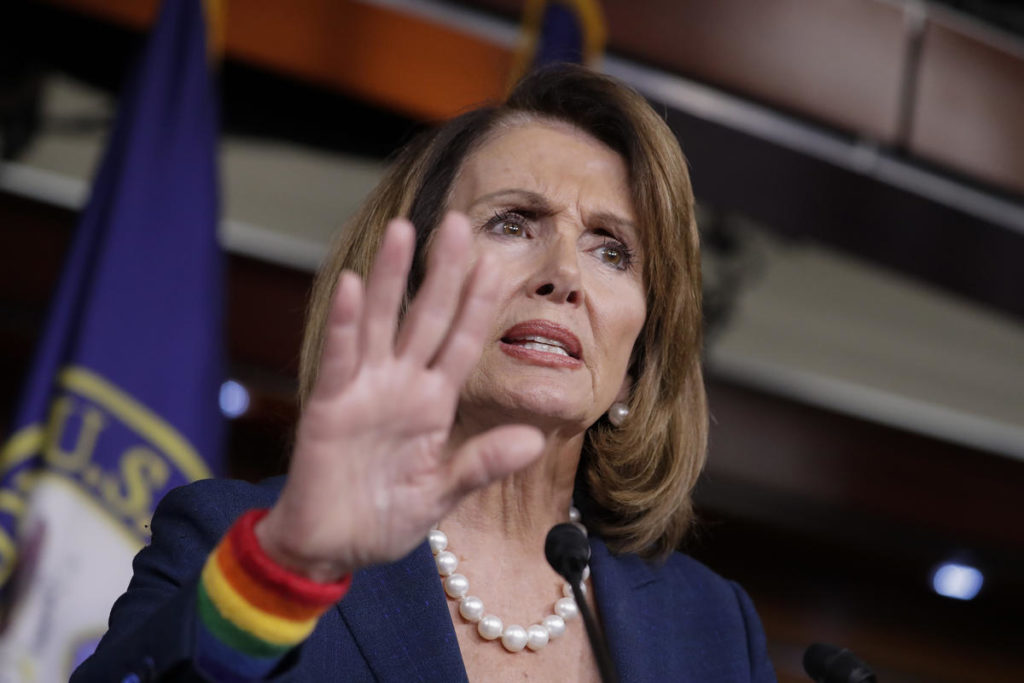
House Democratic leader Nancy Pelosi says she respects young immigrants who shouted her down at an event in San Francisco, but says their call for a comprehensive immigration overhaul is premature. Pelosi says lawmakers must focus on protecting young immigrants brought to the United States illegally as children. Pelosi says: “We are not in a position where we can say all or none. We have to save the Dreamers now.” “Dreamers” is a term used for young immigrants who were brought to the country illegally as children or by parents who overstayed visas. Protesters disrupted an event in Pelosi’s hometown of San Francisco on Monday. They showed their displeasure over her recent meetings with President Donald Trump over ways to continue the program that protects young immigrants from deportation. Republished with permission from the Associated Press.
Donald Trump makes nice with Dems, leaving his party confused
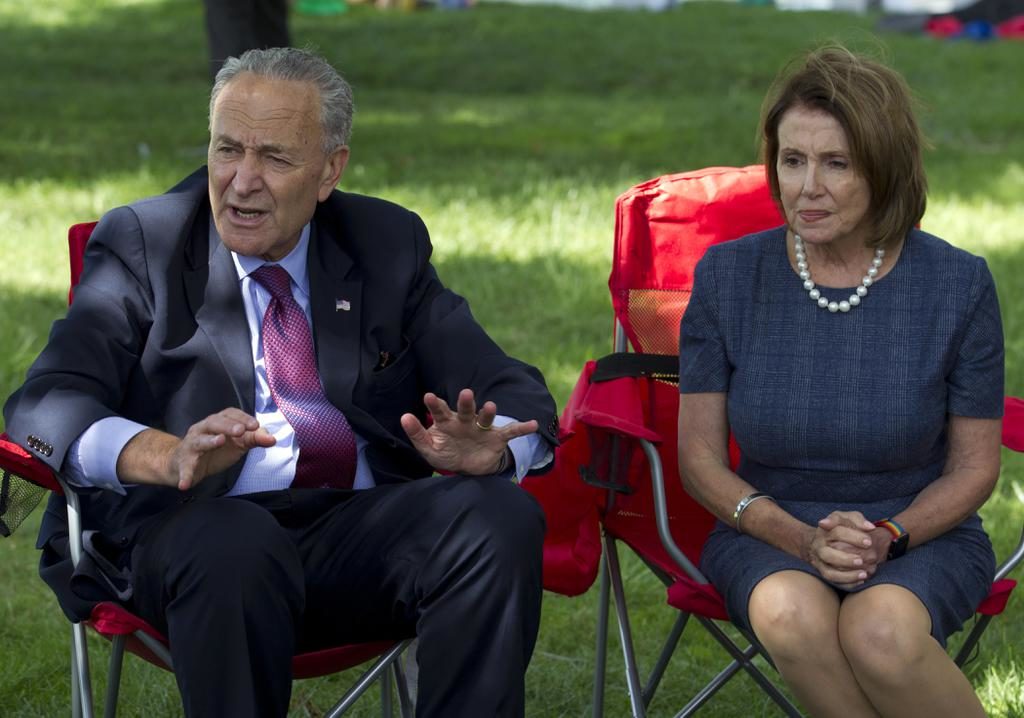
President Donald Trump was in the mood to celebrate after cutting a big deal with opposition Democrats. Joshing with Northeastern officials in the Cabinet Room, Trump hailed New York Democrat Andrew Cuomo as “my governor” and traded banter with Senate Democratic leader Chuck Schumer, another fellow New Yorker. “If you just dropped in from outer space, you wouldn’t know what the last eight months have been like,” said Rep. Peter King, R-N.Y., recalling the friendly exchanges between Trump and Schumer during the meeting with New York and New Jersey lawmakers. That would be the same Schumer whom the president had previously slammed as a “clown” and “Cryin’ Chuck.” And now? “In some ways it’s almost like they were completing each other’s sentences,” King said. On display at that chummy scene Thursday was the Trump who’s emerged in full this past week: Trump the independent. A president who spent months catering to the Republican conservative wing now appears unbound by ideology and untethered by party allegiances. It’s not a complete surprise to his fellow Republicans. They long have worried that Trump, a former Democrat, might shift with the political winds. But Trump’s overtures to Democrats have left Republicans in an awkward and perplexing position, undercut by their leader and unsure of what’s next. “Our grass roots are very confused,” said Rep. Mark Meadows, R-N.C., head of the conservative House Freedom Caucus, on MSNBC Friday. Meadows said he viewed the deal as a “unique situation because of the devastation in Texas.” Trump’s deal with Democrats to raise the U.S. borrowing limit and keep the government running for three month months – all in the name of speeding relief to hurricane victims – quickly passed Congress and gave him the opportunity to savor a victory after months of legislative setbacks. He’s now talking about possible future deals with Democrats – doing away with votes on the raising the debt cap, and shielding from deportation young immigrants living in the United States illegally who were brought here as children. “I think that’s what the people of the United States want to see,” Trump said. “They want to see some dialogue.” It’s unclear how much of Trump’s turnabout is a deliberate strategy to create space for his tax overhaul this fall or simply a deal-maker’s gut decision, bargained during an Oval Office session that left his fellow Republicans befuddled. Trump has been frustrated by GOP leaders and blames House Speaker Paul Ryan, R-Wis., and Senate Majority Leader Mitch McConnell, R-Ky., for his inability to score big triumphs in Congress. He’s appeared unconcerned about dismissing their opposition to the debt ceiling deal, focusing instead on the fact that the move has delivered him rare kudos with some television commentators. Trump sprinkled salt on the wound Friday by reminding GOP leaders via Twitter about their failed efforts to overhaul former President Barack Obama‘s health law: “Republicans, sorry, but I’ve been hearing about Repeal & Replace for 7 years, didn’t happen!” In venting about Republican congressional leaders, Trump may just be channeling his supporters. Trump, who essentially hijacked the party two years ago, has positioned himself as the voice of voters who feel alienated from Washington and disdain both parties. “The Republicans in the Senate did not follow through on their commitment in working with the administration to repeal Obamacare. So what’s he going to do?” asked Tony Perkins, the president of the Family Research Council. Perkins said he didn’t think Trump’s most loyal supporters would approve of extended dealings with Schumer and House Democratic leader Nancy Pelosi of California. But, he added, “They’re just as mad at the Republican leadership as they are the Democrats.” Still, Trump’s startling agreement on the debt left Republicans wondering how far he’s willing to stray from party orthodoxy in pursuit of a deal. Their frustrations spilled out during a closed-door meeting Friday with Treasury Secretary Steve Mnuchin and White House budget chief Mick Mulvaney, a former South Carolina congressman, who were sent to Capitol Hill to defend the deal. At one point Mnuchin, a former Goldman Sachs executive and Democratic donor, drew hisses when he asked House Republicans to “vote for the debt ceiling for me,” according to Rep. Mark Walker, R-N.C. From the start of his presidency, Trump has repeatedly labeled Democrats as obstructionists, and few expect his budding alliance with Schumer and Pelosi to be long-lived. Trump is loathed by the Democratic base, many of whom talk more openly about impeachment than cooperation. But there’s little doubt that Trump’s talk of “dealmaking” may occasionally open up possibilities for Democrats. “I think the president, when it comes to making deals, is an enigma,” said Rep. Steve King, R-Iowa. King said he will continue to work with Trump, but acknowledged that the past week had been a “little unsettling” and noted that “conservative allies have been leaving the West Wing at a fairly regular pace.” One of the top aides King was referring to was Steve Bannon. The strategist was ousted in August but remains a vocal proponent of the president’s agenda. Trump announced the deal with Democrats while Bannon was sitting for an interview with CBS News, but the Breitbart executive chairman saved his most pointed remarks for McConnell and Ryan, accusing them of trying to “nullify” the results of the 2016 election. The headlines on the Breitbart website Friday reflected the anti-establishment wing’s distrust of some of Trump’s New York allies, as well as party leadership – but not of Trump himself. Other Republicans are willing to give Trump a pass, for now. “Of course I view him as a Republican,” said Rep. Darrell Issa, R-Calif. He said that when Republicans can’t solve a problem by themselves, “then the president has that obligation to be that neutral arbitrator.” Republished with permission from the Associated Press.
After Donald Trump deal, Nancy Pelosi predicts greater leverage for Dems
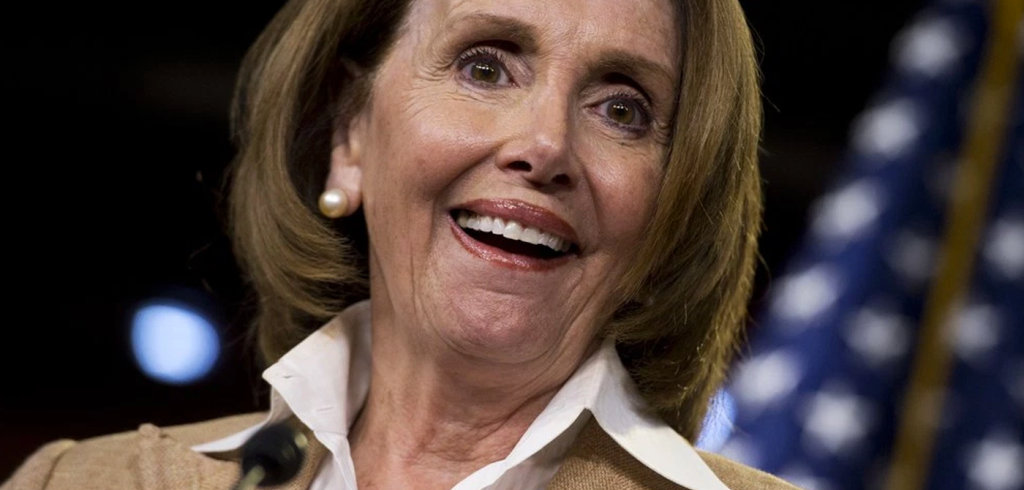
House Minority Leader Nancy Pelosi predicted on Friday that Democrats will have increased leverage on immigration and other issues, after a debt and disaster aid deal they cut with President Donald Trump passed the House on the strength of Democratic votes. Pelosi said she makes “no apology” for working across the aisle with a president disdained in her home state of California, arguing that the president now understands Democrats are committed to compromise, “but also to stand our ground.” The package of Harvey aid money coupled with a short-term increase in the debt ceiling and government spending passed Friday 316-90, with all 90 “no” votes coming from Republicans. Pelosi said that vote suggests Republicans are going to have a hard time passing other upcoming spending bills on their own, and will have to turn to Democrats again. “If it’s depending on Democratic votes, it increases our leverage,” Pelosi said in an interview with a small group of reporters. “It gives us a possibility for passing the DREAM Act” as an amendment to spending legislation. The DREAM Act refers to legislation that would provide legal status to immigrants brought illegally to the country as children. Some 800,000 of these immigrants are currently protected from deportation by temporary work permits granted by an Obama administration program, but Trump has said he will dismantle it. He has given Congress six months to act before the program ends. At Pelosi’s urging, Trump sent a tweet Thursday morning reassuring so-called “Dreamers” that they would not be subject to deportation during that six-month period. Pelosi discussed her conversation with Trump precipitating the tweet. She said that after a discussion with Democratic lawmakers about fears in the immigrant community, she had planned to call White House Chief of Staff John Kelly Thursday morning to talk about it. Trump called her first; aides have previously said one purpose was to boast about positive news coverage of the debt deal struck the day before in the Oval Office over GOP objections. But Pelosi launched into the topic of immigration, telling Trump: “‘I’m so glad you called because this is the challenge that we have. I know you did not mean to instill fear, but that is what is happening.’” “‘Well what can I do?’” the president asked, according to Pelosi. “I said, ‘Well, what you always do,’” Pelosi replied, laughing as she recalled the exchange. “‘Put out a message of assurance to people and we want to hold you accountable to that message of assurance.’” Sure enough, no sooner did Pelosi get off the phone and head into a meeting with fellow Democrats where she began recounting her call with the president, the tweet appeared: “For all of those (DACA) that are concerned about your status during the 6 month period, you have nothing to worry about – No action!” Asked her takeaway from that exchange, Pelosi said: “We have to always assume that people are acting with love in their heart. I’m a big believer in that, until they prove differently to me you have to believe it. And I don’t know if the president fully, I don’t know if he understood how cruel that act was,” she said, referring to the decision to end the immigration program. Pelosi also talked about the now-famous Wednesday meeting at the White House where Trump sided with her and Senate Minority Leader Chuck Schumer on the three-month debt limit extension, dismissing calls for a longer extension from Speaker Paul Ryan, Senate Majority Leader Mitch McConnell, R-Ky., and Treasury Secretary Steven Mnuchin. Pelosi said Democrats had the leverage because Republicans didn’t have the votes to pass the longer extension they wanted on their own. She said Trump quickly grasped that. “The president has been in a business where knowing your numbers has been essential,” Pelosi said. “He saw that they didn’t have the votes; we had a plan.” She said voters expect lawmakers and the president to work together. “We have a responsibility to get something done for the American people,” Pelosi said. “I make no apology for trying to do that with the person who’s going to sign the bill.” Republished with permission from the Associated Press.
Why is Mo Brooks harder on Mitch McConnell than Nancy Pelosi?
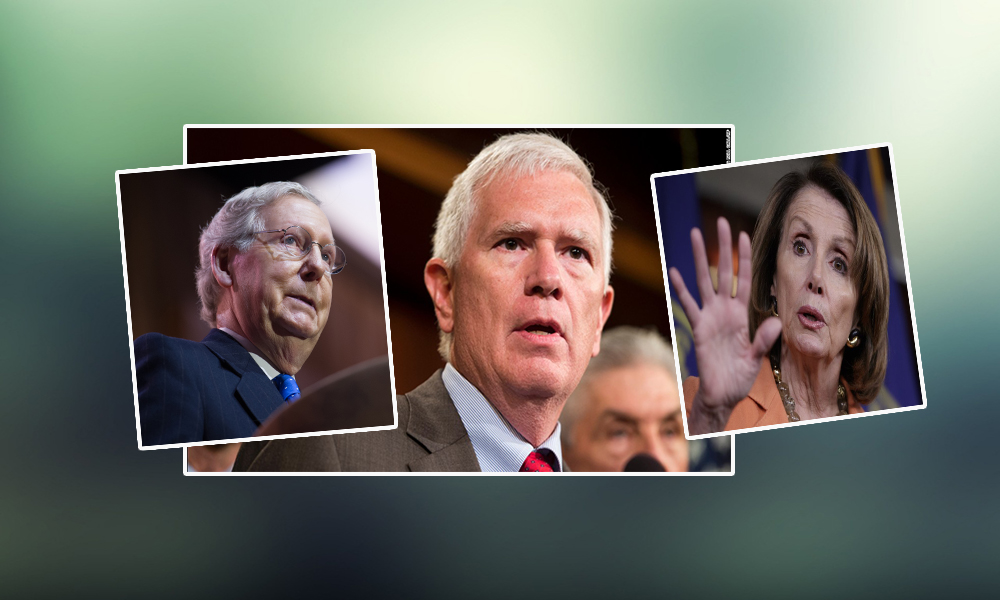
In Alabama’s fast-approaching U.S. Senate primary, Mo Brooks has been quick to vilify Senate Majority Leader Mitch McConnell. Over the past few months, the Huntsville Republican congressman has steadily railed against McConnell’s leadership, as well as that of sitting Sen. Luther Strange, whom he is hoping to unseat next week in the race for the rest of Jeff Sessions’ Senate term. Why then would Brooks be harder on McConnell — a longtime leader of his own party — than he had been on former House Speaker Nancy Pelosi, the much-loathed Democrat from California and frequent Republican target. In 2017, Brooks is running attack ads blasting “Swamp King McConnell,” calling for the Kentucky senator to not only step down but resign from the Senate outright. Only seven years ago, however, Brooks was singing a different tune, panning his Republican primary opponent for saying “something mean” about then-Speaker Pelosi. As the Decatur Daily noted in April 2010, after Alabama Magazine named him one of the state’s most effective lawmakers, Brooks defended the unprofessionally harsh treatment of Pelosi during the Republican primary. “[Brooks] criticizes his main Republican opponent, [Parker] Griffith as lacking those skills,” Eric Fleischauer reported at the time. “He cited a speech in which Griffith — while still a Democrat — offered House Speaker Nancy Pelosi a gift card to a mental health center. ‘When Nancy Pelosi might have agreed with you on, say, (NASA’s) Constellation funding, or on missile defense, now because you’ve insulted her unnecessarily, you’ve made her less willing to work with you, even on the things that you agree on. You need to have some level of professionalism.’” “Someone who is professional would never, under any circumstances, question the mental stability of the speaker of the House,” Brooks added. As far as Brooks is concerned, Pelosi was “unnecessarily insulted,” while McConnell, on the other hand, is a vile “Swamp King.” So, what in the world makes one more deserving of criticism than the other?
Angry Dems turn against leaders after House election losses
Democratic Party divisions were on glaring display Wednesday as a special election loss in a wildly expensive Georgia House race left bitter lawmakers turning their anger on their own leaders. “We as Democrats have to come to terms with the fact that we lost again,” said Rep. Seth Moulton, D-Mass. “Personally I think it’s time for a new generation of leadership in the party.” The loss in Georgia followed similar disappointments in special House elections in Kansas and Montana, as well as in South Carolina Tuesday night. The Carolina outcome was closer than in Georgia but drew little national attention. In the well-to-do Atlanta suburbs, House Minority Leader Nancy Pelosi of California was the focus of torrents of negative advertising in a House race that cost more than $50 million, the most expensive in history. Republican Karen Handel beat Democrat Jon Ossoff by about 5 percentage points. Although the race was widely viewed as a referendum on President Donald Trump, he was rarely discussed by either candidate, and House Democrats were rattled that the attack ads casting the 77-year-old Pelosi as a San Francisco liberal proved so potent. Some expressed fears about the same tactic being used elsewhere as they aim to take back control of the House in next year’s midterms. Democrats need to pick up 24 House seats to retake the majority. “It makes it a heck of a lot harder,” said Rep. Tim Ryan, D-Ohio, who unsuccessfully challenged Pelosi in a leadership election last fall. “One of the disappointing things from the last couple days is that that approach has a little bit of punch to it, it still moves voters.” Trump’s election as president had papered over the intraparty disputes and generational divides among House Democrats, as lawmakers joined in opposing the White House and trying to channel the energy of their party’s liberal base. But now, after a string of disappointments, those divisions have re-emerged, though Pelosi appears unlikely to face an immediate challenge. Lawmakers are also bemoaning a weak Democratic bench of candidates nationally, and demanding a better strategy for success and a new and stronger economic message that differentiates them more clearly from the Republicans. “If we think we’re going to win these elections because President Trump’s at 35 percent, I think in districts like mine and certainly Georgia and South Carolina, it takes more than that,” said Rep. Tim Walz of Minnesota. “And I’m not sure that that’s there yet. I certainly don’t feel it.” “We need to be focused on next November, and what happens with the reality of health care and trade, tax policies and the impact on working men and women,” said Rep. Debbie Dingell of Michigan. She said she has told Democrats to stop focusing on Russia’s meddling in the 2016 election. Put on defense, House Democratic leaders from Pelosi on down tried to spin the outcome in Georgia as positive, arguing that coming in a close second in the solidly Republican district augured well for their chances of taking back the House next year. “Unfortunately a loss for us, but not good news for them,” Pelosi told the rank-and-file in a closed door meeting Wednesday morning, according to Democrats present. “We gave them a run for their money.” Rep. Ben Ray Lujan of New Mexico, who chairs the Democratic Congressional Campaign Committee that invested millions in the race, argued in a memo to lawmakers, “Despite the loss, we have a lot to be proud of” and “we have a unique opportunity to flip control of the House of Representatives in 2018.” And Rep. Steny Hoyer of Maryland, the No. 2 House Democrat, remarked that “we had no business winning those districts” because of their GOP allegiance. Democratic leaders said there are at least 70 other districts that will be easier terrain for them than the one in Georgia after post-census gerrymandering in GOP-led states created so many heavily Republican districts. In a letter to Democrats late Wednesday, Pelosi insisted majority control of the House is up for grabs. “The president’s numbers are in the thirties and our base is energized,” she wrote. “We must now put forth our message.” Many rank-and-file Democrats were not having it. “We put a lot of resources, a lot of fight, and close is only good in horseshoes,” said Rep. Bill Pascrell, D-N.J. “A loss is a loss is a loss and there’s no excuses.” But prescriptions for how the Democrats should move forward varied. Some on the left argued for a sharper progressive message and more pointed attacks on Republicans and Trump, while Democrats from Midwestern and working-class districts emphasized the importance of an economic message that could appeal to working class voters who were drawn to Trump. One thing most everyone could agree on: Coming in second doesn’t cut it now and wouldn’t be an outcome to celebrate next November. Said Rep. Ed Perlmutter of Colorado: “Closing the gap is great, but it’s not good enough, and we have to do better.” Republished with permission of The Associated Press.
Steve Scalise will need more surgery following shooting

A rifle-wielding attacker opened fire on Republican lawmakers as they practiced for a charity baseball game Wednesday, critically wounding House GOP Whip Steve Scalise of Louisiana and hitting aides and Capitol police as congressmen and others dove for cover. The assailant, who had nursed grievances against President Donald Trump and the GOP, fought a gun battle with police before he, too, was shot and later died. Colleagues said Scalise had been fielding balls at second base at a local park in Alexandria, just across the Potomac River from the nation’s capital, as the Republicans practiced for their annual game with Democrats. He dragged himself away from the infield leaving a trail of blood before fellow lawmakers could rush to his assistance. He was listed in critical condition Wednesday night at MedStar Washington Hospital Center, which said he will require several more operations. The hospital says he was shot in the left hip, after which ‘‘the bullet traveled across his pelvis, fracturing bones, injuring internal organs and causing severe bleeding.’’ The shooter was identified as James T. Hodgkinson, a 66-year-old home inspector from Illinois who had several minor run-ins with the law in recent years and belonged to a Facebook group called ‘‘Terminate the Republican Party.’’ He had been living out of his van in the Alexandria area in recent months, the FBI said Capitol Police officers who were in Scalise’s security detail wounded the shooter. He later died of his injuries, Trump told the nation from the White House. The attack on Republicans practicing for a ballgame deeply shook a capital already balancing on what often seems to be a razor’s edge. ‘‘Everyone on that field is a public servant,’’ Trump said, his tone somber, America’s acrimonious politics set aside for the moment. ‘‘Their sacrifice makes democracy possible.’’ Lawmakers noted their good fortune in having armed protectors on hand — ‘‘Thank God,’’ they exclaimed over and over — and said otherwise the shooter would have been able to take a huge deadly toll. The events left the capital horrified and stunned, and prompted immediate reflection on the current hostility and vitriol in American politics. Lawmakers called for a new dialogue on lowering the partisan temperature, and Trump urged Americans to come together as he assumed the role of national unifier for one of the first times in his presidency. Trump later visited the hospital where Scalise was recovering. The president then tweeted: ‘‘Rep. Steve Scalise, one of the truly great people, is in very tough shape – but he is a real fighter. Pray for Steve!’’ Proceedings were canceled for the day in the House, and instead, Speaker Paul Ryan of Wisconsin and Democratic leader Nancy Pelosi of California issued their own calls for unity. ‘‘An attack on one of us is an attack on all of us,’’ Ryan said, to prolonged applause. Shortly after the shooting, Bernie Sanders, the former candidate for the Democratic presidential nomination, said on the Senate floor that the shooter apparently was a volunteer for his campaign last year. Sanders said he denounced the violence ‘‘in the strongest possible terms.’’ Scalise, 51, the No. 3 House Republican leader, was first elected in 2008. The popular and gregarious lawmaker is known for his love of baseball and handed out commemorative bats when he secured the job of House whip several years ago. Texas Rep. Roger Williams said that one of his aides, Zack Barth, was shot but was doing well and expected to fully recover. Two Capitol Police officers sustained relatively minor injuries. A former congressional aide was hospitalized. The shooting occurred at a popular park and baseball complex where Republican lawmakers and others were gathered for a morning practice about 7 a.m. They were in good spirits despite the heat and humidity as they prepared for the annual congressional baseball match that pits Republicans against Democrats. The popular annual face-off, which raises money for charity, is scheduled for Thursday evening at Nationals Park across the Potomac River in Washington, and will go forward as planned. Hodgkinson has been in the area since March, living out of his van, said Washington FBI Special Agent In Charge Tim Slater. Democratic former Alexandria Mayor Bill Euille said he had spoken often with the man on recent mornings at the nearby YMCA. Hodgkinson’s apparent Facebook page included strong criticism of Republicans and the Trump administration. But Slater said authorities were still working to determine a motive and had no indication Hodgkinson knew about the baseball practice ahead of time. The GOP lawmakers’ team was taking batting practice when gunshots rang out and chaos erupted. After Scalise was hit, said Rep. Mo Brooks, an Alabama Republican, the congressman ‘‘crawled into the outfield, leaving a trail of blood.’’ ‘‘We started giving him the liquids, I put pressure on his wound in his hip,’’ Brooks said. The gunman had a rifle and ‘‘a lot of ammo,’’ said Sen. Jeff Flake of Arizona, who was at the practice. Texas Rep. Joe Barton, still in his baseball uniform, told reporters that Scalise’s security detail, Capitol Hill police and then Alexandria police returned fire in a battle that lasted as long as 10 minutes and included dozens of shots. ‘‘The security detail saved a lot of lives,’’ he said. ‘‘It was scary.’’ Lawmakers took cover in the dugout. Barton said his son, Jack, got under an SUV. Texas Rep. Mike Conaway described what sounded like an explosion, then lawmakers scattering off the field as police roamed in search of the gunman and engaged him. ‘‘The guy’s down to a handgun, he dropped his rifle, they shoot him, I go over there, they put him in handcuffs,’’ Conaway said, adding that if the shooter had ‘‘gotten inside the fence, where a bunch of guys were holed up in the dugout, it would have been like shooting fish in a barrel.’’ Rep. Jeff Duncan of South Carolina said he had just left the practice and encountered the apparent gunman in the parking lot before the shooting.
GOP running out of time for legislative achievements
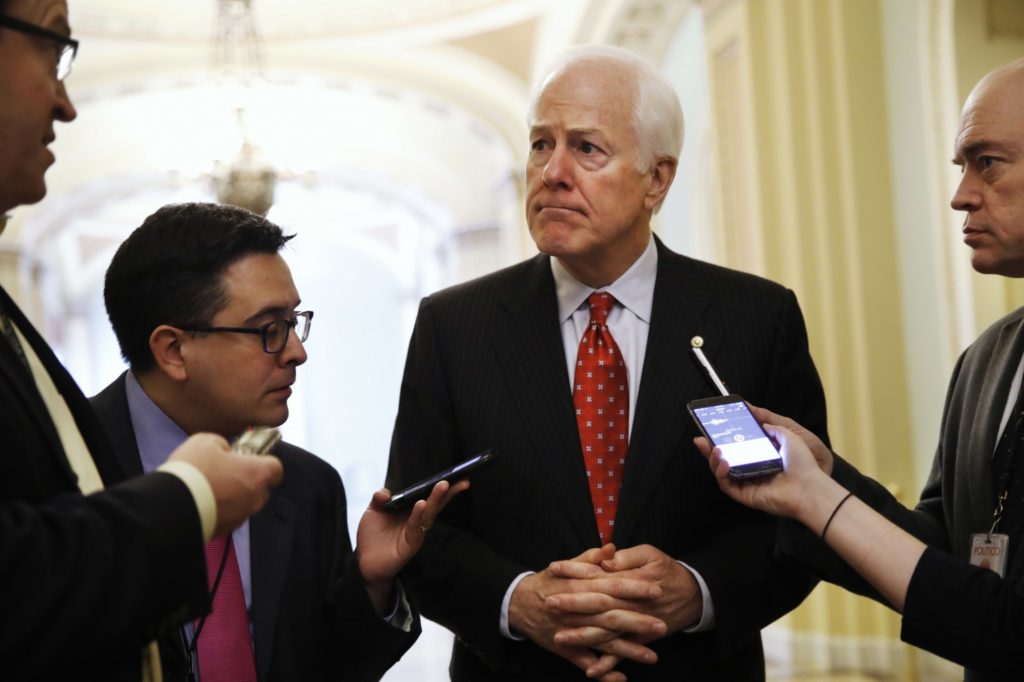
President Donald Trump and his GOP allies on Capitol Hill have made it through nearly half their first year in power without a single major legislative achievement. If that’s going to change, it will have to start soon, a reality that Republican lawmakers will confront when they return to the Capitol on Monday from a weeklong break. “We just need to work harder,” the second-ranking Republican senator, John Cornyn of Texas, said in an interview with KFYO radio in Lubbock, Texas, over the recess. For now, the party’s marquee agenda items remain undone, their fate uncertain. The long-promised effort to overturn former President Barack Obama‘s health law hangs in limbo in the Senate after barely passing the House. A tax overhaul that’s a top Trump priority is unwritten and in dispute, despite his recent claim on Twitter that it’s ahead of schedule. “The president keeps saying the tax bill is moving through Congress. It doesn’t exist,” House Minority Leader Nancy Pelosi, D-Calif., said mockingly on Friday. “It doesn’t exist. There is no tax bill moving through Congress.” Lawmakers will deal with those issues and more as Congress comes back into session, and realistically the window for action is closing fast. Seven legislative weeks are left before Congress scatters for a five-week August recess, a period when lawmakers are likely to lose momentum if they have failed to act on health care or taxes, and face GOP voters frustrated that they haven’t delivered. Both issues are enormously difficult challenges, and the tax legislation must follow, for procedural reasons, passage of a budget, no small task on its own. On top of it all, lawmakers are way behind on the annual spending legislation needed to keep the lights on in government. They were recently informed by Treasury Secretary Steven Mnuchin that they will have to raise the federal government’s borrowing limit before August, a daunting task ripe for brinkmanship. Looming over everything is the investigation into allegations of Russian meddling in the 2016 campaign and connections with the Trump campaign. That investigation is in the hands of a special prosecutor and Congress’ intelligence committees. Former FBI Director James Comey, who was fired by Trump, is scheduled to testify before the Senate committee on Thursday. “The Russia investigation takes a lot of oxygen, it takes a lot of attention,” said Republican Rep. Tom Cole of Oklahoma, a veteran lawmaker. Cole argued that Republicans have not gotten the credit they deserve to date for what they have accomplished: voting to overturn a series of Obama regulations, as well as reaching compromise last month on spending legislation for the remainder of the 2017 budget year that included a big increase for defense. The biggest bright spot for the party and for Trump remains Senate confirmation in early April of Supreme Court Justice Neil Gorsuch, whose elevation goes far to placate conservatives frustrated with inaction on other fronts. “I think we’ve done more than we’ve gotten credit for, but the big ones are ahead,” Cole said. “It’s certainly an ambitious agenda we’ve got, there’s no question about it, it has been all along and I wouldn’t have it any other way.” Historically, Capitol Hill has been at its busiest and most productive in the early days of a new president’s administration, during the traditional honeymoon. But with his approval ratings hovering around 40 percent, Trump never got that grace period, and although his core supporters show no signs of abandoning him, he is not providing the focused leadership usually essential to helping pass major legislation. Within Obama’s first 100 days in office, he had signed a large stimulus package as well as equal pay legislation and other bills. An active Congress under President George W. Bush had made progress on campaign finance legislation and bankruptcy changes, among other issues. In the Senate, Republicans’ slim 52-48 majority gives them little room for error on health care and taxes, issues where they are using complicated procedural rules to move ahead with simple majorities and no Democratic support. Trump’s apparent disengagement from the legislative process was evident this past week when he demanded on Twitter that the Senate “should switch to 51 votes, immediately, and get Healthcare and TAX CUTS approved, fast and easy.” In fact, that’s exactly how Republicans are already moving. But the trouble is within their own ranks as Senate Republicans disagree over how quickly to unwind the Medicaid expansion under Obama’s health law, as well as other elements of the GOP bill. Addressing the health legislation, Cornyn pledged on KFYO, “We’ll get it done by the end of July at the latest.” Despite that show of optimism, there’s uncertainty aplenty over whether the Senate will be able to pass a health bill, and whether a complicated tax overhaul or even a simple set of tax cuts will advance. For some Republicans, their sights are set on the more immediate and necessary tasks of completing the annual spending bills that are needed to avert a government shutdown when the budget year ends Sept. 30, and on raising the debt ceiling to avert a first-ever default. “It’ll be more difficult than it should be,” said GOP Rep. Charlie Dent of Pennsylvania, a senior member of the House Appropriations Committee. “Because Congress is what it is.” Republished with permission of The Associated Press.
With Obama, Clinton gone, GOP revives Nancy Pelosi as boogeyman
Move over Barack Obama and Hillary Clinton, Republicans have a new campaign boogeyman. Well, sort of new. It’s more of an encore for Nancy Pelosi, the 77-year-old House Democratic leader who spent four years as the nation’s first female speaker, lost her majority in 2010 and now wants the gavel again. In that quest, the California lawmaker and fundraiser extraordinaire finds herself as the GOP’s preferred face of a Democratic Party trying to upend Republicans’ monopoly control in Washington. Republicans are testing their approach in a pair of special House races where the specter of a second Pelosi speakership is intended to excite — or scare — Republican voters and sway independents enough to counter surging opposition to President Donald Trump. And the strategy could be a defining theme of the 2018 midterm elections. “Nancy Pelosi and liberal politicians are flooding into Georgia to try and stop our Republican majority,” a national GOP television spot blares in a suburban Atlanta congressional district where 30-year-old Democrat Jon Ossoff nearly won a multiparty primary outright. Ossoff still could claim a June runoff victory that would jolt Washington, and his opponent, Republican Karen Handel, warns he’d be Pelosi’s “rubber stamp.” In Montana, a grainy black-and-white television image of Pelosi greets voters mulling another Democratic upset bid. “Rob Quist talks folksy, but his record is more Nancy Pelosi than Montana,” a voiceover warns of the singer-turned-candidate. Trump himself has joined in. “Ossoff is funded by Nancy Pelosi,” who wants “to land a blow against my presidency,” reads a fundraising email the president signed on Handel’s behalf. And when the U.S. Chamber of Commerce endorsed Handel, the organization’s political chief, Rob Engstrom, bemoaned Pelosi’s “failed legacy as speaker.” Pelosi has proven effective as a prolific fundraiser and a leader capable of rallying Democrats to deliver major legislation for then-President Barack Obama. As speaker, she muscled through the 2010 health care law and the Dodd-Frank financial overhaul — complex laws the likes of which her Republican successors have been unable to handle. Pelosi frames the attacks as proof Republicans have no affirmative case. “It shows the bankruptcy of their own initiatives,” she said recently on NBC’s “Meet the Press” when shown ad clips. Ossoff calls them “tired” and repeated his pledge to be independent. Reminded that Pelosi and other House Democratic leaders held a fundraiser for him in Washington on March 16, he said, “I’m a Democrat running for Congress.” The coordinated GOP assault certainly resonates with voters like Matt West, a Georgia financial planner. West, 45, says his first-round vote for Handel wasn’t about her or Trump, but about national Democrats. “I just don’t believe that he’d stand up to Nancy Pelosi if the district wanted him to,” West says of Ossoff. Some Democrats say Pelosi and other party leaders walk into stereotypes about liberals, making it harder to argue that Trump and Republicans hurt middle-class households. “It gets very difficult when most of our leadership, almost exclusively, are coastal. That’s an issue,” argues Rep. Tim Ryan, D-Ohio, who unsuccessfully challenged Pelosi for minority leader last fall. Former Rep. John Barrow of Georgia, a Democrat, argues the dynamics reflect gerrymandered districts and a campaign process that punishes moderates. Democrats will likely have to win some of those Republican-friendly districts to net the two dozen House seats they’d need for a majority. Barrow weathered the 2010 Republican onslaught but ultimately lost in 2014, after years of Republicans branding him as an Obama-Pelosi tool, even though he did not vote for Pelosi as speaker after Obama took office as president. Barrow instead cast symbolic votes for civil rights leader John Lewis, another Georgia congressman. “Both parties are tightly in the grip of the most partisan voters,” which necessarily yields a more extreme Congress, Barrow said. “I can’t tell you how many folks I had tell me, ‘John, you’d be our man for the job, but I just can’t do anything to support Obama and Pelosi.’” Republicans have long caricatured Pelosi, who hails from a liberal San Francisco district, just as Democrats have used polarizing GOP figures like Sarah Palin and Senate Majority Leader Mitch McConnell of Kentucky to raise money and excite loyal liberals. The difference this time, though, is Republicans having to navigate through the politics created by their own uniquely polarizing president by making Pelosi an almost singular counter now that Obama is out of office. Trump lost the national popular vote by almost 3 million, and he has Gallup job approval ratings lower than any recent president so early in his tenure. Republicans also attribute to Trump the national fundraising deluge for Ossoff, who’s on track to collect more than $10 million ahead of his June 20 runoff, and with the surprisingly close GOP victory margin in an April special House election in Kansas. As Barrow, the former Georgia congressman, noted, the Pelosi effect is concentrated with a House congressional map drawn by many GOP-controlled legislatures that created more districts where she is an easy target. “Trump may not be that popular here,” said Georgia Republican Greg Williams, who backed Handel’s top GOP opponent. But naming Pelosi, he said, is “a dog whistle for conservatives.” Republished with permission of The Associated Press.
