
Joe Biden scraps planned visit to Australia, Papua New Guinea to focus on debt limit talks
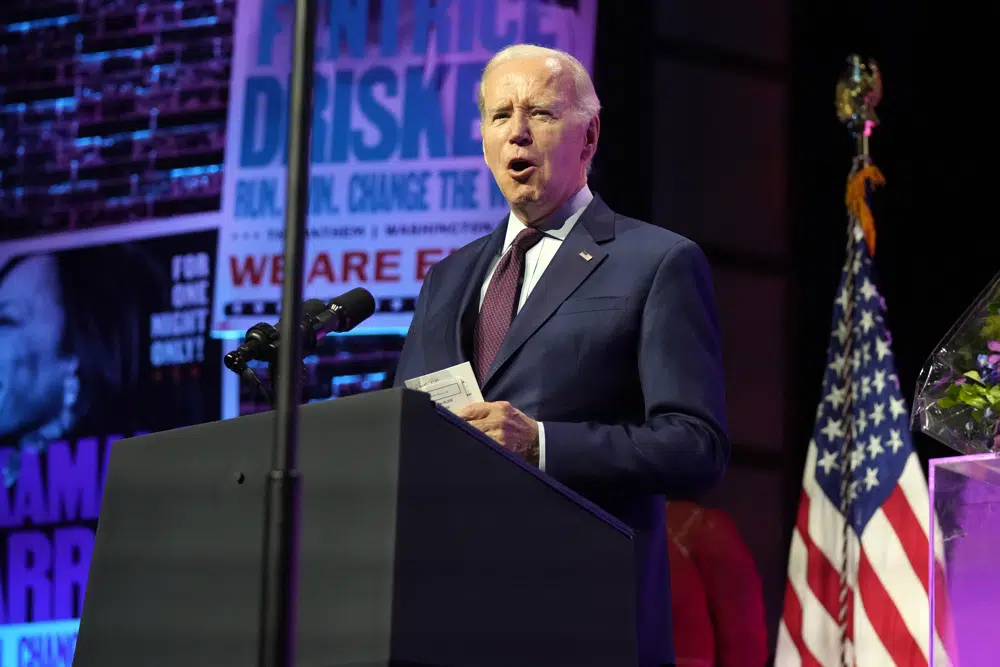
President Joe Biden said Tuesday he’s curtailing his upcoming trip to the Indo-Pacific, scrapping what was to be a historic stop in Papua New Guinea as well as a visit to Australia for a gathering with fellow leaders of the so-called Quad partnership so he can focus on debt limit talks in Washington. The scuttling of two of the three legs of the overseas trip is a foreign policy setback for an administration that has made putting a greater focus on the Pacific region central to its global outreach. Biden said he still plans to depart on Wednesday for Hiroshima, Japan, for a Group of Seven summit with leaders from some of the world’s major economies. He will return to the U.S. on Sunday. “I’m postponing the Australia portion of the trip and my stop in Papua New Guinea in order to be back for the final negotiations with congressional leaders,” Biden said at the start of a Jewish American Heritage Month event at the White House. He added, “The nature of the presidency is addressing many of the critical matters all at once. So I’m confident we’re going to continue to make progress toward avoiding the default and fulfilling America’s responsibility as a leader on the world stage.” Biden said he spoke to Australian Prime Minister Anthony Albanese earlier on Tuesday to inform him he was postponing a visit to Australia and invited him to Washington for an official state visit at a yet-to-be determined date. White House staff broke the news to Papua New Guinea Prime Minister James Marape. White House officials did not offer an immediate response to questions about when Biden might reschedule visits to the two countries. “Revitalizing and reinvigorating our alliances and advancing partnerships like the Quad remains a key priority for the President,” White House press secretary Karine Jean-Pierre said. “This is vital to our ability to advance our foreign policy goals and better promote global stability and prosperity. We look forward to finding other ways to engage with Australia, the Quad, Papua New Guinea, and the leaders of the Pacific Islands Forum in the coming year.” Japanese Prime Minister Fumio Kishida has invited Albanese, Indian Prime Minister Narendra Modi as well as Pacific Island leaders to come to Hiroshima during the G-7. Albanese, in an Australian Broadcasting Corp. interview, said that the Quad leaders are now hoping to hold a meeting in Hiroshima. “We’ll also hopefully be able to find a time when the four of us can sit down,” Albanese said. “We will have to organize the logistics of the Quad meeting now in Sydney, and we’ll be discussing with our partners in the U.S., but also Japan and India over the next day or so.” Biden had been scheduled to travel on to Papua New Guinea to meet with Pacific Island leaders and then to Australia for a meeting of the leaders of the Quad partnership, made up of the U.S., Australia, India, and Japan. The Papua New Guinea stop would have been the first visit by a sitting U.S. president to the island country of more than 9 million people. The Quad partnership first formed during the response to the 2004 Indian Ocean tsunami that killed some 230,000 people. Since coming into office, Biden has tried to reinvigorate the Quad as part of his broader effort to put greater U.S. focus on the Pacific and counter increasing economic and military assertiveness by China in the region. Biden announced his decision soon after he wrapped up a meeting on Tuesday afternoon with Republican House Speaker Kevin McCarthy, Senate Minority Leader Mitch McConnell, R-Ky., Senate Majority Leader Chuck Schumer, D-N.Y., and House Minority Leader Hakeem Jefferies, D-N.Y., for talks on the debt limit standoff. Earlier Tuesday, White House National Security Council spokesman John Kirby expressed administration officials’ frustration that the debt talks are having an impact on the president’s dealings on the international stage. “We wouldn’t have to have this conversation. I wouldn’t have to answer these questions if Congress just did the right thing,” Kirby said. Some Republican lawmakers questioned Biden’s decision to travel overseas considering the consequences of the debt limit talks. “I think he should not leave, and he should focus on the debt limit here at home,” Sen. Rick Scott, R-Fla. With the brief stop in Papua New Guinea to meet with Pacific Island leaders, Biden had hoped to demonstrate that the United States is committed to remaining engaged for the long term in the Pacific Islands. The area has received diminished attention from the U.S. in the aftermath of the Cold War, and China has increasingly filled the vacuum — through increased aid, development, and security cooperation. Biden has said that he’s committed to changing that dynamic. Last September, Biden hosted leaders from more than a dozen Pacific Island countries at the White House, announcing a new strategy to help to assist the region on climate change and maritime security. His administration also recently opened embassies in the Solomon Islands and Tonga, and has plans to open one in Kiribati. As vice president, Biden saw up close how domestic politics can complicate foreign policy during the 2013 government shutdown. President Barack Obama was forced to bail on attending the Asia-Pacific Economic Cooperation summit and the East Asia Summit in Brunei as well as a visit to Malaysia and the Philippines in the midst of a government shutdown as he negotiated with GOP leaders. President Bill Clinton opted to skip his scheduled participation in the APEC summit in Japan in the midst of the 1995 government shutdown. He opted to send Vice President Al Gore in his place. Republished with the permission of The Associated Press.
U.S. to swiftly boost global vaccine sharing, Joe Biden announces
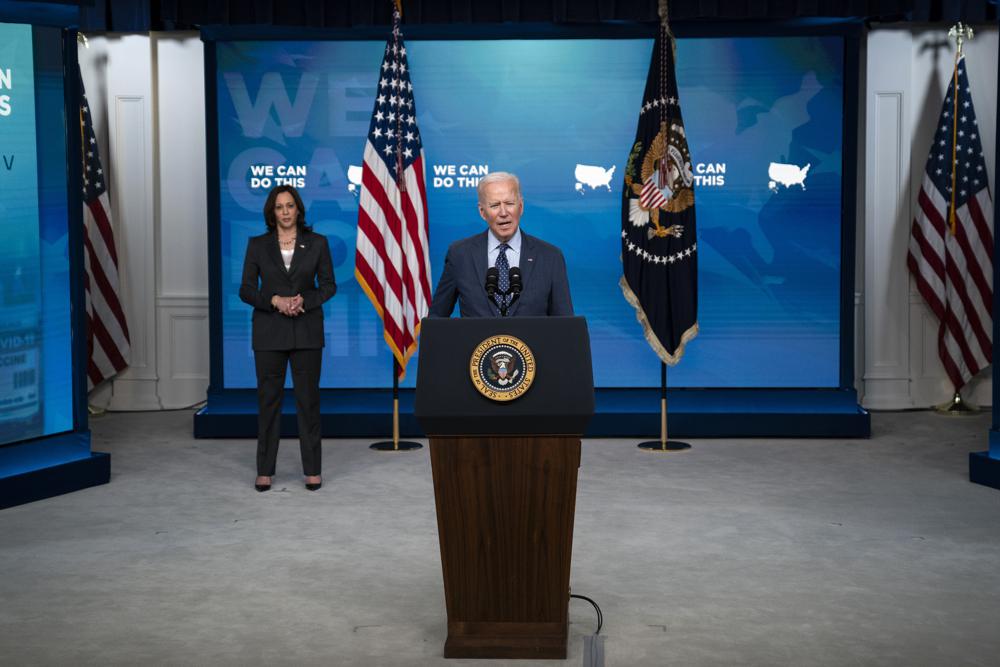
President Joe Biden announced Thursday the U.S. will swiftly donate an initial allotment of 25 million doses of surplus vaccine overseas through the United Nations-backed COVAX program, promising infusions for South and Central America, Asia, Africa, and others at a time of glaring shortages abroad and more than ample supplies at home. The doses mark a substantial — and immediate — boost to the lagging COVAX effort, which to date has shared just 76 million doses with needy countries. The announcement came just hours after World Health Organization officials in Africa made a new plea for vaccine sharing because of an alarming situation on the continent, where shipments have ground to “a near halt” while virus cases have spiked over the past two weeks. Overall, the White House has announced plans to share 80 million doses globally by the end of June, most through COVAX. Officials say a quarter of the nation’s excess will be kept in reserve for emergencies and for the U.S. to share directly with allies and partners. Of the first 19 million donated through COVAX, approximately 6 million doses will go to South and Central America, 7 million to Asia, and 5 million to Africa. “As long as this pandemic is raging anywhere in the world, the American people will still be vulnerable,” Biden said in a statement. “And the United States is committed to bringing the same urgency to international vaccination efforts that we have demonstrated at home.” U.S. National Security Adviser Jake Sullivan said the U.S. “will retain the say” on where doses distributed through COVAX ultimately go. But he also said: “We’re not seeking to extract concessions, we’re not extorting, we’re not imposing conditions the way that other countries who are providing doses are doing. … These are doses that are being given, donated free and clear to these countries, for the sole purpose of improving the public health situation and helping end the pandemic.” The remaining 6 million in the initial distribution of 25 million will be directed by the White House to U.S. allies and partners, including Mexico, Canada, South Korea, West Bank and Gaza, India, Ukraine, Kosovo, Haiti, Georgia, Egypt, Jordan, Iraq, and Yemen, as well as for United Nations frontline workers. The White House did not say when the doses would begin shipping overseas, but press secretary Jen Psaki said the administration hoped to send them “as quickly as we can logistically get those out the door.” Vice President Kamala Harris informed some U.S. partners they will begin receiving doses in separate calls with Mexican President Andres Manuel López Obrador, President Alejandro Giammattei of Guatemala, Indian Prime Minister Narendra Modi, and Prime Minister Keith Rowley of Trinidad and Tobago. Harris is to visit Guatemala and Mexico in the coming week. The long-awaited vaccine sharing plan comes as demand for shots in the U.S. has dropped significantly — more than 63% of adults have received at least one dose — and as global inequities in supply have become more pronounced. Scores of countries have requested doses from the United States, but to date, only Mexico and Canada have received a combined 4.5 million doses. The U.S. also has announced plans to share enough shots with South Korea to vaccinate its 550,000 troops who serve alongside American service members on the peninsula. White House COVID-19 coordinator Jeff Zients said that 1 million Johnson & Johnson doses were being shipped to South Korea Thursday. The U.S. has committed more than $4 billion to COVAX, but with vaccine supplies short — and wealthy nations locking up most of them — the greater need than funding has been immediate access to actual doses to overcome what health officials have long decried as unequal access to the vaccines. The U.S. action means “frontline workers and at-risk populations will receive potentially life-saving vaccinations” and bring the world “a step closer to ending the acute phase of the pandemic,” said Dr. Seth Berkley, CEO of Gavi, which is leading the COVAX alliance. However, Tom Hart, the acting CEO of The ONE Campaign, said that while Thursday’s announcement was a “welcome step, the Biden administration needs to commit to sharing more doses. “The world is looking to the U.S. for global leadership, and more ambition is needed,” he said. Biden has committed to providing other nations with all 60 million U.S.-produced doses of the AstraZeneca vaccine, which has yet to be authorized for use in America but is widely approved around the world. The AstraZeneca doses have been held up for export by a weeks-long safety review by the Food and Drug Administration, and without them, Biden will be hard-pressed to meet his sharing goal. The White House says the initial 25 million doses announced Thursday will be shipped from existing federal stockpiles of Pfizer, Moderna, and Johnson & Johnson vaccines. More doses are expected to be made available to share in the months ahead. Mexican President Andrés Manuel López Obrador said via Twitter that Harris had informed him before the White House announcement of the decision to send 1 million doses of the single jab Johnson & Johnson vaccine. “I expressed to her our appreciation in the name of the people of Mexico,” he wrote. Guatemala’s Giammattei said Harris told him the U.S. government would send his country 500,000 doses of COVID-19 vaccine. As part of its purchase agreements with drug manufacturers, the U.S. controlled the initial production by its domestic manufacturers. Pfizer and Moderna are only now starting to export vaccines produced in the U.S. to overseas customers. The U.S. has hundreds of millions more doses on order, both of authorized and in-development vaccines. The White House also announced that U.S. producers of vaccine materials and ingredients will no longer have to prioritize orders from three drugmakers working on COVID-19 shots that haven’t received U.S. approval — Sanofi, Novavax, and AstraZeneca — clearing the way for more materials to be shipped overseas to help production there. Republished with the permission of the Associated Press.
Donald Trump returns to domestic squabbles on India trip
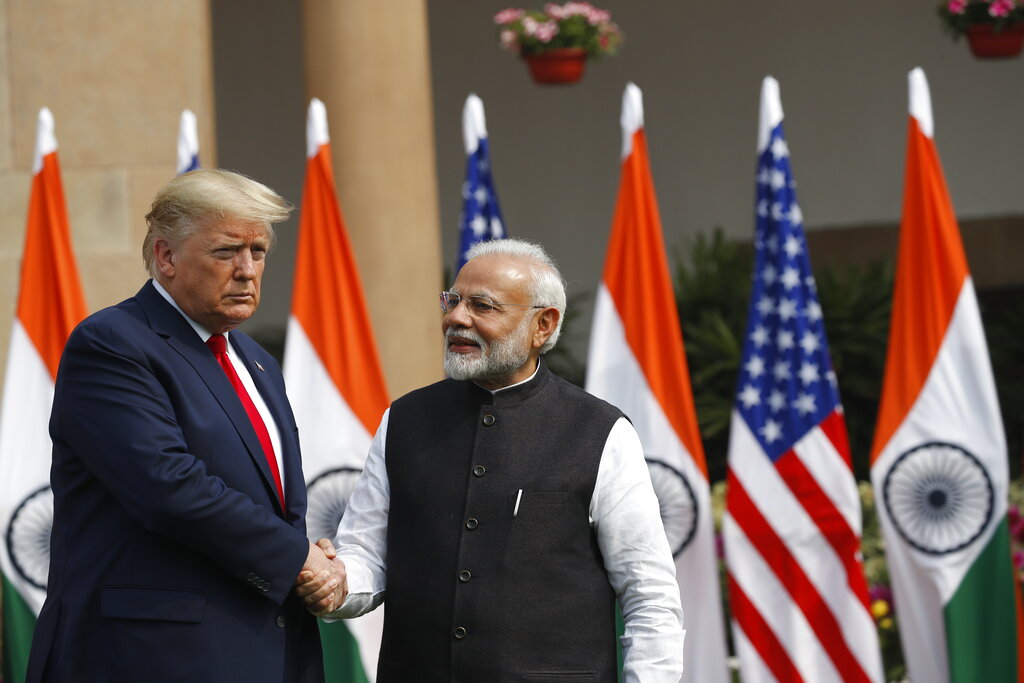
Returning to domestic squabbles, Donald Trump lashed out at Supreme Court justices and his Democratic rivals on Tuesday during the second and last day of a whirlwind trip to India. Addressing reporters and business leaders, Trump warned of economic calamity if he loses his reelection race in November and repeated his call for two liberal-leaning Supreme Court justices to recuse themselves from cases involving him or his administration. The Republican president also said he had not been briefed on intelligence suggesting Russia is meddling in the 2020 election, either to bolster him or Democratic candidate Bernie Sanders. “Nobody ever told me that,” he said at a news conference, later adding,“I want no help from any country and I haven’t been given help from any country,” despite Russia’s well-documented meddling in the 2016 election to help him win. Trump had joked at the beginning of the news conference that he would be “very, very conservative” in his answers to avoid distracting from his “fantastic two days” in India. But then he quickly launched into attacks, including criticizing Supreme Court Justices Ruth Bader Ginsburg and Sonia Sotomayor, the latter for a blistering dissent that was critical of the Trump administration’s rush to claim emergencies when asking the Supreme Court to review cases. “I just don’t know how they can not recuse themselves for anything Trump or Trump-related,” he said. He added: “What Justice Sotomayor said yesterday was highly inappropriate. She’s trying to shame people with perhaps a different view into voting her way.” He said Ginsburg had gone “wild” against him during the 2016 campaign. Trump spent much of Tuesday meeting with Indian Prime Minister Narendra Modi and emerged saying he was optimistic about the prospects of inking a trade deal with India despite moves by both sides that created doubt about the ability to reach an agreement. Trump had made clear before the trip that hammering out a long-sought trade deal with India was unlikely during the two-day trip. “Our teams have made tremendous progress on a comprehensive trade agreement and I’m optimistic we can reach a deal that will be of great importance to both countries,” Trump told reporters on the second and final day of his whirlwind, 36-hour, first official visit to India.He said at the news conference that, if a deal happens, it will likely be “towards the end of the year.” The day began with an elaborate welcome ceremony in front of the grand Rashtrapati Bhavan Presidential Palace in New Delhi, continuing the pomp and pageantry the Indian government had lavished on Trump a day earlier. Cannons fired as the president’s armored car, nicknamed “The Beast,” rolled through the palace gates accompanied by a parade of red-uniformed guards on horseback. The ceremony included hundreds of military officials, marching with instruments and swords, as well as an official greeting by India’s president and Modi. Elsewhere in Indian capital, new violence erupted a day after at least seven people, including a police officer, were killed and nearly 100 others reportedly injured in clashes between hundreds of supporters and opponents of a new Indian citizenship law that provides fast-track naturalization for some foreign-born religious minorities but not Muslims, police said. Protesters in several areas of northeast Delhi defied orders prohibiting the assembly of more than five people and threw stones and set some shops and vehicles on fire, a police officer said. Some homes were attacked with rocks. Trump declined to comment on the law. “I don’t want to discuss that. I want to leave that to India,” he said. But he added that he privately had raised the issue of religious freedom with Modi and that Modi was “incredible” on the subject. “He wants people to have religious freedom,” said Trump, who proposed temporarily barring all Muslims from entering the U.S. during his 2016 campaign and successfully implemented a travel ban that targets travelers from certain majority-Muslim countries. And he continued to shower praise on Modi for the opulent and colorful welcome spread across three cities. “The last two days were amazing in every sense of the word,” Trump said as he and Modi briefly addressed reporters after the first of their two meetings. Trump described the trip as “unforgettable,” “extraordinary” and an expression of “love.” Modi said he was thankful Trump visited despite the presidential campaign underway in the United States. Trump has said the short India visit was partly due to presidential politics. “I know that it’s busy time for you in the United States,” Modi told Trump. “But despite that, you accepted an invitation to visit India. I welcome you and your delegation.” Modi said talks to ease trade tensions between their countries would continue. Those tensions escalated after Trump imposed tariffs on Indian steel and aluminium exports. India responded with higher penalties on U.S. agricultural goods and restrictions on medical devices, prompting the U.S. to strip India of its decades-old trade preferences. At a meeting with Indian business leaders, the Republican president abandoned the tradition of avoiding domestic political squabbles while traveling abroad and criticized the Democratic candidates who are competing for the right to challenge his reelection bid in November, warning of economic turmoil if one of them defeats him. He said he believes the U.S. economy is being held back by the upcoming U.S. election and claimed that, “if the wrong person gets elected, everything will come to a halt” and unemployment will soar. Trump also addressed the coronavirus outbreak, which has begun to spook the U.S. stock market. Trump said the administration has asked Congress for an additional $2.5 billion to help get the U.S. ready “just in case something should happen” and to assist countries he says are ill-equipped to deal with the virus’ spread on their own. During Monday’s protests, police fired tear gas and used canes as they charged at the protesters in several districts of New Delhi. The rival groups hurled rocks at each other and set some houses, shops, vehicles and a gasoline pump on fire.
Donald Trump receives colorful welcome on international trip
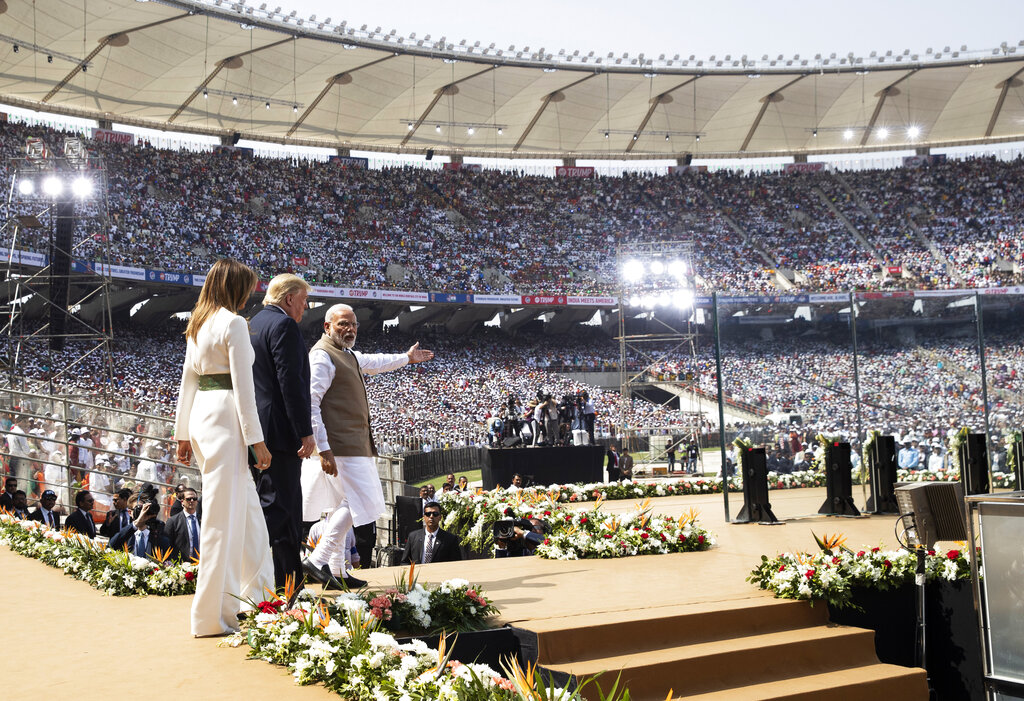
More than 100,000 packed the world’s largest cricket stadium in India.
Revelers bid adieu to a year of conflicts, celebrity deaths

As 2016 draws to a close, revelers around the world are bidding a weary adieu to a year filled with political surprises, prolonged conflicts and deaths of legendary celebrities. How people are ushering in the new year: AUSTRALIA Sydney sent up a dazzling tribute to 2016’s fallen icons with a New Year’s Eve fireworks display honoring the late singer David Bowie and late actor Gene Wilder, becoming the first major city to bid a bittersweet adieu to a turbulent year. The glittering display over Sydney’s famed harbor and bridge featured Saturn and star-shaped fireworks set to “Space Oddity,” the classic song by Bowie — one of the seemingly endless parade of beloved entertainers who died in 2016. Wilder was also honored as the bridge lit up in a rainbow of colors while a song from Wilder’s famed film “Willy Wonka and the Chocolate Factory” played. “This year, sadly, we saw the loss of many music and entertainment legends around the world,” fireworks show co-producer Catherine Flanagan said. “So celebrating their music as part of Sydney New Year’s Eve fireworks displays is an opportunity to reflect on the year that has been and what the future may hold.” ___ LAS VEGAS More than 300,000 visitors are expected to descend on Las Vegas for an extravagant New Year’s Eve celebration. Nightclubs are pulling out all the stops with performances from DJ Calvin Harris, rappers T-Pain and Kendrick Lamar and artists Drake and Bruno Mars. The city’s celebrity chefs have crafted elaborate prix fixe menus complete with caviar and champagne toasts. An eight-minute fireworks show will kick off at the stroke of midnight, with rockets launching from the tops of half a dozen casinos. Federal officials have ranked the celebration just below the Super Bowl and on par with the festivities in Times Square. FBI and Secret Service agents will work alongside local police departments that are putting all hands on deck for the big night. ___ GERMANY In Berlin the mood was more somber than celebratory. “I don’t like the way politics is going,” said Daniel Brandt. “Fears are being fanned and people are so angry with each other.” The tone of public debate in Germany has become shriller over the past two years with the influx of hundreds of thousands of migrants. Some Germans blame Chancellor Angela Merkel for attacks such as the recent rampage in Berlin, where a failed asylum-seeker from Tunisia rammed a truck into a crowded Christmas market, killing 12 people and injuring dozens more. As the country heads for a general election in which the anti-immigration Alternative for Germany party is expected to poll strongly, Brandt said he was hoping for “proper solutions to our problems.” Two Israeli tourists, on a visit to the German capital, seemed at a loss when asked about their wishes for 2017. “Peace on Earth. Just happiness, really,” said Nathan and Libat, declining to give their last names. Walking by the Reichstag, Germany’s Parliament building, Hamed Noori said 2016 had been a good year. “I came to Germany from Afghanistan,” he said. “Life is better here.” Birgitta Bergquist, a recent retiree visiting Berlin from Sweden, said she looked forward to spending more time with her 3-year-old granddaughter. “And we hope the family stays healthy.” Nicole Durand-Nusser, originally from France but living in Berlin for almost 50 years, said 2016 had been a difficult year: “Brexit, Trump, Erdogan — it’s all getting worse. “I’m a convinced European and I hope Europe doesn’t collapse in 2017,” she said. ___ TURKEY Neslihan Dogruol, a restaurant owner in a chic Istanbul neighborhood, said she hopes for peace in 2017 following a year filled with “unrest and death.” “2016 affected everyone badly,” she said, referring to major attacks that hit Turkey in the past year. The restaurant, adorned with snowflakes and tiny decorative lights for the evening, will have fewer people for dinner. “There is a serious gap between 2015 and 2016 in terms of business, people are going out less,” Dogruol said, adding that she expects more people to come for drinks. Security measures were heightened in major Turkish cities. Traffic leading up to key squares in Istanbul and the capital, Ankara, will be closed, police said. In Istanbul, 17,000 police officers have been put on duty, some camouflaged as Santa Claus and others as street vendors, Turkey’s state-run Anadolu news agency reported on Friday. Ankara and Istanbul were targeted by bomb attacks in 2016, killing more than 180 people. Turkey has been in the throes of violence, combatting the Islamic State group, Kurdish militants and a coup attempt blamed on the U.S.-based cleric Fethullah Gulen. ___ RUSSIA President Vladimir Putin invoked a bit of seasonal enchantment in his New Year’s Eve remarks to the nation. “Each of us may become something of a magician on the night of the New Year,” Putin said in a short televised address broadcast in the closing minutes of 2016 in each of Russia’s 11 time zones. “To do this we simply need to treat our parents with love and gratitude, take care of our children and families, respect our colleagues at work, nurture our friendships, defend truth and justice, be merciful and help those who are in need of support. This is the whole secret,” he said. New Year’s Eve is Russia’s major gift-giving holiday, and big Russian cities were awash in festive lights and decorations. The Moscow subway offered a special holiday train, festooned with lights and artificial greenery. “I wish for the next year to better than this,” said rider Alexander Pisaryev. “We are waiting for good, for peace and order,” said another, Valentina Daineka. ___ THE VATICAN Pope Francis has called on the faithful to help young people find a place in society, noting the paradox of “a culture that idolizes youth” and yet has made no place for the young. Francis said during vespers marking New Year’s Eve that young people have been “pushed to the margins of public life, forcing them to migrate
