
House Speaker Nathaniel Ledbetter announces committee appointments
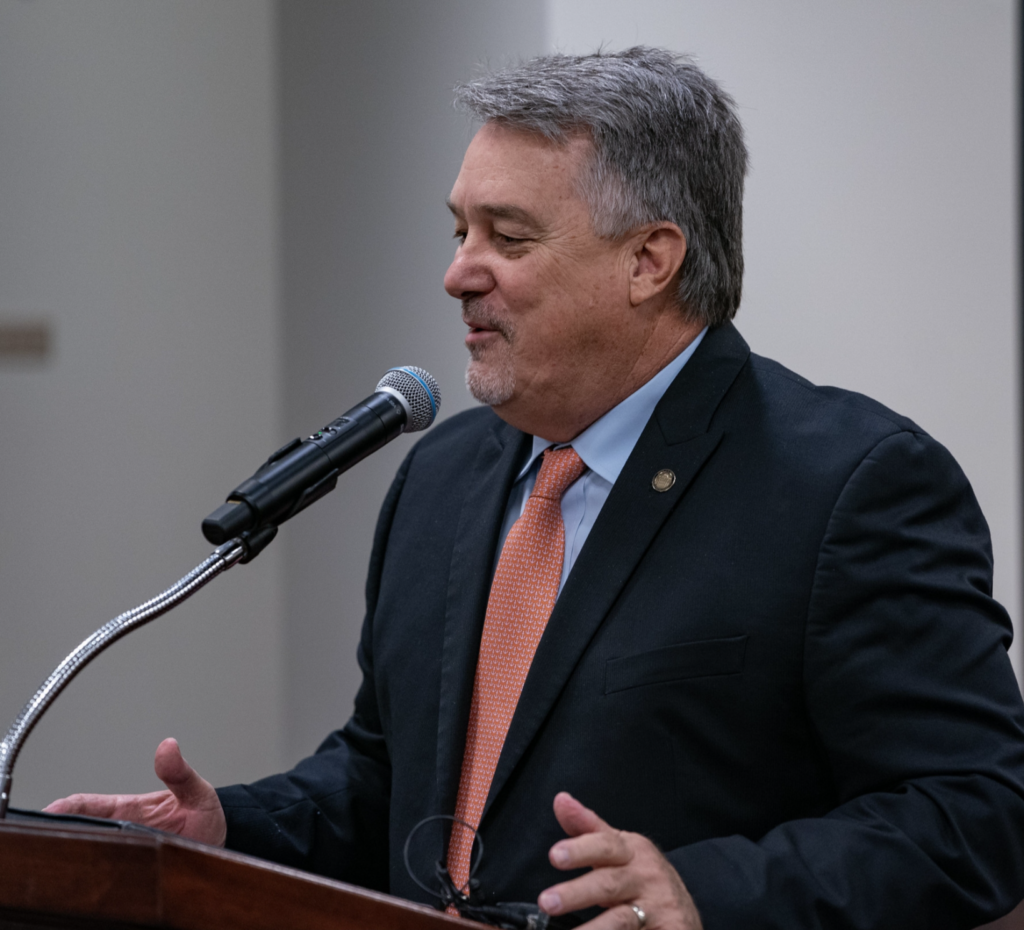
On Friday, State Representative Kyle South (R-Fayette) resigned from the Alabama House of Representatives to take a job as the President and CEO of the West Alabama Chamber of Commerce. This move created vacancies in the committees on which he served. Speaker of the House Nathaniel Ledbetter (R-Rainsville) announced his appointments to fill those committee vacancies. Effective July 1, these House members will be appointed to the following committees: Rules Committee: Rep. Debbie Wood (R—Valley) Ways and Means General Fund Vice Chair: Rep. Chris Blackshear (R—Smiths Station) Ways and Means General Fund Committee: Rep. Kerry Underwood (R—Tuscumbia) Insurance Committee: Rep. Matt Woods (R—Jasper) Financial Services Committee: Rep. James Lomax (R—Huntsville) Joint Transportation Committee: Rep. Rhett Marques (R—Enterprise) ARPA Oversight Committee: Rep. Jeff Sorrells (R—Hartford) South’s departure had been announced weeks ago, giving the Speaker plenty of time to plan for making these appointments. Governor Kay Ivey will soon announce the dates for the special election to fill the vacancy in House District 16. There are now two vacancies in the 105-member House of Representatives. The other is in House District 55, where former Rep. Fred Plump (D-Birmingham) resigned and pleaded guilty to public corruption charges. The Alabama Legislature will meet on July 17 for its second special session to address court-ordered congressional redistricting. To connect with the author of this story or to comment, email brandonmreporter@gmail.com.
Nathaniel Ledbetter announces appointments to the Reapportionment Committee
On Tuesday, Speaker of the House Nathaniel Ledbetter announced that he had appointed a number of House members to serve on the Permanent Legislative Committee on Reapportionment. The House members appointed are: Cynthia Almond (R-Tuscaloosa) Barbara Boyd (D-Anniston) Jim Carns (R-Birmingham) Steve Clouse (R-Ozark) Corley Ellis (R-Columbiana) Chris England (D-Tuscaloosa) Laura Hall (D-Huntsville) Sam Jones (D-Mobile) Joe Lovvorn (R-Auburn) Chris Pringle (R-Mobile) Rex Reynolds (R-Huntsville). Since this is a joint committee, it is also made up of members of the Senate. The appointment of 11 members from the House would indicate an expansion of the committee. According to the committee website, the joint committee has just six members: Sens. Steve Livingston, Dan Roberts, and Bobby Singleton, and Reps. Kyle South, Laura Hall, and Chris Pringle. South is leaving the Legislature at the end of the month to accept a position as President and CEO of the West Alabama Chamber of Commerce. Presumably, the Senate will now appoint another eight joint committee members. The Joint Committee on Reapportionment normally redistricts the congressional districts, the state board of education districts, and legislative districts every ten years following the decennial census. In 2022 a three-judge panel of the Eleventh Circuit Court of Appeals rejected Alabama’s 2021 congressional redistricting as being in violation of the Voting Rights Act of 1965. Alabama appealed to the U.S. Supreme Court, which earlier this month found that the lower court was correct in its interpretation and has restored the lower court’s ruling that the state is in violation of the Voting Rights Act. The three-judge panel has given the Legislature until the middle of next month to submit a new congressional redistricting of the state to the federal court. The three-judge panel has ordered the Legislature to submit a new map where there are two majority-minority districts or something as close to that as possible. Alabama Governor Kay Ivey is expected to call a special session no later than July 17 to attempt to comply with the court order. If the Legislature cannot reach an agreement on a redistricting plan by July 21 or the Court does not like the State’s plan, then the three-judge panel may appoint a special master who will draw the districts for the state. Republicans currently control six of Alabama’s congressional seats, while Democrats control only the Seventh Congressional District. None of the seven congressional races were competitive in the general election last year. The redistricting could make two of those districts winnable for Alabama Democrats. To connect with the author of this story or to comment, email brandonmreporter@gmail.com.
Special session to be held next month

The U.S. Supreme Court surprised many court observers earlier this month when it ruled that Alabama’s congressional redistricting passed in 2021 violated the Voting Rights Act of 1965. The special session to address the redistricting will be next month. 2024 is a presidential election, and the Alabama major party primaries will be early in that cycle on March 5. This means that campaign qualifying with the major parties will begin in November. The three-judge panel of the Eleventh Circuit Court of Appeals in Atlanta has ordered the state to present a redistricting plan acceptable to the court, or the court will appoint a special master to do it. State Representative Mack Butler (R-Rainbow City) told Alabama Today that he heard the special session would be on July 17. Butler said the special session would narrowly focus on passing a new congressional redistricting plan. Rep. Ron Bolton (R-Northport) addressed BamaCarry of Tuscaloosa County on Monday night. “The special session will be on July 17,” Bolton said. “It will be an agreed-upon bill.” Bolton said that the three-judge panel in Atlanta had set the deadline for the state to submit a compliant redistricting plan as July 21. Rep. Ed Oliver (R-Dadeville) told Alabama Today that the special session should include legislation on the ballot harvesting ban bill that failed in the last session. “That’s the Secretary of State’s bill,” Oliver said. “With two contested congressional races, we need that to ensure that the election is secure.” The federal court ruled that since Alabama is nearly 28% Black, the state should have two congressional districts that are either majority Black or are close to it. Currently, the Seventh Congressional District, comprised of a 55% Black voting population, is Alabama’s only majority-minority district. The other six congressional districts are all less than 30% Black and are all represented by White Republican men. The Seventh Congressional District is represented by Rep. Terri Sewell – the only Black person in the congressional delegation and the only Democrat. Since all seven congressional districts have to be roughly equivalent in size, changing the districts so that two have roughly 48% or more minority voters will mean that all seven districts will change in redistricting. Whereas the Legislature before sought to keep all seven of the incumbents in their districts, that won’t be a consideration in the next redistricting plan, so it is likely that some incumbents could be redistricted into the same districts. Alabama Republican Party Chairman John Wahl has said the Alabama GOP will contest all seven congressional districts in 2024 – including Rep. Sewell’s. Rep. Oliver said that in that hyper-competitive environment, it is important to have as secure an election as possible, and that is why the call should include the ban on ballot harvesting. House Bill 209 (HB209) passed the House of Representatives in the recent regular session, but the Alabama Senate failed to address it. Ballot harvesting involves paying political operatives to collect absentee ballots. “Over the last decade, there have been multiple convictions for absentee ballot fraud across the state of Alabama,” wrote Secretary of State Wes Allen. “As a Probate Judge, a legislator, and now as Secretary of State, I am committed to eliminating election fraud in our state. HB209, sponsored by Rep. Jamie Kiel, makes incredible strides in protecting the rights of Alabama voters to cast their own votes without undue influence. Currently, it is legal for groups operating as non-profits to offer payments in exchange for absentee ballot applications to Alabama registered voters. HB209 would end that. Today, it is legal for out-of-state organizations to mail pre-filled absentee ballot applications to unsuspecting voters across the state, some of whom have moved or have no intention of voting absentee. HB209 would prohibit this practice.” “HB209 would make it illegal to pay or to be paid by a third party to collect absentee ballot applications or absentee ballots from Alabama voters,” Allen continued. “Furthermore, it would eliminate the ability of organizations to sow the seeds of chaos and confusion by sending pre-filled absentee applications into our state. Our elections are the foundation of our constitutional republic, and nobody should be paid for their absentee application or their ballot. Ballot harvesting should not be a job description.” Democrats, who opposed the bill, called it “voter suppression” and said that it would make it illegal for neighbors to help neighbors fill out their absentee ballot. HB209, as amended in the House, would allow family members to help family members prepare their absentee ballot. “House Bill 209 states that the Secretary of State, probate judges, absentee ballot election managers or their designee,” Rep. Adline Clarke (D-Mobile) said. “Now, it is absolutely unrealistic to believe that these individuals can take up the slack for the hundreds of volunteers that assist voters in every election. It is not humanly possible and will cause a huge decrease in the number of voters who vote absentee. That is a sad thought.” Whether or not the ballot harvesting bill is included in the call for the special session is solely the purview of Gov. Kay Ivey. “I have a wish list, I am sure you have a wish list, but that is up to the Governor,” Sen. Dan Roberts (R-Mountain Brook) told Alabama Today. Roberts warned that including Allen’s legislation in the special session would be “divisive.” Roberts was also skeptical of rumors that a proposed constitutional amendment addressing gambling could be in the call. “I had not heard that,” Rep. Butler said when asked about the gambling bill rumor. “I think it is going to be a simple one-issue special session.” “In all of the communications that I have had with Speaker (Nathaniel) Ledbetter, he has not given me any indication to think that is being considered,” Oliver said of the gambling rumor. Butler said that with two highly contested congressional races on the ballot in 2024, “We are going to need every Republican to turn out.” To connect with the author of this story or to comment, email brandonmreporter@gmail.com.
AG Steve Marshall applauds victory against illegal Macon County gambling facility

Last week Alabama Attorney General Steve Marshall released a statement applauding a recent ruling enforcing Alabama’s gambling laws by permanently enjoining any facility in Macon County from offering “electronic bingo.” “Electronic bingo machines are a blatant violation of state law, and the Alabama Supreme Court has reaffirmed this time and time again,” said AG Marshall. “Similar to the facilities in Morgan, Houston, and Lowndes Counties, the Macon County facilities are permanently prohibited from using electronic bingo machines moving forward.” 🚨NEW | AG Marshall Victorious Against Illegal Macon County Gambling Facilities.🚨 https://t.co/jazFIG8PJN — Attorney General Steve Marshall (@AGSteveMarshall) June 13, 2023 In the case State of Alabama v. Epic Tech Inc. et al., the Court agreed with the Attorney General’s office that VictoryLand was operating illegal gambling devices for play in Macon County. The Circuit Court granted the State of Alabama’s request to permanently enjoin and prohibit the casinos from offering so-called “electronic bingo” machines at VictoryLand. The order also prohibits the Macon County Sheriff from issuing bingo licenses, receiving funds, and permitting the illegal slot machines to operate in Macon County. Gambling machines are forbidden by the Alabama Constitution. Attorney General Marshall’s legal actions are a continuation of his efforts to enforce state gambling laws and are part of an ongoing and multifaceted investigation that began in 2017. In April, the Attorney General’s Office executed search warrants and received temporary restraining orders against 14 illegal gambling facilities in Jefferson County—four of those he had previously taken legal action against in 2019. The resolution of this case in Macon County leaves only one case pending (in Greene County) from five that were simultaneously filed in October 2017. In each of the resolved cases, General Marshall has been able to shut down illegal gambling operations as illegal nuisances under Alabama law. A number of counties do have constitutional amendments allowing the playing of charity bingo. However, the Court has previously ruled on a number of occasions that bingo is a game played on paper cards, and there is no such thing as “electronic bingo” under Alabama law. The Court has made several previous rulings. VictoryLand is reportedly defying the Court and the rule of law to continue to operate, this time by replacing their illegal electronic bingo machines with legacy horse racing machines where people can put their money in a machine to watch a video of historical horse or dog races that they can bet on. Greenetrack in Greene County has adopted a similar tactic to stall for time to continue operating under the legally dubious supposition that a video gambling machine is actually legal horse or dog racing – both dog tracks can legally hold actual dog races and can legally have betting on simulcast racing. Studies show that electronic gambling machines are one of the most addictive forms of gambling. The Alabama State Legislature is reportedly considering a gambling constitutional amendment. Illegal casino owners hope that by lobbying the Legislature, they can be given carte blanche to operate gambling monopolies legally by the state of Alabama. Speaker of the House Nathaniel Ledbetter (R-Rainsville) told reporters that although gambling did not come up in the 2023 legislative session, it is not a dead issue. “We have an ad hoc committee meeting,” Ledbetter told reporters. “They report to me every two weeks.” Ledbetter said that he was providing the new members with information about gambling in this session; but that he expected legislation on gaming in a future session. The Alabama Legislature will return for a special session next month to address congressional redistricting after the current districts were declared in violation of the 1965 Voting Rights Act. Alabama Governor Kay Ivey could bring up the gambling issue in the call for that special session. Ivey has said that the failure to get comprehensive gambling legislation passed was the biggest regret of her first term. Gambling legislation would require a constitutional amendment and a vote of the people. Getting it on the ballot in the 2024 presidential election would mean passage by the Legislature in next year’s regular or special session before then. To connect with the author of this story or to comment, email brandonmreporter@gmail.com.
Gov. Kay Ivey signs school choice bills into law
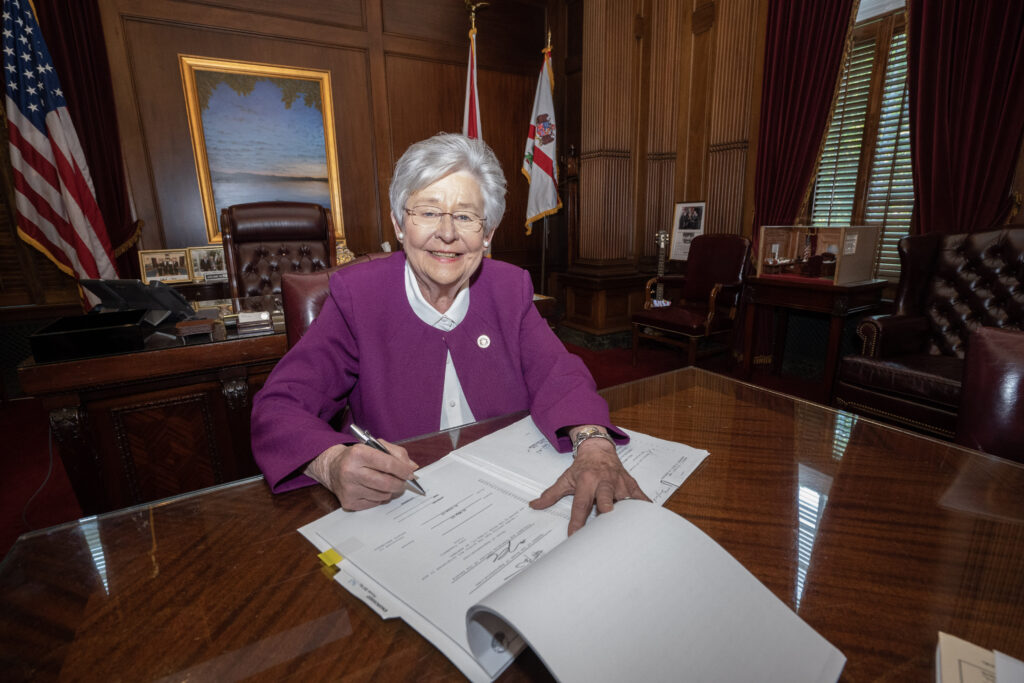
When the State Legislature left town for the year on Tuesday, they left a lot of bills on the desk for Governor Kay Ivey to consider. Ivey signed into law a handful of bills on Thursday that she says deliver on her promises and will benefit Alabamians now and in the future. During the governor’s inaugural and state of the state addresses, Ivey promised that more parents in Alabama emphasized the importance of improving school choice in Alabama. Ivey said that those efforts must begin with improving the school choices that Alabama already has: Public charter schools and the Alabama Accountability Act scholarship program. The Legislature responded by passing both House Bill 363 and Senate Bill 263. Upon signing those bills in her office earlier today, the governor then issued the following comment: “While some parents in other states are finding themselves being forced aside, here in Alabama, we believe strongly that a parent should be able to decide what is best for their own child’s education. To help support high-quality education and create more choices for parents, I have prioritized improving school choice. Both HB363 and SB263 will certainly help us make progress, and the bill sponsors, Representative Terri Collins and Senators Donnie Chesteen and Will Barfoot did yeomen’s work in getting this needed legislation across the finish line. I am proud to put my signature on these two bills so that more students have an opportunity for a strong educational experience.” SB263 is an expansion of the landmark 2013 Alabama Accountability Act, which created a mechanism for scholarship granting organizations to award scholarships for students in Alabama’s most dreadful public schools. Chesteen said that in the old bill, students from just 79 failing schools can apply for scholarships to leave their failing schools. This will open it up to students from a school with a D or an F on its report card – 212 schools. SB263 would open up to 25% of the scholarships for students who live outside of those targeted D and F-scoring schools if they meet the poverty thresholds. It also raises the poverty thresholds for children to be eligible for the scholarships and changes the name the state uses for its most dreadfully performing schools from failing schools to priority schools. Collins explained that HB363, the Alabama School Choice and Student Opportunity Act, changes the appointment process for the Alabama Public Charter School Commission; authorizes the Commission to hire staff; requires commissioners to receive annual training; provides additional guidelines for the authorizing and application review process; provides further for the operational and categorical funding of public charter schools in their first year of operation; and clarifies the per pupil federal, state, and local funding of conversion public charter schools during their first year of operation. “All charter schools are public schools,” explained Rep. Collins. “We have three conversion schools in Montgomery, Mobile, West Alabama, Birmingham has a few, Fairfield, and there are a couple more in Montgomery.” The current law allows a public school system to convert an existing public school into a charter school. It also allows nonprofit groups that recognize a need to take their own funds to build and operate a charter school and apply for permission from the local school authorities to open a charter school. If that application is denied, that organization may submit its request to the Alabama Public Charter School Commission for review. Governor Ivey also successfully championed funding charter schools in addition to this needed legislation. A much more vigorous expansion of school choice – the PRICE Act – was never considered on the floor of either House. SB202/HB295 was carried by Sen. Larry Stutts (R-Sheffield) and Rep. Ernie Yarborough (R-Hartselle). It would have allowed education dollars to follow the child and was not limited to just poor children or children zoned to the worst schools in the state. It was not regulated by a state commission as to whether an alternative was needed or not. Every child in the state would have been given $6,900 in an education savings account that could have followed the child to another public school, a private school, a church school, or even to cover the expenses of home school. That legislation was strongly opposed by the Alabama Education Association (AEA) and the Alabama School Superintendents. Speaker of the House Nathaniel Ledbetter (R-Rainsville) told reporters moments after the regular session ended on Tuesday that more school choice bills will likely be passed in future legislative sessions. To connect with the author of this story or to comment, email brandonmreporter@gmail.com.
Alabama lawmakers end session marked by tax cuts

Alabama lawmakers on Tuesday concluded the 2023 legislative session that was marked by tax cut measures and ended with the shelving of some controversial measures, including a bill that would make it a crime to help a non-family member fill out an absentee ballot. Republican and Democratic leaders cited the tax cut measures, which included removing half of the 4% state sales tax on groceries, as well as a temporary tax cut on overtime pay. “Those tax cuts were focused on working Alabamians,” said Senate President Pro Tempore Greg Reed, R-Jasper. House Speaker Nathaniel Ledbetter said the session resulted in the “largest tax cut in Alabama history” with the partial removal of the state sales tax on food. “It’s been a historic session, in my opinion, and it’s the work of the body that has made that possible,” he said. Some lawmakers, mostly Democrats, had attempted for more than a decade to remove the sales tax on food, but the effort failed amid concerns about the cost to education funding. The effort drew broad bipartisan support this year in the face of soaring grocery prices and larger-than-usual tax collections. Sen. Merika Coleman, D-Pleasant Grove, who had pushed for the full removal, said she was “excited that the people of Alabama will get some sort of relief on their grocery taxes.” Lawmakers on Tuesday shelved a number of controversial measures rather than get bogged down in contentious floor debates on the final night of the legislative session. The absentee ballot proposal, which cleared the House on a party-line vote, had emerged as one of the most contentious issues of the session. It did not get a vote in the Alabama Senate. Republicans had said the measure was needed to prevent voter fraud, including so-called ballot harvesting, but opponents called it an attempt at voter suppression by threatening people with jail time for helping someone vote. Kathy Jones, president of the League of Women Voters of Alabama, said she was relieved the bill did not pass. She said it would have authorized the state to “intimidate, arrest and prosecute patriotic, law-abiding citizens for merely helping their friends and neighbors be able to vote absentee.” Other measures that died on the final meeting day of the session included an effort to strengthen the state public records law and a long-running effort to require students to complete kindergarten or demonstrate first-grade readiness, before starting first grade. Ledbetter said Alabama Gov. Kay Ivey’s office had concerns about the public records bill. “We are very disappointed that we didn’t get the bill passed this year. The governor’s legal team did not agree with the finite timeline to produce a public record,” Felicia Mason, executive director of the Alabama Press Association, wrote in an email. The Republican governor had expressed her support for the first-grade readiness bill in her State of the State address. The House had approved the measure, but it did not get a vote in the Alabama Senate where a Democratic senator had raised concerns. Rep. Pebblin Warren, D-Tuskegee, said she will bring the bill back next year. “We’re going to keep on trying for our babies, and I’m going to keep on fighting,” Warren said. Republished with the permission of The Associated Press.
Nathaniel Ledbetter says 2023 legislative session was ‘historic and significant’
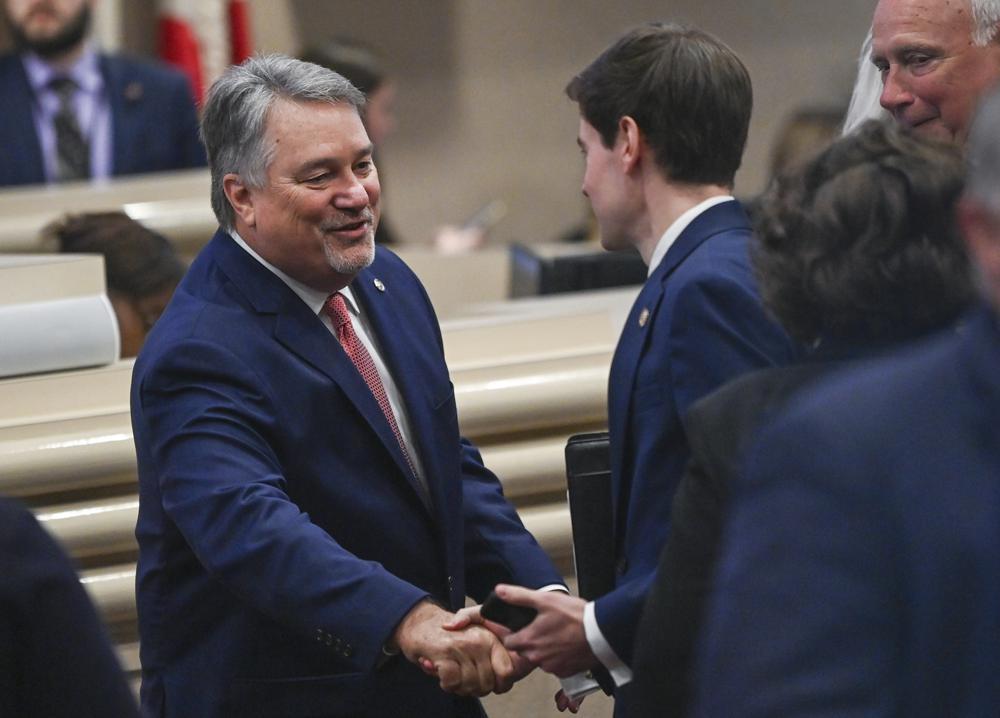
On Tuesday, the Alabama Legislature met for the last time in the 2023 regular session. Speaker of the House Nathaniel Ledbetter (R-Rainsville) released a statement following the sine die adjournment of the 2023 regular session, describing it as one of the most important held in state history. “The 2023 legislative session will be remembered as one of the most historic and significant sessions in Alabama’s 204-year history, and I believe that decades from now, observers will look back and say that our state turned a crucial corner because of the work we accomplished here,” Speaker Ledbetter said. “In just three months, this Legislature allocated more than $1 billion in federal funding during a special session, passed record Education and General Fund budgets totaling $12 billion collectively, enacted the largest tax cut in Alabama history while taking a huge step toward abolishing the state grocery tax altogether, exempted taxes on overtime pay for our hard-working citizens, and approved unprecedented rebates for Alabama taxpayers.” “At the same time, we paid off millions in debt, wisely saved dollars for when the economy worsens, equipped law enforcement to fight the war on fentanyl, toughened early release requirements for inmates, reformed the state’s adoption process for the first time in 30 years, continued to expand mental health services, and passed dozens of other significant bills and measures,” Ledbetter continued. “If only a handful of these accomplishments had passed, the session would have been considered a success, but when you consider the size, scope, and significance of what we have done, almost any other session pales in comparison.” “Even more remarkable is the fact that we did all of this with brand new House leadership across the board, new committee chairmen, and 31 freshmen members,” Ledbetter continued. “Our members just worked together, and, in large part, our success can be attributed to the working relationship across the aisle.” “Every House member on both sides of the aisle deserves to be commended for their work over the past few months,” Ledbetter said. “We also worked seamlessly with the Senate leadership, the members upstairs, and Lieutenant Governor Ainsworth, and they certainly share in the credit.” The Alabama Constitution limits the Legislature to meeting a maximum of thirty days in a regular session. The Legislature used its maximum allotted days. Tuesday was day 30, so this was the last day that the Legislature could meet until February unless Governor Kay Ivey calls a second special session – the first was to appropriate $1.03 billion in American Rescue Plan Act dollars. The House of Representatives passed 14 bills on its last day and dealt with an estimated dozen bills that the Senate amended or were sent back to the Legislature from the Governor with an amendment. The most significant of these was legislation to exempt overtime pay from state income taxes. The Governor sent that legislation back to the Legislature with an amendment that removed the cap the Senate had placed on the bill and cut the sunset time in half. Gov. Ivey said that that was due to concerns about how that was to be administered. Both House approved the legislation as amended by the Governor. House Minority Leader Anthony Daniels introduced that tax cut. Ledbetter said that when Daniels brought that legislation to him, he was supportive. “I wish I had thought of that myself,” Ledbetter told reporters. “It’s a win, win, win for the state.” Republicans have a commanding majority in both Houses of the Alabama Legislature, so the GOP could pass any legislation they wanted to at any time simply by cloturing the minority. Ledbetter said that he preferred to work bipartisanly. “We only clotured two times,” Ledbetter said. “The first time I wish I had back, I moved too rapidly on that one. The second time they knew what was coming.” Ledbetter credited his relationship with Daniels working together when Ledbetter was the Majority Leader for the incredibly smooth process of this session. Ledbetter listed the appropriation of the ARPA dollars, cutting the taxes on food, reforming the state’s adoption laws, legislation to combat fentanyl, and improving mental health services as accomplishments. Ledbetter said the Legislature expanded school choice in the state by increasing the number of schools covered under the Accountability Act. “There will be more of that,” in future sessions, Ledbetter said of expanding school choice in future sessions. He also regretted that the ballot harvesting bill ultimately failed. One issue that never came up on the House floor this year was a lottery or legalization of casino gambling. Despite this, Ledbetter insisted that gambling was not dead forever. “We have an ad hoc committee meeting,” Ledbetter told reporters. “They report to me every two weeks.” Ledbetter said that he was providing the new members with information about gambling in this session; but that he expected legislation on gaming in a future session. The next legislative day will be February 6, 2024, though committees, task forces, and special commissions will meet periodically over the summer, fall, and winter, preparing for the 2024 Alabama Regular Session. To connect with the author of this story or to comment, email brandonmreporter@gmail.com.
Alabama legislative session ends today
On Tuesday, the Alabama Legislature will meet in Montgomery for the last day of the 2023 Alabama Regular Legislative Session. The Alabama Constitution limits the legislative session to a maximum of 30 days, and Tuesday is legislative day 30. The primary constitutional purpose of the regular legislative session is to pass the budgets. Alabama has two budgets: the education trust fund (ETF) and the state general fund (SGF). The budgets were completed on Thursday, May 25. The fiscal year 2024 budgets are the largest in state history and have been signed by Alabama Governor Kay Ivey. It includes two supplemental appropriations that go into immediate effect. The budgets include 2 percent raises for teachers and state workers. “I am proud to officially put my signature on yet another historic investment in our students, teachers, and schools,” Ivey said. “Alabama is serious about changing the trajectory of student outcomes, and our steady progress in the classroom and this record-setting education budget prove that to be the Gospel Truth. We are expanding our award-winning pre-K program into some of our highest poverty areas. We are supporting the implementation of the Critical Literacy and Numeracy Acts. We are, once again, increasing teacher pay, giving us even more of a competitive edge to recruit and retain the educators of today and tomorrow. The second purpose of the session is to pass legislation. The state Legislature has done this. Eight hundred eighty-three bills were introduced during this session. Tuesday will be the last day a bill can be passed, as any bill not sent to the governor by the end of the day will have to be reintroduced in the next legislative session. The Legislature has passed dozens of bills this session. Notably, the Legislature passed significant tax cuts by reducing the 4 percent state sales taxes on groceries. Lieutenant Governor Will Ainsworth said on Facebook, “BOOM! We just passed the largest tax cut in Alabama history. Thank you to every member of the House and Senate who supported cutting the grocery tax. The real winners are Alabama’s taxpayers.” The Legislature is also working on reducing state income taxes on overtime pay. Speaker of the House Nathaniel Ledbetter (R-Rainsville) said on social media, “Eliminating the state’s overtime tax rewards hard-working Alabamians and their employers. The Alabama House will keep finding ways to reduce taxes, just as we did by cutting the grocery tax in half. I look forward to Governor Kay Ivey signing HB217 into law soon.” In addition to the tax cuts, the Legislature passed tax rebates. Every tax filer will get a $150 check from the government. Couples who file jointly can expect $300. A key priority of this session for Gov. Ivey has been her “Game Plan” to renew and expand the state’s economic incentives to further grow the Alabama economy. “The Game Plan will give Alabama’s team the tools it needs to extend our winning record in economic development and help us unleash a new wave of growth and innovation across the state,” said Gov. Ivey. “From our rural areas to our big cities, this is going to benefit every corner of Alabama.” Another priority of this session was to get tough on the crime problem. The Legislature has passed bills to stiffen penalties on organized retail theft, fentanyl traffickers, and street racers, as well as penalty enhancements for gang members and other criminal organizations. The next scheduled legislative session will begin on February 6, 2024. To connect with the author of this story or to comment, email brandonmreporter@gmail.com.
Alabama legislators urge Air Force Secretary Frank Kendall to support congressional investigation into Space Command decision
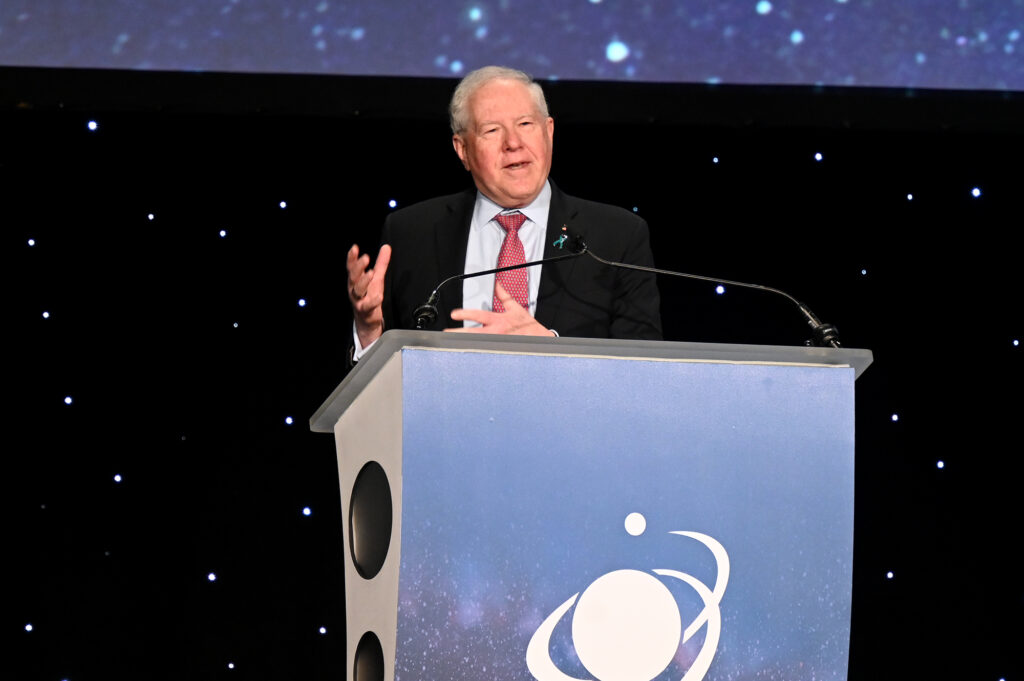
On Tuesday, a bipartisan group of legislators in the Alabama House of Representatives sent a letter to U.S. Airforce Secretary Frank Kendall supporting the congressional investigation led by U.S. House Armed Services Committee Chairman Mike Rogers and Congressman Dale Strong. The letter was signed by Speaker of the House Nathaniel Ledbetter, House Minority Leader Anthony Daniels, House Majority Leader Scott Stadthagan, and Speaker Pro Tem. Chris Pringle, as well as Reps. Joe Lovvorn, Danny Garrett, Wes Kitchens, Laura Hall, Parker Moore, David Cole, Rex Reynolds, Andy Whitt, James Lomax, Ritchie Whorton, and Phillip Rigsby. An NBC news report released on May 15 claimed that President Joe Biden will intervene to keep the Pentagon from moving Space Command from Colorado to Huntsville. The President’s objections to the state of Alabama are reportedly due to the state’s ban on abortion. Many speculate that the real reason could be political in that Colorado voted for Biden in 2020, while Alabama did not. Below is the text included in the attached letter: “Dear Secretary Kendall, “As members of the Huntsville and Madison delegations of the Alabama House of Representatives, and as House leadership, we are writing to you in support of the House Committee on Armed Services’ investigation into the delay in implementing the recommendation to place U.S. Space Command (SPACECOM) Headquarters at Redstone Arsenal, which is being led by U.S. House Armed Services Committee Chairman Mike Rogers and Congressman Dale Strong.” “As you are aware, it has been made clear through multiple U.S. Air Force recommendations that the most strategic location for the U.S. Space Command headquarters is Redstone Arsenal in Huntsville, Alabama. The Government Accountability Office and Department of Defense Inspector General have both confirmed this recommendation was made through a sound process. Huntsville has the infrastructure, the workforce, the education system, engineering base, existing military and defense apparatus, and quality of life to be the ideal location for U.S. Space Command. This is why this site has received the unanimous number one recommendation from the U.S. Air Force.” “As representatives of the communities surrounding Redstone Arsenal in the Alabama House of Representatives, we felt the need to respectfully encourage you to support and comply with the congressional investigation into the delay of this critical national security decision. We are also concerned to learn the U.S. Department of Defense was not aware, and not involved, in this change. The people of Alabama and the United States of America need and deserve transparency on the apparently revised mission requirements of SPACECOM as it relates to its decision to locate its headquarters.” “A lengthy delay in making a decision this important to national security deserves Congressional oversight, and we are thankful that Congressmen Rogers and Strong recognized this need and are taking action by launching this investigation. We greatly appreciate your service to our nation and the role that the U.S. Air Force has in keeping our country, and the world, safe from threats, and we believe that you also appreciate the need for transparency and Congressional oversight.” On Friday, Fox News published a story detailing an announcement from Rogers that he is opening an investigation into the continued delays in the selection of a permanent base for the U.S. Space Command (SPACECOM) Headquarters. “Today, I launched an investigation into the continued delays in the SPACECOM Headquarters basing decision,” said Chairman Rogers. “The fact is, the Air Force already made the correct decision well over two years ago. That decision was affirmed by the GAO and the DoD Inspector General over a year ago. This decision was based on multiple factors, and Redstone Arsenal in Huntsville, Alabama, was the clear winner in the Evaluation and Selection phase. I am deeply concerned that the continued delays in making this move final are politically motivated and damaging to our national security.” “I have requested that House Armed Services Committee Chairman, Mike Rogers, open a formal investigation into the Biden Administration’s failure to announce a permanent location for U.S. Space Command (SPACECOM) Headquarters,” said Rep. Strong.“The Administration’s delay risks politicizing a process which must remain fact-based. Injecting politics into America’s basing decisions serves to do unprecedented harm to our national security. American men and women in uniform must be given the very best, not the third or fourth choice. Redstone Arsenal was chosen as the preferred location after a years-long process. The decision was later confirmed not just once, but twice with the results of the Government Accountability Office and Department of Defense Inspector General investigations. It is plain and simple: Redstone Arsenal is the best possible location to host U.S. Space Command headquarters. The Air Force’s basing process established this, and it was confirmed. I thank Chairman Rogers for agreeing to this investigation. The members of the House Armed Services Committee, and our service members awaiting a final basing decision, deserve answers and swift action from the Air Force.” The letter by the State Representatives followed the announcement of the investigation by Rogers. To connect with the author of this story or to comment, email brandonmreporter@gmail.com.
Alabama House passes legislation to hire more judges
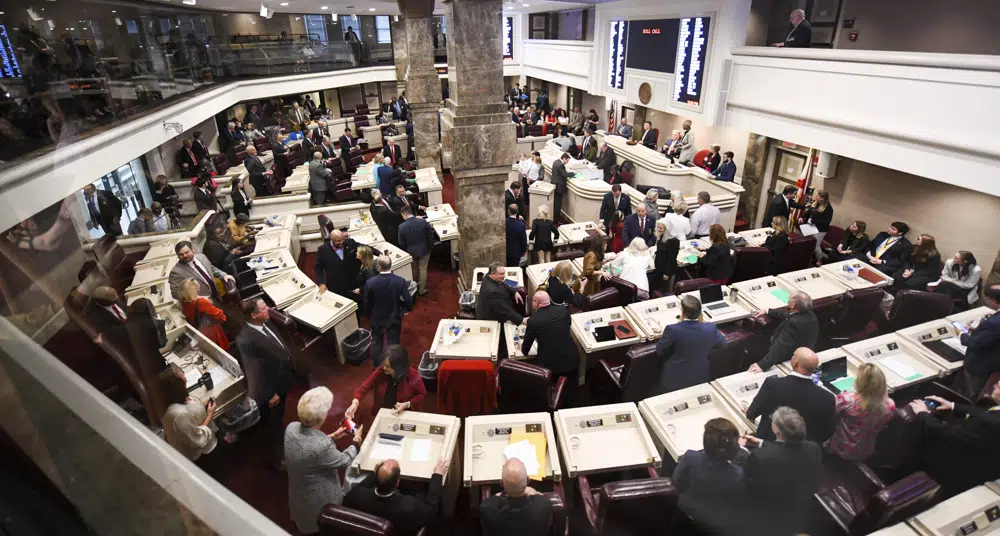
On Tuesday, the Alabama House of Representatives passed legislation adding new judges to reduce the dockets in Alabama’s fastest-growing judicial circuits. As the state’s population has grown, the number of judgeships has not kept pace, particularly in those counties that have experienced the most rapid growth. Senate Bill 39 (SB39) is sponsored by State Senator Sam Givhan (R-Huntsville). SB39 will add four additional circuit judgeships in the 23rd Circuit (Madison County), the 28th (Baldwin County), the 19th (Autauga, Chilton, and Elmore counties), and the 37th (Lee County), as well as three additional district judgeships in Baldwin, Mobile, and DeKalb counties. Addressing the overcrowded dockets in Alabama’s fastest-growing jurisdictions has been a priority of the Alabama Judges Association and Chief Justice Tom Parker. House Ways and Committee General Fund Chair Rex Reynolds (R-Huntsville) said when the first version of the budget passed the House that he was committed to working with the judges to fix this problem. Speaker of the House Nathaniel Ledbetter (R-Rainsville) previously told Alabama Today that he and the House were in favor of legislation addressing the state’s judge shortage. Ledbetter said that his own county had a judge shortage of 2.7 judges. The bipartisan legislation received a favorable report from the House Judiciary Committee on Wednesday. SB39 would also put a moratorium on the reallocation of judges until 2027. Reallocating judgeships from stagnant parts of the state like Birmingham, Montgomery, and the Black Belt to growing, prosperous areas like Baldwin, Madison, Shelby, Lee, and Elmore counties is very controversial for the areas that would lose those judgeships. The Legislature established a reallocation commission in 2015, but the courts have not reallocated judgeships as the Legislature had intended. The new judgeships would be filled by elections in 2024, with the new judges going into office in the second week of January 2025. According to the fiscal note, passage of SB39 will cost the state $2.1 million in 2025 and at least $2.9 million a year beyond that. The effect on the SGF will be $1.9 million in FY2025 and $2.5 million in FY2026 and beyond. The new circuit judge in the 19th circuit may reside in any county within the Nineteenth Judicial Circuit (Chilton, Autauga, or Elmore counties) and shall be assigned to the domestic relations division of the circuit. The bill passed the Alabama House of Representatives 102 to 0. The Legislature also tasks the Administrative Office of Courts to provide an annual report on the caseload statistics for each fiscal year by circuit. The legislation previously passed the Alabama Senate by a vote of 33 to 0. Supporters say that additional judges will help reduce the case backlogs in those circuits getting additional judges, which means that jury trials can occur in a more timely manner, justice will happen more quickly, business disputes can be resolved more quickly, and child custody issues can be dealt with on a more expedited basis. SB39 now goes to the Governor for her consideration. Wednesday will be day 25 of the 2023 Alabama Regular Legislative Session. To connect with the author of this story or to comment, email brandonmreporter@gmail.com.
House to address legislation hiring more judges on Tuesday
On Tuesday, the Alabama House of Representatives will consider legislation adding new judges to reduce the dockets in Alabama’s fastest-growing judicial circuits. Senate Bill 39 (SB39)is sponsored by State Senator Sam Givhan (R-Huntsville). SB39 is the first item on the House’s proposed special order calendar for Tuesday. The version of the legislation that passed the Senate would add four additional circuit judgeships in the 23rd Circuit (Madison County), the 28th (Baldwin County), the 19th (Autauga, Chilton, and Elmore counties), and the 37th (Lee) as well as three additional district judgeships in Baldwin, Mobile, and DeKalb counties. SB39 would also put a moratorium on the reallocation of judges until 2027. The reallocation of judgeships from stagnant parts of the state like Birmingham, Montgomery, and the Black Belt to growing, prosperous areas of the state like Baldwin, Madison, Shelby, Lee, and Elmore counties is very controversial for the areas that would lose those judgeships. The legislature established a reallocation commission in 2015, but the courts have not reallocated judgeships as the legislature had intended. The new judgeships would be filled by elections in 2024, with the new judges going into office in the second week of January 2025. According to the fiscal note, passage of SB39 will cost the state $2.1 million in 2025 and at least $2.9 million a year beyond that. The effect on the SGF will be $1.9 million in FY2025 and $2.5 million in FY2026 and beyond. The new circuit judge in the 19th circuit may reside in any county within the Nineteenth Judicial Circuit (Chilton, Autauga, or Elmore counties) and shall be assigned to the domestic relations division of the circuit. SB39 also orders the Administrative Office of Courts to provide an annual report on the caseload statistics for each fiscal year by circuit. The legislation passed the Alabama Senate in a vote of 33 to 0. Speaker of the House Nathaniel Ledbetter (R-Rainsville) previously told Alabama Today that he and the House favored legislation addressing the state’s judge shortage. Overcrowded dockets mean that jury trials are often delayed for months denying victims justice, leaving business disputes unsettled for years, tying up estates, delaying final determinations in child custody cases, and making it difficult to live and do business in the state of Alabama. Tuesday will be day 24 of the 2023 Alabama Regular Legislative Session. The House convenes at 1:00 p.m., and the Senate convenes at 3:00 p.m. To connect with the author of this story or to comment, email brandonmreporter@gmail.com.
Legislature to address budgets and grocery tax cut this week
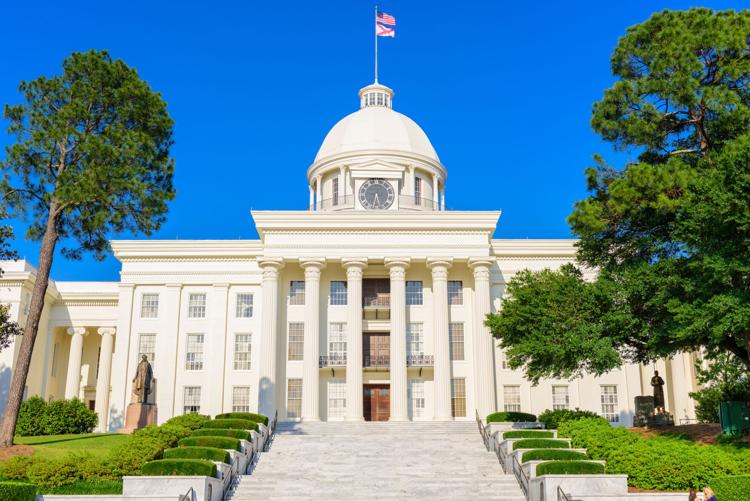
The Alabama Legislature will meet on Tuesday, Wednesday, and Thursday this week for days 24, 25, and 26 of the 2023 Alabama regular legislative session. The 1901 Constitution of Alabama limits the regular session to no more than thirty legislative days, and the primary constitutional purpose of the session is to pass the state’s budgets. Alabama has two budgets: the state general fund (SGF) for non-education spending and the education trust fund (ETF) for education spending. Speaker of the House Nathaniel Ledbetter told reporters that he anticipates the House Ways and Means Education Committee will advance the 2024 education budget bills, including a large one-time supplemental appropriation for the current budget year, on Wednesday. If that happens, the Speaker intends to have the education budget bills on the floor of the House of Representatives on Thursday. Ledbetter said that he expects the House to address cutting the state’s four percent tax on groceries at that time. “I think we will see that come out next Thursday,” Ledbetter said of the bill cutting grocery taxes. House Bill 479 (HB479), sponsored by State Rep. Danny Garrett, is the bill cutting the sales tax on food. HB479, as introduced, would use the definition of food used by the Federal Supplemental Nutritional Assistance Program (SNAP). The legislation would cut the state groceries tax from 4.0 percent to 3.5% on September 1, 2023. The legislation also provides for conditional future tax cuts on food. On November 1, 2024, the rate would drop again to 3.0%, but only if net receipts to the ETF increase by 2.0% or more during the FY2024 fiscal year. In years where net receipts to the education budget increase by 2.0% or more, the tax on foodstuffs will drop .5% until it reaches a floor of 2.0%. If we have a robust economy, that could be reached as soon as November 1, 2026. If the economy stagnates and growth fails to reach 2.0% or more, there will be no tax cut that year. HB479 does not affect county or local governments’ existing sales taxes on food sales. It would be left up to the local governments whether or not they would follow the state’s example and reduce their own sales taxes – which in many jurisdictions are much higher than the state’s tax. Some The state brings in over $600 million from the sales taxes on food. HB479 could cut state revenues by over $300 million, with $75 million being felt in FY2024. “We will address the budgets on Thursday,” Ledbetter said. The FY2024 education budget that passed the Senate, Senate Bill 88, was $8,798,591,041. That is an increase from $8,261,590,649 in FY2023 2023 – a $537,000,392 ( 6.5% increase). The budget package that passed the Senate included a $2,787,667,309 supplemental appropriation, Senate Bill 87, in one-time money. “There will be some changes in the House side,” Ledbetter said. Senate President Pro Tempore Greg Reed told reporters that the general fund budget should be voted on by the Senate Finance and Taxation Committee on Wednesday and that budget will be addressed by the full Senate on Thursday. He also anticipates movement on cutting the grocery tax this year. The SGF budget that passed the House, House Bill 124, was $3,024,167,948, an increase of $169,030,561 – 5.92% – over FY2023. There is also a supplemental appropriation to the 2023 general fund of $201,738,865 – House Bill 125. Both budgets have already passed in their respective House of origin, but it is highly unlikely that the second house will pass both budgets without making changes. Both budgets will then have to go back to the House of origin for their consideration. It is likely that they will then vote to non-concur – in which case the differences will be resolved in conference committees before returning to both houses. Alabama is 49th in per capita taxation. High poverty and low labor force participation rates adversely affect total state revenues. To connect with the author of this story or to comment, email brandonmreporter@gmail.com.
