
Kay Ivey supports Small Business Saturday
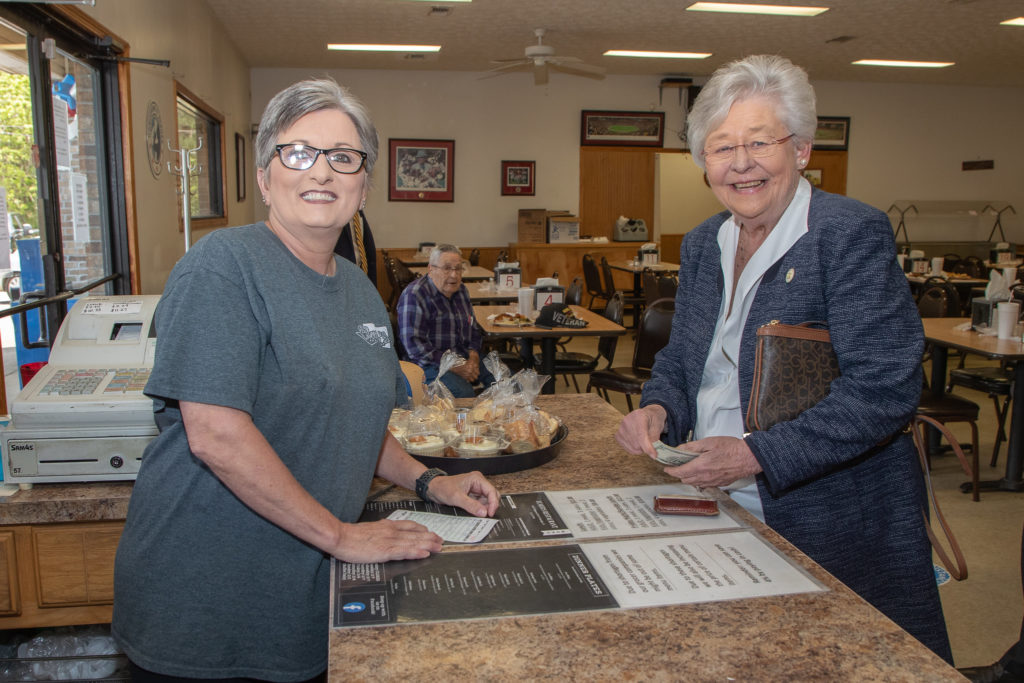
On Wednesday, Gov. Kay Ivey expressed her support for Alabama’s small businesses by signing a proclamation declaring November 26, 2022, as Small Business Saturday in Alabama. By designating the Saturday following Thanksgiving Day as Small Business Saturday, Alabamians are encouraged to celebrate and support the impact small businesses have on communities across the state. “Not only do our small businesses bring charm and character to Alabama, but they play an integral role in building and maintaining a strong economy. Small business support trickles back down to opportunities for job creation, support for our schools, possibilities for new innovation, but ultimately, it is positively felt by all,” said Gov. Ivey. “I encourage all Alabamians to support small businesses and spend locally this Saturday. Simply put, when you support an Alabama small business, you support our state.” The National Federation of Independent Business (NFIB) applauded Governor Ivey’s proclamation. “Small Business Saturday is a great way for the community to support local and family-owned businesses,” said Rosemary Elebash, NFIB Alabama State Director. “Small business owners are coming out of the pandemic facing serious economic headwinds such as inflation, worker shortages, and ongoing supply chain disruptions. Now more than ever, small businesses need support not only on Small Business Saturday but every day. Small businesses are the backbone of Alabama’s economy, and we encourage everyone to shop small this holiday season.” According to research conducted by NFIB and American Express, 67 cents of every dollar spent at a family-owned small business stays in the community. Every dollar spent at a local small business creates an additional 50 cents in local business activity as employers and their employees shop at other local businesses. NFIB is the nation’s leading small business advocacy organization. In 2011, the Senate unanimously passed a resolution in support of Small Business Saturday, and officials in all 50 states participate. It even gets a shout-out from the president of the United States. To connect with the author of this story, or to comment, email brandonmreporter@gmail.com.
Rosemary Elebash and Jeff Lynn: Wanted: Skilled workers to ensure Alabama’s success

Ask business people to rank their top problems, and you find a consistent pattern. Taxes and regulations usually battle each other for the top spot. Finding qualified workers consistently ranks No. 3. These results — from monthly surveys of members of the National Federation of Independent Business — illustrate a critical problem in our country and a major roadblock to economic growth. To put it simply: We have plenty of people who need jobs. We have plenty of businesses that have jobs to fill. But the available people and the available jobs don’t always line up. Too many prospective employees lack the necessary skills for jobs that are in demand. This skills gap is crippling to individuals who miss out on job opportunities. But it is also crippling to business and economic growth. Companies that lack an adequate supply of workers can’t succeed and grow to their full potential. Rather than moving forward, they are often forced to divert resources and time in a never-ending cycle of trying to hire and train new workers. This is an issue for all Alabama employers, but especially for small businesses. Large corporations at least have human resources departments to help recruit qualified workers. At a small business, the person who places the help-wanted ad is very likely the same person who takes out the trash and signs the checks: the owner. Despite Alabama’s remarkable success in landing big manufacturing projects over the past 25 years, most of our jobs are created by smaller, existing businesses. Day after day, our state’s lack of qualified workers is costing small businesses the ability to create and fill new jobs. This hinders our state’s economic growth. Fortunately, Alabama business leaders, economic developers, educators and elected officials have set out on a new course to make sure our businesses have the workforce they need to thrive, now and in the future. Our community college system is working more closely than ever with the business community, economic developers, and other education partners to ensure students learn the skills that employers need. The system is working hand-in-hand with workforce development councils to align programs with employers’ needs in different communities across our state. Community colleges are also working with K-12 schools, four-year universities, the state Commerce Department, AIDT and others to ensure seamless transitions between workers and training and jobs. We are all working hard to be more nimble and quick, responding to technological changes that continually alter the workplace. Fostering these efforts is a new collaboration called AlabamaWorks, which is a business-driven workforce development system encompassing all of the state’s job-training and placement services. A one-stop-shopping website (AlabamaWorks.com) links employers, job seekers and students to the resources they need. A key challenge is making Alabamians aware of the resources – and the opportunities — that exist. Businesses need to know where to go for solutions for their workforce needs. High school students and adults need to know where to go to get the skills they need to succeed. And we all need to appreciate the varied avenues to success. Most of us know today that a high-school education alone is not enough. But too few of us appreciate the full range of career options that fall somewhere between a high school diploma and a four-year college degree. In Alabama, AIDT facilities in Decatur and Mobile recently hosted hundreds of high school students to highlight today’s technical and manufacturing careers, many requiring two years of training or less. These events showcased Alabama’s great training facilities, but also served as a reminder that the facilities are only as valuable as the people they train. “It does no good if we have the jobs and the training facility, if we don’t have the people and if our young people are not being interested and attracted to high-tech manufacturing,” State Sen. Arthur Orr said at the Robotics Technology Park near Decatur. Manufacturing jobs are just one example of our workforce development needs. Businesses across the state of Alabama can tell stories about projects stalled and plans delayed because they were unable to find qualified workers. At the NFIB and the Alabama Community College System, we understand the need, and we are committed to taking the steps necessary to make sure we have the right people in the right pipelines for the right jobs. If we fail to do so, we are jeopardizing the future success of our businesses, our people, and our state. ••• Rosemary Elebash is the state director for the National Federation of Independent Business in Alabama. Email: Rosemary.Elebash@nfib.org. Jeff Lynn is the senior executive director of workforce and economic development for the Alabama Community College System. Email: Jeff.Lynn@accs.edu.
Martha Roby: Web of regulations can ensnare business, cost jobs
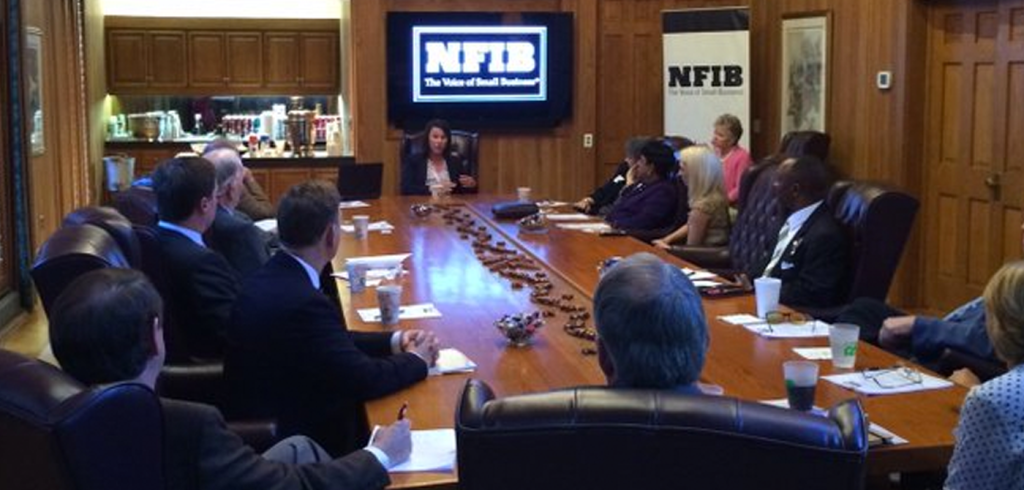
This past week I met with the National Federation of Independent Business’s (NFIB) Alabama Leadership Council in Montgomery. As you probably know, the NFIB is a member organization made up of small and independent businesses, and this particular group represents small business operators from all across Alabama. I’m proud to support homegrown Alabama businesses and the jobs they sustain. Small businesses employ as many as 50 percent of all private sector employees. Yet, talk to just about any business owner and they’ll tell you how difficult it can be to operate in today’s regulatory environment. That’s especially true for small and medium-sized businesses that lack the resources it takes to put toward compliance. You may remember President Obama announcing how he would use his “pen” to sign executive orders mandating policies he could not successfully pass through Congress. The most high profile of these was his order seeking to offer de facto amnesty to certain classes of illegal immigrants, which is currently being challenged as unconstitutional in federal court. However, many lesser known rules and regulations put forward by agencies like the Environmental Protection Agency and the Department of Labor could have a much more significant effect on the private sector. A recent study by the Regulatory Studies Center at George Washington University found 392 “major” regulations have been issued during the Obama presidency so far. And, according to the Wall Street Journal, the Administration is now “racing to make final a flurry of regulations affecting broad swaths of the economy” before the term is finished. I strongly oppose this kind of “backdoor legislating,” in which government agencies decide single-handedly to impose new, aggressive regulations. The U.S. Constitution separated the powers of government among the three branches and set up a system of checks and balances. Our laws have legitimacy because they are passed by representatives elected by and accountable to the people. That system is undermined when this “fourth branch” of unelected bureaucrats in federal agencies is allowed to unilaterally impose major, binding regulations with impunity. President Obama is certainly not the first president to expand the reach of the Executive Branch by imposing rules and regulations. However, he has been notably more aggressive than most, and that should continue down the final stretch of his presidency. Congress has a responsibility to fight back against Executive Branch overreach, whether through exposing potentially harmful regulations, passing legislation to set strict limits or using the “power of the purse” to rein in agencies. I also believe the Judicial Branch must step in and reaffirm the separation of powers. Listening directly to the concerns of those who operate businesses affords me a better understanding of just what they deal with on a daily basis from federal regulators. I will continue to work on their behalf in Congress to expose and fight against unnecessary regulations that hinder their ability to create and sustain jobs. • • • Martha Roby represents Alabama’s 2nd Congressional District. She lives in Montgomery, Alabama with her husband, Riley, and their two children.
