
Alabama lynching memorial, museum expanding
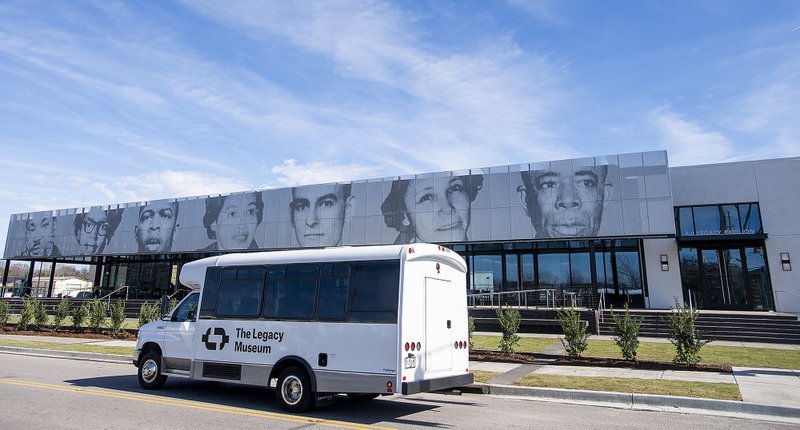
The pavilion will include a gift shop, soul food restaurant and a shuttle service to the memorial and museum.
Time.Com names Bryan Stevenson as one of the 31 people changing the south
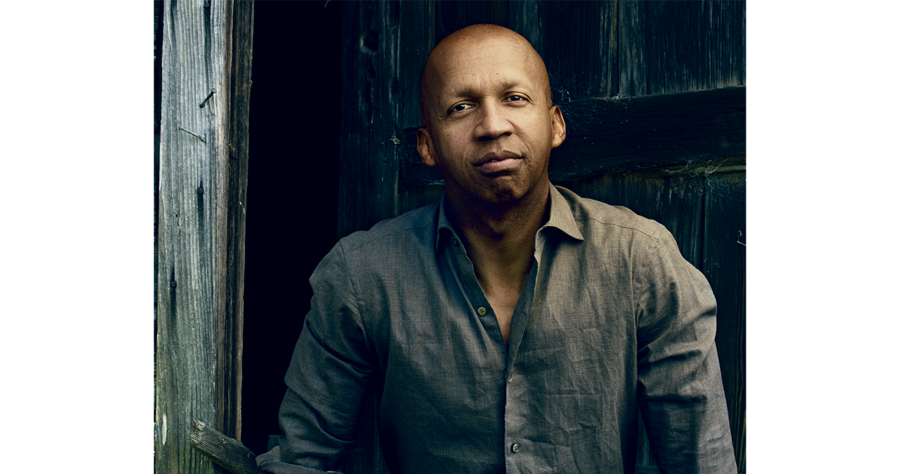
Only one Alabamian made Time.com’s list of the 31 people who are “changing the south.” And while you might not know his name, you definitely know his work. Bryan Stevenson, the founder and executive director of the Equal Justice Initiative (EJI) in Montgomery, Ala. is a public interest attorney who has dedicated his career to helping “the poor, the incarcerated and the condemned,” according to the Equal Justice Initiative. Since the 1980’s, when Stevenson founded EJI, the group has won several major legal challenges including: eliminating excessive and unfair sentencing, exonerating innocent death row prisoners, confronting abuse of the incarcerated and the mentally ill and aiding children prosecuted as adults. Stevenson and his staff are responsible for reversing, releasing, and relieving over 125 wrongly convicted prisoners on death row, and successfully won a historic ruling in the supreme court in 2012 – stating that mandatory life-without-parole sentences for all children 17 or younger are unconstitutional. On top of his already impressive legal career, Stevenson is a professor at the New York University School of Law, has received 29 honorary doctoral degrees including degrees from Harvard, Yale, Princeton, and Oxford University, and is a New York Times bestseller’s list author for his book Just Mercy. But none of these things are listed as the reason Time.com chose to honor him. “He came to the South to advocate for prisoners facing execution, almost all of whom were black,” TIME reported. “Legal executions of African Americans had surged, but not out of the blue; they climbed just when lynchings were deemed unseemly. What had taken place on the courthouse lawn moved indoors, black robes replacing white.” “If you’re in a country where we have just refused to acknowledge the history of slavery, I think that creates a certain kind of comfort with that history—a certain indifference to the victimization and the anguish and the trauma that that history created, which we can only address by talking more directly about that history,” Stevenson told TIME. “I am a proponent of truth and reconciliation. I just think those things are sequential.” With that in mind, Stevenson began a new project in Montgomery: the National Memorial for Peace and Justice, the first memorial in the nation devoted solely to victims of lynching. Over 10,000 people visited the memorial and museum within the first week of its opening in April, and tourism officials estimate they could attract 100,000 more visitors in the next year. “One young man, Dimitri Digbeu Jr., who drove 13 hours from Baltimore to see the memorial, said he thought it had singlehandedly ‘rebranded’ Montgomery,” the Associated Press reported “There is still so much to be done in this country to recover from our history of racial inequality,” Stevenson told the Associated Press. “I’m hopeful that sites like the ones we’re building and conversations like the ones we’re organizing will empower and inspire people to have the courage to create a more just and healthy future. We can achieve more in America when we commit to truth-telling about our past.” “We are not just slave states in the American South. We are not just lynching states. We are not just segregation states. We are more than that. The people are more than that. The region is more than that,” Stevenson told TIME. “But we can’t ignore this part of our history that we have been so reluctant to address if we want to be seen as we truly are.”
Lynching memorial may be game-changer for Montgomery tourism
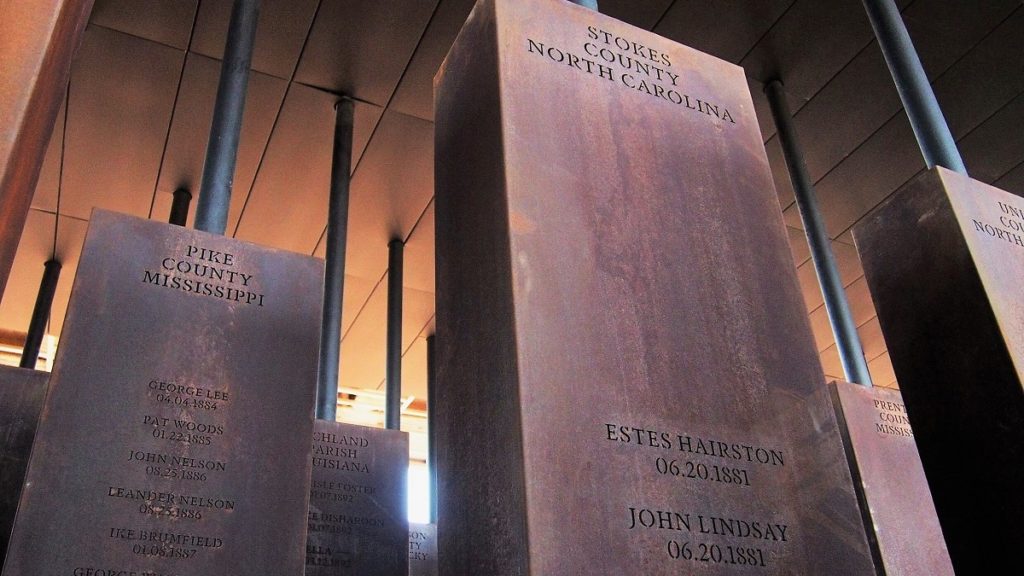
A memorial to the victims of racial lynchings and a new museum in Montgomery, Alabama, have gotten a lot of attention since opening in late April. Some 10,000 people visited the memorial and museum in the first week. Tourism officials estimate they could attract 100,000 more visitors to this Southern city in the next year. One young man, Dimitri Digbeu Jr., who drove 13 hours from Baltimore to see the memorial, said he thought it had singlehandedly “rebranded” Montgomery. But tourism challenges exist. Few direct flights serve Montgomery, and it’s a three-hour drive from Atlanta. “How do we get people to come here and make the pilgrimage here?” said filmmaker Ava DuVernay at a conference marking the memorial launch. “We have to be evangelists to go out and say what you saw here and what you experienced here. … Don’t just leave feeling, ‘That was amazing. I cried.’” DuVernay, whose Oscar-nominated movie “Selma” described the 1965 civil rights march from Selma, Alabama, to Montgomery, noted that the memorial and museum were built by legal advocacy group the Equal Justice Initiative. “These people are lawyers fighting for people on death row,” DuVernay added. “They’re not thinking about how to market this to the wider world.” Some travelers say the new memorial and museum have changed their minds about visiting the Deep South. “As a black American, I’m not crazy about the idea of driving down streets named after Confederate generals and averting my eyes from Confederate flags,” said New Yorker Brian Major. “But reconciliation and peace-making has to begin somewhere and for a project as worthy and important as the lynching memorial, I would be willing to make the trip.” DuVernay put it this way: “This has to be a place where every American who believes in justice and dignity must come.” For those who do visit, here’s a guide. Lynching Memorial and Legacy Museum The National Memorial for Peace and Justice honors more than 4,000 individuals who were lynched between 1877 and 1950. Their names are inscribed on 800 steel columns, one for every U.S. county where lynchings happened. Most counties are in the South, but there are also markers for lynchings in states like Minnesota and New York. The markers begin at eye level, then gradually move overhead, evoking the specter of hanging bodies. Some of the killings are described in detail: Victims were lynched for asking for a glass of water, for voting, for testifying against a white man. The new museum, which is called The Legacy Museum: From Enslavement to Mass Incarceration, explores slavery and segregation in horrific detail and argues that when segregation ended, mass incarceration began. The museum cites statistics showing 300,000 people were in prison in 1971 compared with 2.3 million today, and that one in three black boys will be jailed in the 21st century if trends continue. Exhibits offer details of innocent men on death row and children imprisoned in adult facilities where they were brutalized. Montgomery resident Shawna Brannon volunteered at the opening and said visitors of all races wept and shook their heads in dismay. “Once you go through, you will never be the same,” she said. Slavery and Civil Rights The Legacy Museum is located on the site of a warehouse where thousands of enslaved people were held before being sold at auction nearby. When the Civil War began, Montgomery was the Confederacy’s first capitol. Montgomery’s Rosa Parks Museum marks the spot where a black seamstress was arrested for refusing to surrender her seat on a bus to a white passenger. That sparked a bus boycott by African-Americans that ended when the U.S. Supreme Court declared segregation on public buses unconstitutional. The bus boycott also turned a young minister named Martin Luther King Jr. into a leader of the civil rights movement. That story is told at Montgomery’s Dexter Parsonage Museum , where King and his family lived when he was pastor of the Dexter Avenue Baptist Church. The parsonage porch still bears a crevice where a bomb landed (no one was hurt). Outside the Kings’ bedroom is a telephone that rang all night with threatening phone calls. The Freedom Rides Museum honors black and white students who rode Greyhound buses together to challenge segregation. A white mob attacked them when they arrived in Montgomery while police did nothing. That spurred the Kennedy Administration to send in federal marshals. Michelle Browder’s More Than Tours offers a wonderful bus tour that tells many of these stories and also shows off Montgomery’s resurgent downtown, including the restored Kress Building, now home to an art gallery and cafe. Etcetera For inexpensive, hearty lunches featuring fried chicken, turnip greens, catfish, okra and ribs, head to Davis Cafe, Farmers Market Cafe and Derk’s Filet & Vine. For a wonderful fancy dinner, try Vintage Year. Cahawba House and Shashy’s serve up great breakfasts. The Tucker Pecan store sells butter pecan ice cream and souvenir bags of pecans. Fans of country music legend Hank Williams should visit his impressive gravesite at Montgomery’s Oakwood Annex Cemetery. Downtown, the Hank Williams Museum displays the Cadillac he was riding in when he died at age 29.Montgomery’s Old Cloverdale neighborhood is home to the F. Scott and Zelda Fitzgerald Museum. The “Great Gatsby” writer and his wife lived here in the 1930s, and you can even rent an Airbnb apartment upstairs, complete with record player and jazz albums. Republished with the permission of the Associate Press.
Lynching memorial and museum in Alabama draw crowds, tears
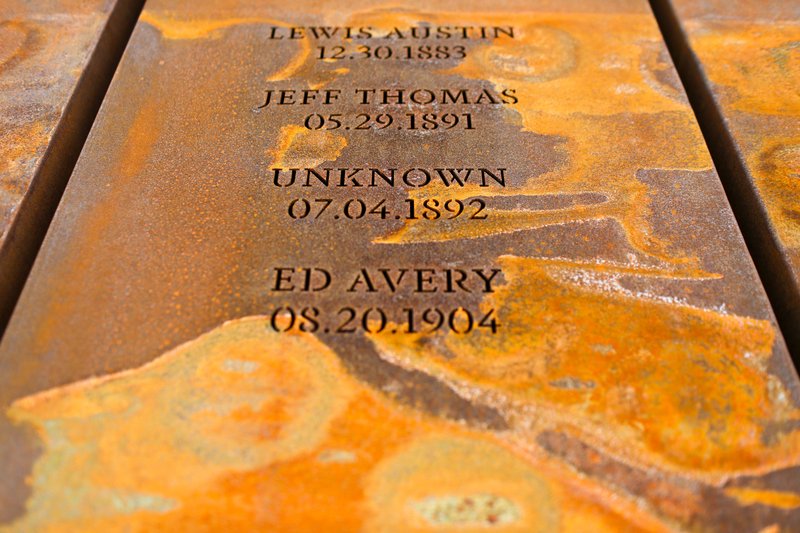
Tears and expressions of grief met the opening of the nation’s first memorial to the victims of lynching Thursday in Alabama. Hundreds lined up in the rain to get a first look at the memorial and museum in Montgomery. The National Memorial for Peace and Justice commemorates 4,400 black people who were slain in lynchings and other racial killings between 1877 and 1950. Their names, where known, are engraved on 800 dark, rectangular steel columns, one for each U.S. county where lynchings occurred. A related museum, called The Legacy Museum: From Enslavement to Mass Incarceration, is opening in Montgomery. Many visitors shed tears and stared intently at the commemorative columns, many of which are suspended in the air from above. Toni Battle drove from San Francisco to attend. “I’m a descendant of three lynching victims,” Battle said, her face wet with tears. “I wanted to come and honor them and also those in my family that couldn’t be here.” Ava DuVernay, the Oscar-nominated film director, told several thousand people at a conference marking the memorial launch to “to be evangelists and say what you saw and what you experienced here. … Every American who believes in justice and dignity must come here … Don’t just leave feeling like, ‘That was amazing. I cried.’ … Go out and tell what you saw.” As for her own reaction, DuVernay said: “This place has scratched a scab. It’s really open for me right now.” Angel Smith Dixon, who is biracial, came from Lawrenceville, Georgia, to see the memorial. “We’re publicly grieving this atrocity for the first time as a nation. … You can’t grieve something you can’t see, something you don’t acknowledge. Part of the healing process, the first step is to acknowledge it.” The Rev. Jesse Jackson, a longtime civil rights activist, told reporters after visiting the memorial that it would help to dispel America’s silence on lynching. “Whites wouldn’t talk about it because of shame. Blacks wouldn’t talk about it because of fear,” he said. The crowd included white and black visitors. Mary Ann Braubach, who is white, came from Los Angeles to attend. “As an American, I feel this is a past we have to confront,” she said as she choked back tears. DuVernay, Jackson, playwright Anna Deavere Smith, the singing group Sweet Honey in the Rock, Congressman John Lewis and other activists and artists spoke and performed at an opening ceremony Thursday night that was by turns somber and celebratory. Among those introduced and cheered with standing ovations were activists from the 1950s Montgomery bus boycott, Freedom Rider Bernard Lafayette, and one of the original Little Rock Nine, Elizabeth Eckford. “There are forces in America today trying to take us back,” Lewis said, adding, “We’re not going back. We’re going forward with this museum.” Singer Patti Labelle ended the evening with a soulful rendition of “A Change is Gonna Come.” Other launch events include a “Peace and Justice Summit” featuring celebrities and activists like Marian Wright Edelman and Gloria Steinem in addition to DuVernay. The summit, museum and memorial are projects of the Equal Justice Initiative, a Montgomery-based legal advocacy group founded by attorney Bryan Stevenson. Stevenson won a MacArthur “genius” award for his human rights work. The group bills the project as “the nation’s first memorial dedicated to the legacy of enslaved black people, people terrorized by lynching, African-Americans humiliated by racial segregation and Jim Crow, and people of color burdened with contemporary presumptions of guilt and police violence.” Several thousand people gave Stevenson a two-minute standing ovation at a morning session of the Peace and Justice Summit. Later in the day, Edelman, founder of the Children’s Defense Fund, urged the audience to continue their activism beyond the day’s events on issues like ending child poverty and gun violence: “Don’t come here and celebrate the museum … when we’re letting things happen on an even greater scale.” Republished with the permission of the Associated Press.
National Memorial for Peace and Justice in Montgomery open to the public
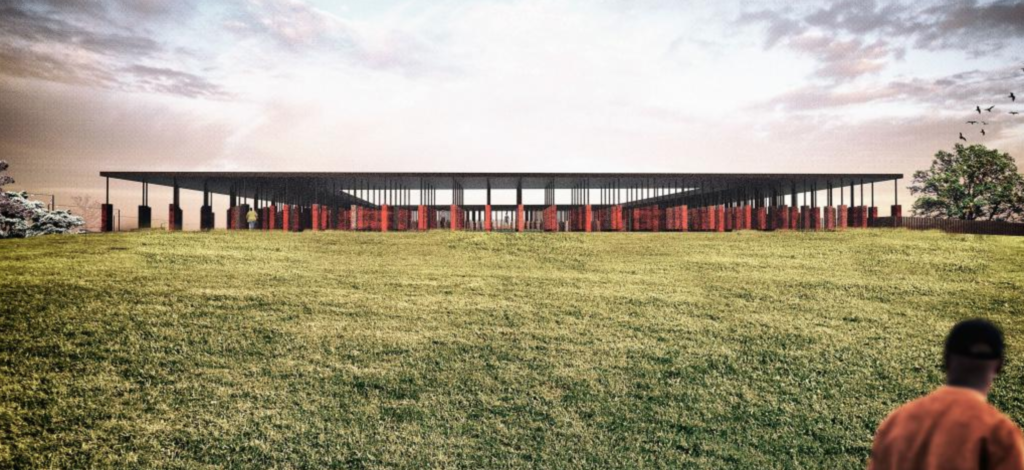
The National Memorial for Peace and Justice, a six-acre site overlooking the Alabama State Capitol in Montgomery opened to the public on Thursday. Dedicated to 4,075 blacks that research by the Equal Justice Initiative (EJI) shows were killed by lynching in the U.S. from 1877 to 1950, the memorial features their names engraved on 800 steel rectangles, one for each U.S. county where lynchings occurred. The site will also feature a museum, From Enslavement to Mass Incarceration, that will be situated within 150 yards of one of the South’s most prominent slave auction sites and the Alabama River dock and rail station where tens of thousands of enslaved black people were trafficked. The museum will contain high-tech exhibits, artifacts, recordings, and films, as well as comprehensive data and information on lynching and racial segregation. It will also connect the history of racial inequality with contemporary issues of mass incarceration, excessive punishment, and police violence. An official opening ceremony for memorial will take place at the Montgomery Convention Center in downtown Montgomery Thursday evening. it will be accompanied by the two-day EJI Peace and Justice Summit at the Montgomery Performing Arts Center. Alabama 7th District U.S. Rep. Terri Sewell, who will be in attendance for the opening ceremony of the unveiling on Thursday, said the memorial “puts on display the unspeakable brutality and the human cost of lynching.” “The National Memorial for Peace and Justice puts on display the unspeakable brutality and the human cost of lynching and racial terror in America,” explained Sewell. “No matter how painful, these are memories which our nation must confront. We cannot appreciate how far we have come without acknowledging where we have been.” “It is especially powerful that this Memorial finds its home in Alabama, where more than 300 African Americans were killed by lynching and millions more were terrorized by white supremacy. In Montgomery, where dozens of markers still commemorate the confederacy, a remembrance of racial violence and its victims is long overdue. Along with the U.S. Civil Rights Trail, the Rosa Parks Museum, and other historic sites in Montgomery, the National Memorial for Peace and Justice uses the lessons learned from our past as a model for healing and sustainable economic growth that will give visitors from around the world a truer understanding of our history.”
What’s inside Montgomery’s new national peace memorial and slavery legacy museum
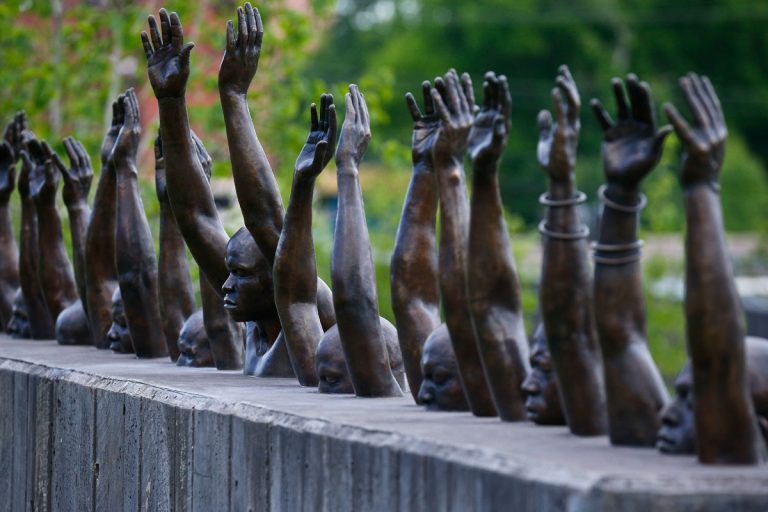
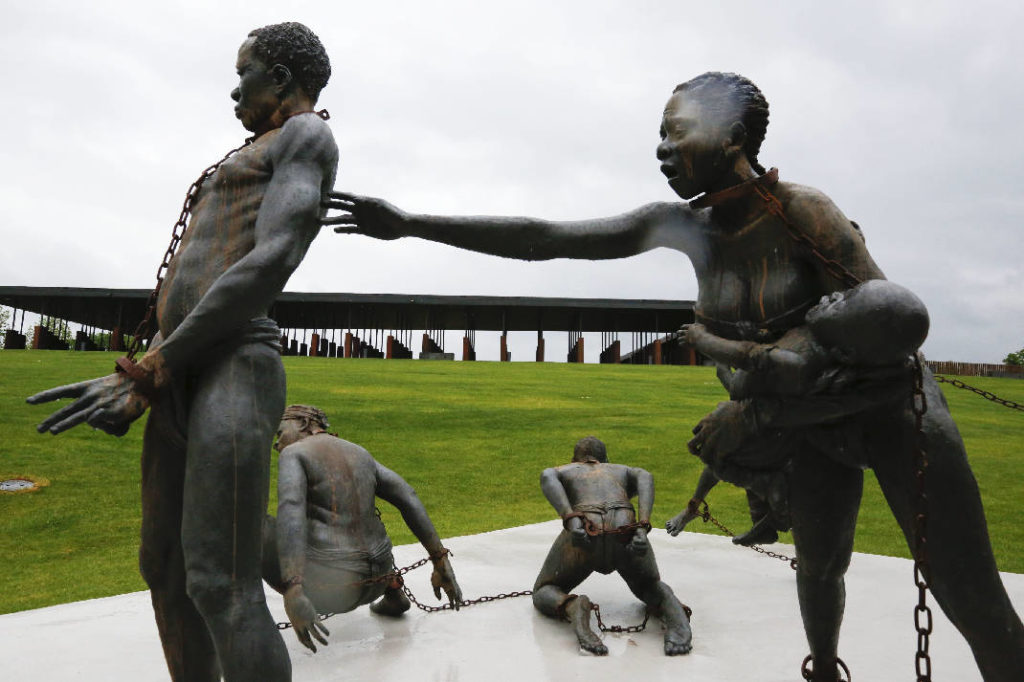
The Equal Justice Initiative (EJI) will open two institutions Thursday as part of its work to advance truth and reconciliation around race in America and to confront the legacy of slavery, lynching and segregation. The openings of the National Memorial for Peace and Justice and the Legacy Museum: From Enslavement to Mass Incarceration will be accompanied by several days of panel discussions and presentations from national civil rights figures. There will also be performances and concerts featuring acclaimed artists and an opening ceremony. The Montgomery-based EJI litigates on behalf of prisoners who may have been wrongly convicted of crimes, were without effective legal counsel or who may have been denied a fair trial, as well as juveniles prosecuted as adults. The memorial and museum are designed to promote the just treatment of all people. “There is still so much to be done in this country to recover from our history of racial inequality,” said EJI Founder and Executive Director Bryan Stevenson. “I’m hopeful that sites like the ones we’re building and conversations like the ones we’re organizing will empower and inspire people to have the courage to create a more just and healthy future. We can achieve more in America when we commit to truth-telling about our past.” Here are closer looks at the memorial and the museum. The National Memorial for Peace and Justice This is the nation’s first memorial dedicated to the legacy of enslaved black people, people terrorized by lynching, African-Americans humiliated by racial segregation and Jim Crow, and people of color burdened with contemporary presumptions of guilt and police violence. Work on the memorial began in 2010, when EJI staff began investigating thousands of lynchings in the South, many of which had never been documented. Six million black people fled the South as refugees and exiles as a result of lynchings, and the EJI was interested in understanding not only lynching but the terror and trauma it created in the black community. This interest led to the 2015 EJI report Lynching in America: Confronting the Legacy of Racial Terror, which documented thousands of lynchings in 12 states. Since its initial release, the original research has been supplemented with data related to lynchings in states beyond the Deep South. EJI staffers visited hundreds of lynching sites, collected soil and erected public markers in an effort to reshape the cultural landscape with monuments and memorials that accurately reflect history. For the National Memorial for Peace and Justice, the EJI partnered with artists like Ghanaian native Kwame Akoto-Bamfo, whose sculpture on slavery confronts visitors when they enter the memorial. From there, text, narrations and monuments to lynching victims take visitors on a journey from slavery through lynching and racial terror. In the center of the site, visitors encounter a memorial square, created with assistance from the MASS Design Group. The memorial experience continues through the civil rights era, brought to life through a Dana King sculpture dedicated to the women who sustained the Montgomery Bus Boycott. Finally, the memorial journey ends with contemporary issues of police violence and racially biased criminal justice expressed in a work by artist Hank Willis Thomas. Displayed throughout the memorial are writings from Toni Morrison and words from the Rev. Martin Luther King Jr., and there is a reflection space in honor of pioneering African-American journalist Ida B. Wells. One of the most poignant features is the memorial square, featuring 800 six-foot monuments that symbolize the thousands of racial terror lynching victims in the U.S. and the counties and states where this terrorism took place. Legacy Museum: From Enslavement to Mass Incarceration The 11,000-square-foot museum, built on the site of a former warehouse that imprisoned enslaved black people, is midway between a historic slave market and the main river dock and train station where tens of thousands of enslaved people were trafficked during the height of the domestic slave trade. By 1860, Montgomery was the capital of the domestic slave trade in Alabama, one of the two largest slave-owning states in America. The Legacy Museum employs technology to dramatize the enslavement of African-Americans, as well as the evolution of racial terror lynchings, legalized racial segregation and racial hierarchy in America. Relying on rarely seen first-person accounts of the domestic slave trade, the EJI’s research materials, videography, exhibits on lynching and recently composed content on segregation, the museum explores the history of racial inequality and its relationship to a range of contemporary issues, including mass incarceration and police violence. “Our nation’s history of racial injustice casts a shadow across the American landscape,” Stevenson said. “This shadow cannot be lifted until we shine the light of truth on the destructive violence that shaped our nation, traumatized people of color and compromised our commitment to the rule of law and to equal justice.” Museum visitors encounter slave-pen replicas, where they can see, hear and get close to what it was like to be imprisoned while awaiting sale at the nearby auction block. First-person accounts from enslaved people narrate the sights and sounds of the domestic slave trade. Extensive research and videography vividly expose the racial terrorism of lynching and the humiliation of the Jim Crow South. And compelling data-rich exhibits about America’s history of racial injustice and its legacy give visitors the opportunity to investigate the dynamic connections across generations of Americans affected by the narrative of racial difference. The Legacy Museum houses the nation’s most comprehensive collection of data on lynching. It also presents previously unseen archival information about the domestic slave trade brought to life through new technology. As a physical site and an outreach program, the facility is an engine for education about the legacy of racial inequality. To read more about EJI, click here. Republished with the permission of Alabama Newscenter.
Lynching memorial will show that women were victims too
A memorial to victims of lynching in the U.S. opens in Alabama on April 26, 2018. The National Memorial for Peace and Justice is a six-acre site that overlooks Montgomery, the state capital. It uses sculpture, art and design to give visitors a sense of the terror of lynching as they walk through a memorial square with 800 six-foot steel columns that symbolize the victims. The names of thousands of victims are engraved on columns – one for each county in the United States where a lynching took place. In Alabama alone, a reported total of 275 lynchings took place between 1871 and 1920. U.S. history books and documentaries that tell the story of lynching in the U.S. have focused on black male victims, to the exclusion of women. But women, too, were lynched – and many raped beforehand. In my book “Gender and Lynching,” I sought to tell the stories of these women and why they have been left out. Between 1880 and 1930, close to 200 women were murdered by lynch mobs in the American South, according to historian Crystal Feimster. Will this new memorial give these murdered women their due in how the U.S. remembers and feels about our troubling history? Enforcing white supremacy through terror In a recent report, Lynching in America, researchers documented 4,075 lynchings of African-Americans that were committed by southern whites in Alabama, Arkansas, Florida, Georgia, Kentucky, Louisiana, Mississippi, North Carolina, South Carolina, Tennessee, Texas and Virginia between 1877 and 1950. Lynching differed from ordinary murder or assault. It was celebrated by members of the Ku Klux Klan as a spectacular event and drew large crowds of people who tortured victims, burned them alive and dismembered them. Lynching was a form of domestic terrorism that inflicted harm onto individuals and upon an entire race of people, with the purpose of instilling fear. It served to give dramatic warning that the ironclad system of white supremacy was not to be challenged by word, deed or even thought. The conventional approach to teaching the history of Jim Crow and lynching has focused almost exclusively on the black male victim. However, such an approach often simplifies and distorts a much more complex history. Not all victims were African-American men, and although allegations of African-American men raping white women were common, such allegations were not the leading motive for the lynchings. We know from the pioneering work of anti-lynching crusader Ida B. Wells-Barnett that African-American men, women and children were lynched for a range of alleged crimes and social infractions. The book “Trouble in Mind,” by Pulitzer Prize-winning historian Leon Litwack, provides a detailed account of the many accusations of petty theft, labor disputes, arson and murder that led to these lynchings. This fact requires a richer, more nuanced understanding of discrimination that is critical of racism and sexism at the same time. Martyrs such as Laura Nelson and Mary Turner experienced racial and sexual violence at the hands of vigilante lynch mobs because of their race and gender. Laura Nelson and Mary Turner In May 1911, Laura Nelson was lynched in Okemah, Oklahoma. Nelson allegedly shot a sheriff to protect her son. The officer had been searching her cabin for stolen goods as part of a meat-pilfering investigation. A mob seized Nelson along with her son, who was only 14 years old, and lynched them both. However, Nelson was first raped by several men. The bodies of Laura and her son were hung from a bridge for hundreds of people to see. The title of Mayhorn’s installation, “A Woman Was Lynched the Other Day,” refers to a banner the New York NAACP would unfurl from their Fifth Avenue office when news of another lynching surfaced. With white letters inscribed on a black background, it declared “A MAN WAS LYNCHED YESTERDAY” and became a rallying cry for justice. The violent murder of African-Americans was so accepted at the time that a postcard was made of Nelson’s lynching by George Henry Farnum, a photographer. Brooklyn-based artist Kim Mayhorn created in 1998 a multimedia installation that memorialized Nelson’s death. There’s an empty dress in Mayhorn’s installation that resembles the postcard of her lynching. The disembodied dress represents the void in the historical record and Mayhorn’s effort to redress the absence of Nelson. Seven years later, in May 1918, Mary Turner was eight months pregnant when a mob of several hundred men and women murdered her in Valdosta, Georgia. The Associated Press reported that she had made “unwise remarks” and “flew into a rage” about the lynching of her husband, insisting that she would press charges against the men responsible. Her death has since been recognized by local residents, students and faculty at Valdosta State University, first with a public ceremony that placed a cross at the lynching site and second with a historical marker in 2010. Nelson and Turner have often been depicted as tragic characters or “collateral victims” who supported and defended the males in their lives. Such deaths, however, were not incidental. They were essential to maintain white supremacy, as a form of punishment for defying the social order. Though women represent a minority of lynching victims, their stories challenge previous attempts to justify lynching as necessary to protect white women from black male rapists. Understanding lynching and the motives behind it requires including the stories of African-American women who were robbed of dignity, respect and bodily integrity by a weapon of terror. The violence against them was used to maintain a caste system that assigned inferior roles to African-American women and men alike. Redefining the ‘civil rights movement’ By including women in the historical narrative of lynching, the new memorial in Alabama reveals a more complete understanding of this devastating social practice. This memorial brings African-American women like Nelson and Turner to the fore as victims, and the weight of visual evidence on display at the memorial challenges the silence surrounding their deaths. The Equal Justice Initiative assists scholars, teachers and ordinary people in recognizing the roots of the civil rights movement that began long before the years 1954-68. The monument sheds light in an
Oprah, 60 Minutes airs photos of lynchings from new Alabama memorial; here’s why
Montgomery, Ala. The original capital of the Confederacy, a city once mired in racism, will soon redefine its legacy when it opens the nation’s first memorial dedicated to lynching victims and a new museum dedicated to slavery in the spring. The National Memorial for Peace and Justice in Alabama’s capital city on April 26, 2018. A project of the Equal Justice Initiative (EJI), the memorial is devoted to 4,075 blacks EJI’s research shows were killed by lynching in the U.S. from 1877 to 1950. It will serve to acknowledge an era of racial terror in the United States when thousands of African Americans were lynched and publicly tortured, sometimes in the presence of thousands of people. On Sunday night’s episode of 60 Minutes, Oprah Winfrey visited the memorial before it’s opening to give viewers a glimpse into’s America’s painful history. As part of the report, the episode showed photos of actual lynchings — a decision CBS said Oprah and a team of producers intentionally made knowing they would disturb many viewers. “I don’t think the story exists without those photos,” Jeff Fager, the executive producer of the broadcast told CBS. According to CBS, “News executives have a tendency to self-censor too much, he says, out of concern that viewers will be turned off. For him, the decision to show the photos was about reporting important facts about a little-known but important chapter of history.” The decision to air the footage partners perfectly to the reason the memorial was created in the first place: the hope of creating a sober, meaningful site where people can gather and reflect on America’s history of racial inequality. “Our story is about a part of history, really almost 80 years of American history, that isn’t in the history books, 60 Minutes Overtime’s Ann Silvio said of the broadcast. “We don’t see these pictures. We don’t talk about it.”
Montgomery makes NY Times’ global list of 52 places to visit in 2018
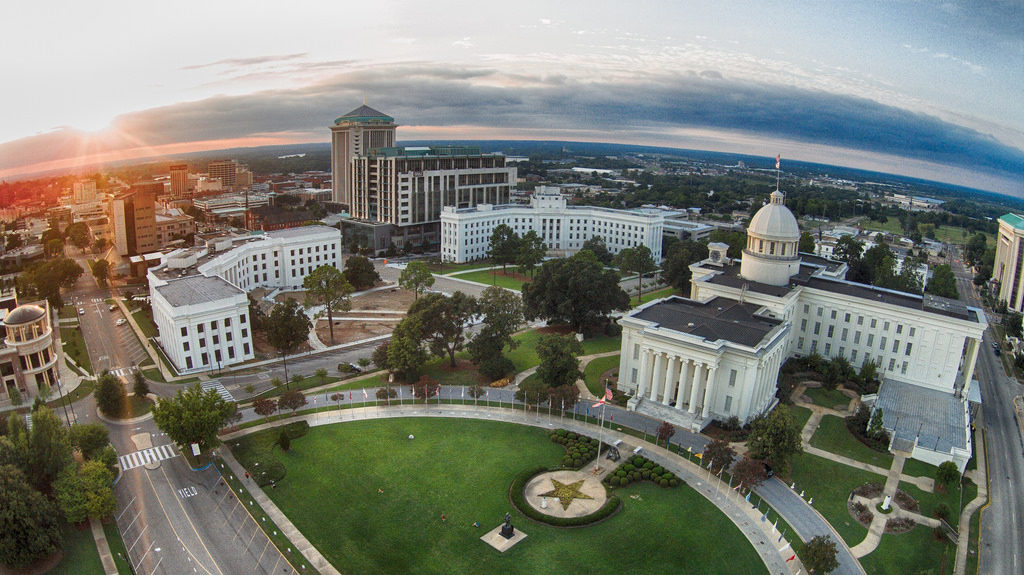
Looking to travel in 2018? There are thousands of getaways across the globe to explore, which is why The New York Times curates an annual list of 52 suggestions as “a starter kit for escaping into the world” to inspire travelers for the new year, and Alabama’s capital city is among them. Coming in at the 49th spot, Montgomery, Ala. joins a handful of other American cities that are listed amongst dozens of international must-sees such as Colombia (“With the war finally over, the entire country is opening up”), Basilicata, Italy (“caves, beaches and more in Italy’s secret southern region”) and Kuélap, Peru (“new access to the fortress in the clouds). The Times cited the city’s upcoming National Memorial for Peace and Justice, the nation’s first memorial dedicated to lynching victims and a new museum dedicated to slavery which opens in the spring, as the top reason to travel to Montgomery this year. A monument to the victims of racial terror rises in a Confederate capital. A number of monuments in Montgomery hail the Confederacy. Come April, one new memorial will speak for the victims of slavery and prejudice. On a hilltop overlooking the city, the National Memorial for Peace and Justice from the nonprofit Equal Justice Initiative will consist of 800 suspended columns etched with the names of over 4,000 victims. Another 800 columns, dedicated to the counties where lynchings occurred, will lie in an adjacent garden until claimed by and erected in those counties.— Elaine Glusac It’s safe to say, the list of “52 Places to Go in 2018,” is finally a list Alabamians can be proud to be a part of.
National lynching memorial and slavery museum sets open date in Alabama
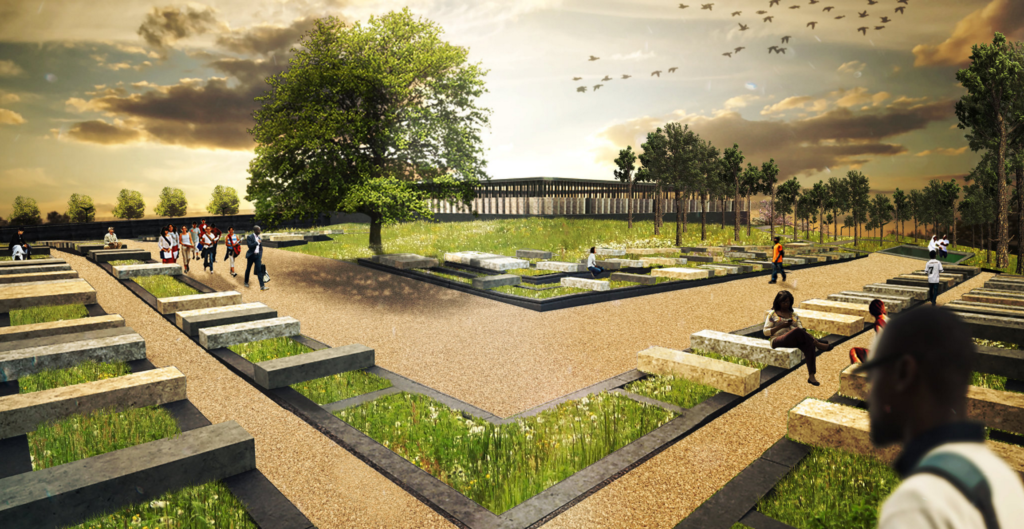
The original capital of the Confederacy, a city once mired in racism, will soon redefine its legacy when it opens the nation’s first memorial dedicated to lynching victims and a new museum dedicated to slavery in the spring. The Equal Justice Initiative on Monday announced it will open the National Memorial for Peace and Justice in Montgomery, Ala. on April 26, 2018. The memorial, devoted to 4,075 blacks EJI’s research shows were killed by lynching in the U.S. from 1877 to 1950, will acknowledge an era of racial terror in the United States when thousands of African Americans were lynched and publicly tortured, sometimes in the presence of thousands of people. Designed with hundreds of six-foot, corten steel monuments aligned in a structure that sits above the city of Montgomery, EJI’s memorial will feature new sculptures from African and African American artists that explore slavery, segregation, and contemporary issues of racial inequality. The spacious park holding the memorial will include a monument for every county in America where a racial terror lynching took place that can be claimed by community groups and installed locally. “Our nation’s history of racial injustice casts a shadow across the American landscape,” Bryan Stevenson, director of EJI, said in a statement. “This shadow cannot be lifted until we shine the light of truth on the destructive violence that shaped our nation, traumatized people of color, and compromised our commitment to the rule of law and to equal justice.” The six-acre site will also feature a museum, From Enslavement to Mass Incarceration, a few blocks away from the memorial that will be situated within 150 yards of one of the South’s most prominent slave auction sites, near the Alabama River dock and rail station where tens of thousands of enslaved black people were trafficked. Check out a preview of the memorial below: Tickets for admission to the museum and the memorial are now available at museumandmemorial.eji.org.
