
Lawsuit challenges new Alabama congressional districts
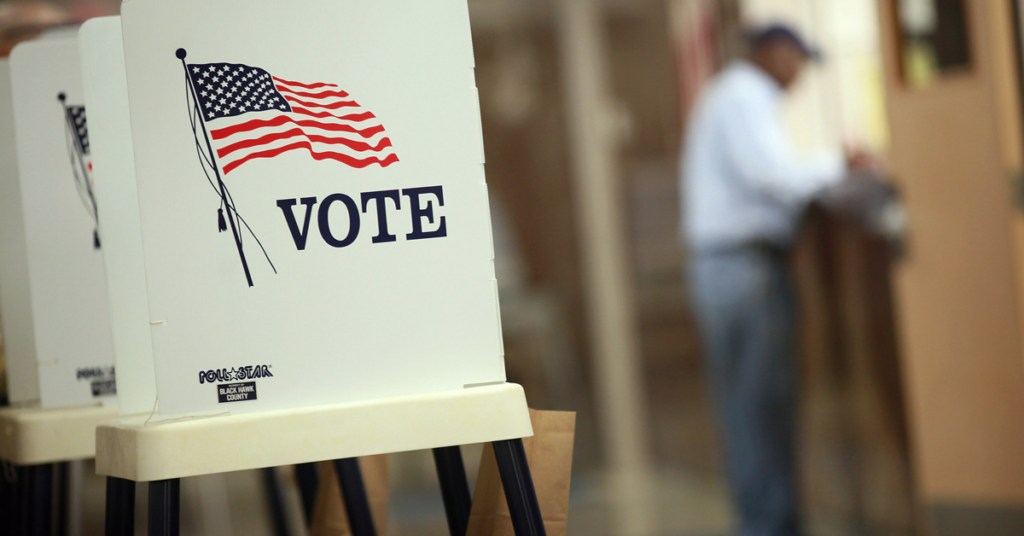
Two lawsuits are challenging Alabama’s newly approved congressional map, arguing it unlawfully dilutes the voting strength of African Americans with one majority-minority district out of seven. An organization announced a lawsuit Thursday on the same day that Alabama Gov. Kay Ivey signed the new congressional, legislative, and school board districts into law. A previously filed lawsuit by two state senators and several voters was also updated Thursday to challenge the new map. Alabama lawmakers this week approved a congressional map expected to maintain the current partisan balance: the seven-member congressional delegation with six Republicans elected from heavily white districts and one Democrat elected from the only majority-white district. Alabama has a population that is about 26% Black. A lawsuit backed by an organization aligned with a Democratic group says the plan violates the Voting Rights Act “because it strategically cracks and packs Alabama’s Black communities, diluting Black voting strength and confining Black voting power to one majority-Black district.” The lawsuit was supported by the National Redistricting Foundation, a nonprofit affiliate of the National Democratic Redistricting Committee, which is led by Eric Holder, who was attorney general under President Barack Obama. It is the second lawsuit filed over the issue. A pending lawsuit filed by two lawmakers and four voters argues the state should have two districts, where Black voters might have an opportunity “to elect candidates of their choice.” “Today, the Voting Rights Act no longer requires maintenance of a majority-black Congressional District in Alabama. To the contrary, the state cannot rely on the Voting Rights Act to justify splitting county boundaries when Districts drawn without racial gerrymandering provide Black voters constituting less than a majority, combined with reliably supportive white voters, an opportunity to elect candidates of their choice,” lawyers wrote in an amended complaint. During the recent special session, Republicans voted down Democratic efforts to create one swing congressional district with a significant centered in Birmingham that would be competitive between Republicans and Democrats. The swing district would have a population that is 40% Black. Republicans have maintained the approved maps comply with the Voting Rights Act and related court rulings. “I’m ready to defend these maps in court,” said Republican Sen. Jim McClendon, the co-chairman of the redistricting committee. McClendon argued the maps could not be drawn with two majority Black districts Republican Rep. Chris Pringle, the other co-chair of the redistricting committee, argued that having two districts — where African Americans were a significant portion of the population but under 50% — could do the opposite of what Democrats want by making them more competitive for Republicans. Republished with the permission of the Associated Press.
Lawsuits claim Congressional maps dilutes black voters in Alabama, Georgia, Louisiana
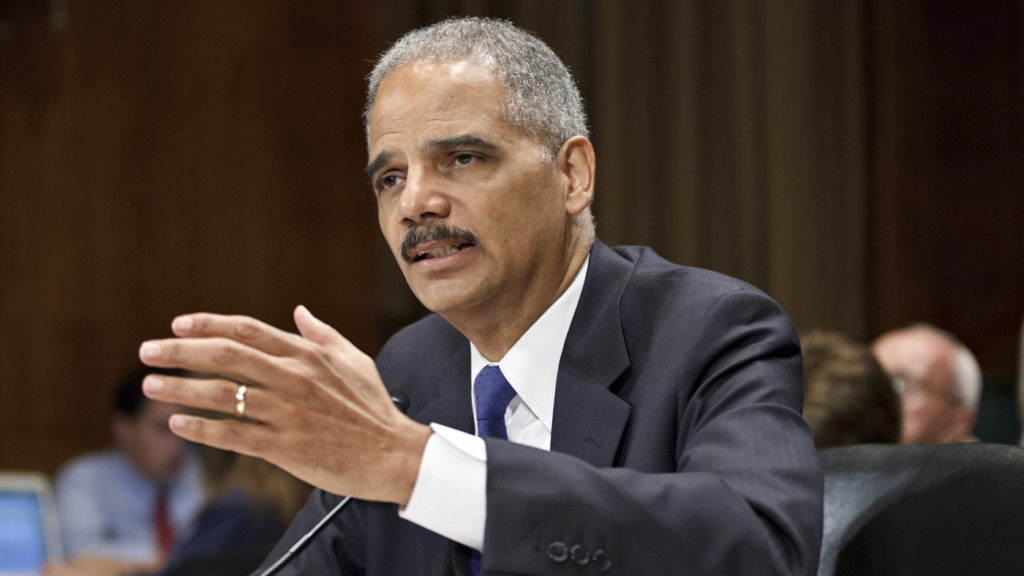
A group backed by Democratic former U.S. Attorney General Eric Holder launched a legal campaign Wednesday in an effort to create more black congressional districts in three Southern states: Alabama, Georgia and Louisiana. The group, the National Redistricting Foundation, claims the current congressional maps violate a section of the Voting Rights Act by discriminating against black voters by not allowing them an equal opportunity to elect candidates of their choice to the U.S. House of Representatives. They seek to block the three states from holding any further congressional elections under the current maps that were approved in 2011. Alabama 7th District U.S. Rep. Terri Sewell, who represents the state’s only majority-minority congressional district, applauded the lawsuits. “I applaud today’s effort by the National Redistricting Foundation to challenge the underrepresentation of African American voters in Alabama,” said Sewell. “Generations of Alabamians have fought tirelessly for equal voting rights, and I support all efforts to guarantee fair representation and access to the polls. More than fifty years after the enactment of the Voting Rights Act of 1965, our work to prevent voter discrimination and unfair electoral practices is not over. Our vote is our voice, and protecting the vote for all Americans must remain a top priority.”
