
House GOP campaign arm targeted by ‘unknown entity’ in 2018
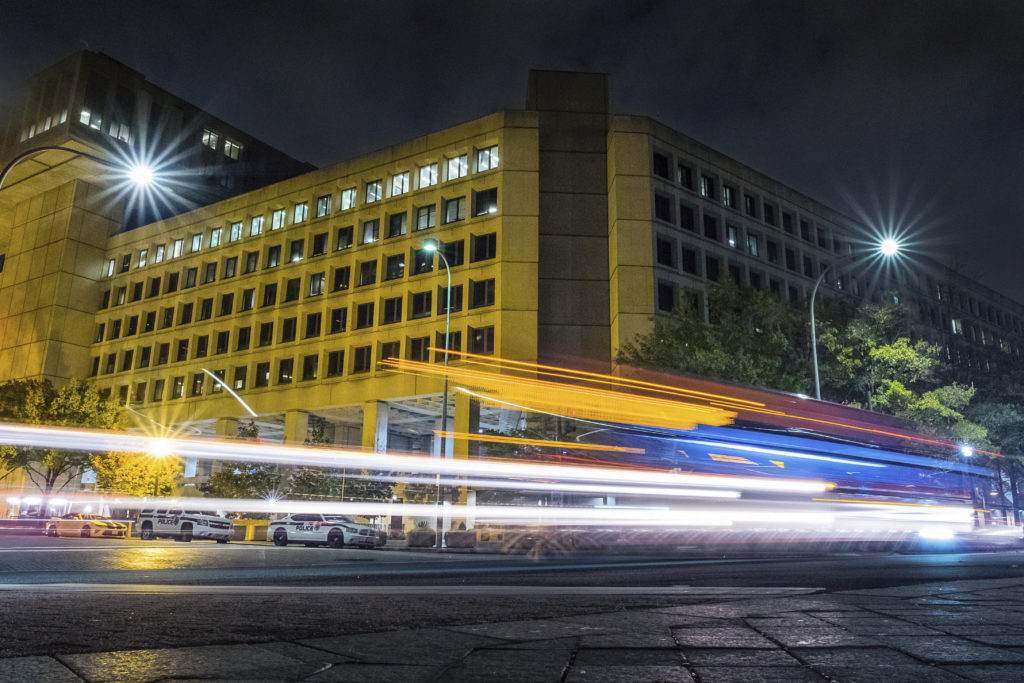
Thousands of emails were stolen from aides to the National Republican Congressional Committee during the 2018 midterm campaign, a major breach exposing vulnerabilities that have kept cybersecurity experts on edge since the 2016 presidential race. The email accounts were compromised during a series of intrusions that had been spread over several months and discovered in April, a person familiar with the matter told The Associated Press. At least four different party aides had their emails surveilled by hackers, said the person, who was not authorized to discuss the details publicly and spoke on condition of anonymity. The committee said an “unknown entity” was behind the hack but provided few other details. A cybersecurity firm and the FBI have been investigating the matter, the committee said. The FBI declined to comment. Politically motivated cyberespionage is commonplace across the world, but Americans have become particularly alert to the possibility of digital interference since Russia’s meddling in the 2016 election. The theft of Democrats’ emails is still fresh in the minds of many political operatives and lawmakers, who have stepped up defensive measures but still struggle to protect themselves. Foreign spies routinely try to hack into politicians’ emails to gain insight, ferret out weaknesses and win a diplomatic edge. But hackers often launch sweeping spear-phishing campaigns to gain access to a variety accounts — with no political motivation. With no immediate suspects and few technical details, it’s unclear what the significance of this latest incursion is. In August, the Democratic National Committee thought it had thwarted an attempt to break into its massive voter database — but the effort turned out to be unauthorized test that mimicked what an attack would look like. CrowdStrike, a California-based cybersecurity company, said Tuesday the NRCC asked the company in April to “perform an investigation related to unauthorized access” to the committee’s emails. Before that, the company had been helping the committee protect its internal corporate network, which wasn’t compromised. “The cybersecurity of the committee’s data is paramount, and upon learning of the intrusion, the NRCC immediately launched an internal investigation and notified the FBI, which is now investigating the matter,” the committee said in a statement. The hack was first reported by Politico. Earlier this year, NRCC Chairman Steve Stivers said the committee — which raises money to support Republican candidates for the House — hired multiple cybersecurity staffers to work with its candidates and promised to do more. “We’re starting to advise campaigns, but we’re not ready to roll the whole thing out. We’re working on it,” Stivers said in March. “We’re working on the technology-based stuff to try and make sure that we know what’s out there — which is hard, too — and then we try to defend against it the best we can.” During the 2016 presidential campaign, Russian state-aligned hackers organized the leak of more than 150,000 emails stolen from more than a dozen Democrats. The FBI later said that the Russians had targeted more than 300 people affiliated with the Hillary Clinton campaign and other Democratic institutions over the course of the presidential contest. Special counsel Robert Mueller is now investigating the whether people close to Donald Trump’s presidential campaign had advance knowledge of WikiLeaks’ plans. U.S. officials have expressed concern about foreign interference in U.S. elections. This weekend, Defense Secretary Jim Mattis accused Russia of trying to “muck around” in the November midterm elections. Mattis did not offer specifics and would not elaborate. In October, the Justice Department unsealed criminal charges detailing a yearslong effort by a Russian troll farm to “sow division and discord in the U.S. political system” by creating thousands of false social media profiles and email accounts that appeared to be from people inside the United States. The complaint provided a clear picture that there is still a hidden but powerful Russian social media effort aimed at spreading distrust for American political candidates and causing divisions on social issues such as immigration and gun control. The campaign season saw several examples of digital mischief, although none with the impact of the 2016 hacks. In August, Microsoft alerted the public to attempts by government-backed Russian hackers to target U.S. conservatives’ email by creating fake websites that appeared to belong to a pair of think tanks, the Hudson Institute and International Republican Institute. It also confirmed an attempt similarly attributed to Russian hackers to infiltrate the Senate computer network of Sen. Claire McCaskill, the Missouri Democrat who lost a re-election bid in November. Google later confirmed in September that the personal Gmail accounts of multiple senators and staffers had recently been targeted by foreign hackers, though it did not specify the cyberspies’ nationality nor the party affiliations of the targets. Republished with permission from the Associated Press.
Scarce targets curb Dem hopes for House gains, despite Donald Trump

In a taste of ads to come, House Democrats have run national TV spots in which actors recount Donald Trump‘s derogatory remarks about immigrants, women and veterans and one asks, “How can Republican members of Congress support that?” The commercials, by the Democratic Congressional Campaign Committee, underscore the party’s hopes for an Election Day bumper crop of new House seats, fueled by the GOP presidential candidate’s disparaging verbal assaults and poor showing in most polls. Outnumbered by Republicans 247-188 – and with two vacancies in districts they’re certain to win – Democrats seem likely to bolster their ranks in November. Yet gaining the 30 seats needed to capture a House majority appears elusive. DAUNTING FIGURES Of the House’s 435 seats, only around 40 from California to Maine seem clearly up for grabs, though that could change. Redistricting, along with Democrats’ tendency to be concentrated in urban and coastal areas, has given both parties’ incumbents such sturdy protection that on Election Day 2014, just 13 of 388 lawmakers seeking re-election lost. Of the 435 House members elected, 377 won by a decisive 10 percentage points or more or were unopposed. Democrats would have to sweep 35 of the 40 competitive contests and lose only five for a 30-seat pickup, a significant challenge. In the 17 presidential election years since World War II, a party has gained 30 House seats just three times, most recently in 1980. Democrats’ predictions have been tempered. Rep. Ben Ray Lujan, D-N.M., who heads House Democrats’ campaign committee, says, “Democrats are on offense and we’ll pick up seats.” OTHER HURDLES Democrats failed to recruit strong candidates in districts where they might have competed. The Democratic challenger against well-financed freshman Rep. Tom MacArthur in central New Jersey, Frederick LaVergne, has reported $600 cash on hand. The party has had problems fielding candidates in the Philadelphia suburbs, eastern Ohio, central Illinois and west of Detroit. “They haven’t put seats in play they needed to put in play,” said Rep. Steve Stivers, R-Ohio, a top member of the National Republican Congressional Committee. Democrats want to pry Republicans out of suburban districts where TV advertising is often expensive, especially with a competitive presidential or Senate race in the state. A week of commercials can cost hundreds of thousands of dollars in Denver; Orlando, Florida; and Las Vegas, and can be prohibitively expensive for House candidates in New York, Los Angeles and Chicago. In addition, Democrats seem certain to lose a newly redrawn district in north Florida and face challenges keeping seats around Omaha, Nebraska; Sacramento and California’s central coast; and Florida’s Palm Beach. GOP DANGER SIGNS Republicans hold about three in four battleground House seats, leaving them more at risk. Nevada, Maine and Minnesota are places where the GOP faces tough defensive fights. Thanks to strong off-year elections in 2010 and 2014, the GOP’s 247 seats are its high-water mark since Herbert Hoover’s presidency 86 years ago. The party holds districts in New York, New Hampshire and Iowa that it will struggle to retain this presidential election year, when Democratic turnout should increase. While 26 House Republicans were elected in 2014 in districts that backed President Barack Obama in 2012, just five Democrats serve in districts carried by 2012 GOP presidential nominee Mitt Romney. That means more Republicans are at a disadvantage. Among them, Rep. Robert Dold is clinging to a Chicago-area district that gave Obama 58 percent of its vote, more than in any other Republican-held seat. TRUMP FACTOR Trump is unpopular among women, minorities and college-educated voters. This spells trouble for Republicans representing suburbs and districts with many Hispanic voters, and many candidates have criticized his remarks, though few have abandoned him outright. Freshman GOP Rep. Carlos Curbelo is fighting to survive in a South Florida district that is two-thirds Hispanic. He’s said he won’t support Trump and has run a Spanish-language radio ad in which former Florida Gov. Jeb Bush says, “I know Carlos and I know he will continue representing us with integrity in Washington.” Republican Rep. Mike Coffman, whose suburban Denver district is one-fifth Hispanic, says of Trump in one spot, “Honestly, I don’t care for him much.” Trump’s problems with crucial voters and Democratic nominee Hillary Clinton‘s modest but distinct advantage in most polls have emboldened Democrats to hunt for additional GOP seats. They’ve already spent against conservative Rep. Scott Garrett in New Jersey suburbs of New York City and have hopes of grabbing seats around Minneapolis, Orlando and central New York. They envision benefiting from diminished voter turnout by Republican moderates appalled at Trump and conservatives who distrust him. “Our biggest concern is turnout,” but it’s also a problem for Democrats, said Mike Shields, top aide for the Congressional Leadership Fund and the American Action Network, which back House GOP candidates. COUNTER-CURRENTS Republicans argue that Clinton poses problems, too. Polls find much dislike for her, too, and Republicans are hoping for lower turnout by young liberals who preferred Vermont Sen. Bernie Sanders, Clinton’s Democratic presidential rival, and by blacks no longer drawn to vote by Obama. Should Trump’s defeat appear inevitable, House Republicans could cast themselves as a brake on a Clinton administration. So far they’ve used that sparingly. One GOP fundraising email signed by House Speaker Paul Ryan, R-Wis., says, “I worry about what will happen if Hillary Clinton is elected president.” Republished with permission of the Associated Press.
Local roundup: Confederate jacket sparks dispute, Paul Ryan to fundraise in B’ham, Mobile debates Gulf Coast gas tanks

It wasn’t long ago when Confederate iconography was generating statewide headlines amid a dispute between Gov. Robert Bentley, who supported downplaying the state’s secessionist history, and his critics who said he was “deceptively” revising Alabama’s history. This week, a rebel soldier’s jacket has stirred controversy of a different kind. A Huntsville collector, Joe Fitzgerald, who purchased an 1860s-era CSA jacket worn during the Civil War is now fighting for his right to keep the jacket, in the face of charges the relic was stolen from a New Orleans museum. Fitzgerald says the Confederate Memorial Hall Museum – who claims the jacket was lifted from them during the 1980s – has never proven the antique actually belong to its purported owner, Confederate Army Capt. William Lyman, and so cannot claim for certain the missing jacket is the same as the one he owns. Fitzgerald bought the coat in 2009 at a civil war history convention. Representatives of the aggrieved museum appraise its value at $75,000. The two parties are fighting out the dispute in Madison County Circuit Court. MARATHON MOBILE CITY COUNCIL MEETING SETS UP MOMENTOUS VOTE ON GAS TANK FARMS ALONG COAST After an hours-long public comment period at a Mobile City Council hearing on whether or not to enshrine petrochemical farming along the ecologically-sensitive Gulf Coast, the real work of regulating the operations is just getting started. Environmental activists and industry advocates sparred well through what normally would have been a lunchtime recess, trading barbs over economic development and the preservation of the port. Casi Callaway, executive director of Mobile Baykeeper, said she hoped to speak in favor of a compromise, but said a clause to exempt existing operations from the proposed regulations was a non-starter. Speakers like Mobile Chamber VP Troy Wayman said environmental concerns are exaggerated, even ginned up by billionaire environmentalists like George Soros. A vote could come as soon as this week, bout council members and council Attorney Jim Rossler indicated possible tweaks would push a final vote until at least April or longer. MONTGOMERY HAPPENINGS Montgomery cancelled municipal elections planned for May after no one ran to oppose a handful of incumbent officials during a March 8 meeting of the City Council. The Mayor’s office and Council seats 6 and 7 were all up for election, but no challengers emerged The cancellation means incumbent Mayor Kirk Jones and Council Members John Champagne Jr. and Rebecca Huss will remain safely on the council until 2018. • • • An officer with the Montgomery Police Department resigned on Tuesday after being arrested and charged with leaving the scene of a traffic accident while off-duty, a felony. 22-year-old G.T. Farris reportedly left a two-car accident involving him and another driver at 3 a.m. Tuesday morning. Farris was detained in a Montgomery County jail and held under a $15,000 bond. The department received and accepted his resignation after beginning the process of terminating him unilaterally. PAUL RYAN IN ALABAMA Speaker Paul Ryan will be in Birmingham on Wednesday to raise money to help grow the Republican majority in the House. U.S. Reps. Robert Aderholt and Mike Rogers will be on hand as Ryan stumps for campaign cash to benefit the National Republican Congressional Committee. TRUSSVILLE SUPERINTENDENT SAYS ‘NO THANKS’ TO PAY INCREASE Dr. Pattie Neill signed on for four more years as head of Trussville Schools, but said no to the customary raise that usually entails. Her reason? Under state law, teachers with more than 28 years of experience are capped on their salaries. Neill, a former teacher, says it wouldn’t be right to take a raise until the state of Alabama acts to lift that restriction. “I have more than 28 years of experience and I consider myself just like they are,” Neill said. “I think it’s important to honor those people who are still in the work, and the work is every day and it starts over every year and I think the state needs to be appreciative of that.” Under her just-renewed contract, Neill makes $176,000 annually. STATE HEALTH OFFICIALS: PARTS OF MOBILE BAY OK’D FOR OYSTER HARVESTING Officials with the Department of Public Health have given the green light for reopening two areas of the Mobile Bay for oyster harvesting, following possible bacterial contamination stemming from heavy rainfall in late February. Two parts of the Bay, including Heron Bay, are now deemed safe for oystermen and the public.
