
Alabama researchers working on robots to be used by police

Research ship named for Dr. Gilbert R. Mason
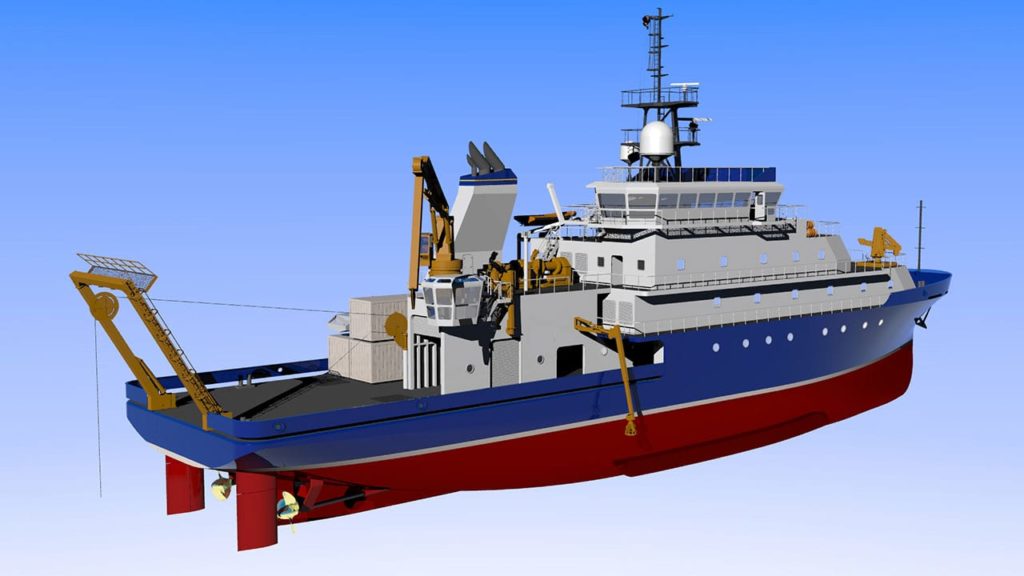
A new oceanographic research ship will be named for a Mississippi physician who filed one of the Deep South’s first school desegregation lawsuits and led wade-ins to integrate a federally funded public beach. The Research Vessel Gilbert R. Mason will be named for Dr. Gilbert R. Mason Sr., whose lawsuit — filed for his son, Gilbert Mason Jr. — made Biloxi’s public schools the first in Mississippi to integrate, according to a news release Friday from the University of Southern Mississippi. The wade-ins he led from 1959 to 1963 “led to repeated arrests, bombings and reprisals,” but a lawsuit that he filed ultimately desegregated the beach at Biloxi, the statement said. At one wade-in, about 200 African Americans were faced with three times as many whites “with pipes and chains and baseball bats and cue sticks,” Mason recalled in a video archived at The History makers website. Mason also served on an advisory committee to President Richard Nixon’s Cabinet Committee on Education and as a consultant to President Jimmy Carter. After Hurricane Camille, he was on the Mississippi governor’s emergency council to plan the Gulf Coast’s reconstruction and recovery. His name was among more than 160 submitted, said Leila Hamdan, interim associate director for USM’s School of Ocean Science and Engineering. The university, along with the Louisiana Universities Marine Consortium, will lead the group created to operate the ship. “The lives of Dr. Gilbert Mason and his son are a lesson in equality, their legacy a call for action,” said LUMCON Executive Director Craig McClain. “The naming of the RCRV for the Masons is a first step towards greater inclusivity and diversity in ocean science.” The ship will be built at Gulf Island Fabricators in Houma, Louisiana, and is expected to begin studies in the Gulf of Mexico in 2023. It will have homeports at Gulfport and Houma, Louisiana. Universities in every Gulf state, as well as Georgia, Puerto Rico, the Virgin Islands and Mexico also are part of its operating consortium. The $100 million vessel will be the third of three research ships built for the National Science Foundation. Republished with the Permission of the Associated Press.
Richard Shelby encourages support, passage of $60 billion appropriations bill
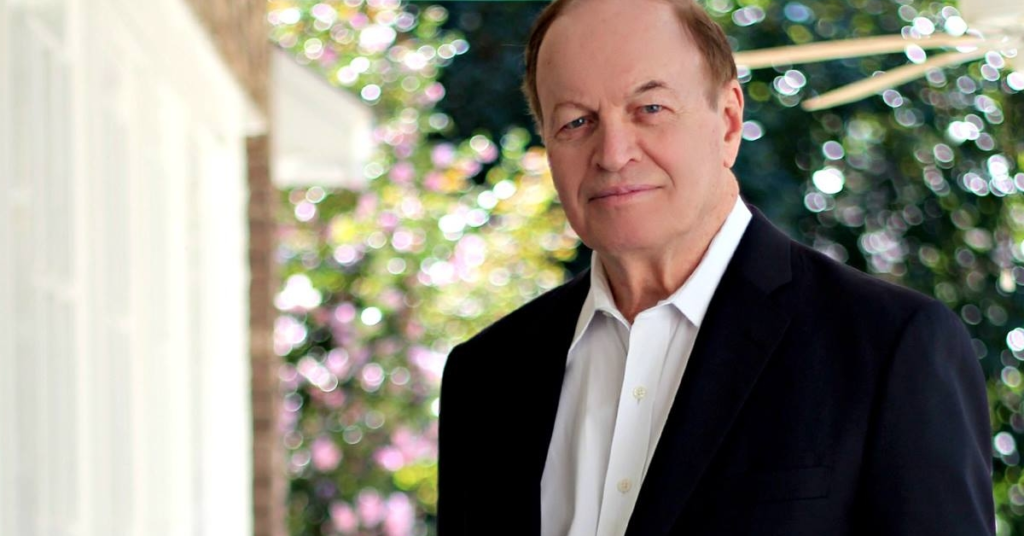
Alabama U.S. Senator Richard Shelby, chairman of the Senate Appropriations Subcommittee on Commerce, Justice, Science and Related Agencies (CJS), on Wednesday announced the filing of a Fiscal Year 2018 appropriations bill. The bill would provide crucial funding to the U.S. Departments of Commerce and Justice, the National Aeronautics and Space Administration (NASA), and the National Science Foundation. “This is a strong bill that provides significant support for my priorities on the Commerce, Justice, and Science subcommittee, such as law enforcement, national security, economic development, scientific research, and space exploration,” said Shelby. “Furthermore, it will rebuild and strengthen our military with the biggest increase in defense funding in 15 years, while also creating opportunities to renew America’s aging infrastructure throughout the nation. I urge my colleagues to join me in supporting this bipartisan bill.” The bill would provide: $30 million in grants to support troubled coal mining communities across the nation $20.7 billion for NASA space, educational, and technology programs $2.9 billion for DOJ State and Local Law Enforcement Activities, including the Office on Violence Against Women, juvenile justice programs, and community crime prevention $32 million for Community Oriented Policing Services’ (COPS) to combat the opioid and heroin crisis. $177.5 million for initiatives to address rape kit and other DNA evidence backlogs Highlights from the bill, and full details of funding can be found below: Science National Aeronautics and Space Administration (NASA) – $20.7 billion for NASA, $1.1 billion above the FY2017 enacted level and $1.6 billion above the budget request, to support the human and robotic exploration of space, fund science missions that enhance the understanding of the Earth, the solar system, and the universe, and support fundamental aeronautics research. This includes: $2.15 billion for the Space Launch System (SLS), which is $212 million above the request. $1.3 billion for the Orion crewed spacecraft, $164 million above the request, to continue development of NASA’s next deep-space crewed capsule. $760 million for Space Technology, $74 million above the FY2017 enacted level to advance projects in early stages of development that are expected to demonstrate capabilities needed for future space exploration. $100 million is provided for Education programs that were proposed to be eliminated in the budget request. NASA EPSCoR is funded at $18 million, Space Grant is funded at $40 million, the Minority University Research and Education Project is funded at $32 million, and STEM Education and Accountability Projects are funded at $10 million. Department of Commerce The bill funds the U.S. Department of Commerce at $11.1 billion, $1.9 billion more than FY2017, to focus on core economic development activities, protecting intellectual property rights, strengthening trade enforcement, advancing cybersecurity research, and improving severe weather forecasting. Economic Development Administration (EDA) – $301.5 million for the EDA, $25.5 million more than FY2017. Increased funding expands the Public Works program to support brick-and-mortar projects in communities across the country and broadband infrastructure and access to unserved areas of the country. The bill also provides $30 million in grants to assist troubled coal mining communities. National Institute of Standards and Technology (NIST) – $1.2 billion for NIST, $247 million above the FY2017 enacted level. This amount includes a $10 million increase over the FY2017 level for the NIST Manufacturing Extension Partnership. Targeted funding will continue to support our nation’s cybersecurity posture through cutting-edge research, expanded advanced manufacturing opportunities, and the promotion of high quality standards to maintain fairness in the marketplace. National Oceanic and Atmospheric Administration (NOAA) – $5.9 billion, $234 million above the FY2017 enacted level. The bill provides full funding for NOAA’s flagship weather satellites, which are critical for accurate weather warnings to protect lives and property. Increased funding is provided for the National Weather Service to address failing infrastructure at its Weather Forecast Offices across the country. In addition, the bill includes increased funding for our nation’s fisheries. This includes continued support for more accurate and agency-independent data and language allowing NOAA to experiment with alternative management regimes. Provisions in the bill will help expand opportunities for American commercial and recreational fishermen. Department of Justice The bill funds the Department of Justice (DOJ) at $30.3 billion, $1.3 billion above the FY2017 enacted level. The constantly-changing landscape of criminal activity at home and abroad tests the DOJ’s ability to deal with emerging threats. The bill ensures that federal law enforcement agencies work together to focus limited resources in a manner that safeguards taxpayer dollars while preserving public safety. Executive Office for Immigration Review (EOIR) – The bill provides $504.5 million for EOIR, $64.5 million above the FY2017 enacted level, which includes funding for at least 100 new Immigration Judge (IJ) Teams to help reduce the extensive and growing backlog of pending immigration cases. Federal Bureau of Investigation (FBI), Salaries and Expenses – $9.03 billion, a $263 million increase above the FY2017 enacted level. Within funding provided, the FBI is expected to enhance its investigative and intelligence efforts related to terrorism, national security, human trafficking, and cyber threats, while also enforcing U.S. criminal laws. The bill directs the FBI to ensure full funding for the operations of the National Instant Criminal Background Check System (NICS), and to review protocols associated with communication and information sharing between the Public Access Line and FBI field offices. Law Enforcement Grant Programs – $2.9 billion for DOJ State and Local Law Enforcement Activities, including the Office on Violence Against Women, juvenile justice programs, and community crime prevention grant programs. The bill contains $330 million to fund the Comprehensive Addiction and Recovery Act of 2016 (CARA) grant program, a $227 million increase over FY2017, and $32 million for Community Oriented Policing Services’ (COPS) anti-heroin task forces grants. Overall, a $299.5 million increase in grant funding is provided above the FY2017 level to combat the opioid and heroin crisis. The bill also contains $415.5 million for Byrne Justice Assistance Grants (JAG) and $177.5 million for initiatives to address rape kit and other DNA evidence backlogs. DOJ is directed to require all applicants for Byrne-JAG, COPS, and State Criminal Alien Assistance Program (SCAAP) grants to certify that they are in compliance with all
UAB students’ research work takes flight with drone technology
Drones are quickly becoming a prolific part of modern society, and students at the University of Alabama at Birmingham are doing cutting-edge research involving the flying machines. Elizabeth Bevan, a doctoral student in the Department of Biology, is using drones in her thesis project that studies the effects of climate change on the endangered Kemp’s ridley sea turtle in the Gulf of Mexico. Her focus is understanding the courtship and mating behaviors of the turtles, and drones have given her an up-close view into their previously unknown habitat. They do so without interfering with the animals. In 2013, Bevan and her mentor, biology professor Dr. Thane Wibbels, started using a basic drone with a GoPro camera attached. They sent it out over the water to film hatchings they had been monitoring on the beach, and they were floored by the potential. They followed up with a more sophisticated drone and camera. “The next season we were awestruck,” she said. “The newer model had a communication system between the aircraft and the remote control, and we could see in real time what the camera saw. It was the first time we’ve ever seen this kind of glimpse into this habitat.” Revolutionary technology Elizabeth Bevan pilots the UAB team’s DJI Inspire drone. (UAB) Bevan and Wibbels have documented eight types of courtship and mating behavior among the turtles in the Gulf. They’re now exploring with new cameras, including a thermal imager that lets them track turtles in the ocean and on their nesting beaches through body heat. Bevan said drone technology is revolutionizing the way researchers conduct biological studies of sea turtles and wildlife in general. “Without drones, we wouldn’t have been able to get this kind of information,” she said. “It’s not just opening a new door; it’s like blowing open a whole new wall.” Bevan has received a fellowship through the National Science Foundation’s East Asia and Pacific Summer Institute Program. This summer, she will spend three months in Australia, where researchers are doing advanced work involving drone technology and wildlife habitat exploration. Limitless potential Meanwhile, Ali Darwish, a UAB doctoral student in the Department of Electrical and Computer Engineering, has been building drones since 2009 and says they have unlimited applications. He is developing a software that will allow drones to track other drones. He was also part of a team that developed a small, waterproof quadcopter drone for dam inspections; another project is looking at potential applications for agriculture. UAB professor Dr. Arie Nakhmani and graduate student Ali Darwish hold a quadcopter drone in the School of Engineering laboratory. (UAB) “By placing infrared sensors and thermal sensors on drones, we can enable farmers to see plants, see diseases and see whether plants are irrigated,” he said. Darwish, who grew up in Dubai, has always had a fascination with flying machines. A native of Syria, he and students from other schools were involved in a project that sought to deliver humanitarian aid by drones to his war-torn home country. Their work was stymied by the political climate, but that hasn’t stopped Darwish’s interest in drones. He will soon start a job in Washington, D.C., with a company that specializes in artificial intelligence. He continues to work on his dissertation, and his work with drones – flying them, testing them, developing new uses and abilities for them – will continue. Not too long ago, drone technology was a military secret, Darwish said. But now, it’s showing up in all types of commercial applications. “People shouldn’t be afraid of drones. They’re coming anyway, because the technology is evolving, so let’s get used to living with them,” he said. This story originally appeared on the Alabama Department of Commerce’s Made in Alabama website. Republished with permission of Alabama NewsCenter.
