
Mo Brooks, favored candidate of the ‘#NeverTrump’ crowd
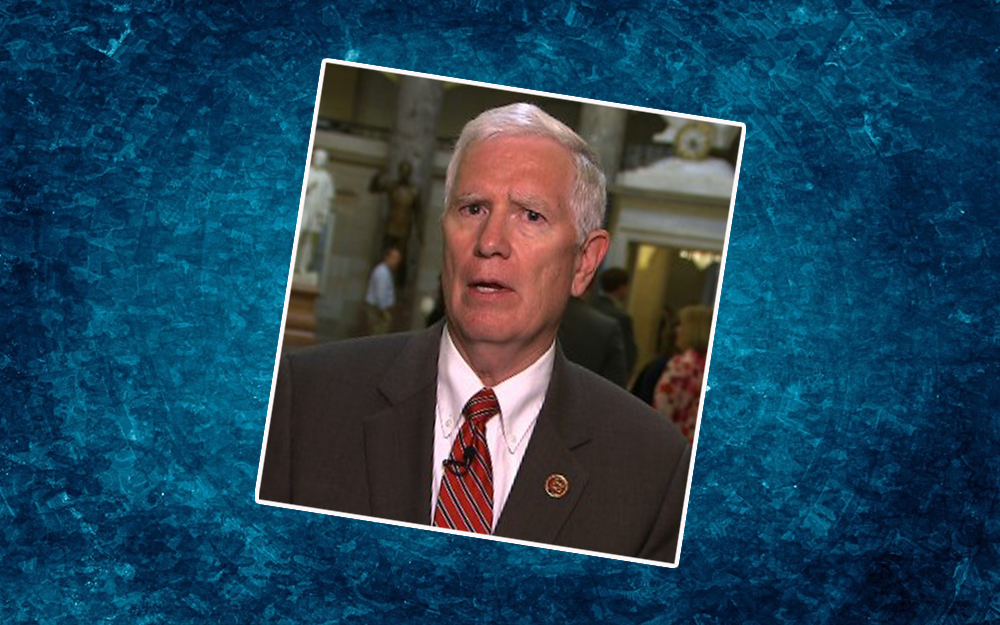
While embracing President Donald Trump has become the main undercurrent in Alabama’s approaching GOP Senate race, major players in the “never-Trump” movement are quickly making Mo Brooks their preferred candidate. Locked in a contentious struggle with sitting Sen. Luther Strange and former Alabama Supreme Court Chief Justice Roy Moore, Brooks struggles to be among the top two vote-getters in Tuesday’s Republican primary, where he can then move to the general election. But new polling shows it will be an uphill climb, with Moore taking a narrow lead over Strange, 31 to 29 percent. Brooks comes in third at 18 percent. The race for first is within the poll’s 5 percent margin of error. So, to gain traction with Alabama voters — who overwhelmingly supported Trump in 2016 — the Huntsville Republican has taken every opportunity to proclaim he is “100 percent” behind the president’s agenda. At the same time, however, those Republicans opposing Trump are fast lining up behind Brooks. As the Huntsville Republican touts his “support” for the president, he also welcomes accolades from several factions of the unsuccessful never-Trump movement, many at the forefront in the effort to deny Trump the Republican nomination. Last week, Brooks received an endorsement from the Senate Conservatives Fund, a group headed by Ken Cuccinelli, the former Virginia Attorney General, candidate for governor and leader in the never-Trump movement. Cuccinelli, like Brooks, was an active surrogate for Texas Sen. Ted Cruz’s presidential bid. #NeverTrump emerged during the 2016 Republican presidential primary after it was increasingly obvious the real estate mogul could actually win the nomination. It began as a hodgepodge of GOP operatives and right-leaning independents working on a variety of fronts: opposition research against Trump, creating alliances to deny him votes, recruiting candidates for opposition bids as well as investigating legal challenges to filing deadlines to give those candidates traction with Republicans. “We are very proud to endorse conservative Congressman Mo Brooks for the U.S. Senate in Alabama in the special election to replace Jeff Sessions,” the Senate Conservative Fund announced in a news release Aug. 3. “Mo Brooks is a principled leader, a member of the House Freedom Caucus, and the conservative candidate with the best chance of upsetting the DC establishment.” In an email to supporters the same day, Cuccinelli also sang Brooks’ praises: “We’re also proud to help defend Mo Brooks against the false attacks being made by Senator Mitch McConnell and his political machine … There is no reason why McConnell should be spending millions of dollars to mislead voters in this race and we hope conservatives come together to fight back. Alabama Republicans have a chance to send Washington a powerful message by voting for Mo Brooks on August 15th.” During the GOP convention fight July 2016, Cuccinelli, supporting a roll-call vote — which would have blocked block Trump’s nomination — “threw his credentials to the floor and walked out, claiming party leaders rammed through the voice vote in favor of the convention rules,” USA TODAY reported. One day after the Senate Conservatives Fund endorsement came backing from FreedomWorks, the libertarian conservative group founded by the billionaire political activist Koch brothers, which had also been extremely critical of Trump once he announced his candidacy. Talking to The Hill in July 2015, FreedomWorks CEO Adam Brandon cautioned against supporting Trump,: “I know for the last several years FreedomWorks activists have fought tirelessly against Obamacare, and Obamacare looks like a free market solution compared to what Donald Trump has said in the past he would like to see in our health care system. So, to me, that’s almost like a, just a no-go.” On top of that, FreedomWorks has even hired Cuccinelli as general counsel. The last day for Alabama voters to apply for an absentee primary ballot is Thursday. If there is no primary winner Aug. 15 — with 50 percent plus one — a runoff is Sept. 26; the general election is Dec. 12. Other Republican candidates in the race include Dr. James Beretta, Joseph Breault, Alabama Christian Coalition president Randy Brinson, Mary Maxwell, Bryan Peeples and state Sen. Trip Pittman of Baldwin County.
Congressional GOP beginning to accept Donald Trump as nominee
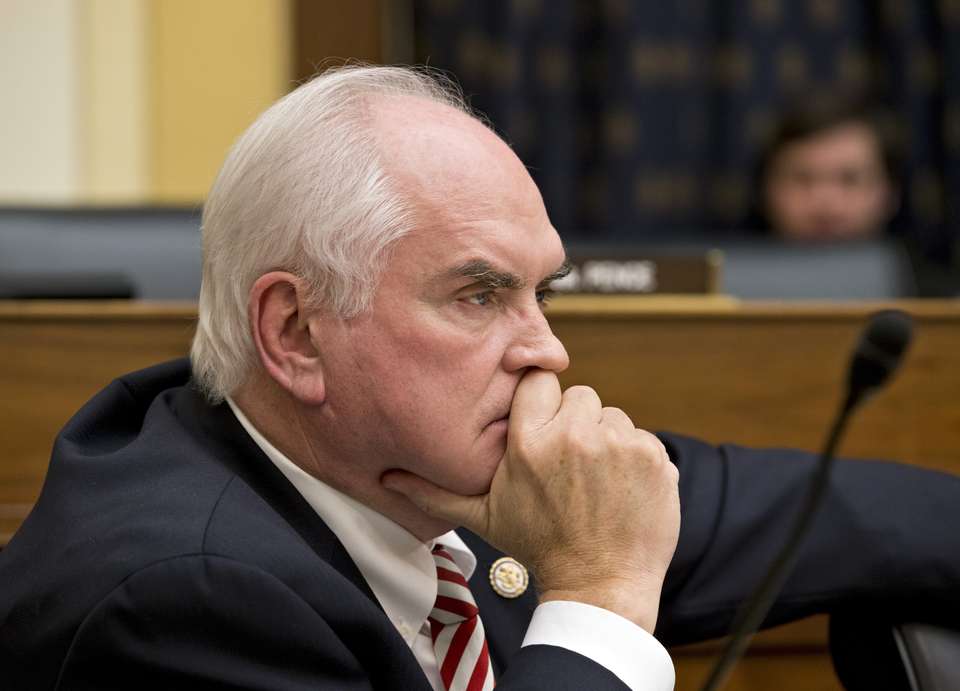
Congressional Republicans are beginning to accept, and even embrace, an outcome that was once unthinkable: Donald Trump as the GOP presidential nominee. In the wake of the businessman’s commanding wins in five Eastern states this week, a growing number of lawmakers say that Trump is taking on an air of inevitability. Some argue they should get behind him now instead of trying to stand in his way, as some establishment Republicans are still attempting to do by backing various “Never Trump” efforts. For some lawmakers, supporting Trump is seen as their only hope of stopping the Democrats’ likely candidate, Hillary Clinton, in November and ensuring a Democratic president doesn’t fill Supreme Court vacancies. “I don’t understand. I mean, it’s not ‘Never Trump.’ It’s ‘Never Hillary.’ Never, never, never, Hillary. Come on. Wake up and smell the coffee,” said Rep. Mike Kelly of Pennsylvania, who earlier this week cast his ballot for Trump, along with all members of his large family and 57 percent of Republican primary voters in his state. “I’ve never seen a party attack one of its own candidates with this aggressiveness,” Kelly said of GOP establishment figures who oppose Trump, blaming it on an elitist Washington attitude out of touch with voters. Sen. Orrin Hatch of Utah, a respected senior member of the Senate, previously endorsed Jeb Bush and then Sen. Marco Rubio and said he doesn’t intend to endorse Trump. But Hatch said Thursday of Trump: “It looks to me like he’s going to win and if he does I’m going to do everything in my power to help him.” Some leading Republicans have forecast that a Trump candidacy could spell electoral disaster, help Democrats win back control of the Senate and even cost Republicans seats in the House. They point to Trump’s disparaging comments about women and minorities that have contributed to high unfavorability ratings. Hatch, along with others, disagreed. “I think he could be great if he’ll get serious about being president, and I think he will,” Hatch said. “When he gets hit with reality that this is the toughest job in the world, he’s a clever, smart guy who I think will want to be remembered for doing good things, so I have a feeling he can make that transition.” To be sure, not all are on board, and some lawmakers cringe at the thought of vulnerable Senate Republicans and candidates getting linked to Trump’s controversial stances or attempting to distance themselves from them. “He’s looking more inevitable, yeah. I’ve been wrong all along,” said GOP Sen. Jeff Flake of Arizona, an outspoken Trump critic. “My feeling about Donald Trump is, I don’t think that that’s our best foot forward at all. And I can’t imagine being forced to take some of those positions that he’s taken. A ban on Muslims, build a wall and make the Mexicans pay for it, you name it.” It remains uncertain whether Trump will amass the 1,237 delegates needed to clinch the nomination ahead of the Republican convention in Cleveland in July. If he does not, Texas Sen. Ted Cruz hopes to make a play to win the nomination as balloting progresses. Ohio Gov. John Kasich also remains in the race. On Capitol Hill, Cruz remains an unpopular figure, having disparaged party leaders and led the charge to force a 16-day partial government shutdown in 2013 in a futile attempt to cut off money for President Barack Obama‘s health care law. Former House Speaker John Boehner, who resigned last fall under conservative pressure, lashed out at Cruz in comments published Thursday in Stanford University’s student newspaper, calling him “Lucifer in the flesh” and saying: “I get along with almost everyone, but I have never worked with a more miserable son of a bitch in my life.” Perhaps partly because of Cruz’s unpopularity, it’s getting easier to find leading lawmakers speaking publicly in favor of Trump. On Thursday, Trump picked up endorsements from House committee chairmen: Bill Shuster of Pennsylvania, who chairs the Transportation Committee, and Jeff Miller of Florida, who chairs Veterans Affairs. Sen. Bob Corker, R-Tenn., who heads the Foreign Relations Committee, spoke on the phone with Trump on Thursday and later told reporters they had a good and substantive conversation, though he has no plans to endorse him. On Trump’s foreign policy speech, Corker said: “Let’s face it, the foreign policy establishment in Washington hasn’t been exactly brilliant in their assessments of things, and I do like the fact that he’s challenging that status quo, I really do. … I think his campaign, like anybody who hadn’t been in the public arena before, is evolving.” Rep. Tom Rooney of Florida was a leading Rubio backer, but said now “it’s time to move on.” “The people have spoken. The Republican primary electorate has spoken so he deserves the opportunity to be our nominee,” Rooney said. “If he screws it up as the nominee and hurts the down-ballot ticket, then he screws it up. But right now the people want him to be the nominee.” Republished with permission of the Associated Press.
