
NYT highlights Homewood coach with heart for football and philanthropy
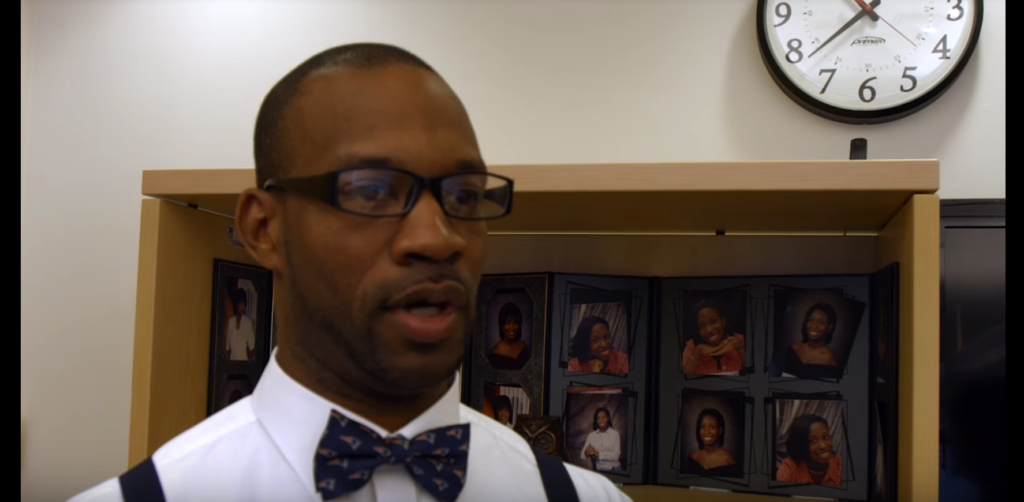
A Homewood Middle School football coach and teacher recently found himself in the national spotlight as his efforts to make an impact on local youth were highlighted by the New York Times (NYT). Steve Sills, “an evangelist for the gospel of encouragement, which he’s been preaching for 13 years at this economically and demographically diverse middle school in suburban Birmingham,” works hard to teach the middle school students he works with the importance of giving it your all. “Don’t matter if you are big or small, if you are fast or slow. If you give us the very best of you, together we can do great things,” Sills told the Homewood Patriots football team during a recent Monday night game according to the NYT. Sills, who envisioned a career in football after receiving a scholarship to play at Tennessee Tech and later played in the indoor Arena Football League, didn’t follow his expected life path. Instead he found himself teaching and coaching at Homewood Middle School. There, he teaches his students career and character where he endeavors to pass along his “look good, feel good, do good” mantra. But Sills takes his work beyond the classroom. Nine years ago, the educator founded the Homewood Trendsetters, a school club that according to the NYT, “combines sharp dressing with dozens of service projects, like feeding the homeless at local shelters or cheering on special needs students at athletic events. It now numbers more than 300, including more than 100 girls, and has logged thousands of volunteer hours and raised tens of thousands of dollars for the community.” When they NYT asked him to reduce his teaching philosophy to its core, he paraphrased the poet Maya Angelou: “These kids will forget what I said and did, but I hope they never forget how I made them feel.”
On NYT op-ed: A White House “resistance” shouldn’t be all that surprising
The story of the day is about the anonymously posted opinion column by the New York Times (NYT) written by a “senior staffer within the Trump White House.” It seems the world is going mad about the whole thing. I’m going to narrow my thoughts on this whole ordeal to four points (in no particular order): 1. If you did not realize there are good, disciplined staffers working in the Trump White House, curbing his less than professional and diplomatic faults and weaknesses, then you haven’t been paying attention. The author called it a resistance and everyone is freaking out about that but what is wrong with resisting the impulses of a man who has almost no impulse control? The chaos around Trump comes from him bringing in people with no loyalty or experience like Omarosa Manigault-Newman or the insanity that was Anthony Scaramucci. Should we fear or condemn those who would want to protect the president from his own bad decisions? Chaos comes from the problems they have finding and retaining experienced professionals and so misfits run the halls and talk out of turn to reporters and friends and anyone who will listen to their tales of misadventures in a White House that is constantly turned on its ear. The steadiness of the ship comes from good-hearted, principled people likes Press Secretary Sarah Huckabee Sanders or those who have served our nation and consider their role to serve the office of the president more so than the man like General John Kelly. It comes from the professionals whose names you never hear because they have their nose to the grindstone working. It comes from those spread out not just throughout the White House but the entire administration. Of course, there are factions within the White House there aways has been but in this administration there is no doubt that it’s worse than ever. There’s no doubt that it’s encouraged from Trump himself and his style of management (or mismanagement at time). There’s the do nothings vs. the do gooders. The loyal to Trump vs those loyal to the nation vs. those seeing their own 15-minutes of fame and/or access to power and later money. Of the first two groups there may be some cross-over but I suspect there’s not many who don’t tolerate Trump to get the job done or who don’t like the man but dislike the way he communicates or “rules.” 2. The anonymous source is likely to be outed, and there’s very little chance that they stay anonymous for even the next week. They knew that going into this. This has already turned into an all-out witch hunt in which everybody wants to know who is responsible to penning this op-ed. From reporters to those within the White House who agree or even disagree with the sentiments, to opponents on the Hill — it’s only a matter of time before people know who this is. Secrets do not keep well in DC. Secrets do not keep well within Trump Administration. Thus it would be premature to speculate as to this person’s motives and agenda until we know what their role inside the White House is. This is a chance the author took and they had to know what they were doing and what the costs would be when they were found out. 3. The President has called writing this op-ed “treasonous.” The First Lady just put out a response saying and I’m paraphrasing here, if you’re not here to do right by the administration, you need to leave. I wouldn’t agree that it was treasonous to the nation to write the op-ed but I agree that it was unprofessional and disloyal. Politics is a world in which loyalty and honoring the team you’re a part of are of the utmost importance. From day one people in this administration have bad mouthed and back-stabbed one another and you don’t have to look much further than the Trump vs. Jeff Sessions tweets or remarks to see that it’s welcome and encouraged behavior. If Trump wants more loyalty he should lead by example. That said, see #1. There are good people in the administration and that is obvious by the fact things haven’t totally hit the fan. Yet. 4. On the NYT printing an anonymous op-ed I must say I’ve had individuals approach me since I first began Alabama Today, who wanted to pen columns anonymously. This is a very tricky part of media: You want to get the story out but you have to consider many factors including maintaining the integrity of your publication and reputation for truth and honesty. There are a lot of things than can, and probably should be said in the world and in politics, if it weren’t for fear of making people angry, burning bridges and even retaliation I feel like we’d have a lot more of these types of stories. On the Hill people know and speak in hushed tones of improprieties for months sometimes years before a reporter has enough to go on to print something. Welcoming anonymity in these cases would open up the flood gates for those with bad motives. The question here is what was the movitves of the author of the story at hand? It reads as sincere and not politically motivated in the way in which a lot of attacks are. This is why I agree that the NYT was correct in publishing the article. If everything that the staffer said that they knew and experienced is actually true. Finally, what do I think about this as a whole? The Trump Administration has done something that has not been talked about before. Which is they’ve shined a spotlight on those working behind the man. Generally when you’re looking at a President, or Governor, or even Member of Congress, there are only one or two people in their sphere that world is able to identify — the Karl Rove‘s, Dana Perino‘s, the Tony Snow‘s, David Axelrod’s, Rahm Emanuel‘s of
Donald Trump fumes over NYT op-ed; top officials swiftly deny role
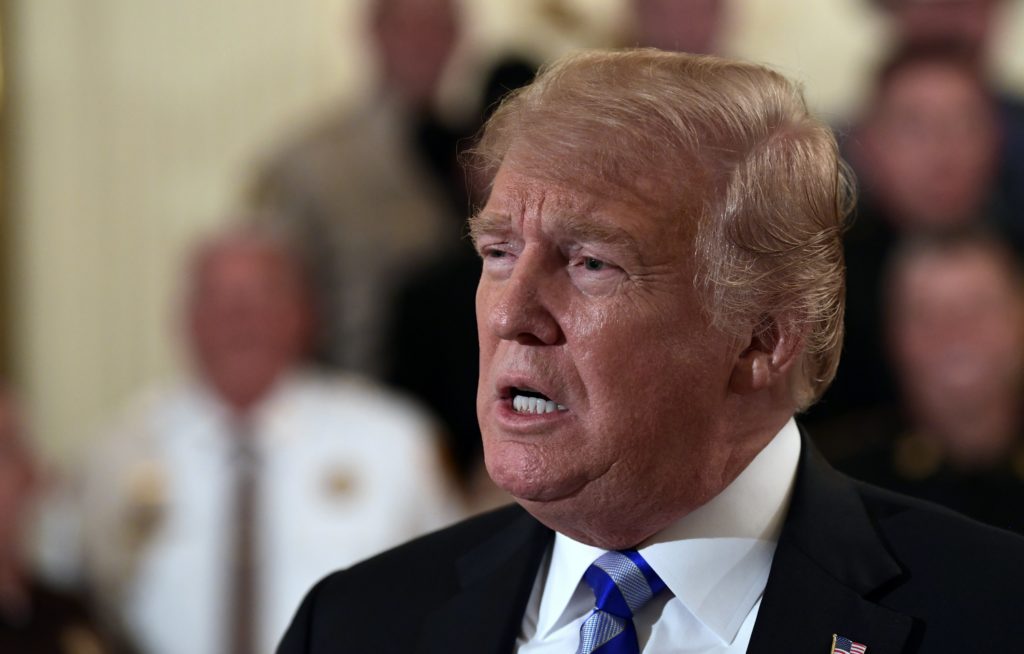
Pushing back against explosive reports his own administration is conspiring against him, President Donald Trump lashed out against the anonymous senior official who wrote a New York Times opinion piece claiming to be part of a “resistance” working “from within” to thwart his most dangerous impulses. Perhaps as striking as the essay was the recognition of the long list of administration officials who plausibly could have been its author. Many have privately shared some of the same concerns expressed about the president with colleagues, friends and reporters. Washington was consumed by a wild guessing game as to the identity of the writer, and swift denials of involvement in the op-ed came Thursday from top administration officials, including from Vice President Mike Pence’s office, Secretary of State Mike Pompeo and Dan Coats, director of national intelligence, and other Cabinet members. Trump was furious, tweeting Thursday morning that “The Deep State and the Left, and their vehicle, the Fake News Media, are going Crazy – & they don’t know what to do.” The Deep State and the Left, and their vehicle, the Fake News Media, are going Crazy – & they don’t know what to do. The Economy is booming like never before, Jobs are at Historic Highs, soon TWO Supreme Court Justices & maybe Declassification to find Additional Corruption. Wow! — Donald J. Trump (@realDonaldTrump) September 6, 2018 On Wednesday night, Trump tweeted a demand that if “the GUTLESS anonymous person does indeed exist, the Times must, for National Security purposes, turn him/her over to government at once!” White House press secretary Sarah Huckabee Sanders called on the “coward” who wrote the piece to “do the right thing and resign.” White House officials did not immediately respond to a request to elaborate on Trump’s call for the writer to be turned over to the government or the unsupported national security ground of his demand. To some observers, the ultimatum appeared to play into the very concerns about the president’s impulses raised by the essay’s author. Trump has demanded that aides identify the leaker, according to two people familiar with the matter, though it was unclear how they might go about doing so. The two were not authorized to speak publicly and spoke on the condition of anonymity. In a “House of Cards”-style plot twist in an already over-the-top administration, Trump allies and political insiders scrambled to unmask the writer. But the op-ed also brought to light questions that have been whispered in Washington for more than a year: Is Trump truly in charge? And could a divided executive branch pose a danger to the country? Former CIA Director John Brennan, a fierce Trump critic, called the op-ed “active insubordination … born out of loyalty to the country.” “This is not sustainable to have an executive branch where individuals are not following the orders of the chief executive,” Brennan told NBC’s “Today” show. “I do think things will get worse before they get better. I don’t know how Donald Trump is going to react to this. A wounded lion is a very dangerous animal, and I think Donald Trump is wounded.” The anonymous author, claiming to be part of the “resistance” to Trump “working diligently from within” his administration, said, “Many Trump appointees have vowed to do what we can to preserve our democratic institutions while thwarting Mr. Trump’s more misguided impulses until he is out of office.” “It may be cold comfort in this chaotic era, but Americans should know that there are adults in the room,” the author continued. “We fully recognize what is happening. And we are trying to do what’s right even when Donald Trump won’t.” Trump raged about the piece in the White House, calling around to confidants to vent about the disloyalty of the author and fuming that the so-called Deep State within the federal government had conspired against him, according to a person familiar with the president’s views but not authorized to discuss them publicly. The text of the op-ed was pulled apart for clues: The writer is identified as an “administration official”; does that mean a person who works outside the White House? The references to Russia and the late Sen. John McCain — do they suggest someone working in national security? Does the writing style sound like someone who worked at a think tank? In a tweet, the Times used the pronoun “he” to refer to the writer; does that rule out all women? The newspaper later said the tweet referring to “he” had been “drafted by someone who is not aware of the author’s identity, including the gender, so the use of ‘he’ was an error.” The Beltway guessing game seeped into the White House, as current and former staffers alike traded calls and texts trying to figure out who could have written the piece, some turning to reporters and asking them for clues. For many in Trump’s orbit, it was stunning to realize just how many people could have been the op-ed’s author. And some of the most senior members of the Trump administration were forced to deny they were the author of the attack on their boss. Hotly debated on Twitter was the author’s use of the word “lodestar,” which pops up frequently in speeches by Pence. Could the anonymous figure be someone in Pence’s orbit? Others argued that the word “lodestar” could have been included to throw people off. In a rare step, Pence’s communications director Jarrod Agen tweeted early Thursday that “The Vice President puts his name on his Op-Eds. The @nytimes should be ashamed and so should the person who wrote the false, illogical, and gutless op-ed. Our office is above such amateur acts.” Pompeo, who was in India, denied writing the anonymous opinion piece, saying, “It’s not mine.” He accused the media of trying to undermine the Trump administration and said he found that “incredibly disturbing.” Coats later issued his own denial, followed by Housing Secretary Ben Carson, Treasury Secretary Steve Mnuchin, budget director Mick
Is Alabama’s hostility to gambling finally fading?
Situated firmly in the Bible Belt, Alabama has long been against legalizing gambling. That is perhaps changing, as Alabama voters nominated candidates for governor — Republican Kay Ivey and Democrat Walt Maddox — who both favor creating a state lottery. “The resistance is now openly fraying, suggesting that gambling is no longer a potent moral issue that animates voters and politicians the way it once did,” wrote New York Times reporter Alan Blinder. Christian leaders change their perspective The New York Times says the hostility toward gambling may be decreasing as Christian leaders are no longer prioritizing the issue the way they used to. “The biggest priority right now for me is reminding evangelicals of why we are opposed to gambling, which means teaching a biblical view of economic stewardship and a biblical view of concern for the poor,” Russell Moore, who leads the Southern Baptist Convention’s public policy arm and is a native of the casino-dotted Mississippi coast told the New York Times. “I’m not concerned that evangelicals are changing their position on gambling, as much as I’m concerned that there’s often a kind of fatalism that assumes that gambling is going to be part of every economy.” The gambling debate Alabama has long struggled with the issue of gambling, as lawmakers faced several bills in recent sessions of the legislature aimed at loosening gambling laws, allowing the state to take part in the lucrative gaming industry. But state lawmakers haven’t voted on legalizing gambling in nearly 19 years as recent efforts have stalled. Last it happened was under then-Gov. Don Siegelman. In August 2016, the Greene County Circuit Court sided with the state of the of Alabama over controversial seizures of electronic bingo machines at the Frontier Bingo of Knoxville. In March 2014, Alabama law enforcement officers raided several casinos in Greene County, seizing cash and more than 1,000 illegal bingo machines. The raids and subsequent ending of bingo operations were “extremely detrimental to the quality of life” in the region, according to some community leaders. Another salvo in the battle over gambling was fired by the VictoryLand Casino, which reopened despite a ruling by the Alabama Supreme Court shutting down electronic bingo operations for nearly three years, The Shorter casino has been shuttered since 2013 when a raid by the state took 1,615 gambling machines and $260,000 in cash. And in March 2016, the Supreme Court said casino owners were passing off games as “bingo,” and the machines were illegal. In November 2015, Bentley rescinded an executive order disbanding his predecessor’s gambling task force, transferring enforcement powers to the office of Attorney Gen. Luther Strange. Strange had also pushed hard against gambling, mainly daily fantasy sports (DFS) leagues operating in the state. Earlier this year, Strange had sent cease and desist letters to FanDuel and DraftKings, calling DFS “illegal gambling.” They have not operated in the state ever since, despite lawmaker’s attempts at legalizing DFS. Least gambling-addicted state For a state that’s constantly debating whether or not to institute a state lottery as a means to generate revenue, Alabama should probably consider a 2017 report that ranks the Yellowhammer State as the least gambling-addicted state in the country. In personal finance website WalletHub’s latest report of 2017’s Most Gambling-Addicted States, analysts found Alabama is neither gambling-friendly nor do its residents have the need to seek treatment for gambling addiction. Perhaps it’s simply a matter of access, but Alabamians are able to avoid the economic consequences of a gambling addiction, which affects slightly more than 2 percent of all U.S. adults. According to the Mayo Clinic, “gambling can stimulate the brain’s reward system much like drugs such as alcohol can, leading to addiction.” That addiction can lead to serious economic consequences. On a societal level, compulsive gambling costs an estimated $6 billion per year, according to a study by the National Council on Problem Gambling.
Montgomery makes NY Times’ global list of 52 places to visit in 2018
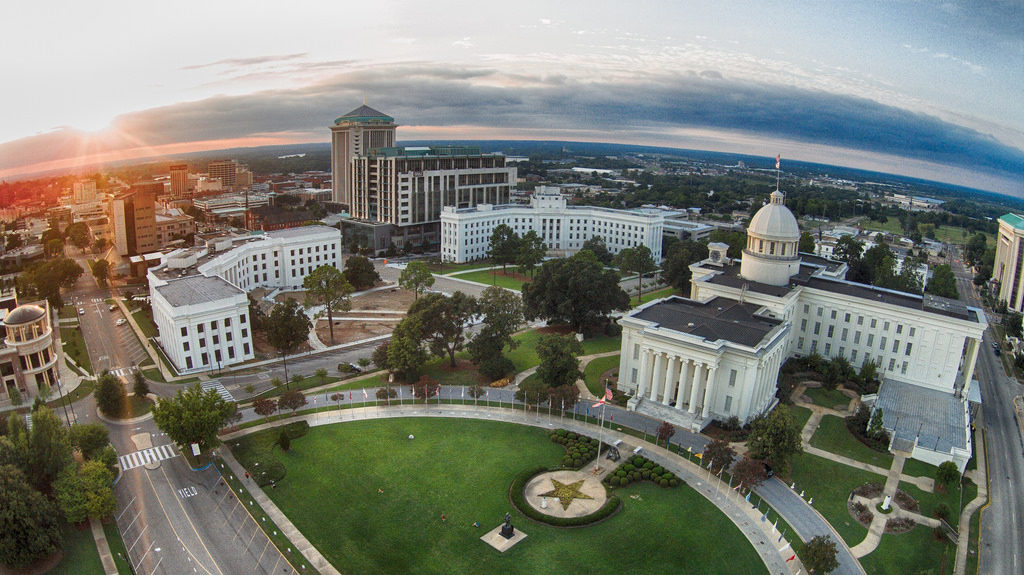
Looking to travel in 2018? There are thousands of getaways across the globe to explore, which is why The New York Times curates an annual list of 52 suggestions as “a starter kit for escaping into the world” to inspire travelers for the new year, and Alabama’s capital city is among them. Coming in at the 49th spot, Montgomery, Ala. joins a handful of other American cities that are listed amongst dozens of international must-sees such as Colombia (“With the war finally over, the entire country is opening up”), Basilicata, Italy (“caves, beaches and more in Italy’s secret southern region”) and Kuélap, Peru (“new access to the fortress in the clouds). The Times cited the city’s upcoming National Memorial for Peace and Justice, the nation’s first memorial dedicated to lynching victims and a new museum dedicated to slavery which opens in the spring, as the top reason to travel to Montgomery this year. A monument to the victims of racial terror rises in a Confederate capital. A number of monuments in Montgomery hail the Confederacy. Come April, one new memorial will speak for the victims of slavery and prejudice. On a hilltop overlooking the city, the National Memorial for Peace and Justice from the nonprofit Equal Justice Initiative will consist of 800 suspended columns etched with the names of over 4,000 victims. Another 800 columns, dedicated to the counties where lynchings occurred, will lie in an adjacent garden until claimed by and erected in those counties.— Elaine Glusac It’s safe to say, the list of “52 Places to Go in 2018,” is finally a list Alabamians can be proud to be a part of.
Darryl Paulson: Do universities discriminate in hiring?
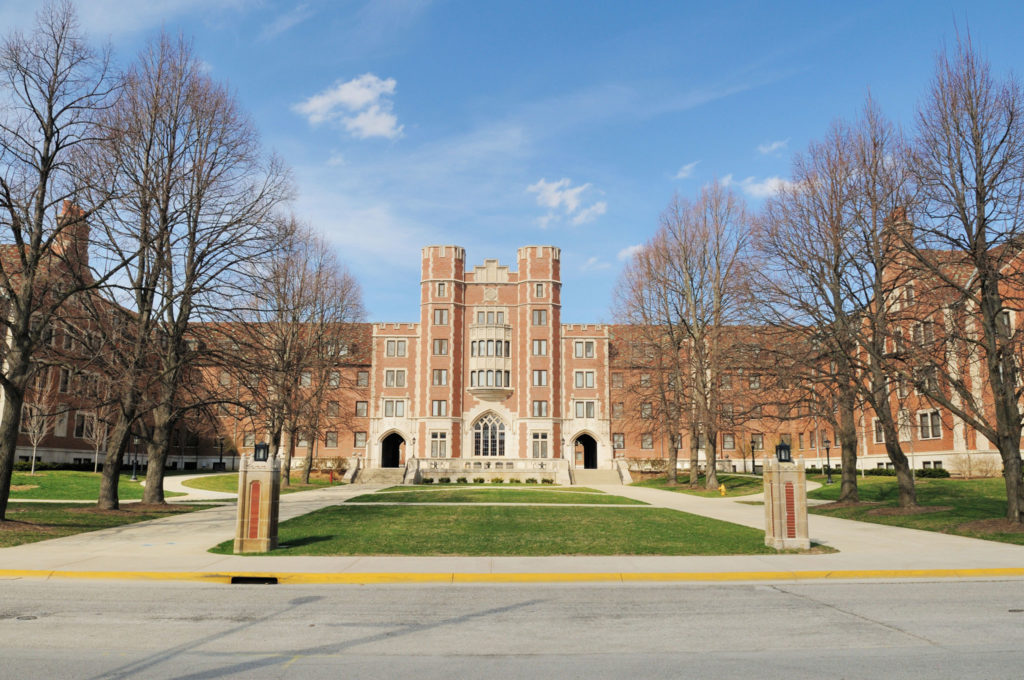
Universities are touted as bastions of diversity whose prime role is to encourage students to engage in critical thinking, ask tough questions and expose themselves to a diversity of ideas and opinions. If that is the mission of the university, they have dismally failed. Diversity is respected, up to a point, as long as it doesn’t include ideological diversity. As liberal commentator Nicholas Kristof observed in a recent New York Times op-ed, “We progressives believe in diversity, and we want women, blacks, Latinos, gays and Muslims at the table — er, so long as they aren’t conservative.” Welcome to the modern American university, where almost every type of diversity is encouraged, except for ideological diversity. Try challenging liberal dogma as a student or professor, and you will likely find yourself facing counseling and academic discipline. Where are all the conservative faculty? How many conservative faculty did you, your children or grandchildren encounter as part of their university education? If you are like most, the answer is very few. In fact, two scholars recently found that there were twice as many Marxists in the humanities and social sciences than Republicans. Most university will have their token conservative professor. Harvard has Harvey Mansfield, Princeton has Robert George, and Yale has Donald Kagan. I was one of the few conservative professors at the University of South Florida, and doubt that I would have been hired if my conservative views were known. I believe I was hired because I had spent the prior year as a National Teaching Fellow at Florida A & M University. Anyone who taught at a historically black university had to be a liberal. In addition, my doctoral dissertation was on the emergence of the black mayor in America in the aftermath of the civil rights movement. Only a liberal would be interested in writing about African-American politicians. John Hasnas, a Georgetown University professor recently explained the faculty recruitment process to the Wall Street Journal. Every recruitment meeting, wrote Hasnas, begins with a strong exhortation from the administration about diversity and the need for more woman and minority faculty. No recruitment committee has ever been instructed about the need to have a more ideologically diverse faculty. How rare are conservative professors? Where the nation is fairly evenly split between Republicans and Democrats, a recent study found that only 13 percent of law school faculty are Republicans. A similar study by the Georgetown Law Journal found that 81 percent of law professors at the top 21 law schools donated money to Democrats and 15 percent to Republican candidates. Daniel Klein, an economist at George Mason University, studied 1,000 professors around the nation and found Democrats outnumbered Republicans seven to one in the humanities and social sciences. In anthropology and sociology, the margin was 30 to 1. Johnathan Haidt, a renowned social psychiatrist at New York University, was so startled by the lack of conservative academics that he started a website, Heterodox, to foster more ideological diversity. In his own profession, 96 percent of social psychiatrists were left of center, 3.7 percent were centrist, and 0.03% were right of center. How would you like to be that sole right-of-center social psychiatrist? In one of the largest studies of ideological diversity on college campuses, the North American Academic Study Survey (NAASS) examined 1,643 faculty from 183 universities in 1999. 72 percent of faculty described themselves as liberals and 15 percent as conservatives. The same year as the NAASS study, the Harris Poll found that 18 percent of Americans described themselves as liberals and 37 percent called themselves conservative. Clearly, academia does not mirror the nation. Even in supposedly conservative academic enclaves, liberals outnumbered conservatives by 51 to 19 percent in engineering and 49 to 39 percent in business. Why are there so few conservative faculty on college campuses? Alan Kors, a conservative professor at Penn, argues that conservatives face a “hostile and discriminatory” environment. Conservatives seeking academic jobs are “outed” by their group associations, major professors, or dissertation topic. Not long ago, Harvard University found that only two of its doctoral students in the Government Department failed to get an academic placement. Harvey Mansfield advised both students, widely recognized for his conservative views. Liberals argue that there is no discrimination against conservatives. George Lakoff, a liberal linguistics professor at Berkeley, argues that liberals seek academic careers because “unlike conservatives, they believe in working for the public good and social justice.” In other words, conservatives are simply out for the money while liberals seek the betterment of society. Lakoff is proof positive of why we need more conservatives in academia. Look for Part II: Do universities discriminate? – The attack on free speech ••• Darryl Paulson is Professor Emeritus of Government at the University of South Florida in St. Petersburg.
Donald Trump aide suggests he wants no Hillary Clinton probe

The Latest on Donald Trump’s transition to the presidency (all times local): 8:45 a.m. – A top adviser to Donald Trump is suggesting that the president-elect is going to help Hillary Clinton “heal” and not pursue a probe of her private email server. Kellyanne Conway said on MSNBC on Tuesday that Trump is setting a tone for congressional Republicans by refraining from calling for more investigations. She says that “he doesn’t wish to pursue these charges.” Days earlier, Trump told CBS’s “60 Minutes” that he wants to think about whether to look more into Clinton’s homebrew email server and the Justice Department’s decision to not recommend charges against her. Now Conway says that, “if Donald Trump can help her heal, then perhaps that’s a good thing.” Trump during the campaign vowed to put his Democratic presidential rival “in jail” over the matter. 8:30 a.m. – President-elect Donald Trump has abruptly canceled a meeting with The New York Times. He accused the organization of changing the conditions for the session “at the last moment.” The newspaper denied the charge and said Trump’s aides tried to change the rules. He’d been scheduled to meet Times reporters, editors and columnists and did not give details of his complaint, saying in a morning tweet only that “the terms and conditions of the meeting were changed at the last moment. Not nice.” Eileen M. Murphy, the newspaper’s senior vice president for communications, said the paper “did not change the ground rules at all.” She said Trump’s aides asked for a private meeting only, with nothing on the record, after having agreed to a meeting that would consist of a small off-the-record session and a larger on-the-record one with reporters and columnists. Republished with permission of the Associated Press.
New York Times says no libel, no retraction, no apology for Donald Trump story
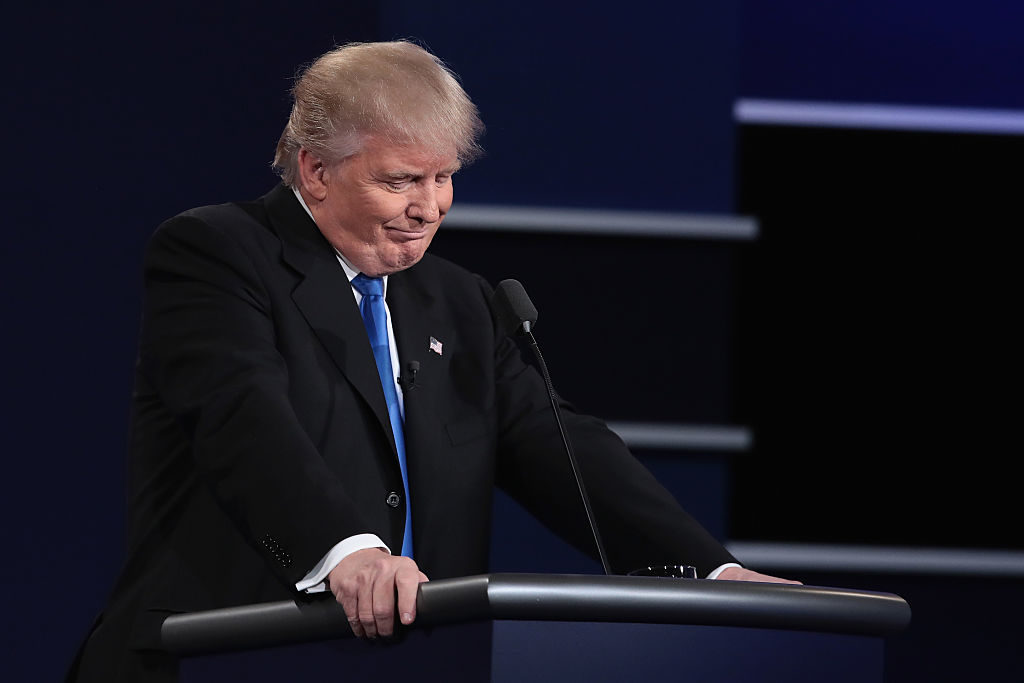
The New York Times on Thursday rejected Donald Trump‘s claim the newspaper had libeled the Republican presidential nominee, saying its story about two women who said he sexually assaulted them was “newsworthy information about a subject of deep public concern.” In a letter, Times attorney David McCraw said Trump “has bragged about his non-consensual sexual touching of women” and that multiple women had already come forward. “Nothing in our article has had the slightest effect on the reputation that Mr. Trump, through his own words and actions, has already created for himself,” he wrote. The Times reported Wednesday that two women told the paper of his unwanted sexual advances. One, Jessica Leeds, said Trump groped her on an airplane more than three decades ago. The other, Rachel Crooks, said Trump kissed her without invitation in 2006 when she was a 22-year-old receptionist for a real estate firm located at Trump Tower. Trump vehemently denied the allegations, and demanded through his attorney that the story be retracted. At a rally in Ohio, Trump said the media had “slandered and lied about me with false accusations.” The Times refused to retract the story, saying its reporters worked diligently to confirm the women’s accounts. “It would have been a disservice not just to our readers but to democracy itself to silence their voices,” McCraw’s letter said. McCraw said that if Trump decides to go ahead with a lawsuit, then “we welcome the opportunity to have a court set him straight.” Trump’s wife, Melania Trump, is threatening to sue a separate publication over another woman’s allegation of assault by her husband. Lawyers for Melania Trump demanded Thursday that People magazine retract and apologize for a story in which one of its writers, Natasha Stoynoff, describes being assaulted by Trump at their Florida home, Mar-a-Lago, in 2005. Stoynoff wrote that she had arrived to interview the couple for a story, and that when Melania Trump left the room, her husband pushed Stoynoff against a wall and assaulted her. The story also says the writer and Melania Trump later ran into each other in New York and had a conversation. Lawyers for the Republican nominee’s wife say no such encounter occurred. Republished with permission of the Associated Press.
Darryl Paulson: Why Donald Trump won’t win the GOP nomination

As we rapidly approach the Iowa caucuses and the New Hampshire primary, speculation increases that Donald Trump will likely be the Republican presidential nominee. I believe Trump has no better than a 20 percent chance of winning the nomination. We all know the common criticisms of Trump. He has made outrageous statements about Mexicans as “rapists,” John McCain as not a military hero, and his rants against Carly Fiorina‘s ugly face and Megan Kelly bleeding from “wherever.” We know Trump has flip-flopped on almost every major issue including abortion, national health care and his attitude toward Hillary and Bill Clinton. We know that Trump has spent far more time as a Democrat or independent than as a Republican and he has given most of his $1.5 million in political donations to Democrats, including large contributions to Nancy Pelosi and the Clinton Foundation. We know that Trump has never been a conservative. Besides calling himself a liberal on health care, Trump quit the Republican Party in 1999 saying, “Republicans are just too crazy right.” We know that PolitiFact awarded Trump the “lie of the year” for his numerous misstatements during the campaign. Of the 77 statements PolitiFact investigated, they rated 76 percent of them Mostly False, False or Pants on Fire. Among the lies cited by PolitiFact was Trump’s comment that he watched “thousands of Muslims” cheering the fall of the World Trade Center on 9/11. You think at least one person would have a photo or video of that incident. None of it has damaged the Trump campaign yet. In fact, the more outrageous his statements, the more his numbers rise. So, why will Trump not win the Republican nomination? Because he will either suffer a Howard Dean-like fall, or because his support is concentrated among people who are not Republicans and people who are less likely to vote. Ross Douthat wrote in The New York Times that Trump’s support will vanish as Election Day approaches. As Joe Trippi, Howard Dean’s campaign manager wrote, “People get more pragmatic the closer they get to an actual vote.” According to Trippi, this is what happened to Dean. Why waste a vote on someone unlikely to win? Second, Trump will lose because much of his support comes from people who are not Republican and who don’t vote. Trump’s strongest support comes from what The New York Times called “a certain kind of Democrat.” It is hard for anyone to win the nomination of a political party when much of their support comes from people in the other party. As we get past the early caucuses and primaries, the candidates will face several closed primaries, where only members of a party can vote. If his support comes from Democrats, they will not be able to vote for him in states such as Florida and New York where Trump is doing well in the polls. A final problem for Trump is that much of his support comes from individuals who are least likely to vote, especially in caucuses and primaries. Civis Analytics, in a study of 11,000 Republican-leaning supporters, found that Trump would get 40 percent of the vote of those who have less than a 20 percent chance of voting. Unless Trump has a plan to compensate for these problems, he may quickly find himself, much like Dean, going from first place to out of the race in a period of weeks. If Trump loses the Iowa caucus, where Cruz is now leading, the bottom could fall out of his campaign very quickly. For a “winner” like Trump to lose the first major race of the campaign season would reduce the sense of inevitability that Trump will win the nomination. As other Republicans fall by the wayside, it is unlikely that Trump will win their support. Conservative and evangelical voters are unlikely to align with Trump, who is only a Republican of convenience. • • • Darryl Paulson is Professor Emeritus of Government at the University of South Florida St. Petersburg and resides in Palm Harbor, Florida. For more state and national commentary visit Context Florida.
Reporter mocked by Donald Trump says the 2 knew each other well

Donald Trump said he couldn’t have been making fun of a reporter’s disability because he doesn’t know the man. Not so, says the reporter. Serge Kovaleski of The New York Times says he has met Trump repeatedly, interviewing him in his office and talking to him at news conferences, when he worked for the New York Daily News in the late 1980s. “Donald and I were on a first-name basis for years,” he said in a Times story about the Republican presidential candidate’s behavior at a rally in South Carolina last week. Onstage Tuesday, a mocking Trump flailed his arms in an apparent attempt to imitate mannerisms of the “poor guy.” He accused Kovaleski of backing off a story from a week after the 9/11 attacks that said authorities in New Jersey detained and questioned “a number of people who were allegedly seen celebrating the attacks.” Kovaleski then worked for The Washington Post. Trump cites the story as proof of his claim that “thousands” of Muslims in New Jersey celebrated the devastation across the river. But the story did not suggest “thousands” were observed celebrating or that the reports of such a scene were true. Other accounts from that time concluded the allegations were unfounded. Kovaleski has arthrogryposis, a congenital condition that restricts joint movement. In his speech, Trump cited the 2001 story, “written by a nice reporter,” and went on: “Now the poor guy, you oughta see this guy — uh, I don’t know what I said, uh, I don’t remember. He’s going like, I don’t remember.” He made jerking gestures and his voice took on a mocking tone. On Thursday, Trump posted a statement on his Twitter account saying “I have no idea” who Kovaleski is and claiming to have “one of the all-time great memories.” He wrote: “If Mr. Kovaleski is handicapped, I would not know, because I do not know what he looks like. If I did know, I would definitely not say anything about his appearance.” Kovaleski challenged that statement in a Times story posted online Thursday night. “I’ve interviewed him in his office,” he said. “I’ve talked to him at press conferences. All in all, I would say around a dozen times, I’ve interacted with him as a reporter” when he worked for the Daily News. Republished with permission of the Associated Press.
Donald Trump: “I don’t recognize” insults of women
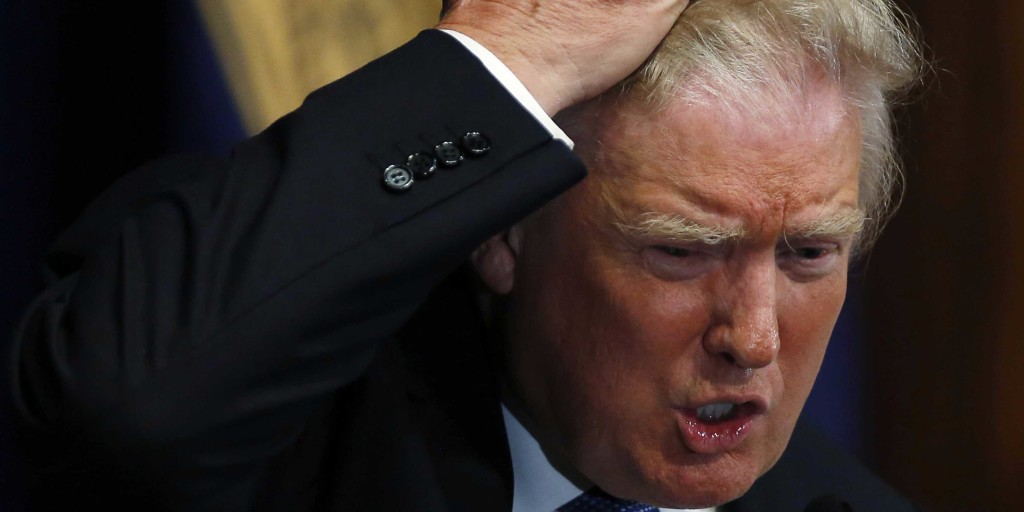
GOP presidential front-runner Donald Trump says he can’t recall specifics of insulting women, though news reports paint a long history of him comparing women to animals. Trump said Friday he doesn’t recognize the words Fox News‘s Megyn Kelly used during a debate on Thursday. Kelly asked about him having called women “fat pigs,” “dogs,” “slobs,” and “disgusting animals.” In the debate, Trump joked that he was only referring to talk show host Rosie O’Donnell but didn’t deny having used the insults. “I don’t frankly have time for total political correctness,” Trump said during the debate. The issue is important because women are a majority of registered voters. On Friday, Trump questioned whether he actually used those insults. “You know, some of the statements she made about the women, I don’t recognize those words whatsoever,” Trump said on ABC’s “Good Morning America.” “We’re going to take a very serious look at it.” He said on MSNBC‘s “Morning Joe,” “Not that I’m an angel, by the way. But I don’t recognize those words, so you know, she was spewing out these words, and I’m sitting there. … We’re going to have it checked out.” In fact, news outlets have reported on the incidents Kelly mentioned. Trump wrote New York Times columnist Gail Collins that she had the “face of a dog,” the columnist wrote in 2011. Trump called a lawyer “disgusting” when she wanted a break to pump milk for her baby, The New York Times reported last month. Trump has called O’Donnell a “fat pig,” a “slob” and an “animal,” according to several published reports. Kelly also mentioned that Trump had once told a contestant on NBC’s Celebrity Apprentice it would be a pretty picture to see her on her knees. Republished with permission of The Associated Press.
Conservatives enraged by NYT Selma photo “cropping” George W. Bush
Once again, the New York Times “liberal bias” has raised the ire of conservatives. For the 50th anniversary of the march on Selma, Alabama, the front page of the Times ran a photo of President Barack Obama, his family, and a group of civil rights leaders at the Edmund Pettus Bridge. Cropped from the photo, but only slightly on the right, are former President George W. Bush and his wife, Laura. Much of the accompanying story was on the shooting death of Michael Brown in Ferguson, Missouri, even as local and federal investigators found the incident was not racially motivated and would not bring charges. Conservatives noted that the picture – curiously enough – failed to show the full front line of marchers, leaving the Bushes noticeably absent. While mentioning Ferguson and Brown 8 and 3 times respectively, the March 7 Times piece by Peter Baker and Richard Fausset only mentions the 43rd President in passing: “Joining Mr. Obama on Saturday was former President George W. Bush, who signed the reauthorization of the Voting Rights Act in 2006, as well as more than 100 members of Congress … While sitting onstage, Mr. Bush made no remarks but rose to his feet to applaud Mr. Obama, and the two men hugged afterward.” Among those criticizing the photo were Republican National Committee Communications Director Sean Spicer, who wrote on Twitter: “Suprise, suprise: @nytimes Crops Out George W. Bush From Their #Selma50 Front Page Picture” Fox News also pointed out that the official White House photograph cropped Bush while prominently featuring Obama and his family. However, they noted the caption did mention the Bushes were there. Michele McNally, Times photo editor, told the newspaper’s public editor, Margaret Sullivan, there was “no cropping.” “This was the photo as we received it,” McNally said. Photographer Doug Mills, who took the shot, explained in an email to the Times that Bush was in “bright” sunlight. “I did not even send this frame because it’s very wide and super busy and Bush is super-overexposed because he was in the sun and Obama and the others are in the shade,” reported the Hill . Suprise, suprise: @nytimes Crops Out George W. Bush From Their #Selma50 Front Page Picture via @trscoop https://t.co/WDE3FW08SX — Sean Spicer (@seanspicer) March 8, 2015
