
Katie Britt favors work requirements for many federal benefits

On Monday, U.S. Senator Katie Britt spoke with Larry Kudlow in an interview on the Fox Business Channel about the pending debt ceiling crisis. Britt said she favored adding work requirements to many federal benefits as part of a deal on the debt crisis and reducing federal spending. Kudlow asked, “If you can make a deal of some kind over the debt ceiling that would roll back spending, it would seem to me you want to put people back to work, and it would seem to me, putting work requirements back into it. After all, it was Bill Clinton, Democrat, who started this with Newt Gingrich, Republican. What do you think? I mean, am I asking too much even for this conversation?” “Not at all,” Britt answered. “I actually had this very conversation with Congressman Gary Palmer from Alabama, who is the Republican policy chair in the House. We discussed this and talked about the need for work requirements for these benefits. It’s the dignity of a hard day’s work. That’s what this country was founded on. You know you put your head down, you work hard, and, in this nation, you can achieve more than your father before you. Preserving that American Dream, getting us back to business as usual, means getting everybody back to the table and investing in making this country better across the board.” Britt expressed her concern about the national debt and its burden on the next generation. “When you’re looking at that, the debt and the burden that we are saddling that next generation — and the next generation — with is unsettling, and it’s unsustainable,” Britt said. “And it’s not only fiscally irresponsible, to me. It’s morally irresponsible. We have got to find a way to get to a balanced budget, to put in the appropriate spending caps, and to roll back spending. You know, we have to remember that this money is not ours. This is taxpayer money, and it is best served when it is back in their pockets.” Britt said she has signed on to a letter with Senator Mike Lee urging Biden to add work requirements to many federal benefits. Britt also noted that she was proud to have co-sponsored Senator Rick Scott’s Full Faith and Credit Act. The U.S. national debt is over $31.5 trillion a year. Federal spending is over $6 trillion annually, even though federal revenues are only $4.6 trillion. That additional $1.4 trillion in spending is being paid for by borrowing. This deficit spending occurs in a year in which the nation is fully employed, fully recovered from the COVID-19 global pandemic, and no longer at war. Britt is serving her first term in the U.S. Senate following her landslide election in 2022. Britt is newly appointed to the Senate Appropriations Committee, which is tasked with writing federal budgets. Britt has said that she will prioritize defense, protecting Social Security benefits, and veterans benefits, in negotiations on curbing spending as part of a deal with the Biden administration on reducing federal spending. To connect with the author of this story or to comment, email brandonmreporter@gmail.com.
Kevin McCarthy’s race for speaker risks upending House on Day One
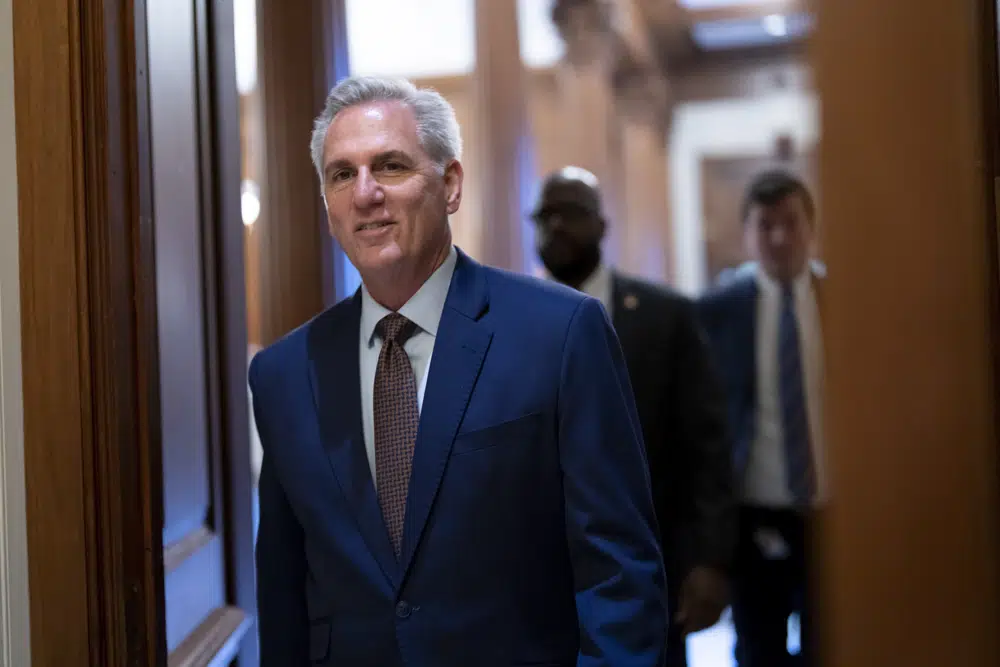
In his quest to rise to House speaker, Kevin McCarthy is charging straight into history — potentially becoming the first nominee in 100 years unable to win the job on a first-round floor vote. The increasingly real prospect of a messy fight over the speaker’s gavel on Day One of the new Congress on Jan. 3 is worrying House Republicans, who are bracing for the spectacle. They have been meeting endlessly in private at the Capitol, trying to resolve the standoff. Taking hold of a perilously slim 222-seat Republican majority in the 435-member House and facing a handful of defectors, McCarthy is working furiously to reach the 218-vote threshold typically needed to become speaker. “The fear is that if we stumble out of the gate,” said Rep. Jim Banks, R-Ind., a McCarthy ally, then the voters who sent the Republicans to Washington “will revolt over that and they will feel let down.” Not since the disputed election of 1923 has a candidate for House speaker faced the public scrutiny of convening a new session of Congress only to have it descend into political chaos, with one vote after another, until a new speaker is chosen. At that time, it eventually took a grueling nine ballots to secure the gavel. McCarthy, a Republican from Bakersfield, California, who was first elected in 2006 and who remains allied with Donald Trump, has signaled he is willing to go as long as it takes in a floor vote to secure the speaker’s job he has wanted for years. The former president has endorsed McCarthy and is said to be making calls on McCarthy’s behalf. McCarthy has given no indication he would step aside, as he did in 2015 when it was clear he did not have the support. But McCarthy also is acknowledging the holdouts won’t budge. “It’s all in jeopardy,” McCarthy said Friday in an interview with conservative Hugh Hewitt. The dilemma reflects not just McCarthy’s uncertain stature among his peers but also the shifting political norms in Congress as party leaders who once wielded immense power — the names of Cannon, Rayburn, and now Pelosi adorn House meeting rooms and office buildings — are seeing it slip away in the 21st century. Rank-and-file lawmakers have become political stars on their own terms, able to shape their brands on social media and raise their own money for campaigns. House members are less reliant than they once were on the party leaders to dole out favors in exchange for support. The test for McCarthy, if he is able to shore up the votes on Jan. 3 or in the days that follow, will be whether he emerges a weakened speaker, forced to pay an enormous price for the gavel, or whether the potentially brutal power struggle emboldens his new leadership. “Does he want to go down as the first speaker candidate in 100 years to go to the floor and have to essentially, you know, give up?” said Jeffrey A. Jenkins, a professor at the University of Southern California and co-author of “Fighting for the Speakership.” “But if he pulls this rabbit out of the hat, you know, maybe he actually has more of the right stuff.” Republicans met in private this past week for another lengthy session as McCarthy’s detractors, largely a handful of conservative stalwarts from the Freedom Caucus, demand changes to House rules that would diminish the power of the speaker’s office. The Freedom Caucus members and others want assurances they will be able to help draft legislation from the ground up and have opportunities to amend bills during the floor debates. They want enforcement of the 72-hour rule that requires bills to be presented for review before voting. Outgoing Speaker Nancy Pelosi, D-Calif., and the past two Republican speakers, John Boehner and Paul Ryan, faced similar challenges, but they were able to rely on the currency of their position to hand out favors, negotiate deals, and otherwise win over opponents to keep them in line — for a time. Boehner and Ryan ended up retiring early. But the central demand by McCarthy’s opponents’ could go too far: They want to reinstate a House rule that allows any single lawmaker to file a motion to “vacate the chair,” essentially allowing a floor vote to boot the speaker from office. The early leaders of the Freedom Caucus, under BC, the former North Carolina congressman turned Trump’s chief of staff, wielded the little-used procedure as a threat over Boehner and later, over Ryan. It wasn’t until Pelosi seized the gavel the second time, in 2019, that House Democrats voted to do away with the rule and require a majority vote of the caucus to mount a floor vote challenge to the speaker. Rep. Chip Roy, R-Texas, said the 200-year-old rule was good enough for Thomas Jefferson, so it’s one he would like to see in place. “We’re still a long way from fixing this institution the way it needs to be fixed,” Roy told reporters Thursday at the Capitol. What’s unclear for McCarthy is even if he gives in to the various demands being made by the conservatives, whether that will be enough for them to drop their opposition to his leadership. Several House Republicans said they do not believe McCarthy will ever be able to overcome the detractors. “I don’t believe he’s going to get to 218 votes,” said Rep. Bob Good, R-Va., among the holdouts. “And so I look forward to when that recognition sets in and, for the good of the country, for the good of the Congress, he steps aside, and we can consider other candidates.” The opposition to McCarthy has promoted a counteroffensive from other groups of House Republicans who are becoming more vocal in their support of the GOP leader — and more concerned about the fallout if the start of the new Congress descends into an internal party fight. Rep. David Joyce, R-Ohio, who leads the Republican Governance Group, was wearing an “O.K.” button on his lapel — meaning, “Only Kevin,” he explained. Some have
William Haupt III: We need a new contract with America
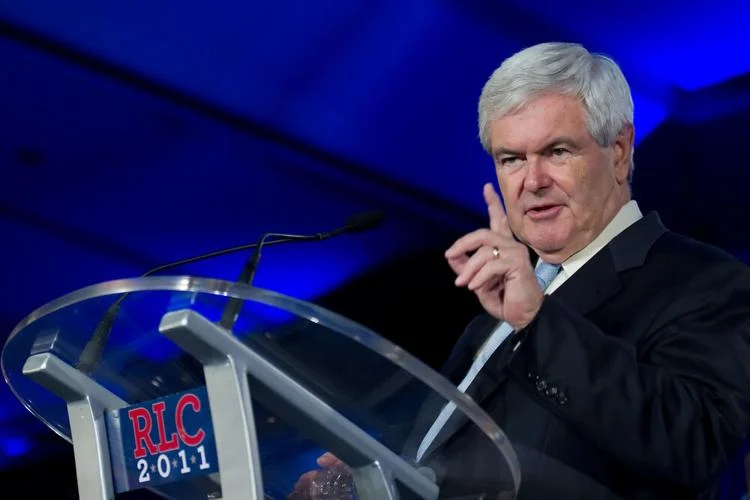
“Until someone is prepared to lay out the systemic problem, we will simply go through cycles of finding corruption, finding a scapegoat, and eliminating the scapegoat.” – Newt Gingrich Bill Clinton’s first term in office marked the beginning of the Republican Revolution. His promise to reform health care was soundly defeated. His executive order lifting the ban against gays in the military failed to energize leftist activists. And a barrage of political and personal scandals plagued the Clintons during his first term. The most deleterious scandal was that Clinton illegally profited from a back door involvement in a failed savings and loan on the Whitewater River in Arkansas. But none was more injurious to Clinton than the North American Free Trade Agreement (NAFTA). NAFTA created a common market for goods, services, and investments with Canada and Mexico. U.S. workers were forced to compete with global competition for jobs that hurt their standard of living and threatened their future. This ill-fated agreement angered the unions and labor-friendly Democrats who needed union support. And America turned to the GOP to right the sinking ship. Prior to 1994, Democrats controlled the House for 40 consecutive years, with a coalition of liberals in the north and east with southern blue-dogs. Since Democrats held the House for 58 of the last 62 years and the Senate for 34 out of 40 years, they had no fear of Republicans in the 1994 midterms. According to the University of Colorado’s Paul Teske, both Bill and Hillary Clinton were easy campaign targets for the GOP. From Hillary Clinton’s failed health care bill to numerous corruption cases in Congress and Bill Clinton’s foray into NAFTA, America was ripe for the GOP revolution. “Every revolution seems impossible at the beginning, and after it happens, it was inevitable.” – Bill Ayers It was obvious America needed a change. Liberal Democrats in the north and the good-ol-boy-left in the south had dictated Congressional policy for almost five decades – which wasn’t working. They were about to be reminded that the “political pendulum always swings both ways if it is balanced.” The late senator Bob Dole reminded Republicans that they had been the minority in Congress for so long that they had forgotten how to take charge and govern. He said in order to win, they needed a platform that had national appeal with universal solutions for all Americans, not just Republicans. In an effort to unite Americans under a common goal, six weeks before the 1994 midterm elections, House Reps. Newt Gingrich and Dick Armey introduced a “Contract with America.” As ballots were cast, this not only gave Republicans control of Congress, it would also save the Clinton presidency. The Contract with America was a legislative agenda by the Republican Party for all of America. It detailed the actions the GOP promised to take – if they became the majority in the U.S. House for the first time in four decades. This was a true bipartisan effort to solve major problems confronting our nation. “We are in a struggle over whether or not we are going to save America.” – Newt Gingrich The contract’s text included eight reforms the GOP promised to enact and ten bills they committed to bring to the floor if they took over the House. It included issues that had been polled during the first years of the Clinton administration that 60% of the American voters collectively wanted remedied. The text of the proposed bills included in the Contract was released before the election. They represented significant changes in federal policy that included a balanced budget requirement and tax cuts for businesses, families, and seniors. It also included term limits, reforms to Social Security, and tort and welfare reform. It avoided controversial matters such as abortion and school prayer. Gingrich purposely excluded how these bills and policies would be enacted and what they would cost. He did not want to distort his goals. He knew these issues concerned voters, and they wanted them fixed. And if he didn’t deliver, it would cost him his job. He only wanted to impress voters that if the GOP took over Congress, they would make changes in government that all of America wanted. Lou Cannon of the Washington Post wrote, “Democrats attacked the plan as extreme and radical, and its solutions would make America worse.” They claimed that a balanced budget, tax cuts, and welfare reform would hurt the poor and do irreparable damage to institutions that had been in place for decades.” Clinton confidant Vernon Jordan protested, “This contract is a ‘hit job’ on Americans!” Although the liberal media and the polls minimized the importance of “The Contract with America,” Election Day 1994 proved fatal for Democrats. According to Weekly Standard editor William Kristol, Gingrich was responsible for the “Republican Revolution,” with the GOP easily taking control of the House and the Senate. They also won 12 governorships and took control in 20 state legislatures. As predicted, many of the elements of Gingrich’s “contract” that passed in Congress were vetoed by Clinton, and the ones that he signed did not radically change America as the left had predicted. Although the proposed balanced budget Constitutional Amendment failed to pass, Newt Gingrich and the Republicans led the crusade to end 30 years of federal red ink and balanced the budget. Joe Biden’s regressive “contract for our nation” was to turn America into a progressive Shangri la, with no strings attached. He promised to redistribute wealth from the rich with punishing new taxes. He vowed to stop drilling for oil, increase welfare, pay people not to work, and to open our borders. “I promise that all increased spending on federal programs will be paid for by the rich.” – Joe Biden Last election, the liberal media convinced America to buy into Biden’s “contract with America” and take out Donald Trump. We are now energy dependent on rogue nations with record-high inflation, a broken supply chain, a labor shortage, and have security issues due
Senate leader, presidential candidate Bob Dole dies at 98
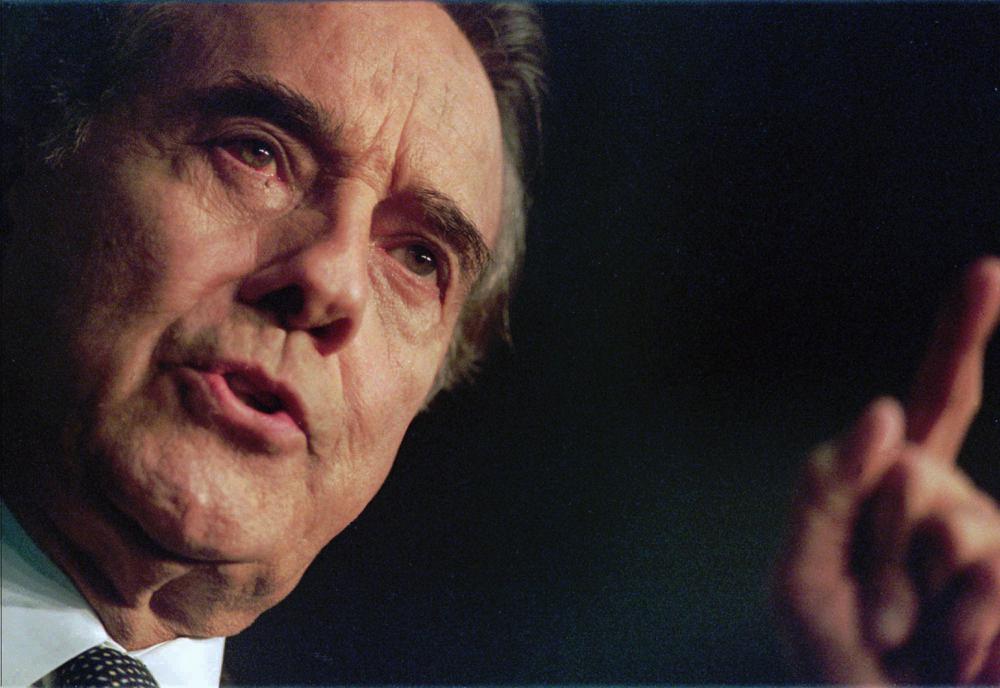
Bob Dole, who overcame disabling war wounds to become a sharp-tongued Senate leader from Kansas, a Republican presidential candidate and then a symbol and celebrant of his dwindling generation of World War II veterans, died Sunday. He was 98. His wife, Elizabeth Dole, said in an announcement posted on social media that he died in his sleep. Dole announced in February 2021 that he’d been diagnosed with stage 4 lung cancer. During his 36-year career on Capitol Hill, Dole became one of the most influential legislators and party leaders in the Senate, combining a talent for compromise with a caustic wit, which he often turned on himself but didn’t hesitate to turn on others, too. He shaped tax policy, foreign policy, farm and nutrition programs, and rights for the disabled, enshrining protections against discrimination in employment, education, and public services in the Americans with Disabilities Act. Today’s accessible government offices and national parks, sidewalk ramps, and the sign-language interpreters at official local events are just some of the more visible hallmarks of his legacy and that of the fellow lawmakers he rounded up for that sweeping civil rights legislation 30 years ago. Dole devoted his later years to the cause of wounded veterans, their fallen comrades at Arlington National Cemetery, and remembrance of the fading generation of World War II vets. Thousands of old soldiers massed on the National Mall in 2004 for what Dole, speaking at the dedication of the World War II Memorial there, called “our final reunion.” He’d been a driving force in its creation. “Our ranks have dwindled,” he said then. “Yet if we gather in the twilight, it is brightened by the knowledge that we have kept faith with our comrades.” Long gone from Kansas, Dole made his life in the capital, at the center of power and then in its shadow upon his retirement, living all the while at the storied Watergate complex. When he left politics and joined a law firm staffed by prominent Democrats, he joked that he brought his dog to work so he would have another Republican to talk to. He tried three times to become president. The last was in 1996 when he won the Republican nomination only to see President Bill Clinton reelected. He sought his party’s presidential nomination in 1980 and 1988 and was the 1976 GOP vice presidential candidate on the losing ticket with President Gerald Ford. Through all of that, he carried the mark of war. Charging a German position in northern Italy in 1945, Dole was hit by a shell fragment that crushed two vertebrae and paralyzed his arms and legs. The young Army platoon leader spent three years recovering in a hospital and never regained use of his right hand. To avoid embarrassing those trying to shake his right hand, Dole always clutched a pen in it and reached out with his left. Dole could be merciless with his rivals, whether Democrat or Republican. When George H.W. Bush defeated him in the 1988 New Hampshire Republican primary, Dole snapped: “Stop lying about my record.” If that pales next to the scorching insults in today’s political arena, it was shocking at the time. But when Bush died in December 2018, old rivalries were forgotten as Dole appeared before Bush’s casket in the Capitol Rotunda. As an aide lifted him from his wheelchair, Dole slowly steadied himself and saluted his one-time nemesis with his left hand, his chin quivering. In a vice presidential debate two decades earlier with Walter Mondale, Dole had famously and audaciously branded all of America’s wars that century “Democrat wars.” Mondale shot back that Dole had just “richly earned his reputation as a hatchet man.” Dole at first denied saying what he had just said on that very public stage, then backed down and eventually acknowledged he’d gone too far. “I was supposed to go for the jugular,” he said, “and I did — my own.” For all of his bare-knuckle ways, he was a deep believer in the Senate as an institution and commanded respect and even affection from many Democrats. Just days after Dole announced his dire cancer diagnosis, President Joe Biden visited him at his home to wish him well. The White House said the two were close friends from their days in the Senate. Biden recalled in a statement Sunday that one of his first meetings outside the White House after being sworn-in as president was with the Doles at their Washington home. “Like all true friendships, regardless of how much time has passed, we picked up right where we left off, as though it were only yesterday that we were sharing a laugh in the Senate dining room or debating the great issues of the day, often against each other, on the Senate floor,” Biden said. “I saw in his eyes the same light, bravery, and determination I’ve seen so many times before.” Biden ordered that U.S. flags be flown at half-staff at the White House and all public buildings and grounds until sunset Thursday. Dole won a seat in Congress in 1960, representing a western Kansas House district. He moved up to the Senate eight years later when Republican incumbent Frank Carlson retired. There, he antagonized his Senate colleagues with fiercely partisan and sarcastic rhetoric, delivered at the behest of President Richard Nixon. The Kansan was rewarded for his loyalty with the chairmanship of the Republican National Committee in 1971 before Nixon’s presidency collapsed in the Watergate scandal. He served as a committee chairman, majority leader, and minority leader in the Senate during the 1980s and ’90s. Altogether, he was the Republicans’ leader in the Senate for nearly 11½ years, a record until Kentucky Sen. Mitch McConnell broke it in 2018. It was during this period that he earned a reputation as a shrewd, pragmatic legislator, tireless in fashioning compromises. After Republicans won Senate control, Dole became chairman of the tax-writing Finance Committee and won acclaim from deficit hawks and others for his handling of a 1982 tax
What mandate? Joe Biden’s agenda faces a divided Congress
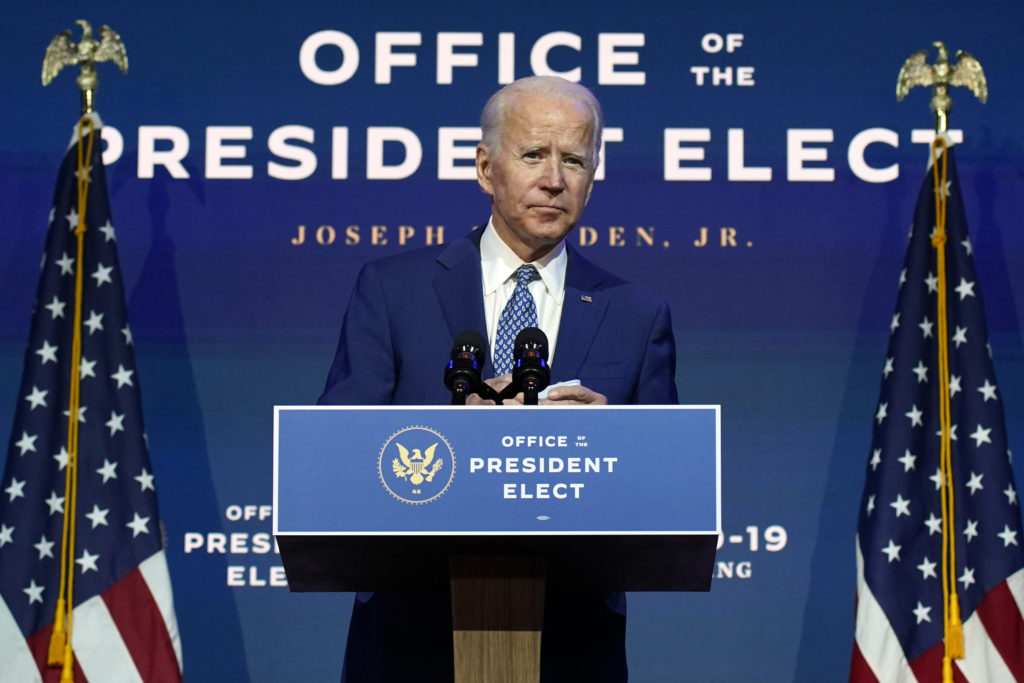
President-elect Joe Biden wants to “restore the soul of America.” First, he’ll need to fix a broken and divided Congress. Biden is rushing headlong into a legislative branch ground down by partisanship, name-calling and, now, a refusal by some to acknowledge his win over President Donald Trump. Democratic allies, struggling to regroup after their own election losses, harbor deep divisions between progressive and moderate voices. Republicans, rather than graciously congratulating the incoming president, are, intentionally or not, delegitimizing Biden’s presidency while catering to Trump’s refusal to accept the election results. At a time when the country needs a functioning government perhaps more than ever to confront the crises of COVID-19, a teetering economy and racial injustice, Washington is being challenged by the president-elect to do better than it has. It’s going to be a hard opening. “The country used to want gridlock because they saw gridlock as a way to protect them. Now the country’s actually hungry for action and progress,” said Jesse Ferguson, a Democratic strategist. “That’s a mandate to flip the switch.” The idea of a Biden mandate, though, is relative, certainly embraced by Democrats who want to push ahead with his agenda. Emboldened Republicans, though, who didn’t lose a single House seat, but in fact expanded their ranks and brushed back many Senate Democratic challengers, see their own mandate to serve as a block on a Biden agenda. California Rep. Kevin McCarthy, the House’s Republican leader, said the election “was a mandate against socialism,” stepping up the relentless GOP attacks, even though Biden is a centrist Democrat. Biden comes to the presidency like few in recent history, with a rare mix of experience but also a potentially divided Congress. Not since President George H.W. Bush has the White House had an executive with such a deep Washington resume. Rarely in modern times has a Democrat started an administration without a full Democratic Congress. While the House is in Democratic hands, the Senate remains undecided, a 50-48 lead for Republicans heading into a Jan. 5 runoff for two seats in Georgia that will determine party control. Asked this past week how he will be able to work with Republicans if they aren’t acknowledging his victory, Biden said, “They will.” What Biden is presenting is a new normal in Washington that he said voters demanded from the election. “If we can decide not to cooperate, then we can decide to cooperate,” he said at his election victory speech. Much has been made of Biden’s relationship with Capitol Hill, where he served as a senator for 36 years, particularly his deal-making as Barack Obama’s vice president with Senate Republican leader Mitch McConnell of Kentucky. Yet McConnell has not revived that approach as he enables Trump to delve into a legal battle rooted in unfounded allegations of voter fraud, even as state officials say the elections ran smoothly and there is no widespread evidence of fraudulent voting. McConnell won his own reelection in Kentucky. Whether McConnell emerges in the new Congress as majority or minority leader with a narrowly divided Senate, the longest serving Republican leader in history will have great leverage over legislation that arrives on Biden’s desk. Biden could seek a repeat of Newt Gingrich’s era when the Republican House speaker served up legislative victories for President Bill Clinton, infuriating Democrats with conservative budget and welfare bills but helping Clinton win a second term. Or Biden could find McConnell rerunning his politically charged GOP blockade of Obama’s agenda. Hopes of overcoming McConnell by ending the Senate filibuster, which would allow bills to advance on a simple majority rather than a 60-vote threshold, are slipping out of reach without Democratic control. “Gingrich insisted the American people wanted it,” said Rick Tyler, a former Gingrich top aide who left the Republican Party in the Trump era. He said McConnell will move on Biden’s agenda when Biden has the nation behind him. “That’s how you do it. Let’s see if Biden can do it,” he said. But it’s not just McConnell. House Speaker Nancy Pelosi, D-Calif., Senate Democratic leader Chuck Schumer of New York and even McCarthy will have oversize roles because of the changed makeup of the new Congress. Biden faces a restive liberal flank, powered by a new generation of high-profile progressives including Rep. Alexandria Ocasio-Cortez, D-N.Y., They helped deliver his victory and may not be so eager to compromise over health care, climate change, income inequality and racial justice issues that have growing popular support. At the same time, while Pelosi and Schumer have long histories with Biden, McCarthy is close to Trump, who is expected to hold a heavy influence on Republicans even after he leaves office. With a slimmer majority in the House, McCarthy’s ability to wrangle votes suddenly matters. “They can, but will they?” said Jim Kessler, a former Schumer aide and executive vice president at the center-left Third Way think tank. “This is a real veteran group of people. They know how to get things done. They know how to stop things from getting done.” An early test for Biden will be the Cabinet nominations, which can be approved by a slim 51 votes in the Senate. Republicans can also block nominees with time-consuming procedural hurdles that could quickly stall the new administration if top positions go unfilled. Democrats did as much to Trump, in some ways as payback after McConnell blocked Obama’s Supreme Court nominee Merrick Garland. “I think there’s a likelihood that Mitch McConnell will Merrick Garland every single Cabinet nominee and will force Joe Biden to negotiate on every single one,” said Sen. Chris Murphy, D-Conn. “Trump is still going to be running the Republican Party. And so, in reality, Joe Biden may have to negotiate every Cabinet pick with Donald Trump.” Republished with the permission of the Associated Press.
Donald Trump, Congress square off over virus aid as crisis worsens
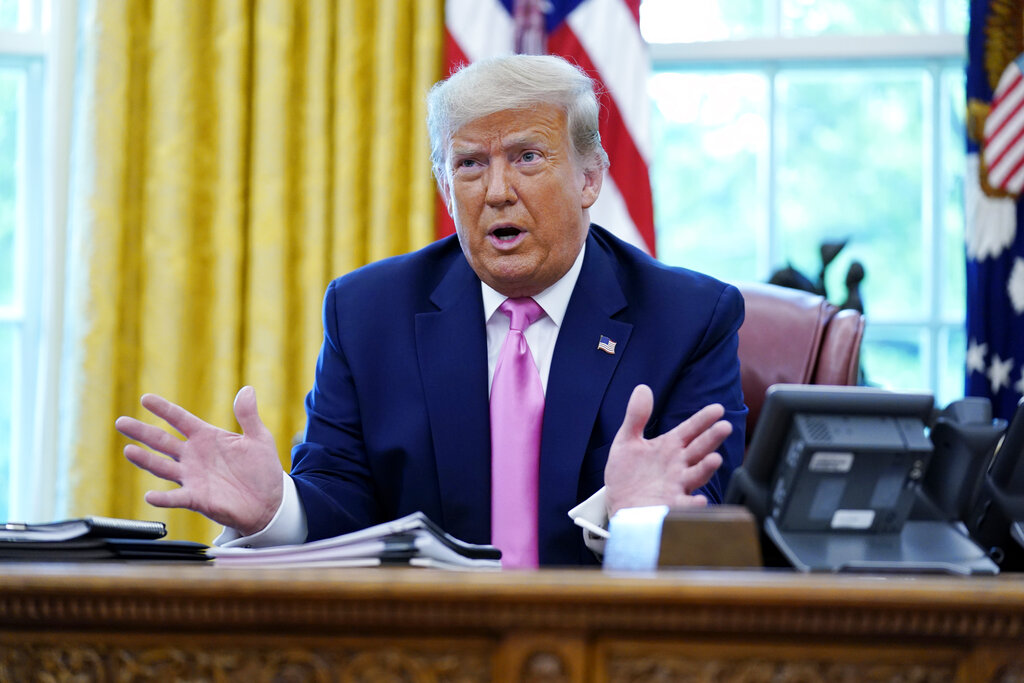
Trump convened GOP leaders at the White House as Senate Majority Leader Mitch McConnell prepared to roll out his $1 trillion package in a matter of days.
Newt Gingrich to speak at Alabama Farmers Federation gathering
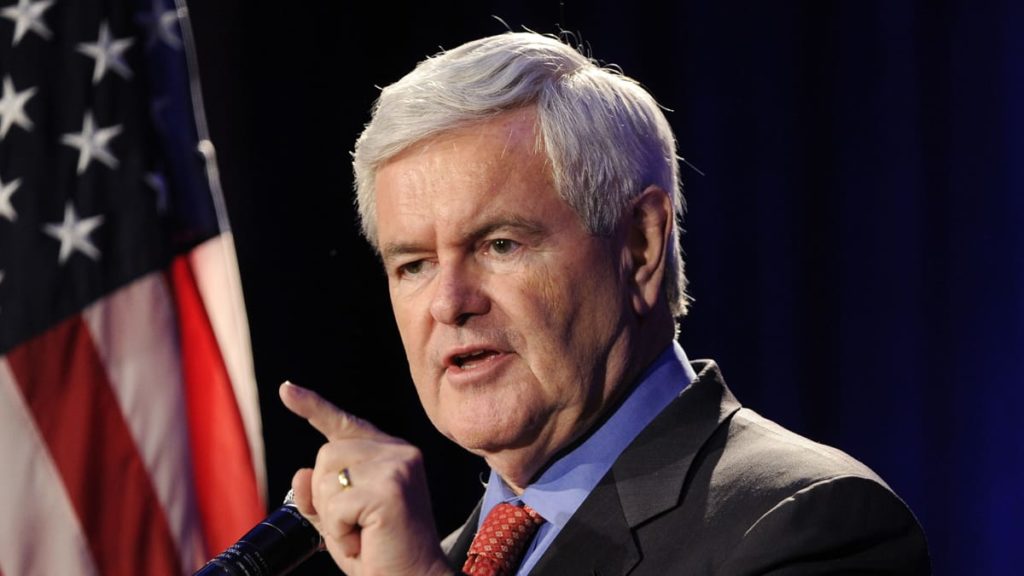
Former U.S. House Speaker Newt Gingrich is giving the keynote address at an annual gathering of Alabama farmers. The Alabama Farmers Federation is holding its 97th annual meeting Sunday and Monday in Montgomery. Gingrich will address the group Monday night. The Alabama Farmers Federation says that over 1,200 farmers and guests have registered for the meeting. It is one of the state’s largest gatherings of farmers. The organization on Sunday gave its service to agriculture award to Alabama Agriculture Commissioner John McMillan. Federation President Jimmy Parnell said McMillan set a “new tone for the services that office would provide.” He also praised McMillan’s opposition to property tax increase. Republished with permission from the Associated Press.
Newt Gingrich throws support behind Roy Moore’s Senate bid
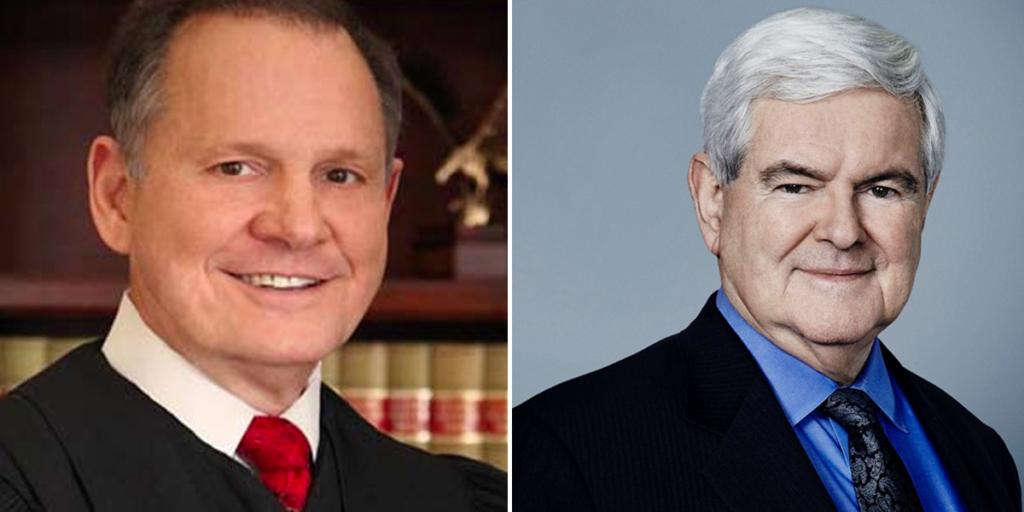
Former Alabama Chief Justice Roy Moore has picked up the endorsement of yet another big name in Republican politics in his bid to be Alabama’s next U.S. Senator. Former U.S. Speaker of the House Newt Gingrich announced his endorsement of Moore early Wednesday morning. “There’s nothing more important for advancing the President’s agenda than having another conservative voice in the U.S. Senate – which is why we need Judge Roy Moore in Washington,” Gingrich said. “Roy Moore is a West Point graduate, Vietnam Veteran and constitutional scholar who has been a fighter for our conservative values. He will help rebuild our military and stop the gross overreach of Federal power.” “I’m proud to endorse Judge Roy Moore for Senator and ask you to join me in supporting him,” Gingrich concluded. Gingrich, who served as the Speaker of the House of Representatives from 1995-1999, is a prolific author and the husband of Callista Gingrich, the recently confirmed United States’ Ambassador to the Vatican. “Newt Gingrich is a visionary leader, not only for the conservative cause, but for the entire country. The Contract with America of 1994 was a landmark in American political history and forged the modern Republican Party’s identity as a party committed to tax cuts, welfare reform, and fiscal responsibility,” Moore said. “I welcome Newt’s support, and I look forward to working with him on policy ideas to rebuild the military, reduce spending, and rein in the national debt.” Moore faces Democrat Doug Jones in a special election on Dec. 12.
Jeff Sessions’ days as Attorney General may be numbered
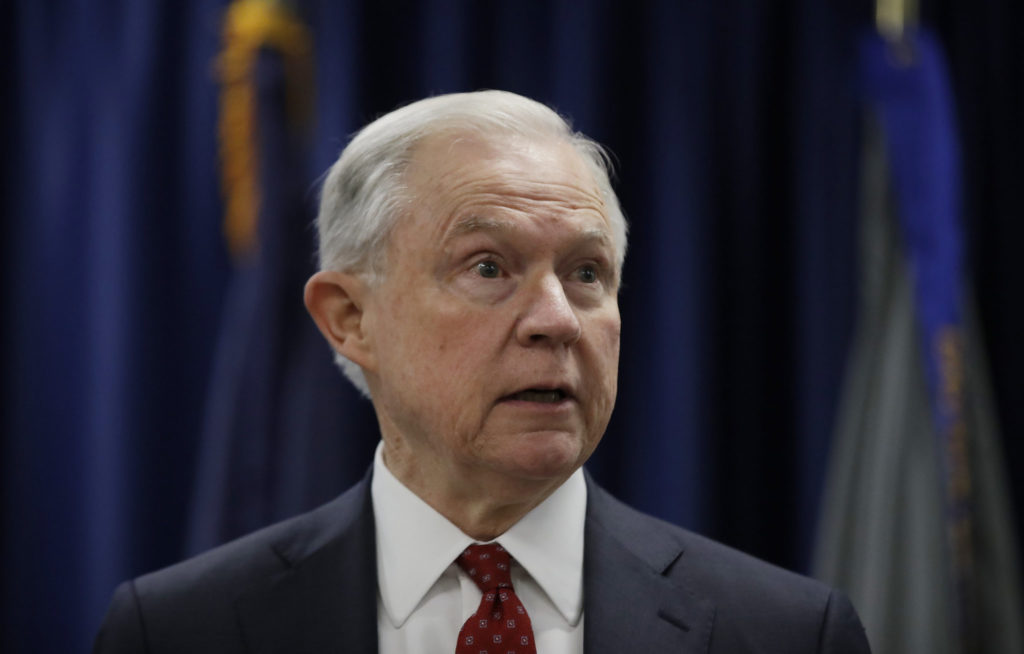
President Donald Trump has spoken with advisers about firing Attorney General Jeff Sessions, as he continues to rage against Sessions’ decision to recuse himself from all matters related to the Russia investigation. The president’s anger again bubbled into public view Monday as he referred to Sessions in a tweet as “beleaguered.” Privately, Trump has speculated aloud to allies in recent days about the potential consequences of firing Sessions, according to three people who have recently spoken to the president. They demanded anonymity to discuss private conversations. Trump often talks about making staff changes without following through, so those who have spoken with the president cautioned that a change may not be imminent or happen at all. What is clear is that Trump remains furious that the attorney general recused himself from the investigations. “So why aren’t the Committees and investigators, and of course our beleaguered A.G., looking into Crooked Hillarys crimes & Russia relations?” Trump tweeted Monday. His tweet came just hours before his son-in-law, White House senior adviser Jared Kushner, traveled to Capitol Hill to be interviewed about his meetings with Russians. Trump’s intensifying criticism has fueled speculation that Sessions may resign even if Trump opts not to fire him. During an event at the White House, Trump ignored a shouted question about whether Sessions should step down. The attorney general said last week he intended to stay in his post. If Trump were to fire Sessions, Deputy Attorney General Rod Rosenstein would be elevated to the top post on an acting basis. That would leave the president with another attorney general of whom he has been sharply critical in both public and private for his handling of the Russia probe, according to four White House and outside advisers who, like others interviewed, spoke on condition of anonymity to discuss private conversations. It could also raise the specter of Trump asking Rosenstein — or whomever he appoints to fill the position — to fire Robert Mueller, the special counsel leading the investigation into Russia’s meddling in the 2016 election and potential collusion with Trump’s campaign. The name of one longtime Trump ally, Rudy Giuliani, was floated Monday as a possible replacement for Sessions, but a person who recently spoke to the former New York City mayor said that Giuliani had not been approached about the position. Giuliani told CNN on Monday that he did not want the post and would have recused himself had he been in Sessions’ position. The president’s tweet about the former Alabama senator comes less than a week after Trump, in a New York Times interview, said that Sessions should never have taken the job as attorney general if he was going to recuse himself. Sessions made that decision after it was revealed that he had met with a top Russian diplomat last year. Trump has seethed about Sessions’ decision for months, viewing it as disloyal — arguably the most grievous offense in the president’s mind — and resenting that the attorney general did not give the White House a proper heads-up before making the announcement that he would recuse himself. His fury has been fanned by several close confidants — including his son Donald Trump Jr, who is also ensnared in the Russia probe — who are angry that Sessions made his decision. Trump and Sessions’ conversations in recent weeks have been infrequent. Sessions had recently asked senior White House staff how he might patch up relations with the president but that effort did not go anywhere, according to a person briefed on the conversations. Sessions was in the West Wing on Monday but did not meet with the president, according to deputy press secretary Sarah Huckabee Sanders. Newt Gingrich, a frequent Trump adviser, said that the president, with his criticisms of Sessions, was simply venting and being “honest about his feelings. But that doesn’t mean he’s going to do anything,” Gingrich said. Still, he said the president’s comments would have repercussions when it comes to staff morale. “Anybody who is good at team building would suggest to the president that attacking members of your team rattles the whole team,” Gingrich said. Sessions and Trump used to be close, sharing both a friendship and an ideology. Sessions risked his reputation when he became the first U.S. senator to endorse the celebrity businessman and his early backing gave Trump legitimacy, especially among the hard-line anti-immigration forces that bolstered his candidacy. Several of Sessions’ top aides now serve in top administration posts, including Stephen Miller, the architect of several of Trump’s signature proposals, including the travel ban and tough immigration policy. After Trump’s public rebuke last week, Sessions seemed determined to keep doing the job he said “goes beyond anything that I would have ever imagined for myself.” “I’m totally confident that we can continue to run this office in an effective way,” Sessions said last week. Armand DeKeyser, who worked closely with Sessions and became his chief of staff in the Senate, said he did not see the attorney general as someone who would easily cave to criticism, even from the president. “If Jeff thinks he is in an untenable position and cannot be an effective leader, I believe he would leave,” DeKeyser said. “But I don’t think he’s reached that point.” But Anthony Scaramucci, the president’s new communications director, said that it’s time for Trump and Sessions to hash out a resolution, regardless of what they decide. “My own personal opinion, I think they’ve got to have a meeting and have a reconciliation one way or another. You know what I mean? Either stay or go, one way or another,” he said. The Justice Department declined to comment. Republished with permission of The Associated Press.
Analysis: Donald Trump unlikely to avoid blame for health care loss
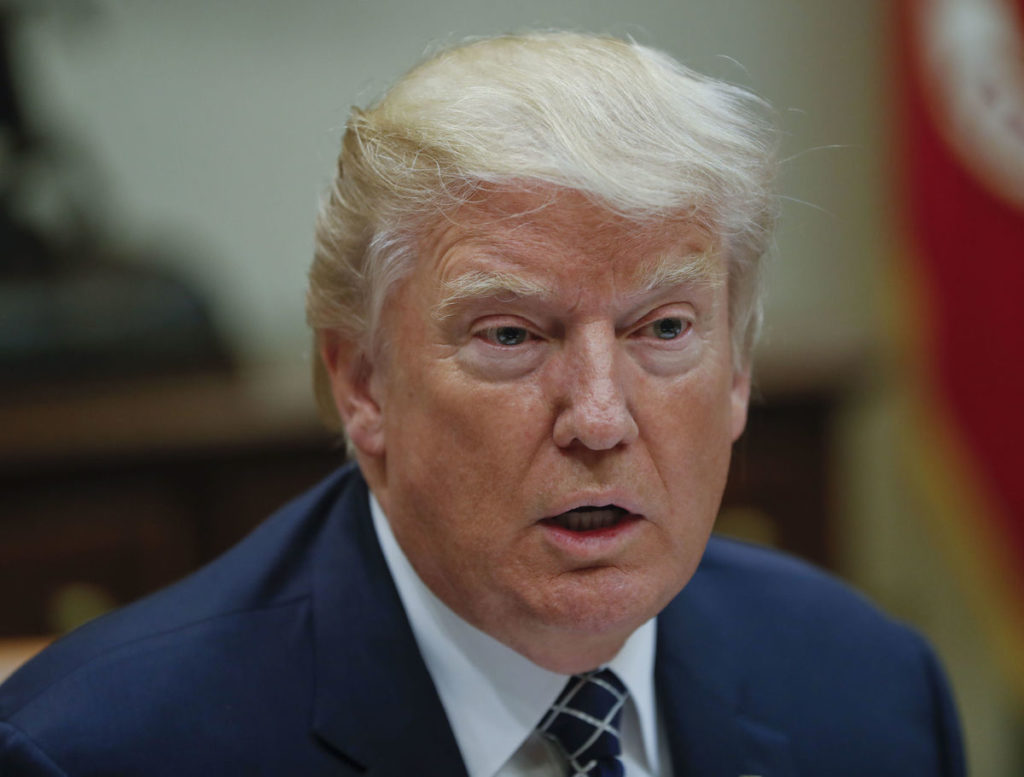
It was a far cry from “The buck stops here.” President Donald Trump, dealt a stinging defeat with the failure of the Republican health care bill in the Senate, flipped the script from Harry Truman’s famous declaration of presidential responsibility and declared Tuesday, “I am not going to own it.” He had tweeted earlier, “We were let down by all of the Democrats and a few Republicans.” This is the same president who thundered night after night on the campaign trail that it would be “so easy” to repeal and replace the Obama health care law on Day One of his administration. Try and tweet as he might, Trump can’t now avoid a share of the blame for the stall-out of that repeal effort. It’s a president’s burden to shoulder the nation’s problems whether they are inherited or created in real time. Barack Obama took office with the American economy facing its worst crisis since the Great Depression. John F. Kennedy accepted responsibility for the failure of the invasion of Cuba at the Bay of Pigs, ordered on his own watch. “That’s the nature of being elected president: You own the policies, the economy and the government,” said presidential historian Julian Zelizer, a professor at Princeton University. “You own the positives and negatives of the job whether you think it’s your fault or not. You live in the White House: You can’t disassociate yourself from what happens if you don’t like it.” Trump took office armed with Republican control of both houses of Congress and an ambitious agenda that would begin with the repeal and replacement of Obamacare. Six months later, the collapse of the GOP plan was a sharp rebuke for the president, who was unable to cajole or threaten Republicans to stay in line and who exerted little of his diminished political capital to see through a promise that had been at the core of his party since Obamacare became law seven years ago. The president’s disjointed support for the health care plan did little to persuade Republicans to support it, and the fact that his approval ratings had dropped below 40 percent didn’t help either. Trump never held a news conference or delivered a major speech to sell the bill to the public. He never leveraged his popularity among rank-and-file Republican voters by barnstorming the districts of wavering GOP senators. And he never spearheaded a coherent communications strategy — beyond random tweets — to push for the plan. “The best way to motivate members is talk to their constituents and at no point did he try to talk to Americans about health care reform in any sort of serious way,” said Alex Conant, a Republican strategist who worked on Florida Sen. Marco Rubio’s 2016 presidential campaign. “His attention seems to drift with whatever is on cable news on any given moment as opposed to what is on the Senate floor any given week.” Sounding almost like a bystander during his brief Oval Office remarks Tuesday, Trump six times expressed “disappointment” that the Republican effort had failed. And he insisted the fault rested with Democrats and suggested Obamacare should be left to fail on its own. “I’m not going to own it,” Trump insisted. “I can tell you that Republicans are not going to own it.” Democrats blasted Trump’s blame game, with Senate Minority Leader Chuck Schumer saying his refusal to accept responsibility demonstrated “such a lack of leadership.” “That is such a small and petty response,” Schumer said. “Because the president, he’s in charge. And to hurt millions of people because he’s angry he didn’t get his way is not being a leader.” Despite Trump’s efforts to shift blame across the aisle, the White House made little effort to court Democrats. Instead of initially pursuing an infrastructure plan — which would have likely received support from unions and blue-collar workers, making it hard for Democrats to oppose — Trump opted to tackle the far more polarizing issue of health care first. He outsourced most of the work to House Speaker Paul Ryan and Senate Majority Leader Mitch McConnell. It became a strictly Republican effort which, due to the party’s slight advantages in the House and Senate, had little margin for error. And it was conservatives from Trump’s own wing of the Republican party who thwarted him. The conservative House Freedom Caucus defied him and ignored his Twitter threats. The two senators who withdrew their support Monday night, effectively killing the bill, didn’t even give the White House a heads-up before announcing their decisions. And even though Trump allies have threatened to aid primary challengers to a pair of on-the-fence senators — Jeff Flake of Arizona and Dean Heller of Nevada — the Republicans did not cave, potentially setting a worrisome precedent for the White House as it tries to move ahead with the rest of its stalled agenda. Former House Speaker Newt Gingrich, a Trump adviser, believes that both Congress and the White House share blame after seemingly forgetting that “opposition parties pass press releases that get vetoed, while governing parties pass bills in which every paragraph gets scrutinized.” “I hope the president learns that do something really, really big, you need to be disciplined and focused and sort out your communications program,” said Gingrich. “So far, they are clearly not capable of doing that.” Republished with permission of The Associated Press.
GOP ponders whether Donald Trump helps sell health care
It was a platform most politicians can only hope for: A captivated, 6,000-person crowd and more than an hour of live, prime-time television coverage to hype the Republican vision for a new health care system. But when President Donald Trump got around to talking about the Republican plan — about 15 minutes into his speech — he was wildly off message. Instead of preaching party lines about getting the government out of Americans’ health decisions and cutting costs, he declared: “Add some money to it!” The moment captured a major dilemma for Republicans as they look for ways to jumpstart their stalled health care overhaul. A master salesman, Trump has an inimitable ability to command attention, and that could be used to bolster Americans’ support for Republican efforts and ramp up pressure on wavering lawmakers. But some lawmakers and congressional aides privately bemoan his thin grasp of the bill’s principles, and worry that his difficulty staying on message will do more harm than good. “You know, he’s very personable and people like talking to him and he’s very embracing of that, so there will be certain people he’d like to talk to,” said Sen. Bob Corker, R-Tenn. “But I’d let Mitch handle it,” he continued, referring to the lead role Senate Majority Leader Mitch McConnell has played thus far. McConnell delayed a vote on the health legislation this week after it became clear he couldn’t muster enough Republican support to offset the unanimous opposition from Democrats. GOP leaders are now hoping to pass a bill in the Senate and reconcile it with an earlier version approved by the House before lawmakers head home for their August recess. Trump has largely ceded the details to McConnell, deferring to the Kentucky lawmaker’s legislative expertise. He has spent some time talking privately to wavering senators, including Ted Cruz of Texas and Mike Lee of Utah, testing his powers of persuasion. But he’s invested no significant effort in selling the American people on the impact the Republican bill would have on their health care coverage, beyond making sweeping declarations about how wonderful he expects it to be. “We’re looking at a health care that will be a fantastic tribute to your country,” Trump said during a White House event Wednesday. “A health care that will take care of people finally for the right reasons and also at the right cost.” His approach is a contrast to former President Barack Obama, who delivered an address to Congress on health care and held town halls around the country about the Democrats’ legislation in 2009. The Obamacare measure barely cleared Congress and became a rallying cry for Republicans, something Obama blamed in part on a failure by his party to communicate its virtues clearly to the public. At times, even Trump’s largely generic health care commentary has left Republicans fuming. Some lawmakers were particularly irked by Trump’s assertion that the House bill — which he robustly supported and even celebrated with a Rose Garden ceremony — was “mean.” One Republican congressional aide said that comment left some lawmakers worried that the president — who had no real ties to the GOP before running for the White House — could turn on them if a bill passes but the follow-up becomes politically damaging. The official insisted on anonymity in order to describe private discussions. Newt Gingrich, the former GOP House speaker and a close Trump ally, said Republicans have struggled to communicate about the complexities of health care policy because “nobody has served as a translator.” He said Trump is well-positioned to take the lead, but acknowledged that the real estate mogul-turned-politician would need some help from policy experts in formulating a sales pitch. “Trump will be able to repeat it with enormous effectiveness once somebody translates it,” Gingrich said. The White House disputes that Trump isn’t steeped in the details of the Obamacare repeal efforts. Economic adviser Gary Cohn and other officials on the National Economic Council have convened several meetings with him to explain differences between the House and Senate bills. One senior White House official described the president as “fully engaged” in the process. During a private meeting Tuesday with Kentucky Sen. Rand Paul, who is strongly opposed to the current Senate bill, Trump said his priority was to increase the number of insurance choices available to consumers and lower monthly premiums, according to an administration official with direct knowledge of the discussion. The official said the president also specifically highlighted the non-partisan Congressional Budget Office’s projection that average premiums would be 30 percent lower in 2020 if the Senate bill took effect. To some Trump allies, more public engagement on a substantive policy debate like the future of the nation’s health care system would also be a welcome reprieve for a president whose approval ratings have tumbled amid the snowballing investigations into possible collusion between his campaign and Russia. “I think his numbers would go up if he had a couple of addresses,” said Sam Nunberg, a former Trump campaign adviser. “If he communicates directly with the American people, he cuts through the noise.” Republished with permission of The Associated Press.
Closed parks, furloughs, ‘Green Eggs’: A look at shutdowns
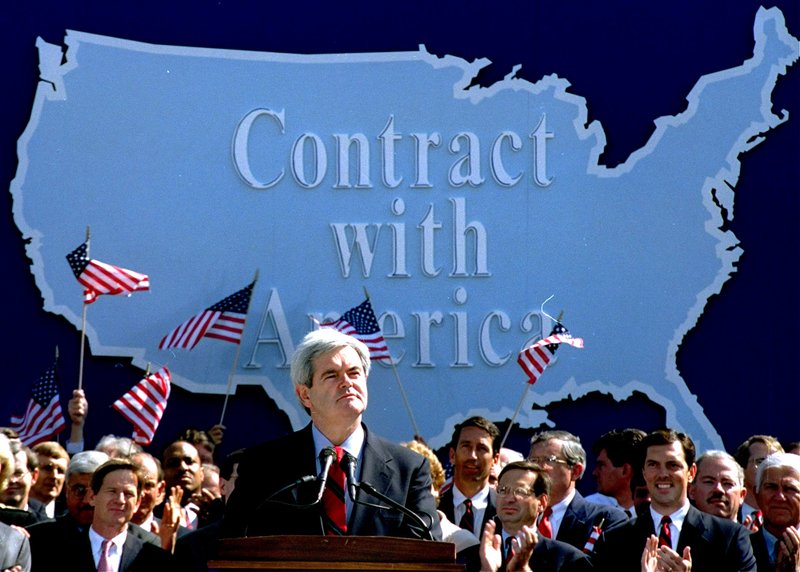
Disputes over spending and health care in a divided Washington have triggered shutdowns of the federal government in recent years. Republicans now control the White House and Congress, and if lawmakers and President Donald Trump fail to agree on a spending bill by midnight Friday, a shutdown of an all-GOP government would occur for the first time in modern history. A look at recent government shutdowns: CLINTON AND GINGRICH’S CONTRACT WITH AMERICA Nov. 14-19, 1995 Republicans wielding their Contract with America gained control of both the Senate and House for the first time since 1954 and Georgia’s Newt Gingrich was elected House speaker. Democratic President Bill Clinton, after the congressional midterm drubbing for his party, was dealing with the new world order. Embolden Republicans were intent on remaking Medicare, Medicaid, welfare and dozens of other programs while also cutting taxes. Clinton vetoed a resolution to temporarily fund the government because of the Medicare premium increases it contained. After five days, a deal was reached to end the shutdown, but only for a few weeks so that negotiations could take place on the various spending bills funding the government for the remainder of the fiscal year. An estimated 800,000 workers were furloughed, though they would get paid retroactively, which is the historical practice. ____ SHUTDOWN ROUND TWO AND PLANE SNUB Dec. 16, 1995-Jan. 6, 1996 The Republican-led Congress and Clinton were still at odds on six of that year’s spending bills when the short-term fix ending the first shutdown expired. An estimated 280,000 federal workers were furloughed. They eventually agreed to spending plans that enacted some of the cuts Republicans wanted, though less than they had originally sought. Republicans took a political hit for the shutdown, which closed national parks and Smithsonian museums. Undercutting the GOP was Gingrich’s comment that the hard-line stand in negotiations was due in part to how Clinton and aides treated him and Senate GOP leader Bob Dole on an Air Force One flight. Gingrich complained that Clinton didn’t discuss the budget on the return trip from Israel where they had attended the funeral of slain Israeli Prime Minister Yitzhak Rabin. Gingrich also groused about having to exit through a back door on the plane. ____ ‘GREEN EGGS AND HAM’ Oct. 1-17, 2013 Republicans who controlled the House and several Senate GOP lawmakers targeted Democratic President Barack Obama‘s health care law. Democrats who held the majority in the Senate made clear the effort was futile. The shutdown was sparked when House Republicans insisted that a temporary funding bill contain changes in the health law, the Affordable Care Act, and Obama refused. Sen. Ted Cruz, R-Texas, helped inspire the effort when he spoke on the Senate floor for 21 hours and 19 minutes in urging Congress to cut off money for Obama’s health care law. To fill some of the hours — and provide a bedtime story for his two young daughters — Cruz read Dr. Seuss’ book “Green Eggs and Ham.” But even some Republicans thought the effort was a mistake. North Carolina Sen. Richard Burr called it “the dumbest idea I’ve ever heard.” The shutdown sent approval of the GOP plummeting in opinion polls. Senate leaders brokered an agreement after the House was unable to coalesce around a Republican-only approach. Republished with permission of The Associated Press.
