
Ex-Arkansas Gov. Asa Hutchinson launches GOP 2024 bid, calls on Donald Trump to drop out
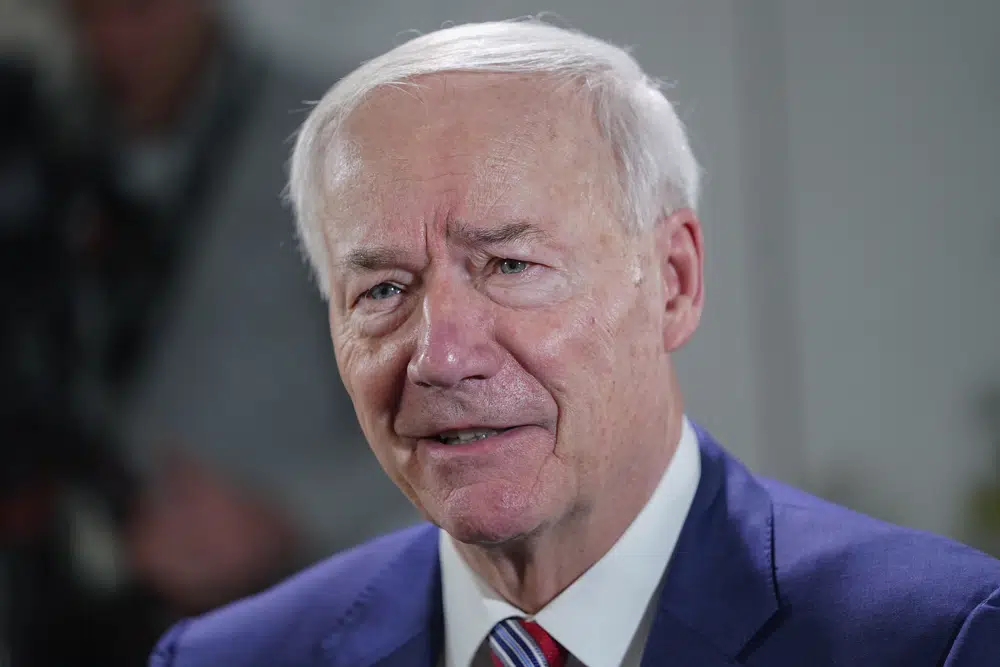
Asa Hutchinson, who spent two terms as governor of Arkansas, will seek the Republican presidential nomination, positioning himself as an alternative to Donald Trump just days after the former president was indicted by a grand jury in New York. In an interview that aired Sunday on ABC’s “This Week,” Hutchinson said Trump should drop out of the race, arguing “the office is more important than any individual person.” “I’m running because I believe that I am the right time for America, the right candidate for our country and its future,” he said. “I’m convinced that people want leaders that appeal to the best of America and not simply appeal to our worst instincts.” Hutchinson is the first Republican to announce a campaign after Trump became the first former U.S. president to face criminal charges. His candidacy will test the GOP’s appetite for those who speak out against Trump. Others who have criticized Trump, including former Maryland Gov. Larry Hogan, have opted against a campaign, sensing the difficulty of prevailing in a primary. And in a sign of Trump’s continued grip on the Republican base, most in the party — even those considering challenging him for the nomination — have defended him against the New York indictment. That, at least for now, leaves Hutchinson as a distinct outlier among Republicans. In addition to Trump, Hutchinson joins a Republican field that also includes former U.N. Ambassador Nikki Haley and entrepreneur Vivek Ramaswamy. Florida Gov. Ron DeSantis is expected to jump into the race in the summer, while U.S. Sen. Tim Scott of South Carolina, former Secretary of State Mike Pompeo, and former Vice President Mike Pence are among those considering bids. Hutchinson, 72, left office in January after eight years as governor. He has ramped up his criticism of the former president in recent months, calling another Trump presidential nomination the “worst scenario” for Republicans and saying it will likely benefit President Joe Biden’s chances in 2024. The former governor, who was term-limited, has been a fixture in Arkansas politics since the 1980s when the state was predominantly Democratic. A former congressman, he was one of the House managers prosecuting the impeachment case against President Bill Clinton. Hutchinson served as President George W. Bush’s head of the Drug Enforcement Administration and was an undersecretary of the Department of Homeland Security. As governor, Hutchinson championed a series of income tax cuts as the state’s budget surpluses grew. He signed several abortion restrictions into law, including a ban on the procedure that took effect when the U.S. Supreme Court struck down Roe v. Wade last year. Hutchinson, however, has said he regretted that the measure did not include exceptions for rape or incest. Hutchinson earned the ire of Trump and social conservatives last year when he vetoed legislation banning gender-affirming medical care for children. Arkansas’ majority-Republican Legislature overrode Hutchinson’s veto and enacted the ban, which has been temporarily blocked by a federal judge. Trump called Hutchinson a “RINO” — a Republican In Name Only — for the veto. Hutchinson’s successor, former White House press secretary Sarah Huckabee Sanders, has said she would have signed the legislation. Hutchinson, who signed other restrictions on transgender youth into law, said the Arkansas ban went too far and that he would have signed the measure if it had focused only on surgery. Hutchinson endorsed Sanders’ bid for governor. Sanders hasn’t publicly endorsed Trump or anyone else yet in the 2024 presidential race. She has avoided direct criticism of her predecessor, even as she split from him on several policies. Among the bills she’s signed since taking office is legislation intended to reinstate the ban on gender-affirming care for minors that Hutchinson opposed by making it easier to sue providers of such care. She’s also dissolved five panels Hutchinson had formed to advise him on the state’s response to the COVID-19 pandemic, saying she wanted the state to focus on other health challenges. Although he has supported Trump’s policies, Hutchinson has become increasingly critical of the former president’s rhetoric and lies about the 2020 presidential election. He said Trump’s call to terminate parts of the Constitution to overturn the election hurt the country. Hutchinson also criticized Trump for meeting with white nationalist leader Nick Fuentes and the rapper Ye, who has praised Adolf Hitler and spewed antisemitic conspiracy theories. Hutchinson has contrasted that meeting to his own background as a U.S. attorney who prosecuted white supremacists in Arkansas in the 1980s. An opponent of the federal health care law, Hutchinson, after taking office, supported keeping Arkansas’ version of Medicaid expansion. But he championed a work requirement for the law that was blocked by a federal judge. During the COVID-19 pandemic, Hutchinson tried to push back against misinformation about the virus with daily news conferences and a series of town halls he held around the state aimed at encouraging people to get vaccinated. Hutchinson infuriated death penalty opponents in 2017 when he ordered eight executions over a two-week period, scheduling them before one of the state’s lethal injection drugs was set to expire. The state ultimately carried out four of the executions. The former governor is known more for talking policy than for fiery speeches, often flanked by charts and graphs at his news conferences at the state Capitol. Instead of picking fights on Twitter, he tweets out Bible verses every Sunday morning. Hutchinson, who graduated from the evangelical college Bob Jones University in South Carolina, said in the ABC interview that he considers himself part of the evangelical community. “I believe that the evangelical community understands that we need to have a leader that can distance themselves from some of the bad instincts that drive Mr. Trump,” he said. “And I hope that we can do that in the future.” Republished with the permission of The Associated Press.
Donald Trump’s Constitution remarks put Mitch McConnell, GOP on defense

Senate Republican leader Mitch McConnell said Tuesday that anyone who thinks the Constitution should be suspended would have a “very hard time” becoming president in the United States, trying to distance himself from Donald Trump’s new White House bid. It’s the second time McConnell has been forced to open his weekly press conference preemptively responding to questions about the former president’s remarks and behavior. Last week, it was over Trump’s dinner meeting with a white nationalist Holocaust denier. “Let me just say that anyone seeking the presidency who thinks the Constitution can somehow be suspended or not followed, it seems to me, would have a very hard time being sworn in as President of the United States,” McConnell said at the Capitol. The remarks come as Trump, who announced he is running again for the presidency in 2024, is putting his party into the familiar position of responding to his ideas, statements, and outbursts, forcing Republicans to publicly answer for his behavior. Trump, over the weekend, called for “the termination of all rules, regulations, and articles, even those found in the Constitution” after new revelations of what he said was Twitter’s unfair treatment of him during the 2020 presidential election that he lost to Joe Biden. Reaction from Republicans has been critical, even as many GOP officials remain unwilling to directly confront Trump as the leader of their party. Speaking Tuesday in South Carolina, Mike Pence, Trump’s former vice president, said, “I think anyone who serves in public office, anyone who aspires to serve in public office or serve again in public office should make it clear that they will support and defend the Constitution of the United States.” McConnell, as the Republican leader trying to steer his party in a post-Trump era — the two have not spoken since McConnell agreed to the Electoral College tally for Biden at the end of 2020 — faces an endless task of reacting to the former president’s outbursts. Still, McConnell deflected questions over whether he could support Trump if he becomes the Republican Party’s 2024 presidential nominee. Instead, the Senate GOP leader reiterated the difficulty of taking the oath, which requires the president-elect to defend the Constitution. “It would be pretty hard to be sworn into the presidency if you’re not willing to uphold the Constitution,” McConnell said. Over the weekend, Trump latched on to a report from new Twitter owner Elon Musk suggesting favoritism on the social media platform during the 2020 presidential race. Twitter was asked to moderate content about Biden’s family, particularly his son, Hunter Biden, that Republicans wanted to amplify in their attacks against the Democrat. Trump, on his social media app, had said that, “Fraud of this type and magnitude allows for the termination of all rules, regulations, and articles, even those found in the Constitution.” He later accused the media of distorting his comments and “trying to convince the American People that I said I wanted to ‘terminate’ the Constitution.” Two weeks ago, Trump came under criticism for having dinner with Nick Fuentes, a known white nationalist and Holocaust denier. Trump said he was unaware of Fuentes’ beliefs. Republicans have been unable to firmly reject Trump as their potential nominee, even as many of them try to distance themselves from his recent activities. House GOP leader Kevin McCarthy, who is in line to become the House speaker when Republicans take control in the new year, has yet to fully weigh in on Trump’s latest comments. Republican Rep. Liz Cheney, a staunch Trump critic, tweeted directly at McCarthy to respond: “This week Trump said we should terminate all rules, regulations etc ‘even those in the Constitution’ to overturn the election. Are you so utterly without principle that you won’t condemn this either?” Republished with the permission of The Associated Press.
Supreme Court allows January 6 committee to get Donald Trump documents
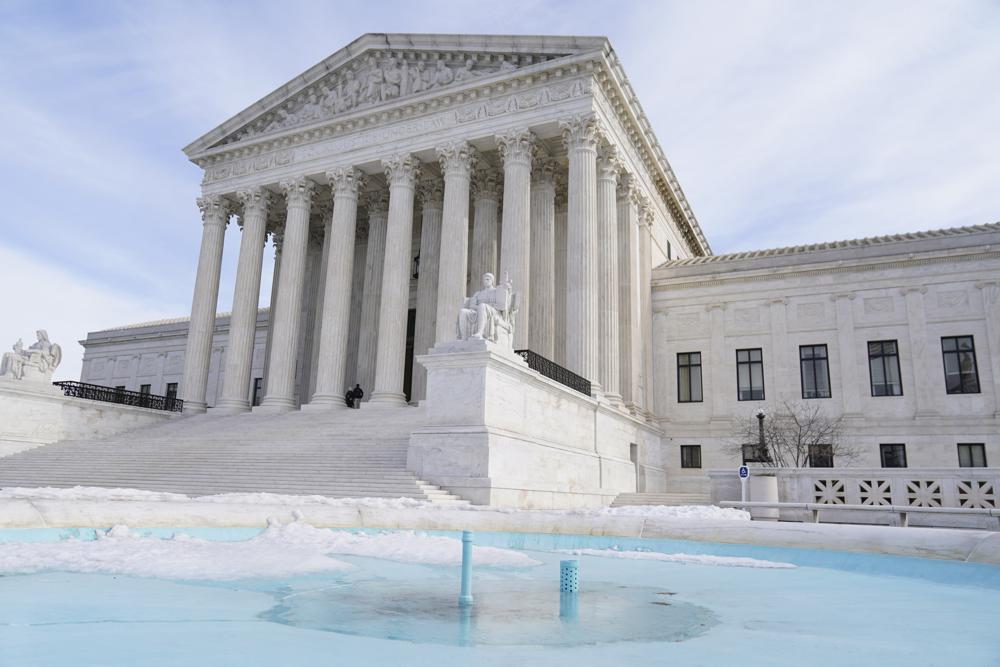
In a rebuff to former President Donald Trump, the Supreme Court is allowing the release of presidential documents sought by the congressional committee investigating the January 6 insurrection. The justices on Wednesday rejected a bid by Trump to withhold the documents from the committee until the issue is finally resolved by the courts. Trump’s lawyers had hoped to prolong the court fight and keep the documents on hold. Following the high court’s action, there is no legal impediment to turning over the documents, which are held by the National Archives and Records Administration. They include presidential diaries, visitor logs, speech drafts, and handwritten notes dealing with Jan. 6 from the files of former chief of staff Mark Meadows. The House committee agreed to defer its attempt to get some documents at the request of the Biden White House. The current administration was concerned that releasing all of the Trump administration documents sought by the committee could compromise national security and executive privilege. Alone among the justices, Clarence Thomas said he would have granted Trump’s request to keep the documents on hold. Trump’s attorneys had asked the high court to reverse rulings by the federal appeals court in Washington and block the release of the records even after President Joe Biden waived executive privilege over them. In an unsigned opinion, the court acknowledged there are “serious and substantial concerns” over whether a former president can win a court order to prevent disclosure of certain records from his time in office in a situation like this one. But the court noted that the appeals court determined that Trump’s assertion of privilege over the documents would fail under any circumstances, “even if he were the incumbent.” It said the issue of a former president’s ability to claim executive privilege would have to wait for another day. The court took issue with the conclusion of the appeals court that downplayed a former president’s interests, suggesting that the current president could, in essence, ignore his predecessor’s claims. Justice Brett Kavanaugh, who worked in the White House under President George W. Bush, wrote separately to argue that “a former President must be able to successfully invoke the Presidential communications privilege for communications that occurred during his Presidency, even if the current President does not support the privilege claim.” But Kavanaugh, a Trump appointee, did not object to the outcome Wednesday. Before and after the riot, Trump promoted false theories about election fraud and suggested the “real insurrection” was on Election Day, when he lost to Biden. Repeating arguments they made before lower courts, Trump’s attorneys had urged the justices to step in, arguing that the case concerned all future occupants of the White House. Former presidents had “a clear right to protect their confidential records from premature dissemination,” Trump’s lawyers said. “Congress cannot engage in meandering fishing expeditions in the hopes of embarrassing President Trump or exposing the President’s and his staff’s sensitive and privileged communications ‘for the sake of exposure,’” they added. But the House committee responded in its high court brief that although the facts of the case are “unprecedented,” the decision was “not a difficult one.” There was no explanation for the timing of the court’s action. But the National Archives told the appeals court and Trump’s lawyers that it would turn over some documents it asserted were not part of the court case on Wednesday absent a new court order. Also on Wednesday, the House committee investigating the Capitol insurrection issued subpoenas to leaders of an alt-right group who appeared at events promoting baseless claims of voter fraud after the 2020 election. The committee demanded records and testimony from Nick Fuentes and Patrick Casey — internet personalities who have promoted white supremacist beliefs — regarding what lawmakers say is their promotion of unsupported claims about the election and their presence on Capitol grounds on January 6, 2021. Since its creation last summer, the committee has interviewed almost 350 people as it seeks to create a comprehensive record of the attack and the events leading up to it. Republished with the permission of the Associated Press.
