
Richardson, Snider: Should the progressive movement become pro-life?

Blind spots. We’ve all got them. Some, for example, believe their singing voice to be a divine blessing although it might more accurately be described as a curse. Others assume their Facebook friends want to see their every meal. Still others ignore that they do, in reality, need deodorant. Not all blind spots are this trite, however. History makes that much clear. Alabama is, unfortunately, host to one of the most obvious and horrid of blind spots: the slavery of the Antebellum South. The fact that many slave-owners were faithful church-goers, Sunday school teachers, and reputable members of the community ought to remind us of how even the most evident evils can be hidden from our moral view. Historical blind spots aren’t limited to Alabama, of course. Worldwide aversion to women’s right to vote, German justification for the Holocaust, and even the Pharisaical rejection of Jesus are examples of blind spots in both recent and distant past. The common thread of a moral blind spot, it seems, is this: generally decent people, earnestly desiring to know and act on what is right, completely missing it. That’s the thing about blind spots. We miss them. By their nature we are ignorant of their existence. This means that, without someone pointing them out, I won’t know mine and you won’t know yours. Illuminating these blind spots is a compassionate and worthwhile goal––as long as we are open to confronting our own blurs in vision. Knowing this, we are obligated to point out a major blind spot in the progressive movement: the endorsement of abortion. The progressive movement has prided itself on its support for the historically marginalized and voiceless: women, immigrants, African Americans, etc. There is a real care, a genuine passion, within their ranks to right wrongs that should be encouraging to us all. They desire justice and fairness and, although we may not agree when it comes to the raw policy, that desire should be applauded. When it comes to the most voiceless population, the unborn, the progressive movement fails. Strangely enough, the very rhetoric they decry when levied against minorities is used to justify the killing of yet-to-be-born human beings. In some ways, it makes sense that this blind spot exists within the progressive movement. The battle to ensure women’s voting rights was hard-fought and one that progressives have not forgotten. There is, unfortunately, a lingering suspicion that this battle continues––that men want to control women in whatever ways possible. This suspicion, it seems, has led to an overcorrection in which attempts to eliminate abortion are perceived as anti-women instead of pro-child. Progressives, let’s be clear, this is not a rerun of the right for women to vote. This is about the lives of innumerable unborn children who cannot speak for themselves. This is, in many ways, right in your wheelhouse. Fortunately enough, recent scientific progress makes it easier than ever for progressives to join the pro-life movement. New technologies and scientific studies are consistently showing how early on in development a fetus appears and acts as it is: human. Colleen Malloy, a neonatologist at Northwestern University, stresses this in a recent Atlantic article. She argues that years of study made it “so obvious that these were just developing humans.” Dr. Farr Curlin, a professor of medicine and medical humanities at Duke University, likewise described science’s recent contribution to the debate by saying “ I don’t see any way it’s not an ally to the pro-life cause.” It’s time for the progressive movement to become pro-life. For consistency’s sake, for the sake of unborn children, and for their own viability as a movement, this blind spot needs to be confronted. With compassion, we invite progressives to be true to their stated ideals and support those least able to speak for themselves. ••• Nikki Richardson is Executive Vice President of the Alabama Policy Institute and Parker Snider is Director of Policy Analysis. API is an independent, nonpartisan, nonprofit research and educational organization dedicated to strengthening free enterprise, defending limited government, and championing strong families.
Richardson, Snider: Alabama must vote yes on Proposed Statewide Amendment Two
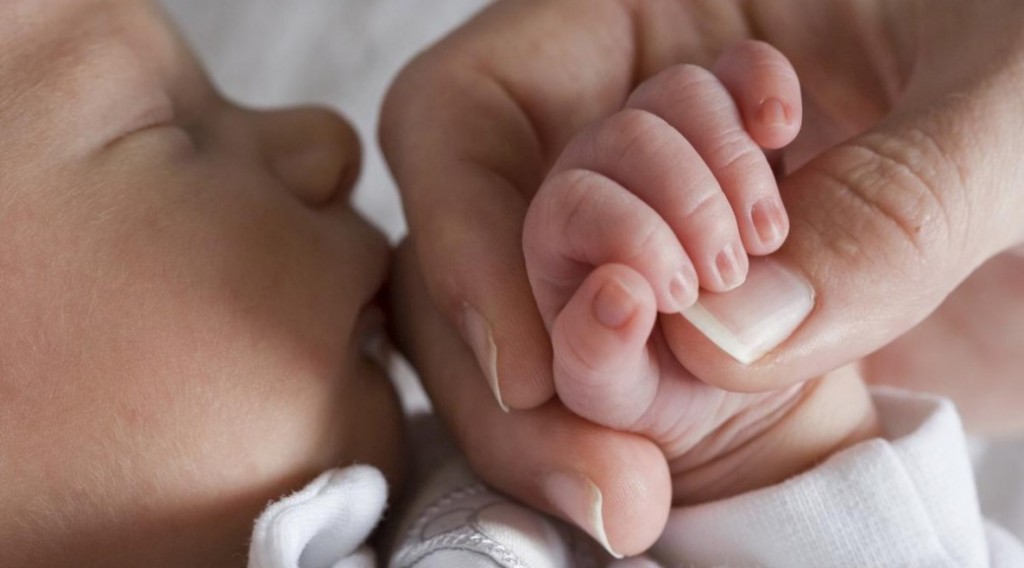
According to Pew Research, the only state that is more pro-life than Alabama is Mississippi. Our status as one of the leading states in the pro-life movement is both a blessing and a curse. It is a blessing in that our state has successfully passed legislation curbing abortion. It is a curse, however, in the sense that a pro-life failure here could spell disaster for the cause at the national level. This is why, in November, Alabama must set the standard and show the world just how strong the pro-life movement is–by voting yes on Proposed Statewide Amendment 2. The amendment, if approved, would add language to the state constitution acknowledging the sanctity of unborn life and stipulating that the state constitution provides no right to abortion. That’s the technical explanation. In a recent call with the Alabama Policy Institute, however, Representative Matt Fridy, the sponsor of the amendment, described both its intention and impact. Fridy explained that the amendment is not meant to immediately eliminate abortion, but to prevent a problem faced by our northern neighbor. The problem? In 2000, the Tennessee Supreme Court ruled that their state constitution provided higher protection for abortion than the federal constitution. As a result, an array of the state’s pro-life measures were struck down by the court, which argued that they were unconstitutional on the state level. The Volunteer State later passed an amendment–similar to the one we will vote on in November–to specify that their constitution did not, in fact, guarantee any such right. Fridy wants to eliminate any opportunity for what happened in Tennessee to happen here, and this amendment would be effective in that vein. Any further impact, however, would require change on the national level. Alabamians should wholeheartedly support this amendment because we, as a state, overwhelmingly believe in the sanctity of life. For many of us, this belief stems from our Christian values. King David reminds us in Psalm 139 that God knits each of us together in the womb. We are unable to ignore that reality. We also acknowledge the truth described in Genesis, that humans bear the imago dei–the image of God–and are worthy of dignity and respect. Others of us are pro-life because of a non-religious understanding that each member of our species is due protection, including the least developed of us. We protect the lives of the unborn just as we do those recently born, children, and individuals with disabilities–because of their humanity. Regardless of why, we at API are proud that most Alabamians are pro-life. It’s not always easy to hold this opinion, however. Supporters of abortion often highlight the differences between the unborn and born based on physical appearance or mental capacity, suggesting that the unborn are not yet human. These arguments, at times, can seem convincing. Even so, we reject these appeals, recognizing a) the value of all human life and b) that the same dehumanization that euphemizes abortion today was employed in Nazi Germany and 1990s Rwanda to make mass murder seem tenable. It is not unknown to Alabamians that the stakes are high, and we do not lazily adopt this position. Being pro-life leads us to action: I am a mother to four children, including an adopted child with special-needs. Other Alabamians are foster parents, volunteers at local crisis pregnancy centers, or benefactors of pro-life organizations that fight daily for the dignity of all. We also, and this must not be ignored, vote as if unknown multitudes of lives hang in the balance–because they do. Although Proposed Statewide Amendment 2 will not ban abortion within our borders, its unqualified passage will signal to the nation and the wider world that abortion is unacceptable, morally repugnant, and, as many like to say, on the wrong side of history. We must not squander this moment. ••• Nikki Richardson is Executive Vice President of the Alabama Policy Institute and Parker Snider is Policy Relations Manager. API is an independent, nonpartisan, nonprofit research and educational organization dedicated to strengthening free enterprise, defending limited government, and championing strong families.
Personnel note: Alabama Policy Institute announces staff additions, changes
On Tuesday, the Alabama Policy Institute announced several new hires and changes in staff positions as they prepare to move into the 2018 legislative session and election season. “In order to meet this high demand, API leadership spent the last year carefully and thoughtfully seeking the best individuals with the passion to fight for Alabama to join the API team,” said a press release. Below are the staff additions, changes:
