
Martha Roby: Local insight must lead in our classrooms

As a mother of two young children, I know how important it is that we get it right when it comes to education. I believe decisions about education are best made locally, so throughout my time in Congress, I have worked to implement policies that give local teachers and parents more control over making needed improvements to education for our children. Secretary of Education Betsy DeVos recently testified before the Labor, Health and Human Services, Education Appropriations Subcommittee, on which I am proud to serve. During the hearing, I had the opportunity to ask Secretary DeVos whether, under her leadership, the Department of Education acknowledges that the Every Student Succeeds Act (ESSA) expressly forbids the coercion of states to adopt certain federal education standards, including Common Core. Secretary DeVos assured me that she does acknowledge this and that the Department will continue to follow the letter and spirit of the law. I have championed these anti-coercion measures for several years, and I’m glad to now have a partner leading the Department of Education who will work with us to ensure that Washington won’t force policy agendas into Alabama classrooms. I appreciate Secretary DeVos for taking the time to review the Department’s priorities with our subcommittee, and I was particularly pleased to hear her response to my question. You know as well as I do that when the federal government manipulates education policy and standards, it ties the hands of school administrators, teachers, and parents in a way that is detrimental to the education of our children. We saw this firsthand in our country when No Child Left Behind (NCLB) was the law of the land and federal officials had too much control over our classrooms. During the subcommittee hearing, I was also glad to have the opportunity to talk with Secretary DeVos about the importance of Career Technical Education (CTE) programs and ways we can continue to strengthen and improve them. In Alabama, we are fortunate to have a strong network of these programs. As of last year, Alabama’s Community College System had more than 79,000 students enrolled in CTE programs, and 70 Alabama high schools offer CTE courses with nearly 184,960 students enrolled. As our state’s economy continues to grow and add jobs, it is imperative that our students have access to programs that will prepare them to be competitive in our workforce. It goes without saying that CTE is hugely significant to our state, and I’m pleased Secretary DeVos reaffirmed the Trump Administration’s commitment to supporting these programs all over the country. I am proud to work with the Administration to strengthen CTE, and I will continue to fight to improve our education laws with policies that are more conservative and state-centered. I am confident that local teachers and parents know how to educate the children in their communities better than bureaucrats in Washington, and I will do everything I can in Congress to empower them to be the driving force in our schools. ••• Martha Roby represents Alabama’s Second Congressional District. She lives in Montgomery, Alabama with her husband Riley and their two children.
Mike Pence looks like he will be Donald Trump’s inside man in Congress

When Mike Pence landed in Congress after the 2000 election, he was a conservative agitator who often bucked President George W. Bush‘s agenda. Seventeen years later, he’s the vice president-elect and Donald Trump‘s inside man on Capitol Hill. Pence, who spent a dozen years in Congress before becoming Indiana’s governor, is visiting frequently with lawmakers and promising close coordination after Trump’s inauguration Friday. In a sign of his attentiveness, Pence will have an office in the House as well as the traditional honorary office for the vice president in the Senate. Pence’s role takes on greater importance, given Trump’s ascension to the White House without any experience in elective office. Trump has few long-standing political alliances in Congress and a strained relationship with the Republican establishment, a hangover from the 2016 campaign. Trump’s agenda doesn’t always align with Republicans’ priorities, and his inflammatory remarks about immigrants, Muslims and women made many in the GOP cringe. Pence has forged an enduring friendship with House Speaker Paul Ryan, R-Wis., dating to their early years in Congress, along with other House Republicans crucial to advancing Trump’s agenda. In early meetings with lawmakers, Pence has passed out his personal cellphone number and promised an open line to the administration. “He’s the trusted intermediary. He’s the person that people on both sides of Pennsylvania Avenue know and trust,” said Rep. Tom Cole, R-Okla. If Trump is known for his brash form of disruptive politics, Pence represents the incoming administration in a more traditional manner, exemplified by his polite, Midwestern demeanor. He joined Trump in New York on Wednesday for the president-elect’s first news conference since the Nov. 8 election. Pence soon returned to Capitol Hill for meetings with several senators, including Democrats Joe Donnelly of Indiana, Joe Manchin of West Virginia and Tim Kaine of Virginia. The latter was Hillary Clinton‘s running mate and Pence’s adversary in October’s vice president debate. “Opportunities to work together on issues like infrastructure and child care we think represent a significant chance to bring together leaders in both political parties,” Pence said after meeting with Kaine. Pence’s early days in Washington were marked more by his role as a conservative purist than deal-maker. He opposed the Bush administration on issues such as the president’s No Child Left Behind education law and an overhaul of Medicare that provided new prescription drug coverage in 2003. Pence was a leading conservative voice, often arguing that the Republican administration had strayed from conservative principles and had failed to curb federal spending. After Republicans were swept from power in the 2006 elections, Pence unsuccessfully challenged Rep. John Boehner, R-Ohio, to become minority leader. Two years later, Boehner backed Pence’s entry into the leadership team, elevating the Indiana congressman to chairman of the House GOP conference, the party’s No. 3 post. One of the ways Pence built lasting ties with fellow lawmakers was through Bible study. Pence often joined Ryan, House Financial Services Chairman Jeb Hensarling, R-Texas, and Georgia Rep. Tom Price, Trump’s pick to lead the Department of Health and Human Services, for weekly Bible study sessions. House Republicans say those are the types of interactions that will help him in Trump’s administration. “Mike Pence is a House man. He cares about us and he will make sure that we are in the loop,” said Rep. Jack Carter, R-Texas, who also attended Bible study with Pence. By having an office in the House along with the ceremonial one in the Senate for his role as the chamber’s president, Pence will follow a path set by Vice President Dick Cheney, a former Wyoming congressman who maintained a House office during the Bush presidency. Pence’s conservative record gives rank-and-file Democrats few reasons to be hopeful that he could be a bipartisan deal-maker on Trump’s behalf. Planned Parenthood, for example, mobilized after Ryan said he planned to strip federal dollars from their organization as part of repeal of Obama’s health care law. The organization pointed to Pence’s anti-abortion record and history of seeking to block federal dollars from the health care provider as one of the reasons for the quick GOP push. “Mike Pence’s fingerprints are all over that,” said Dawn Laguens, Planned Parenthood’s executive vice president. But Pence has tried to build some bridges. When Manchin, a centrist Democrat facing re-election next year, called incoming Trump White House adviser Katie Walsh in early January to request a meeting with Pence, the senator found himself face to face with Pence only a few hours later. They exchanged cellphone numbers and Manchin again sat down with Pence on Wednesday for a discussion that included the Supreme Court vacancy and federal judicial appointments. “My job is going to be trying to find pathways forward – how do you find a way to fix things, repair things and make things happen? So you’ve got to build these relationships,” Manchin said. Republish with permission of The Associated Press.
Martha Roby: Changing behavior requires oversight

Oftentimes, truly changing public policy for the better requires not only improving the law but also careful oversight in order to ensure proper implementation of that law. You may remember that late last year we scored a significant legislative victory by getting the strong “state authority” provisions I championed for almost three years included in the long-overdue replacement to the “No Child Left Behind” education law. That law and the behavior it allowed has served to frustrate school administrators, hamstring teachers, and erode parents’ trust in public schools. As Congress worked to overhaul the law through the Every Student Succeeds Act (ESSA), one of my top priorities has been to return decision-making in education back to states and local communities where it belongs. The provisions I advocated for strictly prohibit the U.S. Department of Education from using funding grants or special rule waivers to coerce states into adopting its preferred policies. In fact, the Wall Street Journal called the nation’s new education law “the largest devolution of federal control to the states in a quarter century.” With ESSA now the law of the land, my focus has turned toward making sure officials are adhering to the new law. At an Appropriations Committee hearing in March, I questioned U.S. Secretary of Education John King about his commitment to making sure the U.S. Department of Education adheres to the “state authority” provisions. While Secretary King committed to me that he would implement and enforce ESSA as written, I assured him I would be watching to make sure that happened. This past week I met with local school superintendents from throughout Alabama who gave me more reason to be concerned about ESSA implementation living up to the intent of Congress. That’s why I reached out to each member of the Alabama ESSA Implementation Committee in a letter asking for feedback on whether or not federal authorities are following Congress’ clear direction. “As someone who has been involved in crafting this law,” I wrote, “I am here to answer any questions you might have regarding the clear intent Congress had toward ensuring flexibility at the state and local level. I also ask that you please keep me apprised of any attempt on behalf of the U.S. Department of Education to disregard the intent of this new law and continue its coercive practices. “Should federal partners you work with in the implementation process fail to adhere to this clear directive from Congress, I want to know about it.” I have already heard back from several members of the committee and I look forward to working with them in our shared goal of ensuring the return of education decisions back to the states. Their feedback will help me hold the U.S. Secretary of Education and his staff accountable for the proper implementation of the nation’s new education law. ••• Martha Roby represents Alabama’s 2nd Congressional District. She lives in Montgomery, Alabama with her husband, Riley and their two children.
Obama signs education law rewrite shifting power to states
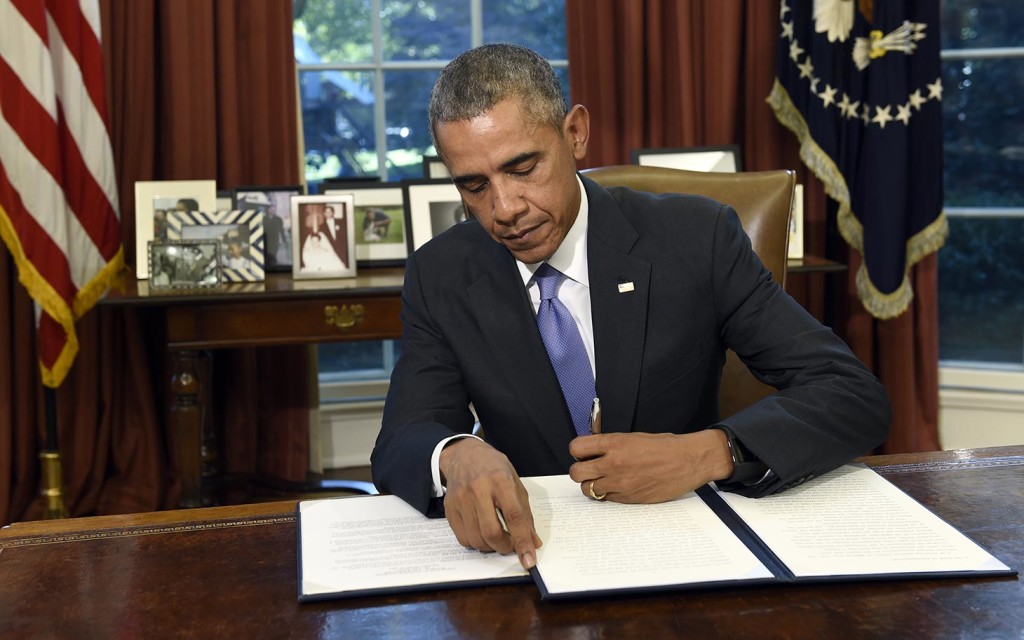
Calling it a “Christmas miracle,” President Barack Obama signed a sweeping overhaul of the No Child Left Behind education law on Thursday, ushering in a new approach to accountability, teacher evaluations and the way the most poorly performing schools are pushed to improve. Joined by lawmakers, students and teachers in a White House auditorium, Obama praised the George W. Bush-era No Child Left Behind for having the right goals. He said that in practice, it fell short or applied a cookie-cutter approach that failed to produce desired results. Under the new law, the federal government will shift more decision-making powers back to states. “With this bill, we reaffirm that fundamentally American ideal that every child- regardless of race, gender, background, zip code – deserves the chance to make out of their lives what they want,” Obama said. “This is a big step in the right direction.” The overhaul ends more than a decade of what critics have derided as one-size-fits-all federal policies dictating accountability and improvement for the nation’s 100,000 or so public schools. But one key feature remains: Students will still take federally required statewide reading and math exams. Still, the new law encourages states to limit the time students spend on testing and diminishes the high stakes for underperforming schools. The long-awaited bill to replace the 2002 law easily passed the Senate on Wednesday and the House last week, in a rare example of the Republican-controlled Congress and Obama finding common ground on major legislation. Obama help it up as an “example of how bipartisanship should work,” noting that opposing sides had compromised to reach a deal. “That’s something that you don’t always see here in Washington,” Obama said. “There wasn’t a lot of grandstanding, a lot of posturing, just a lot of good, hard work.” Rep. John Kline, R-Minn., who chairs the House’s education panel, said under the new approach, American classrooms will no longer be “micromanaged” by the Education Department in Washington. “Instead, parents, teachers, and state and local education leaders will regain control of their schools,” said Kline, part of the bipartisan quartet that spearheaded the bill. Here’s how the major stakeholders fare: — TEACHERS The legislation eliminates the federal mandate that teacher evaluations be tied to student performance on the statewide tests. Teachers’ unions hated that idea, saying the high stakes associated with the tests were creating a culture of over-testing and detracting from the learning environment. States and districts will still be able to link scores or consider them as a factor in teacher performance reviews, but they will not be required to do so. “We will continue to be vigilant as work shifts to the states to fix accountability systems and develop teacher evaluation systems that are fair and aimed at improving and supporting good instruction,” Randi Weingarten, president of the American Federation of Teachers, said in a statement. — STUDENTS Don’t start applauding yet, kids. The nation’s 50 million students in public schools will still have to take the federally mandated statewide reading and math exams in grades three to eight and once in high school – so parents, teachers and others can see how they are doing against a common measuring stick. But the legislation also encourages states to set caps on the amount of time students spend on testing. More children from low- and moderate-income families will have access to preschool through a new grant program that is to use existing funding to support state efforts. — SCHOOLS No more Common Core – maybe. The bill says the federal government may not mandate or give states incentives to adopt or maintain any particular set of academic standards, such as Common Core. The college and career-ready curriculum guidelines were created by the states but became a flashpoint for those critical of Washington’s influence in schools. The administration offered grants through its Race to the Top program for states that adopted strong academic standards for students. Already, some states have begun backing away from the Common Core standards. — PARENTS The bill provides for more transparency about test scores, meaning parents and others in the community will get a better look at how students in their states and in local schools are doing. The legislation requires that test scores be broken down by race, family income and disability status. Parents also will be able to see how per-pupil funding breaks down by state, district and school. — STATES It’s now up to the states. States and districts will now be responsible for coming up with their own goals for schools, designing their own measures of achievement and progress, and deciding independently how to turn around struggling schools. Testing will be one factor considered, but other measures of success or failure could include graduation rates and education atmosphere. To make sure all children get a fair shot at a quality education, states will be required to intervene in the lowest-performing 5 percent of schools, in high schools with high dropout rates and in schools with stubborn achievement gaps. — DIMINISHED FEDERAL ROLE The measure would substantially limit the federal government’s role, barring the Education Department from telling states and local districts how to assess school and teacher performance. The measure also ends the waivers the Obama administration has given to more than 40 states – exemptions granted around the more onerous parts of No Child when it became clear that requirements such as having all students proficient in reading and math by 2014 would not be met. Republished with permission of The Associated Press.
Martha Roby, Richard Shelby take opposing views on education reform bill
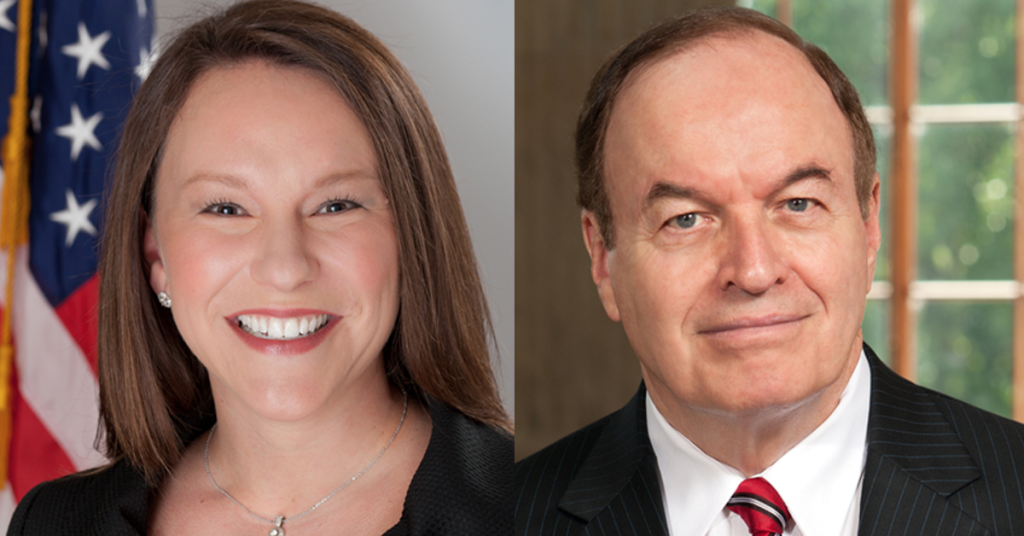
Last week, with Rep. Martha Roby‘s (AL-02) support, the U.S. House of Representatives overwhelmingly voted to scale back the federal government’s role in American education by passing the Every Student Succeeds Act. The bill, approved 359-64, replaces the 2002 No Child Left Behind law and hands over much of the decision-making power back to states and school districts across the country, while simultaneously ending federal efforts to encourage academic standards such as Common Core guidelines. The legislation would however retain the testing requirements, which many parents, teachers and school districts detest. Though it reforms the process and now grants the states the decision-making power over how to use the test results in assessing teachers and schools. “This is a big win for parents, teachers, administrators and anyone who has been frustrated by the federal intrusion in education policy,” explained Roby. “It isn’t just important for the current issues we know about. It’s also important for the next pet policy the Secretary of Education favors. Maybe that’s next year or five years from now, but I want to take away their ability to improperly coerce states once and for all, and that’s what my language does.” But not all Alabama lawmakers share Roby’s positive thoughts of the legislation. While U.S. Senator Richard Shelby (R-AL) took a stand against the legislation prior to the U.S. Senate‘s Wednesday vote. “While this bill may be well-intentioned and makes some improvements to our current policy, it is a missed opportunity to truly put an end to unnecessary federal intervention into education,” said Richard Shelby. “I have always believed that education decisions should be made at a local level and that Congress should empower parents and teachers – not Washington bureaucrats. Instead, this bill extends some of the same failed policies that could provide a path for top-down federal mandates like Common Core.” Shelby isn’t the only one who disapproves of the pending legislation. Roby’s primary challenger, Wetumpka Tea Party President Becky Gerritson calls Roby’s support of the bill a “headscratcher.” “[Roby’s] vote yesterday is yet another example of her support for Common Core, for top-down one-size-fits-all standards, for psychological profiling of our young students, and for the federal government dictating what goes on in our classroom,” Gerritson said in an email to her supporters. “I don’t know if Martha Roby agreed with every portion of this bill or if she was just doing what she was told by fellow members of the Establishment. What I do know is that this is yet another example of Martha leaving the values of the Second District at home. When Martha Roby goes to DC, her every action supports making government bigger, more unconstitutional, and more intrusive.” But not everyone in the 2nd Congressional District shares Gerritson’s concerns. Roby put out a press release Wednesday citing the support and approval of several district educators, including Dothan City Schools Superintendent Chuck Ledbetter, Ed. D. “While it isn’t perfect, it is does return more of the education policy making role to the states and local school boards,” assures Ledbetter. “It continues to emphasize education equity for all students while giving back control of how equity and excellence are achieved to those closer to the students who can make better, individualized decisions to help students learn. We appreciate Rep. Roby’s help in curtailing federal overreach and her willingness to support this important education bill.” The Senate approved the legislation Wednesday, 85-12 with the support of Sen. Jeff Sessions (R-AL), and it is now on its way to President Barack Obama‘s desk to be signed into law.
Martha Roby: Patience pays off in defending state authority over education

Progress takes patience sometimes, I suppose. Two-and-a-half years ago, I introduced the “Defending State Authority Over Education Act” to stop once and for all the inappropriate federal coercion of states into adopting the Obama Administration’s “pet” policies, standards or curricula, including Common Core. I strongly support local control of education, and I said then my true goal was to build support for getting my “State Authority” language included in the overall rewrite of the badly-flawed “No Child Left Behind” law, which Congress has been working on for years. Initially we had success in the House, but the Democratic Senate wouldn’t touch it. With a change in Senate leadership after the last election, this year looked much more promising. We kept pushing and, this week, I’m pleased to confirm the good news: at long last, the final bill replacing “No Child Left Behind” does include our “State Authority” language strictly prohibiting the federal Department of Education from using funding grants, rule waivers or other means to coerce states or local boards in education decisions. This is a big win for parents, teachers, administrators and anyone who has been frustrated by the federal intrusion in education policy. The “Every Student Succeeds Act” replaces the nation’s current law with policies that reflect a more conservative, state-driven approach to education. The bill: Places new, unprecedented restrictions on the U.S. Secretary of Education, including my “State Authority” language prohibiting the Secretary and his agents from using money and rule waivers to coerce policy decisions; Eliminates the “Adequate Yearly Progress,” or “AYP” metric and return the responsibility for proficiency systems to the states where they belong; Eliminates or consolidates 49 ineffective, duplicative, and unnecessary programs, replacing them with the simple grants that providing states and school districts with more flexibility; Supports the start-up, replication and expansion of high-quality public charter schools, which Alabama can now access to support its recently-enacted charter school program. Of course, I would prefer that the bill go much further in severing ties between federal and state governments in education, and voted to support amendments doing just that. However, it would be foolish to sacrifice all the many good, important gains made in this bill simply because it doesn’t have everything I want. The Wall Street Journal calls this bill “the largest devolution of federal control to the states in a quarter-century.” As someone who has long fought for a more conservative approach, that’s exciting. Yes, it took a lot of time and effort to build support for this idea. But, I’m proud to have kept fighting despite initial setbacks. And, I’ll be even prouder when our “Defending State Authority” language is finally part of the nation’s new, conservative education law. Martha Roby represents Alabama’s 2nd Congressional District. She lives in Montgomery, Alabama with her husband, Riley and their two children.
Bradley Byrne: Making Congress work again
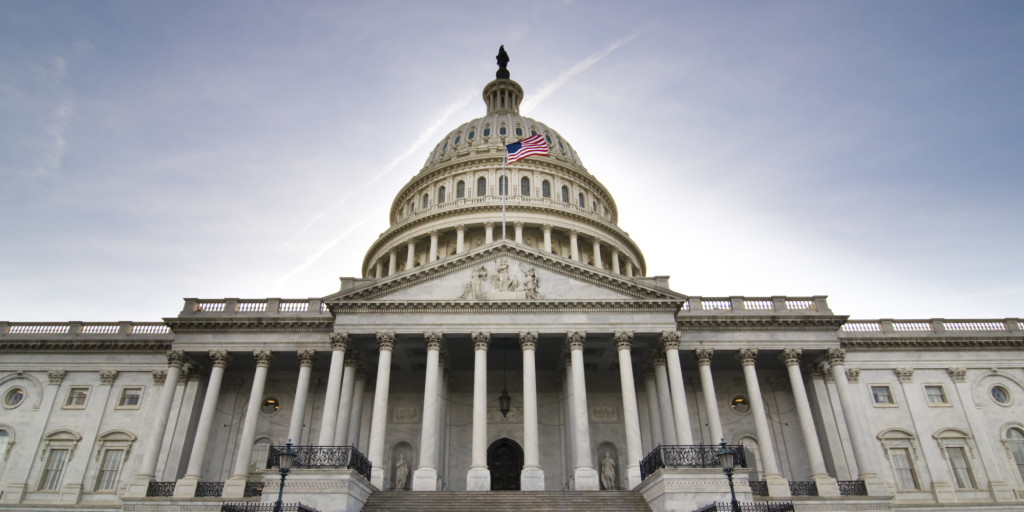
If you listen to national media outlets, all you ever hear is how Congress is completely broken and dysfunctional. While that narrative is right at times, last week was a bright spot when it comes to working together and passing long-overdue reforms. The House and the Senate earlier this year each passed separate bills to set policy for our nation’s K-12 education system and to fund our highway system, respectively. Since different bills were passed, Conference Committees made up of both House and Senate members were formed to work out the differences. Well last week, these Conference Committees each reached consensus and put forward two conservative, reform-focused bills that were long overdue. Let’s first look at the education bill. As you may know, for the last decade, our education system has been governed by a law known as No Child Left Behind. While it was written with good intentions, this law put heavy mandates and requirements on our local schools. Our education system has struggled under this heavy, top-down approach. As a member of the House Education and the Workforce Committee, I have long advocated for getting the federal government out of our local schools. I want to see local teachers, parents, and administrators given more control. That’s exactly what we accomplished last week when we passed the Every Student Succeeds Act. This bill gets Washington bureaucrats out of the way and empowers local teachers, principals, and administrators. The legislation achieves these goals by reducing the federal government’s role in education and restoring control back to the states and local school districts – where it belongs. I hear a lot from parents in Southwest Alabama who are concerned about the Common Core standards. The Every Student Succeeds Act actually includes strong language prohibiting the federal Secretary of Education from influencing or coercing states into adopting Common Core. It makes clear that it is solely a state’s responsibility to set academic standards and assessments. This is a huge win for educators and students. The bill also repeals the one-size-fits-all federal accountability system known as “Adequate Yearly Progress” and allows states and school districts to set their own academic standards and testing requirements. Without these reforms, we would continue to allow the Obama Administration and the federal government to dictate education policy to the states. The Every Student Succeeds Act passed the House with broad bipartisan support, and the President is expected to sign the bill. The second major accomplishment last week was on a long-term highway bill. The bill, known as the FAST Act, represents the first highway bill lasting longer than two years since 2005. For over two years now I have called for a new, long-term highway bill so we could move forward with important highway projects in Southwest Alabama like building the I-10 bridge, improving Highway 98 in north Mobile County, and four laning Highway 45 in Washington County. The fiscally-responsible highway bill is fully paid for and rejects Democrats’ efforts to raise the gas tax. The bill also includes a new program for Nationally Significant Freight and Highway Projects, which can likely be used to help pay for the I-10 bridge project. The highway bill passed the House by a vote of 359 to 65 and the Senate by a vote of 83 to 16. Just like the education bill, the highway bill was a great example of Republicans and Democrats working together in a bipartisan way. Many serious issues still require urgent action, but I think it is important to realize that Congress is making progress on important national priorities like strengthening our education system and improving our nation’s highway system. Bradley Byrne is a member of the U.S. Congress representing Alabama’s 1st Congressional District.
U.S. Department of Education approves state tweaks to No Child Left Behind

The federal Department of Education on Thursday approved petitions by seven states – including Alabama – for increased state-level flexibility in implementing the Elementary and Secondary Education Act, better known as the “No Child Left Behind” law approved by Congress in 2001 under then-President George W. Bush. The department said their decision reflected both the success of the federal law overall – which in part has been aided by innovations from states and local districts – as well as a growing desire for autonomy in many states. “The last six years have seen dramatic progress for America’s school children. The high school dropout rate is down, and graduation rates are higher than they have ever been,” said U.S. Secretary of Education Arne Duncan in a news release. “As a result of our partnerships with state and district leaders to couple flexibility with reform, we are seeing remarkable strides and bold actions to improve student outcomes. States, districts, principals and teachers are showing incredible creativity in using different means to achieve the same goal — getting every student in America college- and career-ready,” added Duncan, a former CEO of Chicago Public Schools district. Alabama’s specific increases in flexibility were as follows: Alabama created a Principal Leadership Network to ensure that principals in its lowest-performing, or priority, schools have the support to be effective leaders in these schools, as measured by the state’s principal evaluation and support system. Through this program, regional cohorts of principals gather regularly to discuss strategies for school improvement, participate in professional development, and visit to model classrooms and schools throughout the state. The state has identified exemplar schools and classrooms that have shown progress in closing achievement gaps for students with disabilities. School leaders and teachers from across the State can visit these classrooms to observe strong practices. The education department used the occasion – which critics may cite as a setback for the federal government, which devolves some power back to the states – to boast about the improvements the Obama administration has brought to the now 15-year-old legislation. Since this flexibility was first granted in 2012, read the announcement, the Department has partnered with state and district leaders to provide relief from some provisions of NCLB in exchange for taking bold actions to improve student outcomes and ensure equity for all students. Under NCLB, schools were given “many ways to fail but very few opportunities to succeed,” foisting one-size-fits-all solutions upon a vast menagerie of states with very different student populations. Today’s announcement added three years of increased flexibility to Alabama’s addendums to the law. The other states that successfully petitioned for more legal wiggle room were Arizona, Arkansas, Connecticut, Mississippi, New Hampshire and Wisconsin.
Martha Roby: Finally. Replacing “No Child Left Behind”

Politicians have tried for decades to fix our schools with a “Washington-knows-best” approach. But, this top-down scheme hasn’t improved student achievement, and our schools are more bogged down in federal mandates and red tape than ever before. Teachers, parents, principals and superintendents that I’ve talked to all agree: one size does not fit all when it comes to education. They are frustrated with endless regulations and directives from Washington. Since coming to Congress, I’ve worked to replace “No Child Left Behind” with policies that return decision-making back to states and local communities where it should be. I’m pleased to report that this week the House acted to do just that by passing H.R. 5, the “Student Success Act.” This bill eliminates more than 65 ineffective, duplicative and unnecessary programs, replacing them with flexible grants that state and local districts can use to benefit students the best way they see fit. I’m further pleased to report that the bill includes language I proposed and have championed expressly prohibiting the federal government from using funding grants and policy waivers to coerce states into adopting certain standards and curricula. In addition to getting the federal government out of the standards and curricula business, this bill includes many other positive provisions supporting parents, locals and states: Eliminating the “Adequate Yearly Progress,” or “AYP” metric and returning the responsibility for proficiency systems to the states where they belong; Repealing the federal “Highly Qualified Teachers” requirements, or “HQT,” which will enable state and local-driven efforts to customize teaching evaluations; Enhancing student mobility and school choice by repealing Title I restrictions and allowing money to “follow the student” to the school of the parent’s choice, whether that’s a traditional public school or a public charter school; Supporting the start-up, replication and expansion of high-quality public charter schools, which Alabama can now access to support its recently-enacted charter school program; Of course this isn’t a perfect bill – I’ve yet to read one that is. But, the Student Success Act finally replaces top-down Washington mandates with conservative reforms that reduce the federal footprint in education, restore local control and empower parents, teacher and community leaders to improve their schools. Martha Roby represents Alabama’s 2nd Congressional District. She is currently serving her third term.
Opt-Out movement accelerates amid Common Core testing
Thousands of students are opting out of new standardized tests aligned to the Common Core standards, defying the latest attempt by states to improve academic performance. This “opt-out” movement remains scattered but is growing fast in some parts of the country. Some superintendents in New York are reporting that 60 percent or even 70 percent of their students are refusing to sit for the exams. Some lawmakers, sensing a tipping point, are backing the parents and teachers who complain about standardized testing. Resistance could be costly: If fewer than 95 percent of a district’s students participate in tests aligned with Common Core standards, federal money could be withheld, although the U.S. Department of Education said that hasn’t happened. “It is a theoretical club administrators have used to coerce participation, but a club that is increasingly seen as a hollow threat,” said Bob Schaeffer with the National Center for Fair & Open Testing, which seeks to limit standardized testing. And so the movement grows: This past week in New York, tens of thousands of students sat out the first day of tests, with some districts reporting more than half of students opting out of the English test. Preliminary reports suggest an overall increase in opt-outs compared with last year, when about 49,000 students did not take English tests and about 67,000 skipped math tests, compared to about 1.1 million students who did take the tests in New York. Considerable resistance also has been reported in Maine, New Mexico, Oregon and Pennsylvania, and more is likely as many states administer the tests in public schools for the first time this spring. The defiance dismays people who think holding schools accountable for all their students’ continuing improvement is key to solving education problems. Assessing every student each year “gives educators and parents an idea of how the student is doing and ensures that schools are paying attention to traditionally underserved populations,” U.S. Department of Education spokeswoman Dorie Nolt said in an emailed statement. Opposition runs across the political spectrum. Some Republicans and Tea Party activists focus on the Common Core standards themselves, calling them a federal intrusion by President Barack Obama, even though they were developed by the National Governors Association and each state’s education leaders in the wake of President George W. Bush‘s No Child Left Behind program. The Obama administration has encouraged states to adopt Common Core standards through the federal grant program known as Race to the Top, and most have, but each state is free to develop its own tests. In California, home to the nation’s largest public school system and Democratic political leaders who strongly endorse Common Core standards, there have been no reports of widespread protests to the exams — perhaps because state officials have decided not to hold schools accountable for the first year’s results. But in deep-blue New York, resistance has been encouraged by the unions in response to Democratic Gov. Andrew Cuomo‘s efforts to make the test results count more in teacher evaluations. In Rockville Centre on Long Island, Superintendent William H. Johnson said 60 percent of his district’s third-through-eighth graders opted out. In the Buffalo suburb of West Seneca, nearly 70 percent didn’t take the state exam, Superintendent Mark Crawford said. “That tells me parents are deeply concerned about the use of the standardized tests their children are taking,” Crawford said. “If the opt-outs are great enough, at what point does somebody say this is absurd?” Nearly 15 percent of high school juniors in New Jersey opted out this year, while fewer than 5 percent of students in grades three through eight refused the tests, state education officials said. One reason: Juniors may be focusing instead on the SAT and AP tests that could determine their college futures. Much of the criticism focuses on the sheer number of tests now being applied in public schools: From pre-kindergarten through grade 12, students take an average of 113 standardized tests, according to a survey by the Council of the Great City Schools, which represents large urban districts. Of these, only 17 are mandated by the federal government, but the backlash that began when No Child Left Behind started to hold teachers, schools and districts strictly accountable for their students’ progress has only grown stronger since “Common Core” gave the criticism a common rallying cry. “There is a widespread sentiment among parents, students, teachers, administrators and local elected officials that enough is enough, that government mandated testing has taken over our schools,” Schaeffer said. Teachers now devote 30 percent of their work time on testing-related tasks, including preparing students, proctoring, and reviewing the results of standardized tests, the National Education Association says. The pressure to improve results year after year can be demoralizing and even criminalizing, say critics who point to the Atlanta test-cheating scandal, which led to the convictions 35 educators charged with altering exams to boost scores. “It seems like overkill,” said Meredith Barber, a psychologist from the Philadelphia suburb of Penn Valley who excused her daughter from this year’s tests. Close to 200 of her schoolmates also opted out in the Lower Merion School District, up from a dozen last year. “I’m sure we can figure out a way to assess schools rather than stressing out children and teachers and really making it unpleasant for teachers to teach,” said Barber, whose 10-year-old daughter, Gabrielle, will be in the cafeteria researching Edwardian history and the TV show Downton Abbey during the two weeks schools have set aside for the tests. Utah and California allow parents to refuse testing for any reason, while Arkansas and Texas prohibit opting out, according to a report by the Education Commission of the States. Most states are like Georgia, where no specific law clarifies the question, and lawmakers in some of these states want protect the right to opt out. Florida has another solution: Gov. Rick Scott signed a bill strictly limiting testing to 45 hours each school year. In Congress, meanwhile, lawmakers appear ready to give states
Ann Eubank: Why the Senate should pass SB101 rejecting Common Core

One of the biggest frauds ever perpetrated on the American people is the Common Core State Standards Initiative. There could be nothing farther from the truth than the assertion that proponents constantly use “that it was state-led.” The standards actually were written by five people in a back room, led by David Coleman of Achieve, who has a degree in philosophy but no classroom experience. Instead of raising academic standards as it was touted to do, it was designed by statists inside the federal education bureaucracy to be one great big sociology experiment on our children. What accounts for Common Core Standards being accepted by 45 states are not actual facts that prove that they were “rigorous,” or that they led to “critical thinking,” but instead by a great deal of money from the Race to the Top Federal grants and wealthy private corporatists. Republican governors were suckered into adopting CCSS by the Department of Education dangling the proverbial carrot of money only if they agreed to 1) accept a common set of standards, 2) implement charter schools, and 3) set up a data collection system. At a time of severe financial crisis in many states, any money source was acceptable regardless of requirements. Very few states actually received money to help implement the standards. The main draw for the states was the illegal No Child Left Behind (NCLB) Waiver. The onerous NCLB annual yearly progress goals were due and a big percentage of states were going to be penalized millions of education dollars they could not afford. So, they signed on the bottom line, “sight unseen.” Most signed on before the standards were even written. The National Governors Association and the Council of Chief State School Officers own and have a copyright on the Common Core State Standards. Contrary to frequent statements that our state could change the standards to become “Alabama standards,” not much “modification” could be done to them. Each state was allowed a 15 percent addition to the standards. However, this 15 percent would not be tested on the required national assessments. After all, if each state’s standards varied 15 percent how could they be “common” to the entire nation? All across the United States the Common Core State Standards are a failure in both implementation and assessment. That has spawned stop Common Core groups in every state. Countless academics have speculated that it will slow learning by two years. I wonder, is that why President Barack Obama now wants two years of community college to be free? Are we just extending high school to recover the length of the time lost with the implementation of Common Core? There are now more than 20 states that have either passed, or are attempting to pass bills in their respective state legislatures to withdraw from the Common Core State Standards. Alabama is one of them. Our parents and teachers, who are brave enough to go against the culture of intimidation, are fighting for their children’s minds. Supporters commonly misrepresent the fact that parents support high academic standards and therefore they support Common Core. Parents do support high standards for our children; however, a majority of parents at this point do not support CCSSI. Standards and assessments drive the curriculum, materials and textbooks. Parents are often shocked at their content. They are appalled at what their children are learning in the classroom and the homework they are bringing home. That’s why it’s so important that the Alabama State Senate takes up and passes Senate Bill 101 repealing Common Core Standards in Alabama. The only way is for Republicans to return to their conservative roots and repeal the Common Core State Standards, and then put a stop to the Department of Education from interfering with the local control of education. That’s why I encourage everyone to write and call their state senator: Tell them they must pass Senate Bill 101 to repeal Common Core and restore common sense to education. Ann Eubank is co-chair of Rainy Day Patriots (Jefferson/Shelby County), and the legislative chair of the Alabama Legislative Watchdogs. Ann is a frequent visitor of the statehouse and has bridged the gap between strong advocate and respected resource for members. She is also a member of the Alabamians United for Excellence in Education Taskforce and several other Stop Common Core groups.
