
Donald Trump thanks farmers for backing him through China trade war
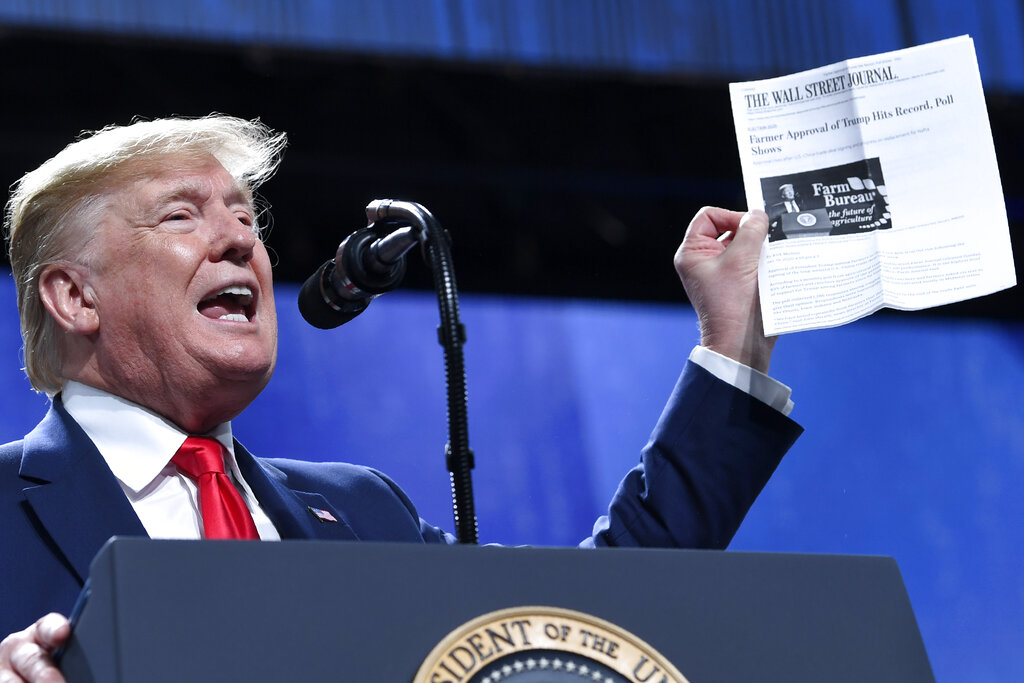
Trump described the trade agreement with China as “groundbreaking.”
North America trade pact deals rare setback to big pharma
![[Photo Credit: canva.com]](https://altoday.com/wp-content/uploads/2018/10/Canva-Cure-Drug-Cold-Dose-The-Disease-Pharmacy-1024x683.jpg)
A revamped North American trade deal nearing passage in Congress gives both the White House and Democrats a chance to claim victory and offers farmers and businesses clearer rules governing the vast flow of goods among the United States, Canada and Mexico. But the pact leaves at least one surprising loser: the pharmaceutical industry, a near-invincible lobbying powerhouse in Washington. To satisfy House Democrats, the Donald Trump administration removed a provision that would have given the makers of ultra-expensive biologic drugs 10 years of protection from less expensive knockoffs. Democrats opposed what they called a giveaway to the industry that could have locked in inflated prices by stifling competition. Top examples of the injected drugs made from living cells include medications to fight cancer and immune disorders such as rheumatoid arthritis. “This is one of the first times we’ve actually seen pharma lose,” said Rep. Earl Blumenauer, an Oregon Democrat who leads a subcommittee on trade. “They have a remarkable track record because they are a huge political force. They spend lots of money on lobbying, on advertising, on campaign contributions. But we held firm, and we won on all counts.” The removal of the provision also helped illustrate just how potent a political issue sky-high drug prices have become. It was a reminder, too, that President Donald Trump repeatedly pledged to work to lower drug prices. Last week, drug manufacturers absorbed another — though likely only temporary — defeat when House Democrats passed legislation, along party lines, that would authorize Medicare to use its influence in the marketplace to negotiate lower prices from drug companies. The bill is thought to have no chance of passage, though, in the Republican-led Senate. Yet the revamped U.S.-Mexico-Canada Agreement, Trump’s rewrite of the 25-year-old North American Free Trade Act, seems set to clear Congress without the biologics protection that the drug industry had sought. On Tuesday, the House Ways and Means Committee approved the legal text. The full House is expected to approve it Thursday, though the Senate isn’t likely to take it up until January. “It’s not a mystery,’’ said Rep. Jan Schakowsky, an Illinois Democrat who helped negotiate with the administration. “If you poll the American people, the cost of pharmaceuticals is a really big deal. It’s at the top of the list.’’ The trade agreement the administration reached last year with Mexico and Canada gave biologics 10 years of protection from cheaper near-copies known as biosimilars. Among the leading biologics are the anti-cancer drug Rituxan and Humira and Enbrel, which fight immune disorders. The industry — and the Trump administration — had argued that manufacturers of biologics require years of protection to profit from their drugs before biosimilars should be allowed to cut into sales. Otherwise, they contend, brand-name drug companies and biotech startups that rely on money from venture capital firms would have little incentive to invest in developing new medicines. “The announcement made today puts politics over patients,” the leading drug industry trade group, PhRMA, said in a statement last week. “Eliminating the biologics provision in the USMCA removes vital protections for innovators while doing nothing to help U.S. patients afford their medicines or access future treatments and cures.’’ The industry also rejected the notion that the biologics provision would keep drug prices high and hurt consumers. Existing U.S. law, they noted, already gives makers of biologics 12 years’ protection, more than the proposed 10 years in the USMCA. But the provision the Democrats succeeded in removing would have forced Mexico to expand biologics’ monopoly from five years and Canada from eight, potentially hurting U.S. consumers who seek lower drug prices in those countries. What’s more, Democrats argued, if Congress had expanded the biologics’ monopoly in the USMCA, it would have prevented lawmakers from ever scaling back that monopoly to, say, the seven years that the Obama administration had once proposed. “We would have been locked in,’’ Schakowsky said. For Big Pharma, the setback marked a sharp turnabout. Four years ago, the drug industry helped scuttle an Obama administration trade deal with 11 Pacific Rim countries, arguing that a provision establishing eight years of protection for biologics was not sufficient. Now the latest U.S. trade deal contains no biologics protections at all. Back in 2006, the industry scored a major victory when it helped push legislation through Congress that added prescription drug coverage for Medicare recipients but barred the government from negotiating lower prices. That restriction opened a “Pandora’s box” that paved the way for unsustainable price hikes, said Steve Brozak, an analyst at WBB Securities. Drug makers began raising prices of existing drugs several times a year, sometimes totaling more than 20% annually. They also started launching biologics with list prices topping six figures a year. In May, U.S. regulators approved a one-time gene therapy, Zolgensma, with an eye-popping price of $2.1 million per patient. A backlash has been growing, especially after news reports and congressional hearings exposed stories of patients rationing medicine and even dying because they couldn’t afford insulin or other drugs. Drugmakers have “been on defense more than we’ve ever seen,” said David Certner, legal counsel for AARP. Last year, Certner noted, Congress dealt the industry two losses: First, by increasing the discounts that drug makers must give to seniors with high drug costs who have landed in a Medicare coverage gap. Then, months later, lawmakers rejected industry efforts to reverse that change. And in January, the industry lost perhaps its biggest champion in Congress when Sen. Orrin Hatch, Republican-Utah, retired. Trump has long promised to address drug prices. On Wednesday, the administration moved ahead with a plan to allow Americans to safely and legally gain access to lower-priced medicines from abroad. So far, most of Trump’s drug-price initiatives have gone nowhere. His trade team negotiated biologics protections into the USMCA. Facing public anger, Democratic resistance and the fact that Canada and Mexico had no reason to support the protections for biologics, the administration yielded. When it reached a deal with House Democrats
What they’re saying: Alabama reactions to news of new NAFTA framework
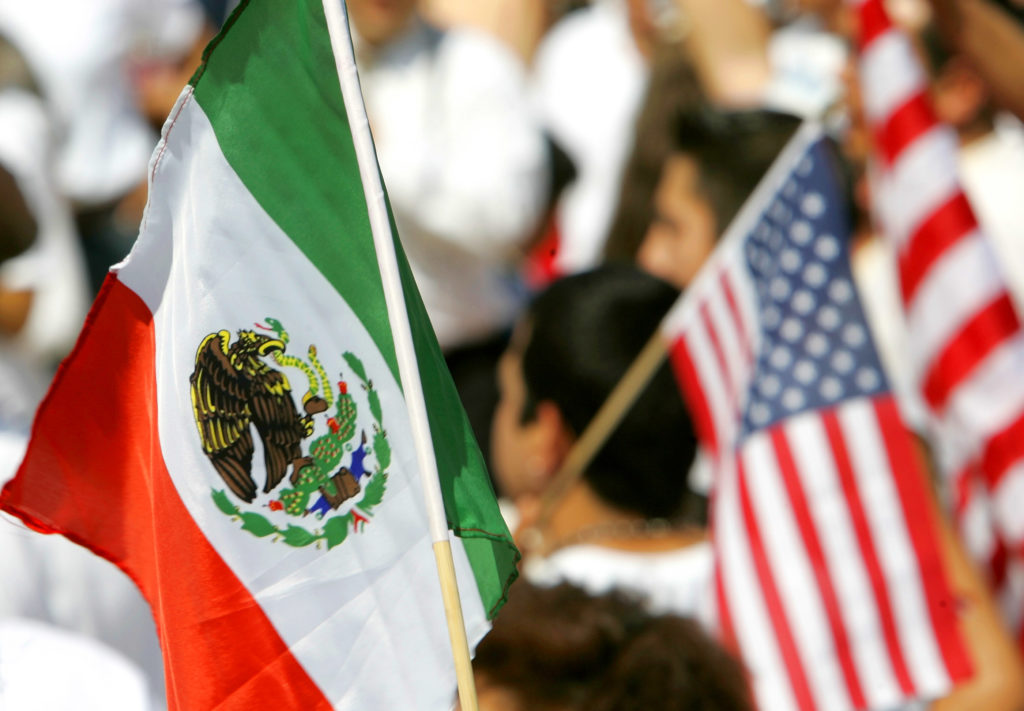
The United States and Mexico have reached an agreement on components of the North American Free Trade Agreement (NAFTA) on Monday, a deal that moves President Donald Trump closer to fulfilling a major campaign promise to renegotiate NAFTA so all American workers can benefit. “America has … finally turned the page on decades of unfair trade deals that sacrificed our prosperity and shipped away our companies, our jobs, and our Nation’s wealth,” said Trump. The deal will rename NAFTA “the United States-Mexico Trade Agreement” — a name that would exclude the third NAFTA partner, Canada. The president said that he will be calling Canadian Prime Minister Justin Trudeau. “If they’d like to negotiate fairly, we’ll do that,” Trump told reporters. According to the White House, the preliminary agreement with Mexico will benefit American workers, American manufacturing, and American agriculture, through provisions including: New “rules of origin” requirements to incentivize billions a year in vehicle and automobile parts production in the United States, supporting high-wage jobs. The strongest, fully enforceable labor standards of any trade agreement. New commitments to reduce trade-distorting policies for agricultural goods. Improvements enabling food and agriculture to trade more fairly. Strong and effective intellectual property protections. The strongest disciplines on digital trade of any international agreement. The most robust transparency obligations of any United States trade agreement. Here’s what the Alabama delegation is saying about the deal: U.S. Rep. Robert Aderholt (AL-04): All throughout the 2016 campaign, Democrats laughed at the idea we could renegotiate our trade deals. With this important step towards a new NAFTA deal, President Trump has once again proven these critics wrong. The strength of the American economy, and the American consumer, comes with a lot of negotiating power. Power that has too often not been used, to the detriment of American workers. Those days are over. U.S. Rep. Mo Brooks (AL-05): All throughout the 2016 campaign, Democrats laughed at the idea we could renegotiate our trade deals. With this important step towards a new NAFTA deal, President Trump has once again proven these critics wrong. The strength of the American economy, and the American consumer, comes with a lot of negotiating power. Power that has too often not been used, to the detriment of American workers. Those days are over”
On trade policy, Donald Trump is turning GOP orthodoxy on its head
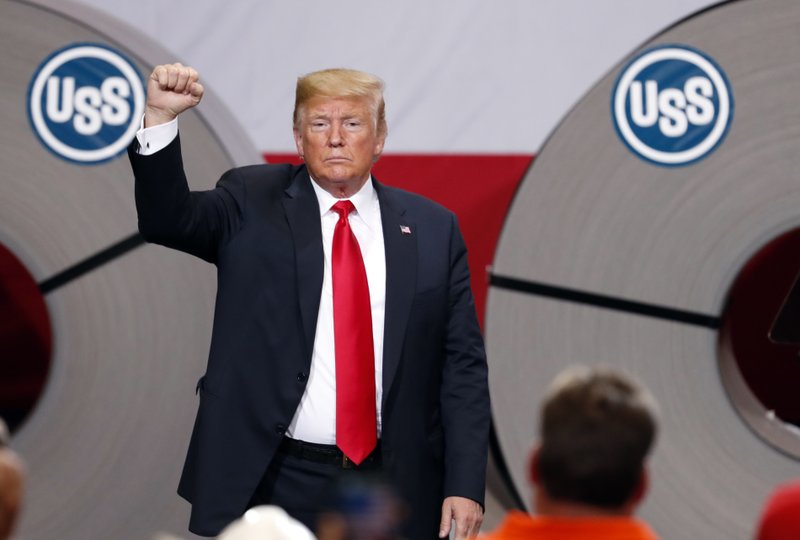
President Donald Trump’s trade policies are turning long-established Republican orthodoxy on its head, marked by tariff fights and now $12 billion in farm aid that represents the type of government intervention GOP voters railed against a decade ago. President George W. Bush increased the number of countries partnering with the United States on free trade agreements from three to 16. President Ronald Reagan signed a landmark trade deal with Canada that was later transformed into the North American Free Trade Agreement (NAFTA) and expanded to include Mexico. Both those Republican presidents also enacted tariffs, but their comments on trade were overwhelmingly positive. “We should beware of the demagogues who are ready to declare a trade war against our friends, weakening our economy, our national security and the entire free world, all while cynically waiving the American flag,” Reagan said in a 1988 radio address. Trump, by comparison, has called NAFTA “the worst trade deal maybe ever signed anywhere,” and his administration has opted to use tariffs as a tool intended to leverage more favorable agreements with virtually every major U.S. trading partner. He shredded the trade agreement the Obama administration tried to work out with Pacific Rim nations that had strong backing from farm groups and chief executives from major U.S. corporations. Republicans also have altered the priority of tackling the national debt, an issue the GOP hammered President Barack Obama on as the country struggled to recover from the 2008 economic crisis. “Our nation is approaching a tipping point,” GOP Rep. Paul Ryan of Wisconsin, now the House speaker, said in January 2011 when the national debt hit $14 trillion. Today, the Congressional Budget Office projects the $21 trillion debt will rise to more than $33 trillion in 10 years. That estimate notes that the tax cut lawmakers passed in December would increase economic output but add $1.8 trillion to the deficit over the coming decade. The GOP’s evolving priorities are not lost on some in the party. Rep. Mark Sanford, R-S.C., who lost a close primary election this year after butting heads with Trump on some issues, said he finds it “perplexingly destructive” for the GOP brand. “It takes a long while to build a brand, but brands can be diminished or destroyed in relatively short order, and I think the administration is destroying bedrock cornerstones to what the party has historically stood for,” Sanford said. “There is no conversation on the debt, deficit and government spending these days. That has been a cornerstone.” Sanford made headlines as South Carolina governor when he said he would reject stimulus money approved during the financial crisis because he did not think the country should go into debt to fund recovery efforts. “Here we are now with a hypothetical $12 billion bailout package and you don’t hear a word,” Sanford said. “That is quite a transition in not so many years from decrying what the Obama administration had done with bailouts to now endorsing the idea of bailouts.” Trump, in a Friday interview on Fox News’ Sean Hannity’s radio show, said the strong economy would help the U.S. reduce the deficit. “The economy, we can go a lot higher. … We have $21 trillion in debt. When this really kicks in we’ll start paying off that debt like water. We’ll start paying that debt down.” The administration’s plan on the bailout announced last week would borrow money from the Treasury to pay producers of soybeans, sorghum, corn, wheat, cotton, dairy and hogs. Many farmers have criticized Trump’s tariffs and the damage done to commodity prices and markets. Some GOP lawmakers are expressing concerns. “I didn’t come up here to start new government programs,” said Sen. John Kennedy, R-La. But it’s unlikely that the Republican-controlled Congress will try to block the administration’s agricultural aid plan. “I’m looking at this and saying, ‘You’re going to single out one sector?’ What about the manufacturing sector? What about the energy sector?” said Sen. Lisa Murkowski, R-Alaska. “Where do you draw the line? I’ve got some real concerns.” But others praised the move. GOP Rep. Mike Conaway of Texas, chairman of the House Agriculture Committee, called it “welcome relief.” “This is the right fight to have, but in the meantime, our producers have got to live as this fight is going on,” Conaway said of a trade dispute with China that has prompted the imposition of tariffs by both nations. Conaway said the president has reshaped the way Republicans think about trade. “He’s kind of changed the narrative of the conversation that it’s really not OK to let other people take advantage of America,” Conaway said. Rep. Dan Kildee, D-Mich., said it’s clear the GOP has changed over the past two years with Trump in office. “This is the party of Trump. He calls the plays and they line up and they execute the play,” Kildee said. But Kildee also opposed the Trans-Pacific Partnership deal that the Obama administration was trying to work out with Japan, Vietnam, Singapore and others. He and many other Democrats described past trade deals such as NAFTA as hurting workers in their home districts. So why the criticism of Trump and the efforts he has undertaken on trade? Kildee said he would prefer a more deliberative approach and a multilateral approach that doesn’t fray longstanding alliances. “Simply engaging on the issue of trade doesn’t mean he’s doing it right,” Kildee said. The president’s meetings with lawmakers in the past week and his trade advisers’ visits to Capitol Hill are acknowledgements that many GOP lawmakers are worried about where Trump is headed — and what it could mean in the November election as farmers, bourbon makers and manufacturers who use imported steel and aluminum deal with the fallout. A possible breakthrough with the European Union announced Wednesday at the White House appears to have eased their concerns and given the president more time to work out new deals. “The fact the EU was here today and good talks happened, I think
Mexico’s victor reaches out to Donald Trump, seeks NAFTA deal
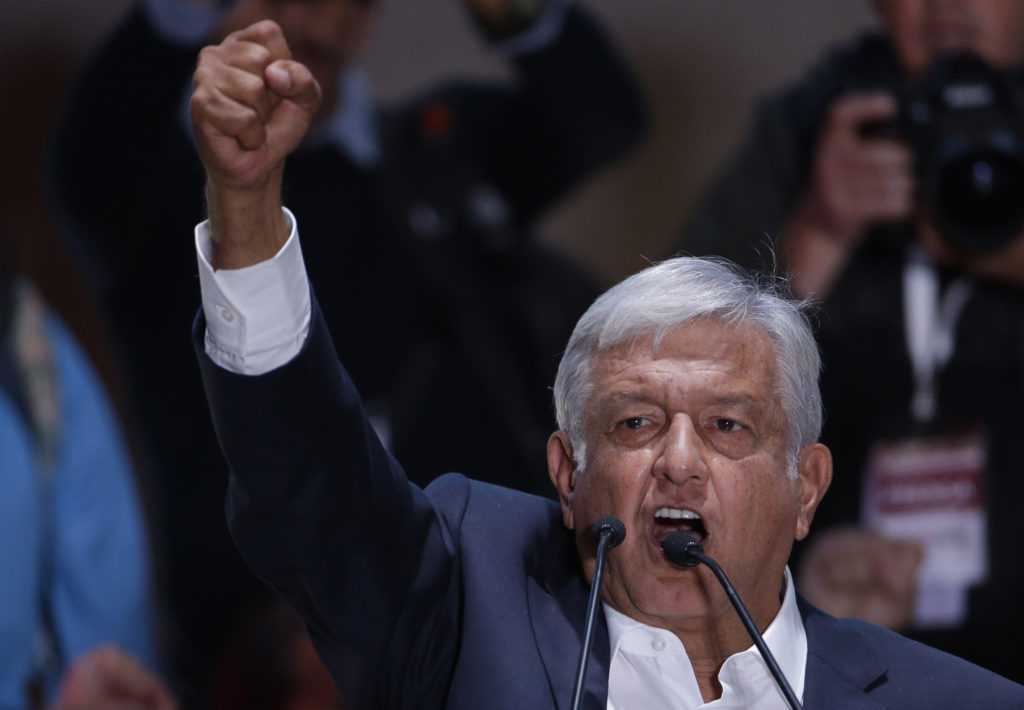
The morning after his crushing election victory, Mexico’s president-elect Andres Manuel Lopez Obrador thanked President Donald Trump for his congratulation message and said he’ll contact the U.S. leader to “reach an understanding.” Lopez Obrador said in an interview Monday with the Televisa news network that Trump’s Tweet Sunday night “was very respectful. That is what we always want to maintain with the U.S. government, that there be mutual respect.” Trump tweeted Sunday that “I look very much forward to working with him. There is much to be done that will benefit both the United States and Mexico!” “We are never going to disrespect the U.S. government, because we want them to respect us,” Lopez Obrador said. “At the appropriate moment, we are going to get in touch, to reach an understanding” with the Trump administration. “We are conscious of the need to maintain good relations with the United States,” he added. Lopez Obrador had been compared to Trump for his populist, nationalist rhetoric and sometimes touchy personality — as well as his past skepticism about the trade deal. But Lopez Obrador said he supports reaching a deal on renegotiating the North American Free Trade Agreement with the United States and Canada. The talks have been stalled over the Trump administration demands for higher U.S. content and a “sunset clause” in the 1994 trade agreement. Lopez Obrador said he will propose that his own team of experts be included in the talks. The winning candidate said he will make that proposal in a meeting Tuesday with current President Enrique Pena Nieto. Lopez Obrador told Televisa that he will respect the current team of negotiators, and let them continue representing Mexico until he takes office Dec. 1. Lopez Obrador said he wants to have information on what’s being discussed and “to help as much as we can.” With just over half of votes counted on Monday, Lopez Obrador had about 53.7 percent of the votes, a remarkable margin not seen in the country for more than three decades. A prominent exit poll predicted his party allies were poised to score big victories in congressional and governorship races. Lopez Obrador, who campaigned on vows to transform Mexico and oust the “mafia of power” ruling the country, rode widespread voter anger and discontent with the governing Institutional Revolution Party, or PRI, of President Enrique Pena Nieto and had led opinion polls since the beginning of the campaign. The PRI, which dominated Mexican politics for nearly the entire 20th century and recaptured the presidency in 2012, was set to suffer heavy losses, not just for the presidency but in other races as well. In brief remarks at a hotel in central Mexico City late Sunday, Lopez Obrador called for reconciliation after a polarizing campaign and promised profound change but with respect for the law and constitutional order. “I confess that I have a legitimate ambition: I want to go down in history as a good president of Mexico,” said Lopez Obrador, who had lost in the previous two presidential elections. “I desire with all my soul to raise the greatness of our country on high.” Lopez Obrador said he would “seek to establish an authentic democracy and we do not intend to establish a dictatorship.” He said, “The changes will be profound, but in accordance with established order.” Conservative Ricardo Anaya of a right-left coalition and the PRI’s Jose Antonio Meade acknowledged defeat shortly after polls closed nationwide. The quick count had them around 22 percent and 16 percent, respectively. Lopez Obrador said individual and property rights would be guaranteed, promised respect for the autonomy of the central Bank of Mexico and said his government will maintain financial and fiscal discipline. He said contracts obtained under energy reforms passed under President Enrique Pena Nieto will be scrutinized for any corruption or illegality, but otherwise contracts will be honored. “There will be no confiscation or expropriation of assets. … Eradicating corruption will be the principal mission,” he said. Lopez Obrador also spoke of reducing Mexican immigration to the United States through economic development. “Mexicans will be able … to work and be happy where they were born,” he said. And rather than the use of force to fight spiraling violence, he will look to fix root causes such as inequality and poverty. Partial vote counts also showed probable gubernatorial wins for allies of Lopez Obrador’s Morena party in at least four of eight state races on the ballot plus for the head of government in Mexico City. The central state of Guanajuato was expected to go to a candidate of the conservative National Action Party. The polling firm Consulta Mitofsky predicted Morena allies would take between 56 and 70 seats in the 128-member Senate and between 256 and 291 spots in the 500-seat lower house. Republished with permission from the Associated Press.
Donald Trump, Paul Ryan face off in rare public GOP clash over tariffs
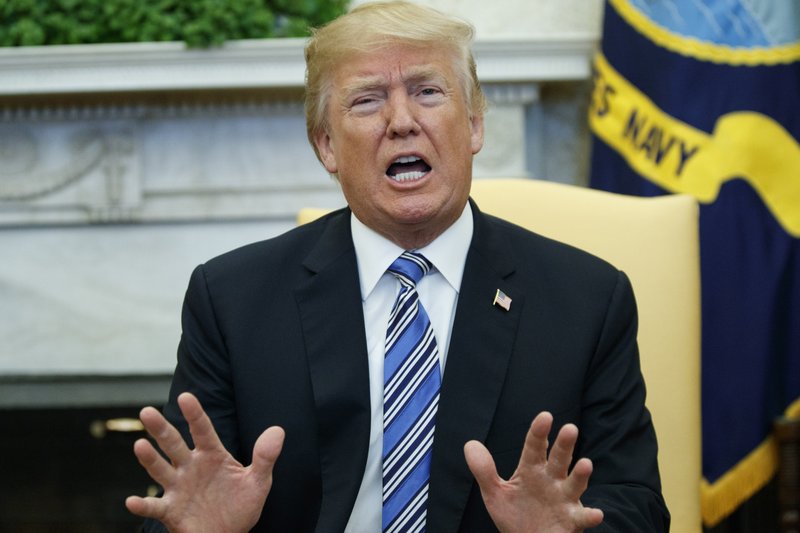
In a remarkably public confrontation, House Speaker Paul Ryan and other Republican allies of President Donald Trump pleaded with him Monday to back away from his threatened international tariffs, which they fear could spark a dangerous trade war. Trump retorted: “We’re not backing down.” The president said U.S. neighbors Canada and Mexico would not be spared from his plans for special import taxes on steel and aluminum, but he held out the possibility of later exempting the longstanding friends if they agree to better terms for the U.S. in talks aimed at revising the North American Free Trade Agreement. “We’ve had a very bad deal with Mexico; we’ve had a very bad deal with Canada. It’s called NAFTA,” he declared. Trump spoke shortly after a spokeswoman for Ryan, a Trump ally, said the GOP leader was “extremely worried” that the proposed tariffs would set off a trade war and urged the White House “to not advance with this plan.” Likewise, Republican leaders of the House Ways and Means Committee circulated a letter opposing Trump’s plan, and GOP congressional leaders suggested they may attempt to prevent the tariffs if the president moves forward. Trump’s pledge to implement tariffs of 25 percent on steel imports and 10 percent on aluminum imports has roiled financial markets, angered foreign allies and created unusual alliances for a president who blasted unfavorable trade deals during his 2016 campaign. Union leaders and Democratic lawmakers from Rust Belt states have praised the planned tariffs, joining with advocates within the administration including Commerce Secretary Wilbur Ross and White House trade adviser Peter Navarro. But the president has been opposed internally by Defense Secretary James Mattis and White House economic adviser Gary Cohn, who warned against penalizing U.S. allies and undercutting the economic benefits of the president’s sweeping tax overhaul. Likewise, the statement from Ryan’s office said, “The new tax reform law has boosted the economy, and we certainly don’t want to jeopardize those gains.” Asked about that public rebuke, White House press secretary Sarah Huckabee Sanders said, “Look, we have a great relationship with Speaker Ryan. We’re going to continue to have one, but that doesn’t mean we have to agree on everything.” Canada is the United States’ No. 1 foreign supplier of both steel and aluminum. Mexico is the No. 4 supplier of steel and No. 7 for aluminum. Congressional Republicans say any tariffs should be narrow in scope, and they privately warned that Trump’s effort could hurt the party’s hopes to preserve its majority in the fall elections. As the president dug in on his position, any potential compromise with foreign trading partners and Republican lawmakers was expected to still include some form of tariffs. “Trump is not someone who retreats,” said Stephen Moore, an economist with the conservative Heritage Foundation and a former campaign adviser. “He’s going to need to be able to declare some victory here.” The tariffs will be made official in the next two weeks, White House officials said. “Twenty-five percent on steel, and the 10 percent on aluminum, no country exclusions — firm line in the sand,” said Navarro, speaking on “Fox and Friends.” Republican critics on Capitol Hill and within the administration argue that industries and their workers that rely on steel and aluminum for their products will suffer. The cost of new appliances, cars and buildings will rise for Americans if the president follows through, they warn, and other nations could retaliate. Two dozen conservative groups, including the Club for Growth, FreedomWorks and the National Taxpayers Union, urged Trump to reconsider, writing in a letter that the tariffs would be “a tax on the middle class with everything from cars to baseball bats to even beer.” The Trade Partnership, a consulting firm, said the tariffs would increase U.S. employment in the steel and aluminum sector by about 33,000 jobs but would cost 179,000 jobs in the rest of the economy. The end result could erode the president’s base of support with rural America and even the blue-collar workers the president says he’s trying to help. “These are people that voted for him and supported him in these auto-producing states,” said Cody Lusk, president of the American International Automobile Dealers Association. Lusk noted that of the 16 states with auto plants, Trump won all but two. The administration has argued the tariffs are necessary to preserve the American aluminum and steel industries and protect national security. But Trump’s comments and tweets early Monday suggested he was also using them as leverage in the current talks to revise NAFTA. The latest round of a nearly yearlong renegotiation effort is concluding this week in Mexico City. At those talks, U.S Trade Representative Robert Lighthizer said Monday that progress has been less than many had hoped and “our time is running short.” “I fear the longer we proceed, the more political headwinds we will feel,” he said. And he added that if three-way negotiations don’t work, “we are prepared to move on a bilateral basis.” More upbeat about progress until now, Dan Ujczo, a trade attorney with Dickinson Wright PLLC in Columbus, Ohio, said, “We were moving toward the finish line in NAFTA.” But he added, “This has the potential to throw the NAFTA talks off track.” He said neither Canada nor Mexico will want to be seen as giving in to U.S. pressure. Indeed, he said, Canada is probably already drawing up lists of U.S. products to tax in retaliation. Separately, Mexican Economy Secretary Ildefonso Guajardo tweeted: “Mexico shouldn’t be included in steel & aluminum tariffs. It’s the wrong way to incentivize the creation of a new & modern #NAFTA.” The president opened the door to exempting Canada and Mexico from the tariffs, saying, “That would be, I would imagine, one of the points that we’ll negotiate.” But he added, “If they aren’t going to make a fair NAFTA deal, we’re just going to leave it this way.” Trump has long threatened to pull out of the 24-year-old trade pact if it
Terri Sewell represents Alabama in bipartisan NAFTA negotiations in Montreal
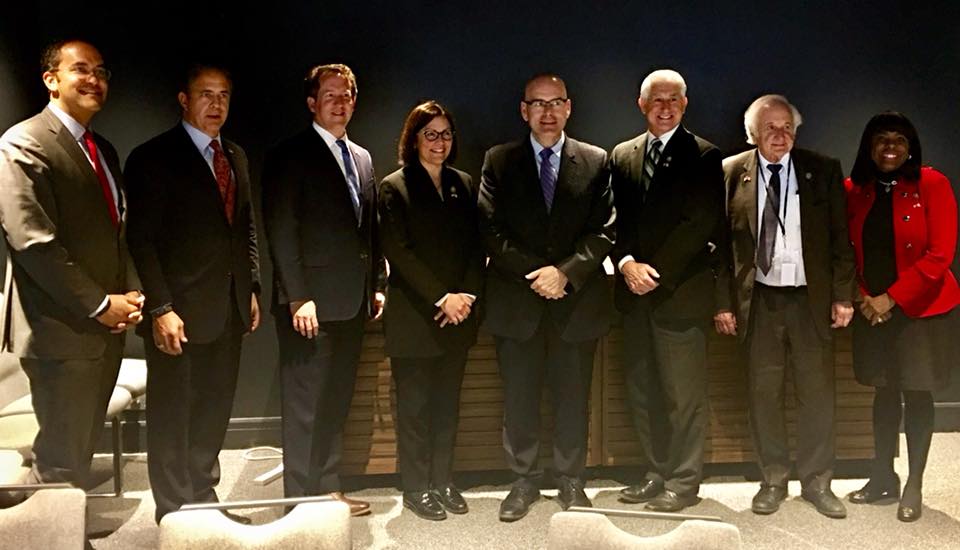
A bipartisan Congressional Delegation (CODEL) from the U.S. House of Representatives departed for a two-day visit to Montreal, Canada for the sixth round of the North American Free Trade Agreement (NAFTA) negotiations on Friday, including Alabama’s own 7th District U.S. Rep. Terri Sewell. The eleven-member delegation met with the U.S. negotiating team and senior government officials from all three countries — the United States, Canada and Mexico — as well as representatives of the American business community to share their priorities for a successful NAFTA negotiation. NAFTA, which governs trade between the U.S., Canada, and Mexico, has a substantial impact on Alabama’s economy as Canada is Alabama’s largest export market, and Mexico is Alabama’s 4th largest. “This weekend, I am attending the 6th round of NAFTA negotiations to make sure that working families in my district have a seat at the table when it comes to our country’s biggest economic decisions,” said Sewell on Saturday. “I support modernizing NAFTA and I believe our country can negotiate an agreement that brings better wages and better jobs to Alabama.” Alabama’s exports to Canada and Mexico have increased by $5.6 billion since NAFTA first went into effect in 1994. For the Birmingham, Ala. metro area, global exports account for $1.9 billion in economic activity. Sewell concluded, “For auto workers, steel workers, and farmers in my district, these talks will have lasting impacts, and I will be pushing for strong and enforceable trade laws that protect their industries. While progress has been made in the past five rounds of negotiations, I hope that all three countries can use this weekend to address many of the more contentious issues in front of us.”
Donald Trump bashes NAFTA in midst of talks to revamp trade deal
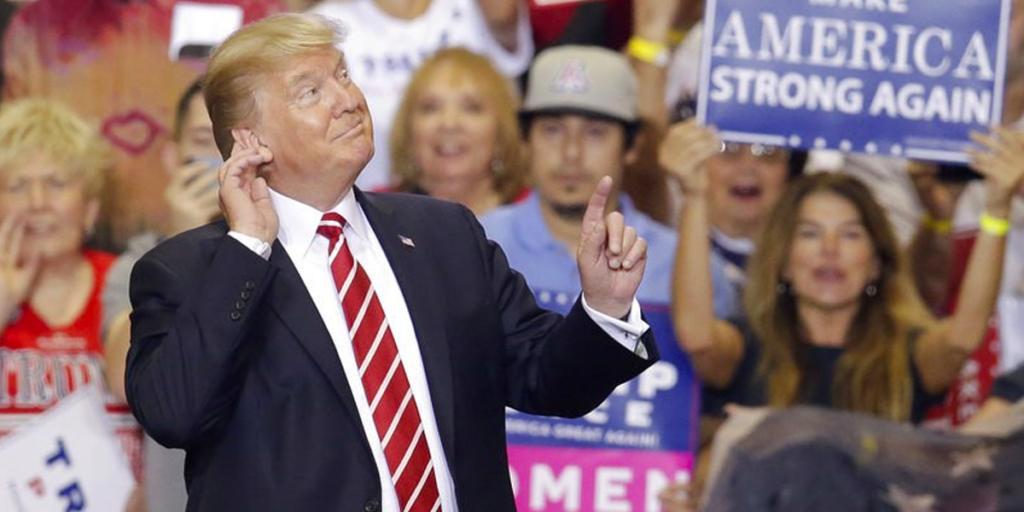
Just a week into talks to rewrite the North American Free Trade Agreement, President Donald Trump is already threatening to abandon the 23-year-old pact with Canada and Mexico. At a high-profile campaign-style rally in Phoenix on Tuesday night, Trump predicted that the United States would “end up probably terminating” NAFTA “at some point,” though he said he hadn’t made a final decision. “Personally,” Trump said, “I don’t think we can make a deal because we have been so badly taken advantage of.” The president had made the same threat in April but then reversed himself after a pushback from American businesses, especially farm groups, which have benefited from expanded access to the Mexican market resulting from NAFTA. The president’s renewed threat Tuesday reignited such concerns. “Abruptly ending NAFTA could create a string of unintended consequences that need to be carefully considered,” said Ann Wilson, an executive at the Motor & Equipment Manufacturers Association, which represents auto suppliers. “Mexico and Canada are trusted trade partners to the U.S., and, as a result, we are strong national security partners. We should not take that for granted.” NAFTA erased most trade barriers separating the U.S., Canada and Mexico and fostered a rapid rise in commerce and closer diplomatic ties among the three countries. But the agreement has long fueled heated criticism in the United States because it led some American-based manufacturers to move operations south of the border to capitalize on lower-wage Mexican labor. Trump has condemned NAFTA as “the worst trade deal in history” and promised to fix it – or drop out of it altogether. As negotiations on a NAFTA overhaul began last week in Washington, there was wide agreement on the need to modernize the pact to reflect changes over the past two decades, such as the rise of e-commerce. Still, U.S. Trade Rep. Robert Lighthizer warned that the United States wouldn’t settle for a “mere tweaking of a few provisions and an updating of a few chapters.” Saying NAFTA had cost America hundreds of thousands of jobs, Lighthizer insisted on the need to take steps to reduce America’s trade deficit and to ensure that more of the goods that qualify for NAFTA’s duty-free status be made in the United States. Canada and Mexico oppose that idea. Most economists say NAFTA has had only a modest net effect on U.S. jobs because expanded commerce with Canada and Mexico has also created jobs and because trade represents a relatively small part of the U.S. economy. After a five-day opening round, the three countries issued a statement that said they would resume talks in Mexico on Sept. 1-5; in Canada in late September; and back in the United States in October. More rounds will likely follow. James Jones, who served as President Bill Clinton‘s ambassador to Mexico and helped negotiate NAFTA in the mid-1990s, predicted that Lighthizer and his team of negotiators would seek to use Trump’s tough talk to their advantage. “They’ll try to play it in a way that strengthens their hands,” said Jones, now chairman of the financial advisory firm Monarch Global Strategies. “They’ll tell the other negotiating teams, ‘I’m reasonable, but I report to a boss who’s less reasonable.’ “ Jones predicted that “sanity will prevail” – that the U.S. government will recognize that the United States benefits from an economically unified North America. Daniel Ujczo, a trade lawyer with Dickinson Wright, said he doubts that an overhauled NAFTA would do much to narrow America’s trade deficit or restore lost U.S. manufacturing jobs – results that Trump had vowed to deliver to the blue-collar voters in the Midwest who helped elect him. “There’s not enough red meat to be gained in the NAFTA modernization to satisfy those voters,” Ujczo said. “The president’s going to have to make a choice when he get a pretty vanilla NAFTA modernization – whether or not he’s going to withdraw.” A U.S. move to abandon the agreement would likely trigger a political furor. American manufacturers have invested heavily in supply chains that straddle NAFTA borders and have come to depend on duty-free shipments within the trade bloc. In Congress, farm-state lawmakers have urged U.S. negotiators to do nothing that would imperil U.S. agricultural exports to Mexico and Canada. “NAFTA has been incredibly successful for our industry,” said Jennifer Myers, a spokeswoman for the National Corn Growers Association. “We are closely monitoring negotiations and will continue to advocate for corn farmers’ interests throughout this process.” Monarch’s Jones predicted that “sanity will prevail” and that the U.S. will remain in NAFTA. Canada brushed off suggestions that Trump’s threats would disrupt the talks. “Trade negotiations often have moments of heated rhetoric,” said Adam Austen, spokesman for Chrystia Freeland, Canada’s minister of foreign affairs. “Our priorities remain the same, and we will continue to work hard to modernize NAFTA, supporting millions of middle class jobs.” Republished with permission of The Associated Press.
Donald Trump’s 100-days promises: Fewer than half carried out
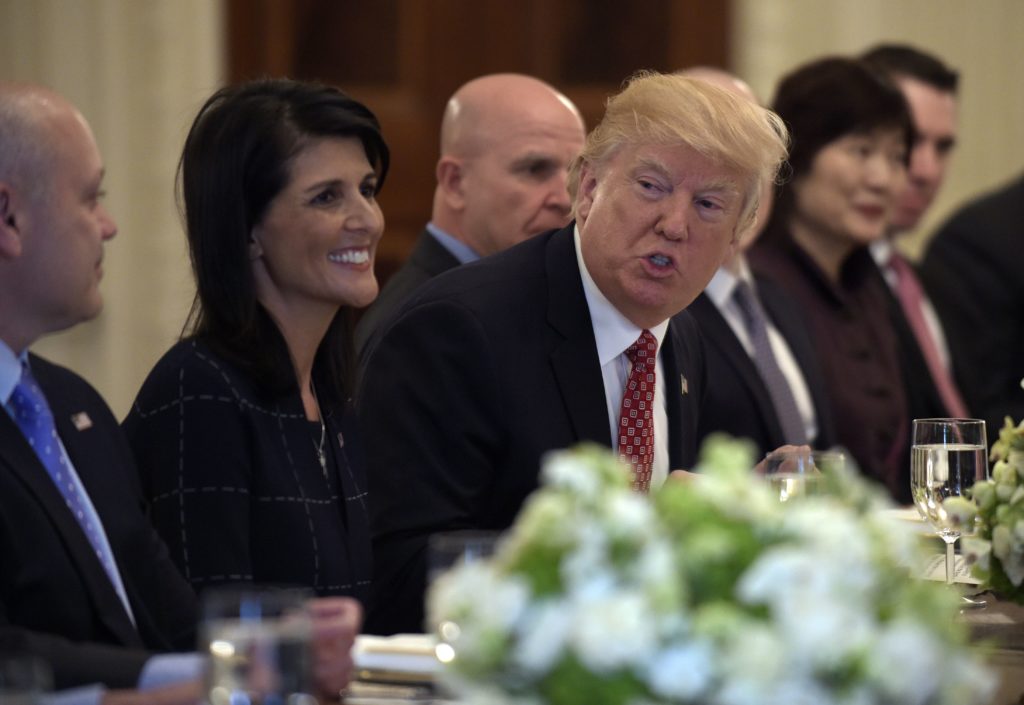
Sure enough, the big trans-Pacific trade deal is toast, climate change action is on the ropes and various regulations from the Obama era have been scrapped. It’s also a safe bet President Donald Trump hasn’t raced a bicycle since Jan. 20, keeping that vow. Add a Supreme Court justice — no small feat — and call these promises kept. But where’s that wall? Or the promised trade punishment against China — will the Chinese get off scot-free from “the greatest theft in the history of the world”? What about that “easy” replacement for Obamacare? How about the trillion-dollar infrastructure plan and huge tax cut that were supposed to be in motion by now? Trump’s road to the White House, paved in big, sometimes impossible pledges, has detoured onto a byway of promises deferred or left behind, an AP analysis found. Of 38 specific promises Trump made in his 100-day “contract” with voters — “This is my pledge to you” — he’s accomplished 10, mostly through executive orders that don’t require legislation, such as withdrawing the U.S. from the Trans-Pacific Partnership trade deal. He’s abandoned several and failed to deliver quickly on others, stymied at times by a divided Republican Party and resistant federal judges. Of 10 promises that require Congress to act, none has been achieved and most have not been introduced. “I’ve done more than any other president in the first 100 days,” the president bragged in a recent interview with AP, even as he criticized the marker as an “artificial barrier.” In truth, his 100-day plan remains mostly a to-do list that will spill over well beyond Saturday, his 100th day. Some of Trump’s promises were obviously hyperbole to begin with. Don’t hold your breath waiting for alleged Army deserter Bowe Bergdahl to be dropped out of an airplane without a parachute, as Trump vowed he’d do at many of his campaign rallies. China’s leader got a fancy dinner, complete with “beautiful” chocolate cake at Mar-a-Lago this month, not the promised “McDonald’s hamburger” and humble pie. But many promises were meant to be taken seriously. Trump clearly owes his supporters a Mexico border wall, even if it doesn’t end up being a foot taller than the Great Wall of China. One page of his 100-day manifesto is devoted to legislation he would fight to pass in 100 days. None of it has been achieved. The other page lists 18 executive actions and intentions he promised to pursue — many on Day One. He has followed through on fewer than a dozen, largely through the use of executive orders, and the White House is boasting that he will set a post-World War II record when he signs more this week. That’s a change in tune. “We need people in Washington that don’t go around signing executive orders because they can’t get people into a room and get some kind of a deal that’s negotiated,” he declared in New Hampshire in March 2015. “We need people that know how to lead, and we don’t have that. We have amateurs.” Efforts to provide affordable child care and paid maternity leave, to make college more affordable and to invest in urban areas have been all but forgotten. That’s despite the advantage of a Republican-controlled Congress, which the White House failed to pull together behind Trump’s first attempt to repeal and replace “Obamacare.” An AP reporter who followed Trump throughout the presidential campaign collected scores of promises he made along the way, from the consequential to the fanciful. Here are some of them, and his progress so far: ___ ENERGY and the ENVIRONMENT: — Lift President Barack Obama‘s roadblocks on the Keystone XL and Dakota Access pipelines. Done. Keystone XL is revived and construction of the Dakota Access is completed. — Lift restrictions on mining coal and drilling for oil and natural gas. Done. Trump has unraveled a number of Obama-era restrictions and initiated a review of the Clean Power Plan, which aimed to restrict greenhouse gas emissions at coal-fired power plants. — Cancel payments to U.N. climate change programs and pull out of the Paris climate accord Nope. Trump has yet to make a decision on Paris. His aides are torn. ___ ECONOMY and TRADE: — Pass a tax overhaul. “Just think about what can be accomplished in the first 100 days of a Trump administration,” he told his supporters again and again in the final weeks of the campaign. “We are going to have the biggest tax cut since Ronald Reagan.” He promised a plan that would reduce rates dramatically both for corporations and the middle class. Nowhere close. Trump has scrapped the tax plan he campaigned on, and his administration’s new package is in its early stages, not only missing the first 100 days but likely to miss a new August deadline set by Treasury Secretary Steven Mnuchin. Some details may emerge this week. —Designate China a currency manipulator, setting the stage for possible trade penalties because “we’re like the piggy bank that’s being robbed. We can’t continue to allow China to rape our country, and that’s what they’re doing.” Abandoned. Trump says he doesn’t want to punish China when it is cooperating in a response to North Korean provocations. He also says China has stopped manipulating its currency for unfair trade advantage. But China was moving away from that behavior well before he took office. Also set aside: repeated vows to slap high tariffs on Chinese imports. —Announce his intention to renegotiate or withdraw from the North American Free Trade Agreement. Backtracked, in essence. A draft of his administration’s plan for NAFTA proposes only a mild rewrite. But in his AP interview, he threatened anew to terminate the deal if his goals are not met in a renegotiation. — Direct his commerce secretary and trade representative to identify all foreign trading abuses that unfairly hurt American workers. Done. Trump has initiated plenty of studies over the past 100 days. — Slap a 35 percent tariff on goods from
Once critical of global deals, Donald Trump slow to pull out of any
The “America First” president who vowed to extricate America from onerous overseas commitments appears to be warming up to the view that when it comes to global agreements, a deal’s a deal. From NAFTA to the Iran nuclear agreement to the Paris climate accord, President Donald Trump‘s campaign rhetoric is colliding with the reality of governing. Despite repeated pledges to rip up, renegotiate or otherwise alter them, the U.S. has yet to withdraw from any of these economic, environmental or national security deals, as Trump’s past criticism turns to tacit embrace of several key elements of U.S. foreign policy. The administration says it is reviewing these accords and could still pull out of them. A day after certifying Iran’s compliance with the nuclear deal, Secretary of State Rex Tillerson attacked the accord and listed examples of Iran’s bad behavior. His tone suggested that even if Iran is fulfilling the letter of its nuclear commitments, the deal remains on unsure footing. Yet with one exception — an Asia-Pacific trade deal that already had stalled in Congress — Trump’s administration quietly has laid the groundwork to honor the international architecture of deals it has inherited. It’s a sharp shift from the days when Trump was declaring the end of a global-minded America that negotiates away its interests and subsidizes foreigners’ security and prosperity. Trump had called the Iran deal the “worst” ever, and claimed climate change was a hoax. But in place of action, the Trump administration is only reviewing these agreements, as it is doing with much of American foreign policy. Douglas Brinkley, a presidential historian at Rice University, said Trump may be allowing himself to argue in the future that existing deals can be improved without being totally discarded. “That allows him to tell his base that he’s getting a better deal than Bush or Obama got, and yet reassure these institutions that it’s really all being done with a nod and a wink, that Trump doesn’t mean what he says,” Brinkley said. So far, there’s been no major revolt from Trump supporters, despite their expectation he would be an agent of disruption. This week’s reaffirmations of the status quo came via Tillerson’s certification of Iran upholding its nuclear deal obligations and the administration delaying a decision on whether to withdraw from the Paris climate accord. The president had previously spoken about dismantling or withdrawing from both agreements as part of his vision, explained in his inaugural address, that “every decision on trade, on taxes, on immigration, on foreign affairs will be made to benefit American workers and American families.” The Iran certification, made 90 minutes before a midnight Tuesday deadline, means Tehran will continue to enjoy relief from U.S. nuclear sanctions. Among the anti-deal crowd Trump wooed in his presidential bid, the administration’s decision is fueling concerns that Trump may let the 2015 accord stand. Tillerson on Wednesday sought to head off any criticism that the administration was being easy on Iran, describing a broad administration review of Iran policy that includes the nuclear deal and examines if sanctions relief serves U.S. interests. The seven-nation nuclear deal, he said, “fails to achieve the objective of a non-nuclear Iran” and “only delays their goal of becoming a nuclear state.” On the climate agreement, the White House postponed a meeting Tuesday where top aides were to have hashed out differences on what to do about the non-binding international deal forged in Paris in December 2015. The agreement allowed rich and poor countries to set their own goals to reduce carbon dioxide and went into effect last November, after the U.S., China and other countries ratified it. Not all of Trump’s advisers share his skeptical views on climate change — or the Paris pact. Trump’s position on trade deals also has evolved. He had promised to jettison the North American Free Trade Agreement with Mexico and Canada unless he could substantially renegotiate it in America’s favor, blaming NAFTA for devastating the U.S. manufacturing industry by incentivizing the use of cheap labor in Mexico. Now his administration is only focused on marginal changes that would preserve much of the existing agreement, according to draft guidelines that Trump’s trade envoy sent to Congress. The proposal included a controversial provision that lets companies challenge national trade laws through private tribunals. Trump has followed through with a pledge to pull the U.S. out of the Trans-Pacific Partnership, a sweeping free trade deal President Barack Obama negotiated. The agreement was effectively dead before Trump took office after Congress refused to ratify it. Even Trump’s Democratic opponent in the presidential race, Hillary Clinton, opposed the accord. But on NATO, Trump has completely backed off his assertions that the treaty organization is “obsolete.” His Cabinet members have fanned out to foreign capitals to show America’s support for the alliance and his administration now describes the 28-nation body as a pillar of Western security. Republished with permission of The Associated Press.
Repeal and replace — The end of traditional conservatism
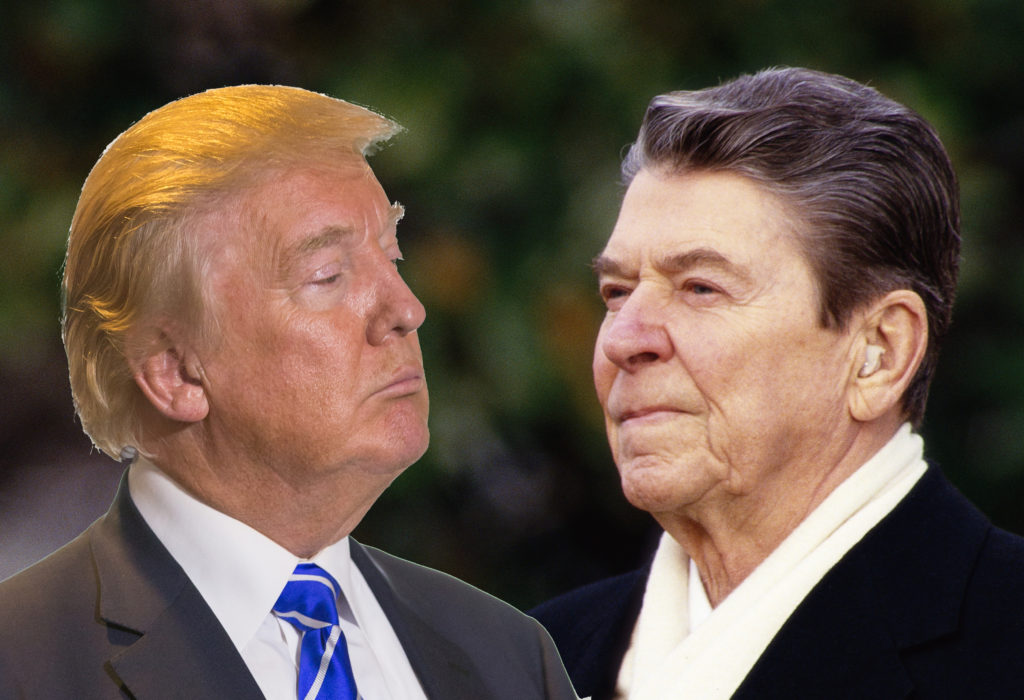
As a lifelong Republican and a former Fellow at the conservative Heritage Foundation, I have always preferred voting for the Republican and conservative candidate. Preferably, the candidate is both Republican and conservative, although that is not always the case. For only the second time in my life, I did not vote for the Republican presidential nominee: I found him neither Republican nor conservative. I know there are different strands of conservatism: classical, neo-cons, libertarians, religious and economic conservatives. I found Donald Trump to be none of the above. Trump did appeal to conservatives by supporting regulatory reform, lower taxes, unleashing the private sector and rolling back the administrative state. At the same time, Trump supported existing entitlements like Social Security and Medicare, which he called untouchable, and backed new entitlements like a paid family leave program. Until the election of Trump, Republicans venerated Ronald Reagan and his brand of conservatism. This included support for free trade, a centerpiece of conservative economic policy. Trump has denounced free trade by withdrawing from the Trans-Pacific Partnership which conservatives uniformly backed. Trump also plans to end the North American Free Trade Agreement (NAFTA) which Republicans helped to pass. Another litmus test for modern conservatism was for America to play a major role in world affairs. Reagan addressed the first Conservative Political Action Committee (CPAC) meeting in 1974 and argued that America “cannot escape our destiny, nor should we try to do so.” Reagan cited Pope Pius XII’s remarks after World War II that “Into the hands of America, God has placed the destinies of mankind.” Under Trump, American First has become the guiding philosophy. Republicans and conservatives have generally opposed entitlements and big government. Trump has made Social Security and Medicare untouchable, even though most conservatives believe these programs are not sustainable given the demographic changes in American society. Trump has called for a $1 trillion infrastructure bill, in addition to an expansive family leave policy. How do you pay for these entitlements and increase defense spending while cutting taxes? Shortly after being elected president, Trump helped negotiate a deal with Carrier in Indiana that promised government benefits to Carrier in exchange for keeping jobs in Indiana. That deal struck many conservatives as another example of “crony capitalism.” The government picks and chooses winners and losers instead of letting market forces work their will. Where most presidents have had a shaky relationship with the press, Trump is the first to call the press “enemies of the American public.” Where Reagan called the Soviets the “evil empire,” Trump has praised Vladimir Putin and asserted the moral equivalency between American and Soviet policy. Trump clearly has flip-flopped back and forth between the Democratic and Republican Party, but has actually spent more time as a Democrat. He only registered as a Republican a couple of years before announcing his candidacy. Trump may or not be a lifetime member of the GOP, but has he held consistent conservative values? Let’s look at his own words and actions. At the 2016 CPAC meeting, delegates threatened to walk out if Trump appeared. He was viewed as a false prophet of conservatism and he eventually withdrew as a speaker. At the 2017 CPAC meeting, Trump was hailed as the conquering hero. A full 86 percent of the delegates approved of Trump’s job performance and 80 percent believed Trump was “realigning the conservative movement.” As presidential counselor Kellyanne Conway observed, “well, I think by tomorrow this might be TPAC.” During his 48-minute address to the 2017 CPAC delegates, Trump no mention of Reagan, who has been the face of the modern conservative movement for four decades. Trump made no mention of “liberty” or the “constitution.” Trump made no reference to keeping government small and limited, and only once uttered the word “conservative,” which seemed odd for an audience of conservatives. Trump said: “Our victory was a victory. . . for conservative values.” The one common thread between Reagan and Trump was their appeal to working-class Americans. In 1977, Reagan told CPAC: “The New Republican Party I am speaking about is going to have room for the man and the woman in the factories, for the farmer, for the cop on the beat.” In his 2017 CPAC address, Trump said: “The GOP will be, from now on, the Party of the American worker. … We will not answer to donors or lobbyists or special interests.” (Although, being a billionaire will be considered an asset for all cabinet nominees.) One congressional staffer, after hearing Trump’s CPAC speech, called him “a moderate disguised as a conservative.” Conservative radio host John Ziegler described Trump’s CPAC speech as having the tone “it was written from a liberal perspective, in that greater government involvement was the foundational answer for nearly every problem.” Another delegate described Trump as “a fairly liberal conservative,” whatever that may mean. If CPAC is any indication, Trump is reshaping the conservative movement at breathtaking speed. Ideology is conforming to an individual, and not vice versa. “Repeal and Replace” was the centerpiece of Trumpism. We all thought he was referring to “Obamacare.” Now we know that “repeal and replace” referred to conservatism in America. Traditional conservative values have been abandoned and replaced by whatever Trump happens to say today. ___ Darryl Paulson is Emeritus Professor of Government at the University of South Florida in St. Petersburg.
Commerce nominee Wilbur Ross declares he is pro-trade, pro-union
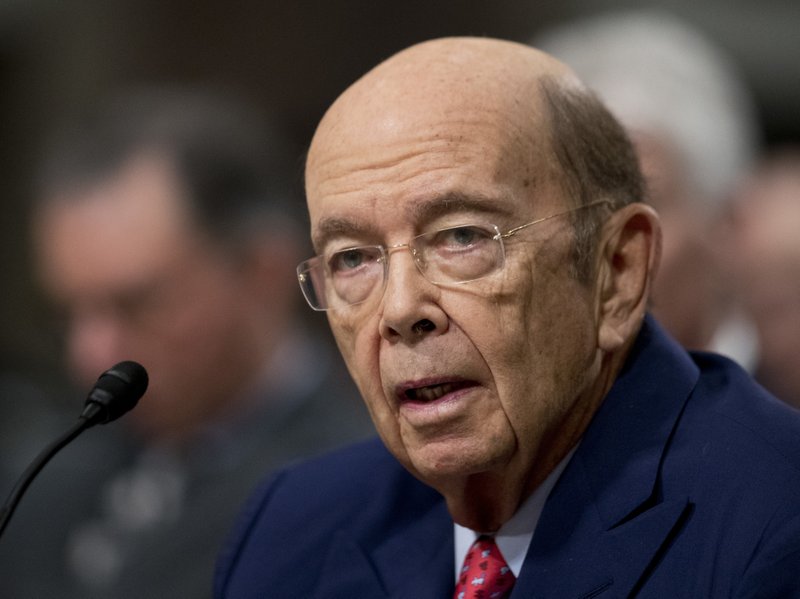
President-elect Donald Trump‘s pick for commerce secretary said Wednesday that he favors “sensible trade,” is pro-union and believes his vast business dealings have given experience fighting other countries’ unfair trade practices. Billionaire investor Wilbur Ross cited his relationship with the United Steelworkers Union, which has endorsed him for the Cabinet post, as proof that he will work to protect American jobs. “I’m pro-trade. But I’m pro-sensible trade, not trade that is detrimental to the American worker and to the domestic manufacturing base,” Ross told the Senate Commerce, Science and Transportation Committee. “I think I’ve probably had more direct experience than any prior cabinet nominee has had with unfair trade in the steel business, in the textile business, in the auto parts business and other sectors,” Ross said. Worth an estimated $2.9 billion, Ross has extensive business ties around the globe. Supporters say that makes him ideal to represent American business interests abroad. “I believe his extensive management experience in the private sector, and his understanding of the challenges faced by workers and businesses alike, will equip him well for the job of leading the Department of Commerce,” said Sen. John Thune, R-S.D., the committee chairman. During Ross’ hearing, Thune revealed that Ross had a household employee from 2009 to 2016 who could not provide documentation that he or she was in the U.S. legally. Ross said the employee provided a driver’s license and a Social Security number when hired. Ross said he rechecked the documentation for all of his household employees after he was nominated, and the employee could not provide it. Ross said the employee was fired. “We did the best that we thought we could do in order to verify the legality of the employment and it turned out that was incorrect,” Ross said. “But we did pay all the withholdings, so did that employee.” Such transgressions have derailed cabinet nominees in the past. But Sen. Bill Nelson of Florida, the top Democrat on the committee, questioned Ross only briefly about it. Trump has said Ross will play a big role in American trade policy. Trump’s views on trade are at odds with many congressional Republicans. He has pledged to re-negotiate existing trade deals and scrap a pending one with Asian countries. Ross said the North American Free Trade Agreement, involving the U.S., Canada and Mexico, “is logically the first thing for us to deal with.” “That will be a very, very early topic in this administration,” Ross added. The commerce secretary has several roles in promoting American business interests in the U.S. and abroad. The department works on trade issues, working to attract foreign investment in the U.S. The department also oversees agencies that manage fisheries, weather forecasting and the Census Bureau, which will conduct a census in 2020. Ross said he has unique experience at that agency; he was a census-taker while he attended business school. Unlike the president-elect, Ross has agreed to divorce himself from a vast financial empire. Ross has signed an ethics agreement with the Office of Government Ethics. In it, he agrees to divest from 40 different businesses and investments within 90 days of being confirmed. He agreed to divest from 40 more within 180 days. Among the businesses he will separate himself from is WL Ross & Co., the private equity firm he founded in 2000. Trump has had a run-in with the head of the ethics agency because he says he won’t completely divest himself from his business empire. Instead, Trump says he will turn control of his business over to his sons. Walter Shaub Jr., who directs the office, said Trump’s plan is insufficient to avoid conflicts of interest. Nelson praised Ross for divesting from most of his personal holdings. “I believe that’s the right thing to do and it tells me you’re committed to doing the job the right way by placing the public’s interests ahead of your own,” Nelson said. “It’s my hope that President-elect Trump will follow your lead and the example you set.” Republished with permission of The Associated Press.
