
World to learn fate of Iran nuclear pact Tuesday afternoon
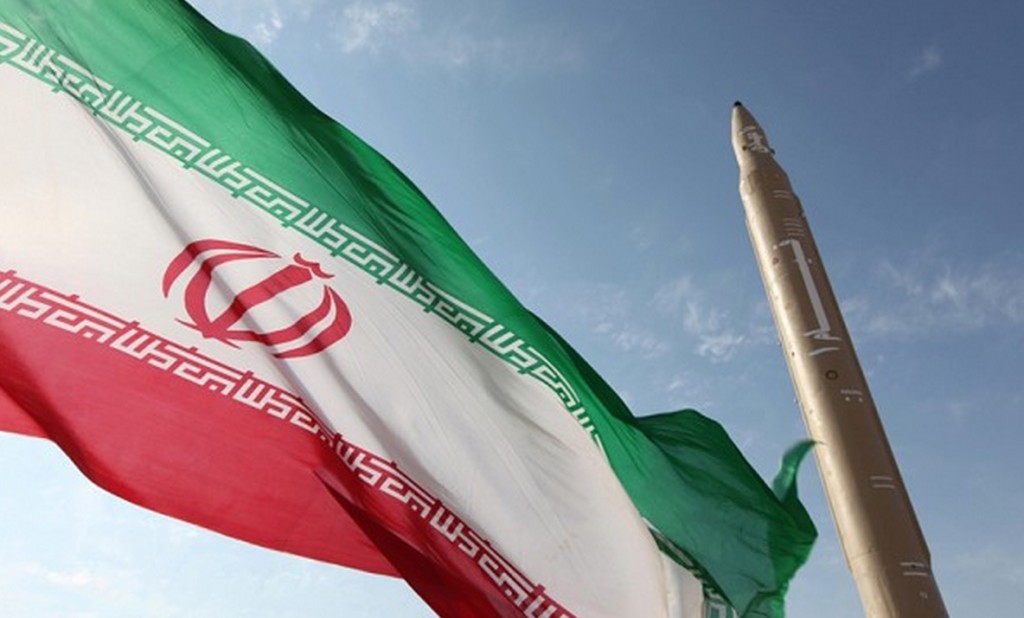
President Donald Trump is preparing to tell the world whether he plans to follow through on his threat to pull out of the landmark nuclear accord with Iran and almost surely ensure its collapse. There are no signs that European allies enlisted to “fix” the deal have persuaded him to preserve it. In a burst of last-minute diplomacy, punctuated by a visit by Britain’s top diplomat, the deal’s European members gave in to many of Trump’s demands, according to officials, diplomats and others briefed on the negotiations. Yet they still left convinced he is likely to re-impose sanctions and walk away from the deal he has lambasted since his days as a presidential candidate. Hanging in the balance Tuesday was the fate of the 2015 nuclear deal struck by the United States, Iran and world powers that lifted most U.S. and international sanctions against the country. In return, Iran agreed to restrictions on its nuclear program making it impossible to produce a bomb, along with rigorous inspections. If the deal collapses, Iran would be free to resume prohibited enrichment activities, while businesses and banks doing business with Iran would have to scramble to extricate themselves or run afoul of the U.S. As they braced for an expected withdrawal, U.S. officials were dusting off plans for how to sell a pullout to the public and explain its complex financial ramifications, said the officials and others, who weren’t authorized to speak ahead of an announcement and requested anonymity. Building up anticipation for the big reveal, Trump announced on Twitter he would disclose his decision at 2 p.m., with an announcement set for the Diplomatic Room of the White House. With uncharacteristic discipline, he kept the decision confined to a small group within the White House National Security Council, leaving even many of his aides guessing what he had decided. There was at least as much guessing in Iran, where many are deeply concerned about how Trump’s decision could affect the already struggling economy. In Tehran, President Hassan Rouhani sought to calm nerves, smiling as he appeared at a petroleum expo. He didn’t name Trump directly, but emphasized that Iran continued to seek “engagement with the world.” “It is possible that we will face some problems for two or three months, but we will pass through this,” Rouhani said. An immense web of sanctions, written agreements and staggered deadlines make up the accord. So Trump effectively has several pathways to pull the United States out of the deal by reneging on its commitments. Under the most likely scenario, Trump will allow sanctions on Iran’s central bank — intended to target its oil exports — to kick back in, rather than waiving them once again on Saturday, the next deadline for renewal, said the individuals briefed on Trump’s deliberations. Then the Trump administration would give those who are doing business with Iran a six-month grace period to wind down business and avoid beaching of those sanctions. Depending on how Trump sells it — either as an irreversible U.S. pullout, or one final chance to save it — the deal could ostensibly be strengthened during those six months in a last-ditch effort to persuade Trump to change his mind. The first 15 months of Trump’s presidency have been filled with many such “last chances” for the Iran deal in which he’s punted the decision for another few months, and then another. Other U.S. sanctions don’t require a decision until later, including those on specific Iranian businesses, sectors and individuals that will snap back into place in July unless Trump signs another waiver. A move on Tuesday to restore those penalties ahead of the deadline would be the most aggressive move Trump could take to close the door to staying in the deal. Even Trump’s secretary of state and the U.N. agency that monitors nuclear compliance agree that Iran, so far, has lived up to its side of the deal. But the deal’s critics, such as Israel, the Gulf Arab states and many Republicans, say it’s a giveaway to Tehran that ultimately paves the path to a nuclear-armed Iran several years in the future. Iran, for its part, has been coy in predicting its response to a Trump withdrawal. For weeks, Iran’s foreign minister had been saying that a re-imposition of U.S. sanctions would render the deal null and void, leaving Tehran little choice but to abandon it as well. But on Monday, Rouhani said Iran could stick with it if the European Union, whose economies do far more business with Iran than the U.S., offers guarantees that Iran would keep benefiting. It is far from clear that Europe can credibly provide that assurance. Even with the deal in place, Iran complained constantly that European banks and businesses were staying away out of fear they’d be punished by the United States. The global financial system is so interconnected and so dependent on New York that it’s nearly impossible to conduct business that doesn’t touch the U.S. financial system. That gives Trump incredible leverage if he threatens that anyone doing business with Iran will be cut off from the United States. For the Europeans, a Trump withdrawal would also constitute dispiriting proof that trying to appease the mercurial American president is an exercise for naught. The three EU members of the deal — Britain, France and Germany — were insistent from the start that the deal could not be re-opened. After all, it was the U.S. that brokered the agreement in 2015 and rallied the world behind it. But all that was under President Barack Obama, whose global legacy Trump has worked to chip away at since taking office. So the Europeans reluctantly backed down, only slightly at first, agreeing to discuss an “add-on” agreement that wouldn’t change the underlying nuclear deal, but would add new restrictions on Iran to address what Trump had identified as its shortcomings. Trump wanted to deter Iran’s ballistic missile program and other destabilizing actions in the region. He also wanted
Donald Trump plans to meet Kim Jong Un for nuke talks
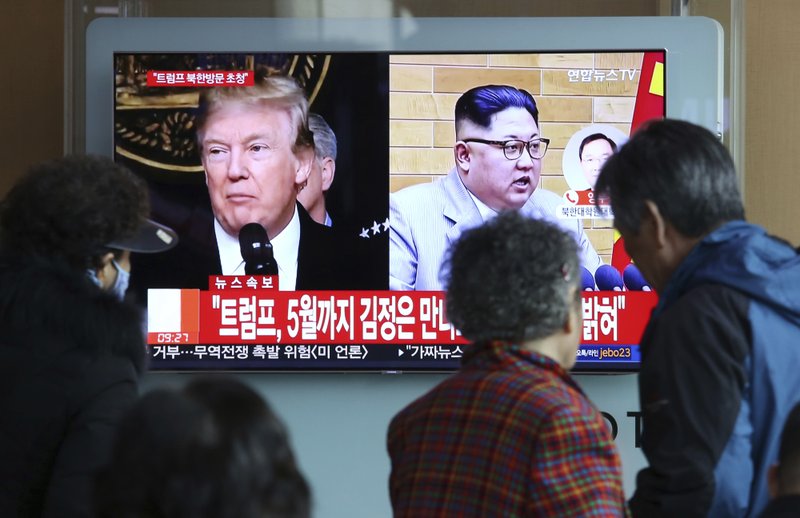
North Korea’s Kim Jong Un and President Donald Trump plan to meet in May for nuclear disarmament talks, a whiplash development that would put two leaders who’ve repeatedly insulted, threatened and dismissed each other in the same room, possibly in the North Korean capital of Pyongyang. It would have been an unthinkable suggestion just a few months ago, when the insults were at their peak — Trump was a “senile dotard” and Kim was “Little Rocket Man” — and the North was snapping off regular weapons tests in a dogged march toward its goal of a viable nuclear arsenal that can threaten the U.S. mainland. Liberal South Korean President Moon Jae-in, who some believe has maneuvered the two leaders to this position, reflected the hope and relief many here feel about the planned summit when he declared Friday that it will be a “historical milestone” that will put the denuclearization of the Korean Peninsula “really on track.” But there’s also considerable skepticism. North Korea, after all, has made a habit of reaching out, after raising fears during previous crises, with offers of dialogue meant to win aid and concessions. Some speculate that the North is trying to peel Washington away from its ally Seoul, weaken crippling sanctions and buy time for nuclear development. It has also, from the U.S. point of view, repeatedly cheated on past nuclear deals. Secretary of State Rex Tillerson says Kim Jong Un was surprisingly forward-leaning in talks with a South Korean delegation, and that led to President Trump’s decision to meet with the North Korean leader. (March 9) And now the North has landed a face-to-face meeting with the leader of the world’s most powerful country, a nation that North Korea has long sought to draw into talks that it hopes would establish a peace treaty to end the technically still-active Korean War and drive out all U.S. troops from the Korean Peninsula, removing what the North says is a hostile encirclement of its territory by Washington and Seoul. Trump’s hastily reached decision to accept the meeting sent White House staff scrambling. Earlier Thursday, South Korean national security director Chung Eui-yong had briefed Trump and other top U.S. officials about a rare meeting with Kim in the North Korean capital. Trump then made a surprise visit to the White House press briefing room to alert reporters of an upcoming “major statement” on North Korea by South Korea. At a quickly called appearance on a White House driveway, Chung told reporters that Kim had “expressed his eagerness to meet President Trump as soon as possible” and that “President Trump appreciated the briefing and said he would meet Kim Jong Un by May to achieve permanent denuclearization.” “Great progress being made,” Trump tweeted after the announcement. That remains to be seen. North Korea still produces propaganda declaring its continuing dedication to the “treasured sword” of its nuclear program. Washington still remains publicly dedicated to annual war games with the South that the North claims are invasion rehearsal —they’re expected to resume next month, after being postponed during the Winter Olympics in the South — and to keeping 28,500 troops in the South and 50,000 in Japan, largely as a way to deter North Korean aggression. North Korea is engaged in “a ploy to serve its own interests” and make Kim look like “a bold leader of a normal, peace-loving nuclear power,” according to Duyeon Kim, a visiting research fellow at the Korean Peninsula Future Forum think tank in Seoul. “But in spite of the deceptive cloak, the agreement posed an opportunity for the United States. It put the ball in Washington’s court, and provides a window for the Trump administration to engage and test the regime through direct negotiations,” Kim wrote on the Bulletin of the Atomic Scientists web page. U.S. Secretary of State Rex Tillerson said in Djibouti on Friday that the decision to meet with Kim was made by Trump himself and resulted from a sharp change in the North Korean leader’s stance. “What changed was his posture in a fairly dramatic way. It was a surprise to us that he was so forward-leaning,” Tillerson said. He said it would take “some weeks” before the timing of the talks is worked out. North Korea appeared to confirm the summit plans. A senior North Korean diplomat at the United Nations in New York, Pak Song Il, told The Washington Post in an email that the invitation was the result of Kim’s “broad minded and resolute decision” to contribute to the peace and security of the Korean Peninsula. Talks between Washington and Pyongyang have previously been overseen by lower-level experts, and have often bogged down, even when so-called “breakthroughs” have come, in the pesky details, such as allowing outsiders in to inspect North Korea’s nuclear compliance, for instance. Now, the talks will start at the top. And there will be no time to settle all the problems that have scuttled previous negotiations. It’s anyone’s guess what Trump and Kim might decide in the highest-level meeting in what has been essentially a bloody, seven-decade standoff between their countries. The announcement Friday followed weeks of softening ties between the Koreas, orchestrated by the South Korean leader, Moon, and culminating in a visit by Kim Jong Un’s sister to the South to observe the Olympics in Pyeongchang and then Chung’s trip to meet with Kim in Pyongyang. “This is a tried-and-true North Korean tactic, reaching out at the height of crisis in hopes of breaking out of spiraling tensions with the United States,” according to a report by Zhixing Zhang and Evan Rees, Asia specialists at Stratfor, a geopolitical analytical group. “In this instance, Pyongyang has skillfully played on South Korea’s fear of a military strike and hopes of reunification.” Trump took office vowing to stop North Korea from its pursuit of a working long-range nuclear-tipped missile. He’s oscillated between threats and insults directed at Kim that have fueled fears of war, and more conciliatory rhetoric. The historic announcement
Russia’s Putin unveils ‘invincible’ nuclear weapons; Mike Rogers says U.S. must act
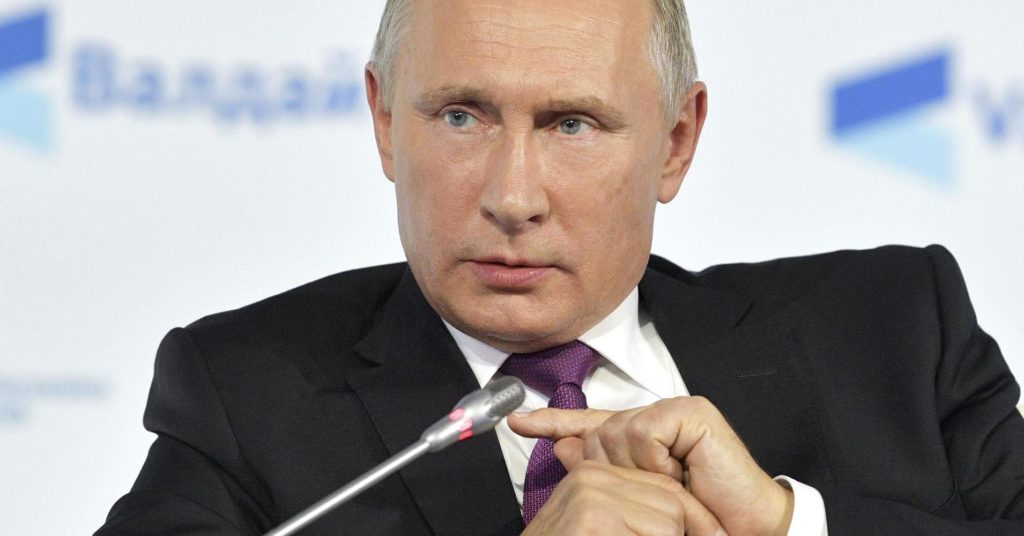
Russian President Vladimir Putin boasted of a powerful new generation of nuclear weapons his country has developed on Thursday in his annual state-of-the-nation address. The weapons included a cruise missile that he claimed could “reach anywhere in the world.” In a concept video, Putin displayed the unlimited range nuclear warheads raining down on what looks like Florida to showoff his country’s new military technology. “Any use of nuclear weapons against Russia or its allies, any kind of attack, will be regarded as a nuclear attack against Russia, and in response, we will take action instantaneously no matter what the consequences are,” Putin said. “Nobody should have any doubt about that.” In the wake of Putin’s bragging, Alabama 3rd District U.S. Rep. Mike Rogers — a member of both the House Armed Services Committee as well as the House Homeland Security Committee — said the U.S. must take steps to bolster the U.S. nuclear deterrent. “Putin’s disclosure of their development of a nuclear-armed, nuclear-powered cruise missile is just the latest in a string of new and horrific Russian weapons designed to intimidate and coerce the U.S. and our allies. This only makes it clearer that President Trump’s 2018 Nuclear Posture Review is correct: we must take steps to bolster the U.S. nuclear deterrent to deter adversaries and reassure allies,” said Rogers. “We cannot stand idly by and do nothing in the face of these barbaric weapons and threats. In Congress we must act to support President Trump’s budget request for nuclear modernization. We can’t be dissuaded by nuclear disarmament advocates who would rather us unilaterally disarm while also dismantling our missile defenses.”
US and South Korean troops start drills amid North Korea standoff
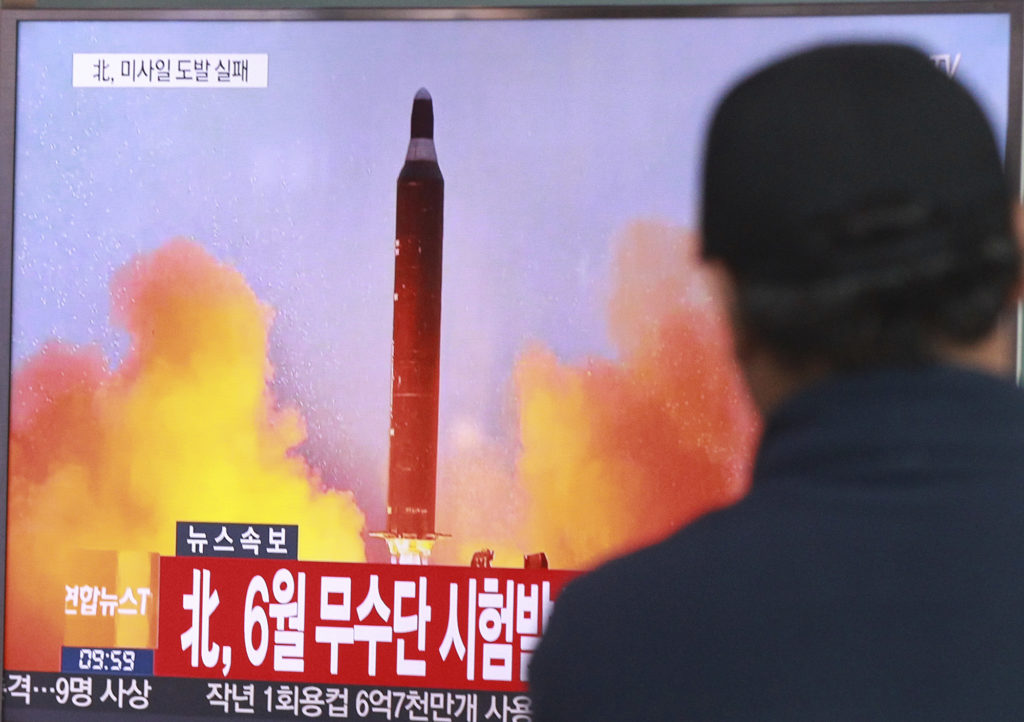
U.S. and South Korean troops kicked off their annual drills Monday that come after President Donald Trump and North Korea exchanged warlike rhetoric in the wake of the North’s two intercontinental ballistic missile tests last month. The Ulchi Freedom Guardian drills are largely computer-simulated war games held every summer and have drawn furious responses from North Korea, which views them as an invasion rehearsal. Pyongyang’s state media on Sunday called this year’s drills a “reckless” move that could trigger the “uncontrollable phase of a nuclear war.” Despite the threat, U.S. and South Korean militaries launched this year’s 11-day training on Monday morning as scheduled. The exercise involves 17,500 American troops and 50,000 South Korean soldiers, according to the U.S. military command in South Korea and Seoul’s Defense Ministry. No field training like live-fire exercises or tank maneuvering is involved in the Ulchi drills, in which alliance officers sit at computers to practice how they engage in battles and hone their decision-making capabilities. The allies have said the drills are defensive in nature. South Korea’s President Moon Jae-in said Monday that North Korea must not use the drills as a pretext to launch fresh provocation, saying the training is held regularly because of repeated provocations by North Korea. North Korea typically responds to South Korea-U.S. military exercises with weapons tests and a string of belligerent rhetoric. During last year’s Ulchi drills, North Korea test-fired a submarine-launched ballistic missile that flew about 500 kilometers (310 miles) in the longest flight by that type of weapon. Days after the drills, the North carried out its fifth and biggest nuclear test to date. Last month North Korea test-launched two ICBMs at highly lofted angles, and outside experts say those missiles can reach some U.S. parts like Alaska, Los Angeles or Chicago if fired at normal, flattened trajectories. Analysts say it would be only a matter of time for the North to achieve its long-stated goal of acquiring a nuclear missile that can strike anywhere in the United States. Earlier this month, President Donald Trump pledged to answer North Korean aggression with “fire and fury.” North Korea, for its part, threatened to launch missiles toward the American territory of Guam before its leader Kim Jong Un backed off saying he would first watch how Washington acts before going ahead with the missile launch plans. Republished with permission of The Associated Press.
Estimates of North Korea’s nuclear weapons hard to nail down
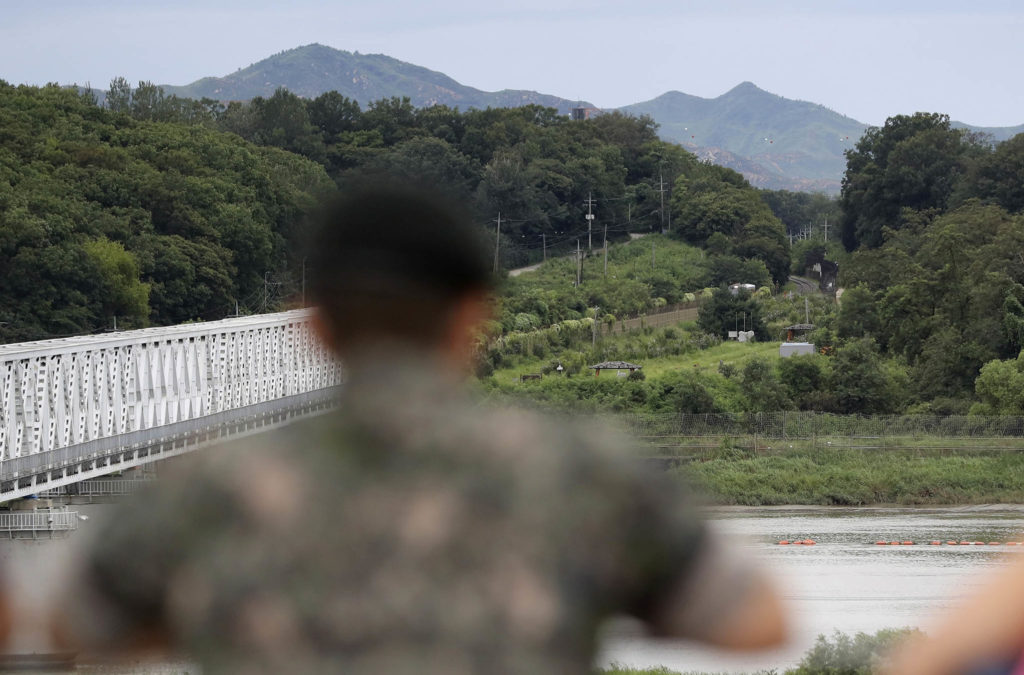
The U.S. intelligence agencies’ assessments of the size of North Korea’s nuclear arsenal have a wide gap between high and low estimates. Size matters and not knowing makes it harder for the United States to develop a policy for deterrence and defend itself and allies in the region. The secrecy of North Korea’s nuclear program, the underground nature of its test explosions and the location of its uranium-enrichment activity has made it historically difficult to assess its capabilities. Some U.S. assessments conclude North Korea has produced or can make around 30 to 60 nuclear weapons, said two U.S. officials who weren’t authorized to discuss sensitive intelligence matters and demanded anonymity. Such a wide range affects how the U.S. considers addressing the threat. More North Korean bombs could indicate second-strike capacity and then there are questions about how much nuclear firepower the country could mobilize on a moment’s notice. Estimates by civilian experts cloud the picture even further. Most put the arsenal anywhere from a dozen to about 30 weapons. “The bottom line is that we really don’t know how many nuclear weapons they have,” said Bruce Bennett, a senior international and defense researcher at RAND specializing in northeast Asian military issues. “Does it make a difference? Absolutely.” “If North Korea only has a small number – one or two or three – they will not brandish them early in a conflict. If they have 30-plus, they are almost certainly going to consider early use of nuclear weapons in a conflict.” Although remote, the danger of a U.S.-North Korean nuclear confrontation has escalated in recent weeks after Pyongyang’s first successful tests last month of intercontinental ballistic missiles capable of reaching the United States. President Donald Trump has traded bombastic threats with the isolated, communist government. Last week, Trump pledged to answer North Korean aggression with “fire and fury.” He later tweeted that a military solution was “locked and loaded” after leader Kim Jong Un was said to be considering a provocative launch of missiles into waters near the U.S. Pacific island of Guam. If a war were to break out now, North Korea could very well be destroyed. But if North Korea succeeds in building nuclear missiles that can reach the continental U.S., the equation changes. And having more than a few reliable missiles – long-range ones, plus short-range ones that could, for instance, hit South Korea where 28,000 U.S. troops are deployed – enhance North Korea’s leverage. The risk of mass casualties makes any pre-emptive U.S. strikes problematic, as Trump’s own chief strategist recognized in an interview this week. “There’s no military solution, forget it,” Steve Bannon says. “Until somebody solves the part of the equation that shows me that 10 million people in Seoul don’t die in the first 30 minutes from conventional weapons, I don’t know what you’re talking about, there’s no military solution here. They got us.” Seoul is South Korea’s capital. Olli Heinonen, a former deputy director-general at the U.N. nuclear agency, said an arsenal of dozens of weapons might suggest North Korea seeks the capacity to retaliate in a nuclear war. A half-dozen weapons would suggest pure deterrence, said Heinonen, who estimates that North Korea now has enough fissile material for up to 40 weapons – about 10 using plutonium and 30 using uranium. “When you increase the number, it means normally you’re going a little bit more offensive, you plan to have a second-strike capability,” Heinonen said. “Very often it’s from submarines and we see North Korea also working with those.” While size is important, Kelsey Davenport at the Arms Control Association thinks the more pressing problem is stopping Pyongyang from further advancing its nuclear program. “North Korea wants to threaten the United States with a nuclear strike, not actually conduct one, so determining the exact size of North Korea’s stockpile of nuclear warheads is far less urgent than de-escalating tensions,” she said. Sen. Deb Fischer, the Republican chairman of the Senate Armed Services Committee’s panel on strategic forces, said not knowing the size of North Korea’s nuclear program can complicate planning and limit options available to the president. But general principles of deterrence can still be applied, she said. “Kim Jong Un is probably less likely to launch an intercontinental ballistic missile armed with a nuclear weapon at the United States, and suffer our overwhelming retaliation, if he knows our missile defense will prevent his attack from succeeding,” said Fischer, who has called for more funding for homeland missile defense. A 2015 study by the U.S.-Korea Institute at Johns Hopkins University’s School of Advanced International Studies said North Korea could have up to 100 weapons by the end of the decade. That is, if it had 9,000 centrifuges in operation for uranium enrichment and if a light-water reactor, long under construction, finally came online. Under that projection, North Korea would have 58 weapons by 2017, which is comparable to the high end of the intelligence estimates. Still, most experts think the number is far less. “It’s possible that they have discovered an additional uranium enrichment facility that we haven’t known about,” said John Schilling, a consultant with the 38 North website on North Korea at Johns Hopkins. If 60 is the high end, he said, then there “has to be an additional uranium enrichment facility to have produced that level.” Assuming the existence of one or more covert centrifuge facilities, North Korea’s inventory of plutonium and highly enriched uranium might have provided enough fuel for 20 to 25 nuclear devices by the end of last year, according to Siegfried Hecker, a nuclear scientist and former director of the Los Alamos National Laboratory who visited North Korea’s declared centrifuge facility at Nyongbyon in 2010. “Almost all in government believe there are two centrifuge plants,” added David Albright of the Institute for Science and International Security, who views an arsenal of 60 as “unlikely.” Republished with permission of The Associated Press.
Updates from the 1st presidential debate

The Latest on the first of three presidential debates between Democrat Hillary Clinton and Republican Donald Trump (all times EDT): 10:45 p.m. Both candidates concluded the first presidential debate by saying they will accept the outcome if the other wins. Hillary Clinton spoke directly to viewers and said, “It’s not about us, it’s about you.” Donald Trump initially dodged the same question, saying he would make a “seriously troubled” America “great again.” He added: “I’m going to be able to do it. I don’t believe Hillary Clinton will.” But Trump finished his answer by saying that if Clinton wins, “I will absolutely support her.” ___ 10:43 p.m. Hillary Clinton is punching back at Donald Trump’s assertions that she doesn’t have the “stamina” to be president. Trump has questioned whether Clinton has the physical fitness to be president and he repeated the criticism to her directly during the debate. Clinton’s response? Trump shouldn’t talk about stamina until he’s tried out the busy schedule she kept up as secretary of state. Trump didn’t answer moderator Lester Holt’s original question about his past comments that Clinton doesn’t have the “presidential look.” Clinton suggested the remarks were about gender, and she reminded the crowd of Trump’s past comments calling women “pigs” and other derogatory names. ___ 10:42 p.m. Donald Trump says NATO needs to “go into the Middle East with us” to combat the Islamic State group. And he is taking credit for NATO focusing resources on combating terrorism. In fact, the alliance agreed in July to contribute aircraft and conduct training in Iraq and has increased intelligence coordination there. And NATO set up an anti-terrorism program in 2004 — years before Trump criticized them as a presidential candidate. Earlier this year, Trump criticized NATO for not focusing on terrorism. He said that afterward, he saw an article reporting that NATO was opening a new, major anti-terrorism division. He said Tuesday that NATO’s action was “largely because of what I was saying, and my criticism of NATO.” ___ 10:40 p.m. Donald Trump is avoiding a specific declaration on how he would use nuclear weapons if he’s elected president. The Republican nominee said during the first presidential debate that he “would not do first strike” because “once the nuclear alternative happens, it’s over.” That statement suggests he would not authorize a nuclear attack unless the U.S. was struck first. But in the same answer Trump said he “can’t take anything off the table.” He mentioned adversary nations such as North Korea and Iran. President Barack Obama has considered changing existing policy to state clearly that the United States would not deploy nuclear weapons without first being attacked by nuclear weapons. But he met resistance and has elected not to make such a shift. ___ 10:38 p.m. Hillary Clinton is accusing Donald Trump of being too easily provoked to keep the United States from going to war — perhaps even one involving nuclear weapons. Trump says: “I have much better judgment than she does. I have much better temperament.” That drew laughs from some in the debate crowd, and prompted Clinton to exclaim: “Woo! OK!” Clinton then pivoted to policy, defending the U.S.-led war in Afghanistan. Clinton said Iran was “weeks away” from a nuclear bomb when she became secretary of state — and says the Obama administration thwarted that progress. She continued that Trump didn’t have “good judgment or the right temperament” because he could take the country to war over small issues, like being mocked on Twitter. ___ 10:35 p.m. Donald Trump is continuing to insist he opposed the Iraq War before the U.S. invasion despite evidence to the contrary. Trump says during the debate that he “did not support the war in Iraq,” calling that charge “mainstream media nonsense.” But there is no evidence Trump expressed public opposition to the war before the U.S. invaded. Trump was asked in September 2002 whether he supported a potential Iraq invasion in an interview with Howard Stern. Trump briefly hesitated, then responded: “Yeah, I guess so.” Presented with the comment during the debate, Trump responds: “I said very lightly, I don’t know, maybe, who knows.” He’s also telling reporters to call Fox News host Sean Hannity to confirm private conversations he said they had about the war. Hannity is a top Trump supporter. Clinton voted in favor of the invasion in 2002 while she was a New York senator. She has since said it was a mistake. ___ 10:27 p.m. Donald Trump is interrupting the moderator of the first presidential debate to insist he has the best temperament for the office. Trump repeatedly made the assertion after clashing with moderator Lester Holt over his early support for the Iraq War. Then he segued to his temperament. “I think my strongest asset by far is my temperament,” Trump said. “I know how to win.” Clinton and her allies have repeatedly hit Trump over his temper and inability to take criticism. ___ 10:23 p.m. Hillary Clinton says one key to fighting terrorism in the United States is working closely with Muslims living here. Clinton says Donald Trump has “consistently insulted Muslims abroad, Muslims at home.” She says Muslim people can provide information that law enforcement may not be able to obtain anyplace else. Both candidates were asked to explain how they would combat terrorism in the U.S. Clinton says her plan includes an intelligence surge to obtain “every scrap of information” and to “do everything we can to vacuum up intelligence from Europe, from the Middle East.” ___ 10:20 p.m. Hillary Clinton says defeating the Islamic State group and taking out its leaders would be a top priority as president. Clinton says she’s hopeful the Islamic State group would be pushed out of Iraq by the end of the year. She says the U.S. could then help its allies “squeeze” the terrorist group in Syria. Clinton says she would do everything possible to take out the group’s leaders, and make that one of her administration’s organizing principles
