
Alabama Oath Keeper pleads guilty to seditious conspiracy in January 6 riot
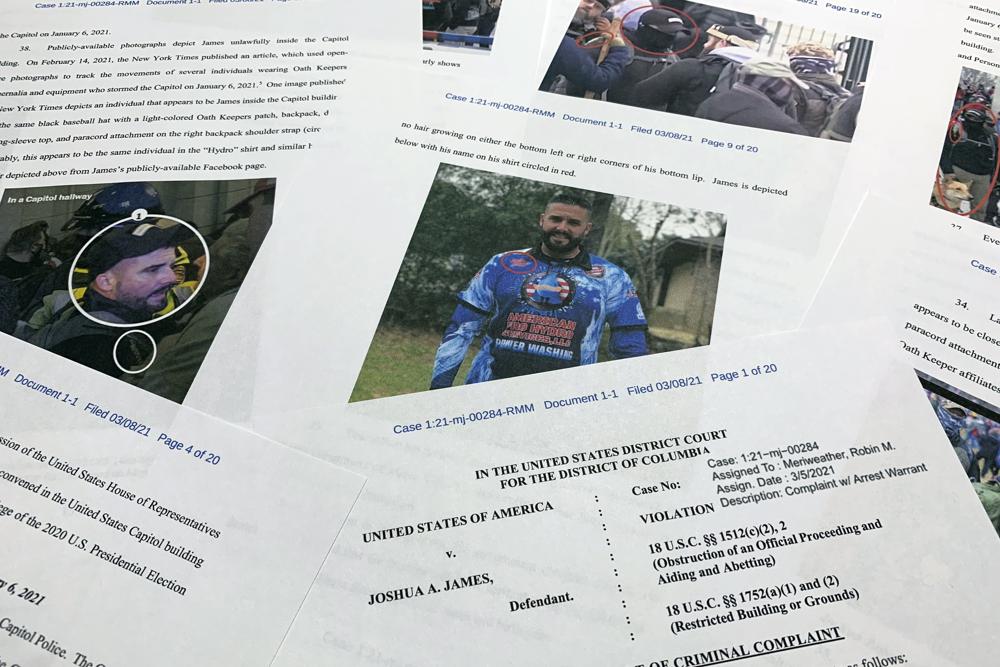
An Alabama man affiliated with the far-right Oath Keepers militia group pleaded guilty Wednesday to seditious conspiracy for his actions leading up and through the January 6 riot, marking the first person involved in the violent attack on the U.S. Capitol to be convicted of the rarely used charge. The sentencing guideline range for Joshua A. James, who also pleaded guilty to a charge of obstruction of an official proceeding, was estimated to be 7¼ to nine years in prison. The 34-year-old from Arab, Alabama, acknowledged getting into a physical altercation with a police officer while inside the Capitol and participating in a plan to use force to hinder or delay the transfer of presidential power. James also agreed to cooperate with authorities investigating the riot, including testifying before a grand jury. Authorities say James and others affiliated with the group rode golf carts to the Capitol, moved through the crowd in a military-style “stack” formation, and went into the building. James was accused of pushing past officers who tried to stop rioters from moving toward the Rotunda, joining others who confronted officers and profanely proclaiming the building was his. A week before the riot, James said in an encrypted chat that he believed teams within the militia group were adequately armed, prosecutors said in court records. While four other people connected with the Oath Keepers have pleaded guilty to obstruction of Congress and a lesser conspiracy charge, James is the first among the 11 people associated with the group to plead guilty to a seditious conspiracy charge. The seditious conspiracy prosecution is the boldest publicly known attempt so far by the government to prosecute those who attacked the U.S. Capitol. The group’s founder, Stewart Rhodes, and others have pleaded not guilty to seditious conspiracy and other charges. A seditious conspiracy conviction carries a maximum penalty of 20 years, compared with five years on the lesser conspiracy charge facing other group members. Those charged with seditious conspiracy are accused of working together to use force to stop the peaceful transfer of presidential power. Authorities say participants discussed their plans in encrypted chats, traveled to the nation’s capital from across the country, organized into teams, used military tactics, stashed weapons in case they felt they were needed, and communicated with each other during the riot on January 6, 2021. Prosecutors say the group set up a “quick reaction force,” or QRF, that kept guns at a hotel in nearby Arlington, Virginia, and were prepared to bring the weapons into Washington if Rhodes or associates believed the need arose. Days before the attack, one defendant suggested getting a boat to ferry weapons across the Potomac River. In the end, the QRF teams didn’t bring guns into Washington. At the Capitol, Oath Keepers marched in two teams in stack formation, with team members advancing forward with one hand on the shoulder of the person in front of them. More than 750 people have been charged with federal crimes related to the riot. Over 220 riot defendants have pleaded guilty, more than 100 have been sentenced, and at least 90 others have trial dates. The longest prison sentence handed down so far to a January 6 rioter was given to Robert Palmer of Largo, Florida. Palmer, who was sentenced to 5-1/2 years in prison, acknowledged hurling a wooden plank at officers protecting a Capitol entrance, spraying a fire extinguisher, then throwing it when it was done. Republished with the permission of the Associated Press.
2nd Oath Keeper pleads guilty to conspiracy in Jan. 6 riot
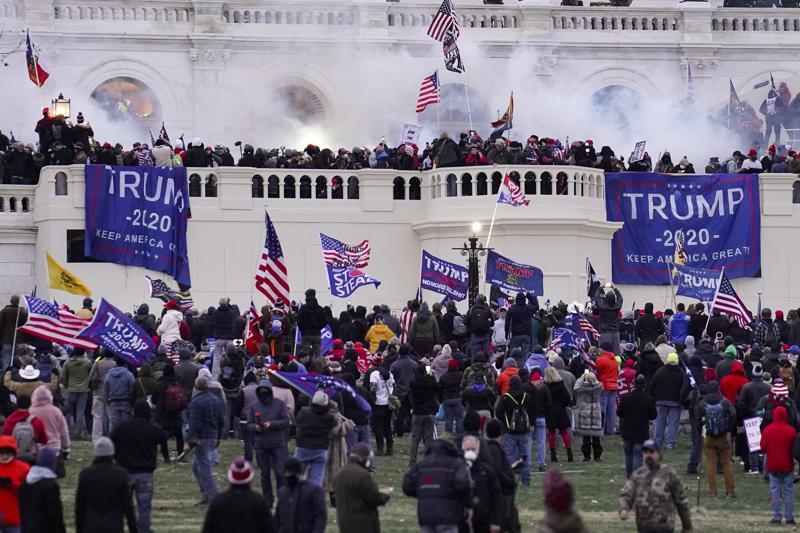
An Alabama man who stormed the U.S. Capitol with other members of the Oath Keepers extremist group pleaded guilty Wednesday to conspiracy and is cooperating with prosecutors in another major boost for the Justice Department in its sweeping Jan. 6 investigation. Mark Grods, 54, is the second member of the far-right Oath Keepers group to admit to participating in a conspiracy to block the certification of President Joe Biden’s victory and agree to cooperate in the Department of Justice’s massive investigation. Grods’ case was kept secret until Wednesday to protect the investigation and his safety before he testified in front of a grand jury, according to court documents. The cooperation agreements are certain to put pressure on the more than a dozen other defendants associated with the far-right Oath Keepers who are still fighting the allegations. It’s the largest conspiracy case that authorities have brought so far in the Jan. 6 attack. Grods, of Mobile, pleaded guilty to charges of conspiracy and obstruction of an official proceeding. U.S. District Judge Amit Mehta said Grods would likely face around four to five years in prison under federal sentencing guidelines. But prosecutors are likely to ask for even less time in exchange for his cooperation against others. Grods and his attorney did not speak to reporters as they left federal court in Washington on Wednesday. The judge told Grods he could not have any contact with other people associated with the Oath Keepers. Last week, prosecutors secured the first guilty plea in the Oath Keepers conspiracy case with defendant Graydon Young, 55, of Englewood, Florida, who was arrested in February. Young has also agreed to cooperate with investigators. Authorities say members of the Oath Keepers came to Washington intent on stopping the peaceful transition of power and were ready to use violence if necessary. Prosecutors have said members of the group prepared in the weeks leading up to Jan. 6 as if they were heading to war and dressed that day in battle gear, like helmets and tactical vests. Oath Keepers leader Stewart Rhodes, who has not been charged, communicated with some of the defendants over a Signal chat called “DC OP: Jan 6 21,” which prosecutors have said shows the group was “activating a plan to use force on Jan. 6.” Defense attorneys have argued that any discussions their clients had before Jan. 6 were in reference to providing security at the rally before the riot or protecting themselves against possible attacks from Antifa activists. They have denied that there was any plot to attack the Capitol or halt the certification of the vote. Grods on Jan. 2 sent a message over Signal that read: “So I guess I am taking full gear less weapons? Just reading through all the posts. Would rather have it and not need it,” according to court documents. Authorities say he brought guns to Washington and gave them to another person to store at a hotel in Virginia. Grods rode in a golf cart to the Capitol and was among those who joined the military-style “stack” formation seen marching toward the building, according to court documents. He went inside with a large stick and left after officers shot pepper balls at a wall near him, prosecutors say. Another defendant told him afterward to “make sure that all signal comms about the op has been deleted and burned,” according to court documents. More than 500 people across the U.S. have been arrested on federal charges so far in the Jan. 6 riot. Grods is the 11th person to plead guilty. A third member of the Oath Keepers group, Jon Ryan Schaffer, has also pleaded guilty and agreed to cooperate with prosecutors, but he wasn’t charged in the conspiracy case. Most of the other plea deals have been for defendants who were charged only with misdemeanors for illegally entering the Capitol. The only defendant who has been sentenced so far is an Indiana woman who pleaded guilty to a misdemeanor charge. She was ordered to serve three years of probation, perform 120 hours of community service and pay $500 in restitution. Republished with the permission of the Associated Press.
