
EPA rethinking air pollution rule for power plants
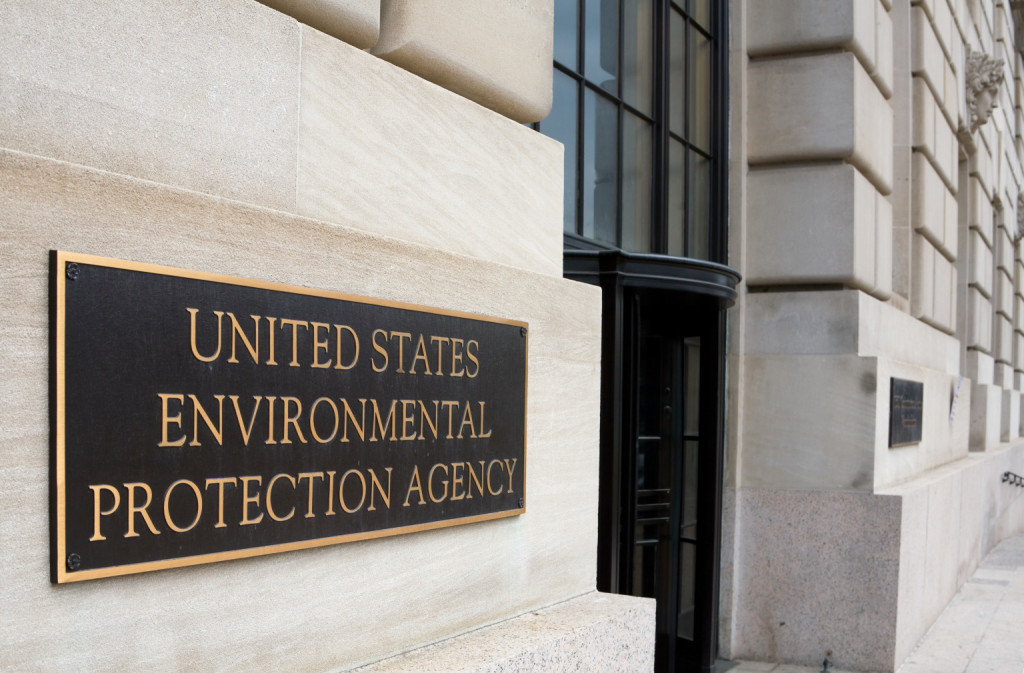
The Trump administration is considering rewriting another Obama-era rule controlling hazardous emissions from coal-fired power plants, this one on mercury and other pollutants. Environmental Protection Agency spokeswoman Molly Block said Wednesday that the agency is still preparing its proposal for consideration by the White House’s Office of Management and Budget and that there are few details to release. The EPA is looking at whether the 2012 rule on power plant emissions was necessary, among other issues, Block said. The Obama administration rule set limits for emissions of mercury, arsenic and other toxic air pollutants from coal- and oil-fired power plants. The U.S. Energy Information Administration said last year that almost all the country’s coal-fired power plants were now in compliance with the 2012 rule. Democratic Sen. Tom Carper of Delaware and Republican Sen. Lamar Alexander of Tennessee urged the EPA in a joint letter to keep the 2012 limits in place, saying the rules has cut mercury emissions from power plants by 90 percent. The EPA announced earlier this month that it was moving to relax federal oversight of emissions from coal-fired power plants under a separate Obama-era rule from 2015. Republished with the permission of the Associated Press.
Analysis: Donald Trump unlikely to avoid blame for health care loss
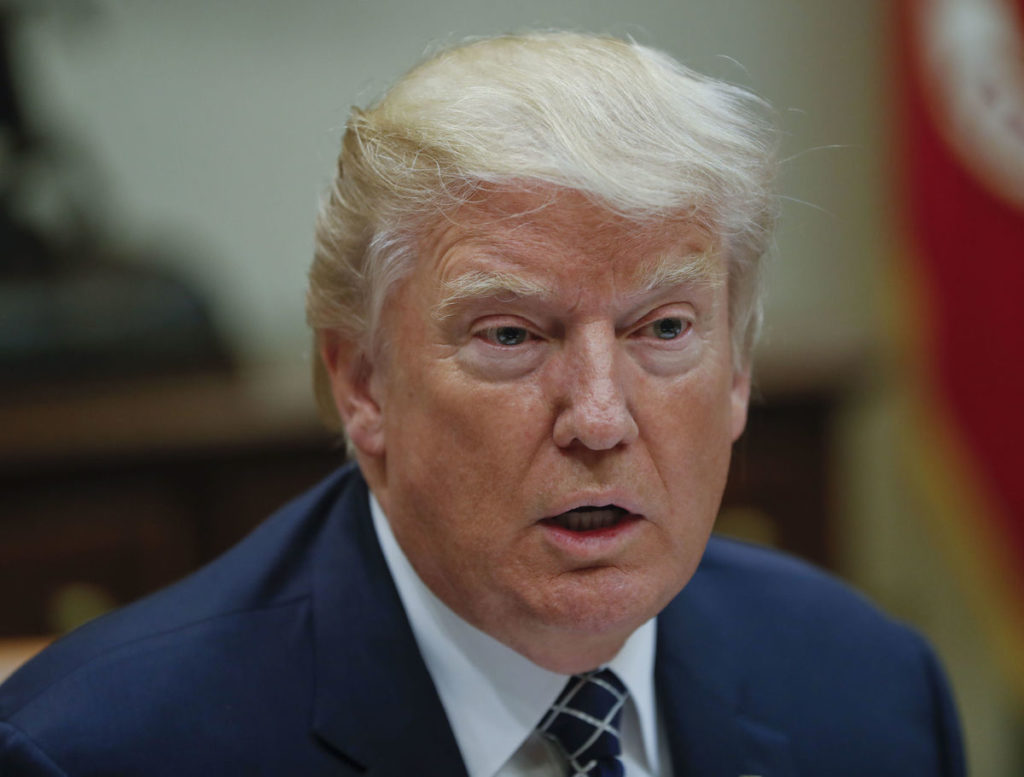
It was a far cry from “The buck stops here.” President Donald Trump, dealt a stinging defeat with the failure of the Republican health care bill in the Senate, flipped the script from Harry Truman’s famous declaration of presidential responsibility and declared Tuesday, “I am not going to own it.” He had tweeted earlier, “We were let down by all of the Democrats and a few Republicans.” This is the same president who thundered night after night on the campaign trail that it would be “so easy” to repeal and replace the Obama health care law on Day One of his administration. Try and tweet as he might, Trump can’t now avoid a share of the blame for the stall-out of that repeal effort. It’s a president’s burden to shoulder the nation’s problems whether they are inherited or created in real time. Barack Obama took office with the American economy facing its worst crisis since the Great Depression. John F. Kennedy accepted responsibility for the failure of the invasion of Cuba at the Bay of Pigs, ordered on his own watch. “That’s the nature of being elected president: You own the policies, the economy and the government,” said presidential historian Julian Zelizer, a professor at Princeton University. “You own the positives and negatives of the job whether you think it’s your fault or not. You live in the White House: You can’t disassociate yourself from what happens if you don’t like it.” Trump took office armed with Republican control of both houses of Congress and an ambitious agenda that would begin with the repeal and replacement of Obamacare. Six months later, the collapse of the GOP plan was a sharp rebuke for the president, who was unable to cajole or threaten Republicans to stay in line and who exerted little of his diminished political capital to see through a promise that had been at the core of his party since Obamacare became law seven years ago. The president’s disjointed support for the health care plan did little to persuade Republicans to support it, and the fact that his approval ratings had dropped below 40 percent didn’t help either. Trump never held a news conference or delivered a major speech to sell the bill to the public. He never leveraged his popularity among rank-and-file Republican voters by barnstorming the districts of wavering GOP senators. And he never spearheaded a coherent communications strategy — beyond random tweets — to push for the plan. “The best way to motivate members is talk to their constituents and at no point did he try to talk to Americans about health care reform in any sort of serious way,” said Alex Conant, a Republican strategist who worked on Florida Sen. Marco Rubio’s 2016 presidential campaign. “His attention seems to drift with whatever is on cable news on any given moment as opposed to what is on the Senate floor any given week.” Sounding almost like a bystander during his brief Oval Office remarks Tuesday, Trump six times expressed “disappointment” that the Republican effort had failed. And he insisted the fault rested with Democrats and suggested Obamacare should be left to fail on its own. “I’m not going to own it,” Trump insisted. “I can tell you that Republicans are not going to own it.” Democrats blasted Trump’s blame game, with Senate Minority Leader Chuck Schumer saying his refusal to accept responsibility demonstrated “such a lack of leadership.” “That is such a small and petty response,” Schumer said. “Because the president, he’s in charge. And to hurt millions of people because he’s angry he didn’t get his way is not being a leader.” Despite Trump’s efforts to shift blame across the aisle, the White House made little effort to court Democrats. Instead of initially pursuing an infrastructure plan — which would have likely received support from unions and blue-collar workers, making it hard for Democrats to oppose — Trump opted to tackle the far more polarizing issue of health care first. He outsourced most of the work to House Speaker Paul Ryan and Senate Majority Leader Mitch McConnell. It became a strictly Republican effort which, due to the party’s slight advantages in the House and Senate, had little margin for error. And it was conservatives from Trump’s own wing of the Republican party who thwarted him. The conservative House Freedom Caucus defied him and ignored his Twitter threats. The two senators who withdrew their support Monday night, effectively killing the bill, didn’t even give the White House a heads-up before announcing their decisions. And even though Trump allies have threatened to aid primary challengers to a pair of on-the-fence senators — Jeff Flake of Arizona and Dean Heller of Nevada — the Republicans did not cave, potentially setting a worrisome precedent for the White House as it tries to move ahead with the rest of its stalled agenda. Former House Speaker Newt Gingrich, a Trump adviser, believes that both Congress and the White House share blame after seemingly forgetting that “opposition parties pass press releases that get vetoed, while governing parties pass bills in which every paragraph gets scrutinized.” “I hope the president learns that do something really, really big, you need to be disciplined and focused and sort out your communications program,” said Gingrich. “So far, they are clearly not capable of doing that.” Republished with permission of The Associated Press.
Once critical of global deals, Donald Trump slow to pull out of any
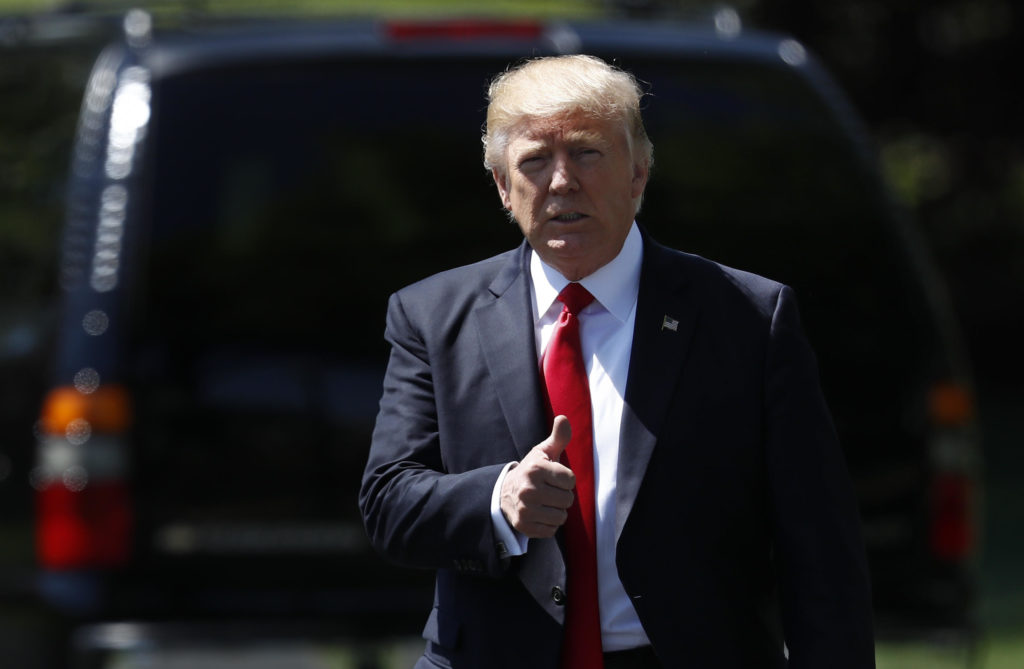
The “America First” president who vowed to extricate America from onerous overseas commitments appears to be warming up to the view that when it comes to global agreements, a deal’s a deal. From NAFTA to the Iran nuclear agreement to the Paris climate accord, President Donald Trump‘s campaign rhetoric is colliding with the reality of governing. Despite repeated pledges to rip up, renegotiate or otherwise alter them, the U.S. has yet to withdraw from any of these economic, environmental or national security deals, as Trump’s past criticism turns to tacit embrace of several key elements of U.S. foreign policy. The administration says it is reviewing these accords and could still pull out of them. A day after certifying Iran’s compliance with the nuclear deal, Secretary of State Rex Tillerson attacked the accord and listed examples of Iran’s bad behavior. His tone suggested that even if Iran is fulfilling the letter of its nuclear commitments, the deal remains on unsure footing. Yet with one exception — an Asia-Pacific trade deal that already had stalled in Congress — Trump’s administration quietly has laid the groundwork to honor the international architecture of deals it has inherited. It’s a sharp shift from the days when Trump was declaring the end of a global-minded America that negotiates away its interests and subsidizes foreigners’ security and prosperity. Trump had called the Iran deal the “worst” ever, and claimed climate change was a hoax. But in place of action, the Trump administration is only reviewing these agreements, as it is doing with much of American foreign policy. Douglas Brinkley, a presidential historian at Rice University, said Trump may be allowing himself to argue in the future that existing deals can be improved without being totally discarded. “That allows him to tell his base that he’s getting a better deal than Bush or Obama got, and yet reassure these institutions that it’s really all being done with a nod and a wink, that Trump doesn’t mean what he says,” Brinkley said. So far, there’s been no major revolt from Trump supporters, despite their expectation he would be an agent of disruption. This week’s reaffirmations of the status quo came via Tillerson’s certification of Iran upholding its nuclear deal obligations and the administration delaying a decision on whether to withdraw from the Paris climate accord. The president had previously spoken about dismantling or withdrawing from both agreements as part of his vision, explained in his inaugural address, that “every decision on trade, on taxes, on immigration, on foreign affairs will be made to benefit American workers and American families.” The Iran certification, made 90 minutes before a midnight Tuesday deadline, means Tehran will continue to enjoy relief from U.S. nuclear sanctions. Among the anti-deal crowd Trump wooed in his presidential bid, the administration’s decision is fueling concerns that Trump may let the 2015 accord stand. Tillerson on Wednesday sought to head off any criticism that the administration was being easy on Iran, describing a broad administration review of Iran policy that includes the nuclear deal and examines if sanctions relief serves U.S. interests. The seven-nation nuclear deal, he said, “fails to achieve the objective of a non-nuclear Iran” and “only delays their goal of becoming a nuclear state.” On the climate agreement, the White House postponed a meeting Tuesday where top aides were to have hashed out differences on what to do about the non-binding international deal forged in Paris in December 2015. The agreement allowed rich and poor countries to set their own goals to reduce carbon dioxide and went into effect last November, after the U.S., China and other countries ratified it. Not all of Trump’s advisers share his skeptical views on climate change — or the Paris pact. Trump’s position on trade deals also has evolved. He had promised to jettison the North American Free Trade Agreement with Mexico and Canada unless he could substantially renegotiate it in America’s favor, blaming NAFTA for devastating the U.S. manufacturing industry by incentivizing the use of cheap labor in Mexico. Now his administration is only focused on marginal changes that would preserve much of the existing agreement, according to draft guidelines that Trump’s trade envoy sent to Congress. The proposal included a controversial provision that lets companies challenge national trade laws through private tribunals. Trump has followed through with a pledge to pull the U.S. out of the Trans-Pacific Partnership, a sweeping free trade deal President Barack Obama negotiated. The agreement was effectively dead before Trump took office after Congress refused to ratify it. Even Trump’s Democratic opponent in the presidential race, Hillary Clinton, opposed the accord. But on NATO, Trump has completely backed off his assertions that the treaty organization is “obsolete.” His Cabinet members have fanned out to foreign capitals to show America’s support for the alliance and his administration now describes the 28-nation body as a pillar of Western security. Republished with permission of The Associated Press.
Darryl Paulson: We are not the same; the immoral equivalency of President Donald Trump
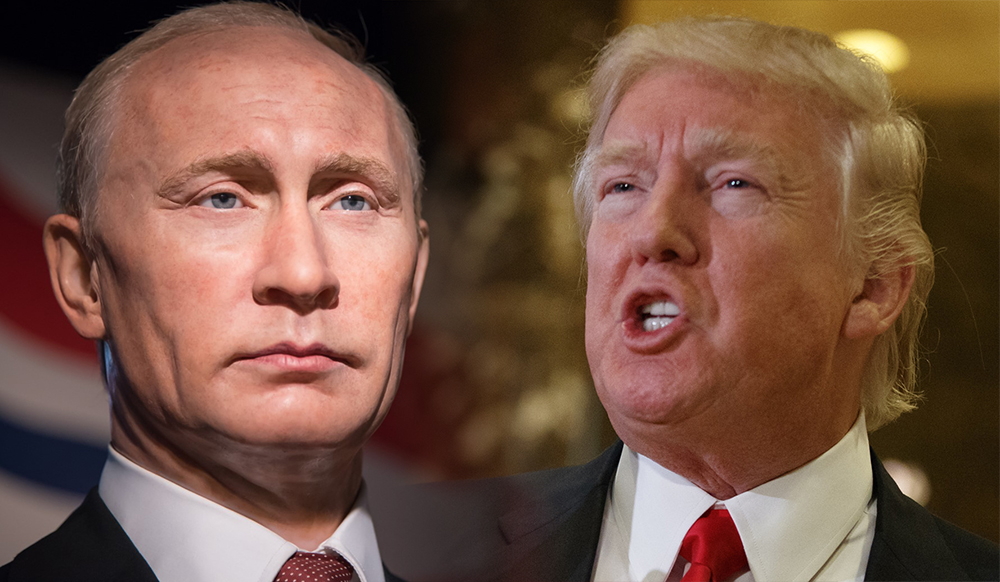
Voters who supported Donald Trump for president did so because they liked his free-speaking ideas, his attacks on the political establishment and his promise to “make America great again.” President Trump has repeatedly stated that he would have won the popular vote for president if not for massive vote fraud. Does Trump believe that Russian dictator Vladimir Putin won his office in free and fair elections? I hope Trump cannot be that deluded. Republicans raised strong criticisms when President Barack Obama conducted what many Americans viewed as an “apology tour,” criticizing America for all its failures. Americans prefer their presidents defend the nation and its values, and not constantly criticize the nation for its shortcomings. Obama told a European audience in 2009 that “there have been times where America has shown arrogance and been dismissive, even derisive.” He also criticized the notion of American exceptionalism that all presidents have defended. When Jihadists burned a Jordanian pilot alive, then showing the video online as a recruiting tool, President Obama cautioned a national prayer breakfast audience not to “get on our high horse” and “remember that during the Crusades and Inquisition, people committed terrible deeds in the name of Christ.” Many Americans were sickened and highly critical of Obama’s efforts to apologize for America’s shortcomings. Instead of defending American exceptionalism, the president seemed to delight in pointing out our deficiencies. If President Obama’s “apology tour” disgusted many Americans and most Republicans, President Trump’s defense of Putin and the Soviets should strike a similar response from the electorate. To cast America and the Soviets as “one and the same” should thoroughly repulse Republicans, in particular. Republican Ronald Reagan must be retching. President Trump turned in one of the most disgusting performances of any American president when he placed America and the Soviets on the same moral plateau. In a Fox News interview with Bill O’Reilly before the Super Bowl, Trump defended Putin against O’Reilly’s charge that “Putin’s a killer.” Trump responded that “There are a lot of killers. We’ve got a lot of killers. Well, you think our country is so innocent?” If Obama had made that statement, Republicans would be calling for his impeachment. But, weak-kneed Republicans, who have no problem praising Trump, have a far more difficult time criticizing him when he becomes ill with “foot and mouth” disease. In their silence, supporters of Trump are neither doing him, or the nation, favors anyway. Do you remember when one of our political leaders ordered the assassination of a political opponent? Neither do I. But, Putin did that to Boris Nemtsov in 2015. Anti-corruption reporter Sergei Magnitsky was killed in prison in 2009. Respected journalist Anna Politkovskaya was shot and killed the same year, and fellow reporter Yuri Schekechikhin was poisoned in 2013. The list of reporter and political opponent deaths is a long one. The United States does not purposely bomb civilian neighborhoods as did the Soviets in Syria. The United States does not shoot down unarmed civilian aircraft as the Soviets did in the Ukraine. The United States does not invade independent neighboring countries as the Soviets did to the Ukraine. Does President Trump really believe that murders of political opponents could happen in America? I hope that Trump sees America in a different light than Putin and the Soviets. Some Republicans have objected to President Trump’s abhorrent remarks about the moral equivalency between the Soviets and the United States. Senate Republican Majority Leader Mitch McConnell who called Putin a “thug,” and rejected any attempt at moral equivalency. Florida Republican Senator Marco Rubio tweeted: “When has a Democratic political activist been poisoned by the GOP or vice versa? We are not the same as #Putin.” Republicans, in particular, and all Americans must support the president when he is right and must criticize him just as vigorously when he is wrong. To not do so will embolden both Trump and dictator Putin to continue a reckless path. ___ Darryl Paulson is Emeritus Professor of Government at the University of South Florida St. Petersburg.
Darryl Paulson: Obama’s electoral legacy: After 8 years, we get a Donald Trump

(Part 2 of the Obama legacy) With the inauguration of Donald Trump, it is a good time to review the electoral impact of eight years of the Obama White House. One of the impacts is the election of Trump which surprised the entire political universe. Whatever Obama may have achieved in public policy, it is that policy which is in great part responsible for setting “the post-World War II record for losses by the White House party,” according to Larry Sabato. Democrats lost over 1,000 seats at the state and national level. However important the Obama policies may have been, it is fair to argue that those policies contained the seeds of Democratic losses. The Wall Street and big bank bailouts led to the creation of the Tea Party. The Tea Party became a primary vehicle to organize disaffected Republicans against bailouts for Wall Street and not Main Street. Combined with opposition to the Affordable Care Act (ACA), mobilized Republicans took over control of both the House and Senate, and effectively denying Obama the needed votes to carry out the rest of his agenda. After the 2016 election, Democrats held 11 fewer Senate seats than they did Jan. 20, 2009, a 16 percent decrease. Democrats hold 62 fewer House seats than in 2009, a drop of 24 percent. They also lost control of the White House giving Republicans complete control of the national government. At the state level, the number of Democrat governors fell from 28 to 16, a 43 percent decline. In 2009, Democrats controlled both houses in 27 states; after 2016, the number dropped to dual control of only 14 states, a 48 percent drop. On top of this, Democrats lost 959 seats in the state legislatures, weakening them for years to come. These losses mean that Democrats will have a difficult time in passing their agenda at the state and national level. It also means that the Democratic bench of future leaders has been wiped out, making it difficult for them to find and finance competitive candidates. Finally, since Democrats foolishly changed the filibuster rules in 2013, cabinet nominees and most court appointees will need only 51 votes to be confirmed. This creates the possibility for more extreme nominees to win confirmation. One of the few positive thing for Democrats is that it is difficult to imagine them losing many more seats. The out-party normally makes gains in midterm elections. Unfortunately for Democrats, they must defend 25 of the 33 Senate seats up for election in 2018, and Trump won 10 of the 25 states that Democrats must defend. If the Democrats could pick up only two Senate seats in 2016 when Republicans had to defend 24 of the 34 seats, it is hard to imagine them doing better in 2018 when they must defend two out of every three Senate seats up for election. Without Obama on the ballot in 2016 and 2018, fewer young and minority voters will turn out at the polls. Although Democrats have dominated among young voters, few of them turn out, especially in off-year elections. Democrats have complicated their problem with young voters by having an array of senior citizen leaders. Nancy Pelosi has been the ranking Democratic leader for 6 terms, as has second-ranking Democrat Steny Hoyer. Third-ranking Democrat James Clyburn has served five terms as leader. Pelosi is 76, and Hoyer and Clyburn are 77. Although Democrats have been devastated during Obama’s tenure, he is not solely responsible. Obama is only the third Democratic president to twice win a popular vote majority, along with Andrew Jackson and Franklin Roosevelt. Democratic National Party Chair Debbie Wasserman Schultz, a Congresswomen from Florida, was widely viewed as an ineffective spokesperson for the party and was eventually ousted for what many Democrats viewed as her favoritism for Hillary Clinton over Bernie Sanders during the Democratic primaries. Obama appointed Wasserman Schultz to become chair of the Democratic Party and, critics contend, for standing by her for far too long. Politics is a strange beast. Six months ago, almost everyone believed the Republican Party was on its last legs, and the Trump nomination would doom them forever. Today the Republicans control all three branches of the federal government, and it appears that the Democrats are on life support. Who knows what tomorrow will bring? ••• Darryl Paulson is Emeritus Professor of Government at the University of South Florida St. Petersburg.
Alabama’s only seat on TVA board in jeopardy by Jeff Sessions’ changing fortunes
Alabama is represented by only a single seat on the Tennessee Valley Authority board — Joe Ritch, a Huntsville attorney. But Ritch’s TVA board seat could be under fire by the election of Donald Trump and his pick for Attorney General, Sen. Jeff Sessions. Ritch, a Democrat nominated in 2013 by President Obama for a three-year term, is up for another term. Board members elected him chair, a position he currently holds. Lee Roop of Al.com notes that Ritch’s knowledge of North Alabama and strong leadership has earned him several local supporters, such as Huntsville Mayor Tommy Battle, Jackson County Commission Chair Matthew Hodges and Madison Mayor Paul Finley. “They cite thousands of new jobs brought to the region and nearly $1 billion in new business investment during his tenure,” Roop writes. Ritch was instrumental in helping Jackson County rebound from economic damage due to federal policies and court rulings, Hodges said. Hodges also cited Ritch’s help after federal policies reduced reliance on coal to power TVA plants, which led to the shuttering of Widow’s Creek coal-based power plant and subsequent loss of jobs; Ritch worked to lure a Google data center now operating in the same location. “They came and I feel like have made an incredible effort to turn things around, to work with us and help us to help ourselves,” Hodges told Al.com. “(Ritch) was chairman of the board at that time. It took an effort from a lot of folks at TVA to make that happen, but you had his leadership.” “He’s been a very valuable member of the (local economic) team,” Battle added. “He’s the only chair Alabama’s ever had, he’s kept power rates low, and it would be a win-win for the community to keep him there.” Both Finley and Battle, whose positions are non-partisan, agree that Ritch doesn’t favor a specific Alabama city or the state in general. But someone like him on the board helps keep industry leaders aware that commitments will be kept. As of now, the Senate is left with only a few weeks to decide if Ritch stays with the TVA. If he is not approved before Congress’ Christmas break, President-elect Trump will name a successor. The Senate Environment and Public Works Committee, chaired by Oklahoma Republican Jim Inhofe ,determines TVA board members; a committee which Sessions is a member. Senate rules allow senators to either approve – or block — presidential nominations from their respective states. The first time around, Sessions gave Ritch the thumbs-up. This time, he has not yet said he would. “We’ve been in a continual conversation with the (entire) Alabama delegation,” Battle told reporters. If Sessions becomes President Trump’s attorney general and a replacement for Ritch is chosen, Alabama’s new Republican Senator could have veto power. That is if Trump nominates another Alabamian, and Sessions’ replacement is named to the public works committee. Alabama is represented on the TVA by someone already approved by Sessions, Roop says local leaders hope it stays that way.
Donald Trump tells backers to ‘watch the polls’ — but signups slow
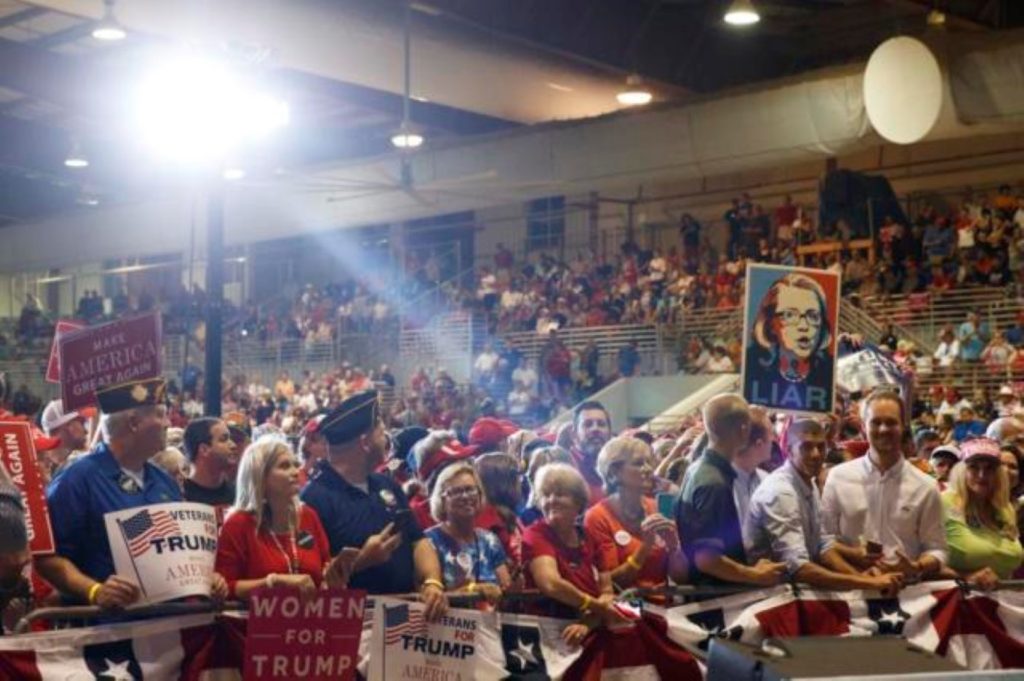
Donald Trump regularly warns his crowds to closely watch polling places to prevent Democrats from stealing the election. But his campaign has failed to enlist many to serve as official poll watchers in major population centers, according to spot checks by The Associated Press. In some key regions, Democratic monitors will far outnumber Republicans on Election Day. The Trump team seeks volunteers on his website to “Help Me Stop Crooked Hillary From Rigging This Election.” But it’s unclear what the campaign does with its list — voters in Arizona and Virginia who signed up were never contacted. While specific rules vary from state to state, poll watchers generally are registered voters appointed by the campaigns to sit in polling places and observe. They can point out potential problems to election officials and, in some states, challenge whether a voter is actually eligible. But they cannot campaign for their candidates or confront voters themselves. In many of the largest cities in battleground states, Democratic poll watchers are set to substantially outnumber Republicans. Even in Philadelphia, a place Trump has singled out as being at high risk of vote fraud, there has been no surge in Trump poll watchers. The city had a total of 4,200 signups as of last week — only about 480 of them from the city’s 119,000 Republicans. “I’m handling everything, and I would say this is about average,” said Joseph DeFelice, the head of Philadelphia’s Republican Party. DeFelice said he is concerned about how Republicans are treated on Election Day in some overwhelmingly Democratic neighborhoods, but said he isn’t worried by the absence of more observers. When roughly 1,500 Republican poll watchers volunteered for the 2004 election, “that was way too many,” he said. “The Democrats will have three to four times the number of poll watchers that we do.” It’s not clear why there is a discrepancy between Trump’s rhetoric urging poll watchers and the lack of signups: whether it was a failure by the campaign to organize or if it was never truly a true campaign priority. The Trump campaign did not respond to requests by The Associated Press by phone and email to discuss the issue. In Pennsylvania and some other battleground states, poll watchers can still be registered. But in hotly contested Florida, it’s already too late: the registration period ended Oct. 25. In Miami-Dade County — containing 999 precincts and more than 10 percent of Florida’s voters — Trump’s campaign has registered only 150 poll watchers, compared to the Clinton campaign’s 903. The local Republican Party registered 88 more — but even including those, Democratic poll watchers in Miami-Dade will outnumber Republicans nearly four to one. In other counties, Trump’s poll watchers are more evenly matched or even outnumber Clinton’s. But after surveying election officials in Florida’s 10 most populous counties, the AP found that Clinton’s people far outnumber Trump’s. Local Republican committees helped narrow the gap but did not close it. Trends are difficult to interpret among Florida counties that provide historical data. In Duval County, which Mitt Romney carried with 51 percent, Romney’s 277 election observers in 2012 have shrunk to just 60 for Trump. In Orange County, which Obama won with 59 percent of the vote, 20 poll watchers registered for Mitt Romney in 2012 have exploded into 294 for Trump. Carolyn Bourland, a retired teacher in Orlando, said Trump’s campaign encouraged her to become seriously involved in an election for the first time of her life. “It’s like being an investigator. You have your eyes and ears,” she said. She said she was worried about genuine attempts to rig the election. “It’s shocking how much of this stuff is going on,” she said. But she said she was clear on the limitations of her role. “You’re not allowed to campaign for any candidate, and if you see something suspicious, you go to the person in charge,” she said. In some of Ohio’s biggest population centers, Republicans have preserved their options to send in election observers. In both Cuyahoga and Franklin counties, which Obama won with 69 percent and 60 percent, respectively, local Republican officials have submitted tentative paperwork to have a poll watcher in each of the counties’ roughly 825 precincts. But Franklin County GOP Central Committee Chairman Brad Sinnott said he expected few, if any, of those slots would be filled. “That would be pointless,” said Sinnott, who also sits on the Franklin County Board of Elections. Under Ohio’s bipartisan election administration system, Republicans and Democrats both share oversight of elections, rendering serious concern about improprieties moot, he said. At the Trump campaign’s request, Sinnott said the local party has reserved spots for observers. If people want to fill them, actual election workers will provide them with a chair, if available, and “normal human courtesy,” Sinnott said. But Sinnott doesn’t expect either Democrats or Republicans to turn out in force for election monitoring. They’ll have better things to do Nov. 8. “Our local parties will be trying to influence election behavior,” he said. “Not watching others vote.” Republished with permission of The Associated Press.
Martin Dyckman: Supreme Court vacancy makes GOP Senate just as bad as Donald Trump

It’s in our genes here in America that the losers of an election congratulate the winners and we all move on. That’s more than good manners. It’s the survival instinct of any democracy. Donald Trump‘s contempt for that disgusts Republicans as well as Democrats and independents. But look closer. There are 54 members of his party who are already denying the outcome of an election — the last one. And, like Trump, they’re threatening to defy the results of the next one. I’m talking about Senate Majority Leader Mitch McConnell and the 53 sheep in his fold, Although President Obama was re-elected for a four-year term, the Party of No declared it over three years, one month and 25 days after his inauguration. That’s when Obama nominated Judge Merrick Garland to fill the Supreme Court vacancy, and the Republicans refused even to give him a hearing. The Republicans, frustrated and embarrassed by the failure of McConnell’s pledge to make Obama a one-term president, now hold that Supreme Court vacancies during a president’s last year are for the next president to fill. That is unfounded anywhere in the Constitution or Senate rules, and it’s in direct conflict with the most recent precedent. Justice Anthony Kennedy was confirmed in February 1988, the last year of Ronald Reagan‘s term, by a unanimous vote. Now, the Republican senators are making a threat scarcely less irresponsible than Trump’s. They’re saying they won’t confirm any Hillary Clinton nominee to the Supreme Court. This is how John McCain put it in an unguarded moment during a talk show interview on behalf of Sen. Pat Toomey, R-Pa., who’s in well-deserved danger of losing his seat. “I promise,” McCain said, “that we will be united against any Supreme Court nominee that Hillary Clinton, if she were president, would put up. I promise you. This is where we need the majority, and Pat Toomey is probably as articulate and effective on the floor of the Senate as anyone I have encountered. “This is the strongest argument I can make to return Pat Toomey, so we can make sure there are not three places on the United States Supreme Court that will change this country for decades.” To put it the other way, it’s the strongest argument for subtracting Marco Rubio in Florida, Richard Burr in North Carolina, Toomey in Pennsylvania and every other Republican incumbent — including, sad to say, McCain himself — from any future Senate majority. I have always respected McCain for his service and suffering as a prisoner of war, as a senator who often sought bipartisan compromise on campaign reform and other issues, and — until his inexplicable choice of a running mate — as a candidate for president. But this is too much. He’s saying that even if a majority of the American people elects Hillary Clinton, the Senate owes those voters no respect. That’s power politics at its worst. It didn’t take McCain, and others, very long to see that they needed to pull the foot from his mouth. He’s now promising to consider any nominee she sends up fairly. But not necessarily to vote for him or her, no matter the qualifications. What they’re really saying is that if she doesn’t send them more Antonin Scalias, they’ll let the court stay short-handed. “There is talk,” writes Joe Klein in TIME, “of blocking all Supreme Court nominees until the court withers down to a seven-person bench with a conservative majority.” The Republicans have controlled the Supreme Court since Ronald Reagan, and the country is worse off in many ways for it. This election is indeed a referendum on the court. Since the Republicans are preparing to ignore it, they deserve to forfeit the Senate as well as the presidency. The Democrats will pick up Senate seats, perhaps enough for a majority, but not enough for the 60 to break a filibuster. So there’s talk of using the so-called nuclear option, a loophole in Senate rules, to eliminate filibusters against Supreme Court nominees. This has already been done with respect to lower-ranking judicial vacancies, although senators can still single-handedly block nominees from their states. To do that for the Supreme Court will require a Democratic majority or at least 50 seats with Tim Kaine casting the vice president’s tiebreaker. Since both parties have used — and abused — the filibuster, neither is comfortable about trashing it. But a less drastic remedy is possible. At the outset of the next term, when a simple majority can change Senate rules, the Democrats could — and should — provide that the Senate would be deemed to have consented to a nomination once 60 or 90 days have passed without an up-or-down vote. “Power tends to corrupt, and absolute power corrupts absolutely,” wrote the former British Parliamentarian Lord Acton in 1887. American conservatives are particularly fond of that familiar phrase, but those in the U.S. Senate don’t seem to think that it applies to them. It’s time for the voters to remind them that it does. ___ Martin Dyckman is a retired associate editor of the newspaper formerly known as the Tampa Bay Times. He lives in suburban Asheville, North Carolina.
Steven Kurlander: The election may be over, but not for Donald Trump
With at least three months to go, the mainstream press (once again) is writing the obituary of GOP nominee Donald Trump’s bid for the White House. Trump has lately endured withering criticism on a number of fronts: The controversy continued over his sarcastic remarks about the bereaved parents of a killed Muslim American soldier who spoke against him at the Democratic convention. President Obama, among others, called him “unfit” to be president. A number of Republican candidates and donors across the nation were expressing bootstrap angst about Trump’s impact on GOP campaigns or were just endorsing Hillary Clinton (and Bill too). Even his wife’s erotic lesbian poses as a young model were front-page news in New York. All that, in turn, was being touted as the beginning of the end of his campaign. The BBC News item “Trump campaign teeters on the brink” began by stating: “Like a boxer on the ropes, the Trump campaign has weathered a flurry of body blows over the past few weeks. Is this the beginning of the end, a full three months before Election Day? Should Donald Trump throw in the towel before the inevitable November knockout?” But Donald Trump’s campaign — and his political revolution too — is far from being kaput. It’s just wishful thinking by a press and political establishment that hates him and all he stands for to mark Trump’s downfall. It’s a regrettable failure to recognize the potency and Teflon durability of Trump’s ShockReality brand of politics (see my article last August: “Donald Trump “phenomenon” defines new age of American ShockReality politics”). Beating conventional wisdom, Trump is the anti-politician who has a knack for connecting at a rudimentary level to a majority of Americans by bombastically exploiting their frustrations with their politically correct and inept government and politics. According to plan, Americans continue to be bombarded daily with incredulous negative articles and continuous talking heads bemoaning him — but they all have Donald Trump on their lips and in their headlines. So, as it was during his primary run, bad news is good news for Trump — his focus continues to be that Americans solely hear his name and that news is made by his politically incorrect tweeting and speeches. Here’s another epic mistake made by his opponents: You can’t begin to analyze the race between Trump and Clinton (and Bill too) like past contests for the White House. This is a presidential campaign far from being like any other — and one that will change American politics forever. Forget what any poll says. Unless they are leftover teabaggers, many of those supporting Trump (especially Democrats) will never admit to a biased pollster, much less even best friends or family members, that they will be secretly voting for Trump, or against Clinton (and Bill too), in November. The reality of the 2016 campaign is that a good majority of Americans have already decided who they are voting for, or against, for president. And they are not changing their minds, no matter what. It’s the Election of Dissatisfaction, pure and simple. As absurd as it is, Donald Trump can and will continue to test the boundaries of decency and truth to win the votes a majority of angry Americans — that strategy will, in turn, win him the needed votes in the Electoral College in both critical battleground — and what were once traditional red and blue — states too. The best thing the mainstream press can do at this point if they gleefully want to write the Trump campaign obituary is to starve the fire-breathing proverbal dragon by not overindulging, or even reporting, on Trump’s hyperbolic messaging and behaviors. The fewer the Trump headlines and talking points, the better for both entrenched Republicans and Hillary Clinton (and Bill too). ___ Steven Kurlander blogs at Kurly’s Kommentary (stevenkurlander.com) and writes for FloridaPolitics.com and The Huffington Post and can be found on Twitter @Kurlykomments. He lives in Monticello, New York.
Steven Kurlander: Feminist ‘Herstory’ and the rigged coronation of Hillary Clinton

The underwhelming Democratic convention in Philadelphia is over and much of the messaging done by a feminist-dominated DNC encompassed that Hillary Clinton was making “herstory” as the first woman to be nominated to run for president in the U.S. In highlighting Clinton’s achievement, an article in USA Today entitled “How it felt when America got a first woman presidential nominee” started off by stating: “Finally. That’s how millions of people felt Thursday night as a woman accepted, for the first time, a major party’s nomination for president. From the floor of the Democratic National Convention to watch parties across the nation, on TVs and laptops and smartphones, Americans beheld history — or, as some feminists would call it, herstory.” As The New York Times reported, Clinton acknowledged breaking the glass ceiling: “If there are any little girls out there who stayed up late to watch,” she said, “let me just say, I may become the first woman president, but one of you is next.” In real terms, the achievement that meant so much to leftist Democratic feminists momentarily may have touched a majority of American women too — maybe. Despite the achievement, Clinton is a weak candidate who was not supported by probably a majority of her party. The women of America care more about their pocketbooks — and the future of the American dream for their children — than about having a woman in the Oval Office. The reality is that Clinton’s breaking the glass ceiling in 2016 will not lead to her automatically capturing a vote that twice ensured the election of President Obama to the White House. President Obama brilliantly exploited the gender gap in the last presidential cycle. According to Gallup, Obama won the female vote, and a second term, by 12 points, 56 percent to 44 percent. Clinton does not share such support, even given the fact that she made “herstory.” A recent poll indicated that while 52 percent of registered women from both parties supported Clinton, that share fell to 36 percent among white women ages 50 to 64 and to only 34 percent among white women between 35 to 49. As the next phase of the campaign begins, the Clinton campaign will still try to build upon “herstory” to employ a very successful, time-tested Democratic tactic of social distraction that played to great success against Mitt Romney in the last presidential cycle. Clinton has employed this strategy brilliantly before. Remember when she destroyed Republican Rick Lazio in 2000 when he displayed “sexist” behavior during a debate with Clinton? You can bet that Clinton will try to exploit Donald Trump’s propensity to stupidly mock his opponents and members of the press in misogynistic and physically derogatory terms. It’s a matter of time before Trump makes a nasty comment about Hillary’s weight, hairdo, or her past tolerance of her husband’s well-chronicled philandering, and Clinton will be able to capture the hearts and minds of women voters as a victim of sexism. Well, maybe. Trump’s supreme achievement so far is that he is a master of overcoming the power of political correctness on political messaging. Trump too has brilliantly captured the frustration of Americans with their diminished quality of life that has resulted after 16 years of terrible — and very similar — Bush/Obama big government, Wall Street-centric economics and immigration policies that stand as the centerpiece of Clinton policies, too. Given the history of this campaign so far, capturing that frustration will override the significance of his alleged sexism. Trump’s crass brand of reality politics in 2016 has set a stage to diminish Clinton’s and the Democratic Party’s past success of exploiting the gender gap into capturing the votes of American women. Thus, Clinton, who had to rig the primary process to get the nomination to beat back Bernie Sanders, should not count gender politics, particularly “herstory,” to win the votes of American women. In terms of HISTORY that will be learned by today’s young girls, the true significance of the 2016 election will be not that a women won or ran for the White House, but how many disenfranchised Americans, both men and women, stayed home from the polls, fed up with a choice of two terrible candidates and the political parties and process that spawned them. ___ Steven Kurlander blogs at Kurly’s Kommentary. He is a communications strategist and an attorney in Monticello, New York, writes for Florida Politics, and is a former columnist for the South Florida Sun-Sentinel. He can be emailed at kurly@stevenkurlander.com.
8 Reasons Rick Scott is the perfect veep for Donald Trump
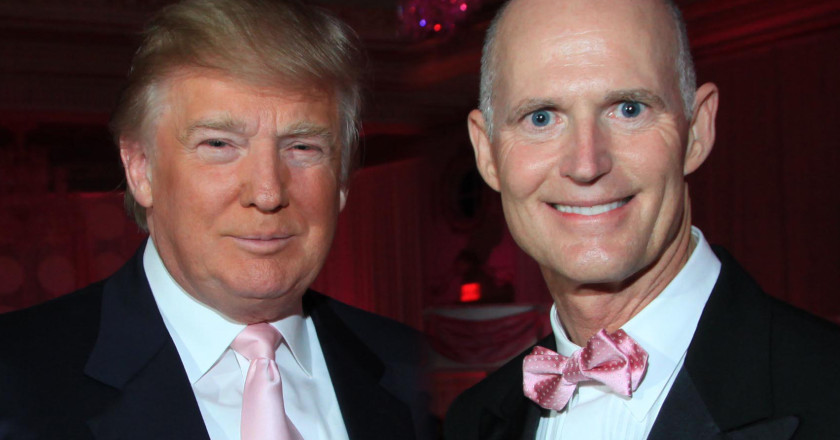
Rick Scott is basically as awful as Donald Trump in so many ways. But before Floridians start petitioning Trump to introduce Scott to a presidential election turnout and an embarrassing loss before Scott runs for U.S. Senate in 2018, read all eight reasons. 8) Cons. Scott didn’t build his $300-some million fortune with a fraudulent university, but he did help build a company that defrauded Medicare and Medicaid by way more, paying a record $1.7 billion fine. 7) Muslims. Scott was offending Muslims and Hispanics long before Trump descended down the escalator at Trump Tower. Scott put some of his first campaign dollars into fear mongering about Muslims in “Obama’s Mosque” near Ground Zero in 2010. Also, mic cut. 6) Hispanics. Similar to Trump, and despite all evidence, Hispanics love Scott, according to…only Rick Scott. Scott claims he “won” the Hispanic vote in 2014, despite actually losing it by 20 percent. 5) Little Marco. While Trump’s insults are infamous, Scott is doing his part in Florida. He backed Trump over Rubio (and Jeb!) and is now working against Rubio in his US Senate race, supporting mini-Trump Carlos Beruff, best known for unapologetically calling President Obama an “animal.” 4) Smarts. Trump could own Anderson Cooper‘s “RedicuList” segment, but Scott once got on it for insulting “everybody’s intelligence” trying to defend himself for using on-duty cops at campaign events. 3) Votes. Trump needs turnout to be as depressed as Jeb! after South Carolina. Scott has been hard at work, rolling back civil rights reforms that allowed nonviolent, ex-felons to vote. 2) Money. Scott won in 2014 by outspending his opponent on TV by $33,000,000. Romney lost Florida by less than 1 percent in 2012, but only outspent Obama by $17 million. An extra $16,000,000 million might have bought 29 electoral votes. 1) Florida. Trump can’t win without Florida, and Rick Scott knows how to win here. ___ Kevin Cate owns CATECOMM, a public relations, digital, and advertising firm based in Florida.
Tom Jackson: Jihadi wannabe shoots up Orlando; Obama blames us
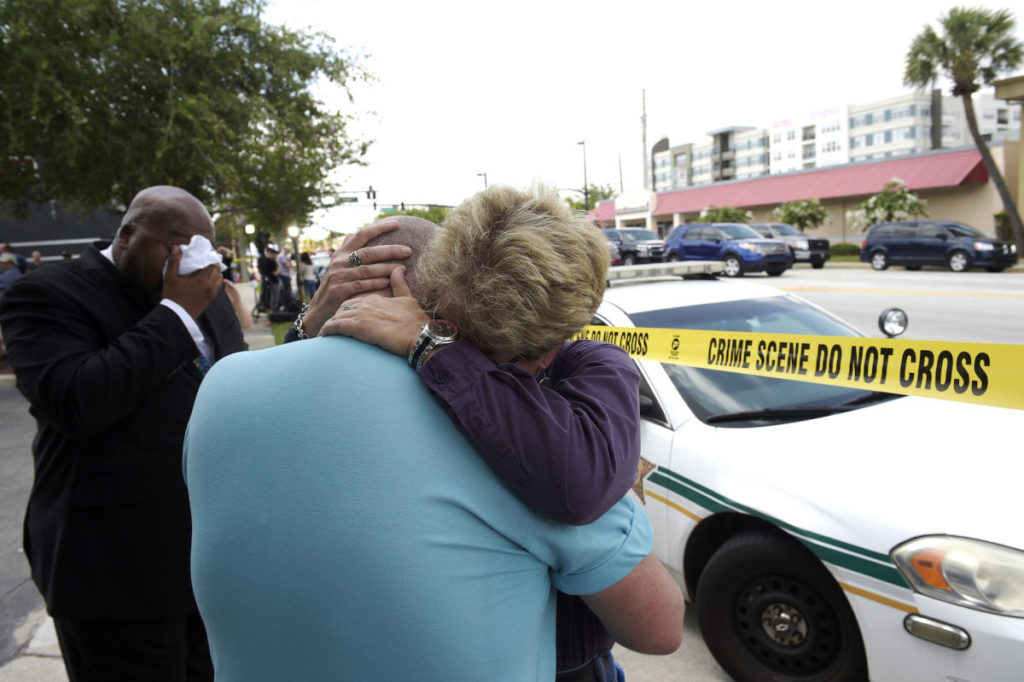
Once again, a great city that rightly prides itself on multicultural tolerance has been shredded by a fanatical hater whose worldview is rooted in 7th Century mysticism and hero worship. London. Madrid. Paris. Brussels. Now, Orlando. America’s getaway destination. Home. And once again, leaders of a political party with roots that trace to the Enlightenment are blaming the tools of destruction, not the backward extremism that put those instruments to evil use. Thus, in an otherwise down market Monday morning, did gun stocks — Smith & Wesson and Sturm Ruger, in particular — surge. This is perfectly understandable. When certain of America’s leaders target firearms after the ideologically charged slaughter of unarmed innocents, Americans know they are not serious about eradicating the next potential triggerman’s vile inspiration. Yes, I know. Among one-point-six-billion Muslims, only a statistically tiny portion are truly bad actors. But even if it’s only one percent, that’s a whole lot of radicalism for one small planet to manage. Along those lines, it’s darn near impossible to manage that which you refuse even to identify. Alas, such is President Obama’s M.O. Once again the moment came upon him to make plain the war forced upon us, and once again he dashed to a nonsense prescription — we require more extensive regulation of inanimate objects — while aggressively ignoring the jihadi in the room. What drivel. What insidious misdirection. Yes, we had a so-called “assault weapons” ban once upon a time, and the country didn’t collapse. Should we reinstate it? Only if we think meaningless flourishes will solve the raging trouble at hand. Studies indicate the ban made virtually no difference in gun crime. Bad dudes merely switched weapons of choice. Wait. The president wasn’t finished. There was an outrage ahead. Besides guns, Obama’s blame fell on, well, us. Really. Because, after all, in the president’s assessment, we all are denizens of the swamp that produced the execrable Omar Mateen. Obama: “We need to demonstrate that we are defined more — as a country — by the way [the victims] lived their lives than by the hate of the man who took them from us.” This blame-shifting is indefensible, even monstrous. A feverish Islamist extremist inflamed by ISIS acts on orders laid out plainly in sharia law and espoused by respected Muslim holy men, and Obama tells us to check our consciences. Yes, the people who love “Will & Grace” and “Modern Family,” who at worst sighed in capitulation over the Supreme Court’s same-sex marriage ruling; and who adore Neil Patrick Harris playing heterosexual romantic leads — we are the ones who need to make plain what defines us. That’s unreservedly disgusting. We didn’t establish a pattern of sweaty bigotry for Jews, African Americans, gays and women. We weren’t interviewed three times in two years by the FBI for linking ourselves to terror organizations and having had contact with a subsequent suicide bomber. We didn’t perpetrate such violence on our spouses that they had to flee half the country away to feel safe. We didn’t make a 911 call to proclaim allegiance to ISIS before hauling a small arsenal into an Orlando nightspot and start shooting up the place. That, and more, is all on Mateen, the vermin ISIS warrior/martyr wannabe. But that’s a subject too uncomfortable for President Obama, who called out hate and terror, but, when it came to honestly identifying the animating energy, flinched. Because blaming Americans is what he does. Every time. Every damn time. ___ Recovering sports columnist and former Tampa Tribune columnist Tom Jackson argues on behalf of thoughtful conservative principles as our best path forward. Fan of the Beach Boys, pulled-pork barbecue and days misspent at golf, Tom lives in New Tampa with his wife, two children and two yappy middle-aged dogs.
