
Alabama Republicans vote to repeal Obamacare, send bill to President’s desk
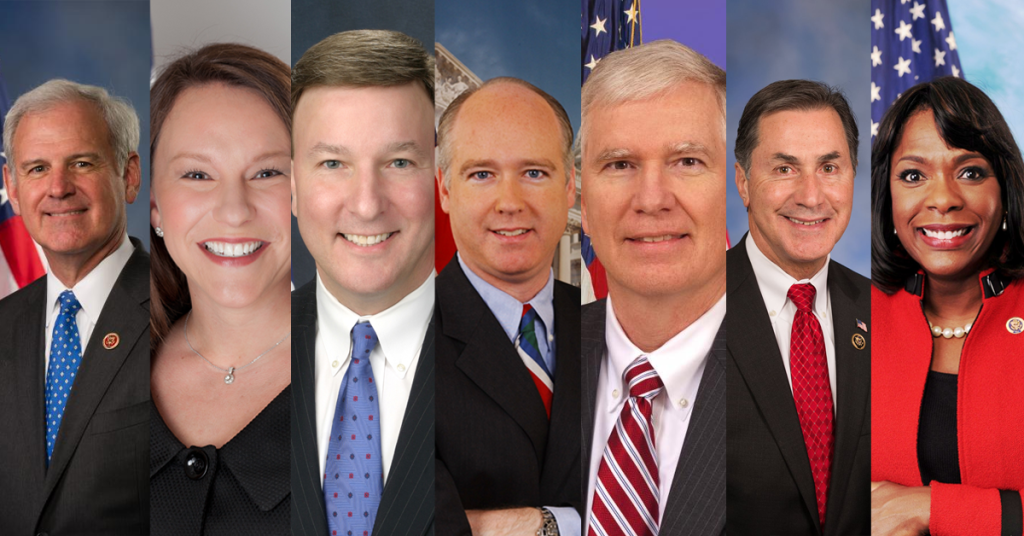
The Republican-led U.S. House of Representatives sent legislation to President Barack Obama Wednesday after voting to repeal his legacy health law in efforts to fulfill a 2014 promise to voters. H.R. 3762, the Restoring Americans’ Healthcare Freedom Reconciliation Act, which will almost certainly be vetoed, passed the House 240-181, with the support of all six Republicans of the Alabama Delegation. The bill would effectively demolish the President’s signature Obamacare law by repealing the individual and employer mandates, repealing the medical device and “Cadillac” tax. It also eliminates federal funding for Planned Parenthood, and reduces the deficit by over $500 billion. Here’s what the Alabama delegation had to say of their votes: U.S. Rep. Bradley Byrne (AL-01): The President can choose to stand with the American people or he can stand against the American people. If he chooses to veto the bill, then the American people will have seen a clear choice between two very different Americas: an America where the government knows best or an America where the hardworking people are empowered. Let’s make the President decide. Let’s hold him accountable. Let’s do the work of our constituents. And let’s pass this bill on behalf of every American who lost their health care plan or saw their health costs increase. Let’s do this for them. U.S. Rep. Martha Roby (AL-02): Yes, President Obama can stop our Obamacare repeal reconciliation package from becoming law this year. But, he cannot stop the growing chorus of Americans unhappy with the higher costs and broken promises of his healthcare law. Their voices are being heard in Congress, where, finally, a majority in both the House and Senate are ready to end this failed experiment and deliver better, more workable healthcare policy. U.S. Rep. Mike Rogers (AL-03): After voting to repeal Obamacare numerous times in the House without the legislation going anywhere in the Senate, I am thrilled that today this bill has passed both chambers and will finally go to President Obama’s desk. H.R. 3762 not only repeals Obamacare, it defunds Planned Parenthood and reduces Federal deficits by an estimated $78.1 billion by 2025. The American people have been very clear in their priorities that this flawed health care law just does not work for them, that Planned Parenthood must not be a wholesale provider of abortions and government spending must be kept in check. Now, President Obama will have the opportunity to make a choice, stand with the priorities of Americans or stand against them by vetoing the repeal bill. U.S. Rep. Robert Aderholt (AL-04): This is the first time since Obamacare was forced on the American people in 2010 that a bill which actually repeals Obamacare will land on the President’s desk. For the first time, the President will have to sign the bill or veto it – no hiding behind comments about Congress. In these six years it has become clear Obamacare is a failed law. How do we know it has failed? Just look to the millions of families across our country that are struggling each month to pay higher premiums with huge out of pocket expenses for less coverage. It is not enough to try to play defense against the President’s failed policies; instead we will roll up our sleeves to craft tough legislation and take the fight to the White House. We must take the fight to the President — as only Nick Saban can win playing defense all the time. U.S. Rep. Mo Brooks (AL-05) U.S. Rep. Gary Palmer (AL-06): The House has voted to repeal Obamacare before, but because of opposition by Senate Democrats, it has never gone further. Now, through the reconciliation process, both bodies voted to repeal major components of Obamacare and send it to President Obama’s desk. I have no illusions about whether the President will sign the bill. But by putting this in front of him, Congress has proven it has the will and the ability to repeal Obamacare, and put that choice before the American people when it comes time to elect a new President. U.S. Rep. Terri Sewell (AL-07): The Restoring Americans’ Healthcare Freedom Reconciliation Act is House Republicans’ 62nd attempt to undermine or repeal the Affordable Care Act (ACA). We cannot afford to waste time on a bill that is destined for a veto, particularly when there are much more pressing issues facing our great nation. This bill is designed to take health insurance from 22 million uninsured Americans. It would cut the subsidies provided to low and middle income Americans living with diabetes and other diseases. Among its most dangerous provisions is a measure to repeal the Medicaid expansion. Alabama has yet to expand its Medicaid program, and my constituents are among those who have been hardest hit by state lawmakers’ inactions.
House vote to send health law repeal to Barack Obama for first time
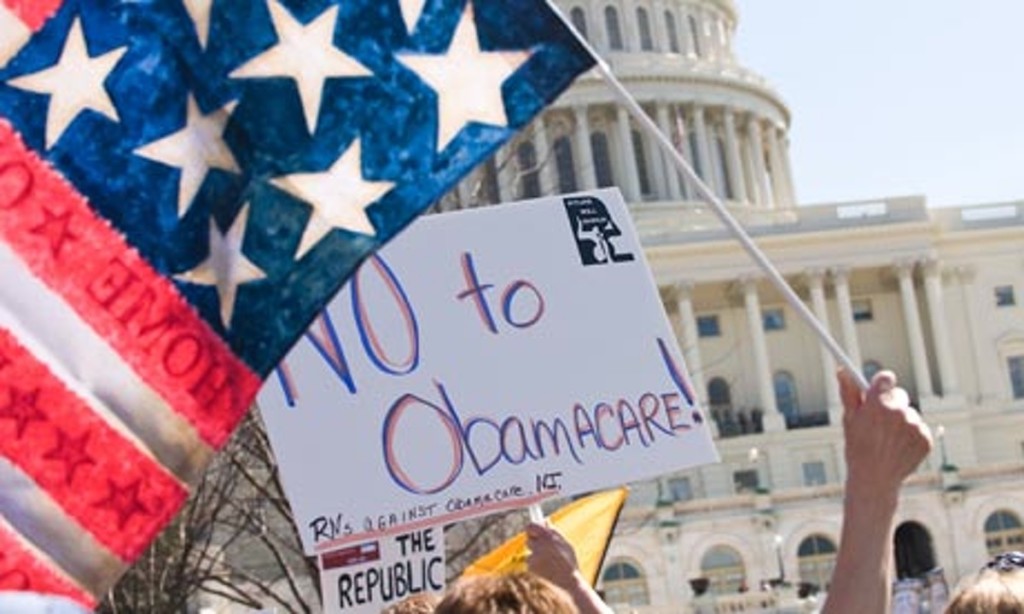
After dozens of failed attempts to undo President Barack Obama‘s health care law, the GOP-led Congress will finally put a bill on the president’s desk striking at the heart of his signature legislative achievement. Obama will veto the bill, and so the ultimate outcome will be the same as the many previous GOP attempts to repeal “Obamacare.” But Wednesday’s vote in the House will mark the first time such a bill makes it all the way to the White House. Unlike past efforts that were blocked by Senate Democrats, this time the legislation was written under special rules protecting it from a Democratic filibuster. It passed the Senate late last year, and so Wednesday’s House vote will send it straight to Obama. House GOP leaders, opening their 2016 legislative session, said Wednesday’s vote and Obama’s subsequent veto will lay bare a stark choice between the parties in a presidential election year. The legislation also cuts federal funding for Planned Parenthood. Democratic presidential front-runner Hillary Clinton has decried the legislation while leading GOP candidates applaud it. “It’s up to the president to decide if he wants to side with the people whose health care costs have skyrocketed out of control, or the abortion industrial complex whose profits have skyrocketed out of control,” said Speaker Paul Ryan, R-Wis. “Congress is holding President Obama accountable.” Democrats denounced the vote as a waste of time aimed at placating GOP base voters riled up by Donald Trump and the unruly Republican presidential race. “It’s the 62nd vote on repealing the Affordable Care Act. It has as much chance as the previous ones did,” said House Democratic Whip Steny Hoyer of Maryland. He said that Republicans “don’t have an alternative, and the reaction of the American public if they lost the benefits and protections of the Affordable Care Act would be very upset.” Indeed despite numerous promises to “repeal and replace” the health care law since its enactment nearly six years ago, Republicans have never coalesced around an alternative. Ryan has promised that will change this year. The bill being voted on Wednesday would dismantle the health law’s key pillars, including requirements that most people obtain coverage and larger employers offer it to workers. It would eliminate the expansion of Medicaid coverage to additional lower-income people and the government’s subsidies for many who buy policies on newly created insurance marketplaces. And it would end taxes the law imposed to cover its costs. The bill would also terminate about $450 million yearly in federal dollars that go to Planned Parenthood, about a third of its budget. A perennial target of conservatives, the group came under intensified GOP pressure last year over providing fetal tissue for research. “It is appalling that in their first week back in session the top priority for Republican leaders in the House is rolling back women’s access to preventive health care,” said Dawn Laguens, vice president of the Planned Parenthood Action Fund. GOP leaders hope to schedule a veto override vote to coincide with the Jan. 22 March for Life in Washington, the annual gathering of anti-abortion activists on the anniversary of the 1973 Supreme Court decision that legalized abortion. However Republicans do not command enough votes to override the president’s veto. Republished with permission of the Associated Press.
This week in the U.S. House of Representatives: Jan. 4 – Jan. 8, 2016
U.S. House lawmakers are back in Washington, D.C., this week to kick-off the second session of the 114th Congress. This week the GOP-led Congress will make good on a 2010 promise: voting to repeal and replace Obamacare. The House is expected to vote to concur in the Senate Amendment to H.R. 3762: the Restoring Americans’ Healthcare Freedom Reconciliation Act. This reconciliation bill was previously considered in the House and later the Senate, where it was amended slightly requiring this return to the House for what is likely final consideration. The bill repeals or significantly modifies numerous major provisions of Obamacare, including repeals of the individual and employer mandates, tax subsidies for individuals to purchase health insurance from exchanges, the expansion of Medicaid, and the Prevention and Public Health Fund. It also effectively eliminates more than a dozen taxes included in the law, including the medical device tax, the “Cadillac” tax, the net investment tax, and the additional Medicare tax. Finally the bill blocks federal funding for Planned Parenthood for one year and provides alternative women’s health funding for community health centers. House passage of the measure would clear it for President Barack Obama who has said he will veto it Alabama co-sponsor(s): N/A Additional legislation on the floor of the U.S. House of Representatives this week: H.R. 1155: the Searching for and Cutting Regulations That Are Unnecessarily Burdensome (SCRUB) Act. The bill establishes a nine-member commission to review existing federal regulations and identify those that should be repealed in order to reduce costs on the U.S. economy. Alabama co-sponsor(s): N/A H.R. 712: the Sunshine for Regulatory Decrees and Settlements Act. The bill requires the federal government to provide advance public notice when it plans to enter into discussions regarding consent decree or settlement agreement, allowing affected third parties to intervene in that process. It also requires federal agencies to file monthly status reports of their rule-making activities and requires that a 100-word summary of each proposed rule be posted online, along with the proposed rule itself. Alabama co-sponsor(s): N/A H.R. 1927: the Fairness in Class Action Litigation and Furthering Asbestos Claim Transparency Act. The bill prohibits federal courts from certifying proposed classes of individuals for a class action lawsuit unless each member of the class has suffered the same type and degree of injury, and it requires quarterly reports by asbestos trusts of claims made against the trusts and any payouts made by the trusts for asbestos-related injuries. Alabama co-sponsor(s): N/A
Martha Roby: A new year, a strong start

As the House convenes for the Second Session of the 114th Congress, it is important to get off to a strong start. That’s why I’m pleased the very first bill to be considered this year is a plan to repeal Obamacare and begin the process of replacing it with healthcare policy that works. It is past time for this law to go. Under Obamacare, many in Alabama and throughout the country lost the health plans they liked. Many have been forced to go to different doctors, to say nothing of the doctors who stopped practicing altogether. Premiums skyrocketed and many middle class families are being impacted by new taxes, fees and penalties. I wouldn’t blame you for thinking, “So what? The House has voted to repeal Obamacare dozens of times.” It’s true that my colleagues and I in the House have voted more than 50 times to repeal, defund or replace the president’s health care law. And, each time, our efforts are ultimately blocked in the Senate, where Republicans lack the 60 votes needed to overcome a Democratic filibuster. What’s different this time? This time our plan was carefully crafted to follow the Senate’s special “Reconciliation” rule that allows certain budget-related legislation to go through by a majority vote regardless of a filibuster. The Senate came through in late 2015 passing the Obamacare repeal reconciliation package by a vote of 52-47. That means when the House takes up and passes the measure first thing this year, we will finally send a bill repealing Obamacare to the president’s desk. Some may quibble that this is somehow an empty gesture. After all, President Obama will never sign a bill repealing his signature legislative achievement and the law that bears his name. However, as veteran lawmakers like Sen. Jeff Sessions (R-Ala.) and Sen. John Cornyn (R-TX) have pointed out, forcing a veto puts accountability for this deceptive, costly healthcare law squarely on President Obama. It also sends a clear message to the American people that, under a new president in 2017, Congress stands ready to replace this disastrous law with healthcare policies that put patients first. That’s a message I believe will be well-received, especially now. Just as Obamacare mandates and penalties have started setting in, many signing up for health plans are facing “higher premiums, fewer doctors and skimpier coverage,” according to The Wall Street Journal. For those who do get coverage, the out-of-pocket expenses of actually seeing a doctor have risen dramatically in a maze of deductibles, copays, and “co-insurance,” the paper reports. Yes, President Obama can stop our Obamacare repeal reconciliation package from becoming law this year. But, he cannot stop the growing chorus of Americans unhappy with the higher costs and broken promises of his healthcare law. Their voices are being heard in Congress, where, finally, a majority in both the House and Senate are ready to end this failed experiment and deliver better, more workable healthcare policy. Martha Roby represents Alabama’s 2nd Congressional District. She lives in Montgomery with her husband, Riley and their two children.
U.S. Treasury Department issues health law reporting extension for employers

The Treasury Department on Monday gave employers an extension of critical reporting requirements, as it seeks to manage some of the most complicated parts of the federal health care law. Employers had previously faced deadlines in February and March to report 2015 health insurance information to their employees, and also to the IRS. If they need more time, employers can now have until March 31 to get information to their workers and until June 30 in certain cases to get details to the IRS. Treasury said it acted after many employers complained they might not be able to get the information processed in time. Companies that rely on outside vendors were running into a bottleneck. “It’s a limited extension to make the system work as smoothly as possible,” said Treasury senior adviser Mark Iwry. The extension also applies to health insurance companies facing similar reporting requirements. The information is needed to enforce the health law’s requirement that individuals carry insurance, to administer its subsidies for premiums and to apply its requirement that larger employers offer coverage. Employers and insurers are filing the annual reports for the first time, as required by the health law. President Barack Obama‘s health care overhaul joined health insurance and taxes, two of the most complicated areas for consumers and employers alike. The law’s penalties for people who go without health insurance are administered through the income tax system, as are its subsidies to people who qualify for assistance with their premiums. Penalties for larger companies that fail to provide coverage are also assessed through taxes. The requirement for employers with 50 or more workers to offer coverage or face fines has been delayed twice. It takes effect Jan. 1 for companies with 50-99 employees. Companies with 100 or more workers faced the requirement starting this year, after an initial postponement of a year. Treasury officials said that Monday’s announcement does not involve any more delays of the law’s underlying requirements, and just provides additional time for companies to file paperwork. Republished with permission of the Associated Press.
Email insights: Robert Bentley says no to Medicaid expansion in Alabama

Alabama Governor Robert Bentley has recently announced he will not move forward with a proposal to expand Medicaid and thus Obamacare to Alabama. Bentley’s December decision closes a year-long debate as to whether the Yellowhammer state should expand its Medicaid program. Just last month, the governor’s appointed Alabama Health Care Improvement Task Force recommended the governor and the Legislature find a way to provide health insurance for Alabamians without coverage saying that expansion could provide coverage to roughly 290,000 Alabamians, including 185,000 who are working. Monday, Americans for Prosperity – Alabama emailed their supporters the news of the Governor’s decision. Below is the full text of their email: Good news from Governor Bentley. Governor Robert Bentley recently announced that he will NOT go forward with a proposal to expand Medicaid and bring more of ObamaCare to Alabama. This was a plan that was estimated to cost $710 million over the next six years. In the Governor’s own words, “we can’t afford it.” Plus, take a look at how much other states have already blown their Medicaid budgets! This is a plan that sounds like the kind thing to do, but it’s dragging states down and threatening other important spending like education and roads. Take a few seconds and thank Governor Bentley for his fiscally responsible decision not to burden Alabama with the cost of further supporting an already-broken Medicaid system. Thank you for standing with us on ObamaCare and so much more! Much lies ahead, Americans for Prosperity
Affordable Care Act enrollment deadline looms; December 15 last day for rolling signup

Another deadline looms in the battle to decrease the number of uninsured Americans via the landmark Affordable Care Act. The last day to enroll in health insurance through the federal Marketplace for January is December 15. Those who wait cannot be covered until February 1 at the earliest. Two Birmingham area hospitals are doing their part to help people enroll, assisters will be on-site at St. Vincent’s East and Princeton Baptist Medical Center on Saturday, Dec. 12 from from 10 a.m. to 2 p.m. Assistance will take place in Classroom 3 at St. Vincent’s East and at the Haynes Auditorium at Princeton Baptist. The assistance is free, and no appointment is necessary. A handful of organizations are participating to promote the event, during which so-called “navigators” who are trained to penetrate the law’s associated paperwork. The groups include Birmingham Health Care, The Dannon Project and Enroll Alabama. The federal Marketplace was created by the federal healthcare law in 2009, known to detractors and supporters alike as Obamacare. People who qualify based on their income and family size can receive significant savings on health insurance through the Marketplace. Nationally, the average monthly cost for insurance for one person in the Marketplace is $76.
Governor Robert Bentley says he is “looking” at Medicaid expansion
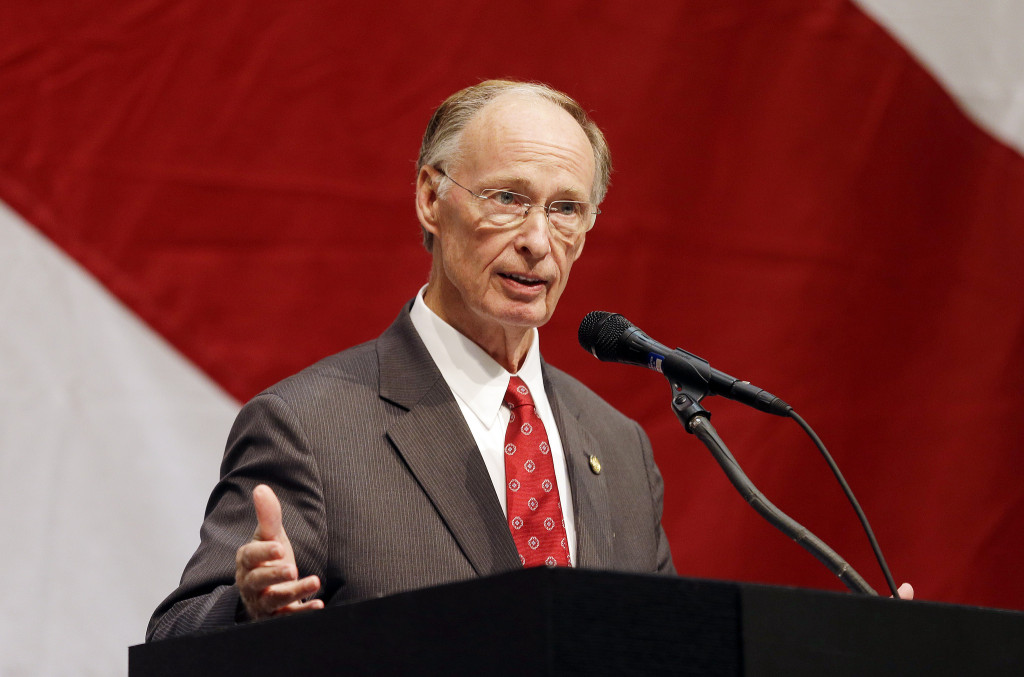
The conservative Republican governor of a Deep South state, where the Affordable Care Act is often reviled in GOP circles, says his administration is mulling an expansion of the state’s Medicaid program. Alabama Gov. Robert Bentley said Thursday after a speech at a legal conference that his administration is considering expansion, but has not made a final decision. Bentley, who is a doctor, said he was concerned about the health care access for the state’s working poor and rural health care infrastructure. However, Bentley said a stumbling block is figuring out a way to fund the state’s share of costs. Thirty states have expanded Medicaid under President Barack Obama‘s health care law. The governor has previously said he might support a state-designed program with work and premium requirements on recipients. Republished with permission of The Associated Press.
Alabama ranks in middle of pack in uninsured rate post-Obamacare
Ranked 35, Alabama sits solidly in the middle of the pack among its fellow states when it comes to the uninsured rate in America after Obamacare took effect, a new analysis from WalletHub.com shows. The online financial website reviewed coverage data as the third open-enrollment period for health insurance is currently underway and 11.7 percent of the U.S. population still remains without coverage. According to the report, since the first enrollment period of the Health Insurance Marketplace mandated under the Affordable Care Act 107,423 Alabama residents have gained health insurance that were previously uninsured, which has lowered Alabama’s uninsured rate 2.45 percent from 2010 to 2014. Obamacare’s impact in Alabama: The uninsured rate pre-Obamacare was 16.8 percent and has fallen to a current rate of 12.1 percent, with 307,185 people gaining health insurance coverage. Obamacare reduced the children’s uninsured rate in by 2.1 percent between 2010 and 2014. Obamacare reduced the adult uninsured rate by 2.7 percent between 2010 and 2014. The uninsured rate for whites is 4.3 percent lower than that for blacks. The uninsured rate for whites is 22.3 percent lower than that for Hispanics. The uninsured rate for higher-income households is 13.8 percent lower than that for lower-income households. The rate of employer-based health insurance coverage increased by 0.6 percent between 2010 and 2014. Source: WalletHub WalletHub used U.S. Census Bureau data to measure the uninsured rates by state before and after the implementation of the ACA. You can view the complete results here.
Enroll Alabama group to hold “Obamacare” assistance events Saturday

A group dedicated to making sure Alabamian residents get the most of the federal Affordable Care Act, called Enroll Alabama, is holding events in Birmingham and around the state to help create an “enroll tide” of new Obamacare sign-ups. The group is holding not one but two Bham events on Saturday, in the western and eastern parts of the city respectively, as well as one in Selma. “Starting October 1st, over 300,000 Alabamians will be eligible to enroll in the health insurance marketplace,” reads the group’s Facebook page, founded and run by so-called ACA “navigators” who are authorized under the 2010 federal health care law to contract with governments in order to help boost enrollment among the uninsured by explaining the law and assisting with paperwork. “People will need help to understand what it all means. That’s why we are here.” The Birmingham West event is set to run from 10 a.m. to 2 p.m. at Princeton Baptist Medical Center, while the Birmingham East event is slated for the same time frame at the city’s Don Hawkins Recreation Center, at 8920 Roebuck Blvd. The Selma enrollment-a-thon will run from 10 a.m. to 3 p.m. at the Selma-Dallas County Public Library‘s main library, at 1103 Selma Ave. Enroll Alabama will also host events throughout the week for those with kids in school or who work on the weekends. You can catch them in Huntsville on Monday, Muscle Shoals Tuesday, Athens on Thursday, or again in Huntsville on Nov. 14. Find out more about Enroll Alabama on their on social media via Twitter or Facebook.
Bradley Byrne: House should use all tools to dismantle Obamacare
When Republicans took control of the Senate last year, we looked forward to sending commonsense, conservative bills to the President’s desk. This process would put pressure on the President to decide whether he would sign or veto the bills. In the House, we have held up our end of the deal, sending countless conservative-reform bills to the Senate. Unfortunately, those bills have died in the Senate due to their arcane rules. The Senate requires 60 votes to begin debate on most legislation, and there are currently only 54 Republican Senators. Senate Democrats have time and time again stood in the way of even allowing debate to begin on things like defunding Planned Parenthood, cutting funding to “sanctuary cities,” and even passing basic government funding bills. Unless the Senate changes their rules, this stalemate is likely to continue. That’s why my colleagues and I went to work to find other legislative tools to get around the Senate’s rules. That’s where something know as budget reconciliation comes in, which only requires 51 votes in the Senate to pass a bill. Here’s how it works. The 1974 Congressional Budget Act created a special process for the consideration of reconciliation legislation. Reconciliation is a process reserved exclusively for matters relating to federal spending and cannot be used simply to change federal policy. Reconciliation does have some constraints however. In order to be used, the items included in the bill must be directly related to the federal budget and federal spending. In other words, you cannot use the reconciliation process simply change any federal statute. As we started to work on our reconciliation bill, we decided to focus on two primary areas: dismantling Obamacare and defunding Planned Parenthood. The number one issue I hear from constituents about is still Obamacare. The law is fundamentally broken and has caused health insurance to be unaffordable for too many Americans. The reconciliation legislation would dismantle Obamacare by repealing some of its most important features like the individual mandate, which requires every American to have health insurance, and the employer mandate, which hurts small businesses and costs jobs. Our reconciliation bill also repeals burdensome taxes like the medical device tax and the “Cadillac” tax on high-quality insurance plans. The bill would also eliminate all federal funding from Planned Parenthood and instead divert that money into community health centers, which don’t provide abortion services. Like many Americans, I am outraged by the videos showing Planned Parenthood officials discussing the sale of fetal body parts, and I have pledged to do everything I can to eliminate Planned Parenthood’s funding. This legislation would accomplish just that. Just as important, these commonsense reforms will also help lower spending and reduce the federal deficit. The non-partisan Congressional Budget Office found that passing these changes through reconciliation would reduce the deficit by about $130 billion. So last Friday, the House passed the reconciliation bill by a vote of 240 to 189, and now it is the Senate’s turn to act. They only need 51 votes, so I am hopeful they can pass the bill and send it to the President’s desk. This is probably our best opportunity to dismantle Obamacare and defund Planned Parenthood. Let’s make President Obama decide: will he stand with the American people or will he continue his “my way or the highway” style of governing? Bradley Byrne is a member of the U.S. Congress representing Alabama’s 1st Congressional District.
Hillary Clinton vows to defend Obamacare against GOP opposition
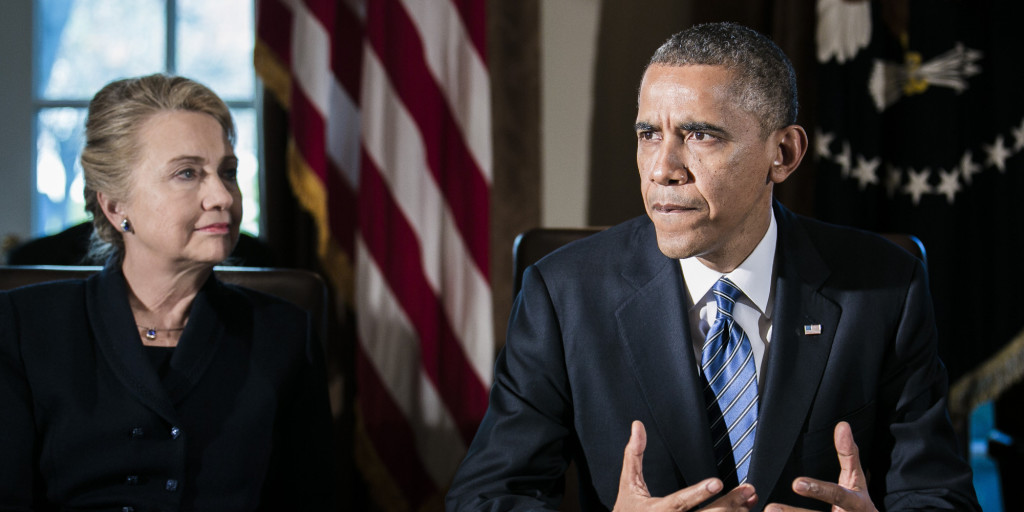
Hillary Rodham Clinton on Monday hailed President Barack Obama‘s health care law for reducing the rate of uninsured Americans and vowed to defend it against Republican opposition if she wins the White House. The Democratic presidential candidate kicked off a series of health care events with an embrace of the law, arguing that Republican resistance to the overhaul has hurt working families seeking coverage. She credited the health care law with decreasing the rate of uninsured Americans to the lowest level in 50 years. “I’m not going to let them tear up that law, kick 16 million people off their health coverage and force the country to start the health care debate all over again,” Clinton said at the Louisiana Leadership Institute. “Not on my watch…” She said that “I want to build on the progress we’ve made.” Clinton’s focus on health care comes as the share of Americans without health insurance has dipped to historically low levels due both to the law’s expansion in coverage and recent economic growth. While the law’s rocky rollout and longstanding GOP opposition caused Obama’s party headaches, Democrats seeking to succeed him are embracing the plan and talking about ways to build upon it. Vermont Sen. Bernie Sanders, Clinton’s chief Democratic rival, has called for a single-payer health care system and introduced legislation that would allow Medicare to use its large purchasing power to negotiate lower drug prices while allowing individuals to import prescription drugs from Canada, where the costs are cheaper. Clinton said she would announce a plan this week to deal with “skyrocketing, out-of-pocket health costs,” particularly drug prices. The plan, which she will discuss in Iowa on Tuesday, would cap how much a person pays out of pocket each month for medications. She took a swipe at Louisiana Gov. Bobby Jindal in his own backyard, saying he had left more than 190,000 people who would have been eligible for Medicaid without coverage because he declined to expand the program. “He put ideology ahead of the well-being of the people and the families in this state,” she said to loud boos aimed at Jindal. Jindal, who has made the repeal of the health care law a centerpiece of his Republican presidential campaign, said in an interview that it was “appropriate that the godmother of Obamacare would be in Louisiana promoting socialized medicine.” “I think that Obamacare is just a step towards more government control, more socialized medicine and I think that’s bad for us,” he said. While campaigning in Arkansas later Monday, Clinton said Jindal’s refusal to expand Medicaid disproportionately harms black Louisiana residents, and she sought to contrast Louisiana’s progress with Arkansas, where she was first lady for about a decade. Her husband, Bill Clinton, was governor of Arkansas from 1979 to 1981 and again from 1983 until his election to the White House in 1992. The Republican-led Arkansas Legislature approved the first-in-the-nation hybrid expansion plan in 2013, and Clinton noted that it’s expanded coverage to 250,000 people. “When I talk about what we should be doing, we should be looking for people to come together like what happened here in Arkansas,” Clinton told more than 1,000 people gathered at Philander Smith College near downtown Little Rock. The state’s Medicaid expansion uses federal money to purchase private insurance for low-income residents. The majority-Republican legislature voted to reauthorize the program another year at the behest of Republican Gov. Asa Hutchinson while a committee looks at the future of the expansion. Republished with permission of the Associated Press.
