
FBI reviews handling of terrorism-related tips
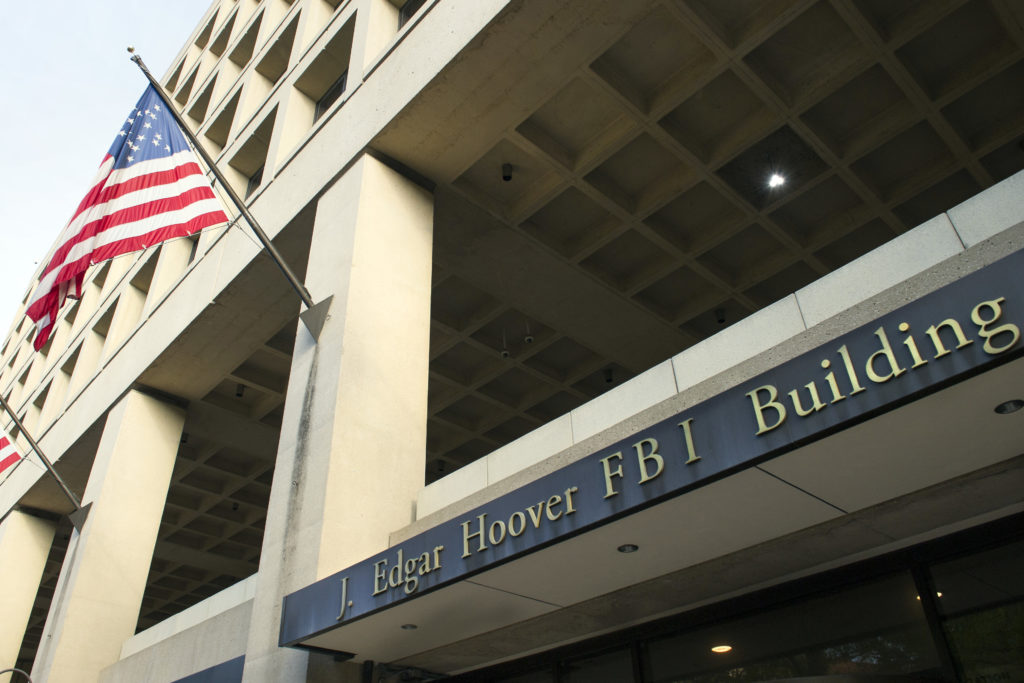
The FBI has been reviewing the handling of thousands of terrorism-related tips and leads from the past three years to make sure they were properly investigated and no obvious red flags were missed, The Associated Press has learned. The review follows attacks by people who were once on the FBI’s radar but who have been accused in the past 12 months of massacring innocents in an Orlando, Florida, nightclub, injuring people on the streets of New York City, and gunning down travelers in a Florida airport. In each case, the suspects had been determined not to warrant continued law enforcement scrutiny months and sometimes years before the attacks. The internal audit, which has not been previously reported, began this year and is being conducted in FBI field offices across the country. A senior federal law enforcement official described the review as an effort to “err on the side of caution.” The audit is essentially a review of records to ensure proper FBI procedures were followed. It’s an acknowledgment of the challenge the FBI has faced, particularly in recent years, in predicting which of the tens of thousands of tips the bureau receives annually might materialize one day into a viable threat. Investigations that go dormant because of a lack of evidence can resurface instantly when a subject once under scrutiny commits violence or displays fresh signs of radicalization. FBI Director James Comey has likened the difficulty to finding not only a needle in a haystack but determining which piece of hay may become a needle. Though there’s no indication of significant flaws in how terrorism inquiries are opened and closed, the review is a way for the FBI to “refine and adapt to the threat, and part of that is always making sure you cover your bases,” said the law enforcement official, who was not authorized to discuss the matter by name. The pace of the FBI’s counterterrorism work accelerated with the rise of the Islamic State group, which in 2014 declared the creation of its so-called caliphate in Syria and Iraq and has used sophisticated propaganda to lure disaffected Westerners to its cause. By the summer of 2015, Comey has said, the FBI was “strapped” in keeping tabs on the group’s American sympathizers and identifying those most inclined to commit violence. Social media outreach by IS has appealed to people not previously known to the FBI but also enticed some who once had been under scrutiny to get “back in the game,” said Seamus Hughes, deputy director of George Washington University’s Program on Extremism. “The fact that there was a physical location and a caliphate announced, it helped kind of drive folks back in when they might have drifted away,” Hughes said. The review covers inquiries the FBI internally classifies as “assessments” — the lowest level, least intrusive and most elementary stage of a terror-related inquiry — and is examining ones from the past three years to make sure all appropriate investigative avenues were followed, according to a former federal law enforcement official who spoke on condition of anonymity to discuss the process. Assessments are routinely opened upon a tip — whether from someone concerned about things such as activity in a neighbor’s garage, a co-worker’s comments or expressions of support for IS propaganda — and are catalogued by the FBI. The bureau receives tens of thousands of tips a year, and averages more than 10,000 assessments annually. FBI guidelines meant to balance national security with civil liberties protections impose restrictions on the steps agents may take during the assessment phase. Agents, for instance, may analyze information from government databases and open-source internet searches, and can conduct interviews. But they cannot turn to more intrusive techniques, such as requesting a wiretap or internet communications, without higher levels of approval and a more solid basis to suspect a crime or national security threat. The guidelines explicitly discourage open-ended inquiries and say assessments are designed to be “relatively short,” with a supervisor signing off on extension requests. Many assessments are closed within days or weeks when the FBI concludes there’s no criminal or national security threat, or basis for continued scrutiny. The system is meant to ensure that a person who has not broken the law does not remain under perpetual scrutiny on a mere hunch that a crime could eventually be committed. But on occasion, and within the past year, it’s also meant that people the FBI once looked at but did not find reason to arrest later went on to commit violence. In the case of Omar Mateen, that scrutiny was extensive, detailed and lengthy. Mateen, who shot and killed 49 people at an Orlando nightclub in June, was investigated for 10 months in 2013 and interviewed twice after a co-worker reported that Mateen had claimed connections to al-Qaida. As part of a preliminary investigation, agents recorded Mateen’s conversations and introduced him to confidential sources before closing the matter. That kind of investigation is more intensive than an assessment and permits a broader menu of tactics, but it also requires a stronger basis for suspicion. Mateen was questioned again in 2014 in a separate investigation into a suicide bomber acquaintance. Comey has said he has personally reviewed that inquiry’s handling and has concluded it was done well. The FBI in 2014 also opened an assessment on Ahmad Khan Rahimi, who last September was charged in bombings in Manhattan and New Jersey, based on concerns expressed by his father. The FBI said it closed the review after checking databases and travel and finding nothing that tied him to terrorism. Esteban Santiago, the man accused in the January shooting at the Fort Lauderdale, Florida, airport that killed five people, had also been looked at by the FBI. He had walked into the bureau’s office in Anchorage, Alaska, two months earlier and claimed his mind was being controlled by U.S. intelligence officials. In that case, too, the FBI closed its assessment after interviewing family members and checking databases. Each act of
Year’s top news filled with division — and no middle ground
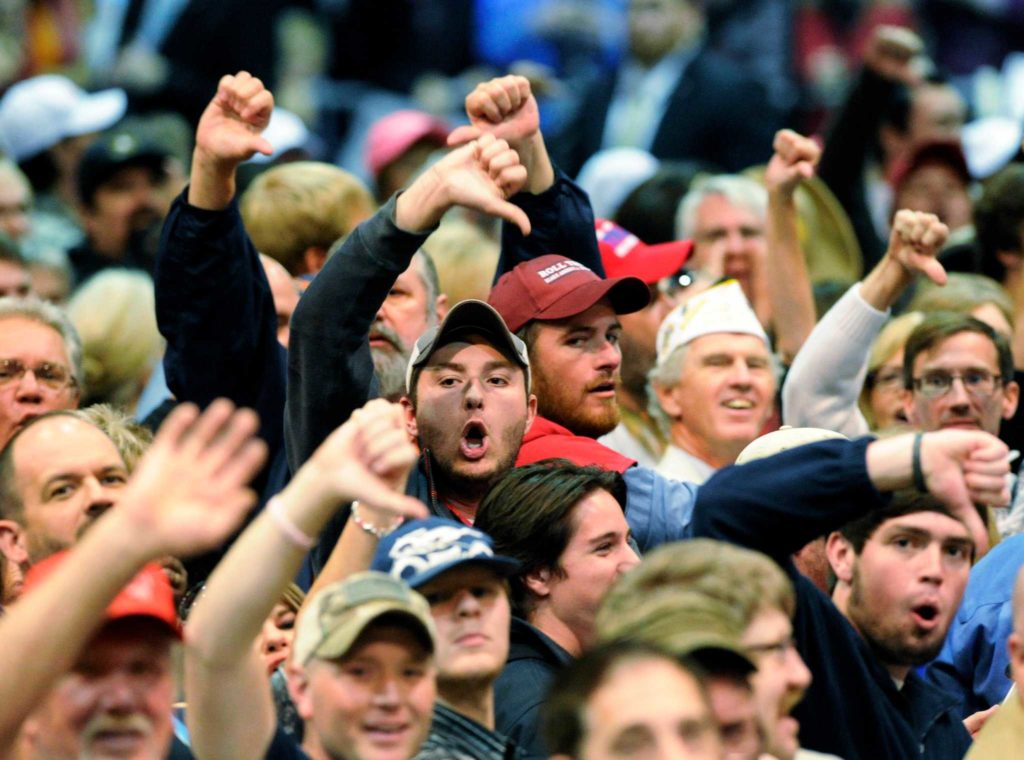
Fed up with Europe’s union across borders? Reject it. Disgusted with the U.S. political establishment? Can it. The news in 2016 was filled with battles over culture and territory that exposed divisions far deeper than many realized. But people confronting those divides repeatedly rejected the prospect of middle-ground solutions and the institutions put in place to deliver them. While the headlines told many different stories, the thread connecting much of the news was a decisive torching of moderation, no matter how uncertain the consequences. “You’re not laughing now, are you?” Nigel Farage, a leader of the Brexit campaign, told the European Parliament after voters in Great Britain spurned membership in the continental union. “What the little people did … was they rejected the multinationals, they rejected the merchant banks, they rejected big politics and they said, ‘Actually, we want our country back.’” Farage was speaking only about the United Kingdom. But his observation that many people well beyond Britain shared that disdain for working within the system was borne out repeatedly in the year’s biggest headlines. In a U.S. presidential campaign fueled by anger and insults, in Syria’s brutal war and Venezuela’s massive protests, in fights over gay rights and migration, opposing sides rejected not just compromise but also the politics of trying to forge it. That was clear from the year’s first days, when armed activists took over a national wildlife refuge in Oregon’s high desert, opposing the federal government’s control of public lands. “It needs to be very clear that these buildings will never, ever return to the federal government,” LaVoy Finicum, an Arizona rancher among the activists, told reporters. Weeks later, federal agents stopped vehicles outside the refuge, arresting eight of the activists and fatally shooting Finicum when he reached into a jacket that held a loaded gun. Even in the rare cases when compromise prevailed, it was viewed with suspicion. When a deal took effect in January limiting Iran’s nuclear program in exchange for relief on sanctions, it marked the culmination of prolonged negotiation by President Barack Obama‘s administration. But the pact was repeatedly attacked by critics in both countries, including Donald Trump, saying it gave the other side too much. “The wisest plan of crazy Trump is tearing up the nuclear deal,” a leading Iranian hard-liner, Hossein Shariatmadari, told his country’s news agency. In mid-February, U.S. Supreme Court Justice Antonin Scalia died in his sleep, leaving a vacuum on a court where he had long been the leading conservative voice. Barely an hour after Scalia’s death was confirmed, Senate Majority Leader Mitch McConnell staked out an uncompromising position on what lay ahead. “The American people should have a voice in the selection of their next Supreme Court justice,” McConnell said, disregarding the fact that U.S. voters had twice elected Obama. “Therefore, this vacancy should not be filled until we have a new president.” North Carolina lawmakers prompted protests and counterprotests when they rushed through House Bill 2, voiding local gay-rights ordinances and limiting bathroom access for transgender people. Companies, the NBA and others followed through on threats to move jobs, games and performances out of the state, amplifying the division. Tensions over U.S. policing bled into a third year. In July, a sniper killed five Dallas police officers during a protest over shootings of black men by police in Louisiana and Minnesota. A South Carolina jury failed to reach a verdict in the trial of a white officer caught on video fatally shooting a black man fleeing a traffic stop. Division, though, was hardly limited to the U.S. In Venezuela, triple-digit inflation and shortages of food and medicine fueled 6,000 protests throughout the year that brought millions into the streets. But the government of President Nicolas Maduro, blamed by many voters for the chaos, blocked a recall campaign. “If you’re going to shoot me because I’m hungry, shoot me!” a young man shouted at a soldier during one protest in Caracas. In Colombia, voters narrowly rejected a deal between the government and a guerrilla group to end a 52-year civil war. Even when lawmakers approved a renegotiated deal, the peace remained fragile. In Brazil, senators impeached President Dilma Rousseff for manipulating budget figures, though many of the lawmakers were, themselves, tarred by accusations of corruption. South Korean President Park Geun-hye was stripped of power in December amid allegations she let a close friend use the government for financial gain. Meanwhile, Syria’s war entered its sixth year. But despite pressure by the U.S. and its allies, Russia and the government of President Bashar Assad unleashed an assault on Aleppo to wipe out rebels, driving up the toll in a conflict that has already claimed as many as 500,000 lives. “This is a targeted strategy to terrorize civilians and to kill anybody and everybody who is in the way of their military objectives,” U.S. Secretary of State John Kerry said, accusing Syria and Russia of war crimes. “As long as war crimes are at question,” a Russian government spokeswoman said, “the Americans should start with Iraq.” In Yemen, cease-fires broke down, extending a nearly two-year civil war. But with Syria capturing most international attention, a famine resulting from the turmoil was mostly overlooked. As the fighting continued, terrorist strikes spread fear well beyond the Middle East. A bombing at a Brussels airport in March and another attack in June at Istanbul’s airport by gunmen with explosives killed a total of nearly 80 people. More than 70 died when a bomb went off in a park in Pakistan, with a faction of the Pakistani Taliban claiming responsibility. In July, a terrorist drove a truck into a Bastille Day crowd in Nice, France, killing 86 and injuring more than 400 others. The Islamic State group claimed responsibility. In June, security guard Omar Mateen opened fire inside a gay nightclub in Orlando, Florida, in the deadliest mass shooting ever in the U.S. In a call to police during the attack, which killed 49, Mateen — a U.S. citizen born
U.S. election voted top news story of 2016
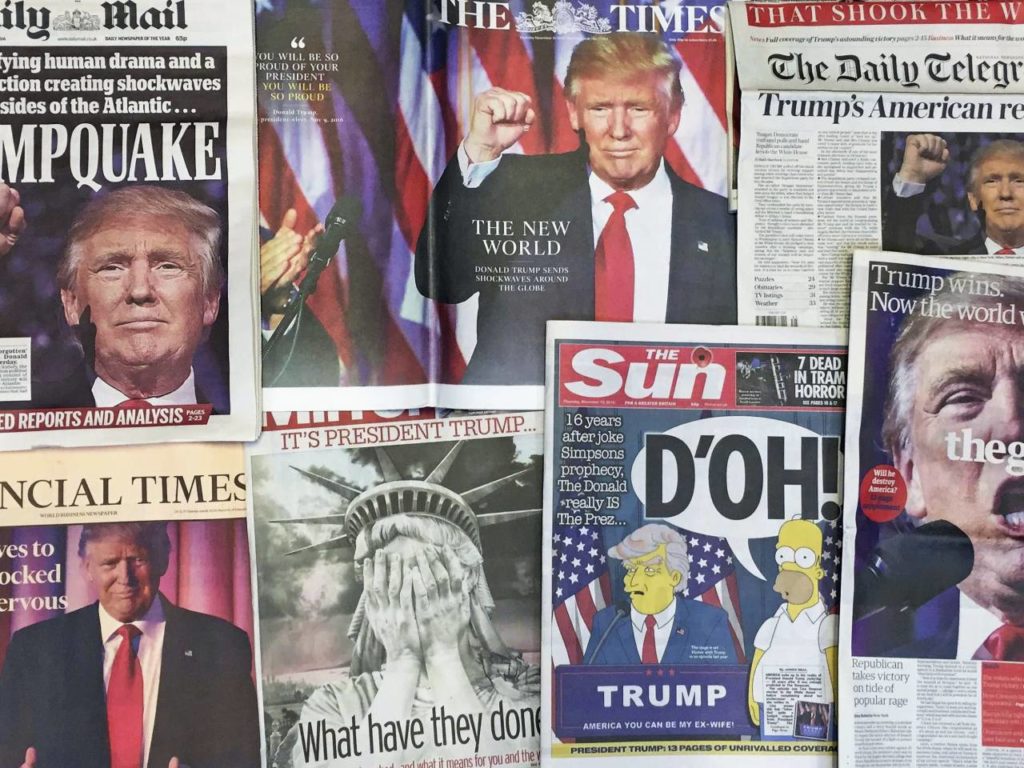
The turbulent U.S. election, featuring Donald Trump‘s unexpected victory over Hillary Clinton in the presidential race, was the overwhelming pick for the top news story of 2016, according to The Associated Press’ annual poll of U.S. editors and news directors. The No. 2 story also was a dramatic upset — Britons’ vote to leave the European Union. Most of the other stories among the Top 10 reflected a year marked by political upheaval, terror attacks and racial divisions. Last year, developments related to the Islamic State group were voted as the top story — the far-flung attacks claimed by the group, and the intensifying global effort to crush it. The first AP top-stories poll was conducted in 1936, when editors chose the abdication of Britain’s King Edward VIII. Here are 2016’s top 10 stories, in order: 1. US ELECTION: This year’s top story traces back to June 2015, when Donald Trump descended an escalator in Trump Tower, his bastion in New York City, to announce he would run for president. Widely viewed as a long shot, with an unconventional campaign featuring raucous rallies and pugnacious tweets, he outlasted 16 Republican rivals. Among the Democrats, Hillary Clinton beat back an unexpectedly strong challenge from Bernie Sanders, and won the popular vote over Trump. But he won key Rust Belt states to get the most electoral votes, and will enter the White House with Republicans maintaining control of both houses of Congress. 2. BREXIT: Confounding pollsters and oddsmakers, Britons voted in June to leave the European Union, triggering financial and political upheaval. David Cameron resigned as prime minister soon after the vote, leaving the task of negotiating an exit to a reshaped Conservative government led by Theresa May. Under a tentative timetable, final details of the withdrawal might not be known until the spring of 2019. 3. BLACKS KILLED BY POLICE: One day apart, police in Baton Rouge, Louisiana, fatally shot Alton Sterling after pinning him to the ground, and a white police officer shot and killed Philando Castile during a traffic stop in a suburb of Minneapolis. Coming after several similar cases in recent years, the killings rekindled debate over policing practices and the Black Lives Matter movement. 4. PULSE NIGHTCLUB MASSACRE: The worst mass shooting in modern U.S. history unfolded on Latin Night at the Pulse, a gay nightclub in Orlando. The gunman, Omar Mateen, killed 49 people over the course of three hours before dying in a shootout with SWAT team members. During the standoff, he pledged allegiance to the Islamic State. 5. WORLDWIDE TERROR ATTACKS: Across the globe, extremist attacks flared at a relentless pace throughout the year. Among the many high-profile attacks were those that targeted airports in Brussels and Istanbul, a park teeming with families and children in Pakistan, and the seafront boulevard in Nice, France, where 86 people were killed when a truck plowed through a Bastille Day celebration. In Iraq alone, many hundreds of civilians were killed in repeated bombings. 6. ATTACKS ON POLICE: Ambushes and targeted attacks on police officers in the U.S. claimed at least 20 lives. The victims included five officers in Dallas working to keep the peace at a protest over the fatal police shootings of black men in Minnesota and Louisiana. Ten days after that attack, a man killed three officers in Baton Rouge, Louisiana. In Iowa, two policemen were fatally shot in separate ambush-style attacks while sitting in their patrol cars. 7. DEMOCRATIC PARTY EMAIL LEAKS: Hacked emails, disclosed by WikiLeaks, revealed at-times embarrassing details from Democratic Party operatives in the run-up to Election Day, leading to the resignation of Democratic National Committee chair Debbie Wasserman Schultz and other DNC officials. The CIA later concluded that Russia was behind the DNC hacking in a bid to boost Donald Trump’s chances of beating Hillary Clinton. 8. SYRIA: Repeated cease-fire negotiations failed to halt relentless warfare among multiple factions. With Russia’s help, the government forces of President Bashar Assad finally seized rebel-held portions of the city of Aleppo, at a huge cost in terms of deaths and destruction. 9. SUPREME COURT: After Justice Antonin Scalia‘s death in February, President Obama nominated Merrick Garland, chief judge of the U.S. Court of Appeals, to fill the vacancy. However, majority Republicans in the Senate refused to consider the nomination, opting to leave the seat vacant so it could be filled by the winner of the presidential election. Donald Trump has promised to appoint a conservative in the mold of Scalia. 10. HILLARY CLINTON’S EMAILS: Amid the presidential campaign, the FBI conducted an investigation into Clinton’s use of a private computer server to handle emails she sent and received as secretary of state. FBI Director James Comey criticized Clinton for carelessness but said the bureau would not recommend criminal charges. Stories that did not make the top 10 included Europe’s migrant crisis, the death of longtime Cuban leader Fidel Castro, and the spread of the Zika virus across Latin America and the Caribbean. Republished with permission of The Associated Press.
A divided Senate answers Orlando with gridlock on gun curbs
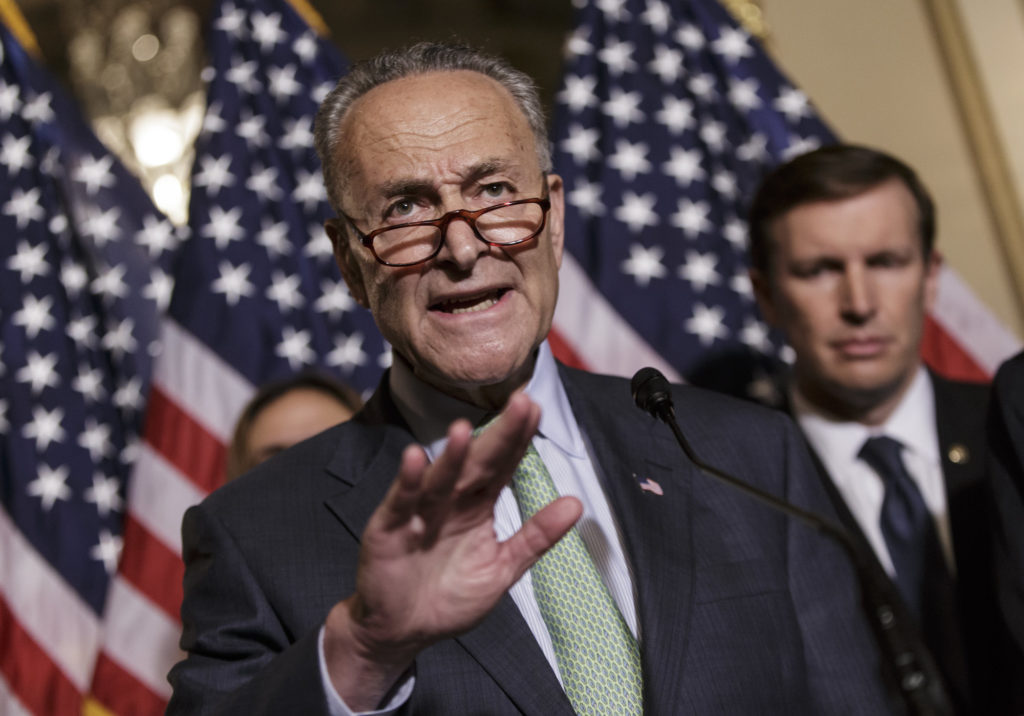
A divided Senate blocked rival election-year plans to curb guns on Monday, eight days after the horror of Orlando’s mass shooting intensified pressure on lawmakers to act but knotted them in gridlock anyway — even over restricting firearms for terrorists. In largely party-line votes, rejected were one proposal from each side to keep extremists from acquiring guns and another shoring up the government’s existing system of required background checks for many firearms purchases. With the chamber’s visitors’ galleries unusually crowded for a Monday evening — including people wearing orange T-shirts saying #ENOUGH gun violence — each measure fell short of the 60 votes needed to progress. Democrats called the GOP proposals unacceptably weak while Republicans said the Democratic plans were overly restrictive. The stalemate underscored the pressure on each party to give little ground on the emotional gun issue going into November’s presidential and congressional elections. It also highlighted the potency of the National Rifle Association, which urged its huge and fiercely loyal membership to lobby senators to oppose the Democratic bills. “Republicans say, ‘Hey look, we tried,’” said Senate Minority Leader Harry Reid, of Nevada. “And all the time, their cheerleaders, the bosses at the NRA, are cheering them.” Senate Majority Leader Mitch McConnell, R-Ky., said the Orlando shootings — in which the FBI says the American-born gunman swore allegiance to a leader of the Islamic State group — show the best way to prevent attacks by extremists is to defeat such groups overseas. “Look, no one wants terrorists to be able to buy guns or explosives,” McConnell said. He suggested that Democrats were using the day’s votes “as an opportunity to push a partisan agenda or craft the next 30-second campaign ad,” while Republicans wanted “real solutions.” That Monday’s four roll-call votes occurred at all was testament to the political currents buffeting lawmakers after gunman Omar Mateen‘s June 12 attack on a gay nightclub. The 49 victims who died made it the largest mass shooting in recent U.S. history, topping the string of such incidents that have punctuated recent years. The FBI said Mateen — a focus of two terror investigations that were dropped — described himself as an Islamic soldier in a 911 call during the shootings. That let gun control advocates add national security and the specter of terrorism to their arguments for firearms curbs, while relatives of victims of past mass shootings and others visiting lawmakers and watching the debate from the visitors’ galleries. GOP senators facing re-election this fall from swing states were under extraordinary pressure. One, Sen. Kelly Ayotte of New Hampshire, voted Monday for the Democratic measure to block gun sales to terrorists, a switch from when she joined most Republicans in killing a similar plan last December. She said that vote — plus her support for a rival GOP measure — would help move lawmakers toward approving a narrower bipartisan plan, like one being crafted by Sen. Susan Collins of Maine. Monday’s votes came after Sen. Chris Murphy, D-Conn., led a near 15-hour filibuster last week demanding a Senate response to the Orlando killings. Murphy entered the Senate shortly after the December 2012 massacre of 20 first-graders and six educators in Newtown, Connecticut, but that slaughter and others have failed to spur Congress to tighten gun curbs. The last were enacted in 2007, when the background check system was strengthened after that year’s mass shooting at Virginia Tech. With Mateen’s self-professed loyalty to extremist groups and his 10-month inclusion on a federal terrorism watch list, Sen. Dianne Feinstein, D-Calif., proposed letting the government block many gun sales to known or suspected terrorists. People buying firearms from federally licensed gun dealers can currently be denied for several reasons, chiefly for serious crimes or mental problems, but there is no specific prohibition for those on the terrorist watch list. That list currently contains around 1 million people — including fewer than 5,000 Americans or legal permanent residents, according to the latest government figures. No background checks are required for anyone buying guns privately online or at gun shows. The GOP response to Feinstein was an NRA-backed plan by Sen. John Cornyn, R-Texas. It would let the government deny a sale to a known or suspected terrorist — but only if prosecutors could convince a judge within three days that the would-be buyer was involved in terrorism. The Feinstein and Cornyn amendments would require notification of law enforcement officials if people, like Mateen, who’d been under a terrorism investigation within the past five years were seeking to buy firearms. Republicans said Feinstein’s proposal gave the government too much unfettered power to deny people’s constitutional right to own a gun. They also noted that the terrorist watch list has historically mistakenly included people. Democrats said the three-day window that Cornyn’s measure gave prosecutors to prove their case made his plan ineffective. The Senate rejected similar plans Feinstein and Cornyn proposed last December, a day after an attack in San Bernardino, California, killed 14 people. Murphy’s rejected proposal would widely expand the requirement for background checks, even to many private gun transactions, leaving few loopholes. Senate Judiciary Committee Chairman Charles Grassley of Iowa, defeated plan increased money for the background check system. Like Murphy’s measure, it prodded states to send more records to the FBI, which operates the background check system, of felons and others barred from buying guns. Grassley’s proposal also revamped language prohibiting some people with mental health issues from buying a gun. Democrats claimed that language would roll back current protections. Monday’s votes were 53-47 for Grassley’s plan, 44-56 for Murphy’s, 53-47 for Cornyn’s and 47-53 for Feinstein’s — all short of the 60 needed. Separately, Collins was laboring to fashion a bipartisan bill that would prevent people on the no-fly list — with just 81,000 names— from getting guns. There were no signs Monday that it was getting wide support or would receive a vote. Republished with permission of The Associated Press.
Diane Roberts: Muslims, immigrants aren’t the problem. It’s guns.
It’s back to business as usual: hating Muslims, loving guns. We had just celebrated the life of Muhammad Ali, the most famous, most beloved Muslim in the nation’s history. For a minute, one sweet minute, Americans might have been moved to think more expansively about Islam. And race. And violence. Some of us dared hope that the toxic sewer-flow of Trumpery might at least slow down, that America might manage a rare moment of introspection. Then Omar Mateen, a deranged homophobic — or, perhaps, closeted and self-loathing — loser with delusions of jihadi grandeur shot up an Orlando nightclub, killing 49 people, mostly young, mostly gay, mostly Latino. The leader of the Republican Party responded with the intelligence and accuracy we’ve come to expect: “The killer, whose name I will not use or ever say, was born in Afghan (sic), of Afghan parents, who immigrated to the United States.” He added, “The only reason the killer was in America in the first place was because we allowed his family to come here.” Omar Mateen was an American citizen. He was born in Queens, New York. Just like Donald Trump. Mateen’s parents were immigrants; Donald Trump’s mother was an immigrant. Trump’s solution? “When I’m elected I will suspend immigration from areas of the world where there’s a proven history of terrorism against the United States, Europe or our allies until we fully understand how to end these threats.” Right. So no Irish: some of them have perpetrated terrorist attacks on Britain, our closest ally. And no British, either — remember the shoe bomber? No French or Belgians, not after the atrocities in Paris and Brussels. Nobody from Africa or India, either. You don’t know where they’ve been. No Iraqis or Afghans — too bad we promised those interpreters we’d get them out after they helped us in the war. Cubans? Are you kidding? Ever heard of Orlando Bosch or Luis Posada Cariles? Nobody from Canada, either, not after the Toronto 18 plotted to blow up the Toronto Stock Exchange in 2006. No Mexicans. Obviously. Perhaps President Trump will suspend the Constitution so we can round up all Muslims — practicing or nominal — regardless of citizenship. That’ll learn ‘em. We’d better apprehend Christians, too — practicing or nominal — since they’re responsible for most terrorist attacks on U.S. soil: abortion clinics, gay bars, movie theaters, federal buildings, black churches. But God forbid we do anything about guns. Omar Mateen’s guns, an AK-15 and a 9 mm Glock, were legal. It didn’t matter that the guy was interviewed twice by the FBI or that he was on a watch list or that he beat his wife or that he behaved erratically and belligerently at times, talking about killing people. He passed his mental health screening and background check. Thanks to our pinhead of a governor with his A+ NRA rating, our craven legislature, our cowed citizenry, who would rather arm themselves than think, and Marion Hammer, that foul banshee of a gun lobbyist who rules the Capitol, the state of Florida enables firearm violence. The state of Florida — all of us — should have a long stare into our own souls. We’ll probably blame Islam instead. Or the Internet. Movies. Bad parenting. Poor diet. Anything but guns. Anything but the pathetic system that more or less allows anyone to get any weapon he wants. Assault rifles, machine guns, flamethrowers. Hell, you can get a grenade launcher if you try. If these “safeguards” didn’t stop Omar Mateen, maybe we need to adjust them. Maybe we need to figure out a better way to test mental health. You have to wait longer and go through more professional assessment to adopt a puppy. Muslims aren’t the problem. Immigrants aren’t the problem. Guns are the problem. Guns. ___ Diane Roberts is the author of “Tribal: College Football and the Secret Heart of America.” She teaches at Florida State University.
Orlando killer appears to have been ‘homegrown extremist’
The gunman whose attack on a gay nightclub left 49 victims dead appears to have been a “homegrown extremist” who espoused support for a jumble of often-conflicting Islamic radical groups, the White House and the FBI said Monday. As Orlando mourned its dead with flowers, candles and vigils, counterterrorism investigators dug into the background of 29-year-old Omar Mateen, the American-born Muslim who carried out the deadliest mass shooting in modern U.S. history. “So far, we see no indication that this was a plot directed from outside the United States, and we see no indication that he was part of any kind of network,” said FBI Director James Comey. But he said Mateen was clearly “radicalized,” at least in part via the Internet. Comey said the bureau is also trying to determine whether Mateen had recently scouted Disney World as a potential target, as reported by People.com, which cited an unidentified federal law enforcement source. “We’re still working through that,” Comey said. The FBI chief defended the bureau’s handling of Mateen during two previous investigations into his apparent terrorist sympathies. As for whether there was anything the FBI should have done differently, “so far, the honest answer is, I don’t think so,” Comey said. Despite Mateen’s pledge of fealty to the Islamic State, a murky combination of other possible motives and explanations emerged, with his ex-wife saying he suffered from mental illness and his Afghan-immigrant father suggesting he may have acted out of anti-gay hatred. He said his son got angry recently about seeing two men kiss. The Orlando Sentinel and other news organizations quoted regular customers at the gay bar as saying they had seen Mateen there a number of times. “Sometimes he would go over in the corner and sit and drink by himself, and other times he would get so drunk he was loud and belligerent,” said Ty Smith. Smith said he saw the killer inside at least a dozen times. Wielding an AR-15 semi-automatic rifle and a handgun, Mateen opened fire at Pulse Orlando early Sunday in a three-hour shooting rampage and hostage siege that ended with a SWAT team killing him. During the attack, he called 911 to profess allegiance to the Islamic State group. At the White House, President Barack Obama said there is no clear evidence so far that Mateen was directed by the group, calling the attack an apparent example of “homegrown extremism.” More details of the bloodbath emerged, with Orlando Police Chief John Mina saying Mateen was “cool and calm” during phone calls with police negotiators. But the chief said he decided to send the SWAT team in and bash through a wall after Mateen holed up with hostages in a bathroom and began to talk about bombs and an explosive vest. “We knew there would be an imminent loss of life,” Mina said. As it turned out, Mateen had no explosives with him. Five of the wounded were reported in grave condition, meaning the death toll could rise. A call went out for blood donations. In Orlando, mourners piled bouquets around a makeshift memorial, and people broke down in tears and held their hands to their faces while passing through the growing collection of flowers, candles and signs about a mile from the site of the massacre. About 300 employees of the Red Lobster restaurant chain — some in business suits, some in chef’s uniforms — emerged from the company’s corporate headquarters and walked two-by-two across the street to the memorial, each carrying a red or white carnation. “We will not be defined by the act of a cowardly hater,” vowed Mayor Buddy Dyer, whose city of a quarter-million people is known around the globe as the home of Walt Disney World and other theme parks. The tragedy hit the city’s gay and Hispanic communities especially hard. It was Latino Night at the club when the attack occurred. “As the names come out, they are overwhelmingly Latino and Hispanic names,” said Christina Hernandez, a Hispanic activist. “These were not just victims of the LBGT community, but of the Hispanic community, as well. This was senseless bloodshed.” Mateen’s grasp of the differences between Islamic extremist groups appeared shaky. During three calls with 911 dispatchers, Mateen not only professed allegiance to ISIS but also expressed solidarity with a suicide bomber from the Syrian rebel group Nusra Front, and a few years ago he claimed connections to Hezbollah, too – both ISIS enemies, according to Comey. The FBI became aware of Mateen in 2013 when co-workers reported that the private security guard claimed to have family connections to al-Qaida and to be a member of Hezbollah, too, Comey said. He was also quoted as saying he hoped that law enforcement would raid his apartment and assault his wife and child so that he could martyr himself. The FBI launched a 10-month preliminary investigation, following Mateen, reviewing his communications and questioning him, the FBI chief said. Mateen claimed he made the remarks in anger because co-workers were teasing him and discriminating against him as a Muslim, and the FBI eventually closed the case, Comey said. His name surfaced again as part of another investigation into the Nusra Front bomber. The FBI found Mateen and the man had attended the same mosque and knew each other casually, but the investigation turned up “no ties of any consequence,” Comey said. Mateen was added to a terror watch list in 2013 when he was investigated, but was taken off it soon after the matter was closed, according to Comey. People who are in that database are not automatically barred from buying guns, and in any case Mateen purchased his weapons in June, long after he was removed from the list. On Sunday, the bloodshed started after Mateen approached the club around 2 a.m., exchanged fire with an off-duty officer working security, and then went inside and started gunning people down, police said. After two other officers arrived and exchanged gunfire with Mateen, the gunman holed up in
Martin Dyckman: By electing pro-gun politicians, we are allies of home-grown terrorists
What fools we are. What willful, stubborn, persistent, incurable fools. Americans submit by the millions to the Transportation Security Administration’s multiple indignities and inconveniences. The TSA will cost us $5.1 billion this year. We’ll fill its trash barrels with tons of cosmetics, lotions and bottled water that we can’t carry on board. This is in the hope of preventing terrorists from committing more mass murders, such as those of September 11, 2001. And there haven’t been any more in that manner. But that guards only one gate, while leaving another gaping. Even as you next pose like a prisoner with arms raised or stand still for a TSA officer to wand you, some terrorist with massacre in mind could be walking into any gun shop and walking out with the means to carry it out. That’s what Omar Mateen did last week in Florida, where no permit is needed to buy or possess any firearm other than a machine gun. Florida allows even an AR-15 or its equivalent. Such weapons were invented for use in war, not self-defense. They fire as rapidly as a finger can pull a trigger. With a technique called bump fire, a trained shooter supposedly can achieve a rate of 700 rounds per minute. And so Florida is now the site of America’s worst mass shooting, with 49 innocent people dead and 53 others wounded, many grievously, at an Orlando night club named Pulse. Mateen appears to have been the most dangerous type of terrorist — homegrown, out of sight of any border control, virtually undetectable. And yet, there were warnings. His employer, a British-based security firm whose clients include the U.S. government, reportedly was told, according to The New York Times, that he spoke racial, ethnic and sexist slurs and talked about killing people. The FBI looked into him twice. Whether there was negligence is an appropriate question for investigation. The bigger question, though, is how many more Americans must die en masse, in nightclubs and restaurants and movie theaters and churches and schools, in as few seconds as it takes to read the sentence, before we learn to prohibit the sale and possession of such weapons of mass destruction? How many more terrorists will we arm? Predictably, of course, Donald Trump right away scapegoated the entire Muslim community, asserting without a shred of evidence that someone must have known what Mateen intended. In fact, most of the victims of mass shootings in the United States — 621 dead, 594 injured since 1982, according to Mother Jones — were killed by non-Muslims. Do we blame Christianity for Charleston, Virginia Tech, or for Newtown, Aurora, and Columbine? Or for the bombings and shootings, some fatal, at abortion clinics? Radicalism exists in nearly every religious faith and is the enemy of them all. Right after the San Bernardino massacre, the Senate voted 45-54 against prohibiting persons on the terrorism watch list from buying firearms. If the list is faulty, as some senators objected, it should be fixed. But as of now, there can be no confidence that someone on that list won’t be the next mass murderer. We’ll hear the gun lobby, doubtlessly, argue yet again that the best defense — the only defense — against the consequences of its insane demands is for everyone to have guns everywhere. Now suppose that half the people in that crowded, dimly lighted club had weapons when the shooting began. Think about it. Many more than 49 innocent people would be dead. Even when highly trained police stormed the scene, they couldn’t be sure that Mateen would be the only fatality. Someone posted to Facebook the other day that the NRA is America’s ISIS. Not so. The NRA does not set out to massacre innocent people. But the NRA and its associates in the gun lobby are indeed the allies of ISIS and of every other terrorist individual or organization, whatever its roots, where hatred is harbored against Americans because of their faiths, their origins, their race, or their nationality, or where mental illness inspires inchoate rage. And we — you and I, fellow citizens, are also terrorism’s allies, however unwilling or unwitting me may believe we are. We are terrorism’s allies so long as we submit to electing people to public office who are so stupid, selfish and cowardly that they would rather enact the insanities of the gun lobby than take reasonable and necessary steps to avert mass murder. There is no sound reason why any private citizen needs semi-automatic weapons, especially not AR-15s. Their possession and sale should be criminalized, except perhaps for gun clubs where the weapons would not be allowed off the premises. For a fraction of what the TSA is costing, we could buy back every such weapon and pay the owners a bonus for their troubles. The Second Amendment, of which the Supreme Court and the gun lobby have such a distorted view, was written in an age when no firearm on earth could be discharged more than three or four times a minute. Time and technology have rendered the gun lobby’s interpretation functionally obsolete. How many more Americans must be slaughtered before we, and our politicians, face that fact? ___ Martin Dyckman is a retired associate editor of the newspaper now known as the Tampa Bay Times. He lives in Asheville, North Carolina.
Tom Jackson: Jihadi wannabe shoots up Orlando; Obama blames us
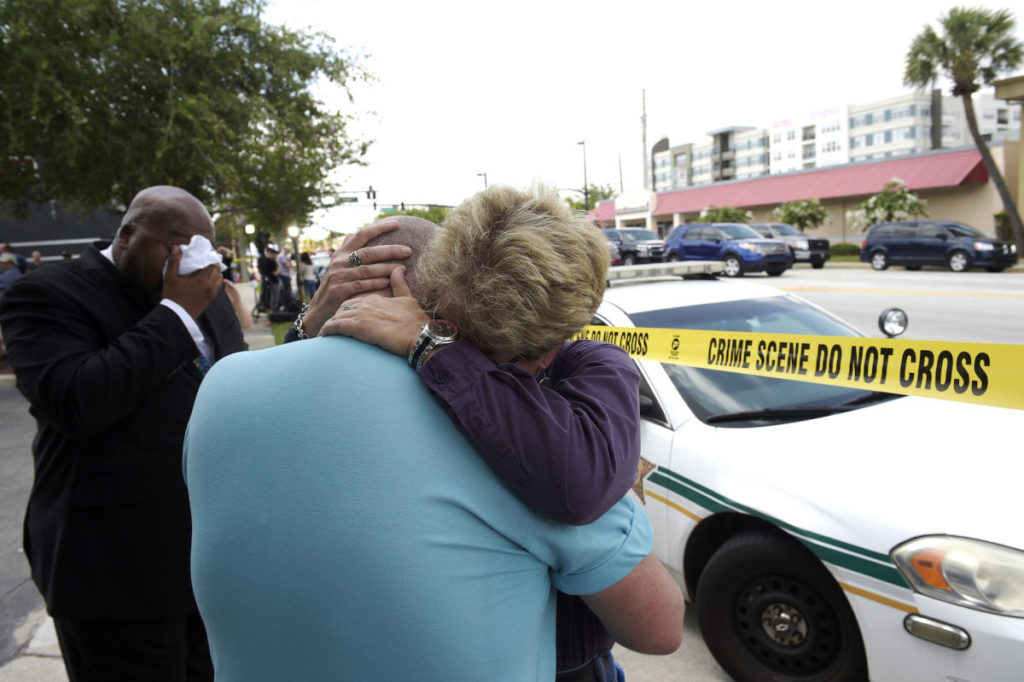
Once again, a great city that rightly prides itself on multicultural tolerance has been shredded by a fanatical hater whose worldview is rooted in 7th Century mysticism and hero worship. London. Madrid. Paris. Brussels. Now, Orlando. America’s getaway destination. Home. And once again, leaders of a political party with roots that trace to the Enlightenment are blaming the tools of destruction, not the backward extremism that put those instruments to evil use. Thus, in an otherwise down market Monday morning, did gun stocks — Smith & Wesson and Sturm Ruger, in particular — surge. This is perfectly understandable. When certain of America’s leaders target firearms after the ideologically charged slaughter of unarmed innocents, Americans know they are not serious about eradicating the next potential triggerman’s vile inspiration. Yes, I know. Among one-point-six-billion Muslims, only a statistically tiny portion are truly bad actors. But even if it’s only one percent, that’s a whole lot of radicalism for one small planet to manage. Along those lines, it’s darn near impossible to manage that which you refuse even to identify. Alas, such is President Obama’s M.O. Once again the moment came upon him to make plain the war forced upon us, and once again he dashed to a nonsense prescription — we require more extensive regulation of inanimate objects — while aggressively ignoring the jihadi in the room. What drivel. What insidious misdirection. Yes, we had a so-called “assault weapons” ban once upon a time, and the country didn’t collapse. Should we reinstate it? Only if we think meaningless flourishes will solve the raging trouble at hand. Studies indicate the ban made virtually no difference in gun crime. Bad dudes merely switched weapons of choice. Wait. The president wasn’t finished. There was an outrage ahead. Besides guns, Obama’s blame fell on, well, us. Really. Because, after all, in the president’s assessment, we all are denizens of the swamp that produced the execrable Omar Mateen. Obama: “We need to demonstrate that we are defined more — as a country — by the way [the victims] lived their lives than by the hate of the man who took them from us.” This blame-shifting is indefensible, even monstrous. A feverish Islamist extremist inflamed by ISIS acts on orders laid out plainly in sharia law and espoused by respected Muslim holy men, and Obama tells us to check our consciences. Yes, the people who love “Will & Grace” and “Modern Family,” who at worst sighed in capitulation over the Supreme Court’s same-sex marriage ruling; and who adore Neil Patrick Harris playing heterosexual romantic leads — we are the ones who need to make plain what defines us. That’s unreservedly disgusting. We didn’t establish a pattern of sweaty bigotry for Jews, African Americans, gays and women. We weren’t interviewed three times in two years by the FBI for linking ourselves to terror organizations and having had contact with a subsequent suicide bomber. We didn’t perpetrate such violence on our spouses that they had to flee half the country away to feel safe. We didn’t make a 911 call to proclaim allegiance to ISIS before hauling a small arsenal into an Orlando nightspot and start shooting up the place. That, and more, is all on Mateen, the vermin ISIS warrior/martyr wannabe. But that’s a subject too uncomfortable for President Obama, who called out hate and terror, but, when it came to honestly identifying the animating energy, flinched. Because blaming Americans is what he does. Every time. Every damn time. ___ Recovering sports columnist and former Tampa Tribune columnist Tom Jackson argues on behalf of thoughtful conservative principles as our best path forward. Fan of the Beach Boys, pulled-pork barbecue and days misspent at golf, Tom lives in New Tampa with his wife, two children and two yappy middle-aged dogs.
Hillary Clinton talks teamwork in wake of Orlando tragedy
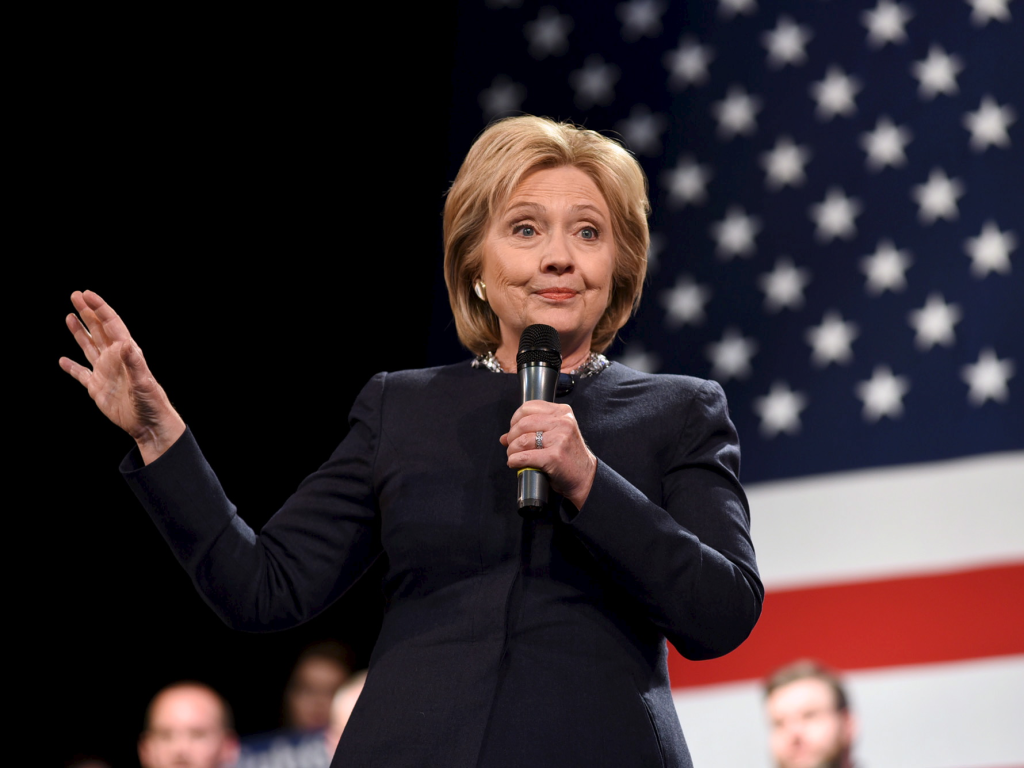
Hillary Clinton on Monday said that the Orlando nightclub massacre called for “statesmanship, not partisanship.” The presumptive Democratic presidential nominee spoke on MSNBC’s “Morning Joe” program. “This is a moment for Republicans, Democrats and Independents to work together as one team,” she said, according to a rush transcript. “The American team.” “I think that our fellow American citizens expect that … I remember we all came together as one nation after 9/11 and we should recapture that spirit,” she added. A gunman with a AR-15 assault rifle opened fire inside Pulse Orlando, a popular gay nightclub, early Sunday morning. Police say 49 people were killed, and another 53 were seriously injured. The shooter has been identified as Omar Mateen of Fort Pierce. He was killed at the scene. Authorities say Mateen called 911 during the attack and pledged allegiance to the Islamic State terror group, also known as ISIS. “You know, let’s have a very clear, rational discussion about what we do right and what we can improve on and how we’re going to protect Americans both from the threats of terrorism and ISIS, how we’re going to defeat ISIS and how we’re going to try to save people’s lives from the epidemic of gun violence now that we’re seeing terrorists use these assault weapons,” Clinton said. “That has to be part of the debate,” she said. The clip can be viewed here.
As the shootings unfolded, a horror for one mother via text

Mina Justice was sound asleep when she received the first text from her son, Eddie Justice, who was in the gay nightclub when a gunman opened fire, leaving 50 dead and more than 50 wounded. This is the conversation she had over text message with her 30-year-old son: “Mommy I love you,” the first message said. It was 2:06 a.m. “In club they shooting.” Mina Justice tried calling her 30-year-old son. No answer. Alarmed and half awake, she tapped out a response. “U ok” At 2:07 a.m., he wrote: “Trapp in bathroom.” Justice asked what club, and he responded: “Pulse. Downtown. Call police.” Then at 2:08: “I’m gonna die.” Now wide awake, Justice dialed 911. She sent a flurry of texts over the next several minutes. “I’m calling them now. U still in there Answer our damn phone Call them Call me.” The 911 dispatcher wanted her to stay on the line. She wondered what kind of danger her son was in. He was normally a homebody who liked to eat and work out. He liked to make everyone laugh. He worked as an accountant and lived in a condo in downtown Orlando. “Lives in a sky house, like the Jeffersons,” she would say. “He lives rich.” She knew he was gay and at a club – and all the complications that might entail. Fear surged through her as she waited for his next message. At 2:39 a.m., he responded: “Call them mommy Now.” He wrote that he was in the bathroom. “He’s coming I’m gonna die.” Justice asked her son if anyone was hurt and which bathroom he was in. “Lots. Yes,” he responded at 2:42 a.m. When he didn’t text back, she sent several more messages. Was he with police? “Text me please,” she wrote. “No,” he wrote four minutes later. “Still here in bathroom. He has us. They need to come get us.” At 2:49 a.m., she told him the police were there and to let her know when he saw them. “Hurry,” he wrote. “He’s in the bathroom with us.” She asked, “Is the man in the bathroom wit u?” At 2:50 a.m.: “He’s a terror.” Then, a final text from her son a minute later: “Yes.” More than 15 hours after that text, Justice still hasn’t heard from her son. She and a dozen family and friends are at a hotel that has become a staging area for relatives awaiting news. Any news. “His name has not come up yet and that’s scary. It’s just …” she paused and patted her heart. “It’s just, I got this feeling. I got a bad feeling.” Republished with permission of the Associated Press.
Hillary Clinton, Donald Trump adjust politicking following Florida shooting
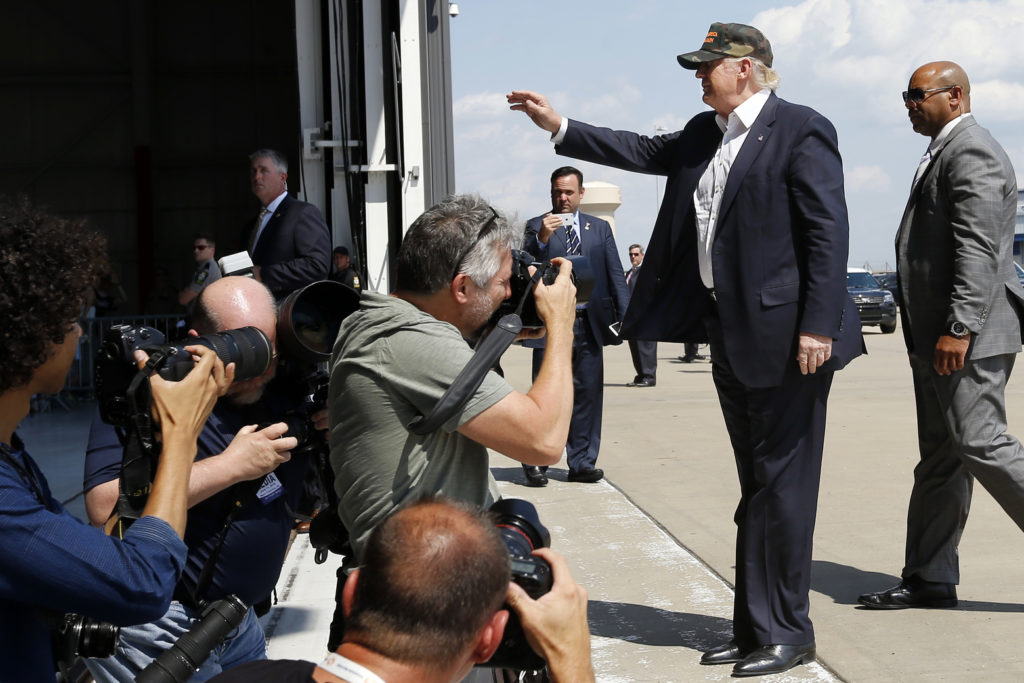
Donald Trump and Hillary Clinton adjusted their presidential politicking Sunday, first offering prayers and support to the victims of the worst mass shooting in U.S. history. But they both infused their sympathy with statements that favor their presidential aspirations, and the presidential race rolled on. The presumptive candidates made statements hours after a gunman wielding an assault-type rifle and a handgun opened fire inside a crowded gay nightclub early Sunday, killing at least 50 people before dying in a gunfight with SWAT officers, police said. Another 53 were hospitalized, most in critical condition. Officials identified the shooter as Omar Mateen of Port St. Lucie, Florida, a U.S. citizen born in New York. Clinton, the presumptive Democratic nominee, pushed for gun control and reached out to a key constituency — gays and lesbians. “The gunman attacked an LGBT nightclub during Pride Month. To the LGBT community: please know that you have millions of allies across our country. I am one of them,” she said in a statement, adding a call to keep assault weapons out of the hands of “terrorists or other violent criminals.” Trump, the presumptive Republican nominee, also offered words of support. But then spent the day congratulating himself apparently for predicting more attacks inside the U.S. On Twitter, he renewed talk of his plan to ban Muslims from the U.S. for an indeterminate time. And he went after President Barack Obama. As Obama stepped to the podium in Washington to address the nation early Sunday afternoon, Trump tweeted: “Is President Obama going to finally mention the words radical Islamic terrorism? If he doesn’t he should immediately resign in disgrace!” In his address Obama called the tragedy an act of terror and hate. He didn’t talk about religious extremists, nor did others, reluctant to inflame a stunned nation already on edge about attacks inspired by the Islamic State group. Obama said the FBI would investigate the shootings in the gay nightclub as terrorism but that the alleged shooter’s motivations were unclear. He said the U.S. “must spare no effort” to determine whether Mateen had any ties to extremist groups. Hours later, a law enforcement official confirmed to The Associated Press that Mateen had made a 911 call from the club, professing allegiance to the leader of Islamic State group, Abu Bakr al-Baghdadi. The official was familiar with the investigation but not authorized to discuss the matter publicly and spoke on condition of anonymity. The shootings inspired the candidates to shift their schedules and focus. Clinton’s presidential campaign announced it was postponing its first joint event with Obama on Wednesday in Green Bay, Wisconsin, because of the Orlando shooting. Trump said he was changing the focus of his speech Monday at Saint Anselm College in New Hampshire from his case against Clinton to “this terrorist attack, immigration and national security.” He also noted that he “said this was going to happen” and repeated his call for Obama to resign for refusing to use the words “radical Islam.” Clinton, Trump added, should drop out of the presidential race for the same reason. Trump has proposed temporarily barring all foreign Muslims from entering the country and has advocated using waterboarding and other harsh interrogation methods. Trump’s first tweet of the day was factual: “Really bad shooting in Orlando. Police investigating possible terrorism. Many people dead and wounded.” Tweeted Clinton: “Woke up to hear the devastating news from FL. As we wait for more information, my thoughts are with those affected by this horrific act.” And then they resumed their plans Sunday. On schedule, Clinton’s campaign unveiled its first general election ad Sunday morning. It will run in battleground states beginning Thursday. And Sen. Bernie Sanders, still in the contest for the Democratic nomination despite Clinton’s claim on it, went on with a round of appearances on the Sunday talk shows. He acknowledged the tragedy — then said he would not drop out of the race and endorse Clinton until he’s convinced she’s committed to fighting wealth disparity. He later issued a statement of sympathy to the Florida victims, with no political overtones. Two hours later, Trump responded to the Clinton ad. “Clinton made a false ad about me where I was imitating a reporter GROVELING after he changed his story. I would NEVER mock disabled. Shame!” The Clinton ad uses footage of Trump onstage, flailing his arms in an apparent attempt to mimic New York Times reporter Serge Kovaleski, who suffers from a congenital condition that restricts joint movement. At the time, Trump was taking issue with a story Kovaleski had written for The Washington Post. Roughly two hours after that tweet, Trump returned to the shootings. “Horrific incident in FL. Praying for all the victims & their families. When will this stop? When will we get tough, smart & vigilant?” he tweeted. An hour later, he followed up with some self-praise: “Appreciate the congrats for being right on radical Islamic terrorism, I don’t want congrats, I want toughness & vigilance. We must be smart!” Republished with permission of The Associated Press.
