
Ready to check out? Don’t forget, Alabama’s online sales tax is now in effect

Starting Monday, Alabamians will have to pay more to shop online, in some cases. The Alabama Department of Revenue is requiring online retailers that do not have a physical presence in the state with sales of more than $250,000 a year to register with the Alabama Simplified Sellers Use Tax Program (SSUT), and to start collecting taxes on Oct. 1. The SSUT program allows registered companies to pay a flat 8 percent sales tax, instead of navigating different county and city tax rates. Alabama is expected to be among the states most likely to see the biggest percentage increase in revenue based on the Barclays research. But a number of online retailers, including Amazon, already remit taxes to the state through the SSUT, so shoppers will see no changes in their purchase taxes. The U.S. Supreme Court paved the way for this tax back in June when it made a 5-4 ruling to overturn two decades-old Supreme Court decisions that impacted online sales tax collection. Alabama is among 10 states whose online sales tax is going into effect Monday. Illinois, Indiana, Kentucky, Massachusetts, Minnesota, Michigan, North Dakota, Washington and Wisconsin are also beginning Oct. 1. Similar laws will go into effect in Connecticut and Iowa in the coming months.
Steve Flowers: Supreme Court rules states – can collect online sales tax
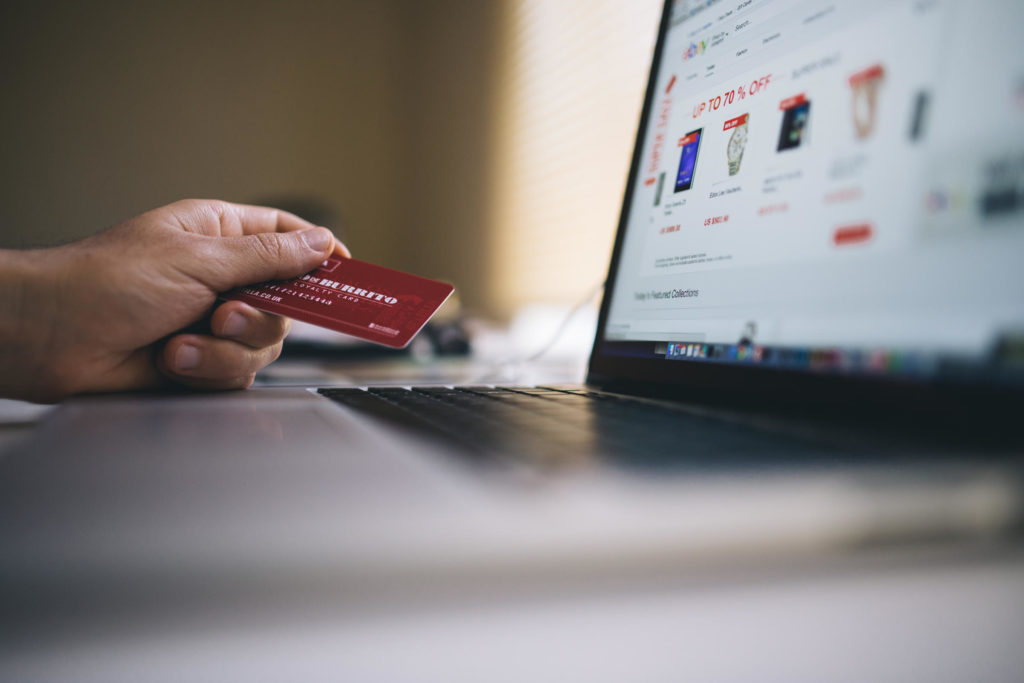
The State of Alabama’s fiscal year begins next week on October 1. Our state’s finances are not the best in the world. However, they got a boost from the U.S. Supreme Court earlier this year, The high tribunal ruled that states can collect sales tax on internet sales. This was one of the most inequitable scenarios I have ever seen. If you went to the corner hardware store or Lowe’s or Walmart to buy a hammer and paint, you paid sales tax. However, if you bought these same items online you did not. That is not fair to the store or the state. What is even more unfair is if your wife went down to the local dress shop and tried on an expensive dress she liked and then came home and bought it online. How fair is that to the store, the clerk at the store or the state. Finally, and thankfully, the Supreme Court clarified this inequality that had persisted for decades, since the inception of the internet. Alabama had already gotten ahead of the curve in regards to collecting online sales tax. Through the wise stewardship of House Ways and Means Chairman, Steve Clouse, R-Ozark, we had joined 19 other states in passing legislation that companies were to voluntarily pay the online sales tax. The legislation passed in 2015 was entitled the Simplified Sellers Use Tax. It allowed companies the permission to collect sales tax to be remitted to the state voluntarily in exchange for locking in a fixed rate of 8 percent no matter where in the state an online item was sold. As you know, the sales tax rate deviates throughout each city and locale. In Alabama’s case, the money collected under our SSUT Act was divided 50/50 between the state and cities and counties. The city’s and county’s half is disbursed based on population. The state’s half is divided 75 percent to the General Fund and 25 percent to the Education Fund. Chairman Clouse estimates that the state will reap an additional $18-20 million from the Supreme Court decision. The Supreme Court’s 5-to-4 ruling overruled decades of old decisions that had cost the state billions of dollars over the years. The cases the Court overturned said that if a business was shipping an online customer’s purchase to a state where the business did not have a physical presence like a store, warehouse, or office, the business did not have to collect sales tax and remit to the state. Over the decades this has been referred to as the Physical Presence Rule. Retiring Justice, Anthony Kennedy, wrote the majority opinion. He said, “Every year the Physical Presence Rule becomes further removed from economic reality and results in significant revenue losses to the state.” Retail trade groups praised the ruling saying that it levels the playing field for local and online businesses. President Trump praised the decision via Twitter. The President hailed the Supreme Court opinion as a “Big victory for fairness and for our country.” Speaking of President Donald Trump and the Supreme Court, it is said and it is very true that the greatest legacy a U.S. President can record is an appointment to the U.S. Supreme Court. Trump has had two in the first two years. Regardless of what transpires in the next two years of Trump’s reign, from conservative Americans viewpoint, this presidency has been a success. The nominations of Neil Gorsuch last year and Brett Kavanaugh this year were BIG. Both men are in their early 50’s and will make a powerful impact on public policy and law in America for decades. Long after Trump is gone, his legacy as a stalwart, conservative President will live on through Kavanaugh and Gorsuch. Both are also men of character with impeccable credentials. They are strict Constitutional constructionists and adherents. Their intellectual prowess will be indelibly inscribed into the Law of the Land for generations. As former President Barack Obama said, the night that Hillary Clinton lost to Donald Trump, “Elections have consequences.” See you next week. ••• Steve Flowers is Alabama’s leading political columnist. His weekly column appears in over 60 Alabama newspapers. He served 16 years in the state legislature. Steve may be reached at, www.steveflowers.us.
Here’s what the SCOTUS ruling that states can collect online sales tax means for Alabama
In a decision that will impact online shopping for all Alabamians, on Thursday the U.S. Supreme Court upheld a South Dakota law that required online companies to collect and remit state sales taxes, even if that company did not have a ‘physical presence’ in the state. In the landmark ruling, the court reversed a 26-year-old decision and in saying that states can require internet retailers to collect sales and use tax in states where they lack a physical presence. In Alabama Alabama is expected to be among the states most likely to see the biggest percentage increase in revenue based on the Barclays research. The ruling is likely to lead the Yellowhammer State to collect sales tax on purchases from out-of-state online businesses more aggressively. Translation: many consumers will likely pay more at the online checkout. History behind the opinion Justice Anthony Kennedy, who wrote the majority opinion in the 5-4 decision, said the 1992 decision, known as Quill, resulted in “a judicially created tax shelter for businesses that decide to limit their physical presence and still sell their goods and services to a state’s consumers — something that has become easier and more prevalent as technology has advanced.” According to the U.S. Census Bureau, from 1992 to 2018 internet and mobile sales have grown from zero to nine percent of all retail sales. Online sales are growing at four times the rate of total retail sales – 16 percent vs. 4.4 percent. The pre-internet era physical presence rule put “local businesses … at a competitive disadvantage relative to remote sellers,” and it “produced an incentive to avoid physical presence in multiple states,” Kennedy wrote in his opinion. Prior to the SCOTUS ruling In 2015, Alabama was looking for a solution to the problems they were encountering due to the Quill decision. That year, the Alabama Department of Revenue (ADOR) adopted a Simplified Sellers Use Tax program (SSUT) that took effect October 22: “Pursuant to this rule, an out-of-state seller with a substantial economic presence in Alabama will be required to collect and remit Alabama tax on its sales into the state, regardless of whether it has an Alabama physical presence. The rule imposes a collection obligation on out-of-state sellers who engage in one or more of the activities listed in Code of Alabama 1975, Section 40-23-68, activities subjecting out-of-state sellers to the state’s sellers use tax levy, and who had $250,000 or more in retail sales sold into Alabama in the previous year. Out-of-state sellers may satisfy the rule’s requirements by collecting, reporting and remitting tax on sales made into Alabama pursuant to the provisions of Article 2, Chapter 23 of Title 40, Code of Alabama 1975, or by participating in the Simplified Sellers Use Tax Remittance Program.” SSUT allowed, and continues to do so, participating sellers to collect, report, and remit an eight percent simplified sellers use tax on sales of tangible personal property delivered to Alabama purchasers, covering both state and local taxes. If SSUT is collected, neither the purchaser or the seller are liable for any additional use taxes on the transaction, regardless of whether the actual combined local and state rate is higher than eight percent. Before the SSUT was launched in 2015, online sellers with no physical presence in the state had no obligation to collect and remit use taxes on sales made within the state. Not only did this result in millions of dollars of revenue lost, but it also meant that brick-and-mortar retailers in the state, who did collect and remit sales tax, were at a disadvantage. In April 2018, Gov. Kay Ivey signed into law HB470, which amended the 2015 SSUT law by requiring online marketplaces to collect and remit use taxes on sales made through their marketplaces by third-party sellers, or to report such sales to the Alabama Department of Revenue and notify customers of use tax obligations. The legislation also allows existing sellers participating in the SSUT that establish a physical presence in this state, only through the acquisition of an in-state business, to continue to participate in the SSUT program. What the changes mean for Alabama? Since it’s inception, approximately 185 online vendors have voluntarily joined the state’s SSUT program. They are protected from a change in the physical presence rule. Only if the change in law is caused by “the enactment of federal legislation” is their grandfather protection voided (see Ala. Code § 40-23-191 et seq.). What they’re saying “The U.S. Supreme Court has ruled that online-only sellers should have to play by the same rules that in-state retailers do. Local retailers have been playing by the rules and collecting state sales tax on every purchase, every year since the Supreme Court’s original decision,” said Rick Brown, president of the Alabama Retail Association. “This is a victory for Alabama’s Main Street retailers. No longer will the federal government select winners and losers in the retail industry. Our 4,200 retail members and our association have advocated for this decision for decades.” Brown added, “Out-of-state, online-only businesses will no longer have an unfair advantage over our friends and neighbors who own local businesses. This ruling clears the way for a fair and level playing field where all retailers compete under the same sales tax rules whether they sell merchandise online, in-store or both.” Ivey says the decision “will promote parity between our state’s brick and mortar businesses and competing out-of-state sellers.” “Technology and the advent of e-commerce has drastically changed the retail landscape and the states’ ability to collect sales taxes. The Supreme Court’s ruling related to online sales taxes is a common-sense approach that modernizes existing limitations on the taxation of e-commerce sales and will facilitate collections in our global, technology-driven economy,” said Ivey. “The change effected by the Court’s decision will promote parity between our state’s brick and mortar businesses and competing out-of-state sellers.” ADOR has not responded to request for comment at the time of publishing. *This article will be updated as the decision is reviewed further.
Steve Flowers: Bringing Alabama sales tax into 21st-century

My tradition for over two decades has been to give my children money for Christmas. Under this system, there is no returning of items. They get what they want or need. There is no way that I would know what style of clothing, color or size they like. It works well. The most illuminating thing that occurred to me this year is that both of my daughters and my granddaughter bought all their Christmas gifts from me online. Without question, our country and state have changed dramatically technologically in my lifetime. Therefore, Alabama and other states have to change the way that sales tax is collected. States have to find a solution and the will to derive sales tax from online purchases. The legislature has wisely set up a budget reform task force to study, evaluate and come forward with long-term solutions to problems and loopholes in the law like online sales tax. The committee is headed by two stellar legislators, Sen. Clyde Chambliss (R-Prattville) and Rep. Danny Garrett (R-Trussville). This blue-ribbon panel will review and develop recommendations as to how Alabama can adjust to 21st-century budgeting. This non-collection of sales tax on online purchases is a serious problem and it perfectly illustrates how our tax system is more designed for the 20th century than the 21st. We, like many other states, are not keeping up with the technology shifts in the world. Legislators unquestionably have to re-evaluate the state’s tax structure to reflect the new online and digital economy. Rep. Garrett has wisely acknowledged, “We used to tax about two-thirds of the economy with the sales tax. Today, we tax one-third of our economy.” He further observed, “We are leaning very heavily on the income tax, and our sales tax base is eroding due to online sales.” Another issue, which will be discussed during this legislative session, is the deterioration of our transportation system in the state. This problem is not unique to Alabama. In fact, President Trump made this a hallmark issue of his campaign last year. Most Washington political observers fully expect to see a massive infrastructure package passed in a bipartisan manner early in Trump’s administration. Alabama needs to be poised to take advantage of this bonanza. The last major federal highway initiative came in the 1950s during the administration of Ike Eisenhower. It was also passed with bipartisan support. According to recent studies, 15 percent of Alabama roads and highways are in poor condition and 35 percent more are rated as fair, with 25 percent of our bridges deemed obsolete. The legislature may need to look at increasing the gas tax to take advantage of this federal windfall. More than likely, a state tax contribution will be needed to match the federal dollars. Alabama’s gas tax has not been increased since 1990. We have Richard Shelby, but he may need some help. The new Speaker of the House, Mac McCutcheon is from the Huntsville/Madison County area. The Rocket City is Alabama’s crown jewel economically. They realize the importance that adequate progressive highways are to sustained growth and prosperity. McCutcheon spearheaded the effort to increase the revenue for roads and bridges last year. About a dozen states raised the gas tax in 2016 to keep up with inflation and growth. Our neighboring state of Florida was one of them. Speaking of McCutcheon, he is adjusting well to his new role a Speaker. He is fair and even handed. His selection of Rep. Alan Boothe to be his Rules Chairman seems to be meshing well. The House leadership has changed even more dramatically since the session began. The Republican caucus has elected Rep. Nathaniel Ledbetter of Rainsville as their new Majority Leader. Ledbetter is a freshman House member and former mayor of Rainsville. Rep. Connie Rowe of Jasper will serve as Vice-Chairwoman of the Caucus. She is the first female to hold the position. Ledbetter replaces former Majority Leader Mickey Hammond of Decatur. Sen. Cam Ward has become the good shepherd, chief cook and bottle washer of the prison construction project. He has scaled back the size and scope of the original proposal. The legislature is trying to stay ahead of the federal courts on addressing the state’s prison overcrowding problem. See you next week. ___ Steve Flowers is Alabama’s leading political columnist. His weekly column appears in over 60 Alabama newspapers. He served 16 years in the state Legislature. Steve may be reached at www.steveflowers.us.
