
Secretary of State John Merrill announces electronic voter registration platform
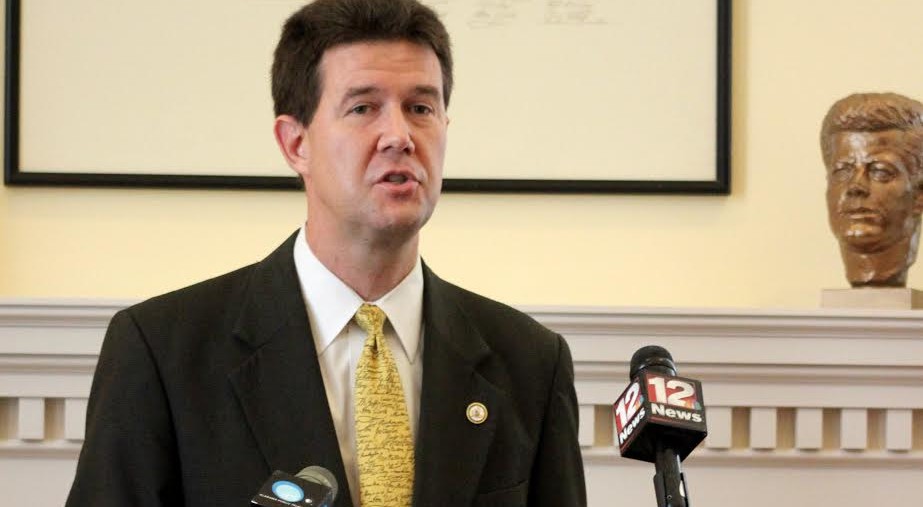
Alabama Secretary of State John Merrill said Monday that the state’s new online voter registration platform went live Jan. 22 and has been used by more than 7,500 residents. The online platform wasn’t unveiled until Monday’s news conference to allow officials to check the website is functioning properly. More than 140 people registered to vote on the website’s first day in action and more than 1,000 had registered between midnight Sunday and 10:30 a.m. Monday. “One of the most fundamental rights we as Americans are afforded is our right to vote,” Merrill said in a news release. “It is incumbent upon us as election officials to leverage technology wherever we can to facilitate the voting process. We want every eligible Alabamian to be afforded the right to vote, as well as participate in the electoral process, and the new implementation of Electronic Voter Registration will allow them to do so.” Through the Secretary of State’s website, residents can now register to vote for the first time or update their voter registration information within minutes. The new registration platform was designed to be simple and verifies all relevant information before passing the prospective voter’s information to county registrars, where it is double-checked before being approved. Merrill noted the new system is designed to “make it easy to vote and real hard to cheat.” Alabama joins 31 other states and the District of Columbia in now offering digital voter registration. “This is certainly a historic day in Alabama, and as long as I have the privilege to serve our citizens as their Secretary of State, I will do everything within my power to ensure all eligible Alabamians are able to exercise their right to vote,” Merrill said. The last day to register for the March 1 primary via electronic registration is Feb. 15.
Complex, yet fascinating: A primer on Alabama’s March presidential primary

With the 2016 election less than a year away, and the first caucuses within the next 90 days, now is a good time for a review of what could be an interesting, yet complex, turn of events. Much of the situation will depend on the state of the Republican field come March 1. Here is a primer of Alabama’s primary delegation process: Alabama’s Presidential Preference Primary is March 1, 2016, and does not require voters to declare a party preference when registering to vote. The Yellowhammer State has an open primary, meaning any registered voter can vote in the primary for any party. Voters choose the primary in which to vote, and they are not required to be a party member in order to vote. According to the state Department of Elections, requirements to vote in Alabama is as follows: each applicant is a citizen of the United States; is an Alabama resident; a minimum of 18 years old on or before Election Day; is not barred from voting by a disqualifying felony conviction, and has not been declared mentally incompetent by a court. The state does not permit online voter registration, early voting or “no excuse” absentee voting. Since 2014, to cast a ballot in Alabama requires valid photo identification at the polls. Alabama’s delegation is 26 at-large (numbered At-Large #1, At-Large #2, etc.), 21-Congressional District and three automatic (“unbound”) for 50 total, which will be allocated proportionally, as a what is known as winner-take-most. The threshold for any candidate to qualify for delegates is 20 percent, both statewide and within each congressional district. This follows Republican National Committee rules stating elections held before March 15 will be assigned proportionately. Some conservatives believe the rule was designed to help well-funded candidates (establishment favorites) who are in the race for the long term, and is an obstacle for grassroots candidates desperate for a primary win to rally supporters (and funds). Delegates are bound to their qualifying presidential candidates until either a candidate withdraws from the race for the Republican Party nomination and releases the delegates or if – by a two-thirds vote – the total number of delegates bound to that candidate become “unbound” at the national convention. That closes the door to any potential abuse but allows just enough for delegates to wiggle out of a pledge, in a scenario with multiple ballots/votes to determine the nominee at the convention. Enforcement of original pledges is left to the head of the Alabama delegation and/or the RNC secretary. While the system is designed to release delegates if a battle on the convention floor occurs, there is no mention of a specific number of ballots taken before a delegate can be released. Compared to four years ago, there are no other substantive rule changes in Alabama elections, but unlike other early primary states – New Hampshire, for one – proportional allocation of Alabama delegates come from two different groups: at-large statewide and congressional district delegates. To get either type, candidates must meet the 20 percent threshold, twice the limit set in New Hampshire. If a single candidate receives a majority of the Alabama’s vote, then he or she will receive all 26 at-large delegates. If a candidate receives a simple majority in any Alabama Congressional District, he or she will win three of the district’s delegates. The Alabama GOP Delegate Information Process datasheet outlines that a delegate must vote for the candidate they pledged on their qualifying form. If the candidate releases his delegates/alternates, then they can vote for a different person. As it stands, with such a large field of Republican presidential candidates – now standing at 15 – the chances are unlikely that a single candidate will receive a majority either statewide or in congressional districts. However, there is a possibility that the southern GOP contest – the so-called “SEC Primary” – will be a game changer in the 2016 presidential race. There is a likelihood the field will narrow after the early primary states of New Hampshire, South Carolina, and Nevada. On the other hand, with a big group of candidates remaining March 1, it will substantially limit the probability of the rise of a consensus candidate. The bottom line: it might be a good bet that one person does not emerge on Super Tuesday with all 47 Alabama delegates. That said, there is a path (albeit a backdoor one) for a candidate to receive a majority of Alabama delegates, even in a large field. One only needs to meet the 20-percent threshold, either statewide or within a congressional district. If that is the case, where a particular candidate meets the 20 percent bar statewide, then they will control half (+1) of delegates, regardless of the results in the congressional districts. Understandably, Alabama’s allotment system has the potential to cause a considerable amount of political turmoil, overshadowing what should be a somewhat organized process. With a smaller number of candidates, though, the odds of one person picking up 20 percent of the vote increases. And as that number reaches two – it becomes almost assured that one (or the other) will meet the 50 percent threshold, receiving all delegates. Another case is when the vote triggers a potential winner-take-most scenario. In that situation, there would be a 20 percent bar for one and a 50 percent threshold for the other. With the current state of the race, there is a likelihood that more than one candidate will reach the 20 percent, thereby qualifying for delegates. Here is where math comes in. Since it is statistically impossible for a field of over five viable candidates to receive more than 20 percent each, the overall effect is somewhat limiting. Alabama’s delegate allocation system promotes narrowing the field of contenders – or at least accelerating the winnowing already taking place before March 1. Therefore, if (or when) these conditions are met, 26 at-large delegates will be spread out among candidates who get at least 20 percent of the vote. As for
