
Martha Roby: We’re tackling the opioid crisis head-on

There are countless important issues currently facing our state and country. From ongoing conversations about border security to the pressing need to come to an agreement on government funding, there is no shortage of topics that warrant serious discussion. Perhaps one of our most critical ongoing issues is the horrific opioid epidemic that continues to grip Alabama and communities throughout our country. To understand the scale and the seriousness of this crisis, we must first have a clear grasp on its history and the numbers. In the late 1990s, pharmaceutical companies assured the medical community that patients would not become addicted to opioid pain relievers, and healthcare providers began to prescribe these drugs at increasing rates. This increased prescription led to widespread misuse of both prescription and non-prescription opioids before it became clear that these medications can, indeed, be highly addictive. In 2017, the Department of Health and Human Services (HHS) declared a public health emergency and announced their strategy to combat the crisis. In 2017, there were more than 70,200 drug overdose deaths in the U.S., and the sharpest increase occurred among deaths involving fentanyl and other synthetic narcotics. It is estimated that more than 11.4 million people misused prescription opioids in 2017 alone. In 2017, Alabama health care providers wrote 107.2 opioid prescriptions for every 100 persons. This was the highest prescribing rate in the country and nearly double the national average. These numbers clearly show that we have a serious problem on our hands, and I am glad to report that the Administration has recently taken further action to continue to combat this crisis that takes American lives daily. The Department of Health and Human Services recently announced more than $1.8 billion in funding to states to continue efforts to crack down on the opioid epidemic, and Alabama will receive $13 million. These funds will expand access to treatment and support the collection of real-time data related to drug overdose. The Centers for Disease Control and Prevention announced more than $900 million in new funding for a three-year cooperative agreement with states, territories, and localities to advance the understanding of this epidemic and strengthen prevention and response efforts. The Substance Abuse and Mental Health Services Administration awarded approximately $932 million to all 50 states as part of its State Opioid Response grant program. By the end of this year, the Trump Administration’s Department of Health and Human Services will have awarded more than $9 billion in grant dollars to states and local communities to increase access to opioid addiction treatment and prevention services. For the first time in more than two decades, we are seeing a decrease in overdose deaths, more Americans are accessing treatment, and lives are being saved. Much work remains as we tackle this crisis head-on, but we are finally headed in the right direction, and I will continue this fight with my colleagues in Congress and the Trump Administration. Martha Roby represents Alabama’s Second Congressional District. She lives in Montgomery, Alabama, with her husband Riley and their two children.
Alabama community health centers receive $4M in critical opioid treatment grants

Community health centers across the state are receiving federal grants to support increased treatment and prevention for opioid and substance abuse. Sen. Richard Shelby made the announcement Thursday that 15 centers would receive a total of $4,038,000 in federal grant funding from the U.S. Department of Health and Human Services (HHS). “It is of the utmost importance that we work to fund the fight against the national opioid crisis,” said Shelby. “Nearly every county in Alabama is affected by this growing problem. These HHS grants will allow community health centers across the state to provide treatment to patients with opioid and substance abuse and support addiction prevention programs, helping our communities tackle this widespread epidemic.” These grants will impact community health centers in the following areas of the state: Bayou La Batre, Birmingham, Centreville, Gadsden, Huntsville, Mobile, Montgomery, Parrish, Selma, Scottsboro, Troy, and Tuscaloosa. On September 19, HHS awarded nearly $352 million to 1,232 community health centers across the nation, including the 15 in Alabama, through the Expanding Access to Quality Substance Use Disorder and Mental Health Services (SUD-MH) awards. The SUD-MH awards support health centers in implementing and advancing evidence-based strategies that best meet the substance use disorder and mental health needs of the populations they serve. The following 15 community health centers in Alabama will receive $4,038,000 in grant funding: Bayou La Batre Area Health Development Board, Inc., Bayou La Batre – $285,000 Christ Health Center, Inc., Birmingham – $285,000 Alabama Regional Medical Services, Birmingham – $285,000 Aletheia House, Inc., Birmingham – $201,750 Cahaba Medical Care Foundation, Centreville – $296,000 Quality of Life Services, Inc., Gadsden – $293,000 Central North Alabama Health, Huntsville – $285,000 Health Services, Inc., Montgomery – $285,000 Franklin Primary Health Center, Inc., Mobile – $285,000 Mobile County Health Department, Mobile – $285,000 Capstone Rural Health Center, Parrish – $287,250 Rural Health Medical Program, Inc., Selma – $285,000 Northeast Alabama Health Services, Inc., Scottsboro – $110,000 S.E. Alabama Rural Health Associates, Troy – $285,000 Whatley Health Services, Inc., Tuscaloosa – $285,000
Daniel Sutter: Are we making the opioid problem worse?
Opioid abuse is taking a tremendous toll on America, with 42,000 opioid-related deaths in 2016. The problem involves both prescription opioid-based painkillers and illegal heroin and fentanyl. Might our public policy response be worsening this terrible problem? Economists have analyzed prohibition, both alcohol in the 1920s and illegal drugs more recently. We evaluate prohibition, or any other government policy, by comparing the world with and without the policy in question. This necessarily involves a state of the world which does not exist. We will never see the toll opioids would have taken in 2018 if we had significantly different policies in place. We must construct an alternative. Rules govern the construction of alternatives to produce meaningful comparisons. One key is allowing only the policy to vary, not other factors, so differences can be attributed to alternative policy. For example, prohibition does not automatically stop people from taking a substance. Some potential users will be deterred because of illegality, but others won’t, as we saw with alcohol in the 1920s. Economic analysis distinguishes harm from the substance itself and those due to prohibition. Drug violence, for example, is almost entirely due to prohibition. Dealers’ cash and drugs are vulnerable to theft, and these thefts will not be reported to the police. Dealers will use violence to protect, steal or retrieve drugs and money. Walgreens and CVS do not have gun battles to control the OxyContin market. Prescription painkillers provide a distinctive twist to the opioid crisis. Introduction of opioid painkillers in the 1990s opened new options for millions of American pain sufferers. Prescription drugs occupy a middle ground in prohibition, legal under government-approved conditions and illegal otherwise. Perhaps the major controversy for policy and lawsuits brought by dozens of states and cities against drug companies is the addictiveness of opioid painkillers. Studies in leading medical journals show that perhaps one or two percent of patients using the drugs as prescribed become dependent. Many of the Americans addicted to painkillers obtained them on the black market or through a bogus prescription. In 2010, the Food and Drug Administration reformulated OxyContin to make the pills harder to crush and make into more potent opioids. Other restrictions on prescribing followed, and pill mills have been shut down. Yet the crisis has become much deadlier since 2010, with heroin- and fentanyl-related deaths increasing by factors of five and six respectively, with only a slight decline in prescription-related deaths. (Overdose victims often used more than one narcotic, so deaths are described only as related to a drug.) Heroin, especially when laced with fentanyl, is far deadlier than prescription opioids. It is tragic when people fall into substance abuse, which often happens after traumatic life events. Rehab is often not effective until people decide to change their lives. Unfortunately, public policy may only be able to limit the harm during a dark period in people’s lives, and ensure the availability of help when requested. Forcing people to turn to heroin by restricting access to painkillers increases harm. Restricting access to prescription opioids is costly. Many people can no longer successfully manage their chronic pain, with tragic consequences. In some documented cases, patients have committed suicide after being denied painkillers. Any policy limiting access for people who do not “need” painkillers will deny some patients in pain needed help because pain is subjective; no doctor or nurse can know if it is tolerable. And a strong argument exists that American adults should be able to decide how to treat their pain without the government’s approval. Libertarian psychiatrist Thomas Szasz argued that free people have a right to drugs. The concentration of the opioid deaths in regions with dwindling manufacturing and mining jobs suggests a significant economic element to the crisis. And this, to me, is the crisis’ most disturbing element. America today boasts tremendous prosperity and opportunity. Given the high overall quality of life today, why is the economy seemingly leading so many Americans to addiction? ••• Daniel Sutter is the Charles G. Koch Professor of Economics with the Manuel H. Johnson Center for Political Economy at Troy University and host of Econversations on TrojanVision. The opinions expressed in this column are the author’s and do not necessarily reflect the views of Troy University.
Prosecutor on Justice’s opioid crackdown favors tough tact

Mary Daly has heard the criticism: That the tough-on-drugs approach favored by the Trump administration is cruel, ineffective and a return to the failed policies of the 1980s. She’s not buying it. “We need to use tough prosecutions if we are going to get our way out of this epidemic,” said Daly, a longtime federal drug prosecutor recently tapped to oversee the Justice Department’s ambitious efforts to attack America’s opioid abuse crisis. “We don’t ignore the need for prevention and treatment efforts, but the notion that tough enforcement is the wrong approach is wrong.” Daly, who prosecuted gang members and drug traffickers for 13 years in New York and Virginia, said her work has given her a close-up look at the drug problem. President Donald Trump and Attorney General Jeff Sessions have made combatting the opioid epidemic a cornerstone of the crime-fighting agenda they both share. Trump has encouraged the use of the death penalty against traffickers when possible, a request Sessions then codified in a directive to federal prosecutors. Daly wasn’t responsible for that policy, but her selection aligns with the tough approach. She said she supports Sessions’ undoing of an Obama-era policy that aimed to show more leniency to lower-level drug offenders. And she favors strict enforcement to rein in the epidemic that saw a record 42,000 opioid related overdose deaths in 2016. The daughter of William Barr, who was attorney general under President George H.W. Bush, Daly was responsible for some of the biggest and most complex international drug trafficking cases in the Eastern District of Virginia, maintaining a heavy case load even as supervisor of the narcotics unit, said James L. Trump, a fellow prosecutor who worked alongside her there. She brought a quiet confidence to the courtroom, and a desire for fairness and consistency, he said. “She believed that adherence to the law and consistency with the law would bring about just results,” said Trump, who has no relation to the president. “If there was a philosophy, it is what I find in most good prosecutors which is that the law is the law, whether our personal beliefs are different in terms of sentencing policy doesn’t really matter.” In her new role, much of Daly’s focus will be on fentanyl, the deadly painkiller fueling the crisis. Under her watch, the Justice Department is going after dealers who use the anonymity of the internet to peddle fentanyl from overseas into American homes, pharmacies and doctors who recklessly overprescribe pain pills, as well as the kind of major traffickers Daly prosecuted in the field. “We have a unique drug on the table in fentanyl. Very small quantities can kill people,” Daly said, adding that the deadly narcotic is showing up in cocaine and other less lethal drugs. “We do have to recalibrate a bit in terms of how we’re addressing the fentanyl threat and that may mean looking at people who are supplying lower quantities.” Both conservative and liberal critics fear such a philosophy could mark a return to the policies of the 1970s and 80s that unduly affected minority communities and flooded prisons by ensnaring mid- to low-level dealers. “It’s deadly, I get that, but that’s why we need to treat it in a really thoughtful way,” said Mark Holden, general counsel for the conservative Koch network. The left-leaning Brennan Center said the department’s focus should be on major traffickers. But it also pointed to efforts to target opioid manufacturers and distributors, which Daly also oversees, as a positive step. Already under Daly’s watch, the Justice Department has thrown its weight behind local officials in hundreds of lawsuits against the manufacturers and distributors of opioid painkillers. Prevention and treatment are also part of the department’s larger strategy, with prosecutors recommending treatment as part of a sentence and grant money devoted to programs. “I would argue they go hand-in-hand,” Daly said. “Oftentimes enforcement provides a good intervention in someone’s life to get them into treatment in a way that nothing else does.” Republished with permission from the Associated Press.
Walt Maddox unveils plan to tackle Alabama’s growing opioid crisis

Tuscaloosa mayor and Democratic gubernatorial candidate Walt Maddox on Monday unveiled his plan to tackle growing Alabama’s opioid epidemic. “Like most states, Alabama has been hit hard with opioid abuse and addiction. Indeed, our state has the highest rate of prescription opioid use in the nation, and it’s well established that legitimate use of opioid medication is a leading cause of illicit opioid abuse. But opioids aren’t our only drug problem,” explained Maddox. In an effort to get to the root of the problem, Maddox will separate substance abuse out from under the Department of Mental Health and create a cabinet level officer who answers directly to the Governor “in the battle to save our state from the ravages of illegal drug use while continuing to coordinate drug policy with mental health resources so that underlying causes of addiction are addressed.” He also reiterated the need to expand Medicaid to tackle the opioid epidemic. “The expansion will increase the availability of and access to treatment and counseling that we so desperately need. We also need to improve prescription drug monitoring and make medical treatments more widely available, like Soboxone, which alleviates the pain of opioid withdrawal but is too expensive for most to afford without assistance,” Maddox said in a statement He continued, “The opioid epidemic is also a time for society to look inward and reflect on how our past reaction to problems, like the crack cocaine scourge of two or three decades ago that disproportionately affected African American communities, was to enhance law enforcement and criminal penalties.” “The ‘war on drugs’ was never an effective strategy to treat substance abuse. Today we see a more compassionate, treatment-based approach to fighting opioids, which are devastating white and black communities alike. It’s terrible that it takes a growing tragedy in white communities to help us see the truth of what’s been happening in all our communities for many years, but the fact is that substance abuse has always been first and foremost a public health problem that cannot be solved by the criminal justice system alone. We’ve not always treated it that way, and that must change.”
Steve Marshall praises Donald Trump’s opioid abuse initiative
President Donald Trump on Monday announced a new initiative to stop opioid abuse and to reduce the drugs supply and demand. The president’s list of requirements for this initiative include: Reduce the over-prescription of opioids which has the potential to lead Americans down a path to addiction or facilitate diversion to illicit use. Cut off the flow of illicit drugs across our borders and within communities. Save lives now by expanding opportunities for proven treatments for opioid and other drug addictions. Alabama Attorney General Steve Marshall praised Trump’s initiative in a statement on Tuesday: I want to thank President Trump for his dedication to fight the terrible blight of opioid abuse in America. Opioid abuse is an epidemic that ignores cultural and political boundaries; it affects all of us—and thus demands a response that includes all of us. While I am still reviewing the specifics of President Trump’s initiative, I am heartened to see that his outline includes many of the recommendations of Alabama’s Opioid Overdose and Addiction Council; recommendations such as improved prescription monitoring, increased access to treatment and recovery support for persons suffering from opioid addiction, and legislation targeting low-dosage, super-lethal drugs like fentanyl. My hope is that, in the coming months, President Trump and Attorney General Sessions will work side-by-side with state and local officials to turn these ideas into reality. Together, we can conquer what the President has rightly called the ‘Crisis Next Door.’ In August of 2017, Gov. Kay Ivey named Marshall co-chair of the Alabama Opioid Overdose and Addiction Council. Ivey established this council to “develop and submit a strategic action plan to the Governor by December 31, 2017, which establishes recommendations for policy, regulatory and legislative actions to address the overdose crisis in Alabama. A request that was fulfilled by the council. Alabama’s plan includes four actions: Prevention Intervention Treatment Community Response Since 2016, Alabama has remained at the top of the list of states in the nation with an extremely high amount of opioid prescriptions. In fact, Alabamians receive more prescription opioids per person than residents of any other state in the country, according to the U.S. Centers for Disease Control and Prevention (CDC) — equating to a rate of 1.2 prescriptions per person. By comparison, the national per capita use was 0.71 in 2015.
Donald Trump opioid plan includes death penalty for traffickers
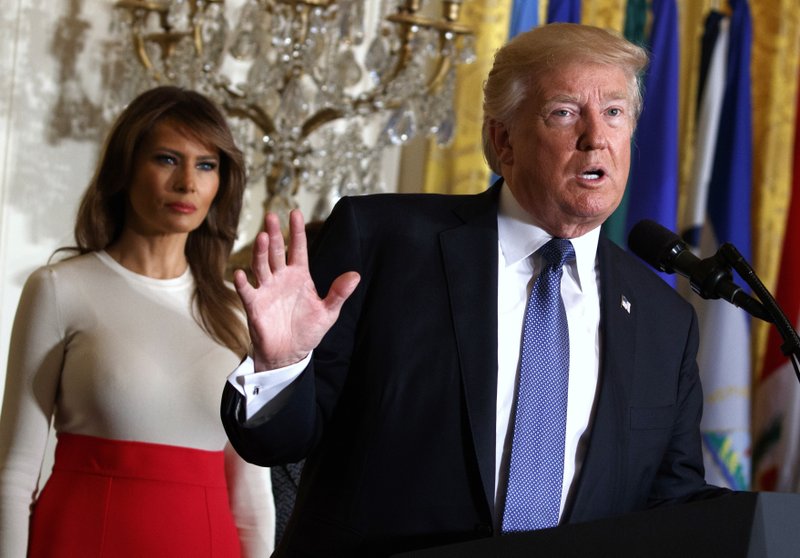
President Donald Trump’s plan to combat opioid drug addiction calls for stiffer penalties for drug traffickers, including the death penalty where appropriate under current law, a top administration official said. It’s a fate for drug dealers that Trump has been highlighting publicly in recent weeks. Trump also wants Congress to pass legislation reducing the amount of drugs needed to trigger mandatory minimum sentences for traffickers who knowingly distribute certain illicit opioids, said Andrew Bremberg, Trump’s domestic policy director, who briefed reporters Sunday on the plan Trump is scheduled to unveil Monday in New Hampshire, a state hard-hit by the crisis and that he once referred to as “drug infested.” The president will be joined by first lady Melania Trump, who has shown an interest in the issue as it pertains to children. Trump drew criticism last year after leaked transcripts of his telephone conversation with Mexico’s president showed he had described New Hampshire as a “drug-infested den.” The Washington Post published the transcripts. Death for drug traffickers and mandatory minimum penalties for distributing certain opioids are just two elements under the part of Trump’s plan that deals with law enforcement and interdiction to break the international and domestic flow of drugs into and across the U.S. Other parts of the plan include broadening education and awareness, and expanding access to proven treatment and recovery efforts. Trump has mused openly in recent weeks about subjecting drug dealers to the “ultimate penalty.” The president told the audience at a Pennsylvania campaign rally this month that countries like Singapore have fewer issues with drug addiction because they harshly punish their dealers. He argued that a person in the U.S. can get the death penalty or life in prison for shooting one person, but that a drug dealer who potentially kills thousands can spend little or no time in jail. “The only way to solve the drug problem is through toughness,” Trump said in Moon Township. He made similar comments at a recent White House summit on opioids. “Some countries have a very, very tough penalty — the ultimate penalty. And, by the way, they have much less of a drug problem than we do,” Trump said. “So we’re going to have to be very strong on penalties.” White House officials referred questions about the death penalty and drug traffickers to the Justice Department, which said the federal death penalty is available for several limited drug-related offenses, including violations of the “drug kingpin” provisions in federal law. Doug Berman, a law professor at Ohio State University, said it was not clear that death sentences for drug dealers, even for those whose product causes multiple deaths, would be constitutional. Berman said the issue would be litigated extensively and would have to be definitively decided by the U.S. Supreme Court. Opioids, including prescription opioids, heroin and synthetic drugs such as fentanyl, killed more than 42,000 people in the U.S. in 2016, more than any year on record, according to the Centers for Disease Control and Prevention. Trump has declared that fighting the epidemic is a priority for the administration but critics say the effort has fallen short. Last October, Trump declared the crisis a national public health emergency, short of the national state of emergency sought by a presidential commission he put together to study the issue. “We call it the crisis next door because everyone knows someone,” said Kellyanne Conway, a Trump senior adviser. “This is no longer somebody else’s community, somebody else’s kid, somebody else’s co-worker.” Trump will also discuss how his plans for a U.S.-Mexico border wall and punishing “sanctuary” cities that refuse to cooperate with federal immigration authorities will help combat the opioid crisis, Conway told reporters traveling with the president. Other elements of the plan Trump call for a nationwide public awareness campaign, which Trump announced last October, and increased research and development through public-private partnerships between the federal National Institutes of Health and pharmaceutical companies. Bremberg said the administration also has a plan to cut the number of filled opioid prescriptions by one-third within three years. The stop in New Hampshire will be Trump’s first as president. He won the state’s 2016 Republican presidential primary but narrowly lost in the general election to Hillary Clinton. It follows a visit to the state last week by retiring Sen. Jeff Flake, R-Ariz., a persistent Trump critic. Flake told New Hampshire Republicans that someone needs to stop Trump — and it could be him if no one else steps up. Republished with permission from the Associated Press.
Alabama Senate votes to toughen fentanyl penalties
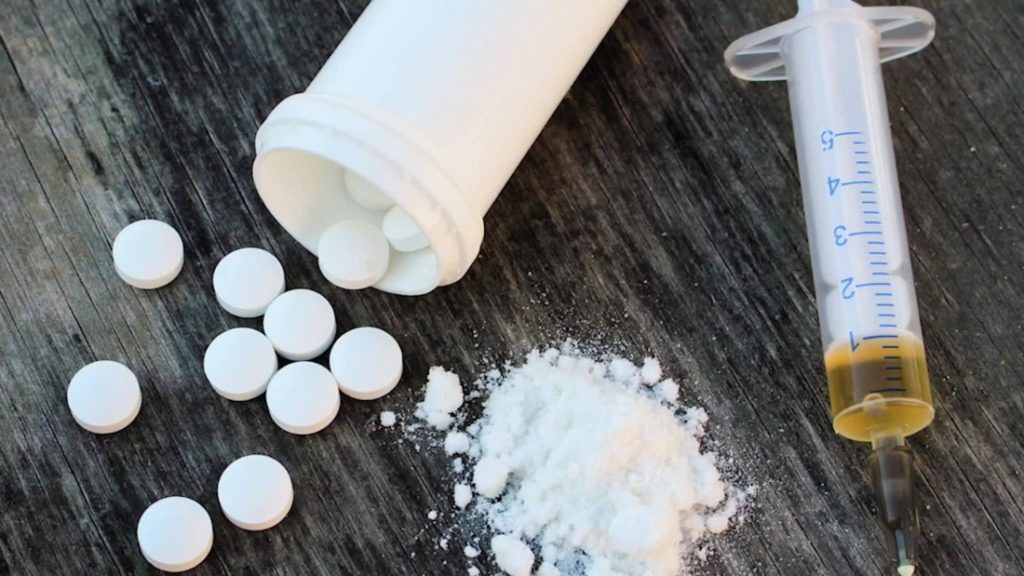
The Alabama Senate on Tuesday unanimously voted to toughen penalties for trafficking a powerful synthetic opioid, fentanyl. Fentanyl has caused fatal overdoses across the United States. Sometimes added to heroin or cocaine without the user knowing, fentanyl is 50 to 100 times more potent than heroin and morphine, and can kill those who come in contact with even minuscule amounts of it. Many in law enforcement and the health care industry believe it is drug catalyst of the national opioid epidemic. Sponsored by Alabaster-Republican State Sen. Cam Ward, SB39 provides criminal penalties and mandatory minimum sentences for trafficking fentanyl. A person convicted of having more than one gram — roughly equivalent to the size of a sugar packet, having the ability to kill hundreds of people — would get a mandatory minimum sentence of three years in prison. Anyone convicted with two or more grams would serve 10 years, and those convicted with four grams or more would serve 25 years. The bill now moves to the Alabama House of Representatives for consideration.
BCBS of Alabama launching new opioid management strategy

In an effort to combat the growing opioid abuse epidemic in Alabama and as a measure of concern for their customers’ care and safety Blue Cross and Blue Shield of Alabama is launching a new opioid management strategy. In 2015, 5.8 million prescriptions for opioid medications were given to Alabamians, making it the highest prescribing state in the nation for prescription opioid drugs. According to Blue Cross and Blue Shield Association’s Health of America report on the opioid epidemic: 26 percent of Blue Cross and Blue Shield of Alabama’s commercially insured members filled at least one opioid prescription in 2015, compared to 21 percent nationally 6.5 percent of our members were on a long-duration opioid regimen in 2015, compared to 3.8 percent nationally 16.4 per 1,000 members were diagnosed with opioid use disorder in Alabama in 2016, double that of 8.3 nationally 29 percent of our members with opioid use disorder received medication-assisted therapy in 2016, compared to 37 percent nationally In recent years, Alabama has seen many deaths due to prescription drug overdoses. The use of opioid pain relievers lead to 723 drug-related deaths in 2014, and 5,128 deaths from 2006 through 2014. Therefore, Blue Cross and Blue Shield of Alabama feels that it is necessary to implement the following requirements: Extended-release opioids will require a prior authorization for all initial fills of long-acting opioid medications. Members currently receiving these drugs will not be impacted. Immediate-release opioids will not require prior authorization but will have quantity limits. The first prescription fill will be limited to a seven-day initial supply. After an initial seven day supply is filled, additional prescriptions may be obtained without pre-authorization. Members currently receiving these drugs will not be impacted. Naloxone, the antidote for an opioid overdose, will be available to Blue Cross members for a generic copay. These include the forms of prefilled syringes and nasal spray. Evzio, the branded auto-injector, will no longer be covered due to egregious pricing. The conditions will go into effect Feb. 1, 2018.
Mobile, Ala. joins the fights against opioid manufacturers
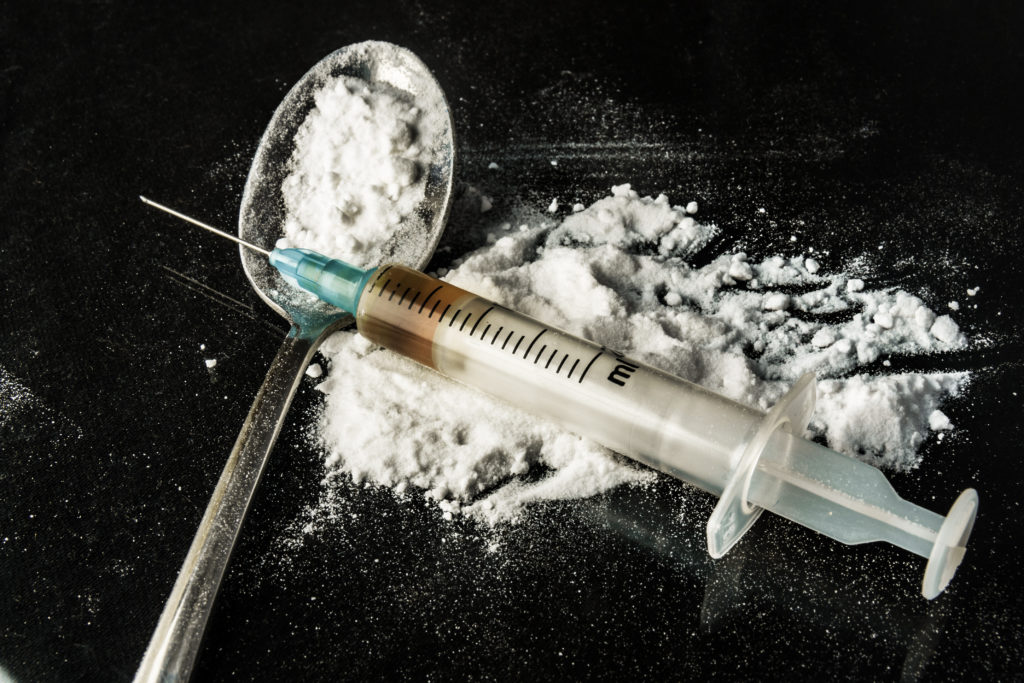
The City of Mobile, Ala. is hoping to hold the companies it says is responsible for dumping millions of dollars’ worth of prescription opiates into the community accountable. On Wednesday, the City joined nationwide public nuisance lawsuit against the pharmaceutical drug manufacturers and wholesale drug distributors that made the opioid epidemic possible. The move ensures the Port City would be entitled to a portion of any potential financial settlement. The suit is against five of the largest manufacturers of prescription opioids and their related companies and against the country’s three largest wholesale drug distributors. The manufacturing companies pushed highly addictive, dangerous opioids and falsely represented to doctors that patients would only rarely succumb to drug addiction. The distributors breached their legal duties to monitor, detect, investigate, refuse and report suspicious orders of prescription opioids. Because prescription opioids are a highly addictive substance, Congress designed a system in 1970 to control the volume of opioid pills being distributed in this country. It let only a select few wholesalers gain the right to deliver opioids. In exchange, those companies agreed to do a very important job – halt suspicious orders and stop control against the diversion of these dangerous drugs to illegitimate uses. But in recent years, they failed to do that and Mobile is now paying the price. The City of Mobile is working with a consortium of law firms to hold pharmaceutical drug manufacturers and wholesale distributors accountable for failing to do what they were charged with doing under the federal Controlled Substances Act – monitor, identify and report suspicious activity in the size and frequency of opioid shipments to pharmacies and hospitals. “Homes have been broken and families torn apart by this epidemic, which has claimed victims from all walks of life,” said Mayor Sandy Stimpson. “The pharmaceutical drug manufacturers and wholesale drug distributors failed in their legal obligation to notify the Drug Enforcement Administration of suspicious orders, even as the number of pills flowing into our city rose and rose.” The city has hired expert law firms experienced in holding the powerful pharmaceutical industry accountable. Those firms include: Levin, Papantonio, Thomas, Mitchell, Rafferty & Proctor; Baron & Budd; Greene Ketchum Bailey Farrell & Tweel; Hill, Peterson, Carper, Bee & Deitzler; McHugh Fuller Law Group; Taylor Martino, P.C.; Zarzaur Mujumdar & DeBrosse; Jinks, Crow & Dickson, P.C.; Lloyd & Hogan; The Frankowski Firm, LLC; Cusimano, Roberts, & Mills; and Rogers Law Group, PA. The citizens of Mobile continue to bear the burden of the cost of the epidemic, as the costs of treatment for addiction, education and law enforcement have continued to rise. Funds recovered through a winning lawsuit would be used to assist the city in maximizing resources in overcoming the opioid epidemic. Birmingham, Ala. and several other Alabama cities have also joined the suit.
Robert Bentley to announce creation of Alabama Council on Opioid Misuse and Addiction
As the opioid crisis continues to grow in Alabama, Governor Robert Bentley on Thursday will sign an executive order creating the Alabama Council on Opioid Misuse and Addiction. According to Bentley’s office, the Council will study the state’s current opioid crisis and identify a set of strategies to reduce opioid-related deaths in Alabama. In Alabama, 723 people died in 2014 of drug overdoses, up from 598 in 2013. The use of opioid pain relievers such as OxyContin, Percocet, and Lortab has been especially prevalent in the Yellowhammer State. Throughout 2016 Bentley has been hard a work signing several bill into law to fight drug abuse and in particular, opioid abuse. Most recently, in September, the Governor announced the state joined a National Governors Association learning lab to help combat the ongoing epidemic. Through the learning lab, Alabama will build on existing efforts by developing and implementing strategic action plans for reducing overdoses and deaths related to heroin and fentanyl.
Alabama to participate in National Prescription Drug Take-Back Day
It’s time to clean out the medicine cabinet — the National Prescription Drug Take-Back Day is this Saturday from 10 a.m. to 2 p.m. Considering Alabama has more opioid prescriptions than it has residents — the highest prescription-per-capita rate in the nation at 1.2 pain-killer prescriptions written per Alabamian in 2015 — this is a date all residents should mark on their calendars. Sponsored by the Drug Enforcement Agency’s (DEA), Alabama has approximately 52 collection sites across the state where Alabamians can safely dispose of unwanted, unused prescription medications. “This is an important and basic step to fight drug abuse and drug-related crimes, by assisting in the removal of potentially dangerous controlled substances from our homes,” said Alabama Attorney General Luther Strange. “Many of us have outdated prescriptions that are too easily accessible to children and others. These drugs can also be the target of home invasions and burglaries. On Oct. 22, we are asking the people of Alabama to protect their homes and communities by locating medicines that are out-of-date or no longer needed, and bringing them in for safe and proper disposal.” Deaths from prescription drug overdoses have reached epidemic levels, claiming the lives of 78 people every day. The state of Alabama had a nearly 20 percent increase in overdose deaths from 2013-2014, which is why Strange’s office has worked closely with the DEA, U.S. attorneys in Alabama, the Alabama Department of Public Health, local law enforcement, and others to promote the Prescription Drug Take-Back program. Since the first take-back event in Alabama, in September 2010, the program continues to increase in the amount of drugs collected. DEA Prescription Drug Take-Back events last spring collected an estimated 5,351 pounds in Alabama of unwanted, expired, or unused drugs for proper disposal. Throughout all of Alabama’s previous events, a total of about 43,000 pounds of drugs have been removed and disposed of safely. Law enforcement agencies and interested community partners such as pharmacies, schools, and civic groups are working together to provide as many local sites as possible throughout Alabama. Each site will be supervised by a law enforcement officer due to the involvement of controlled substances. Deliveries of drugs to DEA Prescription Drug Take-Back Day events are confidential, with no personal information collected and no questions asked. Participants are encouraged to remove labels or black out information beforehand. People who wish to participate should inquire with their local law enforcement agencies, or may check the DEA website for a nearby location. A listing of sites can be found at dea.gov by clicking the “Got Drugs” box. If you do not see your area listed on the DEA website, please check with your local law enforcement officials to see if they may be participating in a take-back event.
