
Darryl Paulson: The Antonin Scalia battle: The stakes have seldom been as high
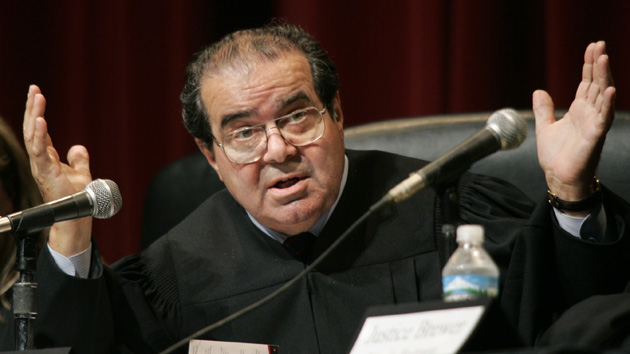
The passing of Supreme Court Justice Antonin Scalia on Feb. 3, has created an opportunity for both the executive and legislative branches to work together. If they can’t, American politics will face a crisis of enormous magnitude. That is how serious the situation has become. Whether liberal or conservative, most agree that Scalia was a judge who profoundly influenced the court during his three decades there. Many rank him among the giants such as John Marshall, Oliver Wendell Holmes, Jr., and William Brennan. Besides his opinions on court decisions, Scalia’s primary contribution was pushing the doctrines of “originalism” and “textualism.” Scalia’s doctrine of originalism argued against the grain of existing legal thought that the Constitution was a living document constantly in change. Scalia believed that the Constitution should be interpreted as the 18th-century framers understood it. In other words, there is no protection for abortion and gay rights, and no sanction for affirmative action. “Textualism” was a more widely accepted doctrine. According to Scalia, textualism meant that when interpreting laws, the courts must not look at the legislative history or Congressional intent, but the courts must only look at the words of the law. Among the current court, only Justice Stephen Breyer rejects textualism. There is little doubt about Scalia’s intellectual ability. He was valedictorian at Xavier High School, finished first in his class at Georgetown and was magna cum laude at Harvard Law School. After spending six years in private practice, he taught four years at the University of Virginia Law School. He then served as legal counsel for a federal agency before having a distinguished career at the University of Chicago Law School. Scalia had disappointments. When Ronald Reagan was elected president in 1980, Scalia wanted to be appointed Solicitor General. Instead, he lost out to Rex Lee and told his biographer that “I never forgot it.” Scalia was appointed to the District of Columbia Circuit Court in 1982. That circuit serves as a feeder to the Supreme Court, and that happened in 1986 when Reagan nominated Scalia to a position on the highest court. Scalia was confirmed 98-0 and would be the last ideological judge to be confirmed without opposition. The next year, the Senate rejected Robert Bork, and “borking” became the process of defeating ideologues. Within hours of the announcement of Scalia’s death, leaders in both parties were trying to define the nomination process. Senate Majority Leader Mitch McConnell announced that the Senate should wait until after the 2016 presidential election to confirm a replacement. “The American people have a voice in the selection of the next Supreme Court Justice,” said McConnell. “Therefore, this vacancy should not be filled until we have a new president.” Within minutes, Senate Democratic leader Harry Reid responded that the American people did have a voice. They elected Barack Obama as president in 2012. Reid argued that the nation cannot afford to go a full year with a split Supreme Court. “Failure to fill this would be a shameful abdication of one of the Senate’s most essential Constitutional responsibilities,” Reid said. To be confirmed, any Obama nominee would need a minimum of 50 senate votes in a body where Republicans now hold 54 of the 100 seats. The threat of a Republican filibuster would mean that the Democrats would need all 46 Democrats to support the nominee along with 14 of the 56 Republicans. That is very unlikely in the era of “borking.” The Supreme Court is facing many controversial issues this term including abortion, contraception, unions, voting rights and affirmative action. All may be affected by Scalia’s death and the possibility of a 4-4 deadlock on the court. For example, in the Fredricks v. California Teachers Association case, it appeared during oral arguments that it looked like a five-member majority would reverse a lower court decision requiring teachers who did not join the union to pay for the benefits of any collective bargaining agreement. Without Scalia, a 4-4 decision would mean the lower court decision would prevail. There are many political calculations at play. Will Obama nominate a moderate candidate to win Republican support? If so, will progressive Democrats balk? Will Obama nominate another liberal like Sonia Sotomayor or Elena Kagan? If so, will Republicans even hold hearings? Will moderate Republicans running for re-election in swing states pressure party leaders to hold hearings so that the party will not appear obstructionist? Will McConnell accept a moderate and risk jeopardizing his leadership position? Will Democrats accept a moderate and risk appearing to cave in to the Republican majority? When both sides shooting political bullets, will one of the parties be willing to holster the gun? Will that party look like the good guys acting responsibly, or will they look like political wimps unwilling to fight the good fight? The stakes are high; the outcome is indeterminate. *** Darryl Paulson is Professor Emeritus of Government at the University of South Florida St. Petersburg and resides in Palm Harbor, Florida.
Robert Bentley: Antonin Scalia was “great public servant”
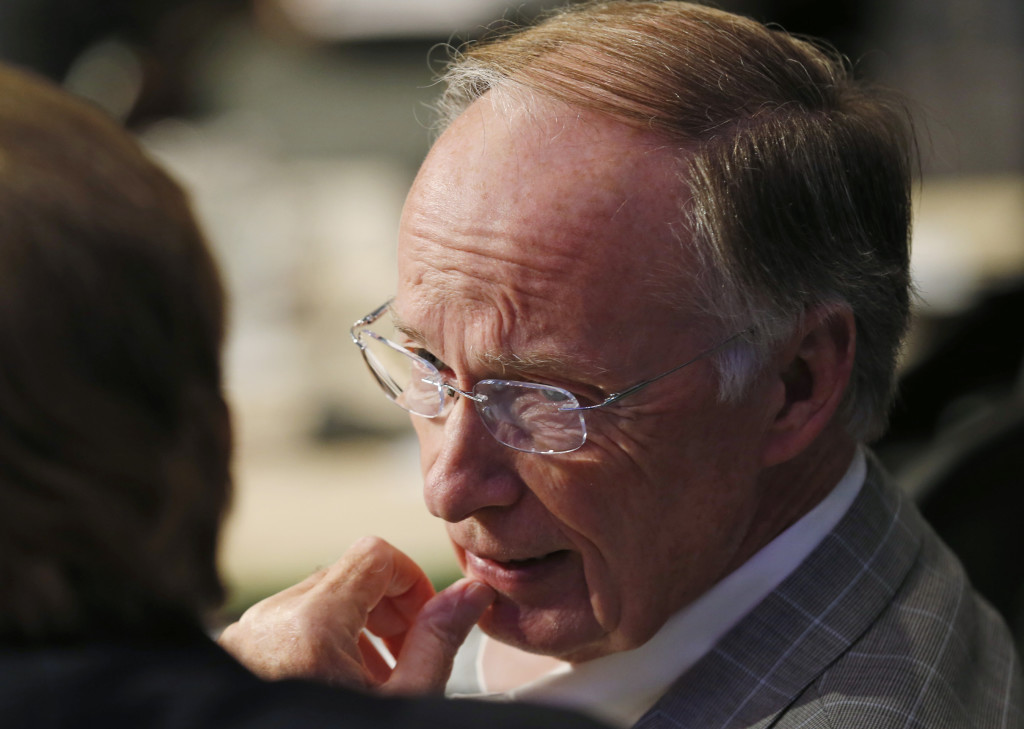
Gov. Robert Bentley issued a statement after the untimely death of U.S. Supreme Court Justice Antonin Scalia over the weekend, saying the conservative jurist will be missed. “Our country lost a great public servant today with the death of Justice Antonin Scalia,” said Bentley, a Republican. “His dedication to the Constitution and the U.S. Supreme Court for almost 30 years will be forever remembered.” Scalia, arguably the most conservative of the five-member GOP-nominated majorities that have carried the day at many decisive junctures over the last two decades, was beloved by Americans on the right of the political spectrum for his “originalist” philosophy on jurisprudence. A practicing Catholic, Scalia was also outspoken on social issues like abortion and same-sex marriage, hewing to traditional values in public venues and on the bench. Bentley lauded that legacy in a prepared statement his office released on Valentine’s Day. “Nominated to the bench by a strong conservative president, Justice Scalia was dedicated to the principles on which our nation was founded,” Bentley said. “I join Alabamians and Americans in praying for Justice Scalia’s family tonight.” Moreover, the governor hinted at the fact the battle over Scalia’s replacement is likely to be a Congressional fight for the ages, probably unparalleled since the failed confirmation of Judge Robert Bork during the Reagan administration. “The effort to replace him will be extremely important in the days ahead,” Bentley concluded.
