
Supreme Court halts COVID-19 vaccine rule for U.S. businesses

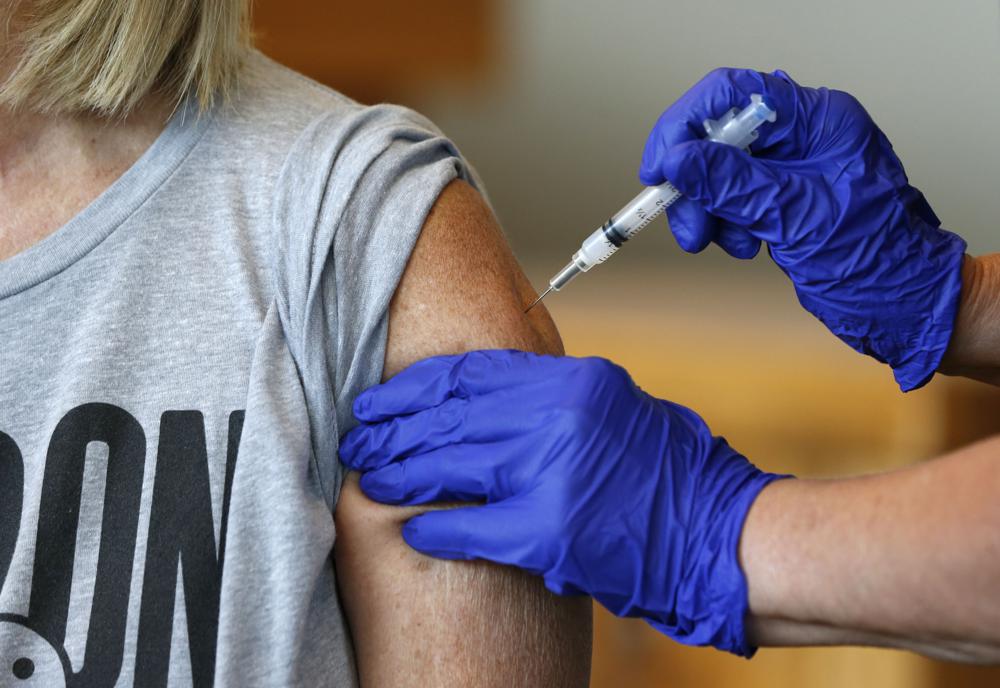
The Supreme Court has stopped a major push by the Biden administration to boost the nation’s COVID-19 vaccination rate, a requirement that employees at large businesses get a vaccine or test regularly and wear a mask on the job. At the same time, the court is allowing the administration to proceed with a vaccine mandate for most health care workers in the U.S. The court’s orders Thursday came during a spike in coronavirus cases caused by the omicron variant. The court’s conservative majority concluded the administration overstepped its authority by seeking to impose the Occupational Safety and Health Administration’s vaccine-or-test rule on U.S. businesses with at least 100 employees. More than 80 million people would have been affected, and OSHA had estimated that the rule would save 6,500 lives and prevent 250,000 hospitalizations over six months. “OSHA has never before imposed such a mandate. Nor has Congress. Indeed, although Congress has enacted significant legislation addressing the COVID–19 pandemic, it has declined to enact any measure similar to what OSHA has promulgated here,” the conservatives wrote in an unsigned opinion. In dissent, the court’s three liberals argued that it was the court that was overreaching by substituting its judgment for that of health experts. “Acting outside of its competence and without legal basis, the Court displaces the judgments of the Government officials given the responsibility to respond to workplace health emergencies,” Justices Stephen Breyer, Elena Kagan, and Sonia Sotomayor wrote in a joint dissent. President Joe Biden said he was “disappointed that the Supreme Court has chosen to block common-sense life-saving requirements for employees at large businesses that were grounded squarely in both science and the law.” Biden called on businesses to institute their own vaccination requirements, noting that a third of Fortune 100 companies already have done so. When crafting the OSHA rule, White House officials always anticipated legal challenges — and privately, some harbored doubts that it could withstand them. The administration nonetheless still views the rule as a success at already driving millions of people to get vaccinated and encouraging private businesses to implement their own requirements that are unaffected by the legal challenge. The OSHA regulation had initially been blocked by a federal appeals court in New Orleans, then allowed to take effect by a federal appellate panel in Cincinnati. Both rules had been challenged by Republican-led states. In addition, business groups attacked the OSHA emergency regulation as too expensive and likely to cause workers to leave their jobs at a time when finding new employees already is difficult. The National Retail Federation, the nation’s largest retail trade group, called the Supreme Court’s decision “a significant victory for employers.” The vaccine mandate that the court will allow to be enforced nationwide scraped by on a 5-4 vote, with Chief Justice John Roberts and Justice Brett Kavanaugh joining the liberals to form a majority. The mandate covers virtually all health care workers in the country, applying to providers that receive federal Medicare or Medicaid funding. It affects 10.4 million workers at 76,000 health care facilities as well as home health care providers. The rule has medical and religious exemptions. Biden said that decision by the court “will save lives.” In an unsigned opinion, the court wrote: “The challenges posed by a global pandemic do not allow a federal agency to exercise power that Congress has not conferred upon it. At the same time, such unprecedented circumstances provide no grounds for limiting the exercise of authorities the agency has long been recognized to have.” It said the “latter principle governs” in the healthcare arena. Justice Clarence Thomas wrote in dissent that the case was about whether the administration has the authority “to force healthcare workers, by coercing their employers, to undergo a medical procedure they do not want and cannot undo.” He said the administration hadn’t shown convincingly that Congress gave it that authority. Justices Samuel Alito, Neil Gorsuch, and Amy Coney Barrett signed onto Thomas’ opinion. Alito wrote a separate dissent that the other three conservatives also joined. Decisions by federal appeals courts in New Orleans and St. Louis had blocked the mandate in about half the states. The administration already was taking steps to enforce it elsewhere. More than 208 million Americans, 62.7% of the population, are fully vaccinated, and more than a third of those have received booster shots, according to the federal Centers for Disease Control and Prevention. All nine justices have gotten booster shots. The courthouse remains closed to the public, and lawyers and reporters are asked for negative test results before being allowed inside the courtroom for arguments, though vaccinations are not required. The justices heard arguments on the challenges last week. Their questions then hinted at the split verdict that they issued Thursday. A separate vaccine mandate for federal contractors, on hold after lower courts blocked it, has not been considered by the Supreme Court. Republished with the permission of the Associated Press.
Congressional leaders send letter to OSHA opposing vaccine mandate
Congressman Gary Palmer (AL-06) and several colleagues sent a letter to Doug Parker, the Assistant Secretary of Labor for Occupational Safety and Health, to oppose a federal vaccine mandate on businesses across the country. Alabama congressmen Mo Brooks and Barry Moore also signed the letter. The letter states, “OSHA has said the spread of COVID-19 presents a grave danger to employees. However, this is not the case. Many employees have either been vaccinated or have achieved immunity naturally, and thus are not in grave danger. Many workplaces are also not in environments where the spread of COVID-19 is a concern, including employees who work from home or who work in outside settings.” The letter also urges the Secretary to make a religious exemption. “While we do not agree that you should finalize this mandate, we urge you to provide a religious exemption to the requirement should you forge ahead and request that you make that commitment in writing.” “Unfortunately, this Administration must be reminded that religious rights and other freedoms are not forfeited during a pandemic,” Palmer stated in a press release. Palmer questioned the legality of the vaccine mandate arguing that religious and other conscience exemptions are the heart of the Constitution. “The employer-employee relationship does not need intervention from a third federal party. Employees need their individual rights to be protected, not trampled upon by the government. I firmly believe this mandate is unconstitutional, and at the very least, we need to defend the rights of individuals who, for whatever deeply held beliefs, decide to refuse it. No one should be forced to choose between providing for their families and violating their conscience. Religious and other conscience exemptions are at the heart of the Constitution, which this Administration and every Member of Congress swore an oath to uphold and defend. This letter from my colleagues and me insists that at the least, individuals’ freedoms must be respected and maintained when regulations on the mandate are finalized and published.” Originally tweeted by Gary Palmer (@USRepGaryPalmer) on November 1, 2021. The Occupational Safety and Health Administration (OSHA) is part of the U.S. Department of Labor. Their mission is to ensure safe and healthful working conditions for workers by setting and enforcing standards and by providing training, outreach, education, and assistance.
Alabama embraces auto industry jobs at high safety cost, report says
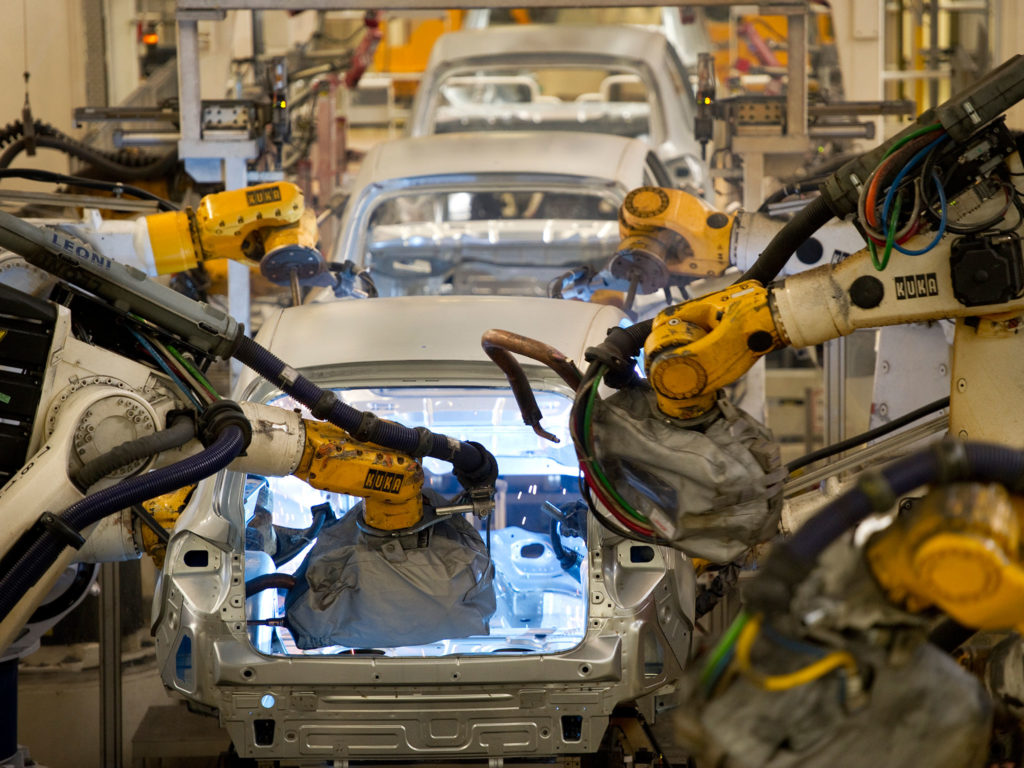
Alabama’s embrace of the auto industry has brought in thousands of jobs for the state, though it has come at the price of safety according to a long-form piece by Peter Waldman of Bloomberg. The article combs through thousands of pages of records from the Occupational Safety and Health Administration that show dozens of preventable accidents that have left many Alabamian autoworkers without fingers, limbs and sometimes their lives. “Employees work ungodly hours, six or seven days a week, for months on end. Pay is low, turnover is high, training is scant and safety is an afterthought, usually after someone is badly hurt,” Waldman writes. “Many of the same woes that typify work conditions at contract manufacturers across Asia now bedevil parts plants in the South.” According to the OSHA records, the chances of losing a finger or limb at an Alabama parts factory in 2015 was double the rate for the American auto industry as a whole. “The pressure inside parts plants is wreaking a different American carnage than the one Trump conjured up at his inauguration. OSHA records obtained by Bloomberg document burning flesh, crushed limbs, dismembered body parts, and a flailing fall into a vat of acid. The files read like Upton Sinclair, or even Dickens,” the article says. The article details a series of horrible accidents suffered by plant workers, most of which were due to manufacturing companies not providing proper safety training to their employees. Among the cases are the death of Regina Elsea, who was pinned to a steel dashboard by a manufacturing robot; Nathaniel Walker, who fell into a vat of acid while trying to clean a tank; and Reco Allen, a janitor who lost his left arm to a stamping machine when his supervisor illegally took him off mop duty to work on the line. Allen eventually reached a multimillion-dollar settlement with the company, Matsu, and bought a big house on 15 acres with a fish pond. “I’d rather have my arm back any day,” Allen says.
Bradley Byrne: Stopping a federal power grab
American workers deserve responsible, commonsense policies to ensure safe and healthy working conditions. They deserve a federal government that holds bad actors accountable, and a government that takes proactive steps to help employers improve safety protections and prevent injuries and illnesses before they occur. For years, Republicans have called on the Occupational Safety and Health Administration (OSHA) to reject a top-down approach to worker protections and instead, collaborate with employers to identify gaps in safety and address the unique challenges facing modern workplaces. Unfortunately, under the Obama Administration, our concerns primarily fell on deaf ears. With this in mind, I recently introduced legislation designed to prevent a regulatory power grab by the federal government. While this regulation claimed to be focused on workers’ safety, it would have done absolutely nothing to improve workplace safety. Let me explain. Under the Occupational Safety and Health Act regulations, employers have long been required to record injuries and illnesses and retain those records for five years. The law explicitly provides a six-month window under which OSHA can issue citations to employers who fail to maintain proper records. This approach helps ensure workplace hazards are addressed in a timely manner. However, in 2006, OSHA took action against Volks Constructors for record-keeping errors that occurred well beyond what the law allows. The errors were from nearly five years earlier. It should not take OSHA years to do their job. That is why a federal appeals court unanimously rejected OSHA’s overreach. The opinion for the court stated: “We do not believe Congress expressly established a statute of limitations only to implicitly encourage the Secretary to ignore it.” Even President Obama’s Supreme Court nominee, Judge Garland, agreed OSHA’s action was “not reasonable.” What came next was an outright power grab. OSHA decided to take its unlawful action one step further. This time it would not only ignore the law, but rewrite it. The agency finalized the “Volks” rule this past December, unilaterally extending the statute of limitations from six months to five years. The agency created significant regulatory confusion for small businesses. I often hear from small businesses here in Southwest Alabama that are already struggling with confusing regulations and red tape. This new rule would only further add to the confusion and compliance costs. Under this regulation, many businesses would likely face unwarranted lawsuits because of this unlawful regulation. Of course, further judicial scrutiny also means hardworking taxpayers will foot the bill when OSHA is forced to defend its lawless power grab once again. Simply put, OSHA had no authority to do this. We have a Constitution that grants Congress — not federal agencies — the power to write the law. Maintaining injury and illness records is vitally important and can help enhance worker protections, but that is not the goal of this rule. This rule only serves to punish employers. Instead of punitive regulations, OSHA should instead collaborate with employers to help them understand their legal responsibilities and ensure safety measures are in place to prevent workplace hazards in the future. Thankfully, the House passed my bill to block this unlawful regulation last week by a vote of 231 to 191. This was a major victory for those of us who are focused on ensuring the law is followed. President Donald Trump has indicated he supports my bill and is ready to sign it into law. I hope the Senate will act swiftly, so the President can sign my bill. Rest assured, I will continue working to improve workplace safety while also standing up against executive overreach. • • • Bradley Byrne is a member of U.S. Congress representing Alabama’s 1st Congressional District.
Bradley Byrne moves to overturn OSHA’s ‘unlawful power grab’

In the final weeks of the Obama administration, the Department of Labor’s Occupational Safety and Health Administration (OSHA) issued a rule clarifying an employer’s continuing obligation to make and maintain an accurate log of workplace injuries and illnesses for five years after they occur. While OSHA inspectors have long used this information to enhance health and safety protections in America’s jobsites, the law explicitly says that employers can only be cited for record-keeping violations within a six-month time period. Yet the new “Volks” rule, extends the threat of penalty up to five years, which many consider an attempt to make an end-run around a 2012 D.C. Circuit Court decision that previously ended the five-year practice. Alabama 1st District U.S. Rep. Bradley Bryrne is working to overturn the new rule, which he calls an “unlawful power grab by the Obama administration.” Chairman of the Subcommittee on Workforce Protections, Bryne introduced a resolution of disapproval, H. J. Res 83, under the Congressional Review Act to overturn the rule and reject a failed approach to workplace safety on Tuesday. “Every worker deserves safe and healthy working conditions, and bad actors who put hardworking men and women in harm’s way must be held accountable,” said Byrne. “That’s why Republicans have consistently called on OSHA to improve its enforcement efforts and collaborate with employers to address gaps in safety.” Under the Congressional Review Act, Congress may pass a resolution of disapproval to prevent, with the full force of law, a federal agency from implementing a rule or issuing a rule that is substantially the same without congressional authorization. Chairman Byrne’s resolution would block OSHA’s “Volks” rule from taking effect and prevent future administrations from promulgating a similar rule. Bryne continued, “Unfortunately, the Obama administration consistently doubled down on failed, punitive policies that do more to tie small businesses in red tape than protect workers. With this rule, OSHA rewrote federal law while doing nothing to improve worker health and safety. Congress must reject this unlawful power grab and encourage the agency to adopt the responsible, proactive safety approach that America’s workers deserve.” Prior to Byrne’s resolution, two federal appeals courts have rejected the policies reflected in the rule after a Louisiana construction company was cited for paperwork errors occurring nearly five years prior. “We do not believe Congress expressly established a statute of limitations only to implicitly encourage the Secretary to ignore it,” the D.C. Circuit Court noted.
Alabama business roundup: Headlines from across state – 2/10/16 edition

Who’s paying $17k to OSHA after a worker accident? What household name is accelerating store closings across the state? How much do inmates cost the state? All of this and more in today’s Alabama Business Roundup: AL.com: Plant agrees to pay $17K to OSHA after Decatur worker dies in accident A Decatur plant has agreed to pay $17,290 after it was cited for four serious safety violations months after one of its workers was killed on the job. The Occupational Safety and Health Administration issued citations with a proposed penalty of $24,200 to Independence Tube, which employed 49-year-old Gary “Tim” Timothy Cooper. Cooper was killed at work Oct. 28 when a 6,000-pound steel coil fell on and crushed him. OSHA spokesman Michael D’Aquino said the agreement reached Tuesday with Independence Tube will not change the classification of the violations. “The hazards cited have all been abated, such as revising the procedure for banding coils, providing fall protection, developing procedures to de-energize machinery (for changing the overarm), and installing guards on all horizontal shafts as well as sprocket wheels and chains,” he said. D’Aquino said a serious violation exists when the workplace hazard could cause an accident or illness that would most likely result in death or serious physical harm. Independence Tube President Rick Werner did not immediately respond to a request for comment. At the time of Cooper’s death, the Morgan County Coroner’s Office categorized the incident as an “industrial accident” with no foul play suspected. Birmingham Business Journal: Alabama AG announces home mortgage abuse settlement with HSBC Alabama Attorney General Luther Strange announced Friday a $470 million joint state-federal settlement with mortgage lender and servicer HSBC to address mortgage origination, servicing, and foreclosure abuses. The settlement provides direct payments to Alabama borrowers for past foreclosure abuses, loan modifications and other relief for borrowers in need of assistance, rigorous mortgage servicing standards, and grants oversight authority to an independent monitor. The settlement includes Alabama and 49 other states, the District of Columbia, t he U.S. Department of Justice, the U.S. Department of Housing and Urban Development and the Consumer Financial Protection Bureau. HSBC to substantially change how it services mortgage loans, handles foreclosures, and ensures the accuracy of information provided in federal bankruptcy court. The terms will prevent past foreclosure abuses, such as robo-signing, improper documentation and lost paperwork. “This agreement provides much-needed relief to eligible Alabama borrowers, and puts a stop to many of the bad practices that have harmed consumers,” Strange said. “Through tough servicing standards, this agreement compels HSBC to abide by more fair procedures.” The agreement’s mortgage servicing terms largely mirrors the 2012 National Mortgage Settlement (NMS) reached in February of 2012 between the federal government, 49 state attorneys general, including Alabama, and the five largest national mortgage servicers. That agreement provided consumers nationwide with more than $50 billion in direct relief, created new servicing standards, and implemented independent oversight. Approximately 1,094 eligible Alabama borrowers whose loans were serviced by HSBC and who lost their home to foreclosure from January 1, 2008, through December 31, 2012, and encountered servicing abuse will be eligible for a payment from the national $59.3 million fund for payments to borrowers. The borrower payment amount will depend on how many borrowers file claims. Eligible borrowers will be contacted by a settlement administrator about how to qualify for payments. The settlement’s consumer protections and standards include Making foreclosure a last resort by first requiring HSBC to evaluate homeowners for other loss mitigation option Restricting foreclosure while the homeowner is being considered for a loan modification Procedures and timelines for reviewing loan modification application Giving homeowners the right to appeal denial Requiring a single point of contact for borrowers seeking information about their loans and maintaining adequate staff to handle calls. AL.com: Sears accelerating store closures, including 3 Kmarts in Alabama Sears Holdings Corp. announced today it will accelerate the closing of unprofitable stores this year after fourth-quarter sales were down 7.1 percent. The company, which also owns Kmart, said the holiday season was challenging as a result of “historically warm weather and intense competition pressuring margins and driving comparable store sales declines, particularly in our apparel and related softlines businesses.” Sears expects total revenues of $7.3 billion and $25.1 billion for the fourth quarter and full-year of 2015, respectively. “Based on this performance, we are taking further actions to accelerate our transformation, which is focused on our Shop Your Way membership program and our Integrated Retail offerings,” Sears Holdings said in an earnings release. Fifty stores, including Kmarts in Florence, Prattville and Dothan, will close as the company looks to reduce ongoing expenses, adjust its asset base and transform its business model. Sears Holdings spokesman Howard Riefs said the Dothan and Florence stores will shut down in mid-March, followed by the Prattville site in mid-April. Liquidation sales are underway now as nearly 200 workers look for jobs within the company or elsewhere. As stores close, Sears will evaluate its cost structure, including optimizing store-level marketing expenditures and overall staffing levels. “We will be taking action to reduce our fixed costs, and to improve our inventory management and gross margin realization,” Sears said. The company, which has reduced its net debt by about $1 billion, will target at least $300 million of other asset sales during the first half of fiscal 2016. Click here for the full earnings report. Kmart closed its only Huntsville store last year on 1401 Memorial Parkway, less than a year after the Sears in Decatur shut down. The company also shuttered the Sears and its auto store at Bel Air Mall in Mobile in 2015. When the stores in Florence, Prattville and Dothan close this spring, there will be 14 Kmarts left in Alabama. Birmingham Business Journal: Inmate Inc.: The costs of corrections in Alabama During Tuesday’s State of the State Address, Gov. Robert Bentley said Alabama would implement a complete transformation of the state’s prison system. This will be accomplished by permanently closing the doors to outdated facilities where maintenance costs
Bradley Byrne: Standing up for Small Business

With the Thanksgiving holiday behind us, the hustle and bustle of the Christmas season has officially started. From shopping for presents to finalizing your travel plans, the next few weeks are sure to be busy. Many of you likely tried to get a head start on shopping last Friday, but did you know that Saturday was also a special day for shopping? Last Saturday marked Small Business Saturday. This is a day set aside to support our nation’s small businesses and to highlight the vital impact they have on our economy. Small Business Saturday is a relatively new tradition, but it has really taken off over the last few years. Since our nation’s founding, entrepreneurs and innovators have built our economy up through small businesses. These small businesses are very important to our economy. In fact, half of all working Americans who have a job in the private sector are working at a small business. From boutique clothing stores to ship repair companies to candle shops, Southwest Alabama is home to a wide range of small businesses. During my time in Congress, I have made it a top priority to visit these businesses in Southwest Alabama to learn more about the challenges they face. Sadly, I quickly realized that small businesses are drowning in costly regulations and a confusing maze of red tape. Since 2008, more small businesses have closed than have opened. That’s why I have made it a priority over the last two years to push for legislation that cuts back regulations, gets Washington out of the way, and allows small businesses to flourish. For example, the tax code is far too confusing and complicated for our small businesses. I believe we should simplify the tax code and make it easier for all Americans. It shouldn’t require countless hours and hundreds of dollars to do your taxes each year. A fairer, simpler tax code would go a long way toward getting the federal government off the back of our small businesses. The Internal Revenue Service (IRS) isn’t the only federal agency making life harder for small businesses. There is also the Occupational Safety and Health Administration (OHSA), which puts excessive compliance requirements on small businesses that simply don’t make sense. Regulations from the Environmental Protection Agency (EPA) are also driving up energy costs and making it harder for small businesses to get ahead. It seems like every day the Obama Administration is putting out a new, costly regulation. In the House, we have an entire committee devoted to fighting back against these regulations and supporting our nation’s small businesses. Chairman Steve Chabot (R-OH) and the House Small Business Committee work diligently to advance legislation designed to make life easier for our small businesses. This year alone, the House has passed a number of bills designed to support small business. In February, the House passed H.R. 527, the Small Business Regulatory Flexibility Improvements Act. This bill would require the federal government to conduct detailed cost analysis of proposed regulations and ensure small businesses have input before regulations are released. Another example of a House-passed small business bill is the Small Business Investment Company Capital Act of 2015, which would boost the Small Business Investment Company (SBIC). The SBIC is a public-private partnership that helps new small businesses gain access to equity and financing. In Congress, I am committed to being an outspoken advocate for small businesses as we work to get Washington bureaucrats out of the way. You can also do your part. As you check items off your Christmas list, don’t forget to spend time shopping at small businesses in your local community. They are the real backbone of our economy. Bradley Byrne is a member of the U.S. Congress representing Alabama’s 1st Congressional District.
Martha Roby: Making sense of workplace safety compliance

What if we could help companies comply with workplace safety rules on the front end, rather than impose harmful fines and penalties on the back end? New legislation that I’m proudly co-sponsoring does just that by helping industries voluntarily and proactively come into compliance with workplace safety guidelines. Known as the Voluntary Protection Program, VPP is an Occupational Safety and Health Administration (OSHA) program that has been successful since its creation in 1982. However, it was never authorized into law, making it subject to the whims of the Executive Branch. H.R. 2500 would finally authorize VPP in the law, making it permanent and allowing Congress to oversee and fund it properly through the appropriations process. While OSHA is charged with the important task of enforcing our nation’s workplace safety rules, this federal agency too often takes an aggressive, penalization-first approach when more productive options are available. VPP provides a voluntary, alternative method, with more than 2,200 work sites covering 900,000 employees all focused on proactive safety practices among employees, employers and OSHA. By requiring implementation of comprehensive health and safety protocols, this opt-in program yields fewer injuries and illnesses well below industry averages. What’s more in 2007, a report showed that VPP saved the federal government nearly $300 million, including $59 million by preventing worker injuries. We all want rules to be followed that ensure a safe workplace. But it makes sense to do so by placing more of an emphasis on practical means to protect workers through partnerships instead of penalties. That’s why VPP is a good move for both workers and businesses. I am grateful for the bipartisan efforts of my colleague, Rep. Todd Rokita, a Republican of Indiana, and Rep. Gene Green, a Democrat of Texas, who I have joined to introduce this bill. My goal is helping workers and businesses all across Alabama, and the nation, comply with safety rules in a more positive way. H.R. 2500 has been referred to the House Committee on Education and the Workforce. I will keep you updated as the bill moves through the legislative process. Martha Roby represents Alabama’s 2nd Congressional District. She is in her third term.
